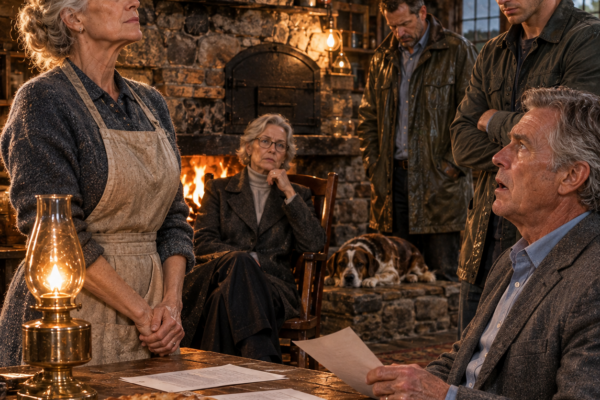
She Moved Into a $3 Cottage After the Divorce — Found a Secret Room Behind the Wall
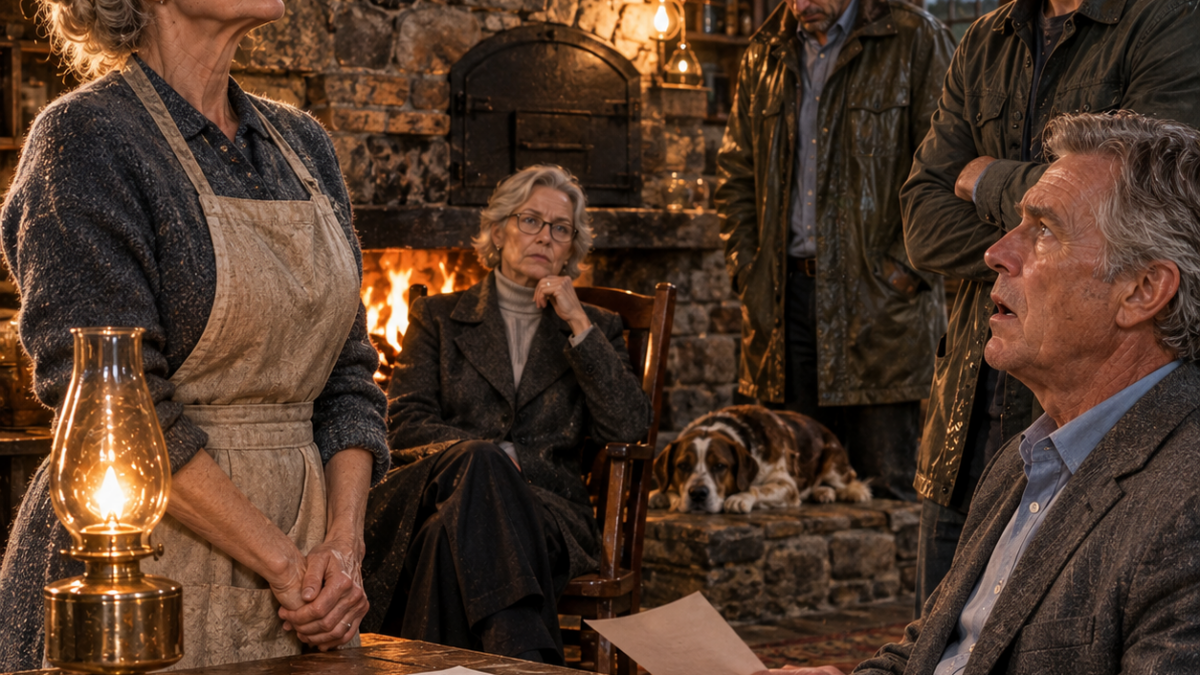
She Moved Into a $3 Cottage After the Divorce — Found a Secret Room Behind the Wall
The county receipt said $3 and Dennis Harmon pressed it into his wifes coat pocket patting it flat the way you settle a childs collar.
At 58, Ruth Ann had kept his books and his house for 31 years and by noon he had taken the house, the Buick keys, her phone, her pie money and her mothers tin recipe box.
What he left her was a stone cottage 11 miles up Sparrow Hill Road with no power and no neighbor for a mile and a half.
That first night she woke to the smell of baked apples from a bread oven cold for 6 years and before dawn she was crawling through its iron door into a room Denniss own family had built and he had signed away without asking what it held. To understand it, you must start with the morning she paid $3 for it.
It was the 4th of October, a Monday, and the recorders office on the first floor of the Merivale County Courthouse smelled of floor wax and hot dust.
The divorce had been final since Friday.
What remained was the paper that made it real, laid out on the counter in a neat row, each page flagged with a yellow tab. Dennis stood at her elbow in his good gray jacket.
He was 62 and still a handsome man, silver at the temples with the easy shoulders of someone who had spent his life being liked across a service counter. Behind him, by the window, their son Brent stood with his hands in his pockets and his eyes on the parking lot.
He was 31. He had said nothing since they came in.
Its the cleanest way, Ruthie.
Dennis said. The house, the shops, the accounts, they stay with me because Im the one who has to carry the notes.
She had not seen the notes. He had taken the books from her in August to keep things clean for the lawyers.
You get the cottage free and clear.
Aunt Lotties place. You always liked it up there.
Its falling down.
Its got character.
He smiled, and its yours. Lyles drawn it as a sale, not a gift, so theres no tax trouble.
Fair value, agreed between us. He nodded at the clerk.
$3.
She looked at him. $3 is what its worth.
Its what my appraiser says. The roofs gone.
Theres no well to speak of.
Nobodys lived in it since Lottie.
He said it kindly, the way you break news about a pet. But it has to be real money, Ruthie, or the court calls it a gift, and then its a mess for both of us.
Pay the lady. Lyle Prentiss, a pale man with a pen clipped to his tie, coughed into his fist.
Ruth Ann opened her purse. She had one five and a handful of ones, and she counted out three of them onto the counter, soft and creased, the last money she would carry that day.
The clerk stamped the deed without looking up.
The stamp was loud in the little room.
Dennis took the receipt, folded it once, and tucked it into her coat pocket, and patted it, and she let him. The rest happened the way things do when someone has planned them carefully and wants them to look unplanned.
In the hallway, Dennis held out his hand for the Buick keys. Its in my name, hon.
Insurance.
He held it out again for her phone. Its on my plan.
Ill have it shut off by noon.
Otherwise, its a bill you cant pay. When she gave him the envelope from her purse, two years of Saturday farmers markets, apple butter at $6 a jar, and pies at 12, he turned it over and weighed it in his palm.
Ill put this with the settlement papers, he said. You ask for it when youre back on your feet.
Its just easier than carrying cash around up there. Somebody could take it.
It was a voice she had known for 31 years, patient and sorrowful and warm, the voice of a man taking something heavy out of your arms because he could see how tired you were.
Brent had followed them out. He stood three steps behind in the shadow of a pillar.
His father said, Son, get the bags. And Brent went and came back with two black garbage bags, a sleeping bag, and a green cooler and set them by the door.
Last, from under his arm, he carried a cardboard box that said Goodwill in marker. On top of its contents, in a dent-lidded tin painted green, lay a handwritten label that read Recipes.
Dad, he said. It goes in the donation pile, Brent.
Weve talked about it.
Her son looked at the tin for a moment.
He looked at her.
Then he lowered his eyes to his boots and picked the box up again and carried it out to the lot and she did not see him put it down anywhere. She thought, Say it.
Say my name. She stood in the hall of the Merivale County Courthouse and waited for her son to say her name and he did not and the quiet in the marble corridor was the loudest thing she had ever heard.
Dennis drove her himself in his pickup.
I want to see you settled, he said and it sounded so much like love that she nearly believed it.
They left Merivale by the old state road and turned onto Sparrow Hill at 11:00. The bass boat that had stood on its trailer in the side yard for six summers was gone and she had asked about it at breakfast and he had said the transmission was out and hed sent it off for repair.
His phone buzzed on the dash, and when it buzzed a third time, he pulled over at a wide spot, said, I need to take this. and walked 30 yd down the road with his back to her, one hand pinching the bridge of his nose.
After that, the pavement ended at a green sign riddled with old holes and the road went to gravel and then to two ruts with grass between them. The last 2 mi took 20 minutes.
The cottage came out of the trees like something remembered, low and gray, built of fieldstone as big as loaves of bread with a slate roof that had lost a third of its tiles and a great square chimney rising through the middle of it. A porch ran across the front, its steps gone soft in the center.
Behind it stood the ruin of an orchard, rows of apple trees that nobody had pruned in 6 years, bent and black and hung with small red fruit that had fallen all over the grass. There.
said Dennis with the air of a man unveiling a gift. Character.
He set her bags on the porch.
He did not come inside.
It was 20 to 2. He stood a moment with his keys in his hand and looked at her, and for the first time that day, something went across his face that she could not name.
A flinch, almost, as if he had touched a stove.
Youll be fine, Ruthie. he said.
Youre tougher than you look. Then he smiled, the big easy smile, and he got into his truck and he drove away down the ruts without looking back, and she stood on the soft porch listening to the engine until it was gone.
The silence that came afterward was enormous.
She heard a woodpecker somewhere in the old trees and a branch scraping slate, and nothing else.
No road, no motor, no human voice in any direction.
In her coat pocket, her fingers found the receipt, $3 stamped and dated, and she left it there because it was hers.
The cottage door was not locked. It had never been locked.
Inside, it was one big room with a stone floor and a low beam ceiling, dim and cool, smelling of mice and old smoke.
A table, two chairs, a black iron cookstove in the corner with a rusted pipe, and in the middle of the north wall, the great fireplace, wide enough to roast a calf, with a bread oven set into the stonework at its right hand side, an iron door the size of a bread box, black and cold.
In the one drawer, she found 11 kitchen matches in a flattened box, a stub of candle, and a church key, and under the window, stood a hand pump that would not move until she put her whole weight against it.
Water came, finally, brown and then clear, so cold it ached in her teeth. She drank it from her hands.
She had half a pie in the cooler, a loaf of bread, a jar of peanut butter, and three cans of soup. She counted them twice, the way she had counted jars at the market.
Then she did what she had always done when a day was too big to look at, and found the next small thing.
The flue first.
It took an hour and a stick of kindling, and the soot came down in black sheets over her sleeves.
By 4:00, she had a fire going in the great hearth, three of the 11 matches gone, and the stone room had a color in it. She spread the sleeping bag on the table because the floor was too cold and sat watching the light go amber on the wall.
The dog came at dusk.
She did not see it come. She heard a small sound under the porch boards, a sigh, a settling.
And when she went out with the last of the light and knelt on the soft steps and looked, a pair of eyes looked back from under the planks.
They were brown and tired and very old. The animal who owned them lay flat in the dust with her chin on her paws and her ribs plain beneath a coat that must once have been liver and white and was now the color of the ground.
Her long ears were matted with burrs. One white-ticked front paw lay stretched out toward the steps as if she had been waiting a long time with it just so.
Hello.
Ruth Ann said. The tail moved once, a single sweep in the dust.
She did not have food to spare.
She went inside and cut the crust off the bread and spread it with peanut butter. And then, because the dogs ribs were so plain, cut her own supper in half and carried it back.
The animal came out slowly, belly low, and ate from her palm with a delicacy that made her throat close and then lay down against the bottom step with a long groan.
There was a tag on a frayed collar.
It was worn nearly smooth, but a thumb could make out four letters. Clove?
Clover?
Ruth Ann said.
Is that you?
The dogs ear twitched. When Ruth Ann stood and went inside, the dog got up stiffly and followed her and stopped at the door and looked up at her with an expression she had seen on human faces at the market, the particular patience of someone who has been told to wait and is not sure she is allowed to stop.
She held the door open.
Clover walked in and turned around twice by the hearth and lay down on the warm stone with her nose on her paws.
They slept.
The woman on the table in her coat and the dog on the hearth with the last of the fire ticking down to coals.
Out beyond the wavy glass, the stars stood in great crowds over the dead orchard. Ruth Ann lay looking up at the beams.
She thought about her mothers tin and about a boy she had taught to ride a bicycle standing with his hands in his pockets.
She did not cry, not quite.
She woke at 10:02.
She lay still wondering what had pulled her up out of sleep and it took her a moment to understand that it was a smell.
It was faint and it was sweet. It was warm in a way nothing in that cold room had any right to be.
The smell of apples baked slowly with butter and brown sugar and a little clove. The smell of her own kitchen on a Sunday in November.
Beneath it ran something else. A drier note like beeswax, like honey, like a drawer of old linen.
She sat up.
The coals had gone gray.
There was no light but starlight on the floor and at the hearth Clover was standing. The old dog was on her feet with her head lowered and her whole body stiff and still the way a bird dog stands at a covey and her nose was pointed at the iron door of the bread oven set into the stone at the right of the fireplace.
She was not barking.
She was breathing in short shaking sips.
Ruth Ann crossed the cold floor in her socks. She put her hand against the iron door and it was cold as a stone in a creek and she crouched and put her face close to the seam, and breathed.
The smell came through.
It came out in a long, soft breath, as if something behind the wall had just exhaled. She knew the oven had not been lit in 6 years, and that she had never baked so much as a biscuit in it.
She knew that a night this clear and cold could pull air the wrong way up a chimney, and that somewhere behind that wall there was a space large enough to hold a smell.
The door had a black iron ring for a handle, rusted shut with age.
It took the church key and her whole shoulder. At last it gave, with a groan that echoed in the rafters, and swung out onto a mouth of old brick, and narrow, 20 in wide and 16 high.
She lit a match. The tiny flame leaned toward the back of the oven, away from her, drawn steadily into the dark.
Inside, the floor was swept. The back wall was a plain face of bricks, but the third course from the bottom held one that was not quite flush, and from its center hung a small iron ring, black with age, no larger than a wedding band.
She looked at it a long moment. She did not know why she did it.
She reached in and took hold and pulled.
A section of the wall, three bricks high and as wide as her shoulders, slid back into the dark with a long, dry whisper, like a drawer in a very good piece of furniture.
The warm, sweet air came out over her face. Clover pushed past her knees, and in the light of the second match, Ruth Ann saw a floor of pale boards, and the edge of a cot made up with a gray wool blanket, and the glint of a brass lamp on a shelf, and beyond it, in the dark, row on row of small glass jars, catching the flame like a hundred small amber eyes.
She went in on her hands and knees with her heart going like a young girls and the dog went in beside her.
The room was dry.
That was the first thing before she had even stood up.
After a night of cold stone and a day of damp wood, the air inside was as dry and still as the inside of a hymn book and it smelled of apples and honey and beeswax and a long calm that had nothing to do with the world outside.
She got to her feet slowly with her palm pressed to a brick ceiling that stood a handsbreadth above her head.
The match burned down to her fingers and she dropped it. In the dark she heard the dogs nails tick across the boards and stop and she stood there breathing until her eyes made peace with the dark and then she lit another.
It was a room 9 ft by 11 lined in old red brick so tightly laid that she could not have slid a knife blade between the courses. Two iron cots stood along the longer walls each made up with a gray wool blanket folded square.
A plank table in the middle, a shelf of tin boxes and glass jars. On the table stood a brass oil lamp with its chimney clean as a church window and beside it a candle in a saucer.
The wax pale gold and a little sweet when she held her face near it. She lit the candle and then finding a flat tin of lamp oil under the bench she filled the brass lamp and trimmed the wick with the edge of the church key and lit that too.
The brick went from black to rose all at once all the way up the walls. Along the back under a long shelf ran a row of small glass jars perhaps 60 each sealed under a round of wax paper, tied with string, each with a strip of tape on its shoulder.
She held the lamp to the nearest.
In a small slanted hand, it said apple butter, and under it October 2021. She stood and looked at that date for a while.
Over the cots, where the ceiling dipped under a great oak beam that crossed the room, somebody had cut letters into the wood, a handsbreadth high, the edges worn soft with time and lamp smoke.
She lifted the light. Nobody should have to knock twice.
There was a draft, steady and gentle, coming from thin slots near the ceiling on either side of the flue.
That was why, on a cold clear night, the room breathed, and why its sweet smell had drifted out into the cottage when the air turned.
Somebody had built it to be found. The envelope lay on the plank table, propped against a fat cloth-bound book.
It was cream-colored, thick, with a single line of writing across the front, in the same slanted hand as the jar labels. Ruth-Ann.
She sat down on the cot. Clover climbed up beside her, grunting, and laid her chin on Ruth-Anns knee.
The seal was only a dab of wax.
She broke it with her thumbnail. Ruth-Ann, if you are reading this, the cottage has come to you by one road or another, and I will not ask which.
Things find their way to the people who feed them. It was never mine to leave you.
The law handed it to Dennis, and I let it because he is Orins blood, and a woman has her duties. But the room is another matter.
Orin built it the summer of 1962, after the big wind took the Ostrander barn and half of Sparrow Hill with it. And for 30 years, nobody who came to this door was turned away from it.
It is the best thing this family ever made, and the family has forgotten it. You were never the one in the way.
You were the only one who came.
Nine years of Thursdays with a pot of soup and no questions, when every one of my own could not have found the road. I did not say thank you enough.
I am not good at it. And I am sorry, and I am saying it now while I can still hold a pen.
Dennis will tell you things.
He is not a wicked boy.
He is a frightened one who learned young that a kindness is something you are given and must then repay, and he cannot bear to owe.
Do not let him make you small so that he can feel large. The jars are the last of my apple butter.
They are still good.
I put them upright.
The book on the table is my receipt book. Read it the way you would read a will.
Page 41 is for the day you need it and not before. The cupboard at the back is locked.
Mabel Quist has the key. Before you open it, see Imogene Fielding so that every paper is in order.
Be warm. Keep the oven lit.
Lottie. P.
S. Clover will have been waiting.
She is not clever, but she is loyal, which is better.
She read it twice. The second time, she read it aloud because she wanted to hear whether it sounded like Lottie, and it did.
Dry and brief and just short of a smile. When she finished, she found that she was holding the letter to her chest with both hands and that the dog was looking up at her with an expression of great and patient concern.
Well, she said, and her voice broke on it. Youve been waiting.
The tail thumped against the blanket twice.
She did not cry, exactly. It was more that something held tight in her since the middle of a Thursday in October six years ago let go by one notch, like a stuck jar lid, and her whole body knew it.
Then, because her hands needed something to do, she got up and took down one of the jars.
The string was brittle, the wax paper crackled.
Under it, the apple butter was the color of old leather and smelled like autumn. And when she dipped a clean finger in and tasted it, it was sweet and dark and spiced and perfect.
Six years old and not a day spoiled. She sat down on the cot and laughed once out loud in the brick room under the hill.
A kitchen remembers what a family forgets.
She took the book up. It was a thick, soft, cloth-bound thing.
Its spine mended with kitchen string, and on the flyleaf was written The Bellflower Receipt Book.
And under that, in a different, rounder hand, a younger womans, Charlotte Pruitt Harmon, Her Book, 1952.
Inside, every page was crowded in pencil and ink.
Pie crusts, pickles, cough syrups, a recipe for a funeral ham. Down the margins ran small notes in the slanted hand.
Too much salt, orange says.
Double for the threshers. Make this one when somebodys sad.
She turned the leaves slowly, and wherever she went, there were notes like that, tiny and sharp and kind, as if the woman had been standing at her elbow at the stove.
At page 41, a flat brown blossom had been pressed between the leaves, so old it was nearly transparent.
The page was headed bellflower pie. She read the first line of the receipt, and then the margin, and then she shut the book because a voice in her, Lotties voice, said, Not before the day you need it.
She was not ready for the day she needed it, not yet.
Outside, a gray light had begun to leak down the vent slots, and she realized that it was nearly dawn.
She had not slept since 10:02, and she did not feel the lack of it.
She crawled out through the ovens iron mouth with the book and the letter in her coat, and the dog came after her, and in the main room the fire was a few red coals.
She built it up.
She put on the last of the water in the dented kettle that she found hanging on a nail.
She stood at the window in the gray and watched the orchard come out of the dark, tree by tree, small and crooked and loaded with red.
She brought two jars out of the oven and set them on the table. She stirred a spoonful of apple butter into a cup of the boiled water, and it made a kind of tea, dark and spiced and so hot it burned her lip, and she drank all of it standing up.
The dog got the last heel of bread with apple butter spread thick across it and ate it in three bites and looked for more.
It had been 6 years, almost to the week. It had been a Thursday, the 14th of October, a bright day, and she had walked into the cottage at noon with the soup in her arms, a big blue enamel pot wrapped in a towel, still warm.
For 9 years she had come to this door on Thursdays. In the first year, Lottie had been cross about it.
In the second, she had put the kettle on before the car was out of sight.
She was a small, upright, sharp-eyed woman with a white braid pinned round her head, who made her own cough syrup, and would not be pitied, and who had told Ruth Ann in the third winter, with her eyes on the stove, that she was the only one who ever visited who did not want something. Ruth Ann had not known what to say.
She had brought more soup. That Thursday, the cottage door had been shut.
Denniss truck stood in the lane. He met her on the porch in his Sunday jacket, with his hand held out as if to stop a child at a curb.
She went in the night, Ruthie.
His eyes were wet. He was good at wet eyes.
It was peaceful. I didnt want to ring you in the dark.
I came out right away. She stood with the pot in her arms, and the steam going out of it, and she could not put the pot down, and she could not set down anything else.
Therell just be a small service, Dennis said.
Saturday.
It was Aunt Lotties wish that it be family only. No fuss.
She was very particular about that at the end.
She had washed her good black dress on Friday night, by hand, in the sink.
On Saturday, she sat in the Buick in the parking lot of Pruitts Funeral Home for 40 minutes, with her gloves in her lap, and watched six people go in through the side door. Dennis had seen her through the glass, and he had given her a small, sad shake of the head, the way you decline a favor for someones own good, and she had stayed.
She had been a wife for 25 years then, and she had stayed in the car.
She had not thought of it as a lie.
She had thought of it as a sorrow, a thing that was done to her by an old womans stubborn wishes.
She stood in Lotties cottage with a kettle ticking and the letter in her coat and she turned it over slowly the way you turn a stone to see what lives under it. It was a quarter to 7:00 when she heard the dog whine.
Clover was at the back of the room at the cupboard that Ruth Ann had walked past in the dark.
A narrow tin-lined cabinet set into the brick beside the second cot.
The door was riveted iron painted black and it held a small brass padlock bright with age. On its face someone had stuck a strip of yellow tape and in pencil in the slanted hand it said, Mabel has the key.
Not before Imogene. She knelt and put her palm on it.
It was cool and slightly damp as though something were breathing behind it. And then in her mind as clear as a typed line she saw page six of the settlement flagged in yellow by Lyle Prentice and the sentence she had initialed with Denniss pen without reading past the top of it because her husband of 31 years had been standing at her elbow with his big warm hand on the small of her back.
All buildings, fixtures, and personal property located on, in, or under the premises whether known or unknown. Whether known or unknown.
She stayed where she was on the cold brick floor for a very long time.
What kind of a man?
she thought asks a woman to sign for things that he does not know are there?
On Wednesday morning she walked to town. It was not really town only Quists cider mill and farm stand 4 miles down Sparrow Hill Road and the only lit window between the cottage and the state highway.
By Wednesday dawn there was frost on the grass, thin as breath on glass, and she put on both sweaters, tucked the receipt book and the letter into her coat, and went down the lane with the old dog beside her.
Clover knew the way. At every bend, the dog went ahead and waited, and at the creek, where the plank bridge had rotted through, she turned upstream without being asked, and led Ruth Ann to a ford of flat stones.
The mill appeared at half past eight, a long red barn with a stack of apple crates on the porch. The smell reached them first, deep and sweet, apples crushed to a mash, and under it, the rumble of a press.
In the yard, a short, wide woman in a mans flannel shirt and a canvas apron was lifting a crate onto a hand truck. She looked up.
She saw the dog first, and set the crate down very slowly.
Well, she said, Ill be.
Clover went to her across the gravel at a stiff, hobbling trot, and pushed her whole head into the womans apron. 11 times, the woman said, to the dog, in a voice that did not match her face.
I drove you home 11 times. 4 miles each way, and every time you walked back by supper.
She straightened, and she was 74, white-haired and cropped like a boy, with eyes the color of creek water, and a nose that had been broken once and set badly.
Youll be Ruth Ann. I am Mabel Quist.
I knew your face from the Saturday market. You sold the apple butter with the clove.
She wiped her palms down her apron.
Id say sit, but you look like youd rather not.
Come in.
Ive got a pot on.
The kitchen at the back of the mill was big and hot and smelled of cinnamon.
Mabel put a mug into her hands, black and boiling, and a fried egg sandwich on a plate, and said nothing until it was gone.
Clover lay under the table with her chin on Mabels boot.
Im not going to ask what happened, Mabel said at last.
I heard. Its a small county, and the girl at the recorders window cant keep her mouth shut for love or money.
$3, she snorted. Pay me in pie, and well call it even.
Dont argue.
I need the pie.
Ruth Ann laughed. It was a startling sound in that kitchen.
She put the mug down. There was a letter, she said, in the room behind the chimney.
Mabels face did not change, but she set her cup down very gently, as one sets down something hot that belongs to someone else.
She said there would be She said it to me in her kitchen on the 9th of October, 5 days before she died, with her hand on this arm. She tapped her own forearm.
Ruth Ann, Ive been waiting 6 years to see you walk up that road. She got up and went through a door and came back with a heavy gilt frame, which she propped on the table.
It was a photograph, black and white and slightly yellowed, of a porch full of people, 11 of them, grown men and women and two children, in blankets and quilts and one in a nightshirt, standing and sitting on every step and rail.
In the middle, in a rocker, a tall man with a big square jaw held a ham on his knee like a baby.
Beside him, a small woman with a dark braid pinned round her head was laughing at something outside the frame.
July of 1980, Mabel said, the chimney night.
A straight line wind took down every line on Sparrow Hill at 4:00 in the afternoon and Orin Harmon opened that oven door and put 11 of us in that room, babies and all, and Lottie fed us ham sandwiches till 6:00 in the morning. She touched the glass.
Thats me in the nightshirt.
I was 27.
He built it after the big wind.
Ruth Ann said, in 62. After the Austerlitz bond went, he said no one was going to be caught out on that hill again.
Mabel took a breath and Lottie cut that line into the beam over the cots. Nobody should have to knock twice.
Said it to every peddler, every hunter, every lost salesman who ever stepped on that porch. You didnt knock twice at Lottie Harmons.
She was at the door before youd finished the first one.
She told me I was the only one who ever visited who didnt want something. She told me, too.
Mabels mouth tightened. She told me a good deal at the end about how shed sent for Dennis and he came for 10 minutes with a paper to sign.
About how shed asked for you, Ruth Ann, every day the last week.
Shed say, Has Ruth Ann come? And Id say, Not yet, Lottie.
And I went and found Dennis and he said you had the flu.
The kitchen was very still. The dog sighed.
I didnt have the flu. Ruth Ann said.
No, I didnt think you did.
She sat for a time with her hands around the cup. She did not weep.
It had gone too deep for that, down below the place where weeping lives.
She thought of a bright October noon and a pot of soup and a man with wet eyes and a Sunday jacket who had said, Family only, Aunt Lotties wish.
Theres something else you ought to know, Mabel said.
About that cottage, and Id rather you didnt take it as gossip.
She told it plainly, like a woman reading a feed bill.
Dennis had let the taxes go three seasons running, and the county had put the parcel on the tax sale list for the 18th of October.
But on the 14th of September, Mabel said, a young man walked into the treasurers with cash in an envelope and paid every cent, penalties and all, $1,148.
Doris wouldnt say his name, but she said he had your eyes.
Ruth Ann put her hand over her mouth. Brent, she said through her fingers.
Id say so.
Three weeks before, she heard her own voice go thin.
He paid so that it would be there, and he sat in that hall and said nothing at all.
People can be two things, Mabel said.
Its a nuisance, but there it is.
She drove her into Merivale at 1:00 in a rattling red truck with a crate of Northern Spies in the bed, and the dog squeezed between them. Imogenes expecting you at 3:00, she said.
Dont thank me, but Ive something to show you first. She pulled to the curb on Main Street across from a low white building with three garage doors and a sign shaped like an oil drop.
Harmon Quick Lube, and a printed card in the window, tilted, curling at the edges, closed for inventory. Closed Tuesdays and Wednesdays since the middle of September, said Mabel.
And Dennis sold his bass boat to Hal Cobb in August for $9,000 cash and asked Hal to keep it quiet. Theres a notice from Northfield Savings pinned inside that door, Hal says, and the managers been over twice in a necktie.
She turned off the engine.
A man who sells the boat is a man who is going under.
The middle bay door stood open an inch.
Through the gap, Ruth Ann could see the concrete floor, an oil-stained rag, a workbench, and a single figure in a blue shirt standing with his back to the street, one hand flat against the wall as if he were holding it up. It was Brent.
He did not turn.
He stood there with his head down, very still, for as long as she watched.
Does he know youre here?
Mabel said. No.
She looked until her eyes hurt. I think hes waiting for someone to tell him he can stop.
Imogene Fieldings office was on the second floor over Pruitts pharmacy, up a flight of narrow wooden stairs that smelled of cough drops. She was 66, round and short, in a green cardigan with tissues in the sleeve, and enormous tortoiseshell glasses that she wore pushed up into iron-gray curls.
 [Tap here for the Next Part ]