“I didn’t say I was good. I said I was the one who didn’t kill those people. There’s a difference. You’re smart enough to see it.”
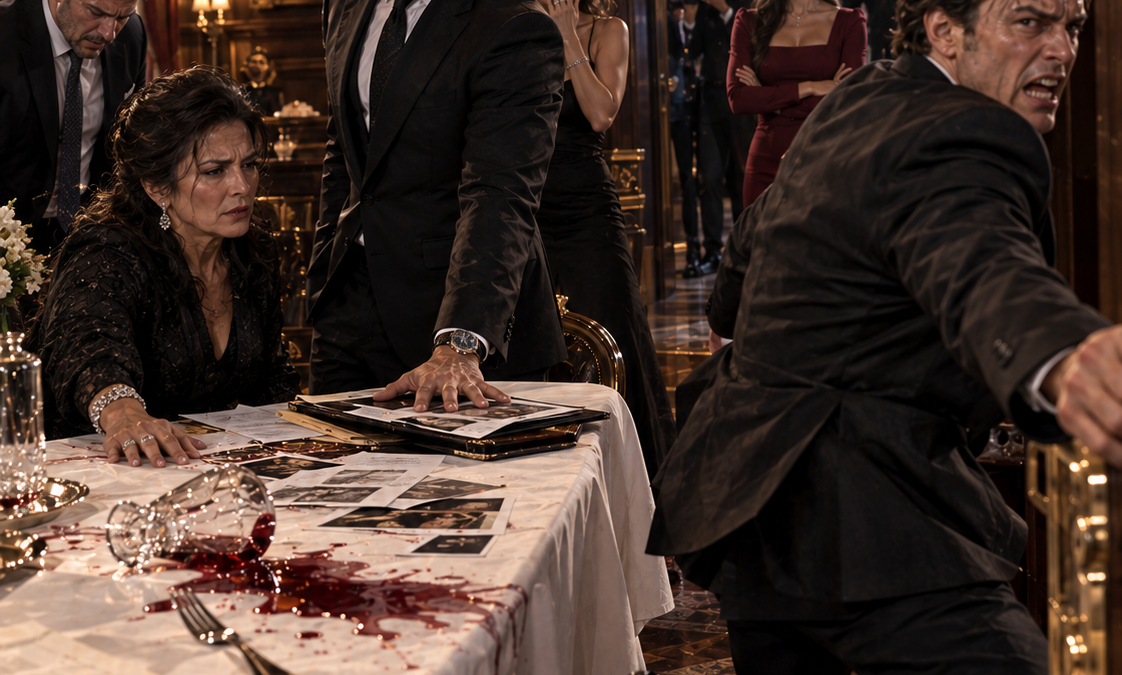
“I didn’t say I was good. I said I was the one who didn’t kill those people. There’s a difference. You’re smart enough to see it.”
She came to his city to prove his company killed four people. She stayed because he was the only man in his family willing to burn it all down to prove her right.
The first thing Sofia Vitale noticed about Dante Falcone was that he didn’t flinch when she said his concrete had killed four people.
The second thing she noticed was that he was eating.
He sat at a corner table in the back of Osteria Falcone, his family’s flagship restaurant, at four in the afternoon when the place was closed to the public. A plate of rigatoni sat in front of him, steaming. A glass of red wine. A folded newspaper. He looked like a man who had never once been told no in his life, and he was chewing slowly, watching her over the rim of his glass as she stood in the doorway with her hard hat under one arm and a stack of documents in the other.
“You’re not on the schedule,” he said. Not hostile. Curious. Like she was a wrong number that had somehow walked in through the front door.
“I’m not on anyone’s schedule,” Sofia said. She crossed the room before he could tell her to leave and dropped the stack of papers on his table, next to his wine. The top page was a photograph of the collapsed building on Ninth Street — the Meridian Tower, six stories of cheap concrete and cheaper rebar that had pancaked eleven days ago and killed a family of four in their beds. “Your company poured the foundation. Your company supplied the concrete. And your company signed off on the inspection three months before it came down.”
Dante set down his fork.
He was forty-one, she knew from the file she’d read twice on the drive over. Dark hair, broad shoulders, the kind of face that women’s magazines called “ruggedly handsome” and police sketches called “uncooperative.” He wore a navy suit that cost more than her monthly rent and a watch that cost more than her car. He was, according to the public record, a legitimate businessman — construction, hospitality, real estate. He was, according to the rumors she’d heard from a contact at the city inspector’s office, the man who owned half the inspectors and most of the judges and all of the silence in this city.
“Sit down,” he said.
“I’ll stand.”
“Suit yourself.” He picked up the photograph. Studied it for a long moment. His face gave her nothing — not guilt, not surprise, not even annoyance. Just the flat, patient attention of a man who had learned a long time ago that showing your hand was for amateurs. “You’re the engineer they brought in.”
“I’m the forensic structural engineer the city hired to determine cause of failure. Yes.”
“And you’ve determined it was my concrete.”
“I’ve determined it was someone’s concrete. The mix was substandard — too much sand, not enough cement, the kind of shortcut that saves about forty thousand dollars on a job this size and cuts the load-bearing capacity by half. The supplier on the manifest is a shell company called Corvino Materials. Corvino Materials doesn’t exist. Its address is a mailbox in a strip mall. Its registered agent is a lawyer who also represents three of your subsidiaries.” She paused. “And its invoices were paid from an account that traces back to Falcone Construction Group.”
Dante turned the photograph over, as if there might be something written on the back. There wasn’t. He set it down again and picked up his wine.
“You’ve done your homework,” he said. “What do you want?”
“I want the truth.”
“Nobody wants the truth. People want the version of the truth that lets them sleep at night.” He took a drink. “Try again.”
Sofia felt her jaw tighten. She had been in this city for six weeks, brought in by a city councilwoman who was up for reelection and needed a scapegoat or a hero and hadn’t decided which yet. She had spent those six weeks in a rented apartment with bad water pressure and a landlord who kept asking if she was “one of those Falcone people,” and she had spent the last four days tracing paper trails that led, over and over, to the same name. She had been threatened twice. Once by a man in a parking garage who told her to go home. Once by a phone call at three in the morning from a number that didn’t exist.
She had not been threatened by Dante Falcone. Not yet. But she was standing in his restaurant, and he was looking at her like she was a puzzle he hadn’t decided whether to solve or discard, and she knew she was in the kind of danger that didn’t announce itself.
“I want you to admit that Corvino Materials is yours,” she said. “I want you to admit that you knew the concrete was substandard. And I want you to admit that you paid off the inspector who signed off on that building so that the report would say what you needed it to say. In writing. On the record. And then I want you to walk into the district attorney’s office with me and repeat it.”
Dante laughed. It was a low, quiet sound, not unkind, but it made the hair on the back of her neck stand up.
“You’re not from here,” he said.
“No.”
“Where are you from?”
“Does it matter?”
“It matters because you’re talking like someone who thinks the rules are the same everywhere. They’re not. In this city, the rules are whatever I say they are.” He set down his glass and stood, and she realized he was taller than she’d expected, broader, the kind of man who took up space without apologizing for it. “You’re right about Corvino. It’s mine. I set it up six years ago to handle the materials for a project that needed to stay off the books. The concrete was cheap because the project was cheap. The inspector was paid because that’s how things get built in this city. And the building came down because someone cut corners that I didn’t authorize, using my name, on my watch, and four people are dead because of it.”
Sofia stared at him. She had expected denial. She had expected threats. She had not expected this — a confession, delivered flatly, like a weather report.
“If you know all that,” she said slowly, “why haven’t you gone to the police?”
“Because the person who cut those corners is my brother.”
The words landed like a stone in still water.
“Your brother,” Sofia repeated.
“Enzo Falcone. My younger brother. He runs the construction side of the business. Has for eight years. I gave him the keys and told him not to embarrass me, and he’s been embarrassing me ever since — skimming, cutting, lying to my face, and now this.” Dante’s voice didn’t change. It stayed low, controlled, almost pleasant. But something behind his eyes had gone very still. “I can’t go to the police because the police work for me, which means the police work for him, because he’s been buying them out from under me for two years. I can’t go to the DA because the DA is my cousin’s husband. I can’t go to the city because the city is mine, or it was, until Enzo started carving it up.”
Sofia’s mind was racing. This was not the story she had come here to write. This was a different story, a worse one, a story with more bodies in it.
“Why are you telling me this?” she asked.
“Because you’re the first person in six weeks who’s walked into my restaurant and told me the truth without asking for anything first.” Dante picked up the photograph of the dead family and looked at it again. “And because I need someone who isn’t on my payroll to help me prove what my brother did. Someone the city will believe. Someone with no reason to lie.”
“I have every reason to lie,” Sofia said. “I’m being paid by the city council to find fault. If I find it in you, I get a bonus. If I find it in your brother, I get a story.”
“Then find it in my brother,” Dante said. “And I’ll give you the story.”
He extended his hand across the table. Sofia looked at it — the broad palm, the calluses that didn’t match the suit, the faint scar across the knuckles that looked old and deliberate.
“I don’t shake hands with men like you,” she said.
“Men like me.” He didn’t lower his hand. “You don’t know what kind of man I am.”
“I know you own half the city’s inspectors. I know you’ve been paying off judges for a decade. I know your family has a reputation that makes people cross the street when they see your car.”
“All true.”
“And you want me to believe you’re the good one.”
“I didn’t say I was good.” Dante’s hand stayed where it was, patient, unhurried. “I said I was the one who didn’t kill those people. There’s a difference. You’re smart enough to see it.”
Sofia looked at his hand for a long moment. Then she looked at the photograph of the collapsed building, at the four faces she had memorized — a mother, a father, two kids under ten, asleep in their beds when the floor gave way. She thought about the phone call at three in the morning. She thought about the man in the parking garage. She thought about the fact that she had come to this city to do a job, and the job had just become something else entirely.
She didn’t take his hand.
“I’ll think about it,” she said. She gathered her documents and turned toward the door.
“Ms. Vitale.”
She stopped.
“When you think about it,” Dante said, “think about this. My brother knows you’re here. He knows what you’ve been doing. And he doesn’t have my restraint.”
Sofia turned back. He was still standing by the table, his hand finally lowered, his face unreadable.
“Is that a threat?” she asked.
“No.” Dante picked up his fork and sat back down, as if the conversation had never happened. “It’s a warning. From one professional to another.”
Chapter 2: The Receipt in Her Takeout Bag
She didn’t go back to her apartment that night. She went to a bar three blocks from the restaurant — a dive with sticky floors and a bartender who didn’t ask questions — and ordered a whiskey she couldn’t afford and sat in the corner with her laptop open, rereading the file on Dante Falcone.
It was thinner than she’d expected. A man with his reputation should have had a thicker file. But the arrests were all old, the charges all dropped, the witnesses all recanted. The only thing that stuck was a civil suit from twelve years ago, filed by a woman named Maria Falcone — his mother — over control of the family’s restaurant business. She’d lost. The court records showed she’d been represented by a public defender and had shown up to every hearing alone.
Sofia made a note. Maria Falcone. Still alive, according to a recent property record. Still living in the same house in the old neighborhood where she’d raised her sons.
She was on her second whiskey when her phone buzzed. A text from an unknown number.
Check your takeout bag.
Sofia frowned. She hadn’t ordered takeout. She’d eaten a granola bar in her car on the way to the restaurant.
Then she remembered: the hostess at Osteria Falcone had handed her a bag as she was leaving. A small white paper bag with the restaurant’s logo on it. Sofia had assumed it was a mistake, or a peace offering, and had shoved it into her messenger bag without looking at it.
She pulled it out now. Inside was a container of rigatoni — the same dish Dante had been eating — and a receipt.
The receipt was for a different order entirely. It listed a veal chop, a bottle of Barolo, and a side of grilled vegetables. The total was $187. The date was three weeks ago. The name on the receipt was “S. Vitale.”
Sofia stared at it.
She hadn’t ordered from Osteria Falcone three weeks ago. She hadn’t ordered from them ever. She’d been in the city for six weeks, and she’d eaten out exactly four times, all at the same diner near her apartment.
She turned the receipt over. On the back, in small, neat handwriting that didn’t match the printed text, someone had written a series of numbers.
CRV-4472-19. $40K. Paid 3/12. Insp. #114.
Sofia’s heart started to beat faster.
CRV. Corvino Materials. 4472 was the project number for the Meridian Tower. $40K was the amount she’d estimated the substandard concrete had saved. 3/12 was the date of the inspection. And #114 was the badge number of the inspector who had signed off on the building.
She had spent four days finding that information. Someone had written it on a takeout receipt and put it in her bag.
Sofia looked around the bar. No one was watching her. The bartender was wiping down glasses. Two men at the end of the counter were arguing about football. The door was closed.
She pulled out her phone and texted the unknown number back.
Who is this?
The reply came immediately.
Someone who wants the same thing you do. Keep the receipts. There will be more.
Sofia sat in the bar for another hour, staring at the receipt, trying to decide whether she was being helped or played. When she finally left, she walked the long way home, checking her mirrors, and she locked her apartment door twice before she went to bed.
She didn’t sleep.
Chapter 3: The Mother
The next morning, Sofia drove to the old neighborhood.
It was a part of the city she hadn’t seen yet — row houses and corner stores, a Catholic church with a statue of the Virgin Mary out front, a park where old men played cards at tables bolted to the ground. It was the kind of neighborhood that had been Italian fifty years ago and was now Italian and Dominican and Vietnamese and Black, all layered on top of each other like sediment. The Falcone house was a narrow two-story on the corner of two dead-end streets, with a fig tree in the front yard and a chain-link fence that had been repaired in three different places.
Maria Falcone was in the yard when Sofia pulled up. She was in her seventies, small and sharp-eyed, wearing a housedress and gardening gloves and holding a pair of pruning shears that she did not put down when Sofia got out of the car.
“You’re the engineer,” Maria said. Not a question.
“Word travels fast.”
“Word travels because I make it travel.” Maria snipped a dead branch off the fig tree and dropped it into a bucket. “You went to see my son yesterday.”
“I did.”
“And now you’re here.”
“I am.”
Maria looked at her for a long moment. Then she set down the shears and wiped her hands on her apron.
“Come inside,” she said. “I’ll make coffee.”
The house was small and warm and smelled like garlic and basil. Sofia sat at a kitchen table covered in a plastic tablecloth while Maria made coffee in a stovetop pot and set out a plate of biscotti that she didn’t offer but that Sofia understood she was expected to eat.
“You’re not the first person to come here asking questions about my family,” Maria said, sitting down across from her. “You’re just the first one who’s come in daylight.”
“I’m not trying to be subtle.”
“No. You’re trying to be honest. That’s why you’re going to get hurt.” Maria poured the coffee. “My son Dante is a lot of things. A liar. A criminal. A man who has done terrible things in the name of keeping this family together. But he is not the one who killed those people.”
“You know about the building?”
“I know about everything that happens in this family. I’ve been watching it happen for fifty years.” Maria’s voice was flat, almost tired. “I tried to stop it once. I sued my own sons for control of the restaurant business. I lost. Now I sit in this house and I watch them tear each other apart and I wait for the phone call that tells me one of them is dead.”
“Which one?”
“Whichever one is weaker.” Maria took a sip of her coffee. “Enzo is weaker. He’s always been weaker. He’s the baby, and he was spoiled, and he never learned that you can’t take what you want without paying for it. Dante learned. Dante paid. He’s been paying for Enzo’s mistakes since they were children.”
Sofia thought about the receipt in her bag. The neat handwriting. The precise information.
“Someone in your family is helping me,” she said. “Someone is sending me documents. Do you know who?”
Maria’s face didn’t change. But her hands, folded on the table, tightened around each other.
“I don’t know what you’re talking about,” she said.
“You do.”
“I know that my son Dante has been trying to protect this family from itself for twenty years. I know that he’s made deals with the devil to keep Enzo out of prison. I know that he’s never once asked for help.” Maria stood and carried her cup to the sink. “And I know that if you’re here, it means he’s finally decided to stop protecting his brother. Which means someone is going to die.”
She turned back, and her eyes were wet but her voice was steady.
“Get out of my house, Ms. Vitale. And don’t come back.”
Chapter 4: The Man in the Parking Garage
Sofia was halfway to her car when the black SUV pulled up beside her.
The window rolled down. The man inside was young, maybe thirty, with a face she recognized from the file — Enzo Falcone. He had the same dark hair and broad shoulders as his brother, but where Dante’s face was controlled, Enzo’s was loose, grinning, the face of a man who had never been told no and had decided that meant yes was for other people.
“Ms. Vitale,” he said. “I’ve been looking for you.”
“Then you should have called.”
“I don’t call.” He opened the door and got out. He was taller than his brother, but softer, the muscle gone to fat around the middle. He wore a tracksuit and gold chains and a watch that was trying too hard. “I want to talk to you about my brother.”
“I’m not interested.”
“You should be.” He stepped closer. Sofia didn’t back up. “Dante is a liar. He’s been lying to you since you walked into his restaurant. He’s not trying to help you find the truth. He’s trying to help you find a scapegoat. Me.”
“Is that so?”
“It’s so. He’s the one who set up Corvino. He’s the one who signed off on the materials. He’s the one who paid the inspector. I just work for him. I do what I’m told.” Enzo spread his hands, the picture of innocence. “But I have proof. Bank records. Emails. Everything you need to put him away for the rest of his life. And I’ll give it to you. For a price.”
Sofia looked at him. She thought about the receipt in her bag. The neat handwriting. The precise numbers.
“What price?” she asked.
“Go on the record. Tell the city that Dante is the one who killed those people. Not me. Not my crew. Dante.” He smiled. “Do that, and I’ll give you everything you need. Do it by Friday, and you’ll never have to see this city again.”
“And if I don’t?”
Enzo’s smile didn’t change. But something behind his eyes shifted — a flicker of something cold and patient, like a snake deciding whether to strike.
“Then you’ll stay in this city,” he said. “And you’ll learn what happens to people who don’t listen.”
He got back in his SUV and drove away. Sofia stood in the street for a long moment, her heart pounding, her hands shaking. Then she got in her car and drove back to her apartment and locked the door and sat on the floor with her back against the wall, staring at the receipt.
The next morning, there was another takeout bag outside her door.
She hadn’t ordered anything.
Inside was a container of minestrone and a receipt for a meal she hadn’t eaten. On the back, in the same neat handwriting:
Don’t trust Enzo. He’s lying. Meet me at the restaurant. Back door. 3 PM.
Sofia stared at the note for a long time. Then she crumpled it in her fist and threw it in the trash.
And at 2:45 that afternoon, she drove to Osteria Falcone.
Chapter 5: The Back Door
The alley behind the restaurant was narrow and dark and smelled like garbage and rain. Sofia knocked on the back door and waited. A minute passed. Then the door opened, and Dante Falcone stood there in a white chef’s apron over a black shirt, his sleeves rolled up, his forearms dusted with flour.
“You came,” he said.
“You said you’d give me the story.”
“I said I’d give you the truth. The story is what you do with it.” He stepped back and let her in. “Come on. Before someone sees you.”
The kitchen was small and hot and gleaming, all stainless steel and copper pots and the smell of garlic and rosemary and something sweet baking in the oven. A radio played low in the corner. A young woman with a nose ring and a bandana was stirring something at the stove; she glanced at Sofia and then at Dante and then back at her pot, and said nothing.
“Who’s she?” Sofia asked.
“Rosa. My sous chef. She’s been with me for six years. She knows how to keep her mouth shut.”
“Does she know you’re feeding me evidence in takeout bags?”
Dante’s mouth twitched. Almost a smile. Almost.
“She’s the one who packs the bags.”
Rosa didn’t look up from her pot. “The receipts are my idea,” she said. “Dante’s handwriting is terrible. No one would believe it was a real order.”
Sofia looked between them. “You’ve been planning this.”
“For two months. Ever since the building collapsed.” Dante pulled out a stool and gestured for her to sit. She didn’t. He shrugged and sat down himself, straddling the stool, folding his arms on the counter. “I knew the city would bring in an outside investigator. I knew they’d trace the concrete to Corvino. I knew they’d trace Corvino to me. I just didn’t know if the investigator would be someone who could be bought or someone who could be trusted. I had Rosa watch the hotels. The rental listings. Anyone new in town with an engineering background.”
“And when you found me?”
“I started sending receipts.” He nodded at Rosa. “She’s been slipping them into bags for anyone who might be you. The hostess has been giving them to the wrong people for weeks. You’re the first one who got the right bag.”
Sofia sat down. Slowly. Her legs didn’t feel entirely steady.
“Why the charade?” she asked. “Why not just call me? Why not just walk into the city council office and tell them everything?”
“Because I don’t know who’s listening.” Dante leaned forward. His eyes were dark and intent, and for the first time she saw something behind the control — something tired, something almost desperate. “Enzo has people everywhere. In the police. In the DA’s office. In the city council. If I’d gone to you directly, someone would have seen. Someone would have told him. And then you’d be dead, and I’d be dead, and Enzo would be running this city by Christmas.”
“So you sent me receipts and hoped I’d notice.”
“I sent you receipts and hoped you’d investigate. I didn’t need you to notice the pattern. I needed you to find the evidence. To build a case that couldn’t be buried. To take it to someone who couldn’t be bought.” He paused. “There are three people in this city who can’t be bought. You’re one of them.”
Sofia stared at him. The radio played something old and sad. Rosa stirred her pot. The oven timer went off and she pulled out a tray of bread, and the smell filled the room.
“Who are the other two?” Sofia asked.
“One is a judge. She’s clean. She’s been clean for thirty years. She’s the one I want you to take the evidence to.” Dante stood and walked to a cabinet, pulled out a folder, and set it on the counter between them. “The other is my mother. She’s not a judge, but she’s the only person in this family Enzo is afraid of.”
“You said your mother wouldn’t help.”
“I said she told me to leave. I didn’t say she wouldn’t help.” Dante opened the folder. Inside were bank statements, emails, photographs, a thumb drive, a handwritten ledger. “This is everything I have. Everything I’ve collected over two years. It’s enough to put Enzo away for twenty years. It’s enough to clear my name. It’s enough to bring down half the city government.”
“Why haven’t you used it?”
“Because the last person I gave it to disappeared.” Dante’s voice didn’t change. But his hands, resting on the counter, had gone very still. “A journalist. Her name was Elena Marsh. She was investigating Corvino six months ago. She had this same file. She was going to publish. And then she stopped answering her phone. Her apartment was cleaned out. Her car was found in the river.”
Sofia felt cold.
“You think Enzo killed her.”
“I think Enzo kills anyone who gets close. I think he’s been killing people for years. I think the building collapse was just the first time he couldn’t hide it.” Dante closed the folder and pushed it toward her. “You can take this to Judge Okafor. You can build the case. And when it’s ready, you can go public. But you have to be careful. You have to be smart. And you have to trust me.”
Sofia looked at the folder. Then at him.
“I don’t trust anyone,” she said.
“Good.” Dante stood and walked to the stove, where Rosa had set out a bowl of soup. He picked it up and set it in front of Sofia. “Then don’t trust me. Trust the evidence. And eat something. You look like you haven’t slept in a week.”
Sofia looked down at the soup. Minestrone. The same soup that had been in the takeout bag outside her door.
“Did you send the soup?” she asked.
“I sent the receipt. Rosa sent the soup.” Dante turned back to the stove. “She thinks you’re too skinny.”
From the other side of the kitchen, Rosa snorted. “I think she’s too pale. Eat the soup. You’ll need your strength.”
Sofia ate the soup. It was the best thing she’d tasted in weeks.
And for the first time since she’d come to this city, she allowed herself to believe that she might not be alone.
Chapter 6: The Judge
Judge Amara Okafor was seventy-three years old and had the kind of face that had seen everything and been impressed by none of it. She sat behind a desk in her chambers and listened to Sofia’s entire presentation without interruption — the concrete, the shell company, the paid inspector, the dead family, the file that Dante Falcone had given her.
When Sofia finished, Okafor was silent for a long moment.
“You understand what you’re asking me to do,” she said.
“I’m asking you to issue a warrant. For Enzo Falcone. For the bank records, the emails, the people who helped him.”
“You’re asking me to go to war with the Falcone family.” Okafor folded her hands on the desk. “I’ve been on this bench for thirty years. I’ve sent a lot of people to prison. I’ve made a lot of enemies. But I’ve never made an enemy of the Falcones. There’s a reason for that.”
“Because they own half the judges in this city.”
“Because they’re careful. They don’t leave evidence. They don’t leave witnesses. They don’t leave bodies.” Okafor leaned forward. “If you’re right about Enzo Falcone, you’re talking about a man who has been running a criminal enterprise under his brother’s nose for eight years. A man who has killed at least one journalist. A man who owns the police. That’s not a warrant. That’s a war.”
“I know.”
“And you’re prepared to fight it?”
Sofia thought about the receipt in her bag. The note in the takeout container. The look on Dante Falcone’s face when he’d said my brother. She thought about the four people who had died in their beds because someone wanted to save forty thousand dollars.
“I’m prepared to try,” she said.
Okafor studied her for a long moment. Then she opened a drawer, pulled out a legal pad, and picked up a pen.
“Give me everything,” she said. “Names. Dates. Account numbers. And then I’ll decide whether you’re brave or stupid.”
Sofia talked for two hours. When she was done, Okafor had filled twelve pages with notes and her face had gone from skeptical to grim.
“I can issue the warrant,” she said. “But it will take time. And in the meantime, you need to be careful. Enzo will know something is happening. He’ll try to stop you.”
“He already tried.”
“Then he’ll try again. And next time he won’t bother with a warning.” Okafor stood and walked her to the door. “One more thing. The journalist. Elena Marsh. You said she was investigating Corvino.”
“She was.”
“Did you know she was Dante Falcone’s mistress?”
Sofia stopped.
“What?”
“Elena Marsh and Dante Falcone were involved for two years. It was quiet. Discreet. But it was real.” Okafor’s voice was gentle. “She wasn’t just investigating the story. She was trying to help him. She was trying to save him. And Enzo killed her for it.”
Sofia stood in the doorway, her mind reeling.
“Dante didn’t tell me that,” she said.
“No. He wouldn’t.” Okafor opened the door. “Men like Dante Falcone don’t tell people they loved someone. They carry it. They let it burn. And then they use it.”
Chapter 7: The Empty Apartment
Sofia went back to her apartment to pack. She didn’t know where she was going, but she knew she couldn’t stay — not now that Enzo had warned her, not now that Okafor was issuing a warrant. She packed a bag, checked her windows, and was about to leave when she heard a knock at the door.
She froze. Looked through the peephole. It was Dante.
She opened the door.
“What are you doing here?” she asked.
“I heard about Okafor. Rosa has a contact in the courthouse. She says the warrant is being processed.” He stepped inside without being invited, scanning the apartment, his eyes moving over the windows, the door, the fire escape. “You can’t stay here.”
“I know. I’m packing.”
“Good. You’re coming with me.”
“I’m not coming with you.”
“You don’t have a choice.” He turned to face her. His voice was flat, controlled, but there was something underneath it — something urgent. “Enzo knows you went to the judge. He knows you have the file. He’s not going to let you leave this city. Not alive.”
“I can take care of myself.”
“Can you?” Dante stepped closer. “Elena said the same thing. She said she knew how to handle Enzo. She said she’d been careful. And now she’s at the bottom of the river.” He paused. “I’m not going to let that happen again.”
Sofia stared at him. The apartment was small and dim and cold. Outside, the city hummed with traffic and music and the distant sound of a siren. Inside, it was just the two of them, and the truth that neither of them had said out loud.
“You loved her,” Sofia said.
Dante’s face didn’t change. But something behind his eyes — something she had seen before, in the restaurant, when he’d talked about the building — flickered and went out.
“Yes,” he said. “I loved her.”
“And Enzo killed her.”
“Yes.”
“And you’ve been carrying that for six months.”
“Yes.”
Sofia thought about the receipt in her bag. The neat handwriting. The precise numbers. She thought about the fact that Dante had been sending her evidence for weeks, trusting that she would notice, trusting that she would come to him, trusting that she would be the one to help him take down his brother.
“Why didn’t you tell me?” she asked.
“Because it doesn’t matter.”
“It matters to me.”
“Why?” Dante’s voice sharpened. “You don’t trust me. You said so yourself. You don’t shake hands with men like me. You think I’m a liar and a criminal and a man who’s done terrible things. And you’re right. I am all of those things. But I’m also the only person in this city who can keep you alive.” He paused. “So you can hate me. You can distrust me. You can tell yourself that I’m using you. But you’re coming with me. Because if you don’t, you’ll be dead by morning.”
Sofia looked at him. Then she looked at her bag. Then she looked at the door.
“I’m not going to sleep with you,” she said.
“I didn’t ask you to.”
“I’m not going to be your next Elena.”
“I didn’t ask you to be.” Dante picked up her bag. “I’m asking you to be my ally. My partner. My witness. The person who takes my brother down. That’s all.”
Sofia hesitated. Then she grabbed her coat and followed him out the door.
 [Tap here for the Next Part ]