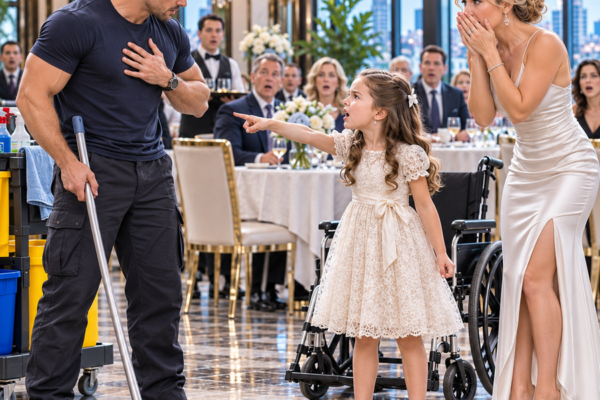
Single Dad Ran Through Gunfire to Save a Female CEO—What He Did Left Her Bodyguards Speechless (Part 2)
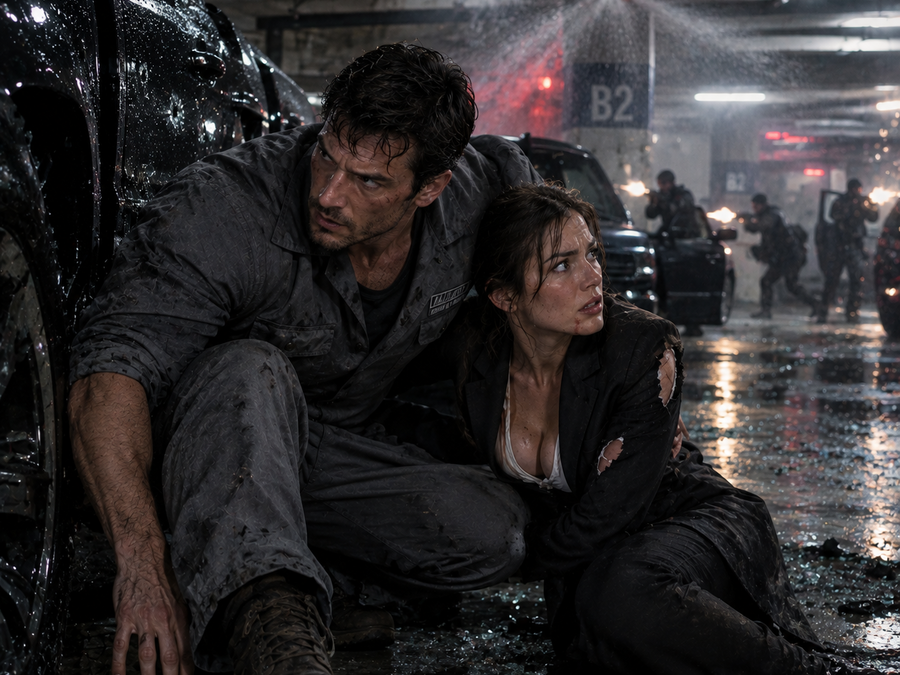
Single Dad Ran Through Gunfire to Save a Female CEO—What He Did Left Her Bodyguards Speechless (Part 2)
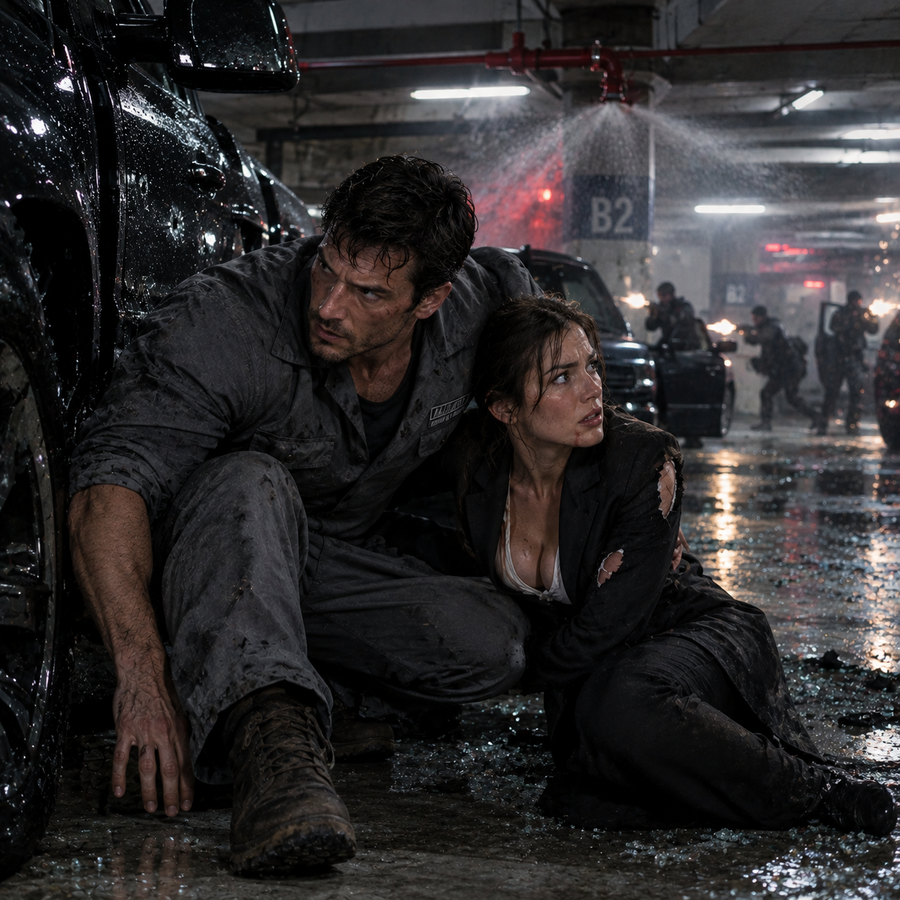
PART 2
He paused, listening. Nothing from ahead. Just the drip of water and the faint percussion of the city above them.
“When we get to the access point, I need to look before we go through.
Don’t follow until I signal.”
“Understood.”
They moved in silence for another 3 minutes. Then Callum stopped ahead.
Faint but definite, the sound of a voice. He held up his hand.
Elena stopped immediately. He clicked his flashlight off and stood in the dark listening.
One voice, agitated, the specific cadence of someone on a phone call. Irregular pauses, rising volume, words that were almost audible, but not quite. Callum tracked the direction above and to the right, the station floor.
He turned back to Elena in the dark and spoke directly into her ear. Barely above a breath.
“He’s up there.
Alone as far as I can hear.
He’s on the phone.”
He felt rather than saw her nod.
“The access hatch is 30 ft ahead.
I’m going through first.
I’m going to find a position and assess.
You wait here until I signal. One tap on the floor with my foot.
You’ll feel it through the concrete.”
She found his arm in the dark and gripped it briefly. Not romantically, not dramatically, just the grip of someone confirming they understood.
He moved the last 30 ft by feel and memory, light off, one hand on the pipe wall. He found the hatch by the change in texture of the wall. Old metal, slightly soft with age.
He checked the hinges by touch, outward opening, which was worse.
He’d have to push and commit.
He listened for 30 seconds. The voice above was clearer now.
Brener Shaw, he assumed, a male voice, controlled but tight, the control of someone managing their fear. He could make out fragments.
“Not what we agreed.”
And then, “You said it would be clean.”
And then something lower he couldn’t catch.
And then clearly, “I have leverage.
I just need time.”
Leverage. Present tense.
Callum’s stomach went cold.
He pushed the hatch. It opened with a sound that was too loud in the empty station.
Metal on concrete. And he was through it and moving before the sound finished. Using the same broken-down instinct that had gotten him across a parking garage the day before, up and right into the shadow of a structural column.
Light still off.
His eyes adjusted to the station’s ambient light.
Emergency fluorescents, weak and yellow, the kind left running during a stalled construction project. The station floor was vast and unfinished.
Raw concrete walls, incomplete platform edges, equipment left where it had stopped when funding dried up.
And in the center of it, near what would eventually have been the main entrance stairwell, stood a man Callum didn’t recognize by face, but recognized by posture.
Brener Shaw was in his mid-50s, heavy through the shoulders, wearing a jacket that had the expensive but not quite polished quality of a man who’d worked hard to look a certain way.
He had a phone to his ear and a weapon at his side, held loosely the way a man held something he expected to need soon.
His back was to Callum’s position.
He was talking to someone who had apparently just told him something he didn’t want to hear.
“No, listen to me.
Listen.”
His voice was low and precise.
“I have the girl.
She’s secure.
That changes everything.”
Callum stopped breathing.
He’d heard wrong.
He must have heard wrong.
“I said she’s secure,” Brener repeated with the emphasis of someone saying something for the second time to someone skeptical.
“The neighbor was easy.
Nobody was watching the house yet.
I got there before they set up.”
Reed doesn’t know.
He paused.
“She’s at the Kramer Street property with Vasquez.”
The Kramer Street property. The third location on the schematics.
Not the station. The station was where Brener had come to make his call away from wherever Maisie was, which meant Callum stepped back toward the hatch.
He needed Elena.
He needed her now because he needed to move fast and he couldn’t leave her alone in a dark tunnel while he dealt with Brener and went to Kramer Street.
He found the edge of the hatch and put his foot against the concrete directly over the tunnel. Applied one firm tap. The hatch shifted.
Elena came through faster than he’d expected.
She was learning the pace of this, adapting to it in real time. He pulled her close and spoke directly into her ear.
“He doesn’t have her in the station.
She’s at the Kramer Street property.
He got to her before Ror’s people.”
The words were almost impossible to say. He said them anyway.
“We need to move.”
He felt Elena’s hand find his forearm in the dark.
“Callum.”
“I’m all right.”
“You don’t sound—” “I’m all right.”
He wasn’t.
He was holding himself in place by the same cold discipline that had gotten him through worse things.
The knowledge that falling apart was a luxury he couldn’t afford in the next hour.
Later, if he got her back safe, he could fall apart as much as he needed to.
“Ror needs to know the Kramer Street location.
Can you—” “Already texting him.”
He could hear the faint tap of her fingers on her phone screen.
“Done.
Tell him no sirens, no lights.
If Brener has a man on site and he hears police—” “I’m telling him.”
Brener’s voice above them had shifted.
The call was ending, the posture changing. Callum assessed through the gap in the hatch. Brener was moving now toward the stairwell on the far end of the station.
He wasn’t coming toward them.
He was going up, probably toward a street exit, intending to relocate. Callum made the calculation in under 2 seconds.
If Brener reached the street, he’d know within minutes that Ror’s people were mobilizing.
He’d call Vasquez.
Vasquez would move Maisie or do something worse. Brener walking out of this station free was a problem.
“Stay at the hatch,” he told Elena.
“Don’t come up—” “Callum—” He was already through the opening.
He moved across the station floor in the same low, fast pattern as the day before. Pillar to pillar, staying in the shadow cast by the weak emergency lights.
Brener’s footsteps were ahead and to the left, unhurried, the walk of a man who believed he was alone.
Callum closed the distance in 30 ft, then 20, then 10.
He was close enough to hear Brener’s breathing when the man stopped.
Something had registered. Some sound. Some shift in the air.
6 years in private security.
Brener wasn’t untrained.
He started to turn. Callum was already there.
What happened was fast and ugly and not graceful in any way. Brener got his arm up and caught Callum across the shoulder, which was better than Callum would have liked, but not good enough to change the outcome.
Callum took the hit, redirected Brener’s weapon arm, and drove the man into the nearest concrete wall with enough force to end the struggle before it properly started.
The weapon clattered away across the raw concrete floor. Brener made a sound that was somewhere between a shout and something more involuntary.
Callum had his arm across the man’s back and his knee at the base of his spine and was breathing hard, both from the effort and from the thing that was happening in his chest that he was not going to allow to surface right now.
“Kramer Street,” he said, and his voice was not level.
Not quite.
It had something in it that even Callum couldn’t fully control.
“You’re going to tell me exactly where she is.”
Brener said nothing.
“I know there’s a man there.
Vasquez.”
Callum increased the pressure. Not recklessly.
He wasn’t going to damage something he needed functional, but enough.
“I need to know the layout, how many rooms, which one she’s in, where Vasquez is positioned.”
“You—” Brener started.
“You used my daughter,” Callum said quietly.
And the quiet was more frightening than volume would have been. He knew that, had always known that.
“She is 8 years old.
You pulled her file and you sent someone to my neighbor’s house, and you are going to tell me exactly what I need to know.”
A long pause.
Brener’s face was against the concrete wall.
He couldn’t see Callum’s expression, which was probably the only thing that made the next several seconds bearable for him.
“Three rooms,” Brener said finally.
“She’s in the back.
Vasquez is at the front entrance.”
“Is she hurt?”
“No.”
“If you’re lying—” “She’s not hurt.
I’m not—” Brener made a sound that was almost a cough.
“I’m not a monster.”
Callum said nothing to that. He pulled a zip tie from his jacket pocket.
He’d taken two from the maintenance supply cabinet before they’d entered the tunnel, because old habits, and secured Brener’s wrists to the railing of the incomplete staircase.
He retrieved the weapon, checked it, and pocketed it.
“Someone will be here for you,” he said.
“Don’t try to move.”
He crossed back to the hatch. Elena was already halfway out of it.
“I heard enough,” she said.
“Kramer Street.”
“Yes.”
“Ror says he can have people there in 15 minutes.”
He looked at the tunnel behind her. The tunnel was 150 m back to the building, then street level, then two blocks. The Kramer Street property was six blocks from here.
“I’m not waiting 15 minutes,” he said.
“I know.”
Elena met his eyes.
“I’m driving.”
He looked at her.
“I have a car on the north side of the building,” she said.
“I came in this morning without the convoy.”
She held up her phone showing the key fob app.
“6 blocks in 4 minutes.”
He made the calculation.
He didn’t like it.
He didn’t have a better option.
“Let’s go,” he said.
They ran back through the tunnel. Above them, the city moved through its ordinary morning traffic, building on Rener Boulevard.
Coffee being made in offices. People doing what people did on a Tuesday with no idea what was happening beneath the street.
Callum ran and thought about Maisie sitting in a back room of a storage facility with a man named Vasquez.
And he thought about the armored rider in her drawing that she hadn’t figured out what he was ready for yet.
He thought about how she’d put her hand over his on the steering wheel the night before.
He ran harder. Elena drove the way Callum expected, fast, clean, no wasted motion.
She’d taken the parking structure’s north exit before he’d finished buckling in, cutting through the side street that ran parallel to Rener Boulevard rather than fighting the morning traffic building on the main road.
She knew the city. He registered that without surprise.
“Vasquez,” she said as they moved through a yellow light at the intersection of Kramer and Fifth.
“Do you know anything about him?”
“Nothing, just the name from Brener.”
“Brener ran security for 6 years.
His contractors came from a specific pool.
Former military, some private security backgrounds, a few with records that got quietly overlooked because they were useful.”
She glanced at him.
“If Vasquez is one of Brener’s people, he’s not going to be easy.”
“I’m not expecting easy.”
“I’m just telling you what I know.”
“I know.”
He was watching the street numbers. Kramer ran north-south. The numbers climbing as they moved away from downtown.
The property Brener had pulled schematics for was a converted storage facility, former light industrial, rezoned commercially a decade ago, the kind of building that changed hands every few years without changing much else about itself.
He’d looked it up on his phone in the tunnel.
3,000 square ft, one main entrance, two roll-up doors on the east side that were listed as sealed. If Brener was accurate about the layout, three rooms, Vasquez at the front, Maisie at the back, then the east side was the more useful approach.
“Pull over before the block,” he said.
“I want to come at it from the east side.”
She turned without asking why, which he appreciated. She parked on a side street one block east of the Kramer property behind a delivery van that provided cover from the main road. She killed the engine and sat with both hands on the wheel, not moving.
“I want to say something,” she said.
“Make it quick.”
“Yesterday you ran into a parking garage because it was the right thing to do.
Today you’re running toward a building because my security director kidnapped your daughter.”
She looked straight ahead through the windshield.
“I need you to know that I understand the difference and I’m sorry.”
He looked at her. The apology was genuine.
He could hear it. The specific weight of something a person had been carrying since they understood the full shape of it.
It wasn’t the sorry of someone managing liability.
It was the sorry of someone who actually got it.
“You didn’t do this,” he said.
“Brener was my responsibility.”
“Yes.
And you didn’t know.”
He opened the door.
“Don’t apologize again until after I get her back.”
He was out of the car before she answered. The east side of the Kramer property was a narrow alley between the storage facility and the back of a neighboring auto repair shop.
The roll-up doors were exactly where the building registry said they’d be.
Two of them, metal, orange with rust along the tracks, padlocked from the outside.
Padlocked from the outside meant they hadn’t been used as an entry point, which confirmed Brener’s account.
Front entrance. Callum moved along the alley wall, staying low, watching the upper windows.
There were three on the east-facing side, small and frosted. Bathroom or storage, not observation.
No line of sight from inside, which was useful. He stopped at the rear corner of the building and listened.
Sounds from inside were muffled but present. Movement, single person, irregular.
The pattern of someone pacing from the front of the building, which put Vasquez where Brener said he was. Callum tracked the sound across approximately 20 ft of interior space and held the estimate.
No sound from the back room, which meant either Maisie was very quiet or she was. He stopped that thought before it finished. She was quiet.
That was all.
He checked the weapon he’d taken from Brener, a compact 9mm, standard configuration, full magazine.
He cleared his mind of everything that wasn’t the next 4 minutes.
He’d secured Brener’s phone before leaving the station, taken it from the man’s jacket pocket while restraining him.
He pulled it now and navigated to the last dialed number, a single entry labeled with initials V. He looked at the time of the call, 12 minutes ago.
Whatever Brener and Vasquez had discussed, it was recent.
He typed a text from Brener’s phone.
“All good.
Stand by.
Reed doesn’t know.”
He waited 12 seconds, then a response.
“Copy.”
One word. One word was enough.
Vasquez was texting, not calling, which meant he was managing his noise level inside the building. He was alert, but not alarmed.
He believed he was waiting for a plan to unfold on someone else’s timeline.
Callum put the phone away. He went back around to the front of the building, which was the part he liked least about this situation.
But he’d gone through Brener’s posture in that transit station.
The man had been afraid and improvising. Afraid and improvising, people made the plans they could make, not the plans they should.
A good plan would have had a second person on the east side. A better plan would have had three people total.
Brener had Vasquez and whatever confidence he’d taken from knowing Ror’s people weren’t yet in position.
Callum rang the buzzer. It was the kind of direct action that ran against almost every trained instinct he had.
But there was no clean angle on the building. No second entry he could exploit without cutting through a padlock that would make noise.
No window accessible without a ladder he didn’t have.
Sometimes the options were what they were. Movement inside. Faster now.
Surprised, the pacing stopped. He heard someone cross the floor.
“Who’s there?”
A voice through the door.
“Mail,” Callum said.
Lower register. Careful.
“Delivery,” Callum said.
He kept his voice flat, slightly bored.
The voice of someone who’d been knocking on industrial doors all morning and had four more stops before noon.
“Signature required.”
A pause.
“I didn’t order anything.”
“I’ve got a building address.
That’s all I know.
You want to sign, or you want me to take it back?”
Another pause, longer. Vasquez was working through it.
The texture of the weight changed and Callum recognized the specific shape of someone who was deciding something they weren’t sure about.
The lock turned. The door opened 3 in, cautious, with the chain still on.
A face appeared in the gap, angular, mid-30s, the particular flat alertness of someone trained to assess threat levels quickly.
Vasquez clocked Callum’s face, his clothes, the absence of a package or clipboard.
It took him 1 and 1/2 seconds to understand. He was fast.
Callum gave him that. He was not fast enough. Callum hit the door with his shoulder.
Full weight, timed to the half second when Vasquez had recognized the problem, but hadn’t yet moved his body to match what his brain was doing.
The chain snapped. The door caught Vasquez across the face and forearm. Callum was inside before the man had recovered his footing.
What followed was not clean. It was close and cramped and ugly the way real fights were.
Not the choreographed exchange of a performance, but the immediate violent problem of two people in a small space trying to end things before the other one did. Vasquez recovered faster than most.
He got a hand on Callum’s jacket and used the momentum to drive him into the shelving rack along the left wall.
Metal bit into Callum’s shoulder blade.
Something fell and clattered.
Callum got his elbow into Vasquez’s ribs on the recovery.
Short, sharp, the specific angle that made it hard to breathe properly, and followed it with a knee that connected lower than he’d intended and high enough to matter.
Vasquez folded. Callum got behind him and applied the hold that ended it.
Not gently, not brutally, just with the precision of someone who knew exactly how long it took and waited exactly that long. Vasquez went down. Callum was already moving toward the back of the building.
“Three rooms,” Brener had said.
He passed the first, empty shelving and tarps, and the second, some kind of former office space, a folding table, two chairs, and reached the third door, solid wood with a new padlock that hadn’t been part of the original building.
New padlock meant it had been purchased recently and installed for exactly this purpose. He had a voice before he had a plan.
“Maisie.”
He kept it low, even.
“It’s me.”
A pause. Two seconds that lasted considerably longer than 2 seconds. Then from the other side of the door.
“Dad.”
Not scared. Flat. The voice she used when she was frightened, but had decided not to be frightened at the surface level.
He recognized it because she used it at the doctor’s office when they needed blood draws.
And she’d inherited his particular complicated relationship with showing that she was afraid.
“Are you hurt?”
he said.
“No, he didn’t touch me.
He just put me in here.”
A pause.
“I knocked over a shelf in the dark and my knee hurts a little bit.”
“Okay.”
He examined the padlock. Decent hardware, not the cheap kind. He needed the key.
He went back to Vasquez, searched the man’s pockets, found it on a ring with two others.
Back to the door in 30 seconds. The lock opened.
Maisie was in the corner of what had been a storage room.
No windows, one bare overhead bulb that had apparently been the shelf she’d knocked over since it was lying on its side and still connected to a work light cord that ran to an outlet.
She was sitting on the floor with her knees pulled up, her backpack in her lap, her school uniform dirty at the knee where she’d said she had a bruise forming on her left hand, probably from the fall.
She stood up when he opened the door.
She didn’t run to him.
She walked. And it was almost worse than running.
The deliberate, controlled movement of someone who’d decided to keep it together and was succeeding at a cost.
He knelt down and she walked into him and he held her. Neither of them said anything for a moment. He could feel her breathing a little fast, but steadying.
He kept his arms around her and didn’t rush it.
“I knew you’d come,” she said into his shoulder.
Not dramatically, just stated the way she stated things she was certain of.
“Yes,” he said.
“I counted.
I was in there for—” She paused, doing the math.
“41 minutes.”
“I know.
I’m sorry it took that long.”
“You could have known earlier.”
“No.”
She pulled back and looked at him. The bruise on her hand was darker than it had seemed from a distance. He took her hand carefully and looked at it.
Nothing broken, just impact.
She’d had worse from playground equipment.
“Is it bad?”
she asked.
“No, we’ll ice it.”
She looked past him at Vasquez, who was on the floor of the front room.
“Did you fight him?”
“Yes.”
“Is he—” “He’s fine.
He’ll have a bad day, but he’s fine.”
She nodded, accepting this.
Then she looked at his face with that direct, reading-the-room quality she’d had since she was old enough to read rooms.
“You were scared,” she said.
He didn’t answer immediately.
“It’s okay,” she said.
“I was scared, too.”
“I know you were.”
“I didn’t cry, though.”
She said it without pride, just reporting.
“I wanted to, but I thought it wouldn’t help.”
“It’s okay if you had.”
“I know.”
She picked up her backpack from the floor.
“Can we go?”
“Yes.”
Elena was at the front entrance when they came out.
She’d moved the car around.
Callum realized she’d repositioned without being told, which meant she’d been paying attention to the time and made the calculation herself.
She was standing at the open passenger door, and when she saw Maisie, she did something with her face that she controlled almost immediately, but not quite fast enough.
Something that wasn’t quite relief and wasn’t quite guilt and was probably both at once.
Maisie looked at her.
“You’re the CEO lady,” she said.
“Yes.”
Elena’s voice was steady.
“I’m Elena.”
“I know, my dad said.”
Maisie walked toward the car, then paused and looked at Elena more directly.
“You came.”
“Yes.”
“You didn’t have to.”
“I know,” Elena said.
Maisie seemed to file this information. Then she got into the back seat, which left Callum and Elena standing by the open door in the morning light on Kramer Street, which was quiet and ordinary and completely indifferent to what had just happened in the building behind them.
“Ror,” Callum said.
Elena held up her phone.
“3 minutes out.
I told him both locations, the station and here.”
She paused.
“Garrett is with them.”
“Good.”
She looked at him.
He was aware that he was holding himself very still, the way he’d held himself all morning, the same controlled stillness that had gotten him through the tunnel and the station and the alley and the locked door.
He was aware that it was an effort and that the effort was showing to someone who was paying attention. Elena, he was beginning to understand, was almost always paying attention.
“Callum,” she said, “I’m fine.”
“You just—” “I know what I just did.”
He looked at the street, at the ordinary Tuesday morning of it, at the way everything looked exactly like it always did when it had no reason to.
“I need a minute.”
She didn’t push it.
She stood there while he took the minute, and she didn’t fill the space with words, which he noted because most people couldn’t tolerate silence that loaded and chose to break it with something.
She let it be.
Ror arrived with four officers and Garrett, who went directly to Elena and stood beside her with the silent intensity of a man who’d spent 90 minutes in a conference room being professionally furious.
He didn’t say anything.
He didn’t need to.
Ror assessed the scene. Vasquez conscious and restrained in the front room.
Maisie sitting in the backseat of Elena’s car eating a protein bar Elena had produced from somewhere.
Callum giving a verbal account at the building’s entrance with the flat precision of someone who’d been debriefed many times and knew how to do it efficiently.
The detective listened without interrupting. When Callum finished, Ror was quiet for a moment.
“You went in without waiting for us,” he said.
“Yes.”
“I told you to wait.”
“You told me to give you 15 minutes.
She’d been in there for 41 by the time I got inside.”
He met Ror’s eyes.
“I made a decision.”
Ror looked at the building, then back at Callum.
“Vasquez is talking.
He started talking about 2 minutes after he woke up.
He doesn’t have a lot of loyalty to Brener now that Brener’s in custody.”
Callum had spent 5 minutes with Vasquez before Ror arrived, and the man had been not cooperative exactly, but pragmatic. He understood what the situation was. He confirmed the Caldwell connection.
“He can name two people at the firm who coordinated directly with Brener.
That’s going to help,” Ror said in the tone of a man who was going to have a long afternoon of paperwork and was calibrating himself for it.
He looked at Callum.
“You know, I should be more annoyed with you.”
“I know.”
“I’m not going to be.
On the record.”
He paused.
“Off the record, what you did in that transit station with the zip tie and a confiscated weapon against a man who has 40 on you and a decade of private security training—” He stopped.
“I looked up your service record.
What I could access of it.”
Callum said nothing.
“11 years,” Ror said.
“Four combat deployments.
Two commendations I’m not allowed to know the details of.”
“I needed regular hours,” Callum said.
Ror almost smiled. Not quite.
An evidence team was arriving now. Vans pulling up on Kramer. The procedural machinery of an investigation that was going to run for months, taking hold of a scene that Callum was already mentally stepping out of.
His part of it was done. The legal shape of what happened next belonged to other people. To Ror and his department, to the prosecutors who would build the case against Brener and Vasquez and Caldwell Investment Group, to the financial investigators who would trace the money.
He walked back to Elena’s car and opened the rear door and crouched down to look at Maisie.
She’d finished the protein bar and was holding the wrapper because she was eight and someone had told her not to litter and she took it seriously.
“How’s the hand?”
he said. She held it out. He took it gently, looked at the bruise.
Still just impact.
“We’ll get ice on it at home.”
“Can we go home now?”
“Almost.”
He looked at her backpack.
“You have your drawing in there?
The horse one?”
“Yes.”
“Good.”
He closed the door carefully and stood up.
Elena was a few feet away, watching Ror’s team work the building entrance.
She had her arms crossed against the morning chill. It had gotten colder in the last hour, the sky coming in gray from the west. She looked like a woman who was used to being the most capable person in a room and had spent the last 18 hours recalibrating what that meant.
“The merger,” Callum said.
She glanced at him.
“What about it?”
“Ror says all of Brener’s communications go back 4 months, which means the plan against you was running while your merger negotiations were running.
The people at Caldwell who wanted this stopped, they made a significant investment in stopping it.”
“Yes.”
“Which means the merger is worth protecting.”
She looked at him.
“It is.
It affects about 400 jobs in Stonebridge alone.
The combined company has the infrastructure to compete in a space that would otherwise be consolidated by three firms who don’t particularly care about the people who work for them.”
She said it matter-of-factly, not as a speech, just the version of it she believed when no one was asking her to perform belief.
“Then make sure it goes through,” he said.
“I intend to.”
She paused.
“With a significant review of my security infrastructure.
You’re going to need to rebuild it from scratch.”
“Everyone Brener hired, everyone he approved, you can’t trust any of it.
Not because they were all complicit, but because you can’t know which ones were.”
“I know.”
She looked at him.
“I was going to ask you about that.”
He’d suspected.
“The head of security position,” she said.
“I know you refused it last night, or we didn’t get to it because things moved quickly, but I want to offer it again.
Properly this time.”
“Elena—” “Let me finish.”
She turned to face him more directly.
“I heard what you said in the secure room.
You left because Maisie needed a father.
I’m not asking you to go back to what you were.
I’m asking you to do something different.”
She paused, choosing the next words with the precision of someone who’d thought about them.
“I need someone who understands what happened here.
Not just the tactical failure, but the institutional failure. Brener failed because the system failed him.
Because nobody was watching the watchers, because my security culture was built on money and credentials and not on the things that actually matter.”
She looked at him steadily.
“I need someone who knows the difference.”
He was quiet for a moment.
“What hours?”
he said. She blinked.
It was the first time he’d seen her genuinely surprised.
“I’m not joking,” he said.
“Maisie is in school by 8:00 and done at 3.
I need to be available in the mornings and I need to be home for dinner more nights than not.
If the position requires travel or irregular hours as a baseline, it doesn’t work.”
“It doesn’t have to,” she said, and he could hear her thinking through it in real time, which he respected more than a prepared answer would have been.
“The immediate work would be here, building the new protocols, reviewing personnel, establishing independent oversight.
That’s structured, office-based work.
After the initial period—” she paused.
“We could build it around what you need.
I’m not inflexible.”
“You’re going to need to say that in writing,” he said, “to HR, before I start.”
A small, genuine thing crossed her face. Not a smile.
Exactly. Something close.
“All right.”
“And I want to be consulted on hires, not just told about them.”
“Yes.”
“And I won’t sign anything that requires me to prioritize the company’s liability over its people’s safety.”
“I wouldn’t ask you to.”
He looked at her for a moment. She looked back.
Between them was the accumulated weight of 36 hours that had included gunfire, a tunnel, a locked door, and a conversation in a storage facility corridor that he’d had with himself about what he was willing to do and what he wasn’t.
“I’ll think about it,” he said.
“That’s not a yes.”
“I know.
It’s better than yesterday’s no.”
“Yes,” he said.
“It is.”
The afternoon unfolded in the particular exhausted way that afternoons unfolded when the worst of something was over, but the formal shape of it was still being processed. Callum spent 2 hours at the precinct giving a full written statement.
Maisie sat in the waiting area with Solace, who had materialized at some point with the quiet efficiency of someone who’d decided to be useful and was doing it, and drew horses on the back of the statement forms she found in a recycling bin.
The investigation findings, as Ror explained them over terrible precinct coffee, were extensive and still developing.
Brener’s communications with the Caldwell network went back further than 4 months in intent, though the active operational phase was 4 months.
Financial records showed payments from a shell company with Caldwell connections to a private account Brener had opened 2 years ago.
Patient, careful, the signature of someone who’d planned this with real deliberation.
Marcus Chen, the comms coordinator, who’d been unreachable the day before, had surfaced voluntarily with a lawyer that morning.
He’d been aware of Brener’s side relationship with Caldwell, but claimed he’d only known it as information brokering, not as a prelude to violence.
Whether that was true was going to be someone else’s problem to prove.
Delgato was talking, not quickly, but he was talking. He confirmed that Callum had been specifically identified as an asset to be used and discarded.
Brener had intended for Callum to be found in the garage with Elena’s body, Brener’s weapon placed in his hand, the scene arranged in the 15 seconds Delgato was supposed to have before the police arrived.
The fact that Callum had walked into the garage instead of cowering in a corridor had collapsed that plan faster than any of them could adjust.
“He didn’t account for you being brave,” Ror said with a tone that was neither quite sarcastic nor quite sincere.
“He didn’t account for me being a father,” Callum said.
“Which isn’t the same thing.”
Ror looked at him over the coffee.
“Explain that.”
“I went in because I saw someone about to be killed and I knew how to stop it.
Any person with the right training would have done the same.”
He thought about it.
“But I went in that way, that fast, without hesitating.
Because I’ve spent 5 years making split-second decisions about whether something was worth the risk, and the answer was always her.”
He paused.
“It recalibrates you.
Having someone who depends on you completely recalibrates everything.”
Ror wrote something in his notebook.
Callum didn’t ask what.
When the precinct portion of the day finally ended, Callum collected Maisie from the waiting area. Solace had gone.
She’d left quietly, the way she did everything.
Maisie had filled six pages with drawings and was working on a seventh. She looked up when he appeared, assessed his face for information, and apparently got enough.
“Are we done?”
she said.
“For today.”
She gathered the drawings, organized them with the particular care she gave things she’d decided were important, and put them in her backpack.
She stood up, and they walked out into the afternoon together through the precinct lobby and the glass doors and into the gray cool air of Stonebridge and what had turned out to be a Tuesday unlike any other. Outside, Elena was standing near the parking area.
She wasn’t waiting for them.
She was on the phone, one hand in her jacket pocket, her posture the controlled efficiency of someone conducting business that hadn’t stopped just because everything else had.
But she saw them come out and ended the call, and she crossed the distance in a way that was deliberate without being dramatic.
“Are you all right?”
she asked Maisie. Maisie considered the question with her usual seriousness.
“My hand still hurts,” she said.
“And I’m hungry, and I’m a little bit tired.”
She paused.
“But yes.”
Elena looked at her.
It was a look that Callum recognized only in the technical sense, the way a person looked when they were encountering something that reset some internal measurement they’d been using without knowing it.
“What are you hungry for?”
Elena asked. Maisie blinked.
It was not the follow-up question she’d been expecting.
“Soup,” she said.
“The kind with the noodles?”
“Egg noodles?”
“Yes.”
Elena looked at Callum.
“I know a place.”
He started to say it wasn’t necessary.
He looked at Maisie’s hand, which she was holding slightly away from her side, and at the smudge of marker on her chin she hadn’t noticed, and at the drawings that made a slight rectangular bulge in her backpack.
He thought about his empty kitchen and the thought of cooking something when he was this tired.
“All right,” he said.
The three of them walked to Elena’s car, Maisie between them.
She wasn’t holding either of their hands.
She was eight, not four, and hand-holding on a public street was subject to her own judgment, but she was close to both of them, closer than she needed to be by about 3 in. Callum noticed.
He didn’t say anything.
The restaurant was a small place on a side street near the civic center, not fancy, the kind of place where the tables were close together and the menu was short, and the owners had clearly been making the same five things for 20 years and had no intention of changing.
The egg noodle soup came in a bowl bigger than Maisie’s head, which she greeted with the focused appreciation she gave things she’d been anticipating.
The conversation at the table was neither easy nor uncomfortable. It was the kind of conversation that happened when three people who had been through something significant together were also on a basic level strangers. They found the edges of it.
Maisie talked about the horse drawings, which gave Elena something genuine to respond to.
Elena asked about the armored rider, and Maisie explained with the authority of an artist discussing her own work that she still hadn’t decided what he was ready for.
“Maybe he doesn’t know yet either,” Elena offered.
Maisie considered this.
“That would be kind of sad, though.”
“Or it means he’s still deciding, which is different from not knowing.”
Maisie looked at her with an expression that suggested she was revising something.
“That’s true,” she said.
Callum made his soup and listened to the two of them talk and felt something shifting, something he wasn’t ready to name and wasn’t going to name.
Not today. Maybe not for a long time. It was just a fact of the table.
The specific weight of the three of them sitting in a small restaurant on a gray afternoon after a day that had broken open something he’d thought was sealed, and the fact that it didn’t feel wrong.
That was all. He finished his soup.
Maisie finished hers. Most of it, with the last few bites given up to the effort of trying to fish out the remaining noodles with a spoon that was clearly slightly the wrong size.
Elena drank tea she’d ordered after the coffee she’d had at the precinct, which she said she’d regretted immediately.
Outside after, the sky had gone properly gray. Not threatening, just the gray that meant a long evening ahead.
“I’ll have a formal offer sent over by tomorrow afternoon,” Elena said on the pavement.
“I’ll read it,” Callum said.
“That’s all I’m asking.”
Maisie looked between them.
She had the look she used when she was detecting a subtext she wasn’t being given direct access to.
“Dad,” she said.
“Yeah.”
“Is she the reason you’re not saying yes or no?”
He looked down at her.
“What do you mean?”
“The job.
You would just say no if you didn’t want to think about it.”
She shifted her backpack.
“You’re thinking about it.”
Elena was very carefully not looking at either of them.
“Yes,” Callum said.
“I’m thinking about it.”
Maisie nodded as if this confirmed something.
“Okay,” she said, and then to Elena with the directness that she applied to most social interactions that she’d decided were worth engaging.
“He’s good at fixing things.”
“I know,” Elena said.
“He fixed the elevator at the Prescott building, the one that kept stopping on four.
He figured out it was a calibration problem, and the other guy had missed it for like 6 months.”
She paused.
“He’s better at it than he thinks he is.”
Callum looked at his daughter. She looked back with perfect innocence.
“Okay,” he said.
“Time to go.”
He walked her to his truck, which he’d retrieved from the building lot during the afternoon’s procedural activities.
She climbed in and he closed the door, and when he turned around, Elena was still on the pavement near her car, and they were at a distance where conversation was possible, but not required. She raised a hand, just a small gesture, not a wave. Exactly.
More of an acknowledgement of the day, maybe of all of it. He raised his.
He got in his truck and drove home through the gray afternoon.
Maisie beside him talking now, the accumulated conversation of a day that had been mostly waiting and one concentrated 41 minutes of real fear, her voice filling the cab with the details she hadn’t told anyone yet because she’d been saving them for him.
He listened to every word. At home, he got ice on her hand, made her shower, and found her clean pajamas while she was still in the bathroom.
She came out damp-haired and smaller-looking, the way children always looked after hot water and clean clothes had stripped away the day. He read to her.
It was what they did when a day had been too much.
It wasn’t a rule or a ritual, just a thing they’d started when she was five and never stopped.
He sat on the edge of her bed with a book. They were most of the way through a novel about a girl and a horse, because it was always horses, and read for 40 minutes until her breathing changed and leveled. He sat there after in the quiet with the book in his lap.
He thought about what she’d said at the table.
“He’s better at it than he thinks he is.”
About fixing things.
She’d said it to Elena, not to him, which was its own kind of information.
The things children said to other adults.
The things they didn’t say directly to you but made sure you could hear.
He thought about Brener in a transit station. About Vasquez on the floor of a storage facility, about a parking garage and a fire suppression valve and a radio frequency and 41 minutes that he was going to spend a long time processing.
He thought about an offer he hadn’t yet accepted, and a life he’d thought was sealed that had turned out to have a crack in it, and about what might come in through a crack if you let it.
He thought about Maisie’s armored rider, ready for something neither the artist nor the subject had named yet.
He closed the book and sat in the dark of his daughter’s room in the ordinary silence of their ordinary house and tried to decide what kind of man he was still becoming.
He didn’t have an answer yet.
That, he thought, was probably the honest place to start. The formal offer arrived the next afternoon as Elena had said it would. Callum sat at the kitchen table with a mug of coffee going cold beside him and read it twice.
It was thorough, the kind of document that had been written by someone who understood that the details mattered more than the headline number.
The salary was significant, more than he’d made in his best years.
But it was the other parts that he read carefully. The language around hours, around operational autonomy, around his right to refuse directives that conflicted with the safety of personnel. Someone had thought about those clauses, had probably written and rewritten them.
He thought about calling a lawyer.
He didn’t know a lawyer.
He thought about calling someone from his old life who might know the right questions to ask.
He didn’t make that call either.
He read it a third time, alone at the table in the early afternoon with the house quiet around him, and he thought about what Maisie had said in the restaurant, not the part about him being good at fixing things, though that had landed somewhere specific and stayed there. The other part, about the armored rider still deciding what he was ready for. He signed the offer at 4:15 in the afternoon and sent it back.
Then he made dinner, picked Maisie up from Mrs.Doway’s, and didn’t tell her until they were eating, because some things were better announced when everyone was sitting down.
“You took the job,” she said.
“Yes.”
She looked at her plate for a moment.
“Then are you going to be okay with it?”
The question surprised him. He was used to her being perceptive, but this was something different.
Not observation, but concern. She was 8 years old, and she was asking whether he was going to be okay.
“I think so,” he said.
“I’m going to try.”
She nodded.
“Okay.”
She went back to eating. A pause.
“Will you still be home for dinner?”
“That’s in the contract.”
She almost smiled.
“You put dinner in the contract.”
“Regular hours,” he said, “which means dinner.”
“That’s smart,” she said, and he wasn’t entirely sure she wasn’t laughing at him a little, which was fine.
He could live with that. The weeks that followed were neither clean nor simple because nothing real ever was. The investigation into Brener Shaw, Delgato, Vasquez, and the Caldwell Investment Group network ran through most of the fall.
Ror called Callum twice a week for the first month, then weekly, then periodically. The rhythm of a case that was substantial and slow, the kind that built its case document by document, account by account, until the architecture of what had been done was undeniable in a courtroom. Brener was charged on 11 counts, including conspiracy, kidnapping, and solicitation of violence.
Delgato on seven, Vasquez on four, reduced for cooperation that turned out to be genuinely useful. Marcus Chen was charged as an accessory and cooperated fully in exchange for a reduced sentence. His testimony was what put two senior partners at Caldwell Investment Group in front of a grand jury before the year was out.
The merger went through in October, 6 weeks after the garage attack. Elena stood at the press conference with the kind of controlled composure that Callum was beginning to understand was its own kind of armor. The face she put between herself and the parts of her work that required her to be more symbol than person.
He watched it on a laptop in his new office, which was the former executive conference room on the 14th floor, repurposed and stripped of most of its furniture in favor of a working layout he designed himself. When the press conference ended, she came directly upstairs.
“It went through,” she said.
“I watched.”
“The board wants a statement from me about security improvements.
They want to announce the new framework publicly.”
She sat down across from him, not in the formal way she’d sat across from him the first morning, but more loosely, the way a person sat when they weren’t performing for the room.
“I told them they’d have it in 2 weeks.”
“You’ll have it in 2 weeks,” he said.
“That’s what I said.”
He looked at her. She looked slightly less controlled than usual, the press conference composure already softening at the edges.
She had a coffee cup in her hand that she’d brought from somewhere and wasn’t drinking.
She looked like a woman who had won something significant and wasn’t entirely sure what to do with the winning.
“400 jobs,” he said.
She looked at him.
“That’s what you said.
In Stonebridge alone?”
“Yes, that’s worth something.”
She set the coffee cup down.
“I know it is.
I’ve always known it is.”
She paused.
“I don’t always get to feel it.
It’s easier to feel the pressure of the thing than the value of it.”
She looked at the window.
“When you’re in the middle of something like that, you stop seeing the 400 people.
You see the deal, the numbers, the opposition.”
She was quiet for a moment.
“You start seeing Brener instead of the reason Brener targeted you in the first place.”
“He targeted you because you were doing something worth stopping,” Callum said.
“Yes, that’s its own kind of proof.”
She looked at him. The thing that crossed her face then was not the controlled expression she usually managed in this building, in this context.
It was something more unguarded, just briefly, like a window opening in weather.
“Thank you,” she said.
“For what?
I’m not sure exactly.”
She picked the coffee cup back up.
“For saying that, I suppose.”
The security framework took 11 days, not 2 weeks.
Callum built it from the ground up, which meant tearing down almost everything Brener had created and examining the remains for what had been structurally sound versus what had been designed to serve Brener’s control of information.
The answer was uncomfortable.
Brener had built a system that was defensible on paper and opaque in practice, where information about Elena’s movements flowed to him and not through any other accountable channel.
The new framework required independent verification of personnel at every level. It required that no single person controlled scheduling, communications, and physical deployment simultaneously, a separation Brener had quietly eroded over 6 years.
It required that all contractors be vetted through a firm with no existing relationship to Marlo Systems.
And it required monthly audits by an external party that reported not to Elena’s office, but to a security oversight committee that included board representation.
Elena reviewed it and made three suggestions. Two of them were good and he incorporated them. The third was motivated by speed rather than thoroughness and he said so.
“You’re pushing back,” she said.
“Yes.”
“I’m technically your employer.”
“You said in my contract that I could refuse directives that conflicted with safety.”
“This is a timeline, not a directive.”
“The timeline is a directive.”
He met her eyes.
“The point of independent oversight is that it’s independent.
If we cut the audit frequency to save time on the announcement, we’re already compromising the thing we’re announcing.”
She was quiet for a moment.
“Then fine, your version.”
“Thank you.”
“Don’t thank me.
It means we need another week.”
“That’s what I said when you gave me 2 weeks.”
She pointed at him.
“Don’t.”
He almost smiled. Garrett stayed.
Solace stayed. Two of the remaining security team members were let go.
Not for complicity, which was never proven, but because Callum could not, in good conscience, build a new structure around people whose conduct during the garage attack he’d personally witnessed and found inadequate.
He told them both directly, which was the part of the job he liked least and thought was most necessary. He did not explain his reasoning at length.
He gave them references, which they’d earned through their years of legitimate service.
He wished them well and meant it.
Garrett, by the time the new framework was operational, had become something Callum hadn’t anticipated.
Genuinely useful in a way that went beyond his technical competence.
He had 12 years of operational knowledge and a clear-eyed view of where the previous system had failed because he’d been inside it.
He was also, Callum eventually understood, someone who’d spent his career working for people he respected at a professional distance and had never quite respected his people.
He wasn’t sure yet what to do with a supervisor who treated the work as a problem to be solved rather than an authority structure to be maintained.
They worked through that awkwardness the way most workplace awkwardness got worked through, by doing things together and finding out that it worked and then doing more things.
“You’re going to have to teach me the HVAC system,” Garrett said one afternoon during a building walkthrough that Callum had started doing weekly.
Not because security directors normally did building walkthroughs.
They didn’t, but because he knew from his own maintenance history that the physical reality of a building and its documentation were often different things, and he wanted to know the gaps.
“Why would I teach you the HVAC system?”
Callum said.
“Because you used it to save Ms.Marlo’s life in the garage, and I’m the person who’s supposed to be protecting her, and I had no idea that system existed as an option.”
He said it without self-pity, just assessment.
“I need to know what I don’t know.”
Callum looked at him.
“It’s a fire suppression valve.
It’s in a red cabinet.
There are probably 30 red cabinets in this building.”
“24.”
“I know where all of them are.”
Garrett stared at him.
“Teach me the building,” he said.
“All of it.”
So, they started doing that, too. The thing with Elena developed in the way that things developed when neither person was looking directly at them, sideways, incrementally, in the gaps between work conversations that sometimes ran longer than they needed to and neither of them moved to end. She started talking to him differently around the second month.
Not about work, not about the investigation or the merger or the security framework. The way she talked to him after the press conference, unguarded, without the managed composure, that became more frequent.
She’d stop by his office at the end of the day, sometimes, not with an agenda, and they’d talk about things that weren’t on any schedule.
He learned that she’d started Marlo Systems in a two-room office with borrowed equipment and two people she’d known since college.
He learned that she’d lost a close friend during the early years of the company, not to violence, just to the ordinary devastating randomness of an illness that arrived without warning, and didn’t care what you’d built or what you’d planned.
He learned that she’d spent most of the decade since then constructing a life around the company because the company was where she’d found she could control outcomes, and that this was not, she said flatly, a particularly healthy way to live.
He told her things, too. Not the combat history.
She’d gotten the outline of that from Ror’s file read and never pressed for more, but other things about how he’d learned to cook because Maisie had needed feeding and he’d had no idea what he was doing and had made genuinely terrible food for about 8 months before anything got consistently edible.
About the truck he’d rebuilt over two winters because he’d needed something to do with his hands in the evenings after Maisie was asleep and his mind wouldn’t settle.
About his wife? Not extensively, not in the way you talked about grief when it was still raw, but in the way you eventually talked about someone who mattered enough to deserve being mentioned.
“What was she like?”
Elena asked one evening.
“Certain,” he said.
“About most things.
Not arrogantly, just she decided what she thought and she thought it clearly.
And if she was wrong, she said so and moved on.”
He paused.
“I second-guessed things more than she did.
She found it frustrating sometimes.”
“Do you think she’d have been frustrated that it took you a year to apply for a job?”
He looked at her. It was a direct question and he thought about deflecting it and then thought that deflecting it would be a little dishonest and she deserved honesty.
“Probably,” he said.
“She believed in using what you had.”
Elena was quiet for a moment.
“She sounds like someone worth missing.”
“Yes,” he said.
“She was.”
The conversation moved somewhere else after that, and he let it, but the fact of it remained.
The fact that he’d said it and meant it, and it hadn’t collapsed something.
It had felt like setting something down, like finishing carrying a thing and putting it in a place where it could rest. Maisie liked Elena.
She expressed this in the particular way she expressed assessments she’d made privately and decided to make official, by treating it as already established rather than announcing it.
By the third time Elena came to their building for a meeting that ended with her and Callum talking for longer than the meeting required, Maisie simply accepted this as a feature of the situation and stopped commenting on it. What she did do 6 weeks into the new arrangement was finish the drawing.
She left it on the kitchen table one morning before school with a note that said, “I figured out what he’s ready for.
You can keep it.”
The armored rider on the enormous patient horse was exactly as she’d drawn it before.
Careful, detailed, the armor heavy and deliberate.
But she’d added something to the background, a landscape behind them that she’d been working on separately, apparently, because it was more sophisticated than anything she’d put in the original.
A horizon line, a road. In the far distance, smaller figures, not clearly detailed, but present.
Other people. He looked at it for a long time.
She’d figured out that the rider wasn’t ready for a battle.
He was ready to go somewhere. Callum took the drawing to work and pinned it to the wall of his office where it remained for the rest of that year and the year after that. The legal cases resolved over the following 12 months in the grinding, incremental way that legal cases resolved.
Plea agreements, evidentiary hearings, continuances, and finally, in the case of Brener Shaw, a trial that lasted three weeks and returned verdicts on eight of the 11 counts. The remaining three were dropped in exchange for full cooperation with the financial investigation into Caldwell, which resulted in two separate prosecutions and ultimately destroyed the firm. Callum testified once briefly in a preliminary hearing.
He described what he’d observed in the parking garage and what he’d inferred and made clear the distinction between the two.
The opposing attorney attempted to characterize his actions as those of a trained operative who’d applied excessive force in a civilian context.
Callum described with patient specificity what Delgato’s positioning had indicated and what outcome he’d assessed without intervention, and the attorney moved on.
Ror shook his hand in the corridor afterward.
“You’re good at that,” Ror said.
“At what?”
“Being clear.
Not performing, just being clear.”
Callum thought about Brener, who had spent 6 months constructing elaborate performance. About Delgato, whose entire role had been performance, protector, loyal employee, trusted man, sustained for 3 years.
“Performing is expensive,” he said.
“It’s a lot of energy to maintain something that isn’t true.”
Ror looked at him.
“You should consider consulting work when this is over.”
“This isn’t over.
This is my job.”
The detective almost smiled.
“Right,” he said.
“I keep forgetting you work there now.”
The foundation was Elena’s idea.
She raised it in February, 7 months after the garage, over coffee that had actually stayed warm for once because they were sitting in the small kitchen off the executive suite rather than her main office. And somehow warm coffee seemed to happen more reliably in smaller rooms.
“Veterans transitioning to civilian work,” she said, “and single parents who need retraining.
Emergency response skills, technical certifications, the kind of practical training that changes a person’s options.”
She was holding her cup in both hands, the way she’d been holding it in the parking garage all those months ago, and he noted that without knowing why he noted it.
“You rebuilt a security culture from scratch in 11 days.
You’ve turned the most skeptical person on my team—” she meant Garrett, they both knew she meant Garrett “—into someone who can run an emergency evacuation in his sleep.”
“You know how to teach people to do hard things without making them feel like they can’t.”
“I fix things,” he said.
“Yes.”
“And you teach other people to fix things.”
She set her cup down.
“I want to fund it substantially, not as a PR initiative.
I want it structured independently with its own board so it outlasts whatever happens with my company or yours or any of this.”
She paused.
“I want it to do real work.”
He looked at her across the small table in the small kitchen in the morning light that came through the single window and thought about what it meant that she’d been thinking about this.
Had been thinking carefully enough to know that the independence mattered, that the structure mattered, that the thing she was describing was only worth doing if it was done in a way that lasted.
“Maisie,” he said.
She blinked.
“What about her?”
“She said something at the restaurant the day we got her back.”
He paused.
“You asked what she was hungry for and she said soup with noodles and you knew a place.”
He looked at his coffee.
“She talked about that for a week.
Not about being taken, not about the building or Vasquez or any of it.”
“She talked about you asking what she was hungry for and knowing where to go.”
Elena was very still.
“Children notice when adults actually see them,” he said.
“Not children in general, specific children.
That specific child.”
He looked up.
“She noticed you.”
Elena looked down at the table. Her jaw moved slightly.
The small movement of someone managing something.
“She’s remarkable,” she said.
“Yes,” Callum said.
“She is.”
“She gets it from her mother.”
“And from you,” he didn’t argue with that.
“The foundation,” he said.
“Let’s build it right.
Not fast.
Right.”
Elena looked at him.
“Agreed.”
The year turned.
Maisie turned nine in April and wanted a horse cake, which Callum attempted and which turned out to be recognizable as a horse only because he’d written “horse” on it in frosting.
A decision that Maisie found hilarious and which they both agreed was the right call. Elena came to the birthday. It was a small event.
Mrs.Doway, two of Maisie’s school friends and their parents, Solace, who had become a quiet and reliable presence in their general orbit.
Elena sat at the kitchen table and helped Maisie’s friends with a craft project and ate cake and did not perform anything.
She was just there in the ordinary way of a person who was in a place they belonged without needing to establish it.
Afterward, when Maisie was running around the backyard with her friends and the adults were cleaning up in the kitchen, Elena picked up the horse cake plate and started washing it, and Callum stood beside her drying things, and they didn’t talk much because the kitchen was loud with other people, and neither of them were the kind of people who needed to fill every space.
His hand covered hers briefly when she passed him the plate.
He wasn’t sure which of them had made that happen.
Neither of them moved quickly. Neither of them made a thing of it. He looked at her.
She looked at him.
“Okay,” he said.
She smiled.
Not the controlled professional thing that appeared in press conferences and board meetings, but the smaller private version that he’d started to see with increasing frequency and that he understood was the real one.
“Okay,” she said.
Outside, Maisie was explaining something to her friends with extensive gesturing. From the window, it looked like she was describing the horse drawing, the armored rider, where he was going.
They married the following summer at a small ceremony outside the city. A lakeside property that Elena had rented for a long weekend.
Wooden deck, no formal venue, not enough chairs for the guest list, which was solved by people standing and nobody minding. Garrett was there.
Solace.
Ror, who was off-duty and slightly formal in civilian clothes, but had accepted the invitation with the brevity of a man who wasn’t comfortable with sentiment, but had decided that some things deserve to be present for.
Three of the maintenance workers from the building, people who had known Callum as the quiet man with the HVAC clipboard, and had learned over the course of the last year’s worth of building walkthroughs and hallway conversations, that the quiet man was the same quiet man, just more legible.
Mrs.Doway sat in the front row in a lavender dress she said she’d been saving and cried without any embarrassment whatsoever, which somehow set the emotional register for everything that followed.
Maisie stood beside them.
She wore a dress she’d picked herself, pale blue, practical enough that she could move easily in it, which was a non-negotiable requirement she’d stated in the car on the way to the store.
She carried the small posy that had been identified on the invitation as the maid of honor’s traditional role, and she carried it with the seriousness she brought to things she’d been given responsibility for.
She’d written something she wanted to say.
She told them 2 days before the ceremony that she had words she wanted to offer, and both of them had said yes without asking what the words were, because she had earned the right to say what she thought without preview. She stood in front of the small gathering and unfolded a piece of paper from her dress pocket.
She smoothed it once, twice, with the care of someone who’d written something out longhand and wanted it to be right.
“I know this is for my dad and Elena,” she began with the no-nonsense directness she applied to most formal situations, “but I wanted to say something because I’ve been thinking about it for a while.”
She looked down at her paper.
“My dad used to say that his job was to fix things.
And for a long time, I thought that was just his job, the maintenance stuff, the elevators and the pipes.”
She paused.
“But then I figured out that he meant something bigger than that.
He meant that when something’s broken, you don’t walk past it.
You stop and you figure out what’s wrong and you try to make it work again.”
She looked up at her father, then at Elena.
“I think that’s how they found each other.
They’re both people who stop.”
She folded the paper back up.
“That’s all,” she said.
Several people in the small gathering made sounds that weren’t quite words.
Mrs.Doway stopped pretending she wasn’t crying.
Callum looked at his daughter, who had folded her paper and pocketed it, and was now standing with the posture of someone who had said what they meant to say, and was satisfied with the result. He looked at Elena.
Her eyes were bright.
She’d held it together through most of the morning with the same composed discipline she brought to most things, and she was still holding it, barely, at the edges.
“You okay?”
he said quietly.
“I’m fine,” she said, which they both understood meant she was the opposite, but was choosing it anyway.
“She’s something,” he said.
“She really is.”
There was no perfect version of what followed. That seems worth saying plainly because stories have a tendency to get smooth at the end.
All the difficulty resolved, all the edges rounded, everything arriving at a conclusion that feels earned and settled and permanent. Life in the actual living of it does not work that way.
Callum brought work home sometimes when he’d said he wouldn’t.
Elena had periods where the company expanded into the space that should have belonged to everything else and they’d have to have the same conversation again about where the line was, and it was never a comfortable conversation, even when it was a necessary one.
Maisie had a difficult stretch at school the following year. Friend trouble, the complicated politics of 9-year-olds navigating a social world that was more complex than it had been the year before. And neither adult quite knew how to help in the right measure.
They figured it out imperfectly as they went. The foundation opened its first training cohort in January of the second year. 12 participants, veterans, and single parents in roughly equal measure.
A six-week intensive program in emergency response skills and technical certification that Callum had designed with the input of two former service members he’d brought in as instructors.
The graduation was small and unphotographed, which was intentional.
The people in the room didn’t need an audience.
They needed to know they’d done something hard and succeeded at it, and that this success belonged to them.
By the third cohort, they had a waiting list. Callum kept his office on the 14th floor. He kept the horse drawing on the wall, finished and framed.
He kept his tools, a bag of them, under his desk, because sometimes a building still needed someone who knew which fitting had been cross-threaded and why the simple solution was actually the right one. He walked the building every week. He knew where all 24 red cabinets were.
There’s something that doesn’t get said enough about people who survive their own necessary transformations.
We talk about the transformation, the event, the moment, the crisis that changed everything.
And we make it the center of the story because it’s the most visible part.
The quietest thing, the part that actually takes the most from a person, is everything that comes after. After is where you find out who you actually became rather than who the crisis temporarily required you to be.
After is where the decisions are made without the adrenaline, without the clear stakes, without the moral simplicity of someone with a weapon and a choice to make. After is dishes and school mornings and work conversations that go sideways, and a partner who sometimes understands you completely and sometimes cannot find you at all, and the long patient work of remaining in the same place long enough for both of those things to be survivable. Callum Reed had been a Navy SEAL.
He had been a widower. He had been a maintenance technician in a building where nobody looked at him twice. He had been the man who ran into gunfire and the man who went through a tunnel and the man who came through a locked door.
All of those things were still true.
They didn’t cancel each other out or arrange themselves into a hierarchy of importance.
They were just the record, the accumulation of choices made and survived and learned from imperfectly the way a person learned. The thing he thought about most in the years after was not the parking garage.
It was Maisie’s voice through the locked door at the Kramer Street property.
Not the word she’d said, his name, her acknowledgement that he’d come, but the quality of it, the flatness she used when she was frightened and had decided not to be at the surface because she’d understood at 8 years old that there were situations where keeping yourself functional was more useful than fully feeling what you felt.
She’d learned that from him.
He knew that.
And he’d spent a long time deciding how he felt about it.
Whether it was something to be sorry for or something she’d use, whether she’d needed a father who was more available to his own fear, or whether the particular steadiness she’d observed in him had given her something real.
He didn’t have a final answer.
He suspected he wasn’t supposed to.
What he understood was this.
The people we raise don’t come out the way we planned because we are not the only force that shapes them and because they are already themselves before we know who they are.
What we can do is be present, be honest, stop when something is broken and try to understand what’s wrong before deciding whether to fix it or leave it or carry it with us.
That, he thought, was not a lesson he’d learned from combat or from loss or from a parking garage or a radio transmission and 41 minutes in a storage facility.
It was a lesson he’d learned from Maisie, who had been teaching him since she was small enough to carry and hadn’t stopped.
She was 11 now, almost 12. The gap in her teeth had finally filled in.
She still drew horses, though the subject matter had expanded.
She’d started drawing landscapes in addition to figures, the worlds the figures moved through rather than just the figures themselves.
Her art teacher said she had a particular feel for depth, for the way distance worked, for the relationship between a foreground and the space it opened onto.
He told Elena that, and she’d said, “She comes by it honestly.”
He thought about that for a while.
One evening, late in the second year, after Maisie was asleep, Callum stood on the back porch of the house they’d moved into together.
Bigger than his old place, smaller than Elena’s apartment had been, a middle thing that felt like it belonged to both of them rather than to one of them’s prior life, and looked at the night.
No particular reason, just the habit of a man who’d spent a lot of his life watching for things, and had never fully stopped, even when what he was watching wasn’t dangerous.
Elena came out after a few minutes and stood beside him. She had a blanket around her shoulders against the chill.
She didn’t ask what he was looking at.
She just looked at it, too.
That was the thing he’d noticed earliest and most persistently about her.
She didn’t need to fill the silence.
She could stand in it with you without making it about herself or making it about you or making it into anything other than what it was. Two people in the same place at the same time watching the same ordinary night.
She found his hand. He held it.
“Good day,” she said.
“Decent,” he said.
“You said you’d tell me about the new cohort.”
“14 enrolled.
We had to turn away six.”
She said it the way she said things that had a hard side to them, directly, without cushioning.
“We need more instructors.”
“I know.”
“I know you know.”
She looked up at the sky, which had cleared after an afternoon of rain and was sharp with stars.
“We’re going to have to make decisions about scaling soon.”
“I know,” he said again.
“You’re saying ‘I know’ because you’ve already thought about it.”
“I’ve had some thoughts.”
“Yes.”
She turned to look at him. He could feel the turn rather than see it. They were standing close enough.
“You were going to tell me in the morning.”
“I was going to tell you when I thought it through more.”
“Tell me now.
Half thoughts are fine.”
He looked at the sky, at the particular stillness of a night that had rained out its energy and gone quiet. At the ordinary backyard of the ordinary house, where nothing was happening except the two of them, which he had spent a long time learning to appreciate at its actual value rather than dismissing it for the absence of consequence.
“We find the instructors from the cohorts,” he said.
“The graduates who are ready for the next thing.
We build up from inside rather than bringing in people who don’t know what the work is.”
He paused.
“It’s slower.”
“It’s better,” she said.
“Yes.”
She leaned into him slightly, not dramatically, not as a statement, just the lean of a person who was tired in the way that productive days made you tired and was where they wanted to be. He thought about the parking garage, the way everything had been before it, and the way everything had been after, and the straight line between them that looked decisive from the outside and had been, from the inside, a series of small choices that accumulated into something larger. The choice to run in rather than stay back.
The choice to read Delgato’s eyes.
The choice to sign a piece of paper at 4:15 in the afternoon and tell his daughter over dinner.
The choice later to sit at a small kitchen table and say, “Okay.”
In the way that changed everything. None of it had been a single moment. It had been a lot of moments.
That was how it always worked when it worked at all. The stars were very clear. The night was very quiet.
Somewhere inside the house, Maisie slept with the certainty of someone who knew where she was and trusted that the people she loved would still be there in the morning. That trust was not a small thing.
Callum had understood for a long time that it was, in fact, the whole thing, the reason he’d rebuilt a life in the first place, the anchor of every decision he’d made well and the measure of every decision he’d made badly.
He intended to keep being worth it. That was enough. It was, in the end, the only ambition that had ever made real sense to him.
Not the missions, not the titles, not the frameworks and the contracts and the things that looked like purpose from the outside. Just that.
Being worth the trust of someone small enough that they had no choice but to extend it.
He held Elena’s hand in the dark.
He watched the ordinary night. He was home.