Can I Sit Here? A Navy SEAL Asked a Disabled Nurse — Then His K9 Stopped the Whole Room – Part 4
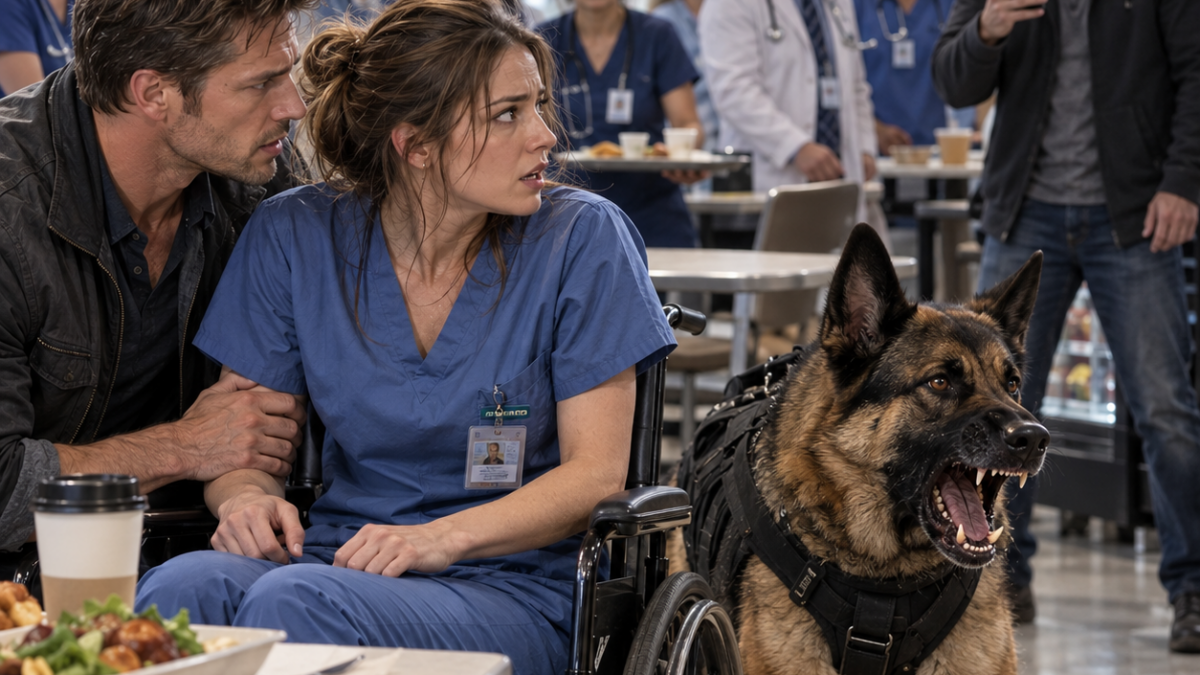
The lead wounded operator shouted desperately.
“You release those files and national defense programs collapse.
” Mara’s voice came cold.
“Good.”
She hit enter. Every cafeteria television reactivated simultaneously. Then every hospital monitor across the building.
Then every connected emergency medical network. Project Cerberus flooded public systems live.
Patient disappearances, behavioral conditioning, illegal neural implants, combat manipulation trials, all of it. The operators realized instantly what happened, and panic finally hit them.
Real panic, because secrets survive only while hidden. One tactical operator ripped off his headset.
“Containment failed.”
Another shouted back.
“Federal channels are picking it up.”
Cerberus growled louder beside Mason. The dog understood the shift, too.
The hunters were becoming hunted. Then one final file appeared across every screen. Classified subject response analysis.
Photograph attached. Cerberus. Status: Uncontrollable due to empathic override development.
Mason stared at the screen. Empathic override.
The dog wasn’t broken.
He evolved beyond the conditioning. Mara looked at Cerberus with tears finally forming in her eyes. They tried to train morality out of him.
The dog walked slowly back toward her wheelchair, sat beside her calmly, protective, loyal, gentle. Everything the program failed to destroy.
Outside the cafeteria, sirens multiplied. Real sirens this time.
State police, federal response, media helicopters overhead. The leak spread too fast now.
No burying it. No silencing witnesses.
No disappearing patients anymore. One remaining operator lowered his weapon slowly. Not surrender.
Defeat. He looked at Cerberus almost in disbelief.
“All this A pause.
Because of a dog.
” Mason rested one hand against Cerberus’s neck, then quietly answered, “No.”
His eyes hardened toward the operators.
“Because he stayed more human than you did.”
Sirens screamed outside St. Dismas Medical Center from every direction. Police, state troopers, federal units, news helicopters.
The entire city was collapsing inward toward the hospital after the Cerberus files detonated across public networks. Inside the cafeteria, nobody moved. Not the operators, not the civilians, not even the terrified nurses hiding beneath overturned tables because the truth hanging on the screens above them felt bigger than the room itself.
Human experimentation, military manipulation, neurological conditioning, and at the center of it all, a retired combat dog sitting quietly beside a woman in a wheelchair. Cerberus stared toward the cafeteria entrance, still alert, still working.
Mason Verrick checked the remaining rounds in his rifle. Not enough.
Not if another team pushed through. Mara Kessler noticed.
They won’t stop now.
Mason looked at her. They already lost. No, she whispered.
People like this don’t think in terms of losing.
A pause. They think in containment. That word again.
Containment. The language of institutions that stopped seeing people as people.
One of the wounded operators laughed bitterly from the floor. You think releasing files changes anything?
Mason glanced toward him. I think sunlight causes problems for parasites.
The operator’s smile vanished.
Cerberus suddenly stood, rigid, focused.
The dog’s ears lifted toward the western corridor.
Then came the growl. Low, dangerous, different from before. Not warning, recognition.
Mason turned immediately. Heavy footsteps approached slowly through the dark hallway beyond the cafeteria. Not rushing, not tactical stack movement.
One person. Confident. Too confident.
The remaining operators visibly stiffened. Not relief, nervousness.
Mason noticed instantly. Then the figure stepped into the red emergency lighting and Mara stopped breathing.
No. The man looked to be in his early 60s. Silver hair, perfect posture, dark overcoat despite the chaos surrounding the hospital.
No visible weapon, but the entire room reacted to him like one walked in anyway. Cerberus growled harder.
The man looked directly at the dog first. Then slowly smiled.
“Well,” he said calmly, “there you are.”
Mason felt something cold move through his chest. Recognition, not from him, from the dog.
Mara’s voice trembled violently.
“Dr.
Calder.”
The man looked toward her almost warmly.
“Mara.”
That tone made Mason hate him instantly. Too familiar, too personal.
The tone of someone who believed ownership survived betrayal. Dr.
Calder stepped carefully into the cafeteria, ignoring the rifles, ignoring the chaos, ignoring the operators bleeding on the floor because apparently he believed none of them mattered.
Cerberus moved directly in front of Mara’s wheelchair.
Protective block. Calder noticed and something strange crossed his expression.
Disappointment, not fear, not anger, disappointment.
“I spent six years developing that animal,” Calder said quietly.
Mason tightened his grip.
“You tortured him.”
Calder barely acknowledged the interruption.
“He was extraordinary before the conditioning failed.”
Cerberus barked violently. The sound echoed through the cafeteria.
Calder sighed softly.
“Yes.”
Pause.
“You were always emotional.”
Mason’s pulse sharpened immediately.
Not because of the insult, because of the way Calder spoke to the dog. Like Cerberus understood every word.
And judging by the shepherd’s reaction, maybe he did.
Mara’s hands trembled against her wheelchair.
You killed people. Calder looked at her calmly.
No. Pause.

