“You Handle the House. Stay Out of My Way,” the Former Navy SEAL Said—Until Her Scarf Slipped – Part 1
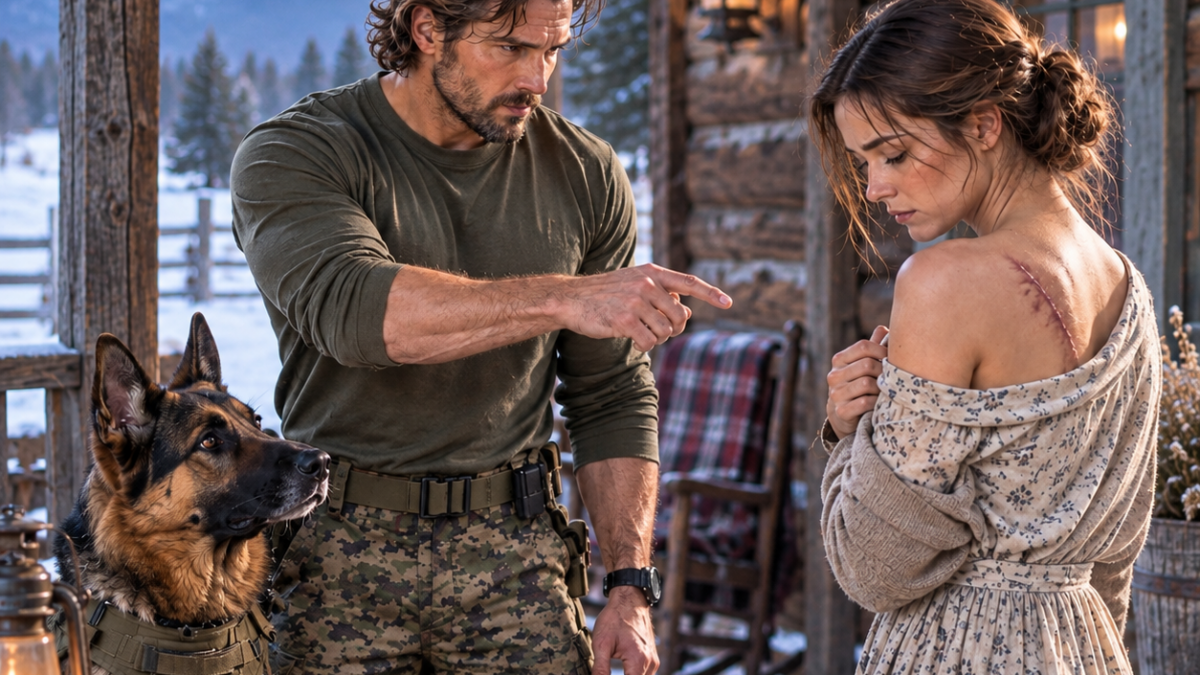
“You Handle the House. Stay Out of My Way,” the Former Navy SEAL Said—Until Her Scarf Slipped
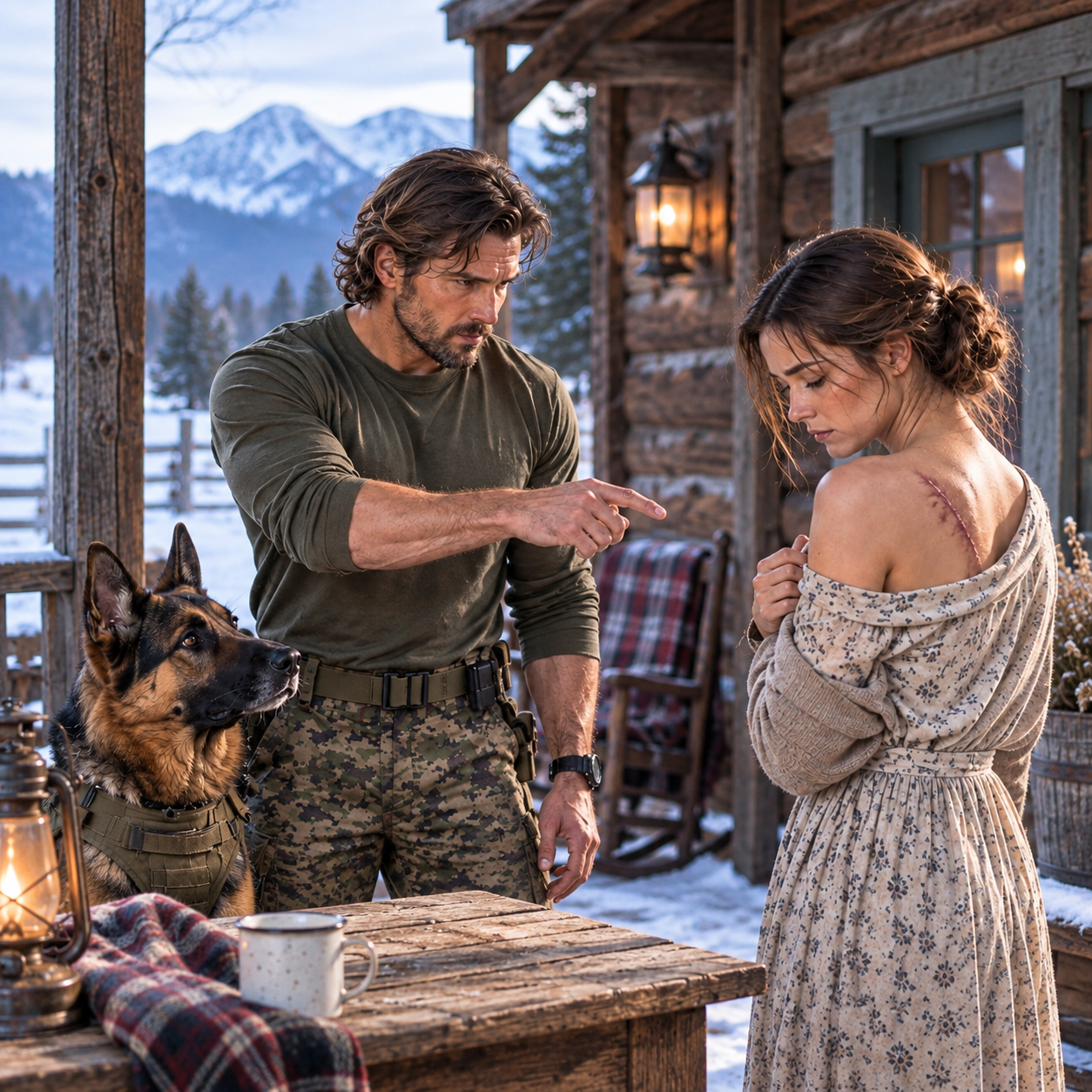
You handle the house and kitchen.
Former Navy Seal Harlon Beckett told her, “I handle the ranch.
Stay out of my way and I’ll stay out of yours.”
Mara Ellison only nodded. For months, she kept that bargain. She worked quietly, asked for nothing, and never removed the thin scarf wrapped around her neck, even on the hottest days.
Then one afternoon, the scarf slipped. Harlon saw the scars she had been hiding, and before long he would learn that those scars were only the beginning of a story someone had worked very hard to bury.
By the last week of April, the Flint Hills had not quite decided what season they belonged to.
Mornings could still lay a silver edge along the stock tanks, cold enough for breath to show against a truck window, while afternoons warmed the south slopes until cattle stretched out in the dry grass as if winter had been a rumor. Red Willow Ranch sat 14 mi outside Cottonwood Falls, where the road narrowed, the cell signal weakened, and the horizon opened so wide that weather could be seen coming long before it arrived. The Beckett family had worked that ground for three generations.
Nearly 1,800 acres rolled away from the main house in folds of limestone pasture, creek bottoms, cattle lots, hay ground, and fence lines that never seemed to stay repaired for long. The place was not wealthy in any glamorous sense, but it was sound. Bills were paid, equipment was maintained, animals were cared for before anybody sat down to eat.
Much of that was Harlon Beckett. At 47, Harlon had been home long enough that people in Chase County had mostly stopped introducing him as the former Navy Seal, which suited him fine.
He had spent more than 20 years in the Navy, and had no interest in turning those years into conversation for strangers. What remained of that life showed itself in quieter ways. Every ranch truck went into the night with more than half a tank of fuel.
Radios were charged before anyone headed into the north pasture. The first Monday of every month, Harlon opened every first aid kit on the property and replaced whatever had expired.
When a hand took a four-wheeler beyond the creek crossing, somebody else knew the route and the expected return time. Walt Dugan once told him that cattle had survived on those hills for a hundred years without a contingency plan.
Haron had looked at him and said, “Cattle have terrible planning habits.”
That was about as much explanation as Walt ever got. Ridge understood the system better than most people did.
The 9-year-old German Shepherd had worked beside Harland during the last part of his military career, and had followed him into retirement with the calm entitlement of a partner who considered the paperwork irrelevant.
Age had put a little gray around Rididge’s muzzle, and taken some speed out of his first few steps in the morning, but his discipline remained.
He still waited at gates until released, still watched Harlland’s hands as closely as his voice, and could follow an old scent across rough ground when most dogs would have lost interest.
These days, his hardest assignment was usually deciding whether to ride in the pickup or stay somewhere near the kitchen. The woman who arrived at Red Willow on a Thursday afternoon would eventually influence that decision.
Mara Ellison drove a faded silver sedan that looked as if it had spent several years collecting gravel road dust in different states. She parked beside the mudroom rather than in front of the house, stepped out and lifted her own suitcase from the trunk before Harlon could offer. A second bag followed, then a small rectangular metal box with worn corners and a handle polished smooth from use.
She carried that one herself. Mara was 36, with dark hair pinned loosely at the back of her head, and the composed manner of somebody accustomed to entering unfamiliar buildings and learning their rules quickly. A thin cotton scarf circled her neck, pale gray, against a simple blouse and work trousers.
The day was mild enough that Harlon noticed it only because everything else about her clothing was practical. He had hired her through a recommendation from a woman in Strong City who had once managed a small rehabilitation facility. According to the reference, Mara had experience supervising laundry, housekeeping, inventory, kitchens, and the dozen invisible tasks that kept a busy building from becoming a collection of small problems.
The woman who had handled the Red Willow kitchen and house for the last four years had moved to Emporia to live closer to her sister. Harlon had discovered within two weeks that feeding ranch hands and remembering whether anyone had ordered dishwasher detergent were both jobs he had underestimated. He showed Mara through the house without ceremony.
Breakfast began early because the crew often went out before sunrise. Lunch depended on pasture work and was not always eaten indoors.
Supper shifted with the season. The pantry was hers to manage.
The mudroom belonged to everyone and therefore Harlon warned never truly belong to anyone. You handle the house and kitchen, he told her. I handle the ranch.
Keep things running and we’ll stay out of each other’s way.
Mara looked around the kitchen once before answering. That should work. She asked whether anyone had food allergies, whether the crew carried lunch during longer cattle moves, and which store they used when supplies could not wait for the weekly run.
Those were her only questions. Her room was at the end of the hall beyond a small laundry area. Harlon carried the suitcase as far as the doorway after she finally allowed him to take it.
Mara brought the metal box herself and placed it beneath the narrow writing desk before unpacking anything else. Nobody mentioned it.
Walt Dugan arrived half an hour later and managed to tell Mara most of what he believed was wrong with modern beef prices before learning whether she knew his name. At 61, Walt had spent more of his life at Red Willow than Haron had.
He had worked for Harlland’s father, taught Haron how to set a corner post when Harlland was still in school, and remained convinced that smartphones had made everybody less intelligent while carrying one in his shirt pocket at all times.
He was also the sort of man who complained about a person for 10 years and still drove 40 m at midnight if that person called for help. Walt had been close to Catherine Beckett.
Since her death three years earlier, his loyalty toward Harland had hardened into something almost protective. Harlon tolerated it because correcting Walt generally required more conversation than letting him worry.
Mara’s first supper was uncomplicated.
Roast beef, potatoes, green beans, biscuits, and gravy made from the pan. She did not try to impress anybody.
That seemed to impress them anyway. 10 minutes before Harlon came in from checking calves, Ridge appeared in the kitchen doorway.
The shepherd sat without invitation and watched the stove. Walt noticed first. Well, look at that.
Dog hasn’t cared this much about supper since Catherine was here.
For half a second, the room changed.
Mara glanced toward Harlland’s empty chair, then back at the skillet.
She did not ask who Catherine was. Walt seemed to realize he had said more than he intended and became unusually interested in his potatoes. Ridge remained where he was.
The meal passed easily after that. Later, while the crew scattered toward the bunk house and trucks, Mara stood alone in the kitchen and began to understand the difference between a house that was neglected and one that had simply stopped expecting anybody to
enjoy it.
Red Willow was clean. Repairs had been made when needed.
The refrigerator worked. The plumbing worked, and the floors had been swept often enough that dust only gathered in corners nobody used.
But two ceramic mugs sat on the highest shelf with a fine gray film across their rims. A small AM FM radio rested above the kitchen counter with its cord wrapped tightly around the body. In the living room, a framed wedding photograph stood on a side table turned several degrees toward the wall as if somebody had once reached to put it away and had lost the nerve halfway through.
Mara did not straighten it. Some things were not untidy simply because they were out of place. During her first week, she made no grand improvements.
She learned first the pantry was reorganized so canned goods could be seen without moving three other things. Expired boxes disappeared. An inventory sheet appeared on a clipboard in the mudroom.
Dish towels began showing up folded the same way every morning. Not because the fold mattered, but because knowing where something would be mattered when six people were moving through a room before sunrise. A large container of coffee grounds migrated from the top pantry shelf to one at shoulder height.
Walt stopped reaching above his head for it. He never asked how Mara had noticed the stiffness in his right shoulder, and she never told him. Harlon noticed both things.
He also noticed that the grocery bill for that week was lower despite the kitchen having more food in it. He said nothing. By the sixth day, Mara had learned enough of the ranch to begin noticing what did not belong inside a working system.
The east service door on the equipment barn was one of those things. She discovered it while carrying a carton of shop towels inside.
The handle lifted, but the door did not move. Walt, passing behind her, told her to raise the latch, pull toward herself, then put a shoulder against the frame.
The door opened with a hard wooden complaint.
It’s been doing that for years, Walt said.
Mara looked at the warped edge.
That doesn’t make it less stuck.
Walt gave her the expression of a man whose argument had somehow been stolen before he made it. That evening, a new line appeared on the maintenance board in the mudroom. East service door sticks.
Harlon saw it after supper. The next afternoon, he removed the hinges, reset the frame, shaved a small section of swollen wood, and rehung the door.
Ridge lay in the shade nearby, and watched as if supervising government work. When Harlon finished, the door opened with one hand. He wiped the sawdust from his palms and went back to checking fence without mentioning it.
Neither did Mara. By the end of the first week, Red Willow looked nearly the same as it had before she arrived. The same white house stood behind the windbreak.
The same trucks collected dust near the barn. The same radio remained unplugged on the kitchen shelf. The changes were smaller than appearance.
Harlon came back from the west pasture late that Sunday after the sky had gone dark blue behind the cottonwoods. He entered through the mudroom expecting the house to be quiet. A low kitchen light was still on.
Mara stood at the counter measuring coffee into the machine for morning. Moving without hurry. Ridge lay across the kitchen doorway with his head between his paws, close enough to watch her and far enough to stay out of the way.
Haron stopped. Ridge lifted his eyes toward him. For a moment, the dog seemed to consider getting up.
Then he lowered his head again. Mara did not notice Harlon standing there. He remained in the darkened mudroom a few seconds longer than he needed to before turning toward the hallway.
Very little had changed at Red Willow, but the house had begun keeping a different kind of time. May came wet to Chase County. Rain moved through the Flint Hills in long gray bands, filling shallow creeks that had nearly disappeared over winter, and turning the low ground behind red willow into a dark green sweep of new grass.
Some mornings began under clean blue sky, and ended with thunder rolling in from the west. Other days stayed cool until noon, then warmed fast enough to leave the cattle standing belly deep in shade along the cottonwoods. Mara learned the ranch the same way she had learned every place she had ever worked, not from maps, from habits.
Ray Collins, the youngest ranch hand at 33, took his coffee black and looked suspiciously at anything labeled healthy, yet somehow always knew when dessert had been made before anyone told him. Walt Dugan complained about oatmeal with the dedication of a man defending a constitutional principle, then ate two bowls whenever Mara put brown sugar and sliced apples beside it. Harlon was harder to predict.
On mornings when he checked the cving pasture before sunrise, his chair stayed empty at breakfast and his coffee cooled untouched. But if Mara made beef stew for lunch, his truck had a curious habit of appearing near the house shortly before noon.
She noticed she did not mention it.
Ridge had no interest in preserving anyone’s dignity.
By the second week of May, the German Shepherd had claimed a place near the far end of the kitchen where he could see the back door, the table, and most importantly, whatever happened near the stove. He never begged. His training had survived too many years for that.
He simply made himself available to opportunity. One evening, Mara came in from the laundry room and found his leash laid neatly across both of her shoes. Ridge sat 3 ft away, looking pleased with the arrangement.
Harlon came through the mudroom at the same time and stopped. The dog glanced at him, then back at Mara.
Chain of command slipping. Mara picked up the leash.
Maybe he found better management. From the table, Walt laughed hard enough to catch his mug before it tipped. Harlon gave Ridge a look that had probably meant something much more serious in another life.
Ridge wagged his tail once. That settled the matter.
Small things like that began changing the atmosphere at Red Willow. The ranch had always functioned.
Work got done, cattle were fed, vaccines logged, hay ordered, fences repaired, trucks maintained. Nobody would have called the place unhappy.
But before Mara came, people had moved through the house as if it were another building on the property. Breakfast happened because men needed food.
Coffee happened because dawn came early. The kitchen existed because it had a stove. Now, Walt sometimes stayed after supper long enough to complain about Kansas City baseball.
Ray began bringing the mail inside instead of leaving it on the porch. Someone replaced the cracked sugar bowl without being asked. The house was not becoming lively.
It was becoming inhabited. There is a difference. One Tuesday afternoon, the sky changed before anyone heard thunder.
Mara saw it through the kitchen window. a bruiseco-colored wall building low over the western hills while sunlight still lay bright across the east pasture.
Her phone showed one weak bar of service, then none. She tried the weather app twice. Nothing loaded.
On the shelf above the counter sat the old radio she had noticed her first night. Its cord was still wrapped around the body.
Mara took it down. The casing was yellowed slightly with age.
The tuning dial scratched near the local AM band. Dust had gathered around the speaker grill, but not deeply enough to suggest it had been forgotten for decades.
She unwound the cord and plugged it in. Nothing happened.
Then she turned the knob farther. Static cracked into the kitchen. Ridge raised his head.
Mara adjusted the dial until a weather report emerged through the noise. A thunderstorm watch had been issued for several counties west of them with high winds possible by late afternoon. She left the radio playing while she checked the windows and moved a basket of clean towels away from the mudroom door.
The bulletin ended. A country song followed. An older one with steel guitar and a slow rhythm that seemed too gentle for the weather gathering outside.
Harlon came in carrying a coil of fence wire. He made it two steps into the kitchen before he stopped. Mara noticed immediately he was not looking at her.
He was looking at the radio. Something passed across his face too quickly to name. Not surprise, exactly.
Something quieter. Mara reached toward the knob. I can turn it off.
Leave it. She waited.
Harlon set the wire down by the mudroom wall. We need the weather.
That was all. He washed his hands, pulled out the chair at the far end of the table and sat while the song played itself through.
Ridge watched him for a moment, then settled again. Mara went back to slicing onions. The storm arrived 40 minutes later.
Rain hammered the windows hard enough to blur the pasture beyond them. Wind bent the cottonwoods almost flat along the creek and rattled the loose gutter over the back porch.
One brief burst of hail bounced across the yard before turning back to rain. Nobody said anything about the radio.
It stayed on through supper. 2 days later, Walt did. Mara was putting biscuits into a basket when he looked toward the shelf and seemed to notice the radio was still plugged in.
Catherine used to run that thing from breakfast to noon. Mara kept folding the towel beneath the biscuits. Walt smiled faintly.
Too loud mostly.
Claimed she couldn’t hear the weather over us talking.
He left it there. Mara did too. By then, she understood enough not to ask questions just because an answer had been placed within reach.
Information came differently in houses that had carried grief. A photograph said one thing. A chair nobody used said another.
Sometimes a man told you more by walking into a room and not turning off a radio than he would have told you in an hour of conversation. The next piece came from a veterinarian named Dr. Ellen Shaw, who arrived the following Monday to check several cows and update herd records.
Ellen was in her late 40s, sunbred and practical with a voice that could calm nervous livestock and stubborn ranchers at roughly the same volume. Ridge recognized her before she reached the porch.
He went out at a trot. dignity abandoned for approximately 6 seconds. Ellen crouched and rubbed the gray along his muzzle.
Well, look at you.
Still pretending you’re working.
Ridge leaned into her hand. Haron was carrying a case toward the truck.
He does that when there’s an audience.
Ellen glanced toward the kitchen where Mara had stepped outside with a thermos. Kate used to ruin this dog every Sunday with scrambled eggs. Harlon paused only long enough to shift the case in his hand.
He survived barely. Poor thing was loved nearly to death.
There was affection in Ellen’s voice and no awkwardness around Catherine’s name.
Mara noticed Harlon did not shut down. He simply moved on to the next thing that needed doing.
Later, while Ellen worked near the chute, Walt supplied another small piece without realizing he was doing it. Catherine had been the one who convinced Harlon to come back permanently after the Navy. She had grown up 40 m away and had always preferred Red Willow to anywhere else.
The ordinary future they expected after his retirement lasted less than 2 years. Three years earlier, Catherine had been diagnosed with an aggressive cancer.
Harlon did what he knew. He organized. Appointment cards were filed by date.
Medication times went onto a whiteboard. He kept overnight bags packed.
Fuel above half a tank. Alternate routes to Topeka written down in case weather closed part of the highway.
There were second opinions, treatment schedules, dietary notes, questions prepared before every doctor visit. He turned uncertainty into lists because lists had once helped keep people alive.
For a while, they probably helped Catherine, too. But Liss could not negotiate with an illness that did not care how prepared a man was.
Mara never heard Harlon describe those months. She pieced them together from other people, from an old insulated medication bag in the laundry cabinet, from a calendar hanging behind the office door that had never been replaced, and from the way nobody in the house had touched the radio for 3 years.
She did not need the final sentence explained. Some silences were complete on their own.
Her own habits remained less visible. By the middle of May, the afternoons had grown warmer, sometimes reaching well into the 70s. Yet the thin scarf remained around her neck.
It was light enough not to look strange at first. Soft cotton, gray or pale blue, depending on the blouse beneath it, always loose, always arranged, so one end rested over her left shoulder.
Harlon noticed it because Haron noticed patterns. He also noticed Mara avoided turning her back when delivery drivers stood too close in narrow spaces and that she checked the mudroom smoke detector after replacing its battery, even though nobody had asked her to.
None of those things required questions yet. Late one afternoon, Mara crouched in the pantry to pull a carton of canned tomatoes from the bottom shelf. Ridge followed her in and stepped on the trailing end of the scarf.
She rose. The fabric tightened suddenly against her neck. Mara moved so fast that the carton slipped from her hands.
She caught it before it hit the floor. Ridge immediately backed away, ears lowering.
For one second, Mara stood absolutely still. Then she loosened the scarf.
It’s all right.
Her voice was aimed at the dog, not herself. Ridge approached more carefully this time and touched his nose to her wrist. Mara scratched behind his ear.
The moment passed. Harlon had been standing in the mudroom doorway with a stack of invoices. He saw all of it.
He did not ask. There are times when curiosity wears the clothing of concern.
Harlon knew the difference better than he once had. By the end of May, the second mug appeared on the kitchen counter.
Nobody put it there deliberately. At least nobody admitted doing so.
Mara made coffee early. Harlon began coming through the kitchen after morning rounds while it was still hot enough to drink. One mug was hers.
The other simply stopped being returned to the cabinet. Some mornings Harlon sat for 3 minutes. Other mornings 10.
They talked mostly about rain totals, feed orders, a section of fence Ray wanted repaired, or whether Walt had actually remembered the parts list Mara had put in his truck. Nothing important, which was probably why it mattered. Ridge usually lay between the table and the back door.

