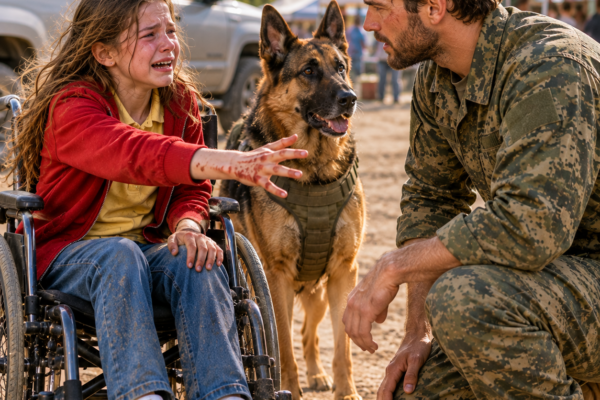
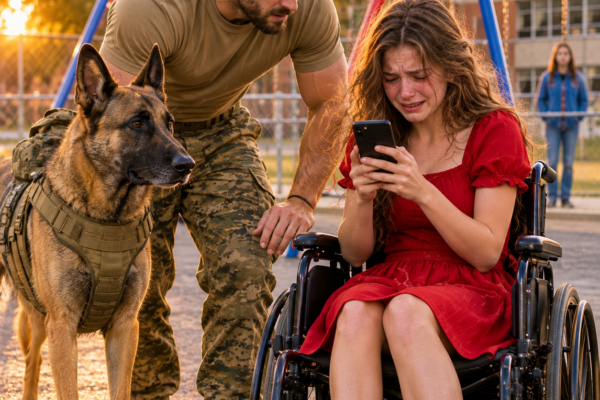
“He’s very proud of that. It’s wonderful that young men want to serve. But serving your country isn’t the same as being a hero.”
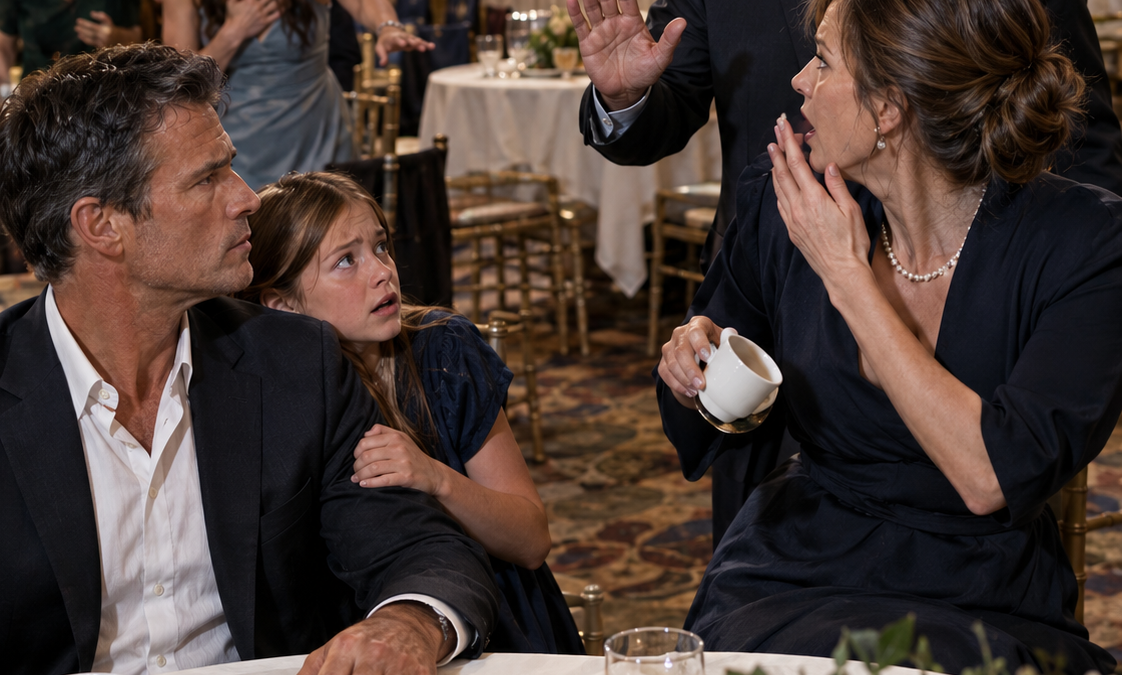
“The words hit my daughter before they hit me. ‘You’re father’s not a hero, sweetheart. He just found a way to run away from real life and dress it up in a uniform.’ My wife’s aunt said it on my own patio. At my own table.”
Carol thought she’d won the room by calling me a fake hero → she lost her place in the family, and the man I carried off a mountain made sure everyone knew who I really was.
“You’re father’s not a hero, sweetheart. He just found a way to run away from real life and dress it up in a uniform.”
My wife’s aunt said it on my own patio. At my own table. With a glass of my own lemonade in her hand.
My daughter Emma was eleven. She was holding a plate of hamburger buns. She stopped moving.
I set down the spatula. I didn’t turn around yet. I just listened to the grease pop on the grill and counted three breaths, the way I was trained to do a long time ago.
What Aunt Carol didn’t know—what none of them knew—was that the man she was calling a coward had once carried a wounded teammate four kilometers through a firefight in the Hindu Kush, and that the kid who was about to walk through my back gate for the first time in three years was the reason I’d done it.
My name is Daniel Mercer. I was forty-six years old when my wife’s aunt finally said out loud what the rest of them had been thinking for a decade.
I spent eighteen years in the Navy. Twelve of those were with SEAL Team Three. I did four deployments to Afghanistan, two to Iraq, and one I’m still not allowed to talk about. I left the Teams in 2014 with a back that clicks when it rains and a knee that never quite forgave me for a hard landing in Khost Province.
Since then I’d been doing what most guys like me do. I worked. I raised my kids. I kept my mouth shut about the things I’d seen.
That last part was the problem.
The Mercer family had a way of making you feel small without ever raising their voices. They did it with a smile. They did it with a tilt of the head. They did it the way Carol did it that afternoon, sweetly and loudly, so everyone at the table could hear.
The patio was crowded. My wife Sarah was inside getting more ice. Her parents, Richard and Diane, were seated at the long table under the umbrella. Her brother Michael and his wife were there with their two kids. Carol sat at the head of the table, which she’d claimed without asking, the way she claimed everything.
I’d hosted these cookouts for seven years. Every summer. I bought the meat, I cleaned the grill, I made the lemonade from scratch because Sarah liked it that way. It was the one thing I did that the family never complained about.
Until that day.
“You know what I mean,” Carol said, louder now, turning to Diane. “It’s not like he was in the regular Army. He was one of those—what do you call them—the underwater ones. It’s just a lot of swimming and hiding, isn’t it? I read a book about it.”
“SEALs,” Michael said. He was smiling. “They’re SEALs, Mom.”
“Right. SEALs.” She said it like it was a brand of kitchen appliance. “It’s not real combat, is what I’m saying. Not like what your father did in the Reserves.”
Richard had done six years in the Army Reserve. He’d never deployed. He mentioned it at every family gathering.
I flipped the burgers. Emma was still standing there with the plate.
“Dad?” she said quietly.
“Go take those to your mom, sweetheart.”
She went. She looked back at me once before she went through the sliding door. I gave her a small nod, the kind I used to give my guys before a dive. She nodded back. She was eleven and she already understood more than the adults at that table.
Carol kept going. She was on a roll now.
“I’m just saying, Danny, it must be nice. You get to play soldier for a few years, come home, and everyone treats you like you walked on water. Meanwhile my Richard worked thirty years at the firm and nobody ever wrote a book about him.”
“Richard’s not dead,” I said.
The table went quiet.
“What?”
“You said nobody wrote a book about him. They only write books about dead people. Or the ones who did something worth writing about.”
I said it without heat. I said it the way I’d learned to talk to hostile village elders in Helmand—flat, respectful, leaving no opening. It was the first time in seven years I’d pushed back against Carol. I didn’t raise my voice. I didn’t even turn around from the grill.
Carol set her lemonade down hard.
“Excuse me?”
“You heard me.”
“Daniel.” That was Diane. My mother-in-law. Her voice had that edge it always got when she was about to defend her sister. “That was uncalled for.”
“Was it?”
“You know Carol didn’t mean anything by it.”
“I know exactly what she meant.”
Sarah came out then with the ice. She looked at the table. She looked at me. She knew. She always knew.
“What did I miss?”
“Nothing,” Carol said, brightening instantly. “Just your husband being sensitive about his little hobby.”
Sarah set the ice down. She didn’t look at Carol. She looked at me.
I shook my head once. Small. Just for her. Not here. Not now.
She nodded. She sat down. She put her hand on Emma’s shoulder, who had come back out and was standing behind her chair. Emma was watching Carol the way you watch a dog you’re not sure about.
The rest of the cookout went the way these things go. There was potato salad. There was talk about Michael’s promotion. There was talk about the new boat Richard was thinking about buying. Nobody mentioned what had happened. That was the Mercer family way. You said something cruel, you moved on, and if the person you said it to got upset, that was their problem.
I grilled the burgers. I made sure everyone had what they needed. I refilled Carol’s lemonade twice. She took it without looking at me.
Emma didn’t leave my side the whole afternoon. When the last car pulled out of the driveway, she helped me carry the dishes inside.
“Dad?”
“Yeah, bug.”
“Were you really a SEAL?”
“You know I was.”
“I know you said you were. But I thought—I don’t know. I thought maybe it was like Uncle Michael says. Like, just a job.”
“It was a job.”
“But you did stuff.”
“I did stuff.”
“Like what?”
I stacked the plates in the sink. I thought about what I could tell her. What I was allowed to tell her. What I could stand to tell her.
“Mostly I helped people,” I said. “And I tried to bring my guys home.”
“Did you?”
“Some of them.”
She was quiet for a minute. Then she said, “Aunt Carol is mean.”
“Yeah.”
“I don’t like her.”
“You don’t have to like her. She’s family.”
“That’s a dumb rule.”
I laughed. First real laugh of the day. “Yeah. It kind of is.”
I kissed her goodnight. I watched her go up the stairs. Then I stood in the kitchen for a long time with my hands on the counter, listening to the house settle, thinking about what I’d done and what I hadn’t.
I’d done a lot. I’d just never been allowed to say it.
That was about to change.
The phone rang at 6:14 the next morning.
I was already up. I was always up. Twenty years of waking before dawn doesn’t leave you, even after you stop needing to.
Sarah was still asleep. I answered on the second ring.
“Dan?”
I knew the voice before he said his name. I’d know it anywhere. It was the voice I’d heard over the radio on the worst day of my life, when I was carrying two hundred and ten pounds of wounded teammate on my back and my legs had stopped working and I kept going anyway because stopping wasn’t an option.
“Javier.”
“You remember me.”
“You’re hard to forget.”
He laughed. It was a good sound. It meant he was alive. For a few years after I left the Teams, I’d wondered. I’d check the casualty lists. I’d never seen his name.
“I’m in Norfolk,” he said. “Navy Yard. I’m an instructor now. Combat medic course.”
“You’re a long way from home.”
“I heard you were in Virginia. Thought I’d look you up.”
“You should come out.”
“That’s why I’m calling. I’ve got leave coming up. Next month. I wanted to see you. And I wanted to meet your family.”
I was quiet for a second.
“They don’t know much about me,” I said. “About what I did.”
“None of them?”
“None of them.”
He was quiet too. He understood. He’d been there. He’d been in rooms full of people who would never know what he’d done, and he’d understood that there was no way to make them understand, and that most of the time that was fine, and sometimes it wasn’t.
“That’s okay,” he said. “I remember.”
“Yeah. Me too.”
“You still carrying that scar?”
“On my shoulder. Yeah.”
“I think about it a lot, Dan. Every year around August.”
“I know.”
“I need to say it again. I never got to say it enough.”
“You don’t have to.”
“I want to. I want to come meet your family. I want to tell them what you did. Not for you. For me. I need to say it out loud in a room with witnesses.”
I looked out the kitchen window. The sun was coming up over the trees. The yard was still. The grill was still under its cover from the night before.
“Come in three weeks,” I said. “There’s a family thing. My wife’s cousin’s wedding. It’s going to be a big deal. Everyone will be there.”
“Good.”
“Javier.”
“Yeah?”
“You sure you want to do this?”
“I’ve been sure since 2011.”
I hung up the phone. I stood there for a minute, watching the sun come up. Then I went upstairs and got dressed and went to work.
I didn’t tell Sarah about the call. I didn’t tell her about Javier. I didn’t tell her about the plan I was already starting to form.
I should have told her. I should have warned her.
But I’d spent ten years letting her family treat me like a piece of furniture, and I’d watched it start to infect my kids, and I’d finally decided that maybe it was time they all found out who they’d been sitting next to.
I just didn’t know yet how much it was going to cost.
PART 2 — THE KNIFE DRAWER
The wedding was three weeks out. It was for Sarah’s cousin, a girl named Meredith I’d met twice. The venue was a country club outside Richmond. The guest list was two hundred and forty people.
Carol was on the planning committee. Diane was on the planning committee. Sarah was on the planning committee because Diane had asked her to be, and Sarah had never once said no to her mother.
I was not on the planning committee. I was on the “bring the good camera” list and the “pick up Aunt Ruth from the airport” list. That was fine. I’d been on worse lists.
I spent the next three weeks doing what I always did. I went to work. I came home. I helped Emma with her science project. I took Tyler to soccer practice. Tyler was eight and had more energy than the rest of the family combined.
I also did something I hadn’t done in years. I got my old footlocker out of the basement.
Sarah saw me carrying it upstairs one night and stopped in the hallway.
“What’s that?”
“Old stuff.”
“What kind of old stuff?”
“Service stuff.”
She looked at the box. It was a plain green footlocker with my name stenciled on the side. DANIEL J. MERCER. USN. It had been in the basement for six years. I hadn’t opened it since the day I moved it down there.
“You never open that.”
“I know.”
“Why now?”
“Javier’s coming to the wedding. He wants to see it.”
“Javier?”
“The guy I served with. The one I pulled out of the valley.”
She was quiet. She knew the story the way you know a story you’ve been told once, years ago, in bed, in the dark, without all the details.
“The one with the leg?”
“Yeah.”
“He’s coming to Meredith’s wedding?”
“He’s stationed in Norfolk. He wants to meet the family.”
She crossed her arms. She had a look on her face I couldn’t read.
“Are you going to tell them?”
“Tell them what?”
“Anything. Everything. You never talk about it. They don’t know anything about you.”
“Maybe it’s time they did.”
“Daniel.”
“What?”
“Carol is going to be there. Carol is going to be Carol.”
“I know.”
“She’s already been calling my mother about you. About what you said on the patio. She’s telling everyone you were rude to her.”
“I was. A little.”
“A little?”
“She insulted me in front of my kids, Sarah. She said I ran away from responsibility. She said it to my daughter’s face.”
“She didn’t mean it like that.”
“You keep saying that. Every year you say that. She doesn’t mean it, she’s just being Carol, she doesn’t understand. I’m tired of it.”
She was quiet. She looked at the footlocker. She looked at me.
“You’re different,” she said.
“No. I’m the same. I’ve just been quiet about it.”
“You’ve never been quiet.”
“I’ve been quiet about this. You know I have. I’ve let your family treat me like a joke for ten years because I didn’t want to make waves. I wanted your parents to like me. I wanted Carol to stop. I thought if I just did the work and kept my head down, eventually they’d see it. They never did.”
“And now?”
“Now I’m done keeping my head down.”
I opened the footlocker in the guest room that night. I hadn’t looked at the contents in a long time.
There was a shadow box with my medals. There was a folded American flag. There was a battered spiral notebook I’d carried in my cargo pocket on deployment, the one I used to write letters to Sarah before we were married. There was a combat knife my dad had given me when I graduated BUD/S. There was a photograph I’d taken in Afghanistan of me and Javier sitting on the back of a truck, both of us grinning like idiots, both of us young.
And there was a letter. I’d forgotten about the letter.
It was from Javier’s mother. She’d sent it to me in 2012, after I got home. She’d written it in Spanish and her neighbor had translated it. I still remembered the words.
Thank you for my son. I don’t know what he told you. I don’t know what he did. But I know you carried him down the mountain. I know you didn’t leave him. I know he is alive today because you would not stop. You are his brother now. You are my family now. I will pray for you every day for the rest of my life.
I read it twice. Then I folded it and put it back.
Sarah found me in the guest room a while later. She’d been looking for me.
“What are you doing?”
“Looking at old stuff.”
She sat down on the edge of the bed. She looked at the footlocker. She looked at the medals.
“You never told me about the medals.”
“You never asked.”
“I didn’t think you wanted me to.”
“I didn’t. Not for a long time.”
She picked up the shadow box. She held it in her lap. She looked at the medals through the glass.
“There’s a lot here.”
“There’s more that’s not here.”
“What does that mean?”
“It means the ones I got are the ones they could put on paper. The ones that mattered didn’t come with a ribbon.”
She set the box down. She looked at me.
“Are you going to tell them at the wedding?”
“I’m not going to tell them anything. Javier is going to be there. If he says something, he says something.”
“That’s not a plan.”
“It’s enough of a plan.”
“Daniel.”
“It’s what I’ve got.”
She was quiet for a long time. Then she said, “I don’t want you to do this.”
“Do what?”
“Make them see. I don’t want you to hurt them.”
“I’m not going to hurt anyone.”
“You know what I mean.”
I did know what she meant. I knew that in her mind, the Mercer family was a fragile ecosystem, and I was about to drop a rock in the middle of it, and the ripples would hit her too. I knew she loved her mother. I knew she tolerated Carol. I knew she’d spent her whole life smoothing things over and keeping the peace, and I was about to make that impossible.
I thought about Emma on the patio with the plate of buns.
“Your aunt called me a coward in front of our daughter,” I said. “She said I ran away from responsibility. She said it to a child. She said it like it was a fact.”
“I know.”
“I’ve been carrying this family on my back for ten years. I’ve done every job nobody else wanted to do. I’ve shown up to every event. I’ve kept my mouth shut while your mother’s sister treated me like a servant. And I’ve done it all because I thought it was what you wanted.”
“It was.”
“And now?”
She looked at me. Her eyes were wet.
“Now I don’t know.”
She got up and left the room. I sat there with the footlocker open and the medals on the bed and the letter from Javier’s mother in my hand.
I didn’t sleep that night. I sat in the kitchen and drank coffee and watched the hours go by. At some point Emma came downstairs for a glass of water and found me there.
“Dad?”
“Hey, bug.”
“It’s late.”
“I know.”
“Are you okay?”
“I’m fine.”
She poured herself some water. She sat down across from me at the table.
“Aunt Carol’s going to be at the wedding?”
“Yeah.”
“Is Javier going to be there?”
“Yeah.”
“Who’s Javier?”
I looked at her. She was eleven. She’d been in the room when Carol called me a coward. She’d heard it. She’d been carrying it around for three weeks the same way I had.
“Javier is someone I served with,” I said. “A long time ago. He was hurt. I helped him.”
“Did he almost die?”
“Yes.”
“But he didn’t?”
“No.”
“Because of you?”
“Because of a lot of people. I was just one of them.”
She drank her water. She looked at me over the rim of the glass.
“Dad?”
“Yeah?”
“I’m glad he’s coming.”
“Me too.”
“Are you going to introduce me?”
“Yeah, bug. I’m going to introduce you.”
She went back to bed. I sat in the kitchen until the sun came up.
The wedding was fourteen days away. I didn’t know it yet, but Carol was already making plans of her own.
PART 3 — THE SEATING CHART
Carol called Sarah three times in the week before the wedding.
I heard Sarah’s side of the conversations from the other room. They all went the same way.
“Yes, Mom, I know. No, he’s not going to say anything. Yes, I’ll make sure. I’ll talk to him.”
She came to bed each night looking tired.
One night she said, “My mother wants to seat us in the back.”
“Back of what?”
“The reception hall. She says she wants the ‘real family’ at the front table.”
“And us?”
“There’s a table near the kitchen. She says it’s still a good table.”
I didn’t say anything for a minute. Then I said, “Where’s my daughter going to sit?”
“With us.”
“At the table near the kitchen.”
“Yes.”
“While Carol sits at the front table with your parents.”
“Yes.”
“Does Emma know about this?”
“Not yet.”
“Are you going to tell her?”
“I don’t know.”
I sat up in bed. I looked at the wall.
“I’ve been to a lot of places,” I said. “A lot of bad places. And I’ve learned to tell the difference between people who don’t know any better and people who do. Your mother knows exactly what she’s doing. She’s known for ten years. She’s just been polite about it.”
“That’s not fair.”
“It’s the truth.”
“Daniel—”
“I’m not going to make a scene at the wedding, Sarah. That’s not what I do. But I’m not going to sit at the kids’ table while Carol gets to play queen.”
“That’s not—”
“That’s exactly what it is. You know it is.”
She was quiet. She turned away from me in the bed.
“I don’t know why you have to make everything so hard,” she said.
“I don’t. I just stopped pretending it isn’t.”
The next day I got a call from Javier.
“I’m coming up early,” he said. “Thursday. There’s someone I want you to meet.”
“Who?”
“My new friend. Her name is Maria. She’s an old family friend. Her son is a plebe at the Naval Academy. He’s had a rough year. She wants me to introduce him to someone who understands.”
“To me?”
“Yeah. To you.”
“Why?”
“Because you’re the reason I’m alive to introduce him to anyone.”
I was quiet. I was standing in my garage, looking at the lawn mower, thinking about how strange life is.
“Dan?”
“Yeah. I’m here.”
“Thursday?”
“Thursday.”
“One more thing.”
“What?”
“I told Maria about you. Not everything. Just that you were a SEAL. That you saved my life. She told me she wants to meet you.”
“Okay.”
“She’s bringing her son. He’s a good kid. He’s just lost. He needs to see someone who made it through.”
I thought about being twenty-two and lost and scared and not knowing if I was going to make it through the next hour, let alone the next year. I thought about the men who had pulled me through. I thought about what it meant to be that for someone else.
“Bring him,” I said.
“Dan?”
“Yeah.”
“Your family doesn’t know anything about any of this?”
“They don’t know anything.”
“Good. That’s good.”
He hung up. I went back inside.
Saturday came. The wedding was on a Sunday. We were driving down Saturday afternoon. Sarah was in the bedroom packing. Emma was in her room. Tyler was in the living room playing a video game.
My phone buzzed. It was Javier.
“Everything’s set. We’ll be there at two.”
“See you then.”
Sarah came out of the bedroom with a garment bag.
“Who was that?”
“Javier. He’s coming early.”
“Early?”
“He’s bringing someone. A friend. A young guy who’s at the Academy. He wants me to meet him.”
Sarah looked at me.
“Why?”
“I don’t know. Because he thinks I can help.”
She set the garment bag down. She looked at me for a long moment.
“You never told me you did that.”
“Did what?”
“Helped people like that. After. Since you got out.”
“I’ve done it a few times.”
“How many times?”
“I don’t know. A few.”
“Daniel.”
“It’s not a thing I keep track of.”
She sat down on the arm of the couch. She looked at me the way you look at someone you thought you knew.
“You never told me anything.”
“You never asked.”
“I’m asking now.”
I looked at her. She was still my wife. She was still the woman I’d written letters to from a tent in Kandahar, the woman whose face I’d kept in my mind on the worst days of my life.
“There’s not much to tell,” I said. “I got out. I came home. I started living. And every now and then someone finds out who I was and they need help, so I help.”
“Why didn’t you tell me?”
“Because every time I tried, you told me not to make waves. Every time I wanted to explain something, your mother changed the subject. Every time I wanted to stand up for myself, you asked me to sit down and smile and let it go. So I did. For ten years. And now I’ve stopped.”
She was crying. She didn’t make a sound. She just sat there with tears running down her face.
“I didn’t know,” she said.
“You did. You just didn’t want to.”
She didn’t answer that.
We drove down to Richmond in two cars. Sarah and the kids in one. Me in the other, with the footlocker in the trunk.
I followed them the whole way. I thought about what was coming. I thought about Javier. I thought about Carol. I thought about Emma on the patio with a plate of hamburger buns and a look on her face I’d never forget.
I didn’t know yet how the wedding would end. But I knew it would end in a way none of them expected.
PART 4 — THE COUNTRY CLUB
The wedding was at a place called the Willow Creek Country Club. It was the kind of place that had a fountain in the front and a man in a jacket who took your car and parked it for you. The driveway was lined with pear trees. The grass was cut so short you could see your reflection in it.
I pulled into the parking lot at 1:45. Sarah and the kids had gone ahead to help with setup. I’d stayed behind at the hotel to change.
I was wearing a dark suit. Nothing fancy. I didn’t have any medals on it. I didn’t have anything on it. I looked like every other man in every other suit in every other country club in Virginia.
I checked my phone. A text from Javier.
Here. At the side entrance. Waiting.
I walked around the side of the building. There was a service entrance near the kitchen where the staff were bringing in food for the reception. Javier was standing there with a woman I didn’t know and a boy in a Navy uniform.
Javier looked older than I remembered. His hair was gray now. He was wearing a suit too, and a tie, and he stood the way we all stood—weight on the balls of his feet, ready for anything.
He saw me and his face changed. He smiled. He walked over and grabbed my hand and pulled me into a hug.
“You look good, Dan.”
“You look old.”
“I am old. You’re still ugly.”
I laughed. He laughed. The woman was smiling.
“This is Maria,” Javier said. “And this is her son, David.”
Maria was in her fifties. She had dark hair and dark eyes and a kind of quiet dignity that I recognized from a hundred villages in a hundred countries. She shook my hand.
“I’ve heard a lot about you,” she said.
“Don’t believe any of it.”
“I believe all of it.”
The boy—David—stepped forward. He was maybe nineteen. He was tall and thin and looked like he hadn’t slept in a week. He shook my hand.
“It’s an honor to meet you, sir.”
“Don’t call me sir. I work for a living.”
He smiled. It was a small smile. It was a real one.
Javier said, “We’re going to sit in the back. Maria wants to watch the ceremony. David’s never been to a wedding.”
“What about you?”
“I’ve been to a lot of weddings. They’re all the same.”
“You’re not going to sit in the back.”
“I’m going to sit where I can see everything.”
I looked at him. He looked at me. We both knew what he meant.
“Javier.”
“Don’t start.”
“I’m not starting anything.”
“You’re about to. I can see it.”
I didn’t say anything.
“Look, Dan. I’m not going to make a scene. I’m not going to stand up in the middle of the reception and give a speech. I’m just going to be here. That’s it. If someone asks me something, I’ll answer. If nobody asks me anything, I’ll drink my drink and I’ll leave. That’s the deal.”
“Okay.”
“That’s the deal.”
“Okay.”
He nodded. Maria and David went inside. Javier looked at me.
“You good?”
“Yeah.”
“You sure?”
“No.”
He laughed. Then he put his hand on my shoulder and said, “That’s the most honest thing you’ve said all day.”
We went inside together.
The ceremony was in a garden behind the clubhouse. Rows of white chairs. A trellis with flowers. A string quartet. Two hundred and forty people.
I sat with Sarah and the kids in the back row. Diane had put us there. “Reserved for family” said the little card, which was funny because we were family.
Carol was in the front row, in a big hat. She looked at me once when we walked in. She looked away.
The ceremony was fine. Meredith was happy. Her groom seemed nice. Sarah cried a little. Emma watched everything with the intensity of a kid who was starting to understand how the world worked.
Afterward there was a cocktail hour on the terrace. I got a glass of water and stood by the railing and watched the sun go down over the golf course.
Sarah came over.
“Carol is telling everyone you were rude to her on the patio.”
“I know.”
“She’s telling people you said her husband wasn’t worth writing a book about.”
“That’s true.”
“Daniel.”
“It’s true. I said it.”
“She’s using it to make you look bad.”
“I don’t care.”
“You should care.”
“I don’t.”
She looked at me. She looked tired.
“You’re going to do something,” she said. “I can tell.”
“I’m not going to do anything.”
“I don’t believe you.”
“Then don’t believe me.”
She walked away. I watched her go. She found her mother and her aunt and stood with them, and I could see them talking about me without being able to hear the words.
The reception was in the main ballroom. White tablecloths. A band. A bar. The kind of event where people stood in circles and said things they didn’t mean.
I found our table. It was near the kitchen. There was a centerpiece and a menu and a little card with our names on it.
Emma sat down next to me.
“Dad?”
“Yeah.”
“Javier’s here.”
“I know.”
“I saw him. He’s at the table in the corner. With a lady and a guy in a Navy uniform.”
“That’s Maria and David.”
“Who are they?”
“Friends.”
“Are you going to introduce me?”
“Yeah. After dinner.”
She looked at the room. She looked at Carol’s table at the front.
“Why are we sitting back here?”
“Ask your grandmother.”
She didn’t ask. She already knew.
Dinner was the usual. Chicken or fish. Speeches. Toasts. The best man said something funny about Meredith and a golf cart. The maid of honor cried. The band played.
Carol worked the room. She was good at it. She was the kind of woman who could talk to anyone about anything and make them feel like they were the most important person in the room. She stopped at our table on the way to the bar.
“Sarah, honey, you look tired.”
“I’m fine, Aunt Carol.”
“You should get more sleep. You’re not as young as you used to be.”
She looked at me. She looked at Emma. She didn’t say anything. She just smiled and walked away.
Emma said, “I don’t like her.”
“I know.”
“Why is she like that?”
“I don’t know. Some people are just like that.”
“That’s not a good answer.”
“No. It’s not.”
She pushed her food around her plate. She was quiet for a minute. Then she said, “Dad, is it true? What she said about you?”
“What did she say?”
“That you ran away from real life.”
I set my fork down. I looked at my daughter. She was eleven years old and she was asking me the same question the whole family had been asking behind my back for ten years.
“No,” I said. “It’s not true.”
“Then what did you do?”
I looked at the table. I looked at the room. I looked at Carol at the bar, laughing at something somebody said.
“I’ll tell you,” I said. “But not here. Later.”
“Promise?”
“Promise.”
The band started playing again. The dance floor filled up. I got up and walked to the bar.
Javier was there, leaning against the railing. He had a glass of water in his hand. He didn’t drink anymore.
“Your wife’s aunt is something.”
“Yeah.”
“She’s been telling people you’re a coward.”
“I know.”
“She doesn’t know anything.”
“No.”
He looked at me.
“How long are you going to let her do this?”
“I’m not letting her do anything.”
“You could stop it.”
“I could.”
“But you’re not.”
“Not yet.”
He nodded. He looked out at the dance floor.
“David’s having a good time,” he said. “He’s been talking to your daughter.”
“Emma?”
“Yeah. They’ve been talking for twenty minutes. He told her he’s at the Academy. She told him she’s thinking about joining the Navy.”
“What?”
“Yeah. She said she wants to be like her dad.”
I looked across the room. Emma was sitting at our table, talking to the boy in the uniform. She was smiling. It was the first time I’d seen her smile all day.
“Dan.”
I looked at Javier.
“I’m going to say something,” he said. “I don’t know when. But I’m going to say something.”
“Okay.”
“You’re not going to stop me?”
“No.”
“You’re not going to tell me to sit down and keep my mouth shut?”
“No.”
He nodded. He took a drink of his water.
“Good,” he said. “Because I’ve been waiting for this for twelve years.”
The band played. The people danced. Carol moved through the room like a queen.
And I waited.
PART 5 — THE TOAST
The toast came at 9:15.
Meredith’s father gave the first one. He welcomed the guests. He welcomed the groom’s family. He made a joke about how he’d always wanted a son and now he had two. Everyone laughed.
Then Carol stood up.
She’d been planning this. I could tell by the way she moved. She had a glass in her hand and a smile on her face and she was looking around the room the way a performer looks around a theater before the curtain goes up.
“May I say a few words?”
People clapped. Diane nodded. Richard smiled.
Carol stood at the front table, next to the bride and groom, in her big hat.
“To Meredith and Patrick,” she said. “To a beautiful couple. To a long and happy life.”
Everyone raised their glasses.
“To Meredith and Patrick,” the room said.
Carol didn’t sit down.
“I want to say something else,” she said. “Something from the heart.”
The room settled. People put their glasses down. Sarah looked at me. I looked at the dance floor.
“This family has been through a lot,” Carol said. “We’ve had our ups and downs. We’ve had our disagreements. We’ve had people come and go.”
She looked around the room. Her eyes landed on me for a second. Just a second. Long enough for me to see it. Long enough for Sarah to see it.
“But we’ve always been family. And family means everything. Family is what matters. Not money. Not status. Not some big important job. Family.”
She paused. She took a sip of her champagne.
“I think about my own family. My Richard. My kids. My sister Diane. My niece Sarah. And Sarah’s husband.”
She looked at me again. This time she held it.
“Daniel.”
The room turned to look at me. Two hundred and forty people. I stayed where I was.
“Daniel is a man who served his country,” Carol said. “He was in the Navy. He was one of those—what do you call them? The underwater ones.”
Someone laughed. Carol smiled.
“He’s very proud of that. And I think that’s wonderful. I really do. It’s wonderful that young men want to serve. It’s wonderful that they want to do their part.”
She paused. She was enjoying this.
“But I think sometimes—and I say this with love—I think sometimes we forget that serving your country isn’t the same as being a hero. It’s not the same as being there for your family. It’s not the same as being a good husband. A good father.”
The room was quiet. Nobody was laughing now.
“I know Daniel has his own way of doing things. I know he thinks his time in the service was important. And I’m sure it was. To him. But I look at my Richard, who worked thirty years at the firm and never once asked for a medal. I look at my son, Michael, who’s raising two beautiful children and running a successful business. I look at the people in this room who show up every day for the people they love.”
She raised her glass.
“To the real heroes,” she said. “The ones who never get a parade.”
Some people drank. Some people didn’t. Sarah was looking at the table. Diane was looking at her sister. Richard was looking at his plate.
I didn’t move.
Emma was sitting next to me. She had tears in her eyes. She was eleven years old and she was watching her father be called a fake hero in front of two hundred and forty people.
I put my hand on hers. I said nothing.
The band started up again. The room slowly returned to its normal noise. Carol sat down at the front table like nothing had happened.
Sarah leaned over.
“I’m sorry.”
“Don’t.”
“I didn’t know she was going to do that.”
“Yes, you did.”
She didn’t say anything.
I looked across the room. Javier was standing by the bar. He was looking at me. He nodded once.
I nodded back.
I got up. I walked to the bar. I got a glass of water. I stood next to Javier.
“Not yet,” I said.
“When?”
“Not yet.”
He looked at me. He looked at the room. He looked at Carol at the front table, surrounded by people, laughing.
“I don’t know how you do it,” he said.
“Do what?”
“Stay calm.”
“I’ve been trained.”
“You’ve been trained not to kill people. You’ve been trained to do the hard thing. This is different.”
“No. It’s not.”
He looked at me.
“You’re waiting for something.”
“Yeah.”
“What?”
“I don’t know yet. But it’s coming.”
The band played. The people danced. Emma sat at the table near the kitchen with her hand in mine and tears on her face.
And Carol sat at the front table with her big hat and her champagne and her smile.
She’d said what she wanted to say. She’d said it to the whole room. She’d said it in front of my wife and my children and my wife’s entire family.
She thought she’d won.
She had no idea.
 [Tap here for the Next Part ]