“Just a Nurse,” They Said — Then a Marine General Exposed the Hero They Ignored – Part 4
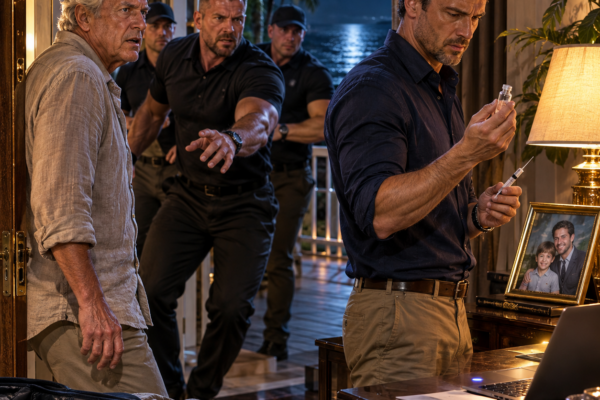
Whatever he discovered, whatever mess he was in, he trusted you to keep him alive long enough to reveal it. The irony was almost too much to process.
The man who’d spent weeks destroying her reputation now trusted her more than anyone else in the building.
“Is he going to survive?”
Morse asked.
“I don’t know.
The chest wound is serious. If he makes it through surgery, Sarah paused. When can I talk to him?
If he wakes up, we need to debrief him first. But Ms. Bennett, you should know.
The people who shot Holloway are still out there.
They failed to kill the colonel, failed to keep their conspiracy hidden, and now they’re cleaning up loose ends.
That makes you a potential target, too.
Sarah thought about Patricia, about the assassination attempt, about how easily violence had infiltrated the hospital she’d thought was safe.
You think they’ll come after me?
I think anyone connected to the colonel’s case is at risk until we shut this down completely.
Moore stood.
We’re increasing security around the hospital.
Stay alert.
Don’t go anywhere alone, and if you see anything suspicious, you call me immediately.
After the agents left, Sarah sat alone in the consultation room trying to organize the pieces of a puzzle that kept getting more complicated. Holloway shot.
Patricia arrested. The colonel still in danger. And somewhere in the shadows, people who were willing to kill to protect whatever secret they were hiding.
Her phone buzzed. Amy again.
Holloway’s out of surgery.
Stable but critical.
They’re putting him in the ICU.
Sarah made her way to the ICU and found Holloway’s room under guard.
Not military this time, but Crescent Falls PD and federal agents. She badged in and approached his bed.
Holloway looked diminished without his arrogance. pale, intubated, monitors tracking every fragile heartbeat. Sarah checked his chart and saw that the surgical team had done good work.
He’d lost a lot of blood, but if infection didn’t set in and no complications arose, he might actually survive.
Miss Bennett. Sarah turned to find Dr. Keading, the infectious disease specialist from the military facility, standing in the doorway.
Dr. Keading, what are you doing here?
The federal agents requested a consult.
They’re concerned about potential contamination from the ammunition used in the shooting.
Kadine held up her tablet showing lab results. The bullets that hit Dr.
Holloway were analyzed.
They’re clean, but the shooter’s choice of weapons suggests military grade equipment.
We’re being cautious.
They reviewed Holloway’s labs together, and Sarah found herself grateful for Kadin’s expertise.
As they worked, Kadine said quietly, “I heard what happened before the shooting, about the job offer, about everything you’ve been through here.”
Sarah didn’t know how to respond.
“For what it’s worth,” Kading continued, “youdled an impossible situation with more grace than most people could manage.
Saving someone who tried to destroy you, that takes real character.
“I’m just doing my job,” Sarah said, the words automatic.
“No, you’re doing what’s right, even when it costs you something.
There’s a difference.
That night, Sarah stayed late monitoring Holloway’s condition.
Around 11:00, his sedation was reduced enough that his eyes fluttered open.
He couldn’t speak around the ventilator tube, but his gaze found her immediately.
Sarah pulled a chair close to his bed.
“You’re stable.
Surgery went well.
You’re going to recover.”
Holloway’s hand moved weakly on the bed.
Sarah understood he was trying to write. She grabbed a pad and pen and placed it in his hand.
His writing was shaky but legible. They threatened my daughter.
Sarah’s blood went cold.
She knew Holloway had a daughter in medical school.
He’d mentioned her occasionally during his more grandiose speeches about medical dynasties.
Holloway wrote more.
Said they’d kill her if I didn’t help cover up the colonel’s case.
I refused. Tried to expose them instead.
So that was it.
Holloway hadn’t been part of the conspiracy.
He’d been coerced into silence and had tried to fight back.
The shooting was punishment for his defiance.
“Where’s your daughter now?”
Sarah asked.
Holloway wrote, “Safe house.
Feds moved her yesterday.”
Sarah felt something shift in her understanding of the man lying broken in front of her. Holloway was arrogant, dismissive, and had created a toxic work environment through his ego and insecurity.
But when his daughter’s life was threatened, he’d chosen to protect her, even knowing it might cost him everything.
Maybe people were more complicated than she’d wanted to believe.
She called Morse and relayed what Holloway had communicated. Within an hour, federal agents were in the ICU, taking down every detail Holloway could provide through his labored writing.
The network was bigger than anyone had realized. Not just an attempt to kill one colonel, but a systematic effort to suppress military medical research that threatened certain pharmaceutical contracts.
The colonel’s work on battlefield trauma protocols could revolutionize emergency medicine and destroy billions in profits for companies selling expensive but outdated treatments.
Patricia had been just one small piece. There were others.
A hospital administrator who’d buried incident reports, a pharmacy contractor who’d provided the lethal IV bags.
And according to Holloway’s notes, at least two physicians at Riverside who were on the payroll.
We need names, Morse told Holloway, who was now sitting partially upright, the ventilator tube removed, but oxygen canula in place.
Holloway’s voice was hoarse and weak.
Dr. Philip Rener, surgery department, and someone in administration. I never got confirmation, but the pattern pointed to Gerald Voss, the CFO.
Sarah remembered Rener.
He’d been one of the senior physicians who’d always seemed too interested in the colonel’s case.
and Voss had unusual access to security protocols and staffing schedules. Morse made calls. Agents moved.
Within 3 hours, both Rener and Voss were in federal custody, their homes and offices being searched, their communications being analyzed. The conspiracy was unraveling fast.
Over the next 48 hours, Sarah watched the fallout spread through Riverside Memorial like a controlled demolition. Federal agents conducted interviews.
Staff members who’d stayed silent about suspicious activity suddenly found their voices.
The local news caught wind of the story. Not the classified details about the colonel, but enough to report that federal authorities were investigating corruption and a potential criminal conspiracy at the hospital. The hospital board convened an emergency meeting.
Karen Whitmore looked 10 years older when she emerged to make a public statement about cooperation with federal authorities and commitment to transparency.
And Sarah found herself at the center of conversations she’d never expected to have.
Interviews with investigators, consultations with federal prosecutors building their case, questions from journalists who’d somehow learned she was connected to the breaking scandal.
Through it all, she kept working, kept showing up for shifts, kept treating patients with the same focus she’d always had.
But everything felt different now.
Nurses who’d ignored her before asked her opinion on cases.
Residents sought her guidance.
Even the attending physicians, the ones who weren’t under investigation, treated her with a respect that bordered on defence.
On the fourth day after Holloway’s shooting, Sarah was called to another meeting with Whitmore.
This time, three board members were present along with the hospital’s legal team.
Ms. Bennett, the board chair said, a distinguished woman in her 60s named Dr.
Sandra Michaels. We owe you an apology that goes beyond words.
The investigation has revealed systemic failures in our hospital’s oversight and culture.
You tried to raise concerns about patient safety and were punished for it.
That’s unconscionable.
Sarah waited for the other shoe to drop. Apologies from institutions usually came with conditions.
We’d like to formally offer you the position of director of trauma services, Dr.
Michaels continued. Not just trauma nursing coordinator, full director.
You’d oversee all aspects of trauma care, have authority over protocols and staffing, and report directly to this board.
We need someone who’s proven they’ll prioritize patients over politics.
The room went quiet. Sarah looked at the faces around the table.
Board members who’d allowed Holloway’s reign of intimidation.
Administrators who’d looked the other way when nurses complained.
Legal counsel who’d protected the institution instead of its staff.
“Why should I trust you?”
Sarah asked. A week ago, this hospital almost fired me. Now you want to put me in charge?
Dr.
Michaels didn’t flinch.
Because we failed. Because we created an environment where someone like Dr. Holloway could abuse his authority for years without consequence.
Because we ignored warning signs that patients were being endangered. And because you proved that one person with courage can expose what we were all too comfortable to see.
She paused.
We can’t fix the past, but we can build something better.
We need you to help us do that. Sarah thought about walking away, about finding another hospital in another city where nobody knew her name or her history. About the piece of anonymity.
Then she thought about Amy and the 43 signatures.
About the young residents who’d started asking questions instead of blindly following authority, about the changes already rippling through Riverside Memorial because someone had finally said no to business as usual.
I want guarantees,
Sarah said in writing. protection for staff who raise safety concerns. Independent oversight of complaints against senior physicians, regular audits of patient outcomes, and I want the authority to fire anyone, including doctors, who puts ego over patient care.
Dr. Michaels smiled. Done.
Our legal team will draft the agreement. One more thing, Sarah added. Dr.
Holloway, when he recovers, I want him offered a position as a clinical educator, not patient care, teaching. He knows medicine, but he needs to learn how to respect the people who work alongside him.
The board members exchanged glances. Whitmore looked surprised, but thoughtful.
“You want to help the man who tried to destroy you?”
Dr. Michaels asked.
“I want to give him a chance to be better than he was,” Sarah said.
“People deserve second chances, even people who don’t think they need them.”
That evening, Sarah visited Holloway in the ICU. He was awake and breathing on his own now, though still weak.
When she entered, his expression shifted through several emotions. Shame, gratitude, something that might have been hope. I heard about the directorship, he said, his voice still rough.
Congratulations. Sarah pulled up a chair. I recommended you for a teaching position.
Holloway stared at her like she’d spoken a foreign language.
Why would you do that?
After everything I Because you’re a good doctor who became a terrible leader, Sarah interrupted.
And because your daughter deserves to see her father learn from his mistakes instead of being destroyed by them.
Holloway’s eyes went glossy.
I don’t deserve your mercy.
Probably not.
But I’m not doing this for you.
I’m doing it because the system that created you needs to change.
You can be part of that change or you can be a cautionary tale. Your choice.
Before Holloway could respond, Sarah’s phone buzzed with a text from Martinez.
Colonel’s being discharged from secure facility tomorrow.
wants to return to Riverside for final evaluation before going home.
Says he won’t trust anyone but you.
Sarah showed the text to Holloway, who read it and then closed his eyes.
“He should have died,” Holloway said quietly.
“That first night when you challenged me.
I knew you were right. I knew his injuries needed a different approach.
But I was so angry that you’d question me in front of everyone that I’d rather have been right and wrong than admit a nurse knew more than I did.”
He opened his eyes. I almost killed him because of my pride.
But you didn’t, Sarah said.
I stopped you.
That’s why systems need checks and balances.
Why voices at every level matter.
I’m sorry, Holloway said.
And this time, the words carried weight. For all of it, the humiliation, the incident reports, the way I tried to make you invisible.
You’re a better medical professional than I’ll ever be.
Sarah stood to leave. Then prove it. come back different.
Teach residents that expertise comes in many forms.
Help build a culture where people like me don’t have to fight just to be heard.
She was at the door when Holloway spoke again. Sarah, thank you for saving my life, for giving me another chance, for being everything I should have been. The next afternoon, Colonel James Mitchell returned to Riverside Memorial for his final evaluation before being released to outpatient care.
He walked into the hospital lobby without assistance, moving slowly but steadily, looking a thousand times better than the dying man Sarah had first seen. A small ceremony had been arranged in one of the conference rooms.
Limited attendance as Morse had promised, but enough witnesses to make it official. Hospital board members, key staff, military representatives, and federal agents filled the space. Mitchell stood at a podium that had been set up for the occasion.
His voice was strong despite his recent ordeal.
I’m here today because of exceptional courage under impossible circumstances, he began.
Nurse Sarah Bennett didn’t just save my life once.
She saved it three times through medical expertise, moral courage, and a refusal to back down when people in authority told her she was wrong. He paused, looking directly at Sarah.
But more than that, she exposed a conspiracy that threatened not just my life, but the integrity of military medical research and the safety of this hospital’s patients.
Mitchell gestured and Martinez approached carrying a small case. Inside was a medal, the soldiers medal for heroism, civilian version.
This is normally reserved for military personnel, Mitchell continued. But I pulled strings, a lot of strings, because what Ms.
Bennett did went beyond medical care. She stood between me and people who wanted me dead.
She risked her career, her safety, and her life to do what was right.
He pinned the medal to Sarah’s collar while cameras flashed and people applauded.
Then he stepped back and saluted. Every military person in the room followed suit.
Sarah returned the salute, her hands steady, her eyes clear.
She thought about the girl she’d been when she first enlisted, young, uncertain, desperate to prove herself.
She thought about the nurse who’d arrived at Riverside Memorial weeks ago, hoping to disappear into quiet obscurity.
She was neither of those people anymore. Dr.
Michaels approached the podium next. On behalf of Riverside Memorial Hospital, I want to publicly acknowledge that we failed Ms.
Bennett. We created an environment where speaking truth to power resulted in punishment instead of recognition. That ends today.
She turned to face Sarah directly. Effective immediately, Sarah Bennett is our new director of trauma services.
She has full authority to reform our department, implement new protocols, and ensure that what happened to her never happens to anyone else in this institution. More applause. Amy was crying openly.
Even some of the physicians who dismissed Sarah weeks ago were clapping, though several looked uncomfortable. The ceremony concluded with remarks from Agent Morse about the ongoing federal investigation and the successful dismantling of the conspiracy.
Patricia had provided testimony in exchange for a reduced sentence. Rener and Voss were facing charges that would likely mean decades in prison. The pharmaceutical companies involved were under investigation.
Justice, Sarah thought, looked different than she’d imagined.
Messier, more complicated, but real. As people filed out of the conference room, Holloway appeared in the doorway.
He was in a wheelchair, still too weak to walk far, but he’d insisted on attending.
Sarah approached him.
You didn’t have to come, she said.
Yes, I did. Holloway looked at the metal on her collar.
I needed to see this. Needed to witness what accountability looks like.
He paused. The board offered me the teaching position. I accepted.
I start when I’m cleared medically.
Good.
I won’t let you down.
Sarah studied the man who’d been her enemy and was now something else.
Not quite an ally, but maybe a work in progress.
Don’t let yourself down.
That’s what matters.