Single Dad Shared a Bed With His COLD Billionaire Boss—Then Her Whisper Changed Every Thing! (Part 1)
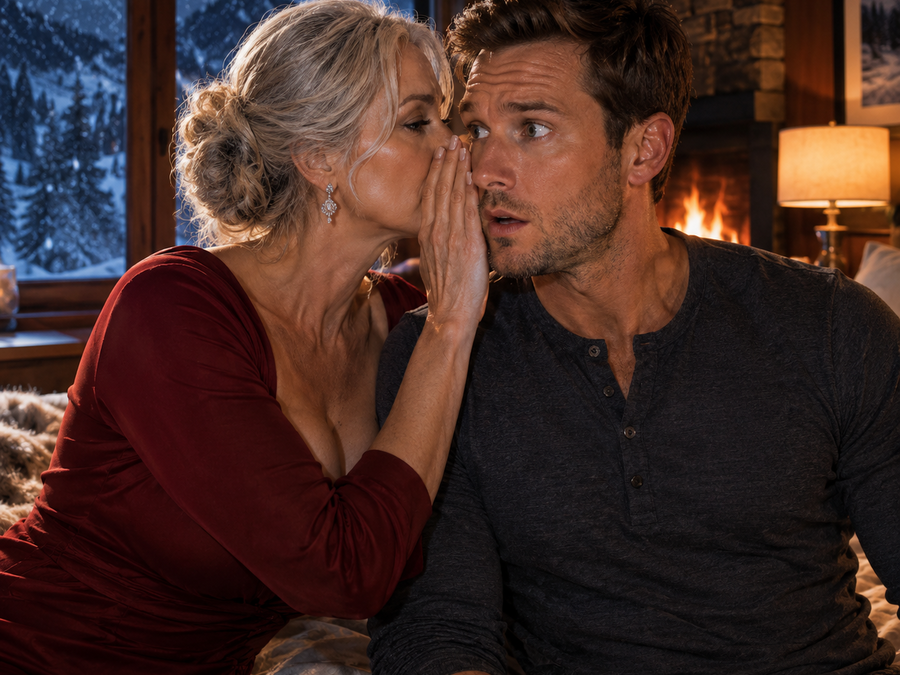
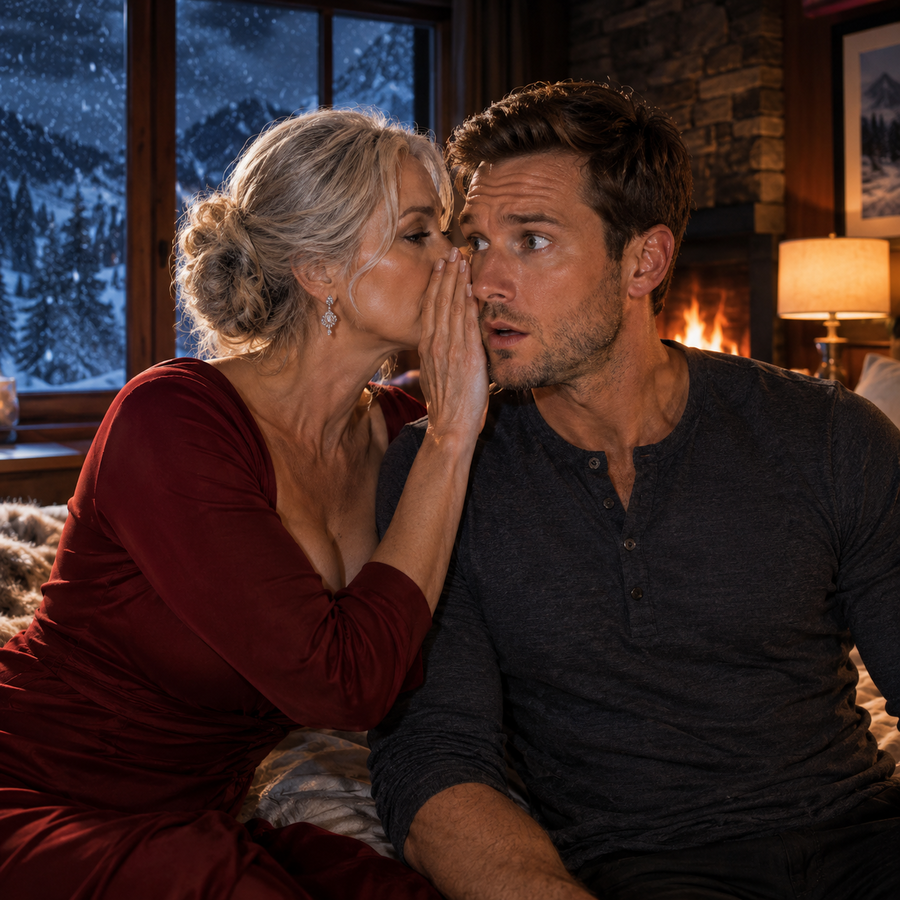
She owned 14 hotel empires, three private jets, and more power than most men would ever touch in a lifetime. He owned a toolbox, a beat-up truck, and a seven-year-old daughter who still cried for her mother at night. They had never exchanged more than 20 words in three years.
Then a blizzard buried the mountain road. The lodge had one room left and one bed, and the most untouchable woman Graham Alder had ever worked for looked at him across that mattress and said with no warmth at all, “Don’t be ridiculous. We’re adults.” Neither of them knew that the next 12 hours would change everything.
The call came in at 4:47 in the afternoon, which meant Graham Alder was already going to miss Maisie’s dinner. He pulled over on the two-lane mountain road and looked at his phone screen long enough to read the name Regional Director Harrow Hospitality before answering. He already knew what it was going to be.
The Ridgerest Lodge generator had been throwing fault codes for two weeks. He’d flagged it twice in writing. Nobody above him had acted on it. And now with a historic storm system grinding toward the northern Rockies and a full house of guests checked in for the holiday weekend, the system had finally decided to make everyone’s problem official.
“We need you up there tonight,” the regional director said. His name was Carl Bream, and he had the particular energy of a man who spent his career solving problems by making them someone else’s urgency. “The lodge manager says the backup generator is throwing errors, and the primary is making a sound he doesn’t like.”
“A sound he doesn’t like,” Graham repeated his words. Graham looked through the windshield at the sky, which had turned the specific gray-white color that people who grew up in mountain country recognized immediately—not regular overcast. The kind of sky that meant the weather service had already been wrong about timing by at least four hours.
“Carl, there’s a storm coming, a real one. I can go up tonight, but I’m not guaranteeing I can get back down before it hits.” “We have guests, Graham.” A full lodge. That was the whole sentence. That was the argument.
Graham rubbed his jaw, looked at the sky again, and made the calculation that people in his position were always making—the one where there was no good answer, only a less bad one. “I’ll call my neighbor,” he said. “Someone needs to be with my daughter.” “I appreciate it. Drive safe.”
Carl hung up before Graham could say anything else, which was probably intentional. Graham called his neighbor Janet Olsen, who was 63 and had known Maisie since she was three years old and had watched her through every emergency Graham had dealt with for the past four years. Janet answered on the second ring, heard the situation in about 12 seconds, and said, “Of course,” before he’d finished explaining. He’d been lucky with Janet. He tried not to take it for granted.
Then he called Maisie’s school aftercare number, spoke to the supervisor, and arranged for Maisie to go home with the Olsen kids until Janet picked her up at 6:00. Then he called Maisie directly on the tablet she used for video calls. She answered immediately, which meant she’d been sitting with it, which meant she’d somehow already known this was going to happen.
“You’re not coming home,” she said. She was seven. She’d learned to read bad news early. “Not tonight, Bug. Something broke at one of the hotels and I have to go fix it. The Big Mountain one.” “Yeah.” Maisie processed this in the serious, deliberate way she processed most information, which reminded Graham every time of her mother and every time it still landed somewhere just behind his sternum.
“Is it snowing there?” “Not yet, but it’s going to.” “You should bring extra socks.” She said, “Your feet get cold.” “I know.” “And your phone charger. You forgot it last time.” “I remember.” She looked at him through the screen with her mother’s gray eyes and said, “Okay, be careful, Daddy.” “Always,” he said. “I’ll call you tomorrow morning.”
He disconnected, sat with the quiet for a moment, then put the truck in gear and drove north toward the mountains. He reached the Ridgerest Lodge at 7:22. By then, the first fingers of the storm were already touching the upper elevations—not full snow yet, just that particular stillness that preceded it, the air going thick and cold, and the trees going silent.
The lodge sat at roughly 6,800 feet. A timber and stone structure built in the 1930s and renovated twice since, the second renovation having been undertaken by Harrow Hospitality when they acquired the property six years ago. Graham had been part of that renovation crew. He knew the building’s bones.
The lodge manager, a nervous, thin man named Daryl Fitch, met him in the parking lot with a flashlight, even though the exterior lights were working fine. “Thank you for coming,” Daryl said. “I know it’s late. I know the storm.” “Show me the generator room.” Daryl showed him. The primary generator was a diesel unit 12 years old, and it had developed a bearing knock that anyone with mechanical experience would have flagged months ago.
Graham crouched beside it, put his hand on the housing, felt the vibration pattern, and understood immediately that this unit was six to eight weeks from total failure under normal load—and a full house winter weekend was not normal load. The backup unit was newer, only three years old, but it was throwing a fault code he didn’t recognize off the top of his head.
He photographed it, looked it up on his phone, and felt a very specific kind of cold move through him that had nothing to do with the temperature. The fault code indicated a sensor failure on the automatic transfer switch, meaning that if the primary went down, the backup wouldn’t automatically kick in. Someone would have to manually activate it.
“Has anyone serviced this unit since installation?” he asked Daryl. Daryl looked genuinely uncertain. “I’d have to check the logs.” “Check them.” While Daryl went for the logs, Graham moved through the building, noting emergency exit lighting, the locations of space heaters in the guest rooms, the age of the fireplace dampers in the main lounge.
The lodge was warm and full. He could hear guests in the dining room, the sound of silverware and conversation, a child laughing. Outside, the snow had started. Daryl came back with a maintenance log that was both inadequate and illuminating. The backup generator had been inspected 14 months ago, and the inspection had been signed off by a third-party contractor Graham didn’t recognize.
The parts listed in the repair notes didn’t match what the fault code was describing. Either the inspection was wrong or the parts were wrong, or both. He noted it and kept working. By 9:00, Graham had bypassed the transfer switch fault, manually tested the backup generator, and confirmed that it would hold under load—but only if someone monitored it.
He couldn’t leave. He called Carl Bream and told him so. “So stay,” Carl said. “There’s a storm. I might be up here for—” “Stay. We’ll sort out the overtime.” Carl hung up again. Graham stared at his phone, then went to find Daryl about a room. That was when Daryl told him.
“We’re full,” Daryl said. “I’m sorry. We have a full house plus two guests who drove up this afternoon from a different property because the highway closed. We put them in the last available room about an hour ago. Both of them in one room.” Daryl’s expression shifted into something complicated. “One of them is—it was the last room, Mr. Alder. We offered to set up a cot in the storage room, but she—the guest—she said it was fine. They’re sharing.”
“Who’s the guest?” Daryl hesitated. “Daryl.” “Miss Harrow,” Daryl said quietly. “Celestine Harrow. Her helicopter was diverted here when the storm came in faster than forecast. She and her assistant. The assistant is sleeping on the cot.” Graham looked at Daryl for a long moment. “You’re saying the last available room in this building belongs to my boss.” “You’re—yes. Technically.”
Graham thought about the lobby. The lobby had a fireplace and several sofas. He could put together a reasonable sleeping situation with the furniture. It would be cold if the primary generator failed overnight, but manageable if he was awake anyway, monitoring the backup. He told Daryl he’d sort himself out, thanked him, and went to the generator room to do another check.
It was 11:43 when the lobby temperature dropped enough that he knew the primary had started degrading under load. He went to manually adjust the load distribution and stepped into the hallway and nearly walked directly into Celestine Harrow. He’d seen her in person maybe four times in three years. Each time had been brief, formal, and conducted at a distance that made clear the difference in their positions within her organization.
She was 50 years old, which Graham knew from the company bio that appeared in the annual report he’d never actually read, but had been forwarded once in an internal email. She was tall, nearly 5’10”, with gray-streaked dark hair. She kept it pulled back in a way that looked less like a style choice and more like she simply didn’t have time to think about it. She had the bearing of someone who had spent 30 years making decisions that other people felt the consequences of.
At 11:43 in a mountain lodge hallway, she was wearing a heavy cardigan over hotel pajamas, no makeup, reading glasses pushed up onto her head, and she was holding a glass of water with both hands like she’d been walking to the vending alcove and stopped mid-thought. She looked at him the way executives look at people they know they should recognize but can’t immediately place.
“You’re the maintenance man.” She said. “Maintenance supervisor,” Graham said. “Graham Alder. I drove up tonight for the generator.” Something shifted in her eyes. Not warmth. More like adjustment—recalibrating the category she’d put him in. “Carl called you up in this weather.” “Yes.” “That was irresponsible of him.”
Graham wasn’t sure what to say to that. He said, “I would have come anyway. The generator situation needed attention.” She studied him for a moment. Her gaze was direct in the way that people who have conducted thousands of performance reviews develop over time. Not unkind, but assessing. “Daryl tells me you’re sleeping in the lobby.” “I’m monitoring the generators overnight. The lobby is fine.” “The lobby is 48 degrees.” “I checked with the front desk. I’ve worked in colder.”
Celestine Harrow looked at him and for just a moment something moved across her face that wasn’t evaluation and wasn’t authority. It was something more tired and more human than either of those things. “My assistant is on a cot in our room. She said she’s 32 and she’s already asleep and she is going to have a neck injury by morning regardless of what I do about it.” She paused. “There’s half a bed.”
“Miss Harrow.” The word came out flat, not angry. Just done. “I’m not offering anything. I’m pointing out that we’re two adults. It’s below freezing in this lobby, and you have a seven-year-old at home who presumably needs her father functional.” “Don’t be ridiculous.” Graham looked at the lobby, at the sofa that was going to be genuinely terrible for his lower back, at the fireplace that was already dying, at the window through which he could see the snow coming down sideways now.
He said, “I’ll need to get up to check the generator.” “Obviously,” she said. “Bring your work coat.” She turned and walked back down the hall. Graham stood in the lobby for a moment alone with the dying fire and the sound of the storm, and then he collected his jacket and his tool bag and followed her.
The room was a standard king suite by lodge standards—timber ceiling, stone fireplace, two upholstered chairs arranged near the window. Celestine’s assistant, a young woman named Petra, was on the cot with an extra blanket, and appeared to be genuinely, deeply asleep. The bed itself was large enough that two people could occupy it without actually being near each other. Celestine had already placed a folded spare blanket down the center like a low dividing line.
She was sitting in one of the chairs with her back to him, looking at whatever was on her phone, and she didn’t look up when he entered. “Left side is yours,” she said. “Thank you.” “Don’t thank me. It was practical.” Graham sat on the edge of the left side of the bed, set his alarm for 2:00 a.m. to check the generators, and lay down on top of the covers with his work jacket on.
The room smelled like the cedar paneling and whatever product Celestine Harrow apparently used, something clean and quiet that he noticed once and then made himself stop noticing. He was exhausted. He’d been awake since five that morning. He told himself he would not sleep deeply because the generator needed checking, and he believed it when he thought it. He was wrong. He was asleep within six minutes.
He came awake at 12:37, not from his alarm, but from something else—a sound, or the absence of one. The wind had shifted. He lay in the dark, taking inventory. Generators humming, room temperature reasonable, storm still going strong outside the window. Everything okay? Then he heard Celestine’s voice. She was barely speaking above a breath. She wasn’t talking to him.
Her face was turned toward the window, toward the mountains buried in snow, toward something outside or inside that Graham couldn’t see. She might have thought he was asleep. She might not have cared. She might simply have reached the particular hour of the night when the things people carry all day become too heavy to carry silently.
“I think everyone would notice my money disappearing before they noticed me,” she said. It was so quiet he almost wasn’t sure he’d heard it correctly. He lay still. He didn’t move. He let the words exist in the dark room between them. The way some things need to exist—witnessed, not responded to. Not yet.
The storm pushed against the windows. Somewhere outside, a branch broke under the weight of the snow. Graham Alder opened his eyes and for the first time in three years of working inside Celestine Harrow’s empire, he looked at her—not his boss, not the name on the organizational chart, not the woman Carl Bream reported to and Graham reported to Carl about—but the actual person lying in the dark awake at 12:37 in the morning saying true things to a window because there was nobody else to say them to.
She didn’t know he was watching. She didn’t know he was awake. She didn’t know that what she just said in the dark had landed somewhere in his chest and was going to stay there for a very long time. He closed his eyes again. He did not go back to sleep. He lay there for a long time, staring at the ceiling, listening to the storm work itself against the lodge like something with a personal grievance.
The snow was coming harder now. He could hear it in the way the wind changed pitch every few minutes, dropping low and then surging again, and in the way the windows flexed slightly in their frames—old timber doing what old timber does, bending rather than breaking. The room was warm enough. The generators were holding, and Celestine Harrow had gone quiet again on her side of the folded blanket.
The way people go quiet when they’ve said something they didn’t intend to say, and are waiting to find out whether anyone heard it. Graham waited. He was good at waiting. Four years of single parenthood had taught him that you couldn’t rush a seven-year-old through a grief she didn’t have the language for. And you couldn’t rush yourself through it either. You just had to be present in the uncomfortable quiet and trust that eventually someone would say something that moved things forward.
He counted the seconds without meaning to. Thirty. Forty. A full minute. Then Celestine said quietly, without turning from the window. “Are you awake?” She asked it the way people ask when they’re hoping the answer is yes, but are also prepared to be relieved by no. Graham considered for just a second, pretending. Then he said, “Yeah.” A pause. The wind pushed against the glass. “How long?” “A while.” Another pause. “Longer.”
He could hear her breathing shift. Not dramatically. Not the way people breathe in movies when they’re making some big emotional decision. Just a small adjustment, like she’d been holding something tightly and had made a choice to hold it slightly less tightly. “You heard what I said,” she said. It wasn’t a question. “I did.” “I wasn’t talking to you.” “I know.”
The silence that followed was different from the one before it. Less waiting, more something else. Two people on opposite sides of a folded blanket at 1:00 in the morning. Both awake, both aware of each other, figuring out what happens next. “You should have said something,” Celestine said, or coughed. “Let me know.” “I thought about it,” Graham said honestly. “I didn’t want to embarrass you. And now—now you asked directly.”
She made a sound that wasn’t quite a laugh. Not dismissive either. Something in the middle, the sound of someone who hadn’t expected a straight answer and wasn’t sure what to do with one. Graham sat up slowly, swung his legs over the edge of the bed, and reached for the water bottle on the nightstand. His back was complaining from the position he’d been lying in. He twisted carefully, heard something pop, and exhaled.
“Generator check is at two,” he said. “I’ve got about 20 minutes.” “Then sit,” she said. “If you want.” He stayed where he was, on the edge of the bed, looking at the wall. On the cot across the room, Petra hadn’t moved. She was genuinely, impressively asleep. Graham envied her that.
“You don’t have to explain yourself,” he said. “What you said. You don’t owe me an explanation.” “I know I don’t.” Celestine’s voice was flat, not hostile. The flatness of someone who spent every day in rooms full of people who wanted something from her, and had learned to keep her tone as neutral as possible until she knew what she was dealing with. “But I’m also not someone who says things like that and pretends I didn’t.” “Okay.”
She shifted on her side. He heard the mattress move. When he glanced back, she had pushed herself up against the headboard, knees drawn slightly up, looking at the window. The snow outside caught what little exterior light remained and made the glass glow faintly. “Say what you’re thinking.” “I’m thinking it’s a strange thing to say if you didn’t mean it.” “I meant it.” “Then I’m thinking it must be a lonely way to live.”
The words came out simpler than he’d intended them. Not therapeutic, not carefully constructed, just true. The way things are true at 1:00 in the morning when you’re tired and the storm is loud and there’s no particular reason to be anything other than direct. Celestine looked at him. He could see her in his peripheral vision, not looking away, not retreating behind the flat tone or the executive bearing, just looking at him the way people look at other people when they’re deciding whether to trust them.
“Thirty years,” she said, “of lonely. Of building something so that it wouldn’t be.” She paused. “The theory was that if I created enough success, enough reputation, enough security, it would fill in the gaps. It seemed logical. It seemed like the kind of problem you could solve if you worked at it hard enough.” And she made that sound again. This time it was closer to a laugh, but with no humor in it whatsoever. “And I own hotels in 14 states and I’m stranded in one of them at 1:00 in the morning with my maintenance supervisor because I didn’t have anybody to call who could have told me not to take that helicopter.”
Graham turned that over. He understood what she meant. Not the specifics of it, not the private jets and the 14 states, but the core of it, the thing underneath. He’d felt a version of it himself in a different shape after Sarah died. The specific terror of looking at your life and realizing that the scaffolding you’d built around yourself had gaps in it, and the gaps were where the people were supposed to be.
“My wife died four years ago,” he said. Celestine went still. “Aneurysm. No warning. She was 34.” He wasn’t sure why he was saying this—not to compete with her loneliness, not to redirect the conversation, more because it felt right to offer something true in return for something true. “Maisie was three. I had no idea what I was doing and I couldn’t admit it to anyone because there was this idea that grief was supposed to look a certain way and I kept trying to perform the version of it that people could handle instead of the version I was actually in.”
“How long did that take to stop performing it?” “About a year and a half before I stopped pretending. Probably another six months before I was actually functional.” He paused. “Maisie helped. Not because she said anything smart, because she was just there needing things. Breakfast and baths and someone to read to her at night. It turns out needing to take care of someone else is the most effective thing I’ve found for not drowning in yourself.”
Celestine was quiet for long enough that he wondered if he’d said too much. Then, “I don’t have that. The kid part. Or the someone needing you part.” She said it without self-pity, which made it worse somehow. Just a statement of fact, the way you might note a structural deficiency in a building report. “My marriage ended 12 years ago. We were both too focused on the wrong things. I’m not sure either of us actually noticed it was ending until it was already done.”
She reached up and pulled the reading glasses off her head, turned them in her hands, set them on the nightstand. “I thought I’d feel worse about it than I did. That bothered me more than the divorce itself, honestly. The fact that I was mostly just relieved. What does that say about me?” “That it was the right call,” Graham said. “Or that I was already too far gone to feel it properly.” “I don’t think those are mutually exclusive.”
She looked at him again. “You’re more direct than I expected.” “You said to say what I was thinking.” “I did.” Something shifted in her expression. Not warmth exactly, but a loosening. The way a room changes when someone opens a window, the air moving slightly differently. “What else are you thinking?”
Graham thought about it. “Honestly, I’m thinking that you’re probably the kind of person who’s been in rooms full of people telling you what you want to hear for so long that you’ve started to confuse agreement with actual company.” He paused. “And I’m thinking that’s not a criticism. It’s just—that’s what power does. People stop arguing with you and then they stop being honest with you and then they’re just reflections of what you’ve already decided. And at some point, you look around and realize you haven’t had a real conversation in years.”
The silence that followed lasted long enough that Graham wondered whether he’d crossed some line he hadn’t been able to see. He wasn’t her therapist. He wasn’t her friend. He was a maintenance supervisor in her hotel company who was sharing her bed because of a snowstorm and had apparently decided that was license enough to say whatever was actually in his head. But Celestine didn’t retreat.
She said, “My brother called me last month for my birthday.” That sounds—”He needed me to co-sign on a refinancing arrangement for a property he’d bought in my name three years ago without telling me.” She said it without anger, which was somehow worse than anger would have been. “He’d been planning the call for six weeks. His assistant emailed me a summary of the conversation afterward. All the key points he’d hit.” Graham didn’t say anything.
“I have a financial adviser who sends me a card every year for the holidays,” Celestine continued. “My assistant Petra, who is currently sleeping approximately eight feet away and does not know I am having this conversation, is the person who most regularly asks how I’m doing. She means it, I think. But she also works for me, so—” she lifted one hand slightly and let it fall. “That’s the inventory.” “That’s a short list,” Graham said. “Yes.” A pause. “It’s very short.”
He thought about Maisie, who had told him to bring extra socks. He thought about Janet Olsen, who answered on the second ring. He thought about the coffee shop near his house, where the woman behind the counter knew his order and always asked about Maisie by name, and how little that cost, and how much it added up to—all those small pieces of being known. He’d taken it for granted before Sarah died. He’d stopped taking it for granted afterward.
“A full house can still be empty,” he said. “I learned that the hard way. But I also learned that a small house can have everything in it that matters.” Celestine looked at him for a long moment. Then she said very quietly, “That’s either the simplest thing anyone’s ever said to me or the most complicated. Probably both.”
For the first time, something crossed her face that wasn’t calculation or careful control. It was brief—a flicker, the way light moves across water, and then it was gone. But he’d seen it. “You must be a very different person at home than you are at work,” she said. “Most people are,” Graham said. “You just usually don’t see it.”
She seemed to consider this. Then she reached for the glass of water on her nightstand and drank from it. And when she put it down, she looked at the window again, and something about the set of her shoulders was different. Less braced. Not relaxed—Graham didn’t think Celestine Harrow had a setting that was actually relaxed—but different, like a structure that had been bearing weight for a long time and had just for a moment been allowed to redistribute it slightly.
“I’ve never told any of that to anyone,” she said. “I know.” “Doesn’t bother you that you’re a stranger?” “Strangers are sometimes easier,” he said. “Less to protect.” His alarm went off. Two a.m. He got up, pulled on his jacket, picked up his flashlight, and looked back at her. She was watching him with an expression he couldn’t quite read—something that landed between uncertain and oddly settled. The way people sometimes look after saying the true version of something for the first time, and discovering the world didn’t end.
“Generator check,” he said. “20 minutes.” “I’ll be awake,” she said. He went. The generators were holding, but only just. Graham spent 35 minutes instead of 20 in the mechanical room adjusting load distribution and monitoring output levels. And when he came back down the hallway at 2:41, he could feel the temperature had dropped in the corridor. Not dramatically, but enough.
He let himself quietly back into the room. Petra was still asleep. Celestine was still upright against the headboard, and she had what appeared to be a typed document in her lap that she was reading by the light of her phone held sideways, which struck him as both completely plausible and somehow very her. “How bad?” she asked without looking up. “Manageable. Primary is degrading faster than I’d like. Backup is holding.” He sat back on his edge of the bed. “I think we’re okay through morning.” “You think?” “I think. I’m not promising.” She nodded and went back to her document.
Graham took off his jacket, lay back down, and stared at the ceiling. The wind was doing something new outside—a lower, longer note, the kind that meant it had found an angle to push from and was committing to it. He wasn’t sure how much time passed before she spoke again. He might have been half asleep. He wasn’t sure. “You have a photo of your daughter,” she said.
He opened his eyes. “What?” “Your work badge. The one you’re wearing. The back of the lanyard has a photo holder. There’s a picture in it.” He hadn’t known she’d noticed that. He reached up automatically and touched the lanyard. The photo was Maisie from last summer at the lake, squinting into the sun with an expression of profound skepticism about whoever was holding the camera, which had been Janet’s grandson and had been a genuinely terrible choice.
“Maisie,” he said. “She’s seven.” “She looks serious.” “She doesn’t love getting her picture taken.” “Smart child.” Celestine was quiet for a moment. “She lives with you full time?” “Always has. Sarah’s parents are in Colorado. They’re great. They take Maisie for a few weeks in summer. But otherwise, yeah. Just us.” “What’s that like?”
The question surprised him—not because it was strange, but because of how she asked it. Not politely. Not the way people ask when they’re filling dead air. With actual curiosity and a kind of careful tentativeness, like she wasn’t sure she was entitled to the answer. “Terrifying,” he said, “and then ordinary. And then terrifying again at random intervals.” He thought about how to say the next thing. “It’s the most important thing I’ve ever done and also the thing I’m least sure I’m doing right on any given day. Every day.”
Celestine was quiet. “She cried for Sarah for two years,” he said. “Not constantly, but at nights sometimes. Or when something happened that she wanted to tell her mother about. I’d hear her through the wall.” He stopped. He hadn’t meant to say that. It just came out. The way things do at 2:45 in the morning in a room where the understanding of what you owe the other person has shifted into something he didn’t have a precise word for. “You learn not to fix it. You just sit with it. That’s all you can do.”
“Is that what you do with people? Sit with it?” “When I can.” “You did that with me,” she said quietly. “Just now. Earlier. You noticed.” “I noticed things.” She said it without arrogance. Like a fact about herself she’d made peace with. “I’ve spent 30 years noticing things. It’s how I built what I built. But usually what I notice is data. Patterns. Problems.” A pause. “It’s been a long time since I noticed a person.”
Graham didn’t answer that. He wasn’t sure it needed an answer. Outside, the wind surged hard, sudden—the way mountain storms announce a shift—and then something happened that made the decision for all of them. The sound started from above. Not explosive, more like a long, deep exhale, and then a groan that ran through the timber framing of the ceiling, and then a sharp crack that Graham recognized before he was fully upright, before his feet hit the floor, before Petra jerked awake on her cot with a sound of confused alarm.
He was at the door before either of them spoke. “Stay here,” he said. “What?” Celestine started. “Stay in the room. Keep Petra back.” He was already in the hallway. The roof section over the east wing utility corridor had partially collapsed under the accumulated snow load. Not catastrophically, not a complete structural failure, but enough that a section of ceiling had dropped and taken a section of the HVAC ductwork with it.
More critically, it had knocked into the secondary electrical panel that controlled backup heating distribution to the guest room corridor. Graham assessed it in 40 seconds. The panel wasn’t destroyed, but two of the circuit breakers had tripped and one had partially melted from contact with something in the ceiling debris. The main generator was still running. Power was still flowing, but the heating to most of the guest corridor was cut, and the temperature in the lodge was going to drop fast.
Not dangerously. Not in the next 10 minutes, but within an hour, guests would be cold. Within three hours, the elderly couple in room 7, who Graham had noted earlier were in their 80s and appeared to be the kind of people who felt cold deeply, would be in a genuinely uncomfortable situation. He went back to the room, opened the door. Celestine was already in the hallway.
“I told you to stay.” He started. “What happened and what do you need?” She said, flat, direct, no argument, no drama. Just the same tone she’d use in a boardroom, which was actually exactly what he needed. He told her quickly. Efficiently. Collapsed roof section, panel damage, heating distribution compromised, three hours before guest comfort became a real problem.
She pulled out her phone. “I’ll call the regional emergency line.” “No signal,” he said. “Storm’s been blocking it for two hours.” She looked at her phone screen, then at him. “The satellite unit in the manager’s office might work. Worth trying.” He was already moving toward the maintenance storage. “I need Daryl and whoever’s on night staff. I need the emergency heating maps for this building. And I need the supply room unlocked.”
“I’ll get Daryl.” “You don’t need to—” “Graham.” She said his name for the first time. Not Mr. Alder, not the maintenance man. His name. And the way she said it stopped him. Not the authority in it—because he’d heard authority in her voice already—but something else underneath it. Something that said she understood what the next several hours were going to require, and she was not going to stand in a hallway being managed while it happened. “I’ll get Daryl. You get your tools.”
He looked at her for a half second. Then he said, “Supply room key is on a blue lanyard in his desk drawer, left side, second from the top.” “Got it,” she said, and walked toward the manager’s office. What followed was three and a half hours of unglamorous, concentrated work.
Graham and two night-shift lodge employees—a young man named Andre, who was 23 and had some electrical background, and an older woman named Beth, who had worked at the lodge for 11 years and knew the building’s idiosyncrasies better than the maintenance logs—re-routed available generator power through an alternate circuit path that bypassed the damaged panel. It was not elegant. It required running a temporary line through two service corridors, isolating and manually resetting four individual breakers, and at one point required Graham to crawl into a space above the ceiling tiles that was approximately 18 inches high and coated in fiberglass insulation while Andre handed tools up to him and Beth stood below and read generator output numbers from a screen Graham couldn’t see.
It was the kind of work that had nothing to do with office skills or business acumen or the ability to manage a quarterly earnings call. It was physical and specific and required knowing how buildings actually behaved rather than how they were supposed to behave on paper. And it required being willing to be uncomfortable and uncertain and covered in insulation dust for as long as it took. Celestine did not try to help with the electrical work, which showed better judgment than Graham might have expected, but she did not disappear either.
She moved through the lodge with Daryl, woke three staff members who’d been sleeping in crew quarters, organized the relocation of the two elderly guests from the compromised corridor into the main lounge where the stone fireplace was running, found extra blankets in the housekeeping storage, and at some point produced a tray of instant coffee from the lobby kitchen that she distributed to Andre and Beth without commentary. When Graham finally dropped down from the ceiling space at 4:53 in the morning, covered in insulation fibers and with a cut on the back of his left hand from where he’d caught it on a bracket he hadn’t been able to see properly, the heating in the guest corridor was restored.
Not perfect, slightly lower than normal, and one zone was running on manual override, but functional enough. He stood in the service corridor and looked at the temporary rigging they’d built and ran the math in his head and decided it would hold for 24 hours under normal load, which was as much as he needed it to do. Andre was leaning against the wall, looking exhausted. Beth had already gone to update Daryl. Graham became aware that Celestine was standing at the end of the corridor. She had been there for a while, he realized. He wasn’t sure exactly when she’d come in, but she’d watched at least the last section of the work, the part where he’d been on his back on the floor re-routing a circuit with his arms above his head and a flashlight held in his teeth because he needed both hands, and there was nobody available to hold it for him.
She was looking at him with an expression that was harder to categorize than anything she’d shown him during their conversation in the dark. Not the carefully managed evaluation he’d seen in the hallway earlier. Something more unguarded than that, something that took the data she’d been collecting about him for the past several hours—the competence, the steadiness, the way people automatically oriented toward him when something needed to be solved—and was adjusting what she’d previously thought she understood about what those things meant.
He pulled a rag from his jacket pocket and wiped the insulation off his forearms. “Heating’s back,” he said. “Should hold through morning.” “I saw.” “She said the panel damage needs a licensed electrician before anyone touches it again. I’ll document it in the incident report.” “Yes.” She was still looking at him with that expression. “Graham.” “Yeah.” “Your hand.”
He looked down. The cut on his left hand had bled more than he’d realized. Not seriously, not the kind of thing that needed stitching, but enough to be visible and inconvenient. He’d been ignoring it for the last 40 minutes. “It’s fine,” he said. “It’s not infected yet,” she said. “That’s not the same as fine.” She turned toward the hallway. “There’s a first aid kit in the manager’s office. Come.” He followed her. Not because she was his boss, because it was 4:53 in the morning, and he was tired, and his hand was bleeding, and she was right.
The manager’s office was small and smelled like old paper and the particular institutional coffee that every back office room in every hotel in the world seemed to contain in some form. Celestine found the first aid kit in the second cabinet. She checked, opened it on the desk, and looked through it with the same systematic efficiency she appeared to bring to everything. Graham sat in Daryl’s chair. He was more tired than he’d admitted to himself—the specific kind of tired that arrived after sustained concentration and physical work, and he could feel it settling into his shoulders and the backs of his thighs.
Celestine opened an antiseptic packet, folded it, and held out her hand for his. He placed his left hand in hers. She cleaned the cut without flinching. Her hands were steady—not the trembling steadiness of someone performing steadiness, but the actual steadiness of someone who had dealt with worse than a field dressing at 5 in the morning, and found it manageable. She worked quickly. She didn’t make conversation. She applied butterfly closures from the kit across the deeper part of the cut, covered it with a small bandage, and released his hand. “Thank you,” he said.
She put the kit away. Then she turned and looked at him, leaning back slightly against the edge of the desk, arms crossed—not defensively, more as though she was steadying herself against something she was working out. “Three years,” she said. “You’ve worked for this company for three years.” “A little more. Three and a half.” “And in three and a half years, I have never once asked to see the maintenance logs.”
Graham waited. “I have never asked what was flagged and what wasn’t acted on. I have never asked which properties were behind on their safety schedules or which contractors were being used or whether anyone in the regional management chain was actually reading the reports that came up from field level.” Her voice was level—not defensive, not performatively guilty—working something through in real time, the way honest people do when they’ve just seen something clearly for the first time.
“I built the business. I watched the numbers. I trusted the structure to work the way I designed it to work.” “Structures drift,” Graham said. “Especially when they get large enough that the top can’t see the bottom.” “That’s a generous interpretation.” “It’s a practical one.” He looked at her. “You didn’t design it to fail. Things still went wrong. Both things can be true.”
She looked at him for a long moment. Then, quietly, “The generator fault. The parts that didn’t match the service records.” “Yeah.” “That didn’t happen by accident.” “No,” he said. “It didn’t.” He watched her understand the full weight of that. Not just the mechanical failure, not just the negligence, but what it implied about what was happening inside the company she’d spent 30 years building. He watched it land. He didn’t try to soften it, and he didn’t try to rush past it. He just sat with her while she held it.
Outside, the storm was still running hard. The mountain was still buried. The road behind them was still impassable. But inside the manager’s small office at 5:00 in the morning, Celestine Harrow was sitting with something true, and not trying to manage it into a shape that was easier to hold, and Graham Alder was exactly tired enough, and exactly awake enough, to understand that whatever this night had started as, it had become something else now entirely—something neither of them had arrived here expecting.
They stayed in the manager’s office for another 20 minutes after that, not because there was more to say about what Graham had implied, but because neither of them was quite ready to walk back into the rest of the lodge and resume whatever roles they’d arrived here wearing. The night had done something to those roles—not dissolved them exactly, but shifted them enough that putting them back on cleanly wasn’t going to be as simple as it had been 24 hours ago.
Celestine made two cups of coffee from the machine on the credenza. It was the institutional kind, the kind that tasted like it had been filtered through ambition and disappointment in equal measure, and handed one to Graham without asking whether he wanted it, which he appreciated. He was past the point of having preferences. He just needed the caffeine. She stood by the window with her cup and looked at the darkness outside. The snow was still coming, though the wind had dropped slightly. The storm was entering what mountain people called its second breath—a temporary reduction before it gathered itself for the final push.
Graham knew it well enough. He’d grown up about 40 miles from here in a town that didn’t exist on most maps. And he’d learned to read winter storms the way other kids learn to read weather apps, which was to say slowly and with a lot of failure first. “You said you’d flagged it twice,” Celestine said. He’d been waiting for her to come back to it. “In writing. Four months ago and again six weeks ago. Both times I sent the report to my regional director, Carl Bream.” “Yes.” “And he didn’t escalate.” “I don’t know what he did with it. I know nothing came back to me.”
Graham turned his coffee cup in his hands. “I followed up once by phone. He told me the parts issue was being reviewed at the corporate procurement level and I’d hear back. I didn’t hear back.” Celestine was quiet for a moment. “The contractor code on the replacement part. You said you recognized it.” “Silverline Industrial Supplies. I’ve seen it on three other properties in the last 18 months. Always on safety-adjacent components. Generator parts, fire suppression hardware, HVAC pressure sensors. Always priced significantly below market on the service invoices, which is why they kept getting approved.”
He paused. “I put that in the second report. The pricing pattern. I flagged it specifically because it didn’t match what those parts should have cost from a legitimate supplier.” Celestine set her coffee cup down on the windowsill. She wasn’t looking at the snow anymore. She was looking at something Graham couldn’t see. Running the numbers that only she had access to—the full financial picture, the procurement chains, the audit trails that her position gave her visibility into and that he’d never been close to.
He watched her arrive at the same place he’d arrived at four months ago when he’d first pulled the Silverline invoices and sat with them at his kitchen table after Maisie was asleep, trying to convince himself he was reading it wrong. “Someone has been approving those invoices,” she said. “Yes. At a level above regional directors. That’s what the pricing suggests. Carl Bream can approve service contracts up to 50,000. What I was seeing in the aggregate across multiple properties was well beyond that threshold.”
The room was quiet. Somewhere in the lodge, a door opened and closed. One of the staff, probably checking on the relocated guests. Normal sounds. The ordinary machinery of a building moving through the night. “How much did you understand about what you were looking at?” Celestine asked. “When you wrote those reports.” Graham considered how to answer that honestly. “I understood that something was wrong with the procurement. I understood that the safety risk was real and immediate. I didn’t know how far up it went.” He met her eyes. “I still don’t. Not exactly.” “But you have a theory.” “I have a pattern. Theories need more data than I have access to.”
She nodded slowly. She was processing it the way he’d seen her process the generator situation earlier—not emotionally, not with the kind of performed distress that people sometimes use to buy themselves time—clinically, efficiently, taking in what she had and building the next question from it. “I need to see every report you’ve filed in the last two years,” she said. “I keep copies. Habit. On your personal drive. External drive. At home.” He almost smiled. “I know that sounds paranoid.” “It sounds professional,” she said.
And there was something in her voice when she said it—a flatness that was different from her earlier flatness. Less guarded, more tired. The flatness of someone who had just understood that they were going to have to examine something painful and there was no useful way to delay it. “I should have been asking for those reports myself. Routinely. From every property.” “The company has 1,200 employees across four divisions,” Graham said. “You can’t read every maintenance log.” “No. But I should have had someone who did. Someone independent. Not Carl Bream, not whoever Carl Bream reports to.”
