Single Dad Shared a Bed With His COLD Billionaire Boss—Then Her Whisper Changed Every Thing! (Part 2)
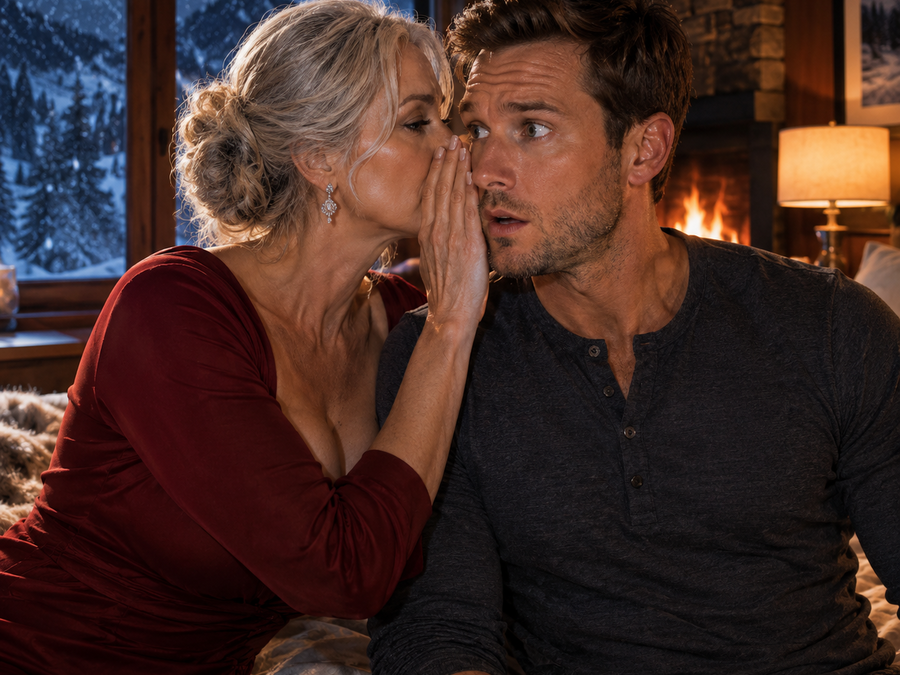
Single Dad Shared a Bed With His COLD Billionaire Boss—Then Her Whisper Changed Every Thing! (Part 2)
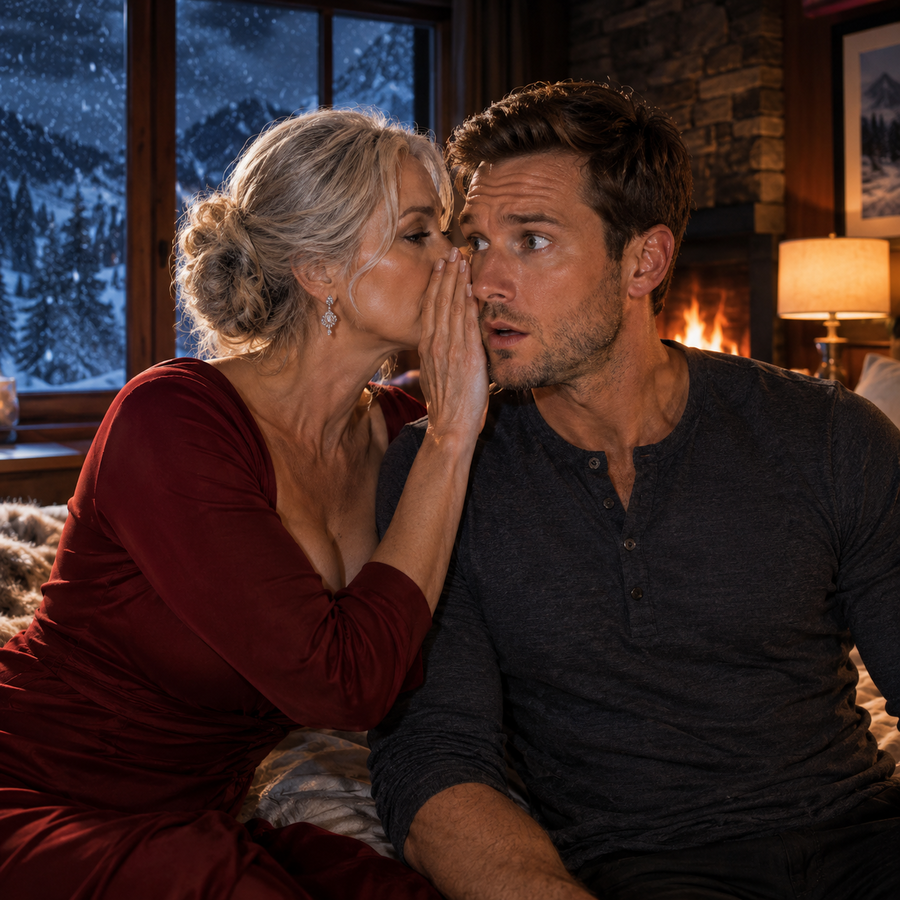
PART 2
She picked up her coffee again, found it was cold, set it back down. “I built the company, and then I built a management layer between myself and the company, and then I watched the numbers that the management layer gave me, and I told myself that was oversight.” She paused. “That’s not oversight. That’s trust dressed up as a system.” Graham didn’t have an answer to that, and he didn’t try to invent one. He just let it sit there, which was becoming something of a habit between them.
His phone buzzed. He looked at the screen. The signal had partially returned, intermittent enough to push through a delayed text. It was from Janet. “Maisie had a good night. Made her eat proper breakfast. Don’t rush back.” He let out a breath he hadn’t fully known he was holding. “Your daughter?” Celestine asked. “My neighbor. Maisie’s fine.” He put the phone back in his pocket. “I should check the generators again.” “Yes.” Celestine straightened up from the window. “I’ll come.” “You don’t—” “I’m not going to watch the ceiling in that room for the next two hours,” she said. “I’ve done enough of that tonight. Show me what you’re looking at with the generators.”
He looked at her—at four hours of sleep debt in her eyes and the cardigan she’d been wearing for 12 hours and the absolute absence of any interest in being managed away from what was happening. “You understand these are not interesting machines to look at,” he said. “I understand I’ve been making decisions about them for six years without once going into a room to look at them.” She moved toward the door. “After you.”
The generator room was in the basement level, accessed through a service corridor that ran under the east wing—the same wing where the roof had partially collapsed, though the structural damage was isolated to the upper floor, and the corridor itself was intact. The room was warm, loud, and smelled like diesel and hot metal, and the fluorescent lighting was the unforgiving kind that made everyone look slightly ill.
Graham walked her through it methodically. The primary unit, the backup, the transfer switch, the load distribution panel, the manual bypass he’d rigged for the heating circuit. He explained it the way he explained things to Maisie, which was to say without condescension and without assuming she’d understand everything on the first pass. He used the right terminology and watched her face to see which parts needed slowing down.
She needed almost no slowing down. She asked specific, intelligent questions—not about the mechanical details, which weren’t her expertise, but about the decision points. Where had the failure originated, what should have been caught and when, what the correct procedure was versus what had apparently been done. He answered her completely, without softening it. When he showed her the counterfeit part, he’d pulled it and kept it, because old habit from his Navy days said you kept physical evidence when something didn’t add up.
She held it in both hands and looked at it for a long time. It was a small thing, a sensor housing, slightly wrong dimensions, slightly wrong material weight if you knew what you were holding. The kind of thing that would pass a visual inspection by someone who wasn’t looking for it. “This is what was in the backup transfer switch,” he said. “And the real version would have activated automatically when the primary dropped. Instead, it failed silent. Nobody would have known the backup wasn’t going to kick in until the primary died and the lights went out.” He paused. “In December. With 38 guests upstairs.”
Celestine set the part down on the workbench. She placed it carefully, precisely, the way you place something you want to remember the weight of. Then she turned and looked at the two generators running side by side, doing the work they’d been doing all night, holding the lodge together, because Graham had gotten here in time to keep them functional.
“If you hadn’t been here,” she said. “I know.” “If Carl had sent someone else, someone who didn’t have the background you have, someone who just got the primary stable and went to sleep, they would have found out at 3:00 in the morning when the primary finally gave up,” Graham said, “and the backup didn’t switch.” She was quiet for a long time. The generators ran. The fluorescent lights hummed.
“My CFO has been with me for 11 years,” she said. It came out of nowhere and from somewhere very specific at the same time. “Preston Vale. He came with me from the first company I built. He’s been in every major financial decision I’ve made since I was 39 years old.” She wasn’t looking at Graham. She was looking at the generators, or through them. “He oversees all procurement contracts above regional authority. He has signature authority on anything up to five million.”
Graham waited. “The Silverline contracts,” she said. “It would have gone through his office.” “Yes,” Graham said. He said it carefully, because this was the part he hadn’t been sure how to navigate. The part where the trail led somewhere she had a personal stake in, and where being right about it was going to cost her something separate from the safety crisis and the fraud and all the rest of it. “You already knew that.” “I suspected it. I don’t have access to the approval chains above regional level, but the math—the math pointed somewhere above Carl Bream.”
She turned away from the generators. She walked to the far side of the room and stood with her back to him for a moment, hands at her sides, and he let her have the moment. He’d learned with Maisie that there were things people needed to feel fully before they could think clearly about them. And that trying to rush that process was how you ended up with people who’d intellectually accepted something they hadn’t emotionally processed, which eventually caused its own separate category of damage.
When she turned back, her face had settled into something harder than what he’d seen in the manager’s office. Not cold—he was starting to understand the difference between Celestine’s coldness and Celestine’s resolve, and they looked similar from a distance, but were entirely different things up close. This was resolve. The kind that came after hurt had moved through a person and left something determined behind it.
“I need communications restored,” she said. “As soon as the storm breaks enough to get a satellite signal, I need to speak with my general counsel. Not my executives. My lawyers. And I need your reports. Everything you have. Dates, part numbers, the Silverline supplier code, everything.” “I’ll pull them the day we get out.” She nodded. Then she looked at him with the expression he was starting to recognize as her version of something she didn’t have a practiced way to say.
“You filed those reports knowing nothing was going to happen to them.” “I filed them because something needed to be on record.” “That’s not how most people think.” “It’s how I was trained to think.” He picked up the counterfeit part again, turned it over, set it back down. “Navy. Eight years. They drill into you that documentation is the difference between an incident and a disaster. Because when something goes wrong—and something always eventually goes wrong—the paper trail is the only thing that tells you whether it was a failure of the system or a failure of the people running it.” He paused. “These were a failure of the people running it. I wanted that to be provable.”
Celestine looked at him for a long moment. “Why didn’t you go further above Carl? Directly to corporate?” “I thought about it.” He was honest about that. “I also have a seven-year-old and a mortgage and no backup income. Going around your direct supervisor in a company this size is the kind of thing that ends careers. Even when you’re right. Especially when you’re right, sometimes.” He met her eyes. “I’m not proud of that calculation, but I made it.”
She didn’t judge him for it. He could see that she understood it, which was different and more useful. “You made the right call filing what you filed,” she said, “even if nothing happened to it immediately. You were right.” “Doesn’t feel like much right now.” “It will,” she said. “I promise you it will.” He wasn’t sure he believed her, but he noted that she’d made a promise out loud, which he was already learning was not something Celestine Harrow did casually.
Dawn came gray and indistinct. The light filtering through the snow still falling outside as a general brightening rather than anything as clear as sunrise. By 6:30, the storm had dropped below whiteout conditions into something merely severe. And by 7, the satellite unit in the manager’s office was showing intermittent signal—not enough for a call, enough to push and receive texts.
Celestine sent three. Graham didn’t ask to whom. She also, without explanation, sent a text that he happened to see the screen of as she typed it, because he was standing next to her checking the satellite signal strength and she didn’t move away. It was addressed to someone named RV and it said, “Do not brief Preston on anything that happened at Ridgerest. Do not send incident reports to CFO office. Hold everything until I’m out.” She hit send, saw him see it, and said nothing. He said nothing either.
The guests were moving through the lodge now, some blurry and puzzled about the temporary room changes, some genuinely grateful. The elderly couple from room 7, finding Graham in the hallway and thanking him with the particular warmth of people who’d understood at least partly what the alternative might have looked like. The woman took his bandaged hand and held it for a moment and said, “Young man, you worked all night.” And he said, “I slept a little.” Which was technically true if you counted 45 minutes.
Petra had finally learned over breakfast that she’d slept through a partial roof collapse and a full heating crisis, and the expression on her face suggested she was simultaneously relieved and mortified by this. She kept apologizing to Celestine, who told her firmly and without unkindness to stop. “You were exhausted,” Celestine said. “I was not. I handled it.” “You handled it,” Petra repeated, looking between Celestine and Graham, with an expression that suggested she was filing this information in a category she didn’t yet have a label for.
“We handled it,” Celestine said, which surprised Graham enough that he looked up from the coffee he’d been focused on with perhaps more attention than it warranted. She didn’t look at him when she said it, but he heard it. By 9:00, the satellite signal was stable enough for calls. Celestine disappeared into the manager’s office with the door closed and stayed there for 40 minutes. Graham used the time to write up a preliminary incident report on the roof collapse and the generator issues, using the notes he’d kept on his phone throughout the night.
He was methodical about it—times, temperatures, the sequence of events, the components he’d found and what they told him, the temporary repairs and their limitations. He included the counterfeit parts specifications and the Silverline supplier code. He photographed everything with his phone. When Celestine came back out, she looked like someone who had started a fire in a controlled environment and was now committed to managing it. Not panicked, not satisfied, just engaged with the specific grim focus of someone who had decided the only way through something was forward.
“My general counsel is initiating a request for an independent audit of all procurement contracts above regional authority going back three years,” she said quietly. “Through outside counsel, not through any internal channel.” She sat down across from him at the small table in the corridor where he’d set up his papers. “She’s also running a preliminary trace on Silverline Industrial Supplies.” “They’re going to find something,” Graham said. “I know.”
Her voice was steady, but there was something around her eyes that hadn’t been there before—not tears, nothing that uncomplicated, something older and more tired. The look of someone who had been building something for 30 years and had just found dry rot in one of the load-bearing walls. “I spent an hour on that call trying to figure out whether there was another explanation. Whether I was wrong about what this points to. And I’m not wrong.” She looked at the table. “Preston Vale has been with me for 11 years. He attended my mother’s funeral. He is the godfather of my niece.”
She said it the way you say something when you need to hear the full weight of it out loud to believe you’re really saying it. “He knows every significant financial decision I’ve made since I was 39 years old.” Graham stayed quiet. “He had access to every procurement channel. He had the authority to approve Silverline contracts without secondary review. And he was the one who restructured the regional reporting chains four years ago, which is when Carl Bream’s position was created.” She paused. “Carl reports to a VP who reports to Preston. So when your reports landed on Carl’s desk and went nowhere—” “They went somewhere,” Graham said. “Just not upward.” “No,” she exhaled. “Not upward.”
She looked at him. “You understand what this means for the company, for the properties, for employees who’ve been working in buildings maintained with fraudulent parts.” “Yeah.” “If we handle this incorrectly, if any of this becomes public before—” “I’ve controlled the scope.” “Ms. Harrow.” She stopped. He’d interrupted her. He’d done it evenly, without apology, and she looked at him with the particular attention of someone not accustomed to being interrupted.
“What I understand is there are legal and financial considerations,” he said, “and I understand you need to manage the process correctly. But there are people working in those properties right now. This morning. Using equipment that hasn’t been maintained with legitimate parts.” He kept his voice level. “Whatever process you run needs to start with those buildings. Before the legal framing, before the PR strategy. The buildings first.”
The silence that followed was the particular silence of a room where someone with significantly more power than you has just been told something they didn’t expect and are deciding what to do with it. Celestine looked at him for a long time. Then she said, “You’re right.” He waited for the qualifier. There wasn’t one. “The buildings first,” she said. “I’ll have my legal team coordinate with facilities management to begin systematic safety assessments across all properties this week. Starting with the oldest and highest occupancy.” She paused. “I want you to develop the assessment protocol.”
“I’m a maintenance supervisor.” “You’re the person in this room who actually knows what to look for.” She met his eyes. “Will you do it?” He thought about Carl Bream, about the reports that had gone into a drawer, about the 48 degrees in the lobby and the counterfeit sensor housing sitting on the workbench downstairs and the elderly couple from room 7 who’d held his bandaged hand. “Yes,” he said. “I’ll do it.”
By 10:30, the road crews had confirmed that the avalanche debris on the main road was being cleared and access should be restored by early afternoon. The news moved through the lodge like a small collective exhale—guests pulling out phones, making arrangements, calculating drives. The emergency was ending. The ordinary world was reattaching itself.
Graham spent an hour on his own phone, a long call with Maisie, who was in a mood of supreme satisfaction because Janet had let her help make waffles, and then a shorter call with Carl Bream, who had heard about the generator situation through Daryl’s overnight report and was moving through his standard sequence of crisis-adjacent questions. Is everyone okay? What’s the damage assessment? Do we need a media response?
Graham answered everything factually and didn’t tell Carl what he knew and didn’t tell Carl about those maintenance forms of his because Celestine had asked him to hold off on direct confrontations until her lawyers had the audit structure in place. It was the second time in the same story that Graham had made a calculation about what to do with information that could cost him. This time it felt different. This time someone with the authority to actually change something was making it.
He found Celestine at 11:30 standing in the east wing corridor, looking at the damaged ceiling section. She’d changed at some point. Petra had apparently retrieved a bag from the helicopter, so she was in actual clothes now rather than hotel pajamas and a cardigan. She looked more like herself—the version Graham knew from corporate photos and distant hallway sightings. Put together, composed, formidable. But she was looking at the collapsed ceiling with an expression that wasn’t executive formidability. She was looking at it the way someone looks at something they need to understand properly before they can move forward.
“The timber frame held,” Graham said, coming to stand beside her. “Yes, that’s the original 1930s construction. The renovation work in that section was the ductwork and the electrical panel. The original bones of the building are sound.” She looked at him. “Is that a metaphor?” “It’s structural engineering.” He paused. “But yeah, maybe.”
She turned back to the ceiling. “My general counsel called back while you were on the phone. She’s already found something with Silverline.” She said it quietly, matter-of-factly. The way you announce something you’ve been expecting and have made yourself ready for. “They’re registered in Delaware, but the beneficial ownership traces to a holding company in Nevada. My lawyers are still working through the layers, but the initial read is that the holding company has ties to two other entities that have received consulting payments from Harrow Hospitality in the past four years.”
Graham absorbed that. “Payments authorized at CFO level.” “Yes.” “So he was paying himself indirectly.” “That appears to be what the structure was designed to accomplish.” She paused. “While simultaneously reducing actual maintenance expenditures by routing safety work to his own suppliers at inflated invoice prices and below-standard parts.” Her voice was very controlled. “He made money twice. Once on the fraud and once on the cost reduction, which improved the financials he was presenting to me quarterly.”
Graham thought about Preston Vale attending Celestine’s mother’s funeral. Thought about 11 years and a godfather relationship and the particular intimacy of being the person who knew everything about someone’s business and had used every piece of that knowledge to build a structure inside it that was slowly, invisibly eating it from within. “I’m sorry,” he said. She looked at him. “Not about the company,” he clarified. “About the person. 11 years is a long time to trust someone.”
She looked away. “Yes,” she said. “It is.” And then after a pause, “I keep thinking about what you said last night. About structures drifting when they get large enough that the top can’t see the bottom.” She was quiet for a moment. “I convinced myself that building the right structure meant I didn’t have to maintain it. That trust, once established, was self-sustaining.” “Trust requires maintenance like everything else,” Graham said. “You stop checking it, it drifts.” “Is that a maintenance metaphor?” “It’s just true.”
She almost smiled. Not fully—the moment was too heavy for a full smile—but the corners of her mouth moved and something in her eyes shifted from the hard resolve of the past few hours back toward something more human. “I’m going to have to tell my board,” she said, “before the audit is complete, before we have the full picture, because some of them are going to find out through other channels, and it’s better that they hear it from me.” She exhaled. “That conversation is going to be extremely unpleasant.”
“Probably.” “You could have handled this differently,” she said. “Brought it to me in a way that protected yourself first. Softened what you knew. Let me draw my own conclusion slowly.” “I could have,” he agreed. “Why didn’t you?” He thought about it genuinely. “Because you asked me what I was thinking,” he said. “And I think you’ve had enough people tell you soft versions of things.”
This time she did smile. Small, brief, real. “I have,” she said. “I really have.” His phone buzzed. He checked it. The road crew estimated access by 2 p.m. He showed her the screen. “A few more hours,” she said. “Yeah.” They stood side by side in the damaged corridor, looking at the broken ceiling and the gray morning light coming through the window at the end of the hall.
The storm was finally slowly beginning to release its grip on the mountain. Below them, the generators ran steadily in the basement. Around them, the lodge carried on its ordinary work of housing and feeding people through the disruption. Graham was aware—in the way you become aware of things that have been changing gradually and have now changed enough to be visible—that the previous night had moved him somewhere. He hadn’t expected to be. He wasn’t entirely sure what to do with that. He was tired and his hand hurt and he needed to get home to Maisie, and everything beyond that was information he didn’t have good categories for yet.
Celestine was quiet beside him. Not uncomfortable quiet. The quiet of someone who has said a great many true things in a short period of time, and is sitting with the weight and the relief of that simultaneously. “When you get your external drive,” she said finally, “the reports—I’ll send them to you directly. Your personal email, not the corporate one.” “Yes.” A pause. “And Graham.” He looked at her. “The people who filed those reports with Carl and got nothing back,” she said. “Whatever other employees raised concerns that went into the same drawer yours did, I want their names. If there are any.”
“There are a few,” he said. “I know of two for certain. There are probably more I don’t know about.” “I want them cleared,” she said. “Whatever marks are in their records. Whatever retaliation happened quietly. I want it undone.” She held his gaze. “That’s not negotiable.” “I know,” he said. “I wasn’t going to negotiate it.” She looked at him for a moment longer. Then she turned and walked back toward the main lodge, upright and deliberate, the formidable woman from the corporate photos reassembling herself around the person he’d spent the night talking to in the dark. Not erasing her. Just carrying her differently.
Graham watched her go. Then he went downstairs to check the generators one last time. The road opened at 1:58 in the afternoon. Graham knew because he was standing in the lodge parking lot when the road crew’s lead vehicle came around the bend. A yellow plow truck with its amber lights running, moving slowly through the last section of cleared debris. And the small crowd of guests who had assembled near the entrance with their luggage let out a collective sound that was part relief and part the particular exhaustion of people who had been holding tension for a long time and were now finally being allowed to put it down.
He’d already said goodbye to Andre and Beth, who’d worked through the night beside him and deserved considerably more than the handshakes he gave them and the note he’d already included in his incident report about their performance. Daryl Fitch had shaken his hand three times in the last hour, which was two times more than necessary, and had communicated everything Daryl needed to communicate without either of them having to say it directly. The elderly couple from room 7—their name was Brandt, he’d learned, Harold and Evelyn Brandt, married 51 years, from Tucson—had pressed a card into his hand that morning with their personal phone number on it, and told him that if he ever found himself in Arizona, he was to call them and they would feed him. He had told them he’d remember that. He meant it.
His truck had survived the night in the parking lot without incident, which was more than he’d expected given the accumulated snow load on the roof and the temperature drop. He’d spent 20 minutes clearing it and warming the engine while the last guests were organizing their departure. And now he was leaning against the driver’s side door, watching the parking lot slowly empty and thinking about Maisie and waffles and the drive home and the specific quality of silence his house had when he walked in after being away and she hadn’t noticed him yet.
“Graham.” He turned. Celestine was crossing the parking lot toward him. Petra a few steps behind with their bags. The helicopter was apparently going to be able to lift off by late afternoon once the pilot confirmed wind conditions at altitude. For now, Celestine’s plan was to ride with her driver, who had been dispatched from the city the moment the road cleared. She stopped a few feet away.
She was wearing her own coat now, dark wool, the kind that suggested it had cost more than his monthly truck payment, and she had her reading glasses in her hand, which he’d come to understand was what she did with them when she wasn’t actively using them and didn’t have a better place to put them. She looked like herself again—the version from the corporate photos, put together and contained. But he could see the other version underneath it now, and he didn’t think he was going to stop seeing it.
“Drive carefully,” she said. “Roads should be clear most of the way down. Still—” she paused. The parking lot was noisy around them. Engines, luggage wheels on cleared asphalt, a child somewhere complaining about something. “I’ll be in contact this week about the assessment protocol.” “I’ll have a draft framework to you by Thursday.” She nodded. Then she looked at him with the expression he’d started mentally filing as the one that meant she was going to say something she’d decided to say despite some internal resistance.
“Thank you,” she said. “For last night. For all of it.” “I was doing my job.” “You were doing significantly more than your job.” She held his gaze. “You know that.” He didn’t argue it. “Take care of yourself, Miss Harrow.” Something moved across her face. Complicated. Quick. “Celestine,” she said. He looked at her. “We slept in the same room,” she said, and there was a very dry quality to it that he recognized was as close to humor as she allowed herself in parking lots in front of employees. “You can probably use my first name.”
He almost smiled. “Drive carefully, Celestine.” She held his gaze for one more moment. Then she turned and walked toward the waiting car. Petra gave Graham a look as she passed. Not suspicious, not knowing, just the look of someone who had been quietly observing and was cataloging what she’d observed for later. And then they were in the car, and the car was moving, and the parking lot was emptying. And Graham stood beside his truck in the cold mountain air for a moment longer than he needed to before he got in and drove south.
The weeks that followed had the particular quality of aftermath—the sense of something large having moved through and rearranged the landscape, and the daily work of figuring out what the new geography looked like. The independent audit started quietly, as Celestine had promised, through outside counsel that had no relationship with Harrow Hospitality’s regular legal team. Graham sent his external drive contents to Celestine’s personal email the evening he got home, sitting at his kitchen table while Maisie watched a movie in the next room, transferring files that had been sitting on that drive for four months waiting for someone with the authority to do something with them. He sent the files and sat for a moment in the quiet of his own kitchen with the sound of the movie coming through the wall and the smell of the soup Janet had left in the fridge, and he felt something loosen in his chest that he hadn’t fully known was tight.
Two weeks after the storm, Carl Bream was placed on administrative leave. The announcement came through internal channels without explanation, which was the corporate equivalent of a fire alarm going off in a building where management wanted everyone to stay calm and keep working. Graham’s phone rang six times in the hour after the announcement. Colleagues, other field supervisors, a regional facilities manager he’d worked with for two years who wanted to know what Graham knew. He told each of them truthfully that he was aware of an ongoing review process and couldn’t comment on it, which was both accurate and the most professionally responsible thing he could say, and which also told people who knew how to read silence everything they needed to know.
Three weeks after the storm, Preston Vale was escorted from the corporate headquarters building by two men Graham didn’t recognize and would later learn were federal investigators. The news didn’t come through internal channels. It came through a financial newswire, a four-paragraph item buried in the business section about a securities fraud investigation involving a hospitality company whose name wasn’t mentioned but was obvious to anyone inside the industry. Celestine had been ahead of it. Her lawyers had been working with investigators for two weeks by then, having made the decision that self-reporting was both legally and ethically the correct posture. That decision had not been popular with everyone on her board. Graham would learn that later, too.
He heard about Preston’s removal from Petra, who texted him a news link with no accompanying message, which he understood to be the professional equivalent of confirming that yes, this was happening, and no, she wasn’t going to discuss it further in writing. What he didn’t expect was the call from Celestine herself that same evening at 7:15, when he was helping Maisie with a second-grade worksheet about fractions that was proving more challenging for Graham than for Maisie.
He stepped into the hallway. “Hold on,” he said to Maisie, who immediately picked up his pencil and began working the problems herself with the focused confidence of someone who had not actually needed help and had just wanted company. “It’s done,” Celestine said. Her voice was controlled, but there was something underneath it. Not relief. Exactly something older and less comfortable than relief. “Preston was taken in for questioning this afternoon. The investigators have the full financial records. It’s significantly worse than the initial audit suggested.”
“How much worse?” “Over the course of four years, approximately $1 million redirected through Silverline and two related entities. Safety maintenance costs reduced by roughly 30% across the affected properties to offset the fraudulent payments on paper. 47 properties impacted. 17 of them with safety-relevant components that need immediate replacement.” She paused. “We’ve already dispatched crews to the highest-risk sites. Your assessment framework was the basis for the prioritization. I want you to know that.”
He thought about 17 properties. About the guests in those buildings who’d had no idea. “Anyone hurt?” “No. We found it before anything failed catastrophically.” Another pause. “Because of you.” “Because of the reports I filed.” “Because of the reports you filed that nobody acted on. And because you came to Ridgerest that night and understood what you were looking at and told me the truth about it without softening it.”
He could hear her choosing her words carefully, which was different from the careful blankness she used in normal professional conversation. This was choosing words to mean exactly what she intended them to mean. “I’ve been in business for 30 years, Graham. I have had thousands of employees. I can count on one hand the ones who told me something I didn’t want to hear and didn’t hedge it.” He didn’t know what to say to that. So he said, “How are you doing?” Not the company. You.
A longer pause, long enough that he wondered whether he’d overstepped the boundary of what their relationship, whatever it currently was, allowed. “I’m managing. That’s not the same as okay.” “No,” she said. “It isn’t.” Something shifted in her voice—the same shift he’d heard in the lodge at 1:00 in the morning. The controlled surface giving way fractionally to what was underneath. “He was at my mother’s funeral, Graham. He sat in the front row because I asked him to. Because I considered him—” She stopped. “I keep running the timeline backward trying to find where it started. Whether there was something I missed. Whether I should have known.”
“You couldn’t have known.” He said, “Not from where you were standing.” “I should have been standing somewhere that I could see it.” “Yeah,” he said. “Maybe.” He didn’t offer her the easy version of it, because she’d asked him not to in so many words back at the lodge, and because she was right that it wasn’t what she needed. “But you’re standing there now. And you’re fixing it.” “I’m trying to.” “That’s what fixing things actually looks like,” he said. “It’s not clean. It doesn’t feel good while you’re doing it. You just do the next right thing and then the next one.”
A brief silence, then quietly, “How’s Maisie?” The shift surprised him—from boardroom crisis to his daughter in one sentence. “She’s doing fractions,” he said. “She’s better at them than I am.” “She sounds like a sensible child.” “She’s extremely sensible. She told me to pack extra socks before I drove up to Ridgerest.” “Did you?” “I forgot the socks and the phone charger both.”
This time, Celestine laughed. Not the managed sound he’d heard from her in public moments. An actual laugh, brief and unguarded—the same one she’d let out at the lodge when he’d told her about Maisie’s movie preferences. And hearing it in his hallway while his daughter did fractions in the next room was one of the stranger and more unexpectedly pleasant experiences he’d had in recent memory.
“Get some sleep,” he said. “The company will still be there tomorrow.” “It will,” she said. “Unfortunately.” “Celestine.” “Yes.” “You did the right thing with the board, with the investigators, with not burying it. I know it wasn’t the easy call.” A pause. “It wasn’t close to the easy call.” Another pause. “Goodnight, Graham.” “Goodnight.”
He went back into the kitchen. Maisie had finished three of the five fraction problems and was looking at the fourth with the expression she used when she was deciding whether something was actually difficult or just appeared difficult. She didn’t look up when he sat back down. “Who was that?” she asked. “My boss.” “The boss boss or the regular boss?” Graham thought about how to answer that accurately. “The boss boss.” Maisie nodded with the gravity of someone who understood the distinction. “Is everything okay?” “Getting there,” he said.
She handed him the pencil. “Help me with this one,” she said. “I think I’m doing the denominator wrong.” He looked at the problem. She was not, in fact, doing the denominator wrong. She just wanted company. He sat down and looked at it with her anyway, and they worked through it together at the kitchen table while the evening settled around them, ordinary and quiet and intact.
The offer came six weeks after the storm, delivered in person rather than by email or through HR channels, which told Graham something about how seriously it was being made before Celestine said a word. She was in the city that week for board meetings. She had apparently arranged to meet him at a coffee place two blocks from the regional maintenance office, which was where he reported every morning and where he’d been spending considerable time over the past six weeks coordinating safety assessments across the affected properties.
He arrived to find her already there at a corner table, in the coat he recognized from the parking lot, with two coffees that were not the institutional kind. She had texted him the address. She hadn’t told him what it was about, and he hadn’t asked. “Sit down,” she said. He sat. He looked at the coffee and decided it was probably fine to drink it.
“I want to create an independent safety division,” she said without preamble, without a warm-up. Direct, the way she was direct. “Structurally separate from the regional management chain. Reporting exclusively to the board’s audit committee and to me personally. Full authority to assess, flag, and require remediation on any safety issue across any Harrow property without requiring approval from regional or corporate management.” Graham listened. “I want you to lead it,” she said. “Your terms. Your structure. You define the role.”
He looked at his coffee. He thought about what his terms actually were, which he’d been thinking about in some form since the lodge, since the morning in the damage corridor when she had asked him to develop the assessment protocol. He’d known something was going to be offered. He’d been less sure what he was going to do about it.
“I don’t want an executive office,” he said. “I know.” “I don’t want a title that puts me in conference rooms all day talking about work instead of doing it. I need to be in buildings. Physically. That’s the only way this works. If the person running safety oversight actually goes to the properties and looks at the things that need looking at.” “Yes,” she said. “That’s exactly what I want.” “I want full independence from the regional directors and their budgets. If I find something and I say it needs to be fixed, it gets fixed without going through a chain of approval that can slow-walk it.” “You’ll have a direct remediation budget. Board-approved. Not subject to regional veto.”
He nodded slowly. “I want the two employees I mentioned, the ones who flagged safety issues before and got nothing—I want them reviewed. Records cleared if there’s anything in there that shouldn’t be.” “Already done,” she said. “Both of them were contacted two weeks ago. One has been offered a promotion. The other asked for a transfer to a different region, and it was approved.” She held his gaze. “I told you that wasn’t negotiable.” “You did.” “Is there more?”
He thought about it honestly. There was one more thing, and it was the one he was least sure how to say. “I want the division staffed by people from the field. Not corporate hires, not consultants. People who’ve worked in the buildings. Who know what actual maintenance looks like and what it looks like when it’s being faked.” Celestine leaned back slightly. “That’s going to annoy a significant number of people in my HR department.” “Probably good,” she said flatly. “They’ve had an easy time of it.” And then, before he could respond to that, “Yes. You can staff it as you see fit.”
He picked up the coffee. He drank some of it. It was, as he’d expected, significantly better than the institutional kind. “Why me?” he said. Not falsely modest, genuinely wanting to understand her reasoning. “You have a company with 1,200 employees. You have people with advanced degrees and 20 years of facilities management experience. Why the maintenance supervisor from the Ridgerest incident?”
Celestine looked at him for a moment. “Because you filed those reports knowing nothing would happen to them,” she said. “Because when the roof section collapsed at 3:00 in the morning, you were already moving before anyone else in that building had processed what the sound was. Because when I told you the trail led to someone I trusted for 11 years, you didn’t manage my feelings about it. You just let me have them.” She paused. “And because when I asked you a direct question, you gave me a direct answer. Do you know how rare that is?” “In your position, probably rarer than it should be.” “Yes.” A pause. “Will you take it?”
He sat with the question for a moment. He thought about Maisie, who had told him to bring extra socks. About Janet, who answered on the second ring. About Sarah, who had died at 34 and left him with a three-year-old, and the slow, difficult education of learning what actually mattered. About the generator room at Ridgerest and the counterfeit sensor housing and 17 properties with safety-relevant components and the Brandt couple from Tucson who’d held his hand in the hallway. “Yes,” he said. “I’ll take it.”
The changes that followed were neither quick nor painless, which was how Graham knew they were real. The independent safety division took three months to formally structure, during which Graham drafted the operational framework at his kitchen table and in the regional maintenance office and occasionally in the parking lot of whatever property he was inspecting that week. Because the work didn’t wait for him to have a proper desk.
He hired four people in the first wave. Two former hotel maintenance chiefs, one retired fire marshal who’d consulted for commercial properties for 15 years, and a young woman named Dara who had been working as a junior facilities coordinator at a Harrow property in Tennessee and had 18 months earlier filed a report about a fire suppression anomaly that had been ignored. Dara had stayed. Graham hadn’t expected that. When he called her, she said simply, “I stayed because I believed the work mattered. I wasn’t sure the company did. I’m willing to find out.” He told her that was exactly the right answer.
