Former Navy SEAL Single Dad Took a Bullet for a Little Girl—Then Her Billonaire Mom Changed His Life (part 3)
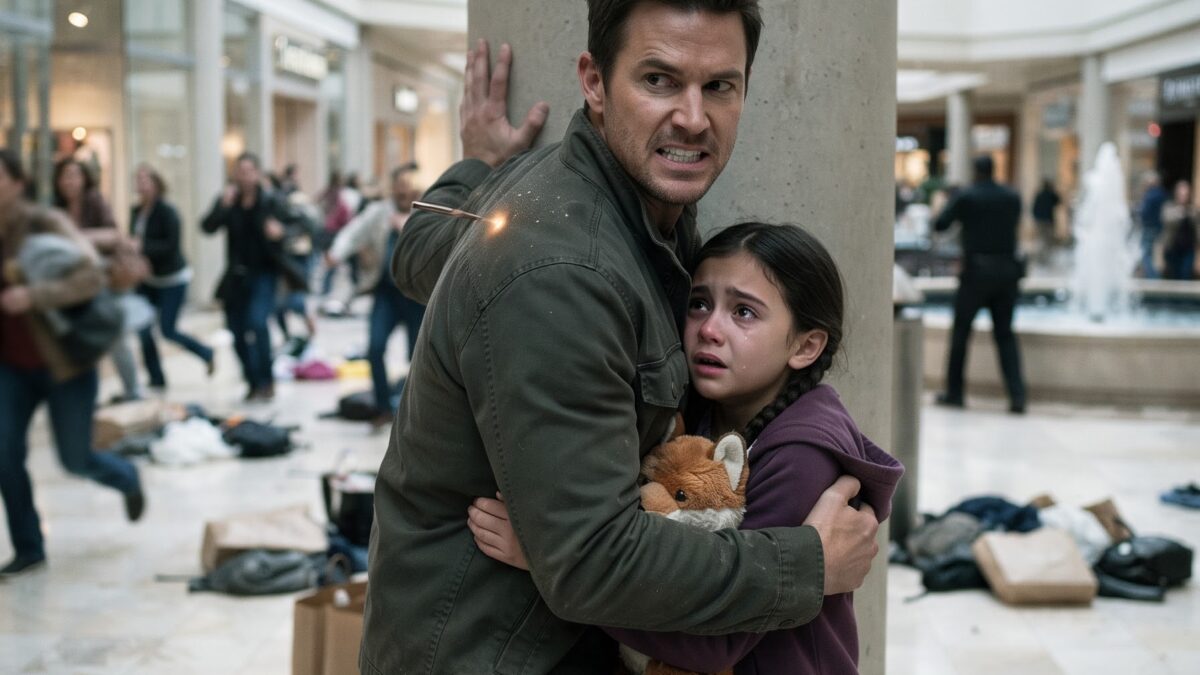
Part 3
She was in a dark sweater and socks, and she looked like someone who had tried to sleep and given up, which he understood completely because he hadn’t tried.
She poured herself coffee from the pot he’d already made, and sat across from him at the kitchen island, and looked at him with the steady, unguarded look that she reserved for conversations that were going to cover real ground.
“Are you scared?”
she asked. He looked at her.
“Yes, about the operation.”
He thought about it honestly.
“Not about the operation.
about what happens during it. A pause. Different things.
She nodded slowly, understanding the distinction without requiring it. Explained the gap between tactical confidence and the fear that lived underneath it.
The fear that was not about capability, but about specific people in specific danger and the impossibility of guaranteeing outcomes regardless of preparation. I keep thinking about Milo in that parking structure, she said, sitting against that column. I She stopped.
I keep thinking about what I saw in his face when I got to him. He was holding himself together. He was barely holding himself together, but he was doing it.
She wrapped her hands around the coffee mug. Because of you.
Because he learned it from you.
He’s a good kid.
Bennett said.
He’s an extraordinary kid.
She said, “Don’t minimize it.
He’s also not an accident.
That’s what I’m saying.
He looked at his own coffee. His mom gave him most of what he is.
And you gave him the rest.”
He didn’t answer because he didn’t have a comfortable answer for it, and she wasn’t pressing him, just making the observation and leaving it where it landed.
The kitchen was quiet around them. The estate at 2:00 in the morning had its own particular silence larger than a house on Carver Lane, with more rooms for the quiet to inhabit, but somehow not lonelier.
The opposite, maybe. A place that had enough space to hold a silence without making it feel empty. Can I ask you something?
Marceline said. Sure. When this is over, when Reyes has his names and the cases built in the actual documented over, she paused.
What do you want? He looked at her. Not for me, she said, clarifying quickly, though something in her voice suggested the clarification was not entirely the point.
From the next period, from whatever the shape of things is after this, he thought about it with actual attention, which was not something he’d given the question before.
He’d been living in operational time for months.
the next problem, the next threat, the next thing to close before it opened. And the concept of what he wanted from a period without an active threat was surprisingly difficult to access.
I want Milo to go back to walking to school, he said. To go back to forgetting the house keys and arguing about cereal. He paused.
I want him to not have nightmares about parking structures.
That’s for him.
Most of what I want is for him.
That’s not all of it, she said.
Not pushing, just accurate. He looked at the surface of his coffee.
I built something here, he said.
Meaning the security program, the veteran’s employment structure he’d been building alongside the core work, the thing that had started as a job and become something he got up in the morning thinking about.
I’d like to keep building it.
You will, she said.
It wasn’t a promise or an offer, just a statement of fact delivered with the calm certainty of someone who had already decided it was true.
He looked at her. There was the kitchen island between them and the two in the morning, quiet and the coffee and the particular circumstance of two people who had been in danger together and proximate for long enough that the usual distances no longer applied. And there was whatever had been accumulating between them over the course of months unnamed and unrushed and considerably more present than either of them had gotten around to addressing directly.
Marceline, he said. I know, she said. Which was not a standard response to having your name said, but which was also exactly accurate.
He almost said something else and then didn’t because 2:00 in the morning before an operation he’d spent 3 weeks building was not the moment for that particular conversation, and they both knew it, and knowing it was its own kind of thing.
“Get some sleep,” he said.
“You get some sleep.
I will in a while.
” She stood, picked up her coffee, looked at him for a moment from the other side of the kitchen island with that steady, unguarded look.
Bennett, she said, “Yeah, don’t get shot again.
I’ll do my best.”
“Your best has historically included getting shot, so I’m asking you to exceed it.”
He almost smiled.
“I’ll try.”
She went back to her room. He sat at the kitchen island and drank his coffee and watched the northwest camera feed on his tablet, the sensor array showing clean, the gap cycling in its regular rhythm, the dark and still and waiting. He went back to work.
Four nights later, at 3:47 in the morning, the motion sensor on the outer walls northwest corner registered a single contact and then went quiet in exactly the pattern he’d designed.
They were coming.
Bennett’s comms were already on when the first contact registered.
He had four people inside the estate, two at ground floor positions, one on the first landing, himself at the rear of the main corridor that connected the study to the interior of the house.
Marceline was in the study with the lights on, visible from outside through the window she’d left partially uncovered for his instructions, sitting at her desk with documents she’d been pretending to review since midnight.
Northwest wall, his ground floor contact said in his earpiece. Quiet.
Professional confirmed.
Bennett said, “Hold positions.
Let them commit to the approach.”
60 seconds of silence. Then four contacts moving through the corridor. Single file four.
He had projected four to six. This was the lower end, which suggested confidence in the approach.
They’d done reconnaissance.
They knew the gap. They believed the perimeter was as compromised as the documentation indicated.
Confidence made people faster and less careful. Contacts at the secondary gate, his man said. Old.
The secondary gate was the design point of a parent entry. It looked from the outside like a magnetic lock that had been placed in manual override after a power issue. It opened when they put a bypass device against it.
Because of course it did, cuz Bennett had wired it to open when a bypass was applied from the outside.
They’re through the gate, his man said, moving toward the northwest entrance.
Bennett felt his shoulder, not badly, just a brief check-in from the tissue, a reminder that it was there and had opinions. He acknowledged it and moved his attention forward.
Pressure sensors, he said, confirming all four positions.
They’re on the approach path.
The pressure sensors he’d installed in the 3 weeks of preparation ran along the most logical path from the northwest entrance to the study the path a surveillanceinformed team would take if they’d done their homework on the estate’s layout.
They had done their homework. They were walking directly along it.
Seal the exits, he said. His two groundf flooror team members moved simultaneously, covering the northwest entrance from the inside and the connecting corridor to the east.
On the exterior, the estate’s perimeter system, which Bennett had connected to a secondary locking circuit during his 3 weeks of preparation, activated automatically when his tablet confirmed all four pressure sensors were triggered.
The gates closed. The exterior lighting came on in the northwest corridor, not the dramatic flood light kind, just enough to eliminate the darkness that the approach team had been counting on.
The federal team, staged a/4 mile out, received his signal through Reyes’s channel and began moving.
Inside the estate, four trained operatives found themselves in a corridor that was suddenly lit with exits behind them that had locked and two members of Bennett’s interior team in position ahead of them and the sound of federal vehicles closing on the outer
perimeter.
One of them tried the northwest entrance. It held.
Another moved toward the study, apparently still attempting to complete the primary objective, despite the obvious collapse of the operation around it, and Bennett stepped into the corridor from his position, and made himself visible, and said with the specific tone that didn’t invite argument, on the ground, the man stopped, looked at him, made the calculation that people made when they ran the numbers on their current options, got on the ground.
The other
three followed within the next 40 seconds, which was either tactical pragmatism or the recognition that the math had simply stopped working in their favor.
And it didn’t matter which because the outcome was the same.
The federal team was through the gate 3 minutes later. Reyes came in with them, moving with the compressed efficiency of someone who had been waiting outside at 3:00 in the morning for four nights and was prepared to do the work now that there was work to do.
He looked at the four men on the corridor floor, looked at Bennett’s team, looked at Bennett.
“Clean,” he said.
“Clean,” Bennett said.
His shoulder was providing commentary. He chose not to share it.
Reyes nodded.
“We’ll need I know you’ll have everything you need in the morning.”
Reyes looked at him for a long moment, the slight permanent frown doing its complex work.
You know what’s interesting about you, Straoud?
Probably more than one thing. Do you design something like this?
Reyes gestured at the corridor, the sealed exits, the four men being cuffed by federal agents. Weeks of setup, every contingency covered, everything working exactly the way you planned it.
And you look like you’re doing a crossword puzzle.
I look like I’m waiting to find out what we missed, Bennett said.
Reyes actually smiled at that briefly. Nothing.
You didn’t miss anything.
He turned back to his team.
Bennett let out a breath that he’d been holding since 3:47 and stood for a moment in the corridor of the estate in the low light, listening to the sound of federal agents running their process around him, and let the information settle.
Four more.
The network’s operational capacity was gone.
The names Reyes had from the sewn drive were already in federal hands. What remained was the legal process, which was long and complicated and not his specific expertise, but which was now operating on accurate information about real people, and that was what had to happen before anything else could.
He walked to the study door. Marceline was still at her desk.
She hadn’t moved from it, which was either because his instructions had been to stay in position or because she had the specific discipline to hold a position when it needed holding.
Probably both. She had her hands flat on the desk in front of her and she was looking at the door when he opened it.
She read his face.
“It’s done,” she said.
“It’s done.”
She let out a breath.
“Just one, controlled the breath of someone releasing something they’d been carrying for long enough that the weight had stopped feeling like weight and started feeling like posture.”
“All four,” she said.
“All four.
Nobody hurt.
Nobody hurt.”
She looked at her hands on the desk for a moment. Then she looked up at him and there was something in her face that was not quite relief and not quite something else and possibly both. The way things sometimes were when you were past the point of needing to hold them apart.
Milo and Tessa come home tomorrow, she said. I know. I told my sister to book the morning train.
Good. She stood up from the desk and walked toward him and stopped at a distance that was close, but not the specific clothes that required deciding. just the clothes of two people who had been in the same fight and were standing at its ending.
“Thank you,” she said.
“For the last time, I think.
I’m going to try to stop thanking you and start doing something else.
” “Like what?”
He said, “Like whatever comes next,” she said.
Outside the study window, the estate’s exterior lighting was still on.
The northwest corridor visible and bright and occupied by federal agents doing the quiet, thorough work of the aftermath. Bellweather was still dark.
At 4 in the morning, the city not yet awake, the sky holding the last of the night, and the first distant suggestion of a different light beginning somewhere below the horizon. In a few hours, it would be morning.
In a few hours, two children would board a train in Asheville and come home. In a few hours, the thing that had been waiting to happen would have become the thing that had already happened.
and the shape of what came next would start becoming visible in the way that things only became visible when they were no longer blocked by something in the way.
Bennett stood in the doorway of the study at 4 in the morning and looked at Marceline Voss and for the first time in weeks, maybe longer, he let himself look at something that wasn’t a threat assessment.
She looked back at him from the corridor.
Reyes’s voice calling for Bennett with the matter-of-act tone of a man who needed a statement and had paperwork waiting.
Bennett turned to go.
“Bennet,” Marceline said.
He stopped.
“I meant it,” she said.
“Whatever comes next.
He looked at her over his shoulder for a moment.”
“So did I,” he said.
Then he went out to do the paperwork, and the night continued its slow work of becoming morning, and the estate settled around its new and different kind of quiet, not the alert, listening quiet of the weeks before, but the quiet of a place that had stopped waiting for something bad to arrive, and didn’t quite know yet what it was supposed to
do with the peace.
The train from Asheville arrived at Bellweather Central Station at 11:14 in the morning, 12 minutes late, which Milo reported with the specificity of a child who had been watching the departure board for the entire duration of the delay and had formed strong opinions about it. Bennett and Marceline were on the platform when the doors opened. They had driven together, which was not something they had planned.
Explicitly, Bennett had been at the estate finishing the last of the debrief documentation when Marceline had come downstairs with her coat and her keys, and she’d looked at him and said, “I’m not waiting at home.”
And he’d put the documentation down and gotten his jacket, and neither of them had discussed the arrangement further because there was nothing to discuss.
The platform was cold. November had arrived in Bellweather with the particular conviction it brought every year, stripping the last of the October leaves and replacing the gray sky with a harder, flatter version of itself. Bennett had his hands in his jacket pockets, and was watching the train doors, and Marceline was standing beside him close enough that their arms were almost touching, which was not accidental, and which neither of them remarked on.
Tessa came through the doors first. She had her backpack and Felix the Stuffed Fox, which had apparently traveled to Asheville, in her bag, despite no one having suggested this, and she was scanning the platform with the focused attention of a child who knew exactly who she was looking for.
When she found Marceline, she made a sound that was not quite a word, and covered the platform distance in the particular half-running walk of someone who has decided running would be undignified, but has not fully committed to that decision. Marceline crouched and
caught her.
She held her daughter the way she’d held her in the Cresmont Galleria corridor 4 months ago.
The same fierceness, the same hands doing the inventory of a parent who needed physical confirmation of everything present, but different too, less desperate, more certain, as though the holding itself was no longer about relief and was instead simply about the fact of them.
Milo came through the doors behind Tessa with Ms.Aldara’s niece Carol behind him and he was carrying his backpack on one shoulder and a paper bag that appeared to contain something he’d bought at the Asheville station and he walked down the platform with the particular gate of a boy who has been away from home and is back and is is not going to make a production of the feelings this produces.
He stopped in front of Bennett. They looked at each other. Hey, Milo said.
Hey, Bennett said. Milo shifted the paper bag to his other hand. I got you something.
It’s not a big thing.
It’s just He held out the bag.
They had this hot sauce Carol said you’d like.
It’s from a place in Asheville.
Bennett took the bag. He looked inside. A small bottle of what appeared to be a locally made pepper sauce with a handdrawn label.
Thank you, he said.
It’s not that big a deal, Milo said.
Meaning it was.
Bennett put his hand on the back of his son’s neck, not a hug, because Milo was eight and had complicated feelings about public displays of parental affection.
But the hand on the neck that communicated the same thing through a channel more acceptable to an 8-year-old, and Milo leaned into it for exactly 3 seconds before straightening up and looking at the platform around him with the studied
casualness of someone establishing that the previous 3 seconds had not occurred. Tessa had detached from Marceline and was now standing in front of Bennett with Felix clutched against her chest.
“Felix wants to come home,” she said.
“Felix has been very helpful,” Bennett said.
Seriously.
“I know.
” He said, “You took good care of him.”
I tried. She nodded, satisfied with this assessment of the arrangement.
And then turned to Milo and said, “There’s a chess tournament at my school in 2 weeks.
I told them you were my practice partner.”
Milo stared at her.
“I’ve played chess four times.
Five, and you’re getting better.
I lost every game.
You lost less badly by the end,” Tessa said.
“That’s progress.”
Milo looked at his father with the expression of a person who has been volunteered for something and is working through his feelings about it.
She’s not wrong, Bennett said.
That’s not the point, Milo said.
But there was no real heat in it, and Tessa had already turned to her mother to begin a detailed report on the Asheville trip that apparently involved a great deal of information about a specific bakery. and Milo fell into step beside Bennett, and they walked together toward the station exit with the easy, unspoken rhythm of two people who had been moving through the world together long enough that the walking required no negotiation.
Carol stayed for lunch, then caught the afternoon train back to Asheville with a promise from Mrs.Aldara’s niece to visit Belleather in the spring.
Mrs.Aldara herself appeared at the estate that afternoon, uninvited and inevitable, bearing a dish of her red pepper chicken and the calm authority of a woman who had decided that the children needed a proper meal after several weeks of someone else’s cooking, and no one contested this on any grounds because it was accurate.
The afternoon was ordinary in the specific way that felt extraordinary because of everything that had preceded it. Tessa and Milo argued about chess rules at the kitchen table. Mrs.Zaldara and Marceline talked in the kitchen while the chicken heated.
Bennett sat in the estates front room with the debrief documents he’d carried from the car and worked through them without particular urgency, listening to the noise of the house around him.
At one point, Milo came and sat on the arm of the chair beside him, looked at the documents and said, “Is it over?”
“Yes,” Bennett said.
“Actually over?
The people who were in charge of it are in federal custody or being processed for it.
The operation is dismantled.”
He paused. Actually, over. Milo was quiet for a moment, absorbing this.
Can I go back to walking to school?
He said, “Tuesday.”
Bennett said, “Mrs.Aldar is back on the block starting Tuesday, and I’ll drive you the first few times until it feels normal again.
I don’t need you to drive me.
I know you don’t need me to.”
Milo processed the distinction, the gap between needing something and someone offering it anyway.
“Okay,” he said.
The first few times he went back to the kitchen. Bennett sat with the documents and the sound of the house and the afternoon light coming through the front room window at the low November angle that put long shadows across the floor. And he stayed there until Marceline appeared in the doorway and said dinner was ready and he put the documents down and went.
The weeks that followed had the quality of something settling not dramatically, not with any single identifiable moment, but in the way that things settled when the pressure that had been holding them tense was gradually removed. The federal case built steadily around the names Reyes had pulled from the sewn drive.
Two of the broker network’s principles were arrested in different cities in the same week, which Reyes communicated to Bennett with a call that lasted 4 minutes and contained at its end a pause that functioned as something close to
satisfaction.
The third principle is cooperating, Reyes said, in exchange for reduced exposure.
We’ll have everything we need within the month.
What does that mean for the case timeline? Bennett asked.
It means the trial is a matter of when, not if.
Callaway and Sain both have public defenders who’ve been told the evidence is comprehensive, which it is.
I’d expect plea discussions to begin before the end of the year.
And the encryption system, the federal technical team completed its assessment last week. The transferred data was insufficient to reconstruct the platform.
Voss Meridian’s demonstration to the federal contractors is rescheduled for the spring.
A pause. You should tell Miss Voss.
She knows. Bennett said her development team lead briefed her yesterday. Another pause from Reyes.
You two talk a lot. We work together.
Of course, Reyes said with the tone of a man filing something away. Bennett ended the call.
He was in his office at Voss Meridian, an actual office now, on the seventh floor, with his name on the door in the small placard that Marceline’s assistant had installed 3 weeks into his tenure, without anyone asking her to, which was the kind of organizational efficiency that either happened because
the assistant was very good at her job or because someone had told her to, and Bennett had never asked which.
The office had a window that faced south toward the waterfront, which was a significant improvement over the hospital room’s view of a parking structure, and he had filled it with very little a whiteboard on one wall covered in the notation system he used for security assessment.
his laptop, the drawing Milo had made in the hospital, now framed and sitting on the corner of the desk because Milo had seen it taped to the kitchen cabinet and said, with the careful diplomacy of an 8-year-old who had opinions about aesthetics that it deserved a frame, the Veterans Employment Program had been the unexpected growth. It had started as a secondary project.
Bennett had identified three former service members in the Bellweather area during his first month at Voss Meridian, whose skills were comprehensively underutilized in the work they were doing, and he’d brought them in for initial consulting roles on the security rebuild without fully articulating to anyone, including himself, where the idea was going.
By month three, it had become a structured program.
By month four, it had a name, Meridian Bridge, and a dedicated budget that the Marceline had approved in a 15-minute meeting during which she’d asked three very specific questions about placement rates and organizational liability and then said yes.
By the end of November, 14 former service members were working in security, technical, and operations roles across Voss Meridian and two partner companies that Bennett had connected through federal contractor relationships. He had not set out to build a program. He had set out to solve a specific security problem and the program had grown out of the solving the way things sometimes grew when you were paying attention to the right things.
One morning in early December, he was reviewing the latest cohort of applications when his office door opened and Marceline came in without knocking, which she did sometimes when she was thinking about something and the convention of knocking had temporarily ceased to be relevant to her. She sat in the chair across from his desk and looked at the whiteboard. I heard from the federal contractors this morning, she said about the spring demonstration.
Good news. They want to expand the scope.
What was going to be a demonstration of the encryption platform’s core functionality is now a full implementation discussion.
They want to talk about a phased federal rollout. She paused.
It’s three times the conversation we were planning to have.
Is that manageable?
It’s a significant stretch.
She said it with the equinimity of someone for whom significant stretches had been the basic unit of professional life for a decade. My development lead thinks we can have the additional documentation ready if we bring in two more technical consultants for the next 8 weeks. I have a short list.
She looked at him. Two of the names are from your program. He looked up from the application file.
Which two? She named them.
he considered. One was a former signals intelligence analyst whose technical documentation skills were in his assessment genuinely exceptional.
The other was a cyber security specialist who had been with the program for 6 weeks and had already identified three vulnerabilities in Voss Meridian’s public-f facing architecture that the previous security firm had missed entirely.
Both are good choices. He said the analyst is the stronger documentation writer. The cyber security specialist is better on the technical side.
Depends on which gap is larger. Documentation, she said.
Marcus, my lead, said documentation is the bottleneck. Then, Chen Bennett said the analyst done. She looked at the whiteboard for a moment.
Can I ask you something that’s slightly outside the the scope of this conversation?
Sure. She looked at him directly, which she did when she was going to say something she had decided not to manage or soften. The guest house, she said.
He waited.
The estate’s guest house has been sitting empty since the previous security director used it briefly 2 years ago.
It’s been renovated since then.
Three bedrooms, its own kitchen, fully separate from the main house. She held his gaze steadily.
Milo school is 11 minutes from the estate. Your commute from Carver Lane is 40 minutes. The lease on the Carver Lane house is up in February.
He looked at her.
I’m not offering charity, she said.
I’m aware that you know that and I’m saying it anyway.
I’m offering because the four of us have been navigating between two houses for 2 months and the navigating has become something that doesn’t need to be navigated because Milo and Tessa have turned the estate grounds into their personal territory in a way that’s that suggests they’ve stopped thinking of it as a place they visit because you were at the estate kitchen table at 6:00 in the morning three times last week.
A pause and because I would like you closer.
The last sentence was delivered in the same tone as the rest of it, even and direct, but it was a different category of sentence, and they both knew it, and she didn’t walk it back.
He looked at his desk, at the framed drawing in the corner, at the whiteboard with its notation system that had evolved over the past months to include the estate’s infrastructure alongside Vos Meridians and the veterans programs operational requirements, three separate systems that he had been running in
parallel for long enough that they had started feeling like one system.
I’d need to talk to Milo, he said, of course.
And I’d need the lease arrangement to be actual a proper lease, not informal with a market rate.
I’ll have legal drafted below market and I don’t sign it.
She almost smiled.
You’re difficult.
You knew that. I did.
The almost smile settled into something warmer and more specific. Will you talk to Milo this week?
Yes.
And you’ll tell me what he says.
You’ll be the first person I tell.
She stood smoothed the front of her jacket.
small unconscious gesture she made when a conversation had concluded at the point she’d intended it to conclude and moved toward the door.
Then she stopped hand on the doorframe and looked back at him.
For what it’s worth, she said, “Tessa told me last week that Milo is the only person she’s ever met who loses at chess without being annoyed about it.”
She said it like it was a significant compliment.
“It is coming from her.”
“It is,” Marceline agreed.
“She doesn’t give them easily.”
She went back to her office and Bennett sat at his desk and looked at the framed drawing for a moment.
And then he picked up his phone and sent Milo a text that said, “Dinner at the estate tonight.
I want to talk to you about something.”
Milo replied 4 minutes later with, “Is it good something or complicated something?”
Bennett considered them probably both.
Milo sent back, “Okay.”
He put the phone down and went back to the applications. That evening after dinner, Marceline had made pasta, which was an event in itself because she cooked rarely and with significant concentration, as though cooking were a problem set she was working through, and the result was good, even if the kitchen had required some recovery afterward. Bennett and Milo walked the estate grounds in the cold December dark.
This was something they had started doing without planning it.
After dinners at the estate, while Tessa and Marceline did whatever they did in the evening’s reading, usually or Tessa explaining chess strategy to her mother with the determined patience of someone who had concluded that everyone around her needed educating Bennett and Milo walked the perimeter of the grounds.
It had started as Bennett doing his evening security check with Milo accompanying him and had become something that wasn’t that anymore, or wasn’t only that.
They walked to the northwest corner, which Bennett checked by habit, and stood for a moment looking at the gate where four people had come through 6 weeks ago and found the opposite of what they’d expected.
The guest house, Milo said. Bennett looked at him.
I haven’t mentioned the guest house yet.
Tessa mentioned it, Milo said. 3 weeks ago. She said her mom was thinking about asking if we wanted to move in.
He paused. She said she hoped we would.
What did you say? Milo was quiet for a moment.
He scuffed the toe of his shoe against the frosted grass, a habit he’d had since he was four.
The thinking shoe scuff.
I said I didn’t know because I didn’t.
A pause.
I still kind of don’t.
Tell me what you do know. Milo was quiet for longer this time. The kind of quiet that in another child might have been evasion, but in Milo was almost always the sound of actual thinking.
I know Carver Lane feels weird now, he said. Not bad, just different.
Like when you move a piece of furniture and you can still see where it used to be. He paused.
I know Mrs.Aldara is going to be at her daughters in Phoenix starting in the spring, which means she won’t be next door.
Another pause.
I know Tessa doesn’t have nightmares as much when I’m here, she told me.
He said this last thing carefully without looking at Bennett. The careful tone of a child reporting something that mattered and being uncertain about whether reporting it was the right move. That matters to you, Bennett said.
She’s annoying, Milo said.
But yeah, Bennett looked at the gate at the estate grounds behind them. The main house lit warm against the dark, the silhouette of Marceline visible briefly through the study window.
It’s not a decision I’m making without you.
Whatever you decide, that’s what we do.
Milo looked up at him. What do you want? Nobody had asked him that quite like that.
Marceline had asked in her office 2 weeks ago, and he’d answered her with the parts he could articulate.
But Milo asked it with the particular directness of a child who wanted the unmanaged version. I want you to be somewhere you feel safe, Bennett said.
And I want I want what’s been building here.
I want to keep building it, he paused. This is going to sound complicated for me to say and probably for you to hear. You can say it, Milo said.
He looked at his son in the December dark. When your mom died, I put everything I had into making sure you were okay. Everything.
And I don’t regret any of it.
But somewhere in there, I stopped. He stopped finding the honest version. I stopped thinking I was allowed to have things for myself.
It felt like wanting my own things was taking from what I owed you. Milo was very still.
I’m not sure when that changed, Bennett said.
But it changed. And some of what changed it is standing in a house back there. He nodded toward the lit windows.
Not just her. This, the program, the work, the all of it. He paused.
I’m not asking you to accept a new family or feel something you don’t feel.
I’m telling you that I’m happy here.
I wanted you to know that. Milo looked at the frost on the grass for a moment. I know, he said.
I’ve known for a while.
Yeah, you smile more. He said it simply.
You smiled sometimes before.
Now you do it and you don’t notice you’re doing it.
He paused. Mom used to say that was the difference between happy and pretending.
Bennett didn’t say anything for a moment.
She was smart, he said finally. Yeah, a beat. She would have liked it here.
The incident stuff. She liked big places. Another pause shorter this time.
I think she would have liked Marceline. I think so too, Bennett said.
They stood at the northwest corner for another moment. Two people in the cold, the house behind them and the city beyond the wall and the particular December quiet that was also somehow full of things.
Let’s do it, Milo said.
The guest house.
Let’s move in.
You sure? Tessa needs someone to lose chest to without getting annoyed.
He said, “Apparently that’s me.”
He started back toward the house. Also, your commute is insane.
Bennett walked beside him. 40 minutes, he said. 42.
I timed it. You timed my commute. I was bored one morning.
You were talking to Reyes.
He glanced up at Bennett with the sideways look that was Milo’s version of checking in.
Are you going to tell her tonight? Yes. Okay.
He looked back at the path ahead of them.
Don’t make it weird.
I’ll do my best.
Your best has historically.
Don’t, Bennett said.
Milo grinned the full unguarded grin that he’d been giving since he was two, and that still had exactly the same effect on Bennett, as it had always had.
Sorry. They went back inside.
The kitchen was warm, and Tessa and Marceline were at the table with a chess board between them, and Tessa was explaining something about the queen’s positioning with the focused authority of a 7-year-old who had decided her mother’s chess education was her personal project and intended to see it through.
Marceline was listening with the particular patient attention she gave to things that were both smaller and larger than the surface gesture, which was something Bennett had come to recognize as one of the specific ways she moved through the world. She looked up when they came in.
Bennett caught her eye.
He gave her a nod, small, definite, the same kind of nod he’d given her across 15 ft of mall corridor 4 months ago.
The kind that meant what it was intended to mean without requiring further translation. Marceline looked at him for a moment.
Then she looked at Milo, who was already pulling out the chair next to Tessa and sitting down and saying, “Okay, show me the queen thing again.
” And Tessa immediately redirected her full instructional attention toward this more willing student.
