Former Navy SEAL Single Dad Took a Bullet for a Little Girl—Then Her Billonaire Mom Changed His Life (part 4)
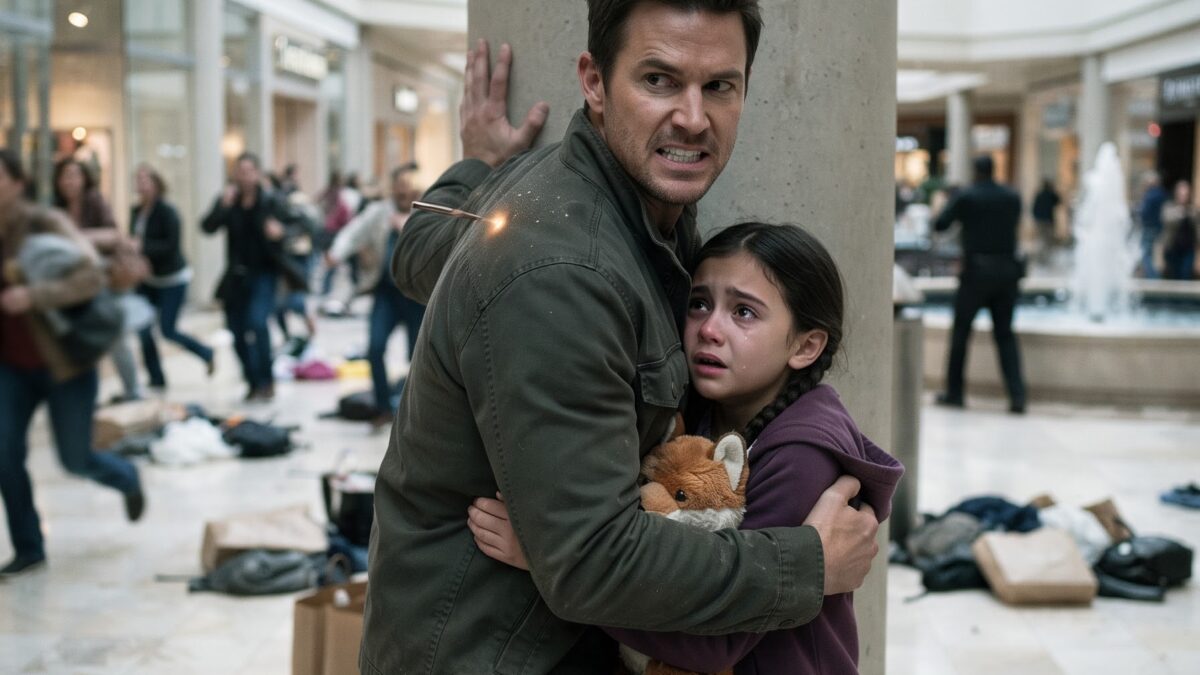
Part 4
Marceline looked back at Bennett. She pressed her lips together briefly, and the thing in her face was not quite a smile, because it was too full to be called, that the specific expression of someone receiving something they had wanted carefully, and finding it arrived without ceremony, and was therefore exactly right.
Sit down, she said. Tessa is going to have opinions about both of us in a minute. He sat down.
The chess lesson continued. Milo lost twice in rapid succession, and accepted both losses with a philosophical equinimity that Tessa found simultaneously admirable and somewhat suspicious. Bennett poured coffee.
Marceline got up at some point to deal with the dishes that had been waiting since dinner, and he got up to help, and they worked side by side at the kitchen counter in the specific comfortable quiet of people who had been in enough silences together to know the difference between the ones that needed filling and the ones that didn’t.
He said, “Yes,” Bennett said quietly enough that it was only for her.
She was quiet for a moment, hands in the dishwater.
“Good,” she said, the same tone she had used in his office, even direct, carrying more than the word could actually hold.
They finished the dishes.
In the next room, Tessa was explaining that Milo’s fundamental problem was that he thought too short term, that chess required you to think four moves ahead and then think about what your opponent was thinking four moves ahead.
And Milo was saying that was basically impossible.
And Tessa was saying it wasn’t impossible.
It just required practice. And the argument had the comfortable circular quality of a debate that both parties expected to have again and were not particularly invested in resolving because the having of it was the point.
Bennett dried the last dish and hung the towel on the rack. Marceline leaned against the counter beside him. Close in the way.
She’d been close on the train platform.
Close enough that the distance between them required some acknowledgement of itself. I have a question, she said.
Okay.
It’s about something you said in my office about wanting to keep building.
She looked at the counter between her hands. Are we building the same thing?
He looked at her. I think so.
You think so?
I’m reasonably certain, he said.
But I’ve spent most of the last 6 months operating on incomplete information and making assessments that turned out to be correct.
I’d rather not assume.
She looked at him. Something in her expression shifted the precision that was usually there giving way briefly to something less managed, more unguarded. The face behind the face that she showed to very few people.
I’m not going to make it easy for you.
She said, “I need you to know that I’m difficult to work with and I’m worse to live near and I have strong opinions about everything and I don’t stop working when I probably should and I’m not.”
She stopped. Reset.
I’m not the uncomplicated version of this.
I know, he said.
You haven’t been uncomplicated for a single day of the time I’ve known you, and and I haven’t once wished you were.
She looked at him for a long moment. Then she reached out and put her hand over his on the counter, and he turned his hand over and held hers, and they stayed like that in the kitchen, while the chess argument continued in the next room, and the December night pressed against the windows, and the house held its warm and busy and imperfect life around them. February, she said for the move.
February, he agreed.
From the next room, Milo’s voice.
That’s not a legal move.
Tessa, patient.
It’s absolutely a legal move.
Show me in the rules. The rules are in my room.
Then how do you know it’s legal?
Because I know all the rules.
That’s not Tessa’s voice with the precise tone of someone who has exhausted the instructional portion of the conversation.
Four moves ahead. Think four moves ahead.
A pause. Then Milo.
Okay, but what if I think two moves ahead? Really well.
Marceline turned her face toward Bennett’s shoulder and laughed not the controlled public laugh, but the real one, quiet and unguarded, and he felt it more than heard it, and he didn’t try to contain whatever crossed his face in response because there was no one watching and nowhere to conceal it to.
Two moves, she said into his shoulder.
That’s his strategy.
It’s an honest strategy.
It’s a terrible strategy.
It’s gotten him this far, Bennett said.
She lifted her head and looked at him close enough that the looking required no effort, and the kitchen was warm, and the children were arguing in the next room, and the night outside was cold and full of the city going about its ordinary life.
And whatever came next, the lease, the February move, the spring demonstration, the federal trial, the program’s next cohort, all the complicated and imperfect and ongoing business of living was waiting patiently on the other side of this moment.
Bennett was in no hurry to get there. For the length of this moment, this was enough.
His hand in hers, the warm kitchen, the noise from the next room, the life they were building, four moves ahead, one step at a time in the specific and unremarkable and irreplaceable way that lives were built.
When you stopped waiting for the danger to pass, and started living through it instead, and came out the other side into something you hadn’t known to plan for, and found it was better than the plan.
The sentencing happened on a Thursday in March in a federal courtroom on the fourth floor of the Bellweather Justice Building and Bennett was not there for it. He had been there for the trial portions of it, the parts where his testimony was required, where he sat in the witness box and answered questions from the prosecution and then the defense with the same level.
Precise economy he brought to everything, giving exactly what was asked and nothing more. watching the jury watch him and knowing from the way they watched that the testimony was landing the way it needed to land.
Reyes had told him afterward that the technical evidence alone would have been sufficient, but that Bennett’s presence on the stand his specific unhurried way of explaining exactly what had been done and exactly what he had found had removed any remaining ambiguity from the room.
“You made it simple,” Reyes had said.
It was simple.
Bennett had said they took something that wasn’t theirs.
They hurt people to do it.
That’s the whole thing.
Reyes had looked at him with a slight permanent frown that was not unfriendly. Most people make it more complicated.
Most people weren’t paying attention the right way.
On the Thursday of the sentencing, Bennett was in the estate’s guest house at 7 in the morning trying to find Milo’s other shoe, which had been present at 9 the previous evening and had since relocated to somewhere in the guest house that defied reasonable prediction.
Milo was sitting on the kitchen counter eating the cereal the blue box kind since Bennett had stopped buying the other one sometime around the move in February and hadn’t gotten around to restarting the negotiation and watching his father search with the mild interest of someone
who knows where the shoe is but is curious how long the search will take.
Milo, it’s under the radiator in the front room.
Why is it under the radiator in the front room? I was using it to prop the window.
That’s Bennett stopped.
That’s not what shoes are for.
The window sticks.
I’ll fix the window when this weekend.
Milo considered whether this was a credible timeline, apparently decided it was, and hopped down from the counter.
I’ll get the shoe.
He disappeared into the front room. Bennett stood in the kitchen of the guest house, which was not the kitchen of the Carver Lane house, but which had become over the two months since the move the the kitchen in the way that spaces became theirs through daily use.
through the specific placement of things, through the accumulated weight of ordinary mornings, and poured coffee from the pot that he’d started before Milo woke up and thought briefly and without drama that Reyes was probably walking into the courtroom right now.
The sentencing was Callaway and Sain today. The two broker network principles had been sentenced separately in February. One had taken the cooperation deal and received a reduced term.
The other had contested every charge and received a significantly less reduced term. and both outcomes were appropriate to what the evidence showed.
The remaining operational personnel from the Delmore parking structure had been processed through plea agreements in January.
The federal trial that Reyes had described as significant had turned out to be exactly that, a 14-month process from first arrest to final sentencing that had generated, according to the Bellweather Register’s coverage, which Bennett had read once and then set aside, a significant federal precedent regarding corporate espionage and the exploitation of internal access credentials.
Bennett had not read the coverage closely.
He had read enough of it to know what he needed to know, which was that the people who had put Milo in zip ties in a parking structure and pointed weapons at a 7-year-old girl’s school route were going to spend a considerable portion of the next decade in federal correctional facilities.
After that, he had stopped reading and gone back to work because the work was where his attention was most usefully, and the coverage of things that had already concluded wasn’t something he needed more of.
Milo came back with the
shoe, put it on, picked up his backpack, and looked at his father with the morning expression that was becoming its own kind of routine. The quick check, the confirmation that things were in their normal positions, the cleared assessment.
You okay? Milo said.
Yeah, Bennett said.
Sentencing’s today.
I know. Milo adjusted his backpack strap.
Does it feel like something? He thought about it honestly because his son asked honest questions and deserved honest answers.
It feels like a door closing, he said, which is mostly a good feeling. Mostly, it took a while to get here.
There’s a version of that feeling that’s just tired.
Milo nodded slowly, but the doors actually closed. The doors actually closed.
His son looked at him for a moment with the old eyes that didn’t entirely belong to an 8-year-old.
The eyes that had been doing their quiet, careful work since before Milo knew what they were measuring.
Then he said, “Good.”
and went to the door. They walked the path from the guest house to the main house together, the way they did every school morning now, not because it was required.
The guest house had its own entrance to the estate’s street gate, but because Tessa had established early in the guest house residency that she and Milo were walking to the car together, and this had been stated as fact rather than request, and neither of them had found reason to contest it.
The March morning was cold, but different from the winter cold. The light was back in it, a thin, specific quality of March light that came at a different angle than December, and carried in it the suggestion, however faint, of something coming. The grounds were still winter bear, but the garden beds along the east wall had some early green in them, small and tentative, the kind the kind of growth that showed up in March, and looked surprised to be there.
Tessa was waiting on the main house steps with her backpack and Felix tucked under her arm. She had been bringing Felix to school approximately twice a week since the Asheville trip, which her teacher had apparently accepted as a non-issue because the teacher had been informed of the general category of events from the previous autumn and had made the pedagogical decision that a stuffed fox was not a hill worth dying on.
“You’re 3 minutes late,” Tessa told Milo.
“I had a shoe situation.”
“You always have a shoe situation.
It’s an ongoing issue,” Milo agreed without particular defensiveness.
Tessa looked at Bennett.
“The sentencing is today,” she said.
He looked at her, 7 years old and small in her winter coat, the stuffed fox under her arm, her dark hair in the two braids that were the consistent fact of her appearance, regardless of what else was happening.
looking at him with the directness that had been there since the first moment he’d seen her standing alone in a mall corridor.
The quality of someone who had encountered a specific kind of terrible thing and had been permanently altered by it, but not broken. The way a tree grew differently around a damage without stopping growing.
Yes, he said today. She held his gaze for a moment.
Then she said, “Good.”
in the same flat complete way that Milo had said it, which was either a coincidence or evidence that 8 months of proximity had produced convergences he hadn’t fully tracked.
Marceline appeared in the doorway behind her, coat already on, keys in hand, running at the compressed efficiency of a person who had learned to work with the morning logistics of two children, and found it required a different organizational skill than running a cyber security corporation, but was not
entirely dissimilar. Car, she said, both of you now.
Tessa went. Milo followed. Bennett fell into step beside Marceline as they crossed the grounds toward the gate, and she glanced at him once with the look that meant she knew what the day was, and had decided not to make more of it than it needed to be, which was the right decision.
Reyes will call when it’s done, she said.
I know you don’t need to be there.
I know that, too. She looked at him sideways, but you thought about it briefly. He put his hand on the gate latch.
I decided the more useful place to be was finding Milo’s shoe.
She paused at the gate and looked at him with the expression that was not quite a smile, but occupied the same territory, the the one that she’d been showing him with increasing frequency since December.
That had no performance in it, no management, just the thing itself.
That’s the right priority, she said.
I know, he said.
That’s why I’m not there.
He opened the gate and she went through and they went to take the children to school. Reyes called at 11:47. Bennett was in his office at Voss Meridian working through the spring cohort applications for Meridian Bridge, which had grown from 14 placements to 31 in 4 months and which now had a waiting list that he was trying to figure out how to process without expanding the program faster than it could absorb.
He
picked up on the second ring. Callaway 9 years, Reya said. So 14 federal sentencing guidelines gave us more on so because of the duration and the scope of the access violation.
His council tried a diminished capacity argument in the final submissions. The judge found it insufficient. 14 years.
Bennett said 14.
He’ll serve 10 to 11 with good behavior.
He’s 52 years old.
A pause. He cried when the sentence came down.
I don’t know what to do with that information.
Nothing. Bennett said.
There’s nothing to do with it.
Reyes was quiet for a moment.
It’s over, Stout.
The whole thing, front to back. Bennett looked out his south-facing window at the waterfront, at the march light on the water, at the city going about its ordinary business in the ordinary way. Yeah, he said.
How does it feel? He thought about what he told Milo that morning, like a door closing. Reyes seemed to understand this without requiring explanation.
The federal contractor meeting is scheduled for April 20th. Your technical team has the documentation ready.
Marceline’s team, her development lead, and two consultants from the bridge program.
They’ve been ready for 3 weeks.
Good.
I’ll see you in April then.
A pause.
And Straoud, for what it’s worth, this case is going to be taught in federal investigation training programs.
The way you identified the access pattern, built the documentation trail, and designed the estate operation.
That’s going to be a case study.
Bennett considered how he felt about that.
I’d rather it wasn’t, I know, but it will be anyway.
A slight warming in Reyes’s permanent frown voice.
Take care of yourself. You too, Bennett said.
He put the phone down and sat for a moment in the office with the light from the waterfront coming through the south window and the whiteboard on the wall and the framed drawing in the corner. He looked at the drawing, the figure with the bandaged shoulder, the building that might have been a house or might have been a large sandwich, and he thought about the morning in the hospital when Milo had laid it on the bed beside his right hand and said he drew it so his father knew what he was coming home to.
He had come home to it. He was still coming home to it every day in the ways that mattered.
He picked up the phone and texted Marceline. Done.
Nine for Callaway, 14 for sewing.
It’s finished.
She replied 40 seconds later. come to lunch.
I’m at the office.”
He put on his jacket and went. Her office on the 10th floor was different in March than it had been in October. The same space, the same furniture, but the light through the south-facing windows was warmer, and the atmosphere had changed in ways that were difficult to attribute to a single cause.
The tension that had lived in the building during the investigation had cleared the way smells cleared after a window was finally opened. People moved differently in the corridors. The security team expanded now with four bridge program placements among its 12 members had a different quality of presence.
Alert without the edge of something being concealed. Marceline was at her desk with a sandwich and a spread of documents that she moved to the side without putting down when Bennett came in.
“Sit,” she said.
He sat across from her. She handed him half her sandwich without asking, which was something that had started in December and had continued without discussion, as though the sharing of food across a desk was a practice so obvious it required no inauguration. 14 years, she said.
He’s 52.
He’ll be in his mid-60s when he’s out.
I keep thinking about the 9 years he spent working for the company before any of this started. She looked at her half of the sandwich without eating it. I interviewed him.
I made the decision to hire him.
For 9 years he was good at his job and I trusted him and none of that was false and then somewhere it shifted and I don’t she stopped.
I don’t fully understand where it shifts where a person decides.
Neither do I, Bennett said.
I’ve thought about it and I don’t have a clean answer.
Does it need a clean answer? No, he said.
I don’t think those questions do.
He paused.
I think some people arrive at a pressure point and what’s underneath them turns out to be different from what they believed was underneath them.
And some people arrive at the same pressure point and find out the thing they believed was there actually is there. He paused again.
You don’t know which you are until you’re at the point.
She looked at him. Which are you? I know which I am.
He said it without arrogance, just as information. I found out the first time someone put me in a situation with no good options, and I had to pick the least bad one. A pause.
The mall was not the first time I ran towards something that was running away from everyone else.
“No,” she said.
“I figured it wasn’t.”
They ate for a moment without talking.
The comfortable silence of two people who had been in enough conversations together that the ones they didn’t need to have had stopped happening.
the April meeting.
She said, “The federal contractors want a longer conversation than we initially projected.
My legal team thinks we’re looking at a potential multi-year implementation agreement.”
She kept her voice neutral, presenting information that would change the company’s structure significantly.
It would require expansion personnel infrastructure, probably a second technical office in Bellweather, probably a satellite, Richmond maybe, or Washington, somewhere with federal proximity. She finally ate some of her sandwich.
It would also require the security infrastructure to scale with it, which is relevant to you.
You’re asking if I’m staying, he said.
I’m asking what you want because I’ve learned that asking you directly gets me accurate information faster than any other approach.
He looked at her. The direct approach was her natural mode, not blunt for the sake of it, but efficient.
the efficiency of someone who had found that managing conversations sideways cost more than the directness it was meant to soften.
He had liked this about her from the hospital room before he’d had language for what he liked about her.
I’m staying, he said.
Whatever the scale is. A pause. Bridge scales with it.
If the company expands, the program expands. Non-negotiable.
I wasn’t going to negotiate it.
I know. I said it anyway.
She almost smiled.
You say things you know you don’t need to say occasionally.
Why? He thought about it.
Because the things that matter most are the ones that feel like they don’t need saying.
And I’ve found that not saying them is how you end up assuming they’re understood when they’re not.
She looked at him for a moment with the unguarded look that he had been the recipient of more frequently since February since the lease was signed and the guest house became the guest house and the distance between formal and something else had closed. in the way it closed between people who had decided without ceremony to stop pretending there was as much distance as there appeared to be.
The children’s school has a spring exhibition next Friday, she said.
Milo is apparently building something with recycled materials. Tessa is presenting a chess analysis.
Milo told me he’s been collecting cardboard tubes for 3 weeks.
Tessa told me she’s analyzing a historical match between two grand masters.
She explained the match to me for 45 minutes last Sunday. a pause.
I understood approximately 30% of it. She explained it to me, too, Bennett said.
I got to maybe 40. You have a 10-point advantage.
I’ve been playing with her longer.
Marcelines smiled at that, the real one, the one that was not for anyone else in particular.
And he caught it the way he’d been catching it since it started appearing and thought, not for the first time, that of all the things that had happened since October, this was among the things he had least expected, and most would have chosen if he’d been given the option of choosing.
He hadn’t been given options.
He’d been given a grocery list and a Saturday morning and a gunshot.
And everything that had followed had been the consequence of a decision he’d made in less than a second without consulting anyone, including himself.
There was something in that worth sitting with. Not a lesson in the tidy sense he was suspicious of tidy lessons.
They tended to sand down the specific texture of what had actually happened, but something more like an observation about how things worked, about the gap between the life you planned and the one you were living.
He had planned 6 years ago to raise his son and grieve his wife and do it decently and not ask for more than that because asking for more had seemed like a luxury that the specific arithmetic of his situation didn’t support.
He had been wrong about the arithmetic. Not wrong in a way that felt foolish.
In hindsight, he’d been doing the best calculation available to him with the information he had, which was what you did, but wrong in the way that people were wrong about closed doors.
He had looked at a door and decided it was closed and had organized his expectations accordingly, and the door had not been closed. It had been unlatched, in fact, swinging slightly, in whatever wind was blowing through his life, waiting for the right kind of pressure to open it. The pressure had been a gunshot in a shopping mall, which was not the kind of thing you put in a greeting card, but which was accurate.
The exhibition was on a Friday afternoon in the gymnasium of the school that both children attended a coincidence of geography that had predated the guest house move, and that Tessa had flagged early as evidence of some organizing principle in the universe. A claim that
Milo had responded to with polite skepticism, and Bennett had stayed out of.
The gymnasium had been transformed with the specific chaos of a school exhibition folding tables covered in projects, handlettered signs above each station. Children stationed at their tables with the variable expressions of people who were proud of their work and nervous about discussing it, sometimes simultaneously.
Milo’s project was a structural model.
He’d built a scale representation of a suspension bridge using cardboard tubes, string, and what appeared to be a significant quantity of hot glue.
and he had written a one-page explanation of the physics principles involved that was in Bennett’s assessment considerably more technically accurate than most 8-year-olds would have managed and which bore the clear influence of extended conversations with Tessa who had informed Milo in November that physics was more interesting than he thought and had apparently made this
argument convincingly.
Tension and compression, Milo explained to Bennett with the focused authority of someone who had researched a thing and was prepared to communicate it. The cables carry the tension load and the towers carry the compression. If you get the balance wrong, the whole thing fails.
That’s right, Bennett said.
I tested six models before this one. The first five failed.
How did they fail? Different ways.
The first one, the towers buckled. The second one, the cables were too loose.
The third one, I used the wrong glue and it fell apart overnight. He pointed to a small display of the failed iterations which he had arranged in a row with handwritten notes explaining each failure mode.
I kept them because Marceline said, “You learn more from the ones that fail than the ones that work.”
Bennett looked at the failed models in their small row.
“She’s right,” he said.
“I know.
That’s why I listened.”
Bennett looked at his son at the project that represented three weeks of cardboard tubes and six iterations and the specific patience of a child who had inherited some quality from his mother and some from his father and had synthesized them some into something that was entirely himself. He had the sudden and strong awareness the way you sometimes had awareness of things you had been too occupied to fully register in the moment of their happening.
that he was looking at the outcome of a choice he’d made not in a grocery store but over the six years preceding at the choice made and remade daily to show up to be present and imperfect and honest about the imperfection to let his son see a man who failed at things and continued anyway who lost sleep and made mistakes and reorganized and tried again who did not perform competence but
practiced it that was the thing he had given Milo he thought not safety he had failed at safety in the parking structure in every moment moment that he couldn’t control not certainty.
The world was not certain and pretending it was did a child no favors. He had given him the model of a person who continued, who ran toward the difficult thing and then lived with the consequences and built something from them.
It was not a perfect gift, but it was the honest one.
He put his hand on the back of Milo’s neck.
Good work, he said.
Milo leaned into it for three seconds, the same 3 seconds he always allowed, and then straightened up and looked toward Tessa’s across the gymnasium with an expression that was competitive in the affectionate way that had become the primary texture of their relationship.
Hers is good, too, he said with the specific objectivity of someone giving credit where it was due and slight wishing they didn’t have to.
She spent 2 weeks on it. I know, she told me. She tells everyone.
He paused.
She’s not wrong, though.
It’s a good analysis.
Tessa’s table held a chessboard set up in a specific position, a large printed diagram of the same position on a display board, and a written analysis that her teacher had apparently attempted to summarize for the exhibition program and had ultimately
printed in full because summarizing it had proven impossible.
She was in the process of explaining the position to a school administrator who had made the mistake of asking a question and who now had the expression of someone who had walked through a door expecting a corridor and found a library.
Marceline was standing to the side of Tessa’s table with the patient look of a parent who had heard the explanation several times and retained the general outline.
She looked up when Bennett and Milo approached.
“How long has she been explaining?”
Milo asked. 11 minutes, Marceline said. He asked about the night.
Milo looked at the administrator. You asked about the night?
I thought it was a simple question, the man said faintly. Nothing about knights is simple, Milo said with the authority of someone who had learned this through personal experience.
That’s the first thing she teaches you.
Tessa, without breaking her explanation, turned briefly to look at Milo with an expression that was as close to approval as she regularly allowed herself. They stood together at the edge of the table.
of the four of them, two children and two adults, in the organized chaos of a school gymnasium on a Friday afternoon in March, surrounded by other families and other projects, and the particular loud, warm, slightly overwhelming quality of an event that asked nothing more of anyone than their presence. It
was not a remarkable moment by any external measure. It was loud.
It was slightly chaotic. Milo was going to need to eat something before too long, or his mood was going to become interesting. and Tessa had apparently committed to explaining the full historical context of the chess match before releasing the school administrator, who had stopped trying to leave.
But Bennett stood in it and let himself feel the full weight of it, not gratitude exactly, not relief, not the complicated mixture of things that had characterized most of the past 5 months, but something simpler and harder to name.
the feeling of being exactly where you were supposed to be, which was not a feeling he’d had often or taken for granted when it appeared.
He had walked into a shopping mall in October with 17 items on a grocery list and the specific kind of future that was fine without being anything more than fine. And he had heard a gunshot, and he had run toward it.
And what had come from that was standing here beside him in a school gymnasium in March, arguing about chess nights with an exhausted administrator. He had not planned this.
He had not foreseen it. He had simply run toward a frightened child because there was no other option that was consistent with being the person he had spent his life trying to be.
And the rest of it had grown from that single unconsidered moment. The way things sometimes grew when you did the right thing without calculating the return. That was the thing worth saying, he thought, not as a lesson for someone else.
He was suspicious of lessons extracted from personal experience and offered to others as though they translated cleanly. They rarely did, but as an observation about his own life, about the specific way his life had moved.
He had spent six years after Sarah’s death believing that the version of him that could want things for himself, the version that could build something with another person, that could let something grow past the careful limits he’d drawn around himself, had been the version that belonged to the time before.
that the man he’d become, the single father, the warehouse worker, the careful keeper of a child’s ordinary life, was the final version, the one that would carry the rest of the distance.
He had been wrong about that.
Not wrong in a way that required forgiving himself, because it had been the best he could do with what he had, and he’d done it with everything available to him, but wrong in the way that you were wrong when you put a ceiling on a thing that wasn’t finished growing.
He was not finished. That was the specific and not small thing he had learned from all of it. From the gunshot and the hospital and the access logs and the parking structure and the two in the morning kitchen and the lease and the guest house and this gymnasium.
He was not finished and the future was not the contained managed shape he’d given it.
It was larger than that.
It was messy and it was imperfect and it had chess tournaments and shoe situations and late night security assessments and Milo’s ongoing cardboard engineering projects and Tessa explaining night movements to people who had not anticipated the depth of the subject.
He would take all of it. Marceline moved beside him and her shoulder pressed against his.
The small unpretentious closeness of someone who had stopped requiring distance and had not announced the change simply allowed it. He pressed back.
Across the gymnasium, Milo had joined the administrator’s audience for Tessa’s explanation, apparently deciding that solidarity was the appropriate response and was nodding at intervals with the studied attention of someone who had learned that demonstrating interest was sometimes more useful than actually
following everything.
Tessa caught his eye across the gymnasium and tilted her head slightly.
The look that meant she knew he wasn’t following everything and she was going to address this later.
and Milo gave her the specific look that meant he knew she knew and he had already accepted the consequences. Bennett watched them.
Eight months ago, they had been strangers, a frozen child in a mall corridor and a boy reading on a living room floor who had never met. Now they were whatever they were, not siblings, not quite, but something that had its own category.
Something made of shared danger and chess and cardboard tubes and nightmares they’d helped each other through.
and the specific comfort of having someone your own age who treated you like a person rather than a situation.
Some things you couldn’t plan.
Some things you just had to run toward and find out.
Tessa finally released the administrator, who escaped toward the refreshment table with the grateful speed of someone who had survived something, and turned to the next visitor, who was a grandmother with the bright, curious energy of someone who was genuinely interested and who Tessa assessed in approximately 3 seconds and then greeted with the
opening question, “Do you know what a Sicilian defense is?”
The grandmother said she did not.
Tessa said, “Good.
It’s easier to learn correctly than to unlearn incorrectly.”
and began.
Milo appeared at Bennett’s elbow.
She’s going to explain chess to everyone here, he said.
Probably, including the people who came for the bridge project. I think so, Milo considered this. Is that a problem?
No, Bennett said.
It’s very much who she is.
Milo seemed to accept this as final, which it was. He looked at the gymnasium around them, at the projects and the families, and the particular contained noise of a Friday afternoon event winding toward its close.
“Can we get food after this?”
He said, “Yes, the place with the red booths.
Sure.
Tessa likes the red booth place.”
He said in the tone of a child who has decided this is relevant information and is conveying it not because he has been asked to, but because it is accurate. I know, Bennett says. She always gets the soup.
I know. And she saves the crackers for Felix.
Milo. Yeah, I know. His son looked up at him with the sideways look.
That was his particular version of checking in. Good, he said. Just that.
the same flat completion that had become their private shortorthhand for a larger set of things. Then he went back toward his project table to field questions from a new visitor who was pointing at the suspension bridge model with the tentative curiosity of someone who might actually want to understand it.
Marceline was watching her daughter explain the Sicilian defense to the grandmother who was holding a cup of punch and leaning forward with genuine engagement. And she had the expression she got sometimes when she watched Tessa, not quite pride, which was too simple, but something that contained pride and also everything else a parent felt when they watched their child be fully and unself-consciously themselves.
She’s going to be something, Marceline said.
She already is, Bennett said. She glanced at him. True.
A pause. So is he. You should know that I think about that what he is.
What you’ve what he’s made of.
She said it carefully. the way she said things that mattered enough to take care with.
He’s one of the most patient people I’ve ever met, including adults.
He doesn’t perform patience.
He just has it.
That doesn’t come from nowhere.
Bennett looked at his son across the gymnasium, demonstrating the structural principles of tension and compression to a visitor with the methodical attention of a child who had built six iterations of something and knew exactly why each one had failed.
“His mother had it,” he said.
“And you,” Marceline said.
He didn’t argue with her.
He had learned over the past months that accepting things Marceline said was more efficient than contesting them. Not because she was always right.
She was not always right, and she would freely admit it, but because when she said something with that specific weight, she had arrived at it the way she arrived at everything, which was to say with more thought than the delivery suggested, and contesting it without equivalent thought was rarely productive. the red booth place after
this.
He said, “Tessa told me a slight warmth in her voice.
She always tells me what she’s hoping for.
She just tells it as information, not as a request.”
“So does Milo,” Bennett said.
Marceline laughed.
“The real one, quick and unguarded.
They’re going to be insufferable together.
They’re already insufferable together.”
“I know.
” She looked at him sideways.
“I wouldn’t change a single thing about it.
Neither would he.”
That was the final truth of the past 8 months.
the one that couldn’t be extracted as a lesson or packaged as advice for anyone else.
The one that belonged specifically and only to the particular shape of his particular life. He would not change a single thing about it.
Not the gunshot, not the hospital, not the access logs and the parking structure and the 4 in the morning and the November cold and the lease in the guest house and all the complicated, imperfect, ongoing business of learning how to be a person who had more than he’d allowed himself to expect.
He was grateful for the difficulty of it. The difficulty was what had made it real. Easy things taught you nothing.
Hard things survived, made you into someone who could survive them. And sometimes, if you were paying attention and willing to keep moving when everything in you wanted to stop, they made you into someone who got to stand in a school gymnasium in March and watch two children and feel the shoulder of the woman beside him and understand that the future, whatever shape it took, was no longer something he faced alone.
Outside, through the gymnasium’s high windows, the march light was doing what March Light did thin and persistent.
Not warm yet, but moving in that direction. The kind of light that carried information about what was coming, even as it was still clearly what it was.
Spring was coming. Everything that needed closing was closed.
Everything worth building was still being built. Bennett Strad stoods in the noise and warmth of a school gymnasium, holding none of it at arms length, letting all of it me matter in the full and unmanaged way that things mattered when you stopped protecting yourself from them. and he felt the specific and ordinary and irreplaceable weight of a life that had turned out to be larger than the one he had planned.
He had run toward a stranger. He had found his way home. That was enough.
That was everything.
—END—
