“I’d suggest you remember that the next time you decide to judge a man by his truck.”
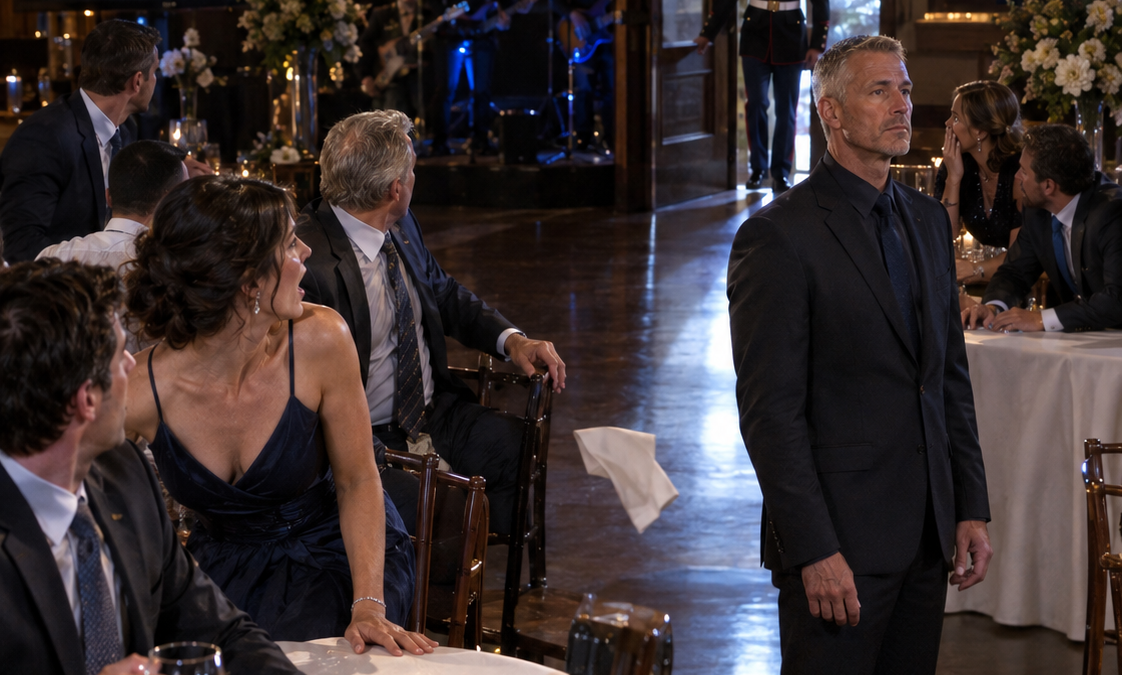
“I’d suggest you remember that the next time you decide to judge a man by his truck.”
The wedding coordinator handed me the final invoice across a white-linen table. Four hundred and twelve guests. The Whitmore Estate. Open bar, live band, five-course plated dinner.
Total: $187,400.
My daughter Elena sat beside me, her face pale. Across the table, her future mother-in-law, Patricia Whitmore, watched me with the particular patience of a woman who had already decided how this would end.
“We can work out a payment plan,” Patricia said. Not to me. To Elena. As if I weren’t in the room. “We’re happy to cover the bulk. Consider it a gift.”
Her husband, Charles, nodded without looking up from his phone. “It’s not a burden. We’ve already spoken to the venue.”
I said nothing.
What they didn’t know was that the entire balance had been paid in full nine days earlier. By me. From an account none of them had ever asked about.
I folded the invoice and placed it in my jacket pocket.
“Thank you for the offer,” I said. “But it’s handled.”
Patricia smiled the way people smile at a child who says they’ll buy their own car someday.
“Of course, Michael,” she said. “Of course.”
My name is Michael Torres. I was fifty-four years old when my daughter married into the Whitmore family. Before that, I spent twenty-two years in the United States Marine Corps, most of it in Force Recon, then MARSOC.
I don’t talk about it much.
People see a quiet man in a plain jacket and they fill in the blanks themselves. Retired. Fixed income. Pension. Maybe a little property somewhere. They see the truck I drive — a 2008 Tacoma with 240,000 miles — and they do the math in their heads. They don’t ask. They assume.
The Whitmores assumed more than most.
They weren’t cruel about it. That would have been easier. They were polite in the way that rich people are polite when they’ve already sorted you into a category. Patricia would ask about my “work” with a slight tilt of her head, as if translating from a foreign language. Charles would nod at me across the room at holidays, then turn back to whoever was discussing hedge funds or the yacht club.
They weren’t bad people. They were just certain.
Certain that a retired Marine with a truck older than his daughter’s fiancé couldn’t possibly afford a Whitmore wedding.
Certain they’d be picking up the tab.
They’d even started planning it. Elena told me later that Patricia had called the venue three times to confirm “the family’s” payment schedule. Had emailed the florist about “adjusting the order to something more reasonable.” Had, in her own words, “taken the pressure off the poor man.”
I found out about all of it eventually.
But on that day, at that table, with the invoice in my pocket, I didn’t correct her.
I just said it was handled.
She didn’t believe me. Neither did Charles. Neither did Elena’s fiancé, David, who sat at the end of the table looking at his phone and not at anyone.
Only Elena looked at me with something other than pity.
She knew I didn’t lie.
The wedding was set for the second Saturday in June. The Whitmore Estate — an actual estate, forty acres of manicured lawn and a converted carriage house — had been booked for eighteen months. Patricia had planned it the way generals plan campaigns.
Every detail was documented. Every vendor was vetted. Every flower was chosen.
And every assumption about who would pay for it had been made long before I ever saw an invoice.
I didn’t mind. Not at first.
I’d spent most of my life in places where money was the least interesting thing about a man. I’d known billionaires who couldn’t hold a conversation and privates who could rebuild an engine with a pocketknife. I’d learned early that wealth and worth were different words.
So when Patricia started making her assumptions, I let her.
I let her think the truck was all I had. I let her think the pension was my only income. I let her think the quiet man in the corner was someone to be managed.
It wasn’t pride that kept me silent.
It was patience.
And patience was something I had more of than anyone in that family would ever understand.
What none of them knew — what none of them had ever asked — was that I’d been investing since I was twenty-three years old. Quietly. Consistently. With the same discipline I’d learned in Recon.
Every deployment, I set aside what I could. Every promotion, I increased it. When I got out in 2012, I took a contractor job for six years and saved almost all of it. I bought land in Montana before anyone wanted it. I bought index funds before anyone trusted them. I bought a small stake in a regional logistics company that tripled during the pandemic.
By the time Elena got engaged, my portfolio was worth just under $4.7 million.
I didn’t live like it. I never had. The truck was the truck. The house in Tucson was the house I’d bought in 2004 for $180,000. The clothes were the clothes I’d always worn.
But the money was real.
And when Patricia Whitmore assumed I couldn’t afford my own daughter’s wedding, I didn’t argue.
I just waited.
The first sign something was off came three weeks before the wedding.
I was at Elena’s apartment, helping her pack for the move to David’s condo. She was quieter than usual. Distracted.
“You okay?” I asked.
She nodded. Then shook her head. Then sat down on the floor with a half-filled box in her lap.
“Patricia wants to have a meeting,” she said. “About the wedding.”
“Okay.”
“She wants to talk about ‘financial logistics.’ Her words.”
I folded a sweater and placed it in the box.
“She’s already called the venue,” Elena said. “She told them she’d be handling the final payment.”
I didn’t say anything.
“Dad, I told her you were handling it. She didn’t believe me.”
“I know.”
“She thinks you’re being proud. She thinks you’re going to embarrass yourself.”
I sat down on the couch across from her.
“Elena,” I said. “Do you trust me?”
She looked up.
“Of course.”
“Then let it go. Let her think what she thinks.”
“But—”
“Let it go.”
She didn’t understand. Not then.
But she trusted me. That was enough.
The meeting happened a week later.
Patricia had arranged it at a café near the venue. Neutral ground. She brought Charles. Elena brought me.
Patricia had a folder. Actual printed documents. She spread them across the table like a prosecutor laying out evidence.
“The total is one hundred eighty-seven thousand,” she said. “We’ve paid the deposit. The balance is due the day before the wedding.”
I nodded.
“Charles and I have discussed it. We’re prepared to cover the remainder.”
“That’s generous,” I said.
“It’s not generosity. It’s practicality.” She glanced at Elena, then back at me. “We don’t want the venue to be put in an awkward position.”
“I understand.”
“So we’ll handle the final payment. You can reimburse us whatever you’re comfortable with. No timeline.”
She said it kindly. That was the worst part.
She said it like she was doing me a favor.
I looked at the folder. At the spreadsheet. At the careful, condescending little numbers.
“Patricia,” I said. “The balance is already paid.”
She blinked.
“Excuse me?”
“It was paid nine days ago. In full.”
Charles looked up from his phone for the first time.
“That’s not possible,” Patricia said. “The venue would have notified us.”
“Would they?”
“They said—” She stopped. Flipped through her folder. “They said we were listed as the point of contact.”
“Maybe you were. But the payment came from my account.”
She stared at me.
“Michael, I don’t mean to be rude, but the balance is nearly a hundred and fifty thousand dollars.”
“I know.”
“Where would you—”
She stopped herself. But the question hung in the air.
Where would you get that kind of money?
I didn’t answer.
I just folded my copy of the invoice and placed it in my jacket pocket. The same way I had at the coordinator’s table.
“I appreciate the offer,” I said. “But it’s handled.”
Patricia looked at Charles. Charles looked at Elena. Elena looked at me.
No one spoke.
The silence was the first crack in the Whitmore certainty.
It wouldn’t be the last.
That night, Elena called me.
“Dad.”
“Yeah.”
“Patricia called the venue after we left. They confirmed it. The balance is paid.”
“Okay.”
“She asked them who paid it. They said they couldn’t disclose.”
“Good.”
“She’s freaking out. She thinks you borrowed money. She thinks you took out a loan.”
“She can think whatever she wants.”
“Dad, are you okay? I mean—where did the money come from?”
I was quiet for a moment.
“I’ve been saving for a long time,” I said. “That’s all.”
“Since when?”
“Since before you were born.”
She was quiet.
“Dad.”
“Yeah.”
“I’m sorry they treated you like that.”
“Don’t be. They didn’t know.”
“That’s the problem.”
I didn’t argue. She was right.
The wedding was still two weeks away. The venue was paid. The flowers were ordered. The band was booked.
Everything was in place.
What Patricia didn’t know — what none of them knew — was that the money was only part of the story.
The real story was in a manila folder in my safe. A folder I hadn’t opened in fifteen years.
A folder that contained a single piece of paper. A citation. A medal I’d never collected. A mission I’d never talked about.
The kind of thing that was easier to bury than explain.
But I had a feeling the folder would come out before the wedding was over.
And when it did, the Whitmores would learn exactly who they’d been underestimating.
Not a retired man with a truck.
A man who had spent his life doing things they couldn’t imagine.
And who had come home to raise a daughter without ever once needing to prove it.
PART 2 — THE DINNER
Patricia called a family dinner three nights later.
Not a casual thing. A proper dinner at the Whitmore house. Catered. Candles. The good china.
Elena texted me the day before. “She wants to talk about the wedding. Please come. David will be there.”
I went.
The Whitmore house sat on two acres in Scottsdale. Iron gates. A fountain in the driveway. The kind of house that announced itself before you reached the door.
I parked the Tacoma between a Range Rover and a Mercedes. Neither of them mine.
Patricia greeted me at the door with a smile that didn’t reach her eyes. “Michael. So glad you could make it.”
“Thanks for having me.”
She looked past me at the truck. Just for a second. Then back at my face.
“Come in. Charles is in the study.”
I followed her through a hallway lined with photographs. David at prep school. David at Yale. David on a sailboat in Newport. David shaking hands with a senator.
No photographs of Elena. Not yet. The wedding would fix that.
Dinner was plated by a caterer who called Patricia “ma’am” and Charles “sir.” Four courses. Wine from a cellar I’d bet was temperature-controlled.
David sat across from me. Twenty-eight. Good-looking in a soft way. The kind of hands that had never held anything heavier than a laptop bag.
He hadn’t said much to me in the eighteen months he’d been with Elena. Not hostile. Just absent. Like I was a piece of furniture in a room he didn’t spend much time in.
That night, though, he was watching me.
Patricia waited until dessert to bring it up.
“So, Michael,” she said, setting down her fork. “We’ve been thinking about the wedding.”
“Okay.”
“Charles and I were talking. And we realized — we don’t actually know much about your background.”
I sipped my coffee. “Not much to know.”
“Oh, I doubt that.” She smiled. “Elena mentioned you were in the military.”
“Marines.”
“Yes. And before that?”
“Before that I was a kid in El Paso.”
She laughed. Light. Forced. “I mean, what did you do? Charles was in the Navy, you know. Supply corps. He did very well for himself after.”
Charles nodded without looking up from his plate. “Made some good connections.”
“I was in the infantry,” I said. “Then Recon.”
Patricia tilted her head. “Recon? Like reconnaissance?”
“Something like that.”
“Was it dangerous?”
I set down my cup.
“Sometimes.”
David spoke for the first time that night. “What unit?”
I looked at him. He was leaning forward slightly. Curious. The first real curiosity I’d seen from him.
“Force Recon,” I said. “Then MARSOC.”
He nodded slowly. “That’s serious.”
Patricia waved a hand. “Oh, I’m sure it was. But Michael — the reason I brought it up is that we’re trying to finalize the seating chart. And we realized we don’t know if you’ll be bringing anyone.”
“No one to bring.”
“Your wife—”
“Passed away. Twelve years ago.”
Patricia’s face did something complicated. Sympathy, maybe. Or relief that I wouldn’t be adding to the guest list.
“I’m sorry,” she said. “Elena didn’t mention.”
“She doesn’t talk about it much. Neither do I.”
Silence around the table.
Charles cleared his throat. “The reason we asked you here, Michael — Patricia and I have been discussing the venue payment.”
I waited.
“We understand the balance was paid. We confirmed it with the estate. But we don’t know who paid it. They wouldn’t disclose.”
“I paid it.”
“Yes. So you said.” He set down his napkin. “But you understand our position. We want to make sure everything is above board. For Elena’s sake.”
“Above board.”
“These things can get complicated. If you took out a loan, for example, or—”
“I didn’t take out a loan.”
“Then where—”
“Charles.” Patricia touched his arm. “That’s not what we’re asking.”
She turned to me with that same patient smile.
“What we’re asking, Michael, is whether you’d be willing to let us reimburse you. Quietly. So you’re not out of pocket. We’d never tell anyone. It would just be between us.”
I looked at her.
She was offering to buy my dignity back. Quietly. So no one would have to know the Whitmores had let the Marine pay for his own daughter’s wedding.
“No,” I said.
“Michael—”
“It’s handled.”
“Please don’t misunderstand. We’re not trying to—”
“I know what you’re trying to do.”
She stopped.
I folded my napkin and placed it on the table.
“You’ve been very generous,” I said. “But the wedding is my responsibility. I’m her father. I’m paying for it.”
Patricia’s jaw tightened. Just slightly. The first real crack in her composure.
“Of course,” she said. “Of course.”
David walked me out.
The desert night was warm. Crickets somewhere in the hedges. The fountain running.
“Mr. Torres.”
“Michael.”
“Michael.” He put his hands in his pockets. “I wanted to ask you something.”
“Go ahead.”
“What was it like? Force Recon?”
I looked at him. He was standing under the porch light, that soft face half in shadow.
“Why do you want to know?”
He shrugged. “I don’t know. I guess I’ve never met anyone who did anything like that.”
“Most people haven’t.”
“Was it hard?”
“Sometimes.”
“Did you—” He stopped. Started again. “Did you ever have to do things you can’t talk about?”
I didn’t answer right away.
“Yes.”
He nodded like he understood. He didn’t.
“That’s why you don’t talk about it,” he said.
“That’s part of it.”
“Elena says you’re the calmest person she’s ever met.”
“She’s not wrong.”
“Even when people treat you like—” He stopped.
“Like what?”
“Like you’re not in the room.”
I almost smiled.
“I’m always in the room, David.”
He looked at me. For a second, I saw something in his face. Not respect exactly. But the beginning of it. The recognition that there might be more to the quiet man in the truck than he’d assumed.
“Goodnight, Michael,” he said.
“Goodnight.”
I drove home with the windows down. The desert air smelled like creosote and dust.
Patricia would keep digging. I knew that. She wouldn’t let it go.
And when she dug deep enough, she’d find something she wasn’t expecting.
Not the money.
The rest of it.
I got home around eleven. The house was dark. I poured a glass of water and sat at the kitchen table.
The manila folder was in the safe in the back room. I hadn’t opened it in fifteen years. Hadn’t needed to.
But I knew what was in it.
A citation. A Silver Star. And a mission that never happened.
I never picked up the medal. I never went to the ceremony. When the Marine Corps called, I told them I was done. I’d done my time. I wanted to raise my daughter.
They respected that. They always did.
But the citation was still in the folder. The paper was still real. The record was still in the system. Anyone who knew where to look could find it.
And Patricia Whitmore, I was beginning to understand, was someone who looked.
The next morning, Elena called.
“Dad.”
“Morning.”
“Patricia called me last night. After you left.”
“What’d she say?”
“She said she was ‘concerned.’ That’s the word she used. She said she was concerned about you.”
“Concerned.”
“She thinks you’re hiding something. She thinks you might have gotten the money from somewhere you shouldn’t have.”
“What does she think I am?”
“I don’t know. Dad—” She paused. “She said she was going to have someone look into it.”
“Look into what?”
“Your background. She said—” Elena’s voice caught. “She said she wanted to make sure David wasn’t marrying into something ‘complicated.'”
I was quiet for a moment.
“Okay,” I said.
“Okay? Dad, that’s not okay. She’s going to dig into your life. She’s going to—”
“Let her.”
“Dad—”
“Elena.” I kept my voice steady. “I’ve got nothing to hide.”
“But—”
“Let her dig.”
She was quiet.
“There are things she’ll find that she won’t understand,” I said. “But there’s nothing she’ll find that I’m ashamed of.”
“Are you sure?”
“Yeah.”
“Dad—what is she going to find?”
I looked out the window. The sun was coming up over the Catalinas. Orange and gold. The same light I’d seen from a hundred different places in the world.
“Some old papers,” I said. “That’s all.”
“Papers?”
“Don’t worry about it. I’ll handle it.”
She didn’t sound convinced. But she trusted me.
She always had.
Two days later, I got a call from a number I didn’t recognize. Arizona area code.
“Mr. Torres?”
“Speaking.”
“This is Daniel Voss. I’m an investigator with Meridian Group. I’ve been retained by the Whitmore family to conduct a background check.”
“I figured.”
“You’re not surprised.”
“Your client told my daughter she was doing it. Not very subtle.”
A pause. “No, I suppose not.”
“What do you need?”
“Honestly? Just your cooperation. I’ve already pulled most of what’s public. Service record, property records, financial disclosures that are on file. I just need to confirm a few things.”
“Go ahead.”
“You served in the Marine Corps from 1990 to 2012.”
“Correct.”
“Force Recon, then MARSOC. Multiple deployments. Two Purple Hearts. A Bronze Star.”
“Correct.”
“There’s a notation here. A citation. Silver Star. But it says—” He paused. “It says the award was never presented.”
“That’s right.”
“Why not?”
“I didn’t collect it.”
“Why?”
I was quiet for a moment.
“Because I didn’t want to.”
He was quiet on the other end.
“Mr. Torres, I’ve been doing this for twenty years. I’ve never seen a Silver Star citation that was ‘unpresented.’ That doesn’t happen by accident.”
“It happens when the recipient doesn’t show up.”
“Are you telling me you skipped your own ceremony?”
“I’m telling you I was done. I had a daughter to raise.”
He was quiet again. Longer this time.
“Mr. Torres, can I ask what the citation is for?”
“You can ask.”
“Will you tell me?”
I thought about it.
“It’s for a mission in 2004,” I said. “That’s all I’ll say.”
“2004.” He was writing something down. I could hear the pen. “There’s no record of any operation involving a Silver Star in 2004 in the public files.”
“No. There wouldn’t be.”
Another pause. Longer.
“Mr. Torres—”
“I’ll cooperate with whatever you need,” I said. “But I’d ask you one thing.”
“What’s that?”
“When you report back to Mrs. Whitmore, tell her the truth. Whatever you find. Tell her exactly what it is.”
“I always do.”
“Good.”
I hung up.
And for the first time in years, I thought about that mission.
The dust. The sound. The men I’d carried out and the ones I hadn’t.
I didn’t think about it often. There was no point.
But I had a feeling it was about to come up.
Whether I wanted it to or not.
That night, I opened the safe.
The manila folder was exactly where I’d left it. I pulled it out and set it on the kitchen table.
Inside: a single piece of paper. Heavy stock. Official letterhead.
The citation.
I read it once. Slowly.
Then I folded it and put it back.
The wedding was in ten days.
Patricia was going to find out who I was.
And she was going to have to live with it.
PART 3 — THE INVESTIGATOR’S REPORT
Daniel Voss called me back four days later.
I was in the garage, changing the oil in the Tacoma. My hands were dirty. I answered on the second ring.
“Mr. Torres.”
“Speaking.”
“It’s Daniel Voss. I finished the report.”
“That was fast.”
“There wasn’t much to find. On paper.” He paused. “But what I did find — I need to ask you about it.”
“Go ahead.”
“You were part of a unit that doesn’t officially exist.”
“I was part of a lot of things that don’t officially exist.”
“I know. That’s the problem. I can’t verify anything. I’ve got a citation in the system, but no after-action report. No mission record. No commanding officer listed. Nothing.”
“That’s how it works.”
“Mr. Torres, I’ve done background checks on generals. On CIA officers. On men who’ve done things they can’t talk about. There’s always a paper trail. Somewhere. But yours is — it’s like the file was cleaned.”
“It wasn’t cleaned. It was never written.”
He was quiet for a moment.
“So I can’t verify anything,” he said. “I can only confirm what I already knew. You served. You were decorated. You retired. And then you disappeared.”
“I didn’t disappear. I came home.”
“To a house in Tucson. No social media. No public appearances. No veteran organizations. No interviews. You don’t even have a LinkedIn.”
“I don’t need one.”
“Mr. Torres, I’m not trying to be disrespectful. But the Whitmores hired me to find out who you are. And the truth is, I can’t. Not fully. The only thing I can tell them is that you’re either exactly what you appear to be — a retired Marine who wants to be left alone — or something else entirely.”
“Which do you think it is?”
He laughed. Short. Not unkind.
“I think you’re the second one,” he said. “And I think you know I know.”
“Does it matter?”
“It might. To them.”
I set down the oil wrench.
“When you give them the report,” I said, “will you tell them about the citation?”
“I have to. It’s in the record.”
“Will you tell them what it’s for?”
“I can’t. Because I don’t know. There’s no public record of any action that would warrant a Silver Star in 2004. No firefight. No ambush. No operation. It’s like it never happened.”
“It happened.”
“I believe you.”
He was quiet for a moment.
“Mr. Torres, can I give you some advice?”
“Go ahead.”
“The Whitmores are going to read this report and they’re going to be confused. They’re going to assume the worst. That’s what people like them do. They see a gap in the record and they fill it with something ugly.”
“I know.”
“You could preempt that. You could tell them what you did. You could give them the context.”
“I could.”
“But you won’t.”
“No.”
“Why not?”
I looked at the truck. At the oil stain on the concrete. At the neat rows of tools on the wall.
“Because it’s not theirs to know,” I said. “And because I don’t owe them an explanation.”
“They’re your daughter’s in-laws.”
“They’re not my family.”
He was quiet.
“Fair enough,” he said. “I’ll send them the report. But I’m going to leave out the parts I can’t verify. And I’m going to tell them the truth: that you’re a decorated combat veteran with a record that speaks for itself, and that anything beyond that is none of their business.”
“Thank you.”
“Don’t thank me. I’m just doing my job.”
He hung up.
I stood in the garage for a while. The sun was going down. Long shadows across the floor.
Elena would be married in six days.
And I had a feeling the Whitmores were about to make things worse.
Patricia called me that night.
Not Elena. Not David. Patricia.
“Michael, I received the report.”
“Okay.”
“I want to talk to you about it.”
“Go ahead.”
“Not over the phone. In person. Tomorrow. At the house.”
“What time?”
“Ten.”
“I’ll be there.”
She hung up first.
I stood in the kitchen for a moment. The house was quiet. The way it always was.
Then I went to bed.
The next morning, I put on a clean shirt. Not a suit. Just a clean shirt. The kind of thing I’d wear to the hardware store.
I drove the truck to the Whitmore house. Parked between the Range Rover and the Mercedes. Same spot as before.
Patricia answered the door. She didn’t smile this time.
“Come in.”
I followed her to the study. Charles was there. So was David. And Elena.
Elena looked at me with wide eyes. She didn’t know what this was either.
Patricia sat behind the desk. Charles stood by the window. David sat on the couch. Elena sat next to him.
I stood.
“Sit down, Michael,” Patricia said.
“I’m fine.”
“Sit.”
I didn’t.
She looked at me for a moment. Then she picked up a folder from the desk — the report, I assumed — and opened it.
“The investigator you spoke to,” she said. “He gave us his findings.”
“I know.”
“Some of them are — concerning.”
“Are they?”
“You were in units that don’t exist. You have a medal you never collected. You have a record that can’t be verified. And you have no explanation for any of it.”
“That’s correct.”
“Why?”
“Because it’s not your business.”
She flinched. Just slightly.
“Michael, I’m trying to understand who my son is marrying into.”
“You’re not marrying into anything. Elena is marrying David. Not you.”
“I’m trying to protect my family.”
“From what?”
She didn’t answer.
Charles spoke from the window. “From surprises. We don’t like surprises.”
“Then you should have asked me directly instead of hiring someone to dig through my life.”
“We did ask. You didn’t tell us anything.”
“I told you what I did. Marines. Force Recon. MARSOC. That’s not nothing.”
“It’s not enough.”
“It’s all you’re getting.”
Patricia set the folder down.
“Michael, I’ll be blunt. We’re worried about the money.”
“The money is handled.”
“We know. That’s what worries us.”
I looked at her.
“You think I got it illegally.”
“I didn’t say that.”
“You didn’t have to.”
“We just want to know where it came from. That’s all. If you can explain it, we can move on.”
I was quiet for a moment.
Then I reached into my jacket pocket and pulled out a folded piece of paper. A single sheet. I’d printed it that morning.
I placed it on the desk.
“What’s this?” Patricia asked.
“Read it.”
She picked it up. Read it. Frowned.
“This is a brokerage statement.”
“It is.”
“From—” She stopped. Her eyes moved down the page.
“It’s my account,” I said. “The one the wedding money came from. The one I’ve had for twenty-eight years.”
She kept reading. Charles came over and looked over her shoulder.
The silence was long.
“This is—” Patricia said. “This is—”
“Four point seven million,” I said. “Give or take. It fluctuates.”
She looked up at me.
“You have four million dollars?”
“I have four point seven million dollars. In that account. I have other assets. The house. Some land. A stake in a logistics company.”
She stared at me.
“Then why—” She stopped. Started again. “Why do you drive that truck?”
“Because it runs.”
“But you could afford—”
“I could afford a lot of things. I don’t need them.”
She looked at the paper again. At the number.
“I don’t understand,” she said.
“I know.”
“You could have paid for the wedding ten times over.”
“I did pay for the wedding. Once.”
“But you let us think—”
I waited.
She didn’t finish the sentence.
“You let us think you couldn’t afford it,” she said finally. “You let us believe you were—”
“Poor,” I said. “The word you’re looking for is poor.”
She flinched.
“I never said—”
“You didn’t have to. You called a payment plan a ‘gift.’ You offered to reimburse me ‘quietly.’ You hired a private investigator to find out if I was a criminal.”
“We were concerned—”
“You were condescending. There’s a difference.”
She was quiet.
Elena was watching me. Her eyes were wet.
David was watching me too. His face was unreadable.
Charles cleared his throat. “Well. This is — unexpected.”
“Yes,” I said. “It is.”
“We may have — misjudged the situation.”
“You did.”
“I apologize.”
I looked at him.
“I don’t need your apology,” I said. “I need you to understand something.”
“What’s that?”
“I didn’t hide my money to trick you. I didn’t hide it to teach you a lesson. I hid it because it was none of your business. My finances are my own. My life is my own. And the fact that you assumed the worst about me says more about you than it does about me.”
Patricia’s face was pale.
“I think you should leave,” she said.
“I was already leaving.”
I turned to the door.
“Michael.”
I stopped. It was Elena.
I looked at her.
She stood up. Walked over to me. Hugged me.
“I’m sorry,” she whispered.
“You didn’t do anything.”
“I should have said something. I should have stopped them.”
“You couldn’t have. They weren’t listening.”
She pulled back. Looked at me.
“Are you still coming to the wedding?”
“I’ll be there.”
“Promise?”
“I promise.”
I walked out.
The Range Rover and the Mercedes watched me leave.
I didn’t hear from Patricia for two days.
Elena called me twice a day. Checking in. Making sure I was okay.
I told her I was fine. I was.
I’d been through worse than a condescending in-law.
But something was nagging at me.
The investigator had said there was no record of the mission. No after-action report. No verification.
That meant Patricia had seen the citation. The unpresented Silver Star.
And she’d asked about it.
She’d asked why I never collected it.
I hadn’t answered.
But she’d read the citation. She’d seen the words. She knew there was something there.
And I had a feeling she wasn’t going to let it go.
On the third day, I got a call from a number I didn’t recognize.
Not the investigator. Someone else.
“Mr. Torres?”
“Speaking.”
“This is Lieutenant Colonel Marcus Webb. I’m with the Marine Corps awards branch. I’m calling about a citation that’s been flagged in our system.”
“Flagged.”
“Yes. It seems someone filed a request for information about an unpresented Silver Star. That request triggered a review.”
“Who filed the request?”
“I’m not at liberty to say. But the review is standard procedure. When an award of this magnitude is never presented, we’re required to investigate.”
“Investigate what?”
“Whether the recipient is still alive. Whether they want the award. Whether there’s a ceremony we can arrange.”
“I don’t want a ceremony.”
“I understand. But the request has been made. And there’s a question of the citation itself. There’s no record of the action it describes.”
“That’s because there isn’t one. Not in the system.”
“Then how do you explain the citation?”
“I don’t. I just know I earned it.”
He was quiet for a moment.
“Mr. Torres, I’ve been in this job for eighteen years. I’ve never seen anything like this. An unpresented Silver Star with no supporting documentation. It’s like the award was created out of thin air.”
“It wasn’t.”
“Then where’s the record?”
“Ask the men who were there.”
“I can’t. There’s only one name on the citation besides yours. And that man is dead.”
I knew who it was before he said it.
“Who?”
“Captain Elias Reyes. He was your commanding officer.”
“He was.”
“He died in 2009. Training accident.”
“I know.”
“So there’s no one who can verify the action.”
“No one alive.”
He was quiet.
“Mr. Torres, I’m going to be honest with you. Without verification, the award can’t be officially recognized. It’s in the system, but it’s — dormant. It won’t be presented. It won’t be listed. It’ll just sit there.”
“I know.”
“Does that bother you?”
“No.”
“Why not?”
“Because I know what I did. That’s enough.”
He was quiet again.
“Mr. Torres, can I ask you one more question?”
“Go ahead.”
“What did you do?”
I looked out the window. The Catalinas were red in the evening light.
“I did my job,” I said. “That’s all.”
I hung up.
And for the first time in a long time, I let myself remember.
The dust. The heat. The sound of Reyes’s voice on the radio.
The men I carried. The men I couldn’t.
It wasn’t a story I could tell. Not to Patricia. Not to Charles. Not to anyone.
But it was mine.
And no one could take it away.
PART 4 — THE LETTER
Elena called me at seven in the morning.
She was crying.
“Dad, what did you do?”
“What are you talking about?”
“Patricia. She called me last night. She said you lied about the medal. She said the Marine Corps has no record of it. She said you made it up.”
“I didn’t make it up.”
“She said she called them. She said they told her there’s no proof of any mission. No report. No witnesses. She said the whole thing is—” She stopped. Caught her breath. “She said you’re a fraud.”
I sat down on the edge of the bed.
“Is that what you think?”
“I don’t know what to think. Dad, why won’t you just tell me? Why won’t you tell me what happened?”
“Because it’s not something you tell over the phone.”
“Then tell me in person. Right now. I’ll come over.”
“No.”
“Dad—”
“Elena. Listen to me.” I kept my voice level. “I’ve never lied to you. Not once. Not in thirty years. If you don’t believe that, nothing I say today is going to change it.”
She was quiet.
“I believe you,” she said. “I just—I don’t understand.”
“You don’t have to understand.”
“But I want to.”
“I know.”
She was quiet again. Longer this time.
“Patricia wants to have a meeting,” she said. “Today. At the house. She wants to talk about ‘the situation.'”
“What situation?”
“Me and David. She said she’s worried about me marrying into a family with—” She stopped.
“With what?”
“With a liar in it.”
I closed my eyes.
“Elena.”
“Yeah.”
“Do you want me to come?”
“I don’t know.”
“Do you want me not to come?”
“I don’t know.”
“Then I’ll come.”
She didn’t argue.
The meeting was at two.
I drove to the Whitmore house. The same fountain. The same gates. The same two cars parked in the driveway.
This time, there were three cars.
A black sedan I didn’t recognize sat at the end of the row.
I parked the truck beside it.
Patricia answered the door. She didn’t say hello. She just stepped aside.
I walked into the living room.
Elena was on the couch. Her face was blotchy. David was beside her, holding her hand.
Charles was in his chair by the window.
And a man I didn’t recognize was standing near the fireplace. Tall. Gray hair. A suit that cost more than my truck.
“Michael,” Patricia said. “This is Frank Delano. He’s a retired Marine Corps colonel. He works as a consultant for families who need to verify military records.”
I looked at Delano. He looked at me.
“Mr. Torres,” he said. “I’ve reviewed the records the Whitmores provided. And I have to tell you — I’ve never seen anything like this.”
“I’m sure you haven’t.”
“The citation is real. It’s in the system. But there’s no supporting documentation. No after-action report. No mission record. No commanding officer’s endorsement. It’s — I’m going to be honest — it’s not verifiable.”
“I know.”
“Which means, unfortunately, that for all practical purposes, it doesn’t exist.”
“It exists.”
“On paper. But without verification, it’s meaningless.”
I looked at him.
“Do you know who I am?” I asked.
“I know what your file says.”
“You don’t know who I am.”
“I know enough.”
“No. You don’t.”
Delano’s jaw tightened. He wasn’t used to being talked to this way.
“Mr. Torres, I’ve spent thirty years in this community. I’ve worked with Force Recon, MARSOC, SEAL Team. I know the difference between a man who did the work and a man who tells stories. And your record — it doesn’t add up.”
“That’s because you’re looking at the wrong part of it.”
“I’ve looked at all of it.”
“You’ve looked at what’s public. That’s not all of it.”
He stared at me.
“Then show me the rest.”
“I don’t have to show you anything.”
“Michael.” Patricia stepped forward. “Enough. This is not a game. Your daughter is about to marry my son, and I have a right to know what kind of man I’m welcoming into my family.”
“You’re not welcoming me into anything. I’m not joining your family. Elena is.”
“Same thing.”
“No. It’s not.”
Charles spoke from his chair. “Michael, we’re trying to handle this reasonably. Frank is here to help. If you can explain the discrepancy—”
“There’s no discrepancy. The citation is real. The mission is real. The men I was with are real. The fact that you can’t find them doesn’t make them disappear.”
Delano shook his head. “Mr. Torres, with all due respect, that’s not how it works. If there’s no record, there’s no proof. And if there’s no proof—”
“Then what?”
“Then we have to assume the worst.”
“You have to assume the worst.”
“Yes.”
I looked at him for a long moment.
Then I looked at Elena.
She was watching me. Her eyes were wet. Her hands were folded in her lap.
“Elena,” I said. “Do you want me to prove myself?”
She didn’t answer.
“Do you want me to prove myself to them?”
She shook her head. Barely.
“No,” she whispered.
“Then I won’t.”
Patricia made a sound. Something between a laugh and a scoff.
“This is exactly what I’m talking about,” she said. “You won’t explain. You won’t answer questions. You won’t produce any evidence. And you expect us to just — take you at your word?”
“Yes.”
“That’s not how the world works.”
“It’s how my world works.”
“Your world doesn’t matter. We’re in mine now.”
I looked at her.
“I know,” I said. “I’ve been in your world for eighteen months. I’ve been polite. I’ve been quiet. I’ve let you assume whatever you wanted. I let you think I was poor. I let you offer to pay for the wedding. I let you hire an investigator. And through all of it, I never once told you to stop.”
“Why not?”
“Because I didn’t think I had to. I thought you’d figure it out.”
“Figure what out?”
I didn’t answer.
Delano cleared his throat. “Mr. Torres, I’m going to ask you one direct question. And I’d appreciate a direct answer.”
“Go ahead.”
“Are you, or have you ever been, a member of a classified special operations unit?”
“I can’t answer that.”
“Why not?”
“Because I can’t confirm or deny classified operations.”
He stared at me.
“That’s not an answer.”
“It’s the only answer I can give.”
“Then I have to conclude that you’re not being truthful.”
“You can conclude whatever you want.”
Patricia stepped forward.
“Michael, I want you to leave.”
I looked at her.
“Fine.”
“And I want you to think about what you’re doing. Not to me. To Elena. You’re making her choose between her father and her future family. That’s a terrible thing to do.”
I looked at her for a long moment.
“You made her choose,” I said. “I never did.”
I turned to Elena.
“I’ll be at the wedding,” I said. “If you want me there.”
She nodded. Silent.
“Dad—”
“I know.”
I walked out.
I drove home without the radio. The desert was quiet. The sun was high.
I parked in the driveway and sat in the truck for a long time.
Then I went inside.
The manila folder was still on the kitchen table. I hadn’t put it back in the safe.
I opened it.
The citation was there. The same single piece of paper.
But underneath it was something else. Something I’d forgotten.
A letter.
Handwritten. Blue ink. The paper was yellowed at the edges.
I’d gotten it in the mail three weeks before Elias Reyes died. He’d written it on a legal pad in his office at Camp Lejeune. He’d told me he wanted me to have it. He’d told me to open it when I needed to.
I’d opened it once. In 2009. After the funeral.
Then I’d folded it and put it away.
I opened it now.
Michael,
I don’t know if you’ll ever read this. I hope you don’t have to. But if you do, it means you’ve forgotten what you did. Or someone’s told you it didn’t matter.
It mattered.
You know what happened in Fallujah. You know what you did. You know who you carried out and who you couldn’t. You know the men who didn’t come home.
You also know the thing nobody else knows. The thing we agreed never to talk about. The reason the record is empty.
I want you to remember something. When they told us to stand down, you didn’t. When they told us to leave the prisoners, you didn’t. When they told us to follow orders, you followed the ones that mattered.
That’s why there’s no record. That’s why the mission never happened. That’s why the citation sits in a file with no name on it.
You did what the rest of us couldn’t.
I’m proud to have served with you. I’m proud to have called you a brother.
If anyone ever tells you it didn’t happen — you tell them the truth. Or you don’t. It’s your call. But I want you to know: I know. And I always will.
Semper Fi,
Elias
I read it twice.
Then I folded it and put it back in the folder.
I sat at the kitchen table for a long time.
The sun went down. The house got dark. I didn’t turn on the lights.
Elena would be married in four days.
And I had a feeling Elias’s letter was going to come out.
Whether I wanted it to or not.
At nine o’clock, my phone rang.
It wasn’t Elena. It wasn’t Patricia.
It was a number I didn’t recognize. A 910 area code. North Carolina.
I answered.
“Mr. Torres?”
“Speaking.”
“This is Sergeant Major Raymond Cole. I’m with MARSOC headquarters at Camp Lejeune.”
“Sergeant Major.”
“I’m calling about a request we received. From a Colonel Delano. He’s asking for verification of a citation from 2004.”
“I know.”
“We can’t verify it, Mr. Torres.”
“I know.”
“But I want you to know something. I’ve been at this command for nineteen years. I know every name that’s ever come through these halls. And I know yours.”
“Do you?”
“Yes, sir. I know what you did in Fallujah. I know why the record is empty. And I know that the men in this building who know — we don’t talk about it. But we don’t forget.”
I was quiet.
“Thank you, Sergeant Major.”
“I’m not done. Colonel Delano is going to file a report saying your citation is unverifiable. That report is going to reach the Whitmores. And when it does, they’re going to think you’re a liar.”
“I know.”
“Mr. Torres, I’d like to do something about that. If you’ll let me.”
“What did you have in mind?”
“I’d like to send a letter. On official letterhead. To the Whitmore family. Signed by me. It won’t explain the mission. It can’t. But it will state — in plain English — that your citation is real, that your service is real, and that anyone questioning your record is questioning the United States Marine Corps.”
I was quiet for a long moment.
“You don’t have to do that,” I said.
“I know I don’t. I want to.”
“Why?”
“Because I know a man who did what you did when I meet one. And I’ve met very few.”
I closed my eyes.
“Send it,” I said.
“Yes, sir.”
“Sergeant Major.”
“Sir?”
“Thank you.”
“Semper Fi.”
He hung up.
I sat in the dark kitchen. The letter from Elias was on the table. The citation beside it.
Four days until the wedding.
I had a feeling the Whitmores were about to learn something they weren’t prepared for.
 [Tap here for the Next Part ]


