“He’s not strong, Mom. He’s broken. That’s the whole problem.”
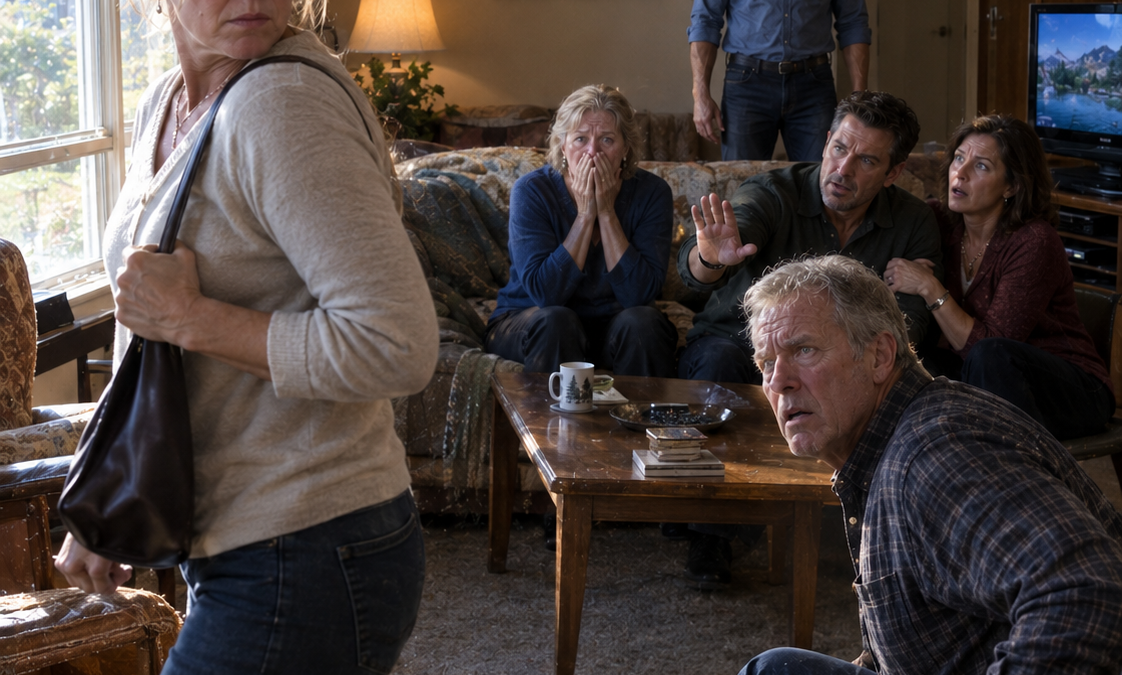
“The phone rang at 4:47 in the morning. I know the time because I was already awake. I’d been awake for twenty minutes, lying still in the dark, listening to the wind push against the windows of my cabin.”
They thought cutting me out would make me disappear — instead, it revealed exactly who I was and what I’d done, and now they’re the ones who have to live with what they lost.
I know the time because I was already awake. I’d been awake for twenty minutes, lying still in the dark, listening to the wind push against the windows of my cabin. Old habit. The body learns to wake before the alarm. Twenty-two years in the Army, most of it in the 75th Ranger Regiment, and the internal clock never really shut off. It just learned to wait.
The phone buzzed again on the nightstand. Unknown number. Local area code.
I picked it up on the third ring.
“Jack? Jack Calloway?”
The voice was old. Female. Familiar in a way I couldn’t immediately place.
“This is Jack.”
“Jack, it’s Doris Whitfield. From down the road. Your parents’ neighbor.”
Doris Whitfield. Sixty-something. Lived three houses down from my parents in Ashland. She’d brought over a casserole once when my mother had her hip replaced. That was maybe eight years ago.
“What’s wrong, Doris?”
A pause. The kind of pause that means the person on the other end is deciding how much to say.
“It’s your father, Jack. He’s at St. Mary’s. They brought him in two days ago. His heart.”
I sat up. The sheets pooled around my waist. The cabin was cold — I kept the heat low at night — and the air hit my bare shoulders like a slap.
“Two days ago.”
“Yes. I saw your mother at the grocery store this morning. She looked terrible. I asked her if someone had called you and she said—” Doris stopped.
“She said what.”
“She said you wouldn’t care.”
I let that sit.
“Which room is he in?”
“Four-twelve. The cardiac wing.”
“Thank you, Doris.”
“Jack, I hope I didn’t overstep. I just thought you should know. Family should know.”
“You did the right thing. Thank you.”
I hung up and sat in the dark for another minute. Then I got dressed.
What Doris didn’t know — what nobody in my family had bothered to tell me — was that I had been cut out of every family conversation for two years. No group chat. No updates. No birthday calls. No Thanksgiving invitations. Nothing. My parents’ health, my sister’s job, my nephew’s graduation — all of it had been happening without me, and I had been letting it happen, because I thought I was giving them space.
I was fifty-three years old. Former Sergeant First Class, 75th Ranger Regiment, 2nd Battalion. Three deployments to Iraq, two to Afghanistan. A Silver Star I never talked about. A knee that clicked when it rained. A daughter who lived in Portland and called me every Sunday.
And I hadn’t known my father was in the hospital.
That was the part that stuck.
I drove the two hours from my cabin outside Medford to Ashland in a little under ninety minutes. The Rogue Valley was gray that morning, low clouds hanging over the hills like wet wool. I kept the radio off. I kept my hands at ten and two and my eyes on the road and I didn’t let myself think about anything except getting there.
The thinking could wait. That was something the Army taught me. You don’t process in the middle of a mission. You process after. You get to the objective, you do what needs doing, and then you sit down somewhere quiet and let it hit you.
St. Mary’s was a small hospital. Four floors. Brick facade. The parking lot was half empty at that hour. I parked in the visitor section and walked through the automatic doors into fluorescent light and the smell of antiseptic.
The woman at the front desk was young. Maybe twenty-five. She had a name tag that said BRENDA and a phone pressed to her ear. She held up one finger when I approached.
I waited.
She hung up and looked at me. “Can I help you?”
“James Calloway. Room four-twelve.”
Her fingers moved over the keyboard. She frowned.
“Are you family?”
“I’m his son.”
She looked at the screen, then back at me. Something shifted in her expression. Not suspicion exactly. Something closer to confusion.
“Let me call up to the floor. One moment.”
She picked up the phone again and turned slightly away from me, lowering her voice. I caught fragments. “There’s a man here… says he’s the son… no, I don’t see him on the list…”
The list.
I kept my face still.
She hung up and turned back to me with a practiced smile. “Someone will be right down.”
I nodded and stepped back from the desk. Found a chair in the waiting area. Sat down and folded my hands.
The waiting area was empty except for an older man in the corner reading a newspaper. A television mounted on the wall played a morning show with the sound off. I watched the closed captions scroll by without reading them.
Five minutes passed. Then ten.
Then the elevator doors opened and my sister walked out.
Karen was fifty-one. Two years younger than me. She’d been a pretty kid — blonde hair, quick laugh, everybody’s favorite. She’d grown into a woman who took care of herself. Good clothes. Good haircut. The kind of person who made everything look effortless.
She walked toward me with her arms crossed. Her face was tight.
“What are you doing here.”
Not a question. An accusation.
“Doris Whitfield called me.”
Her jaw tightened. “Of course she did.”
“How’s Dad?”
“He’s stable. They put in a stent yesterday.”
“Yesterday.”
“Yes.”
“And nobody called me.”
She looked at me like I’d asked her to solve a math problem in front of the class. “You’re here now, aren’t you?”
I stood up. Slowly. I’m six-one and I’ve kept myself in shape — not for vanity, but because the body remembers what it was built for, and I’ve never seen a reason to let it go. Karen took a half step back without meaning to.
“I’m here now,” I said. “That’s right.”
She recovered quickly. She always did. “Mom’s upstairs with him. She doesn’t need drama right now.”
“I’m not here for drama.”
“Then what are you here for?”
I looked at her for a long moment. My sister. The person who used to sneak into my room when we were kids and steal my comic books. The person who cried at my basic training graduation. The person who, two years ago, had stopped answering my calls and then stopped returning my texts and then, somehow, without a single conversation about it, had removed me from her life entirely.
“I’m here to see my father,” I said. “That’s all.”
She stared at me. Then she turned and walked back toward the elevator.
I followed.
Room 412 was a single. That surprised me — my parents weren’t rich. But maybe they’d upgraded. Or maybe someone had arranged it. Karen, probably. She was good at arranging things.
My father was in the bed by the window. He looked smaller than I remembered. That’s always the way, isn’t it? The man who loomed over your childhood, who taught you how to throw a football and how to change a tire and how to look a man in the eye when you shook his hand — and then one day he’s eighty-two and he’s got tubes in his arm and his skin looks like paper.
My mother sat in a chair beside him. She was holding his hand.
She looked up when I walked in.
For a second — just a second — her face opened. Something flickered there. Relief. Or maybe just surprise. Then it closed again, like a door pulled shut against the cold.
“Jack.”
“Mom.”
I crossed the room. My father’s eyes were closed, but his chest was rising and falling steadily. The monitor beeped in a slow, regular rhythm.
“The doctor says he’ll be fine,” my mother said. “They caught it in time.”
“That’s good.”
Silence.
Karen stood by the door with her arms still crossed. My mother looked at me like she was waiting for something. An apology. An explanation. An accusation. I wasn’t sure which.
“Nobody called me,” I said. Calm. Even. The way I’d been trained to speak when everything around me was on fire.
My mother’s chin lifted. “You made it clear you didn’t want to be part of this family.”
I let that land. Didn’t react. Didn’t argue.
“I never said that.”
“You didn’t have to.”
My father stirred. His eyes opened slowly, unfocused, then found me.
“Jack.”
His voice was thin. But he smiled. A real smile. The kind that crinkles the eyes.
“Hey, Dad.”
“You came.”
“Of course I came.”
He reached out with his free hand. I took it. His grip was weak, but it was there.
“Good boy,” he said. “Good boy.”
My mother let go of his other hand and stood up. She walked to the window and stood with her back to me, looking out at the parking lot.
Karen hadn’t moved from the door.
I stayed for an hour. I sat with my father and talked about nothing — the weather, the drive, the way the hills looked with the fog on them. He drifted in and out. Every time he woke up, he seemed surprised to see me, and then happy, and then he’d drift off again.
At some point my mother left the room. Karen followed her.
I sat alone with my father and listened to the monitor beep.
What they didn’t know — what none of them had ever bothered to find out — was what I had done for the twenty-two years I wore the uniform. They knew I was in the Army. They knew I’d deployed. They knew I’d come home.
They didn’t know about the night in Ramadi when I’d carried a wounded team leader two miles through hostile streets with a broken collarbone and a round still lodged in my plate carrier. They didn’t know about the Silver Star I’d been awarded for it, or the way I’d never told anyone in my family because I didn’t want them to worry.
They didn’t know about the three Rangers I’d pulled out of a burning vehicle in Kandahar, or the way I still woke up some nights with the smell of diesel in my nose.
They didn’t know that the quiet man who lived alone in a cabin outside Medford, who did his own repairs and kept to himself and drove a ten-year-old truck, was someone who had led men into places most people couldn’t find on a map.
They thought I was a failure. That was the thing. I’d figured it out over the years, piece by piece, from things my mother said and things my sister implied and things my father never said but clearly felt.
They thought I’d wasted my life.
Karen had gone to college. Got a degree in marketing. Married a man who owned a chain of car dealerships. They lived in a big house in Bend and took vacations in Hawaii and sent their kids to private school.
My parents had always measured success in those terms. Money. Status. The visible markers of a life well-lived.
I had a pension and a cabin and a truck. That didn’t measure up.
The last time I’d seen them all together was two years ago. Christmas. I’d driven up to Ashland with a gift for my parents and a bottle of wine for Karen and her husband. I’d sat at the table and listened to them talk about the dealership’s quarterly numbers and the new boat they were buying and the trip to Italy they were planning.
And then Karen had asked me — in front of everyone — what I was doing with myself these days.
“Living quietly,” I’d said.
“Must be nice,” she’d said. “Not everyone can afford to just… do nothing.”
I’d looked at her. I’d looked at my parents. They hadn’t said anything. They’d just sat there, waiting for me to answer.
So I’d told them the truth.
I’d told them about the nightmares. About the way loud noises still made me flinch. About the fact that I’d spent the last twenty years carrying things that I couldn’t put down, and that living quietly wasn’t a luxury — it was a necessity. It was how I stayed functional.
I’d told them that I’d seen things that would break most people, and that I’d done things that I would carry to my grave, and that I didn’t need anyone’s pity or anyone’s judgment.
I’d told them the truth.
And they’d looked at me like I was speaking a foreign language.
Karen had laughed. Actually laughed. “Jesus, Jack. Nobody asked for the trauma dump.”
My father had looked away.
My mother had changed the subject.
That was the last time I’d been in the same room with all of them. Two years ago. Christmas dinner.
I’d left early. Drove home in the dark. Didn’t hear from any of them after that. Not on my birthday. Not at Christmas. Not when I’d had my knee replaced the following spring.
I’d called. Left messages. Sent texts. Got nothing back.
Eventually, I’d stopped trying.
What I hadn’t known — what I wouldn’t find out for another three weeks — was that Karen had removed me from the family group chat that same night. Christmas night. While I was driving home. She’d gone into her phone and deleted me from the chat and told everyone it was because I’d made a scene and upset Mom and Dad.
And then, over the next two years, she’d made sure I stayed gone.
I left the hospital around nine that morning. I’d told my mother I’d be back in the afternoon. She’d nodded without looking at me.
Karen walked me to the elevator. She didn’t speak until we were alone in the hallway.
“I don’t know why you came.”
“Because Dad’s in the hospital.”
“You haven’t been around for two years.”
“You know why.”
She looked at me. Hard. “Do I?”
“You tell me.”
She crossed her arms again. That gesture. She’d been doing it since we were kids. It meant she was about to say something she knew was wrong and didn’t want to be challenged on.
“You made it clear you didn’t want anything to do with us,” she said. “That thing at Christmas. The way you talked to everyone. You made Mom cry.”
“I made Mom cry.”
“Yes.”
I let that sit. I didn’t argue. That was another thing the Army taught me. You don’t argue with the enemy’s version of events. You just keep your eyes open and wait for them to make a mistake.
“Okay,” I said.
“Okay?”
“Okay. I’ll see you this afternoon.”
The elevator doors opened. I stepped in and turned around. Karen was standing in the hallway with her arms crossed, watching me.
The doors closed.
I sat in my truck in the parking lot for twenty minutes before I started the engine.
I wasn’t angry. That was the thing. Anger was a luxury. I’d learned that a long time ago, in a place where getting angry meant getting dead.
What I felt was something colder. Clearer. Like a scope settling on a target.
Something was wrong.
Not just the estrangement — that had been building for years. Something specific. Something recent.
Karen had lied to me. Maybe not about everything. But about something. The way she’d reacted when I’d shown up — the surprise, the quick defensiveness — that wasn’t the reaction of someone who genuinely believed I’d cut myself off. That was the reaction of someone who’d been caught.
I didn’t know what she’d done. Not yet.
But I knew how to find out.
I started the truck and drove home.
PART 2 — THE QUIET NETWORK
I got home around noon.
The cabin sat on three acres of timber and scrub oak, set back from the county road by a quarter mile of gravel driveway. I’d bought it ten years ago with money I’d saved from deployments — combat pay adds up when you don’t have anywhere to spend it. The place needed work when I got it. Leaky roof. Bad wiring. A well that produced rust-colored water for the first month.
I’d fixed all of it myself. That was part of the appeal. Something to do with my hands. Something that didn’t require me to think about anything except the task in front of me.
I parked the truck and went inside. The cabin was cold — I’d left the heat low — and I stood in the kitchen for a minute, letting the quiet settle around me.
Then I made coffee and sat down at the table with my phone.
First call: my daughter.
Maya answered on the second ring.
“Dad. Hey.”
“Hey, kiddo.”
“You sound tired.”
“I am.”
A pause. Maya was thirty-one. She lived in Portland with her husband and their two-year-old son. She called me every Sunday, and sometimes in between, and she never asked me to explain myself. She just listened.
“Something’s wrong,” she said.
“My dad’s in the hospital. He had a heart attack. They put a stent in.”
“Oh, Dad. Is he okay?”
“He’s stable. I went to see him this morning.”
“That’s good. Right?”
I didn’t answer right away.
“Dad.”
“Nobody called me, Maya. He was in the hospital for two days before I found out. Doris Whitfield from down the road called me. My own family didn’t.”
Silence on the other end.
“Your aunt Karen,” Maya said. Flat.
“Yeah.”
“I never liked her.”
I laughed. Just a short one. “You’ve met her twice.”
“I know. But I never liked her.”
I took a sip of coffee.
“Are you okay?” she asked.
“I’m fine. I’m just… figuring some things out.”
“Like what?”
“Like why my sister cut me out of the family and told everyone it was my idea.”
Another pause. Then: “Do you want me to come down?”
“No. Stay with your family. I’ll call you in a few days.”
“Promise?”
“Promise.”
We hung up. I sat at the table and finished my coffee. Then I opened my laptop.
I’d never been much for social media. I had a Facebook account I barely used and a LinkedIn profile I’d set up years ago and forgotten about. But I knew how to find things. The Army had trained me in more than just shooting.
Actually, that wasn’t true. The Army had trained me to shoot. What I’d learned about information gathering — about finding patterns, following paper trails, reading people — that had come from somewhere else. From the men I’d served with. From the missions where the objective wasn’t a building or a person but a piece of knowledge.
I opened a browser and started with the basics.
My sister’s Facebook was public. She posted regularly — pictures of her kids, updates about her husband’s business, the occasional political rant. I scrolled through two years of posts in about twenty minutes.
Nothing about me. That wasn’t surprising.
But something else was off.
I’d been removed from the family group chat. That much I’d figured out. But according to Karen’s posts, there had been family gatherings — a lot of them. Birthday parties. Holidays. A trip to the coast. My parents’ fiftieth anniversary party.
I hadn’t been invited to any of them.
Not a single one.
I sat back in my chair and stared at the screen.
For two years, I’d assumed my family had just… drifted. That the distance was mutual. That they were busy with their own lives and I was busy with mine, and that was okay.
But that wasn’t what had happened. They’d been gathering. Regularly. And I’d been excluded from every single one.
Someone had made a decision. Someone had drawn a line.
And I was pretty sure I knew who.
I closed my laptop and went for a run.
Four miles through the hills. My knee complained for the first half mile, then settled into its usual ache. The sun was out by then, burning off the morning fog. The air smelled like pine and wet earth.
I ran the same route I’d run a thousand times. Past the old barn. Past the creek. Up the hill to the ridge that looked out over the valley.
I ran until my lungs burned and my legs ached and my head was clear.
Then I went home and called an old friend.
Terry Vaughn had been my team leader in 2nd Battalion. He’d gotten out two years before I did, moved to Arizona, started a consulting business. Corporate security. Threat assessment. The kind of work that paid well and didn’t require him to carry a rifle.
He answered on the first ring.
“Jack. You old bastard. How the hell are you?”
“I need a favor.”
A pause. Terry knew me well enough to know I didn’t call for favors unless something was wrong.
“What kind of favor?”
“I need someone who can pull phone records. Legally.”
“Legally.”
“As legal as it gets.”
Terry laughed. “You’re asking me if I know a guy.”
“I’m asking if you know a guy who knows a guy.”
“That depends on what you need.”
I told him. Not everything — just enough. That I’d been cut out of my family’s communications and I needed to know who had done it and why.
Terry was quiet for a moment.
“I know a guy,” he said. “Former NSA. He does private work now. Not cheap.”
“How much?”
“Two grand. Maybe three.”
“Do it.”
“You sure you want to go down this road, Jack?”
I thought about my father in that hospital bed. About the way he’d said my name. About the way my mother had looked at me like I was a stranger.
“I’m sure.”
“I’ll make the call.”
I spent the rest of the afternoon doing something I rarely did: I went through old messages.
Texts. Voicemails. The handful of emails I’d sent over the past two years. I read every single one.
The texts were the worst. Short, hopeful messages, sent into silence.
Hey Karen, just checking in. How are the kids?
Mom, I tried to call. Give me a ring when you get a chance.
Merry Christmas. Thinking about you all.
Dad, hope you’re doing okay. Give me a call.
No responses. Not one.
I’d told myself they were busy. I’d told myself I’d done something wrong at that Christmas dinner and they needed time. I’d told myself to be patient, to give them space, to let them come around.
Two years of patience. Two years of silence.
And now I knew: it hadn’t been patience. It had been exile.
I sat in my kitchen with my phone in my hand and felt something hard settle in my chest.
Not anger. Something colder.
The thing I’d learned in Iraq — the thing that had kept me alive — was this: you don’t react to the enemy’s first move. You let them show you their hand. You wait for the mistake.
Karen had made a mistake. I just didn’t know what it was yet.
That night, my mother called.
I was surprised, to be honest. I’d assumed she’d go back to ignoring me the way she had for two years. But the phone rang at 8:47 and her name came up on the screen.
“Jack.”
“Hi, Mom.”
“Your father is asking for you.”
I didn’t say anything for a second. I was standing in the kitchen, looking out the window at the dark yard.
“He wants you to come back tomorrow.”
“Okay.”
“And Jack—”
She stopped.
“Yeah?”
“Nothing. Just… drive safe.”
She hung up before I could respond.
I stood there for a minute, listening to the dial tone. Then I went to bed.
The next morning, I drove back to Ashland.
I stopped at a gas station on the way and bought a cup of coffee and a newspaper I didn’t read. The routine helped. The normalcy. A man filling his tank. A man drinking coffee. A man doing what men do.
I got to the hospital at nine. My father was awake this time.
“Jack.” His voice was stronger than yesterday. “You came back.”
“I said I would.”
He smiled. That same crinkly-eyed smile. He reached for my hand and I gave it to him.
“Your mother tells me you’re living in the woods.”
“I am.”
“Like a hermit.”
“Something like that.”
He laughed, then winced. “Don’t make me laugh. It hurts.”
“Sorry.”
He settled back against the pillow and studied me. His eyes were the same as I remembered — sharp, blue, steady. They’d always been able to see through me when I was a kid.
“You look good,” he said. “Older. But good.”
“You too.”
“Liar.” He chuckled, then winced again. “I look like hell.”
“You’ve looked worse.”
He nodded slowly. “That’s true.”
We sat in silence for a minute. The monitor beeped. The window showed gray sky and parking lot.
Then my father said, “I’m sorry, Jack.”
“For what?”
“For letting it happen.”
I didn’t ask what he meant. I knew.
“It wasn’t you,” I said.
“It was all of us.” He closed his eyes. “We didn’t know what to do with you. After you came home that Christmas. The things you said. We didn’t know how to… hold it.”
“Holding it wasn’t the job.”
“What was the job?”
I thought about it. “Listening. That would have been enough.”
He opened his eyes and looked at me. “I’m listening now.”
“For how long?”
He didn’t answer. He didn’t have to.
My mother came in at ten. She looked at us — at my hand in my father’s — and her face did something complicated. Then she sat down in the chair by the window and folded her hands in her lap.
“Karen’s coming later,” she said.
“Okay.”
“She’s bringing the kids.”
“That’s good. Dad should see them.”
My mother nodded. She looked at me like she wanted to say something else, but she didn’t.
I stayed until noon. Then I told my father I’d be back tomorrow and I left.
The parking lot was busy when I walked out. Cars coming in, cars going out. A woman helping an old man into a wheelchair. A nurse on a smoke break, standing by the edge of the lot with her arms crossed.
I was almost to my truck when my phone buzzed.
A text. From a number I didn’t recognize.
Jack, this is Doris. I don’t want to bother you but I thought you should see something. Your sister posted this on the family chat. She didn’t mean to send it to me. I don’t think.
I stopped in the middle of the parking lot.
A second message came in. A screenshot.
I opened it.
The screenshot was from a group chat. The group chat I’d been removed from. There were a bunch of names at the top — Mom, Dad, Karen, Rick (Karen’s husband), Emily (Karen’s daughter), Sarah (Karen’s other daughter), Uncle Jim, Aunt Paula.
And a message from Karen. Timestamped the night before.
Just wanted to update everyone: Dad’s doing better. Jack showed up yesterday. Didn’t tell anyone he was coming. Typical. Mom’s upset but won’t admit it. I’ll handle it. He won’t stick around. He never does.
I stared at the screen for a long time.
Then I scrolled down.
The next message was from my mother.
I wish he would have told us he was coming. I would have prepared. But he looked good. He looked strong.
And then Karen again.
He’s not strong, Mom. He’s broken. That’s the whole problem. He’s been broken for years. The sooner you accept that, the easier it’ll be.
I read it three times.
Then I put the phone in my pocket and got in my truck.
I sat behind the wheel and looked at the hospital. Four floors. Brick facade. My father in a bed on the fourth floor, waiting for me to come back tomorrow.
He’s broken.
I started the engine.
PART 3 — THE PAPER TRAIL
I didn’t go home.
I drove north instead, past the Medford exit, past the Rogue Valley Mall, past the strip malls and the gas stations and the big-box stores that lined the highway. I drove until the valley narrowed and the pines closed in and there was nothing but two lanes of asphalt and the occasional logging truck.
I pulled off at a rest area around two o’clock. Empty parking lot. A single picnic table under a Douglas fir. I sat on the table and looked at the trees and let myself think.
He’s broken.
Karen had said it like it was a diagnosis. Like she’d examined me and come to a clinical conclusion. Broken. Not struggling. Not hurting. Not changed by things no one should have to see. Just broken. A thing that needed to be fixed or thrown away.
I thought about the men I’d served with. Gonzalez, who’d lost his leg to an IED and came back to run a marathon three years later. Miller, who’d watched his best friend die in his arms and still showed up every day. Stevens, who’d never talked about what happened in Fallujah but who volunteered at a veterans’ shelter every weekend.
Were they broken too? Was that the word for it?
Maybe. Maybe that was the word for all of us. Maybe broken was just what happened when you lived through things that shouldn’t be livable. Maybe the trick wasn’t not being broken. Maybe the trick was keeping the pieces together and moving anyway.
I sat on that picnic table for a long time.
Then I took out my phone and texted Terry.
How soon can your guy get me those records?
He replied in under a minute.
Two days. Maybe three. He needs the numbers.
I sent him Karen’s number and my mother’s number and my father’s landline. Then I put the phone away and drove home.
The next morning, I went back to the hospital.
My father was awake and alert. His color was better. The doctor had been in and said he might go home by the end of the week.
“You look tired,” he said.
“I didn’t sleep well.”
“Bad dreams?”
I looked at him. He was the first person in my family who’d ever asked that question.
“Something like that.”
He nodded slowly. “I used to have them. After Korea. But that was a different war.”
“You were in Korea?”
“Army. Third Infantry Division. I was eighteen years old.” He smiled faintly. “I never talked about it. Your mother didn’t like it.”
“Why not?”
He looked out the window. “Because it made her sad. And because I wasn’t very good at talking about it. So I stopped.”
I understood that. I understood it more than I could say.
“Dad—”
“Jack.”
“I need to ask you something.”
He turned back to me. His eyes were steady.
“Go ahead.”
“Why didn’t anyone call me? When you went into the hospital. Why didn’t anyone tell me?”
He was quiet for a long moment. Then he sighed.
“Karen said she’d handle it.”
“Handle what?”
“The calls. The updates. She said she’d take care of everything and we didn’t need to worry.” He paused. “She said you’d made it clear you didn’t want to be involved.”
“I never said that.”
“I know that now.”
I looked at him. “When did you know?”
He didn’t answer right away. His hand found mine and squeezed.
“When I woke up yesterday morning and saw you standing there,” he said. “That’s when I knew.”
My mother came in at eleven. Karen came at noon.
She walked in with a bag of sandwiches and a smile that didn’t reach her eyes.
“Dad. You look so much better.”
“I feel better.”
She set the sandwiches on the side table and looked at me. “Jack. Still here?”
“Still here.”
“Must be nice. No job to get back to.”
I didn’t react. That was the point. She wanted me to flinch, to get defensive, to prove her right. I just looked at her the way I’d looked at a hundred people who’d tried to get under my skin in worse places than this.
“Karen,” my father said. His voice was mild but there was a warning in it.
“What? I’m just making conversation.”
“Then make different conversation.”
She blinked. I don’t think she’d ever heard him correct her before.
“I brought you a turkey club,” she said. “Your favorite.”
“I’m not hungry.”
“You need to eat.”
“I’ll eat when I’m hungry.”
She stood there with the sandwich in her hand, looking uncertain for the first time since I’d seen her at the hospital.
I stood up. “I’m going to get some air.”
I walked out into the hallway and stood by the window at the end of the corridor. Below, the parking lot was still full. People coming and going. Lives intersecting briefly in this place of fluorescent light and beeping machines.
The door opened behind me. I didn’t turn around.
“Jack.”
It was my mother. Her footsteps came closer, then stopped.
“I know what you saw.”
I turned. She was holding her phone. Her face was pale.
“Doris sent it to you,” she said. “She called me this morning. She wanted me to know that she’d sent you the screenshot. She thought you should know the truth.”
“The truth.”
My mother looked at the floor. “Karen said those things. She said worse things too. Things I didn’t want to believe.”
“Why didn’t you tell me?”
She lifted her head. Her eyes were wet.
“Because I didn’t know how to fix it. Because I was afraid. Because—” She stopped. Took a breath. “Because I let it happen and I didn’t stop it.”
I didn’t say anything.
“Your father and I. We didn’t know what to do with you. When you came home that Christmas. The things you said about what you’d seen. We didn’t know how to hold it. So we did nothing. And Karen took that as permission.”
“Permission for what?”
“To push you out.” She wiped her eyes with the back of her hand. “She told us you didn’t want to be part of the family. She said you’d said so. And we believed her because it was easier than admitting we’d failed you.”
I let that sit.
“I’m sorry,” she said. “I’m so sorry, Jack.”
I looked at her for a long moment.
“You know what the Army taught me?” I said. “It taught me that you don’t get to choose your mission. You get to choose how you execute it. You could have called me. You could have asked me. You could have done any number of things that would have been the right thing to do. Instead you did nothing. And that’s a choice too.”
She didn’t say anything.
“I’m not angry,” I said. “I’m just telling you what’s true.”
I walked past her and went back to my father’s room.
The third day, my father came home.
I helped him into the car — a silver sedan my parents had bought five years ago and barely driven. My mother drove. I followed in my truck.
Their house was on a quiet street on the north side of Ashland. Single story. Beige siding. A small yard that my father had once kept meticulously and now showed the signs of neglect. He hadn’t been able to get outside much this year.
I parked on the street and got out. By the time I reached the front door, my mother had already helped him inside and into his chair.
“You don’t have to stay,” he said.
“I’ll stay for a while.”
He nodded. He looked tired but content. He was home.
I sat with him in the living room. My mother brought us coffee. The television played a daytime game show with the volume low. It was almost normal. Almost like the years of silence hadn’t happened.
But they had. And I still had questions.
“Dad, I need to ask you something else.”
He looked at me. “Go ahead.”
“Two years ago. After Christmas. Karen said I made a scene. She said I made Mom cry. Do you remember it that way?”
He was quiet for a moment. Then he shook his head.
“I remember you told us the truth,” he said. “I remember you said things you’d never said before. I remember your mother got upset because she didn’t know what to say. But you didn’t make a scene. You just left.”
“Karen said I made a scene.”
“Karen said a lot of things.” He sighed. “I don’t think she meant them to be lies. Not at first. I think she wanted to protect us from something she didn’t understand. But the longer it went on, the harder it was to admit what she’d done.”
“What did she do?”
He looked at me. “She deleted you from the family chat. That same night. She told us you’d asked her to. She said you wanted space.”
I sat back in my chair.
“And you believed her.”
“I wanted to believe her. That’s different.” He looked at the window. “I’ve spent two years wanting to believe something that wasn’t true. I think that’s what regret feels like.”
The next day, Terry called.
“Got the records.”
“Already?”
“My guy works fast. Also, your sister’s phone carrier is apparently not very careful with their data.” He laughed. “You want the summary?”
“Give it to me.”
“It’s all there. Two years of messages. The family chat records. Private messages between your sister and your mother. Private messages between your sister and your father. And some stuff between your sister and your brother-in-law.”
“She sent messages from my parents’ phones?”
“No. She was sending messages about your parents. But here’s the thing, Jack. She wasn’t just cutting you out. She was rewriting history. Telling your parents you’d said things you never said. Telling them you’d called them names. Telling them you’d threatened to cut them out first.”
I let that sink in.
“How bad is it?”
“Bad. There’s a message from about a year and a half ago where she tells your mother that you told her you were glad Dad had health problems because it meant he couldn’t visit you anymore.”
“I never said that.”
“I know you didn’t. It’s in writing, Jack. She just made it up and put it in the chat like it was a direct quote.”
I closed my eyes.
“There’s more,” Terry said. “The messages get worse over time. At some point she starts talking about your pension. About the fact that you have one and your parents don’t. She calls you ‘the leech.’ She says if your parents keep the house in the family, you’ll probably try to take it.”
“Why would I want their house?”
“She doesn’t think you do. She just needs a reason to keep you away.” He paused. “She’s been building a case against you for two years. Making sure everyone in the family believed it.”
I sat in my kitchen with the phone to my ear and looked out the window at the gray sky.
“Thanks, Terry.”
“You want me to send you the files?”
“Yeah. Send me everything.”
“I’m going to say this because I’m your friend. Are you sure you want to see all of it?”
“I’m sure.”
The files arrived that evening.
I opened my laptop and sat at the kitchen table and read. For three hours, I read. Every message. Every lie. Every carefully constructed narrative designed to make me look like a monster.
Karen had been thorough. She’d started small — little comments that cast me in a bad light. Then she’d escalated. By the six-month mark, she was telling my parents I’d stopped calling them, that I’d blocked their numbers, that I’d told her I didn’t care about them anymore.
By the one-year mark, she’d convinced my mother that I’d never wanted to be part of the family in the first place.
By the eighteen-month mark, she’d started talking about the will.
I found that message around ten o’clock.
Mom, I know this is hard to talk about, but I’ve been thinking. Dad’s health isn’t great. If something happens, we need to make sure the house stays in the family. Jack has money from the Army. He doesn’t need anything. But if we’re not careful, he might try to claim something. I’m just saying we should be prepared.
My mother had replied: Jack wouldn’t do that.
Karen: You don’t know what he’d do. He’s not the same person. You said so yourself.
My mother: I didn’t say that.
Karen: You said he was different. That’s the same thing.
I closed the laptop.
I sat in the dark for a long time.
Then I opened it again and sent an email. To my mother. To my father. To Karen. To everyone in that group chat I’d been removed from.
Subject: A few things I think you should see.
I attached the files.
And then I sent it.
PART 4 — THE FALLOUT
I didn’t sleep that night.
I sat in the kitchen with the lights off and listened to the wind. Around midnight it started to rain. Around one, the rain turned to sleet. By two, there was nothing but the sound of ice hitting the window and my own breathing.
I checked my phone at three. No replies.
At four, I made coffee.
At five, I went outside and stood on the porch. The sleet had stopped. The world was gray and wet and quiet. I watched the sun come up over the ridge and thought about what would happen next.
At six-thirty, my phone buzzed.
My mother.
Jack. I don’t know what to say.
I didn’t reply. Not yet. I waited.
At seven-fifteen, my father’s number. He didn’t text. He called.
“Jack.”
“Hi, Dad.”
A long pause. I could hear him breathing.
“I read it all,” he said. “Your mother and I. We sat up all night and we read every word.”
“Okay.”
“I don’t have words.” His voice cracked. “I don’t have words for what my daughter did. What we let her do.”
“You didn’t know.”
“That’s not an excuse.”
“No,” I said. “It isn’t.”
Another pause. I heard my mother’s voice in the background, saying something I couldn’t make out.
“Karen called,” my father said. “Around midnight. She was… she was angry. She said you’d stolen private information. She said you’d broken the law.”
“Maybe.”
“Jack—”
“I didn’t break any laws, Dad. I hired someone to pull records that my sister was using to lie to you. That’s not a crime. What she did — what she did is what I’m looking at.”
“She’s our daughter.”
“I know.”
“She’s your sister.”
“I know that too.”
Silence on the line.
“I’m not asking you to choose,” I said. “I’m not asking for anything. I sent those files because I thought you deserved to know the truth. What you do with it is up to you.”
“Jack—”
“I have to go, Dad. I’ll call you later.”
I hung up before he could say anything else.
The messages started coming in around nine.
My sister’s children first. Emily, the older one, twenty-three, living in Seattle. She sent a single text: Uncle Jack, I had no idea. I’m so sorry.
Then Sarah, twenty, still at home. She didn’t text. She called.
“Uncle Jack?”
“Hi, Sarah.”
“I read everything.” Her voice was shaky. “I can’t believe my mom did that.”
“Neither could I.”
“Why didn’t you tell us?”
“I tried. For two years I tried. Nobody answered.”
I heard her crying on the other end.
“I’m sorry,” she said. “I’m so sorry.”
“You didn’t do anything, kiddo.”
“I believed her. She said you didn’t want to talk to us. She said you were—” She stopped.
“Go ahead.”
“She said you were sick. Like, in the head. She said you had problems from the Army and it made you act different.”
I closed my eyes.
“Sarah.”
“Yeah?”
“I’m not sick. I have some things I carry. Everybody does. But I’m not sick.”
“I know. I know that now.”
We talked for a few more minutes. She asked if she could come see me sometime. I said yes. I meant it.
Around noon, the first reporter called.
Not a reporter exactly. A woman who said she worked for a veterans’ advocacy blog. She’d heard from a source that a family in southern Oregon had a “situation” involving an Army veteran and a family rift, and she wanted to know if I had any comment.
“I don’t know what you’re talking about.”
“Your sister Karen Calloway? She posted something on social media this morning.”
“She did?”
“She said her brother was spreading false information about her family. She said you’d hacked her phone and were trying to destroy her.”
I was quiet for a second.
“She said that publicly.”
“Yes.”
“Can you send me a link?”
She did.
I opened the link on my laptop. Karen’s Facebook page. A post she’d made around nine that morning.
I want to address something that’s been happening. My brother Jack has been out of touch with our family for years. He has a lot of problems that he’s never dealt with. This week he showed up unannounced and started making accusations against me and my family. He’s been spreading private messages out of context. I want to be clear: my parents are elderly and vulnerable, and I’m doing everything I can to protect them. If you see Jack Calloway, please know that what he’s saying is not the full truth. Please respect our family’s privacy.
I read it twice.
Then I closed the laptop and went outside.
The post had twenty-three comments by that evening. Mostly supportive. A few curious. A couple from people who knew me from high school asking what had happened.
Karen replied to one of them. He was always like this. Even back then.
I didn’t respond. I didn’t post anything. I didn’t defend myself. I just sat with it.
The Army taught me something else: you don’t fight the enemy’s battle. You let them overextend. You let them make the mistake.
Karen had just made a big one. She’d taken something private and made it public. She’d accused me of hacking her phone — a criminal accusation. She’d painted herself as a victim in a story where she was the one who’d done the damage.
I didn’t need to respond. I had the receipts.
But I wasn’t going to use them. Not yet.
Two days later, I drove back to Ashland.
My father was sitting in the living room when I arrived. My mother was in the kitchen. They both looked tired.
“Jack.”
“Hi, Dad.”
“Sit down.”
I sat.
“We talked to Karen,” he said. “Yesterday. On the phone.”
“How did it go?”
“Badly.” He looked at his hands. “She said you’d forced her to do it. She said you’d been hostile for years and she was just protecting us. She said the messages were taken out of context. She said—” He stopped.
“Go ahead.”
“She said you were jealous. That you’d always been jealous of her success. And that’s why you were doing this now.”
“Do you believe her?”
He looked at me. His eyes were tired but clear.
“No.”
“Does Mom?”
He was quiet.
“That’s the real question,” I said.
He nodded. “Yes. It is.”
My mother came out of the kitchen and sat in a chair across from me. She held a mug in both hands and looked at me like she was seeing me for the first time.
“I don’t know what to do,” she said. “You’re both my children.”
“I know.”
“I can’t just… cut her off. I can’t do that.”
“I’m not asking you to.”
“Then what do you want, Jack?”
I thought about it.
“I want you to stop letting her speak for me,” I said. “I want you to call me yourself when something happens. I want to be part of this family, not in the way she decides, but in the way you decide. If that’s too much to ask, then tell me. But don’t keep doing what you’ve been doing.”
She looked at me. Her hands were shaking slightly. She set the mug on the table.
“I can do that,” she said. “I can do that.”
“Okay.”
“Jack?”
“Yeah?”
“I’m sorry. I said it before, and I’ll say it again. I’m sorry.”
I nodded. I didn’t say it was okay. It wasn’t. But it was a start.
The news of what Karen had done spread. Not widely — this wasn’t a national story. But within the family, it moved fast.
Uncle Jim called. He was my father’s younger brother, seventy-two years old, retired from a career in construction management. We’d never been close, but he was family.
“Jack. I heard what happened.”
“Hi, Uncle Jim.”
“I want you to know I never believed any of it. The stuff Karen was saying about you. It never sat right with me. I told your mother that once, maybe a year ago. She said I didn’t understand the situation.”
“I appreciate that.”
“Your father asked me to come up this weekend. He wants to have a family dinner. He wants you to be there.”
“A dinner?”
“A sit-down. Just the family. He wants to talk this through.”
I was quiet for a second.
“Will Karen be there?”
“I don’t know. He hasn’t told me. But I think he’s going to make her come.”
“I’ll be there.”
The dinner was set for Saturday. I spent the intervening days preparing.
Not in any dramatic way. I wasn’t planning a confrontation. I was just trying to figure out what I was going to say and what I wasn’t. I wrote things down in a notebook. I crossed out the parts that came from anger and kept the parts that came from somewhere steadier.
I talked to Maya on the phone. She wanted to come up. I told her no — not this time. This was something I needed to do alone.
“Are you nervous?” she asked.
“No.”
“You should be.”
“Maybe.”
“Dad, you don’t have to do this. You don’t owe them anything.”
I thought about it.
“No,” I said. “But I want to. I want them to look at me. I want them to see me. That’s all.”
“That’s a lot.”
“I know.”
“Okay. Call me after.”
“I will.”
Saturday came.
I drove to my parents’ house in the late afternoon. The sky was clear for the first time in weeks. The road was dry. The trees were starting to bud.
I parked on the street and sat in the truck for a minute before getting out.
Then I walked up the path and knocked on the door.
My father opened it. He was using a cane now — a concession he’d resisted but finally accepted. He looked at me and nodded.
“You ready?”
“I’m ready.”
I followed him inside.
The living room was already full. My mother was in her chair. Uncle Jim was on the couch. Aunt Paula was next to him. Karen sat in an armchair by the window with her arms crossed.
She didn’t look at me when I walked in.
I found a chair against the wall and sat down.
The room was quiet.
Then my father spoke.
“Thank you all for coming.”
 [Tap here for the Next Part ]