“He’s my father. Not yours.” / “He’s the only father who ever treated me like a son.”
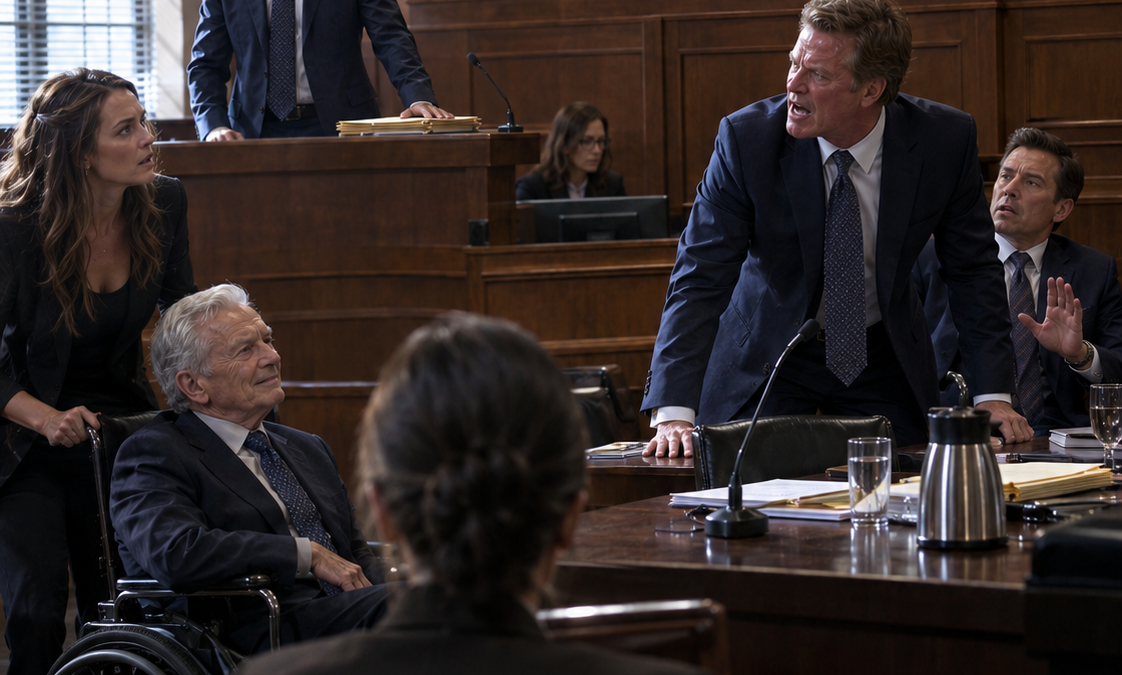
“The nursing home called me at 6:14 on a Tuesday morning. Not my wife. Not her brother. Me.”
They thought they could isolate an old man and profit from his decline → they didn’t count on the son-in-law who’d been showing up every Saturday for two years.
Not my wife. Not her brother. Me.
“Mr. Vance? This is Delia at Willow Creek Care Center. We need you to come in. It’s about Edward.”
I was already reaching for my boots.
“They tried to reach his son first,” she said. “We couldn’t get an answer.”
That figured. Roy hadn’t answered a call about his father in two years.
What they didn’t know — what none of them knew — was that I’d been the one answering for longer than that. Every Saturday. Every week. For two years running.
My name is Daniel Vance. I’m forty-seven years old. I was a Pararescueman in the United States Air Force for twenty-two years. PJ. That’s what we called ourselves. The ones who go in when everyone else is running out.
I’d jumped out of more aircraft than I could count. I’d pulled men off mountainsides and out of burning vehicles. I’d held pressure on wounds that should have killed people and talked to them in a calm voice while I did it. That was the job. Get there. Fix what’s broken. Bring them home.
When I met my wife Sarah, I was thirty-four and still on active duty. She was a paralegal from a family that had money going back three generations. The Ashfords. Her father, Edward, had built a regional insurance company from nothing and sold it for more than most people see in a lifetime. Her brother, Roy, had taken that money and turned it into a career of managing it — and managing everyone else’s expectations along with it.
They never quite knew what to do with me.
“A pararescueman,” Sarah’s mother Margaret had said at our first family dinner. She’d said it like she was trying the words on for size and finding they didn’t fit. “That’s… dangerous work.”
“It’s work that matters,” I’d said.
Roy had laughed. Not cruelly, exactly. Just… dismissively. “Matters to who? You’re basically a paramedic with a parachute, right?”
I’d let it go. I’d learned a long time ago that some people need to categorize you to feel safe. Roy needed me to be small. So I let him think I was small.
I retired from active duty at forty-two. Sarah and I moved back to her hometown so we could be closer to her parents. Her father was getting older. Someone needed to be around. Roy lived twenty minutes away, but Roy was always busy. Roy had meetings. Roy had deals. Roy had a life that didn’t include driving his father to doctor’s appointments.
I didn’t mind. I’d spent two decades doing things for people who never knew my name. Being there for Edward felt like the easiest mission I’d ever been given.
Edward Ashford was a good man. Quiet. Dry sense of humor. He’d never once made me feel like I wasn’t good enough for his daughter. When his wife Margaret died three years ago, he’d looked at me at the funeral and said, “You’re the only one who checks on me without wanting something, Daniel. I notice that.”
I noticed that he noticed.
When his memory started slipping, I was the one who took him to get tested. When the diagnosis came back — early-stage Alzheimer’s — I was the one who sat with him in the parking lot while he cried and asked me not to tell Roy yet. “He’ll use it against me,” Edward had said. “He’ll try to get power of attorney. He’ll put me somewhere and forget about me.”
I’d promised I wouldn’t let that happen.
But I hadn’t been able to keep that promise. Not entirely. Roy had gotten power of attorney anyway, through a lawyer Edward didn’t understand and a document he probably shouldn’t have signed. Within six months, Edward was in Willow Creek Care Center — a place that cost four thousand a month and was forty-five minutes from Roy’s house and ten minutes from mine.
Roy visited twice that first year. Four times the second year. Never stayed more than twenty minutes.
I came every Saturday. Sometimes Wednesdays too, if I could swing it. I brought him books he couldn’t read anymore and told him stories about the old missions I could talk about — the training accidents, the rescues that made the news, the ones that didn’t. He liked the one about the climber I’d pulled off Denali in a whiteout. He’d ask me to tell it again every few months, like it was new.
“He doesn’t remember you’re his son-in-law,” Delia told me once, gently. “He just knows you’re the man who comes.”
“That’s enough,” I said.
It was more than his actual son was doing.
Delia met me at the front desk when I walked in. Her face was tight. She was a small woman in her fifties with reading glasses on a chain and a way of looking at you that made you want to answer her questions honestly.
“He had a fall last night,” she said. “Around eleven. We found him on the floor in his room. He’d been there for a while, we think.”
“How long?”
“Maybe an hour. Maybe two. His call button was on the other side of the room.” She paused. “That’s not the only problem.”
I waited.
“His chart,” she said. “The medication log. There’s things in there that don’t add up. Times when meds were signed out but not administered. Notes that don’t match what we know about his condition.”
“Who has access to his chart?”
“Family. Medical staff. Anyone Roy authorized.”
I felt something cold settle in my chest. “Roy authorized someone besides himself?”
“He added a name about six months ago. A ‘care consultant.'” She made air quotes. “We’ve never met her. But she’s been signing off on decisions. Including the decision to lower his supervision level.”
I stared at her.
“Lower his supervision level,” I repeated.
“He used to be checked on every two hours. Now it’s every four. The change was requested and approved through the proper channels.” She looked at the floor. “I filed a complaint. Nothing happened.”
I took a breath. Held it. Let it out slow. That was an old habit — the kind that had kept me alive in situations where panicking would have killed me.
“Can I see him?”
“He’s awake. Confused, but awake.”
I walked down the hallway. The fluorescent lights hummed overhead. The smell of antiseptic and old carpet filled my nose. I’d been in hospitals and care facilities on four continents. The smell was always the same.
Edward was sitting up in bed when I walked in. His eyes were open but not focused. He looked smaller than he had the week before. That happened fast with Alzheimer’s. You’d see someone on Saturday and by the next Saturday they’d lost another piece of themselves.
“Edward,” I said. “It’s Daniel.”
He turned his head slowly. Blinked.
“Daniel,” he said. “You came.”
“Always do.”
“They put me on the floor,” he said. “I couldn’t get up. I called for someone but nobody came.”
I sat down in the chair beside his bed. The same chair I’d sat in every Saturday for two years.
“I’m here now,” I said. “I’m going to figure out what happened.”
He reached out and took my hand. His grip was weak but determined.
“You’re the only one,” he said. “You’re the only one who comes.”
I squeezed his hand back. Didn’t say anything. There wasn’t anything to say.
Roy showed up at 9:30 that morning.
I was still in Edward’s room when I heard him in the hallway. He had one of those voices that carried — loud, confident, used to being the most important person in any room he walked into.
“Where is he? Where’s my father?”
I stepped out into the hallway. Roy was standing at the nurses’ station, dressed in a suit that probably cost more than my monthly pension. His face was red. His hair was perfectly arranged. He looked like he’d come from a meeting, not from getting a call about his father falling in the middle of the night.
“Roy.”
He turned. His expression flickered — surprise, then irritation, then something he tried to hide.
“Daniel. What are you doing here?”
“Delia called me.”
“She called you? Why would she call you?”
“Because you didn’t answer.”
He waved that away. “I was in a meeting. I called back as soon as I saw the message.” He looked past me toward Edward’s room. “How is he?”
“He’s confused. He’s scared. He was on the floor for two hours before anyone found him.”
Roy’s jaw tightened. “That’s the facility’s problem. I’m going to have a conversation with the administrator about their staffing levels.”
“That’s one conversation you should have,” I said. “There’s another one you need to have about his chart.”
“What are you talking about?”
“Someone’s been signing off on decisions. Lowering his supervision level. Approving changes without ever setting foot in this building.”
Roy’s face did something complicated. “I don’t know what you’re talking about.”
“Delia says there’s a name on the authorized access list. A ‘care consultant.’ You added her six months ago.”
For a second — just a second — Roy looked caught. Then he recovered. He always recovered.
“That’s none of your business,” he said. “You’re not family. Not really. You’re just… married to my sister.”
I’d heard that before. I’d heard it at Thanksgiving dinners and Christmas parties and birthday celebrations. You’re not really family. Like being married to Sarah for thirteen years didn’t count. Like being there when Edward needed someone didn’t count.
I’d let it go every time. Because it wasn’t about me. It was about Sarah. It was about keeping the peace.
But this wasn’t about peace anymore. This was about Edward.
“I’m the one who’s been here every Saturday for two years,” I said. “I’m the one who takes him to his appointments. I’m the one who knows his doctors’ names and his medication schedule and what he likes to eat for breakfast. Where have you been, Roy?”
Roy’s face went red. “I’ve been managing his affairs. His finances. The things that actually matter.”
“His finances don’t matter if he’s dead.”
The words hung in the air between us. Roy stared at me. I stared back.
I’d been stared at by harder men than Roy Ashford. Men who wanted to kill me. Men who had killed people. Roy was a businessman who’d inherited his father’s success and convinced himself he’d earned it. He wasn’t scary.
What was scary was what he might do to Edward to protect what he thought was his.
“The nursing home called me,” I said. “Not you. Remember that.”
I turned and walked back into Edward’s room.
Behind me, I heard Roy say something to the nurse. I didn’t catch the words. But I caught the tone. He was angry. He was used to getting his way.
He was about to find out that I was used to things being harder than this.
That night, I sat in my garage and thought.
The garage was where I went when I needed to think. It was a small space — just big enough for my truck and a workbench — but it was mine. I had a coffee can full of old challenge coins on the shelf. A framed photo of my old team from the 48th Rescue Squadron. A shadow box with the medals I never talked about.
I’d been a PJ for twenty-two years. I’d done things that most people couldn’t imagine and wouldn’t want to. I’d saved lives. I’d lost people. I’d learned that the difference between a good outcome and a bad one was usually preparation and calm.
So I sat in my garage and I made a plan.
First: I needed to see Edward’s chart. All of it. Not just the parts the facility wanted to show me.
Second: I needed to find out who this “care consultant” was and what she’d been doing.
Third: I needed to talk to Sarah. She deserved to know what was happening with her father. She deserved to know what her brother was doing.
I’d been protecting Sarah from Roy for years. She knew her brother was difficult. She knew he was greedy. But she didn’t know how bad it had gotten. She didn’t know about the power of attorney or the medication logs or the fall.
I’d kept those things from her because I didn’t want to hurt her. Because I didn’t want to put her in the middle of a fight between me and her brother.
But keeping her in the dark wasn’t protection anymore. It was just… silence. And silence had never saved anyone.
I went inside. Sarah was in the kitchen, making tea. She looked up when I walked in.
“How is he?”
“He fell last night. He was on the floor for two hours.”
Her face went pale. “Oh my God.”
“He’s okay. Shaken up, but okay.”
“Why didn’t anyone call me?”
“They called me. Then they called Roy. Roy showed up at the facility while I was there.”
Sarah set down her tea. “What did he want?”
“He wanted to know why the nursing home called me instead of him. He wanted to make sure I knew I wasn’t family.”
Sarah’s jaw tightened. She knew that word. Family. She’d heard her brother use it like a weapon her whole life.
“What did you say?”
“I told him the truth. That I’ve been the one showing up. That I know more about your father’s care than he does.”
“And?”
“And I think there’s something wrong with the chart. Someone’s been making decisions without seeing him. Someone Roy authorized.”
Sarah was quiet for a long moment. Then she said, “What are you going to do?”
“I’m going to find out what’s happening. And I’m going to fix it.”
She looked at me — really looked at me. The way she had when we first met. Like she was seeing something she’d forgotten.
“You always do,” she said.
I kissed her forehead. “Get some sleep. I’ll be up in a while.”
I went back to the garage. I had calls to make.
The first call was to an old friend.
Mike Torres had been a PJ with me for fifteen years. He’d retired a few years before I did and gone into private security. He had contacts in law enforcement, in the VA, in all the places you needed contacts if you wanted to find out things people didn’t want you to know.
He answered on the second ring.
“Vance. It’s midnight.”
“I know. I need a favor.”
“Of course you do.” I heard him sit up. “What’s going on?”
“My father-in-law. He’s in a nursing home. I think someone’s been neglecting him. Maybe worse.”
“Worse how?”
“I don’t know yet. But there’s a name on his authorized access list that nobody’s ever met. A ‘care consultant.’ I need to find out who she is.”
“Give me the name.”
I gave him the name Delia had shown me on the chart. It sounded fake. It sounded like something Roy had made up to cover his tracks.
“I’ll see what I can find,” Mike said. “Give me a day.”
“Thanks.”
“Hey, Vance?”
“Yeah?”
“You okay?”
I thought about that. About Edward on the floor. About Roy’s face when I’d called him out. About the look on Sarah’s face when I’d told her the truth.
“No,” I said. “But I will be.”
I hung up and sat in the dark for a while. The garage was quiet. The neighborhood was quiet. Everything was quiet except the thing in my chest that wouldn’t stop moving.
I’d spent my whole career going into situations that other people ran from. I’d learned to trust my instincts. I’d learned to pay attention to the details that didn’t fit.
The details here didn’t fit. And I was going to find out why.
The next morning, I got a text from Mike.
Found her. Her name is Veronica Cross. She’s not a care consultant. She’s Roy’s girlfriend.
I stared at the screen for a long time.
She’s also on the board of a company that’s been buying up nursing homes in the area. Including Willow Creek.
I put the phone down. Picked it up again.
How deep does this go?
The reply came fast.
Deeper than you want to know.
I looked out the window at the morning sun. It was going to be a long day.
PART 2 — THE PAPER TRAIL
I didn’t sleep that night.
I sat in my garage with a legal pad and a pen, doing what I’d been trained to do. Gather information. Identify patterns. Find the weak point.
The facts I had:
Edward Ashford was in Willow Creek Care Center. His son Roy had power of attorney. Roy had authorized a “care consultant” named Veronica Cross to make decisions about Edward’s care. Veronica Cross was Roy’s girlfriend. Veronica Cross was also on the board of a company that was buying up nursing homes in the region.
The facts I didn’t have:
Who owned that company. How many facilities they’d bought. What their track record was. And what, exactly, they were doing with the elderly people in their care.
I wrote it all down. Then I wrote down the questions I needed answered.
By the time the sun came up, I had a plan.
Sarah found me in the garage at seven. She was dressed for work — she managed the office at a real estate firm downtown — but her face was tight with worry.
“You didn’t come to bed.”
“I was working.”
“On what?”
I looked at her. She deserved to know. All of it.
“Your brother’s girlfriend is on the board of a company that owns Willow Creek.”
Sarah blinked. “What?”
“Her name is Veronica Cross. She’s listed as a ‘care consultant’ on your father’s chart. She’s been making decisions about his care without ever meeting him.”
Sarah sat down on the stool beside my workbench. She looked like someone had just told her the ground was moving.
“Roy’s girlfriend. He’s been dating someone named Veronica for… I don’t know. A year? He never told me what she did.”
“She’s on the board of a healthcare investment company. They’ve been buying nursing homes. Cutting costs. Reducing staff. Lowering supervision levels.”
“Lowering supervision levels,” Sarah repeated.
“That’s what happened to your dad. He used to be checked on every two hours. Someone changed it to four. That’s why he was on the floor for two hours before anyone found him.”
Sarah’s hands were shaking. She pressed them flat against her thighs.
“Why would Roy do that?”
“I don’t know yet. But I’m going to find out.”
She looked at me — that same look from the night before. Like she was seeing me for the first time in a long time.
“What can I do?”
“Go to work. Act normal. Don’t say anything to Roy. If he knows we’re looking into this, he’ll start covering his tracks.”
“Covering his tracks? Daniel, he’s my brother.”
“He’s also the man who put his girlfriend in charge of your father’s care without telling anyone. He’s also the man who hasn’t visited in months. He’s also the man who called the nursing home and demanded to know why they called me instead of him.”
Sarah was quiet.
“I know he’s your brother,” I said. “But your father is the one on the floor. Your father is the one who couldn’t get up. Your father is the one who thought nobody was coming.”
She nodded slowly. “Okay. I’ll go to work. I’ll act normal.”
“Thank you.”
She stood up. Kissed my cheek. Held my face in her hands for a moment.
“Find out what’s happening,” she said. “Please.”
“I will.”
I spent the morning making calls.
The first was to a lawyer. Not just any lawyer — a woman named Patricia Okonkwo who’d been a JAG officer in the Air Force before she went into elder law. I’d met her at a veterans’ event years ago. She’d been a captain, I’d been a master sergeant. She’d remembered me. That was the thing about the PJ community — we were small. We looked out for each other.
“Daniel Vance,” she said when she picked up. “This is a surprise.”
“I need legal advice. The kind that doesn’t come cheap.”
“I don’t come cheap. But I do come recommended. What’s going on?”
I told her. All of it. The nursing home, the fall, the power of attorney, the girlfriend on the board.
Patricia was quiet for a moment when I finished. Then she said, “That’s a lot of red flags.”
“I know.”
“You said the power of attorney was signed by your father-in-law. Do you know when?”
“About a year and a half ago. Not long after his diagnosis.”
“Do you know if he had independent counsel when he signed it?”
I paused. “I don’t know.”
“That’s important. If he didn’t have independent counsel, the POA could be challenged. Especially if he was already showing signs of cognitive decline.”
“He was. He was diagnosed with early-stage Alzheimer’s. He didn’t understand what he was signing.”
“Then you might have grounds to challenge the POA. But that’s a process. It takes time. And it’s expensive.”
“Time is the one thing we don’t have.”
“I know.” She paused. “There’s another option. An emergency guardianship petition. If you can prove that the current guardian — Roy — is neglecting his duties or acting against your father-in-law’s best interests, a court can appoint someone else. Usually a family member. Or a neutral third party.”
“Could that someone be me?”
“You’re not related by blood. But you are married to his daughter. And if you can show that you’ve been the primary caregiver — the one who’s been there consistently — the court might consider you.”
I thought about that. Two years of Saturdays. Two years of doctor’s appointments and medication schedules and books he couldn’t read anymore.
“I’ve been there every week,” I said. “For two years.”
“Document that. Get records. Get affidavits from the nursing home staff. Anything that shows you’ve been the one showing up.”
“I can do that.”
“Good. And Daniel?”
“Yeah?”
“Be careful. If Roy is involved in something bigger — if this company is doing what I think they’re doing — he might not be the only one who wants to keep this quiet.”
“I know.”
I hung up and stared at my legal pad. The list of questions had gotten longer.
The second call was to Mike.
“Tell me everything you found,” I said.
“It’s worse than I thought.” I heard him shuffling papers. “The company is called Evergreen Holdings. They’ve bought eleven nursing homes in three states over the past two years. Including Willow Creek.”
“Who owns them?”
“That’s where it gets interesting. The public filings list a bunch of shell companies. But if you dig deep enough, they all trace back to one guy. A guy named Vincent Marchetti.”
The name didn’t ring a bell.
“Who is he?”
“He’s a businessman. Legitimate on paper. But he’s got connections. People who’ve been investigated for fraud, for embezzlement, for Medicare billing schemes. Nothing’s ever stuck. But the pattern is there.”
“What’s the pattern?”
“They buy nursing homes that are struggling financially. They cut costs — staff, supplies, supervision. They bill Medicare and Medicaid for services they don’t provide. And then they sell the real estate for a profit.”
“And the residents?”
Mike was quiet for a moment. “They die faster. That’s the ugly truth. Less supervision means more falls, more infections, more medical emergencies that don’t get caught in time. The mortality rate at Evergreen facilities is almost double the national average.”
I felt something cold settle in my stomach.
“Edward is in one of those facilities.”
“I know.”
“And Roy’s girlfriend is on the board.”
“I know that too.”
I closed my eyes. Took a breath. Let it out slow.
“I need everything you have. The filings, the records, the name of every facility they own. Everything.”
“I’ll send it over. But Daniel — be careful. These aren’t small-time operators. If they find out someone’s looking into them—”
“They won’t find out.”
“How can you be sure?”
I thought about the garage. The challenge coins. The photo of my old team. The medals I never talked about.
“Because I’ve spent twenty-two years learning how to not be seen,” I said. “And I’m very good at it.”
The third call was to Delia at the nursing home.
“I need copies of Edward’s chart,” I said. “All of it. Including the medication logs and the supervision records.”
She hesitated. “I could get in trouble for that.”
“I know. But you filed a complaint and nothing happened. You know something’s wrong. You know Edward isn’t getting the care he needs.”
“He’s not. He’s getting worse. And it’s not just the Alzheimer’s. It’s the neglect. He’s not eating enough. He’s not getting enough fluids. He’s not being checked on the way he should be.”
“Then help me prove it.”
Another pause. Then: “I’ll make copies. But you didn’t get them from me.”
“Understood.”
“And Mr. Vance?”
“Yeah?”
“Thank you. For caring about him. Not everyone does.”
I thought about Edward on the floor. About the two hours he spent waiting for someone to come. About the look on his face when I walked into his room.
“He’s a good man,” I said. “He deserves better.”
“He does.”
I hung up. The sun was setting outside my garage window. I’d been at this for twelve hours and I was no closer to a solution than I’d been when I started.
But I had a direction. I had a target. And I had the training to see it through.
That night, Roy called.
I was in the kitchen, eating a sandwich I didn’t taste, when my phone buzzed. His name appeared on the screen. I stared at it for a moment before answering.
“Roy.”
“Daniel.” His voice was tight. “I need to talk to you.”
“About what?”
“About my father. About the nursing home. About… things.”
“Things.”
“I know you’ve been poking around. Asking questions. I don’t appreciate it.”
“I don’t care what you appreciate.”
He was quiet for a moment. Then: “You think you’re clever. You think you’re some kind of hero because you visit him every week. But you don’t know anything about this family. You don’t know what it takes to keep things running.”
“Enlighten me.”
“Evergreen Holdings is going to make us a lot of money. The sale is already in motion. Once it goes through, we’ll have enough to move Dad to a better facility. A private one. The best money can buy.”
“Move him where?”
“A place upstate. Near me. I can check on him more often.”
“You don’t check on him now.”
“I’m busy.”
“You’re always busy. That’s not the same as being absent. You’re choosing to be absent.”
Roy’s voice went cold. “You need to back off. This doesn’t concern you.”
“It concerns me because I’m the one who found him on the floor. It concerns me because I’m the one who’s been there every week while you’ve been… busy. It concerns me because your girlfriend is making decisions about his care and she’s never even met him.”
Silence.
“I know about Veronica,” I said. “I know about Evergreen. I know about the mortality rates. I know what you’re doing.”
“You don’t know anything.”
“I know enough. And I’m going to find out the rest. So here’s what’s going to happen. You’re going to remove Veronica from his chart. You’re going to restore his supervision level. And you’re going to start showing up. Or I’m going to go to the state and file a complaint about elder neglect.”
“You have no proof.”
“I have the chart. I have the medication logs. I have the complaint Delia filed that went nowhere. I have the mortality rates at Evergreen facilities. I have enough to start an investigation. And once that starts, it won’t stop.”
Roy was silent for a long moment. When he spoke again, his voice was different. Softer. Almost… scared.
“What do you want?”
“I want your father to be safe. That’s all I’ve ever wanted.”
“He’s my father. Not yours.”
“He’s the only father who ever treated me like a son. So yes, I’m going to protect him. Whether you like it or not.”
I hung up before he could respond.
Sarah was standing in the doorway. She’d heard everything.
“Is it true?” she asked. “What you said about the mortality rates?”
“Yes.”
“And Roy knows?”
“He knows.”
She closed her eyes. Took a breath. When she opened them again, there was something new in her expression. Something hard.
“What do we do?”
“We fight,” I said. “We fight for your father. And we don’t stop until he’s safe.”
She nodded. “Okay. What do you need from me?”
“Everything you know about Roy’s business dealings. Every document, every email, every conversation you can remember. We’re going to need all of it.”
She walked over and sat down across from me. Took my hand.
“I’m sorry,” she said. “I’m sorry I didn’t see it sooner.”
“You see it now. That’s what matters.”
“I love you.”
“I love you too.”
We sat there in the kitchen, holding hands, while the sun went down outside. And I thought about Edward. About the two years of Saturdays. About the promise I’d made.
I won’t let that happen.
I’d made a lot of promises in my life. Some I’d kept. Some I hadn’t. But this one — this one I was going to keep.
Whatever it took.
PART 3 — THE VISITATION LOG
The records arrived the next morning.
Delia had left them in a manila envelope behind the front desk, tucked between a stack of activity calendars and a box of latex gloves. I picked them up at 7:00 A.M., before the day shift arrived. Nobody saw me.
I sat in my truck in the parking lot and opened the envelope.
Edward’s chart was thick. Two years of notes, observations, medication logs, incident reports. I flipped through it slowly, the way I’d been trained to read intelligence documents. Not looking for what I expected. Looking for what didn’t fit.
The medication logs were the first thing that caught my eye.
I’d spent enough time around doctors and medics to know what a proper log looked like. Every dose signed out. Every administration recorded. Every missed dose explained. Edward’s log had gaps. Whole days where medications were signed out but no administration was noted. Whole nights where the supervisor’s initials were blank.
I counted the gaps. Forty-seven over the past six months.
That wasn’t neglect. That was a pattern.
The incident reports were worse. Edward had fallen three times in the past year. The first two falls were reported and investigated. The third fall — the one that happened six months ago — was barely documented. A single line: “Resident found on floor. No injuries. Assisted back to bed.”
No investigation. No follow-up. No mention of how long he’d been on the floor.
The supervision records told their own story. Two years ago, Edward was checked every two hours. A year ago, that changed to every three hours. Six months ago, it changed to every four.
The dates lined up with the changes to his authorized access list. Every time Veronica Cross signed off on something, Edward’s care got a little bit worse.
I took photos of every page. Then I put the chart back in the envelope and drove home.
Sarah was at the kitchen table when I walked in. She had her laptop open and a stack of papers beside her.
“I found something,” she said.
I sat down across from her. “What?”
“Roy’s emails. He has a personal account he uses for business. He thinks I don’t know the password.”
“How do you know the password?”
“He uses the same one for everything. Mom’s birthday and the year he graduated from college.” She shook her head. “He’s not as smart as he thinks he is.”
“What did you find?”
She turned the laptop toward me. An email chain. Roy to Veronica. Veronica to Roy. Subject line: Willow Creek — Phase 2.
I read through it. Then I read it again.
Phase 2 was a plan to sell the Willow Creek property to a developer. The nursing home would be closed. The residents would be transferred to other Evergreen facilities — facilities that were farther away, more crowded, and had even worse mortality rates.
Edward was scheduled to be transferred in three months.
“They’re moving him,” Sarah said. “They’re moving him to a place that’s six hours away. Where I can’t visit. Where you can’t visit. Where nobody who cares about him can get to him.”
I looked at the email again. There was a line at the bottom that I’d missed the first time.
“Once he’s transferred, we can revisit the POA. It’ll be easier to make decisions without family interference.”
I felt something cold settle in my chest.
“They’re not just moving him,” I said. “They’re isolating him. They want him away from anyone who might challenge what they’re doing.”
Sarah’s face was pale. “What do we do?”
I thought about the chart. The gaps. The falls. The supervision records.
“We go to court,” I said. “We file for emergency guardianship. We present everything we have. And we make sure the judge sees what Roy’s been doing.”
“Do we have enough?”
I looked at the stack of papers on the table. The chart photos on my phone. The emails on Sarah’s laptop.
“We have more than enough,” I said. “But we need more. We need witnesses. People who can testify about what they’ve seen.”
“Who?”
“Delia. The staff at Willow Creek. Anyone who’s watched Edward’s care get worse.”
“And if they won’t talk?”
“Then we find people who will.”
I called Patricia that afternoon.
“I have the records,” I said. “Medication gaps. Unexplained falls. Supervision levels that were cut without any medical justification. And emails that show Roy and Veronica planning to move Edward to a facility six hours away so they can make decisions without family interference.”
“Family interference,” Patricia repeated. “That’s an interesting phrase.”
“What do you mean?”
“It means they see you as a threat. Which means you’re doing something right.” She paused. “Send me everything. I’ll start drafting the petition.”
“How long will it take?”
“To file? A few days. To get a hearing? Depends on the judge. But if we can show imminent risk — and I think we can — we might be able to get an emergency hearing within a week.”
“A week.”
“That’s fast for a court. Trust me.”
I hung up and sat in my garage. The challenge coins on the shelf caught the afternoon light. I picked one up — a coin from my old squadron, given to me by a commander who’d retired the year before I did. It had a PJ motto on it. That Others May Live.
That was the job. That was always the job.
I put the coin back on the shelf. Then I called Mike.
“I need you to find something for me,” I said.
“What?”
“Veronica Cross. Everything you can dig up. Financial records. Business dealings. Any connection to Evergreen Holdings that isn’t public.”
“You think she’s dirty?”
“I think she’s the key. If we can prove she’s been making decisions about Edward’s care for personal gain, we can use that to challenge Roy’s POA.”
“You’re talking about a lot of digging.”
“I know.”
“And a lot of risk.”
“I know that too.”
Mike was quiet for a moment. “You really care about this guy, don’t you?”
“He’s the only father who ever treated me like a son.”
“Okay. I’ll see what I can find.”
“Thanks, Mike.”
“Don’t thank me yet. Thank me when you win.”
The next Saturday, I went to Willow Creek like I always did.
Edward was in his room, sitting in a chair by the window. He looked better than he had earlier in the week — more alert, more present. The staff had restored his supervision level after Delia’s complaint. Someone was checking on him every two hours again.
“Daniel,” he said when I walked in. “You came.”
“Always do.”
He smiled. It was a small smile, but it was real.
“I remembered something today,” he said.
“What?”
“Your story. The one about the mountain. The climber you saved.”
I sat down in the chair beside him. “You remember that?”
“I remember you told me about it. I remember you said the man was scared. That he thought he was going to die. And you told him he wasn’t. You told him you were going to get him home.”
I nodded. “That’s right.”
“He believed you.”
“I hope so.”
“He did. Because you were calm. You didn’t panic. You just… did what needed to be done.”
I looked at him. His eyes were clearer than they’d been in months. Alzheimer’s was like that sometimes — good days and bad days, moments of clarity that came and went without warning.
“I’m going to get you home, Edward,” I said. “I’m going to get you out of here.”
He reached out and took my hand. His grip was stronger than it had been.
“I know,” he said. “I know you will.”
We sat there for a while, watching the afternoon light move across the floor. I told him about Sarah. About the garden she was planting. About the new recipe she’d tried and failed at.
He laughed. A real laugh, not the polite one he used when he didn’t understand what was happening.
“I miss her,” he said.
“She misses you too.”
“She should come visit.”
“She will. Soon.”
I didn’t tell him about the court case. I didn’t tell him about Roy or Veronica or the emails. He didn’t need to carry that weight. Not now.
But I made a promise to myself, sitting in that chair, holding his hand. I was going to get him out of this place. I was going to bring him home.
Whatever it took.
Roy showed up at Willow Creek that afternoon.
I was in the hallway, talking to Delia about the chart, when I heard his voice.
“Where is he? Where’s my father?”
Delia’s face tightened. “He’s in his room. Mr. Vance is with him.”
Roy’s eyes found me. He walked down the hallway, his footsteps loud on the linoleum.
“You,” he said. “What are you doing here?”
“Same thing I do every Saturday. Visiting your father.”
“You’re not supposed to be here. You’re not family.”
“I’m the one who’s been here every week for two years. That makes me more family than you.”
Roy’s face went red. “You need to leave. Now.”
“No.”
“I’m his son. I have power of attorney. I can have you removed from this facility.”
“You can try.” I stepped closer to him. “But before you do, I want you to think about something.”
“What?”
“The state elder care board. The Medicare fraud division. The journalist I know at the regional paper who’s been looking for a story about nursing home neglect.”
Roy’s face went pale. “You wouldn’t.”
“I would. If you try to keep me from seeing him, I’ll go to every one of those places. I’ll tell them everything. The medication gaps. The unexplained falls. The emails about moving him six hours away so you can make decisions without family interference.”
Roy stared at me. His hands were shaking.
“You don’t have those emails.”
“Sarah does. She found them on your account. The one you use the same password for everything.”
The color drained from Roy’s face. “She wouldn’t.”
“She did. And she’s not happy, Roy. She’s not happy about any of this.”
Roy was quiet for a long moment. When he spoke again, his voice was different. Desperate.
“What do you want?”
“I want you to leave. I want you to stop interfering. And I want you to let the court decide who should be making decisions about your father’s care.”
“The court?”
“We’re filing for emergency guardianship. Patricia Okonkwo is representing us. The hearing is in three days.”
Roy’s face twisted. “You can’t do that.”
“We already did.”
He took a step toward me. I didn’t move.
“You’re going to regret this,” he said.
“No,” I said. “I’m not.”
He stared at me for another moment. Then he turned and walked away. His footsteps echoed down the hallway.
Delia let out a breath. “That was… intense.”
I nodded. “It’s going to get more intense.”
“Are you ready for that?”
I thought about my training. The years of preparation. The calm under pressure. The ability to stay focused when everything around me was falling apart.
“I’ve been ready for worse,” I said. “This is just a conversation.”
Delia looked at me with something like respect. “You really were in the military, weren’t you?”
“Yes.”
“What did you do?”
I thought about the answer to that question. The one I never gave. The one that was classified. The one that was buried in records nobody would ever read.
“I rescued people,” I said. “That’s all.”
“That’s all?”
“That’s all that matters.”
She nodded. “Okay. I’ll get the staff statements you asked for. People who’ve seen what’s been happening.”
“Thank you.”
“And Mr. Vance?”
“Yeah?”
“When you win — and I think you will — can I be there? When he leaves? I want to see him get out of here.”
I smiled. “You’ll be the first person I call.”
That night, I sat in my garage and looked at the shadow box on the shelf.
Twenty-two years of service. Twenty-two years of missions I couldn’t talk about. Twenty-two years of being the person who went in when everyone else was running out.
I’d never told anyone the full story of what I’d done. Not Sarah. Not Edward. Nobody. The classified parts stayed classified. The unclassified parts were too painful to share.
But I’d learned something in those twenty-two years. I’d learned that the hardest missions were never the ones with bullets flying. They were the ones where you had to wait. Where you had to gather information, build a case, and trust that the system would work.
That was this mission. This was the waiting part.
But the waiting was almost over. The hearing was in three days.
And when it came, I was going to be ready.
 [Tap here for the Next Part ]


