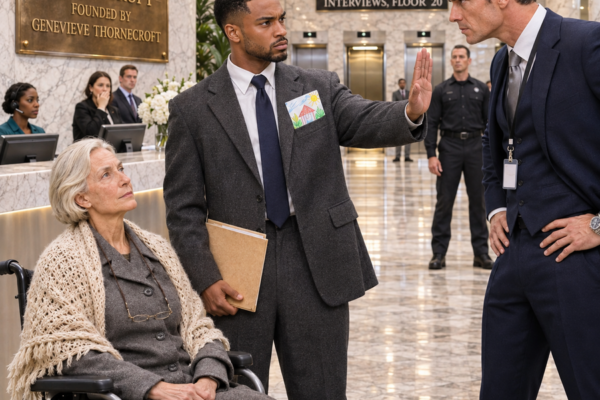
“Get Out — Men Like You Are Bad for the Lunch Crowd” — He Humiliated Two Farmers in a Small-Town Diner, Never Guessing They Were Federal Agents and One of Them Had Come Home to Bury Him

“Get Out — Men Like You Are Bad for the Lunch Crowd” — He Humiliated Two Farmers in a Small-Town Diner, Never Guessing They Were Federal Agents and One of Them Had Come Home to Bury Him
You know, men like you are bad for the lunch crowd.
You make people nervous.
You make them lose their appetites. So do us all a favor.
Get out.
We’re customers.
We ordered.
We paid.
With all due respect, sir, we haven’t broken any laws.
We’re just having lunch.
There’s always a law to fit the occasion, boys.
Vagrancy, loitering, trespassing. Shall I keep going?
We’ve been polite, sir, and we intend to remain so.
We only want to finish our meal.
Sergeant Wren suddenly snatched Marcus’s coffee and poured it over him.
Marcus stiffened but held his ground.
Clumsy me.
Maybe you boys should go clean up somewhere else. Somewhere far from here.
Wren smirked at Marcus and Elias, unaware that the two farmers he had just humiliated were federal agents investigating his corruption.
The bell over the door of Plumley’s Sunrise Diner rang at noon sharp, and every regular looked up, then looked down fast.
Two men in faded overalls walked in out of the bright midday heat. The older one had a gray-flecked beard and a calm face.
The other wore a red plaid shirt and an easy half smile. They looked like farmers who had driven in from out of town, dusty and hungry.
They were not farmers.
Special Agent Elias Thornberry picked the back booth.
It faced the register and the front door. He slid in and kept his hands flat on the table.
Good seat, Special Agent Marcus Greer muttered, sliding in across from him. You can see everything.
That’s the point.
Elias had not told Marcus the rest.
He had not told anyone at the bureau.
He knew this diner.
He knew the cracked red booths and the clock above the pie case.
He had eaten lunch here as a boy with a father who laughed too loud and tipped too much. Elias pushed the memory down.
Not today. A woman in her sixties came over with a coffee pot.
Her name tag said Odessa.
Her eyes were tired in a way sleep could not fix.
Afternoon, gentlemen.
Passing through?
Looking at some land east of here, Marcus said. His voice slipped into a slow, friendly drawl.
Meatloaf plate for me.
Whatever’s good for my friend.
Everything’s good, Odessa said.
Nobody comes in here for the bad stuff. The lunch rush was thick.
Every stool at the counter was full. Plates clinked and the grill hissed.
But the room was strangely quiet for a crowd that size, as if everyone was waiting for something.
When the food came, Marcus paid right away, the way farmers do. He peeled three twenties off a fold of bills and set them in her hand.
Keep the change.
Odessa walked to the register.
She rang them up and dropped each bill into the drawer. Marcus did not watch her.
He watched the tablecloth.
But when she walked away, he flipped open a small notebook under the table and checked a line of numbers. Every bill had a serial number.
Every serial number was already written in that notebook.
All three in the drawer, he whispered. And the recorder?
Marcus touched the strap of his overalls. Sewn inside was a button no bigger than a dime.
Running since we parked. Elias nodded.
He picked up his fork and ate like a man with nothing on his mind.
At 12:20, the bell rang again. The room changed.
It happened all at once. A man at the counter put down his sandwich.
Two women in a side booth stopped talking mid-word.
Even the cook in the kitchen window went still.
A tall man in a crisp police uniform walked in like he owned the floor, the tables, and the people sitting at them.
His badge read SGT W. Knox.
His hair was combed, his boots were shined.
He wore the kind of smile that never reached his eyes.
Afternoon, everybody, he said, loud and warm.
Nobody answered.
Knox strolled to the register. Odessa stood behind it.
Her hands folded so tight her knuckles had gone pale.
Odessa, he said, like he was greeting a pet.
Looking good. Tired but good.
Afternoon, Sergeant.
Don’t make me ask.
She opened the register drawer.
Her hand shook as she reached under the tray and pulled out a thick white envelope.
She had it ready. She had always had it ready.
Knox took it. He did not even look inside.
He weighed it in his palm and grinned.
See, this is why I love this town.
People know how to take care of the folks who take care of them.
It’s every month, Ren, Odessa said so softly it was almost a whisper.
And it keeps going up.
Knox leaned over the counter. His smile did not move, but his voice dropped low and mean.
Then maybe the price of keeping your doors open just went up again.
Think about that, Odessa.
Think hard about what you’d do without me.
Her mouth tightened. She said nothing.
In the back booth, Marcus gripped his coffee cup. Elias felt it from across the table.
He kept his own face like stone. Not yet, Elias breathed.
Let him finish.
Knox tore the envelope open and thumbed through it like a man counting a winning hand. Right on top sat a crisp twenty, fresh from the drawer.
Marcus’s twenty.
Knox reached into his pocket and pulled out a gold money clip, shiny and heavy.
He flicked it open with one finger.
It snapped like a tiny trap. He tucked that top bill under the clip and held it up so the whole room could see.
A little something for lunch, he said.
Every day’s payday.
One of the regulars stared hard at his plate.
A young woman flinched. Nobody laughed.
That’s ours, Marcus whispered.
Right there in his hand. Say it again.
He’s got the marked twenty on his money clip.
Good.
Elias let out a slow breath.
Keep the recorder running.
Knox shoved the envelope into his jacket pocket. He gave Odessa a mock salute and started to turn.
He looked relaxed, satisfied, like a man who had never once been told no. Then his eyes swept the room and stopped.
They landed on the back booth, on two men in overalls, on two black strangers sitting in his diner, in his town, eating his lunch like they had every right in the world.
His smile slid off his face. Slowly, Knox began to walk toward them.
Knox stopped at the end of the back booth. He did not say a word at first.
He just stood there, thumbs hooked in his belt, looking down at them like they were dirt on his boots. The whole diner held its breath.
Well now, he said at last.
His voice was slow and sweet, the kind of sweet that goes bad. Look what blew in.
Marcus smiled his easy farmer smile. Afternoon, officer.
Just having some lunch?
Lunch? Knox laughed through his nose.
You hear that, Odessa?
They’re having lunch.
Nobody answered.
Knox’s eyes slid from Marcus to Elias and stayed there.
I know every face in this town.
I know every truck, every dog, every cousin. And I have never seen either one of you.
He tapped the edge of the table with one finger.
So, here’s how this works.
This booth is for paying locals, folks who belong.
We paid, Elias said evenly.
Not the way I mean.
Knox leaned down until his face was a foot from Elias’s.
Men like you are bad for the lunch crowd. You make people nervous.
You make them lose their appetite. So, do us all a favor.
Get out.
The words hung in the air. Somewhere behind the counter, a fork hit a plate.
Odessa covered her mouth. An old man on a stool turned his whole body away as if he could not stand to watch.
Elias set down his fork. He did it slowly.
He looked up and his face showed nothing at all.
What law have we broken, Sergeant?
Excuse me? I asked what law.
We sat down.
We ordered. We paid.
Tell me which part is a crime.
For a second, Knox’s smile twitched.
He was not used to questions.
In this town, nobody asked them.
You want a law?
he said.
Fine.
Vagrancy, loitering, trespassing on private property after being told to leave.
Take your pick, boy.
I’ve got a whole list.
Boy. Elias felt it land in his chest, old and heavy.
A man his age. A man who had spent thirty years in a job where he had earned every inch of respect he carried.
He let the words sit there. He did not flinch.
We’re customers, Marcus said, still calm.
Ask the owner. Knox turned his head slowly toward Odessa.
Owner?
Odessa, are these two customers?
Odessa’s lips moved, but no sound came.
Her eyes darted to the register, to the drawer that held what she paid him every month. Her whole body shook.
That’s what I thought, Knox said.
He turned back, and the smile was gone now.
She doesn’t know you.
Nobody here knows you.
And nobody here is going to say a word because nobody here wants trouble.
Then his hand shot out.
He grabbed Marcus’s coffee and tipped it straight into Marcus’s lap.
Hot coffee soaked the denim.
Marcus sucked in a sharp breath and jerked back, but he kept his hands where they were. He did not lunge.
He did not shout. He looked up at Knox with something harder than anger.
That was a mistake, he said quietly. Oh, did I spill?
Knox said in a fake sing-song voice. Clumsy me.
Maybe you should go clean up somewhere else, somewhere far from here.
He turned back to Elias.
This time his hand closed around the collar of Elias’s shirt.
He hauled Elias half out of the booth, buttons strained.
Elias’s knee knocked the table and the plates rattled.
You think I’m playing?
Knox hissed. His breath smelled like mint and cigarettes.
I will put you in a cell for the weekend.
I will make a call and nobody will ever hear from you again.
People like you come through here.
They get ideas.
They think they can sit down wherever they want, eat wherever they want, look at me however they want. His grip tightened.
Not in my town. In my town, you ask permission to breathe.
Elias did not fight. He did not raise his voice.
He let himself be held and he watched Knox’s face, memorizing every word, every twitch.
That was the job. Let a man hang himself with his own rope.
In the kitchen pass-through, a young cook stood frozen with a spatula in one hand. He had a phone in the other.
Its little red light was glowing. Nolan Quill.
Twenty-three years old. He had been filming since the first word.
Knox caught the glint from the corner of his eye.
His head snapped around.
Hey, you. He let go of Elias and pointed.
Put that down, right now.
You delete that or I swear I’ll shut down this whole place.
Nolan’s hands trembled, but he did not lower the phone.
Delete it, Knox barked.
I won’t ask twice.
I can’t, Sarge.
Nolan’s voice cracked, then steadied.
It saves itself. It backs up to the cloud every few seconds.
I couldn’t delete it if I tried.
The diner went dead silent. Knox stared at him.
For one long second, something flickered across his face.
Doubt.
Then he barked out a laugh and waved a hand. Cute kid.
Real cute.
He looked around the room.
You all hear that?
Some kid with a phone.
You think anyone’s going to see that?
You think anyone in this county will ever watch it?
He tapped his badge.
I am the law here.
Whatever’s on that phone is whatever I say it is.
Nobody argued. Nobody dared.
Odessa stood at the register, tears rolling down her cheeks, still as a statue.
Marcus glanced at Elias. It was only a flicker.
Now Elias shook his head, barely. Wait.
Knox turned back to the booth.
He reached down and grabbed Elias by the collar a second time, harder, dragging him to his feet.
He was grinning again, the cruel, easy grin of a man who thought the story was already over.
Last chance, he said.
Walk out that door on your own or I walk you out.
And trust me, you won’t like how I do it.
Elias looked at the hand on his collar.
Then he looked into Knox’s eyes, calm as still water.
Let go of me, Sergeant, he said very quietly.
You’re about to regret it.
Knox laughed. It was a short, ugly sound.
Regret it? he said.
What are you going to do, old man? Call your mama?
He tightened his grip on the collar. Elias did not struggle.
He reached slowly into the front pocket of his overalls with his free hand.
Hey, Knox barked.
Hands where I can see them.
I’m getting my identification, Sergeant.
You asked who we were.
I didn’t ask nothing.
Elias drew out a black leather wallet and flipped it open.
A gold badge caught the light from the window.
Beneath it was a photo ID with three bold letters across the top. FBI.
Knox’s eyes dropped to it.
His hand did not move, but something behind his face did.
Across the table, Marcus pulled out his own wallet and held it high so the whole room could see.
Special Agent Marcus Greer, he said loud and clear. His drawl was gone.
And yes, Sergeant, you’re on tape.
Nobody breathed.
A fork dropped somewhere near the counter. Then the whole diner seemed to lean in at once.
That’s fake, Knox said.
His voice came out thin.
Anybody can buy one of those online. You two are impersonating federal officers.
That’s a felony.
Then you won’t mind if someone checks, Elias said.
Knox’s head jerked toward the room.
Nobody’s checking nothing.
I will. A heavy man in a work jacket stood up from the counter.
His hands were shaking, but he held up his phone.
I’ll look up the number.
They post the field office line.
I’ll call it right now.
Sit down, Dale, Knox snapped.
Sit down or I’ll write you up for every light on that truck of yours.
The man swallowed, but he did not sit. Go ahead, sir, Elias said gently.
Read the badge number aloud.
Ask them to confirm.
Dale stepped closer.
He read the numbers off Elias’s badge one at a time.
He tapped his phone. He waited.
The only sound in the diner was the hum of the pie case.
Then he lowered the phone.
He stared at Knox.
They’re real, he whispered.
The lady on the line says both of them are real. A low murmur rolled through the room.
It was not a cheer. It was something quieter, something people had forgotten they could feel.
Knox’s face drained to the color of paper.
He let go of Elias’s collar and took one step back.
His mouth worked, but nothing came out.
Take your time, Sergeant, Marcus said, standing. Coffee still dripped from his overalls.
He did not seem to notice.
Because we saw a lot this afternoon. Elias straightened his shirt.
When he spoke, his voice was calm and steady, and it filled every corner of the room. We watched you walk in here at 12:20.
We watched you demand an envelope from Mrs.Plumley.
We watched her hand it over because she was afraid of what you would do if she didn’t.
You told her in front of this room that the price of keeping her doors open just went up.
He paused. That is extortion under color of law.
You’ve got nothing, Knox said.
A scared old woman and a bad angle.
We’ve got more than that.
Elias nodded at the kitchen.
We’ve got a young man with a phone that doesn’t forget.
Nolan lifted it an inch. His hand was still trembling, but his chin was up.
We’ve got the stops, Marcus added.
Every car you pulled over on Route 9 with cash in it. Everyone you wrote up as drug money and never logged.
We know about the seizures, Sergeant. We know where the money went.
Lies. Knox tried to smile.
It looked like it hurt. You people come into my town in costumes and start throwing around a bunch of lies.
I’ll have your badges for this, both of you.
Then let’s talk about the twenty, Marcus said.
Knox froze.
What twenty?
Marcus slid his small notebook from his back pocket and opened it.
He ran one finger down a column of numbers. Then he looked up and he read a long string of digits slowly, one at a time, so every person in the room could hear.
That’s the serial number of a twenty-dollar bill I handed Mrs.Plumley an hour ago.
She put it in the drawer.
You took it out of the envelope.
It’s on your money clip right now.
Dead silence.
Knox’s hand drifted toward his belt.
His fingers touched the gold clip and then they stopped.
Hung there, trembling. He had been showing it off five minutes ago.
Now he looked like a man holding a live wire. You marked our bill, he said hoarsely.
You set me up. No, Sergeant, Elias said.
We watched you do it yourself.
Odessa let out a sound that was half sob, half laugh. She pressed both hands over her mouth.
Somewhere in the back, a woman began to cry.
The old man who had turned away at the counter slowly turned back. He was staring at Knox as if he were seeing him for the first time.
Knox looked around the room.
Every face stared back. Not one of them looked away.
For years they had stared at plates.
Now, they stared at him.
His jaw worked.
He wiped his mouth with the back of his hand. Then, with a hard, shaky breath, he put his smile back on, like a man pulling a mask over a wound.
This is my town, he snarled. You hear me?
Mine.
You think a couple of badges scare me?
I’ve been here eleven years.
You’ve been here eleven minutes.
He spun on his heel and pushed through the front door. The bell rang behind him, cheerful and stupid.
Through the window, they watched him stalk across the lot with the envelope stuffed in his jacket.
Marcus let out a long breath.
He leaned close to Elias and kept his voice low. He just walked out of here carrying our evidence.
Elias nodded, watching the cruiser door slam.
And he doesn’t even know it yet.
Knox slammed the cruiser door so hard the whole car shook.
He sat there in the diner lot with both hands on the wheel.
PART 2
His chest heaved.
His fingers were still trembling, and he hated that.
He hated every second of it.
Through the windshield, he could see faces pressed against the diner glass. Dale, the old man from the counter, even that scrawny cook with the phone still raised.
They were watching him. Not afraid.
Watching.
He grabbed his cell and punched in a number he knew by heart. Sloane.
Chief, it’s Wren.
His voice cracked and he cleared his throat.
We’ve got a problem.
Two men in the diner.
Black, fifties, dressed like farmers.
They’re FBI.
Silence on the line. Then a slow, calm breath.
Are you sure? Badges, numbers, everything?
A civilian called it in and the field office confirmed. They saw the envelope, Chief.
They saw all of it.
And there’s a kid in the kitchen with a phone.
Wren. They knew about the Route 9 stops.
They knew about the seizures.
One of them read a serial number off a twenty I’ve got right here and I—
Wren.
Chief Bertram Sloane’s voice was soft, almost kind.
It was the voice he used at funerals and ribbon cuttings.
Stop talking.
Breathe. Knox breathed.
Now listen.
Do not throw away that envelope.
Do not burn it.
Do not toss it in a river.
Do not spend a dime of it. You destroy evidence and you hand them a second crime on a plate.
You understand me?
Yes, sir.
Go home.
Lock the money in the safe. Keep the clip.
Keep your mouth shut.
A pause.
And leave the rest to me.
I’ve been making paper disappear in this county since before you were shaving.
They have two men and a notebook.
I have the county.
Knox stared at the diner. A slow, ugly grin crept back across his face.
Yes, sir. Thank you, sir.
Don’t thank me yet, Sloane said.
Thank me when they’re gone.
The line clicked dead. Inside the diner, nobody moved for a full minute.
Then Odessa sank onto a stool and finally let herself cry.
Elias poured her a glass of water.
Marcus took the diner’s phone book and wrote a short list in his notebook.
Witness names, times, everything fresh. Mrs.Plumley, Elias said gently.
You are safe.
We’re going to protect you.
She shook her head.
You don’t know him.
You don’t know what he can do.
I’m starting to.
By 1:30, the lunch crowd had gone home, whispering.
Elias and Marcus took a booth by the door and waited. They both knew a storm was coming.
They just did not know which way it would blow.
It came at two. A gray county van pulled into the lot.
Two men in short-sleeved shirts stepped out carrying clipboards.
Behind them, two sheriff’s deputies parked a cruiser across the exit.
Health department, the taller one announced, walking through the door.
Emergency inspection.
Mrs.Plumley, we’ve received a complaint.
A complaint about what?
Odessa stood up shakily. Rodents, unsanitary conditions, expired food.
He did not look up from his clipboard.
Effective immediately, this establishment is closed.
That’s a lie, Odessa gasped.
I passed my inspection in June.
I scrub this place every night.
Ma’am, I don’t make the rules.
He held out a form.
His eyes would not meet hers.
Sign here. Marcus stepped forward.
Who filed this complaint? When?
I’m not authorized to say.
Because it was filed an hour ago, Marcus said, his voice level, by someone with a badge. The man shrugged, miserable.
His partner was already chaining the front door. Elias saw it happen in slow motion.
The metal chain, the padlock, the bright red closed-by-order sticker slapped across the glass where the open sign used to hang. Then the kitchen door banged.
Two deputies dragged Nolan Quill out of the back, his arms twisted behind him.
Hey, what are you doing? Nolan cried.
I didn’t do anything.
Possession, one deputy said flatly. We found a bag of pills in your locker.
Real nice amount, too.
That’s not mine.
I don’t even take aspirin.
Tell it to the judge, kid. Marcus stepped in front of them.
Deputy, I’m a federal agent.
This kid is a witness in a federal investigation. The deputy looked him up and down.
Not in this county he isn’t.
Step aside or I add obstruction.
Elias put a hand on Marcus’s arm.
Not here.
Not like this. A fight in the lot would give Sloane everything he needed.
A second deputy snatched Nolan’s phone from his apron pocket and dropped it in an evidence bag.
Nolan went white.
As they marched him past Marcus, he twisted his head and whispered fast and low. My sister has my login.
Everything’s in the cloud.
Everything.
Then the cruiser door slammed on him.
Marcus held very still.
He gave the smallest nod. The cruisers rolled away.
The van pulled out. The lot emptied until only three people remained, two federal agents and one woman in an apron staring at the chain on her own front door.
Thirty-one years, Odessa whispered.
Thirty-one years I’ve been open.
Not one day closed. Not even the day my husband died.
Elias said nothing.
He had no words that were good enough.
He was still staring at the red sticker when his phone began to buzz. The screen read SAC Ferreira.
That’s Atlanta, he said quietly.
Marcus looked up.
Then it’s our turn.
Elias tapped the speaker button and held the phone between them. Ferreira.
Elias.
Marcus.
Tell me you’re both standing up.
Special Agent in Charge Rosalind Ferreira had a tired voice that never wasted a word.
I just got an alert from the county.
A complaint with my name on it, already. Already?
Marcus said.
It’s been three hours.
That’s how I know it’s working.
Sloane moves fast when he’s scared.
A chair creaked in the Atlanta office. Give me everything.
Slowly.
They gave her everything.
The envelope, the gold clip, the collar grab.
Marcus read the marked serial number into the phone and Rosalind repeated it back. Then they told her about the padlock, the health department, and Nolan Quill in handcuffs over a bag of pills nobody believed was his.
When they finished, the line stayed quiet for a long moment. All right, she said.
Here’s the hard truth, and I need you to hear all of it.
Go ahead, Elias said.
What you have is good. The recording is good.
That twenty on Knox’s clip is very good.
But a grand jury wants more.
It wants someone from inside the department who will talk.
And I can’t take this to the county judge because Sloane owns him.
I need a federal judge.
Macon, not Pell Hollow.
A signature from there can’t be undone by a phone call from a chief.
How long? Marcus asked.
As long as it takes me to build a file a judge can’t ignore.
Days. She paused.
And there’s something else.
Sloane has friends in Washington.
Old friends. He has been handing them favors for thirty years.
If he leans on them, I will feel it.
If I go quiet on you, that’s what it means.
It means somebody got to somebody. Understood, Elias said.
So don’t wait for me to save you.
Here is your job.
Make them say it themselves.
Make Knox and Sloane do something so loud and so public that no phone call can bury it.
Get it in front of people who can’t be pressured.
Marcus rubbed his jaw. Public.
Meaning cameras.
Meaning witnesses.
The more the better. She lowered her voice.
These men have never had to explain themselves to anyone.
Let’s change that.
Elias looked at the chain on the diner door. Rosalind, the cook, Nolan Quill.
His phone was taken, but he says it backs up to the cloud. His sister has the login.
Good.
Then do not touch it yet. Why not?
Marcus asked.
Because if anyone logs in from a county network, Sloane’s people will know it exists.
Right now, he thinks he has it locked in an evidence bag. Let him think that.
Her voice sharpened.
Get the sister’s number.
Tell her to keep that login safe and say nothing. We use it when it counts.
Marcus wrote it down.
Beside him, Elias felt something tug at his chest.
Tell her. The thought rose up, plain and heavy.
Tell her you were born three miles from here. Tell her this town ate your father.
His mouth opened.
Elias, Rosalind said, you still there? He closed it again.
If he said it now, Sloane would be handed the one weapon he needed.
Rosalind would have to pull him off the case. And then who would stand in that diner?
I’m here, he said.
Go on.
Stay out of sight tonight. Stay together and keep every record you have.
If this goes to a courtroom, I want a paper trail so clean it hums.
Yes, ma’am.
Good luck, both of you. The line clicked off.
Odessa had been standing a few feet away with her arms wrapped around herself. She had heard every word.
A public thing, she said.
What does that mean for people like me?
It means you aren’t alone anymore, Marcus said.
Go home, Mrs.Plumley.
Lock your doors.
Don’t talk to the police unless we’re with you.
And the diner? That chain is coming off, Elias said.
I promise you.
She searched his face for a long time. Then she nodded once and walked slowly across the lot to her old blue truck.
Marcus wrote down the sister’s number from a card Odessa had handed him on her way.
He saw Elias watching the road.
You’ve been quiet since we got here, he said.
Since the second we walked in, really. You okay?
Long day.
It’s been a long day, sure.
Marcus studied him another beat.
That’s not what I asked.
Elias gave him a small, tired smile.
Let’s get to the motel.
The Pell Hollow Motor Lodge sat at the edge of town, two floors of peeling paint and a flickering sign.
They took the room on the ground floor facing the lot. Marcus spread his notebook on the bed.
He copied every page by hand into a second binder, serial numbers first.
He did it slowly and carefully, the way a man does when he knows he might need it in court.
Elias stood at the window and watched the sun sink behind the water tower.
He thought about booth four. He thought about a laugh that was too loud and a hand on his shoulder a long time ago.
The sky went orange, then purple.
A neighbor’s TV murmured through the wall.
Done, Marcus said, snapping the binder shut. Two copies.
One goes in my bag, one in yours. Good.
Marcus came over and stood beside him. For a while they said nothing at all.
Then headlights swept across the glass. One pair, then two, then three.
Three black-and-white cruisers rolled into the motel lot and fanned out, blocking every exit.
The doors opened together. Sergeant Ren Knox stepped out of the lead car, his hand resting on his holster.
Elias did not move away from the window.
He watched Knox’s boots hit the gravel.
Three cars, Marcus said low.
Four men, maybe five.
Four. Elias counted the doors.
Knox and three deputies.
They’re not here to talk.
No.
Elias picked up his phone and thumbed the last number.
It rang once.
Ferreira.
They’re here, Elias said.
Motel lot. Knox and three deputies blocking the exits.
I’m putting you on speaker and I need you to listen.
I’m listening.
And Elias, don’t give them a reason.
He set the phone on the windowsill, screen up. Then he opened the door and stepped onto the walkway, hands open and visible.
Marcus followed one step behind him.
The sun had slipped below the water tower.
The sign over the office buzzed pink. Up and down the second-floor rail, motel doors cracked open.
A man in an undershirt, a woman holding a toddler on her hip, a teenager with a phone already in his hand.
Knox walked up to the bottom of the stairs. He had his smile back.
It looked fresh, like it had been practiced in the mirror.
Evening, gentlemen. His voice carried across the lot.
Funny thing. We got a report about two men in costumes running around my county, waving fake badges, impersonating federal officers.
The field office confirmed those badges to a civilian, Elias said.
You were standing right there. The field office.
Knox snorted. You mean some number on a phone?
Anybody can set up a phone number, old man.
The chief says it was a scam line.
And the chief says you’re under arrest.
On what warrant?
On my word.
Knox’s hand slid to his holster.
Boys, take them. Three deputies fanned out.
Their hands went to their guns. One by one, the weapons came up, black and steady in the pink light.
Hands on your heads, the closest one shouted. Get on your knees.
Marcus’s jaw went tight.
Elias kept his voice slow and even. Marcus, stay still.
I’m still.
Good.
Elias turned his head toward the phone on the sill. Then he looked at the deputy nearest to him, a heavy man with a red neck.
Deputy, Elias said, loud enough for the whole lot.
I’m going to read your badge number out loud.
Badge 2214.
Shut up.
Badge 2214, pointing a weapon at a federal agent in front of a dozen witnesses. Elias shifted his gaze to the next one.
And you. Badge 30729.
I said shut up.
Badge 30729, writing it down for the record.
Behind him, Marcus began repeating the numbers under his breath, steady as a clock.
On the rail above, a phone camera swung toward the deputies.
Then another.
Don’t you look at them, Knox barked.
Look at me.
Third deputy.
Elias turned to the last man, the youngest. He looked barely thirty, with thin shoulders and a face that had not finished hardening.
Badge 4401.
The young man’s gun was shaking.
Everything you do tonight is being recorded, Elias said. His voice was gentle now, almost sad.
By me, by my partner, by the people on that balcony, by a special agent in charge listening on that phone right now.
Whatever you decide, it stays decided forever.
Don’t listen to him, Reyes.
Knox snapped. Then he winced.
He had said a name he should not have. Do it.
The red-necked deputy shouted at the young one. Cuff him.
The young deputy looked at Elias. He looked at the balcony.
He looked at all those little glowing screens.
Then slowly he lowered his weapon.
What are you doing?
Knox hissed.
I’m not doing this.
The young man’s voice was hoarse.
He took one step back, then another.
They showed real badges, Sarge. You saw the guy at the diner call it in.
I’m not putting a gun on a federal agent because you’re mad.
You walk away right now and you’re done in this county.
Then I’m done.
The red-necked deputy glanced from the young man to the balcony. His gun dropped half an inch.
The third deputy followed. Knox stood alone at the foot of the stairs.
His smile was gone.
The whole lot was watching. And he had never once been looked at that way in his own town.
A woman on the second floor spoke up, clear as a bell.
We got all of it, Sergeant.
Every word. Shut your mouth.
Make me, she said. A few people laughed.
It was a small sound, shaky and surprised, but it spread.
Knox’s face went the color of brick.
He jabbed a finger toward Elias.
This isn’t over.
You hear me?
You think this is the end?
You are in the wrong county with the wrong people and you have no idea what I can do to you.
I’m starting to get an idea, Elias said.
Knox spat in the gravel.
He stalked back to his cruiser and slammed the door. The engine roared.
The first car backed out, then the second.
No arrests, no cuffs, no story but his own humiliation. The young deputy was the last to go.
He holstered his weapon and stood by his car with his hand on the door. For a moment, he looked back up at Elias as if he wanted to say something and did not know how.
Then the red-necked deputy came striding back up the stairs. He peeled a sheet of paper off his clipboard and slapped it against the door of the room with a strip of tape.
Chief Sloane wants you in his office, he said.
9 a.m.Don’t be late.
He left. The lot went dark except for the pink sign buzzing and flickering above their heads.
Nobody slept much that night.
Elias and Marcus took turns at the window until the sky turned gray. At 8:50 Tuesday morning, they parked outside the Pell Hollow Police Department, a squat brick building with a flag out front.
Marcus tapped the strap of his overalls. Still running?
Let it run. A secretary walked them down a narrow hall.
At the end was a heavy oak door with a brass plate.
Chief Bertram Sloane. The office smelled like lemon polish and old cigars.
Framed photos covered the walls.
Sloane shaking hands with senators, Sloane cutting ribbons, Sloane holding a giant check for the Children’s Hospital.
Behind a polished desk sat a white-haired man in a pressed blue uniform.
He looked like everybody’s favorite grandfather.
Gentlemen, come in. Come in.
Sloane stood, smiling wide.
Sit.
I’ve had sweet tea made.
My wife’s recipe.
He poured three glasses.
His hands did not shake.
He set one in front of each of them as if this were a church social. I want to say first, Sloane said, easing back into his chair, that I admire the work you do.
The bureau.
Fine people. Fine people.
And I’m sorry about the misunderstanding last night.
My boys got excited.
Your sergeant pointed a gun at us, Marcus said. Ren is a passionate young man.
Sloane sipped his tea.
But let’s not argue.
I invited you here to clear the air and because I wanted a good look at you.
He turned to Elias. His eyes narrowed slowly, the way a man studies an old coin.
Especially you. Elias said nothing.
His glass sat untouched. Something about the jaw, Sloane said.
And the way you hold your shoulders when you’re angry.
I knew a man who held his shoulders just like that.
He tilted his head. A smile crept up one side of his face.
It took me all night to place it. The room went very still.
Eli Thornberry, Sloane said softly.
Walter Thornberry’s boy.
Marcus’s head snapped toward Elias.
Elias did not blink. You look just like him, Sloane went on, pleased with himself.
Same stubborn chin.
Same way of staring at a man like you’re measuring him for a box.
He laughed.
Thirty-one years, and here you come, back through my door in overalls.
Elias, Marcus said quietly.
Oh, he didn’t tell you?
PART 3
Sloane’s eyebrows rose in fake surprise.
He grew up here, son.
Three miles from this chair.
His daddy ran the feed store on Alder Road.
Elias found his voice. It came out low and hard.
My father was an honest man. Your father was a thief.
Sloane’s smile never moved.
Stole nine thousand dollars from the county fund. Caught red-handed.
The judge gave him twelve years, and your daddy cried like a baby when they cuffed him.
Everybody in the courtroom heard it.
He didn’t steal anything.
Your department planted that money in our store.
Now, now.
Sloane held up a hand.
That’s what he said too.
All the way to the end. He took another slow sip.
He died in that cell, Eli.
Did you know I went to the funeral? Stood right in the back.
Nobody wanted to shake my hand.
Elias’s fingers dug into his knees.
He could feel Marcus’s eyes burning into the side of his face.
I’ll tell you why you’re really here, Sloane said.
He folded his hands.
You didn’t come to catch Ren Knox.
You came to settle a family score. You hid your history from your own bosses so you could march into my town and get your revenge.
That’s not true.
Isn’t it?
Then why didn’t you tell anyone?
Sloane picked up a folder from his desk and tapped it.
That’s why I filed a conflict of interest complaint with the FBI at seven o’clock this morning, complete with your father’s court records.
A man with a personal vendetta can’t investigate fairly.
Everything you collect, every recording, every notebook is poisoned.
He leaned forward.
It’s all tainted now, son.
Every bit of it. Thanks to you.
Marcus’s voice came out tight.
You’re bluffing.
Call Atlanta. See who answers.
Silence stretched across the desk. Down the hall, a phone rang and rang.
Elias stood. He set his glass down gently.
He did not shout. He did not threaten.
He looked at Sloane for a long, steady moment, the way a man looks at a mountain he has already decided to climb.
Thank you for the tea, he said. Then he turned and walked out.
Marcus hurried after him. The sun was blinding in the lot.
Elias reached the car and put one hand flat against the hood.
His chest rose and fell.
Marcus stopped three feet away.
His voice was quiet, and it hurt worse than a shout. You never told me.
Elias kept his hand on the hot hood of the car. He did not turn around.
Eleven years we’ve worked together, Marcus said.
I was at your wedding.
I held your daughter before she could walk.
And you let me walk into this town without knowing the one thing that could sink us.
I know.
Why?
Because if I told you, you’d have to tell Ferreira.
Elias finally faced him. His eyes were red.
And she would have pulled me.
And then nobody would have been in that diner to watch Knox take that envelope. Marcus stared at him.
The anger in his face fought with something else. Start talking, he said.
All of it. So Elias did, standing in the sun in front of the police station.
He told him about the feed store on Alder Road.
About the night when he was twenty-three, the deputies came through the back door with a flashlight and a bag of cash.
About his father’s face in court.
About the twelve-year sentence and the cold winter four years in when a prison chaplain called to say Walter Thornberry was gone. A heart attack, they said.
Elias had never believed it.
I joined the bureau a year after the funeral, he said. I told myself it was to do good.
Truth is, I wanted to come back here someday.
I just never thought I’d get the chance.
And Sloane knew you the second he saw you. He knew my father.
I guess I got the chin. Marcus let out a long breath.
He rubbed his face with both hands.
You should have trusted me.
I should have.
I’m still angry.
You should be.
For a while, neither of them spoke.
A cruiser rolled past slowly, the driver staring. Marcus waited until it had gone.
Here’s what I think, he said.
Sloane just told us he’s scared.
A man who isn’t afraid doesn’t file a complaint at seven in the morning.
He doesn’t pour tea and make a speech.
He does it because he thinks you can hurt him. He put out a hand.
I’m still your partner, Elias.
Even angry. Elias took it.
His grip was tight.
Thank you.
Don’t thank me.
Just don’t ever do it again.
Elias’s phone buzzed on the drive back to the motel.
An unknown local number.
Agent Thornberry?
It was Odessa. Her voice was small.
Can you come to my house?
Just you two. Right now.
Before they see you.
We’re on our way.
She lived on a quiet road behind the church in a white house with a porch swing and a garden of tomatoes gone soft in the heat.
She opened the door before they knocked and checked the street twice before letting them in.
The kitchen was spotless. A single chair sat by the window.
On the table sat an old, rusted flour tin with a faded rooster on the lid.
I’ve never shown this to anyone, Odessa said.
Not my husband.
Not my sister. I was too scared.
She wiped her hands on her apron. But this morning, when the chief had my diner chained up and my cook thrown in jail, I decided I was done being scared.
She lifted the lid.
The tin was packed tight with small slips of paper. Guest checks, the green kind with carbon lines.
Hundreds of them, folded and stacked by year. Every time the department took money from me, I wrote it down.
Date, amount, who took it, who stood there watching. She pulled out a handful.
I thought if I ever got brave, I’d have proof.
And if I never did, at least I’d know I didn’t forget.
Marcus took the first slip with careful fingers. His eyes moved down the lines, then he took another and another.
Mrs.Plumley, how far back does this go? Nineteen ninety-four.
That’s thirty-one years of payments, Marcus said slowly.
Show me the bottom, Elias said. His voice sounded strange.
Odessa dug to the very bottom of the tin.
She pulled out a slip so old the paper had turned yellow.
The ink was faded, but the numbers were clear.
Cash, two hundred dollars given to Deputy Sloane, door of the diner. Elias read it twice.
He looked up. What month?
October.
What year?
She told him. It was the same year, the same fall.
Three weeks before deputies walked into the feed store on Alder Road.
The kitchen clock ticked in the silence.
Your father came in here every Sunday after church, Odessa said quietly.
He was the one man in town who refused to pay.
Told Sloane to his face he’d never hand over a dime.
Told him he’d go to the state.
Her voice shook. Three weeks later, the money was in his store, and I said nothing.
I sat there with my mouth shut and let him go to prison.
You were afraid, Elias said. I was a coward.
And I’ve lived with it every day.
She laid her hand over his. Her fingers were thin and cold.
Let me fix it, Eli. Let me testify.
Whatever they do to me, I’ll say it all.
Elias’s eyes burned.
He nodded because he could not speak. Marcus set the slips back in the tin, handling them like glass.
He closed the lid slowly.
The money machine didn’t start with Knox, he said.
It started with Sloane. And it started with Walter Thornberry.
Everything since then is built on that one lie.
He turned to Elias, and the last of the anger was gone from his face.
Elias, this isn’t a case anymore.
It’s a debt.
By late afternoon, word had spread through Pell Hollow, the way word always does in a small town. Quietly and then all at once.
At six o’clock Tuesday evening, Odessa’s porch began to fill.
Dale from the counter came first, hat in his hands. Then the two women from the side booth.
Then a man who ran the hardware store, a widow who sold pies at the church, and a mechanic with grease still ground into his knuckles. They came in twos and threes, looking over their shoulders.
They sat on the steps, the swing, the railing, and the grass. Marcus set a legal pad on his knee.
Elias stood at the edge of the porch, watching the road.
I’ll go first, Dale said.
His voice cracked. Two years ago, Knox pulled me over on Route 9.
Said my taillight was out.
It wasn’t.
He found eleven hundred dollars in my glove box.
It was my daughter’s college money.
He swallowed. He called it drug cash and kept it.
I never saw it again.
Marcus wrote it all down.
Did you report it? To who?
He is the report. A few people nodded.
Then the hardware man spoke up, then the mechanic, then the widow, whose pie shop had been fined three times for a sign that was never too big. One by one, the stories came out.
Cash taken at traffic stops. Fines made up from thin air.
A teenager’s truck seized for a bag of nothing.
Every story ended the same way, with a man in a pressed uniform and a smile.
Every few minutes Marcus read a name and a date back to the group, and someone said, that’s right.
The pad filled up, then a second one.
The porch grew quiet and heavy, and something under the quiet was starting to burn. I always thought it was just me, the mechanic said.
I thought I was the only one he did that to. Me too, said the widow.
Me too, said someone else. It was almost seven when headlights swung into the yard.
A cruiser rolled up to the curb and stopped. Knox got out.
He had a deputy with him, the red-necked one who stayed back by the car. Knox walked up the path slowly, thumbs in his belt, grinning at the crowd.
Well, look at this, he said. A church meeting on a Tuesday?
Nobody spoke.
Dale’s hands tightened on his hat.
Y’all know it’s against the law to gather without a permit in this county?
Knox said.
Public assembly?
I could write every one of you up.
There’s no such law, Marcus said evenly.
There is tonight.
Knox walked up the porch steps like he was climbing onto a stage.
He scanned the faces and let each one feel it.
Dale, your inspection sticker is due, isn’t it?
And you, Margie, your late husband still owed on that pie license if I remember.
And Ray, how’s your boy’s probation going?
Nobody moved.
The mechanic dropped his eyes. Then Marcus stood up.
Very slowly he tapped the strap of his overalls.
Sergeant Knox, he said in a clear, steady voice, it’s 6:58 p.m.Tuesday.
You have just arrived uninvited at a private home.
You have threatened four residents by name over their licenses and a minor’s probation.
You have attempted to intimidate witnesses in a federal investigation.
All of this is being recorded.
Knox’s smile stuttered.
Go on, Marcus said. Say something else.
I’m not in a hurry.
For the first time, Knox looked around the porch and found no fear. The faces watching him were angry.
Some were crying.
A man he had robbed was looking straight into his eyes.
You’ve got no right to be here, Knox said, his voice rough.
This is my porch, Odessa said. She stood in the doorway with her arms crossed.
She was a small woman, but she took up the entire frame. Knox turned to her.
Something ugly and quick crossed his face.
Odessa Plumley, he said, your diner is closed by county order. But I drove by an hour ago and I saw you inside cooking.
Serving two men a sandwich through the back door.
That’s a lie.
I fed my guests in my own kitchen. Serving food in violation of a closure order.
He pulled out his cuffs.
Turn around.
Gasps rippled across the porch.
Dale stood up. The widow cried out.
Don’t, Elias said sharply from the rail.
Sergeant, think very carefully about this. I am.
Knox grinned.
I’m thinking about how nice it feels.
He spun Odessa around and clicked the cuffs onto her wrists.
The red-necked deputy stepped forward to guard the path. The porch groaned with angry voices, but nobody dared touch him.
Marcus held out a hand to keep Dale back.
Odessa did not fight. She did not plead.
As Knox walked her down the steps, she lifted her head and looked at every face on that porch. Her eyes were wet, but her voice was clear.
Write it all down, she said. Every word.
Don’t you let them forget.
Then she was in the back of the cruiser and the door slammed. The taillights faded.
Nobody said anything for a long time. The crickets started up in the garden.
Elias felt his fists clenching at his sides.
He made them open. Not tonight.
Marcus, he said. The tin.
Marcus was already moving.
He carried it to the kitchen table and spread the slips out in rows under the light.
Then he took out his phone and photographed every one.
Front, back, date, amount. Hundreds of them, one after another, until his thumb ached.
Send them to Rosalind, Elias said.
Doing it now. Nobody else left the porch.
They sat there through the dark, watching the road, writing statements by flashlight, signing their names at the bottom of each page.
It was past eleven when Marcus finally pressed send.
The little bar crept across the screen and turned green. Elias stood at the window.
Far down the road, red and blue lights shrank to a pinprick. Then they were gone.
Elias did not sleep.
He sat on the edge of the motel bed with his shoes on, watching the clock turn. At dawn on Wednesday, Marcus handed him a cup of gas station coffee, and they drove into town without a word.
They were passing Plumley’s when Marcus slowed the car.
The padlock was still on the door, but a new banner now stretched across the front of the lot, bright blue and fresh from the printer. Citizen Safety Appreciation Breakfast, Saturday, 8 a.m.Honoring Officer of the Year, SGT Ren Knox.
They’re giving him an award, Marcus said, in the parking lot of the diner he robbed.
In front of the cameras, a white van sat beside the banner.
A young man in a headset was bolting a projector onto a tall metal stand. Cables ran across the gravel to a small stage.
Marcus got out and walked over.
Morning.
Big event?
Chief Sloane’s whole show, the tech said, not looking up.
Live on the local channel.
He wants a slideshow of Knox’s best moments.
Will it play off any phone? Anything with a cable.
Phone, laptop, doesn’t matter.
The tech shrugged. I just set it up.
Marcus thanked him and walked back slowly.
Elias had not taken his eyes off the projector.
Hold that thought, he said. Rosalind called at ten.
Her voice had an edge Elias had not heard before.
The Macon judge read everything. The tin photos, the statements from the porch, the recording from the diner.
He signed an arrest warrant for Knox an hour ago.
A second one covers the money clip and anything in his house. She took a breath.
And he put in writing that if anyone challenges it, he’ll sign it again.
Mrs.Plumley is still in the county jail, Marcus said. Not for long.
The judge named her a protected federal witness.
Any further holding is obstruction.
I’ve told the county jail what that means.
Odessa walked out at three o’clock that afternoon.
The young deputy was the one who opened her cell.
He did not meet anyone’s eyes.
He just held the door, then looked away.
Thank you, Odessa whispered to him.
Yes, ma’am, he said.
Nolan, Marcus asked. Still inside, Rosalind said when he called back.
The pill charge is a county matter.
I’ll get to it, but not before Knox.
At 5:55 Thursday morning, the street outside Ren Knox’s house was gray and still.
Two US Marshals waited at the back door. Marcus stood at the front, a warrant in his hand.
Elias raised his fist and knocked three times.
Federal agents.
Open the door. A chair scraped inside, then a lock turned.
Knox stood in the doorway in a white undershirt and gym shorts, a coffee mug in one hand.
His hair was sticking up on one side. For one long second, he just stared.
You’ve got to be kidding me.
Ren Knox, Marcus said, you’re under arrest for extortion, civil rights violations, and conspiracy.
Up and down the street, porch lights flicked on.
A man in a bathrobe came out to get his paper and forgot to pick it up.
Two women stood at a fence with their arms folded.
You can’t do this, Knox’s voice rose.
I’m a police officer.
I’ve lived on this street for eleven years.
You people are throwing away your careers. Turn around, Sergeant, Elias said.
Or what, old man? Knox sneered.
You think the chief will let this stand?
I’ll be home before your eggs get cold.
Maybe, Elias said.
But you’ll be home with a photo.
They walked him back through the kitchen.
His table was set for one, a plate of toast, a gold money clip beside the sugar bowl. Marcus stopped.
He pulled out his notebook and flipped it open.
Then he slid on a glove, picked up the clip, and peeled back the top bill.
He read the serial number aloud.
It matches. Knox said nothing.
His shoulders sagged. Sealing it, Marcus said, and dropped it into a clear evidence bag.
In the pantry, the marshals found a steel safe.
Inside sat a thick white envelope.
By nine o’clock, the news had crossed the county.
The only lockup within forty miles was the Pell Hollow jail.
So a marshal booked Knox there in a small holding cell under a camera.
He snapped Knox’s photo himself.
In the picture, Knox’s hair was messy, his undershirt wrinkled, and his eyes wide and hollow.
Somebody posted it online before ten.
By noon, a crowd had gathered outside the jail.
Dale was there with his hat. The widow brought a tray of pies.
The mechanic held a sign made from a cardboard box. Someone began to clap.
Then a few dozen people joined, and then a hundred.
Odessa stood at the edge of the crowd, tears running down her face. She was smiling for the first time in thirty-one years.
We did it, Marcus said.
PART 4
Elias watched the faces. He wanted to believe it.
For one moment, he almost did. Across the street, on the third floor of the municipal building, a curtain moved.
Chief Bertram Sloane stood at his window with a phone pressed to his ear.
He was watching the cheering crowd. He was not smiling.
He did not look angry either. He looked like a man waiting for a number to answer.
Yes, he said quietly.
It’s me.
We have a problem.
I’ll need those old favors now.
The crowd outside the jail was still singing at two o’clock Thursday afternoon when the first black SUV pulled up to the curb.
A man in a gray suit stepped out. Behind him came a county deputy carrying a sheet of paper.
The clapping thinned, then stopped.
Make a path, the man said.
Order from Judge Harlan Voss, Pell Hollow County Court.
Elias and Marcus pushed through.
Marcus caught the deputy’s sleeve.
Whose order?
The county judge’s.
Sergeant Knox’s arrest is vacated.
He’s being released.
That warrant came from a federal judge in Macon.
And this one says the Macon warrant rests on tainted evidence. The deputy held up the page.
Agent Thornberry has an undisclosed personal conflict in this case.
His father was convicted in this county. The recordings, the notes, the seized items, all collected by a compromised officer.
Under this ruling, none of it can be used until a full review is done.
A review, Marcus said.
By who?
By Chief Sloane’s office.
Elias read the order twice.
Every word was legal and clean. Every word was a trap he had built himself thirty-one years ago by keeping quiet.
Knox walked out of the front door ten minutes later in the same wrinkled undershirt.
A deputy carried a clear bag with his belongings. Inside was a gold money clip with a twenty-dollar bill still tucked beneath it.
He took the clip.
He snapped it open and looked at the bill. Then he looked at Elias and winked.
Told you, he said.
Home before the eggs got cold. The crowd watched him walk to a waiting cruiser.
Nobody clapped now. Dale lowered his hat.
The widow set her tray of pies on the curb as if she had forgotten what it was for. The second blow came at four.
Elias’s phone rang.
The screen said Atlanta HR, not Ferreira. A flat voice read from a script.
Special Agent Thornberry, pending review of a conflict of interest complaint, you and Special Agent Greer are placed on administrative suspension, effective immediately. Surrender your credentials and service weapons to the nearest field representative.
On whose authority?
The deputy director’s office.
Marcus, listening, closed his eyes.
Washington.
Sloane’s old friends.
A courier met them at the motel at five. Elias handed over his badge.
The gold shield felt much heavier leaving his hand than it ever had coming in.
Marcus gave up his own with a stiff jaw. Both guns went into a locked case.
The courier left without a word. Marcus tried Rosalind.
It rang through to voicemail.
He tried again.
Again.
On the third try, a recorded voice said the number was no longer in service. She said she might go quiet, Elias said.
This is what quiet looks like. At six, a call came from Odessa.
She could barely talk.
They’re at my diner, she cried.
The county, they’ve got a truck and a crew.
They say it’s condemned.
Unsafe structure.
They’re taking out everything.
By the time Elias and Marcus got there, workers in orange vests were hauling out stools, griddles, and boxes of dishes.
A demolition notice was nailed to the door.
Odessa stood on the sidewalk in her apron, shaking.
They took the tin, she said.
A deputy walked into my kitchen with a warrant and carried it out.
The flour tin. All of it.
The slips, Marcus said hoarsely. Our photos are on the cloud.
But the originals?
Gone.
Marcus swore under his breath. Elias put a hand on his shoulder.
At seven, a text arrived from an unknown number.
It was Nolan’s sister, Willa, and it was short.
They wiped his phone at the jail.
Chief’s men did it in front of him.
They told him there’s nothing left.
He’s still locked up.
Elias read it twice.
They think it’s gone, he thought.
They think a wiped phone is an empty one. But he said nothing.
His chest was too tight to speak.
They sat on the concrete step outside their motel room as the sun set. Neither of them wore a badge.
Neither of them held a weapon.
The pink sign above the office flickered on. Marcus had a paper cup of cold coffee in both hands.
He did not drink it.
Let me say it out loud, he said.
Knox is free.
The warrant is dead. Our recordings are called tainted.
We’re suspended.
Rosalind’s gone dark.
Odessa’s diner is about to be a pile of bricks.
The tin is in the chief’s office, and Nolan is behind bars.
Yes.
Everything we had, they took in one afternoon.
Yes. Marcus looked at him.
Elias, I have never seen a man take a beating like this and still stand. Across the lot, a cruiser rolled slowly past, and the deputy inside raised two fingers to his hat.
A salute. A joke.
Down the road, the Citizen Safety banner flapped in the evening wind.
Two days from now, the whole county would gather in that lot to cheer for Ren Knox.
Elias stared at it, his face lit pink and gold.
I guess Sloane figures he won, he said.
Marcus did not answer. For once, he had nothing to say.
The pink sign hummed above the motel office. Night settled over the lot, and the last cruiser rolled away.
Elias sat on the concrete step with his hands hanging between his knees.
For a long time, he said nothing.
Then he started talking, and Marcus let him. I never told you the worst part, Elias said.
The night they took my father, I was in the back room of the store.
I heard everything.
Sloane stood right there in his deputy’s uniform.
He didn’t even look nervous.
He looked bored.
Marcus kept still. My father looked at me through the doorway.
He mouthed two words.
Stay quiet. So I did.
I stayed quiet for twenty-three years inside and thirty-one outside.
Elias’s voice shook.
I’m done being quiet, Marcus.
Badge or no badge.
Then let’s not waste a minute of it.
Marcus set down the cold coffee. He pulled out his notebook, flipped to a clean page, and began to write.
He talked while he wrote.
They think they cleaned the board.
Let’s count what they missed.
He held up one finger.
Nolan’s footage.
The cloud saved it every few seconds. His sister Willa has the login.
Rosalind told us to protect that, and they just told us themselves that they wiped the phone, not the cloud.
A second finger.
The marked twenty.
Knox took it back out of the evidence bag and put it right back under his clip. He winked at us about it.
A third.
Our photos of the tin. They took the slips.
They did not take the pictures.
A fourth.
The deputy who walked away, the young one.
He lowered his gun in front of twenty phones.
He opened Odessa’s cell door and couldn’t look her in the eye.
That man is carrying something heavy.
A fifth. Saturday, a stage, a projector, a live camera, and the whole county in one parking lot, all set up by Sloane himself.
And a tech who told me it plays off any phone. Elias looked at the list.
Marcus had drawn a line under the last one. Rosalind said, make them say it in public.
Marcus said, Sloane just built us the room.
We can’t go in as agents.
We’re suspended.
Then we go in as two farmers.
A tired smile pulled at Marcus’s mouth.
It’s the only costume Knox has ever fallen for.
Elias almost laughed.
It came out as a breath.
At 11:40 p.m., a car coasted into the lot with its headlights off. Both men were on their feet in an instant.
The driver’s door opened.
The young deputy stepped out, still in uniform. He held up both hands.
I’m alone, he said quickly.
Please.
I’m alone.
Deputy Reyes, Elias said. Tobias Reyes.
He swallowed.
I’m sorry about the other night.
I’m sorrier about all the years before it.
He glanced at the back seat. I brought someone.
The rear door opened.
Nolan Quill climbed out, pale and thin, still in his kitchen apron. He blinked at the pink sign like a man seeing the sky after a month underground.
They locked me in a cell and wiped my phone in front of me, Nolan said.
Deputy Reyes let me out the back door about twenty minutes ago.
I don’t think he’s allowed to do that.
I’m not, Reyes said.
I’ll be fired by morning.
I don’t care.
His voice cracked. I was sworn in to protect people.
My whole first year, I watched Knox take cash off strangers, and I told myself it was normal.
Then I saw that old woman cry in her own diner.
He looked at Elias.
I’ll say anything you need me to say in front of any judge.
Elias put out a hand. Reyes shook it hard.
Thank you, Elias said.
You just gave us the one thing Sloane can’t take away.
A man from the inside.
There’s more, Nolan said.
He pulled a small phone from his apron.
This is Willa’s.
She gave it to Deputy Reyes at the jail door.
It’s logged into my account.
His thumbs shook as he tapped the screen. A little wheel spun.
Then a video appeared, grainy and bright.
A man in a police uniform stood in the diner, hauling a bearded man out of a booth by the collar. Get out.
Knox’s voice, clear as a bell.
Nobody spoke.
Marcus pressed a fist against his mouth. Elias watched his own face on that tiny screen, calm and still, and felt something loosen in his chest after thirty-one years.
Every second, Nolan whispered. The envelope, too.
I got the whole thing.
Does the county know the cloud exists? Marcus asked.
They think they wiped it.
They told me there was nothing left. Nolan wiped his eyes with the back of his wrist.
They didn’t ask about the sister’s phone.
They could not stay at the motel.
Reyes drove them to Odessa’s house down the church road, past dark windows.
She had been staying with her sister, but she came straight back when Marcus called. She made coffee at midnight, and she did not cry.
All day Friday, they stayed out of sight. Nobody left the house.
Willa copied the video onto three drives, and Marcus kept one in his boot, one in Odessa’s pantry, one with Reyes.
Reyes wrote out a signed statement on four pages of Odessa’s lined paper.
Nolan slept for fourteen hours.
At dusk on Friday, Elias sat at the kitchen table and texted Rosalind one more time.
He gave her the address of the diner lot and the time, eight o’clock Saturday morning, and nothing else.
The message showed as delivered, not read.
He watched the screen until the light faded, and the little glow was the only thing left in the room.
Somewhere outside, a banner flapped in the wind. Tomorrow at eight, the whole county would gather to cheer.
By 7:45 Saturday morning, the lot behind Plumley’s was packed.
Folding chairs ran in neat rows.
Balloons in police blue bobbed from the stage rail. Two TV cameras stood on tripods, their lights glowing.
The projector screen glared white in the sun.
Half the county had come in their church clothes to clap for a hero.
Chief Bertram Sloane stood at the podium with a microphone in his hand and a smile that could have sold medicine.
Beside him stood Ren Knox in a spotless dress uniform, a walnut plaque tucked under his arm. His hair was slicked, his boots shone.
He looked like a man who had never been in handcuffs.
Friends, Sloane said, this county has been through a hard week.
Rumors.
Lies. Outsiders who came to our home to tear us down.
He paused for the nods. But Pell Hollow takes care of its own.
And no one has taken care of us like this young man.
Applause rolled across the lot.
Knox lifted his chin and soaked it in.
At the back of the crowd, Elias Thornberry pulled his battered work cap low. He wore the same faded overalls and the same gingham shirt from the diner.
Marcus walked beside him in red plaid.
In Marcus’s pocket sat a phone with a cable coiled around it.
Behind them, Nolan Quill hung close to Odessa, and Deputy Tobias Reyes stood a few steps away in plain clothes, his jaw tight.
You ready? Marcus murmured.
I’ve been ready for thirty-one years.
Elias started down the center aisle.
Heads turned. A whisper ran down the rows like wind through corn.
People leaned away from the aisle to let him pass.
Dale rose halfway out of his chair.
The widow clutched her purse. Sloane saw him first.
His smile did not drop, but his eyes went flat.
He kept talking a little faster.
And so, on behalf of a grateful county, I present the Officer of the Year.
Elias stopped at the foot of the stage.
Knox looked down.
For a moment, he did not understand.
Then he saw the overalls and a slow, delighted grin spread across his face. He leaned toward the microphone and spoke so the whole lot could hear.
Well, look who’s back.
The farmer. He laughed, and a few people laughed nervously with him.
Didn’t you get the message, old man?
This is a private event for decent folks. He pointed at the road.
Get out. The word cracked across the lot.
Elias did not move. He tipped his cap back.
When he spoke, his voice was low, but every speaker in the lot caught it because Marcus had walked up and held the stage microphone toward him. Say it again, Sergeant, Elias said, louder for the cameras.
Knox blinked.
What?
You heard me.
Elias’s eyes never left his face.
Say it again. I want everyone here to hear exactly how you talk to people in this town.
The red lights on the cameras blinked. Both operators had swung their lenses toward the stage.
Cut that feed, Sloane hissed to someone off stage.
Nobody moved. The station director would never cut a live shot that interesting.
Knox licked his lips. He looked at the cameras, then at the crowd.
I said get out.
You people think you can walk in here and— Thank you, Elias said. Marcus was already at the projector stand.
He plugged the cable into the phone and tapped the screen. The big white sheet behind the stage flickered.
Then it filled with light. A diner appeared, twenty feet wide, red booths, a clock over a pie case.
A tall man in uniform walked to a register and held out his hand.
Don’t make me ask, said the Knox on the screen.
A gasp swept the crowd. On the screen, Odessa pulled out a white envelope.
Knox tore it open. He tucked a bill under a gold clip.
Every day’s payday, he said, grinning, to a silent room.
Turn that off. Sloane lunged toward the projector, his voice cracking out of its calm.
That’s stolen property.
That’s an illegal recording.
He got three steps. A hand clamped his arm.
Deputy Reyes stood in front of him.
No uniform shirt, no badge, but a face that left no room for argument.
No, sir, Reyes said. Everybody pays for this.
On the screen, Knox grabbed a man by the collar. Men like you are bad for the lunch crowd.
Get out.
The words filled the lot, huge and ugly.
Then the coffee tipped.
Then the collar again.
Then clear as glass. In my town, you ask permission to breathe.
Nobody in the crowd made a sound.
Mrs.Plumley rose from her seat.
Dale rose after her. Then the widow, then the mechanic.
One by one, the people of Pell Hollow stood and turned to look at the stage.
Knox’s plaque slipped an inch in his arm.
That’s edited, he said weakly.
That’s fake.
That’s AI.
That’s— Sergeant.
Marcus stepped up beside Elias.
He held a small black notebook.
His voice was calm and loud.
Serial number K4417092L.
A twenty-dollar bill.
I handed it to Mrs.Plumley that day. It was in your clip a minute ago on that screen.
Why don’t you show the crowd where it is now?
Knox’s right hand flew to his belt.
He caught himself. Too late.
Every eye in the lot saw where his fingers had gone.
Open it, Elias said softly.
Nobody breathed.
Then from the back of the lot a clear woman’s voice cut through the silence.
Don’t bother, Sergeant.
I’ll do it myself.
Heads swung around.
A tall woman in a dark blazer was walking up the center aisle, slow and unhurried, with a folded paper in one hand.
Special Agent in Charge Rosalind Ferreira held up a fresh Macon warrant.
Two US Marshals followed three steps behind her.
The crowd parted without a sound.
She climbed onto the stage and held the warrant up to the nearest camera. Rosalind Ferreira, Special Agent in Charge, Atlanta Field Office.
This warrant was signed by a federal judge in Macon this morning. It names Sergeant Ren Knox and Chief Bertram Sloane.
She let it sink in. I am live on your station, so let me be very clear.
Every person in this county can hear what I say next. Sloane found his voice.
Agent Ferreira, you are suspended.
Your people are suspended.
This is a complete overreach. I was never suspended, Chief.
She almost smiled. The call that went out Thursday came from a man in Washington who owed you favors.
By Friday night, he’d stopped answering his own phone.
Funny thing about favors.
They run out when a live camera shows up.
Then why go silent? Because you were listening.
She turned and looked at Elias. And because a man in overalls texted me an address at dusk last night and told me to be there.
I wasn’t going to miss it.
Elias let out a breath he had been holding for two days.
Rosalind faced the cameras again.
The bureau has reviewed this morning’s broadcast.
The recordings are not tainted.
The conflict claim was filed by the very man it protects, and it will be treated as obstruction. Agents Thornberry and Greer are fully reinstated, effective now.
She reached into her blazer and pulled out two leather wallets.
She placed one in Elias’s hand and one in Marcus’s.
Elias felt the cold, familiar weight of the gold badge. His fingers curled around it.
Welcome back, she said quietly.
PART 5
Knox had not moved. His plaque had slipped to his hip.
Sweat ran down his temple, and the sun on the stage made him look smaller than he had ever looked. This is a setup, he said.
They’re making all of this up.
Then explain the clip, Marcus said. Open it, Sergeant.
Right here.
I don’t have to.
Yes, you do, Rosalind said.
It’s on the warrant.
Knox’s hand shook as it came off the plaque.
He unclipped the gold money clip and dropped it into Marcus’s open palm.
Marcus slid on a glove. He opened the notebook.
He read the serial number aloud, then turned the bill so the cameras could zoom in. Match, he said.
A groan rolled through the crowd.
It was not surprise. It was something older.
It was thirty years of people who had been told they were imagining it. Knox wheeled around.
His eyes darted over the faces looking up at him.
He looked at Sloane. Chief, he said, voice rising.
Chief, tell them.
Tell them what you said.
Ren, Sloane’s voice was soft and cold.
Be quiet.
No. The word cracked.
You told me to take it.
You said it was how things work here.
You said nobody would ever look. He pointed a shaking finger.
Every envelope went up to you. Every month for eleven years.
You told me to lock it in the safe.
Ren, stop talking.
You told me you’d make the paper disappear.
Knox was nearly screaming now. You said it on the phone the day it happened.
You said you’d done it before.
You said you did it to the Thornberry man. The lot went dead silent.
Sloane’s face went the color of chalk.
He opened his mouth.
Nothing came.
Rosalind stepped forward and spoke clearly into the microphone.
Thank you, Sergeant.
We heard that.
Marcus took Knox’s wrists.
They were slick with sweat. He drew one cuff from his belt and clicked it shut.
Ren Knox, you are under arrest for extortion under color of law, civil rights violations, obstruction of justice, and conspiracy.
You can’t— Turn around.
Knox turned. The plaque slid out from under his arm, thudded on the boards, and tumbled off the stage.
It landed in the dirt with the engraved side down.
Click. Then Rosalind turned to the old man at the podium.
He was gripping the edges of it now with white knuckles. The smiling grandfather was gone.
In his place stood a frightened man in a blue uniform.
Bertram Sloane, she said, on behalf of the United States, you are under arrest for racketeering, conspiracy, extortion, obstruction, and evidence tampering going back at least thirty-one years. You have no idea who I know.
I have a very good idea, Rosalind said.
I read the list.
Every name on it is going to be reading about this in the paper.
A marshal took Sloane’s arm.
Sloane pulled back. Get your hands off me.
I put half these people in their jobs.
I kept this county safe.
You kept it quiet, Odessa said.
She stood at the foot of the stage, a small woman in her Sunday dress.
She looked at the man who had padlocked her door.
Thirty-one years, Bertram, she said.
I wrote it all down. Sloane stared at her.
His mouth worked and no words came. Reyes stepped up beside Rosalind.
He held out four pages of lined paper. Special Agent, my signed statement.
Everything I saw.
Thank you, Deputy.
She took it. That took courage.
No, ma’am, he said.
That took too long.
Behind them, the crowd began to cheer. It started low and quickly grew.
A man in the third row threw his hat in the air.
The widow was sobbing into Dale’s shoulder.
Someone shouted Odessa’s name, then Elias’s, then Nolan’s.
Even the TV cameras trembled as the operators clapped. A marshal gave Knox a firm push.
He stumbled down the steps.
His fancy dress uniform was creased across the chest and his hair had fallen into his eyes. They marched him across the gravel in handcuffs in front of every neighbor he had ever robbed.
Nobody looked away.
Behind him, in the dirt, the plaque lay face down in the grass.
Rosalind pointed at the padlock on Plumley’s front door.
Somebody cut that off, she told a marshal. Now.
A deputy ran for the bolt cutters. The crowd drew back.
A minute later, the steel jaws bit down and the chain dropped to the gravel with a heavy clank. The red closed-by-order sticker came off the glass in one long strip.
Nobody left the lot.
The marshals walked Ren Knox toward a waiting van, and Bertram Sloane followed in cuffs.
The route took them straight past the diner.
People lined up on both sides without being asked. Dale took off his hat.
The widow stood with her pie tray against her chest.
The mechanic held his cardboard sign high, though it no longer needed to say anything.
Knox kept his eyes on the ground.
A woman near the door spoke to him in a calm, level voice. Eleven years, Ren.
Look at us.
He didn’t.
Sloane held his head up and tried to look like a man being given a ride. The effort cracked halfway across the lot.
When he passed Odessa, she was standing in her own doorway, her apron on over her Sunday dress.
He did not say a word to her. He had said all he ever would.
The van doors closed on both men. Rosalind stepped back onto the stage and spoke into the microphone, and her voice carried to the street.
Everyone here deserves to hear this.
Every dollar the county seized on Route 9, every fine written without cause, every forfeiture the department kept off the books, all of it is frozen as of this morning.
The bureau is tracing it. It goes back to the people it was taken from.
She waited for the noise to settle.
Mr.Dale Okafor, Mrs.Margie Hale, every one of you will be contacted in writing. Not by the police.
By us.
Dale covered his face with his hat.
Rosalind then addressed Nolan Quill, who stood beside Odessa, looking dazed.
Mr.Quill, the drug charge against you is dismissed as of nine o’clock today.
The Macon judge reviewed the locker search and found it was done without a warrant.
Your phone will be returned to you with an apology, though I’d say you’ve earned a better one.
Nolan laughed once, then bent over with his hands on his knees. Willa pushed through the crowd and hugged him so hard he coughed.
Marcus came to stand beside Elias at the edge of the lot. His badge was clipped to his belt again.
You okay?
I don’t know yet, Elias said.
Ask me tomorrow.
Monday morning, the Georgia sun came up over Pell Hollow, red and clean.
At nine o’clock a state prosecutor walked into the county courthouse with a thin folder under his arm.
Elias sat in the back row of the courtroom with Marcus beside him. A new judge, appointed over the weekend, presided.
Judge Voss’s chair stood empty.
The prosecutor rose. Your Honor, the state moves to vacate the conviction of Walter Thornberry, case number ending 9407.
We cite the earliest entries in the Plumley records, which were photographed and preserved before the originals were seized.
We also cite the signed statement of Deputy Tobias Reyes and Sergeant Knox’s own words on live television, naming the late Mr.Thornberry as a prior victim of this scheme.
The judge read for a long time.
The courtroom was quiet except for the ceiling fans.
The state’s motion is granted, she said at last.
The conviction of Walter Thornberry is vacated.
His name is cleared in full.
The court offers its apology to his family, and the county’s apology is long overdue.
Elias did not move. Marcus gripped his shoulder.
He’s cleared, Marcus whispered.
I heard it.
Elias’s voice broke.
I just never thought I’d hear it.
Outside the courthouse, the sun was warm on his face.
He stood still on the steps for a full minute and let the town walk past him. Some of them nodded.
One old man touched his hat. Tuesday dawn found Elias on Alder Road in front of a building with a faded sign half gone.
The old feed store.
Someone had already tied a ribbon on the door. He placed one hand flat against the wood, held it there a moment, and walked on.
He reached the diner just as the lights came on inside. The windows were clean, the booths were wiped down.
Volunteers had worked all night.
Dale and the mechanic were hanging a new set of curtains.
The widow had baked six pies.
The old clock over the pie case ticked again, and the smell of coffee drifted out into the street. Odessa stood behind the counter with the pot in her hand.
She looked up when the bell rang.
Agent Thornberry.
Mrs.Plumley.
Booth four, she said.
Your father’s seat.
I kept it clear.
He walked across the floor.
The linoleum creaked just as he remembered. He slid onto the red vinyl bench and put his hands flat on the table the way he always had.
Odessa came over and set down a cup.
Steam curled up. She poured it slowly, and when she was done she set the pot aside and rested her hand on his for a moment.
It’s on the house, she said.
Today and every day you want it.
Elias looked at her.
Then he looked past her at the room, the people, the sun, the clock, the open door.
Thank you, Odessa.
No, she said.
Thank you.
At the front, Nolan Quill took the sign off its hook, wiped it with his sleeve, and flipped it over.
Open. The weeks that followed the morning at the diner moved with the strange, unsettled rhythm that comes after a long storm finally breaks.
Pell Hollow did not simply return to the way it had been, because the way it had been was the problem, and everyone in the county knew it now. The arrests of Ren Knox and Bertram Sloane had cracked open something that had been sealed for three decades, and the crack widened with every passing day as more people came forward, more records surfaced, and more of the old silence gave way to something louder and harder to ignore.
The state prosecutor’s office convened a grand jury in Macon within the month.
Rosalind Ferreira testified for two full days.
Marcus and Elias testified for three.
The Plumley records, photographed and preserved before the originals were seized, became the backbone of the case.
Nolan Quill’s cloud footage, recovered from his sister’s phone, provided the visual evidence that made the jury lean forward in their seats.
Deputy Tobias Reyes, who had been fired from the Pell Hollow Police Department the morning after he let Nolan out the back door, testified in a plain gray suit with his hands folded on the witness table and his voice steady. He named every officer he had seen take cash, every envelope he had watched change hands, every order he had been given and followed and regretted.
When the prosecutor asked him why he had finally come forward, Reyes said, Because I swore an oath to protect people, and for a year I protected the wrong ones.
I would rather be fired for telling the truth than keep a badge I did not earn.
The courtroom was silent for a long moment after he said it, and then the judge, an old woman with silver hair and a face that had seen everything, nodded slowly and said, Thank you, Deputy. That is the whole of what this court asks of anyone.
Ren Knox was convicted on all counts.
Extortion under color of law, civil rights violations, obstruction of justice, conspiracy, and three counts of evidence tampering.
He was sentenced to fourteen years in federal prison, and the judge, before she passed sentence, looked at him over her reading glasses and said, You were given a badge and a town and thirty-one years of people who trusted you, and you spent all of it on yourself. The sentence is not for the money.
It is for the silence you imposed on everyone around you.
Knox did not look up. His attorney had argued for leniency, citing his years of service and his clean record before the investigation, and the judge had listened politely and then set the argument aside like a plate she had no intention of eating from.
Bertram Sloane was convicted on eleven counts, including racketeering, conspiracy, extortion, obstruction of justice, and evidence tampering. He was sentenced to twenty-two years.
The prosecutor had wanted more, but the judge said that twenty-two years for a man of seventy-four was, in practical terms, a life sentence, and that the court was satisfied. Sloane heard the sentence with his chin up and his hands folded on the table in front of him, the way he had sat through the entire trial, and when the marshals came to take him away he turned to the gallery and looked at Elias for a long moment.
Elias looked back. Neither of them said anything.
There was nothing left to say that the verdict had not already said for them. The civil cases took longer.
The county settled with Dale Okafor, Margie Hale, and eleven other residents whose money had been seized without cause, whose fines had been invented, whose property had been taken and never returned.
The settlements were not enormous, but they were real, and the checks that arrived in mailboxes across Pell Hollow that winter carried a weight that no amount of money could fully measure. The county also agreed to a consent decree that placed the Pell Hollow Police Department under federal oversight for five years, required body cameras on every officer, and established a civilian review board with subpoena power.
The review board’s first chairwoman was a retired schoolteacher named Alma Reyes, Tobias Reyes’s mother, who had taught fourth grade in Pell Hollow for thirty-one years and had known every family in the county by name.
She took the position, she said at her first meeting, because she had spent her whole life teaching children to tell the truth, and it seemed only fair that she should spend her retirement making sure the grown-ups did the same. Odessa Plumley reopened the diner the week after the arrests.
The line stretched around the block on the first morning.
Dale was there, and the widow, and the mechanic, and the two women from the side booth, and a hundred other people who had eaten at Plumley’s for years and had never once said a word about the envelope in the register drawer.
Odessa stood behind the counter with her pot in her hand and her eyes wet and her voice steady, and she said, All right, everybody, settle down.
The coffee’s hot and the pie’s fresh, and I’ve got a business to run.
The line laughed and shuffled forward, and the bell over the door rang and rang and rang.
Elias stayed in Pell Hollow for a week after the sentencing, longer than he had planned, longer than the bureau had authorized.
He sat in booth four every morning and drank his coffee and watched the town come back to life around him.
He walked down Alder Road and stood in front of the feed store, which a young couple had bought and were turning into a bakery, and he told them about his father, and they listened, and the woman said, We’ll put his name on the sign.
Walter’s Bread.
If that’s all right with you.
Elias said it was.
He drove out to the cemetery on the edge of town and stood at his father’s grave, a plain stone marker with a name and two dates and nothing else, and he said, It’s done, Dad.
It’s finally done.
The wind moved through the pines and the grass and the quiet, and Elias stood there for a long time and then walked back to his car.
Marcus flew home to Atlanta on a Friday afternoon, and Elias drove him to the airport in Macon. They did not talk much on the drive.
There was not much left to say that had not already been said.
At the departures curb, Marcus shook his hand and then pulled him into a hug, a real one, the kind that lasts a beat longer than a handshake and says everything a handshake cannot.
You did good, Elias, Marcus said.
We did good. Call me when you get home.
I will.
And Elias, Marcus said, standing back, his hand still on Elias’s shoulder, I’m glad you told me.
I’m glad you trusted me.
Even if it took you thirty-one years.
Elias laughed, a real laugh, the first one in a long time.
I’ll try to be faster next time.
You’d better be.
Marcus walked through the sliding doors and disappeared into the terminal, and Elias stood at the curb for a moment and watched him go, and then he got back in the car and drove north.
He did not go back to Atlanta right away.
He drove to the Pell Hollow Motor Lodge instead, the same motel with the same pink sign, and he took the same room on the ground floor facing the lot, and he sat on the concrete step where he had sat on the worst night of the investigation and looked out at the empty parking lot and the water tower and the pines beyond.
The sign buzzed pink and gold above the office. A cruiser rolled past on the highway and did not slow down.
Elias sat there for a while and then he went inside and called his daughter, who was twenty-six now and lived in Chicago and had been calling him every day for a month, and he told her the whole story, start to finish, the way he had never told it to anyone, and she listened without interrupting, and when he was done she said, Dad, I’m so proud of you, and Elias said, Thank you, sweetheart, and then he sat on the edge of the bed with the phone in his hand and cried for the first time since he was twenty-three years old.
The bureau offered him a promotion in the spring, a supervisory position in the Atlanta field office, and he took it. He and Marcus still worked together, still argued about baseball and coffee and whose turn it was to drive, still closed cases and opened new ones and did the work that the oath required.
But something had changed in Elias, something quiet and permanent, and the people who worked with him noticed it even if they could not name it. He was slower to anger and quicker to listen.
PART 6
He asked more questions and gave fewer orders. When a young agent in the Atlanta office came to him one afternoon with a problem that was clearly weighing on her, a case that had gone sideways, a decision she was not sure she had made correctly, Elias did not tell her what to do.
He pulled up a chair and sat down across from her and said, Tell me everything.
And then he listened, the way Marcus had listened to him in a motel room in Pell Hollow, the way Odessa had listened to a boy in her diner thirty-one years ago, the way a town had finally learned to listen to itself.
The following October, Elias drove back down to Pell Hollow for the first anniversary of the arrests.
There was a small ceremony in the parking lot behind Plumley’s, the same lot where a banner had once flapped in the wind and a stage had once been built for a man who did not deserve it.
The town had put up a new sign, a simple wooden plaque bolted to the wall above the door, and it read, In honor of Walter Thornberry, who refused to pay. Elias stood in the back of the crowd and watched Odessa pull the cloth off the sign, and he watched Dale and Margie and the mechanic and Alma Reyes and Tobias Reyes and Nolan Quill and his sister Willa and a hundred other people clap and cheer and cry, and he thought about his father, who had laughed too loud and tipped too much and refused to pay a bribe, and he thought about the boy he had been, hiding in the back room of the feed store, mouthing two words to his father through the doorway.
Stay quiet.
He had stayed quiet for thirty-one years. And then he had not stayed quiet anymore, and the not staying quiet had changed everything.
After the ceremony, Odessa found him at the edge of the lot.
She was wearing her apron over her Sunday dress again, the way she always did on special occasions, and she took his arm and walked him back to booth four and poured him a cup of coffee and set it down in front of him without asking.
You know, she said, sliding into the booth across from him, I used to think that if I just kept my head down and paid what they asked and never made trouble, everything would be fine. She shook her head.
It was never going to be fine.
Not for me, not for your father, not for anybody.
The only thing that ever made it fine was people finally saying the truth out loud. Elias wrapped his hands around the warm cup and looked at her.
My father used to say something like that, he said.
Did he? Odessa said.
What did he say?
He said, Elias said, his voice quiet, that a town is only as good as the people who are willing to stand up in it.
And he stood up. And it cost him everything.
Odessa reached across the table and put her hand on his.
No, she said. It cost him his life.
But it did not cost him everything. Because you are still here.
And you stood up too.
And that means he did not stand up for nothing.
Elias did not answer right away. He looked around the diner, at the cracked red booths and the clock above the pie case and the people who filled the room with their noise and their laughter and their ordinary, unremarkable, extraordinary lives.
The bell over the door rang as a new customer walked in. Odessa got up to pour them a cup.
Elias took a sip of his coffee and looked out the window at the sun on the street and the town going about its business, and he thought about how long it had taken, and how much it had cost, and how it had been worth every single day of it.
He set the cup down and slid out of the booth and walked to the register.
He peeled three twenties off a fold of bills and set them in Odessa’s hand.
Keep the change, he said. Odessa looked at the bills and then at him, and her eyes filled, and she laughed, and she said, I will, Agent Thornberry.
I surely will.