“Stand Up” — Judge Barked at a Woman in a Wheelchair — Days Later, He Lost His Own Seat
“Stand Up” — Judge Barked at a Woman in a Wheelchair — Days Later, He Lost His Own Seat
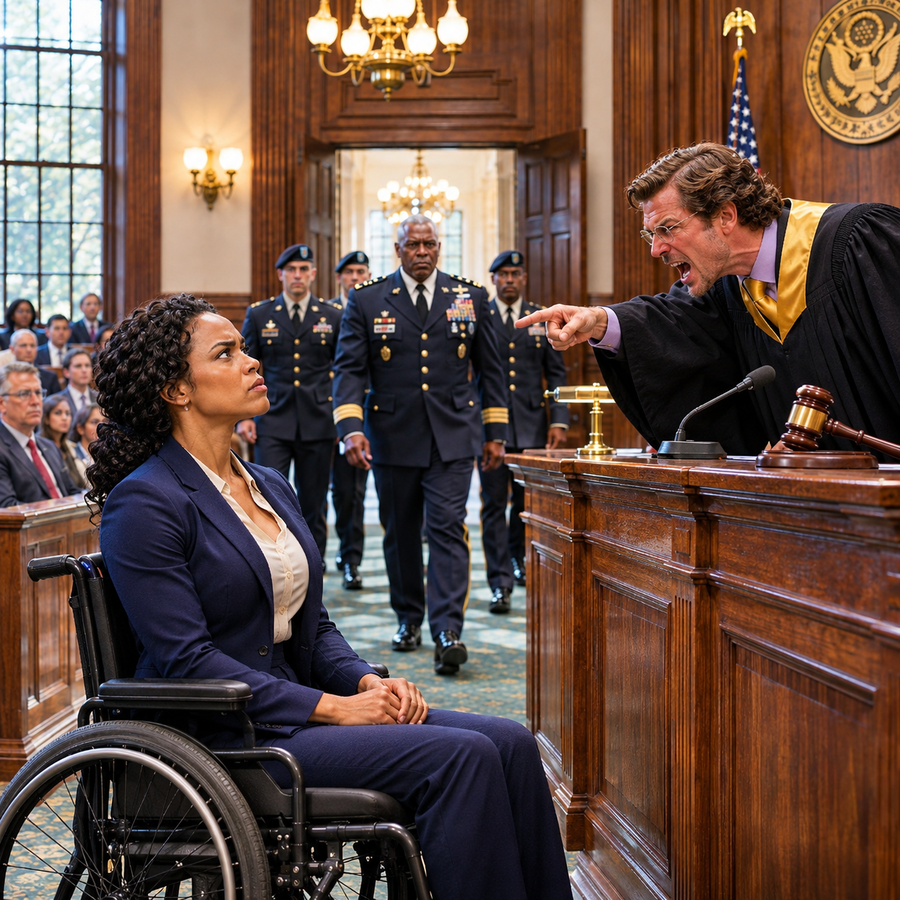
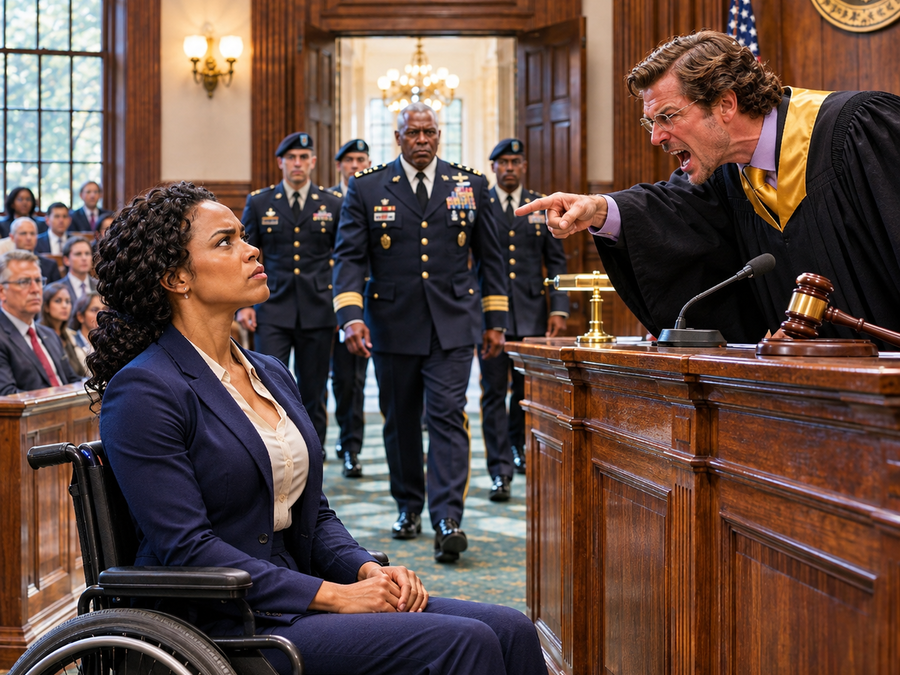
You, on your feet right now. Nobody sits when I enter.
I cannot stand, your honor, but you have my attention.
Cannot stand or simply will not stand in my courtroom?
My wheelchair is certainly not a—I can stand, your honor. She just loves an audience.
I filed a request for a wheelchair-height stand, sir.
You go, Nia. Up tall for the nice judge now.
The last time I stood up, people made it home alive.
Paperwork for a rolling chair, judge? How cute. Denied. This is a courtroom, not a hospital. Spare me the dramatic speech right now, Miss Bramwell.
Your honor, her official record confirms a wheelchair.
Quintero, you stamp files. You do not advise me.
So the court clerk is a licensed doctor now, too?
One more word, Miss Quintero, and you are out of here.
I will say it outside, sir. She cannot stand up.
It is all right, Miss Quintero. Please just let it go.
Now. You are officially suspended for a full week.
Do not punish her for simply reading my file.
Then stop causing a spectacle from that wheelchair. Somebody inside this room had to read it, Miss Bramwell.
Now, Quintero. Careful not to hit the door outside. I am fining you five hundred dollars for pure contempt.
Make it a grand, Lawson. She can pay it with my money.
It is, your honor, inside this courtroom, Mr. Kessler.
I will pay the fine, your honor. I still cannot stand.
Whatever you like. What is in that box? Your lunch?
Letters, your honor. Handwritten letters from—
She drags that wooden box everywhere like a baby blanket.
It keeps me honest, Derek. You ought to try carrying one.
Remove her now and take the long way out.
Yes, judge. Right away, sir. I am moving her out.
Please, sir. I can easily roll myself out of this room.
The judge ordered remove, ma’am. He did not say roll.
Stop. My letters, they are scattered all over the floor.
Keep your hands inside the chair, ma’am. Keep moving. Whoops. Looks like you should have stood up, ma’am. Careful not to forget all your precious little letters.
Please, sir. Let me pick up my letters before I leave.
Out the doors, ma’am. Someone will sweep them up later.
Then I will come back in here for every single letter.
Only if you walk through those doors on your own feet.
Those letters were the only thing I ever asked to keep.
Then you should have stood right up when he told you.
You know I could not stand, sir. You were watching me.
I just follow orders from the bench, ma’am. Stay here.
Ma’am, wait. I slipped back in through the side doorway. You actually went back in there just to get my—
I gathered every letter, even one tucked under a bench. Thank you, Iris.
You just—
I would lose it again, ma’am. Who wrote those letters?
Four friends. They write every year on the day I fell.
Wait, did he just bang the gavel without you in there?
That was a final ruling. He did not even wait a minute.
Behind closed oak doors, Judge Lawson did not hesitate. With Nia forced out, he handed Derek everything.
Shortest hearing all year. Saturday, eight o’clock sharp, lunch. Deal, Spence. Nine holes and steaks are both on me. Respondent left my court. Default ruling for Kessler.
Thank you, judge. I will list the house for sale today.
Brett, go collect Quintero’s badge from my desk right now.
Yes, judge. I will bring her badge straight to chambers.
Judge just ruled, Nia. You lost. The house gets sold.
My mother lives inside that house.
Well then, I guess your mother can start packing boxes.
Her mother is sixty-six, Brett. Even for you, that is—
Your badge. Judge wants it on his desk today.
Tell him I read her file out loud twice before leaving.
Main elevator is out. Freight lift is back by the boxes.
Then the rear freight lift it is. Thank you, bailiff.
Look at you by the freight door, Nia. It really suits you.
She is here only because your judge left no other—
You want a house today, Derek. Enjoy it for one week.
One week? Come on, Nia. I own that judge for life.
Tell your judge I will be back. He can stand for me.
Safe ride down, ma’am. Watch the steel gap on exit.
Did you really mean that, ma’am? About coming back in?
Every single word, Iris. And he will not dismiss me.
Then I will be right beside you when you roll back in.
Come by for dinner tonight, Iris. My mother—
Miles away from the marble courtroom, Nia rolled up the cedar ramp built by friends she refused to burden.
Honey, these letters are creased. What happened inside?
Let us go inside, Mama. The judge wanted me to stand.
Stand? Did nobody in that whole courtroom read your file?
One clerk did, Mama. Judge suspended her for the week.
Did you tell that arrogant judge why you cannot stand?
I do not hand out my past like business cards, Mama.
Those four built that cedar ramp in a single weekend.
They have done enough for me, Mama. Do not call them.
There is more, Mama. Derek got a ruling to sell the home.
Selling this house? While I am still sitting in it?
Every nail in this home is your hard-earned pay, Nia. Not one cent of Derek’s.
He is not taking it, Mama.
He just made it two weeks unpaid for grabbing letters.
Then dinner is on us for two weeks. Come right inside.
Ma’am, Judge Lawson golfs with Derek every Saturday.
You keep his calendar?
And he never stepped on—
My mother uses a chair, too. I am not done fighting him.
Good. Because Judge Lawson has no idea. You stay right here, honey. This table has a ramp, too.
Mrs. Bramwell, you are making me cry into this apple pie.
Six whole years and you never said why Derek walked out?
He left the week this chair arrived. I never begged.
You saved four lives, Nia. Do not carry this fight alone.
I am not calling them, Mama. Look at me and promise me.
I promise I will never let you walk in that room alone.
Wait. That is not what I asked you to promise me, Mama.
By morning, Nia’s attorney Rochelle Vance arrived furious, ready to tear Judge Lawson’s illegal ruling apart.
You went to a hearing without me and lost your house?
It was a ten-minute scheduling call. He ruled instantly. I filed to overturn it. Friday morning, same courtroom.
Wait, same corrupt judge? Why let Lawson touch this again?
Nia, your sealed service record ends this in one page.
I will not waive my past in court just to beg for a—
Fine. Then I ask him to recuse and trap him on record. Friday morning, courtroom 4B. I roll straight back.
Friday morning then. I am wearing my best Sunday coat. Just keep that phone away from our old numbers, Mama.
Meanwhile, behind closed doors at the courthouse, Judge Lawson and Derek were already spending Nia’s home.
House sale closes fast and it funds your spring race.
Keep it down. Appellate seat is mine if you sell fast.
Judge, someone filmed the hallway. Two million views. Two million people watching me run my own courtroom?
It is edited, Spence. She is faking it for sympathy.
Then I tell the press front steps, three sharp.
And draft Quintero’s firing letter. She is done here.
She gave eleven years here, judge, over some letters.
Job to care, Brett. Close the door outside. Soft heart on that bailiff, Spence. Keep eyes on—
Instead of apologizing for the viral clip, Judge Lawson marched straight onto the courthouse steps to double down.
That woman was disruptive. Rules apply to everyone. She walks just fine at home. I was married to her. No more questions. This court does not bow to clips. Just ask her to stand on camera. Watch what happens.
Lawson, I watched that video. Did you read her file?
Harriet, please. I recognize cheap theater on—
Then you will not mind me in your gallery on Friday.
Sit wherever you want, Harriet. My ruling holds firm.
Harriet is watching Friday? Does that sink our deal?
Go list the house, Derek. I handle Harriet myself. Brett, Friday morning she stands. Whatever it takes.
No, judge. I am not doing that to her ever again.
Fine. Then I will find a bailiff who actually obeys.
Go ahead and look, judge. It will never be me again.
Two counties away, that viral clip reached the very people Nia had tried hardest to keep out of her fight.
Look at this screen, Mira. That is our captain in court.
Who on earth would dare treat our captain like that?
Did she call? She never asked us once in six years.
So we do not wait to be asked, Mira. Not this time.
Cormack, this is Nia’s mama. Did you see that video?
Three times, Mrs. B. Is the captain okay?
She made me swear not to call. So I am asking you.
Give me the room and time, ma’am. Tell her nothing. Friday nine a.m., courtroom 4B. All four will be there.
Tell Mrs. B I am driving. I will call the—
Driving? Lord help the highway. See you Friday.
Six years, ma’am. Now it is our turn to carry Cap.
You just fired me outright. Eleven years ended by mail. Lawson just handed me my best witness.
Then let us expose his Saturdays. Glen Hollow guest log. His private club ledger?
Our cousin Caddy’s there. He copied every single sheet.
Your cousin just became my hero. Thirty-one Saturdays.
Iris, you lost your career just for grabbing my letters.
Then I picked up the exact right letters, Ms. Bramwell.
Chief Judge Solberg’s office. She is attending Friday.
Good. Then let the chief judge watch every single word.
Derek will try to rattle Nia before Friday. Stay sharp.
Let him try. He has no clue what we hold in that file.
Rochelle’s warning came true within hours. Before sunset, Derek marched. He went straight onto Nia’s front lawn.
Open house this Sunday, Nia. Try to look nice and busy.
Pull that sign off my green lawn right now, Derek.
You do not own this lawn, Derek. Leave our property.
Judge says I own half. First thing gone is this ramp.
Four people who love Nia built that ramp by hand.
Love? Nobody is coming for her, Viola. Nobody ever did.
Put that back right now, Derek. That letter is not yours.
Relax, Nia. Let us see what your mystery friends wrote. Thanks for carrying me, Cap, captain of the Bingo Club.
Fold that page and hand it back, Derek. Do not test me.
There you go. Dropped right back where cheap trash goes.
Derrick Kessler, have you lost every single shred of shame?
Walk down there and pick up my letter right now, Derek.
Or what, Nia? You going to stand right up and make me?
Friday, nine o’clock sharp, courtroom 4B. Wear your best suit.
Friday, you have nothing left, Nia, nothing but a box.
Mud washes right off, honey. Shame stays forever on him.
I know, Mama. Bring it up here. It goes back in—
He thinks this wooden box is all I have left to fight. Let him think that till Friday. He will learn.
Friday morning arrived under clear skies. For the first time in six years, Nia put on her formal navy coat. Derek thought he had crushed Nia for good. He had no idea four loyal friends were already on the road.
I have not put this navy coat on in six whole years.
It still knows you, honey. Fits like it never left.
Mama, why are you smiling like you hit a huge secret?
Just thrilled to watch Lawson eat his words at nine.
Leave Derek’s sign in the grass till noon, Mama. Let it sit.
Gladly, honey. By lunch, it goes straight in the trash.
Eight forty sharp. Stay out of sight till Mrs. B nods.
Good call. She would order us right back home on sight.
She carried us once. We can walk up one set of stairs.
She is going to cry when we walk in. I already am.
She still has no clue you came. Keep hidden till cue.
Copy that, Mrs. B. We wait outside 4B till the signal.
Rochelle just texted the cue. We head up the stairs now.
Stand tall behind those doors. Wait for Nia’s signal.
Where did you rush off to around that brick corner, Mama?
Checking if they finally fixed the elevator. Still broke.
Freight lift is still the only way up. May I ride too?
Well, look who finally remembered his manners this week.
It is all right, bailiff Miller. You may ride with us.
Thank you, ma’am. I owe you far more than a lift ride.
Did Judge Lawson order you to throw her out again today?
He tried, Mrs. Bramwell. I told him it will not be me.
That took real spine in his building, bailiff Miller.
Heads up. Chief Judge Solberg is already seated inside.
Chin high, baby. You look sharp in that navy coat.
We are not begging today, Mama. We take back our home.
Ready, ma’am? Judge Lawson is already barking inside.
Open those doors, Brett. Let us hear what he has to say.
Inside courtroom 4B, every piece was in place. Judge Lawson believed he held all the power.
Where is your client? Running late on wheels?
She is riding your rear freight lift. The only way up.
Maybe she is stuck halfway between two floors, judge.
Your honor, I formally move you recuse from this case.
Right on time, Nia. Keep your chin high. He is rattled.
Ready, Rochelle. Let the judge make his first move.
Costume party today, Nia? Cute shiny brass buttons.
Good morning, Derek. Glad you wore your best suit.
Ms. Bramwell, last chance.
I already told you, your honor. I cannot stand up.
Same old song, judge. Stand.
No, I cannot stand up today, sir. Wait, what is that?
Who on earth is barging into my courtroom right now?
You could not stand, honey. So they came to stand.
Who let a parade in my courtroom? Bailiff, stop them.
No, judge. Let these four people stand right there.
Sergeant, I told all four of you to stay home today.
You told us that once before. We did not listen then.
Sit down right now. Who are you people in my court?
Sergeant Cormack Dunley, retired. I am one of the—
One of the four what? Her weekend neighborhood club?
No, Kessler. The four people who wrote those letters.
Letters? I do not care about your little pen pal box.
You mocked that wooden box, judge. You never asked why. Your honor, I ask leave to read Nia’s official record.
Denied. Her background never excuses defiance in here.
Let counsel read that file out loud, Lawson. Every line.
Fine. You get sixty seconds, counsel. Read your folder.
You laughed at her coat, Kessler. Look at the buttons.
Old paperwork changes nothing. She can walk at home.
Rochelle, you do not need to read every page in public.
Yes, I do, Nia. Today this judge finally hears the truth.
Clock is ticking, counsel. Nobody here is above standing.
She stood when nobody else could, sir. Now you listen.
You refused to read page one of her medical file, judge.
Enough buildup. Say what is on page one right now.
Objection, judge. Her old career is totally irrelevant.
Sit back down, Mr. Kessler. Let the lawyer read it.
Proceed cleanly, counsel. Nobody interrupts you again.
Thank you, Chief Judge.
Listen closely to this record. My client is Captain Nia Bramwell, US Army, retired.
Her military rank still never explains why she sits.
Then let me read you exactly why Captain Bramwell sits.
Read it aloud then. Tell this whole court right now.
Six years ago, she carried four soldiers out, legs gone.
I was soldier number two. I was soldier number two. She went back twice more.
That is the Silver Star, Kessler.
She never wore it.
You left six years ago. I built her ramp by hand.
That is not legal evidence. My ruling still stands.
Then here is evidence. Thirty-one golf dates with Derek. Every clerk in this building knew about your Saturdays. Enough, Lawson. You are off this case. Step down now.
Please. Twelve years here. My seat.
Leave the gavel, Lawson. Today you stand on the floor. Ruling vacated. Kessler dismissed. Iris is Chief Clerk.
Thank you, Chief Judge. Now please build a—
I ordered you to stand. I should have sat and listened.
Then stay and listen now. This front door fits us all.
Year seven. I wrote a letter to Cap. Is that allowed? You picked up the other four, Iris. Welcome to the box.
Never judge someone’s strength by whether they can stand, because you never know whose weight they carried. True dignity never begs for power. It lives in the kindness that makes others proud to stand beside you.
The courtroom emptied slowly, the way rooms do after a storm has passed through. Judge Lawson—no longer Judge Lawson, just Lawson now—sat alone at the defendant’s table, his gavel gone, his robe still on but somehow smaller than it had been. Brett stood by the door, uncertain whether to stay or go. The four soldiers had gathered around Nia, their hands on her chair, their faces a mixture of triumph and tears. Iris was already at the clerk’s desk, organizing files that had been left in disarray.
Rochelle Vance approached Nia and knelt beside her chair. “We won,” she said, her voice steady but soft. “We actually won.”
Nia looked at her attorney, then at the four men who had walked into the courtroom without being asked, without being called, without any promise of reward. She thought about the letters in the wooden box—the ones they had written every year on the day she fell, the ones that had kept her honest, the ones that had brought them here today.
“We won,” Nia repeated. “But it doesn’t feel like winning. It feels like—” She stopped, searching for the word.
“Like justice,” Cormack said. “It feels like justice.”
“Maybe,” Nia said. “Or maybe it just feels like the truth finally got a chance to speak.”
The chief judge, Harriet Solberg, approached them. She was a tall woman with gray hair and eyes that had seen too much and judged too little. She looked at Nia for a long moment, then at the four soldiers, then at the wooden box on Nia’s lap.
“I owe you an apology,” Harriet said. “Not just for today. For every day that courtroom failed you. For every day that man sat on that bench and called himself a judge.”
Nia shook her head. “You don’t owe me anything. You read the file. You showed up. That’s more than most people did.”
“It’s not enough,” Harriet said. “But it’s a start.”
She turned to the four soldiers. “You four—what you did today—that was extraordinary. Walking into a courtroom uninvited, standing up for someone who couldn’t stand for herself. That takes courage.”
“We didn’t do it for courage,” Cormack said. “We did it for Cap. She carried us when we couldn’t walk. The least we could do was stand when she couldn’t.”
Harriet nodded. “I’m going to recommend that the state bar investigate Lawson’s conduct. Not just this case. All of it. The golf games, the closed-door deals, the pattern of rulings that favored his friends over the people who needed him most. It will take time, but I promise you—he will not sit on that bench again.”
Lawson, still sitting at the defendant’s table, looked up. His face was pale, his hands trembling. He opened his mouth to speak, but Harriet held up her hand.
“Don’t,” she said. “Whatever you have to say, save it for the investigators. I don’t want to hear it.”
She turned and walked out of the courtroom, her heels clicking against the marble floor. Brett followed her, pausing at the door to look back at Nia.
“I’m sorry,” he said. “For everything. For following his orders. For not speaking up sooner.”
Nia looked at him. “You spoke up today. That counts.”
He nodded and disappeared through the door.
The courtroom was quiet for a moment. Then Cormack cleared his throat.
“So,” he said. “What happens now?”
Nia smiled. “Now we go home. And we eat dinner. And we figure out what comes next.”
The four soldiers helped her out of the courtroom, down the rear freight lift, and into the parking lot. The sun was high and warm, and the sky was a deep, cloudless blue. Nia’s mother was waiting by the van, her best Sunday coat still on, her eyes red from crying.
“You did it,” Viola said. “You actually did it.”
“We did it,” Nia said. “All of us.”
They drove home together—Nia, Viola, and the four soldiers who had become family in ways that no paperwork could ever capture. The house on Cedar Street was still standing, the ramp still intact, the sign Derek had planted in the grass still there. Cormack pulled it up without being asked and tossed it in the trash.
“Good riddance,” he said.
That evening, they gathered around the table in the kitchen—the one with the ramp, the one that fit everyone. Viola made dinner: roast chicken, mashed potatoes, green beans, and a chocolate cake that she had baked that morning “just in case we needed to celebrate.”
They ate and talked and laughed. They told stories about the old days—basic training, deployments, the time Cormack had accidentally called a general “sir” instead of “ma’am” and had spent a week doing push-ups as punishment. They talked about the accident, too—the day Nia had carried four soldiers out of a burning vehicle, the day she had earned the Silver Star she never wore. They talked about the years since, the letters they had written, the lives they had built.
And they talked about the future.
“What are you going to do now?” Cormack asked. “Now that you have your house back?”
Nia thought about it. She had spent six years fighting—fighting for her house, fighting for her dignity, fighting for the right to be seen as something more than a woman in a wheelchair. Now that the fight was over, she wasn’t sure what came next.
“I don’t know,” she said. “I’ve been fighting for so long. I don’t know how to do anything else.”
“Then don’t stop fighting,” Mira said. “There are other people out there who need someone to stand up for them. People in wheelchairs, people who can’t speak for themselves, people who have been forgotten or ignored or pushed aside. You could help them.”
Nia looked at Mira—the woman who had been soldier number two, the woman who had walked into the courtroom without hesitation, the woman who had stood beside her chair and refused to sit down.
“I could,” Nia said. “But I don’t want to do it alone.”
Mira smiled. “You won’t have to.”
The months that followed were busy ones. Rochelle filed a formal complaint with the state bar, and the investigation into Lawson’s conduct began. It was long and tedious, full of depositions and document reviews and hearings that stretched into the night. But in the end, the truth came out. Thirty-one Saturdays of golf with Derek Kessler. Dozens of rulings that favored his friends over the people who needed him most. A pattern of corruption that had gone unchecked for years because no one had ever asked the right questions.
Lawson was disbarred. His seat was vacated. And the governor appointed a new judge—a woman named Patricia Okonkwo, who had spent her career defending the poor and the marginalized, and who promised to run her courtroom with fairness and dignity.
Nia attended the swearing-in ceremony. She sat in the front row, her wooden box on her lap, and she watched as Judge Okonkwo raised her hand and took the oath of office.
“Do you swear to administer justice without favor or prejudice, without regard to wealth or status, without fear or favor?”
“I do.”
“Do you swear to treat every person who enters your courtroom with dignity and respect, regardless of their ability, their background, or their circumstances?”
“I do.”
“Do you swear to remember that the law is not a tool for the powerful, but a shield for the vulnerable?”
“I do.”
Nia felt tears prick at her eyes. She thought about the day Lawson had ordered her to stand. She thought about the letters scattered on the floor. She thought about the four soldiers who had walked into the courtroom and refused to sit down.
And she thought about what came next.
That evening, she sat on her porch and opened the wooden box. The letters were still there—creased and faded and full of love. She read them one by one, the way she did every year on the anniversary of the accident. And when she was finished, she took out a pen and a piece of paper and began to write.
“Dear Cormack, Mira, Jake, and Sarah,” she wrote. “I know we don’t usually write letters on this day. But this year is different. This year, I want to say something I should have said six years ago. Thank you. Thank you for carrying me when I couldn’t walk. Thank you for standing when I couldn’t stand. Thank you for being the kind of friends who show up, even when no one asks you to.”
She paused, thinking about what else to say. Then she wrote:
“I used to think that strength was about what you could do alone. I used to think that dignity was about proving you didn’t need anyone. But I was wrong. Strength is about what you can do together. Dignity is about letting people stand beside you, even when you can’t stand for yourself.”
She signed the letter and folded it carefully. Then she put it in an envelope and addressed it to all four of them.
The next morning, she drove to the post office and mailed it. She didn’t expect a reply. She didn’t need one. The act of writing it, of saying the words she had been holding in her heart for six years—that was enough.
But a reply came anyway. Four replies, actually, one from each of them. They arrived on the same day, in four separate envelopes, each one containing a single sentence.
“Two squeezes,” they said. “We’re here.”
Nia laughed and cried at the same time. She put the letters in the wooden box, next to the others. And she knew, with a certainty that settled deep in her bones, that she would never have to stand alone again.
The years passed. Nia became an advocate for disability rights, testifying before the state legislature and working with local organizations to make public buildings more accessible. She never walked again—her legs had been shattered in the accident, and no amount of surgery or therapy could repair them. But she never stopped fighting. She never stopped speaking. She never stopped standing up—in her own way, in her chair, with her voice.
The four soldiers remained in her life. They came to Sunday dinners. They helped with the house. They wrote letters every year on the anniversary of the accident. And when Nia finally decided to run for city council, they were the first to volunteer for her campaign.
“You’re going to win,” Cormack said.
“How do you know?”
“Because you’re the kind of person who stops for people. And this city needs someone who stops.”
Nia won the election by a landslide. She served two terms, fighting for affordable housing and accessible public transportation and equal rights for people with disabilities. And every year, on the first day of the legislative session, she rolled into the chamber with her wooden box on her lap and her four friends in the gallery.
She never forgot where she came from. She never forgot the judge who had ordered her to stand. She never forgot the letters scattered on the floor. She never forgot the moment when four soldiers walked into a courtroom and refused to sit down.
And she never forgot what her mother had told her, all those years ago: “True dignity never begs for power. It lives in the kindness that makes others proud to stand beside you.”
Nia carried that dignity with her every day. She carried it into the council chambers and the legislative hearings and the community meetings. She carried it into the lives of the people she helped—the veterans, the seniors, the families who had been forgotten or ignored or pushed aside.
And she carried it into the wooden box, where the letters lived—the old ones and the new ones, the ones from her friends and the ones she wrote herself. The box was full now, overflowing with paper and ink and love. But she never closed it. She kept it open, always, ready for the next letter, the next friend, the next person who needed someone to stand beside them.
Two squeezes, she thought. We’re here.
And they were. They always would be.
The sun set over Cedar Street, and the porch light flickered on. Nia sat in her chair, the wooden box on her lap, and watched the neighborhood settle into evening. Somewhere down the street, a child was laughing. Somewhere else, a dog was barking. And in the kitchen, her mother was making dinner—roast chicken, mashed potatoes, green beans, and a chocolate cake that she had baked “just in case we needed to celebrate.”
Nia smiled. She opened the box and took out a blank piece of paper. She picked up her pen and began to write.
“Dear Iris,” she wrote. “I know you’re the chief clerk now, and you probably don’t have time for letters from old women in wheelchairs. But I wanted to say thank you. Thank you for reading my file. Thank you for grabbing my letters. Thank you for standing up when you could have stayed seated.”
She paused, thinking about what else to say. Then she wrote:
“You asked me once if I really meant it when I said I would come back. I did. And I did. But I didn’t do it alone. I did it because you were beside me. I did it because four soldiers walked into a courtroom and refused to sit down. I did it because my mother promised she would never let me walk in that room alone.”
She signed the letter and folded it carefully. Then she put it in an envelope and set it on the table by the door.
Tomorrow, she would mail it. Tomorrow, she would keep fighting. Tomorrow, she would keep standing up—in her own way, in her chair, with her voice.
But tonight, she would rest. Tonight, she would eat dinner with her family. Tonight, she would watch the stars come out over Cedar Street and remember that she was not alone.
She was never alone.
And she never would be.
The front door fits us all.
That was the truth Nia had learned. That was the truth she would carry with her for the rest of her life. Not the lies of a corrupt judge, not the cruelty of a man who had once been her husband, not the indifference of a system that had failed her again and again.
Just the truth.
The door fits us all.
And it always would.
THE END.