“We Can’t Change the Years We Lost” — He Sold Oranges to Pay for His Mother’s Treatment, Then Found Her Portrait in a Millionaire’s House
“We Can’t Change the Years We Lost” — He Sold Oranges to Pay for His Mother’s Treatment, Then Found Her Portrait in a Millionaire’s House
Hello, sir. I’m selling fresh oranges. Would you like to buy them?
How many do you have there? Tell me a price.
Fifteen dollars. They’re very sweet. My mom is sick and needs medicine now.
I’ll take the whole bag. How far did you walk to get here?
Almost two miles, sir. I sold a few on the way, but I still need medicine for my mother.
You said your mother needs medicine. What’s her name?
Rose. She’s thirty-one. She has a fever, and I need to get her medicine soon.
I may have known your mother. Would you walk through the gate with me for a minute?
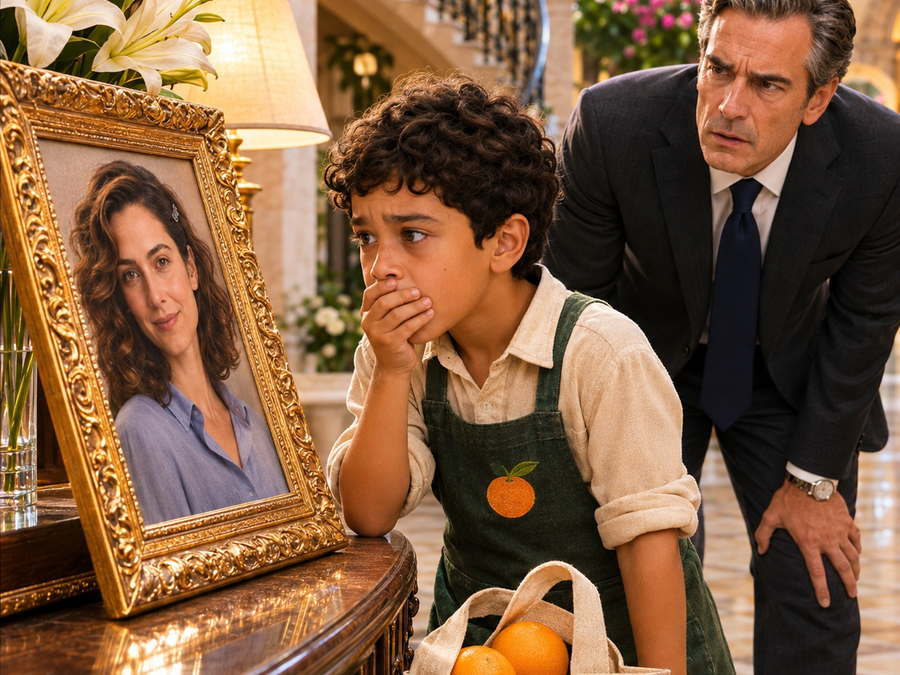
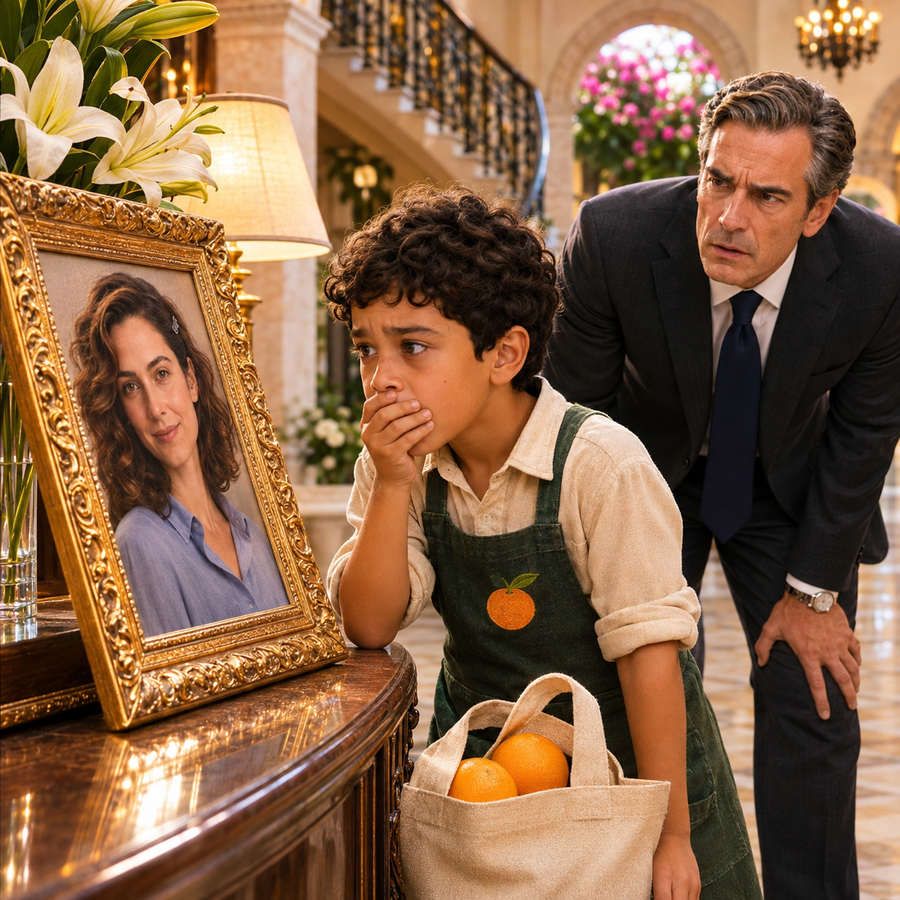
Just for a minute. I still need to get back to my mom. Wait. That’s my mom. Why do you have a picture of her?
Your mother’s name is Rose? How old is she? I knew her a long time ago.
She’s thirty-one. She never told me she knew a millionaire or lived here.
I was told she left me. I never knew why she disappeared, and I never saw this coming.
I only came to sell oranges. I need to take her medicine home before she gets worse.
I’ll pay the fifteen you asked and drive you to her if she agrees.
You don’t have to pay extra because you feel bad for me. Fifteen is enough.
I won’t. And I’ll ask before doing anything else. What medicine does your mother need?
An inhaler and antibiotics. Her cough gets worse at night, and she’s had a fever.
Then let’s call your mother and find a clinic. A doctor should choose the medicine. She’ll decide what happens.
I’ll call her now. Please don’t tell her about the photograph.
I don’t know yet. But I will not ask you to trust me before I earn it.
I need to get her medicine. She’ll worry if I stay away too long.
I’ll buy every orange and I’ll drive you home. Your mother comes first.
Fifteen dollars, sir. You don’t have to pay more just because you feel sorry for me.
I’m paying what you asked. The water and ride are kindness, not a debt.
Okay. But please don’t tell my mom anything before I do.
Then we’ll stop at the clinic first. A doctor should decide what treatment she needs.
I can call her from the car. She’ll come if I say it’s important. Mom, I’m coming home. A man bought all the oranges and he says you need a doctor.
Eli, are you safe? Who is this man and why are you bringing him here?
His name is Gabriel. He has a picture of you when you were young.
What did you say? Don’t let him in until I understand why he has that picture.
He said you knew each other. He didn’t make me stay and he paid for the oranges.
Gabriel? I haven’t heard that name in ten years. Let me see him.
Please sit down, Mom. You’re breathing too fast. The doctor can come here if you want.
I can decide that for myself, sweetheart. Ask him to wait outside for one minute.
Rose, I won’t come closer unless you ask me to. Eli told me you need a doctor.
You look older. I suppose we both do. Why did you tell him to bring me to a doctor?
Because your son said you were ill. I should have asked what happened before I spoke.
You don’t get to arrive after these years and decide what happens to us.
You’re right. I’ll arrange a doctor only if you agree and I’ll leave if you want.
I want Eli checked too. He has been walking in the heat and he skipped lunch.
I’ll take both of you to the clinic. Rose, you can choose whether I stay in the room.
I wanted to help. I didn’t know what else to do when you couldn’t stop coughing.
You should never have had to carry this alone. I won’t pretend I can fix the years behind us.
You can’t fix them. You can start by telling me what you were told about me.
My mother said you left willingly and wanted no contact. I believed her and I was wrong.
Your mother told me you chose your family name over me. I believed that too. I was twenty-one when she came to my apartment. She said you never wanted to see me again.
I waited at the train station for two hours. My mother said you changed your mind.
I wrote you letters. Every one came back unopened, so I stopped sending them.
I never saw a letter. I thought silence meant you had moved on.
She said your family would destroy my life if I tried to contact you again.
She told me you wanted a different future. I let her decide what your silence meant.
I didn’t want your money. I wanted the chance to tell you I was pregnant.
Eli is my son. I need to ask, even though I already feel the answer.
I never knew where you were. I raised him without your name because I thought you chose to leave.
I won’t claim a place in his life because of a photograph or a feeling. We can confirm the truth.
A test is fine if Eli understands and agrees. No one will pressure him.
Eli, a DNA test can show whether I’m your father. You can ask anything before deciding.
If the test says yes, does that mean you’ll be my dad right away?
Nothing could replace me, sweetheart. Knowing the truth doesn’t change who has loved you every day.
The clinic can collect the samples with both of you present. We’ll get results in a few days.
I’ll explain each step before we begin. Eli, you may stop at any time.
It doesn’t hurt? I don’t want a needle if it’s only a test.
No needle. I gently swab the inside of your cheek and then we’re finished.
You can hold my hand if you want or you can do it by yourself.
I’ll do it myself. I want to be brave because I chose to find out.
Whatever the paper says, we are still a family here. That’s not up for a test.
Would you like to see the orange trees in my garden while we wait?
Do they actually grow oranges? I thought rich people bought them from a store.
They do and they’re sweeter when you wait for them to ripen. My father planted these.
I can show you how to tell when one is ready. The color isn’t the only clue.
Then you can teach me. I have spent years owning this garden without knowing its trees.
You have so many things but you didn’t know what was happening to my mom.
You’re right. Having a house and money never gave me the right to call myself a good father.
I hear you brought Rose and her child into this house without speaking to me first.
They are here because I invited them. You will speak to Rose with respect.
I did what I thought was necessary to protect this family from a poor girl’s ambition.
I never asked you for money. I asked your son for honesty, and you took that from us.
You were young. I believed you would make Gabriel abandon the life he was meant to lead.
You lied to both of us. You didn’t protect my future. You chose it for me.
I was afraid you would throw away everything your father built for someone you barely knew.
I lost the chance to know Rose and my son because you decided the truth belonged to you.
I didn’t know there was a child. I thought she left before anything could happen.
You threatened me and told me Gabriel wanted nothing to do with me. I believed you.
You will not contact Eli or Rose alone until they decide they are ready.
So I am to be treated like a stranger in my own family.
Trust has to be rebuilt. You can begin by telling the truth and accepting their boundaries.
Did you know I was out selling oranges today? Mom needed medicine, and I was scared.
No. I didn’t know. I am sorry you had to face that alone, Eli.
An apology matters, but we need time. Eli and I will decide what contact feels safe.
I understand. I won’t come to your home or approach Eli without your permission.
The test results should arrive today. We can read them together wherever Rose feels comfortable.
We’ll read it at the apartment. I want Eli to feel at home when he hears the answer.
I want all three of us to open it at the table together.
Then we open it together. Whatever it says, we will talk honestly afterward.
The result says 99.9 percent. Gabriel, he is your son.
I missed nine years, but I won’t ask you to pretend they didn’t happen.
So you’re really my dad? I can call you that if it feels right?
You can call me whatever feels comfortable. I will answer whenever you need me.
Being his father means showing up after today, even when it’s inconvenient.
I will show up. School meetings, medicine refills, ordinary Tuesdays, and every hard conversation.
Can we go to the medicine shop now? Mom’s prescription is on the counter.
Yes. And you can choose dinner tonight. No grand celebration unless you want one.
Soup and bread. Something ordinary sounds wonderful after today.
Your breathing is clearer, Rose. Keep taking the medicine, drink fluids, and come back Friday.
I can sleep through the night now. I still feel weak, but I can breathe without pain.
I arranged the follow-up you chose, and I brought the bus schedule too. Which works for you?
The bus is fine today. I want help when I ask for it, not someone deciding for me.
Understood. I’ll ask before arranging anything, and I’ll listen to the answer.
I saved one orange for you. It’s the sweetest one from the whole bag.
Then we’ll share it. You don’t have to sell every good thing you have anymore.
Rose, I brought the letters I kept from you. I should have returned them years ago.
You may leave them here. I will decide when I’m ready to read them.
I won’t ask you to forgive me. I only wanted you to have what was yours.
That is a beginning. It doesn’t erase what happened, but it gives me a choice.
Would you consider visiting the garden with me and Eli this weekend? No pressure.
One hour in the afternoon. If I get tired, we leave. That’s what I’m comfortable with.
One hour and we leave when you say. Thank you for giving us a chance to begin.
Can we plant an orange tree at home, too? I want to watch it grow with Mom.
We’ll find a sunny place for it. You can teach me how to care for the roots.
I used to imagine this garden when I was young. I never thought I’d return with my son.
Mom is feeling stronger now. After several weeks of treatment, the doctor says she can return to work slowly.
I want to return to work, but I also want a life with room for joy.
I want that life with you, Rose. Would you let me build it beside you? One honest day at a time.
Yes. I want to marry you, but we will keep choosing honesty, even when it is difficult.
Then we should have a wedding in this garden. The place where I found your picture brought us back together.
A small wedding, only the people you both choose. This will be your home too, Eli, if you want it.
We can make a home together without rushing. Eli and I will keep our apartment until we are ready.
Of course. Your home remains yours. We will make decisions together, and I will keep showing up.
I heard about the wedding. If you want me there, I will come only as a guest.
You may come. Stay respectful and understand this invitation does not erase the past.
I understand. I am grateful for the chance to be present, and I won’t ask for more.
Today I marry the man I once loved, knowing we still have work to do and truth to tell.
I choose you with the truth between us. I will listen, respect your choices, and show up for our family.
I brought one orange from our first day. Now it means we found our way back to each other.
We can’t change the years we lost, but from today on, no one in this family has to face life alone.
The wedding was small, as Rose had wanted. Just a handful of chairs arranged beneath the oldest orange tree in the garden, its branches heavy with fruit that glowed like small suns in the afternoon light. Eli stood beside his mother, holding her hand, wearing a new shirt that Gabriel had bought him—not because he had to, but because he had asked what color Eli liked and then listened to the answer. Rose wore a simple white dress that she had chosen herself, and when she walked down the short aisle between the chairs, her breathing was steady and her eyes were clear.
Gabriel waited for her beneath the tree. He had not slept well the night before, not because he was nervous about the wedding, but because he was nervous about everything that came after. He had spent ten years building walls around his heart, protecting himself from the pain of a loss he had never understood. Now those walls were gone, and he stood in the garden his father had planted, waiting for the woman he had loved since he was twenty-one, the woman he had never stopped loving, even when he had believed she had left him behind.
“You look beautiful,” he said when she reached him.
“You look nervous,” she replied.
“I am.”
“Good. I would be worried if you weren’t.”
They laughed, and the small sound of it carried through the garden like a bird taking flight.
The ceremony was brief. There was no officiant, no formal vows, no exchange of rings. Instead, Gabriel and Rose spoke to each other in their own words, in front of the people they had chosen to witness their beginning.
“I spent ten years believing you didn’t want me,” Gabriel said. “I spent ten years building a life that looked successful from the outside but felt empty on the inside. I didn’t know what I was missing until a boy showed up at my gate with a bag of oranges and a picture of your face.”
Rose smiled, her eyes shining. “I spent ten years raising our son alone, telling myself I didn’t need you, telling myself I could do it all by myself. I was wrong. Not because I couldn’t do it—I could, and I did—but because I shouldn’t have had to. We should have done it together.”
“We can’t change the years we lost,” Gabriel said. “But we can choose what happens next.”
“I choose you,” Rose said. “I choose honesty, even when it’s hard. I choose showing up, even when it’s inconvenient. I choose building a life with room for joy.”
“I choose you too,” Gabriel said. “I choose listening, respecting your choices, and showing up for our family. Every day. No exceptions.”
They kissed, and Eli cheered, and the small group of guests—Junie from the front desk, Mrs. Adewumi from next door, a few of Rose’s coworkers from the clinic—clapped and wiped their eyes.
After the ceremony, they sat at a long table beneath the orange trees and ate soup and bread and a cake that Eli had helped bake. The sun moved slowly across the sky, and the garden was filled with the sound of laughter and conversation and the soft rustle of leaves in the breeze.
“Can I say something?” Eli asked, standing up from his chair.
“Of course,” Rose said.
He looked around the table at the faces of the people who had gathered to celebrate. His mother, who had worked so hard and loved him so much. Gabriel, who had found them by accident and then chosen to stay. Junie, who had helped them navigate the confusing world of clinics and paperwork. Mrs. Adewumi, who had watched Eli after school and never asked for anything in return.
“I used to think that families were just the people you lived with,” Eli said. “But now I think families are the people who show up. The people who choose you, even when it’s hard. The people who see you, even when you’re invisible.”
He paused, looking at Gabriel.
“You didn’t know about me for nine years,” he said. “But you showed up when you found out. You didn’t have to. You could have paid for the oranges and driven away. But you didn’t. You stayed.”
Gabriel’s eyes were wet. “I’m glad I stayed.”
“Me too,” Eli said. “Because now I have a dad. And a mom who can breathe. And a garden with orange trees. And a whole family of people who show up.”
He raised his glass of juice. “To showing up.”
“To showing up,” everyone echoed.
The months that followed were not easy. There were hard conversations and difficult adjustments. Gabriel had to learn how to be a father—how to help with homework, how to set boundaries, how to listen without trying to fix everything. Rose had to learn how to trust again—how to accept help without feeling like a burden, how to let someone else share the weight she had carried alone for so long. Eli had to learn how to navigate a world with two parents instead of one—how to divide his time, how to ask for what he needed, how to be honest when something felt wrong.
But they worked at it. They went to family counseling. They had weekly check-ins at the kitchen table. They learned to say “I need help” and “I’m sorry” and “I’m here.” They learned that love was not a feeling but a practice, something you did every day, something you built one honest conversation at a time.
Gabriel kept his promise. He showed up for school meetings and medicine refills and ordinary Tuesdays. He learned to cook Eli’s favorite meals and to sit with Rose when her breathing was bad and to listen—really listen—when she told him what she needed. He sold the big house with the empty garden and bought a smaller one with a bigger yard, where they planted three orange trees: one for him, one for Rose, and one for Eli.
Rose kept her promise too. She returned to work slowly, then full-time, and then she started taking classes at night, working toward a degree in social work. She wanted to help other families like hers—families that had been torn apart by lies, families that had been left to fend for themselves. She became an advocate, a voice for the invisible, a reminder that everyone deserved to be seen.
And Eli grew. He grew tall and strong and confident. He kept drawing, filling notebooks with pictures of gardens and machines and the people he loved. He kept selling oranges, but now it was for fun, not survival. He set up a stand outside the new house on Saturday mornings and gave the money to a local shelter. He said it was his way of showing up.
Gabriel’s mother, Margaret, did not attend the wedding. She had been invited, as Rose had promised, but she had declined. She said she was not ready to face the people she had hurt. But she wrote a letter—a long, honest letter—and sent it to Rose’s apartment.
“I was wrong,” she wrote. “I was afraid, and I let my fear make decisions that belonged to other people. I told myself I was protecting my son, but I was only protecting my own idea of what his life should be. I don’t expect forgiveness. I don’t expect anything. But I want you to know that I see now what I couldn’t see then. I see you, Rose. I see the woman who raised a beautiful son all by herself. I see the courage it took to keep going. I see the love you gave him. And I am sorry.”
Rose read the letter three times. Then she folded it carefully and put it in the drawer where she kept her important things—her son’s drawings, her mother’s ring, the photograph of her and Gabriel that had started everything.
She did not respond immediately. She took her time. She talked to Gabriel, and to Eli, and to her counselor. She decided that she was not ready to forgive, but she was ready to leave the door open. She wrote back a short note.
“I received your letter. I believe you are sorry. I am not ready to forgive, but I am willing to try. If you would like to meet, we can have coffee. Just the two of us. No expectations. Just a beginning.”
They met at a café near the garden. Margaret was older than Rose remembered, her hair gray, her hands trembling slightly as she held her coffee cup. They sat in silence for a long moment. Then Margaret said, “I don’t know how to begin.”
“Neither do I,” Rose said. “But I think we start by telling the truth.”
So they did. They talked for three hours. Margaret told Rose about her own mother, who had been cold and distant, who had taught her that love was something you earned, not something you were given. She told Rose about the fear that had driven her to lie, the fear that her son would throw away everything his father had built for a woman she didn’t understand. She told Rose that she had been wrong, and that she had spent the last year trying to understand why.
Rose listened. She did not interrupt. She did not argue. She simply listened, the way she wished someone had listened to her ten years ago.
When Margaret was finished, Rose said, “I forgive you.”
Margaret looked up, surprised. “Just like that?”
“Not just like that. I’ve been working on it for months. I’ve been talking to my counselor, and to Gabriel, and to Eli. I’ve been thinking about what forgiveness means. It doesn’t mean forgetting. It doesn’t mean pretending it didn’t happen. It means choosing to let go of the anger so I can move forward. It means choosing to see you as a person, not as the woman who hurt me.”
“I don’t deserve that.”
“Maybe not. But I deserve to be free of the anger. And Eli deserves to know his grandmother. And Gabriel deserves to have his mother in his life. So I’m choosing forgiveness. Not for you. For us.”
Margaret began to cry. “Thank you,” she whispered. “Thank you.”
They finished their coffee and walked to the garden together. Eli was there, playing beneath the orange trees. He looked up when he saw them and smiled.
“Grandma!” he shouted, running toward her.
Margaret knelt down and opened her arms. Eli hugged her, and she held him close, and for the first time in years, she felt like she belonged somewhere.
“Would you like to see the trees?” Eli asked. “Dad says they’re the sweetest oranges in the whole city.”
“I would love to see the trees,” Margaret said.
They walked through the garden together—Margaret, Rose, and Eli—and the sun was warm and the air was sweet and the trees were heavy with fruit. And somewhere in the distance, Gabriel watched from the porch, and he smiled.
The years passed. Eli grew up and went to college. He studied engineering, like his father had hoped, but he also studied social work, like his mother. He wanted to build things that lasted, but he also wanted to help people who had been forgotten. He wanted to be the kind of man who stopped for strangers in wheelchairs and bought oranges from boys who needed medicine for their mothers.
Rose and Gabriel grew old together. They kept the garden, and the orange trees, and the letters that had been returned unopened. They kept the drawing Eli had made of the three of them standing beside a table with three sandwiches. They kept the photograph that had started everything, the one of Rose when she was young, the one Gabriel had found in a millionaire’s house.
And every year, on the anniversary of the day Eli had sold oranges at Gabriel’s gate, they gathered in the garden and ate soup and bread and cake, and they told the story of how a boy with a bag of oranges had brought a family back together.
“We can’t change the years we lost,” Gabriel would say.
“But from today on,” Rose would add, “no one in this family has to face life alone.”
And Eli, now a man with his own children, would raise his glass and say, “To showing up.”
“To showing up,” everyone echoed.
And the orange trees bloomed, and the fruit ripened, and the family grew, one honest day at a time.
The front door fits us all.
And it always would.