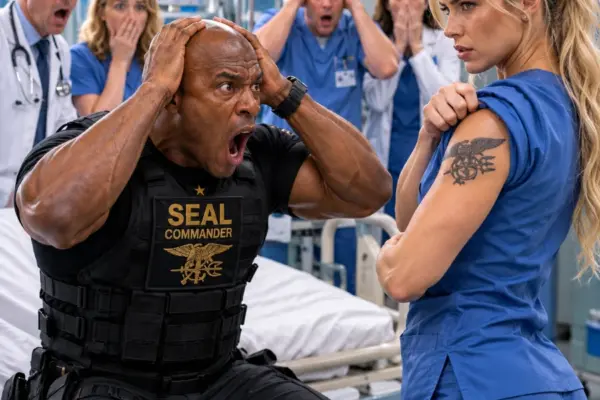
The Pediatric ER Nurse Heard Multiple Gunshots — What She Did Shocked Everyone and Saved Every Child
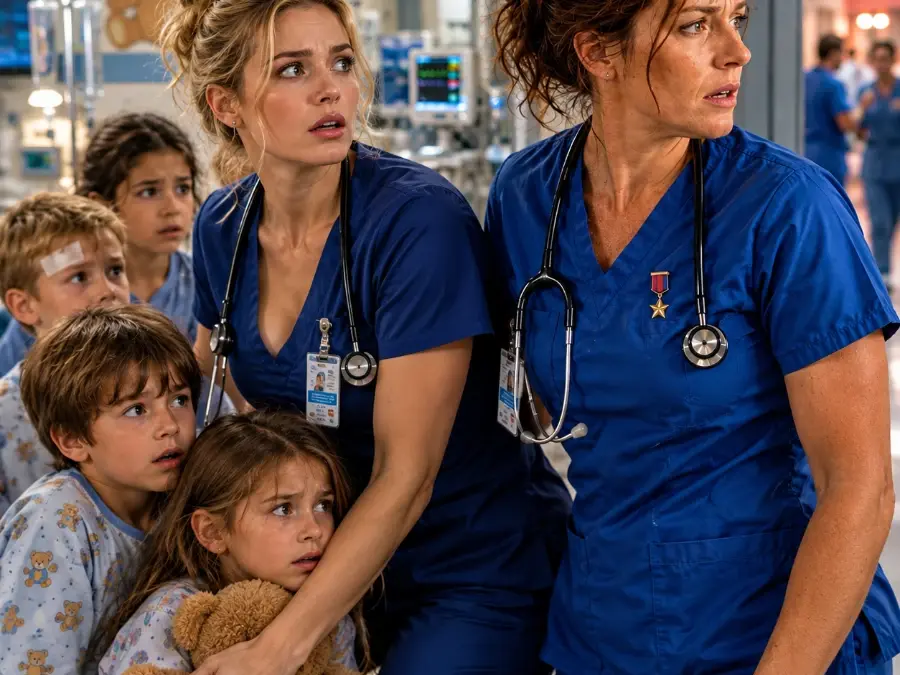
The Pediatric ER Nurse Heard Multiple Gunshots — What She Did Shocked Everyone and Saved Every Child
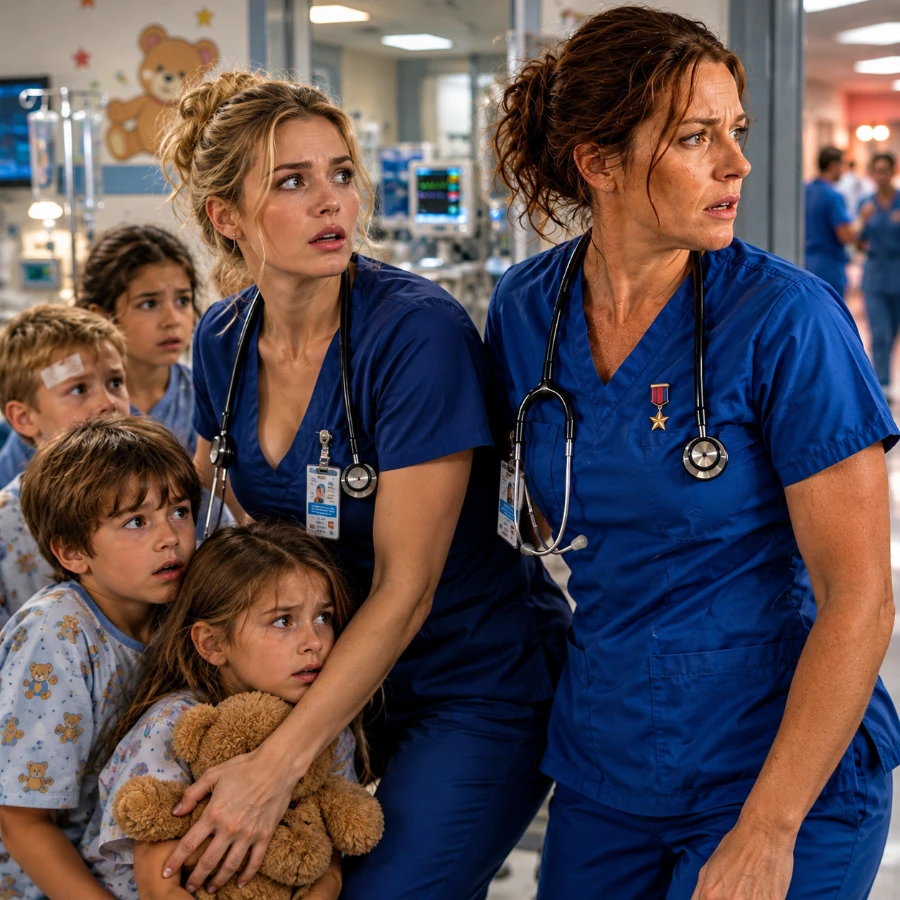
A quiet pediatric ER nurse was mocked as weak by a famous doctor who cared more about cameras than children.
But when multiple gunshots shattered the evening outside the hospital and wounded kids began pouring through the doors, she did not freeze like everyone else. She locked down the unit, took command of the chaos, and saved child after child with skills no ordinary nurse should have.
And when the shooter entered the hospital looking for one specific child, the entire pediatric ER discovered that Claire Whitman had once belonged to a federal team trained for the kind of nightmare no hospital ever expects.
Before we go further, hit like, subscribe, and tell me what city you’re listening from.
Welcome to the channel, because what this nurse does next will make the entire pediatric ER go silent.
“Get her away from my patient.”
Dr.Nolan Pierce snapped. The little boy on the stretcher stopped crying.
So did his mother.
Claire Whitman stood beside the bed with one hand still resting gently on the child’s shoulder.
She was 34 years old, white, pale from long shifts under hospital lights, with auburn hair pinned in a loose knot that never looked as neat as she wanted.
Her bright blue scrubs were too long at the sleeves. Her badge hung crooked.
A thin scar crossed the outside of her left wrist, mostly hidden beneath a watch band.
She looked like every tired pediatric nurse in America.
That was exactly the point.
Dr.Pierce stepped closer, smiling for the phone held by a resident behind him.
He had perfect hair, perfect teeth, and a pediatric surgery podcast with half a million followers.
The nurses called him Dr.Camera when he was not listening. He always listened.
Claire did not move.
The boy’s name was Ethan, 6 years old, fever, dehydration, a small body curled around a stuffed dinosaur with one plastic eye missing.
His mother had been waiting 4 hours because Pierce had moved two influencer families ahead of her.
Claire had started the IV. Pierce had walked in and decided that was a crime.
“I said step away.”
He repeated.
“You are not the physician here.”
Claire kept her voice low.
“His veins were collapsing.
He needed access.
He needed a doctor.
He needed fluids.”
The resident with the phone gave a nervous laugh. A few staff members at the nurses station looked down at their screens.
Nobody wanted to be caught watching.
Nobody wanted to be next.
Pierce turned toward Ethan’s mother.
His smile became soft and public.
“Ma’am, I apologize.
Some staff forget their scope when they get emotional around children.”
The mother glanced from him to Claire.
“She helped him.”
“She overstepped.”
Pierce said.
“There is a difference.”
Claire removed her gloves and dropped them into the trash. Her hands did not shake.
They rarely did. Not during seizures.
Not during codes.
Not when a child stopped breathing and the room turned loud enough to break a person in half.
Pierce noticed. He always noticed anything that threatened his control.
“You have something to say, Nurse Whitman?”
Claire looked at Ethan.
The boy’s lips were less dry now.
Color was returning to his cheeks.
“No, Doctor.”
Pierce smiled wider.
“Good.
Because I need you to understand something.
Children’s medicine is not instinct and soft voices.
It is training, judgment, authority.”
Claire nodded once.
Behind Pierce, resident kept filming.
Pierce lowered his voice just enough to make it cruel. You are here to comfort scared kids, hold hands, bring stickers, maybe sing a song if you know one.
Leave the decisions to people who earned them.
Ethan’s mother flushed.
Claire’s eyes stayed calm.
A tiny flash passed through them, gone before anyone could name it.
Pierce mistook silence for surrender.
Most people did.
Bay seven needs cleaning, he said. Vomiting toddler, try not to start surgery while you wipe the floor.
A nurse at the desk covered her mouth.
Someone else looked away. Claire picked up the cleaning bin.
Ethan grabbed her sleeve before she could leave.
Don’t go.
He whispered. The words hit a place inside her that had no name.
Claire crouched until her eyes were level with his.
I’m still here.
Pierce exhaled sharply.
Whitman. Claire stood.
She walked out with the bin in one hand and her jaw locked so tightly it hurt.
The pediatric emergency department at St.Agnes Children’s Hospital sat on the south side of Hartford, Connecticut.
It was a bright place by design.
Painted fish on the walls, cartoon clouds on the ceiling, a waiting room full of plastic chairs in cheerful colors that did nothing to soften fear.
Kids cried differently than adults.
Adults cursed, begged, argued, denied.
Children looked at you like you were the last safe thing in the world.
That was why Claire had chosen pediatrics after leaving federal service. She had told herself children would be different.
No desert compounds, no hostage rooms, no radio traffic snapping in her ear while she watched a sniper dot crawl across a curtain. Just fevers, broken arms, asthma attacks, bike accidents, normal fear, manageable fear.
She lasted eight months before learning that fear did not care where you worked.
It followed. It changed clothes.
Sometimes it wore a hospital bracelet with dinosaurs on it.
Claire cleaned Bay 7 in silence. The toddler had missed the emesis basin, the bedrail, and most of his own shirt.
His father apologized three times.
Claire told him it was fine each time because it was.
A child being sick was not an inconvenience.
It was the job.
Her co-worker Marcy slipped into the room while Claire changed the sheets.
Marcy was 52, black hair streaked with gray, sharp eyes, sharper mouth, and the only nurse in the department who had ever asked Claire a question and accepted silence as an answer.
“He humiliated you on purpose,” Marcy said.
Claire tucked the sheet under the mattress.
“He does that.”
“He filmed it.”
“He films everything.”
“That does not make it normal.”
Claire wiped the rail.
“Normal is a flexible word in this place.”
Marcy studied her.
“You know, most people would cry in the supply room after that.
” Claire sprayed disinfectant.
“Supply room camera works.”
Marcy blinked.
Then she laughed once.
“You scare me sometimes.”
“Sorry.”
“I didn’t say it was bad.”
A scream rose from the waiting area.
Not panic, anger.
A father yelling about wait times. Security moved toward him with slow, practiced boredom.
Claire looked through the doorway.
The man was big, red-faced, holding a toddler with a rash.
His wife pulled at his elbow.
A security guard put both palms out. The man stepped forward.
Claire watched his shoulders, his hands, his eyes. No weapon, no targeted aggression.
Exhaustion, fear, and pride mixing badly. He would shout, maybe shove, not shoot.
Her breathing slowed.
Marci noticed.
You do that a lot. Do what?
Look at people like you’re measuring exits.
Claire turned back to the bed. Hospitals have exits.
That is not an answer. It is tonight.
Marci’s radio crackled.
Peds charged to triage. Peds charged to triage.
Marci sighed. That is me.
Claire nodded.
Marci paused at the door. Do not let Pierce make you small.
Claire did not answer.
Because Pierce had not made her small. Claire had made herself small years ago.
That was how she stayed alive. At 5:42 p.m.the ER filled with the usual after-school wave.
Playground fractures, basketball sprains, a 9-year-old with a bead stuck in her nose, two siblings with stomach pain after eating half a bottle of gummy vitamins. Pierce moved through the department like he owned every inch of it.
He corrected nurses loudly, praised himself softly, took three calls on speakerphone.
Claire kept working.
She gave stickers to a boy after stitches, calmed a baby through a nebulizer treatment, translated fear into instructions parents could follow.
Breathe with him.
Hold her hand.
Look at me, not the needle.
One small thing at a time.
At 6:08 p.m.the first sound came.
Pop.
Claire froze with a syringe cap between her fingers.
The department did not.
A monitor beeped.
A child coughed.
Someone laughed in the hallway.
Then came the second sound. Pop.
Pop.
Pop.
Closer.
Not fireworks.
Not a car backfiring.
Gunshots had a shape.
Claire knew the shape. Her body moved before the room understood.
She stepped to the hall and scanned left.
Waiting room. Security desk.
Main glass entrance. Parents standing.
Children turning toward the noise with curious faces. Then the screaming began outside.
A woman slammed against the glass doors. Blood streaked behind her palm.
Claire dropped the syringe cap.
“Lock down.”
She said.
Nobody moved.
Claire turned toward the nurses’ station.
Her voice changed.
Lower.
Sharper. Command without volume.
“Lock down now.
Close the fire doors. Move children away from glass.
Kill the lobby lights.”
Marci looked up.
For half a second she did not recognize Claire.
Then training took over.
“Lock down.
Everybody move.”
The third burst of gunfire cracked through the evening.
The glass entrance spiderwebbed.
Parents screamed.
Pierce stepped out of trauma bay two. Face pale.
“What is happening?”
Claire was already running. A security guard stumbled through the doors.
One hand clamped to his shoulder.
Behind him a teenage girl dragged a boy no older than 10.
Blood covered the boy’s hoodie.
The lobby became sound. Shoes slipping.
Mothers crying.
Chairs scraping.
Children wailing.
Claire pointed to Marci.
“Green tags to the far hall.
Walking wounded only. Red to trauma one and two.
Yellow to fast track.
Black only if no pulse after airway check.”
Marci stared.
“Claire.”
“Move.”
Marci moved.
Pierce grabbed Claire’s arm.
Who authorized you to call triage?
Claire looked down at his hand. He let go without knowing why.
“We have pediatric gunshot wounds incoming.”
Claire said.
“You can argue later.”
“This is my department.
” “Then act like it.”
The words landed hard.
Pierce’s mouth opened.
The front doors burst inward.
A father carried a little girl against his chest. Her pink backpack bounced against his arm.
One shoe was missing.
Blood pulsed between his fingers where he pressed her upper thigh.
“Help her!”
he shouted.
“Please!
Somebody help my baby!”
Pierce went still.
The father shoved through the lobby. Claire met him halfway.
“How old?”
“Eight.”
“She’s eight.
Her name is Lily.
Please.”
Claire’s hands were already on the wound.
Bright blood.
Fast. Femoral wrist.
Small leg. Smaller margin for error.
“Marci.”
Claire called.
“Trauma one.
Now.”
Pierce snapped awake.
“We need surgery paged.”
“We need pressure first.”
Claire climbed onto the moving stretcher as two techs rolled it backward.
She put both hands deep into the child’s groin crease and pressed hard against bone.
Lily screamed once, then her eyes fluttered.
The father tried to follow.
Claire looked at him.
“Sir, listen to me.
She can hear you. Stay where she can hear your voice.
Tell her about something safe.”
He sobbed.
“What?”
“Birthday, beach, dog, anything.
Talk now.”
The father stumbled beside the stretcher.
“Lily bug, remember Cape May?
Remember the shells? You found the purple one.
You made me carry every shell in my pockets.”
Claire kept pressure. Blood warmed her gloves.
“BP?”
she asked. A resident fumbled with the cuff.
“70 over 40.
Wait.
Maybe 25 kilos.
Estimate 26. Activate massive transfusion pediatric protocol.
O negative until cross-match. TXA per weight.
Warm fluids only.
No cold saline dump.”
Pierce stared at her.
“How do you know?”
“Not now.”
The resident moved faster. Claire looked at Lily.
“Lily, open your eyes.”
The girl blinked.
“Good.
I’m Claire.
You’re in the hospital.
Your dad is here.
You are not alone.”
Lily’s mouth trembled.
“It hurts.”
“I know.
You’re doing brave work.”
The father broke. Pierce reached for the dressing tray with clumsy hands.
“We need a tourniquet.
” “No.”
Claire said.
“Too high.
Junctional wound.
Direct pressure.
Pack when ready.”
“That is not standard.”
“It is if you want her alive.”
Pierce flushed.
But he did not stop her. Outside, more shots cracked.
Inside, the pediatric ER became a battlefield with cartoon fish on the walls. Claire heard everything.
The squeak of wheels, the panic in room four, a baby crying behind closed curtains, a mother praying under her breath, a phone vibrating on the floor.
And beneath it all, the rhythm she had spent years trying to forget. Assess.
Prioritize. Protect.
A nurse rushed in.
“We have three more coming.”
Claire did not lift her hands.
“Ages?”
“12, 7, maybe 15.
One chest wound, one arm, one not moving.”
Pierce swallowed.
“We need adult trauma support.”
“Already called.
” Marcy shouted from the hall.
“They are locked down upstairs.
Police say active shooter outside the south entrance.
Claire’s eyes flicked to the door.
South entrance connected to pediatrics through the ambulance corridor.
Too close.
Security status?
She asked.
Nobody answered. Claire raised her voice.
Security status?
A tech appeared at the doorway.
One guard down, one missing, police 2 minutes out.
2 minutes could be a lifetime.
Pierce stepped back breathing hard.
We need to evacuate.
No, Claire said.
We shelter. Hallways expose children.
We harden the unit. Harden?
Claire ignored him. Marci, move all ambulatory kids into the interior playroom.
No windows. Use blankets to block door gaps.
Keep one nurse with asthma meds and EpiPen.
Marci nodded.
Jimmy? Claire stopped.
There was no Jimmy here.
Wrong hospital. Wrong life.
She corrected without missing a beat.
Owen, take two techs.
Barricade the south corridor with beds.
Wheels locked, brakes on, oxygen tanks away from doors.
Owen, a 22-year-old tech with fear shining in his eyes, stared at her. Can we do that?
Claire’s voice softened for 1 second.
Yes.
And you can do it fast.
He ran. Pierce looked at her like she had become a stranger.
What are you?
Claire pressed harder into Lily’s wound.
Busy.
The chest wound arrived next.
12-year-old boy.
Name? Marcus.
Blood bubbling at the right side of his chest, panic in his eyes. His basketball jersey cut open by paramedics who had brought him in with no ambulance, just a police cruiser and terror.
Breathing shallow, the paramedic said.
Couldn’t wait.
Scene is chaos.”
Claire looked at Pierce.
“That one is yours.”
Pierce blinked.
“Mine?”
“You’re the doctor.
Decompress if he tensions. Chest seal now.
Monitor left side, too.
Kids crash fast.”
Pierce moved to the boy.
His hands shook. Claire saw it.
So did everyone else.
The resident whispered, “Doctor?”
Pierce tore open a chest seal and dropped it.
Claire’s jaw tightened.
She still had both hands on Lily.
“Pierce,” she said.
He looked over.
“Look at his face, not the blood.
Talk to him.
Tell him what you’re doing.
You know this.”
For one strange second, Pierce looked like a man instead of a performance. Then he nodded.
“Marcus,” he said, voice unsteady but working.
“I’m Dr.Pierce.
I’m going to help your breathing.
” Claire returned her focus to Lily.
“Pressure?”
Blood?
Breath?
Time.
The first police sirens arrived outside. Then came a new sound.
Not gunfire.
A voice over the hospital intercom.
“Code silver.
Active threat.
Shelter in place.
Code silver.”
The words rolled through the walls.
Parents began to sob harder.
Children understood enough to be afraid. Claire looked toward the ambulance corridor.
She saw a shadow move beyond the frosted glass.
Too slow for staff. Too deliberate for a fleeing parent.
Her body went cold. The shooter was not outside anymore.
Six hours earlier, Claire Whitman had been sitting alone in the staff break room, eating yogurt from a plastic spoon, and pretending not to hear Dr.Nolan Pierce talk about her.
“She has no presence,” he said outside the half-open door.
Children like her because she makes herself small. That is useful for stickers and blankets, not emergencies.
A resident laughed softly.
Claire kept eating. Pierce continued.
Pediatric medicine requires command.
Parents panic, staff panic, kids panic.
You need someone who can control the room. Claire looked at the spoon in her hand.
Control a room. She could have told him about rooms with covered windows and men holding rifles.
Rooms where children had been used as bargaining chips.
Rooms where the wrong word could turn a hostage into a body. She could have told him control was not volume.
Control was seeing the weapon before it cleared the jacket.
Hearing the lie inside a shaking voice. Knowing when to speak and when to wait.
She had learned that at Quantico. Then in places that were not written on any public record.
Instead, she rinsed the spoon.
Pierce stepped into the break room and smiled when he saw her. Claire, I did not realize you were in here.
Yes, you did.
The resident behind him looked at the floor.
Pierce’s smile thinned.
I was giving educational feedback.
Claire threw away the yogurt cup. To someone else.
Because direct feedback seems to make you shut down.
Claire met his eyes.
No. It makes me quiet.
That is the problem.
He stepped closer.
He smelled like expensive cologne and mint gum.
You have been here 8 months.
You are technically competent.
Parents like you, children trust you, but you lack leadership.
You disappear when the room gets intense. Claire almost smiled.
Almost.
Pierce saw the beginning of it and hated it.
Something funny? No.
Then explain the expression. Claire picked up her badge from the table.
You wouldn’t like the explanation.
The resident’s eyes widened.
Pierce lowered his voice.
Careful. Claire clipped the badge to her scrubs.
Always.
She left him standing there.
That was the part nobody understood.
Claire was always careful. She checked reflections in dark windows without thinking, sat with her back to walls, counted exits in grocery stores, noticed men who wore coats too heavy for the weather, avoided crowds on July 4th, never let strangers stand behind her in elevators.
Careful had kept her alive.
Careful had also built a cage. Saint Agnes had hired her because she had a clean nursing license, years of emergency experience, and references from facilities that described her as calm under pressure.
The references were real. The omissions were larger than the truth.
Nobody knew she had once been special agent Claire Whitman.
Nobody knew she had served as a medic and negotiator attached to the FBI Hostage Rescue Team.
Nobody knew she had left after a school siege in Ohio where every tactical decision had been right and one child had still died.
Her name was Avery Cole, 7 years old, red glasses, two missing front teeth, a voice so small over the crisis phone that Claire had pressed the headset tighter against her ear as if she could physically hold the child through the line. Are you coming?
Avery had whispered. Claire had said yes, and she had meant it.
But yes had arrived 9 seconds too late. Afterward, the bureau had called the operation successful because 23 hostages survived.
The reports used words like disciplined, appropriate, unavoidable, and valor.
Claire heard only Avery.
“Are you coming?”
She resigned 11 months later.
Changed cities, changed hospitals, changed the shape of her life, but she could never change the part of herself that turned toward danger when children were inside it. At 3:20 p.m., she found a boy hiding under a waiting room chair.
He was small for his age, maybe nine, with brown hair falling into his eyes and a green hoodie zipped to his chin. He had no adult nearby.
Claire crouched 6 ft away, not too close.
“Hi.”
The boy stared at her shoes.
“I’m Claire.
I work here.”
No answer.
“That chair is a pretty good hiding spot.”
His eyes flicked up. Claire sat on the floor across from him.
Several parents watched. She ignored them.
“You waiting for someone?”
she asked. The boy shook his head.
“You here to see a doctor?”
A tiny nod.
“What’s your name?”
He pulled the hoodie tighter. Claire noticed bruising on his wrist, old, yellowing, finger-shaped.
Her breathing slowed.
“Okay.”
she said gently.
“You do not have to tell me.
Can I sit here for a minute?”
The boy looked toward the entrance. Not random.
Fear pointed somewhere.
Claire followed his gaze.
A man stood outside the glass doors near the drop-off lane.
Baseball cap, gray jacket, hands in pockets, too still.
Claire’s pulse changed.
The man saw the boy under the chair.
The boy flinched.
Claire shifted slightly, placing her body between the child and the entrance.
“What’s your name?”
she asked again.
The boy whispered, “Noah.”
“Hi, Noah.
You can’t let him take me.”
Claire kept her face calm.
“Who?”
“My mom’s boyfriend.”
The man outside moved closer to the glass. Claire stood slowly.
“Marci.”
Marci looked up from triage. Claire did not raise her voice.
“I need security at the front.”
“Quiet.
” Marci saw Claire’s face and did not ask why.
The man entered before security arrived.
He smiled like a person who had practiced looking harmless.
“There you are,” he said.
“You scared everybody.”
Noah crawled backward under the chair.
Claire stepped into the man’s path.
“Sir, I need you to check in at triage.
” “That’s my kid.”
“No, sir.
You need to check in.”
His smile faded.
“Move.”
Claire looked at his hands, empty.
Right pocket weighted, not a phone, maybe keys, maybe folding knife. His pupils wide, jaw working, rage under restraint.
“Sir,” Claire said, voice quiet.
“This is a children’s hospital.
Lower your voice.
” He leaned close.
“You don’t know what this is.”
“No,” Claire said.
“But I know you are frightening him.”
The sentence hit something raw. His hand twitched toward the pocket.
Claire angled her body, left foot back, weight balanced, ready.
Then security arrived.
Two guards, one older, one young.
The man saw them and changed immediately.
Smile back on, hands raised.
“Misunderstanding,” he said.
“Kid ran off.”
Claire looked at the older guard.
“He is not to leave with the child until social work and police verify guardianship.
The man’s eyes locked onto hers.
For a second, the mask slipped.
Pure hate. Then he backed away.
This is not over.
Claire believed him. Noah was taken to a safe room.
Social work called police. His mother arrived crying 20 minutes later.
The boyfriend was gone by then. Pierce heard about the incident and rolled his eyes.
You escalated a custody dispute into a security event, he said at the nurses’ station.
Claire signed a chart.
The child was afraid. Children are often afraid.
Not like that.
Pierce crossed his arms. You know, this savior routine may impress social work, but it disrupts patient flow.
Marcy nearly dropped her coffee.
Are you serious?
Pierce ignored her. Whitman sees danger everywhere.
That is not clinical judgment. That is projection.
Claire stopped writing. The word projection was carefully chosen.
Pierce liked words that sounded professional when he meant weak.
He continued. If you have personal trauma, seek help.
Do not turn my ER into your therapy room.
The nurses’ station went silent.
Claire looked at him.
Not angry. That would have been easier for everyone.
She looked at him like a door had closed somewhere inside her.
My ER? She asked.
Pierce smiled.
Yes.
Claire signed the chart and handed it to Marcy.
Then she said, That may become a problem someday. Pierce laughed.
3 hours later, the first bullets hit the glass.
Now with Lily bleeding under her hands and Marcus gasping two bays away, Claire understood what she had missed.
Noah.
The man in the gray jacket.
This was not random.
The gunshots outside, the timing.
The entrance through the south corridor.
He had come back for the boy and now every child in the unit was in the path. Claire looked toward Marcy.
Where is Noah?
Marcy’s face drained.
Interior playroom with the greens.
Move him.
Where? Medication room.
Lock it. No window.
One nurse only. Do not say his name on radio.
Marcy did not ask how Claire knew. She ran.
Pierce looked over from Marcus’s bed.
What is happening?
Claire kept pressure on Lily’s wound.
Shooter is connected to a patient. Pierce stared.
How could you possibly know that? Because I listened to the child you called a disruption.
The words hit him harder than any shout. A nurse rushed in with blood.
Claire shifted one hand just enough to let the resident pack gauze under her pressure.
Tighter. All the way to the source.
Do not dab.
Pack. The resident swallowed.
I’ve never Today you learn.
Push until you think it is too much. Then hold.
The resident obeyed.
Lily’s blood pressure crept upward.
82 systolic, someone called. Good, Claire said.
Keep warming. Surgery On the way.
Marcus coughed in the next bay. The monitor screamed.
Pierce froze.
The boy’s neck veins rose.
His oxygen dropped. Breath sounds disappeared on the right.
Tension, Claire said. Pierce looked at the tray.
His hand shook again.
Claire could not leave Lily. Pierce, she said, hard now.
Needle. Second intercostal, midclavicular.
You know the landmarks.
Do it.
He did not move.
Marcus’s mother screamed, “Help him!”
Claire looked at the resident holding Lily’s wound.
“Do not move your hands.
” “I won’t.”
Claire ripped off her bloody gloves, crossed the space in three steps, grabbed the angiocath and looked at Marcus.
“Marcus, eyes on me.”
The boy’s lips were blue.
Claire found the landmark by touch. In.
A hiss of trapped air escaped.
The monitor began to climb. Marcus dragged in a breath.
His mother sobbed.
Claire secured the catheter, sealed the wound, and turned back to Lily before anyone could react. Pierce stared at her.
Everyone stared at her. Claire put on new gloves and resumed pressure.
“If you have questions, save them.”
Pierce whispered, “Where did you learn that?”
Claire did not answer because the frosted glass at the ambulance corridor darkened again. This time the shadow had a gun.
The first shot through the inner door sounded like a hammer striking steel.
The second cracked the glass. Parents screamed from the hallway.
A toddler began shrieking in the playroom.
Claire’s head snapped up.
The shooter was at the south corridor barricade.
Owen had done his job.
Beds blocked the hall.
Breaks locked. Mattresses stacked behind them.
The barrier would slow a man.
It would not stop bullets forever.
Claire looked at Marcy.
“Take over pressure.”
Marcy moved without hesitation. Claire peeled off her gloves.
Pierce grabbed her sleeve.
“Where are you going?”
“To stop him.”
“You are a nurse.”
Claire looked at his hand. Again, he let go.
“No.”
She said, “I’m the person between him and the children.”
She walked into the hall.
The department had transformed in minutes. Lights dimmed, doors closed.
Parents crouched behind desks with children pressed against their chests. Nurses crawled instead of ran.
Someone had covered the glass windows with blankets and tape. Good.
They had listened. Another shot punched through the barricade.
A monitor behind Claire sparked. A child screamed.
Claire did not flinch. She stepped to the corner where the south corridor met the main pediatric hall.
She stayed behind cover, angled herself so only part of her face could be seen.
The shooter shouted from behind the beds, “Send out Noah.”
His voice confirmed it. The gray jacket man.
Noah’s mother’s boyfriend.
Claire closed her eyes for half a second.
Avery Cole’s voice rose from the old dark.
“Are you coming?”
Claire opened her eyes.
“Yes,” she whispered.
“This time I am.”
Then she called down the corridor.
“Mark, listen to me.
” Silence.
The shooter shifted.
“Who is that?”
“You talked to me earlier in the waiting room.”
A laugh, thin, unstable.
“The nurse.”
“Yes.”
“Send him out.”
“No.”
A shot slammed into the wall above her.
Parents screamed again. Claire did not move.
“If you wanted him dead,” she said, “you would be shooting through that barricade until you hit someone.
You are talking because you want control.”
No answer.
“You feel disrespected, exposed, like people are taking what belongs to you.”
His breathing grew louder. Claire listened.
Distance. Maybe 20 ft beyond the barricade.
One handgun. Semi-automatic.
He had fired at least 12 rounds outside and three inside. Unknown magazine.
Unknown spare. Agitated.
fixated.
“You don’t know anything.”
he shouted.
“I know Noah is alive.”
“Not if you keep pushing me.”
Claire lowered her voice.
“Mark, there are babies in this hallway.”
“Then move them.”
“We are, but you have to stop shooting.”
“He is mine.”
“No child belongs to fear.”
Another shot. This one closer.
A nurse whimpered behind Claire. Claire raised one hand without looking back.
“Stay down.”
Police sirens crowded the outside now. Radios crackled somewhere beyond the lobby, but response teams needed layout, entry points, identification, confirmation.
Minutes.
Claire did not have minutes.
A small voice behind her whispered, “Miss Claire?”
Noah. Her blood turned cold.
She looked back.
The medication room door was open.
A young nurse stood there, terrified.
“He said he needed the bathroom.
I only looked away for” Noah stood 10 ft behind Claire in the hall, pale and shaking.
The shooter heard.
“Noah!”
Mark screamed.
Claire moved. Not fast enough to frighten Noah, fast enough to block him.
“Get behind me.”
she said. Noah froze.
Mark fired.
The bullet struck the wall inches from Claire’s head, showering plaster across her hair.
Claire did not duck.
Noah stood frozen in the open hallway.
Mark screamed his name from behind the barricade, and the gun rose through the smoke. Claire stepped between them before anyone else could breathe.
The bullet hit the wall beside her face.
Plaster sprayed across her hair, but she did not duck.
Every child saw her standing there in bright blue scrubs. Then her voice changed.
Low.
Federal. Final.
“Mark, the next bullet decides how this ends.
Agent Harlow did not answer right away.
That was how Claire knew the situation was worse than the tablet showed. The pediatric ER around them had changed again.
The first wave of terror had passed, but the damage remained in every corner. Bullet holes marked the south corridor wall.
A blanket covered a broken pane of glass. A tiny sneaker sat beneath a chair where someone had lost it during the rush to hide.
Parents held children too tightly.
Nurses moved with the careful silence that comes after screaming. Claire stood in the middle of it all with dried blood on her blue scrubs and the name Avery burning behind her eyes.
Ask her about Avery. Only three people outside sealed federal files should have known that name mattered.
One was dead.
One had retired under medical review. One had vanished before the final report.
Harlow lowered the tablet.
We need to move you to a secure interview room.
No.
Claire. No, Claire repeated.
Not while children are still in this department. Ruiz looked from Harlow to Claire.
Ma’am, with respect, you may be the target.
Claire turned toward him. That makes every child near me secondary risk.
The young agent swallowed.
Harlow’s expression tightened.
That is exactly why we need you away from them.
And if the point was to pull me away from the unit? Harlow went still.
Claire looked toward the interior playroom. Noah sat with his mother under a yellow blanket.
Marcus was being prepared for transfer.
Lily was upstairs fighting through anesthesia and blood loss. Dozens of children were still waiting for parents, discharge papers, x-rays, and proof that the world had not become permanently unsafe.
Claire knew traps.
A trap did not always close where the bait stood. Sometimes it pulled the guard from the door.
She looked back at Harlow.
Whoever sent that note knew I would react to Avery. They knew I would focus on the message.
Harlow said nothing.
Claire continued. So, we check every child, every parent, every staff badge, every bag left behind, every unlocked door, every oxygen closet, every maintenance corridor, and every camera blind spot before anyone moves me anywhere.
Ruiz opened his mouth.
Harlow stopped him with one glance. Then she nodded.
All right.
Pierce had been listening from 3 ft away.
His face had gone pale again, but this time he did not look frozen.
He looked ashamed of fear and trying to work through it.
What do you need? He asked.
Claire studied him for half a second. The old Pierce would have asked what he could say to the cameras.
This one asked about work.
Patient census, Claire said.
Every child by name, room, acuity, guardian, destination. No one leaves without two-person verification.
Pierce nodded.
Marci, Claire called.
Marci was already there. I heard.
Lock the med room, then assign one nurse to every cluster of children.
No one alone, not even staff. Done.
Owen.
The young tech looked up from beside the nurses’ station.
His hands still trembled. Claire softened her voice.
You did good with the weapon.
His eyes filled.
She did not let him fall apart yet. I need you again.
Get maintenance diagrams. South corridor, ambulance entrance, basement stairs, service elevator.
Do not go alone.
Take an officer.
Owen wiped his face with his sleeve. Okay.
Claire turned to Harlow. I need access to exterior cameras.
Hospitals do not usually hand that to nurses. Claire looked at her.
Harlow exhaled. Right.
Bad sentence.
Director Voss appeared near the lobby with her lawyers, trying to look composed while failing. Harlow crossed to her and began speaking in a low federal voice.
Voss objected.
Harlow did not raise hers.
The lawyers stopped objecting first.
Claire moved through the ER room by room, child by child.
She started with the most vulnerable, infants on oxygen, a boy with an insulin pump, a girl with autism who had hidden under the sink and refused to come out until Claire sat on the floor and counted stars painted on the wall with her.
Two brothers with asthma, a teenager with a broken wrist who had used his body to shield his little sister when the first shots came through the glass.
Claire recorded names in her head, not on paper. Paper could be lost.
Systems could fail.
Memory under pressure was one thing the bureau had never taken from her.
Pierce followed with a tablet. He did not interrupt.
He did not perform.
When a parent demanded to know why FBI agents were inside a children’s hospital, Pierce did not spin the truth.
“There may be a continuing safety concern,” he said.
“We are verifying everyone and everything before we move patients.”
The mother glared.
“That is supposed to comfort me?”
“No,” Pierce said.
“It is supposed to be honest.”
Claire glanced back. Maybe he was learning.
At 10:04 p.m.Owen returned with a maintenance worker and two officers.
He carried folded diagrams like evidence.
“There is a service hallway behind radiology.”
Owen said breathless.
“It connects to the pediatric storage rooms.
Maintenance says it should be locked, but the lock has been sticking for weeks.”
Claire looked at the maintenance worker. The man looked away.
“How many times reported?”
she asked.
He shifted.
“Three.”
“To whom?”
“Facilities director.”
“And?”
“He said it was low priority.”
Claire looked toward the storage wing.
Low priority was how children died in nice buildings.
Harlow came back from the security office with a laptop.
“We found camera interruption on the south side 5 minutes before the first shots.
Same time someone opened the service entrance from inside.”
Pierce stared.
“Inside?”
Claire’s voice went flat.
“He had help.”
A sound came from the playroom. Small, sharp, not a scream yet.
Claire turned before anyone else processed it.
Noah’s mother stood in the playroom doorway with both hands over her mouth.
Noah was gone. For 1 second the department stopped breathing.
Then everyone moved at once. Claire raised her hand.
“Freeze.”
The command cut through panic. Parents froze.
Nurses stopped. Officers turned.
Claire walked to Noah’s mother.
“When?”
“I don’t know.”
The woman was shaking.
“He was right beside me.
I looked down to sign the advocate’s paper.
He was there.
Then he wasn’t.”
Claire looked at the floor. A yellow blanket trailed toward the rear hall, not running, dragged.
A child did not vanish through a locked unit after an active shooting unless someone had a key, a badge, or a familiar face. Claire turned to Harlow.
Seal exits.
Already calling it? Pierce whispered.
No.
Claire faced the staff. Nobody shouts his name.
Nobody runs alone. We search in pairs, quiet.
Every closed room gets cleared by police first.
Marci, keep the unit calm.
Marci’s face was stone.
Go.
Claire moved toward the rear corridor with Harlow and Ruiz behind her. Pierce followed.
Claire stopped. No.
Pierce straightened. He is my patient, too.
You are not trained for this. No, he said.
But I know the storage wing better than they do. And if he is hurt, you need a physician.
Claire looked at him. The old arrogance was gone.
In its place was fear, useful fear, fear with a job attached.
Stay behind me, she said.
Do exactly what I say.
He nodded.
They entered the staff hallway. The bright pediatric paint ended there.
The walls became beige. Pipes hummed overhead.
The air smelled like dust, bleach, and old cardboard. Claire saw three doors, linen, equipment, storage C.
The service hallway door at the far end sat open by 2 in.
Claire pointed. Ruiz moved left.
Harlow moved right. Pierce breathed too loudly.
Claire lifted one finger to her lips.
He closed his mouth. A soft scrape came from storage C.
Claire approached the door from the hinge side.
Harlow mirrored her. Ruiz covered the hallway.
Claire listened.
A muffled sob.
Noah.
And another voice, female.
Claire’s mind sorted possibilities in a flash.
Mother, nurse, advocate, staff member, accomplice?
The woman whispered, “Stop crying.
I’m trying to help you.”
Noah whimpered, “I want my mom.”
Claire’s eyes narrowed.
The tone was wrong, not panic, control.
Claire mouthed to Harlow, “One adult, one child.”
Harlow nodded. Claire spoke through the door.
“Noah.”
The whisper inside stopped.
“Noah, it’s Claire.
Do not move yet.”
The female voice answered, “Stay back.”
Pierce flinched.
Claire did not.
“Who am I speaking with?”
Claire asked.
No answer.
Harlow mouthed, “Gun?”
Claire listened again. No metallic shift, no slide, no hard breathing of someone aiming.
Maybe not gun, still dangerous.
“Claire,” the woman said suddenly, “you always did know how to sound calm.”
The hallway went cold.
Claire knew that voice. Older now, rougher, but memory supplied the missing years.
“Bethany,” Claire said.
Harlow’s eyes sharpened.
Inside the room, the woman laughed softly.
“I wondered if you would recognize me.”
Pierce whispered, “Who is Bethany?”
Claire did not answer him.
Bethany Ross had been a crisis intelligence analyst attached to the Ohio school siege. Brilliant, precise, fragile in ways nobody had noticed until after Avery died.
She had blamed the bureau, the tactical commander, the negotiator, the weather, the floor plan, the father of the suspect, the world. But most of all, she had blamed Claire.
Because Claire had promised Avery she was coming.
“Open the door,” Claire said.
“No.
You are good through doors, I remember. Noah is not part of this.
Children are always part of this with you. Pierce looked sick.
Claire kept her voice steady.
Bethany, listen to me. Mark is in custody.
He cannot help you.
He was never helping me. He was useful.
You gave an unstable abuser a target. I gave you a mirror.
Noah sobbed harder.
Claire stepped closer.
You wanted me here.
I’m here.
Let the boy out. You let Avery die.
The sentence struck like a blade sliding between ribs.
Harlow watched Claire carefully. Pierce stared at her in horror.
Claire did not defend herself. Not because Bethany was right.
Because arguing guilt with a person holding a child wasted time. Yes, Claire said.
Silence.
Bethany had expected denial.
Anger.
Federal language.
Claire gave her neither. Yes, Claire repeated.
Avery died while I was on the line with her.
Harlow’s jaw tightened.
Pierce closed his eyes.
Claire continued. And I have heard her every day since.
Inside the room, Bethany’s breathing changed.
Good. Impact.
Liar, Bethany said. No.
You moved on.
Changed your name. Hid in a hospital with children like that could wash it off.
I tried.
Noah whispered.
Miss Claire?
I’m right here, Claire said.
Keep your hands where I can see them if the door opens.
Bethany snapped.
Do not talk to him.
Claire shifted. Then talk to me.
You do not get to save this one and call it redemption.
I’m not asking for redemption.
Then what are you asking for? The child.
Bethany laughed, but it cracked in the middle.
Claire heard grief under the rage.
That mattered.
Rage burned fast. Grief stayed.
Bethany.
Claire said softly.
What do you want me to say? The answer came quickly.
Too quickly.
Practiced for years. That you killed her.
Claire felt the hallway fade.
Avery’s small voice filled her again.
Are you coming? Claire breathed in.
Then out.
I did not pull the trigger. She said.
Bethany shouted. You promised her.
Yes.
You promised.
Yes. The storage room went silent except for Noah crying.
Claire let the silence stretch. Negotiation was not filling air.
It was choosing which truth could stand inside it. Finally Claire said.
I promised because I believed we would reach her. I was wrong by 9 seconds.
Bethany made a wounded sound. Claire kept going.
I carried those 9 seconds for 7 years. I let them decide where I lived, how I worked.
Who I let know me.
I let them make me small. Pierce looked at the floor.
I will not let them take Noah too.
Claire said. A scrape inside.
A shelf moving.
Harlow stiffened. Claire raised one hand to hold position.
Bethany said.
You think saving him fixes it?
No.
What does?
Nothing.
The truth landed.
Claire heard Bethany inhale. Nothing fixes a dead child.
Claire said. Not medals.
Not reports.
Not another child saved later.
We do not get to balance the scale.
Bethany whispered.
Then why do you keep trying?
Claire’s answer came without thought.
Because the next child is still alive. The door cracked open.
Noah appeared first, shoved forward by a hand gripping the back of his hoodie.
His eyes were huge.
A strip of tape hung from one wrist.
Bethany stood behind him with a scalpel pressed near his neck. Pierce made a sound.
Claire did not look away from Bethany.
She looked older than Claire remembered. Thin face, dark circles, hair cut blunt at her jaw, hospital visitor badge clipped to her sweater.
She had walked through the chaos as a parent, a victim, a helper. No one had noticed.
Claire had not noticed. That failure cut deep, but she pushed it aside.
“Noah,” Claire said, “look at me.
” Bethany tightened her grip.
“No.”
Claire’s eyes stayed on the boy.
“Remember what I told you about brave?”
His lips trembled.
“Someone needs you more than fear does.”
“That’s right.”
Bethany’s face twisted.
“Stop turning him into a symbol.”
“He is not a symbol,” Claire said.
“He is a child.
His favorite color is green. He hides under chairs when adults get loud.
He asked me not to let Mark take him.
He wants his mother.”
Noah began to cry harder.
Bethany’s hand shook.
The scalpel moved a fraction from his skin. Claire saw it.
Harlow saw it. No move yet.
Claire stepped back, not forward.
“You can still let him walk away.”
“And then what?”
“Prison?
Headlines?
The crazy analyst who blamed the hero nurse?”
Claire shook her head.
“You are not crazy.
You are grieving and dangerous.
That is different.”
Bethany stared.
“Nobody said that to me,” she whispered.
“I know.”
“They told me to rest, to transfer, to stop reading the file.
I know. They made Avery a statistic.
Claire’s throat tightened.
Yes.
Bethany’s eyes filled.
She liked ladybugs, Claire remembered. Avery had told her on the line.
Red glasses, ladybugs, a blue backpack, her brother’s birthday party the next weekend.
She wanted a ladybug cake, Claire said. Bethany broke.
Not fully, but enough.
The scalpel lowered half an inch. Claire moved.
Harlow moved with her.
Claire caught Noah and pulled him sideways.
Harlow trapped Bethany’s wrist.
Ruiz surged in from the hall. The scalpel clattered to the floor.
Bethany did not fight like Mark. She folded, straight down to her knees.
Noah clung to Claire so hard his fingers dug into her scrub top.
“It’s okay.”
Claire whispered. I have you.
Bethany sobbed on the floor while Harlow cuffed her.
“I wanted you to feel it.
” Bethany said through tears.
“Just once.
I wanted everyone to see that you were not clean.”
Claire held Noah tighter.
“I was never clean.”
she said. Pierce stood against the wall, face wet, hearing every word.
The storage hallway filled with officers.
Noah’s mother arrived and collapsed around him.
Claire guided the boy into her arms and stepped back.
He would remember this night forever. That knowledge hurt, but he was alive to remember it.
That was enough for now.
Harlow handed Bethany to Ruiz, then turned to Claire.
“We need the room.
Take it.
And you.”
Claire looked toward the ER.
“In a minute.”
Harlow softened.
“Claire.”
“In a minute.”
Claire repeated.
This time Harlow let her go. Claire walked back into pediatrics alone.
The unit saw her return without Noah in her arms and went silent.
Then Noah appeared behind her with his mother and a police escort.
A sound moved through the ER. Not applause.
Something deeper. Relief.
Parents cried openly. Nurses leaned into walls.
Owen sat on the floor and covered his face.
Marci pressed both hands to her mouth.
Pierce followed last.
Claire stopped at the nurses station.
Director Voss approached, pale and shaken, with no lawyers beside her now. What happened back there?
She asked.
Claire looked at her. Your service door lock was reported three times and never repaired.
Voss blinked.
This is not the moment.
This is exactly the moment.
The department froze.
Claire’s voice was quiet, but every person heard it.
A man entered through a failed access point. A former federal employee entered during chaos with a visitor badge no one verified.
A child disappeared from a safe room because staffing was too thin and paperwork mattered more than eyes on patients. Every failure tonight had a name before it had a body.
Voss stiffened. You need to be careful with accusations.
No, Claire said.
You need to be careful with children. Marci whispered.
Yes. Then louder.
Yes. Owen stood.
The lock was reported.
I filed one of them.
A respiratory therapist raised her hand. I complained about badge access last month.
Another nurse spoke.
We asked for lockdown drills.
They said it scared families. Pierce stepped forward.
I dismissed a child’s safety concern because I thought flow mattered more.
That is on me, but the system made it easy. Voss looked around and realized she had lost the room.
Claire did not enjoy it.
There was no victory in a pediatric ER full of traumatized children, but there could be truth.
And truth was the first clean instrument in a dirty wound. Harlow returned with two state investigators.
Director Voss, we need all maintenance reports, security logs, visitor procedures, and staffing records for tonight.
Voss’s face tightened.
We will cooperate fully.
Claire looked at her.
Start by telling the truth to the families.
Voss said nothing. Pierce turned toward the waiting parents.
His voice carried.
My name is Dr.Nolan Pierce.
I am the attending physician in this pediatric ER.
Tonight, our staff saved every child brought through these doors, but we also failed before the first shot was fired.
We ignored warnings.
We dismissed fear.
We let broken systems stay broken.
You deserve the truth, and you will get it.
Claire looked at him. That cost him.
Good.
Some lessons should cost something. The next hours blurred into statements, transfers, family reunifications, and federal questions.
Lily remained critical, but stable. Marcus was moved to pediatric ICU.
The 7-year-old with the arm wound asked if he could keep the blanket because it smelled like the nice nurse. Marcy told him yes, and stole three more from central supply.
Noah and his mother were placed under protective custody.
Bethany Ross was taken to a federal holding facility under medical observation. Mark confessed before midnight.
He said an unknown woman had found him online, fed his rage, told him where Noah would be, and promised that the nurse who stole frightened children would be there. Bethany had built the incident like a wound reopening.
But she had miscalculated one thing.
Claire no longer believed guilt was a reason to hide. Two weeks later, St.Agnes held no press conference.
Claire refused one.
Instead, the hospital held a closed meeting for families affected by the shooting.
No cameras, no donors, no polished video.
Lilly arrived in a wheelchair with a purple shell sticker on her cast. Marcus came with a healing chest wound and a basketball signed by the nurses.
Noah sat between his mother and a victim advocate. He still flinched at loud sounds, but he smiled when Claire gave him a green dinosaur sticker.
Pierce stood at the front and read a statement he had written himself. Not for branding, for accountability.
He named the failures, his own included. He named the changes.
He named the children who lived because staff acted.
He did not call himself a hero once.
Then Claire spoke.
She hated standing in front of rooms.
She did it anyway.
“My name is Claire Whitman,” she said.
“I am a pediatric emergency nurse.
Before that, I worked in federal crisis response. I came to pediatrics because I thought I could leave the old life behind.
I was wrong.”
The families listened.
Claire looked at Noah, then Lilly, then Marcus.
“You do not protect children by pretending danger is rare.
You protect them by listening when they are afraid. You protect them by fixing small failures before they become fatal.
You protect them by respecting the quiet people who notice what others miss. Pierce lowered his eyes.
Claire continued, “Every child from that night survived.
That is not a miracle. It is the result of nurses, doctors, techs, officers, parents, and children doing brave things while terrified.
” Lily’s father wiped his face.
Claire’s voice softened.
“Bravery is not noise.
It is not title.
It is not being unafraid.
Bravery is moving towards someone who needs you when fear tells you to move away.”
Noah whispered something to his mother.
She nodded. He stood, walked to Claire, and handed her a folded drawing.
It showed a nurse in blue scrubs standing in front of a door. Behind her were children.
In front of her was a dark scribble with angry eyes.
Above the nurse in careful child letters, Noah had written, “She came.”
Claire held the paper with both hands.
For a moment, she could not speak. Then she crouched and hugged him, not tightly, just enough for him to choose it, too.
3 months later, the Pediatric Protective Response Unit ran its first full drill.
No one laughed at it. No one called it bad optics.
Nurses practiced moving children from windowed rooms. Doctors practiced taking direction from nurses during lockdown.
Security practiced badge challenges until they were bored, then practiced more. Facilities repaired locks before being asked twice.
Social workers built rapid custody risk alerts into intake.
Child life specialists created fear scripts that explained hiding without making children feel hunted.
Pierce attended every session. Sometimes he struggled.
Sometimes his ego rose like an old reflex.
Claire would look at him. He would stop.
That was evidence.
Marcy became co-lead and made the entire department more organized by force of personality and threats involving clipboard audits. Owen returned after counseling and became the calmest tech during drills.
He never touched a firearm again, but he taught new staff how to lock beds into barricades without blocking medical access. Harlow visited once a month as federal liaison.
She and Claire never talked much about Avery.
They did not need to every time.
But on the anniversary of the Ohio siege, Harlow left a small ladybug pin on Claire’s desk.
Claire stared at it for a long time.
Then she pinned it inside her locker.
Not as punishment, as witness.
Six months after the shooting, St.Agnes Children’s Hospital received a state safety citation, then a federal commendation for corrective action.
Director Voss resigned permanently.
Grant Ellison took a plea agreement and testified about ignored infrastructure warnings. Bethany Ross remained in federal custody awaiting trial, receiving psychiatric treatment under court order.
Mark pled guilty after Noah’s mother testified from behind a privacy screen.
The news cycle moved on.
Hospitals always return to rhythm. That was the mercy and cruelty of them.
On a rainy Thursday evening, Claire found Pierce sitting alone in the empty playroom after shift.
The painted fish on the wall looked faded in the dim light. A box of stickers sat between them.
You hiding? She asked.
He looked up. Maybe.
Good spot.
He smiled faintly. I used to think this room was childish.
It is a children’s hospital.
Yes.
That obvious fact escaped me. Claire sat in the small chair across from him.
Pierce turned a sticker sheet in his hands.
Marcus sent a card. He is playing basketball again.
I heard.
Lilly is walking with therapy. Yes.
Noah’s mother sent an update.
New city, new school, he joined a robotics club.
Claire nodded.
Green robot?
Pierce looked surprised. Yes.
She smiled. He looked down.
I still think about freezing. You should.
That is comforting. It is useful.
Comforting comes later. Pierce absorbed that.
I deleted my medical influencer accounts, he said. Claire raised an eyebrow.
All of them? Kept the private family one.
My mother would riot. That seems fair.
I thought attention meant impact.
He laughed quietly. Turns out impact is much less glamorous.
Usually smells like disinfectant. And fear.
And coffee that should be illegal.
He looked at her.
Do you ever miss it? The bureau?
Yes.
Claire thought before answering.
I miss the clarity.
A defined mission.
A team that trained until movement became language.
I do not miss doors with children behind them. Pierce nodded.
Are you staying here? He asked.
Claire looked around the playroom at the toy kitchen, the stuffed bear missing one ear, the emergency backpack now stored clearly by the door.
Yes. Why?
She stood and picked up the sticker box. Because children still come here scared.
The answer was enough. One year after the shooting, St.Agnes held a mandatory training day that every department tried to avoid until the pediatric ER staff shamed them into attending.
Claire stood in the main auditorium in bright blue scrubs, hair pinned back, scar visible on her wrist.
Marci sat in the front row with a clipboard.
Pierce stood near the side wall ready to teach the physician section. Claire began with no dramatic story, no video, no music, just a list.
“These are the failures that almost killed children,” she said.
The screen showed ignored lock reports, poor visitor verification, no pediatric lockdown drill, unsafe staffing, dismissed child disclosure, unclear command structure, delayed maintenance response.
The auditorium went silent.
Claire turned to them.
“None of these looked dramatic before the shooting.
That is why they were dangerous.”
A facility supervisor shifted in his seat. A surgeon crossed his arms.
Claire continued.
“Catastrophe is usually built out of boring neglect.
A lock not fixed, a form not read, a nurse not believed, a frightened child told to wait, a doctor too proud to listen, a board too worried about image.
Then one day bullets arrive and everyone pretends the disaster began with the gun.”
Pierce lowered his eyes.
Claire’s voice sharpened.
“It did not.
It began with every warning we made convenient to ignore. No one interrupted.
That was new. She walked them through the drill.
Plain language, short commands, no hero speeches. Each department learned its role.
Each role had a backup. Every child movement required name verification.
Every locked door had a mechanical check. Every custody concern had escalation steps.
Every staff member from surgeon to janitor learned that protecting children was not beneath their title.”
At the end, an older cardiologist raised his hand.
“What if we overreact?”
he asked. Claire looked at him.
“Then a child is safer than necessary for 10 minutes.”
No one argued with that.
After the training, Marcy joined Claire near the stage.
“You scared them.”
“Good.”
“You also made three administrators take notes.”
“Better.”
Marcy handed her coffee.
“You know, you are not small anymore.
” Claire looked across the auditorium where staff were still discussing evacuation routes and badge checks.
“I was never small,” she said, “just hiding.”
Marcy smiled.
“That is the healthiest thing you have ever said.”
Claire took the coffee.
“Do not get emotional.”
“Too late.
I am proud and annoyed.”
“Your natural state?”
They walked back to pediatrics together. The ER doors opened as they arrived.
A mother carried in a feverish baby.
A boy limped beside his father with a soccer cleat in one hand. A teenager rolled her eyes while her grandmother explained symptoms in too much detail.
Normal fear. Manageable fear.
Claire stepped behind the nurses station and took the next chart.
Life did not become gentle because she had stopped hiding. Children still got hurt.
Parents still panicked. Systems still tried to choose convenience over care.
Some nights still smelled too much like smoke.
Some sounds still turned her blood cold. But now, when fear rose, Claire did not make herself smaller.
She listened.
She looked for the child under the chair.
She checked the door.
She believed the quiet warning.
And when someone needed her, she came. Not because she could save everyone.
No honest nurse believed that.
She came because the next child was still alive.
And that was enough reason to move. That was enough reason to fight.
That was enough reason to stand in bright blue scrubs between danger and a room full of children.
Even when the whole world mistook gentleness for weakness. Because titles did not protect children.
Ego did not protect children. Press statements did not protect children.
People did.
Quiet people.
Tired people. People with shaking voices and steady hands.
People who fixed locks, checked badges, listened to fear, packed wounds, held pressure, told the truth, and refused to look away.
Claire Whitman had once believed her past made her dangerous to the life she wanted. Now she understood the truth.
Her past had not ruined her tenderness. It had sharpened it.
And in a hospital where everyone once called her just a nurse, she proved that just was often the word people used right before they learned how powerful a nurse could be.
The end.