Part 1| Single Dad Saved a Billionaire’s Daughter—His Navy SEAL Secret Changed Everything
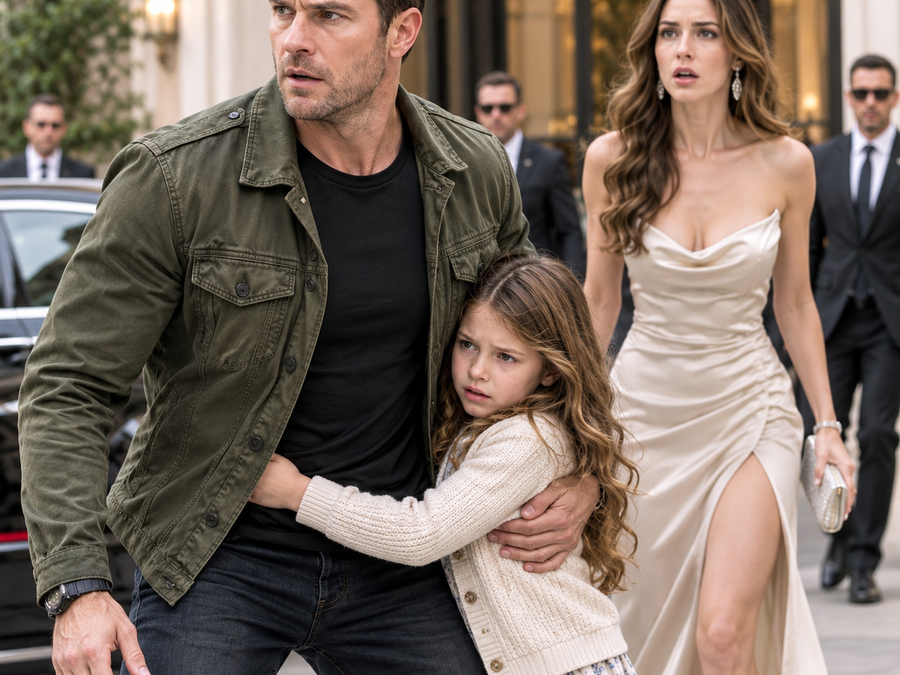
Part 1| Single Dad Saved a Billionaire’s Daughter—His Navy SEAL Secret Changed Everything
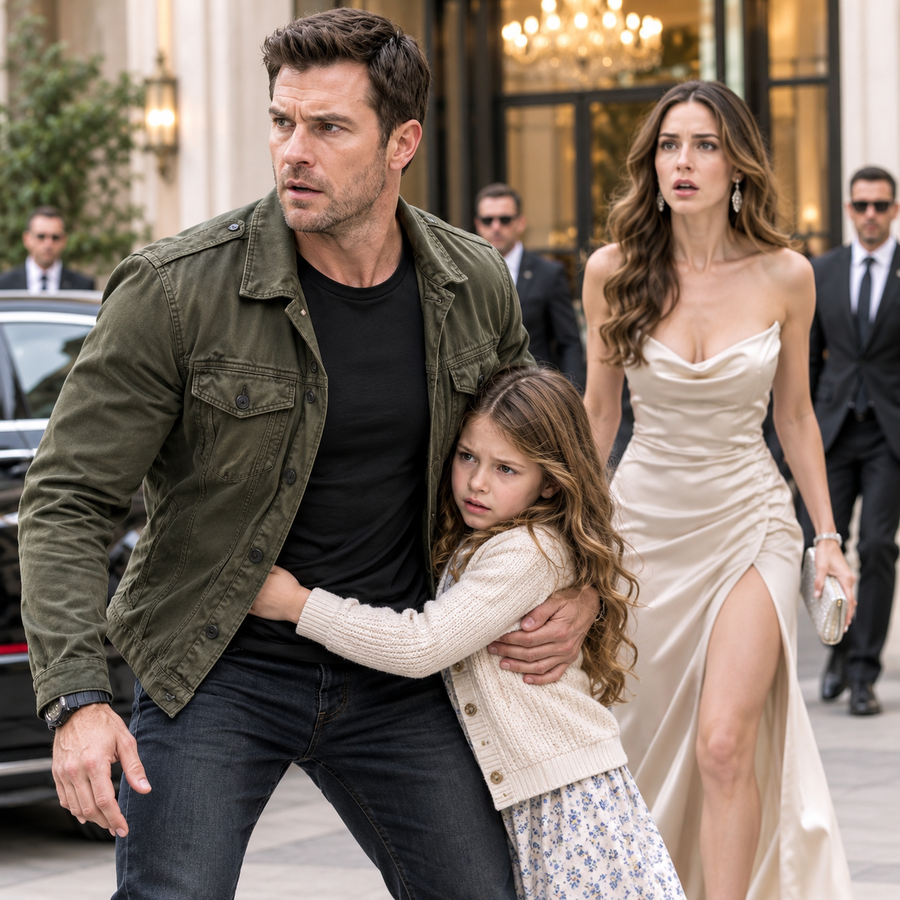
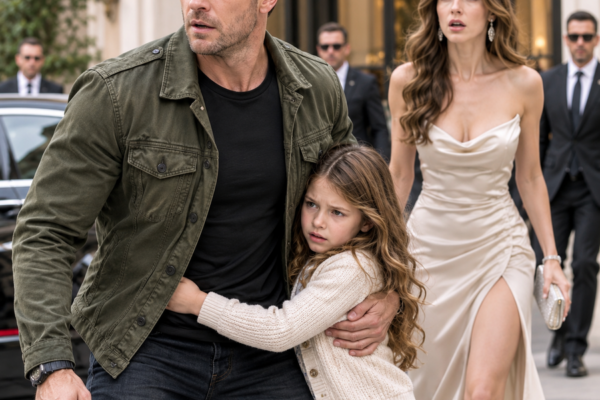
The lights died at 11:47 p.m.Not a flicker, not a warning.
Every camera, every lock, every communication line inside Creswell Tower went black at the exact same second.
And the woman trapped alone in a stalled elevator between the 14th and 15th floors had no idea that the men climbing emergency stairwell toward her were not there to help.
She had enemies.
She knew that.
What she didn’t know was that the only person standing between her and a coordinated assassination had been mopping the basement floor 12 minutes ago.
His name was Mason Ror and nobody knew who he really was.
If you’re watching this for the first time, welcome.
This is the kind of story we tell here. Quiet people who carry enormous weight in the moments that finally force them to show it.
Subscribe to the channel so you don’t miss what comes next.
Hit the like button if you’re already hooked and drop a comment telling us what city or country you’re watching from because I genuinely want to know how far this story has traveled.
Now, let’s begin.
The maintenance log for Creswell Tower listed him simply as M.
Roor night technician level B2 through roof. His shift started at 10:00 and ended at 6.
And in the 14 months he’d worked the building, not one person from the executive floors had ever learned his last name.
That suited Mason just fine. He was 37 years old, medium height, with the kind of build that looked unremarkable in coveralls, lean without being striking, strong without advertising it.
His face had a few years of weather in it that had nothing to do with Seattle rain. There were scars on his left forearm he kept covered even in summer.
He wore a watch that was too plain to be fashionable and too precise to be cheap. And he spoke to people in the building the way most men speak to strangers on elevators, briefly, politely, and without leaving much behind.
The security desk guys liked him because he never asked them for anything.
The cleaning crew liked him because he fixed problems without making them feel dumb for not fixing them first.
And the building supervisor, a heavy set man named Carl, liked him because Mason showed up on time, did the work, and never once called in sick.
Nobody asked about his past, which was the other reason he’d taken the job.
He lived in Rainineer Valley with his 8-year-old daughter, Ellie, in a two-bedroom rental that had a leaky radiator every February and a back porch that caught enough afternoon light to make it feel less small than it was.
Ellie had her mother’s eyes dark brown, a little too watchful for a child, and she had inherited Mason’s habit of s sitting very still when she was thinking, which her third grade teacher had twice mistaken for inattention.
Her mother had been dead for 5 years. Mason did not talk about that either.
He drove Ellie to school every morning in a 7-year-old Subaru, packed her lunch the night before because mornings were tight, and picked her up at the after school program by 5:30 without fail. On nights he worked, his neighbor Mrs.Farerita stayed over.
She was 62, a retired nurse, and she and Ellie played cards and watched nature documentaries until Ellie fell asleep. It was a small life, tightly arranged, and Mason had worked hard to make it feel normal.
He’d given up everything else to make it feel normal.
The night of November 14th, Mason arrived at Creswell Tower at 9:52P m. He clocked in, nodded at the overnight security guard, a young guy named Terrell, who was working on an online accounting certificate, and usually had textbooks spread across the desk, and took the service elevator down to the B2 electrical room.
There was a reported fault in panel C, a minor fluctuation in the underground parking circuit that hadn’t caused any outages, but had been throwing error codes for 3 days.
routine work. The kind of job that involved a flashlight, a multimeter, and about 45 minutes of patient troubleshooting.
Mason settled in.
The parking garage at this hour was quiet.
Crestwell Tower had 62 floors of private investment offices, and by 11:00, the last of the mid-level associates who stayed late had gone home.
The executive floors operated on their own security protocol. Mason had keycard access to maintenance areas only, and that was the way both sides preferred it.
He was checking a secondary relay when he heard the vehicles.
Not one, three.
He didn’t see them from where he was crouched behind the panel housing, but he heard them.
The specific sound of three heavy vehicles entering a parking structure in deliberate sequence without the usual hesitation of drivers hunting for spaces.
Controlled, coordinated.
He stood up slowly and looked toward the ramp.
Three black SUVs had parked across the lower level in a practice spread, two flanking the elevator bank, one blocking the ramp exit.
Men were stepping out. Mason counted six visible.
They moved the way people moved when they’d rehearsed the movement, not just been told where to stand.
What he noticed next made his stomach go flat.
The parking level cameras he’d replaced, two of them himself 6 weeks ago, and knew exactly where they were positioned, had gone dark.
Not the red recording light blinking to indicate low power.
Dark, all of them. Simultaneously, Mason did not reach for his phone.
He did not call Terrell at the security desk. He pressed himself back against the electrical panel, breathed slowly, and thought.
Someone had cut the cameras before the vehicles arrived, which meant someone inside the building had timed it, which meant this was not a robbery or a random intrusion. This was prepared.
Someone knew the building systems well enough to know when to hit them and how.
Mason had spent 12 years operating in environments where that level of preparation meant one thing. This was not going to stay quiet, and whoever was in that building right now was a target.
He thought about the board meeting.
He’d overheard Carl mention it two days ago.
Something about a late session meeting on the executive floor. Someone coming in after hours to avoid press.
Mason hadn’t paid close attention because it wasn’t his business.
Now he wished he had.
Then the building went dark.
Not the backup light flicker of a tripped breaker.
A full buildingwide drop.
Primary and secondary systems, both cut within less than 2 seconds of each other. The emergency lighting kicked in 10 seconds later.
pale red strips along the floor level of the stairwells, nothing else. The elevator banks locked mid travel.
Mason stood in near total darkness and listened. Somewhere above him, on one of the upper parking levels, he heard the soft mechanical thud of an elevator car coming to a halt between floors.
He made a decision. The service corridors of Crestwell Tower existed in a separate map from the building most people knew.
Mason had memorized both within his first month on the job, not because he was planning anything, simply because that was how his mind worked. In environments he occupied, he learned the exits first, the structural weak points second, the communication lines third.
He’d been doing it since he was 23 years old, and he hadn’t fully stopped doing it just because he’d traded a tactical vest for a set of coveralls.
He moved through B2 without a flashlight, one hand trailing the wall at shoulder height, counting door frames. The service corridor connected to a vertical utility shaft that ran parallel to the main elevator bank.
From there, a maintenance ladder accessed each floor’s service panel, including the narrow crawl space behind the elevator shafts.
He climbed in the shaft.
The air smelled like old grease and concrete dust.
Mason moved carefully.
not fast fast created noise and noise was the one thing he couldn’t afford right now.
He reached the access panel at the 14th floor elevator bay in under three minutes and pressed his ear to the steel wall.
Voices muffled below him the 13th floor.
Two men speaking low, the kind of low that meant they didn’t want to be overheard rather than the kind that meant they were simply being quiet.
Mason caught fragments.
She stuck between 14 and 15 and Voss says, “Wait for the signal.”
and then a third voice farther away that said something he didn’t catch.
He filed the name Voss and kept moving.
The elevator car had stopped about 8 ft above the 14th floor landing.
Mason reached the car’s access hatch from the shaft above it, worked the manual release, a mechanism most of people didn’t know existed, unless they’d been trained to use it, and lowered himself onto the roof of the car.
below him.
Inside the car, someone was pacing short, tight steps back and forth, controlled breathing that wasn’t fully controlled, whoever it was.
They were working hard to stay calm and not entirely succeeding.
Mason knocked twice on the hatch. A deliberate pattern, two, then pause, then one.
A signal that meant, “I am here, and I am not a threat in no official language in the world, but that tended to stop people from screaming when you opened a hatch above them.”
Then he pulled the hatch open. The woman in the elevator looked up at him.
She was younger than he’d expected, early 30s, dressed in a charcoal blazer over a silk blouse, hair pulled back, but slightly undone from whatever the evening had started as.
Her jaw was tight, her eyes were steady in a way that cost her something.
She was not panicking, but she was very close to it, and she was choosing not to let it happen through what appeared to be sheer stubbornness.
“Building maintenance,” Mason said, his voice barely above a murmur.
Stay quiet, handsfree.
I’m going to help you out.
She stared at him. Who are you right now?
I’m the person helping you out of this elevator.
He reached down. Take my hand.
She didn’t move immediately.
She looked at his hand, then up at his face with the focused expression of someone who made decisions for a living and had learned to make them fast. Then she took his hand and he pulled.
She climbed. She was athletic.
She didn’t need much help once she had the grip.
And within 30 seconds, she was crouched beside him on top of the car in the dark shaft. There are people in the building, she said, her voice barely controlled.
They cut the power. I know, Mason said.
Three SUVs on B2. Six men visible, probably more.
Someone inside the building cut your security feed before they arrived.
He was already moving, guiding her toward the shaft ladder. Stay close.
Don’t speak unless I do.
Don’t use your phone.
My security team.
Someone told those men exactly when you’d be in this elevator and exactly which systems to cut until we know who.
Your security team is not somewhere I’d be heading.
He paused and looked at her in the dim emergency light that leaked through a ventilation grate.
Do you understand what I’m telling you?
She held his gaze for a long moment.
Something shifted behind her eyes.
Not fear exactly, but the particular expression of a person revising a very important assumption about their situation.
Yes, she said quietly.
I understand. Good.
then let’s move.
Her name was Vivien Hail.
Mason didn’t know that yet.
He learned it 40 minutes later, crouched in a utility corridor on the 9inth floor behind a locked door he’d bypassed with a service key while Vivien sat against the opposite wall, catching her breath.
She told him without being asked, which surprised him.
In his experience, people in crisis either couldn’t stop talking or shut down completely.
She did neither.
She told him her name, her position, and the reason she’d been in the building at that hour in about four sentences with the economy of someone who understood that information was only useful if it was efficiently delivered.
I’m Vivian Hail.
I run Hail Meridian Capital. I was here for a board session about a financial audit internal, not public.
Someone doesn’t want that audit completed.
She paused.
How are you so calm?
I’m not, Mason said.
He was listening to the stairwell beyond the door, counting the time between sounds.
I’m just not showing it.
She watched him for a moment.
You know what you’re doing.
It wasn’t a question.
He didn’t answer it.
The men on the stairs, she said.
How many? Two on 13.
At least one more somewhere above 11.
I heard radio traffic when we passed the 10th floor vent.
Whoever’s coordinating them is doing it by radio.
Short range, which means they’re somewhere inside the building, not in the vehicles.
He glanced at her. Someone knows this building, Miss Hail.
The camera cuts, the elevator timing, the way they spread across the parking level. This was rehearsed.
He watched her absorb that. Graham, she said quietly almost to herself.
Graham Voss, Mason said. I heard the name in the shaft.
The blood left her face, not all at once gradually, the way color leaves a room when a cloud passes the sun.
She sat very still for a moment, and Mason recognized the specific stillness of someone receiving information they’d been afraid was true and had hoped wasn’t.
He’s been my security director for seven years.
She said, “I know it’s hard.
It’s not hard.”
She cut him off, her voice flat and controlled in a way that had edges in it.
I trusted him with my family’s protection, with my brother’s schedule, with the building access codes.
She stopped.
“My brother.”
Mason looked at her. He was supposed to come to the meeting tonight.
Her voice changed something in it tightened in a way that was different from fear. It was the specific pitch of a person realizing the shape of something terrible.
He texted me an hour ago saying he was running late.
He never came.
She took out her phone.
Don’t, Mason said.
She stopped.
If Voss set this up, he knows your brother’s number.
If you call it, you confirm you’re still in the building and still mobile.
We need to move before we contact anyone. He held her gaze.
Your brother?
Does he have a protection detail? A driver, James.
He’s been with the family for years.
Try the driver.
Short message, text only. Nothing that tells him where you are.
She typed quickly.
They waited. The reply came back in 40 seconds.
Hail. Mr.Daniel was picked up by a separate vehicle 2 hours ago.
I was told the plan changed.
I’m outside the tower.
I haven’t been able to reach him.
The temperature in the corridor seemed to drop.
They have him, Vivien said. The words came out steadier than she looked.
Mason made a decision.
The situation had just changed shape entirely. It was no longer a building extraction.
There was a hostage, which meant there was leverage, which meant whoever was running this wasn’t finished.
We need a safe location and a federal contact, he said.
Someone outside Hail Meridian, someone you trust completely, not your board, not your legal team.
Someone private, no company connection.
My There’s a woman I know, a former federal prosecutor.
She’s not connected to the company.
Name and number.
Use a different app to message her. Not your regular text thread.
Do you have signal? Yes.
Use it.
Tell her only that you’re secure and you need a federal contact for an active situation.
Don’t say where you are.
Viven was already doing it.
Her hands moved efficiently without the shaking that Mason might have expected. She was frightened.
He could see it in the set of her shoulders and the faint tight line around her mouth.
But she was also functioning, making decisions, not collapsing into the situation.
He found himself revising his impression of her, which had he admitted been formed mostly by the building gossip he’d passively absorbed over 14 months.
Rich, demanding, hard to read. The version of her crouched in a utility corridor on the 9inth floor of her own building, texting encrypted messages with her jaw set was more complicated than any of that.
Done, she said.
She’ll respond when she’s able.
Good. Mason stood and moved to the door.
We’re going to work our way to the 14th floor via the west service stairs.
There’s a maintenance room on 14 that has its own separate power feed.
It won’t come back on the building’s system if Voss is controlling it.
From there, I can restore partial comms and then then we figure out where your brother is. Viven stood.
She straightened her blazer in the almost dark, an automatic gesture, the kind of thing muscle memory does when the thinking part of the brain is occupied elsewhere.
Then she looked at him.
You still haven’t told me who you are, she said.
Mason Ror.
He opened the door a centimeter and listened. Building maintenance.
Mason Ror, she repeated, and her tone carried the particular note of, “Someone’s had decided to file that name somewhere.
It wouldn’t be forgotten.”
“All right, lead the way.”
He led the way. Behind him, Vivian Hail moved through the dark corridor of her own building as a fugitive in a situation she had not seen coming.
Guided by a maintenance worker who tracked armed men by their footsteps, and knew the building’s hidden architecture better than anyone who’d ever designed it.
She didn’t know yet who he was.
She only knew with the instinct that had made her one of the sharpest operators in private finance that whoever Mason Ror had been before this building and these coveralls and this quiet life, he had not always been quiet.
And whatever that history was tonight, it was the only thing standing between her and the men who wanted her gone. The maintenance room on the 14th floor was not on any public floor plan of Crestwell Tower.
It appeared on the building’s original construction documents, the ones filed with the city, in 1987 as utility access node 14W, a designation that meant nothing to anyone who hadn’t spent time with the blueprints.
Mason had found it during his second week on the job. the way he found most things in unfamiliar buildings by walking every corridor twice, opening every unlabeled door he had a key for, and building a map in his head that had nothing to do with the official one.
The room was about the size of a large walk-in closet.
It held a secondary breaker panel, a conduit junction for the building’s old pneumatic communication system, obsolete now, but still physically intact, and a metal shelf unit bolted to the wall that someone in the early ’90s had used to store spare fuses.
The fuses were long
gone.
The shelf remained, and Mason had quietly appropriated two of its brackets to hang a small LED work light and a zip pouch containing basic tools he kept separate from his main bag. He got the work light on first.
It threw a cone of pale blue white across the floor, enough to see by without being visible under the door gap. Then he pulled the breaker panel open and found what he was looking for.
Circuit 17, which fed the maintenance network independently of the building’s main security grid, was still live.
Whoever had cut Crestwell’s primary systems, had been working from a master override, sophisticated enough to know the building’s main architecture, but not quite sophisticated enough to account for the secondary utility feed that hadn’t appeared in any renovation permit filed in the last 20 years.
Mason found a coiled Ethernet cable on the bottom shelf, connected it between the panel’s auxiliary data port and his phone with an adapter he carried in the pouch for exactly this kind of situation.
Not because he’d anticipated tonight, but because his habit of carrying the right tools for problems that hadn’t happened yet was one of the things that had kept him alive for 12 years in environments where the wrong preparation meant someone didn’t come home.
It took him 4 minutes to restore a partial communications feed.
It was slow, compressed, barely enough bandwidth to push a voice call, but it worked.
Viven had been watching him throughout.
She hadn’t said anything, which he appreciated.
She stood near the door, listening to the corridor beyond it with the focused attention of someone who had in the last 40 minutes learned to pay a different kind of attention to silence.
I’ve got a partial line, Mason said.
Enough for a call. To who first?
Whoever your prosecutor contact is.
Has she responded? Viven checked her phone 40 minutes ago.
She’s standing by.
She has a contact at the FBI field office.
Tell her we need federal response to Crestwell Tower. Active hostage situation.
Suspect is Graham Voss Vesss, currently believed to be operating inside the building or in direct communication with personnel inside it. Tell her the hostage is Daniel Hail and she should assume the threat to him is real and time-sensitive.
Viven was already typing. Her thumbs moved without hesitation.
Mason watched her face in the low light, the set of her jaw, the way she blinked once hard when she got to her brother’s name and then kept going.
“Done,” she said.
“Good.
Now we wait for somewhere below them, a door slammed. Not the soft mechanical click of a card access door catching its latch.
A deliberate slam, the kind that meant someone wanted the sound to carry a signal, maybe, or simple impatience.”
Mason went still and listened.
radio static, brief directional coming from the stairwell side of the building, two floors below at most.
They’re moving up, he said quietly.
How can you tell it’s up and not down?
The static pattern. Short-range radios echo differently in stairwells depending on which direction the antennas pointed.
He was already moving to the door, listening at the gap.
They’re sweeping the building floor by floor.
They’ve been at it long enough to reach 12, which means they started at the bottom, which he stopped.
What?
They’re not looking for you to escape, he said.
They’re driving you upward towards something.
He turned.
What’s on the upper floors above 40?
Executive suites.
The boardroom. The server room for our financial records.
She paused.
And the private roof access.
Someone’s counting on you running up, not out, he thought for a moment.
The server room, the financial audit you mentioned, the one someone doesn’t want completed.
Is the primary data stored there? Partially.
There are off-site backups, but the source files, transaction records, the internal review data, yes, they’re on the 43rd floor server.
Voss’s people want to wipe it.
Mason said it came out flat, declarative.
The way conclusions land when the logic behind them is solid.
The attack isn’t just about removing you.
It’s about removing the evidence.
They need you running upward and panicking so they have time to access the server room without interference.
Viven stared at him.
that she stopped, started again. That would mean the plan was never to kill me tonight.
Not tonight.
Tonight was about the data. You were supposed to be contained, kept moving and scared and away from 43 while they cleaned it.
He looked at her. How close was the audit to finding something?
Her expression shifted something complicated, but crossed her equal parts anger and a particular kind of weariness that came from a suspicion finally arriving at its confirmation. 3 weeks away, maybe less.
Our internal reviewer had already flagged six anomalous transfer sequences.
Graham had access to all of it.
The findings, the methodology, the timeline. He needed to buy time.
He needed to buy time, she repeated, her voice quieter now. The silence held for a moment.
Then Vivien said, 7 years. He was with me for 7 years.
And this time she wasn’t talking to Mason.
she was talking to herself or to the version of herself that had trusted Graham Voss with the access codes and the family schedules and the quiet knowledge of which elevator she’d she always used when she came in after hours.
Mason didn’t say anything.
There was nothing useful to say. After a moment, she straightened.
What do we do?
We don’t go up, he said.
We go sideways.
There’s a west-facing service exit on this floor.
Exterior fire door. No card access required from the inside.
opens to an external staircase that connects to the parking structure roof.
From there, we can reach the street without passing through any of the floors they’re currently sweeping and the server room.
Federal agents can secure it.
That’s not our job tonight.
It is if they get there first. Mason looked at her steadily.
Miss Hail, your brother is missing.
That is the problem in front of us. The data can be rebuilt from off-site backups.
Daniel cannot.
It landed hard.
He hadn’t tried to soften it, and he could see she’d felt the weight of it, but he could also see her accepting it.
The way a person accepts an unwanted truth that happens to be correct.
“All right,” she said.
“West exit,” he let her out.
The west service corridor was narrower than the main utility passages, barely wide enough for two people side by side, and it ran along the exterior wall of the building behind a row of mechanical equipment housings that hummed with the residual effort of systems that were still running despite the main power cut.
Emergency change backup generators on selected critical circuits.
The building breathed around them in the dark, and Mason moved through it the way he’d once moved through foreign buildings in the middle of the night with a team at his back.
Except now there was no team, and the woman following him wasn’t trained for any of this, and he was aware of both things with every step.
Viven kept up.
She didn’t speak, didn’t drag, didn’t stumble in the dark.
She put her feet where he put his, not because he told her to, but because she’d figured out on her own that if he was avoiding a particular section of floor, there was probably a reason.
She was a fast learner, which was one of the more useful qualities a person could have in a situation that kept changing shape. They were 20 ft from the fire door when Mason stopped her with one hand.
Footsteps on the other side of the door, external staircase. One person moving slowly, pausing at intervals, the rhythm of someone watching for movement, not traveling somewhere.
A sentry Mason thought for 3 seconds.
There was another route back through the utility shaft down to 11, then across to the central fire stair, but that put them back in the part of the building they’d been trying to avoid, and it added at least 20 minutes to the extraction.
“How good
are you at being very still and very quiet for about 90 seconds?”
he asked.
Viven’s expression was dry enough to be almost funny given the circumstances.
I survived seven years of board meetings where I wasn’t supposed to let them see how much I knew.
I can manage 90 seconds.
Mason almost smiled.
He didn’t, but it was closer than he’d come all night.
He went to the fire door, put one hand flat against it, and listened for the pattern again.
The sentry was moving in a roughly 12-second interval step, pause, step. At the pause, they were stationary.
At the step, the sound was moving away.
Next pause. Mason pushed the door open two inches, just enough to see.
The sentry was male, medium build, positioned at the landing below, facing outward toward the street, one hand on the railing, the other near his jacket.
Professional stance, not law enforcement, private.
The step pattern resumed. The sentry moved down toward the landing below.
Mason went through the door and across the landing in four steps, reached the sentry from the upper angle before the man had time to register the door sound and put him down with a controlled pressure application to the corroded that lasted about 5 seconds and produced significant sound. He lowered the man to the landing floor, checked for a radio, took it, and had the door back open for Viven in under 15 seconds.
She came through. She saw the man on the floor.
Is he unconscious?
He’ll wake up with a headache and a story he’ll have trouble explaining.
Mason was already moving upward on the staircase up, not down. This way.
I thought we were going to street level.
Changed.
There’s another one at the bottom.
I heard the radio check-in while I was at the door.
He didn’t stop moving.
Roof access from here connects to the structure deck.
From the deck, there’s a pedestrian bridge to the adjacent parking facility.
That building has street level access.
You know the adjacent building, too?
I had lunch there twice. I pay attention to exits.
He glanced back at her. Do you have a problem with heights?
No. Good.
The parking structure roof was exposed and cold, and the rain that had been threatening all night had finally started not hard, but steady.
The kind of Seattle rain that didn’t announce itself and didn’t apologize.
The city spread out below them in its nighttime pattern of lights and wet streets, and the distant murmur of a place that didn’t know anything unusual was happening 14 stories above it.
They crossed the pedestrian bridge at a walk, not a run.
Running attracts attention.
Mason had learned that in environments where the difference between walking and running was the difference between invisible and a muzzle flash. Viven walked beside him without being told, matching his pace, her arms close to her body against the rain.
On the far side, the parking structures interior stairwell took them down to street level.
Mason pushed open the ground floor door and stood for a moment in the threshold, reading the street the way he always read unfamiliar space, exits, angles, vehicles that didn’t belong.
People who were trying too hard to look like they weren’t watching anything.
Nothing immediate. They stepped out.
Viven exhaled a long controlled breath that she’d probably been holding since the 14th floor, or maybe longer.
Mason heard it and said nothing.
He was scanning the street, watching a sedan two blocks north that hadn’t moved in the time it took them to reach the sidewalk.
The federal contact, he said. How soon can she have someone here?
Viven checked her phone.
There was a new message on signal. She read it.
She says there’s an FBI response team 20 minutes out.
She needs a location.
Tell her to approach from the east. The garage at the adjacent building to Crestwell Street level entrance on Senica.
Viven sent it.
They found a recessed doorway across the street, a closed insurance office with a deep entrance al cove and and stood in it out of the rain and the line of sight from Creswell Towers facade. Mason kept his eyes on the building.
The lights were still out on the lower floors.
Two of the black SUVs were still visible in the parking ramp entry from this angle.
The radio I took, he said, holding it up.
It had been silent since the sentry went down.
They’ll notice the missed check-in eventually.
How long do we have? depends on their protocol.
Maybe 10 minutes, maybe less. Viven was quiet for a moment.
Then she said, “Can I ask you something?”
You can ask.
The way you moved in there, the way you assessed everything, the cameras, the radio patterns, the sentry timing. She paused.
You weren’t always a building technician.
It wasn’t a question.
He’d known it was coming since the elevator shaft, and he’d been deciding in the back of his mind how to answer it.
“No,” he said.
“Military?”
“Yes,” she waited.
When he didn’t continue, she said, “You don’t have to tell me more than that.
Navy 12 years.
He kept his eyes on the building across the street.
Seal teams.
I ran extractions and direct action operations in four different theaters.
I left 5 years ago.
Why?”
The question was direct.
She’d asked it the way she probably asked everything without preamble, without apology.
He found he didn’t mind, which surprised him slightly.
My wife died while I was deployed, he said. Car accident.
I was in a location I can’t name.
doing something I can’t describe when it happened.
By the time I got home, she’d already been buried for 4 days.
He paused. My daughter was 3 years old.
She was staying with my wife’s mother, and she didn’t understand why her mom wasn’t coming back or where her father was.
He stopped talking for a moment. I understood very clearly what I was choosing every time I deployed.
I’d understood it before that, but until it happened actually happened, I’d been able to keep it at a distance.
After I couldn’t.
Vivien didn’t offer condolences.
He appreciated that.
Instead, she said, “So, you chose her?”
“I chose her,” he said.
“And I got out and I found work that kept me in the same city as my daughter every night.
And I built something small and quiet, and it works.
It’s not exciting, but it’s mine.”
The rain ticked against the awning above them.
Somewhere a block over, a bus made the sounds a bus makes when it’s negotiating a wet corner.
“Ellie,” Vivien said.
She’d noticed the name on his phone screen when he checked it earlier.
He’d seen her notice it.
Ellie, he confirmed.
How old?
Eight.
She has opinions about everything.
And she hates onions and she’s currently obsessed with a documentary series about deep sea creatures that she makes me watch with her on Friday nights.
He paused.
She’s the reason I’m not still in that building doing exactly what I used to do professionally.
She’s the reason I walked away.
Vivien said nothing for a long moment.
Then quietly, she sounds like she has excellent taste in documentaries. And Mason, for the first time in a night that had been nothing but dark corridors and armed men in the particular cold of a building with the power cut, exhaled something that was almost a laugh.
The FBI response arrived in 17 minutes, not 20. Two vehicles, unmarked, approaching from the east on Senica, exactly as Mason had specified.
The lead agent was a woman named Carver, late 40s, efficient handshake, the kind of eyes that had seen a lot and filed it away rather than letting it show.
She had a tablet with her and she’d already been briefed by Viven’s contact.
Miss Hail, she said by way of greeting. Then she looked at Mason.
And you are? Mason Ror.
I work in the building.
Carver looked at him for a moment a specific kind of look that law enforcement used when they were assessing someone and didn’t want the assessment to be obvious.
Then she said, “All right, Mr.Ror, I’m going to need both of you to walk me through exactly what happened from the beginning.”
They did. Mason gave it to her in a clean chronological sequence.
Entry time, camera cuts, vehicle positions, the name Voss, the radio traffic he’d intercepted, the sentry he’d put down on the west staircase.
He included the server room assessment and his theory about the audit timeline.
He didn’t editorialize.
He just gave her the information in the order it was useful.
When he finished, Carver was writing. She glanced up.
The man on the external staircase, you restrained him, keratid compression.
He’ll be conscious by now.
and the six in the garage still there as of 30 minutes ago, possibly more by now.
She nodded slowly.
You have some background in this kind of thing, mister Ror. I used to, he said.
She let it sit there and didn’t push it, which told him she’d already looked him up or was doing so as they spoke and had found something or found nothing, which in certain database searches amounted to the same thing.
What happened next moved fast.
Carver’s team established a perimeter.
A second FBI unit was already on route to the Hail Meridian server room via a separate federal building access protocol.
They were going to secure the data before Voss’s people could reach it.
A third unit was working on Daniel Hail’s last known location, triangulating from the driver’s account of which direction the vehicle had taken him.
Mason stood slightly apart from the operational activity, watching it.
He’d been in this position many times, not physically, not in this city, not in this building, but the particular sensation of a situation moving from personal control to institutional response was familiar.
The moment when your job ends and the machinery takes over.
He should have felt relieved. He felt restless instead, which he recognized as a bad sign in himself.
Restlessness in these situations was usually his mind telling him that the situation wasn’t over and the machinery wasn’t going to catch everything.
Viven appeared at his elbow.
She’d been speaking with Carver and had a phone pressed to her ear now, which she lowered as she reached him.
“Daniel’s driver last saw the vehicle heading south on I5,” she said.
“They’re trying to pull traffic camera footage.”
She paused.
“Graham hasn’t been located inside the building. Carver’s team swept all the floors he was supposed to be on, and he’s gone. He was never in the building,” Mason said.
He was coordinating from outside, close enough for short-range radio, far enough to walk away clean if it went wrong, which it did, which it did.
Viven turned to look at him directly.
The rain had done something to the careful composure she had carried through the whole night, not broken it, but softened it in a way that made her look more like herself and less like the version of herself she showed to boardrooms and press junkets and people who wanted something from her.
Her hair was damp.
There was a small cut on the back of her right hand from the elevator shaft climb that she hadn’t mentioned and probably hadn’t noticed.
The centuries in the stairs, she said, “You had the door open and you assessed him and you went through and you came back in 15 seconds.
I counted.
” She paused.
Most people don’t move like that.
Most people don’t need to.
You do it without thinking.
I do it without showing that I’m thinking.
It’s It’s not the same thing.
He looked at her. I was thinking the whole time.
I’m always thinking.
I just learned not to let it slow me down.
She absorbed that.
Then she said something he hadn’t expected.
Are you okay?
The question caught him off guard, not because it was strange to ask, but because nobody had asked him a version of that question in so long that the shape of it had become unfamiliar.
I’m fine, he said by reflex.
That’s not what I asked.
He looked at her.
I asked if you’re okay, she said.
You spent the last 2 hours moving through a hostile building carrying someone else’s crisis on top of whatever you carry the rest of the time.
That takes something out of a person regardless of training. Mason was quiet for a moment.
I need to call my daughter, he said finally.
She thinks I’m at work.
Mrs.Farita will have put her to bed by now, but she checks her phone at midnight.
Sometimes I don’t know why.
She just does.
And if she sees the time and I haven’t sent her something, she worries.
Viven said, “Then call her.”
He pulled out his phone and typed a message, not a call.
Ellie would be asleep, and he wasn’t going to risk waking her with a ringing phone at this hour.
Just a text, still at work.
All fine. See you in the morning.
Love you more than deep sea documentaries.
He sent it and put the phone away.
When he looked up, Viven was watching him with an expression he couldn’t immediately categorize.
“What?”
he said.
“Nothing.”
She looked away. I just Nothing.
Before either of them could say anything else, Carver reappeared at a half jog, her face carrying the specific look of someone who’d received information and was still processing whether it changed things or complicated them.
We’ve got a
problem, she said.
Mason straightened.
Daniel, he’s not in the federal database.
No hospital admissions, no detainment log, no traffic camera confirmation of the vehicle south of the interchange. She paused.
But we’ve identified the vehicle type from a parking structure camera near Hail Meridian’s secondary office building.
It was registered to a company called Redport Logistics.
Never heard of it, Vivien said. Neither had we until 40 minutes ago.
It’s a Shell company, but its registered address is a port facility south of the city that was supposedly decommissioned 3 years ago.
She looked at both of them.
We’re getting a warrant for the property now, but that takes time.
How much time?
Mason asked.
Two hours minimum, probably three.
Mason’s phone buzzed in his pocket.
He took it out.
The message was from an unknown number and it contained a video file.
He knew before he opened it that he didn’t want to see what was in it.
He opened it anyway. The video was 12 seconds long.
It showed a room concrete walls, no windows, industrial lighting.
A man was seated in a chair with his hands zip tied behind him. He was conscious, but his head was down and there was blood on the side of his face from something that had happened before the video started.
In the last 4 seconds of the video, someone off camera tilted the man’s head up by the hair so his face was visible.
He was young, early 30s, with Viven’s same jaw and her same dark eyes and the specific expression of someone trying very hard not to show how afraid they were.
Vivien made a sound beside Mason that was very small and very controlled and then she didn’t make any sound at all.
The text that followed the video said, “You have until midnight.
Bring her to the Redport facility alone.
We’ll know if she isn’t.”
The man in the video stays breathing until then or doesn’t.
Mason checked the time.
It was 11:9 p.m.51 minutes. He looked at Carver.
She was already on her radio. The warrant process was moving.
She said they could have tactical units staged outside the facility within 40 minutes.
But inside, without the warrant, without knowing the layout, without knowing where the hostage was being held, without federal authorization, she couldn’t send her people in.
Give me the address, Mason said. Carver looked at him.
I’ve been inside the building twice in the last 2 hours, he said.
And I know how to move without a warrant, Mr.Ror. The address, he said again, and his voice was quiet and completely level.
and something in it closed the negotiation before it opened. Viven put her hand on his arm.
Mason, he turned to her. My brother, she said.
Her voice was steady, but just barely.
The kind of steady that cost everything it had.
Tell me he’s coming home.
Mason looked at her for a moment. He wanted to tell her what she needed to hear.
He was also not built at this point in his life for telling people things that weren’t true just because the truth was harder.
I’m going to do everything I can.
he said.
That’s what I can promise you.
It wasn’t enough.
He knew it wasn’t enough, but it was honest, and she could see that it was honest.
And she nodded once a small, tight movement and let go of his arm. Carver gave him the address.
Mason was already walking.
The address Carver had given him was a port facility called Redport Logistics, situated on a stretch of industrial waterfront south of the city where the land flattened out into concrete and rusted infrastructure and the kind of buildings that had once served a purpose and now served a
different one. The purpose of being empty enough to hide things in.
Mason drove one of the FBI’s unmarked pool vehicles.
Carver had technically not given him permission to take it and had technically not stopped him either, which he understood as the specific language of a federal agent who knew what needed to happen and also knew she couldn’t be the one to authorize it.
He appreciated the distinction.
He drove south on the interstate with the radio Carver’s team had confiscated from Vos’s men sitting in the cup holder, volume low.
There was no traffic at this hour, just wet asphalt and the occasional sweep of oncoming headlights.
And Mason drove with both hands on the wheel and his mind working through the geometry of what was waiting for him at the other end of this road.
Court facilities had particular characteristics that favored defense multiple structures, blind corners, elevated loading platforms, interior corridors formed by stacked containers, and acoustics that carried sound inconsistently.
A wellpositioned defensive team could cover a lot of ground with relatively few people if they knew the layout.
The problem was that those same characteristics favored a fence if the attacking party was willing to move slowly and was comfortable in the dark. Mason was very comfortable in the dark.
What he was less comfortable with was the math of the deadline.
11:09 when they’d received the video.
The facility was a 22-minute drive. He had at best 29 minutes before midnight.
Carver’s tactical unit needed 40 minutes to stage, which meant he was going in alone with a 10-minute margin before federal backup could reach the perimeter, and a margin like that in an environment like the one he was driving toward was not really a margin at all.
He reached for his phone.
He needed to know the facility’s layout, and the federal database wasn’t accessible to him.
But the city’s port authority filed public structural surveys, and those surveys were searchable if you knew which permit categories to look under.
He pulled over for 90 seconds, ran the search with one hand while the engine idled, and found what he needed, a 2019 decommission, filing for Redport Logistics Terminal 4, which included a basic structural overview for environmental assessment. One main warehouse building approximately 40,000 square ft on two levels.
A secondary equipment shed on the north side, a loading dock extending over the water on the south face. Three confirmed access points, two vehicle gates, and one pedestrian entry on the east wall.
He looked at the diagram for 30 seconds, memorized the proportions, and pulled back onto the road.
He parked three blocks from the facility’s perimeter and covered the remaining distance on foot, staying in the shadow line along the chainlink fence that bordered the property.
The rain was still coming down in that persistent low-grade Seattle way, which helped rain blurred thermal imaging and covered the sound of movement, and he was moving quietly enough that the rain was doing most of the concealment work for him.
The facility was lit, not brightly, but enough.
Three portable generator lights had been set up at the main vehicle gate and along the warehouse’s south face overlooking the loading dock.
The generators were running, which meant whoever was inside had planned for an extended operation, not a quick in-n-out. That was information.
Extended operations required logistics, and logistics created patterns, and patterns were the thing Mason knew best how to find and exploit.
He reached this this east perimeter fence and crouched in the shadow of a corrugated metal shipping container that had been left outside the fence line probably years ago and had been there long enough that the grass had grown up around its base. From here he could see the pedestrian entry a standard industrial door solid steel with a card reader that was almost certainly offline given that the facility was supposedly decommissioned.
There was a man standing outside it, not moving, standing with the particular stillness of someone who had been told to stand there and was doing exactly that and nothing more. One visible exterior guard on this side.
The vehicle gate on the north had shown two figures when he’d passed it at distance.
The south dock he couldn’t see from this position.
He had no weapon.
He had the confiscated radio, a multi-tool from the vehicle’s glove compartment, a length of zip cord from the same source, and the particular advantage of being at this moment the only person in the vicinity who didn’t believe the night was going to go the way the other side had planned.
He worked his way around the container’s far edge, staying below the fence line, and found what he’d been looking for.
A section of fencing where the bottom rail had separated from the concrete anchor, not from vandalism, just from years of frost heave and neglect pulling the metal loose.
The gap was about 14 in at its widest. Mason went flat and went through it, taking his time, because 14 in was enough room, and hurrying was when people scraped their equipment and made noise.
He was inside the perimeter.
The warehouse’s east wall was 30 ft of shadow ahead of him, broken by two floating bay doors that were both rolled down and almost certainly locked and one personnel door that sat recessed about 18 in from the main wall plane deep enough to approach from the side without being visible from the generator lights.
He moved to it.
The door had a standard commercial deadbolt. No card reader.
The card reader was on the outside pedestrian entry.
This was a secondary access. The deadbolt was the kind that took a key from the outside and a thumb turn from the inside, which meant from his side it was picking or breaking, and breaking was loud.
Mason took the multi-tool, extended the flathead blade, and spent 90 seconds working the lock with the specific patience that had once allowed him to hold a position for 11 hours in a drainage ditch, waiting for a window that lasted 40 seconds. The lock gave.
He eased the door open 6 in, listened, and went in.
The interior of the warehouse smelled like salt water and old hydraulic fluid and the particular dead air quality of buildings that had stopped being used for their intended purpose. The lower level was open floor space empty now but marked by the ghost shapes of equipment that had been removed.
Oil stains and anchor bolt holes in the concrete telling the history of machines that no longer existed. The generator light from outside pushed through two high windows on the south wall and threw long shadows across the floor.
Mason stayed at the wall’s edge and let his eyes adjust.
And while they adjusted, he listened.
Voices, upper level, not clear, but multiple. He counted at least three distinct vocal registers, two male, one possibly female, hard to confirm at this distance.
Footsteps moving in the particular pattern of people who were waiting for something rather than working towards something.
That pattern had a different tempo.
It was the tempo of people watching a clock.
The upper level was accessed by an industrial steel staircase on the warehouse’s west wall and by a freight elevator in the center of the south face that almost certainly wasn’t functioning on the facility’s decommissioned power, though the generators might be feeding it.
Mason chose the stairs because freight elevators announced arrivals with mechanical noise that could be heard across a building.
He moved across the lower floor in the shadow along the north wall, not the center, because the center of any smases was where eyes went first and the edges were where they went last.
Halfway across, his phone vibrated. He checked it in the shadow of a support column, shielding the screen.
The message was from Viven.
Graham contacted me directly. He knows you left.
He says if anyone enters the facility before midnight, he’ll move Daniel.
I’m sorry I had to tell you.
Mason read it twice.
Then he typed back, “Stay where you are.
Do not respond to Graham.
Don’t tell Carver about this message yet.”
He sent it and put the phone away. The message told him two things.
First, Graham had eyes on the exterior of the facility, either a camera feed or an additional spotter positioned outside the perimeter.
Mason had entered at the east wall away from the visible exterior positions and he was already inside which meant Graham’s surveillance hadn’t caught him yet or was positioned to watch approach routes rather than the fence line.
Either way, he was in. Second, Graham was communicating directly with Viven, which meant he wanted her to second guessess the rescue, which meant he was afraid of exactly what was currently happening.
Afraid men made mistakes. Mason had built an entire operational career on that principle.
He reached the base of the staircase and stopped.
One of the things he’d learned over 12 years of entering rooms where people were waiting for him was that the approach to a staircase was frequently the most dangerous moment in a building entry, not the room at the top, but the last 8 ft before you started climbing because that was where your angle of view was worst and anyone above had the geometric advantage.
He flattened against the wall beside the bottom riser and listened for 60 full seconds before he moved. Nothing on the stairs.
The voices continued above same register, same waiting tempo. Nobody was positioned at the stair head.
He went up slowly, weight rolling heel to toe on each riser, one hand trailing the wall, never gripping the railing because railings transmitted vibration.
The staircase had 15 steps, and he counted every one of them.
At the top, he stopped with his head just below floor level and looked. The upper level was a mezzanine that ran the full perimeter of the warehouse interior with the center open to the lower level below.
The mezzanine was maybe 15 ft wide and lit by two batterypowered work lights positioned on the south end near what had once been a series of office partitions. Most of the partition walls had been removed, but the floor anchors remained and someone had used them to set up a rough operational position.
Folding table, radio equipment, a laptop, two chairs.
There were four men, two near the radio table, one walking a slow circuit of the mezzanine south end, one standing near a door on the east side of the mezzanine that Mason recognized from the structural survey as the former operations manager’s office.
The door had a padlock on it, not a fancy one.
A standard commercial unit that someone had brought in and installed on the HA hasp, which told Mason the facility’s original locks had been removed, and this team was working with improvised containment.
The man guarding the door was watching the other three, not the door, which meant whatever was behind the door wasn’t going anywhere on its own, both because of the lock and because whoever was inside was secured beyond just the door.
Daniel and Ellie Mason’s mind went to her involuntarily.
And then he pulled it back because that thought right now wasn’t useful.
He pulled back from the stairhead and thought. Four men, one visible access point to the target room, radio equipment that could summon additional personnel from outside and a deadline.
He was now eight minutes inside of the work lights on the south end were the key. They were battery powered, which meant they had an off switch, and they were positioned such that the entire operational area depended on them.
The mezzanine windows let in the generator light from outside, but not enough to see clearly by.
He needed one of those lights off. He thought for a moment and then remembered the south faced the loading dock that extended over the water.
From the structural survey, the dock crane controls had been on the upper level on the south wall of the mezzanine, which meant there was a control panel somewhere on that wall, and even a decommissioned crane on generator power might have enough current left in the hydraulic brakes to make a significant amount of noise when released. Noise draws attention.
Attention is a resource.
Resources spent in one direction are not available in another. He went back down the stairs.
The south wall of the lower level had a manual override for the dock crane’s hydraulic system, a large red lever inside a safety cage, the kind of industrial equipment that maintenance workers knew by touch.
Mason found it in the dark by following the hydraulic line from the base of the staircase.
He opened the safety cage, wrapped both hands around the lever, and pulled. The sound was extraordinary.
The crane’s brake release produced a sound like a ship’s anchor cable running out a deep percussive mechanical groan that resonated through the building’s steel frame and out across the water and probably carried a/4 mile in the wet night air.
Then the crane arm, released from its locked position, swung under its own residual weight and hit the dock safety stop with a metallic impact that sent a secondary shutter through the entire south wall. Above him on the mezzanine, all four men reacted.
He could hear it.
the sharp movement of feet overlapping the particular scrambled quality of men who’d been waiting for something and had suddenly received a something that wasn’t what they’d been waiting for.
What the hell? Check the dock.
Go.
Go. Three of the four went for the south end to check the dock in the crane.
The fourth, the one near the target room door stayed, which was the correct professional response, which also meant Mason had eliminated three of his problems and still had the hardest one. He went back up the stairs, fast this time, no more patience pace, because the window the crane had bought him was short and narrowing.
The guard at the door had turned toward the south end where the noise had come from, one hand on his radio, the other near his jacket.
His back was at maybe a 45° angle to the stairhead when Mason came over the top.
Mason covered the distance at a run, staying inside the guard’s peripheral blind spot until the last two steps, and took him down in the same controlled manner as the sentry on the Crestwell staircase.
No impact noise, no prolonged struggle, weight transferred to the floor in a controlled descent.
It took about 4 seconds, and produced nothing louder than a soft scrape of boot soul on concrete.
He lowered the man to the ground, took his radio, and went to the padlock.
The multi-tool had a secondary blade that worked on commercial padlock hasps if you applied pressure in the right direction at the shackle base.
Mason had used it for exactly this purpose in exactly this kind of improvised containment situation before in a context he was not going to think about right now.
He applied pressure. The has bent before the lock did cheap installation inadequate screws.
The hasp pulled free from the door frame in one sharp motion. He opened the door.
The room beyond had been a supervisor’s office 12 by 12.
One window boarded over from the outside, a bare concrete floor. A single work light sat on the floor in the corner, throwing upward angled shadows that made the space feel smaller than it was.
Two people were in the room. One was Daniel Hail.
He was exactly as the video had shown him, zip ties on his wrist behind him, seated against the wall, head up this time, watching the door with the guarded expression of someone who had been sitting with his fear long enough to
develop a working relationship with it.
The blood on the side of his face had dried dark.
The other person made Mason’s heart stop for one full second.
Ellie, his daughter, was sitting cross-legged on the floor beside Daniel, her back against the same wall, wearing her school program jacket, the blue one, with the yellow zipper pull she’d picked out herself.
And she was looking at the door with an expression that was trying very hard to be brave and not entirely succeeding.
When she saw Mason, she didn’t scream and she didn’t cry and she didn’t run at him.
She went completely still, the way she always went still when she was feeling something too large for her body.
And then she said in a very small, very controlled voice, “Dad.”
Mason crossed the room in three steps and crouched in front of her and put both hands on her face.
“I’m here,” he said.
“I’ve got you.”
And then Ellie, who had been holding herself together with the particular stoicism of a child who had learned from watching her father that you didn’t fall apart until the situation allowed it, put her forehead against his and completely fell apart.
He held her.
He let her.
He didn’t say anything for a moment because there was nothing to say that was more important than being there, being solid, being the thing she could push against and have it hold.
From across the room, Daniel said horsely.
She’s been here about 2 hours.
They picked her up from the after school program.
She hasn’t been hurt.
He paused.
She talked me through most of it. I think she probably kept kept me calmer than I kept her.
Mason looked at his daughter, her face wet, her jaw still working through the last of the tears she’d kept locked up for two hours, and something moved through him that he didn’t have a name for.
Something that was not entirely grief and not entirely pride, and was instead some combination of both that belonged specifically to the experience of raising a child alone, and watching them turn out to be more than you managed to
build them.
“I knew you’d come,” Ellie said, her voice uneven but certain.
“I know you did,” he said.
He pressed a kiss to her forehead and then stood. And as he stood, he registered the sound of the three men on the south end beginning to work their way back from the dock.
He had maybe 60 seconds.
He went to Daniel, took the multi-tool to the zip tie, and had the man’s hands free in 15 seconds.
Can you walk?
Daniel flexed his wrists slowly, wincing. Yes.
Good. Stay close to me.
Don’t run unless I run.
He looked at Ellie. You remember what I told you about following?
Ellie nodded.
She’d stopped crying.
Her face was set in that watchful still expression that was entirely her mother’s and that Mason had spent 5 years being grateful for and heartbroken by in equal measure.
Inside voice, she said, “Stay behind.
Don’t stop until you stop.”
“That’s right.”
He took her hand.
They went through the office door at the three returning men were at the far end of the mezzanine near the work lights processing the sight of their colleague on the floor beside the broken hasp with the particular slowed down confusion of people whose mental model of the situation had just been violently revised. One of them started to reach for something.
Mason put himself between them and Ellie and said quietly and clearly carrying across the mezzanine.
carrying across the mezzanine with the kind of controlled objection that didn’t need to be loud to arrive with authority.
Federal agents are staging outside this building. Every exit is covered.
If you reach for that weapon, I will put you on the floor and the agents outside will decide what comes next.
Or you can stand exactly where you are, and this ends cleanly.”
The three men looked at each other.
The one who’d been reaching stopped reaching, not because they believed him completely, because they believed him enough.
It was the specific threshold Mason had spent a career learning to hit, not intimidation, not bluffing, but the presentation of information in a tone that made the costbenefit calculation come out the same way, regardless of whether every detail was verifiable.
The detail about the federal staging was true as far as it went.
Carver’s team was outside.
Whether they were staged and ready at this specific moment versus on route was a distinction Mason chose not to elaborate on. He guided Ellie and Daniel to the staircase and they went down.
Mason facing back toward the three men till he had to turn for the stairs and then they moved across the lower level at the fastest walk that kept Ellie from stumbling on the uneven floor.
The east personnel door was where he’d left it.
They went through outside. The rain was still going.
The cold hit Ellie and she pressed against Mason’s side without slowing down and he put one arm around her shoulders and they moved along the east wall toward the fence gap while Daniel kept pace on the other side, one hand against the wall for orientation in the dark.
Mason heard the radio on his hip crackle.
The voice on it was a voice he hadn’t heard yet tonight, not one of Voss’s men, not the man from the mezzanine.
It was a different quality, controlled, precise, without the edge of someone following orders.
The edge of someone giving them Mr.Ror.
Mason didn’t answer.
He kept moving.
I know you’re inside the perimeter.