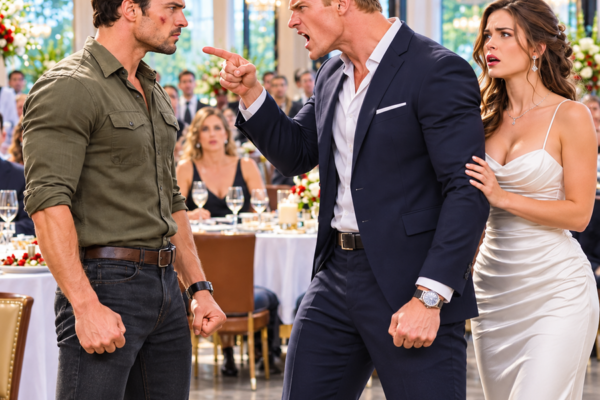
Get on Your Knees! Rich Boss’s Son Humiliated a Billionaire—Then a Single Dad Ex SEAL Saved Her-Part 4
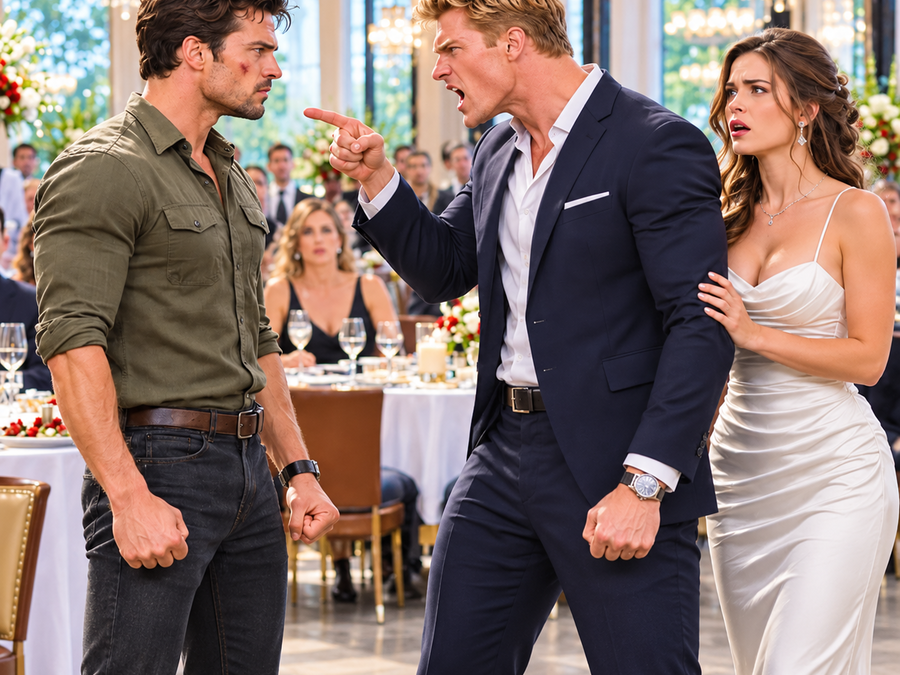
========== PART 4 ==========
He’d thought they had until morning.
He’d thought Conrad would move on Monday
using whatever he planned to use in the boardroom
and the public exposure would be a tool deployed there.
He’d been wrong.
Conrad had moved the moment Owen’s name went upstairs.
Before Grant even finished the evening
before anyone upstairs knew what Owen and Sloan had found.
Which meant Conrad had a version of this article ready to publish before tonight.
He’d been holding it.
He just needed a trigger
a name
an incident
enough real events to hang the narrative on.
Owen had provided the incident.
12 years of carefully maintained civilian anonymity
and it had taken one room and one impulsive decision to walk into a circle of people he didn’t know to end it.
He stood by Gerald’s bumper for exactly 5 seconds.
Then he went back around to the driver’s side and opened the door and said
“Let’s get Caleb.”
Inside the hotel lobby had thinned considerably.
The gala was winding down Owen could hear it from the lobby.
The particular shift in the ambient noise when a large event moves from its peak to its long ending.
This Mrs. Alvarez was in a chair near the lobby’s secondary seating area with Caleb beside her and even from across the room Owen could see that something had changed in the picture.
This Mrs.
Alvarez was sitting forward instead of back.
Caleb was looking at the floor.
This Owen reached them and crouched in front of his son.
This Caleb looked up.
His face was the face of someone who had read something and was trying to decide whether to be angry or scared and was currently failing at both simultaneously.
This he held up the phone he’d borrowed from Mrs. Alvarez’s own didn’t have data which Owen had always considered a reasonable parenting decision and was reconsidering slightly at this moment.
This The headline was on the screen.
Someone sent it to me Mrs. This Alvarez said quietly a colleague from the event staff.
This She thought I should know.
Owen looked at Caleb.
You read it he said.
This Yeah, all of it?
Yeah.
Owen sat back on his heels.
This The lobby moved around them guests in evening clothes.
The distant sound of the gala winding down.
The soft hotel music that was always playing in exactly this register regardless of anything that was happening in the world.
This The facts in it are mostly right Owen said.
Everything they say I did is right.
This What they say it means is wrong.
Caleb thought about the distinction.
This They said you’re a bodyguard.
I’m not.
They said you attacked someone.
This I redirected two people who were going to hurt someone.
This Nobody got hurt.
They called you an operative.
Owen looked at his son steadily.
This I know.
That’s a word from spy movies.
I know.
This You’re not a spy.
No. Caleb was quiet again.
His jaw had the set of someone doing arithmetic he wasn’t sure he liked the answer to.
This Are people going to think you are?
Owen thought about the honest answer and gave it.
This Some people will.
Some people will believe what the article says because it’s easier and more interesting than the truth.
Some people won’t care once they understand the full story.
And some people will just decide based on whatever they already think about people like me.
Caleb absorbed that.
What about your clients?
Owen paused.
That, he said carefully, I don’t know yet.
Caleb looked down at the phone again.
He looked at the photograph
the Navy personnel photo
Owen’s face at 27 in a uniform Caleb had never seen him wear
and then he put face down on the chair arm.
You look different, Caleb said.
I was younger.
Not just younger.
Caleb looked at him.
You look like you were trying to look like something.
Owen held very still for a moment.
Because that was that was actually exactly right in a way that a 9-year-old shouldn’t have been able to articulate but had because Caleb had been studying him for 9 years in the specific way that children studied the people they depended on.
Yes, Owen said.
That’s right.
You don’t look like that now.
No. Caleb seemed to find that sufficient.
He slid off the chair and stood up and put his hands in his pockets in the way that indicated he had finished processing and was ready to move.
Can we go home?
Yeah, Owen said.
Yeah, we can.
They went home.
It was nearly midnight by the time the truck pulled into their street in Savannah’s residential neighborhoods at midnight were the specific quiet that Owen had spent 7 years choosing deliberately in sex.
A dog somewhere down the block
the sound of someone’s air conditioning running.
He sat in the driveway for a moment after the engine cut and let it be what it was.
Caleb had fallen asleep in the back seat somewhere in the last mile
which was a thing he did and would and claim he hadn’t done.
And Owen carried him in and put him to bed without waking him.
He loosened the clip-on tie and set it on the nightstand.
He stood in the doorway for a moment.
Then he went to the kitchen and made coffee he didn’t need because making coffee was something to do with his hands.
His phone had 14 messages.
Clients
a former colleague from the service who had seen the article
two numbers he didn’t recognize
a reporter from a regional news outlet who had found his company’s website.
He didn’t answer any of them.
He sat at the kitchen table and thought about what Caleb had said
“You look like you were trying to look like something.
” He thought about the Navy photo
the uniform
the posture
the 27-year-old face trying to project readiness and steadiness and authority.
All of which he’d had, none of which had been comfortable yet.
By 35 it had been comfortable.
That was the problem.
By 35 it had settled into him so completely that losing it had felt like amputation
even though losing it had been his own choice and the right one.
The coffee finished brewing.
He poured a cup and sat back down and thought about the call he was going to have to make tomorrow.
Not to the clients
to the people who could verify his record accurately if they chose to
if he asked them to.
He had avoided asking for 7 years because asking meant acknowledging the record existed and was relevant.
He was going to have to stop avoiding that.
He thought about Sloan.
He thought about Aaron Bell’s credentials on that terminal screen.
At 12:47 he got a text from a number he’d added to his phone 45 minutes ago in the hotel parking lot when Priya had exchanged numbers with him before they separated.
The message was from Sloan.
Priya is securing the drive offsite.
I’m at my apartment.
I keep thinking about the access timestamps.
I should sleep.
Owen read it twice, then he typed, “You won’t.
You’ll keep rechecking the logic.”
A pause of about 20 seconds.
” ”
He thought about what to say next.
“The logic is right.”
He typed.
“The timestamps are right.
The evidence is what it is.
I know I’m not rechecking the evidence.”
Another pause.
“I’m rechecking 8 years of conversations with Aaron and trying to find the one where it started.”
Owen looked at that message for a long time.
“You probably won’t find it, he typed finally.
That’s the thing about that kind of decision.
The moment someone makes it
they also decide what story to tell themselves about why it’s okay.
By the time you’re having normal conversations with them
they’ve already resolved the contradiction.
A longer pause this time.
That’s either reassuring or the most depressing thing I’ve heard tonight.
Both probably.
Both, she agreed.
He sat with the coffee and the quiet and the message thread.
Then he typed, get some sleep if you can.
Monday’s going to need all of you.
The response was a single period followed immediately by nothing
which he interpreted correctly as Sloane doing exactly that
ending the conversation the way she made other decisions without preamble.
He smiled at that, which he hadn’t expected.
He went to bed at 1:15 and was awake by 5:30.
The morning was Saturday.
It came with birdsong and gray light and the sound of Caleb in the kitchen at some point around 6:30
doing something with the toaster oven that produced a smell suggesting ambition beyond the appliance’s capacity.
Owen got up.
Caleb had attempted waffles.
The results were not quite waffles in the architectural sense
but they were warm and they had the fundamental qualities of the thing.
And Caleb was presenting them with the energy of someone who had made a decision about how the morning was going to go.
Pancakes were promised, Caleb said, but the waffle iron was right there.
These are good, Owen said.
Caleb looked at him.
You haven’t tried them yet.
They’re going to be good.
He tried one.
They were not particularly good.
They were very earnest, which in Owen’s experience was more important.
They’re good, he said again.
Caleb sat down across from him.
They ate in the particular Saturday morning quiet that Owen had built the last 7 years around preserving the specific domesticity of a kitchen table and a small person eating waffles and the world being held temporarily outside.
But the world was not being held outside this morning in the same way.
Caleb said around his third waffle, “People at school are going to know.”
Owen set his fork down.
“Some of them will.”
he said.
“Some of their parents will see the article.
Some of those parents will tell their kids or their kids will find it.”
“What do I say?”
Owen thought.
“You say your dad was in the Navy.”
“You say he left because it was the right time to leave.”
“You say he runs a marine safety company and he’s going to keep running it.”
He paused.
“You don’t owe anyone an explanation about anything else.”
Caleb thought about that.
“What if they ask about the bodyguard thing?”
“You say that’s not what I am.
” “What if they don’t believe me?”
“Then they don’t believe you.”
Owen said.
“That’s going to happen sometimes and there isn’t a magic sentence that fixes it.”
“You just know what’s true and you don’t tie yourself in knots over it.”
“That’s easier to say than do.”
” ”
Owen agreed.
“It is.
” His phone lit up on the counter.
He looked at it from across the kitchen and saw one of the client names he’d been expecting.
He let it ring.
Caleb watched it ring.
“You’re not going to answer?”
“In a few minutes.”
“Why not now?”
Owen looked at his son.
“Because I’m eating waffles with you and that’s not finished yet.”
Caleb looked down at his plate.
He ate the rest of his waffle quietly and Owen thought he understood the reasoning and the understanding sat in the kitchen with them and didn’t need to be said out loud.
The call back started at 9:00.
By 10:30 Owen had spoken with four clients.
Three of them were in the category he’d expected cautiously asking for context
genuinely uncertain
willing to listen before making a decision.
One of them suspended his contract immediately
politely
in the voice of someone who had already consulted an attorney and was reading from a prepared script.
Each call was its own small damage.
Owen made notes after each one.
At 11:00 Sloan arrived at his door.
She had not called ahead which surprised him.
She was in civilian clothes
jeans
a gray top
a jacket that looked like it cost more than his truck payment
but was trying not to
and she was carrying a folder under one arm and a coffee in her other hand.
“Yes
I found an independent cyber forensics firm
” she said by way of greeting.
“Yes
they can authenticate the port records as unaltered between the time of creation and our retrieval.
Yes
if the authentication holds
the chain of evidence is defensible in court and in a board meeting.
”
Owen stepped back from the door she came in.
” ”
Caleb was in the living room on the floor with the emergency radio he was rebuilding for his school project
and he looked up when Sloane entered with the expression of someone recalibrating whether the previous night had been a dream.
”
” “Hi,” he said.
“Hi,” Sloane said.
She looked at the radio.
” ”
“Is that a marine band receiver?”
Caleb sat up straighter.
” ”
“VHF maritime, channel 16, though.
The squelch circuit is corroded.
”
Sloane looked at it more carefully than Owen expected.
” ”
“My mother’s trucks had CB radios,” she said.
“She made me learn the squelch because she said a radio you couldn’t tune was just expensive noise.
”
Caleb stared at her.
“Do billionaires normally know about squelch circuits?
”
Sloane considered the question seriously.
“The ones who started with broken equipment do,” she said.
” ”
Caleb decided this was a satisfactory answer and went back to the radio.
” Owen set up the folder on the kitchen table
and they worked through it together.
The forensics firm’s timeline
what the authentication process would require
what documentation Priya needed to prepare
yes
and the question of how to present it Monday morning without giving Aaron or Conrad advance warning.
The Sunday afternoon light moved through the kitchen windows.
Sloane mentioned at some point that she’d been on the phone with her outside attorney until 3:00 in the morning
and Owen said he’d been awake by 5:30
and she said she’d never actually slept
and he said that made two of them.
Yes
and neither of them did anything with that shared information except acknowledge it.
Owen made lunch, sandwiches.
He made one for Caleb without being asked and one for Sloan without being asked and set them on the table.
Sloan looked at the sandwich.
You didn’t have to.
“It’s lunch.”
Owen said.
She ate the sandwich.
At some point in the early afternoon
while they were reviewing the timeline of Aaron’s access to the port records
Sloan asked
without looking up from the paper
“How many clients suspended?”
Three uncertain.
She looked up then.
“I can cover the revenue loss.”
she said.
It was not an offer.
It was a statement of available capability delivered without sentiment or implication.
Owen said, “No, Owen, if you pay me because I helped you.”
he said, “every word of that article becomes easier to sell.”
“Grant’s story writes itself.
I hired a private operator
the operator intimidated investors
I compensated him for it.”
He looked at her steadily.
“That’s the headline, not the other one.”
She held his gaze.
He could see her running the logic and not liking that it was correct.
“Then what do you need?”
she asked.
“Nothing from you.”
“I need time for the facts to be available and then I need people to weigh the facts.
” “That’s not how news cycles work.”
I know.
“The article will circulate for days before.”
“I know that, too.”
Sloan was quiet.
Owen said, “I’m not asking you to do nothing.”
“I’m asking you not to do that specific thing.”
The distinction was what landed.
He saw it.
She sat down the paper she’d been reviewing.
“When I was 25
” she said
“one of my first major contracts fell through because a larger competitor told the client I was too small and inexperienced to handle it.
” “The competitor was right about the size but wrong about the capability.”
She paused.
“I spent 3 months finding ways to compensate the client for losses related to the delay in awarding the contract to someone competent.”
“I paid my way back to the table.”
Did it work?
“But it also established a pattern of buying my way past problems when I had the resources to do it.
” She looked at him.
“I’m aware it’s become a reflex.”
What stopped it being a reflex?
Not much, honestly.
It works often enough that the reflex stays.
She looked down at the table.
But occasionally someone points out that the the thing I could fix isn’t mine to fix and that there’s a difference between solving a problem and taking it over.
Owen said, “That’s a good thing to know.
I’m still working on applying it.”
The afternoon went on.
Caleb wandered in and out of the kitchen with radio components and occasional questions directed at Sloan that were Owen noticed increasingly specific about Whittaker Meridian’s logistics operations.
She answered them the same way she’d answered the waffle iron question directly without condescension as if his questions were worth actual responses.
“Radios don’t lie.”
Caleb said at one point apropos of something he’d been thinking about.
Sloan said, “No, they don’t.
Parts of them can.”
“The people in them.
Is that what happened to yours?”
Sloan looked at Caleb.
“Someone inside it made choices I didn’t know about.”
she said.
“Which hurt the company.
” So yes, Caleb thought about this.
“That’s harder than a corroded squelch circuit.
Why?”
“Because I can see the corrosion.”
he said.
“It’s right there.”
“With people you can’t always see where the problem is until it’s already” he paused searching for the word “until it’s already propagated.”
Sloan looked at him the way people looked at Caleb when he said something like this
the recalibration expression.
The slight adjustment of expectation.
“That is a very precise way to describe it.”
she said.
“My dad says if you can’t see the problem
you work backward from the failure.”
Owen who had not been tracking this conversation closely enough looked up.
Caleb looked at him.
“You said that.”
“I said something like it.”
“After the Hendrix generator job.
The backup failed during the inspection and you said you always work backward from the failure point because the system tells you where it was trying to protect itself.”
Sloan said slowly, “Work backward from the failure.”
Owen looked at her.
He saw what she was doing.
“Aaron made his first access 18 months ago,” she said.