Single Dad Thought It Was a Blind Date — Until His Billionaire CEO Boss Sat Across From Him-Part 8
========== PART 8 ==========
Yeah, he said.
They should.
There is something people don’t tell you about the aftermath of a crisis
about the long space that follows once the immediate danger is past and the investigations are complete and the systems are rebuilt and the dust has settled.
People assume the hardest part is the crisis itself
and in some ways they’re right because the crisis has an intensity that focuses everything
that burns away the nonessential and leaves only what matters.
But the aftermath is where you find out who you actually are because the crisis gives you a role to play.
It tells you what to do, where to stand, what the stakes are.
The aftermath gives you nothing.
It gives you ordinary Tuesday mornings and bad break room coffee and a floor to walk twice a day and a daughter who needs help with a school project about tectonic plates.
gives you a relationship that’s building without a blueprint in the way real things build
incrementally
imperfectly
with setbacks and misunderstandings
and the occasional dinner where neither of you is fully present and you both know it and you
agree implicitly to try again next time.
It gives you the long, undramatic work of becoming someone.
Ryan understood in the year that followed the crane collapse that he had been doing a version of this for four years without fully recognizing it.
He had been protecting himself from loss by refusing to be someone who had anything left to lose
which was a reasonable response to what had happened and which had kept him functional and present and available to Lily when she needed him.
He did not regret it
but he could see it now the way you can see a path you’ve walked after you’ve turned around
the shape of it
how it curved
what it was responding to.
He had been for four years building a life that was designed to sustain but not to grow.
And then a blind date had put him across a table from the one person who shared both his language and his wound
not identically because wounds are never identical
but in a way that made conversation possible without translation.
And then a crane had almost failed and hadn’t
and a system had almost buried the truth and hadn’t.
And somewhere in all of that he had found himself doing the work he was trained for
in the place he was at
with the people who were in front of him.
That was the thing
really
the thing that was hardest to articulate and most true.
You didn’t get to choose the moment.
You didn’t get to choose when the thing you’d been protecting yourself from came back around and asked you to be ready.
You just got to decide what you did when it arrived.
In April
Ryan and Sophia went back to Oleander
not for any particular occasion.
That was the point of it
actually
that it was a regular Thursday with no occasion attached
which was different from the first time and different from the second time
and which meant something that Ryan would have been unable to articulate specifically
but felt with clarity.
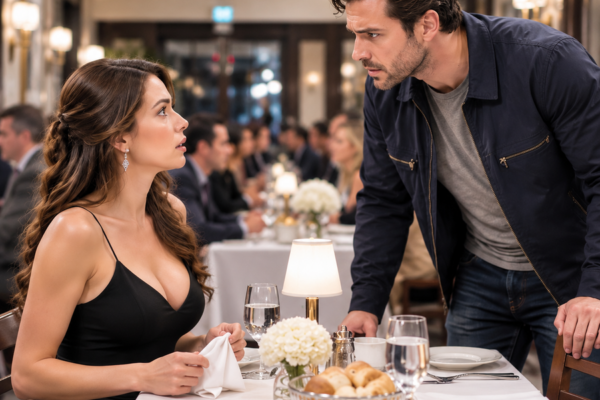
They were seated at a different table this time, not the corner table.
That one was taken by a couple who appeared to be on an early first date
cautious and slightly formal.
And Ryan noticed them when he sat down and noticed the particular careful energy between them and did not say anything about it.
Sophia looked at the menu with the ease of someone who had been here enough times that the menu was old information.
She ordered the salmon without deliberating.
He ordered it too because she’d been right the first time and he saw no reason to change a good decision.
The wine came.
The bread came.
The restaurant was warm and unhurried the way it always was.
Pete Sorenson’s team passed the Q1 audit
Ryan said
because he’d gotten the report that afternoon and it was genuinely good news.
I saw, Sophia said.
You sent me the summary.
With the footnote about the Bay 3 documentation issue
which you resolved before the audit finished.
Right.
He looked at his water glass.
I’m just saying the system works.
She looked at him with the expression that was somewhere between amused and fond that she’d developed over the past months and that he’d stopped trying to categorize.
You’re telling me about work at dinner.
You tell me about work at dinner constantly.
That’s my company, she said.
The audit system is my system.
She tilted her head in the way she did when she was acknowledging a point she didn’t want to fully concede.
Fine.
Equal footing.
That’s all I’m asking for.
She smiled.
The real one, not the polished one.
He could tell the difference now
which had taken longer than he expected and which he found he was glad about
that the difference existed
that it was distinguishable
that she didn’t perform the real one
but let it appear when it wanted to.
The salmon arrived.
was as good as it had always been.
Outside, the city was doing its April thing.
The air turned soft after the long winter.
People on the sidewalk moving with the slightly lighter quality of a population that had survived another cold season and was feeling the fact of it.
Ryan could see it through the front windows
the street moving under the restaurant lights.
He thought about the version of himself who had driven to this restaurant 14 months ago
hands at 10 and two
running the quiet internal monologue of a man preparing to do something that had felt impossible
to be a person for one evening outside the walls he’d built.
He thought about what he’d expected and what he’d found instead.
He thought about how often those two things had been different in his life
what he’d expected and what had actually arrived
and how he had for a long time responded to that difference by trying to narrow his expectations until there was nothing left to be wrong about.
He didn’t want to do that anymore.
That was the simple version.
He didn’t want to do that anymore
and not doing it was not a decision you made once
but one you made repeatedly in small ways every day
choosing the open window instead of the additional brick.
I’ve been thinking, he said.
Sophia looked up from her salmon.
Lily’s spring break is in three weeks, he said.
She wants to go somewhere with an aquarium.
She has strong opinions about what constitutes an adequate cephalopod exhibit.
Sophia set down her fork.
Adequate cephalopod exhibit, she said.
That’s a specific requirement.
She’s a specific person.
A moment.
Sophia held her wine glass with both hands
looking at him with the particular attention she gave to things that were being offered rather than stated.
Are you asking if I want to come?
He looked at her.
Outside, the city moved.
The restaurant hummed quietly around them.
The candle on the table between them
different table
same kind of candle
burned without wavering.
I’m asking if you want to come, he said.
She was quiet for a moment.
He could see her running something
not calculation exactly
more like listening to herself
which was something he’d watched her get better at over the past months.
The small practice of actually consulting her own instincts before her executive function overrode them.
Yes, she said.
I want to come.
He nodded.
She picked up her fork.
He picked up his.
They ate dinner in the unhurried way of people who have time for this
who have built between them and alongside their own separate lives a space that is not urgent but is real
that does not require performance
does not need to prove anything
that is made of ordinary things accumulated and held.
There are people who spend their whole lives looking for the extraordinary
the moment of transformation
the single decision that changes everything
the dramatic turn that separates before from after.
Ryan had been one of those people without knowing it in the early years
expecting that grief had to be conquered before living could resume
that safety had to be guaranteed before risk could be taken
that loss had to be fully understood before it could be left behind.
He knew now that it didn’t work that way
that the ordinary was where the actual living happened
that you didn’t finish grieving and then start building.
You built while still grieving
imperfectly
with the grief present in the background like weather
that the wall was never going to come all the way down
and that was okay because walls that come all the way down weren’t walls anymore.
They were rubble, and you couldn’t live in rubble.
What you could do was build a window in it
put a chair in front of the window
let some light in.
He had a daughter who drew angler fish with scientific accuracy and woke up every morning fully present and asked direct questions and had told a billionaire CEO that the giant isopod was a good answer with the authority of someone whose opinion was worth having.
He had a job that used what he knew to protect people who needed protecting
in a structure designed to last past the people who built it
which was the only kind of structure worth building.
He had a woman across a dinner table who had spent her whole career proving herself to people who were looking for reasons to doubt her
and who had finally
in the particular long aftermath of an ordinary crisis on an ordinary Saturday
stopped building her life entirely around the proof.
They weren’t the people they’d been when they walked into this restaurant the first time.
They were the people who had walked through the year that followed.
The investigations and the board meetings and the regulatory testimony and the Sunday evenings and the pancake brunches and the Thai restaurant with the good curry and the evenings where one of them wasn’t quite present and they tried again the next time.
They were in the specific and limited and deeply human sense of the word okay
more than okay.
They were here.
They had earned the table
the salmon
the unhurried evening
the city moving outside.
That was enough.
That was, in fact, more than enough.
Ryan Carter
33 years old
single father
structural engineer
regional safety director
a man who had spent four years being very careful and who was learning slowly and imperfectly to be something more than careful
looked across the table at the woman who had become the most honest conversation he’d
had since he stopped having them and thought
this is what it looks like when something holds.
Not perfect
not complete
not sealed against everything that could still go wrong
just real
just present
just two people who had chosen each other without guarantees
without a blueprint
in the ordinary and sufficient and irreplaceable way that people choose each other when they’re finally done choosing fear instead.
Outside, the city moved.
The April air was soft.
Somewhere across town
Lily was at Mrs. Albrecht’s
probably drawing something in her sketchbook
probably a deep sea creature that nobody else in second grade had thought to draw.
And here
in a restaurant on Fifth that smelled of good food and candle wax and the particular warmth of people being in the same place on purpose
two imperfect people had a real dinner and talked about ordinary things and let the evening be exactly what it was
which was everything.