No One Helped the Starving Girl for 3 Days— Until a Navy SEAL & K9 Found the Hidden Truth
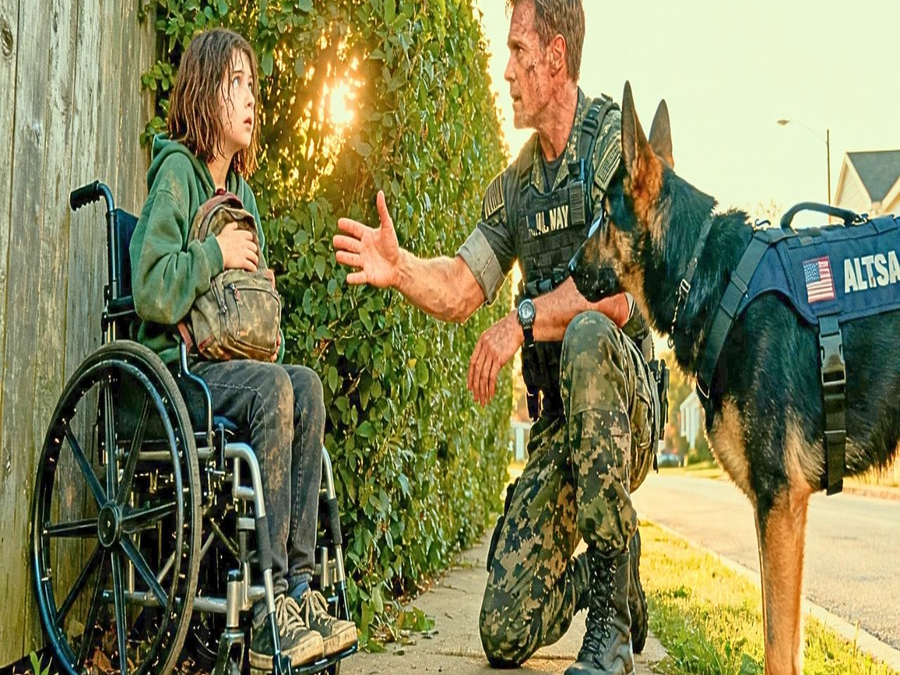
No One Helped the Starving Girl for 3 Days— Until a Navy SEAL & K9 Found the Hidden Truth
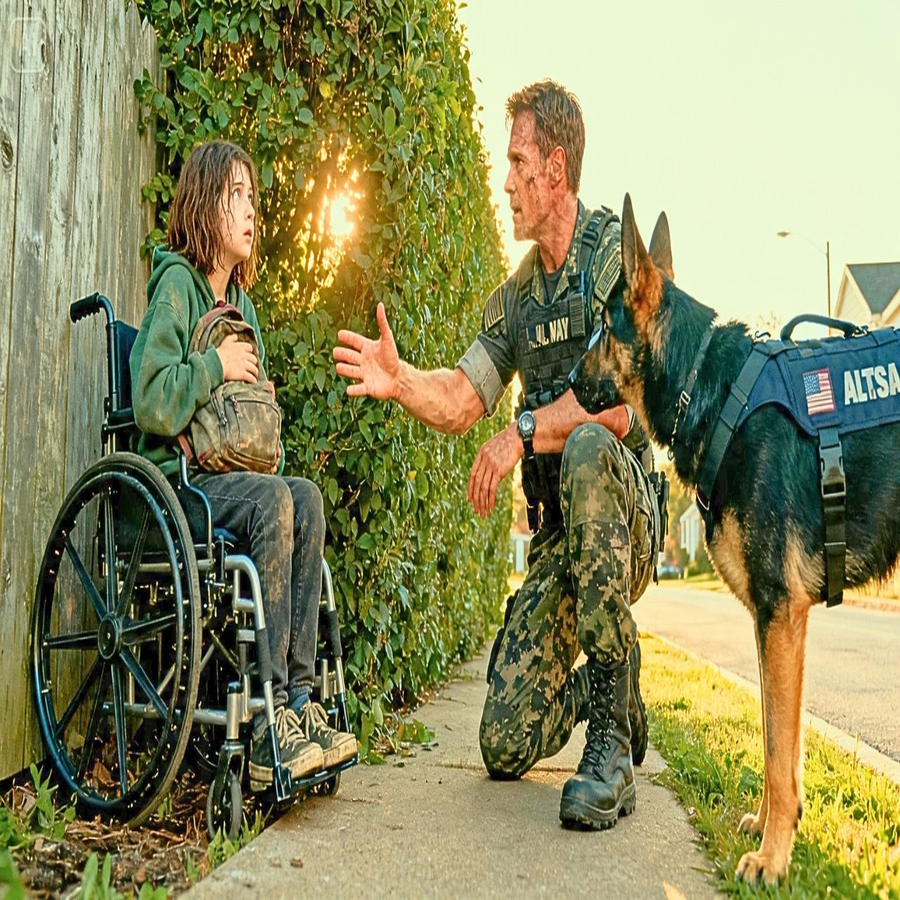
3 days.
That’s how long 10-year-old Maya Reed sat behind a hedge in a quiet suburban neighborhood before anyone stopped.
3 days without a real meal.
3 days in a wheelchair.
She couldn’t push far enough to reach anyone who might help.
3 days watching cars slow at the stop sign, then drive away.
Nobody looked left.
Nobody looked toward the bushes until a dog did.
The neighborhood was the kind of place where people waved from driveways but didn’t know each other’s names.
Maple Hill
a grid of modest two-story houses on the western edge of Columbus
Ohio
where everyone kept their lawn trimmed and their blinds drawn at a comfortable 45°.
Not unfriendly
just private
the kind of suburb where a person could disappear in plain sight
and the neighbors would assume someone else had already handled it.
It was a Thursday afternoon in late October when Ethan Vale turned his black SUV onto Claremont Avenue for the third time that week.
He wasn’t lost.
He wasn’t visiting anyone.
He drove Claremont because it was quiet.
Because the tree cover was good this time of year
and because after 14 years operating in places where silence meant you were either safe or about to get shot
he’d learned to appreciate neighborhoods where nothing happened.
sat in the rear cargo area behind the divider screen
his 70 lb German Shepherd frame relaxed
nose tilted toward the cracked window.
The dog had been with Ethan for 4 years first through a veterans pairing program
then through three moves and two failed attempts at normal civilian life.
Atlas had seen Ethan at his worst.
The dog never judged.
He just stayed.
Ethan was halfway down the block when Atlas stood up.
Not the slow, curious rise of a dog spotting a squirrel.
This was something different.
Shoulders loaded
ears stiff
a low sound in his chest that wasn’t quite a bark
and wasn’t quite a whine.
Ethan knew that posture.
He’d seen it in the field before the dog had alerted on a buried IED outside Kandahar.
He’d seen it outside a doorway in Mosul before anyone had confirmed the building wasn’t clear.
Atlas was telling him something was wrong.
Easy.
Ethan’s voice was flat and quiet, the voice he used when he needed to think.
He let the SUV coast to the curb and cut the engine.
From the driver’s seat
he scanned the street the way he always scanned streets systematic
left to right
near to far
looking for what didn’t belong.
A newspaper that had been on a stoop too long.
A gate left open 3 in.
Car parked facing the wrong direction.
He almost missed it.
The hedge ran along the sideyard of a tan colonial on the left waist high trimmed unremarkable.
But near the base
just above the sidewalk
something pale and still was visible through the lower branches.
Ethan was out of the vehicle before he fully decided to move.
He left Atlas in the car with the window
cracked the dog would stay until released
and walked the 12 ft to the hedge slowly
keeping his footfalls easy
his hands visible for his breathing controlled old habits.
You approached an unknown situation
like you were the one who might frighten something
not the other way around.
He crouched.
The hand was small
thinfingered
pale
gripping a cluster of hedge branches the way you grip something when you’re trying not to fall asleep.
The knuckles were scratched.
The sleeve above the wrist was a faded green hoodie, two sizes too large.
Ethan moved around the edge of the hedge.
The girl was tucked into the narrow gap between the hedge and the wooden fence behind it
sitting upright in a manual wheelchair
her head dropped forward onto her chest.
The chair’s wheels wedged in the soft dirt as if she’d rolled into the space and simply stopped.
She couldn’t have been more than 10 years old.
Dark hair matted against her forehead
lips chapped and dry
a backpack on her lap
stuffed and zipped
one strap repaired with electrical tape.
She was breathing.
He checked that first.
Shallow, slow, but breathing.
Ethan straightened up and turned back toward the SUV.
He released Atlas with a short whistle and a hand signal come heel soft and the dog moved to his side without a sound.
When they came back around the hedge
Atlas lowered himself immediately into a sphinx position 3 ft from the girl’s wheelchair
close enough to be sensed
far enough not to crowd.
Then Ethan crouched again and spoke, “Hey, not loud, just enough.
Nothing.
Hey, I’m right here.
You’re okay.”
The girl’s chin moved first.
Then her eyes opened dark brown
unfocused for a moment
then suddenlessly sharp with the specific fear of someone who had learned that being found didn’t always mean being safe.
She tried to straighten up in the chair and winced.
I’m her voice was barely there.
I’m sorry I wasn’t.
I’ll move.
I’ll go.
You’re not going anywhere yet.
Ethan stayed crouched
keeping himself below her eyline because towering over a frightened child was exactly the wrong play.
“What’s your name?”
she hesitated.
The calculation behind her eyes was visible.
He’d seen that look before.
Not in children
but in people who’d learned that giving your name to a stranger had consequences.
“Maya,” he repeated it like it was settled fact.
“I’m Ethan.
That’s Atlas.
He’s not going to move until I tell him to, so don’t worry about the dog.
Maya looked at Atlas for the first time.
The dog’s ears had flattened slightly
a deliberate train softening
and his gaze was angled just to the side of her face.
“Not staring, not threatening, just present.”
Something in the girl’s posture shifted a fraction of an inch.
“How long have you been here?”
Ethan asked.
“I don’t know.
Today or longer?”
She didn’t answer, which was its own answer.
Ethan reached into his jacket and pulled out the water bottle.
He kept clipped to his inner pocket a habit left over from years where dehydration could end a mission before it started.
He held it out toward her label facing her so she could see it was sealed unopened.
You can have it.
Maya looked at the bottle, then at him.
Then
with the exhausted deliberateness of someone who’d been thirsty long enough to stop feeling it
she took it.
Her hands shook slightly, breaking the seal.
He watched her drink and didn’t speak.
When she lowered the bottle
there was color in her face that hadn’t been there 30 seconds ago.
“Are your parents nearby?”
he asked.
The shift in her expression was subtle.
A tightening around the eyes, a slight pressing of the lips.
“Not grief exactly.
something older than grief.
Something that had already processed and filed the laws somewhere where it couldn’t be accessed in conversation without effort.
No, she said.
Okay.
He didn’t push.
Is there someone I can call for you?
An adult you trust?
She thought about that for a long time
long enough that Ethan realized the silence wasn’t hesitation.
She was actually trying to think of a name and coming up mostly empty.
Mrs. Carver, she said finally.
She was my teacher.
But I don’t have her number anymore.
Last name Carver.
Yes, we can find her.
He pulled out his phone.
I’m going to call someone to come help you first.
Okay.
Medical just to make sure you’re all right.
Is that okay with you?
Maya’s jaw tightened.
I’m not hurt.
I know, but you’ve been sitting in the cold for a while and you need food.
It’s not hurt.
That’s just a body that needs refueling.
He kept his voice even.
Doesn’t mean anything’s wrong with you.
She looked at him for a long moment.
You’re not going to call the police first?
She asked.
I’m going to call EMS first.
If the police end up involved
it’ll be because they need to be
not because I want to make this bigger than it is.
He paused.
I’m not trying to make trouble for you, Maya.
I’m trying to get you something to eat.
Something broke open very slightly behind her eyes.
Not tears, she didn’t cry.
Just a loosening like a wire that had been pulled taut
finally releasing a half turn.
Okay, she said.
The paramedics arrived 7 minutes later.
Ethan had stayed crouched near the hedge the entire time
not filling the silence with reassurances she didn’t need
not asking questions she wasn’t ready to answer.
Atlas hadn’t moved.
The first EMT, a young woman named Torres, was good.
She came in calm and slow and didn’t make the mistake of talking over Maya’s head to Ethan like the girl wasn’t there.
Hi, Maya.
I’m going to check a few things.
Is that okay?
Yes.
Blood pressure low
blood sugar low
core temperature drop
no visible injuries beyond the scrapes on her hands from gripping rough surfaces.
Ethan stood back and watched them work with the detached attention he’d once used to debrief after operations logging details
noting what was said and what wasn’t.
Maya was 10 years old
and she hadn’t eaten a real meal in what the EMTs were estimating as 2 to three days.
She’d been sleeping in the wheelchair in the narrow space behind the hedge with a backpack as her only shelter.
No blanket, no phone.
3 days.
The neighborhood had been walking past this hedge for 3 days.
The anger that moved through Ethan was quiet and cold.
Not the hot kind, the kind that made operators sloppy and loud.
The cold kind.
The kind that stayed operational.
He gave a brief statement to the police officer who arrived just the facts.
no editorializing.
And when they started talking about temporary placement procedures and DHS protocol
Ethan felt the familiar weight of bureaucratic machinery beginning to grind.
He’d seen enough missions fail
not from enemy action
but from the gap between what the protocol said and what actually happened to know that the systems intentions and the systems outcomes were two different things.
He stayed
not because he had to
because when the police officer asked Maya if she wanted to ride in the ambulance alone
the girl looked sideways at Atlas
who was sitting calmly at the edge of the scene
licensed vest on
proved for public access
and then looked at Ethan with an expression that was too controlled for a 10-year-old.
“Can they come?”
she asked.
The officer glanced at Ethan.
Ethan looked at Torres.
Torres looked at Maya and then just said, “Sure.”
In the ambulance
Maya sat with the thin emergency blanket pulled around her shoulders and the IV line running into her left arm.
Atlas was at her right position beside the gurnie
chin resting on the edge of the mattress
close enough that his fur touched her hand.
She didn’t pet him at first.
She just let her hand rest against his side.
Ethan sat across from her in the jump seat, out of the way.
Can I ask you something?
Maya said.
Her voice was stronger now.
The water and the glucose the EMTs had pushed through the line were doing their work.
Sure.
Why did you stop?
He considered the real answer for a moment.
Atlas stopped.
I followed him.
Maya looked down at the dog.
He knew I was there.
He always knows.
Ethan paused.
He was trained for it.
Finding people who need help.
That’s actually one of the things he does.
Is he a rescues dog?
There’s some overlap.
Ethan leaned his forearms on his knees.
He was trained to work with veterans.
He helps me, but he’s got a skill set that goes beyond just one person.
Maya seemed to be filing this information with careful attention.
What does he help you with?
Ethan looked at the dog for a second.
Sleeping mostly, remembering where I am when I wake up in a bad place.
He said it plainly without self-pity.
PTSD, it’s a thing.
He manages the early warning part better than I do.
The girl was quiet for a moment.
I used to have nightmares, she said.
After my mom died, I’d wake up and not know where I was.
Yeah, he didn’t add anything to that.
He just let it sit.
Atlas shifted his weight slightly and pressed his head more firmly into Maya’s hand.
This time, she petted him.
The emergency room at Mount Carmel West was controlled chaos at 5:00 in the afternoon
and Ethan navigated it the way he navigated most institutional environments.
With patients on the surface and a continuous background analysis running underneath
he watched who talked to who.
He noticed which social worker got assigned to Mia’s case.
He read the body language of the staff when they looked at her chart.
He’d run enough surveillance operations to know that institutions had tells same as people.
The tell he caught first was in the social worker’s expression when she pulled up Maya’s file.
A slight narrowing of the eyes
a barely perceptible pause before she started speaking.
Not surprised at the situation, something closer to recognition.
Like she’d seen this pattern before and already knew how it was going to process through the system.
Her name was Diane Howell.
Mid-50s
organized
competent in the way that meant she’d learned to work within broken structures without breaking herself against them.
Ethan introduced himself and gave her the factual summary.
3 days, no food, no phone, no current placement.
Teacher named Carver, last name, unknown, full name.
Howell made notes without looking up.
We’ll run her records.
How long does that take?
Depends on which county she was last placed in.
She glanced at him over her reading glasses.
Are you family?
No friend of the family.
I found her.
Howell studied him for a moment.
We appreciate you bringing her in.
Mister Veil.
Ethan Vale.
Mr. Veil.
You can leave your contact information at the desk and will.
I’d like to stay until she’s settled.
He said not aggressively.
Just as a statement of intent, visiting hours.
She’s 10 years old.
She’s been alone for 3 days.
She doesn’t know anyone in this building.
He met Howell’s eyes evenly.
Stay in the hallway if I need to, but I’d like to stay.
Howell looked at him for a long moment.
She was trying to figure out what category he fit into.
He could see it happening.
He didn’t help her figure it out.
“All right,” she said finally.
“For now.”
It was past 8:00 in the evening when Ethan walked back toward Maya’s room after a coffee run that had taken longer than expected because the hospital’s cafeteria closed early and he’d had to find a vending machine on the second floor and then a better vending machine on the fourth floor that actually had
real food in it.
He stopped just outside the door.
Through the narrow window
he could see Maya sitting up in the hospital bed
the blanket folded neatly across her legs
talking to Howell
the social worker was writing.
Maya was answering questions with the careful precision of someone giving testimony
not a child in that moment
but a small person who had learned that how you told the story determined what happened next.
Atlas was still beside the bed.
The nursing staff had been told twice that he was a certified service animal.
And the second time Ethan had shown the documentation
so the arguments had stopped.
He watched Maya speak.
She had a backpack.
She’d had it the whole time
held close even in the ambulance
even when the EMTs had tried to take it for a moment to check her blood pressure.
Inciz that he’d learned this from Howell’s first intake were three changes of clothes
a library book with a damaged spine
a folded photograph of a woman who was presumably her mother
two mechanical pencils
and a piece of notebook paper with directions written in a child’s handwriting
directions to a community center across town.
Someone had told her to go there.
Someone had promised to help her.
She’d never made it.
Ethan had said nothing about this to Howell yet.
Not because he was hiding it, but because he wanted to understand it first.
14 years of operating in environments where the most important information was the thing that didn’t immediately add up had made him slow and careful about the thing that felt off.
And this felt off.
A 10-year-old disabled girl alone with written directions to a specific location from someone who knew she needed help.
And no one at that community center had come looking for her.
He pushed the door open.
Howell looked up.
Maya looked up.
Atlas’s tail moved once.
“Got food
” Ethan said
holding up the small collections of things he’d assembled.
“Crackers, peanut butter cups, apple juice.”
“Not great, but it’s something.”
Maya looked at the peanut butter cups for a moment.
“I love those
” she said quietly like it was something she’d almost forgotten about herself.
Ethan set them on the tray beside her bed.
Howell closed her notebook.
I’ll be back in the morning, Maya.
We’re going to get your records sorted out.
You’ll be safe here tonight.
Maya nodded.
She waited until the social worker had left the room.
Then she looked at Ethan.
She’s going to put me somewhere.
Maya said, “She’s going to find you a placement.”
“Yeah, I’ve been to four of those.”
Her voice was flat.
Not bitter, just accurate.
They’re not bad.
They’re just You’re not a person there.
You’re a case number.
Ethan sat down in the chair beside the bed.
That’s a fair read.
So, you agree with me?
I think the people in the system mostly mean well, he said.
And I think the system doesn’t always make it possible to mean well and also actually help someone at the same time.
Maya considered this.
That’s a very careful way of saying yes.
He almost smiled.
You’re perceptive for 10.
My mom used to say I was 10 going on 40.
She picked up one of the peanut butter cups and turned it over in her hands.
She died 2 years ago.
My aunt took care of me after that, but she got sick, too.
She died in August.
That was 9 weeks ago.
I’m sorry, Ethan said.
Everyone says that.
She unwrapped the candy.
I know they mean it, but it doesn’t change anything.
No, it doesn’t.
She took a bite.
========== PART 2 ==========
Atlas watched her with the profound patient attention of a dog who understood that the important thing happening in this room had nothing to do with him and who was present anyway.
They sat in silence for a while.
It was the comfortable kind or close enough.
Then Maya looked at the piece of notebook paper on the tray beside her.
That address, she said.
The community center.
I’m supposed to go there because someone said there was a person who could help figure out my mom’s paperwork.
She paused.
My mom set something up for me before she died.
Something about school and money and medical stuff
but it got lost somewhere
I think.
Nobody could ever find it.
Ethan looked at the paper without touching it.
Who told you to go to the community center?
Maya was quiet for a moment.
A man named Gerald, she said.
He said he worked for the county.
He said if I went there on Thursday, there’d be someone who could help me.
She frowned slightly, but I couldn’t get there on my own.
My chair doesn’t go that far, and I didn’t have anyone to take me.
Ethan kept his voice neutral.
When did he tell you this?
2 weeks ago.
2 weeks.
She’d been sitting on those directions for 2 weeks
trying to figure out how to get herself off across town to a county referral appointment that nobody had arranged transportation for.
And then her last placement had fallen apart
and she’d ended up behind a hedge on Claremont Avenue
still holding the paper.
Gerald.
Ethan said, “Did he give you a last name?”
“No.” “Did he give you a phone number?”
“No.” He sat back, looked at the ceiling for a moment.
A county worker
if that’s what Gerald was
gives a disabled 10-year-old verbal directions to an appointment across town
no written case number
no transport arranged
no follow-up contact for a child with no reliable guardian
no phone
and no way to get there
independently.
And when she didn’t show up, nobody came looking.
The cold anger shifted.
Settled into something more precise.
“Get some sleep,” he said.
“You’re safe here.
I’m going to come back tomorrow.”
Maya looked at him.
The calculation behind her eyes was back the same one he’d seen in the hedge.
The one that had learned not to assume that adults who said they’d come back actually did.
“You don’t have to,” she said.
“I know.”
He stood.
That’s not the same as me not coming back.
He picked up his jacket.
Atlas rose immediately, moving to his heel position without a command.
The door Ethan stopped the paper with the address, he said.
Don’t lose that.
Maya pressed her hand flat on top of it.
I won’t, she said.
He left.
In the elevator, he pulled out his phone and opened his contacts.
He scrolled to a name Marcus Webb
a former teammate who now worked civilian side in social services advocacy.
One of those people who’d made the transition and actually used it to do something.
He typed a message.
Need a favor.
Kid in the system.
Something doesn’t add up about her case.
Can you look into a county contact named Gerald?
No last name.
Tied to a community center referral in Columbus.
No paperwork trail.
She’s 10.
She’s been alone for 3 days.
Call me when you can.
He sent it.
The elevator opened on the ground floor.
Outside, the October air had gone sharp and cold.
The kind that cut through a jacket if you weren’t paying attention.
Ethan walked to the SUV
opened the rear for Atlas
closed it
got in
and sat for a moment with his hands on the wheel without starting the engine.
14 years in special operations
three deployments
more operations than he’d ever given an accurate number for in any debrief.
He’d learned to trust the instinct that something was wrong.
Even when the evidence was thin
learned that the thin evidence was usually just the edge of something larger.
a disabled 10-year-old girl
no family
no phone
written directions to a county appointment that nobody followed up on
and a man named Gerald who nobody could verify.
Ethan started the engine.
He’d be back in the morning
but tonight he was going to make a few phone calls.
Marcus called back at 6:47 in the morning.
Ethan was already awake
had been since 4:15
which was normal
which had been normal for years
sitting at the kitchen table in his apartment with a cup of coffee that had gone cold
and his laptop open to the Franklin County Department of Job and Family Services directory.
He’d been cross-referencing county employee databases
public-f facing staff listings
any searchable record that might surface a Gerald in a caseworker role connected to child placement or benefits coordination.
He’d found 11 Geralds employed across the county’s social services network.
None of them had a listed specialty that made obvious sense for what Maya had described.
None of them were attached to the specific community center on the address she was carrying.
His phone vibrated on the table.
Webb, you sent me a message at 11:30 at night about a kid named Gerald.
Marcus Webb’s voice had the particular sandpaper quality of someone who was awake because they’d chosen to be
not because they’d slept.
I’ve been up since 5.
What’d you find?
Good morning to you, too, Ethan.
Good morning.
What’d you find?
A short exhale.
The community center at that address
Eastside Family Resource Center
is a legitimate operation.
nonprofit, county affiliated, been running for about nine years.
They do benefits navigation
housing referrals
school enrollment support
solid reputation
not a lot of red flags in their public record
but but their case intake system requires a referral code.
Every single client who comes through their door for benefits navigation gets a referral code generated by the county worker who sends them there.
That code ties to a case file.
It’s how they track outcomes, how they report to their funders.
Marcus paused.
Maya Reed doesn’t have a referral code in their system.
I had a contact check this morning.
Ethan set down his coffee cup.
She has no file with them.
Zero.
No intake record.
No pending appointment.
No case number.
As far as the Eastside Family Resource Center is concerned
Maya Reed does not exist.
The cold in Ethan’s chest settled into something specific and hard.
So
whoever this Gerald is
he said he either isn’t a real county case worker or he is one and he sent a disabled 10-year-old to an appointment he never actually created.
Those are the two options.
Yes.
Which is worse.
Honestly, Marcus was quiet for a sec.
I’m not sure yet.
First option, someone posing as a county worker to a vulnerable kid.
That’s a predator pattern.
Second option
a real case worker who sent her there with no file
no followup
no transport.
That’s negligent, so severe, it’s almost hard to believe it’s accidental.
Ethan stood up from the table and walked to the window.
Outside
Columbus was doing its early morning thing
garbage trucks
a few joggers
the slow accumulation of commuter traffic on the street below.
Her mother set up something for her before she died.
Ethan said some kind of long-term plan.
Education, medical, financial.
Maya mentioned it.
Nobody’s been able to locate it.
What kind of plan?
I don’t know the specifics yet
but it’s the reason she was trying to get to that community center.
Someone told her the answer was there.
Marcus was quiet long enough that Ethan could hear him thinking.
That’s interesting, Marcus said finally.
because a financial or educational support arrangement set up by a deceased parent for a disabled child that would have a paper trail
legal documentation
potentially a trust or a special needs fund
definitely some kind of filed record with the county if
it involved state benefits.
He paused.
Nobody can find it.
Either it was never properly filed or someone made sure it couldn’t be easily found.
Or both.
Or both.
Ethan watched a woman below on the sidewalk struggle to get a stroller over a curb that had a broken ramp.
She managed it.
Nobody stopped to help.
He noted that without judgment, just noted it.
I need Maya’s full case history.
He said everything from when her mother died through to now.
That’s not something I can just pull.
Ethan, she’s a minor in the system.
There are privacy I know.
I’m not asking you to pull it illegally.
I’m asking you to tell me who I need to talk to and in what order to get someone with actual authority to start asking questions.
He turned from the window.
I don’t want to go around the system.
I want to go through it fast enough that nothing gets buried before anyone notices.
Another pause.
You think something’s being buried?
I think a woman spent probably the last months of her life making sure her disabled daughter would be taken care of after she was gone.
think that arrangement disappeared.
I think a man named Gerald Reel or fake sent that daughter to an appointment that didn’t exist.
And I think she sat behind a hedge for 3 days while everyone drove past.
He picked up his jacket from the back of the chair.
So yeah, he said, “I think something’s wrong.
I don’t know what shape it’s in yet, but I’m going to find out.”
He was at the hospital by 8:15.
Maya was awake
sitting up in the bed with the library book open across her lap.
something with a cracked blue spine that looked like it had been read by a lot of hands before hers.
She was eating scrambled eggs from a tray with the focused
deliberate attention of someone who had learned not to take food for granted.
Was in his spot beside the bed.
His tail moved once when Ethan came through the door.
“Morning,” Ethan said.
“Morning.”
She didn’t look up immediately finish her current bite first.
Eggs are bad.
Hospital eggs are always bad.
I’m eating them anyway.
Smart.
He pulled the chair over and sat.
How’d you sleep?
Better than behind the hedge.
She turned to Paige.
The nurse kept coming in.
I don’t think they’re supposed to leave kids alone.
Every time I woke up, someone was checking something.
That’s their job.
I know.
She finally looked up.
You came back.
He didn’t make a thing of it.
Said I would.
Diane Howell arrived at 9:00 sharp with a younger colleague
a man in his early 30s named Patterson
who carried a tablet and had the slightly overwhelmed energy of someone who was new enough to still care about every case
and experienced enough to know how many there were.
Howell herself was
composed in a way that Ethan had been reading more carefully since the previous evening.
She was professional, organized.
She’d clearly been doing this work for a long time.
But there was something in the way she moved through Maya’s file a slightly too neutral quality
like she was reading it rather than engaging with it that sat wrong with him.
He couldn’t have articulated exactly why yet.
He filed it.
We’ve located Maya’s most recent placement record
Howell said
addressing both of them
including Maya
which Ethan noted approvingly.
She was in a temporary foster placement in Hillyard through early October.
The placement ended when the foster family had a personal emergency and couldn’t continue.
Standard protocol would have been to transfer her to a secondary placement within 72 hours.
That didn’t happen, Mia said.
Not as a question.
There was a processing delay.
Howell said.
The transfer paperwork.
There was more than a delay.
Mia said she set the book down.
Her voice was steady.
a flat factual steadiness of someone who had processed something before talking about it.
The family told me on a Monday that they couldn’t keep me anymore.
Someone from the county was supposed to come on Wednesday.
They didn’t come.
The family had to leave.
They had a real emergency.
I’m not blaming them.
And I had to leave, too.
I waited at the library for 2 days.
How’s pen paused on her notepad.
You were at the library for 2 days before Patterson started.
before I went to Claremont Avenue.
Yes.
Maya looked at him with the particular directness of a child who had given up on being handled gently.
I used the library’s Wi-Fi to try to find a phone number for someone from the county.
I couldn’t find one that worked.
Then my wheelchair battery died and I had to switch to the manual one.
Can’t go as far with the manual one.
She paused.
I was trying to get to the East Side Family Resource Center.
That’s where I was going.
Howell made a note.
Who told you to go there?
A man named Gerald.
He said he was from the county.
Do you have a last name?
No. Do you have a referral number?
A case number he gave you?
No.
He just gave me the address and told me to go on Thursday.
Howell and Patterson exchanged a look brief contained professional.
Ethan caught it.
We’ll look into that.
How said
“In the meantime
we’ve identified a temporary placement that can take Maya as early as I want to ask about my mother’s arrangement first
Maya said.
Howell stopped writing.
The thing my mom set up.
Before she died, Ma’s voice was even.
But Ethan could see the effort it took to keep it that way.
The slight rigidity in her jaw
the way her hand pressed flat against the book cover.
I’ve asked about it before at every placement.
Nobody ever knows what I’m talking about, but it was real.
My mom told me about it.
She spent a lot of time making sure I’d be okay.
She looked at Howell directly.
Can you find it?
Howell’s expression was careful.
Compassionate technically
but beneath the compassion
there was that quality again that slightly practiced neutrality.
We’ll do everything we can to locate any documentation in your mother’s file
she said.
These things sometimes take time to.
It’s been 2 years, Maya said.
The room went quiet.
Ethan looked at Howell.
Howell looked at her notepad.
Patterson cleared his throat.
We’ll make it a priority.
Okay, Maya said.
She picked up her book again.
Thank you.
Howell caught Ethan in the hallway outside Mr. Veil.
She kept her voice low.
Professional curses, not secrecy.
I want to make sure we’re on the same page about your role here.
What page is that?
You found Maya and we’re very grateful for that.
But you’re not a family member.
You’re not a licensed foster parent and you’re not affiliated with any agency that has standing to be involved in her case.
She met his eyes with the direct experienced gaze of someone who had navigated resistant outsiders before.
I want to help Maya
but having you involved in her case in an unofficial capacity creates complications.
What kind of complications legally, emotionally for Maya especially?
She’s forming an attachment.
That’s understandable.
But if you’re not going to be a consistent long-term presence in her life
it can be damaging to.
I’m aware of attachment theory, Miss Howell.
He said it evenly.
Not aggressive, just accurate.
I’m also aware that Maya asked about her mother’s support arrangement 2 years ago and apparently got nothing.
I’m aware that a person named Gerald gave her directions to an appointment that doesn’t exist in the resource cent’s intake system.
And I’m aware that she was behind a hedge for three days while her transfer paperwork was in a processing delay.
Howell’s expression didn’t change.
How do you know the appointment doesn’t exist in the intake system?
Because I checked a pause.
You don’t have access to.
I know people.
He kept his voice flat.
I’m not trying to interfere with your process, Miss Howl.
I’m trying to make sure the process actually works this time for Maya.
He tilted his head slightly.
Is there a reason that’s a problem?
Howell looked at him for a long moment.
She was doing the same thing she’d done the previous evening
trying to categorize him
finding that she couldn’t
finding that this bothered her.
I’ll need you to submit your contact information formally.
She said
“If you want to be considered for any kind of ongoing involvement
you’d need to go through proper channels
background check
licensing interviews.
I know how it works.
I’ll do whatever it takes.
He looked back through the window at Maya
who was reading her book with the slightly deliberate focus of a kid who was absolutely listening to the conversation happening on the other side of the glass.
But while I’m going through channels
can we make sure someone is actually looking for the Gerald with no last name and actually pulling Maya’s mother’s full file?
Howell followed his gaze to the window.
I’ll make the request personally, she said.
Thank you.
She walked away.
Ethan watched her go, then looked back at Maya.
The girl lowered her book 2 in and looked back at him.
He gave a slight nod.
She raised the book back up.
Marcus Webb arrived at 11:30 with coffee
a folder
and the expression of a man who had found something he wished he hadn’t.
They sat in a corner of the hospital cafeteria
the one on the ground floor that had just reopened for the lunch shift
with Atlas settled under the table
and both of them leaning forward over the coffee cups in the way of two men having a conversation they didn’t want to carry across an open room.
Tell me, Ethan said.
Marcus opened the folder.
Not a digital file
actual printed pages
which meant he’d wanted to be careful about what he accessed on a traceable device.
Ethan noted that without comment.
Maya’s mother was Angela Reed, Marcus said.
Died 26 months ago ovarian cancer diagnosed late moved fast.
Before she died
she worked with a legal aid nonprofit to establish a special needs trust for Maya.
The trust was funded through a combination of Angela’s life insurance payout
not large
but not nothing
and a state disability support allocation that Mia qualified for.
He tapped the page.
The trust was formally established 11 months before Angela died.
It had a designated trustee
a woman named Lorraine Chu
who worked with the same legal aid nonprofit.
Where’s the trust now?
Marcus looked at the table for a second.
Then he looked up.
Lorraine Chu left the legal aid nonprofit 14 months ago.
She moved out of state as far as I can tell.
She’s in Portland now.
The trust was supposed to be transferred to a successor trustee when she left.
He paused.
That transfer was never completed.
Ethan looked at him steadily.
There’s more.
Marcus said
========== PART 3 ==========
“The legal aid nonprofit is still operating
but they had a significant staff turnover about 18 months ago.
New director came in.
A lot of the old files were migrated to a new case management system.
The migration was he made a small sound that wasn’t quite a laugh imperfect.
Some records got corrupted
some got misfiled
some just didn’t make the transfer.
Maya’s mother’s file didn’t make the transfer.
As far as the nonprofit’s current system is concerned
Angela Reed’s case doesn’t exist.
Ethan sat back in his chair.
He’d seen this kind of failure before.
Not in child welfare
in logistics
in supply chain
and intelligence gathering.
The catastrophic error that wasn’t one catastrophic decision
but 20 small decisions made by 20 different people who each assumed someone else was handling the part that actually mattered.
The missing piece that nobody noticed because everybody believed somebody else had it.
So, the trust exists, he said almost certainly.
Legally established trusts don’t just evaporate.
The documentation should exist somewhere with Lorraine Chu personally with whatever court processed the original filing with the state disability office that signed off on the allocation.
It’s findable.
Marcus closed the folder
but nobody’s been looking for it because nobody in Mia’s case chain has known it existed.
And Maya’s been telling every case worker she meets that her mother set something up for her.
And every case worker has done a database search
found nothing
and logged it as unverified.
10-year-old’s word against an empty database.
Yeah.
Ethan drank his coffee.
It was bad.
The hospital’s cafeteria was not working with good equipment
but he drank it because he needed the caffeine and because having something to do with his hands helped him think.
The Gerald question, he said.
Anything?
Marcus hesitated.
This is where it gets less clear.
He reached into the folder and pulled out a single printed page.
There’s a Gerald Marsh who’s worked as a county benefits coordinator for about 6 years.
Mid-level
nothing remarkable in his public-f facing record
but his listed case assignments for the last 18 months include a cluster of cases that are all he found the word adjacent to Maya’s situation.
Kids with deceased parents
no remaining family
some kind of pending benefit or support structure that got complicated in the handover.
How many cases?
Seven that I could identify.
All of them with similar patterns referrals to community resources that either couldn’t be verified or had no corresponding intake records.
Ethan looked at the page.
Gerald Marsh, benefits coordinator.
A photo from a county directory mid50s.
Unremarkable face.
The kind of face that slid out of memory almost as soon as you looked away.
Seven cases, Ethan said.
And Maya’s is number eight, or however far he’s gotten.
I don’t know that yet.
I don’t know what he’s doing with them.
I don’t know if it’s negligence, incompetence, or something else.
Marcus lowered his voice.
But seven kids with complicated benefit structures all referred to appointments that don’t quite exist.
That’s not random.
No, Ethan said it’s not.
He folded the page Marcus had printed and put it in his jacket pocket.
I need to get this to someone with actual investigative authority, he said.
Who do I call?
Franklin County has an inspector general’s office.
They handle misconduct complaints against county employees.
Marcus looked at him carefully.
But Ethan, this is thin.
It’s pattern recognition.
It’s not evidence of a crime.
Not yet.
If you go to the IG with this and you’re wrong or if you’re right but you can’t prove it
you make noise
you spook whoever’s involved and suddenly paperwork that’s currently just misfiled becomes paperwork that’s actively gone.
Ethan looked at him.
So what do you suggest?
I suggest you start with Lorraine Chu.
Find the trustee.
Establish that the trust exists.
Once you have a legal document proving Angela Reed set up a financial support structure for for Maya
everything else becomes easier because then someone with standing can go looking for where the money went
not just where the paperwork is.
It was the right call.
Ethan knew it was the right call
which was mildly annoying because it required patience.
How do I find Chu without tipping anyone off?
She’s a private citizen in Portland.
You just call her.
Ethan looked at him.
Sometimes it’s that simple.
Marcus said he found a number for Lorraine Chu through a combination of LinkedIn
a bar association directory she’d gotten a parallegal certification after leaving the nonprofit and one phone call to a former teammate who now worked in private security and had access to people search databases that operated in a gray area of the law that Ethan didn’t examine too closely.
he
called from the hospital parking lot
sitting in the SUV with the engine off and Atlas calm in the back.
The phone rang four times.
Hello.
The voice was cautious
the tone of someone who’d gotten enough unknown number calls to be wary.
Miss Chu, my name is Ethan Vale.
I’m calling about a former client of the legal aid organization you worked for
a woman named Angela Reed.
Silence.
Then where did you get this number?
Through a few different channels.
I’m not from any agency.
I’m a private citizen.
I found Angela’s daughter 2 days ago.
She’d been alone for 3 days.
No food, no active placement.
She’s 10 years old
and she’s been telling every case worker she meets for 2 years that her mother set something up for her.
He paused.
I think you know what that something is.
A long pause.
Is Maya okay?
Lorraine Chu asked.
The question landed with wait.
This woman knew the name immediately.
No hesitation.
She’s at a hospital in Columbus right now.
Ethan said she’s physically okay.
Dehydrated, underfed, but okay.
She’s been through four placements in 2 years.
He heard something on the other end of the line.
Not quite a sound, more like the absence of one.
The specific silence of someone receiving news they’d been afraid of for a long time.
I left the nonprofit because I couldn’t chew started.
Then stopped herself.
Started again.
When I left, I flagged Maya’s trust for transfer.
I sent three emails to the new director about it.
I have copies of those emails.
I never got a response.
Did you follow up?
Call twice.
I was told the migration was being handled and all active trust files were being reviewed.
Her voice had gone tight.
I should have done more.
I know that.
I’ve I’ve thought about this, Miss Chu.
Where is the trust documentation?
I have copies of everything.
the original filing
the trust instrument
the financial accounts
everything.
It’s all here with me.
I’ve had it because I was waiting for someone to tell me who the successor trustee was
and that call never came.
She stopped.
I’ve been waiting for that call for 14 months.
Ethan looked through the windshield at the hospital’s front entrance.
A woman was pushing an elderly man in a wheelchair out through the automatic doors.
Taxi idled at the curb.
I need you to send me copies of everything you have, he said.
And I need you to be willing to speak to an attorney and possibly to a county investigator about the failure in the transfer process.
Yes, no hesitation.
Yes, absolutely.
I should have pushed harder.
I should have.
You can take that apart later.
Right now, I just need the documents.
He gave her his email address as soon as possible.
I’ll scan them today.
Tonight at the latest.
A pause.
Mr. prevail.
Who’s going to be Maya’s trustee now?
The trust still needs someone legally designated.
I don’t know yet, he said, but we’re going to figure it out.
He ended the call and sat for a moment.
Atlas shifted in the back, resettling his weight.
Ethan heard the familiar sound of the dog’s collar tag clicking against itself.
That small metallic sound that had become over 4 years the background texture of his quieter moments.
He had Lorraine chew.
He had documentation coming.
He had Marcus’ research on Gerald Marsh and the pattern of misouted cases.
He had Howell’s promise to pull Angela Reed’s full file.
He had a clear enough picture now to see the shape of what had happened to Maya
even if he couldn’t see all the details.
What he didn’t have was any certainty about what came next for her.
Placements
temporary housing
the slow grind of the system trying to correct itself.
He’d been in enough institutions to know that correction came slowly and inconsistently
and was often interrupted by the next crisis
the next case
the next family that needed the resource before this one had finished using it.
He got out of the SUV
released Atlas
and walked back toward the hospital entrance.
On the second floor, Maya’s room was quiet.
She was sleeping book face down on the tray
blanket pulled up
the slightly open-mouthed sleep of genuine exhaustion.
Atlas moved to his spot beside the bed without being directed and lowered himself carefully
making almost no sound.
Ethan stood at the door and watched her sleep for a moment.
Two years of telling case workers that her mother had set something up for her.
Two years of database searches that came back empty.
two years of being the kid who kept insisting something existed that no system could confirm
which in institutional terms made you the problem
the unverified claim
the file note that said child reports unconfirmed.
He pulled the chair to the far corner of the room away from the bed and sat down
opened his phone
pulled up the email app
and waited for whatever Lorraine Chu was going to send.
The documents came in at 3:47 that afternoon
a PDF containing 41 scanned pages.
He read all 41.
By the time he finished
his jaw was tight
and the cold anger in his chest had sharpened into something almost geometrical in its precision.
Angela Reed had not just set something up for her daughter.
She had built in the last months of her life a carefully documented
legally sound
fully funded support structure designed to carry Maya through childhood and into adulthood education funding
medical expense allocation
housing support provision for when she aged out of the foster system.
The trust had been reviewed by a judge.
It was real.
It was valid.
It had over $40000 in it from the combined insurance payout and state allocation.
$40000 that had been sitting in a trust account for 2 years while Maya was moved from placement to placement
asking questions nobody could answer
holding on to a piece of paper with directions to an appointment that didn’t exist.
Ethan forwarded the PDF to Marcus with a single line.
Found the trust.
It’s real.
40 plus thousand.
need the IG contact now.
He put the phone in his pocket.
Maya was still asleep.
Atlas had his chin on the edge of the mattress
watching her with the calm
absolute attention of an animal that understood vigil.
Ethan looked at the window.
Outside
Columbus was going gray in the late afternoon
clouds moving in from the northwest
the particular flat light of a Midwest autumn that made everything look slightly underexposed.
His phone buzzed.
Marcus, he stepped into the hallway to answer.
IG contact is a woman named Karen Solless, Marcus said without preamble.
She’s the deputy inspector general for human services oversight.
I know someone who knows her.
She’s good and she’s been looking at irregularities in benefits processing for the last 6 months.
Your Gerald Marsh situation might not be the first time she’s heard that name.
Ethan leaned against the hallway wall.
Set up the meeting.
You sure you want to move this fast?
Maya’s been waiting 2 years.
That’s fast enough.
Okay.
Marcus was already typing.
Ethan could hear it.
One more thing.
The trust account you said 40,000.
Pulled the original filing.
The initial deposit was 62,000.
Ethan went still.
62.
He said the current balance according to the account documentation.
Choose sent you 41,300.
That’s $20,000 unaccounted for over 26 months.
Marcus’s voice was careful.
It could be administrative fees.
It could be legal costs from the trust establishment.
Those things happen.
He paused.
But if it’s neither of those things, then someone’s been taking from it.
Ethan said.
Neither of them spoke for a moment.
I’ll set up the soulless meeting.
Marcus said tonight if I can.
Tonight, Ethan confirmed.
He ended the call and stood in the hallway looking at the closed door of Mia’s room.
$20,000.
A disabled child with no family and no advocate.
A man named Gerald who sent her to an appointment that didn’t exist.
Trust that nobody could find for 2 years.
And now, for the first time, someone was looking.
He pushed off the wall and walked back toward the elevator.
He needed to make three more calls before the day was done.
and he needed to find a way to explain to Maya carefully without frightening her in a way she could handle that the thing her mother had built for her was real.
It existed.
It had always existed.
It had just needed someone to stop long enough to look.
He was in the elevator pressing the lobby button when his phone buzzed again.
Unknown number Columbus area code.
He answered silence on the line for 2 seconds.
that a man’s voice low measured the specific cadence of someone reading from a script they’d prepared.
Mr. Vale, I understand you’ve been making inquiries about a county case.
I’d strongly advise you to let the appropriate agencies handle it from here.
You’re getting involved in something you don’t fully understand.
Ethan looked at the elevator doors.
Who is this?
He said the line went dead.
The elevator opened on the lobby.
Ethan stood in the elevator for one extra second
looking at the blank screen of his phone.
Then he stepped out
put the phone back in his pocket
and walked toward the exit with the particular unhurried certainty of a man who had just been told the thing he was pulling on was attached to something much larger than a clerical error.
He saved the unknown number to his contacts under a name that wasn’t a name
just two letters
un for unknown
and walked out of the hospital into the October cold.
The call had lasted 11 seconds
long enough to be deliberate
short enough to be deniable.
The voice had been male
mid-range
no distinguishing accent
the voice of someone who’d thought about how to sound untraceable.
Not a threat technically
nothing that would hold up as one
just a warning delivered in the specific tone of a person who was used to warnings being sufficient.
Ethan walked to the SUV
got in
sat with the engine off
and ran through the logic.
Someone knew he was making inquiries.
That meant either Marcus’ information channels had a leak or someone inside the county system had flagged his conversations with Howell and Patterson or in this one was the version that made the most tactical sense.
Someone had been monitoring Mia’s case and had noticed the unusual activity.
A man showing up at the hospital staying past visiting hours formally inserting himself into a child’s case file as a person of interest to be contacted.
In 14 years of special operations
Ethan had learned that the enemy’s first response to being observed was usually to observe back.
The call wasn’t a threat.
It was a faint designed to gauge whether he’d stop
pull back
defer to the appropriate channels
and let it dissolve into process.
He pulled out his phone and called Marcus.
“Someone just called me,” he said.
unknown number
mail voice told me I was getting involved in something I didn’t understand and to let the appropriate agencies handle it.
A beat of silence.
How long after our call?
Marcus asked.
4 minutes.
Then either your phone is compromised
my phone is compromised
or someone inside that hospital had ears on a conversation they shouldn’t have had ears on.
Option three.
Ethan said, “I was in the hallway, open hallway, second floor.
I wasn’t whispering.
So
someone heard enough to know you’re connected to to Maya’s case and decided to apply pressure.
Yeah.
Does that change anything?
Ethan looked through the windshield.
It changes the timeline.
We need Solless tonight, not tomorrow.
Working on it, Marcus said.
I’ll call you back.
He ended the call and sat with his hands on the wheel
doing the math he always did.
Resources available, threats identified, objectives in order of priority.
It was the same framework he’d used planning entries into hostile buildings in Rammani and Helmond and half a dozen places he’d never said the names of in civilian conversation.
The framework didn’t care what kind of mission it was applied to.
It just worked.
Objective one, secure the trust documentation.
Dunny had the PDFs.
Lorraine Chu had originals.
Objective two, establish investigative authority.
Marcus was setting up the Solless meeting.
Objective three
keep Mia’s current situation stable while the larger picture resolved.
Objective three was the one that required him to go back inside.
He found her awake when he returned to the room
sitting up straighter than before.
The book closed on the tray.
Someone had brought her dinner
chicken
and rice from the look of it
only partially eaten.
Atlas had relocated from his spot beside the bed to the foot of the bed
which was unusual.
The dog tracked emotional temperature with an accuracy that sometimes made Ethan feel transparent.
“Whatever was in the air in that room
” Atlas had positioned himself between the door and Maya.
“Who came in while I was gone?”
Ethan asked.
Maya looked at him.
“A man.”
He said he was from the county.
Ethan stopped moving.
“What did he look like?
Medium height, gray jacket.
He had a badge on a lanyard, but I couldn’t read it from the bed.”
She paused.
He asked me questions about you
about how I knew you
how long I’d known you
whether you’d told me anything about He called it the case like it was a case.
Ethan kept his voice even.
What did you tell him?
I said I met you 2 days ago and that you brought me to the hospital.
Maya looked at him with those dark, too old eyes.
I didn’t say anything about the community center or Gerald or any of that.
I didn’t know if I should.
That was the right call.
I know, she said.
I’ve learned when to not give people information.
She picked up the fork and pushed a piece of chicken around the plate.
He left his card.
She gestured at the tray.
He said, “If I thought of anything useful, I should call him.
” Card was a Franklin County Department of Job and Family Services Standard issue business card.
========== PART 4 ==========
The name on it read Gerald Marsh, benefits coordination specialist.
Ethan held the card by the edges.
Gerald Marsh
not a ghost
not a mystery
a mid-level county bureaucrat with a business card and a badge on a lanyard who had apparently heard that someone was asking questions and walked into a hospital room to question a 10-year-old about her conversations with the man who’d found her.
The audacity of it was almost clarifying.
It wasn’t the move of a sophisticated criminal.
It was the move of a person who was used to operating in spaces where nobody pushed back.
“Did he threaten you?”
Ethan asked.
“No.” Maya set the fork down.
He was very polite.
That was the part that felt wrong.
She looked at the card.
“People who are actually trying to help you don’t have to work that hard at seeming like they are.”
Ethan set the card on the edge of the tray.
“You’re very good at reading people.”
My mom taught me.
She said it plainly, not as a wound, just a fact.
She said I needed to be because I couldn’t always get away from people the way other kids could.
If I was in a room with someone wrong, I had to know it fast.
He thought about Angela Reed
a woman who’d known she was dying
who’d spent her last building a leechable trust and teaching her wheelchairbound daughter how to read a room.
He thought about what kind of love that was and then he put the thought away because this wasn’t the moment for it.
I need to make some calls.
He said, “I’m going to be right outside.
Atlas stays with you.”
Maya glanced at the dog.
Atlas had not moved from his position at the foot of the bed.
Okay, she said.
Karen Solless agreed to meet at 8:00 that evening
not at her office
at a coffee shop three blocks from the Franklin County Courthouse
a neutral location that suggested she understood discretion.
Marcus had described her as methodical
politically savvy
and genuinely motivated the combination that produced the rare investigator who was both effective and still employed.
Ethan arrived at 7:50.
Solless was already there.
She was in her mid-40s
compact and deliberate in her movements with closecropped natural hair and reading glasses pushed up on her forehead.
She had a laptop open and a legal pad beside it
the analog digital dual track of someone who didn’t trust any single system to capture everything.
She looked up when he approached and assessed him with the unhurried efficiency of someone who interviewed people professionally.
Mr. Veil, Miss Solless, he sat.
Thank you for meeting on short notice.
Marcus Webb doesn’t call me on short notice unless it’s worth my time.
She closed the laptop.
Walked me through it.
He walked her through it methodically in the order that the information had surfaced Maya’s discovery.
The notebook paper with the address
Howell’s response
the East Side Family Resource C Center’s intake system showing no record
Marcus’ research on Gerald Marsh
Lorraine Chu’s documentation
the trust discrepancy
the phone call
Gerald Marsh’s visit to Maya’s hospital
room.
Solless listened without interrupting.
She wrote on the legal pad in a shorthand Ethan couldn’t read from across the table.
Her face was neutral in the way of someone who had trained themselves out of reactive expression
but twice she paused with the pen hovering above the page for half a second longer than the content warranted a microtell she probably wasn’t aware of.
When he finished, she sat back.
Gerald Marsh, she said, you know the name.
His name has come up in a review I’ve been conducting for the past 4 months.
irregularities in benefits processing referrals to non-existent appointments
case files with incomplete or missing documentation
clients who report being given instructions they can’t verify.
She set the pen down.
None of the individual instances were severe enough to trigger a formal investigation.
They looked like administrative error.
The kind of thing that happens in an underfunded
overloaded county system until you put them together.
until I put them together.
She looked at him
which I’ve been trying to do carefully because a county employee with six years of service and no prior disciplinary record doesn’t get formally investigated on the basis of pattern recognition.
I need documentation.
I have 41 pages, Ethan said.
He pulled out his phone and opened the email from Lorraine Chu.
Special needs trust.
Legally established, judge reviewed, fully documented.
Current balance $20,000 short of the original deposit.
He slid the phone across the table.
The trustee lost contact with the nonprofit during a system migration.
The trust was never transferred.
Nobody was monitoring it.
Solless looked at the screen.
She scrolled slowly through the document and her expression did something subtle
a slight compression of the lips.
The specific quality of controlled anger in a person who was very good at not letting it show.
The count is still active, she asked.
Lorraine Chu confirmed it.
The bank has the trust registered.
The account exists.
The money in it is real.
$20,000 unaccounted for over 26 months.
She looked up from the phone.
Mr. prevail.
I need to ask you something directly.
Go ahead.
How did you get from finding a child behind a hedge to having the trust documentation
the account discrepancy
and a theory about Gerald Marsh in 48 hours?
He met her eyes.
I used to find people for a living.
Different kind of people, different context, but the skill set transfers.
She studied him for a moment.
Seal former.
How former?
18 months.
She made a note.
Then she looked at him with an expression that had shifted slightly.
Not warmer exactly, but reccalibrated.
The phone called you received the warning.
Do you have the number?
Saved it.
He wrote it on the edge of her legal pad.
We can pull the originating account with a subpoena.
If it traces back to Marsh, that’s a significant escalation.
Contacting a witness by phone and then personally visiting a minor to question her about an ongoing inquiry crosses several lines.
She looked at the number.
It’s also remarkably stupid for someone who’s been operating carefully enough to avoid a formal investigation for this long.
He got spooked, Ethan said.
He knew someone was looking.
He overreacted.
People do.
She closed the legal pad.
I’m going to open a formal inquiry.
That takes a few days to process through channels.
I can’t skip that.
But once it’s open
I can compel Maya’s full case history
Marsha’s complete case assignment record
and the trust accounts transaction history.
She looked at him steadily.
This is going to move into official territory very quickly, mister veil.
At that point, your role becomes very limited.
You understand that?
I understand.
Maya will have proper legal advocates.
The trust will have a courtappointed trustee.
The investigation will be handled by people with actual authority.
I know.
He looked at her.
I just need it to actually happen.
Something in Solless’s expression shifted a very slight relaxation
the kind that came from finding that a person was what they appeared to be.
Happened, she said.
He was back at the hospital by 9:30.
The evening nursing shift had changed.
The new nurse at the floor station gave him the look
the one that said he wasn’t family.
And she knew it.
and he showed her the documentation Howell had filed that afternoon author authorizing his presence as a community advocate
which was the closest official category to what he actually was.
The nurse looked at it
looked at Atlas’s service vest
and let him through with the particular reluctant acceptance of someone who had found that the paperwork was in fact in order.
Maya was awake.
She’d pushed the dinner tray aside and was sitting in her wheelchair by the window
looking out at the Columbus skyline
modest
midsized
the lights of downtown blurred by the condensation on the glass.
Atlas went to her immediately, bumping his head against her arm.
You were gone a long time, she said without turning.
I had a meeting.
He pulled the chair to the window and sat beside her.
I talked to someone who can actually do something about your situation.
officially.
She’s going to open an investigation.
Maya turned from the window into Gerald Marsh.
He looked at her.
How do you know his last name?
His card.
She held it up.
She’d apparently picked it up from the tray and kept it for evidence, maybe.
Or the same instinct that made her hold onto the notebook paper with the address.
I looked him up on the county website after you left.
He’s listed there.
She set the card on the window ledge.
He’s been a benefits coordinator for 6 years.
That’s right.
He’s the person who sent me to the appointment that didn’t exist.
We think so.
Yes.
Maya was quiet for a moment.
She looked back at the window.
I want to tell you something.
And I want you to not react the way adults usually react when kids tell them something like this.
Okay.
She turned back to him.
I always knew something was wrong.
Not just with my mom’s paperwork, with all of it.
Every time I got moved to a new placement
I’d ask about my mom’s arrangement and they’d do a search and then they’d get this look.
She paused.
Not a confused look, not a we can’t find it look.
A, we’re going to close this look.
Like the question itself was the problem.
Like if I stopped asking, everything would be easier.
Ethan looked at her.
So I kept asking
she said
even when it made people uncomfortable
even when they wrote it in my file as unverified claim
a beat
two years of unverified claim for something my mother built with a lawyer in front of a judge with $42000 in it.
He held the number in his head.
42, not 41.
She’d done the math from the current balance, not the original deposit.
Maya, he said, the trust your mother built.
I found the documentation.
It exists.
It’s real.
There’s money in it, not all of it.
We’re still working out the discrepancy, but most of it is there.
He kept his voice level.
Your mother did what you said she did.
You weren’t wrong.
The girl looked at him for a long moment.
Her jaw was tight.
Her eyes were dry.
She didn’t cry.
He was beginning to understand that crying wasn’t something Maya did easily or often.
That she’d learned to process in real time and file it and move.
Okay, she said.
That’s it.
I knew it was real.
She looked back at the window.
I just needed someone else to know it, too.
The formal inquiry opened on a Monday morning
4 days after Ethan’s meeting with Karen Solless.
By that point
Maya had been moved to a short-term therapeutic foster placement in a quiet house in Worthington
a couple named the Brennan
who specialized in children with medical and mobility needs
and had a groundf flooror accessible bedroom and a golden retriever named Pepper
who met Maya at the door with the specific golden retriever energy of a dog who had
decided immediately that this was his person now.
Ethan had driven her there.
He hadn’t asked if it was appropriate he’d informed Howell that he’d be providing transport
and Howell
who had been noticeably more cooperative since the IG inquiry had been filed
had agreed.
In the car, Maya had been quiet for most of the drive.
Atlas was in the back.
Pepper’s existence had not yet been revealed to her.
When they pulled up to the Brennan’s house and the front door opened and the golden retriever came down the porch steps with the fullbody enthusiasm of a dog who had been waiting for exactly this moment
Maya made a sound
a small involuntary sound that was the closest thing to uncomplicated joy Ethan had heard from her.
“Oh,” she said.
That was all, just O.
Ethan carried her bag to the door.
The Brennan were warm without being performatively.
So
a distinction Maya would notice
and he suspected she did
because the tightness in her shoulders was already different by the time they reached the porch.
He stayed an hour
long enough to see her eat half a sandwich without being prompted.
Long enough to see Pepper claim the area directly beside her wheelchair as personal territory.
Long enough to know that the placement was at least a decent one.
At the door, Maya looked at him.
“You’re coming back, right?”
“Not needy, just direct.
Saturday,” he said.
“I’ll bring Atlas.
” She looked at Pepper
then at Atlas
who was maintaining professional dignity despite Pepper’s intense interest in his face.
“Going to be chaotic,” she said.
“Probably.”
She almost smiled.
It was the closest he’d seen her get.
The inquiry moved fast
which was unusual
which meant Solless had found something significant early enough to escalate the pace.
Marcus kept Ethan updated through a series of calls that came at irregular hours morning
late afternoon
once at 11 at night
in the manner of a man who was monitoring something that was developing faster than expected.
The trust account transaction history once subpoenaed revealed $22000 in dispersements over 26 months.
The dispersements were categorized as administrative and legal fees.
The payee on each transaction was a small LLC registered in Ohio
a company with no website
no employees on record
no listed business address beyond a registered agent service in downtown Columbus.
The company had been registered 11 months before Angela Reed’s death
which was 3 months after Angela began working with the legal aid nonprofit on the trust instrument.
That timing was not a coincidence.
Karen Solless said so directly when she called Ethan on Thursday afternoon
the first time she’d called him personally rather than going through Marcus.
The LLC is connected to two other individuals at the nonprofit, she said.
Not Gerald Marsh directly.
Not yet.
But there’s a connection between Marsh and one of those individuals through a prior county contract.
We’re pulling the thread.
She paused.
I need to be clear that I can’t discuss the specifics of an ongoing inquiry with you.
I understand.
Calling because Maya’s courtappointed legal advocate has been assigned.
Her name is Patricia Owens.
She’s going to reach out to the Brennan today.
A beat.
And because the trust once we establish its clean status needs a successor trustee
Lorraine Chu’s offer to assist in the transition has been formally accepted.
Good.
He was standing in his apartment looking at the wall where he’d taped up the printed pages from Lorraine Chu’s scanned documents alongside Marcus’ research and his own handwritten notes.
Not a conspiracy board, just a working map.
the kind of thing he’d done in the field when the intelligence picture was too complex for his head alone.
What about Marsh?
Gerald Marsh has been placed on administrative leave pending the inquiry.
A slight pause carefully measured.
He has retained an attorney.
That was fast.
It usually is, Solah said, when people already know they need one.
She ended the call.
Ethan looked at the wall.
He picked up a pen and drew a line connecting Gerald Marsh’s name to the LLC.
He then drew a circle around the circle of the trust account and labeled it in a margin dispersement timing.
Then he stepped back and looked at the whole picture.
Something was still incomplete.
He could feel at the operational sense of a picture that was mostly assembled but had gaps where the important pieces should be.
The kind of gaps that determined whether you got to go home or didn’t.
the LLC
the two individuals at the nonprofit
the connection to Marsh through the prior county contract.
It was a small network
not a large organized criminal enterprise
not something that would make the national news
just a cluster of people who had figured out that disabled children with deceased parents and complicated benefit structures were effectively unmonitored
who had figured out that if you controlled the paperwork
you controlled the outcome.
who had understood that a 10-year-old in a wheelchair insisting her mother had set something up for her was in the institutional framework the least credible possible witness.
He took the pen and wrote a single question in the margin at the bottom of the wall.
How many kids like Maya?
He didn’t have the answer yet.
He suspected Solless would find it.
Patricia Owens called him on Friday afternoon
not because she was required to
but because she’d apparently spoken to Maya
who had apparently told her that Ethan Vale was the person who had found the trust documentation
and Owens had decided she wanted to understand who she was dealing with.
She was sharp
40some
quick thinking
with the kind of energy that came from genuine investment rather than professional obligation.
She’d read the full file.
She’d talked to Lorraine Chu.
She’d talked to Howell.
She asked Ethan a series of pointed questions about how he’d access the information he’d accessed
and he answered them honestly
including the parts that mentioned the gray area people search databases because he figured she’d find out anyway
and lying to a child’s legal advocate was a poor strategic choice.
She was quiet for a moment after he finished.
You understand
she said
that most of what you did was outside any official authority.
I understand.
And you understand that if any of this goes to court and you’re called as a witness
the defense will use that to argue the evidence chain is compromised.
I understand that, too.
He paused.
The trust documentation came directly from Lorraine Chu.
She’s a licensed parallegal with the originals in her possession.
Whatever I did to find her doesn’t compromise the documents themselves.
No, Owen said it doesn’t.
A beat.
I’m not criticizing what you did, mister veil.
I’m trying to understand the shape of it before I walk into a courtroom with it.
Fair enough.
Maya trusts you
Owen said more simply than the legal precision of the rest of her speech.
That’s not nothing.
Kids like her, they don’t trust easily.
I know she’s going to need consistency over the long term.
The Brennan are good, but it’s temporary.
A pause.
Has anyone discussed long-term arrangements with you?
Formally, not formally.
Would you be open to it?
He looked at the wall
the printed pages
the handwritten notes
the line connecting Gerald Marsh’s name to the LLC
Maya Reed’s name written at the top with a circle around it.
He thought about what he’d told Marcus at the beginning.
I don’t want to go around the system.
I want to go through it fast enough that nothing gets buried.
He thought about what Maya had said in the window of the hospital room.
I just needed someone else to know it, too.
========== PART 5 ==========
He thought about Atlas
who had stopped on Claremont Avenue before Ethan had seen anything at all.
Yes, he said.
I’m open to it.
He was at the Brennan’s on Saturday as promised.
Chaos he’d predicted materialized exactly as expected.
Atlas and Pepper spent the first 20 minutes engaged in the elaborate territorial negotiation of two well-trained dogs who had both been told to behave and were doing so at the outer limits of the instruction.
Maya watched from her wheelchair with the focused attention of a general assessing a field exercise and periodically offered tactical observations that were Ethan noted accurate.
Pepper’s going to give up first, she said.
Probably.
Ethan agreed.
Atlas has better discipline.
He does.
But Pepper has home advantage.
Pepper won.
Atlas accepted it with dignity.
They sat on the Brennan’s back porch.
Ethan in a chair.
Maya in her wheelchair.
Both dogs now settled into an uneasy alliance at their feet.
The October sun doing its limited work against the cold.
Mrs.
Brennan had brought out hot chocolate without being asked
which Ethan suspected was a practiced read of the situation.
Maya wrapped both hands around the mug.
Patricia told me they found the money.
She said part of where it went.
Yeah, they’re still working out the full picture.
She said there might be others, other kids like me.
That’s possible.
Maya was quiet.
She looked at the backyard
a modest rectangle
a maple tree dropping its last leaves in the corner
a bird feeder that Pepper had clearly given up trying to reach.
My mom used to say that when something bad happens to you, you have a choice.
Maya said
“You can either use it to understand other people better or you can just carry it.
” She said, “Carrying it alone is the hardest thing there is.”
Ethan looked at the yard.
She was right, he said.
“I know.”
A pause.
“I’ve been carrying it alone for 2 years.
You don’t have to anymore.”
Maya looked at him with those dark
careful eyes
the eyes that calculated and assessed
and had learned not to assume.
He knew she was running the calculation right now.
The same one she’d run in the hedge when he’d found her.
The same one she’d run in the ambulance and the hospital and the car to the Brennan’s.
The one that asked whether the person across from her was going to be there next week
next month
next year
or whether this was another temporary arrangement with an expiration date she hadn’t been told yet.
He held the look.
He didn’t look away.
didn’t rush to fill the silence with reassurance.
Didn’t make a promise he’d have to qualify.
He just stayed present in the specific way Atlas had taught him
which was that presence
real presence
didn’t need to announce itself.
After a moment, Maya looked back at the yard.
She drank her hot chocolate.
Atlas shifted his weight and pressed his flank against the side of her wheelchair.
The maple tree let go another leaf and it drifted down through the cold air and landed on the porch railing and nobody said anything for a while and it was enough.
Call came on Tuesday morning at 7:18.
Ethan was at his kitchen table again
the laptop open
coffee going cold
the same tableau as the morning after he’d found her
which felt like it belonged to a different chapter now.
He’d been reading through the preliminary findings document that Solace had shared through official channels via Patricia Owens
a summary of the inquiry’s first week that was careful and measured in its language and still managed to be damning.
Seven confirmed cases
seven children with similar profiles to Maya deceased parents
complex benefit structures
compromised case documentation.
Three of the cases had involved the same LLC.
Two had involved Gerald Marsh directly in the referral chain.
One had involved a different county employee connected to Marsh through the prior contract.
It was not a massive operation.
It was a small
ugly one
the kind of exploitation that operated in the dark
not because it was sophisticated
but because nobody was looking.
The call was from Patricia Owens.
I need you to come to the DJF offices this morning.
She said 9:00.
Bring whatever documentation you have from your initial inquiry.
What’s happening?
Gerald Marsha’s attorney filed a motion this morning alleging that the evidence obtained in the IG inquiry is tainted by unauthorized civilian interference.
A pause.
The sharp compressed pause of a lawyer choosing words.
Specifically, they’re naming you.
They’re arguing that your access to the trust documentation through Lorraine Chu constitutes an irregular evidence chain.
and they’re asking for a preliminary hearing to determine admissibility.
Ethan set his coffee cup down.
He’s going after the trust documentation.
He said he’s trying to.
And the hearing is set for Thursday
which means we have 48 hours to establish clean provenence for every piece of documentation in this inquiry.
Her voice was steady, but there was an edge beneath it.
The sound of someone who had been doing this long enough to know when a move was dangerous.
I need to know exactly how you found Lorraine Chu
in what order
using what resources
and whether any of it touches anything that could be argued as illegal search or improper access.
Lorraine Chu is a private citizen in Oregon.
I found her through professional directories and a licensed people search service.
He reached for his laptop
called her on the phone
and she told me about the trust voluntarily.
She has originals of every document she sent me.
She’s willing to testify.
That’s the clean version.
I need to make sure there’s no version that isn’t clean.
There isn’t.
A pause.
The people search database.
I used it operates under consumer reporting law.
It’s legal for private use.
I can give you the service name.
Do that.
She was already writing.
9:00 DJF offices bring everything.
She ended the call.
Ethan looked at the wall, the working map he’d built over the past week.
Gerald Marsh’s name
the LLC
the timeline
Maya Reed at the top with a circle around it.
He looked at it for 3 seconds.
Then he opened a new email
addressed it to Patricia Owens
and began methodically documenting every step he’d taken
every call
every database query
every contact in the precise
quenchial language of a man who had spent 14 years writing afteraction reports
and understood that the way you documented what you did was as important as what you’d actually done.
He wrote for 2 hours without stopping.
At 8:45, he closed the laptop, put on his jacket, and clipped Atlas’s vest.
At the door, he paused.
In the hedge on Claremont Avenue
there had been a moment just before he’d rounded the corner and seen her when he could have turned back.
When the logical voice that governed most of his civilian life would have told him that the dog was probably alerting on a cat
that whatever was in those bushes was not his problem.
The appropriate thing to do was call it in and let the system handle it.
He hadn’t turned back.
He went to the door and opened it and Atlas walked through first and Ethan followed him into the morning and whatever was coming in that DJF office in 2 hours
he was ready for it.
The DJF offices occupied the fourth floor of a building on South High Street that had the particular institutional quality of a place that had been renovated once insufficiently sometime in the early 2000s and hadn’t been touched since.
Drop ceilings
fluorescent lighting
the faint institutional smell of recycled air and carpet cleaner.
Ethan had been in enough government buildings on enough continents to be completely unbothered by it.
He signed in at the front desk
showed his ID
clipped the visitor badge to his jacket
and followed the receptionist directions to conference room 4B with Atlas moving quietly at his heel.
Patricia Owens was already there.
So was Karen Solless.
So were two people.
Ethan didn’t recognize a man in his 50s with the build of someone who’d been athletic once and the expression of someone currently managing a problem he hadn’t anticipated.
and a younger woman in a dark blazer who had a legal pad open and a pen moving before Ethan had fully sat down.
Mr.
Veil Owens gestured to the chair across from her.
This is Deputy Director Howard Fen from the Department of Job and Family Services and his council Samarte.
Ethan looked at Fen.
Fen looked back with the careful neutrality of a man in an uncomfortable position trying to look like he wasn’t.
Miss Solless,” Ethan said, acknowledging her across the table.
Mr.
Vale Solace had her legal pad open
the same shortorthhand he couldn’t read.
Thank you for coming in.
I brought documentation.
He set the folder on the table printed copies of everything he’d sent Owens by email
organized chronologically.
Every step I took, every contact I made in order, dates, methods, outcomes.
Marfan’s council reached across and took the folder before Owens could.
Ethan noted that without comment.
Let’s establish some ground rules.
Marte said she was efficient.
Somewhere in her late 30s
the kind of lawyer who’d learned that projecting calm was more effective than projecting aggression.
Mr. Marsha’s motion alleges I’ve read the motion, Owen said.
Then you understand the concern.
Mr. Vail accessed personal information about a county employee
contacted a former nonprofit employee in another state
and obtained trust documentation through informal channels before any formal inquiry was opened.
The defense is arguing that the inquiry itself was seated by improperly obtained information.
“The inquiry was seated by a pattern of administrative irregularities that I identified independently over 4 months
” Solless said.
Her voice was flat and precise.
Mr. Veil’s information accelerated the timeline.
It didn’t originate it.
That’s a distinction that may not survive a suppression hearing, Marte said.
Then we should make sure it does.
Solless looked at her, which is why we’re here.
Fen had been quiet through this exchange.
He was looking at the table in the way of a man
listening very carefully while trying to look like he was doing something else.
Ethan watched him.
There was something in Fen’s posture
a slight overcorrectness
a careful management of his own expression that was telling.
Deputy Director Fen Ethan said.
Fen looked up.
Gerald Marsh has been in your department for 6 years, Ethan said.
Benefits coordination.
Who supervised his case assignments?
Marte put a hand on Fen’s arm.
A lawyer’s reflex.
The quiet don’t.
But Finn was already answering because the question had caught him before the reflex could engage.
His direct supervisor was a team lead named Carla Simmons, Finn said.
And Simmons reported to her section manager
a pause
who reported to me ultimately.
But the supervisory chain for individual case assignments
6 years
Ethan said
seven confirmed cases with irregular referral patterns.
The IG inquiry’s been running for 4 months.
When did you first become aware that Marsha’s cases had irregularities?
The room was quiet.
Marte said, “Mr. Vale, you’re not conducting this meeting.
I’m asking a question.”
He looked at her.
Deputy Director Fen is a public official.
The question is relevant to whether the formal inquiry has standing independent of anything I did.
He looked back at Fen.
When did you first know?
Fen’s jaw moved slightly.
He was a man with institutional instincts.
the instinct to deflect
to redirect to proper channels
to say that’s under review and let the machinery run.
Ethan had met a hundred versions of him in different uniforms and different agencies
and the instinct was always the same.
6 weeks ago
Finn said
“We received an internal complaint from a caseworker on Marsh’s team.
She’d noticed inconsistencies in three of his files.”
6 weeks ago, Owen said quietly, “She wasn’t writing it down.
She was filing it.”
at which point the appropriate review process was initiated.
At which point
Solless said
the appropriate review process was initiated internally rather than referred to my office.
The silence that followed was the specific silence of a room in which something true had been said that everyone was now evaluating the weight of.
Fen looked at the table.
The internal review was the first step in our protocol.
Your protocol
Solless said
requires my referral to the Inspector General’s office when the complaint involves potential financial misconduct against a protected class.
She set her pen down.
Children with disabilities in the care of the department are a protected class.
Deputy Director Marty started to say something.
Fen shook his head a small contained movement.
We made an error in protocol, he said.
I’m not going to argue otherwise.
It landed with the weight of something that had taken effort to say.
Ethan believed it was genuine
not because Fen was a good man necessarily
but because he was a pragmatic one
and the pragmatic red of this room was that the cover story had run out of road.
Then we’re going to need a formal statement from your office confirming the timeline of the internal complaint
Owen said.
that establishes that the irregularities were identified by multiple independent channels which significantly weakens the argument that the inquiry is tainted by Mr. Veil’s involvement.
Marte looked at her legal pad made a note said nothing.
I can provide that statement.
Finn said today Owen said Fen looked at Marte.
Marte looked at her notes today.
She confirmed.
The meeting ran another 40 minutes working through the documentation chain with the methodical slightly grinding quality of institutional process doing its best to catch up to events that had moved faster than it was designed for.
Ethan answered every question put to him with the same direct sequential precision he’d used in afteraction debriefs what he did when using what method with what result.
He didn’t editorialize.
He didn’t justify.
He gave the facts and let the people in the room with the authority to interpret them do their jobs.
When it was over, Soloulless caught him in the hallway outside.
People search database you used, she said.
Is it one I should know about?
Probably.
It’s called Verify Core.
Operates under consumer reporting law.
Legitimate commercial license.
I’ve used it before.
It doesn’t access anything that isn’t already in public facing records.
It just aggregates them faster than manual searches.
She made a note.
And the contact at your former team who helped you locate Miss Chu private security names Reyes.
He used a licensed people search service of his own.
Ethan paused.
I’m not going to give you his name unless you tell me you actually need it.
Solless looked at him for a moment.
I don’t actually need it.
Good.
She turned to go then stopped.
Finn’s statement is going to matter.
It confirms the irregularities were identified internally before you got involved
which means the inquiry doesn’t rest on your actions.
She looked at him with the measured expression she’d shown across the table from him in the coffee shop not warm exactly
but direct.
You should know that the account transaction analysis found the dispersement mechanism 2 days ago.
The LLC was operated by a woman named Sandra Price
formerly employed by the legal aid nonprofit.
Marsha’s connection to Price goes back 11 years.
Personal relationship.
So, it wasn’t random.
Ethan said no. Marsh identified the vulnerable cases
redirected the official referral process
so the clients couldn’t access services or advocates
and Price extracted the funds through the LLC under the cover of administrative fees.
The trust accounts they targeted were all ones with no active trustee monitoring.
A pause.
It worked because nobody was watching.
The clients had no family.
The systems were overloaded.
And the people who might have noticed were either reassigned or in the case of the internal complaint at DJF initially handled in a way that contained rather than escalated.
Ethan looked at the hallway.
An administrator walked past carrying a stack of folders
not looking at either of them.
“How much total?”
he said.
Across seven confirmed cases
the current estimate is approximately $160000 over 4 years.
$160,000.
Extracted from trust accounts set up for disabled children by parents who’d spent their last functional months making sure their kids would be okay.
Ethan held that number for a moment without saying anything.
Price is in custody.
Solless said Marsh was arrested this morning at 6:40.
He looked at her this morning.
The motion his attorney filed yesterday
the one alleging tainted evidence
accelerated our timeline.
We had enough for the warrant without the trust documentation specifically based on the transaction records and the internal complaint.
She allowed something almost like dry satisfaction into her voice.
His attorney’s attempt to suppress the evidence is what prompted us to move before they could get a hearing date.
Ethan thought about that for a second.
He overplayed.
He said he panicked.
Solless said
which as I mentioned is what people do when they’ve been operating without oversight for long enough to forget what push back feels like.
She walked away down the hallway.
Ethan stood where he was for a moment
then took out his phone and called Marcus.
“Marsh is in custody,” he said when Marcus picked up.
Beat of silence.
Then, since morning, the motion his attorney filed moved up the timeline.
He started walking toward the elevator.
It’s done.
The trust still needs a formal trustee transition.
Owens is handling it.
Lorraine Chu is cooperating.
He pressed the elevator button.
Seven kids total, 160 in extracted funds over four years.
Jesus, Marcus said.
Yeah.
How do you feel?
The elevator opened.
Ethan got in.
Atlas sat at his heel and looked at the door as it closed.
I feel like I need to go tell a 10-year-old that the thing her mother built for her is going to be there when she needs it
he said.
Brennan’s house was 20 minutes from DJF.
Ethan didn’t call ahead.
Carol Brennan answered the door with the slightly surprised but not displeased expression of someone who’d been told to expect occasional unannounced visits and had decided to take it in stride.
She was in her mid-50s
practical and warm in the way that came from years of fostering rather than any particular performed quality.
And she’d learned the first evening that Atlas and Ethan were a package deal that didn’t require management.
She’s in the back.
Carol said, “The PT came this morning.
She’s worn out, but she won’t admit it.”
“I know the feeling,” Ethan said.
Maya was at the kitchen table with a glass of orange juice
a worksheet spread in front of her that she wasn’t working on
and the focused
distant gaze of someone thinking about something that had nothing to do with the worksheet.
Pepper was under the table with his head on her foot.
Atlas went immediately to her other side and sat.
========== PART 6 ==========
Maya looked up.
Her expression did the brief recalibration it always did when she saw him.
The quick check
the processing
the settling into something that wasn’t quite relief
but was adjacent to it.
You look like something happened, she said.
Something did.
He pulled out the chair across from her and sat.
Gerald Marsh was arrested this morning.
Maya was very still.
The woman who was taking money from your mother’s trust
her name is Sandra Price.
She’s in custody, too.
He kept his voice even
factual
the same way he’d talked to anyone he respected who needed to hear hard information clearly.
The trust is intact.
Not all of it.
We’re still accounting for the dispersements
but the majority is there and it’s going to be protected going forward.
Lorraine Chu is going to help manage the transition to a new trustee.
Maya looked at the orange juice.
How much did they take?
She asked.
From your mother’s trust specifically, we’re still getting the exact figure.
From all seven cases together, it’s around $160,000.
7K.
Other kids like me.
Yeah, she was quiet for a long time.
Pepper shifted under the table.
Atlas was perfectly still beside her chair.
My mom worked her whole life.
Ma said she had three jobs at one point when I was little before she got sick.
She saved that money and she paid a lawyer with money she didn’t have a lot of and she went to court for me.
A pause and someone just took it because I had nobody watching.
Ethan didn’t try to soften it.
Yes.
Are they going to prison?
That’ll be up to a court to decide.
The evidence is strong.
I want to testify, she said.
He looked at her.
If there’s a trial, she said, I want to testify.
Patricia can make that happen, right?
I’ll talk to Patricia.
Don’t just say that.
I’ll call her today, he said.
This afternoon.
Maya looked at him with the calculating directness that he’d stopped being surprised by.
The gaze that checked for honesty the way a level checked for plum.
She picked up her pencil and looked at the worksheet
though she didn’t write anything.
Ethan didn’t move.
He understood that she wasn’t done
that there was something else she was working toward at her own pace
and that the correct thing to do was wait.
My mom would have liked you
Maya said finally
still looking at the worksheet.
She liked people who did what they said they were going to do.
She said it was the rarest quality.
A pause.
She would have liked Atlas, too.
She always wanted a dog, but our apartment building didn’t allow them.
Ethan looked at Atlas
who was looking at Maya with the particular quality of attention the dog reserved for moments when someone in the room was carrying something heavy.
What was she like?”
he asked.
Maya looked up.
The question had surprised her slightly.
He could see it because it was the kind of question adults usually avoided.
The one about the dead parent that everyone tiptoed around to protect tech the child’s feelings.
Stubborn, Maya said.
And something happened in her face.
Not grief, not quite, but the warm shadow of it.
The expression of someone accessing a real memory rather than a summarized one.
She was really stubborn.
She’d argue with doctors, which drove them crazy.
She’d argue with the insurance company on the phone for hours.
She once argued with the DMV clerk for 40 minutes about a form that the clerk was wrong about.
A slight pause.
She was usually right.
Sounds like she had good instincts.
She always said that being right wasn’t enough.
You had to be willing to prove it.
Maya looked down at her hands on the worksheet.
Think about that a lot.
You inherited that, Ethan said.
Maya looked at him.
Two years of telling case workers your mother had set something up for you
he said.
Every time it came back unverified, you could have stopped.
You didn’t.
She thought about that.
I knew it was real.
A lot of people know things are real and still stop saying them.
The corner of her mouth moved almost a smile
the same almost that he’d seen on the porch with the hot chocolate.
It was becoming familiar.
Patricia called me yesterday
Maya said about the long-term placement question.
Yeah.
She turned the pencil over in her hands end to end.
A repetitive motion that he recognized as the way she handled things she was thinking about carefully.
She told me you said you were open to it.
I did say that.
Open to it is different from wanting it.
Maya said she was watching him with the particular steadiness of a person who had spent two years calibrating the difference between what adults said and what they meant and who had gotten very good at reading the gap.
You’re right, he said.
Those are different things.
So, which is it?
Ethan looked at her at Atlas beside her chair
at Pepper’s tail moving slowly under the table
at the worksheet she hadn’t written on.
He thought about the apartment with the working map on the wall.
He thought about the 4:00 a.m. wakeups and Atlas’s head pressing against his leg in the dark and the particular quality of a life that had been structured entirely around mission parameters since he was 22 years old and had in the 18 months since his discharge not yet figured out what it was structured around instead.
He thought about Claremont Avenue.
A dog that stopped, a small hand gripping a hedge.
Wanting it, he said.
Maya looked at him for three full seconds
the assessment running its full cycle.
Then she looked back at the worksheet and picked up her pencil.
Okay, she said.
Then we should probably figure out the logistics.
He almost laughed.
He caught it before it became a laugh, but she saw it.
And this time, the corner of her mouth went all the way.
The formal process
as Ethan had known it would
took significantly longer than the conversation at the Brennan’s kitchen table.
Background check
licensing interviews
home assessment
training requirements for foster care lensure
the machinery of institutional certification moved at its own pace
regardless of the circumstances that had created the need for it.
He submitted to all of it
without complaint because complaining was beside the point and he’d been evaluated more comprehensively by organizations with significantly higher stakes.
The home assessment was conducted by a woman named Rivera who came on a Thursday morning with a clipboard and a brisk professional manner and spent 90 minutes going through his apartment with the thoroughess of someone who had been fooled before and had learned not to be.
She looked at the sleep setup
the kitchen
the space where Maya’s wheelchair would need to navigate
the bathroom dimensions
the distance between rooms.
She asked him at one point
standing in the second bedroom that currently held a folding table and some boxes he hadn’t unpacked in 18 months
what his plan was for the space.
Accessible room, he said.
New furniture.
She can have input on what it looks like.
I’m not going to set up a room for her without her.
Rivera wrote something down.
You’ve thought about this.
I try to think before I commit to things.
Former military, correct?
Navy.
14 years.
She looked at Atlas
who was sitting near the door with his vest on because Ethan had put it on out of habit when the official visit began.
The dog helps you.
Would the dog help Maya?
He already does.
He paused.
He chose to, which is the better version of that answer.
Rivera made another note.
She didn’t say whether it was a positive or negative note
which was its own kind of professionalism.
Marcus called on a Friday afternoon
3 weeks after the arrest
while Ethan was at the hardware store pricing wheelchair accessible bathroom fixtures.
The preliminary hearing wrapped up this morning, Marcus said.
Marshia’s suppression motion was denied in full.
Fen’s statement
“The independent internal complaint and Solless’s fourmonth prior investigation record established the inquiry’s independent standing.
Trust documentation is fully admissible.”
Ethan stood in the fixture aisle with a catalog open in his hand.
What’s the charge count?
Marsh seven counts of fraud.
Seven counts of exploitation of a vulnerable adult.
One count of witness tampering for the hospital visit to Maya.
One count of obstruction for the phone call to you.
Price fraud, theft, conspiracy, a few more things I can’t pronounce.
A pause.
The DA is not playing around with this one.
Good.
Also
and this is the part you should probably sit down for
except you’re clearly not going to.
I’m not sitting down.
The trust discrepancy for Maya specifically was $17,400.
The account had compounding interest.
After the interest is calculated against the improper dispersements
the trust is actually in better shape than the withdrawal alone suggested.
Marcus paused.
Also
the state disability office reviewed Maya’s qualification status and found that her allocation had been under reportported in the original case processing.
There was additional funding she was entitled to that was never applied.
when it’s corrected and back applied her total support structure is he checked something substantially stronger than what Angela Reed built originally.
Ethan stood in the fixture aisle and looked at a grabar installation kit.
He thought about Angela Reed who had three jobs at one point and argued with the DMV for 40 minutes and spent the last months of her life in front of lawyers and judges making sure her daughter wouldn’t fall through the floor.
He thought about what Maya had said on the porch.
She always wanted a dog, but our apartment building didn’t allow them.
“Send me the official summary when you have it,” he said.
“I want the full breakdown for Patricia to give to Maya.”
Already sending a pause.
“You doing okay, Ethan?”
“Fine, that’s not an answer.”
Ethan looked at the grabar installation kit.
He put it in the cart.
“I’m fine,” he said.
“I’ll call you this weekend.”
He ended the call and pushed the cart down the aisle.
He bought the Grab bar kit
a set of lever style door handles
two pieces of non-slip flooring
a longer shower head hose
and a catalog he took from the rack near the entrance for adaptive furniture and bedroom equipment.
He stood in the parking lot for 10 minutes on the phone with a contractor who specialized in accessibility modifications
confirming an appointment for the following week.
Then he drove to the Brennan.
Maya was on the back porch when he arrived
working on actual homework
this time open textbook
actual pencil motion
the focused look of someone doing long division.
Pepper was asleep on her feet.
The Brennan’s backyard maple had lost all its leaves by now
and stood bare and angular against the gray November sky.
He sat down in the chair beside her without announcing anything.
She looked up, assessed him, looked back at the textbook.
You went somewhere productive, she said.
You have that look.
Hardware store.
She looked up for the apartment bathroom fixtures.
Contractor coming next week for the structural stuff.
Maya was quiet for a moment.
Can I come see it before you decide everything?
That’s why I haven’t decided everything, he said.
She looked at him.
The calculating assessment ran its usual cycle.
And then something on the other sides of it shifted.
Something that was not quite the almost smile.
And not quite the full one, but existed in the territory between them.
Territory she was getting slightly more comfortable inhabiting.
The math is wrong in number seven, she said, turning back to the textbook.
Did you carry the three?
I always carry the three.
Check it.
She checked it.
Her pencil stopped.
She erased with two precise strokes.
I didn’t carry the three, she said.
Happens.
She redid the calculation.
Got it right this time apparently because she moved on without further comment.
They sat in the November cold
both of them with the bear tree and the sleeping dog and the homework and the lengthening afternoon.
It was not a perfect scene.
The temperature was uncomfortable.
Maya’s pencil needed sharpening by the fourth problem
and she didn’t have a sharpener
so she improvised with a fingernail in a way that worked about 60% of the time.
A crow landed on the fence and made an aggressive sound at Pepper
who didn’t wake up.
It was imperfect in all the ordinary ways.
It was fine.
Carol Brennan brought out coffee for Ethan and hot chocolate for Maya without being asked
and set them on the table and went back inside.
Ethan drank his coffee.
Mia did her homework.
Atlas sat at the edge of the porch and looked at the crow until the crow left.
At some point
Maya sat down the pencil and picked up the hot chocolate and said
“Without preamble
” Patricia said
“The court date is in March.”
That’s what I heard.
I’ve been thinking about what I want to say.
If I testify, you don’t have to have it worked out yet.
It’s months away.
I know.
She looked at the bear tree, but I want to say it right.
I only get to say it once, and I want it to mean something.
A pause.
My mom would have wanted to say it herself.
She can’t, so I should say it like she would have.
Ethan looked at the tree, too.
Stubborn, he said, willing to prove it.
Maya turned and looked at him with the measuring, careful gaze.
Then
for the first time he’d seen
she smiled fully
without the qualifier of the almost.
It lasted only a second before she rained it back in
more out of habit than intent
and looked back at the tree.
But it had been there.
He finished his coffee.
The light was going November.
Shortened everything.
He’d need to head out soon.
Let her finish the homework.
Give the Brennan their evening back.
He stood up, picked up the coffee cup.
“Ethan,” Maya said.
He looked at her.
“Thank you,” she said.
Not performed.
Not the reflexive kind that children were taught to say to adults.
Just two words direct with the weight of what she meant them to carry.
He nodded.
Saturday, he said, bring the math homework.
You’re carrying the three wrong on at least three of those problems.
I can tell from here.
I am not.
Bet.
He walked to the door.
Behind him, he heard the scratch of her pencil resuming checking.
He suspected without admitting she was checking.
He went inside
said goodbye to the Brennan
clicked his tongue for Atlas
and drove home through the November dark with the catalog for adaptive furniture on the passenger seat and a list on his phone of everything that still needed doing.
The list was long.
The timeline was realistic.
The outcome was not guaranteed.
Nothing in the institutional process was guaranteed.
And he knew that.
And he’d made peace with knowing it.
But the foundation was real.
Angela Reed had built it.
Lorraine Chu had held it.
Karen Solless had defended it.
Trisha Owens was shaping it into something legal and durable.
And somewhere in the middle of all of it
a dog had stopped on Claremont Avenue.
Ethan drove home and the city moved around him in the dark and he was already thinking about Saturday.
Contractor finished the bathroom modifications on a Wednesday in late November.
Grab bars installed
shower head extended
threshold leveled flush with the floor so a wheelchair could roll through without catching.
Ethan walked through it twice after the contractor left
checking the work with the methodical attention of someone who understood that details in a built environment were either right or wrong
and there was no useful middle category.
The second bedroom had taken two weekends.
He’d painted it himself a blue that was closer to gray than blue
a color Maya had chosen from a sample card he’d brought to the Brennan on a Saturday afternoon.
She’d held six cards at arms length
eliminated four immediately on grounds she didn’t fully articulate
but seemed certain about
and then looked at the remaining two for a long time before tapping the blue gray one with a fingernail.
That one, she said.
Why that one?
It looks like early morning before it’s decided what kind of day it’s going to be.
He’d bought three gallons.
The furniture had come from an adaptive living catalog and a regular furniture store in approximately equal measure
a desk at the right height
a wardrobe with lower hanging bars
a bed frame that allowed the wheelchair to come alongside at the correct angle.
He’d bought a bookshelf and left it mostly empty because it was her shelf and he wasn’t going to fill it with his assumptions about what she’d want on it.
Patricia Owens had done the final home assessment walkthrough on a Tuesday morning.
Atlas trailing them through each room while Owens made notes and asked questions that Ethan answered without embellishment.
She was thorough.
She looked at the emergency exits
the bathroom
the kitchen clearances
the space between furniture.
In the hallway outside the second bedroom
she stopped and looked at the door
the new lever handle
the absence of a threshold
the door width he’d confirmed was compliant.
“You measured this yourself?”
she asked.
“Three times,” he said.
She wrote something down.
“The official placement order will come through by the end of the month.
You’ll have a period of I know the process, he said.
She looked at him over the top of her legal pad.
I know you know the process.
I’m telling you anyway because it’s my job and you need to hear it from me officially.
A paused.
She’s going to have transition difficulties.
Moving again.
New environment, even a good new environment, is still a change.
And Maya doesn’t do well with change she didn’t choose.
I know she’s going to test you.
I know that, too.
Owen studied him for a moment.
You’re very calm about this.
I’ve been in situations where calm was operationally necessary.
He said, “This is not that hard.”
Something shifted in Owens’s expression.
The professional composure moving aside briefly for something more direct.
She needs this to work, Mr. Veil, not just logistically.
The legal situation is resolved.
The trust is secured.
What she needs now is the thing the trust always supposed to be the foundation for.
She paused.
Consistency.
Someone who’s there.
Someone who doesn’t leave.
He held her gaze.
I understand what I’m committing to.
Do Yes, he said simply without elaboration.
Owens looked at him for another second.
Then she made a final note, clicked her pen, and put it in her jacket pocket.
End of the month, she said.
Get the refrigerator stocked.
The trial
========== PART 7 ==========
or rather the guilty plea that made a trial unnecessary
came in February.
Gerald Marsh pleaded guilty to five of the seven fraud counts and both of the charges directly related to Mia’s case.
Sandra Price pleaded guilty across the full charge list in exchange for a cooperation agreement that had been negotiated in the weeks after her arrest.
The plea deals had been the subject of considerable negotiation that Ethan had heard about secondhand through Marcus and Patricia
who had each given him selective updates in the manner of people who understood he needed enough information to be functional
and not so much that he’d involve himself in a
process that no longer needed him.
He was fine with that.
He’d done the part that required him.
The legal machinery had taken over as it was supposed to.
Maya had testified at the sentencing hearing.
Not the trial
there was no trial
but at the sentencing
which gave victims the opportunity to speak to the impact of the crime before the judge made a final determination.
Trisha had prepared her for 2 months.
They’d met every week
working through what she wanted to say
how she wanted to say it
what she was allowed to say
and what would be more effective if left out.
Maya had written and rewritten her statement six times.
Ethan had heard the final version once
the evening before
when she’d read it aloud in the kitchen of the apartment
their apartment.
By then
4 weeks into the placement
sitting at the table with the lamp on
and atlas at her feet
and her voice steady in a way that had required visible effort to maintain.
He hadn’t offered notes.
She hadn’t asked for them.
When she finished
she’d put the papers face down on the table and looked at the window.
“Is it enough?”
she’d asked.
“It’s honest,” he said.
“That’s more than enough.”
She’d gone to bed.
He’d sat at the table for another hour
doing nothing in particular
and then gone to bed himself.
In the courtroom the next morning
Maya sat in her wheelchair in the front area designated for victims and waited her turn with the kind of stillness that Ethan from his seat three rows behind.
Recognized as controlled readiness
the same way he’d seen operators wait before a breach
not passive
not frozen
but gathered.
Every available resource pointed at the thing about to happen.
When the judge called her name
she moved her chair to the position Patricia had shown hone her and looked at the bench not at Marsh
not at Price
at the judge and read her statement.
She read it in 2 minutes and 40 seconds.
Ethan had timed it without meaning to.
She said that her mother had worked three jobs.
She said that her mother had gone to a lawyer and a judge and had built something real for her daughter out of money that had been hard to earn.
She said that she had spent 2 years telling people the thing was real and being told in various ways that a 10-year-old’s memory was less credible than an empty database.
She said that the people who had taken the money had not just taken money.
They had taken two years of her life
two years of placements and unanswered questions and being a case number in an overloaded system because the support structure that should have made her visible had been quietly hollowed out by people who understood that she had nobody watching.
She said that she was watching now.
She said that she would keep watching.
She put the papers down and moved her chair back to its position without looking at either defendant.
Marsh received four years.
Price received six
reflecting her larger role and the scope of the cooperation agreement.
The judge in her sentencing remarks used language about systemic vulnerability and deliberate exploitation that the Columbus Dispatch reported the following morning under a headline Ethan read over coffee and then set aside.
He’d been in enough afteraction reviews to know that the institutional language of consequence rarely captured what the thing had actually caused.
The headline was fine.
It wasn’t the point.
Maya came home from the sentencing hearing and went directly to her room and closed the door.
Ethan let her.
He made soup the kind from a box because he was a competent but not imaginative cook and she’d told him in the second week that she liked the kind from the red box.
and he set a bowl outside her door with a knock and then went to the living room and let Atlas navigate the situation which the dog did by lying down in the hallway outside her door in his sphinx position and staying there.
An hour later, her door opened.
She rolled out
looked at the empty bowl she’d eaten it
and looked at Atlas and then rolled past both of them to the living room and positioned her chair at the window.
The February light was flat and cold.
The street below was doing its mid-after afternoon thing.
Ethan was on the couch with a book he hadn’t been reading.
“It wasn’t what I thought it would feel like,” she said.
“What did you think it would feel like?”
She was quiet for a moment.
Something finished, like something closing.
She looked at the window.
“It doesn’t feel like that.”
“No,” he said.
“It usually doesn’t.”
“Does it feel like anything to you?
The things you did
the operations
the missions
whatever
when they were over.”
He thought about that honestly.
Sometimes when the outcome was clear when we got the person out or stopped the thing
there was a moment of not satisfaction.
Exactly.
More like the suspension of a particular kind of tension.
He set the book down, but mostly it just felt like the next thing.
The next thing, she repeated.
Yeah.
She looked at the window for another minute.
Then she turned the chair toward him.
I want to do something, she said.
The other kids.
The other six.
He looked at her.
I don’t know what exactly
she said
but they went through the same thing
and nobody talked about them in that courtroom except as case numbers.
Their names weren’t even in the statement I read.
She frowned slightly
the focused frown of working through something
not of distress.
That’s wrong.
They should be, she reached for the word visible.
What are you thinking?
I don’t know yet.
I need to think about it.
She looked at him.
But when I figure it out, will you help?
Yes, he said.
She nodded as if that was settled and turned back to the window.
Atlas got up from the hallway
walked into the living room
and lay down at the foot of her chair.
She reached down without looking and put her hand on the back of his neck.
The February light came through the window and lay across the floor between them.
Spring came unevenly
the way Ohio spring always did warm for 4 days
then a late freeze
then warm again.
the trees starting and stopping and starting uncertain.
The maple on the Brennan’s block had leaves again by April.
Ethan noticed because he drove that way occasionally not to stop just because the route existed and sometimes he took it.
The thing Maya had been thinking about since February took shape over the course of eight weeks of conversations at the kitchen table with Patricia Owens
with Marcus Webb
with a woman named Janet Carver
the former teacher
the one whose name Maya had given Ethan in the ambulance.
That first night
the one who had arrived at the hospital in that first week carrying an old photograph.
Janet Carver had not
as it turned out
needed the photograph to recognize Maya.
She’d known where Maya was the moment she walked through the door.
The photograph was for Maya
a picture of Angela Reed at a school event
young and laughing and entirely alive
before the diagnosis
before everything.
Maya kept it on the bookshelf in her room.
It was the third thing she’d put there after the library book with the cracked blue spine and a small ceramic dog she’d had since she was six.
Janick Carver had retired from teaching 2 years prior and was
in her own words
aggressively underoccupied.
She had organizational skills
time
and the specific energy of a person who had spent 30 years in a classroom and had not yet figured out what to do with the parts of herself that a classroom had always used.
The thing they built together
Maya
Janet
Marcus
and eventually a handful of other people who showed up because Marcus knew how to find people who showed up for things was not large.
It was not a foundation or a nonprofit or anything with a formal name for the first several months.
It was a practice more than an organization structured effort to identify children in the county’s care who had complicated benefit structures and no active adult advocate monitoring their case and to connect those children with volunteer advocates who would sit in the meetings
read the files and ask the questions that the children couldn’t ask for themselves.
They called it the watch program.
Maya named it.
Ethan had offered two other options.
She’d looked at them
looked at him
and said the watch program with the flat certainty of someone who had already decided because someone needs to be watching
she said.
I know that’s what the other two names also meant
but this one says it directly.
He’d conceded the point.
By midsummer, they had 12 volunteer advocates and 23 active cases.
Marcus had done the administrative work to affiliate them with a larger children’s services nonprofit so they had liability coverage and a reporting structure.
Janet ran the volunteer coordination with the organized ferocity of a retired teacher who had discovered a second purpose.
Patricia Owens had connected them with three attorneys willing to consult pro bono on cases that needed legal eyes.
Ethan had done the things.
He was good at building the intake protocol
training the volunteers in how to read a case file
running the communication structure that kept everyone’s information current.
The same skills that had once applied to running a team in hostile territory reapplied to a conference room in a community center off Broad Street with bad coffee and folding chairs that were genuinely uncomfortable.
He was fine with it.
At the first formal meeting in June
12 people around the table
Maya at the far end in her wheelchair with a printed agenda she’d written herself.
He’d looked around the room and done the operational assessment.
He couldn’t stop himself from doing resources, objectives, gaps, risks.
The resources were thin.
The objectives were clear.
The gaps were real and numerous.
The risks were mostly administrative and financial.
It was by military standards a barely resourced operation.
He’d been on those before.
Sometimes they were the ones that mattered most.
The sentencing had been in February.
Placement had been finalized in December.
Not temporary foster care, but full guardianship.
The legal weight of it formalized in a courthouse on a Tuesday morning that felt too ordinary for what it was.
The judge had asked Ethan a series of standard questions about his understanding of the commitment.
He’d answered them all.
When it was done
Maya had rolled her chair out of the courtroom ahead of him and stopped in the hallway and looked at the ceiling for a moment.
The particular look of someone recalibrating.
Okay, she said.
Okay, he agreed.
Does this feel like something closing?
She asked.
He thought about what he told her in February.
No, he said.
It feels like the next thing.
She’d looked at him with a measuring gaze and then not a partial smile
not an almost she’d looked away and started moving her chair toward the exit.
And he’d walked beside her
and Atlas had fallen into step on her other side
and they’d gone out through the courthouse doors into the December cold
which was sharp and clear and not particularly cinematic
just cold.
It was enough.
On a Saturday in July, Ethan drove Maya to Claremont Avenue.
She’d asked to go.
Not immediately
not the dramatic kind of request
not the therapeutic kind that social workers arranged with careful preparation.
Just one evening at the kitchen table, homework finished.
She’d said, “Can we go back to that street sometime?”
He’d said, “Yes.”
They’d waited for a Saturday.
The neighborhood looked like itself.
Modest houses
trimmed lawns
the comfortable anonymity of a place where people lived close together without knowing each other much.
Stop sign at the corner
the tan colonial with the hedge running along the sideyard.
Ethan parked at the curb where he’d parked 9 months ago.
Maya looked at the hedge through the passenger window for a moment.
He didn’t rush her.
“It’s smaller than I remembered,” she said.
“Things usually are.”
She looked at it another moment.
I thought nobody was ever going to stop, she said.
Not angry about it.
I just run the math.
Traffic patterns, time of day, the fact that I was mostly hidden.
Probability of someone stopping went down every hour.
She paused.
By day three, I’d stopped expecting it.
But you stayed, he said.
I had nowhere else to go.
A pause.
And I think some part of me hadn’t given up entirely.
I don’t know why.
The math didn’t support it.
He looked at the hedge.
The math didn’t account for Atlas, he said.
Maya looked at the dog in the back seat.
Atlas was watching her with the calm
complete attention he brought to things that mattered.
No, she said it didn’t.
She looked at the hedge for another moment.
Then she looked at the street both directions
the stop sign
the houses
the ordinary machinery of a neighborhood going about its Saturday.
I used to think about this place as where everyone forgot about me, she said.
I don’t think that anymore.
What do you think now?
She looked at him with the measuring gaze
the one he knew completely now
the one he’d watched shift over 9 months from pure survival mechanism to something that still assessed
but had learned to include trust in what it measured.
I think it’s where the math got it wrong, she said.
He looked at the hedge.
He thought about a dog stopping on a street and a small hand gripping a branch and the 11 seconds between seeing nothing and seeing everything.
He thought about Angela Reed
who had built something real out of hard money and harder time
who had taught her daughter to read a room and hold on to what she knew was true
who had never gotten to see what her daughter would become.
He thought he knew.
Now
in the incomplete way you could know something that was still becoming itself
what Maya Reed was going to become
he was not certain.
He’d learned in the last 9 months that certainty was not the thing.
That the thing was showing up when you said you would and doing what you said you’d do and staying when staying was the harder option.
He was going to keep doing that.
Ready to go?
He asked.
Yeah, she said.
He pulled away from the curb.
Three blocks down, Maya said.
We need to stop and get groceries.
You forgot to put oat milk on the list.
I didn’t forget.
I don’t understand why regular milk isn’t sufficient.
Because it isn’t.
That’s not a reason.
It’s my reason, she said.
I live there, too.
He made the turn toward the grocery store.
Atlas put his head down in the back seat.
The July sun came through the windows at the low morning angle that made even ordinary streets look briefly like something worth seeing and the city moved around them and ahead of them the road went wherever they were going next.
9 months after Gerald Marsh and Sandra Price entered their guilty p
the Franklin County Department of Job and Family Services implemented a mandatory dual review protocol for all benefit cases involving minors with no surviving family.
Every trust or support structure established by a deceased parent would now require active trustee verification at each placement transition.
Howard Finn announced the protocol change at a press briefing.
He looked visibly uncomfortable delivering.
He answered four questions
deflected two
and confirmed that the policy would apply retroactively to all existing cases in the system.
Karen Solless was not at the briefing.
She was at her desk working.
Lorraine Chu had formally completed the successor trustee transition and was consulting with three other nonprofits in Oregon about implementing similar trust monitoring practices.
Janet Carver was in a community center conference room with two new watch program volunteers explaining why asking the right question in a case review meeting mattered more than asking a lot of questions.
Marcus Webb had just sent an email to a foundation about a small operating grant.
Ethan Vale was in a school gymnasium on a Tuesday evening
sitting in a folding chair in the back row at a parent teacher night
listening to a teacher describe the students she’d noticed were thriving this year
and watching Maya in the front row take notes on a small pad she always kept in her bag.
She was still carrying the three wrong and long division.
They were working on it.
Atlas was in the car in the school parking lot.
He’d been left there reluctantly.
The sign on the gymnasium door had been explicit.
Ethan had looked at the sign
looked at Atlas
and since said
“Official rules.”
Atlas had looked at him with the expression of a dog who was unconvinced that official rules always reflected good judgment.
He wasn’t wrong
but they’d followed them anyway because following the rules that were worth following was part of how you built the thing that made the other rules possible to change.
Maya looked back over her shoulder from the front row
located EEN
and gave the small nod that meant
“I see you there.
” Not the checking kind of look
not the calculating kind
just acknowledgement
just the ordinary
unremarkable confirmation of someone who knew without needing to verify that the person they expected to be there was there.”
He nodded back.
She turned to the front.
The teacher kept talking
and in a city going about its Tuesday evening
in a gymnasium with bad lighting and squeaky floors
it was enough.
It had always been enough.
Sometimes the most powerful thing one person can do for another is simply refuse to drive past.

