Beyond the Ashes
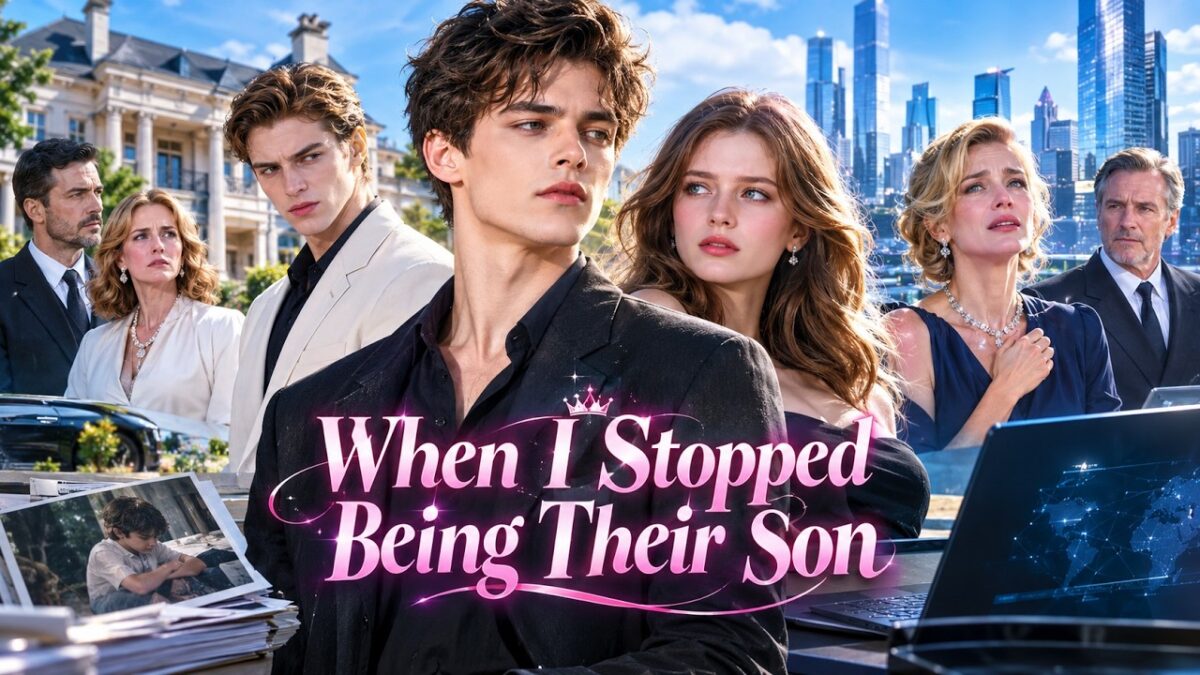
The Miracle Era Tower stood forty stories tall in the heart of the city’s new tech district—a gleaming monument of glass and steel that seemed to pierce the clouds themselves. From his corner office on the top floor, Ethan watched the sunrise paint the skyline in shades of gold and crimson.
“Mr. Vance is on line three,” Emma said through the intercom. “He says it’s urgent.”
Ethan smiled, still not used to the sound of his executive assistant’s voice coming through a speaker rather than across a crowded startup office. “Put him through.”
“Ethan, my boy!” Richard Vance’s booming voice filled the room. “I just saw the quarterly reports. Miracle Era’s market cap just surpassed Hawthorne Group’s peak valuation. Do you realize what this means?”
“That we’re doing well?”
“Doing well? You’ve built an empire in three years that took the Hawthornes three decades. The board wants to discuss an IPO.”
Ethan leaned back in his chair, watching the city below. Somewhere down there, in a dilapidated office building on the wrong side of town, the remnants of Hawthorne Group were fighting for survival. The thought should have brought him satisfaction—and it did, but it was a hollow kind.
“Let’s table the IPO discussion for now,” Ethan said. “I have something else in mind.”
“Something bigger than going public?”
“Much bigger.”
Across town, the Hawthorne mansion had lost its luster. The manicured gardens had grown wild, the marble fountains had run dry, and the once-pristine white walls were stained with years of neglect.
Victoria Hawthorne sat alone in the vast dining room, staring at the empty chair where Ethan had never been allowed to sit. The chair she had ordered removed years ago, only to have it returned after he left—a monument to her guilt.
“You need to eat, Miss Victoria,” Mary said softly, placing a tray of food before her. The elderly housekeeper had stayed on, even when the family could barely afford to pay her.
“I’m not hungry.”
“You haven’t eaten in two days.”
Victoria looked up at Mary, her eyes red-rimmed and hollow. “Did he really eat down here? With you?”
Mary nodded slowly. “Every night, miss. After the family finished. He’d help me clean up, then we’d share whatever was left.”
“And I never knew.”
“You never asked.”
Victoria flinched at the words. They were simple, factual—and they cut deeper than any accusation.
“Where is he now, Mary? Really?”
“He’s everywhere, miss. His company’s name is on everyone’s lips. Swift Pay is in every phone. BuyHub delivers to every door. Your brother didn’t just build a company—he changed how the world works.”
Victoria closed her eyes. “And we’re nothing.”
“You’re still his family.”
“We’re not. We never were. We made sure of that.”
Richard Hawthorne had aged twenty years in three. His hair had gone completely white, his hands trembled constantly, and the fire that had once driven him to build an empire had been reduced to bitter embers.
“Any word from Ethan?” he asked as Charlotte entered his study.
Charlotte—once the fiercest of Ethan’s tormentors—had changed most of all. Gone was the arrogant socialite who had sneered at her adopted brother. In her place stood a woman haunted by guilt, wearing simple clothes and working at a homeless shelter she had founded.
“No, Dad. He won’t see any of us.”
“Keep trying.”
“Victoria’s been trying for three years. He won’t even acknowledge her letters.”
Richard slammed his fist on the desk, the old anger briefly flaring. “That ungrateful—”
“Don’t.” Charlotte’s voice was sharp. “Don’t you dare call him ungrateful. Not after everything we did.”
The old man deflated, sinking into his chair. “You’re right. Of course you’re right. I just… I don’t know how to fix this.”
“Maybe we can’t fix it. Maybe we just have to live with what we did.”
Lucas Hawthorne stumbled out of a convenience store, clutching a bottle of cheap whiskey wrapped in a brown paper bag. His designer clothes were gone, replaced by stained jeans and a torn jacket. The handsome face that had once charmed everyone was now puffy and unshaven, his eyes bloodshot.
He had been disowned, stripped of everything. The money the Hawthornes had given him over the years—millions of dollars—had been seized and returned to the family’s dwindling coffers. His fancy cars, his watches, his tailored suits—all gone.
But the worst part wasn’t the poverty. It was the knowledge that he had never earned any of it. Every achievement, every accolade, every moment of praise—it had all been stolen from Ethan.
“Hey, aren’t you that Hawthorne kid?” A passerby stopped, phone raised. “The one who got exposed as a fraud?”
Lucas tried to push past, but the man blocked his path.
“I saw that video of the Xphone launch. Man, you got completely humiliated. How does it feel to know your brother’s a genius and you’re just… nothing?”
“I said get out of my way.”
“Or what? You gonna call your daddy? Oh wait—he disowned you!”
Lucas swung the bottle, but the man easily dodged and laughed.
“Violent AND stupid. No wonder they threw you out.”
Lucas ran. He ran until his lungs burned and his legs gave out, collapsing in a dark alley. The whiskey bottle shattered against the pavement, its contents mixing with the rain that had begun to fall.
“I’m sorry,” he whispered to no one. “I’m sorry.”
Ethan’s driver navigated through the city streets, heading toward a destination Ethan had avoided for three years. He had promised himself he would never go back—never set foot in that house of horrors again.
But some things required facing.
“This is a mistake,” Ryan said from the passenger seat. “You don’t owe them anything.”
“I know.”
“Then why are we doing this?”
Ethan looked out the window at the familiar streets of his childhood—if you could call it that. The neighborhood had been gentrified, the old buildings torn down and replaced with trendy cafes and boutiques. But the memories remained, etched into the concrete like scars.
“Because I need to see it one last time. I need to see what they’ve become—and know that I’m free.”
“We could just keep driving. Go to the office, pop champagne, celebrate beating them.”
“I’m not going there to celebrate.”
“Then what?”
Ethan was silent for a long moment. “Closure.”
The mansion gates were rusted and slightly askew. The security system that had once kept Ethan locked inside—or, more accurately, kept track of his movements—was now nonfunctional. Ethan pushed the gate open and walked up the long driveway, Ryan following reluctantly behind.
The front door was answered by Mary, whose face lit up at the sight of him.
“Ethan! Oh, my boy, my dear boy.” She pulled him into a hug before he could react. “I’ve missed you so much.”
“I’ve missed you too, Mary.” And he had. Mary had been the only bright spot in the darkness of his life here—the woman who smuggled him food when Charlotte ordered the kitchen locked, who bandaged his wounds when Richard’s beatings drew blood, who told him bedtime stories when he was a child, still believing he deserved love.
“Are they here?”
Mary’s smile faded. “Your father’s in his study. Victoria’s in the dining room. Charlotte’s at the shelter, but I can call her.”
“No need. I’ll see them both. Could you give us some privacy?”
Mary nodded, her eyes wet with tears. “I’m so proud of you, Ethan. Everything you’ve become—you did that yourself. Never forget that.”
Ethan embraced her one more time before walking into the house that had once been his prison.
Richard Hawthorne looked up from his desk, and for a moment, he seemed to see a ghost. His son—the son he had denied, beaten, starved—stood in the doorway, dressed in a perfectly tailored suit, radiating quiet confidence and barely contained contempt.
“Ethan.” The name came out as a rasp.
“Hello, Richard.”
The use of his first name struck Richard like a blow. He opened his mouth to object, then closed it. He no longer had the right.
“I hear you’ve done well for yourself.”
“Better than you, yes.”
Richard flinched. “I suppose I deserve that.”
“You deserve far worse. But I’m not here for revenge.”
“Then why are you here?”
Ethan walked to the window, looking out at the overgrown garden. “I’m here to make you an offer.”
Victoria burst into the study, her eyes wide with disbelief.
“Ethan? Oh God, Ethan!” She rushed toward him, but stopped short when he held up his hand.
“Don’t.”
“You came back.”
“I came to talk. Nothing more.”
Victoria nodded, tears streaming down her face. “I understand. I won’t touch you. I just—I’m so grateful you’re here.”
Ethan studied his sister. Three years had changed her. Gone was the confident, dismissive young woman who had never questioned the family’s treatment of him. In her place was someone broken, someone who had spent years drowning in guilt.
“I read your letters,” Ethan said quietly. “All of them.”
Victoria’s breath caught. “You did?”
“Every single one. The one where you apologized for believing Lucas. The one where you admitted you knew, deep down, that I never stole anything. The one where you confessed that you had nightmares about the fire, about leaving me to die—except it was never me who needed saving, was it?”
“I didn’t know, Ethan. I swear I didn’t know.”
“Until you did. And even then, you didn’t come for me. You came for your own guilt.”
Victoria sank into a chair, her body shaking with sobs. “You’re right. You’re absolutely right. I was selfish. I was cruel. I was everything you say I am. But I’ve changed. I’m not that person anymore.”
“People don’t change, Victoria. They just reveal who they really are. Underneath all the abuse and the neglect, you were always capable of cruelty. The question is whether you’re capable of anything else.”
“I want to be. I’m trying to be.”
Ethan was silent for a long moment. Then, he pulled a document from his jacket.
“What’s this?”
“An offer.”
Richard leaned forward. “What kind of offer?”
“The Hawthorne Group is drowning. You’ve lost your best employees, your clients are gone, Mark stole most of your liquid assets, and Nova’s server failures have destroyed consumer trust. In six months, you’ll be bankrupt. In a year, you’ll be on the streets.”
Richard’s face went pale. “You know about that?”
“I know everything. I’ve been keeping track. Not out of malice, but because I needed to know when you’d finally understand what you lost.”
“And now?”
“Now I’m offering to buy Hawthorne Group. All of it—the properties, the remaining assets, the name.”
Richard’s jaw dropped. “You want to buy us out?”
“I want to absorb what’s left of your company into Miracle Era. You’d retain a small stake—enough to live comfortably, but no decision-making power. You’d sign a non-disparagement agreement, stay out of my industry, and stay out of my life.”
“And if we refuse?”
“Then you lose everything anyway. This way, at least you have something to leave to Victoria and Charlotte.”
Richard stared at the document, his hands trembling. “You’re offering us charity.”
“I’m offering you a business deal. The only one you’re ever going to get from me.”
“How can I trust you?”
“You can’t. But you don’t have a choice.”
Charlotte arrived an hour later, breathless from running. When she saw Ethan, she stopped dead in the doorway, her face a mask of conflicting emotions.
“Ethan.”
“Charlotte.”
She didn’t try to approach him. Instead, she simply stood there, staring at him as if trying to memorize every detail.
“I’ve imagined this moment a thousand times,” she said. “What I would say. What you would say. In my head, you always forgave me. We hugged, and everything was okay.”
“And in reality?”
“In reality, you’re standing there looking at me like I’m a stranger. Like I’m nothing.”
“You made me nothing. You made me less than nothing. For four years, I wasn’t even allowed to exist in your house. I was a ghost, a shadow—something to be ignored and forgotten.”
Charlotte’s face crumpled. “I know.”
“Do you? Do you really know what it was like? Sleeping in a storage room that smelled of mold and rat droppings? Eating scraps when the kitchen staff remembered to feed me? Being beaten for crimes I didn’t commit?”
“I know. I read the reports, the journals you kept. Victoria showed me after you left.”
“Then you know what you did to me.”
“Yes.”
“And you still came here hoping I would forgive you?”
Charlotte met his eyes. “No. I came here hoping to see you one last time before I die.”
Ethan frowned. “What are you talking about?”
“Cancer. Stage four. They give me six months, maybe less.”
The words hit Ethan like a physical blow. Despite everything, despite all the years of abuse and hatred, Charlotte was still his sister—the same sister he had once tried to save from a fire, the same sister whose life he had protected with his own body.
“The doctors don’t think I’ll make it,” Charlotte continued. “And I couldn’t die without seeing you again. Without telling you—”
“You already told me. Your letters—”
“The letters weren’t enough. I needed you to hear it from my lips.” Charlotte took a shaky breath. “I’m sorry, Ethan. I’m sorry for every cruel word, every hurtful act, every time I made you feel worthless. I’m sorry I didn’t stand up for you. I’m sorry I believed Lucas. I’m sorry I let you suffer. I’m sorry I didn’t save you.”
Silence filled the room. Richard had tears running down his face. Victoria was sobbing quietly in her chair. Even Ryan, who had been standing silently in the corner, seemed moved.
Ethan looked at his sister—really looked at her. The shadows under her eyes, the pallor of her skin, the trembling of her hands. She was dying. The sister who had made his childhood a living hell was dying.
“I can’t forgive you,” Ethan said finally. “Not yet. Maybe not ever.”
Charlotte nodded. “I understand.”
“But I can thank you for one thing.”
“What?”
“You showed me what not to be. You showed me what cruelty looks like, what it does to people. Every day I was in that house, I told myself I would never be like you. And I’m not. I built something good, something that helps people. That’s because of you—because you showed me what happens when you don’t.”
Charlotte let out a sob that was half-laugh. “That’s not forgiveness.”
“No. But it’s something.”
The negotiation took three hours. In the end, Richard signed the agreement—not because he wanted to, but because he had no other choice. Hawthorne Group would become a subsidiary of Miracle Era, its remaining assets liquidated and absorbed. Richard, Victoria, and Charlotte would receive a generous settlement—enough to live comfortably, but not extravagantly. They would keep the mansion, though its upkeep would now be their responsibility alone.
Lucas was not included in the settlement.
“Where is he?” Ethan asked as he stood to leave.
Victoria looked away. “We don’t know. He disappeared about a year ago. Last I heard, he was living in a shelter.”
“Have you tried to find him?”
“I didn’t… I couldn’t…”
“You abandoned him. Just like you abandoned me.”
Victoria’s face twisted with guilt. “He lied to us, Ethan. He manipulated us for years—”
“And I was innocent, and you still abandoned me. Don’t pretend this is about justice. You threw him away because he was inconvenient.”
“I know. I know.” Victoria buried her face in her hands. “We’re monsters. All of us.”
Ethan walked to the door, then paused. “I’ll have someone look for Lucas. Not for you—for me. No one should end up on the streets.”
“You’re still helping him? After everything he did to you?”
“We all do terrible things sometimes. But we’re not all beyond redemption.”
It took two months to find Lucas. He was living in a squalid homeless shelter on the edge of the city, so thin and wasted that Ethan barely recognized him.
Lucas was sitting on a cot, staring at the wall, when Ethan walked in. He didn’t look up.
“I told them not to let you in,” Lucas muttered. “You must have paid them.”
“I did.”
“Why are you here? Here to gloat?”
“No.”
“Then why?”
Ethan sat down on the cot across from him. “Because I know what it’s like to have nothing.”
Lucas finally looked up, his eyes red and hollow. “You want me to thank you? To fall at your feet and beg for forgiveness?”
“I want nothing from you. I just thought you should know—Charlotte has cancer. She doesn’t have much time left.”
Lucas’s face flickered with something—surprise, guilt, maybe even grief. “Charlotte?”
“She’s dying. And she wants to see you.”
“She told you that?”
“She didn’t have to. I could see it in her eyes.”
Lucas was silent for a long moment. “I can’t. I can’t face them. Not after everything I did.”
“Then don’t face them. Face her. Just her.”
“Why are you doing this, Ethan? I ruined your life. I stole your family, your name, your birthright.”
“You stole something that was never really mine. My family didn’t want me—they wanted the idea of me. A perfect son they could mold and control. You were… you were what they actually wanted. A child who wouldn’t fight back.”
“I did fight back. I just used different weapons.”
“I know. And in the end, you lost everything too.”
Lucas laughed bitterly. “I deserve it.”
“Maybe. But sitting here rotting in a shelter isn’t going to fix anything. Charlotte’s dying. This is your last chance to say goodbye.”
“Will you be there?”
“No. But I’ll send someone to bring you to her.”
“Why, Ethan? Why are you helping me?”
Ethan stood, looking down at the hollow shell of the brother who had stolen his life.
“Because I don’t want to become you. And hating you is exhausting.”
Charlotte’s room was dim, lit only by a small lamp on the bedside table. She was thinner than before, her face pale and drawn, but there was peace in her expression.
Lucas stood in the doorway, trembling.
“Hello, Lucas.”
“You look terrible.”
“And you look worse.” She smiled weakly. “Come sit with me.”
He shuffled to the bed, sitting on the edge of the chair Victoria had placed there. “I’m sorry, Charlotte. For everything.”
“I know. I’m sorry too.”
“Why are you sorry? I was the one who made you think you owed me something.”
“You were a child, Lucas. You were an orphan who wanted to be loved. That’s not a crime.”
“I pretended to save you from that fire. I let you believe I was your hero when it was Ethan all along.”
“I know. I read the evidence.”
“And you still want to see me?”
Charlotte took his hand. “We’re all we have left, Lucas. You, me, Victoria—we’re a broken family of liars and cowards. But I don’t want to die alone.”
“I never deserved your family. Any of it.”
“Neither did Ethan. But we all played our parts.”
They sat in silence for a long time, two broken people sharing the weight of their sins.
Charlotte died three weeks later, on a quiet Tuesday morning. She was surrounded by her family—Victoria, Richard, Lucas. Ethan was not there, but he sent flowers.
Her funeral was small, attended only by a handful of people. Among them was Ethan, standing at the back, dressed in black.
Victoria saw him as the crowd was dispersing. She approached slowly, keeping her distance.
“Thank you for coming.”
“She was my sister. Whatever else she was, whatever she did, that’s still true.”
“I don’t expect you to forgive us.”
“I don’t expect you to ask.”
Victoria nodded. “What happens now?”
“I go back to my life. You go back to yours.”
“You’re not going to stay in touch?”
“No.”
“Ethan—”
“You’re not my family, Victoria. You’re a stranger who happens to share my DNA. That’s all you’ll ever be.”
“I understand.”
Ethan turned to leave, then paused. “One more thing.”
“What?”
“I’m opening a foundation in Charlotte’s name. It’ll help abused kids—kids like me, kids who need someone to fight for them. She can be remembered for something good, even if she wasn’t.”
Victoria’s eyes filled with tears. “That’s… that’s incredibly generous.”
“It’s not generosity. It’s the right thing to do.”
He walked away without looking back.
Miracle Era was now the largest technology company in the world. Swift Pay had replaced cash in forty countries. BuyHub had transformed how people shopped. The Xphone had gone through six generations, each one more advanced than the last.
Ethan stood on the balcony of his penthouse apartment, looking out at the city that had once rejected him. Now it embraced him—worshipped him, even. His face appeared on magazine covers. His speeches were quoted by presidents. His company’s stock had made millions of people wealthy, including the employees who had followed him from the beginning.
Ryan joined him on the balcony, two glasses of champagne in hand.
“To another record quarter,” he said, handing Ethan a glass.
“To not screwing it up.”
“Ever the optimist.”
Ethan smiled—a real smile, not the forced ones he had given so often in his early days of power. The anger had faded over the years, replaced by something quieter. Peace, maybe. Or acceptance.
“Any word from the Hawthornes?” Ryan asked carefully.
“Victoria sent a letter. She’s working with the foundation now, helping at-risk kids.”
“That’s good.”
“Richard died last year. Heart attack. Victoria didn’t invite me to the funeral—she knew better.”
“And Lucas?”
“Last I heard, he was in rehab. He’s been clean for eighteen months. He sent me a letter too. Just two words: ‘Thank you.'”
“Are you going to write back?”
“I don’t know yet.”
Ryan was quiet for a moment. “You’ve done a lot of good, Ethan. More than anyone could have expected.”
“I didn’t do it to be good. I did it to survive.”
“Same thing, in the end.”
Ethan looked out at the city—his city, now. The place that had given him nothing and demanded everything. The place that had turned him into a monster and then made him human again.
“Do you ever miss it?” Ryan asked. “The old days? When we were just two kids fighting for scraps?”
“Sometimes. Things were simpler then.”
“But you wouldn’t go back.”
“No.” Ethan’s voice was firm. “I wouldn’t go back for anything.”
Ten years after Charlotte’s death, Ethan received a package. It was addressed to him in handwriting he didn’t recognize, postmarked from a small town he had never heard of.
Inside was a letter and a photograph. The photograph showed a group of children—smiling, laughing, gathered around a sign that read “Charlotte Hawthorne Memorial Home for Children.”
The letter was from Lucas.
Dear Ethan,
I’m writing this from the foundation you created. I work here now—groundskeeper, janitor, whatever they need. It’s not much, but it’s honest work.
I wanted you to know that the kids here are okay. They have food and beds and people who care about them. Most importantly, they have people who believe them when they say they’ve been hurt. You made that possible.
I know you don’t want to hear from me. I know I have no right to ask for anything. But I wanted you to see what your foundation has done. What your life has done.
I used to think you were lucky. You had a family that wanted you, a name that meant something, a future that was guaranteed. I was jealous—so jealous that I tried to destroy you.
I was wrong.
You had nothing. You built everything from the ground up. And instead of using your power to hurt us like we hurt you, you used it to help others.
You’re a better man than I’ll ever be.
I’m not asking for forgiveness. I’m not even asking for a response. I just wanted you to know that the children here will grow up knowing who Ethan Hawthorne is—and they’ll know that even the worst beginnings can lead to the best endings.
Thank you for everything.
Lucas
Ethan read the letter three times. Then he looked at the photograph of the children—children who would never know the pain he had experienced, because of him.
He folded the letter carefully and placed it in his desk drawer, next to the only other thing he had kept from his past life: a small, cheap necklace that Charlotte had given him years ago, the first and only gift he had ever received from his family.
It was garbage, he had told her. Just throw it away.
But he hadn’t. He had kept it all these years, a reminder of what he had survived—and what he had become.
He picked up the phone and dialed Victoria’s number.
“Hello?”
“It’s Ethan.”
Silence. Then, quietly: “Ethan? Is everything okay?”
“I’m sending you a photograph. I want the foundation to expand—more homes, more children, more support. I want to make sure no child ever grows up the way I did.”
“Of course. Whatever you need.”
“And Victoria?”
“Yes?”
“I’m not ready to forgive you. I may never be. But I’m willing to try.”
The sound of Victoria’s tears came through the phone. “Thank you, Ethan. Thank you so much.”
“Don’t thank me yet. We have a lot of work to do.”
“I know. I’m ready.”
Ethan hung up and walked to the window, looking out at the city that had once been his enemy and was now his home.
The past would always be with him—the pain, the abuse, the loneliness. But so would the future—the children he would help, the lives he would change, the legacy he would leave behind.
He had been abandoned, betrayed, beaten, and broken.
And he had risen from the ashes.
The Charlotte Hawthorne Memorial Home for Children had grown from a single building to a sprawling campus covering twenty acres. There were dormitories, a school, a medical center, and—most importantly—a counseling wing where children could talk about what had happened to them without fear of being disbelieved.
Ethan visited the home every month. It was his sanctuary, the one place where his wealth and power felt like they meant something real.
Today, he was sitting in the garden, watching a group of children play soccer. Their laughter echoed across the lawn, bright and carefree—the sound of childhood as it should be.
“Mr. Hawthorne?”
He turned to find a young woman standing behind him. She was in her early twenties, with dark hair and serious eyes. Something about her seemed familiar, though he couldn’t place it.
“Yes?”
“My name is Sarah Chen. I’m one of the counselors here.”
“Ah, yes. Victoria mentioned you. You’ve done incredible work with the trauma program.”
Sarah sat down on the bench beside him, maintaining a respectful distance. “I wanted to thank you personally. The funding you’ve provided has allowed us to hire more staff, expand our programs, and most importantly, help more children.”
“Don’t thank me. You’re the one doing the hard work.”
“We’re both doing hard work. Just different kinds.”
Ethan smiled. He liked her already—direct, unafraid, no sycophancy.
“Can I ask you something?” Sarah said.
“Go ahead.”
“Why do you do this? I mean, I know the official story—the foundation in your sister’s name, the commitment to helping abused children. But why really?”
Ethan was silent for a long moment. “Because I was one of them.”
Sarah nodded slowly. “I thought so. The way you look at the children—like you understand exactly what they’ve been through.”
“I do.”
“Do you want to talk about it?”
“No. But I want to make sure they never have to.”
Sarah studied him with those serious eyes. “You know, the children here—they look up to you. They see someone who came from nothing and built an empire. It gives them hope.”
“I’m not sure hope is enough.”
“It’s a start.”
Lucas Hawthorne had been working at the foundation for two years when he finally worked up the courage to speak to Ethan directly.
He found him in the garden, as always, watching the children play.
“Ethan.”
Ethan looked up, his expression unreadable. “Lucas.”
“I know you don’t want to talk to me. But I need to say something, and I need you to hear it.”
“Then say it.”
Lucas took a deep breath. “I’ve been in therapy for three years. I’ve been working the twelve steps. I’ve tried to understand why I did what I did—why I lied, why I manipulated, why I destroyed your life.”
“And?”
“And I finally understand. I was terrified. I was an orphan who had been adopted into a family that didn’t really love me—they loved the idea of me. The perfect son. The grateful child. The one who would never question them.”
Ethan’s expression didn’t change. “Go on.”
“I was so afraid of losing my place that I would do anything to keep it. Including destroying you. You were a threat—the real son, the blood heir. As long as you were around, I was nothing but a placeholder.”
“So you made me the villain.”
“Yes. I told them you stole things. I told them you were jealous. I told them you were violent. And they believed me because they wanted to believe me. It was easier to blame the stranger than to admit they had abandoned their own son.”
Ethan was quiet for a long moment. “You’re right. They wanted to believe you. But you gave them the ammunition.”
“I know. And I’ll spend the rest of my life trying to make up for it.”
“How?”
Lucas looked at the children playing in the garden. “By making sure no other child goes through what you did. By telling the truth, even when it’s painful. By being the person I should have been all along.”
“That’s a start.”
“It’s all I have.”
Ethan stood, brushing off his pants. “I don’t forgive you, Lucas. Not yet. Maybe not ever.”
“I know.”
“But I respect what you’re trying to do. Keep doing it.”
Lucas nodded, tears in his eyes. “I will. I promise.”
Richard Hawthorne’s funeral had been a small affair—Victoria, Charlotte’s ashes, Lucas, and a handful of old business associates who had come more out of curiosity than respect.
But Richard’s death had left behind a mystery.
Victoria found the letter in his desk, hidden beneath a stack of old financial documents. It was addressed to Ethan, sealed with wax, and dated three months before Richard’s death.
She brought it to Ethan personally, knowing he might refuse to see her. But he didn’t.
“What is this?” he asked, turning the envelope over in his hands.
“Dad’s last letter. He wrote it before he died. I found it in his study.”
“Why didn’t you give it to me sooner?”
“I didn’t know if you’d want it. I didn’t know if I should even open it.”
Ethan broke the seal and unfolded the paper.
Dear Ethan,
I know you will never read this. I know you will never want to hear from me again. But I’m writing it anyway, because I need to say the things I could never say to your face.
I was wrong.
I was wrong about everything.
I was wrong to believe Lucas over you. I was wrong to beat you, to starve you, to treat you like a servant in your own home. I was wrong to deny you the love and respect you deserved.
I was a coward.
I was afraid of what you represented—the son I had lost, the son I had failed. Every time I looked at you, I saw my own guilt. And instead of facing it, I punished you for it.
I don’t expect your forgiveness. I don’t deserve it. But I want you to know that I’ve spent the last years of my life trying to understand what I did. I’ve read every book on child abuse, every study on trauma, every account of survivors who overcame their pasts.
You are the strongest person I have ever known.
You survived what would have destroyed most people. You built an empire from nothing. You helped others even when you had no reason to help anyone.
I am proud of you. Not because of your success, but because of your character.
I failed you as a father. I failed you as a man. But I want you to know that in the end, I understood. I understood what I had done, and I was sorry.
I love you, Ethan. I always did. I was just too broken to show it.
Your father,
Richard
Ethan read the letter three times. Then he folded it carefully and placed it in his desk drawer, next to the cheap necklace and Lucas’s letter.
He didn’t cry. He had cried enough tears for the Hawthornes. But something in his chest loosened—a knot of anger and hurt that had been wound tight for decades.
It didn’t fix anything. It didn’t make up for the years of abuse, the beatings, the starvation, the loneliness. But it was something.
It was acknowledgment.
And sometimes, that was enough.
Sarah Chen was not what Ethan had expected to find when he started spending more time at the foundation. She was sharp, compassionate, and utterly unimpressed by his wealth and power.
“You’re not special,” she told him once, when he had made a self-deprecating joke about his success. “You’re just a person who survived something terrible and chose to do something good with your life. That’s not special—that’s human.”
“Most people don’t do what I did.”
“Most people don’t have the resources. You did. So you did. End of story.”
He liked that about her. She never treated him like a savior or a victim. She treated him like a person—flawed, complicated, worthy of respect but not worship.
It was refreshing.
They started dating six months after they met. The relationship was slow, careful, built on mutual respect and shared values. Sarah understood his trauma in ways that others couldn’t. She had her own scars—a childhood spent in foster care, an abusive relationship in her early twenties—and she had chosen to heal by helping others.
“I don’t want to be your therapist,” she told him on their third date. “I want to be your partner. That means you have to do your own work.”
“I know.”
“And I won’t be your savior. I won’t fix you. You have to fix yourself.”
“I know.”
“Good. Then we can try this.”
The wedding was small—just Ryan, Emma, Kevin, Dave, Ben, and a handful of children from the foundation. Victoria was invited, but she declined, knowing that her presence would cause more pain than joy.
Lucas was not invited.
But he sent a gift—a simple card with two words: “Be happy.”
Ethan kept the card. He didn’t respond. But he kept it.
Two years after the wedding, Sarah gave birth to a daughter. They named her Charlotte—not after the sister who had tormented him, but after the sister who had died trying to make amends.
“She deserves a chance to be better,” Ethan said, holding the tiny baby in his arms. “We all do.”
“I think she already is,” Sarah said, smiling. “Look at her. She’s perfect.”
“She’s small.”
“She’s a baby, Ethan. They’re supposed to be small.”
“I know. I just… I want to protect her. From everything.”
“You can’t protect her from everything. But you can teach her to be strong. To be kind. To know that she is loved.”
Ethan looked down at his daughter, at her tiny fingers, her closed eyes, her peaceful expression.
“I will,” he promised. “I will.”
Miracle Era was no longer just a tech company. Under Ethan’s leadership, it had expanded into education, healthcare, and social services. The company’s mission statement had changed from “making technology accessible to everyone” to “making life better for everyone.”
Critics accused Ethan of running a charity instead of a business. But the numbers didn’t lie—Miracle Era was more profitable than ever, because people trusted it. They trusted Ethan.
“We’re not just selling products,” he said at a shareholder meeting. “We’re selling hope. We’re telling people that the future can be better than the past. And they believe us because we’ve proven it.”
The company’s charitable arm had helped millions of people—children in foster care, abuse survivors, homeless families, refugees. Ethan had personally funded most of it, using his own wealth to create programs that governments wouldn’t or couldn’t.
“Why do you give so much away?” a reporter asked him once. “You could be the richest man in the world.”
“I already am,” Ethan said. “Not in money—in something more valuable.”
“What’s that?”
“Peace.”
Victoria Hawthorne had been working at the foundation for fifteen years when she finally found the courage to ask Ethan for a meeting.
He agreed, though he made it clear that it was not an act of forgiveness—it was a business meeting.
“What do you want, Victoria?”
“I want to talk about the future.”
“The future of what?”
“The foundation. I’ve been thinking about expanding our work—not just helping children, but helping families. The parents who abuse their children are often victims themselves. They were abused as kids, and they never learned how to be anything else.”
Ethan was quiet. He knew what she was saying—knew it in his bones, because he had lived it.
“You want to help the abusers.”
“I want to break the cycle. If we only help the children, they grow up, have their own children, and the cycle continues. If we help the parents too—teach them what they never learned—we can stop it at the source.”
“That’s ambitious.”
“I know. But you’re the most ambitious person I’ve ever met.”
Ethan studied his sister. She had aged in the years since Charlotte’s death—her hair was grey now, her face lined, her body thin. But there was something in her eyes that hadn’t been there before. Purpose, maybe. Or peace.
“You’ll be responsible for finding the right people—therapists, counselors, social workers. I won’t be involved in the day-to-day.”
“I understand.”
“And Victoria?”
“Yes?”
“Don’t screw it up.”
Victoria smiled—a real smile, the first one Ethan had seen from her in decades. “I won’t.”
Ethan’s daughter Charlotte was fifteen when she started asking about her namesake.
“Dad, why did you name me after someone who was mean to you?”
They were sitting in the garden—the same garden where Ethan had spent countless hours watching children play, thinking about his past, planning his future.
“Because she wasn’t always mean. And because she was my sister.”
“But she hurt you.”
“Yes. She did.”
“And you named me after her anyway?”
“I named you after the person she became. The person who apologized, who tried to make things right, who died wanting nothing more than a chance to be better.”
Charlotte was quiet for a moment. “Do you forgive her?”
“I don’t know. Forgiveness isn’t a simple thing. It’s not a switch you flip or a decision you make once. It’s a process—something you have to choose every day.”
“And do you choose it?”
“Some days. Not all.”
“Is that okay?”
Ethan looked at his daughter—so much like him, yet so different. She had grown up with love and safety, with parents who believed her and protected her. She would never know the pain he had experienced.
Maybe that was the point.
“Yes,” he said. “I think it’s okay.”
Ethan wrote a letter to his daughter on her eighteenth birthday. He gave it to her in a sealed envelope, telling her to read it when she was ready—not when he told her, not when the world told her, but when she felt in her heart that the time was right.
Charlotte didn’t know what it said until she was twenty-five, sitting alone in her apartment after a fight with her mother.
She opened the envelope and read:
Dear Charlotte,
If you’re reading this, it means you’re ready to hear what I have to tell you—not about my past, but about yours.
You are not me.
You will never know what it feels like to be beaten, starved, ignored, abandoned. You will never know what it feels like to sleep in a storage room, to eat scraps, to be told you’re worthless.
And that is the greatest gift I could ever give you.
But you will face challenges. You will face pain. You will face moments when you doubt yourself, when you wonder if you’re worthy of love, when you feel like the world is against you.
When that happens, remember this: you are worthy. You are loved. You are enough.
I didn’t know those things when I was your age. I had to learn them the hard way—through pain, through loss, through years of fighting to become someone I could be proud of.
You have the advantage of starting from a place of love. Don’t take it for granted. But don’t let it make you weak.
Use your strength. Use your privilege. Use everything you have to make the world better for someone else.
That’s what I did. Not because I was special, but because I had no choice. I survived, and surviving meant fighting. But you have a choice. You can fight because you want to, not because you have to.
I hope you choose to fight.
I hope you choose to be kind.
I hope you choose to love.
And I hope you always know that I love you—not because of what you achieve or who you become, but because you are my daughter. And that is enough.
Your father,
Ethan
Charlotte closed the letter and wept. Not from sadness, but from gratitude—for a father who had survived the worst and become the best, for a life that had given her everything she needed, for the knowledge that she would never have to fight alone.
Ethan Hawthorne was seventy years old. His hair had gone white, his face was lined with wrinkles, and his body had slowed—but his eyes still sparkled with intelligence and purpose.
He was sitting on the balcony of his penthouse, watching the sunset paint the skyline in shades of orange and gold. The city had changed since he first arrived—taller, brighter, kinder. Miracle Era had transformed it into a beacon of hope for the world.
Sarah was beside him, her hand in his. They had been married for forty years—a lifetime of love, of partnership, of shared purpose.
“Do you remember when we first met?” she asked.
“Of course. You told me I wasn’t special.”
“You weren’t. You still aren’t.”
“And yet you married me.”
“I married you because you were good. Not because you were successful. Not because you were powerful. Because you were good.”
Ethan smiled. “I don’t think I was good when you met me. I think I was still angry.”
“You were still hurt. That’s not the same as being bad.”
“Maybe.”
“You saved those children, Ethan. You gave them a home, an education, a future. That’s not the work of a bad person.”
“I had help.”
“You had a lot of help. But you were the one who started it. You were the one who never gave up.”
Ethan was quiet for a long moment, watching the sun sink below the horizon.
“I used to hate sunsets,” he said finally. “When I was young, sunset meant another night in that storage room, another night of hunger and cold and loneliness. I used to pray that the sun would never go down.”
“And now?”
“Now I love them. They remind me that every day ends, and every new day begins. They remind me that nothing lasts forever—not pain, not sorrow, not even success. Everything changes. Everything passes.”
“And what do you hope will remain? After you’re gone?”
Ethan turned to look at his wife, at the woman who had stood by him through everything—the years of struggle, the years of success, the years of healing.
“I hope the children will remain. The ones we’ve helped, the ones we’ve saved. I hope they will grow up and help others. I hope the cycle will end.”
“And you’re not afraid?”
“Of dying? No. I’ve faced death before—in that fire, in that house, in the years of starvation and abuse. I survived. And I will survive this too, in a different way. Through Charlotte. Through the foundation. Through the memories of everyone I’ve helped.”
“That’s a lot of memories.”
“Not enough. Never enough.”
Sarah leaned her head on his shoulder. “I love you, Ethan.”
“I love you too.”
They sat there, watching the last rays of sunlight fade, hand in hand, two people who had survived the worst and chosen to become the best.
Ethan died peacefully in his sleep three months later. He was surrounded by family—Sarah, Charlotte, Charlotte’s husband and children, Ryan, Emma, and dozens of friends and colleagues who had been touched by his life.
Victoria was not there. She had died the year before, working at the foundation she had helped build. Lucas was not there either. He had disappeared again, though he sent a card: “Thank you for saving me.”
But the foundation was there. The children were there. The future he had built was there.
In his will, Ethan left a letter to be read at his funeral. It was short, simple, and said everything he had never been able to say in life.
To everyone who knew me,
I was not a good man. I was a man who survived something terrible and chose to do something good. There’s a difference.
I was not special. I was a child who was abandoned, abused, and broken. I was a teenager who fought to survive. I was an adult who fought to heal. I was a man who fought to help others.
The fighting never stopped. Not until the end.
But I learned something along the way—something that kept me going, even when everything seemed hopeless.
I learned that love is the only thing that matters.
Not success. Not wealth. Not power. Love.
Love for yourself. Love for others. Love for the world that has hurt you and the people who have failed you and the future that might be better than the past.
I loved. I was loved. And that made all the difference.
If you remember anything about me, remember this: I was not a hero. I was a survivor. And survivors are just people who refused to give up.
Don’t give up. Keep fighting. Keep loving. Keep believing that the future can be better than the past.
Because it can.
It did for me.
It will for you.
Ethan Hawthorne