My Army Buddy Sent His Sister to Pick Me Up From the Airport. She Hugged Me Like She’d Been Waiting
My Army Buddy Sent His Sister to Pick Me Up From the Airport. She Hugged Me Like She’d Been Waiting
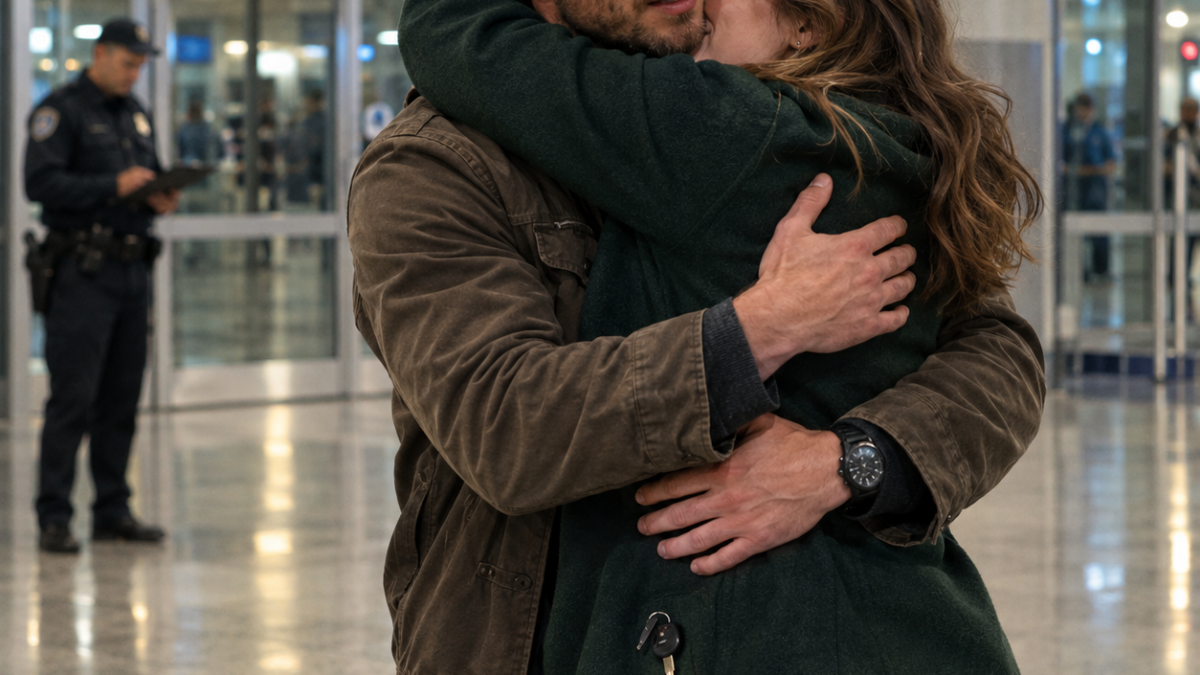
At 12:40 in the morning, I came through the sliding doors of the arrivals hall with a duffel on my shoulder and a plan to say hello like a man raised by decent people. Sylvia Donnelly crossed the empty floor before I could carry the plan out. She wore a green coat and held her car keys in one fist, and I had just enough time to say her name before she shoved the keys into her pocket, stepped in, and put both arms around my neck.
I expected the quick sideways squeeze she used to give me on her parents’ porch, the kind that ends before anyone has to think about it. This one did not end. She held on with her face against my shoulder, my duffel slid down my arm and landed on the tile, and somewhere around the fourth second I stopped being a polite guest and put my arms around her back.
A security guard at the far end of the hall developed a sudden interest in his clipboard. When she finally let go, she kept one hand on my sleeve a moment longer than she needed to, and she did not look the least bit embarrassed about it. I was Callum Whitcomb, 31 years old, nine days out of uniform, and I had been awake for most of two days.
Patrick had texted me before my connecting flight from the other side of the world: “Sylvia’s got you, Whitcomb. Don’t make it weird.” He was still with our unit and would not be home for several weeks, but he had arranged everything from there, including the guest house behind his family’s place where I could live until my new job started. I had read his message as a joke about his little sister’s driving, yet standing in that hall with her hand still on my sleeve, I understood that nobody in the world had written a joke that covered what had just happened.
– You look like you’ve been awake since Tuesday, Sylvia said.
– Since Monday, I told her.
She laughed—a short, real laugh that made the guard glance up from his clipboard and then very carefully back down. She drove a small gray hatchback with the heater on high and a coffee cup wedged in the holder that she swore was not hers. The highway was almost empty, and the dark fields on either side slid past without any particular hurry.
I did what I always do when someone has done me a favor, which is offer the other person a way out of it.
– You really didn’t have to drive out here at midnight, I said. I could have grabbed a car.
Sylvia changed lanes without looking at me.
– I know I didn’t have to. Patrick asked if anyone could pick you up, and I said it was me before he finished the sentence.
She said it lightly with her eyes on the road, and I noticed that it was not the sort of thing a person says when she wants to be talked out of it. I noticed something else on that drive, which was how different she sounded without her brother in the car. When Patrick was around, every conversation of ours bent toward him and every joke had a third listener it was secretly aimed at.
Now there was nobody to bounce anything off, so the silences belonged to the two of us, and they were comfortable in a way that made me a little suspicious. We picked up our old threads as if nobody had put them down. She asked whether the Army food had improved, and I told her it had only gotten more confident.
Then she brought up the one thing I had hoped she had forgotten.
– You still owe me a rematch, she said.
Three Thanksgivings ago, I had beaten her at gin rummy by a single card, and I had left for the airport the next morning before she could demand another round.
– I kept the score, she said, tapping the steering wheel. It’s on the back of an envelope in my kitchen. I write down everything I plan to win back.
Her family’s house sat at the end of a quiet street, white and two-storied, with a porch light left on for her. The guest house stood across a strip of lawn from it, a small detached cottage with a gravel path and a single window glowing in the dark. Sylvia carried my duffel before I could object and told me I could argue with her about it in daylight.
Inside, the place smelled like clean linen and a little like cedar. She walked me through it with the efficiency of someone who had already checked everything twice, pointing out the thermostat, the extra blankets, and the stubborn bathroom faucet that needed a firm turn to the left. The refrigerator held milk, eggs, and a loaf of bread, and the counter held a bag of dark roast coffee that I recognized as the kind I had drunk on her parents’ porch years ago.
– Patrick sent me a grocery list that was mostly protein bars, she said, watching me look at it. I improvised.
I did not remember telling her what I liked, and I understood that she did, standing in that little kitchen and thinking that a woman does not remember a thing like that by accident. She stopped at the door with her hand on the knob, ready to leave me to the quiet. I did not want her to go without hearing it plainly, so I said it straight.
– Thank you for coming tonight. I don’t mean Patrick’s thank-you, which he’ll want me to pass along. I mean mine.
Sylvia looked at me for a second with her head tilted, and her expression softened in a way that did not seem entirely under her control.
– I’ll take yours, she said.
Because I am who I am, I immediately did the other thing.
– If tomorrow’s too much, you don’t owe me a tour or a dinner or anything else. I can find a grocery store on my own.
She looked at me as if I had handed her a refund for something she had never asked to return.
– Callum, she said with the patience of someone explaining a card game she had already won. Come see me tomorrow. Not because Patrick will ask whether I fed you and not because I’m responsible for you. I want to see you. You can say no and I will survive it, but I’d like you to say it to my face and not by being polite.
The honest answer was already sitting in my chest, and for once I did not dress it up or leave it open at the edges.
– 7:00, I said. I’ll be on your porch, and I’m bringing cards.
Her smile came slowly and then all at once.
– Bring your best game, she said. I’ve been practicing.
I watched her cross the lawn in the glow of the porch light, and at the steps she looked back once—only for a moment—before going inside. I stood in the cottage doorway until her kitchen light came on and went off again. My phone buzzed in my pocket with another message from the other side of the world: “She get you okay?”
I typed that I had landed safe, that his sister had been right on time, and that I owed him a beer—and every word of it was true. Then I lay down in a bed that smelled like cedar, listened to the refrigerator hum, and did not sleep. The hug had lasted maybe six seconds, yet it had already made the next 24 hours something I had agreed to with my own mouth, and I had no idea yet how much that was going to ask of me.
I knocked on her door at 6:58 with a deck of cards in my jacket pocket because arriving exactly on time felt like something I could not afford to get wrong. Sylvia answered in a gray sweater with her hair pulled back, carrying the envelope from her kitchen, and she set it on the porch table like a prosecutor entering evidence. The envelope listed three years of Thanksgivings in her small, slanted handwriting, and my single-card victory sat at the bottom, underlined twice.
We played at the porch table under a yellow bulb until almost 11:00, and she beat me by 40 points in the first game and by nine in the second. When I laid down my last hand, she squinted at me and asked whether I had thrown the game to be nice. I told her I had too much respect for her and too little pride in my own cards to try it, and she wrote the score on the envelope without a word, looking pleased in a way she was clearly trying to hide.
Neither of us mentioned the airport, but it sat at the table with us the whole night like a third player who had not been dealt in. The following days were supposed to belong to me: I ran at 6:00 every morning along the quiet loop of streets behind the house, learned which grocery store stocked the dark roast coffee she had bought for me, and spent hours at the little kitchen table with my new employer’s route maps and onboarding paperwork. Building a civilian routine turned out to be mostly a matter of discovering how many forms one man could sign before lunch.
From the cottage window, I could see Sylvia’s gray hatchback leave at 7:40 each morning and return a little after five, and I understood that if I wanted to, I could arrange to be on the lawn whenever she came home. I decided early that I would not do that—a man who waits at a window for a woman to cross his path is not choosing her, he is only hoping that luck will do the choosing for him. So on Wednesday I texted her instead and asked whether Thursday still stood, and her answer arrived in under a minute: “I’ll bring the envelope. You bring dinner.”
I made the only dish I trust myself with—skillet chicken and rice, which a cook in my unit once taught me with the grim patience of a man defusing a bomb. She knocked at 6:30 on Thursday, which meant she had walked across the lawn on purpose and not drifted over because the door happened to be near. She stepped into the cottage, looked around at the cedar-scented room that had been her family’s for years, and sniffed the air like a woman inspecting an unfamiliar kitchen.
– You fixed the faucet, she said with obvious betrayal.
I admitted that I had turned it firmly to the left exactly as instructed and that it had given in without a fight.
– It never does that for me, she said.
We ate at the narrow table with the window open to the evening, trading stories from the last few years that neither of us had yet told the other. Somewhere in the middle of the second helping, she put her fork down and decided to stop circling.
– I’m going to say this because you’ve been walking around it for four days, she said. The airport. I held on that long because I wanted to see you, and I’m not going to pretend I didn’t.
Part of me wanted to reach for a joke, which is what I do when an honest sentence arrives before I am ready for it. I decided instead to give her the same plain answer she had given me.
– I always looked forward to your visits, I said. Every time Patrick brought me home. I just never looked at that too closely.
Sylvia raised one eyebrow and asked me why not.
– Because your brother was usually sitting between us eating all the food, I said.
She laughed so hard that she had to put a hand flat against the table to steady it. At nine, I did the thing I do: I glanced at the clock, remembered that she worked in the morning, and told her I could walk her back across the lawn whenever she liked because I did not want her to feel obliged to stay. She stood up, and I thought she was about to take me up on it—instead, she walked to the counter, set down her empty glass, and turned to face me with her arms folded.
– Callum, I crossed that lawn in the dark by myself tonight, she said. Nobody sent me. Nobody asked me to check on you, and nobody will ask me tomorrow whether I did.
I felt the full weight of what I had been doing for four days, which was holding a door open for someone who had already walked through it, and I was a little embarrassed by how long it had taken me to see it.
– Then stay, I said, meaning it as an invitation and not as a courtesy.
– That wasn’t hard, she said, sitting back down at the table and dealing the cards as though she had never doubted it.
We played until after 11:00, and when she finally pulled on her coat, we stood at the cottage door making plans like two adults who have decided that plans are worth making. She suggested Saturday, and I said I would cook again if she promised not to inspect the faucet, and she promised nothing of the kind. The porch light outside was off, and the only glow came from the lamp behind me, which fell across one side of her face.
She had one hand on the doorframe and the other resting on the front of my jacket, and I could not have told you which of us had moved first. Her eyes dropped to my mouth and came back up, and I felt how easily the next three inches could close, with her breath warm against my collar and my fingers curled around the cuff of her sleeve. I stayed where I was and did not lean down, and she did not step away.
– Sylvia, I said, my voice lower than I intended. I want this. I’m not going to insult you by saying I don’t.
She held perfectly still, waiting for the rest of the sentence.
– But Patrick is going to come home in a few weeks, and I don’t want him to find out that his sister and his best friend quietly became something while he was gone. I don’t want him hearing it from a neighbor or a porch light or an awkward silence at dinner.
Her hand slid off my jacket—not in anger, but with the deliberateness of someone choosing to put something down. She looked at me for a long moment, and I could see that she had taken in the full weight of what I had said and was weighing it as fairly as she weighed everything.
– I agree, she said at last. He deserves to hear it from us, and he deserves to hear the truth, not a polished version of it.
I started to breathe out, and she lifted a finger to stop me.
– But I never agreed to spend the next several weeks being your off-limits friend’s sister while you work out how to tell him. If we’re being honest, then we’re being honest the whole time, and that includes with each other.
She picked up her envelope from the table, tucked it under her arm, and stepped out into the dark, and I watched her walk across the lawn until the kitchen light came on. I had said exactly what I believed and she had agreed with every word, and somehow I stood in that doorway understanding that we had settled the question of honesty while leaving the question of timing wide open.
The weeks that followed settled into something neither of us named, and I was careful about how it got built. We did not treat the strip of lawn like a hallway: Sylvia worked long days through enrollment season, and on the nights her kitchen light stayed on late, I did not knock just because it was there. Plans were made out loud with days attached to them—on Saturday she dragged me to the farmers market, on Tuesday I fixed the sticking gate at her porch steps with tools from her father’s garage, and on Thursday we played cards while she widened her lead on the envelope to a margin I called statistically suspicious.
We argued about small things in the way people do when they feel safe with each other, such as whether the dark roast should be ground fresh, whether the coffee cup in her hatchback truly belonged to someone else, and whether a man who ran six miles at dawn had earned the right to sleep through her Sunday phone call. Neither of us won most of those arguments. Every plan we kept made the next one easier to ask for, and somewhere in the third week I noticed I had stopped checking my phone for permission to be glad.
On the fourth Saturday, we drove 40 minutes to an orchard stand because a coworker had told her it sold the best cider donuts in the county. I carried the bushel basket while she argued with the grower over whether the Honeycrisps were actually ripe. He was a man with a silver mustache and no apparent interest in losing, and he looked from her to me while he counted out her change.
– You two been together long? he asked.
– Oh, we’re not, I said, hearing my own voice go breezy and helpful. We just live next door. It’s convenient, that’s all.
He nodded and handed Sylvia her bag, and she thanked him with a perfectly pleasant face and walked back to the car carrying the cider in both arms. I thought the moment had passed unnoticed until she buckled her seat belt and sat with both hands on the wheel, not starting the engine.
– I’m not bothered that you came out here with me, she said, looking through the windshield instead of at me. I picked the orchard, you carried the basket, and I would do both again tomorrow. What bothers me is that you made the whole day sound like the parking was the reason.
I started to explain that I had only meant to spare a stranger something to wonder about, and about halfway through the sentence I heard how it sounded.
– “Convenient,” she repeated mildly, as if turning a coin over to see which side it landed on. Living next door is why you could walk over. It isn’t why you came.
I told her she was right on both counts, which was an easy thing to say because it was true. She started the car, ate half a donut at the first red light, and let me see her smile only after I had stopped waiting for it.
Patrick’s message came on a Tuesday night while I sat on the cottage steps with my onboarding binder open on my knees: his unit had its date, 11 days out, typed with three exclamation points and a threat about the beer I owed him. I walked across the lawn and showed it to Sylvia on her porch because it did not feel like news I could keep to myself. She read it twice and handed the phone back without a word, and the porch light made a small, hard shine in her eyes.
I had been thinking about it all week, and I had what I believed was a reasonable plan.
– Here’s what I’d like to do, I said. We keep on exactly as we are until he’s home. No hints and no announcements, just the two of us, and then I sit across from him and tell him properly to his face. He shouldn’t hear it in a text, and he shouldn’t hear it secondhand.
Sylvia leaned against the porch post and folded her arms, looking at me for a while before answering.
– Tell him whenever you think it’s right, she said. That part is yours, and I would never ask you to do it early or to hide anything from a man you’ve trusted with your life. But I’m not going to be part of something you can only call by its name when nobody’s looking. I’ve spent years being wanted quietly, Callum, and I don’t have another weeks-long stretch of it in me. If you want this, you can want it where I can see it.
She did not raise her voice and did not slam any doors, which made it harder to argue with because there was nothing in it to push against. I could have defended the plan—it had its own logic and came from a real wish to protect a friendship that had held up under worse things than a delayed conversation—yet I had said the word “convenient” to an apple farmer two weeks earlier, and I knew perfectly well that this plan came out of the same drawer.
– You’re right, I said. I won’t ask you to wait while I get comfortable.
I started to add that she should feel free to step back if she wanted to and that I would understand, and she cut me off before I could finish.
– Don’t give me a way out I haven’t asked for, she said without any heat. I didn’t say I was leaving. I told you what I won’t do.
She held my eyes a moment longer and then went inside, letting the screen door close behind her with a soft, deliberate click. I sat on the cottage steps until the cold came through my jeans, then went in and opened the onboarding packet properly. On the second page was a housing sheet listing rentals within two miles of the transit depot, which I had flagged with a sticky note two weeks earlier and marked “later.”
The guest house had always been a favor, a place Patrick had arranged so I would have somewhere to land, and I had let it become a habit. Every night I spent in it, the lawn did the arranging that I should have been doing myself, and I knew I could not tell my best friend I had chosen his sister while living on his family’s property because it was easy.
I made three phone calls the next morning from the bench outside the grocery store, booked a viewing with a landlord for Thursday after work, and marked two more listings on the route maps I carried everywhere. I did not tell Sylvia that night because a plan announced in the dark with nothing yet done would only be another promise I could afford to leave vague. The cottage would not be mine much longer and I could leave it without leaving her; what I had not yet worked out was how to show her those were two separate decisions.
The landlord was a retired machinist named Mr. Okafor, and he showed me the second floor of a narrow brick duplex half a mile from the transit depot with the air of a man who had rejected better tenants. The apartment had tall windows, a radiator that clanked like a drummer, and a kitchen just wide enough for me to turn around in without hitting the stove. Standing in the empty front room listening to the radiator, I tried to picture a Friday evening in it—and I could picture one easily, with a person in it who was not at all theoretical.
I signed the lease at his dining table that night, wrote a deposit check with a hand steadier than I felt, and walked out with a key I would not need until Monday morning. I told her the next afternoon, deciding against texting because texting leaves room to sound casual. When her gray hatchback pulled in at ten to five, I was already standing at the bottom of her porch steps with my hands in my jacket pockets, and she looked at me through the windshield as if adding up something in her head.
I said I had rented an apartment near the depot, that the lease started Monday, and that I would be out of the cottage by Sunday night. Sylvia leaned against the car door with her bag over her shoulder and her face carefully blank.
– Are you moving because of what I said on the porch? she asked.
I told her I was moving because of what I had said at the orchard—the part I should have been ashamed of—and that I had not signed anything to put distance between us.
– I’m going to want you to prove that last part, she said, walking up her steps with her keys in her hand and her chin slightly higher than before.
On Sunday evening, the cottage looked the way it had on the night I arrived, except that the cedar smell had faded and I knew where everything was. I had washed the sheets, turned the thermostat down, and stacked my belongings by the door: one duffel, one cardboard box of onboarding paperwork, and a pair of running shoes, while the bathroom faucet dripped with something close to sorrow. I made the skillet chicken one last time because it was the only dish I had, telling myself a menu with one item has a certain integrity.
At 6:30 she knocked, and I noticed she had put on the green coat from the airport—I decided not to mention it, and suspected she knew I had noticed. We ate without hurrying, talking about her enrollment numbers, my first week at the depot, and a rumor that Mr. Okafor’s radiator had once been featured in a regional newspaper. She had brought the envelope and set it beside her plate, turning it over when we finished to read the score aloud: 11 wins for her and two for me.
– I’m not conceding the lead, I said, but I would like to talk about the schedule.
Sylvia put down her fork and gave me her full attention, the way she did when ready to be told no. I had practiced this part on my morning run, and none of the practiced versions survived the moment—what I said was shorter and plainer than any of them.
– I want to take you to dinner—not here, not on the lawn, and not because we happen to live next door to each other. I’ll pick the place and the night, and I’ll knock on your door and ask for you.
– Where? she said, holding a smile back with some effort.
I told her about a small Italian restaurant downtown 30 minutes away with a bar nobody sat at and a waiter who had once refused to bring me a second basket of bread out of principle. I told her I wanted Friday—the Friday after Patrick’s flight landed—at 7:00, the same hour I had shown up on her porch the first night. Then I said the part I had been most afraid of saying, the honest reason.
– I used to see you because your brother’s house was where I ended up. I want to see you when it takes some effort, because the effort is how you know it’s a decision.
She did not answer right away, and I felt every second of the quiet while the radiator in my head clanked in time with it.
– Yes, she said simply, without the lift she usually put on a joke.
She reached across the table and put her hand over mine where it had been tapping against the envelope.
– And I want to say something so we don’t misunderstand each other later. When Patrick gets home, I’m telling him myself. He’s my brother, and I’m not going to ask him whether I’m allowed to have dinner with someone.
I nodded, having come to that conclusion on my own a few nights earlier on the cottage steps with the cold coming up through my jeans.
– I’m telling him mine, I said. The first day he’s home, to his face, before he’s even unpacked. I’ll tell him what I feel and I’ll tell him I should have said it sooner. I won’t ask him to bless it, and I won’t ask him to decide anything for us.
She turned her hand over so her fingers closed around mine, and we spent another 10 minutes setting the rules as if it were a card game: neither of us would stage an announcement before he landed, neither would be careless enough to let him learn it from a neighbor or stray photograph, and if someone asked us plainly in the meantime we would answer plainly without manufacturing a cover story out of “convenient.”
– Whatever happens when he hears it, she said, tapping the table with one finger, even if he’s angry, even if he needs a week to look at us without wincing, the date stays. Neither of us gets to cancel it to make the conversation easier.
I agreed, meaning it more than I had meant most things since coming home—which left me facing a very different sort of nervousness, because a promise made to her directly now sat beside a promise not yet made to him. When the dishes were done, she walked around the cottage once more with her arms crossed, touching things lightly the way people do when they have lived a place in memory, running a thumb along the kitchen counter and opening the refrigerator to find it empty except for a bottle of mustard.
– I improvised this place for you at 1:00 in the morning, she said, with a grocery list that was mostly protein bars.
– I’ve been improvising ever since, I told her.
She laughed and took her coat from the chair, and when I opened the door for her, the porch light across the lawn was already on. She stopped in the doorway close enough that I could smell the cold on her collar; this time I kissed her cheek quickly and without any claim in it, and she turned her face just enough that I felt her smile against my jaw.
– Friday, she said, as if sealing a bet.
Taking the envelope from under her arm and finding a pencil in her coat pocket, she wrote on the back in the small, slanted hand I now knew by sight—and I read it upside down as she pressed the pencil into the paper: the date, the restaurant, and underneath in smaller letters, “rematch pending.” I understood she meant to collect on at least one thing, and possibly both.
She crossed the lawn at an unhurried walk and did not look back at the steps the way she had that first night, because she no longer needed to check whether I was still watching. I slept badly in the cottage for the last time, listening to the faucet drip, and in the morning carried my duffel and my one box out to a borrowed truck. Patrick’s flight date was circled on the calendar inside my duffel’s front pocket, nine days away, and the Friday after it was circled too in a different pen.
Patrick landed on a Thursday evening, and his parents drove out to collect him while I stayed home on purpose so he would not walk through an arrivals hall to find me standing there with a secret. His text came at 8:00: “Get over here. Bring the beer you owe me.” I drove across town with a six-pack from the store by the depot and found him on the Donnelly porch steps with his duffel still zipped beside him, thinner than I remembered and sunburned across the nose.
He hugged me hard enough to lift my heels off the boards and called me Whitcomb the way he had for six years. Sylvia’s kitchen light was on behind the screen door, and I knew she was waiting to see whether I would keep my word. Setting the beer on the step, I told him I needed to say something before either of us opened a bottle—about his sister—throwing out most of what I had practiced on the drive the moment I saw his face.
– I have feelings for Sylvia, I said. They started long before I came home, and I never let myself look at them while you were in the room. Since I landed, we’ve spent most of our evenings together, and I asked her to dinner tomorrow night, and she said yes.
Patrick said nothing, so I kept going because his silence was not a reason to stop.
– I should have told you weeks ago, and I understand if you wish I had. I told myself waiting until you were home was the honest way, and I think it was partly the comfortable way. I’m not asking you to approve it—I wanted you to hear it from me.
The screen door opened behind us, and Sylvia stepped out in her socks with her arms folded, speaking to her brother rather than to me.
– I’m not here to back him up, she said. He said his part, and I’m saying mine. I wanted to pick him up from that airport myself, and I knew exactly why. I’ve liked him for years. I’m not sorry about it, and I’m going to dinner with him tomorrow, however this goes.
Patrick looked at her, then at me, then at the unopened beer, and the porch stayed quiet long enough to hear a dog bark two streets over. He walked down to the lawn and stood with his hands on his hips looking at the dark cottage where I had spent my first month, and neither of us followed him. When he came back, his voice was rough and flat.
– I’d have liked to hear it from one of you weeks ago, he said to me, and I’m going to be annoyed about that for a while.
– That’s fair, I told him.
– You picked him up knowing? he asked his sister.
– Hoping, she said.
He let out a breath very nearly a laugh, sat back down, and opened one of the beers after all, drinking half of it before speaking again.
– I need a few days to stop wincing when I picture it, he said. I’m not going to tell you what to do—you’d both do it anyway, and Syl would do it twice to spite me.
– That’s accurate, Sylvia said.
Pointing the bottle at me, he reminded me he had told me not to make it weird, and I said I thought I had made it something else, earning the slow nod of a man filing something away for later. I stayed another hour while he told me about the flight home, and nobody mentioned dinner except Sylvia, who said it once on her way inside calmly enough that nobody could mistake it for a question.
– 7:00 tomorrow, she said, and I told her I would be at her door.
On Friday, I knocked on the Donnelly front door at 7:00 exactly because I had said I would knock and ask for her. Sylvia opened it herself in the green coat and a dark blue dress, while Patrick’s voice drifted out of the living room announcing that he was not watching and that someone should drive carefully. We took the 30 minutes to the restaurant with the windows cracked and an argument already underway about whether the coffee cup in her hatchback belonged to a ghost.
The waiter remembered me, which I took as a bad sign, bringing one basket of bread and letting us know a second would be negotiated later. Over the pasta, I took the deck from my jacket and she took the envelope from her bag, and we played one game of gin rummy on the white tablecloth between the candle and the olive oil. I won by a single card—honestly—and she accepted it like a woman robbed in daylight, writing the score under “rematch pending” slowly enough for me to read it upside down as the waiter brought the second basket of bread without being asked.
We got back a little after 10:00, and I walked her up her own porch steps past the gate I had fixed, neither of us pretending the walk was anything but what it was. The porch light was on, and the living room curtain moved and settled again very deliberately, like a man trying to be seen not looking. Sylvia laughed under her breath and put her hand flat against my chest the way she had in the cottage doorway.
This time, I did not stay where I was and leave the next three inches to chance: I kissed her slowly with the porch light on and her fingers tightening in my jacket, and when she stepped back she kept one hand on my sleeve a moment longer than she needed to, neither of us embarrassed at all. Patrick took four days to stop wincing by his own count, turning up at my apartment on Tuesday with a six-pack of his own to sit on my only chair and spend an hour criticizing the radiator—which was how I knew we were going to be all right.
The following Sunday, I parked at the curb in front of the Donnelly house instead of on the gravel by the cottage, finding Patrick in the driveway hauling his old Army gear into the garage. Sylvia crossed the lawn to meet me and took my hand in plain view of every window on the street, while Patrick looked up at the sky as if checking the weather.
– I’m not wincing, he announced. I’m squinting.
Nobody was supervising anything and nobody was hiding, and when Sylvia pulled me toward the porch, I went because I wanted to, which had been the whole point of the arrangement. I think often about how close I came to treating loyalty as a reason to stay quiet—the honest conversation cost me one rough hour on a porch, whereas the quiet would have cost Sylvia weeks and me the very friendship I thought I was protecting. Patrick is still my closest friend, and Sylvia is still beating me at cards by a margin I continue to call suspicious.
So I’ll ask you: if your best friend’s sibling had hugged you like that in an airport, would you have waited to tell him face to face, or would you have told him the moment you knew? Tell me in the comments, and if this story kept you company tonight, please like the video and subscribe so you don’t miss the next one.