Billionaire Woman Vanished and No One Could Find Her—Only a Single Dad Found Her Alive and Saved Her – PART 5
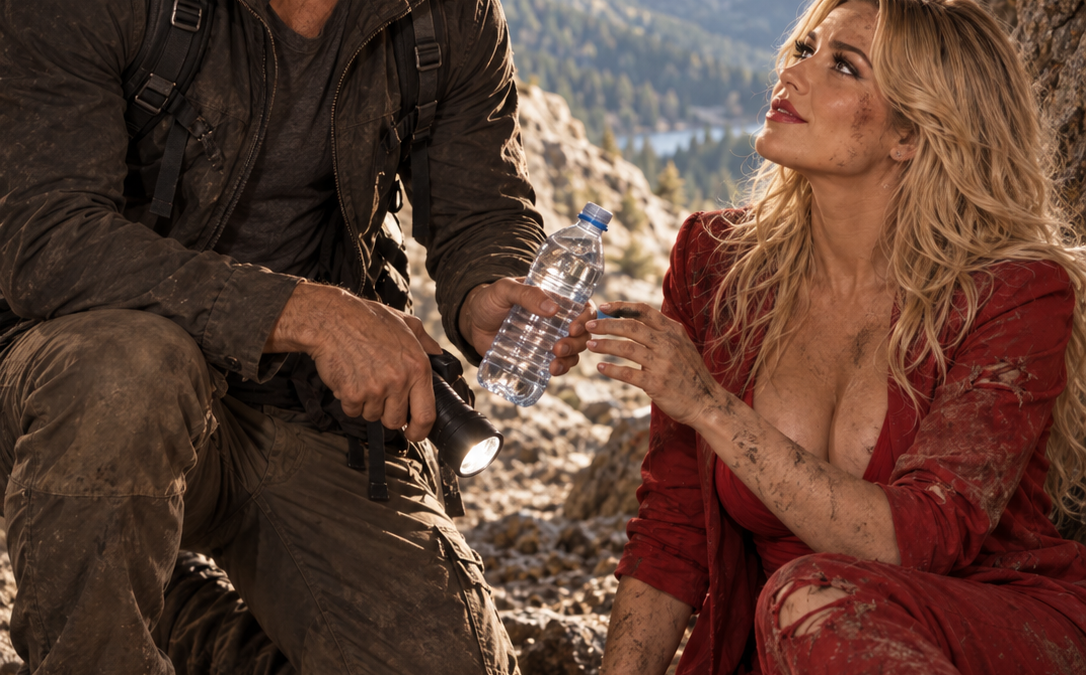
PART 5
A pause. Sitting in that chamber waiting for a rescue team that might not come.
I was not thinking about any of those things. What were you thinking about? He asked.
Breakfast, she said. He almost laughed. Without the phone.
Without the phone, she said.
And if I’m being exact, I was thinking about the fact that nobody knew I was there.
that I could disappear from the world and the world would keep moving.
And the only evidence I’d left of anything real was 64 pages in a waterproof notebook behind a loose stone.
A pause.
That’s a very specific kind of lonely.
Sophie said something like that.
Daniel said, “What did she say?”
She said, “The loneliest kind of alone isn’t being by yourself.
It’s being around people you can’t be honest with.”
Victoria was quiet for a moment.
She’s 10.
She’s 10.
She’s going to be something.
Victoria said, “She already is something.”
Daniel said, “I just have to keep up.”
Victoria made a sound that was almost a laugh. Almost. The restrained version, the version of a woman who was still even now relearning the habit.
Then she said, “I’m coming back to Silver Creek in June.
I want to hike the overlook trail, the one above the valley.”
I looked it up.
It’s rated moderate and I cleared moderate with my physical therapist last week.
You cleared it officially, he said. I asked her three times in three different ways until she said yes, Victoria said. So yes, officially.
He did smile at that. June works.
He said, I’ll bring Sophie.
Good, she said. And Daniel, no security this time.
I told them I was hiking with a watershed inspector and a 10-year-old. They agreed the threat level was manageable.
High praise, he said. I thought so, she said. June came.
Victoria arrived on a Friday. Same rented sedan. Same lack of ceremony.
She looked different from Octur. Not just physically recovered, though that was visible too.
The hollowess gone from her face, the color back. She looked different.
The way a person looks different when they’ve made a decision about something fundamental and the decision has settled into them and become part of how they stand in the world.
She was wearing a green jacket this time. Sophie noticed immediately.
You’re not wearing red, Sophie said by way of greeting in the Silver Creek Diner parking lot where they’d agreed to meet.
Victoria looked down at herself. No, I retired the red one. How come?
because I wore it for 10 years as a kind of uniform, Victoria said. And I decided I was done with uniforms. Sophie considered this seriously.
I think green is better anyway, she said. Red is too bright. Green looks like you belong outside.
Victoria looked at Daniel. He spread his hands.
I don’t edit her.
They drove to the trail head and started up the overlook trail at 9 in the morning. The June air still cool under the aspens, the trail solid and dry after a week of good weather.
Victoria’s gaet was slightly uneven on the steeper sections.
The leg was good, the therapist’s assessment accurate, but the nerve damage had left a particular sensitivity on rough terrain that she managed with a trekking pole she carried without self-consciousness.
Sophie set the pace. She always did on hikes. Not fast, but relentlessly consistent.
The way 10-year-olds move when they’re interested in everything and nothing slows them because everything is worth stopping to look at.
And somehow they still make better time than adults. They talked while they walked. Not about Whitmore.
The trial was proceeding and there was nothing new to say about it. Not about the protocol or the company or the investigation.
They talked the way three people talk when they’re moving through good terrain.
and the only thing that matters is the next step and what’s around the next bend.
Sophie told Victoria about the book she was currently most invested in. Victoria listened and and asked a question that showed she had been paying attention.
Sophie answered at length. This continued for approximately 40 minutes, and Daniel walked slightly behind them, and felt something he recognized as contentment, which was a thing he had not felt so cleanly since before his wife got sick, and which he had not expected to feel in this particular configuration on this particular trail.
He filed it quietly, without examining it too hard. They reached the overlook at 10:40.
The valley spread out below them. Silver Creek in the middle of it.
Small and exact the kind of town that looks from above exactly like what it is. The San Juan Mountains on three sides, the ridge lines still holding snow in the highest places. The drainage basin where Daniel had walked in October was not visible from here.
It was on the other side of the northwest ridge, but he knew where it was. And he knew the mountain that had nearly killed Victoria Langford was the same mountain he was standing on now. That seemed right somehow.
That seemed like the correct relationship with a place. Sophie went to the overlook edge within safe distance.
The trail was well-maintained and looked out with the whole body attention of a child who hadn’t yet learned to be jaded about big views.
Victoria stood beside Daniel. They looked at the valley for a moment.
Then Victoria said without looking at him.
I’ve been thinking about what I said in the chamber about having postponed too much.
I remember.
He said I’ve been doing the thing where I make lists.
She said the things I postponed, concrete lists, not abstract resolutions, actual things. Breakfast without my phone.
Weekends that aren’t working weekends.
Hiking apparently. A pause.
and I’ve been thinking about the company, about how I built it and why and what I want it to actually be.
What do you want it to be? He asked.
She was quiet for a moment.
I want it to be something I’m proud of for reasons that have nothing to do with the stock price, she said.
I want the people who work there to feel like they’re building something real.
I want the ethics division to have actual authority, not just a title. She paused.
I started the company because I believed in what it could do. Clean energy infrastructure, real infrastructure, the kind that changes how communities function for 50 years.
That’s still worth doing.
I just lost the thread of why it mattered somewhere around year 8. You found it again, Daniel said.
Under a mountain, she said literally. He almost laughed.
She did laugh. The real one, the one from the diner, warm and genuine. the restrained version fully abandoned.
Sophie turned from the overlook and looked at them.
“What’s funny?”
she demanded with the indignation of someone who had missed a joke.
“Nothing,” Daniel said.
“Ault stuff.”
“That’s what adults say when something’s actually funny and they don’t want to explain it,” Sophie said.
“That is exactly what it is,” Victoria said.
Sophie pointed at her.
“I respect the honesty,” she said and turned back to the view.
Daniel looked at Victoria.
Victoria was still smiling and in the full morning light with the valley below and the mountains above and the green jacket and the trekking pole and the slightly uneven gate that was going to be there for the rest of her life as a reminder
of what she’d survived.
She looked for the first time since he’d found her in a drainage basin in the dark exactly like herself.
Not the version on the news, not the CEO in the press photographs, not the survivor in the hospital bed, just herself, whatever that was, whatever it was becoming. He thought about what it had cost her to become it.
And then the thing he hadn’t examined too hard, announced itself without his permission, the way true things eventually do, and he understood that he was glad she was here.
Not abstractly, not philosophically, specifically on this trail on this morning, with his daughter pointing at the valley below, and the aspen’s gold at the edges, and the mountains doing what mountains do.
I was glad she was here.
He didn’t say it.
He didn’t need to.
Some things were better held quietly for a while, turned over slowly, allowed to become real before they were spoken. He just looked at the valley and Victoria looked at the valley and Sophie, 10 years old and four books deep and gaptothed and relentlessly alive, called out from the overlook.
“Dad, you can see the whole town from here.
You can see the rescue station.”
“Can you?”
Daniel said.
“It looks different from up here,” she said.
“It looks bigger.”
He looked at Victoria.
“The new equipment arrives in August,” Victoria said quietly.
“I know,” he said.
“The weather stations go in first, then the radios.
The technical climbing gear takes longer.
There’s a custom order for the altitude specifications.”
Reyes told me he’s a good man, Reyes.
He is, Daniel said. Sophie called out again. Dad, can we come back up here in the fall when the aspens are really gold?
Sure, he said. Can Victoria come?
Sophie called without any particular ceremony around the question. The way children ask things they consider already settled.
A pause, barely a second. But Daniel heard it. He looked at Victoria.
Victoria was looking at Sophie’s back at the small figure at the overlook edge with her arms slightly out for balance and her whole body leaning into the view.
And something in Victoria’s expression was doing what it had done in the chamber when he’d told her about his daughter when the warmth of it had reached her in a place she’d been keeping carefully insulated for a long time.
“Yes,” Victoria said.
“Not to
Daniel.”
Out toward Sophie, toward the valley, toward the mountains that had broken her and failed to break her.
“I’d like that.”
Sophie turned and gave a single satisfied nod.
“Good,” she said.
The aspens are way better in October. They started back down at 11:15.
The descent was slower.
Victoria’s leg on the downhill sections required more attention, and Sophie had found a series of interesting rocks she wanted to collect, which introduced a different kind of pace entirely.
Daniel walked between them, carrying Sophie’s rocks in his jacket pocket, and the morning stretched out into the easy time of a day that wasn’t trying to be anything in particular.
Halfway down, Sophie slipped on a loose section of trail.
Not badly, she caught herself with one hand, got back up, said, “I’m fine.
” With the preemptive firmness of a child who does not want the fall turned into a thing, but Victoria had her hand out before Daniel moved steady and immediate, and Sophie took it without thinking, and they covered the next 10 yards of loose trail, hand in hand, before the ground leveled, and they let go.
Daniel watched it happen. He watched the ease of it. No negotiation, no ceremony, just a handout and a hand taken and the moment moving on.
He thought about what things cost and what things were worth, and how sometimes the line between the two was so fine, you had to nearly lose everything before you could see it clearly. He thought about a 10-year-old asking who was still looking.
He thought about a gap in a map and a strip of red fabric on a branch 9 ft up. He thought about three stones in a straight line.
I thought about his wife’s recipe for chili that she never wrote down, and about the gas station muffins that were a terrible substitute for everything they stood for, and about the particular way Sophie held his sleeve when she was half asleep and he came home.
I thought about all the ordinary, irreplaceable, specific things that make a life and how they were the things that couldn’t be bought or replaced or recovered if you lost them.
And how the mountain hadn’t known any of that and hadn’t cared and how that was the point, how that had always been the point.
They reached the trail head at 12:30.
Sophie immediately wanted the rocks out of Daniel’s pocket and set about arranging them on the hood of the car with the seriousness of a curator.
Victoria came to stand beside Daniel.
“Same time in October,” she said.
“Same time in October,” he said.
She nodded then quietly so Sophie wouldn’t hear, “Daniel, what you did in October going back in.
I’ve thought about how to say this properly for 8 months, and I don’t think there’s a proper version, so I’m just going to say it directly.”
He waited.
“You didn’t find a billionaire that night,” she said.
“I know that.
I know that’s not why you went back in.
He looked at her. What did you find? She said the same question from the chamber eight months later in daylight with Sophie arranging rocks on a car hood and the mountains behind them and the whole recovered world around them.
He had answered it in the chamber in the dark with the rescue team on the way and the truth of it fresh and unguarded. He had said someone who needed to get home. He thought about whether that answer was still the right one.
It was. It was still the right one.
But it wasn’t the complete one.
I found someone who hadn’t quit, he said.
64 handwritten pages by candle light. Stone markers every 50 m.
5 days under a rock. Managing your own triage. Staying sharp enough to ask the right question.
The second a stranger came through the gap in the debris. He held her gaze.
I found someone who refused to let the mountain win. Victoria was very still and I thought he said that was worth one more look.
She didn’t say anything.
She didn’t need to.
The particular silence of a person who has received something exactly as it was meant was its own answer.
Sophie said from the car hood, “Dad, look.
If you put them in order of color, they make a pattern.”
Both of them turned. She had arranged nine rocks in a gradient from pale gray to deep brown, evenly spaced exactly straight.
Daniel looked at them. Three stones in a straight line, his throat tightened. He breathed through it.
“Nice work, Sofh,” he said.
Sophie looked up at both of them.
“We should go get lunch,” she said.
“I’m hungry.
Can we go to the diner?”
“We can go to the diner,” Daniel said.
“Victoria, do you like pot roast?”
Sophie asked.
“I do,” Victoria said.
“Good,” Sophie said.
“Because that’s what you’re getting.
It’s the best thing there.”
She slid off the car hood and started toward the truck with the complete confidence of someone who had settled all the important questions and was now ready to eat lunch. Daniel and Victoria looked at each other, and then they followed her.
The three of them walked to the truck in the June morning with the mountains behind them and the town ahead and all the ordinary irreplaceable days still to come. And the story settled into the shape it was always going to take.
Not the shape of rescue, not the shape of investigation or fraud or corporate fraud or federal indictments or survival statistics, but the shape of what came after all of that, which was this. A man who refused to assume everyone else had already looked everywhere worth looking. A woman who refused to quit before someone arrived who was worth not quitting for.
And a 10-year-old who asked the right question at the right moment and never fully understood that she had changed everything simply by asking it.
The mountain didn’t know Victoria Langford was a billionaire.
Daniel didn’t need to know it either.
THE END.

