The CEO’s Bodyguards Ran From Intruders—Until a Single Dad Ex SEAL Saved Her Life
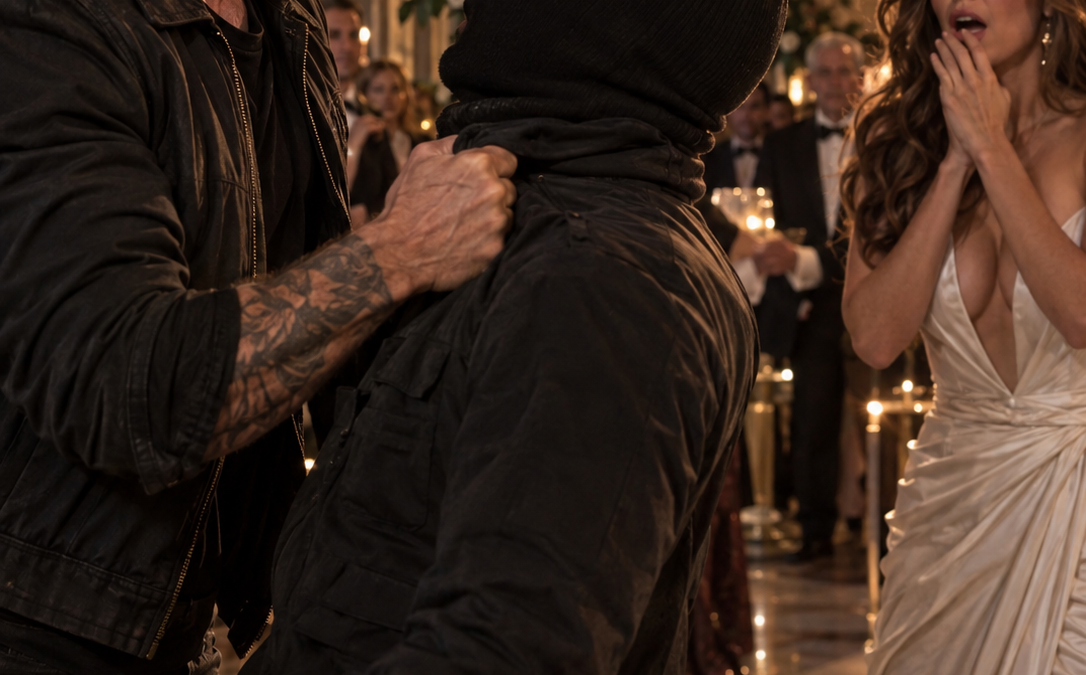
The CEO’s Bodyguards Ran From Intruders—Until a Single Dad Ex SEAL Saved Her Life

PART 1
a helix vanguard story yet bam.
They said the building was untouchable. They were wrong. Inside the most secure corporate tower in America, a billion dollar betrayal was already in motion, planted not by outsiders, but by the very people trusted to protect it.
When the lights died and the smoke came, every hired gun with a badge turned and ran. Every polished professional with a six-f figureure salary disappeared into the chaos. What none of them counted on, what no one counted on was the quiet man in the gray uniform who stayed.
The elevator at Helix Vanguard’s headquarters made a sound on Tuesday mornings that nobody else seemed to hear.
It was subtle, a faint mechanical hesitation between the 14th and 15th floors, lasting maybe half a second before the cab leveled out and the doors opened like nothing had happened. Most people were staring at their phones when it happened.
The ones who weren’t were already moving before the doors finished parting, coffee cups in hand, minds locked on whatever meeting or deadline waited on the other side.
Ethan Drake heard it every single time.
He stood in the service corridor outside the elevator shaft on that particular Tuesday morning with a laminated work order clipped to his chest and a socket wrench in his left hand, listening to the building the way other men listen to music patiently with the kind of
attention that couldn’t be faked or trained in a classroom.
He had been listening to buildings for 3 years now. Before that, he had listened to jungles, coastal approaches, and the breathing patterns of men who wanted him dead.
That was a different life.
He didn’t think about it much anymore.
He tried not to. Drake.
A voice from the end of the corridor.
Marcus Webb, the facility’s supervisor, a heavy set man in his early 50s who managed a clipboard like it was a weapon.
You finished the panel diagnostic on 18. Done at 640, Ethan said without turning around. Flagged a grounding issue on circuit breaker 7.
Left the report on your desk. On my desk? Marcus repeated it with the flat, vaguely irritated tone of a man who had expected to find nothing and was mildly inconvenienced by finding something.
You always do that. You always leave a report.
That’s the job.
The job is to fix what’s broken, not write novels about it.
Marcus flipped a page on his clipboard. HVAC filter replacement, floors 20 through 23. Get it done before noon.
Ethan nodded. Marcus was already walking away.
The corridor was empty again. The elevator groaned softly behind the wall.
Ethan Drake was 37 years old and built in a way that didn’t announce itself.
Lean through the shoulders, economical in movement, the kind of physical presence that registered as unremarkable until you noticed the specific way he held a room without trying to. He wore a gray Helix maintenance uniform that was slightly too short in the sleeve and carried a belt with more tools than the average technician would know how to use. His face had the settled quality of someone who had stopped being surprised by things a long time ago.
He had a daughter named Kora. She was eight. She liked drawing horses on the backs of his work orders and making him watch the same animated movie about a girl who turns into a bear approximately once every 11 days.
He had seen it 43 times. He knew every line. She was the reason he had taken this job.
The hours were predictable. The work was physical but manageable.
And when his shift ended at 4:30, he could be at her school by 4:50, standing at the pickup line with the other parents, none of whom had any idea that the quiet man in the gray uniform had once been inserted into denied territory under cover of darkness with nothing but a communications device, a rifle, and four other men he trusted with his life.
He didn’t miss it most days.
Helix Vanguard occupied the top 20 floors of a 52-story tower in the financial district, a building that had been designed by architects who clearly believed that glass and steel could communicate authority without trying. The company itself developed proprietary cyber security infrastructure for defense contractors, private finance institutions, and three different federal agencies whose names the general public had never heard spoken aloud.
It was the kind of company that made the news only when it didn’t want to, which is to say almost never.
Adrien Kaine had been its CEO for 14 months. She was 30 years old, which made her the second youngest chief executive of a publicly traded defense adjacent company in the country, a fact she had stopped being interested in approximately 11 months ago. The first time a journalist led with her age, she had been politely corrective.
By the fourth time, she had started ending interviews early.
She was in her office on the 41st floor at 7:15 that morning, standing at the floor to ceiling windows with a cup of green tea she hadn’t touched, looking out at a city that was still gray with early light.
Behind her, three tablets were arranged on her desk showing different data streams, and her assistant, a 26-year-old named Priya, with the organizational instincts of a field general, was already on her second cup of coffee in the outer office. The Meridian team lands at 9:00, Priya said through the open door.
Full delegation, eight people. Contract review is scheduled for 10:00. Lunch at 12:30.
Signing ceremony at 2. Media access is limited to the lobby and the atrium. Security cleared everything last night.
The backup generator test? Adrienne asked, completed at midnight. All systems nominal.
And the redundant network partition on floors 38 through 42. A brief pause. Priya appeared in the doorway.
I’ll check.
Check now. Adrienne finally turned from the window. She was not a tall woman, but she had the specific stillness of someone who had decided early on that stillness was its own form of authority.
Dark hair pulled back, minimal jewelry, a charcoal blazer that was fitted without being theatrical. This contract is $8.
4 billion, and the Meridian Group has pulled out of two other deals in the last 18 months because of security concerns. I want everything verified.
Every system, every backup. Understood.
Pria was already on her phone. Adrienne sat down at her desk and opened the security brief her chief of security, a man named Ronald Fitch, had submitted the previous afternoon. It was thorough.
62 contracted guards on site site divided between lobby control, executive floor coverage, and perimeter monitoring. Biometric access restrictions on all floors above 35. visitor management protocol locked to a short list of authorized personnel.
Fitch ran a tight operation. He had come from private military contracting and had the resume to prove it.
Two decades of high value asset protection, corporate espionage prevention, crisis management. Adrienne had never entirely trusted him.
She wasn’t sure why.
Maybe it was the way he smiled at the wrong moments in meetings. Maybe it was instinct. She had learned not to dismiss instinct.
She read the brief anyway because that was also part of the job. Ethan found the anomaly at 9:47 in the morning.
He had been working through the HVAC filter replacement on floor 22 when he noticed the access panel to the building’s secondary network junction was slightly a jar.
Not broken, not forced, just not fully closed the way it should have been. The magnetic latch disengaged as though someone had opened it carefully and then failed to push it all the way shut on the way out. He stood in the utility corridor for a moment looking at it.
He opened it the rest of the way.
The secondary junction routed backup data signals to the building’s core security system.
The cameras, the badge readers, the emergency lockdown protocols. What he was looking at was not supposed to be accessible from this corridor at all. The routing panel should have been sealed behind a secondary latch controlled by a key card that only the head of facilities and the security director carried.
Except it wasn’t sealed, and someone had been in here.
He crouched down with a small flashlight and looked at the connection points. Everything appeared normal from a distance.
He moved the flashlight closer. There, running alongside the standard cabling, thin as a strand of optical fiber, practically invisible against the gray housing, was a secondary tap, a physical intercept device, not the kind of thing you bought off a shelf, the kind of thing that was built by someone who knew exactly how this system worked. Ethan sat back on his heels.
He thought about that for a while. Then he took out his phone and photographed everything.
The panel, the device, the connection points, the surrounding cable arrangement. I was methodical about it.
The way he was methodical about everything, moving the camera to cover every angle without touching anything he didn’t have to touch.
He clipped the panel mostly shut again and went to find Marcus Webb.
Marcus listened to him with the expression of a man hearing a language he didn’t fully speak.
A tap, he repeated, a signal intercept. Someone put it there after the last maintenance inspection. I checked the access log on the panel.
It was opened 4 days ago at 2:00 in the morning by a credential registered to a contractor who hasn’t been on site in 6 weeks.
So, someone spoofed the credential. Yes. Marcus scratched the back of his neck.
Ethan, you do HVAC filters and door calibrations. What do you know about network taps?
Ethan had expected this question. Enough, he said.
I’ve seen them before.
Where?
He held Marcus’s gaze for a moment.
I read a lot.
Marcus made a sound that wasn’t quite a laugh and wasn’t quite dismissal, but lived somewhere in between.
Look, I’ll put it in the incident log and flag it for the IT security team.
They’ll The contract signing is today, Ethan said.
At 2:00. I know when it is. Everyone in the building knows when it is.
The tap is on the secondary network junction that feeds the security system.
If someone wanted to compromise the building’s internal monitoring during a specific window of time during something like a contract signing with limited outside access protocols, Ethan Marcus held up a hand.
You’re a good technician, a really good one, but you’re not a security analyst, and this isn’t your call to make.
I’ll flag it.
They’ll look at it.
Okay. Ethan looked at him for a moment. Then he nodded once.
“Okay,” he said.
He walked back to the service elevator and stood in it alone on the ride up to 23, watching the floor numbers change. The elevator made its half-second hesitation between 14 and 15.
He barely noticed. By 11:00, he had sent the photographs to three people. Marcus Webb, the IT security contact listed on the internal directory, and the general facilities inbox that technically went to a department assistant named Devon, who spent most of his time watching sports highlights on a monitor.
He had turned slightly away from the main foot traffic. By 11:45, he had received no response from any of them. He tried a different approach.
He walked to the security desk on the lobby level and asked for Ronald Fitch.
The guard at the desk, a young man named Torres with a close-trimmed beard and an earpiece that wasn’t connected to anything Ethan could identify, told him Fitch was in a pre-ceremony briefing and could not be disturbed.
It’s about a network anomaly in the secondary junction on floor 22.
Ethan said, “The building security cameras and lockdown protocols run through that junction.
I found an intercept device.
I have photographs.”
Torres looked at him with the careful blankness of someone who had been trained to look at maintenance workers exactly the way maintenance workers expected to be looked at.
I’ll let him know you stopped by.
That’s really not.
Ethan stopped, took a breath. Can I leave the photographs with you?
Sure.
Torres took the printed copies Ethan had made at the facility’s printer without really looking at them and placed them on the desk to his right next to a halfeaten protein bar and a coffee thermos.
Ethan stood there for another moment.
“Thanks,” he said, because there was nothing else to say.
He went back upstairs.
The maintenance tunnels beneath Helix Vanguard’s executive floors were not on any public schematic.
They had been built into the original structure as a concession to the building’s complex mechanical and electrical infrastructure.
tight utilitarian corridors that ran parallel to the main floor plans accessible through unmarked utility doors that required a facilities level key card. Ethan had memorized the entire layout in his first month on the job.
Not because he’d planned to use the knowledge for anything specific, but because knowing the shape of a space was simply how his mind worked.
Old habit. He was in the tunnel on floor 39 at 1:15 in the afternoon, replacing a failed sensor in a climate control unit when he heard voices through the ventilation grate above him.
Two men, low, careful tones.
Not the controlled volume of professionals having a private conversation, the deliberate quiet of men saying something they didn’t want carried.
He stopped moving, set down his wrench without a sound. Confirmation window is 90 seconds from the initial blackout. any longer and the federal relay picks up the signal loss.
Cole’s people know the window.
A different voice, older, more measured. The voice of a man accustomed to having decisions accepted rather than questioned.
The detonators are already in place. Everything happens in sequence or nothing happens at all.
And the girl, the first voice asked, girl, not woman. girl.
As though the subject of the word hadn’t earned a different designation.
Adrien Cain is not a problem.
She’ll be contained in the chaos like everyone else.
A long pause.
You’re sure Fitch’s people are holding their positions?
Fitch’s people are holding exactly the positions I told them to hold.
That’s what happens when you pay someone enough to forget they ever had a conscience.
Ethan was already processing grid layout of the current floor, position of the service tunnel exits, distance to the nearest communication terminal that wasn’t routed through the building’s primary network junction.
His hands were perfectly still. His breathing was slow and even.
He knew that second voice.
He had heard it in three board meetings he’d serviced the AV setup for in the last 6 months.
a man named Vincent Hint Hail, who sat on Helix Vanguard’s board of directors and had the particular social ease of someone who had spent his entire adult life never being told no.
The voices moved away from the great. Ethan sat in the tunnel alone in the near dark with the climate control unit humming steadily beside him. The contract signing was in 45 minutes.
He had photographs nobody had looked at and knowledge nobody would believe.
And a cell phone that could make calls to people who wouldn’t pick up in time.
And a secondary distress transmitter, a compact personal emergency locator, the kind of thing he had carried for 11 years out of a habit he’d never quite managed to break, clipped to the inside of his tool belt underneath a roll of electrical tape.
He pulled it out, looked at it, pressed the activation sequence with his thumb. The signal was already moving, bouncing off relay towers and satellite nodes toward a federal emergency coordination frequency that would log the transmission and flag it for review. In an ideal world, someone would respond before the ceremony started.
In a building where a maintenance technician’s warnings had been cheerfully ignored all morning, ideal was a word that had stopped being useful.
He put the transmitter back on his belt. He picked up his wrench.
44 minutes. He started moving toward the stairs.
H. At 1:47, Ethan Drake stood at the edge of the executive atrium on the 40th floor, wearing his gray maintenance uniform with a small grease stain on the left sleeve that Kora had told him with genuine semnity looked like a horse if you squinted. The Meridian delegation was already assembled around the long conference table, visible through the glass partition wall.
Eight people in expensive suits, their collective body language radiating the specific kind of corporate patience that costs a great deal of money to manufacture.
Adrien Kaine stood at the head of the table with a pen in her hand and a document in front of her that represented more than a decade of her company’s ambition distilled into 73 pages of contract language.
She looked from where Ethan stood completely composed, controlled, like a woman who had run every calculation and found them all acceptable. He watched her for a moment.
Then he looked at the security panel near the atrium entrance.
The small display that monitored the building’s internal system status.
All green, every indicator showing nominal, which meant the tap was still active. Waiting. Ethan pressed his back against the wall near the service door and checked his watch.
149. Somewhere below them, in the mechanical spaces that everyone trusted and nobody thought about, something was already counting down.
The lights died at exactly 151. Not a flicker.
Not the gradual dimming of a system struggling. A clean, decisive cut.
The kind that happens when someone who knows what they’re doing reaches into a building’s nervous system and severs the right nerve on the first try.
Emergency lighting kicked in 3 seconds later, bathing the executive atrium in a flat amber glow that made everyone look slightly ill. And for a moment, the room held its collective breath in the particular way that groups of people do when something goes wrong. But nobody wants to be the first one to say it out loud.
Then the smoke came.
It didn’t pour in the way movie smoke does, dramatically from a single source, giving people time to point at it.
It came from the ventilation system simultaneously on three sides of the 40th floor. Thin at first, then thicker, building the way fog builds over water at dawn. Within 90 seconds, the far end of the atrium was already obscured, and the Meridian delegation, which had spent the better part of the morning maintaining carefully constructed corporate composure, began to come apart at the seams.
What is this?
The Meridianled negotiator, a silver-haired man named Caldwell, who had the look of someone perpetually disappointed by the world’s failure to meet his standards, stood up so fast his chair rolled back and hit the wall.
What’s happening?
Stay
calm. Adrienne was already on her feet, the unsigned contract still sitting on the table in front of her.
She had her phone out and was dialing Fitch’s direct line.
It rang four times and went to voicemail. She tried the security desk.
Same result. Priya.
But Priya wasn’t in the room.
She had stepped out 5 minutes earlier to manage a catering issue on the floor below. And now the line Adrienne dialed connected to a ringing phone on an empty desk.
Across the glass partition, Ethan saw the smoke before the emergency lighting finished cycling. He had been standing at the edge of the service corridor for the past 2 minutes with his hand on the utility door handle, watching the security panel display that had shown all green, watching it change. The first indicator to go was camera coverage on floors 38 through 40.
Then the badge reader network dropped. Then the display itself went dark. 12 seconds of total security blackout.
He counted them. On the 12th 2nd, he pushed through the service door into the atrium.
The executive floor had four dedicated security personnel assigned to it during the ceremony. Two posted at the main elevator bank, one at the stairwell entrance, one roving between the conference rooms and the atrium. Ethan saw all four of them in the span of about 8 seconds, and what he saw made something cold settle in his chest.
The specific cold of a man recognizing a pattern he had hoped he was wrong about. The two guards at the elevator bank were moving toward the stairs, not toward the CEO, not toward the smoke, away.
One of them already had his jacket off, folding it over his arm in the practiced motion of someone changing out of a costume after a performance. The stairwell guard had his back to the atrium, his radio in his hand, speaking into it in a low and rapid voice.
The rover was simply gone. Ethan pushed through the gathering smoke toward the glass partition, and through it he could see Adrien Cain standing at the head of the conference table with her phone pressed to her ear and her expression doing that specific thing that faces do when the person behind them is running calculations very fast and not liking any of the results. The Meridian delegation was fragmenting.
Two people on phones, one man trying the conference room door and finding it still functional. Caldwell demanding explanations from nobody in particular. Ethan pulled the glass partition door open.
Miss Cain. She turned, looked at him, the gray uniform, the tool belt, the grease stain on his sleeve. Her eyes ran a quick assessment that was more competent than she probably knew.
Who are you? Maintenance.
Ethan Drake. We need to move right now. The security team is leaving.
He set it flat because there was no version of it that was gentle and no time to look for one. I watched them go.
All four. This was planned.
The blackout, the smoke, the personnel positions. Someone bought your security team and whoever comes through that door in the next 2 minutes is not here to help. Caldwell appeared at his elbow.
Now listen, sir. Ethan looked at him directly.
I need you to take your people down the northwest stairwell to floor 35 and hold there. The smoke is a dispersal agent, not a fire.
It’s designed to create chaos and separate people.
The stairwell is clear.
Go now and don’t stop moving.
Caldwell stared at him.
You’re a maintenance man.
Yes.
Ethan didn’t elaborate.
Something about the plainness of it, the absolute lack of performance made Caldwell take a half step back. He turned to his team. Northwest Stairwell, he said in the tone of a man who had decided that complaining could wait.
Let’s go.
Ethan turned back to Adrien.
She hadn’t moved.
You, too, he said.
I’m not leaving my building.
You’re not staying on this floor.
There’s a difference.
He moved to the atrium door and held it open. Please.
She came.
He noted that she didn’t hesitate after she decided.
Just picked up her phone and walked, which told him something useful about how she operated. They were in the maintenance corridor with the utility door closed behind them when the elevator bank on the far side of the atrium opened and the first of them stepped out. Ethan saw it through the narrow observation window in the door.
A man in a helix security uniform who moved wrong, not the loose territorial movement of a guard running toward an emergency. The tight economical movement of someone trained for entry.
He had a compact tactical radio in one hand and he wasn’t using it to call for help.
He was listening. There were three more behind him.
“Suble maintenance,” Ethan said quietly, already moving.
“Stay close and don’t talk.”
Adrien followed him into the corridor without a word.
The smoke hadn’t reached the maintenance tunnels yet, which meant they had a window.
Narrow, but real. Ethan moved through it the way water moves through the path of least resistance.
not running, not doawling, but covering ground with the efficiency of someone who has memorized the distance between every point in a space and knows which corners to cut. He was also thinking rapidly and without a great deal of room for error about what he had.
A building he knew better than anyone currently trying to control it. A tool belt with items that could be repurposed if he was creative.
A personal emergency transmitter that was broadcasting but hadn’t been acknowledged.
And a woman walking 3 ft behind him who was either going to be an asset or a liability depending on factors he hadn’t fully assessed yet.
It’s right.
Where are we going? Adrien asked.
Her voice was low and steady. Asset?
He noted. Subb.
There’s a mechanical operations room below the parking structure.
It’s not on the standard building schematic.
The entrance is through a utility passage that requires a facilities level access card. He held up his key card briefly. Mine works.
How do you know it’s not on the schematic?
Because I’ve been in this building for 3 years and I’ve never seen anyone else go near it.
They passed through a junction where two maintenance corridors intersected and Ethan stopped, held up a hand, listened. 40 ft down the left corridor, a door opened and closed.
He steered them right without breaking pace. The security blackout was 12 seconds, he said, more to organize his own thinking than to inform her.
That’s the window they needed to drop the camera network and rewrote the badge readers.
The smoke deployment was simultaneous, which means they had access to the building’s environmental controls.
That’s not something you hack from the outside.
Someone was inside this system before today. The tap, Adrienne said. He glanced back at her.
Secondary network junction, floor 22, she said. I got your photographs at 11:15 this morning.
The IT security lead flagged them to Fitch’s office at noon.
Ethan processed that. Fitch.
I know. Her voice had a particular quality. Not bitterness exactly.
The specific exhaustion of someone who suspected something and was now watching it confirmed.
I didn’t put it together until about 30 seconds ago.
Did you tell anyone else about the photographs? No.
Priya saw the forwarded message, but not the contents. Then, whoever Fitch reported to knows I found the tap, which means they know someone in the building was paying attention.
He stopped at a utility door, swiped his card, and pushed through into a narrow descending staircase that smelled of concrete and recycled air. Watch the third step.
It’s cracked.
She watched the step. The staircase took them down two levels below the parking structure to a corridor that was barely wide enough for two people to walk a breast. The ceiling was low and threaded with conduit and pipe, and the lighting was the old fluorescent kind that hummed at a frequency just above human comfort.
Ethan moved along it with the ease of someone who had walked it enough times that it felt familiar, even in the bad light.
The mechanical operations room at the end of the corridor was roughly 30 ft x 20, crowded with the building’s secondary electrical distribution hardware, a row of aging HVAC control panels, and a steel workbench along the far wall where Ethan had spent several
afternoons doing diagnostic work on components that were technically past their service life, but still functional.
He had a habit of working in here when the upper floors felt too loud. He pulled the door shut behind them and engaged the manual latch.
a heavy steel bar that dropped into a floor bracket, original to the building, installed before electronic locking systems were standard. He had always liked that about this room. Nothing electronic, nothing hackable.
Adrienne looked around the space. He watched her taking stock.
Not panicking, not freezing, just looking.
The way a person looks when they’re rebuilding their understanding of a situation from the ground up.
The people in the elevator, she said, mercenaries. Yes.
and the smoke, the blackout, the security team walking out. She sat down on the edge of the workbench, which was not an especially comfortable place to sit, but was functional.
And she seemed like the type who prioritized function.
This wasn’t improvised.
No, it took weeks. Access credentials, building systems, knowledge, personnel positioning. Someone with deep access planned this.
How many of them? I counted four on the executive floor.
That’s just the visible element.
A coordinated operation like this, you’d want at least 12 in total, probably more.
Entry teams, corridor coverage, stairwell control, external perimeter. He was moving as he talked, going to the workbench and opening the lower cabinet where he kept a secondary kit, spare components, basic electrical tools, and some items that were not strictly standard maintenance inventory.
The good news is they don’t know this room exists.
How long does that last? depends on how thorough they are.
They’re working off the standard building schematic.
We have time. If they have someone who actually knows this building, he stopped.
What they need? Someone with facilities level access knowledge, not just the schematics, the operational knowledge, which systems are connected to which, where the override points are, what the maintenance logs look like. He set down a length of heavy gauge electrical cable.
The person who opened the access panel 4 days ago, 2:00 in the morning, spoofed credential.
You think they’ve been inside the maintenance system?
I think whoever planned this knew things they shouldn’t know unless someone walked them through it or walked it for them.
He looked up. Does Fitch have access to facilities management records?
Adrien was quiet for a moment. Security directors have read access to building operations logs.
It’s standard for emergency response coordination.
Ethan nodded once slowly.
“Okay,” she said.
Her hands were on her knees and she was looking at the floor, not defeated, thinking. He could tell the difference.
“What do we have?”
He appreciated the Wii. It was a practical word.
No sentimentality in it. We have this room.
We have the maintenance tunnel network. I know every junction, every access point, every dead end, and every shortcut.
We have my tool belt. He spread the contents of the lower cabinet on the workbench. And we have the secondary emergency transmitter I activated at 149, which is broadcasting to a federal coordination frequency.
If anyone picked it up, response time is somewhere between 40 minutes and 2 hours, depending on how fast they verify and mobilize. 40 minutes minimum. Yes.
Adrienne looked at the contents of the workbench. Then she looked at him.
You activated an emergency transmitter before the attack started,” she said slowly.
I heard voices through a ventilation grade at 1:15. I recognized one of them.
“Who?”
He met her eyes.
“Vincent Hail.”
The room was very quiet for a moment. The HVAC control panel hummed.
“Vincent?”
She said his name the way you say the name of something you’d rather not have confirmed.
“He’s been on the board for 6 years.”
“I know.
He was the one who pushed the meridian contract hardest. He has more to gain from controlling Helix than anyone outside of she stopped.
Something was moving behind her eyes. A rapid internal reorganization.
He doesn’t want the contract signed.
He wants the company. If the signing fails, the board has emergency governance authority.
If Adrien Kaine is She caught herself.
If I’m incapacitated during a crisis of this magnitude, the board assumes interim control and Vincent chairs the board.
And with Fitch’s team positioning to let the mercenaries operate freely, he controls the building.
He controls the narrative. She put her hands flat on the workbench. He tells whatever story he wants about what happened here today.
Ethan pulled a spool of heavy duty wire from the cabinet.
Not if we don’t let him.
He began to work. It was methodical the way everything he did was methodical.
Not showy, not fast for the sake of appearing capable, just deliberate. He stripped lengths of wire at specific intervals and connected them to a pair of components from the electrical cabinet, explaining none of it because there was nothing about it that required explanation at this stage.
Adrienne watched him for approximately 40 seconds before she did something he hadn’t expected.
“What can I do?”
she asked. He looked at the layout of the room.
“The conduit running along the north wall, the orange banded one.
I need to know which panels it connects to.
On the subb level, there’s a junction schematic mounted on the back of the middle HVAC unit.
Fold out laminated card should be orange with black text. She found it in about 20 seconds.
She was efficient. He noted that, too.
They worked in silence for a while, and it wasn’t the uncomfortable silence of two strangers thrown together by circumstance.
It was a working silence, functional, the kind that develops when two people have enough going on that words are optional.
Above them, in the building, they couldn’t see, something was happening.
They both knew it.
Neither of them said it because saying it wouldn’t change anything.
Then a sound. Footsteps in the corridor outside.
Not the random footfall of someone moving through. The measured deliberate pace of a search pattern. Slow, systematic, stopping at intervals.
Ethan set down his wire and looked at the door. The heavy steel bar was engaged.
He looked at the HVAC units along the south wall, large enough to create cover, close enough to the door to be tactically useful, old enough that their steel housings were solid rather than the hollow sheet metal construction of newer units. He pointed at the space behind the two rightmost units without making a sound.
Adrienne moved there without being asked twice. The footsteps stopped outside the door.
A pause. Ethan counted the seconds in his head.
Head. 1 2 3 4. The handle moved, tested against the lock.
A soft metallic sound as something was tried against the card reader, which was dead anyway. Another pause, then a voice muffled through the steel door on a radio. Subb clear.
Nothing in the mechanical corridor. The footsteps moved away.
Adrienne came out from behind the HVAC units. She looked at Ethan.
He looked back at her.
“They’re using the standard schematic,” she said very quietly.
“Yes.”
She let out a breath through her nose that was not quite relief and not quite anything else. You said the tunnel network.
You know, every access point everyone. Could you move through it without being detected?
Could you get to the main security operations hub on floor 32? He thought about the route.
The maintenance tunnel dropped to suble two behind the parking structure, ran east for about 80 ft, then accessed a vertical service chase that connected to the building’s core at intervals on floors 12, 20, 28, and 34.
From 34 to 32 was a single stairwell that accessed the operations hub through a mechanical room. The route avoided every main corridor, every elevator bank, every position a 12-man team would logically cover.
Yes, he said the operations hub has an independent hardline communications terminal that isn’t routed through the main network junction.
It runs on a separate fiber line that connects directly to the building’s ISP relay.
It was installed as a last resort communications backup, and only three people in the company know it exists. She paused. It would let us transmit directly, not a passive distress signal, an active voice transmission to the Federal Emergency Coordination Center.
Ethan looked at her. You know about the hardline.
I know about everything in this building, she said. And there was something in her voice that was neither arrogance nor defensiveness, just plain fact.
The way a person who has spent 14 months learning every part of something states what they know. I had a reason to learn.
He turned back to the workbench and began disconnecting the components he’d been assembling, reconfiguring them for a different purpose.
We’re not splitting up, he said.
If I go to the operations hub, you come with me.
I wasn’t suggesting otherwise.
And when we move through the tunnels, you do exactly what I do, exactly when I do it. No discussion. She looked at him steadily.
I already did that in the staircase.
He almost said something, didn’t.
He finished the reconfiguration and clipped the assembled unit to his tool belt. It was ugly.
stripped wire ends and electrical tape and a repurposed circuit relay, but it would function as a rudimentary motion alert at the door if they had to leave the room unattended. He ran a wire from it to a loose terminal on the HVAC panel and tested the connection once.
“Ready?”
he asked.
Adrienne straightened, pulled her jacket straight, an automatic gesture, habitual, the kind of thing a person does when they’re reminding their body that their mind is still in charge.
“Yes,” she said.
Ethan lifted the steel bar from the floor bracket, opened the door, and checked both ends of the corridor in a single practiced motion. Clear. He moved into the corridor, and she was a half step behind him, and they went into the dark of the maintenance tunnels together.
The CEO of a company under siege and the maintenance technician, nobody had thought to listen to, and above them, the building groaned softly with whatever was happening inside it, and neither of them slowed down.
The vertical service chase was accessed through a panel at the east end of the subb corridor, and Ethan had the panel open in under 4 seconds with a flathead screwdriver he’d been carrying on his belt since 7 that morning.
The chase itself was narrow, designed for cable runs and pipe access, not human traffic, but navigable if you move sideways in places and didn’t mind the smell of machine oil and the faint hum of electrical current running through conduit an arms length away.
Adrienne moved through it without complaint. She scraped her left arm on a pipe bracket and said nothing about it.
He noted the scrape visible through the tear in her jacket sleeve and noted that she hadn’t broken stride.
At the access point connecting to floor 28, Ethan stopped and listened for 2 minutes before opening the panel. What he heard was nothing, and nothing was different from clear, but it was the only information available, so he used it.
He eased the panel open and looked at a maintenance corridor that was dark except for emergency lighting and smelled of smoke that had filtered down from the floors above. He was about to move when he heard the radio traffic. Somewhere on the floor, close, 30 ft maybe.
A voice on a tactical radio was relaying position reports. Ethan listened to the cadence of it. Three units checking in, rotating intervals, the pattern of a coverage team that knew what it was doing.
He eased the panel shut and turned to Adrienne in the narrow space of the chase and held up three fingers. She nodded.
They waited 6 minutes, then eight. The radio traffic shifted, voices moving, positions changing, the natural movement of a search pattern progressing to the next sector. Ethan opened the panel again.
The corridor was clear. They moved.
By the time they reached the floor 28 junction and began the ascent toward 34, Ethan’s mind had settled into the particular operational clarity that he recognized and distrusted in equal measure.
recognized because it was real. The actual heightened functioning of a brain trained for exactly this kind of environment and distrusted because of what it said about the part of him that had never fully stood down. The part that was still, even after 3 years of HVAC filters and door calibrations, exactly what it had been trained to be.
He thought briefly about Kora, about the horse-shaped grease stain on his sleeve that she had identified with complete confidence, about the fact that school pickup was at 4:50 and it was currently, by his watch, 2:37 in the afternoon.
He’d figure it out.
He always did. The service chase narrowed near floor 30, and Ethan was navigating a section where a cable bundle had been improperly routed and took up significant space when Adrien spoke for the first time since the subb.
The man whose voice you recognized,” she said.
“On the ventilation.”
You said, “Hail.
” “Yes, he was talking to someone else.”
“Yes.”
“Do you know who?”
Ethan moved past the cable bundle and kept climbing. He mentioned a name. Cole, he paused.
The man coordinating the mercenary team.
He said, “Cole’s people know the window.”
He heard Adrien process that behind him.
“And the detonators,” he added, “because she needed to know.
” He mentioned detonators already in place.
A beat of silence in the narrow dark. Where? She asked.
He didn’t say.
But in a building like this, if you want structural impact, the kind that creates a narrative for whatever comes after, you target the reinforced core, the loadbearing junction between the building’s mechanical basement and the foundation structure, which is directly below where we are right now.
She said, “Yes.”
Another beat. Okay, Adrienne said just that. Okay.
They kept climbing.
At floor 34, Ethan opened the chase panel into a mechanical room that served the building’s central air handling units, a large, loud, relatively accessible space where the noise of the machinery provided cover that he was grateful for.
He checked the mechanical room thoroughly before helping Adrien out of the chase. And then they crossed to the far door in the stairwell that connected downward to 32. The operations hub door was steel reinforced with a biometric reader that required executive level authorization.
Adrienne pressed her thumb to the reader. The system was on backup power, slower but functional.
It beeped once and the lock disengaged. They were inside. The hub was a compact room, eight monitors, a central console, and in the far left corner set into the wall like an afterthought.
A simple black handset mounted on a panel with a single LED indicator that glowed steady green. The hard line. Adrienne crossed the room and picked up the handset.
It connected on the second ring. Federal Emergency Coordination Line 7, a voice said.
Flat professional, the voice of someone whose job was to receive bad news calmly. Adrienne looked at Ethan once. He nodded.
This is Adrien Kaine, she said, and her voice was steady. CEO of Helix Vanguard, 41st floor tower address on file with your coordination center.
We have an active hostile incursion in progress. Mercenary force of at least 12 personnel, security staff complicit, and a board member named Vincent Hail who orchestrated the operation. A breath.
I also need you to flag a secondary emergency transmitter that was activated at 1:49 this afternoon and is broadcasting on your coordination frequency. Technician Ethan Drake. He called this 47 minutes ago and nobody answered.
There was a pause on the line. Miss Kaine, the voice said carefully. Can you confirm your location and building access status?
Hardline terminal, floor 32, operations hub. We are mobile and undetected as of 5 minutes ago. Understood.
Please hold. She held. Ethan stood at the door of the hub with his hand flat against the steel, feeling for vibration, listening to the building around them.

