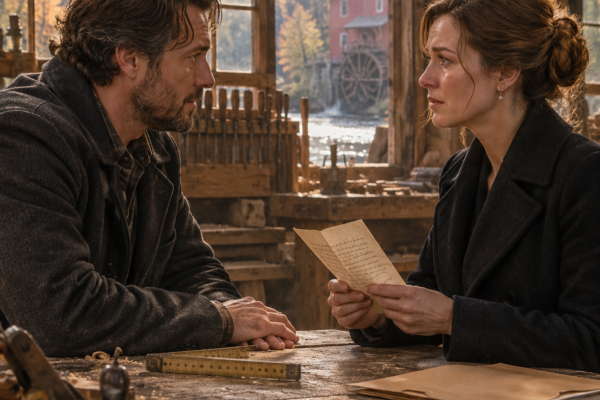
CEO Asked a Single Dad Why He Was Alone—His Answer Left Her Speechless (Part 2)
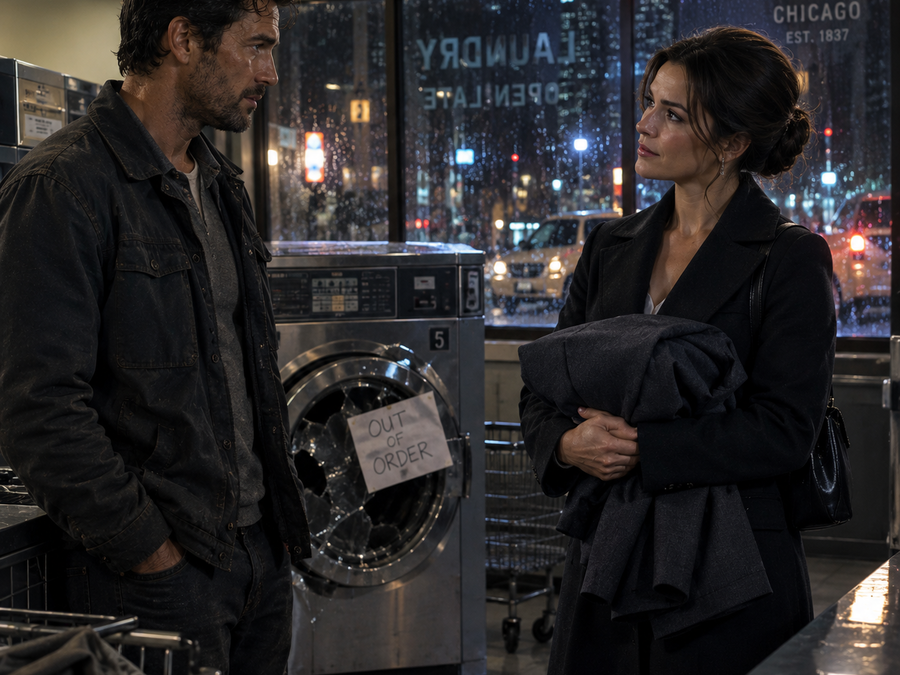
CEO Asked a Single Dad Why He Was Alone—His Answer Left Her Speechless (Part 2)
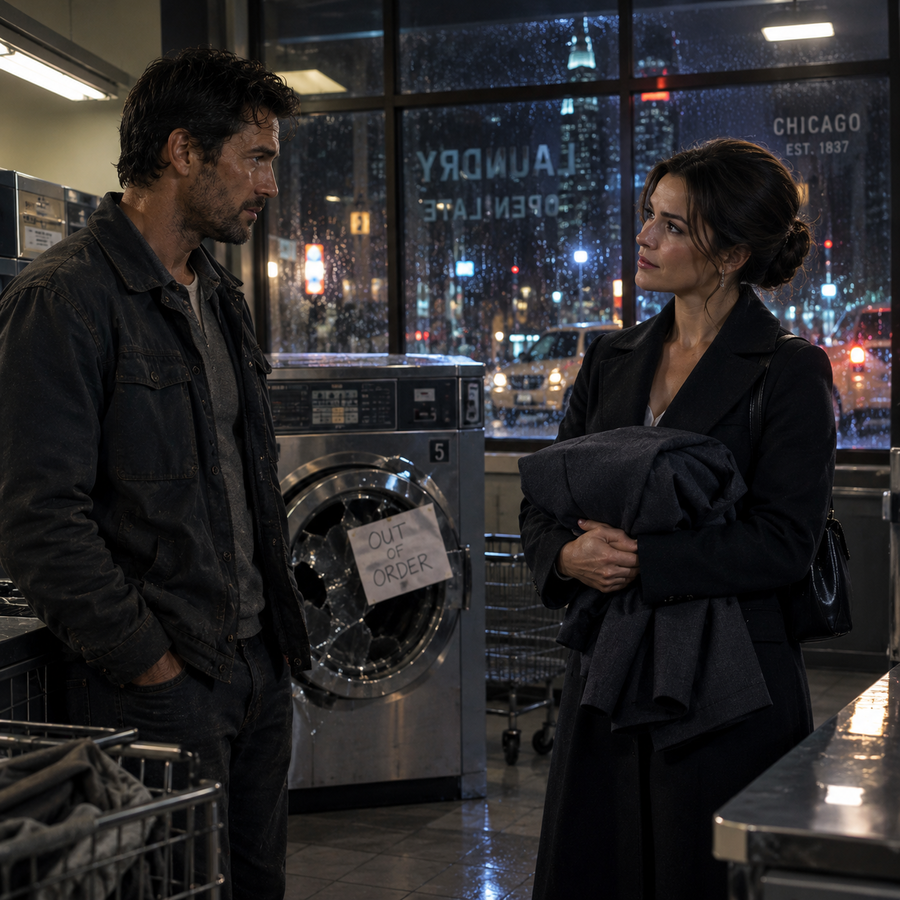
PART 2
Harland’s almost-smile had not moved. It was the smile of a man recalculating. She’d seen it before. It meant he was deciding whether she was a problem or an asset.
“You have one email,” he said. “Taken out of context.”
“I have 22 families,” she said, “and a pattern of filings that your legal structure funded, and a paralegal named Richard Caulfield who signed enough petitions to constitute a scheme.” She set three pages face-up on the table and slid them toward the center. “Dana Park is filing a formal complaint with the Illinois Attorney General this afternoon. I came here first because I believed some of you in this room may not have known the full extent of what was done in this portfolio’s name.”
She looked at each of them in turn. Slowly.
“I’m giving you 48 hours to distance yourselves from it publicly. On record.”
The younger legal counsel said, “This is highly irregular—”
“A man named Landon Hayes works 50 hours a week so his daughter has a clean uniform for school picture day,” Victoria said. Her voice steady. Flat. Carrying everything she’d kept out of it for two days. “Someone in a building connected to this table put his name in a government email to accelerate a property sale. That’s what we’re calling irregular.”
No one spoke. Harland was still looking at her. The recalculation was complete. She could see it.
“You won’t walk away from this portfolio clean,” he said. “You’re too close to it now.”
“I was never in it,” Victoria said. “I declined your co-investment offer.” She closed the portfolio. “As of this morning, Sterling Capital has submitted a full voluntary disclosure to our own board documenting why we declined and what we found in your materials.”
She stood. “The 48 hours starts now.”
She walked out. The elevator doors closed. She stood alone in the elevator and let her hands shake for exactly the seven floors it took to reach the lobby. Then she put them in her pockets and walked out into the city.
She called Landon from the sidewalk. He picked up on the first ring.
“It’s done,” she said. “The boardroom. They know we have the email.”
His exhale on the other end of the line was the longest breath she’d heard from him in three days.
“Harlan tried to anchor me in the portfolio,” she said. “Suggested I was compromised because I’d reviewed their materials.”
“Are you?”
“No. But he wanted me to believe I might be. It’s the same play they used on the families. Make the target feel like defending themselves will cost more than giving up.” She watched a bus go by. “It didn’t work.”
“No,” Landon said. “I don’t imagine it did.”
A pause. She could hear the warehouse in the background. The machines. The voices. The ordinary thunder of men doing physical work.
“How’s Mia?” she asked.
“She told me at breakfast that brontosauruses and stegosauruses lived in different time periods and never actually met,” he said. “Even though they’re always shown together in movies. She finds this personally offensive on behalf of both dinosaurs.”
Victoria laughed. A real one. Right there on a downtown Chicago sidewalk.
“She’s going to be fine,” Victoria said. “You know that, right?”
“I’ve always known it,” Landon said. “I just needed someone else in the room to know it, too.”
She stood there after he hung up and thought about that sentence. About what it cost a person to carry something alone long enough that the simple presence of a witness becomes something close to relief.
Then her phone buzzed. Dana Park. Text message. Four words: “Driscoll’s office is calling.”
Victoria looked at the message. She thought about Harland’s smile. She thought about 22 families and 18 buildings and a paralegal named Richard Caulfield who was about to have a very bad week.
She typed back: “Let them wait.”
Then she started walking, because the next 48 hours were going to demand everything she had, and she intended to give it.
Alderman Driscoll called Victoria’s personal cell at 7:43 a.m. the next morning. She let it ring through to voicemail. Then she listened to the message twice while drinking her coffee.
His voice was smooth and practiced—the voice of a man who had spent 20 years turning confrontation into conversation, crisis into negotiation. He didn’t sound worried. He sounded like someone who believed he still had options.
“Ms. Sterling, I think there’s been some miscommunication about the nature of the city’s involvement in the Kedzie corridor development. I’d love the chance to clarify a few things over breakfast. I’ve always had tremendous respect for what you’ve built at Sterling Capital. I think we want the same things for this city.”
She put the phone down. She called Dana.
“He wants breakfast,” she said.
“Of course he does,” Dana said. “He wants to know how much you have before he decides whether to run or fight.”
“What do we give him?”
“Nothing. Let him speculate. Uncertainty is more frightening than evidence to a man like Driscoll. He can argue against evidence. He can’t argue against what he doesn’t know.”
“You know,” Victoria thought about that. “He’ll make a move within 24 hours.”
“Yes. Either toward you or away from you. Either way, we’ll know where he stands.”
She hung up and called Landon. He picked up on the first ring again. She noticed he always did that. No games. No waiting. No performance of being busy. She had learned in the last 72 hours that this was simply who he was. When something mattered, he showed up for it completely.
“Driscoll called me,” she said.
A beat of silence. “What does he want?”
“To find out how scared he should be.”
“What did you tell him?”
“Nothing yet. I’m letting him sit.” She paused. “How are you holding up?”
“Mia asked me last night why I was quieter than usual,” he said. “I told her I was thinking about something important. She told me that when she has to think about something important, she draws it first because drawing makes the thinking slower and better.”
Victoria smiled before she could help it. “Did you draw it?”
“I did not draw it.” A pause. “But I thought about drawing it.”
“What would it look like if you drew it?”
He was quiet for a second. “A door,” he said. “With a lot of locks. And someone on the outside trying to get in.” Another pause. “And one person on the inside who finally has someone standing next to them.”
She didn’t respond immediately. The honesty of it required a moment.
“The locks are going to hold,” she said.
“I know,” he said. “I just needed to hear it out loud.”
Driscoll made his move at noon. Not toward Victoria. Away from her. Which told her everything she needed to know about his calculation.
He called a press contact at the Tribune and floated a story—unnamed sources suggesting that Sterling Capital had reviewed Greystone’s internal documents under a co-investment agreement and was now attempting to extract commercial leverage by threatening regulatory disclosure. In other words, he was going to try to reframe Victoria’s investigation as extortion.
Dana called her the moment the inquiry came in from the reporter. “He’s going offensive,” Dana said. “He’s going to paint you as the predator.”
“I know.” Victoria had expected it. “Let the reporter know we’ll provide a full statement with documentation in two hours. And Dana—when we send the documentation, include the email chain. The full one.”
“If we release the email now, we lose the element of surprise with the AG.”
“We’ve already lost surprise with Driscoll,” Victoria said. “Right now, what we need is a public record that’s harder to bury than a regulatory filing. If it’s in print, it’s permanent.”
A pause. “You’re accelerating the timeline.”
“He accelerated the timeline the moment he called the Tribune.” She stood up from the hotel desk. “Send the statement. I’ll call you in an hour.”
She called Landon next. “It’s going to be in the paper,” she said. “Possibly tomorrow. Your name will probably be in it as one of the families affected. I wanted you to know before it happens.”
The silence on his end was different this time. Not the processing silence. Not the calculating silence. This was the silence of someone who has been private about their struggle for a long time suddenly being asked to let the world see it.
“They’ll use my name,” he said.
“Yes. I’m sorry.”
“And Mia’s.”
“We’ll ask them not to. Dana will be explicit about that. But I can’t guarantee how another outlet picks it up downstream.”
He breathed. “Okay.”
“Landon, you don’t have to—”
“No,” he said. “If it helps the other families. The other 21. Then okay. Use it.” His voice was steady. “She’s seven. She won’t fully understand what’s in the paper. And if it gets her out from under that filing, that’s what matters.”
She wanted to say something equal to what he’d just offered. She couldn’t find it.
“I’ll protect her as much as I can,” she said.
“I know you will.”
The story ran the next morning. Not on the front page. Fourth page, city section. But it was thorough and specific and named names. Greystone. Driscoll’s office. Richard Caulfield. The email. The pattern of filings across 22 households. Victoria’s voluntary disclosure to her own board. Dana Park’s formal complaint to the attorney general.
By 9:00 a.m., two other families had called Dana’s office. By 11:00 a.m., a third major investor in the Greystone portfolio had publicly withdrawn. By noon, Alderman Driscoll had canceled three scheduled appearances and wasn’t returning calls.
And by 2:00 p.m., Landon Hayes was sitting in Dana Park’s office on the 14th floor of a Michigan Avenue building, looking at a legal brief that was about to dismantle the custody filing against him piece by piece. And he was trying very hard to keep his face composed and failing modestly.
Dana Park was a small woman in her late 50s with reading glasses she took on and off between sentences and the precise diction of someone who measured every word before spending it. She walked Landon through the response document with the efficiency of someone who had done this a thousand times and the patience of someone who understood this was the first time for him.
“The petition has three foundational claims,” she said. “Financial instability. Home environment concerns. And a vague reference to irregular working hours. We address each one directly. Financial instability: we submit four months of pay stubs, your lease record showing 14 consecutive on-time payments, and a letter from your warehouse supervisor documenting your employment history.” She paused. “Do you have those readily accessible?”
“I have everything,” Landon said. “I’ve kept records of everything for four years. Every payment. Every medical appointment. Every school event I attended. I started doing it after she was born because I knew—I always knew—that doing this alone meant I couldn’t afford anyone’s doubt.”
Dana took her glasses off and looked at him. Not with pity. With recognition. “Then we’re in excellent shape,” she said.
Victoria was sitting beside him. She’d been quiet through most of Dana’s explanation. Present, but giving Landon the room to be the person who mattered in this conversation. He noticed that. He noticed the way she’d calibrated her presence to what was useful rather than what was comfortable. It was a rare skill.
“The Caulfield petition,” Dana continued, “becomes substantially harder to sustain once we establish his relationship to the Greystone legal structure. His standing as a ‘concerned party’ dissolves if we can show he had no prior relationship with this family and was acting as an instrument of a commercial interest.”
“Can we show that?” Landon asked.
“We already have.” Dana set a single page in front of him. “Caulfield has billed Greystone’s legal subsidiary for paralegal services on 14 occasions in the past two years. He has no documented connection to your neighborhood, your building, or anyone in your personal or professional life.” She let that land. “He filed this petition because someone paid him to. And we can prove it.”
Landon stared at the page. “So it gets dismissed,” he said.
“I expect the court to dismiss it within 10 days of our filing. Possibly sooner, given the AG complaint context.”
Ten days. Eleven days before his response deadline. The margin was thin enough to make him dizzy, but it was there.
He sat back in the chair and put his hand over his mouth for a second. The way people do when they need a moment to let something good be real.
Victoria said nothing. She just placed a single hand flat on the table near him. Not touching. Not intruding. Just present. A way in the room that said, “I’m here. You’re not alone in this chair.”
He noticed.
At 3:00 in the afternoon, everything shifted again. Dana’s phone rang while they were still in the conference room. She glanced at the screen, excused herself, and was gone for six minutes. When she came back, her expression was measured in the specific way that people who deliver news for a living learn to look before they speak.
“That was the AG’s office,” she said. “They’ve opened a formal investigation into the Greystone-Driscoll connection. As of this afternoon, the building transaction is frozen pending review.”
The sale was frozen. 16 days had become zero.
Landon turned to Victoria. She was already looking at him.
“It’s over,” he said.
“The transaction is over,” she said carefully. “The investigation is just beginning. But the filing against you loses its purpose the moment the sale can’t close. There’s no commercial reason to maintain pressure on you now.”
“So they just stop.”
“They don’t admit it. They never admit it. Caulfield’s attorneys will file a voluntary withdrawal in the next few days, citing lack of sufficient standing. It’ll be worded to suggest they’re being gracious.” Her voice was dry. “They are not being gracious. They’re cutting losses.”
He absorbed that. “And the other families? The AG investigation covers all 22 households. Dana said any actions taken against them as part of a coordinated scheme become part of the evidence record. Some may have grounds for civil action. We’ll need to assess case by case.”
“Will they get their homes back?” Landon asked. “The ones who already left.”
The room got quieter.
“Some of them,” Dana said. “Not all. The buildings that have already sold—those are harder. We can pursue damages. We can’t always undo a transaction once it’s completed.” She paused. “I’m sorry. I know that’s not the answer you were hoping for.”
He nodded. The joy of the frozen transaction, of the dismissed filing, of the 10 days—it didn’t disappear. But it made room for the weight of 18 buildings and the families who hadn’t had a Victoria Sterling looking at their name in a file.
“I need to do something,” he said.
Victoria looked at him. “What do you mean?”
“The families who already left. The ones who couldn’t fight it. Who gave up their apartments and moved their kids to new schools and lost their communities.” His jaw tightened. “I’m a warehouse worker who keeps records. I don’t have money or lawyers or a seat on anyone’s board. But I have documentation. I have photos of my building—structural issues they deliberately ignored to justify code complaints. The same issues they used to pressure other tenants. I have neighbors who talked to me, who told me things.” He looked at Dana. “Does that help them?”
Dana studied him over her reading glasses. “Witness testimony and independent documentation are significant in a civil fraud case. Yes. That helps them.”
“Then I’ll do it.”
He said it the way he said everything. Without performance. Without announcement. Just a decision made completely.
He turned to Victoria. “Can Dana represent the other families? Or refer them to someone who can?”
“Yes,” Victoria said. It wasn’t a question she needed to think about. “Sterling Capital will fund the legal costs for the civil case. All 22 families.”
Dana made a note. She did it in the practiced way of someone who had learned not to express surprise at anything. But Victoria caught the slight pause. The fraction of a second that meant: this woman just committed significant money in a conference room without blinking.
“That’s a large commitment,” Dana said.
“It’s the right size for the problem,” Victoria said.
They walked out of the building together at 4:30. The city had its late afternoon October light—that specific Chicago gold that makes even the hard parts of the city look like they’re made of something worth keeping.
Landon had his hands in his coat pockets. Victoria walked beside him, matching his pace. Neither of them in a hurry for the first time in five days.
“You didn’t have to fund the civil case,” he said.
“No.”
“Why did you?”
She thought about the honest answer. Found it quickly, because it had been building for five days and she was done with strategic patience.
“Because I’ve spent 20 years in rooms where people make decisions about other people’s lives and never have to see the faces,” she said. “Driscoll sent that email and went home to dinner. Caulfield signed that petition and billed his time and moved on to the next file. Harland approved the acquisition strategy in a meeting I wasn’t in and shook hands and called it business.” She paused. “I sat in a laundromat and I saw your face. And then I saw your name in a document. And something in me—something that’s been quiet for a long time—just could not close that file and keep moving.”
He walked for a few steps in silence.
“My daughter drew a picture of the two of us at a lake,” he said. “She wrote under it that I carry everything. Mrs. Garza told me. She was right. And she was wrong.” He said, “I carry what I can. But nobody’s supposed to carry everything alone forever.” He looked sideways at her. “I forgot that. Four years is a long time to forget.”
Victoria said nothing. Some sentences deserve the space after them.
They reached the corner of Michigan and Ohio. The bus that went toward Kedzie was two blocks away.
“Can I ask you something?” Landon said.
“Yes.”
“What happens now to you? Your board. Your company. You walked into a room and accused Harland Group of fraud. That has consequences.”
“It does,” she agreed.
“Are you okay with that?”
She looked at him. At this man who had kept records for four years because he knew he couldn’t afford anyone’s doubt. Who had done a midnight laundromat run in a rainstorm so his daughter would look right in a picture. Who had, in a conference room 40 minutes ago, without hesitation or negotiation, offered his personal documentation to help people he’d never met get justice.
“I’ve been in this business long enough to know the difference between a cost and a loss,” Victoria said. “Losing Harland as a potential partner is a cost. Staying silent about what they did would have been a loss.” She looked at the street. “I’ll take the cost.”
He nodded. The bus was pulling up.
“Mia has a check-in with her doctor tomorrow,” he said. “Ear infection follow-up. I’m taking the morning off.”
“How’s she feeling?”
“She told me this morning that the medicine tastes like purple sadness, but it’s working.” He said it with the smile that came from somewhere deep in him. The real one. “So, progress.”
Victoria laughed.
The bus doors opened.
“Tell her,” Victoria said, “that I looked it up. Brontosauruses and stegosauruses did live in approximately the same time period. Within the late Jurassic. By about five million years. So technically they could have met.”
Landon stopped with one foot on the bus step. He turned around.
“You looked that up last night.”
“She was right to find it personally offensive. The movies have been negligent.”
He looked at her with an expression she hadn’t seen from him before. Not gratitude. Not respect. Not the complicated warmth of two people who have been through something hard together. Something quieter than all of those. Something that didn’t need a name yet.
“She’s going to want to tell you herself,” he said. “When she finds out you already knew.”
“I’ll act surprised,” Victoria said.
The bus doors started to close.
“Victoria.”
He caught them with his palm.
“Thank you. I know that’s not big enough. But it’s what I have right now.”
“It’s enough,” she said. “Go home to your daughter.