CEO Was Surrounded by Thugs —Then the Single Dad Janitor Saved Her From The Thugs (Part 3)
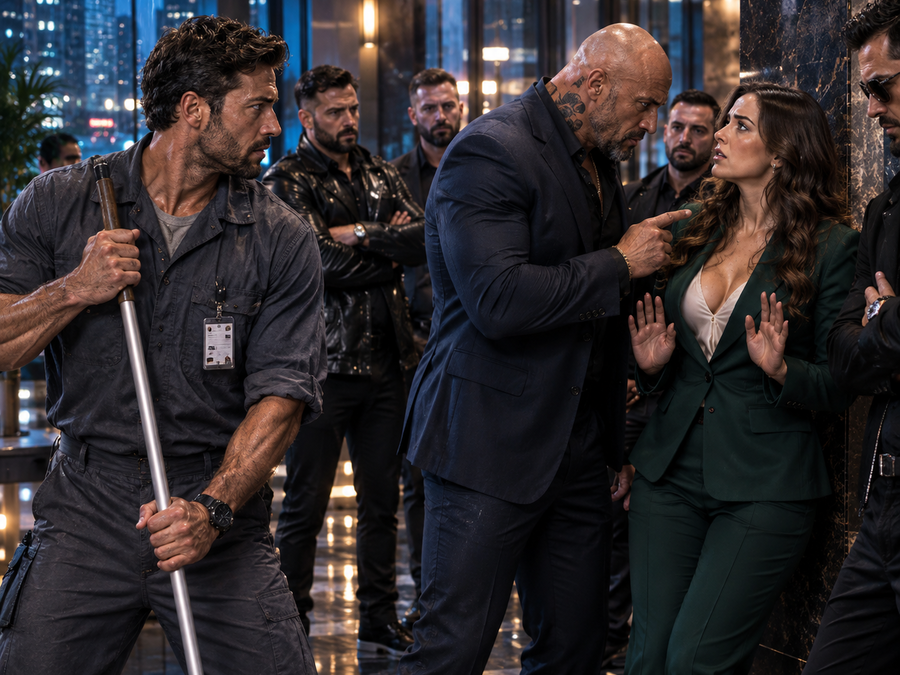
CEO Was Surrounded by Thugs —Then the Single Dad Janitor Saved Her From The Thugs (Part 3)
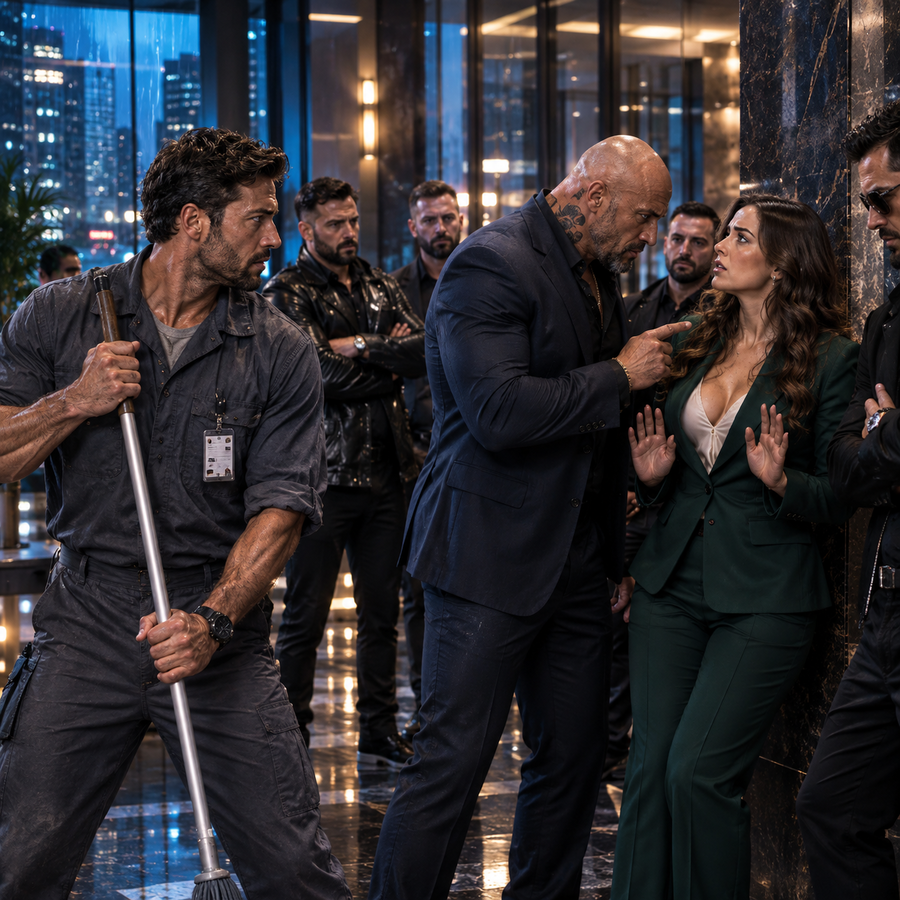
PART 3
Clare held his gaze. “You’re setting a counter-operation.” “I’m setting conditions,” he said. “There’s a difference.” She thought about it for exactly five seconds. He watched her work through it. “Okay,” she said. “I need you to trust that completely,” he said. “Not mostly. Completely. Because if something happens that looks alarming in the next few weeks, and I tell you it’s managed, I need you to not react publicly, even if every instinct you have is telling you to react.”
She looked at him steadily. “You held that conference room for forty minutes while I was standing three feet from you,” she said. “I think I can manage trust.”
He nodded. “There’s one more thing,” she said. He waited. “I spoke with the FBI field agent on the Vestara case this morning,” she said. “Before I had this conversation with you. I told them that Apex Horizon had someone on staff who might have operational value to their investigation.”
He looked at her. “I told them your name,” she said. “They would like to speak with you.” He was quiet for a moment. “Did you tell them I’d say yes?” he said. “I told them I’d ask,” she said. “I know the difference.”
He thought about Seattle. The CEO who’d refused to sign and then disappeared from his own life six weeks later. He thought about Vestara Capital’s operational adviser, currently at an unknown location, currently building something new. He thought about Emma at the kitchen table. Crackers and peanut butter. Feet kicking the chair rung. You always come home, so it evens out.
“Set up the meeting,” he said.
The FBI meeting happened on Friday afternoon in a conference room on the twenty-ninth floor that had been selected because it had no windows facing the street and a secondary exit that wasn’t visible from the main corridor. There were two agents. The lead was a woman named Special Agent Dana Foresight—forty-seven, sharp, and economical, with the quality of someone who had made peace a long time ago with the gap between what she could prove and what she knew to be true.
Her partner was younger, maybe thirty-five, a financial crime specialist named Webb, who carried a laptop and didn’t speak unless spoken to, which was the correct approach given who was in the room.
Foresight sat across from Michael and looked at him without the Ruiz-style recalibration. She already knew who he was. Someone had briefed her thoroughly before she walked in.
“Mr. Hayes,” she said. “I appreciate your time.” “Agent Foresight,” he said. “Tell me about the name on page four.” She almost smiled. “Straight to it.” “Is there a reason not to be?”
She opened her folder. “His name is Garrett Cole. Forty-four years old. Former private security. Fifteen years, highest level operations. Retired three years ago, which is also when his payments from Vestara Capital begin, though we only connected that recently.” She turned to her partner. “Webb.”
Webb, the financial specialist, had not moved or spoken since the meeting started. He was looking at his laptop with the determined focus of a man who understood that some conversations were above his weight class and had decided the appropriate response was perfect stillness.
“He’s good,” Foresight said. “Very good. The Seattle operation was his first assignment for Vestara, and it failed because the target CEO had training he didn’t account for. Our assessment is that he’s been building a revised approach for the last eighteen months.”
“What does the revised approach look like?” Michael said. “We don’t know specifically,” she said. “What we know is that Cole has been conducting surveillance on Apex Horizon for the last three weeks. Discreetly. From a distance. But our people spotted the pattern. He’s not looking at the building. He’s looking at the people who come and go from the building.”
Michael held absolutely still. “He’s been watching me,” he said. “And Ms. Whitmore,” Foresight said. “But primarily you. He would have identified you as the critical variable in the first operation’s failure. He’ll be building his approach around neutralizing that variable.”
“By going after my daughter,” Michael said. Foresight met his eyes. “That’s our assessment of the most likely pressure vector. Yes. Not physical harm—Cole isn’t that kind of operator, and it would expose Vestara to charges that would end them entirely. But the appearance of risk. Correctly staged at a critical moment.”
Michael’s jaw was tight. He was aware of it and let it be there, because managing the display of emotion right now was secondary to processing the information correctly.
“You said the Vestara timeline needs to accelerate,” he said. “What do you actually have?” “We have the financial connection between Cole and Vestara,” Foresight said. “We have Vestara’s short positions before the Chicago incident. We have Richard Callaway’s cooperation—he’s providing detailed testimony in exchange for sentencing consideration. And we have the Seattle incident, which gives us a pattern that constitutes conspiracy under federal statute.”
“Is that enough for an arrest?” “It’s enough to begin,” she said carefully. “Which means it’s not enough to end,” he said. “Which means Vestara’s principles are still operating for now.” “So what do you need from me?”
Foresight looked at him steadily. “We need Garrett Cole,” she said. “Cole is the operational connection between Vestara’s financial structure and the physical operations. With Cole’s testimony, we can trace the direction of the operations directly to Vestara’s principles, which closes the case completely.”
“And you want me to help you get him?” Michael said. “I want to know,” Foresight said, “whether you’d be willing to be in a position where Cole makes his approach rather than surveilling indefinitely. Whether you’d be willing to let the situation come to you in a controlled way with our people in position.”
The room was very quiet. “You want me to be the bait?” he said. “I want you to be the solution,” Foresight said. “There’s a difference.” He looked at her. He was aware that she’d just used almost exactly the language he’d used with Clare twenty-four hours earlier.
“You’ve been briefed thoroughly,” he said. “Yes,” she said. “By who?” “Detective Ruiz speaks highly of you,” she said. “And a colleague of mine in the Washington field office has a long memory and an even longer file on a certain operational specialist who went by the Guardian.”
Michael looked at the table for a moment. There it was. The thread that connected the past to the present in a straight, unbroken line, no matter how many years and how many cleaning carts had come between them.
“If I do this,” he said, “I need guarantees about Emma.” “She’ll have physical protection. You won’t be able to see it, but it will be there.” Foresight said, “From the moment you agree until Cole is in custody.” “Guarantees,” he said again. “Not assurances. Not assessments. Guarantees.”
Foresight held his gaze. “You have my word,” she said. “And my badge number, which means considerably more.” He looked at her for a long moment.
“Tell me what the operation looks like,” Michael said. Foresight opened a second folder. They talked for two hours.
He didn’t tell Emma about the FBI meeting. He didn’t tell her about Garrett Cole or Vestara Capital’s revised approach or the guarantee Foresight had given him that he’d spent the drive home assessing from every angle until he was satisfied it was real.
He told her none of this because she was nine years old and it was a school night and she had a science project due and there was no version of that conversation that served her. What he did was make dinner and help with the science project and read—not to her, but near her—both of them on the couch with their respective books. The specific, comfortable, parallel quiet of two people who had been each other’s primary company for three years and had made a good life of it.
At 8:30 she said good night and went to bed without being asked, which she did periodically when she was tired enough that managing the ritual of being told to go to bed was more effort than just going. He turned off her light at nine when he checked in and found her already asleep.
He sat in the kitchen with his notebook and a cup of tea he didn’t particularly want and wrote down everything Foresight had told him—not because he’d forgotten any of it, but because writing it down was how he separated what he knew from what he was inferring. And in an operation where the variables included his daughter’s safety, he could not afford to confuse those two categories.
He wrote for forty minutes. Then he closed the notebook, washed his cup, and stood at the kitchen window looking at the city. Garrett Cole was out there somewhere. Watching. Building. Revising. A professional with fifteen years of the same training, running a plan that accounted for Michael now in a way the first operation hadn’t. Patient and capable and working for people with enough money to be patient for as long as patience served them.
Michael had faced worse. He believed that with the calm certainty of someone who kept score with facts rather than reassurance. But he had never faced worse with Emma in the equation. That was the variable that Cole would try to exploit, because it was the only variable in Michael Hayes’s life that didn’t resolve cleanly to cold calculation.
Michael was aware of this. He was also aware that what looked like a vulnerability from the outside was, in the right hands, something else entirely.
He turned off the kitchen light. He went to bed. In the morning, there would be breakfast and the school bus and thirty minutes of kitchen counter conversation. And Emma would say something that was either very wise or very funny or both. And he would carry it through the day the way he carried everything she gave him. As ballast. As orientation. As the fixed point around which everything else was permitted to move.
The rest of it would come when it came. He was ready.
Garrett Cole made his move on a Tuesday. Michael had expected Thursday. He’d run the probability on every available variable—Cole’s observed surveillance pattern, Vestara Capital’s known operational tempo, the typical gap between reconnaissance completion and action initiation—and Thursday had come up most likely. He’d told Foresight Thursday. Foresight had positioned her people accordingly, with Wednesday as a buffer day and Tuesday as the outer edge of the early window.
Cole moved on Tuesday because Cole was good. Michael found out at 7:41 in the morning, four minutes after Emma’s bus pulled away from the curb, when his phone rang with a number he didn’t recognize. And a voice he’d never heard said, “Mr. Hayes. Don’t hang up.”
He didn’t hang up. “I think you know who I am,” the voice said. It was calm. Measured. The specific register of a man who had been trained to control a conversation through tone rather than volume. Who understood that the most threatening thing you could say was the thing said most quietly.
“Cole,” Michael said. A brief pause. Not surprise. Acknowledgement. “You’ve been briefed thoroughly,” Michael said. He was already moving through his apartment, checking the front window without touching the curtain, reaching for the secondary phone in the kitchen drawer—the one Foresight had given him with a single instruction. Press the green button when it starts. He pressed it.
“Then you know this conversation is about making a choice,” Cole said. “A simple one. Much simpler than what happened in November.” “Talk,” Michael said.
“There’s a girl,” Cole said. “Nine years old. Dark hair. Takes bus number 47 to Greenfield Elementary every morning. Today she’s going to arrive at school and find that the bus doesn’t quite make it to the pickup point.”
Michael’s hand tightened on the phone. He felt it and kept his voice level. “If you touch her—” “Nobody’s touching anyone,” Cole said, and his voice carried the particular patience of a man correcting a misunderstanding. “This is a conversation about leverage, not violence. Emma is safe. She will remain safe. I’m a professional, Mr. Hayes. Not a criminal.”
“You work for criminals,” Michael said. “I work for business people with aggressive strategies,” Cole said. “There’s a legal distinction that matters a great deal right now. Here’s what I’m proposing. You go into Apex Horizon this morning. You convince Clare Whitmore to sign a document that I’ll have delivered to the building by nine. You have until ten. After that, Emma’s bus situation resolves itself and everyone goes home.”
Michael looked at the secondary phone. The green light was solid, which meant Foresight’s people had the line. “What document?” he said. “The same one Ms. Whitmore declined to sign in November,” Cole said. “Executive authority transfer. Temporary. Reversible. Vestara’s lawyers have cleaned it up considerably since the first version.”
“And if I say no?” “Then Emma’s morning gets complicated in ways I won’t specify but that you’re capable of imagining,” Cole said. “I want to be clear that I take no pleasure in this approach. It’s leverage. It’s impersonal. And it goes away the moment the document is signed.”
Michael took two slow breaths. “I need thirty minutes,” he said. “Clare doesn’t come in until 8:30.” “You have twenty,” Cole said. “Call this number when you’re ready to confirm.” The line went dead.
Michael stood in his kitchen for exactly four seconds. Then he called Foresight. She picked up before the first ring finished. “I heard it,” she said. “We’re already moving. Bus 47 has two of our people on it. Emma is not in any actual danger.”
“You’re certain?” “I’m certain,” she said. “Cole is doing exactly what we projected. Applying pressure without physical contact, because he’s smart enough to know that touching a child ends his career and his freedom simultaneously. This is theater. Controlled professional theater.”
“Theater with my daughter in it,” Michael said. “Yes,” she said. “I know. And I need you to hold your position and trust that we have her.” He looked at the kitchen window. The bus was long gone. Emma was on it, completely unaware, probably reading or talking to the girl she sat with every morning, whose name Michael knew was Priya, and who Emma described as her best friend, even though they only talked on the bus.
“What do you need from me?” he said. “Cole is not on the phone from a distance,” Foresight said. “Our signal analysis puts him within four blocks of your building. He wants to be close enough to verify your compliance in person. That means he’s going to show himself at some point in the next hour.”
“You want me to draw him out?” Michael said. “I want you to go to Apex Horizon,” Foresight said. “Walk in the front entrance. Take your usual route to your office. Give Cole’s surveillance the picture of a man complying under pressure.” “And while I’m doing that?” “We close the four blocks,” she said.
Michael was already getting his jacket. “Foresight,” he said. “Yes.” “If anything happens to Emma—” “It won’t,” she said. “I gave you my word and my badge number. Both still apply.” He hung up and left the apartment.
The walk from his building to Apex Horizon took eleven minutes at his normal pace. He did it in eleven minutes. Not slower, not faster. Because Cole or Cole’s people were watching, and deviation from pattern was information.
He walked the way he always walked. Hands in his jacket pockets. Shoulders relaxed. The particular unhurried quality of a man with a schedule and no reason to rush. The November air was cold, and the streets were busy with morning commuters, and he moved through them and thought about everything except what he was feeling, because what he was feeling was not useful right now.
At the corner of Michigan and Wacker, he paused for the crosswalk light. Standard behavior. He used the pause to scan the street in his peripheral vision. Left side, right side, behind him, reflected in the office building glass. And he found what he was looking for on the second sweep.
A man in a dark coat. Mid-forties. Standing at a coffee cart forty feet away and not drinking his coffee. Watching the crosswalk. Watching Michael.
The light changed. Michael crossed. He didn’t look at the man in the dark coat. He pulled out his phone and texted Foresight a single word: “Northwest.” Her reply came in eight seconds: “Seen.”
He kept walking. Clare was already in the building when he arrived, because Clare was always in the building before her schedule said she’d be. She was at the security desk talking to Pete when Michael came through the front doors, and she read his face immediately with the instinct of someone who had been paying attention to him for three years.
She said something brief to Pete and met Michael halfway across the lobby. “What happened?” she said quietly. “Cole called. At 7:41. He’s positioning this as a leverage play on Emma.” Her face went tight. “Is she—” “FBI has her covered. He said she’s safe. But Cole doesn’t know we’re running a counter, which means we need the building to look normal for the next hour.”
Clare processed this in the two seconds she had available and nodded. “What do you need from me?” “Go to your office. Normal morning. If anyone asks, you haven’t heard from me yet today.” “And you?” “I need five minutes with Pete,” he said. “And then I need you to trust me the same way I asked you to trust me on Thursday.”
She held his gaze for one moment. Then she said, “Done.” And walked to the elevator and got in, and the doors closed, and she was gone.
And Michael turned to Pete. Pete was already waiting with the expression of a man who had spent two months feeling like he’d failed the building the night of the incident and had been looking for a way to be useful ever since.
“Pete,” Michael said. “I need the camera feeds. All of them. Right now.” Pete moved without asking why.
At 8:44, Cole called back. Michael was in the security office behind the desk, watching six camera feeds simultaneously and talking to Foresight on the secondary phone, while Cole’s call came in on his personal cell. He put both calls on and managed both conversations in the parallel processing way that situations like this had always seemed to require from him.
“You’re in the building,” Cole said. It wasn’t a question. He’d confirmed it from the street. “I’m in the building,” Michael said. “And Ms. Whitmore?” “She’s in her office,” Michael said. “I need more time. She’s pushing back.”
A pause. Cole was evaluating. “You have until 9:15,” he said. “Not 9:30. 9:15.” “I understand,” Michael said. He clicked over to Foresight. “He’s impatient,” he said quietly. “He’s going to move before 9:15.”
“We’re at two blocks,” Foresight said. “His colleague at the northwest corner just moved south. They’re converging.” “How many total?” “We count three,” she said. “Cole and two support. Professional spacing. Standard coverage pattern.”
Three. Michael turned this over. The first operation had used five men. Cole had come with three, which meant he was operating leaner this time, either from resource constraints or because he’d assessed the situation as requiring precision rather than force. Fewer men, tighter plan, faster execution window. Precision was harder to disrupt than force.
“Foresight,” he said. “Cole is going to try to get into the building.” “Explain.” “The document delivery at nine was the first plan,” Michael said. “But Cole is close. He’s watching the building personally, and he’s moved his timeline up twice already. A man like Cole doesn’t stay on the perimeter when he thinks the operation is working. He’s going to want to be inside when the document gets signed. He’s going to want to control the final moment.”
Silence for three seconds. “If you’re right,” Foresight said, “he’ll try the parking structure entrance or the service entrance on the south side. Both are lower security than the lobby.”
“South entrance,” Michael said. “The lobby camera has full coverage. Cole knows what I do for a living now. He’s not walking in the front door.” “I’m repositioning,” Foresight said. “Hold your position.”
Michael looked at the camera feeds. Pete was standing to his right, watching the same screens, silent and fully present. Two months of carrying a weight about the night he’d gone home before the trouble started. And here he was on the other side of it, steady and ready.
“South entrance camera,” Michael said. Pete pulled it up. They watched it together. At 8:57, the door opened.
Garrett Cole was a precise-looking man. That was the first thing Michael registered on the camera feed. Not his height or his build, but the quality of his movements, which were unhurried and deliberate in a way that was almost indistinguishable from an ordinary person having an ordinary morning. Except that Michael had spent eleven years studying the difference, and it was visible to him the way a wrong note was visible to a musician.
Cole had a badge. Not a real one—a fabricated visitor credential of the kind that was alarmingly easy to produce if you had the right equipment and three weeks of surveillance to know what the building system looked like. He swiped it at the south entrance reader, and it worked, because Cole had been watching long enough to obtain a cloned credential from someone who had legitimate access.
The door opened. Cole walked in. Michael texted Foresight: “Inside. South. Now.” Her reply: “30 seconds.”
He looked at Pete. “You know what to do.” Pete nodded. He picked up the building’s PA system handset, and at Michael’s signal, he broadcast a brief facilities alert—a water main test, all personnel to stay clear of the south corridor for the next ten minutes. Which was the pre-arranged signal that told every FBI agent in the building where to be and told every Apex Horizon employee to stay out of the way without knowing why.
Then Michael walked out of the security office and went to the south corridor. He and Cole saw each other at the same moment.
Cole stopped. He had three seconds of surprise. Genuine surprise, the kind that professionals feel when the situation resolves differently than the model predicted. And he used those three seconds better than most people would have. He assessed, recalculated, and made a decision, all in the time it took Michael to cover half the distance between them.
“You knew I’d come in,” Cole said. “I know how you think,” Michael said. “We had the same training.” “Not entirely the same,” Cole said. He wasn’t reaching for anything, which told Michael that he wasn’t armed in a way that would create additional federal charges, which told Michael that Cole had come in for control, not confrontation. Smart. Meticulous. And now it was working against him.
“It’s over,” Michael said. He said it without satisfaction or performance, the way you state a factual conclusion. “Foresight has your two people outside. The financial case is built. Callaway is cooperating. You have nowhere to take this.”
Cole looked at him across the corridor. “Emma,” he said. It was the only card he had left. “Emma got to school eighteen minutes ago,” Michael said. “She’s in class. She’s fine. Whatever you arranged on bus 47 was managed before she got off.”
Something changed in Cole’s face. Not fear—Cole was past fear as a relevant response. It was the expression of a man watching the last variable in his equation resolve incorrectly and understanding, with professional clarity, that the calculation was complete.
“You let me get inside the building,” Cole said. “I needed you inside the building,” Michael said. “Outside, you’re a man on a street. Inside, you’re conspiracy, coercion, securities fraud, and criminal trespass on a federal investigation active site.”
Cole was quiet for a moment. “The Guardian,” he said. Not with admiration. With the specific respect of one professional for another. “That was a long time ago,” Michael said. “Today I’m just the man who’s not moving.”
Behind Cole, at the far end of the south corridor, three FBI agents in plain clothes turned the corner. Cole heard them. He didn’t turn around. He looked at Michael for another two seconds. Then he put his hands up slowly and laced his fingers behind his head. And Foresight’s agents came forward, and it was done.
It took four more hours for the full picture to resolve. Foresight’s people picked up Cole’s two support personnel from the street within six minutes of Cole’s arrest. The signal disruption Cole had set up on bus 47—a false mechanical breakdown that was supposed to delay the bus two blocks from the school—had been intercepted by the FBI tech team at 7:53, seventeen minutes before Cole even made his call to Michael.
Because Foresight had anticipated the bus angle from Vestara’s pattern of operations and had put the school route under technical surveillance the night before. Emma arrived at school one minute late. Her teacher noted it in the attendance log as a transit delay and didn’t think about it again.
Vestara Capital’s principles—four men and a woman operating out of a fund structure incorporated in three separate states—were arrested simultaneously at 9:45 in the morning, coordinated across Chicago, New York, and Houston. The federal warrants had been ready for forty-eight hours. Foresight’s team had been waiting for Cole to make his move, because Cole in custody with active charges meant the conspiracy case had the operational link it needed to be bulletproof.
Richard Callaway’s cooperation testimony, combined with Cole’s arrest and the financial evidence Foresight’s team had assembled, produced a federal indictment that the US attorney’s office described publicly as comprehensive.
Michael found all of this out in pieces over the course of the morning, sitting in the same conference room on the thirty-first floor that had started all of it, drinking coffee that Pete had brought him without being asked, and reading Foresight’s updates on the secondary phone as they came in.
At 11:17, Clare came in and sat down across from him. She looked at the table between them. At the dent that was still there, still unrepaired. “Is it done?” she said. “Yes,” he said.
She absorbed this. She had the expression of someone who had been running on controlled intensity for two weeks and was now being told they could stop. And the stopping was almost harder than the running.
“Cole,” she said. “In federal custody.” “Vestara. All five principles arrested this morning.” She looked at her hands on the table. “And Emma,” she said. “At school,” he said. “Doesn’t know anything happened.”
Clare closed her eyes for a moment. Just a moment. Then she opened them and looked at him and said, “Thank you.” And meant it in a way that didn’t require anything from him in response. No deflection and no minimizing. Just the clean receipt of something sincerely given.
“You’re welcome,” he said. They sat in the quiet of the thirty-first floor for a while. Then Clare said, “I want to do something for the building. Not for publicity. I don’t want a press release and I don’t want a ceremony. But I want to do something that means something.”
“What are you thinking?” Michael said. “There are people in this building who work harder than their titles suggest,” she said. “Not just in maintenance and facilities. In every department. People who have been seen for what they wear or where they park rather than what they actually bring.”
She looked at him. “I want a program. Real one. Not a mission statement. Something that changes how we hire, how we promote, how we pay attention to the people who’ve been in the background.”
Michael thought about Pete at the security desk. About the woman on the eighteenth floor who’d thanked him with unsteady voice. About every person in every building he’d ever cleaned who had been stepped around and looked past.
“What would you call it?” he said. “I don’t know yet,” she said. “I thought you might have an idea.” He thought about it. “Call it what it is,” he said. “Overlooked.”
She held the word for a moment. Then she nodded. “Overlooked,” she said. “Yes.”
He picked Emma up from school himself that afternoon. He wasn’t scheduled to. She took the bus home on Tuesdays, but he’d called the school at noon and told them he’d be there at 3:15. And at 3:15, he was standing at the pickup area in his jacket with his bandaged hand, which was healing, and his new badge clipped to his belt, which still felt slightly unfamiliar.
Emma came out with her backpack and her science project tucked under one arm—a model of the water cycle that she’d built from materials she’d assembled herself over two weeks and was extremely proud of. And she saw him, and her face changed in the specific way it changed when something unexpected was good rather than alarming.
“You’re here,” she said. “I’m here,” he said. She walked up to him and stood at his shoulder and looked at him sideways. “Everything okay?” she said. “Everything’s okay,” he said. “Come on. I thought we’d get dinner somewhere with actual menus.”
She considered this. “Pizza.” “Pizza,” he agreed. She fell into step beside him. She was carrying the water cycle model carefully with both hands, walking with the focused balance of someone transporting something fragile and important. And he walked beside her and matched her pace, and they went down the sidewalk together in the cold November afternoon.
After a block, she said, “Something happened today, didn’t it?” Not a question. “Some things got resolved,” he said. “The Vestara people,” she said.
He stopped walking. He looked at her. “How do you know about Vestara?” She shrugged with the elaborate casualness of a nine-year-old who had been paying more attention than anyone realized. “I listen,” she said. “You talk on the phone in the kitchen and I can hear through the wall.”
He looked at her. “How much did you hear?” he said. “Enough to know you were careful,” she said. “And enough to know it was serious.” She looked at him with her mother’s eyes, direct and steady. “And enough to know you handled it.”
He held her gaze for a moment. “Yeah,” he said. “I handled it.” She nodded. She started walking again, and he fell back into step beside her.
“I’m not going to stop worrying about you,” she said conversationally. “Just so you know. That’s not something I’m capable of.” “I know,” he said. “But I trust you,” she said. “So the worrying and the trusting happen at the same time. Mrs. Kaplan says that’s what it means to love someone. You worry because you care and you trust because you know them.”
He looked at his daughter walking beside him with a science project under her arm and her backpack bouncing and her breath making small clouds in the cold air. “Mrs. Kaplan is right,” he said.
“She usually is,” Emma said. “She’s like forty years old. She’s had a lot of time to figure things out.” He laughed. It came out real and immediate. And Emma glanced at him with a satisfied look and kept walking.
Three weeks later, Apex Horizon Corporation held an all-hands meeting. Not a celebration, not a press event. A company meeting. Internal. All forty-two floors gathered in the building’s atrium. The kind of meeting Clare held twice a year to talk directly to the people who ran the daily machinery of the company without a media filter.
She talked about the Stratus acquisition, which had closed eleven days earlier on schedule without drama—the single largest strategic move in Apex Horizon’s history. She talked about the legal proceedings factually and without theatrical emphasis. She talked about the state of the company. Strong. Growing. Intact.
Then she talked about the Overlooked program. She explained it plainly—what it was, what it would do, how it would change the internal culture of the company in concrete and measurable ways. She cited specific changes to hiring practice, to promotion criteria, to salary bands that had been quietly undervaluing certain categories of work for years.
She talked about what it meant to be a company that said it valued people and what it meant to actually be one, and the difference between those two things, and which one she intended Apex Horizon to be from this point forward.
The atrium was very quiet while she talked. Then she said, “I want to acknowledge something publicly. Because it happened in this building and it involves people who work in this building, and the people here deserve to understand it fully rather than in the partial version that’s been circulating for six weeks.”
She told the story. She told it from the beginning. The night in November. The conference room. The man who stepped out from behind his cleaning cart when everyone else stayed behind glass. She told it factually and completely and without dramatization, because the facts were dramatic enough on their own, and she respected the people she was talking to too much to perform anything for them.
When she got to Michael’s name, she looked at him. He was standing at the edge of the atrium crowd, near the back. Not because he’d been placed there, but because that was where he’d arrived, and standing near the back of a room was a habit he’d never fully shed.
She said his name. She said it clearly, so the whole atrium could hear it. And she said what he had done and who he was. Not the Guardian. Not a resume. But a father who had chosen his daughter, and a man who had stepped forward when stepping forward was the only option that mattered.
And she said that the Overlooked program existed in part because of what he represented—the understanding that the most important people in any organization were often the ones nobody was watching.
The atrium went quiet for a moment after she finished. Then it wasn’t quiet anymore. Michael stood at the back of the room while the people he’d spent three years being invisible among turned and found him and gave him something he hadn’t asked for and didn’t know what to do with.
And he accepted it the way Emma had told him to accept the thanks of the woman on the eighteenth floor. Not by enjoying it and not by taking it away from them, but by letting it be what it was.
Pete, standing ten feet away at the edge of the crowd, caught his eye. Pete nodded once. Michael nodded back.
That evening, he took Emma to their usual spot—a corner booth at the pizza place two blocks from the apartment, the one with the bad lighting and the excellent crust and the owner who always asked Emma how school was going and actually listened to the answer.
Emma ate three slices, which was one more than usual, which she attributed to a very physical day without elaborating. Michael ate two and drank a Coke and let the evening be exactly what it was.
On the walk home, Emma said, “Dad, can I ask you something?” “Always,” he said. “When you were doing all of that—the security stuff, the FBI, the thing with the bad guys—were you ever scared that you made the wrong choice coming back to it? I mean—”
He thought about it. “No,” he said. “Really?” “Really,” he said. “Because the reason I came back to it was you. And you were never the wrong choice.”
She walked beside him for a moment, thinking this over. “But the job,” she said. “The new job? Was that the wrong choice? Giving up the janitor thing?”
He looked at her. “I didn’t give it up,” he said. “I just added to it.” She tilted her head. “What does that mean?” “It means who I was as a janitor didn’t go away,” he said. “Watching. Paying attention. Being the person in the room that nobody was performing for. That’s not a job. That’s a way of seeing. I’m taking it with me.”
She thought about this for half a block. “That’s actually kind of deep,” she said. “Thank you.” “You’re welcome.” She paused. “For a dad.”
“I’m going to accept that,” he said. She grinned. It was her mother’s grin—sideways and brief and completely real—and he caught it in the corner of his eye and held it there the way he held everything that mattered.
They walked the last block home in the comfortable quiet of two people who had been each other’s primary world for three years and had built something out of it that neither of them could have predicted and both of them were glad for.
He unlocked the door. Emma went in first, dropped her backpack in its spot, and was already asking about homework before her coat was off. He followed her inside. He locked the door behind him.
And that was it. Not a dramatic conclusion, not a climax, but the thing that all of it had been in service of since the moment he walked off his last assignment and chose a different life. The ordinary evening. The homework. The backpack in its spot. The door locked against whatever the world contained. And the two of them on the inside of it. Steady and together and enough.
The man who had spent three years being invisible had stepped into the light without losing the thing that made the light worth standing in. That was the whole story. That was always the whole story.
Some men are defined by the battles they fight. Michael Hayes was defined by the one he fought for. And she was at the kitchen table with a pencil and a math worksheet, kicking her feet against the chair rung, waiting for him to sit down.
He sat down.
