“Don’t Board That Jet!” Single Dad Warned the CEO—Minutes Later, It Exploded (Part 1)
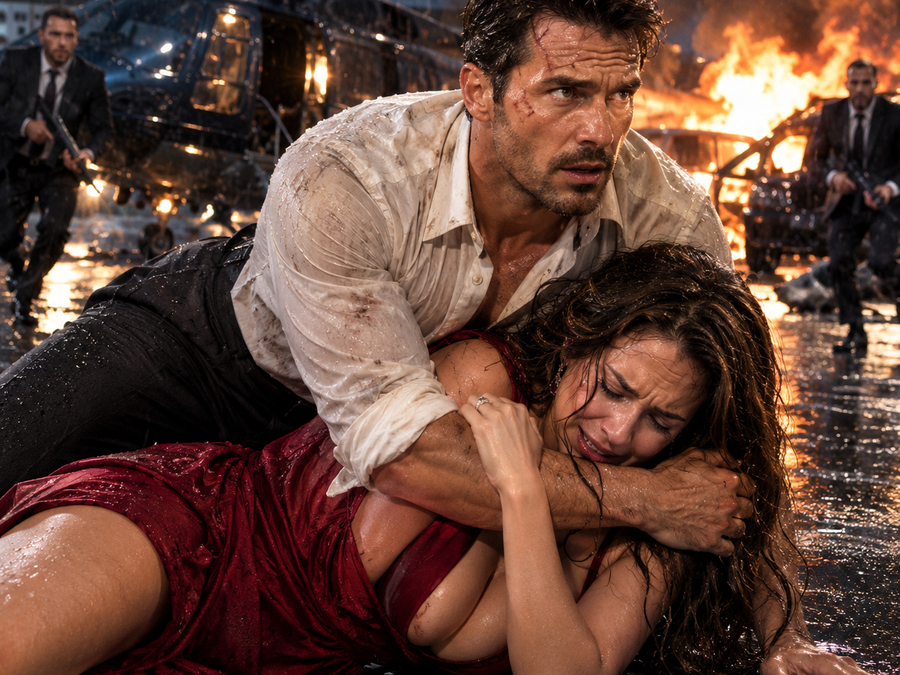
“Don’t Board That Jet!” Single Dad Warned the CEO—Minutes Later, It Exploded (Part 1)
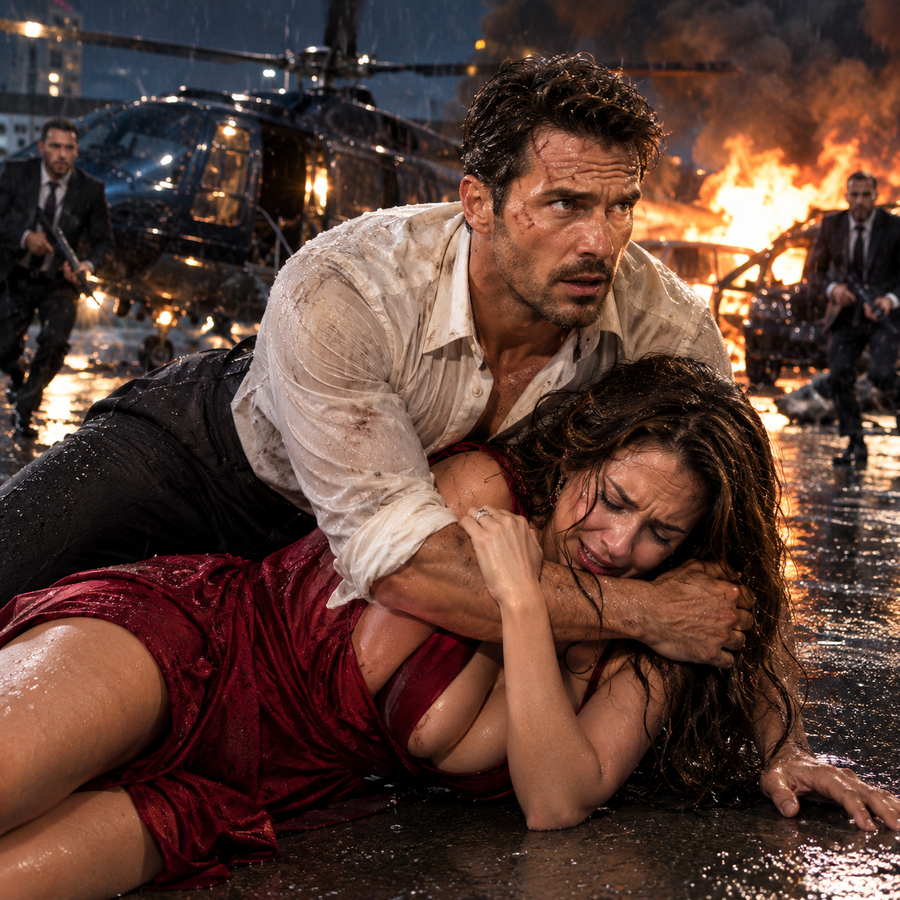
PART 1
Daniel Mercer grabbed a stranger’s arm and yanked her back from the steps of a private jet hard enough that she stumbled, hard enough that her security team slammed him against the railing in seconds. He didn’t care because he’d seen that leak before. Same engine housing, same oily streak running down the left nacelle like a dark vein.
He’d written a report about it once and watched his entire career disappear the next morning. So when he saw it again on a billionaire’s jet on a Tuesday afternoon in Oregon with nobody paying attention, Daniel Mercer did the only thing a man like him knows how to do. He didn’t ask permission, he acted.
The call came at 2:47 in the afternoon. Not a distress call, not an emergency, just a voicemail from the scheduling desk at Cascade Regional Airport. A small general aviation facility tucked between the mountains and the interstate on the outskirts of Medford, Oregon.
A routine handoff. Someone needed to deliver a maintenance binder to the crew chief on pad 7 before the end of the shift. And Daniel Mercer happened to be the guy closest to the door. That was it. That was the whole thing.
He listened to the voicemail while sitting in his truck in the parking lot of a Safeway. A bag of groceries on the passenger seat, chicken thighs, two boxes of mac and cheese, a bunch of bananas that were already going brown on one side.
He’d grab them anyway because his daughter Emma liked to mash them into her oatmeal. Even the soft ones. Especially the soft ones. Emma was 12. She got out of school at 3:15.
He did the math in his head. Drive to the airport, drop the binder, get back in the truck. 22 minutes to the school. Maybe 25 if the light at Crater Lake Highway was running slow. He’d make it. He always made it.
Daniel put the truck in reverse and headed for the airport. Cascade Regional wasn’t much to look at. One main terminal the size of a mid-range hotel lobby. Two runways, one commercial, one general aviation, a scattering of hangars along the south fence, most of them occupied by small charter operations and corporate accounts.
The kind of airport where everybody knew everybody. Where the coffee in the crew lounge had been burning on the same hot plate since 2009. And where a man like Daniel Mercer, quiet, competent, never causing trouble, could disappear into the background and stay there, which was exactly what he wanted.
He’d been working ground inspection at Cascade for 3 years now. Walkthroughs, documentation, pre-departure checks on the smaller craft. Nothing glamorous, nothing that required the full weight of what he knew. Just work, steady work. The kind that let him be home by 6:00 and help Emma with her history homework.
And make sure she had a lunch packed for the next day that was more than a granola bar and an apple. The job didn’t challenge him. That was the point.
He parked in the staff lot, clipped his badge, grabbed the binder from the back seat. The afternoon was cool and clear. One of those Pacific Northwest days in early October where the sky looks scrubbed clean and you can see the ridge line in perfect detail.
He walked the long way around toward Pad 7, the way he always did, along the edge of the tarmac, past the row of Cessnas and the two King Airs belonging to a timber company out of Clamath Falls. He wasn’t looking for anything. He wasn’t looking for anything at all.
The Sterling jet was hard to miss. It sat near the end of the general aviation apron, separated from the smaller aircraft by about 200 ft of open tarmac. A Bombardier Global 7500. White fuselage with a thin silver stripe running its full length.
The Sterling Global Aviation logo stenciled near the tail in sharp navy blue. Clean lines, the kind of aircraft that cost more than most people would earn in 10 lifetimes. Daniel clocked it the moment he turned the corner.
He knew the model. He’d worked on its predecessor design, the Global 6000 family. Back when he was still in the industry, back when his name meant something in certain rooms. He knew the fuel system architecture, the hydraulic routing, the access panels on the lower nacelle housing.
He knew the way the left engine mounted to the pylon. And he knew the exact location of the fuel line junction that had been flagged in a 2019 technical bulletin as a point of potential microfracture stress under repeated thermal cycling.
He knew all of that the same way a man who’s been cut by a specific kind of knife knows the shape of its blade. He glanced at it once as he walked past and then he stopped. He stood completely still for three full seconds and then he turned back.
The streak was small. That was the thing about it. It was always small. At first, a dark oily smear maybe 4 in long on the underside of the left engine nacelle, running from the seam of the forward access panel down toward the pylon mount.
In direct sunlight at the right angle, it had a slight iridescence to it. Jet fuel catching the light. Most people would have walked past it. Most people would have assumed it was residue. Exhaust blowback. A stain from a previous flight that hadn’t been wiped down yet.
Daniel Mercer was not most people. He stood 12 feet from the aircraft, not moving, staring at that streak. His jaw was tight. His hand was holding the maintenance binder against his side hard enough that his knuckles had gone white.
Same spot, he thought. Exact same spot. He’d written a report about this once, a 17-page technical analysis with photographs and load data and a timeline of progressive microfracture propagation in thermal cycling environments.
He’d submitted it to three separate departments at Pacific Coast Aerotech, his employer at the time. In 2018, he’d asked for a flight suspension on four aircraft pending a full fuel system audit. What he got instead was a meeting with HR.
And then a phone call telling him his position had been eliminated due to restructuring. And then eight months of contract work that dried up because somebody somewhere had made sure his name appeared on a list of people who were difficult to work with.
He shook it off. He had a habit of doing that, pressing down on the memory like a bruise, feeling the ache of it, then forcing himself back to the present. Back to Emma. Back to right now. Right now, there was a jet with a fuel streak on the left nacelle sitting 50 ft from him.
And there were people walking toward it. The woman at the front of the group was unmistakable. Daniel had seen her face in trade publications, in aviation industry newsletters that he still skimmed out of habit, in a profile piece that ran in a business magazine a couple years back.
CEO of Sterling Global Aviation. Not just a company that used private jets, but one that sold them, leased them, and maintained fleets for corporate clients across North America and Europe. A woman who had built her father’s midsize charter operation into a $2 billion enterprise.
Through a combination of genuine strategic intelligence and an absolute refusal to accept the word no from anyone at any level of her organization. She was dressed in a charcoal gray blazer over dark slacks, moving with the kind of deliberate pace that said she was thinking about three things simultaneously.
And none of them were the ground beneath her feet. Two men walked close behind her. A younger guy in a suit who was almost jogging to keep up. A tablet clutched to his chest like a shield. And a larger man in a darker suit who was clearly security.
Scanning the apron with the casual alertness of someone who did it professionally. A crew member was already at the base of the air stairs holding them open. She was 30 ft away. 25.
Daniel looked at the streak, looked at Victoria Sterling, looked back at the streak. Walk away, said a very reasonable voice somewhere in the back of his mind. It’s not your aircraft. It’s not your job.
You don’t work for Sterling. You don’t have authority here. And the last time you did something like this, it cost you everything. Walk away. Drop the binder. Get in the truck. Pick up Emma.
He took one step toward pad 7. Then he stopped and the reasonable voice went quiet. Because there are some things a man can’t walk away from. Not because of pride. Not because of career. Not because anyone would ever know or thank him for it.
Just because he knows what he knows. And knowing it means something. He dropped the maintenance binder on the tarmac and he moved. “Ma’am.” He was walking fast, cutting across the apron at an angle.
The security man clocked him. Immediately, Daniel saw the language shift, the shoulders squaring, the slight turn. But Daniel kept his voice level, his hands visible, his badge clipped to his chest in plain sight. “Ma’am, I need you to hold a moment.”
Victoria Sterling didn’t slow down. She didn’t even look at him. The younger man, the assistant, Daniel guessed, put a hand out like a crossing guard. “We’re on a tight departure window.” “I understand that.” Daniel stepped around him, which was a calculated move.
And immediately the security guy was in his path. Daniel stopped, raised both hands slightly, kept his eyes on Victoria. “My name is Daniel Mercer. I’m ground inspection staff. Cascade. Ma’am, I need you to look at your left engine nacelle before you board that aircraft.”
Victoria stopped. She turned. She looked at him the way Daniel thought a woman who had 20 years getting people to do what she said looked at someone who had just asked her to do something she hadn’t planned on doing.
It wasn’t angry exactly. It was assessing. The way you’d look at an unexpected variable in an equation you thought you’d already solved. “What did you say your name was?” “Daniel Mercer. Ma’am, ground inspection.”
“Ground inspection,” she said it flatly. “This is a privately owned and operated aircraft, Mr. Mercer. It was inspected this morning by our own maintenance team.” “I understand that and I’m not questioning your team’s work this morning. I’m telling you what I’m seeing right now.”
“At this moment on your left engine nacelle, there’s a fuel streak running from the forward access seam to the pylon mount.” He kept his voice even, factual. No drama, no urgency in the tone, just the words, which were urgent enough on their own.
“That pattern is consistent with a microfracture propagation in the fuel line junction. If you’re doing a transcontinental flight, you will be running that engine under sustained thermal load for hours. I have—” he paused. “I have seen this before.”
The assistant was already on his phone, murmuring something. The security man hadn’t moved, but he’d recalibrated. Slightly less blocking, more watching. Victoria looked at Daniel for a long moment. Then she looked past him toward the aircraft.
“That’s an oil streak,” she said. “Residue from yesterday’s flight.” “No, ma’am, it isn’t. Oil residue sits on the surface. This has a fuel component. You can see the iridescence in direct light. It’s a different color signature entirely.”
“Mr. Mercer, please—” He said it simply. “No, please.” Please, no desperate edge. Just the word with the weight of a man who has already paid the price of not being heard once.
“It will take four minutes to walk your chief mechanic over and have him look at the seam. If I’m wrong, you board that jet and you’re wheels up before your original departure window. If I’m right—” he stopped. He didn’t need to finish that sentence.
Victoria Sterling studied him. “Brady,” she said to the security man. “Ma’am—” “Walk this man to the aircraft.” She said it in a tone that made it very clear she was doing it once as a courtesy and that the courtesy had a short expiration date. “Let him show me what he’s looking at.”
They walked to the left side of the aircraft. Daniel crouched slightly, pointed to the streak without touching the aircraft. He didn’t have to touch it and he wasn’t going to give anyone a reason to dismiss what he was saying on a technicality.
“Right there,” he said. “Follow the seam of the forward access panel. See where it terminates at the pylon mount. That discoloration, that’s not exhaust. The texture is wrong. Exhaust residue is matte. This has surface tension. It’s wet.”
Victoria crouched beside him. Which surprised him. She was quiet for a moment. Looking at the streak. “Harrison,” she said over her shoulder to the assistant. “Already calling the lead mechanic,” Harrison said. “Tell him he has 3 minutes.”
Harrison got on the radio. Brady, the security man, drifted back a few steps, not fully relaxed, but not at full alert either. Daniel straightened up and waited. Victoria rose from her crouch and stood beside him. Both of them looking at the aircraft.
Up close, the Sterling logo on the tail was crisper. The navy blue ink precise as a surgical line. “You said you’ve seen this before,” she said. She wasn’t looking at him, just at the streak. “Yes. In 2018. Different aircraft, same engine family. I was a safety engineer at Pacific Coast Aerotech at the time.”
She turned then. The assessment was back in her eyes, but it had shifted. Less evaluating a disruption, more evaluating a person. “Pacific Coast Aerotech,” she said it in a tone that suggested the name meant something to her, though Daniel couldn’t tell what. “And what happened in 2018?”
Daniel held her gaze. “I filed a report,” he said. “They grounded me instead.” Something moved across her face. Not sympathy exactly. More like recognition. The flash of someone who’s heard that particular story from the corporate side and is recalibrating which side of it she’s actually standing on right now.
Before she could respond, Harrison appeared at her shoulder. “Mike Tras is on his way. 2 minutes out.” “Good,” she said. She looked back at the streak. 2 minutes.
Mike Tras arrived in 90 seconds, which told Daniel that either he’d been close by or he was the kind of mechanic who moved fast when a CEO called. He was mid-50s, heavy through the shoulders, with a particular kind of unhurried precision in his movements that came from decades of working around aircraft that could kill you if you rushed.
He looked at Daniel first, then at the streak, then at Daniel again. “You work here,” he said. “Ground inspection. Daniel Mercer.” “What am I looking at?” “Fuel trace. Forward nacelle seam. Left engine. Fuel line junction behind that panel has a known stress point in this engine family. Tech bulletin from 2019 flagged it.”
Tras crouched. He produced a small flashlight from his chest pocket. Clicked it on, held it at a low angle to the surface. He was quiet for what felt like a long time. “Hand me a rag,” he said. To nobody in particular.
Harrison produced one from somewhere. Tras pressed it gently to the end of the streak, the lowest point just above the pylon mount. He held it there for about 5 seconds. Then he looked at the rag. He stood up slowly.
“Get everyone off this apron,” he said. “Mike—” Victoria started. “Miss Sterling.” His voice was flat and very calm, which was worse somehow than if he’d been alarmed. “Get everyone off this apron right now, please. I need to make a call.”
Daniel stepped back. Brady moved Victoria back. Harrison was already on the phone to someone, to anyone. His voice tight and controlled in the way people’s voices got when they were telling themselves everything was fine.
The flight crew came down the air stairs without being asked. Tras had apparently transmitted something on the crew channel because they were moving quickly, professionally, with the loaded calm of people who train for this.
Daniel stood about 40 ft back from the aircraft. He was looking at the streak. He was doing the math in his head. Load stress, temperature differential, the volume of fuel that could be behind that seam. And the math was not good. It was not good at all.
Victoria Sterling was standing 5 ft to his right. She wasn’t looking at the aircraft anymore. She was looking at him. “How did you know?” she said. Not accusing, just asking.
“I’ve seen it before.” “You saw it from what? 30 ft?” “You were walking past. 12 ft,” he said. “And yeah.” She was quiet for a moment. “My team inspected that aircraft this morning.” “I know.” “They certified it fit to fly.” “I know.” “And you?” She stopped.
“You work ground inspection at Cascade Regional.” He looked at her. “Yes,” he said. “I do.” He didn’t say anything else. There was nothing else to say. It was all in his voice. Or maybe just in the fact that he was standing here at all instead of being across town picking up a 12-year-old who was waiting for him by the school doors.
He heard it before he saw it. A deep, low sound. Not an explosion in the Hollywood sense. Not the dramatic boom he’d heard in movies. More like a pressure wave, a compression, a sound that you felt in your chest before your brain registered it as dangerous.
Then the visual. A flash from beneath the left engine, then a ripple of fire along the fuel line. Contained at first, then not contained, then the kind of fire that had its own momentum. It happened in about 4 seconds.
The aircraft was 40 ft away. Nobody was on it. The apron erupted into motion. Fire crews responding immediately from the standby position near the main hangar. Alarms, radio chatter, the organized chaos of an airport that has trained for this. Not expecting it, but ready.
Daniel grabbed Victoria’s arm without thinking about it, moved her further back, and Brady materialized on her other side and took over, which was appropriate, and Daniel stepped aside and let him. He stood on the edge of the apron and watched the fire crews work.
His ears were ringing slightly. His heart was hitting his ribs at a rate that he recognized as adrenaline and would deal with later. He thought about Emma. He thought 3:15.
And then his legs went a little uncertain under him. Because now that it was over, now that there was nothing left to do, his body was doing the accounting for everything his brain had held at bay for the last 12 minutes. And the total was significant.
He sat down on the edge of a concrete barrier and put his hands on his knees and breathed. He didn’t see Victoria approach. He just heard her voice beside him. “Mr. Mercer.”
He looked up. She was standing over him. And she looked different from 5 minutes ago. Not less composed. She was a woman who had probably never fully lost her composure in her adult life. But something had shifted around the edges. The CEO precision was still there, but it was carrying more weight than it had been.
“You saved my life,” she said. He looked at her for a moment. “Your aircraft saved your life,” he said. “It failed on the ground instead of at altitude.” “Because you stopped me from boarding it.” He didn’t argue with that.
“Are you all right?” she asked. It was a strange question, he thought, given that he was the one who’d been standing 40 ft from a fire and she was the one who had almost boarded that aircraft. But he understood why she was asking it. He probably looked like a man who was sitting on a concrete barrier and not entirely trusting his legs yet.
“I’m fine,” he said. “I need to make a call.” “Of course.” She didn’t move immediately, though. “I’d like to speak with you when you’re ready. If you’re willing.” He looked at her. “About what?” “About what just happened. About how you knew.” She paused. “About Pacific Coast Aerotech.”
At the mention of the name, something went very still inside him. That specific stillness that comes not from calm, but from the careful management of things that are not calm. He held her gaze for a moment. “I have to pick up my daughter first,” he said.
Something in her expression shifted. Not much, but enough. “Of course,” she said again. “Take whatever time you need.” He nodded once. He reached into his jacket pocket for his phone. She walked away.
Emma picked up on the second ring. The way she always did when it was him. “Dad, are you on your way?” He pressed the phone against his ear and watched the fire crews working on the aircraft and thought about how to explain to a 12-year-old why her father was going to be 20 minutes late without explaining any of the actual reason.
“Hey, bug,” he said. “Yeah, I’m on my way. I got held up for a minute.” “How long is a minute?” “Maybe 20. Are you inside?” “I’m inside. Mrs. Kowalski let me wait in the office. Dad, it’s cold today.” “I know. I’m 20 minutes.” He paused. “How was history?” “Fine. We talked about World War II.”
“Which part?” “The part where the US didn’t want to get involved at first and then something happened and then they had to.” He almost said something. He decided against it. “Okay,” he said. “I’ll be there in 20. Don’t leave the building.”
“I know. Dad, you say that every time and you go inside every time. So clearly it works.” She made the particular sound she made when she was rolling her eyes. A sort of compressed breath that communicated volumes. “Bye, Dad.” “Bye, bug.”
He ended the call. He stayed on the concrete barrier for another 30 seconds, watching the foam work on the fire, watching the choreography of people who trained for this, moving through it efficiently. Then he stood up.
He retrieved the maintenance binder from where he’d dropped it on the tarmac. It had fallen open. Some pages bent. He closed it, tucked it under his arm. He walked to pad 7 and handed it to the crew chief, who barely looked up from his own radio because everything at the airport was currently focused in one direction.
Then he walked back to his truck. Then he drove across town and picked up his daughter. He didn’t tell her that night. Not because he was hiding it. He wasn’t the kind of father who hid things from Emma. He’d made that promise to himself in the first year after her mother died.
When the temptation to shield her from everything had been almost overwhelming. He’d learned since then that she didn’t need shielding. She needed honesty in age-appropriate amounts, delivered with steadiness, so she understood that honesty and safety could coexist.
But she was 12 and it was a school night and they had chicken thighs to make. And she had a history assignment about American neutrality before Pearl Harbor that she needed to outline before 9:00. So they made dinner together the way they always did. Emma on the salad and Daniel on the stove.
And they talked about her day and about the history project and about whether they could get a dog, a conversation they had been having in rotating form for about 8 months, with Daniel always ending on “let me think about it” and Emma always accepting this with the patience of someone who knows she’s going to win eventually.
After dinner, he washed up while she worked at the kitchen table. And when he came back through, she was bent over her notebook with a particular intensity she brought to things she decided to care about. “Dad,” she said without looking up. “Yeah.” “Did something happen today? At work?”
He stopped. “Why do you ask?” She looked up then. She had her mother’s eyes, pale gray, very direct. The kind of eyes that made you feel like your answer had already been evaluated before you gave it. “You’re quiet,” she said. “But not regular quiet. Different quiet.”
He looked at her for a moment. He sat down at the table across from her. “Something happened,” he said. “But it’s okay. Everything’s okay.” She waited. “I noticed a problem on an aircraft,” he said, “before someone boarded it.”
Emma’s eyes went still. “Was it bad?” “It could have been. But it wasn’t because you saw it. The fire crews handled it. Everyone’s fine.” She was quiet for a moment, thinking. “Then did they say thank you?”
He thought about Victoria Sterling on the edge of the apron, looking at him with that weight behind her eyes. “Yeah,” he said. “More or less.” Emma nodded, absorbing this, and then looked back down at her notebook.
“You always notice stuff,” she said. “Like at the grocery store when they have the soup stacked wrong and you say it’s going to fall.” He laughed, which surprised him because he hadn’t expected to laugh tonight. “That’s a little different from an aircraft fuel system.” “Same principle,” she said, with the absolute certainty of a 12-year-old who has decided she’s right. “You just notice. Not everyone does.”
He sat with that for a moment. “Go finish your outline,” he said. “I’m almost done.” “Good.” He got up and went to the living room and sat in the chair by the window that faced the street. And in the quiet of the house, he let himself feel for the first time the full weight of what had happened today.
Not the fear, though. The fear had been there underneath everything the whole time. Not even the vindication, though there was something there, too. Something small and hot and complicated. What he sat with was simpler than either of those things. He’d seen the sign. He’d known what it meant. He’d chosen not to walk away.
And every single person on that aircraft, the crew, the pilots, the woman who had the power to end his career twice over without trying, was alive right now because of those three facts in that order. He thought about the other time, the report he’d filed, the four aircraft he’d flagged, the conference room where a man whose name he still remembered, a VP of operations named Charles Drummond, had looked at his 17-page report and said,
“Daniel, I appreciate your thoroughness. I really do, but you’re talking about a statistical probability, not a certainty. We can’t ground four revenue-generating aircraft on a maybe.”
He thought about what a maybe looked like when it happened at altitude. He thought, if I’d been wrong today, if that streak had been exhaust residue and nothing else, where would I be right now? He’d be in this same chair. Emma would be in the kitchen finishing her outline. There would be no difference.
And if he’d been right, but hadn’t said anything—he pressed that thought down hard. “You can’t carry what might have been,” he told himself. “You can only carry what you’re responsible for.” He’d learned that in grief. He’d carried it forward.
His phone buzzed just after 10. He didn’t recognize the number. Oregon area code, but unfamiliar. He picked up. “Mr. Mercer.” The voice was direct, composed, and he recognized it immediately. “This is Victoria Sterling.”
“I apologize for the hour.” “It’s fine,” he said. “I wasn’t asleep.” “I wanted to follow up on our conversation from this afternoon. I know I said I’d give you time and I meant that. I still mean it. I just wanted to make sure you had my number in case you needed anything tonight.”
He almost said, why would I need anything? But he didn’t, because he understood what she was doing. She was a person who had almost died today. And she had spent the last 6 hours with that knowledge. And now she was doing the thing that people in her position did.
She was reaching out, taking action, establishing contact, because action was the only way she knew to metabolize fear. “I appreciate that,” he said. A beat of silence. “I looked you up,” she said.
He’d expected that. He wasn’t surprised by it. Wasn’t particularly alarmed. When someone like Victoria Sterling wanted information, information appeared. “And I saw Pacific Coast Aerotech,” she said. The name carefully, like she was handling something with uncertain weight. “I know that company. I know some of the people from that era.”
Another pause. “I know the name Charles Drummond.” The name hit him the way it always did. A small involuntary tightening across his chest. “Then you know the story,” he said. “I know one version of it,” she said. “I’d like to hear yours.”
He was quiet for a long moment. Outside, the street was dark and empty. A strip of light from the neighbor’s porch falling across the wet pavement. Somewhere a few blocks over, a dog was barking at something it couldn’t name. “That’s a longer conversation than tonight,” he said finally.
“I know.” She didn’t push. He’d noticed that about her, for all her decisiveness on the apron this afternoon. She knew when not to push. “I’m going to be in Medford through the end of the week while the NTSB does their preliminary assessment. I’d like to buy you coffee if you’re willing.”
“The NTSB will want to talk to me.” He said it wasn’t a question, almost certainly. “Yes. I’ll cooperate fully with their investigation.” “I know you will.” A pause. “Mr. Mercer. I know what it sounds like when someone wants to manage a situation. This isn’t that. Or I’m trying very hard for it not to be that.”
Her voice had a quality to it now that was different from the CEO register. From the controlled assessment he’d seen on the apron. More unguarded. “You saved my life today. I don’t know how to proceed as if that didn’t happen.”
He sat with that. You saved my life today. He’d heard the words before from her on the apron. But there in the dark of his living room at 10:00 at night, with Emma asleep in the next room and the dog down the street going quiet and nothing else to do but sit with what the day had been, the words landed differently.
“Coffee’s fine,” he said. “Wednesday works.” “Thank you.” She paused. “Get some rest, Mr. Mercer.” “You too, Miss Sterling.” He ended the call.
He sat in the chair for another few minutes, then got up, turned off the lights, checked the lock on the front door, a habit, always a habit, and went to bed. He lay in the dark and stared at the ceiling and thought about Charles Drummond.
About the conference room with the long table and the water pitchers nobody ever poured from. About the 17-page report, single-spaced, with six appendices. About the way Drummond had smiled at him, not unkindly, which was almost worse, and said, “We appreciate your commitment to safety, Daniel. We really do. The company values that. We have to balance safety data against operational realities, and right now the data doesn’t support grounding these aircraft.”
And Daniel had said, “The data doesn’t have to be conclusive to support caution. The data just has to exist.” And Drummond had said, “We’ll take it under advisement,” which meant this meeting is over.
3 weeks later, HR called. 4 months after that, he got the call that his wife’s cancer had come back and this time it wasn’t going to go into remission. And suddenly everything that had happened at Pacific Coast Aerotech fell into a category of things that were terrible but not as terrible as this, which was its own kind of reorganization.
He’d learned a lot about priority in the two years that followed. About what a man is actually made of when the things that seem to define him are stripped away one by one and he’s left with the core of the thing. About how small a bed felt when the person who was supposed to be in it was gone. About how big a 12-year-old could make a house feel just by being in it.
He’d moved to Oregon because it was as far from his old life as he could get without crossing an ocean. Not running. He’d told himself that and he meant it, because the difference between running and rebuilding is whether you’re building towards something. And he was.
He was building toward a life where Emma came first, where the work was manageable, where the days had a rhythm. He hadn’t expected a Tuesday afternoon in October to reach back and pull on everything he’d buried.
But it had, and now a woman who ran a $2 billion aviation company wanted to have coffee with him, and the NTSB was going to want his statement. And somewhere in the machinery of what had happened today, Daniel could feel things starting to move. He wasn’t sure yet if that was good or terrifying.
He decided, in the particular way that exhausted people make decisions at the end of hard days, to conclude that it was both. He closed his eyes. He thought, Emma said “same principle.” He almost smiled. Then he slept.
The next morning, he drove to school and Emma got out of the truck and then turned back and looked at him through the open door with her mother’s gray eyes. “Dad,” she said. “Yeah.” “I’m proud of you.” He looked at her. “For what? I haven’t told you anything yet.” “You don’t have to.” She slung her backpack over one shoulder. “I can tell.”
She closed the door. He watched her walk up the steps of the school and then he sat in the parking lot for a long time with the engine running and his hands loose on the wheel before he pulled out and headed back toward the airport.
Because the week wasn’t over. And the things that were starting to move were only just beginning.
Wednesday came the way mornings did after bad days. Quietly, without ceremony, as if the world had decided not to make a big deal of the fact that 48 hours ago a jet had caught fire on the tarmac at Cascade Regional and a woman worth $2 billion had been standing close enough to feel the heat.
Daniel dropped Emma at school at 7:55, the same as always. She had her backpack, her water bottle, and the lunch he’d packed the night before. A turkey sandwich, an apple, and a small bag of the pretzel nuggets she’d been obsessed with since August.
She got out of the truck with the efficiency of someone who had done this 10,000 times and would do it 10,000 more, said, “Bye, Dad,” without looking back, and disappeared through the school doors. He watched her go. Then he drove to the airport.
He had two hours before the coffee with Victoria Sterling. And he wasn’t going to spend them sitting in the parking lot thinking about what he was going to say, because that approach had never worked for him. He worked better when he worked.
So he went in, picked up his shift assignment from the board, and spent the first 90 minutes doing a walkthrough of the North Apron, clipboarding the King Airs and the Cessnas with the methodical precision that had become his version of meditation. Checklist item by checklist item. Presence without pressure.
The morning was cold. His breath made small clouds in the October air. At 9:10, his phone buzzed. A text from an unknown number. Then a second text clarifying. “Sarah Collins, NTSB. I understand you’re meeting with Miss Sterling this morning. I’d like 5 minutes with you before that if possible. I’m in the main terminal.”
He stood on the North Apron and read the text twice. Then he texted back, “Give me 15 minutes.” She was already at a table in the corner of the terminal’s small cafe when he arrived.
A woman in her mid-40s with short dark hair and the particular kind of stillness that either came from yoga or from spending years professionally interrogating people and learning to wait them out. She was drinking black coffee and had a closed notebook in front of her that he suspected was not as closed as it looked.
“Mr. Mercer,” she said, extending her hand. “Sarah Collins, Federal Investigator, Aviation Safety Division. Thank you for making time.” “Sure.” He sat down across from her. “You said 5 minutes.” “I meant it.” She wrapped both hands around her coffee mug.
“I want to be transparent with you about where I’m coming from, because I think you’ve been on the wrong end of non-transparency before and I have no interest in repeating that experience for you.” She said it directly, without preamble, which he appreciated.
“I’ve read your file.” “Which file?” “Pacific Coast Aerotech. Your 2018 report.” She held his gaze. “I’ve been in aviation safety for 17 years, Mr. Mercer. I know what a good report looks like. Yours was a very good report.”
He was quiet. “It also never made it into the formal NTSB record,” she said, “because it was never filed with us. It was filed internally at Pacific Coast, where it was reviewed, classified as non-actionable based on statistical thresholds, and then effectively buried.”
“I know,” he said. “I’m telling you because I want you to understand that what happened Monday is not to me an isolated incident. I think it’s a data point in a longer pattern, and I need your help to understand that pattern.”
She paused. “I’m going to be interviewing a lot of people this week, but you’re the most important interview I’ll do, because you’re the only person who walked onto that apron Monday without an agenda and called it correctly.” Daniel looked at her. “I had an agenda,” he said. “I had to pick up my daughter.”
Something moved across Collins’s face, a quick, genuine flicker of what might have been humor or respect or both. She covered it by lifting her coffee mug. “Monday afternoon,” she said. “Take me through it. From the moment you saw the aircraft.”
He told her concisely, factually, in the same register he’d used on the apron with Victoria Sterling. No drama, just sequence. The walk past the jet, the streak, the 12-ft distance, the iridescence, the fuel line junction, the specific technical bulletin from 2019 that he still carried in his memory.
The way a doctor carries the name of a drug that once killed someone. Collins wrote as he talked in a hand so small he couldn’t read it from across the table. When he finished, she looked up. “The 2019 bulletin,” she said. “You cited it to Mike Tras.” “Yes.” “From memory.” “Yes.”
“That bulletin was issued to registered maintenance facilities. It wasn’t publicly distributed.” “I know.” “How do you know it?” “Because in 2018, I wrote a report that recommended exactly the kind of protocol that bulletin eventually codified. I’ve been watching that space for 8 years.”
He looked at her steadily. “I’m aware of how that sounds.” “It sounds like someone who never stopped paying attention,” she said. “That’s not a criticism.” She closed the notebook. “Two more questions and then I’ll let you go.” “Okay.”
“The maintenance log for that aircraft shows it was certified airworthy at 6:30 Monday morning by Sterling Global’s own crew chief, Carl Reston. Did you see Reston on the apron before the incident?” “I don’t know what Reston looks like.” “He’s 51, heavyset, gray beard, usually in a blue Sterling vest.”
Daniel thought back. The apron, the people moving around the aircraft before Victoria’s group arrived. “There was a man in a Sterling vest doing a walkaround when I first crossed onto the apron. That might have been 30 minutes before the Sterling group arrived.” “Did he appear to check the left nacelle?”
Daniel was quiet for a moment. He was being careful because he was the kind of man who understood the weight of testimony and he didn’t want to say anything he wasn’t certain of. “He walked the full perimeter,” he said finally. “I can’t tell you what he did or didn’t see.”
Collins nodded. She wrote something. “Last question. Monday night, did anyone from Sterling Global contact you? Other than Miss Sterling herself?” “No.” “Any calls from numbers you didn’t recognize? Beyond Miss Sterling’s?” “No.”
She held his gaze for a second longer than felt routine. “If that changes,” she said, “I want to know immediately.” She pulled a card from her jacket pocket and pushed it across the table. Plain white. Government issue. Sarah Collins, NTSB. A direct number in 10-point type.
He picked it up. “You think there’s more to it?” he said. Not a question. She stood, picked up her coffee cup. “I think a jet that was certified airworthy at 6:30 in the morning had a wet fuel leak by early afternoon. And I think the gap between those two facts is where my next 3 months live.”
She gave him a brief, level look. “Thank you, Mr. Mercer. I’ll be in touch.” She walked out. Daniel sat at the table for a moment. Then he got up and went to meet Victoria Sterling.
The coffee was at a place called the Meridian, a small independent shop on the main street of Medford that had clearly been trying to be something when it opened, and had settled into itself over the years. Good coffee, decent pastries, worn wood tables that had survived a decade of laptops and more laptops.
Victoria was already there when he arrived, which surprised him. He’d half expected her to be 5 minutes late as a CEO power move. Instead, she was at a corner table. No assistant, no bodyguard, just her, a black coffee, and a leather notebook that was closed and pushed to the side as if to signal she wasn’t here to take notes on him.
She stood when he came in. “Mr. Mercer.” “Miss Sterling.” “Please.” She gestured at the chair across from her. “Daniel, if that’s okay.” “That’s fine.” He got his coffee at the counter, black, same as hers. Not because he was making a point, but because he genuinely didn’t want anything else, and came back to the table.

