No Pilot Dared to Fly the Paralyzed CEO — Then a Single Dad Took the Controls (Part 1)
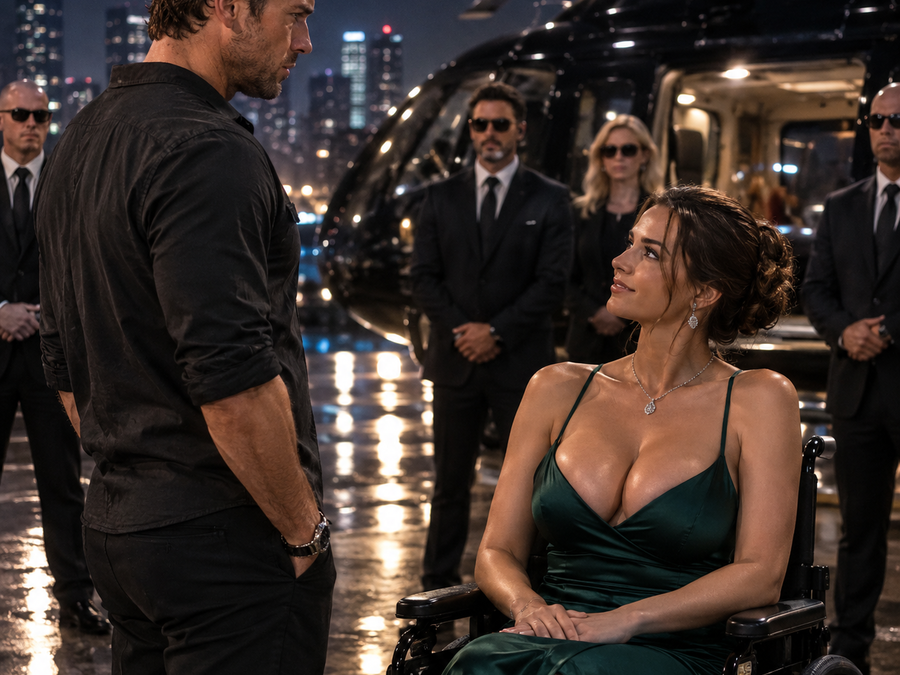
No Pilot Dared to Fly the Paralyzed CEO — Then a Single Dad Took the Controls (Part 1)
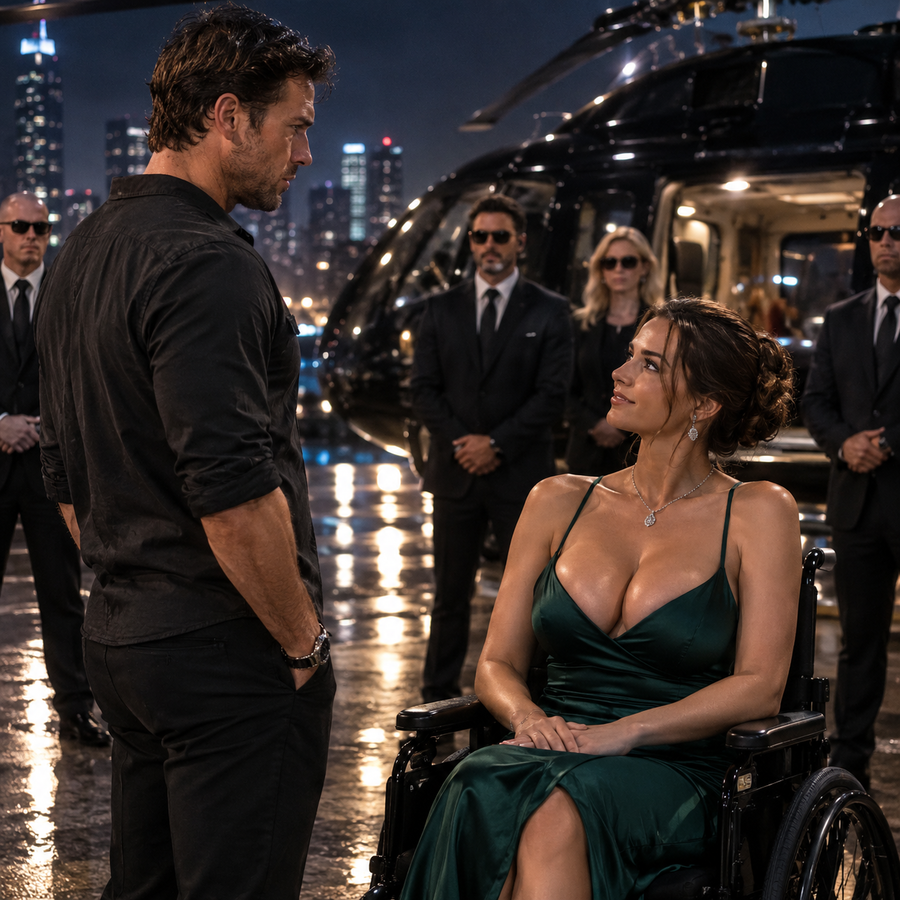
PART 1
Ethan Carter stood up. Every other pilot in that briefing room had just walked out. Nine of them, one by one, sliding back their chairs in silence and heading straight for the door. Veterans. Captains. Men with thousands of hours in the air between them. But Ethan walked toward the recruiter’s desk instead.
“Tell Miss Sterling,” he said, voice as steady as a compass needle locked on True North. “I’ll take the job.”
Nobody in that room had warned him what happened to the last nine pilots. And nobody told him that Victoria Sterling was already betting he wouldn’t last a week.
The recruiter’s name was Gerald Whitmore, and he had been placing corporate aviation pilots for 22 years. He had put men in the cockpits of jets owned by oil executives, tech billionaires, a former senator who refused to fly over open water, and once, memorably, a country music star who insisted the aircraft be stocked with a specific brand of hot sauce that was only available in three states. In 22 years, Gerald Whitmore had seen everything. He had never seen a Thursday morning like this one.
By 9:47 a.m., the last of the nine pilots had pushed his chair back and walked out of the glass-walled conference room on the 14th floor of Sterling Arrow’s downtown Chicago headquarters. No goodbyes. No explanations. Just the sound of dress shoes on marble and the soft mechanical click of the elevator button. Gerald looked down at his clipboard. Then he looked up. Ethan Carter was still sitting at the table.
He was 41 years old, broad-shouldered, with the particular kind of stillness that doesn’t come from being relaxed. It comes from discipline. The practiced, built-into-the-bone stillness of a man who has spent years in a cockpit where the difference between calm and panic is the difference between landing and not landing. He had a manila folder on the table and a paper coffee cup that had gone cold 90 minutes ago, and he hadn’t touched it.
Gerald cleared his throat. “Mr. Carter, you understand that this position has now been declined by nine qualified aviators in the past month alone.”
“I heard some of those men had significantly more flight hours than I.”
“Then surely you understand why I’m asking whether you’d like to take some additional time to consider—”
“Mr. Whitmore.” Ethan looked at him directly. Not aggressively. Just directly. The way a man looks at another man when he needs him to stop talking and start listening. “I spent eight years flying combat missions where a wrong decision meant people died. I have landed aircraft in zero visibility conditions, in mountain crosswinds, with hydraulic failures. One time I took a bird strike that knocked out 40% of engine two and I put that aircraft down at a regional airfield in the dark on a runway that barely qualified as one.” He paused. “I am not afraid of this job, and I don’t need more time.”
Gerald stared at him. “The salary is $9,000 a month,” he said finally. “Travel allowance and a housing subsidy during extended transit periods.”
Ethan didn’t blink. “When do I start?”
But to understand why Ethan Carter walked toward that desk instead of the door, you have to go back 18 months. His wife’s name was Sarah. She was the kind of woman who remembered the name of every server who had ever brought her coffee, who kept a bowl of candy by the front door in October—not because they had trick-or-treaters in the neighborhood, but because she said you never knew who needed something sweet. She had taught third grade at Lincoln Elementary for 11 years. She could whistle any Beatles song on request, including the hard ones. She made terrible pancakes and refused to discuss it. She was 38 years old when the oncologist sat across from them and used the word stage 4.
Sophie had been four and a half at the time. Old enough to know something in the house had shifted. Too young to understand what forever meant when it was used in a sentence that ended in without.
Ethan did three things when they got home from that appointment. He sat in his truck in the driveway for 20 minutes with the engine off, staring at the steering wheel. Then he walked inside and told Sophie they were going to make her favorite dinner—spaghetti with the jarred meatballs that Sarah always called cheating and Ethan always called efficiency. He waited until Sophie was asleep before he let himself fall apart. He only let himself do that once.
The next 14 months were the hardest of his life. And Ethan Carter had landed aircraft in war zones. He learned which brands of children’s shampoo Sophie would tolerate and which ones triggered a meltdown. He learned that the emotional state of a six-year-old can turn completely on its head at 7:15 in the morning, and that being five minutes late to school drop-off requires the exact same calm, methodical response as a cockpit warning light. He learned that grief doesn’t arrive the way you expect it to. It doesn’t crash into you all at once. It slips in through the small doors. The Tuesday evening he set two coffee mugs out of habit and then stood holding one of them for a full minute, not knowing what to do with it. The Saturday morning Sophie looked up at the sky and asked, very seriously, whether Mommy could hear them when they talked out loud. He had to clear his throat twice before he could answer that one. He told her yes. He believed it, too. Or he made himself believe it. In Ethan Carter’s experience, that amounted to the same thing.
After Sarah passed, the money lasted four months. He had his veterans benefits. He had the savings account they’d built together, which looked like enough until it met the reality of a mortgage, a car payment, Sophie’s medical appointments, and two months of hospice bills that insurance had covered in the way insurance covers things—partially, slowly, and with a lot of paperwork that felt like it was designed to discourage you from finishing it.
The commercial carriers weren’t hiring at his seniority level. A cargo company offered him a night shift route, three weeks out of every four, gone before Sophie went to bed and back after she’d already left for school. He looked at that offer for a long time. Then he said no. Sophie was six years old. She had already lost her mother. He was not going to be the second parent to disappear.
His brother called from Denver and offered money. Ethan thanked him and said no. It cost him something to say it, but he said it. There are certain things a man has to work through on his own terms, and Ethan Carter understood, with the blunt clarity of someone who’d spent a decade making hard calls, that he was one of those men. He picked up weekend shifts at the regional flight school teaching instrument ratings. He mowed two lawns on his street. He was not ashamed of any of it, but it wasn’t enough. And the number at the bottom of his bank statements was moving in the wrong direction. Slow and steady and patient, the way bad news always is.
The morning he found the job posting, he’d been up since five. Sophie had a bad night—a nightmare she couldn’t describe and didn’t want to talk about. And Ethan had spent 45 minutes sitting on the edge of her bed, one hand on her back, not talking, just present, which was, in his experience, the only thing that actually helped. He made coffee and opened his laptop on the kitchen counter. He checked the five job boards. He checked every morning, the way a pilot checks an aircraft before flight. Systematically. No steps skipped, regardless of whether you expect to find something. It was the discipline that mattered, not the expectation.
The listing was under private aviation. “Corporate contracts seeking experienced private aviation pilot. Minimum 5,000 flight hours. Instrument rated. Business jet type rating preferred. Full-time position based in Chicago with domestic and international travel. Compensation competitive. Client has specific operational requirements. Multiple previous candidates have found this position unsuitable. Serious applicants only.”
He read it three times. “Specific operational requirements. Multiple previous candidates have found this position unsuitable.” He sat back in his chair. Most people reading that would hear alarm bells. Ethan heard something else. He heard a problem that had so far not found the right person to solve it.
He picked up his phone. The number at the bottom of the listing connected to Sterling Arrow’s placement service. He called at 7:03 a.m. Gerald Whitmore answered on the second ring.
“Sterling Arrow, Whitmore Placement Services.”
“My name is Ethan Carter. I’m calling about the pilot position.”
There was a pause. Just half a second, but Ethan noticed it. “Mr. Carter, are you currently familiar with the full scope of this position?”
“I’d like to be.”
“Are you available Thursday morning?”
“I’m available today.”
Gerald’s office smelled like burned coffee and low-grade anxiety. His desk was buried in manila folders. He had the specific look of a man who had explained a difficult situation too many times and was running out of patience with the way it kept coming out.
“Victoria Sterling took over as CEO of Sterling Arrow Technologies two years ago, after the death of her father,” Gerald said. “You may remember the news coverage.”
Ethan nodded. He remembered it. Richard Sterling. Industry legend. Founder. The man who had built Sterling Arrow from a regional parts manufacturer into a global aerospace supplier. The plane had gone down in the Rocky Mountains during a winter storm. Richard Sterling didn’t survive. His daughter had. But not without a cost.
“Miss Sterling sustained a spinal cord injury in the crash. She uses a wheelchair full-time. She has been medically cleared to travel, which she does extensively. She operates on five continents. She needs a dedicated pilot who can meet an aggressive schedule and adapt to the specific logistics involved in traveling with a wheelchair user. Executive.”
“That’s manageable,” Ethan said.
Gerald looked at him carefully. “On paper, yes. The difficulty has been finding a pilot whose behavior in the cockpit and on the tarmac reflects that view.”
“What happened to the nine?”
Gerald exhaled. “Four resigned voluntarily. Two were terminated. Miss Sterling described both incidents as ‘condescension with an instrument rating.’ One quit after the second flight, claiming the scheduling was unreasonable. One filed a formal complaint with the aviation authority claiming Miss Sterling’s travel requirements constituted a safety concern.”
“Was there anything in the actual flight data to support that claim?”
“Not a single entry.”
“Then what was his actual objection?”
Gerald looked at him directly. “He believed she should not be running the company. He communicated that opinion. She terminated him before he reached the elevator.”
Ethan was quiet for a moment. “What about the ninth?”
Gerald’s jaw tightened slightly. “The ninth,” he said carefully, “made a comment about the crash. About whether she was—his word—tempting fate by flying at all.”
Ethan looked at him, said nothing.
“Miss Sterling was in the aircraft when her father died,” Gerald said quietly. “She has flown over 200 hours since her recovery.”
“I know,” Ethan said. “That’s not tempting fate. That’s refusing to be beaten by it.”
Gerald stared at him for a long moment. Then he slid a folder across the desk. “Her standard monthly schedule.”
Ethan opened it and took his time reading. Gerald watched him the way some people fidget when they read—nervous energy bleeding out through their fingers—and the way others go completely still. Ethan went completely still.
“Boston Tuesday, Dallas Friday, Tokyo in three weeks,” Ethan said. “London for a board presentation six weeks out. That’s a light month. I’ve flown worse tempo.”
He closed the folder, set up the interview.
He told Sophie about it at dinner. He hadn’t meant to. She was six. She didn’t need the details of his job applications. But Sophie had inherited from her mother an unsettling ability to look at him across a table and know that something had shifted.
“Daddy,” she said, her fork suspended over her mac and cheese, “did something happen today?”
“I have a job interview Thursday. Flying job. Private jet for a business executive.”
Sophie turned this over with the seriousness she applied to most things. “Is it a good job?”
“Could be.”
“Will you be gone a lot?”
He chose his words carefully. “Some. But we’ll figure it out. Mrs. Kaminsky said she’s always happy to be around when I need to travel.”
Sophie made a face. “She smells like mothballs.”
“She also keeps excellent snacks.”
“The good animal crackers or the store ones?”
“I’ll make it part of the arrangement.”
Sophie nodded, satisfied. She went back to her dinner. Then, after a moment, without looking up: “Daddy, I hope you get the job.”
Ethan looked at his daughter. Dark hair. Serious brown eyes. Exactly like her mother’s. He felt the familiar ache—the one that had lived in his chest for so long now that it had become part of the architecture of him. Something he’d learned to breathe around.
“Me too, Bug,” he said. “Me too.”
Thursday came cold and gray, the way March mornings in Chicago come, with a wind off the lake that cuts clean through a jacket and reminds you that the city doesn’t care about your plans. He wore his best suit. Not to impress—he was past the age where clothes felt like armor—but because Victoria Sterling was a professional, and she deserved to meet one.
Sterling Arrow’s headquarters was a glass tower built to announce permanence. Ethan took the elevator to 14, checked in at reception, and sat down to wait. He was there 20 minutes. He used the time the way he used all waiting time: he observed. The floor plan. Wide corridors. Doorways with generous clearance. Elevator buttons placed lower on the panel. A ramp engineered so seamlessly into the architecture that anyone not looking for it would miss it entirely. No signs. No special access markers. Just a building designed to work for everyone without advertising the fact. Whoever had made those decisions had understood something important. Dignity doesn’t need a label.
“Mr. Carter.” Victoria Sterling’s assistant, a young man named Marcus, who moved like someone who had learned to protect another person’s time as if it were his own oxygen supply, appeared at the edge of the waiting area. “She’s ready for you. She has a call at 10:00.”
The office at the end of the hall had a view of Lake Michigan in the distance. Victoria Sterling was on the phone when he walked in. She held up one finger without looking at him, finished a sentence that Ethan was fairly certain was in German, then set the phone down and looked at him.
She was exactly 34 years old, and she looked exactly like a woman who had been fighting twice as hard as everyone else in every room she’d ever walked into, and had decided to stop finding it unusual. Her jacket was precise. Her posture was deliberate. Her wheelchair was low-profile, clearly well-chosen, and she sat in it the way she sat behind her desk—like she owned the space she occupied and had no interest in apologizing for it. Her eyes were the thing he noticed most. They were the eyes of someone who had been let down enough times that she no longer registered disappointment as a surprise, but hadn’t given up looking for the exception to the pattern.
“Ethan Carter,” she said. “Former Air Force. Eight years active. Three deployments. Instrument rated. Type ratings on two business jets. Medical current.” She said it flat. Not as a question. She’d read all of it already. “You’ve been doing fractional and charter work since you separated. Why private?”
“Fractional schedule doesn’t work with a six-year-old. I need predictability.”
“You’re a single parent.”
“Yes.”
“How does that affect your availability?”
“It means I need reasonable advanced notice on scheduling. I understand that’s standard in this role regardless. It doesn’t mean I’m unavailable.”
She studied him for a moment. “Nine pilots,” she said.
“I know.”
“Do you understand why Mr. Whitmore gave me a summary? I’m not asking what Whitmore told you. I’m asking what you concluded.”
Ethan considered the question for exactly as long as it deserved. “Some of them had a problem with your disability. Some had a problem with your management style. Some of them couldn’t separate those two things from each other and didn’t know they couldn’t.”
Victoria’s expression held steady, but something behind her eyes moved just slightly. “And you?”
“You’re the CEO of an aerospace company. I’m a pilot. My job is to get you where you’re going safely and on time. That’s the full scope of our professional relationship. I don’t carry opinions about anything beyond that.”
She was quiet for a moment. Not the calculating kind of quiet. The kind that happens when someone says something that lands differently than you expected.
“What happened to your wife?”
He hadn’t expected that. “Cancer. Fourteen months ago.”
She didn’t say she was sorry. He noticed that, and something about it settled in him. People said sorry when they meant they didn’t know what else to say. Victoria Sterling, he was already beginning to understand, did not say things she didn’t mean.
“The last pilot,” she said, “told me my travel schedule demonstrated poor judgment. He used the word liability.”
“He was using professional language to describe a personal bias.”
That was the moment. He felt it before he could name it. The precise second when something in the room changed temperature. Not warmer, exactly, but different. More honest.
“Tokyo,” she said, picking up her pen. “Three weeks. Fourteen hours of flight time. Any conflicts?”
“I’ll need to arrange care for my daughter.”
“Of course.” She wrote something. “Marcus will send you the standard contract. There’s an NDA and a 60-day performance period.” She looked up. “Any questions?”
“One.” He met her eyes. “The nine pilots who left—did any of them give you a reason you actually believed?”
Victoria Sterling looked at him for a long moment. “No,” she said.
Ethan stood up. “Then I’ll see you on the tarmac.”
He was halfway down the hall when he heard her voice behind him. “Mr. Carter.” He turned. She was in the office doorway, one hand resting still on the wheel of her chair, and she was looking at him with the careful, measured expression of someone making a bet they haven’t fully decided to make yet. “Don’t make me regret this.”
He held her gaze from across the hallway. “I won’t.”
He said it the way he said everything that truly mattered—all the way down. No hedging. No performance. The kind of certainty that doesn’t need volume or repetition. The elevator came. The doors opened. He stepped inside. Behind him, he heard no sound of retreat. Just silence. The particular stillness of someone who has stayed in the doorway, watching the elevator doors close, still watching even after the man is gone, like they’re trying to read something in the air he left behind.
Ethan Carter knew that kind of silence. He had stood in it himself more than once. It was the silence of a person who wants very badly to trust someone and is terrified of being wrong about it again. He understood that feeling all the way down to the marrow.
The elevator descended. Outside, Chicago was brutal and gray, the lake wind finding every gap in every collar. He had $8 in his wallet. He had a daughter at home who’d asked him at breakfast, still in her pajamas, eyes serious over her cereal bowl: “Daddy, are you going to be okay today?”
He pulled out his phone and typed a text to Mrs. Kaminsky. “Available to sit with Sophie over the coming weeks. Long-term work is starting up.” He pressed send, slid the phone into his jacket pocket, and stood on the sidewalk for just a moment, the wind pulling at his collar, the city grinding forward all around him, and let himself feel something he hadn’t felt in a long, long time.
It wasn’t loud. It wasn’t certain. It didn’t look anything like happiness yet. But for the first time in 14 months, what Ethan Carter felt standing on that sidewalk was not grief. It was close enough to hope that he decided to call it that.
He walked to his truck. He had a daughter to pick up from school. And tomorrow, for the first time in a very long time, he had somewhere to be.
5:15 in the morning, and Ethan Carter was already awake, because that was the hour his body had chosen for him years ago and never asked permission to change. He made coffee. He made two lunches—one for Sophie and one for himself—because he had learned that airport food cost $11 and tasted like regret. He laid out Sophie’s clothes on the chair beside her bed the way Sarah used to, folded in the order she’d put them on, and he stood there for a second in the dark, looking at the shape of his daughter under the blanket. And then he went and got dressed.
At 6:40, he shook her shoulder. “Bug, time to get up.”
“No.”
“Yes, Daddy.”
“It’s still nighttime.”
“It’s 6:40.”
Sophie pulled the blanket over her head. “That’s nighttime.”
“Mrs. Kaminsky is coming at 7:15. She’s got animal crackers.”
The blanket came down two inches. One brown eye appeared. “The good ones?”
“I negotiated.”
Sophie sat up. Ethan had been told by three different people in the past year that he was raising a mercenary. He had decided he was fine with that.
At 7:40 he was on the road, and at 8:05 he was standing on the tarmac at Chicago Executive, doing his walk-around in a wind that came straight off the lake with nothing between it and him but 400 miles of open water and bad intentions. The aircraft was a Gulfstream G550. And it was beautiful, and it was clean, and he checked every inch of it twice anyway, because a walk-around you rush is a walk-around you didn’t do.
At 8:40, the ground crew chief came out to meet him. His name was Danny Reyes, and he had the sun-cracked face of a man who’d spent 25 years on airport ramps and had exactly zero interest in impressing anybody. “You the new guy? Ethan Carter?”
“Number 10.”
Danny said it with a slight smile that wasn’t unkind. “You know what the boys are calling this job?”
“I imagine they’ve got a name for it.”
“The ejection seat.”
Ethan kept working. He ran his hand along the leading edge of the wing. “Clever.”
“You want my advice?”
“Sure.”
“Don’t help her.”
Ethan stopped. He turned and looked at Danny Reyes. “Say that again.”
Danny held up both hands. “I don’t mean it how it sounds. I mean—number six. Big guy. Real friendly. He saw her coming across the ramp and he ran over to push her chair. Didn’t ask. Just grabbed the handles.”
“What happened?”
“She told him to take his hands off her chair right there in front of the whole crew.” Danny shook his head slowly. “He apologized. Kept apologizing. Made it worse. Wasn’t flying for her by the end of the month.”
Ethan turned back to the wing. “That’s not complicated.”
“It ain’t.”
“You don’t touch a man’s aircraft without permission. Same principle.”
Danny Reyes looked at him for a long second. Then he laughed. Once. Short and surprised. And walked away, shaking his head. And later that morning, he told the fueler that number 10 might last two weeks instead of one.
At 9:12, the car came through the gate. Ethan didn’t go to meet it. He stayed at the base of the airstair and finished his checklist. And he did not look up when he heard the doors. And he did not look up when he heard the mechanical whir of a lift descending. And he did not look up when he heard the wheels come across the tarmac. He looked up when she was ten feet away, because that was when a person looks up.
“Miss Sterling.”
“Good morning, Mr. Carter.”
Victoria Sterling stopped at the base of the stairs and looked at him. The way a person looks at a coin flip still in the air.
“Weather ceilings low, but it’s lifting. We’ve got a band of light chop from about 8,000 to 16. Boston’s clear. We’ll be on the ground at 11:54 local. Unless the arrival gets busy, and if it does, I’ll tell you before it costs you anything.”
She raised an eyebrow one quarter of an inch. “That’s more information than I usually get.”
“You’ve got a call at two. You need to know if you have time to review something in the car. That means you need to know my number, not my guess.”
Victoria said nothing for a moment. Marcus, behind her, had gone very still—the way an assistant goes still when he is trying to figure out whether he needs to start updating a job posting.
“There’s a lift on the port side,” Victoria said. “The crew usually—”
“I read the aircraft’s config sheet last night. Lift’s rated for 400 pounds. It’s been serviced twice this year. Last inspection was in January. It cycles in about 90 seconds.” He glanced at his watch. “You want to board now, or you want to finish that call first? Because you were on the phone in the car, and you hung up 30 feet ago, and I’d guess you weren’t done.”
Victoria Sterling looked at him. “I wasn’t done,” she said.
“Then finish. We’ve got a nine-minute window before I need you in a seat.”
And she turned her chair around, and she made the call. And Ethan went back up the stairs to the flight deck, and Marcus stood alone on the tarmac with the specific expression of a man who has just watched something happen that he has never seen happen before.
They were airborne at 9:31. The first hour was uneventful. The chop hit at 11,000, exactly where the forecast said it would. And Ethan keyed the intercom before the first bump.
“Miss Sterling, we’ve got light chop for the next four or five minutes. It’s forecast. It’s nothing. And I’m going to ask for a block altitude to see if I can find something smoother. If your coffee is on the table, you’ll want to hold it.”
Silence. Then, dry as a bone: “It was on the table. Then I’m eight seconds late, and I apologize.”
He heard, very faintly through the open cockpit door, something that might have been a laugh. It was gone so fast he wasn’t sure he hadn’t invented it.
At 10:52, over eastern Ohio, Victoria Sterling spoke without being spoken to for the first time. “Mr. Carter.”
“Ma’am.”
“Number four used to announce turbulence after it happened. Like he was reporting the weather rather than flying through it. That’s not a report. That’s an apology.”
“What’s the difference?”
Ethan checked his instruments. “A report tells you what’s coming so you can decide something. An apology tells you what already happened so the person saying it can feel better about it.”
There was a pause. “Yes,” Victoria Sterling said quietly. And did not say anything else for the rest of the flight.
They were on the ground in Boston at 11:51. Three minutes early. Marcus checked his watch twice.
The Dallas leg was Friday, and the Dallas leg was where the first crack showed. They pushed at 6:00 in the morning, which meant Ethan had been awake since 3:30, which meant Sophie had woken up at 3:40 because she’d heard him in the kitchen and had padded out in her socks and stood in the doorway with her hair everywhere.
“Are you leaving?”
“Yeah, Bug. Before school.”
He crouched down to her level. He always did that. Sarah had taught him that years ago. Get on their level. They’re not short. They’re just closer to the ground.
“Mrs. Kaminsky is going to walk you, and I’ll be home by seven tonight, and we’ll do pancakes for dinner.”
“Pancakes aren’t dinner.”
“Pancakes are whatever we decide they are. That’s the beauty of pancakes.”
Sophie considered this. Then she hugged him around the neck, hard, the way six-year-olds hug—with their entire body weight and no regard for your spine. And she said into his shoulder, “Fly safe, Daddy.”
And Ethan Carter, 41-year-old veteran of three deployments, held on for exactly one second longer than he needed to.
At 6:00 on the dot, they were rolling. And at 8:40, over Missouri, Victoria Sterling’s voice came over the intercom, and it was not the voice she’d used on Tuesday.
“Mr. Carter, I need Dallas moved up.”
“Say again.”
“The Howerton meeting was 2:00. It’s now 11:30. I need to be on the ground with time to get downtown.”
Ethan looked at the clock. He looked at his fuel. He looked at the arrival plates. “I can give you 11:05 on the ground.”
A beat. “That’s an hour and 40 earlier than filed.”
“Yes, ma’am.”
“How?”
“I’m going to ask for direct, and I’m going to ask for higher. And if they give me both, I’ll take 20 minutes off the en route. The rest of it’s on the ground. I already called ahead. Your car is repositioning now. And I’m going to put us on the runway that puts you nine minutes closer to the gate than the one they’ll assign by default.”
There was a silence on the intercom that lasted four full seconds. “You already called the car.”
“You had a meeting move on Tuesday and a meeting move on Wednesday. Both got pushed earlier. I figured Friday had a chance.”
“You figured.”
“It’s called planning ahead, ma’am. Pilots do it professionally.”
He heard nothing for a moment. And then Victoria Sterling said, in a tone he had not heard from her yet—flatter, quieter, and with something underneath it that had a crack running through it:
“The last nine men who sat in that seat told me my schedule was impossible.”
“Your schedule’s not impossible,” Ethan said. “It’s just hard. Those aren’t the same word.”
They were on the ground at Dallas at 11:03.
Marcus stopped checking his watch after that and started checking Ethan’s face instead, like he was looking for the seam.
And the second week is when Sophie happened. It was a Thursday, and Mrs. Kaminsky’s sister had a fall in Milwaukee, and Ethan got the call at 9:00 at night, and there was no version of the next 12 hours that worked. He tried three numbers. Two didn’t answer. One was out of town. He sat at his kitchen table at 10:40 at night and looked at his phone and did the math. The math a man does when the math doesn’t come out.
He called Marcus at 7:00 the next morning. “I’ve got a childcare failure. I can fly, but I’d have to bring my daughter to the airport, and she’d have to sit in the FBO lounge for the 90 minutes we’re on the ground in Cleveland. If that’s not acceptable, I understand, and I’ll tell you now instead of at 8:30.”
There was a pause on the line, long enough for Ethan to feel his own pulse in his neck.
“Hold, please,” Marcus said.
The hold lasted 90 seconds. Ethan spent all 90 of them looking at Sophie eating cereal at the kitchen counter, with her feet swinging six inches off the floor, and doing something he had gotten very good at over the past 14 months—which was staying calm on the outside while the floor went out from under him on the inside.
Marcus came back on. “Miss Sterling says bring her.”
Ethan let out a breath. “Tell her thank you. And tell her Sophie will be in the lounge with a coloring book, and she will not be anywhere near the aircraft.”
“That’s not what Miss Sterling said.”
“What did Miss Sterling say?”
Marcus sounded like a man reading a sentence he did not fully understand. “She said, ‘Bring her. She can sit in the cabin. It’s a 900-mile flight, and there’s 12 empty seats, and I’m not putting a six-year-old in a lounge with a television playing cable news for three hours.'”
Ethan stood in his kitchen for a second. “Okay,” he said.
At 8:50, Sophie Carter walked onto the tarmac, holding her father’s hand, wearing a purple backpack that was roughly the same size as she was, and stopped dead about 15 feet from the airstair. Victoria Sterling was already at the base of it. Ethan felt his daughter’s hand tighten in his, and he braced, because he knew what was coming, because he was a parent, and parents always know what’s coming about four seconds too late to stop it.
Sophie let go of his hand, walked right up to Victoria Sterling, and said, at full volume: “Are your wheels fast?”
Ethan closed his eyes. Marcus, standing six feet away, went the specific shade of gray that assistants go. And Victoria Sterling looked down at the six-year-old standing in front of her, and something happened to her face that Ethan had not seen in two weeks of working for her and would not have believed if he hadn’t been standing right there.
She smiled.
“They’re pretty fast,” she said.
“Faster than a bike?”
“Not faster than a bike.”
“Faster than walking?”
“Depends who’s walking.”
Sophie thought about that, hard. “Faster than my dad?”
Victoria Sterling looked up, over Sophie’s head, directly at Ethan. “Your dad’s slow,” she said.
Sophie shrieked with laughter—the completely unguarded laugh of a child who has just been let in on a joke by an adult who did not talk down to her. And Ethan stood there on the tarmac at Chicago Executive, with the wind pulling at his jacket, and felt something in his chest turn over that he was not remotely prepared for.
“Sophie,” he said, “this is Miss Sterling.”
Victoria. Said Victoria Sterling, who had corrected exactly no one on that point in two years.
Sophie stuck out her hand with tremendous formality. “I’m Sophie Carter. I’m six. I’m going to be seven in October.”
Victoria shook her hand. “Sophie Carter. I run this company.”
Sophie’s eyes went enormous. “The whole company?”
“The whole thing.”
“Are you the boss of my dad?”
“Technically.”
Sophie turned around and gave Ethan a look of pure, delighted betrayal. “Daddy, your boss is a girl.”
“I noticed.”
“She’s the boss of you.”
“I’m aware.”
“Does she tell you what to do?”
“Constantly,” said Victoria Sterling.
And Sophie laughed again. And Marcus made a small sound like a man witnessing a natural disaster. And Ethan Carter got his daughter buckled into seat 4A of a $14 million aircraft and went and flew it to Cleveland.
The thing about Sophie Carter is that she asked questions. She asked them the way she’d always asked them—constantly, without filter, and with the absolute confidence of a person who has never once been told a question was inappropriate.
At 10,000 feet, over the intercom, Ethan heard the following exchange between his daughter and the chief executive officer of a $2 billion aerospace company.
“Why do you use the wheels?”
Marcus, seated across the aisle, audibly stopped breathing.
“Because my legs don’t work,” Victoria said.
“Why don’t they work?”
“Because I got hurt.”
“Did it hurt a lot?”
A pause. “Yes.”
“Does it hurt now?”
Another pause. Longer. “Not the way it used to.”
Sophie was quiet for a second, processing. Then: “My mom died.”
Ethan’s hands went still on the yoke. He should have keyed the intercom. He should have said something. He did neither. And later he would not be able to explain why—except that some part of him understood that he was hearing something that had nothing to do with him and everything to do with two people who had been carrying the same thing in different hands.
“I know,” Victoria said quietly.
“Do you have a mom?”
“I had one. She died when I was nine.”
“Do you have a dad?”
“I had one of those, too.”
“Where is he?”
And Ethan Carter, 31,000 feet over Indiana, heard Victoria Sterling say to his six-year-old daughter, in a voice that had gone very soft and very steady and did not shake at all:
“He died in a plane crash. I was there.”
“Were you scared?”
“Yes.”
“Are you scared now?”
There was a long silence. “No,” Victoria said. “Your dad’s flying.”
And Ethan Carter looked straight ahead, out the windscreen, at the flat gray afternoon over Indiana, and had to consciously, deliberately, mechanically make himself breathe.
Sophie fell asleep somewhere over Ohio, with her head against the window and her purple backpack still on, because she had refused to take it off, because she was six. When they got to Cleveland, Ethan came back through the cabin and found Victoria Sterling sitting exactly where she had been, with a blanket from the galley draped over his daughter and a laptop open in front of her that she was clearly not looking at. She didn’t say anything about the blanket. He didn’t either. But at the top of the stairs on the way out, Victoria Sterling said, without turning around, “She’s a good kid.”
“She’s her mother’s kid.”
“No,” Victoria said. “She’s not.”
And she went down the lift and across the tarmac. And Ethan stood there holding a blanket and did not know, for the life of him, what to do with what he was feeling.
By week five, the number had changed in the hangar. Danny Reyes told him about it on a Tuesday. “You know, they stopped calling it the ejection seat.”
“That right.”
“They’re calling it the Carter run now.”
Ethan snorted. “That’s worse.”
“It’s a compliment, man.”
“It’s a target.”
Danny stopped smiling. “Yeah,” he said. “Yeah, it might be.”
And that was the first sign. Ethan didn’t catch it. He would think about that later—how the warning came from a ramp mechanic in a wind-chapped jacket, and he’d walked right past it because he was in a hurry.
Week six was London. Six weeks in. 210 flight hours. Eleven states and one ocean. And something had settled between them, into a rhythm that neither of them acknowledged out loud. She told him her schedule changes before her assistant did. He told her weather before she asked. They didn’t talk about anything that wasn’t operational, except once. It was over the Atlantic at 2:00 in the morning Chicago time, and the cabin was dark, and Marcus was asleep, and the co-pilot was on rest, and Victoria Sterling wheeled herself to the cockpit door and stopped there.
“Mr. Carter.”
“Ma’am.”
“Do you sleep on rest cycles?”
“That’s not what I asked.”
He looked at the instruments, then he said—because it was 2:00 in the morning and there was nothing but black water underneath them—”Not much. Not since Sarah.”
Victoria was quiet.
“Fourteen months,” he said. “You’d think it would get easier. It doesn’t get easier. It gets different. It stops being a wall you walk into and starts being weather. It’s just always there. You dress for it.”
“That’s the most accurate description of grief I’ve ever heard,” Victoria Sterling said.
“It’s not mine. Guy in my squadron said it. He lost a brother.”
“Did it help him?”
“He flew for 11 more years and never missed a day.”
There was a long pause. The engines hummed. The black water went by underneath at 480 knots.
“My board thinks I should sell,” Victoria said.
Ethan turned his head. “Not the whole company. The aviation division. 40% of revenue. They’ve been pushing it for eight months, and I’ve said no four times. And last week, Harold Vance told me, in a room with six other people, that my father would have taken the deal.”
“Would he have?”
“No.” Her voice didn’t rise. That was the thing about her Ethan had learned. It never rose. “My father built that division from nothing in a garage in Rockford in 1987. He would have died before he sold it.” A pause. “Which I suppose is a poor choice of words.”
Ethan didn’t laugh, but he didn’t flinch either. And she noticed that, and she went on. “They’re not going to stop, Mr. Carter.”
“So don’t let them.”
“You don’t understand how boards work.”
“No,” Ethan agreed. “But I understand how people work. And a man who says your dead father would have disagreed with you isn’t making a business argument. He’s making a personal one. He just doesn’t want you to notice.”
Victoria Sterling said nothing for a long moment. “Nine pilots,” she said finally.
“Ma’am?”
“Nine pilots quit. You know what? None of them ever did.”
“What’s that?”
“Asked me a single question about my job.”
And she turned her chair around and went back into the dark cabin. Ethan flew the rest of the way to London thinking about that, and about how a person can be surrounded by 200 employees and a full board of directors and a personal assistant who worships her and still be, in every way that counts, completely alone.
They landed at Luton at 6:40 a.m. local. The board presentation was at 9:00. At 8:15, Marcus called Ethan’s phone from the car.
“Mr. Carter, where are you?”
“Aircraft. Why?”
“Miss Sterling wants you at the presentation.”
Ethan blinked. “I’m the pilot.”
“I’m aware.”
“Marcus, why does she want the pilot at a board presentation?”
There was a pause on the line, and when Marcus spoke, his voice had changed in a way Ethan didn’t like at all. “Because Harold Vance flew in last night,” Marcus said, “on a different aircraft, and nobody told her he was coming.”
Ethan stood in the cabin of a Gulfstream on a wet tarmac outside London at 8:15 in the morning and felt, for the first time in six weeks, the specific cold that comes over a pilot when a gauge reads something it should not read.
“Marcus,” he said, “how many board members are in London right now?”
Another pause. “All of them,” Marcus said.
Ethan was in the car in 90 seconds.
The Sterling Arrow UK offices were in a building near Canary Wharf that had been designed by someone who believed glass was a personality. Ethan came through the lobby at 8:40 in a flight jacket and a pilot’s uniform, and he did not look like he belonged, and he did not care. He found Victoria in a side room off the main conference floor. She was alone. She was looking at a printout. She did not look up when he came in.
“They rescheduled the vote,” she said.
“To when?”
“Today. 10:30. They moved it up 11 days, and they filed the notice at 4:15 yesterday afternoon Chicago time, which is 11:15 at night here, which is a legal notice period of exactly the length required by the bylaws and not one minute more.”
Ethan closed the door behind him.
“They knew I’d be in the air,” Victoria said, still not looking up. “Eight hours over the Atlantic. No secure line, no counsel. They filed it while I was flying.”
“Victoria.” It was the first time he had used her name. She looked up. Her eyes were dry. That was the part that hit him. They were completely, perfectly dry. And that was so much worse than crying that Ethan felt something in his chest physically hurt.
“It’s a vote of no confidence,” she said. “In my leadership. Vance has been building it for eight months. He needs six votes. He has five.”
“Who’s the sixth?”
“Nobody. That’s the point. He doesn’t have a sixth yet.” She set the printout down on the table with tremendous care—the way a person handles an object they very much want to throw. “So he needs a reason. Something recent. Something dramatic. Something that makes the sixth vote easy.”
Ethan stood very still. “What kind of reason?” he said.
And Victoria Sterling looked at him. Really looked at him. For the first time since he’d walked into her office six weeks ago and told her his job was to get her where she was going. “He needs something to go wrong on my aircraft, Mr. Carter.”
The room was silent. Somewhere out in the hallway, someone laughed at something. A door closed. The ordinary noise of an ordinary Thursday morning in an office building in London went on happening on the other side of the wall.
“Tokyo’s in nine days,” Ethan said slowly.
“Yes.”
“Fourteen hours overwater. In a corridor with no good divert options for four hours of it.”
“Yes.”
“And if anything goes wrong on that flight—anything, whether a warning light, a diversion, a delay that makes you miss the meeting—he gets his sixth vote.”
“Yes.”
Ethan Carter looked at the woman in front of him. 8:47 in the morning, London, six weeks into a job that nine men had refused. And he understood, all at once and completely, that he had not been hired to fly an airplane.
“Then nothing’s going to go wrong,” he said.
Victoria’s mouth moved. It wasn’t a smile. “You can’t promise that.”
“No,” Ethan agreed. “But I can promise that if something does, it won’t be because of me.”
And out in the hall at 8:49, a voice said Victoria’s name. Loud. Cheerful. And entirely too pleased with itself. And Ethan Carter turned toward the door and got his first look at Harold Vance.
Harold Vance was 63 years old, and he came through the door of that side room like a man walking into a party he’d thrown for himself. “Victoria. There she is.”
“Harold.”
“I hope you slept on the flight. Long one.”
He said it warmly. That was the thing Ethan noticed first, standing off to the side in a flight jacket that made him look like exactly what he was, which was staff. Vance said everything warmly. “Terrible timing on the notice. I know. Absolutely terrible. Legal insisted. You know how they are.”
“Legal insisted you file at 11:15 at night London time while I was over the Atlantic.”
“Legal insisted we file within the window.” Vance spread his hands. “I don’t write the bylaws.”
“Victoria, your father wrote the bylaws.”
And there it was. 8:50 in the morning, and he’d already used the dead man.
Ethan watched Victoria’s hands on the arms of her chair. They did not move. Nothing about her moved. But something behind her eyes went a long way down and locked itself in.
“10:30,” she said.
“10:30.” Vance smiled. Then he looked over, and he saw Ethan, and his face did something interesting. It didn’t drop. It reorganized.
“I’m sorry. Are we in a meeting? I didn’t realize.”
“This is Mr. Carter, my pilot.”
“Your pilot?” Vance’s eyebrows went up about a millimeter. “In a strategy room.”
“He’s not in a strategy room. He’s in a room. You came into it.”
Vance laughed. He actually laughed, and clapped his hands together once, and said, “That’s the Sterling in you. Never changes.” And then, to Ethan, with his hand out: “Harold Vance. Board, 22 years. You must be the one who’s lasted.”
Ethan shook his hand. It was a good handshake. That was the worst part.
“Ethan Carter.”
“10 pilots, Mr. Carter. You know that? 10 in 14 months.”
“Nine,” Ethan said.
Vance blinked. “I’m sorry?”
“Nine pilots. I’m the 10th. Nine left.”
Ethan let go of his hand. “Sir.”
There was about a second and a half of silence in that room, where Harold Vance recalculated something, and Ethan watched him do it, and Victoria watched Ethan watch him do it. And then Vance smiled bigger than before and said, “Well. Good man. Attention to detail. That’s what we want in a cockpit.” And he tapped the door frame twice on his way out and said, “10:30, Victoria. Chin up.” And was gone.
The door clicked.
“Chin up,” Ethan repeated. “He says that to you.”
“He says it to everyone.”
“Does he?” Ethan looked at the closed door. “22 years on the board, and he doesn’t know how many pilots have quit on you, but he knows the exact filing deadline in the bylaws to the minute.”
Victoria didn’t answer.
“Ma’am,” Ethan said. “That man’s not sloppy. He wants you to think he’s sloppy.”
At 9:04, Marcus knocked and came in with two things: a coffee for Victoria and a face that had gone the color of drywall.
“They added an item to the agenda.”
“What item?”
“Operational risk review.” Marcus swallowed. “Miss Sterling, they want to discuss the aviation department.”

