Nobody Knew The Waitress Was A Former Assassin—Until Gunmen Targeted The Mafia Boss
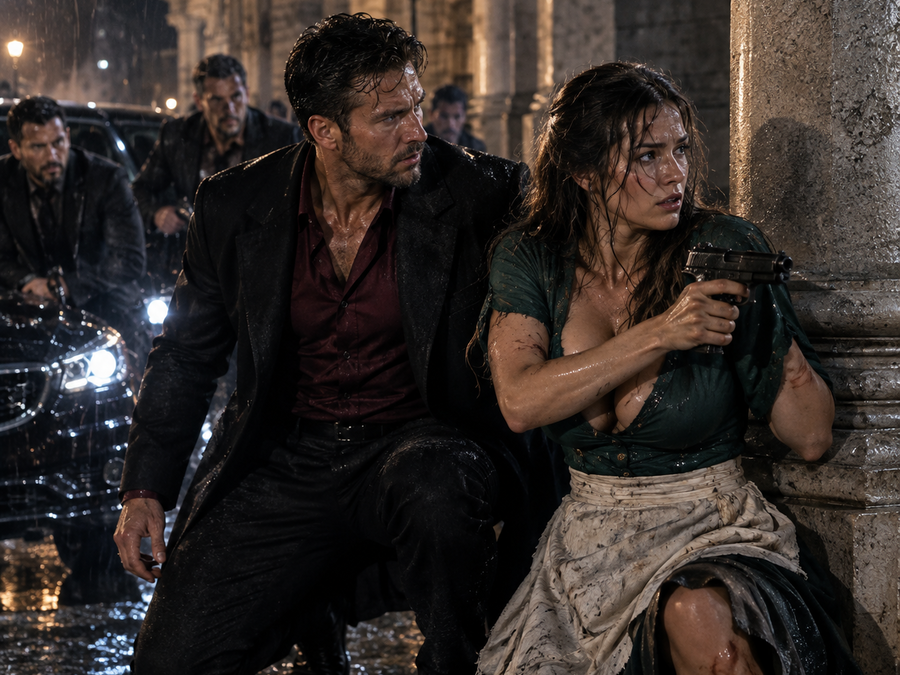
Nobody Knew The Waitress Was A Former Assassin—Until Gunmen Targeted The Mafia Boss
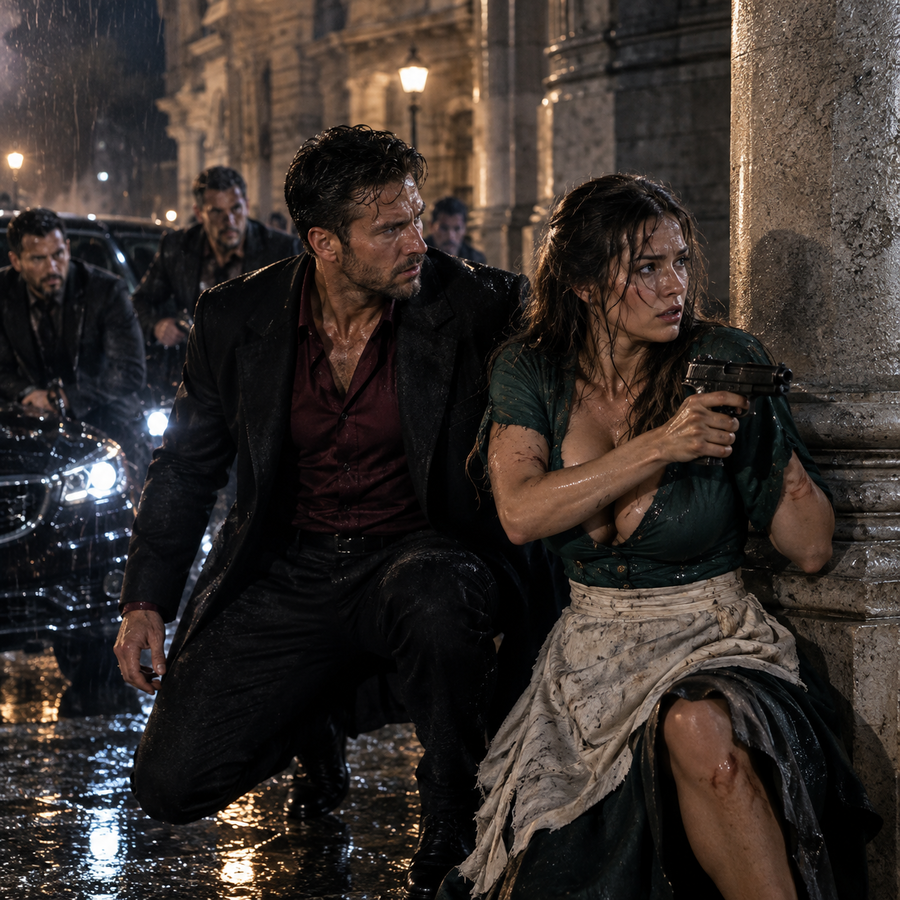
The steak knife in Rosa Conte’s hand had a 6-inch blade perfectly weighted for precise cuts. She’d been using it to slice prime rib with the trained hands of a server and the muscle memory of an assassin for 547 days.
The regulars at Il Distino knew her as the waitress who never got an order wrong, never made small talk, never made an impression. She didn’t raise her voice. She didn’t draw attention.
She didn’t exist. When the masked gunman burst through the entrance and opened fire on Don Mateo’s table, they thought they’d planned the perfect hit.
Trapped their target in an enclosed space with nowhere to run. They didn’t understand they hadn’t cornered a don in a restaurant. They’d locked themselves in a killbox with a woman who’d been waiting tables and counting exits for over a year.
This is the story of the most expensive meal the Sicario squad never got to finish. The linen napkins at Il Distino were folded into perfect bishop’s hats.
Each crease sharp enough to draw blood if you ran your finger along it carelessly. Rosa Conte had folded 847 of them in the past year, and every single one could have passed a military inspection.
Her hands moved with mechanical precision as she worked through the stack in the service station, transforming white squares into architectural sculptures, while her eyes tracked everything else in the room. Table 7. Don Mateo Caruso, 43 minutes into his usual Thursday reservation.
Ossobuco extra gremolata, hold the polenta. Barolo from the ’16 vintage, decanted exactly 12 minutes before first pour. The man ate like clockwork, predictable as a metronome and just as loud.
“Oi, sweetheart.” Mateo snapped his fingers without looking up from his phone, the sound cutting through the soft piano melody drifting from the speakers. “More bread, and tell your chef if this veal isn’t falling off the bone, I’m sending it back with your tip attached to it.”
Rosa crossed the dining room with the practiced invisibility of someone who’d learned long ago that being seen was dangerous. She placed the bread basket at precisely 2:00 from his plate, refilled his wine glass to the proper line, and stepped back into her predetermined position, close enough to respond instantly, far enough to be forgotten.
“You understand English?” Mateo still hadn’t looked at her. His neck tattoos, a serpent coiled around a crown, flexed as he chewed. “I said, more butter.”
“Right away, sir.” She returned to the service station, eyes sweeping the room in the same pattern she’d traced 300 times before.
14 tables occupied tonight. 31 civilians, not counting kitchen staff. The main entrance sat 22 feet from table 7. Solid oak doors with brass hardware.
No ballistic rating, vulnerable to forced entry. Two emergency exits, one through the kitchen. Steel door with panic bar, 7 seconds to breach if you knew where to kick.
One at the east wall behind the private dining partition. Alarmed but accessible, 12 feet from Mateo’s usual position. The couple at table 3. Anniversary. White wine. No security detail.
The business dinner at table 9. Tech executives. Loud. Distracted. No threat profile.
The corner booth held two men in expensive suits who hadn’t touched their appetizers in 15 minutes, watching Mateo’s table with the studied casualness of people trying not to look like they were watching. She’d clocked them the moment they arrived.
Mateo’s insurance policy. Low-grade muscle pretending to be diners. .38 specials in shoulder holsters that printed badly under their jackets. Rosa placed fresh butter at Mateo’s table.
He grunted, which she’d learned was his version of gratitude. She’d been Rosa Conte, waitress, for 547 days.
Before that, she’d been other things, with other names, in other cities where the work was messier, and the napkins weren’t folded at all. She’d walked away from that life with three bullets in her back and a promise to herself that she’d never pick up a gun again unless the alternative was worse than dying.
The scar tissue had healed. The muscle memory hadn’t. Mateo finally looked at her, his eyes flat and entitled.
“What’s your name again?” “Rosa, sir.” “Rosa. You married, Rosa?” “No, sir.” “Boyfriend?” “No, sir.”
He smiled, showing teeth too white to be original. “Good. Pretty girl like you shouldn’t waste herself on some nobody. You should have a man who can take care of you. You know what I mean?”
She knew exactly what he meant. She’d heard variations of this script from men like Mateo in a dozen different languages. Men who thought waitresses were there for the taking, like the silverware.
Men who mistook silence for submission. “Your ossobuco, sir. Careful, the plate is very hot.”
She set it down with both hands, the proper service technique, and stepped back before he could say something that would require her to smile. Behind her, the kitchen door swung open with its familiar squeak.
Giio carrying out the risotto for table 11. To her left, the sommelier was opening a Brunello for the anniversary couple. Everything normal, everything routine, except the two men in the corner booth had stopped pretending to eat, and the black Escalade that just pulled up outside the front window was idling with its engine running, exhaust clouding in the October cold.
And Rosa’s heartbeat hadn’t changed at all. Still steady at 62 beats per minute. The same resting rate she’d maintained in Kandahar, in Kiev, in a dozen other places where staying calm meant staying alive.
She folded another napkin. Perfect creases, perfect angles, and waited.
The first window exploded inward at 9:47 p.m., turning $300 worth of imported Italian glass into shrapnel that glittered like diamonds in the candlelight before it started cutting flesh. Rosa had the bread basket out of her hands and was moving before the second window blew.
Muscle memory didn’t ask permission. Her body dropped into a crouch as the Escalade’s grill punched through the oak doors, ripping them off their hinges with a sound like a tree splitting in a storm.
The piano music cut off mid-note, replaced by screaming and the tortured shriek of metal scraping across marble tile. The anniversary couple went down. Not hit, just instinct.
Smart. The tech executives at table 9 froze like prey animals, which was exactly the wrong thing to do. And Mateo’s two guardian angels in the corner booth were reaching for their .38s when the rear doors of the Escalade kicked open and turned them into statistics.
The first shooter used a KRISS Vector, compact and devastating at close range. Subsonic ammunition, suppressed but not silent. It made a sound like someone ripping canvas, fast and industrial.
Mateo’s guards managed to clear leather before the rounds stitched across their chests, punching through expensive suits and the soft tissue beneath. The first man dropped backward over his booth, dead before his skull cracked against the wine rack.
The second got one shot off, wild and high, before his head snapped back in a red mist. Rosa counted three shooters. No, four.
The fourth was hanging back, scanning, professional. They moved like a kill team, not street muscle. Overlapping fields of fire, textbook room clearing.
The lead man swept left, the second went right, and the third moved straight toward table 7 with the kind of purposeful stride that said he knew exactly who he’d come for. The dining room had transformed into a slaughterhouse in less than 4 seconds.
The sommelier was on the ground, hands over his head, the Brunello spreading across the floor like spilled blood. Giio had dropped his risotto and was scrambling back toward the kitchen.
The tech executives were under their table, one of them crying. The anniversary woman was screaming her husband’s name over and over, a sound that cut through the chaos like a knife.
And Mateo Caruso sat perfectly still at table 7. Rosa watched him from her position behind the service station, partially concealed by the espresso machine and the wine fridge.
The don hadn’t moved. His fork was still in his right hand, a piece of veal halfway to his mouth. His expression had shifted from entitled arrogance to something else entirely.
Not fear, but a kind of dark acceptance, recognition. He’d known this was coming eventually. In his line of work, it was always coming.
The third shooter reached his table. Vector raised, muzzle centered on Mateo’s forehead from 6 feet away. Professional distance, close enough to guarantee the kill, far enough to avoid blowback.
“Don Caruso.” The shooter’s voice was calm, almost polite. “El Lobo sends his regards.”
Mateo set down his fork with deliberate care, the silver clicking against porcelain. He dabbed his mouth with his napkin, one of Rosa’s perfect folds, now spotted with veal juice and wine.
When he looked up at the gun pointed at his face, there was no pleading in his eyes. No negotiation, just the cold mathematics of a man who dealt death for 30 years finally receiving his invoice.
“Tell Lobo,” Mateo said quietly, “he should have sent more men.” The shooter’s finger tightened on the trigger.
Rosa’s hand found the Glock 19 strapped to her inner thigh beneath her skirt. In the same moment, her conscious mind caught up with her body’s decision.
She told herself 547 days ago that she was done. That the woman who’d earned the name Wraith had died in a safe house in Prague with three bullets in her back and a promise that the next time they wouldn’t miss.
She’d sworn she’d never pull a trigger again, unless the alternative was worse than dying. She looked at the crying woman clutching her bleeding husband, at Giio frozen in the kitchen doorway, at the tech executive under the table, whose eyes met hers with the desperate hope of a drowning man seeing a lifeguard.
Then she looked at the shooter’s stance, his weight distribution, the gap between his body armor panels at the shoulder joint where the ceramic plates couldn’t quite meet. Old habits, old eyes, the kind of details you noticed when killing people had been your profession for 8 years.
The alternative had just become worse than dying. Rosa stood up from behind the service station with the Glock in a two-handed grip and put a suppressed round through the third shooter’s temporal bone before he could pull his trigger.
The third shooter’s body hadn’t finished falling when Rosa was already moving. The Glock disappearing back under her skirt in one fluid motion.
She had maybe 3 seconds before the other shooters registered what had happened, and 3 seconds was a lifetime if you knew how to use it. The fourth man, the one hanging back by the Escalade, was turning toward the sound.
The leader and his partner were still focused on clearing the rest of the room, sweeping for additional threats among the screaming civilians. They hadn’t processed yet that the threat was wearing a white apron and non-slip shoes.
Rosa’s hand closed around the steak knife on the floor beside table 7. 6-inch blade, German steel, the same one she’d been using all night to slice prime rib into perfect pink ribbons.
It had fallen from a setting when the windows exploded, and now it felt like an old friend returning to her palm. The weight was wrong, too light, balance point too far forward.
But meat was meat, and she’d done this kind of work with worse tools. The anniversary husband was still on the ground, bleeding from glass cuts, but alive.
Rosa stepped over him, moving with the predatory economy of motion that the waitress Rosa Conte would never have possessed. That woman shuffled and deferred, and made herself small.
The woman moving across the dining room floor now didn’t shuffle. She glided. The leader was shouting orders in Spanish, his Vector sweeping toward the kitchen where Giio and two line cooks were visible through the service window.
He hadn’t seen his partner drop. The suppressed round had been quiet enough that in the chaos of screaming patrons and car alarms, it had registered as just another piece of background noise.
He was making the classic mistake of assuming his team was intact because nothing had contradicted that assumption yet. Rosa came up behind him from his 4:00, blade low and point forward the way they’d taught her in a facility outside Fort Bragg that officially didn’t exist.
The knife went into the soft tissue just behind his knee, angled upward, finding the popliteal artery with the precision of someone who’d memorized human anatomy the way other people memorized phone numbers. She felt the blade punch through the vessel and immediately withdrew, stepping back as the man’s leg buckled.
He went down, roaring, Vector clattering across the floor. Both hands clutching at the wound that was already pumping his life onto Il Distino’s imported marble.
Arterial spray painted the overturned chairs in rhythmic spurts, each one weaker than the last. He’d be unconscious in 30 seconds, dead in 90.
Rosa had already moved on. The second shooter spun toward her, finally understanding that something had gone catastrophically wrong with their simple assassination contract.
His Vector came up fast, but Rosa was faster. She’d closed the distance before he could acquire her properly, getting inside his firing arc, where the short barrel became a liability instead of an asset.
Her left hand trapped his wrist, redirecting the muzzle toward the ceiling as he fired a three-round burst that punched holes in the antique tin panels overhead. The knife in her right hand found his femoral artery with the same clinical precision just below the groin where the big vessel ran close to the surface.
She felt the blade sink in, felt the resistance of tissue give way, and then the hot rush of blood over her hand that meant she’d hit her target. The shooter’s eyes went wide with the sudden understanding that he was already dead.
His body just hadn’t gotten the message yet. Rosa held his gaze as she twisted the blade, widening the wound.
His Vector dropped from nerveless fingers. She let him fall, stepping back to avoid the spray.
The fourth man by the Escalade was screaming into a radio, his own weapon finally coming up. But Mateo Caruso, who’d been sitting frozen in his chair, accepting his execution, had moved.
The don had grabbed his fallen bodyguard’s .38 and was firing wild shots toward the entrance, his expensive suit covered in other people’s blood. His face transformed from arrogant entitlement into something feral and desperate.
Rosa didn’t have time to appreciate the irony. The fourth shooter’s first burst chewed through the table where she’d been standing a heartbeat before.
She dove behind the overturned booth, feeling wood splinters and upholstery stuffing explode around her. The anniversary couple was still on the floor 3 feet away.
The woman screaming continuously now, the sound having lost all meaning and become just noise. The waitress mask had fallen.
Rosa Conte, the invisible woman who folded napkins and memorized wine orders, had ceased to exist. In her place stood something older, something carved from violence and necessity, and 8 years of wet work in countries where American soldiers officially never set foot.
The Wraith had come out of retirement, and she was still holding a bloody knife.
The fourth shooter’s next burst walked across the mahogany bar, shattering $30,000 worth of single malt and turning the mirror behind it into falling stars. Rosa used the sound as cover, her right hand dropping the bloody knife and sliding up under her skirt to the neoprene holster strapped high on her inner thigh.
The Glock 19 came free with the familiar weight of 15 rounds plus one in the chamber, suppressor already attached, the metal still warm against her skin where it had been pressed for the last 6 hours. She’d carried this gun through 18 months of serving pasta and pouring wine, a constant reminder of who she used to be, a promise that she’d never be caught unarmed again.
The holster chafed. The weight threw off her balance when she walked. But those discomforts had kept her alive in Prague, and they were going to keep her alive now.
The fourth shooter was advancing into the dining room, trying to get an angle on her position behind the booth. He was moving too fast, adrenaline overriding training, making him aggressive when he should have been methodical.
Rosa could hear it in his breathing, ragged and elevated. He thought he was hunting. He was wrong.
She came up from behind the booth in a shooter’s crouch. Both hands on the Glock. Sight picture acquired in the half second it took him to register movement.
Center mass. Two rounds. The suppressor turned the shots into flat cracks that sounded like someone snapping thick branches.
Both bullets hit within an inch of each other, punching through his plate carrier where the ceramic had cracked from vehicle impact. He staggered backward, Vector swinging wild, and Rosa put a third round through his pelvis, dropping him to the ground where he stopped being a threat and started being a casualty.
Her breath came in controlled cycles. Four count in through the nose, four count out through the mouth. The rhythm they’d drilled into her until it became autonomic.
Panic was a luxury. Panic got you killed. The world narrowed to sight picture and trigger press, to angles and cover, and the constant mental math of rounds remaining versus targets standing.
Movement at the entrance. Fifth shooter. She’d miscounted.
Rookie mistake. He was using the Escalade as cover. Just his upper body visible, another Vector tracking across the room.
Rosa put two rounds through the Escalade’s rear door where she estimated his lower body would be. Sheet metal wasn’t cover, it was concealment, and concealment didn’t stop bullets.
She was rewarded with a scream and the sound of a body hitting pavement. Mateo was still standing at his table like an idiot, the .38 empty in his hand, clicking uselessly as he pulled the trigger on spent casings.
His face held the expression of a man watching his understanding of reality collapse in real time. He was staring at Rosa, at the gun in her hands, at the blood on her apron, at the bodies she’d put on the floor with the mechanical efficiency of someone who’d done this so many times it had become boring.
“Get down!” Rosa’s voice cut through the chaos, command projection from her diaphragm, the tone she’d used to control rooms full of armed men who didn’t want to be controlled. Not a request, an order.
Mateo didn’t move. Shock had locked his joints. Rosa shifted her aim 30 degrees left and put a round through the wine bottle on his table.
Barolo exploded across his chest, glass and liquid, close enough that he felt the muzzle blast. His knees finally unlocked and he dropped behind the table like a puppet with cut strings.
“Stay down or I’ll shoot you myself.” She was already moving, crossing to better cover behind the stone column that separated the main dining room from the private section.
Angles, always angles. The entrance was a fatal funnel now, the Escalade blocking it, bodies creating obstacles. But there was still the kitchen entrance to worry about, still the question of whether this was a five-man team or if more were coming.
Her heart rate was still 68 beats per minute, elevated, but not panicked. The old rhythms had returned like she’d never stopped. Like the 18 months of folding napkins had been the dream, and this was waking up.
Her hands were steady. Her breathing was controlled. And somewhere in the back of her mind, beneath the tactical calculations and threat assessments, a small voice was whispering that this felt right in a way that pouring wine never had.
She checked her sightlines and counted rounds. 11 left in the mag, two spares on the holster, 37 rounds total against an unknown number of hostiles.
The Wraith had returned to work, and God help anyone still on her floor. The dining room had transformed into a shooting gallery with nowhere left to hide.
Rosa could see muzzle flashes through the shattered entrance. At least two more shooters using the Escalade as a rally point, and the tactical situation had degraded from bad to catastrophic in the 15 seconds since she’d dropped the fourth man.
They were reorganizing, which meant they’d be coming in coordinated, and she didn’t have enough ammunition to hold the room against a sustained assault. The kitchen was 30 feet away across open floor.
30 feet of marble tile with no cover except overturned tables and dead bodies, backlit by emergency lighting that had kicked on when the main power died. It might as well have been 30 miles.
Mateo was still behind his table, hyperventilating. The .38 clutched in his hand like a religious talisman.
His face had gone pale beneath his olive complexion. The arrogance that had defined him for 43 minutes of dinner service, replaced by the wild-eyed confusion of a man realizing the universe didn’t actually revolve around him.
Rosa put three rounds toward the entrance in a pattern designed to make the shooters think twice about advancing, then sprinted to Mateo’s position in a low crouch. She grabbed him by his $500 collar and hauled him upright with strength that shouldn’t have existed in her frame.
“Move. Now. Kitchen.” “Who are you?” Mateo’s voice cracked on the last word. “You’re the miserable waitress. You’re—”
“I’m the reason you’re still breathing. Kitchen. Go.” She shoved him toward the service corridor, but he planted his feet.
240 pounds of muscle and expensive suits and ego that couldn’t process the fact that the invisible woman who’d been refilling his wine was now giving him orders. “I don’t take orders from—”
Rosa hit him. The Glock suppressor caught him across the temple with enough force to split skin and scramble his thoughts without putting him unconscious.
Mateo staggered, blood running down his face, and his eyes finally focused with the clarity that only violence can provide. “Move or die. Choose now.”
This time he moved. Rosa provided cover as they crossed the dining room, firing controlled pairs toward any shadow that looked like it might be human.
The Glock bucked in her hands with familiar rhythm, brass casings ejecting in golden arcs that caught the emergency lighting. She wasn’t aiming to kill now, just to suppress, to make the shooters keep their heads down long enough for her to get Mateo to the kitchen doors.
The anniversary woman was still screaming. One of the tech executives had taken a round through the shoulder and was painting the floor red.
Giorgio was visible through the kitchen service window, his face frozen in an expression of absolute incomprehension as he watched the quiet waitress who’d worked beside him for 18 months transform into something from a different reality entirely. A burst from the entrance chewed through the table to Rosa’s left, splinters and upholstery exploding outward.
Too close. They were getting bolder. She grabbed Mateo’s collar again and hauled him forward, using his body as a shield because she needed him alive and he was already a target anyway.
The math was cold, but correct. “You’re insane,” Mateo gasped as they stumbled toward the kitchen. “You’re out of your goddamn mind.”
“Shut up and run.” Another burst walked across the floor behind them, marble chips stinging Rosa’s calves through her stockings.
She returned fire without looking, shooting behind her back with her weak hand, buying them three more seconds of life. The magazine was almost dry.
Seven rounds left, maybe six. They hit the kitchen doors at full speed, and Rosa kicked them open with her right foot, the steel panels slamming inward with enough force to crack the hinges.
She shoved Mateo through first, scanning behind them for immediate pursuit, then followed him into the relative safety of stainless steel and commercial appliances.
The kitchen was chaos. Line cooks scattered. Giio backed against the walk-in freezer, the sous chef on the floor with his hands over his head.
The air smelled like garlic and seared meat and the sharp ozone tang of violence. Rosa swept the room with her Glock, clearing corners by instinct, making sure they hadn’t already been flanked.
“Back door!” she snapped at Giorgio. “Lock it now.” He just stared at her, at the gun, at the blood soaking through her white apron.
Rosa racked the slide on the Glock, chambering a fresh round, even though one was already there. The sound sharp and final in the enclosed space.
“Now, Giorgio, or everyone dies.” He ran for the back entrance. Mateo slumped against the prep station, his hand pressed to the bleeding gash on his temple, his eyes locked on Rosa with something between terror and awe.
“Who the hell are you?” Rosa ejected her magazine, checked the round count. Four left, worse than she’d thought, and slapped it back home.
“I’m the waitress,” she said, “and you’re going to do exactly what I tell you if you want to see tomorrow.” The fireball rolled across the ceiling like God’s own rage.
Blue-white flame consuming propane and oxygen in a roar that shook pans off their hooks and blew out what remained of the service window glass. The second shooter caught the flash full in the face and went down screaming, his tactical vest smoldering.
Rosa had already rolled behind the industrial refrigerator, the heat washing over her back, but not catching, not burning, just the kiss of controlled violence. The sprinkler system engaged 3 seconds later, turning the kitchen into a man-made thunderstorm.
Water cascaded from the ceiling in sheets, pooling on the floor, turning everything slick and treacherous. Rosa’s hair was plastered to her skull, her white apron transparent and clinging.
The Glock was still dry. She’d kept it close to her body, but the spent brass casings on the floor were now floating in half an inch of water.
That’s when he entered. The butcher came through the kitchen doors like a natural disaster.
7 feet of muscle and trauma plating that turned him into something more vehicle than man. Full tactical body armor, ceramic plates front and back, gorget protecting his neck, even ballistic panels on his thighs.
He carried a different weapon than his team, something custom. Looked like an AR-15 platform modified for close quarters, short barrel with a holographic sight.
But it was his face that made Rosa’s tactical assessment pause for half a heartbeat. He wasn’t wearing a mask.
Shaved head covered in burn scars, a Glasgow smile carved into his left cheek. Sometime in the past he’d survived but not escaped.
His eyes were dead calm, the expression of a man who’d done this work so many times it had become meditation. “Lombra,” he said, his voice a bass rumble that cut through the hiss of sprinklers.
Not Spanish accent. Eastern European. Russian maybe. “The Wraith. I know you. Kandahar, 2019. You killed Dmitri Volkov outside the safe house on the north road.”
Rosa said nothing. Her mind was racing through the tactical math and it wasn’t adding up favorably. She had four rounds left in her current magazine.
Two spare mags. 37 rounds total against a target wearing armor that could stop rifle rounds. The Glock 19 fired 9mm, adequate for unarmored targets.
Borderline useless against military-grade plating. “They said you were dead.” The butcher advanced into the kitchen with the patience of someone who knew he’d already won.
“Prague, 2023. Three bullets. Left for dead. But here you are, serving pasta.” Rosa put two rounds center mass to test the theory.
Both bullets sparked off his chest plate and ricocheted into the ceiling tiles. The butcher didn’t even flinch.
“Armor-piercing would have worked,” he said conversationally. “But you carry subsonic hollow points for the suppressor. Quieter, softer. Your ammunition choice is going to kill you.”
He raised his rifle. Rosa moved, not away, but laterally, using the prep stations and hanging racks as cover, forcing him to track her through obstacles.
She put another round toward his face. His visor was up, face exposed, but he’d anticipated it and tucked his chin.
The bullet sparked off his gorget, and he returned fire, his AR punching holes through stainless steel like it was cardboard. Mateo was still on the floor behind the prep station, soaked and shaking, watching this exchange with the expression of a man having a religious experience and not the good kind.
Rosa needed him, hated that she needed him, but the math was clear. The butcher outweighed her by 150 pounds and wore armor that turned him into a mobile bunker.
She couldn’t outshoot him, couldn’t outmuscle him, but she could outthink him. And men like him had predictable weaknesses.
“Mateo.” Rosa’s voice cut through the chaos. “Run.”
The don didn’t need to be told twice. He scrambled from behind the prep station and made for the dry storage door, his expensive shoes slipping on the wet floor.
The butcher’s head tracked the movement. Target acquisition, priority reassessment, and he shifted his aim from Rosa to Mateo.
Rosa was already moving. She vaulted over the prep station as the butcher’s attention split, closing the distance in three running steps.
He sensed the movement at the last second and tried to bring his rifle around, but she was inside his reach now, too close for the long barrel to be effective. She grabbed a fistful of his tactical vest and used his own mass against him, yanking hard while sweeping his lead leg.
He was bigger, stronger, but physics didn’t negotiate. The wet floor gave her the advantage she needed, and the butcher went down hard, his rifle clattering away across the tiles.
Rosa landed on top of him, her knee driving into his solar plexus with every pound she could generate. The armor absorbed most of it, but not all.
She felt him grunt, felt air forced from his lungs. Her hands were already moving, fingers finding the gap between his gorget and helmet, the one vulnerable point where flesh met flesh.
The butcher caught her wrist before she could press the attack. His grip was hydraulic, crushing, and Rosa felt bones grind together.
He twisted and bucked, and suddenly their positions were reversed. 260 pounds of armor and muscle pinning her to the flooded kitchen floor.
Water filled her mouth and nose. His hand found her throat.
“Impressive,” the butcher said, applying pressure, “but insufficient.” Rosa’s free hand scrabbled across the wet tiles, searching, finding.
Her fingers closed around a paring knife that had fallen from the magnetic strip during the explosion. 3-inch blade, razor sharp.
She drove it upward with everything she had left, aiming for the one gap his armor couldn’t protect: the inside of his elbow, where the joint forced a break in coverage. The blade punched through fabric and flesh, and found the brachial artery.
The butcher’s grip on her throat loosened immediately as his arm went into involuntary spasm, blood pumping hot over Rosa’s hand. She rolled away, gasping, water and blood mixing on her face.
The butcher was on his knees now, his right arm useless and bleeding, his left hand pressed against the wound, but his eyes were still calm, still assessing. “Good,” he said.
Then he reached for the pistol on his hip with his left hand. Rosa raised her Glock with both hands, water streaming from her hair, and put her last round through the gap in his visor.
Right between his dead calm eyes. The magazine was empty. Rosa heard the slide lock back with the finality of a cell door closing, and the butcher was still moving.
The round had caught him high on the cheekbone instead of center mass between the eyes. She’d rushed the shot, water in her vision, her hands shaking from oxygen deprivation.
And the bullet had carved a canyon through his face, but hadn’t reached his brain. He was bleeding, half blind, but still functional, still lethal.
He surged to his feet with a roar that was more animal than human, his ruined face a mask of blood and exposed bone. The pistol in his left hand came up, tracking, looking for Rosa.
But she’d already rolled behind the industrial mixer, fingers working on muscle memory to eject the spent magazine and slam home a fresh one. 15 rounds, her second to last mag.
Mateo had made it halfway to the dry storage door when the butcher’s remaining good eye found him. The don was running in that awkward way of a man whose body had gone soft from decades of being driven everywhere, his $200 shoes slipping on wet tile with every step.
The butcher moved to intercept with the straight-line efficiency of a predator cutting off prey. And despite his wounds, despite the blood pumping from his elbow and face, he was faster.
He caught Mateo by the back of his collar and yanked him backward like a child. The don’s feet went out from under him, and he crashed to the floor, the impact driving the air from his lungs in a wet gasp.
The butcher hauled him upright and pressed the pistol—looked like a .45 Desert Eagle, maybe—against Mateo’s temple, hard enough to dimple the skin. “Wraith,” the butcher’s voice was thick, distorted by his shattered cheekbone, blood bubbling at his lips.
“Show yourself, or I paint the walls with his brain.” Rosa stayed behind the mixer, her mind running through tactical options and finding nothing good.
She had a clear shot at the butcher’s head from this angle, but he was using Mateo as a human shield, keeping the don’s body between himself and Rosa’s probable position. The ceramic plate on his chest was still intact.
His legs were protected. The only vulnerable points were his head and neck, and both were partially obscured by Mateo’s thrashing form.
The math was simple and ugly. She could take the shot, maybe 50/50 odds of hitting the butcher instead of Mateo, or she could surrender her position and die, which meant Mateo died anyway, which meant the civilians still cowering in the dining room died when the butcher’s backup arrived, or she could change the equation.
Rosa’s eyes tracked to the range where she’d ignited the propane, to the yellow flex line running along the wall that fed gas to all six burners. The explosion had damaged it.
She could see the line kinked and twisted, but it was still connected, still pressurized, and the butcher was standing 8 feet away from it, focused on her, not on his environment. She grabbed the cast iron pan from the floor beside her—the same 12-inch French cookware she’d used to crush the first shooter’s skull—and rose to a crouch, took a breath.
“Don’t.” The butcher’s pistol pressed harder against Mateo’s head. “I will.”
Rosa hurled the pan with everything she had. Not at the butcher.
At the gas line. The cast iron hit the damaged flex line like a sledgehammer, and the ancient fitting gave way with a shriek of tortured metal.
Natural gas erupted from the broken connection in a hissing white cloud, flooding the kitchen with the rotten egg smell of the mercaptan they added for safety. The butcher’s head snapped toward the sound, threat assessment override, and his grip on Mateo loosened for half a second.
Rosa was already moving. She hit the wet floor in a slide, using the water like a slip-and-slide, her body hydroplaning across the tiles with her Glock extended in both hands.
The butcher saw her coming and tried to redirect his aim. But Mateo was dead weight in his grip, throwing off his balance, and Rosa was moving too fast, too low.
She slid between prep stations, under the hanging rack, seeing the world in freeze frames of tactical clarity. The butcher’s gun coming around, Mateo’s face white with terror, the gap in the butcher’s armor where his gorget met his helmet, maybe 2 inches of exposed flesh, right there at the neck.
Rosa’s finger found the trigger at the precise moment her slide brought her into perfect alignment. 5 feet away. Point blank.
The Glock barked once, the suppressed round still loud in the enclosed space, and the 9mm hollow point entered the butcher’s throat just above his collarbone, angled upward, punching through soft tissue and severing his spinal cord at C3. His body went rigid.
The Desert Eagle dropped from nerveless fingers. Mateo scrambled away as the butcher collapsed like a building demolition, all his mass going down at once, his head hitting the tile with a crack that echoed off stainless steel.
Rosa slid to a stop against the walk-in cooler, water soaking through her clothes, her hands still locked on the Glock. She kept it trained on the butcher’s body for five full seconds, watching for any sign of movement, any indication that he was as unkillable as he’d seemed.
Nothing. The pool of blood spreading from his neck told her everything she needed to know.
The sprinklers were still raining down. The gas was still hissing from the broken line, filling the kitchen with explosive atmosphere.
In the distance, Rosa could hear sirens. Police, fire, ambulance, the whole circus of emergency response descending on Il Distino.
She had maybe 3 minutes before the first responders arrived. 3 minutes to disappear before someone with a badge started asking questions she couldn’t answer.
Mateo was on his hands and knees, coughing, soaked, bleeding, staring at the butcher’s corpse with the expression of a man whose entire understanding of power and control had been deconstructed in 15 minutes of violence. Rosa stood.
Water streamed from her hair and clothes. The Glock felt heavier now, like it had gained weight from the bodies it had dropped.
“You need to go,” Mateo said, his voice hoarse. “Before the cops. They’ll arrest you. They’ll—” “I know.”
She ejected the magazine, checked the round count from habit. 13 left. And slid it back home.
The sirens were getting closer.
The silence after violence was always the loudest sound. The sprinklers had stopped, their pressure finally exhausted, leaving only the steady drip of water from the ceiling tiles and the distant wail of sirens growing closer.
The kitchen looked like a war zone. Overturned equipment, scorch marks on the ceiling. The butcher’s body sprawled in a spreading lake of blood and water that reflected the emergency lighting in crimson fractals.
Rosa stood perfectly still, her breathing returning to normal. 62 beats per minute, the same resting rate she’d maintained through the entire engagement.
Her hands weren’t shaking. They never shook. That’s what 8 years of wet work did to you.
It sanded down the parts that made you human and left only the parts that made you functional. Mateo pulled himself upright, using the prep station for support.
His expensive suit ruined beyond any tailor’s ability to repair, his face a road map of cuts and bruises, and the fundamental reorganization of his understanding of the universe. He stood there dripping, blood mixing with water, staring at Rosa like she was a ghost or a demon or something that shouldn’t exist according to the rules he’d lived by for 43 years.
“Who are you?” His voice was barely above a whisper, hoarse from screaming and smoke inhalation. “What are you?”
Rosa didn’t answer. She was already moving through the post-engagement checklist that had been drilled into her in that facility outside Fort Bragg that officially didn’t exist.
Evidence, witnesses, extraction. The kitchen was full of her fingerprints from 18 months of legitimate work, but those didn’t matter. She was employed here, supposed to be here.
What mattered were the prints on the Glock, on the magazines, on the brass casings scattered across the floor. She walked to the industrial sink and set the Glock on the stainless steel, then turned on the water.
Hot. As hot as it would go. She pulled a scrub pad from the dispenser and worked methodically, wiping down every surface of the weapon.
Slide, frame, magazine, well, trigger guard. The suppressor came off with a twist and got the same treatment. 18 months of folding napkins had given her hands that were good at detailed work.
“You saved my life.” Mateo was still talking, his voice taking on a note of desperate confusion, like if he just said the right words, he could make reality make sense again. “You killed six men. Seven? I don’t… I can’t…”
Rosa dropped the Glock into the sink with a metallic clatter that echoed off tile. She pulled the magazines from her holster, the partially spent one and the full spare, and dropped those in as well.
They landed in the pooled water with splashes that sounded impossibly loud in the sudden quiet. The sirens were close now, maybe a minute away, maybe less.
She reached behind her back and untied her apron. The white fabric, now more red and gray than white, soaked through with water and blood and the residue of violence.
She let it fall to the floor in a wet heap. Underneath she wore the same black shirt and skirt she’d worn for 547 shifts, the uniform of a woman who was supposed to be invisible, supposed to be forgettable.
“Wait.” Mateo took a step toward her, one hand outstretched. “At least tell me your name. Your real name.”
Rosa looked at him for a long moment. At the tattoos on his neck that marked him as a man of violence, a man who’d built his empire on bodies and fear, and the willingness to do what others wouldn’t.
At the confusion in his eyes as he tried to reconcile the quiet waitress who’d served his meals with the woman who’d dismantled a hit squad with the efficiency of a surgical team. “Rosa Conte,” she said finally. “That’s my real name.”
It was the truth. It had been her real name for 18 months. Before that, she’d been other names in other cities, but Rosa Conte was the one she’d chosen, the one she’d tried to become.
The fact that it hadn’t worked, that the woman underneath could still kill six men without her pulse breaking 70, didn’t make it any less real. She walked to the back door, her shoes squelching on the wet floor.
Giio had locked it before he fled, but the deadbolt turned easily. Outside, the October night was cold and raining, the kind of rain that soaked through clothes in seconds and turned the city into a watercolor painting of blurred lights and dark shapes.
“I’ll find you,” Mateo called after her, his voice carrying a note of something between threat and plea. “I’ll find out who you really are. I’ll—”
“No, you won’t.” Rosa stepped through the door into the rain and pulled it closed behind her.
The alley behind Il Distino was narrow and dark, lined with dumpsters and delivery pallets, the kind of space that existed in every city, but that nobody ever really looked at. She walked away from the restaurant without looking back, her pace steady and unhurried, just another woman heading home after a long shift.
Behind her, through the closed door, she could hear Mateo calling her name. Then the sound was drowned out by sirens as the first police units arrived, their lights painting the alley entrance in alternating red and blue.
Rosa turned the corner and disappeared into the rain. Inside the wrecked kitchen of Il Distino, Mateo Caruso stood alone among the bodies and the blood and the evidence of violence that would take forensic teams 3 days to fully catalog.
The police lights strobed through the shattered service window, turning the stainless steel into a disco ball of law enforcement attention. He looked down at the apron on the floor, at the gun in the sink, at the butcher’s body that had come to kill him, and instead found something worse.
And for the first time in 30 years, Don Mateo Caruso understood what it felt like to owe someone a debt he could never repay. The most dangerous people are never the ones demanding to be seen.
They’re the ones you’ve trained yourself not to notice. Rosa Conte’s story isn’t just about a hidden assassin. It’s about the fundamental human tendency to mistake visibility for power and silence for weakness.
We live in a world obsessed with performance. The loudest voice, the biggest presence, the most obvious display of strength.
Mateo Caruso embodied this philosophy: tattooed, demanding, consuming all the oxygen in every room he entered. He thought power meant being seen, being feared, being obeyed.
But true capability doesn’t announce itself. It doesn’t need to. The waitress, the janitor, the assistant, the person you snap your fingers at without making eye contact.
These are the people you’ve decided don’t matter. And that decision, that casual dismissal of human dignity, creates a blind spot large enough to hide entire universes of competence, intelligence, and yes, sometimes danger.
Rosa’s 18 months of folding napkins perfectly weren’t weakness. They were discipline. The ability to be exceptional at something you consider beneath you.
To serve people who treat you as furniture, to maintain excellence in obscurity, that requires a strength that people like Mateo will never understand. The deeper lesson is about respect.
Not the transactional respect we give to people who can hurt us, but the fundamental respect we owe to every human being simply because they exist. Mateo treated Rosa like an object until the moment she became his salvation.
But the tragedy is that he shouldn’t have needed to witness her kill seven men to see her humanity. She was always there.
He just chose not to look. Look again today. Notice the people you’ve trained yourself not to see.
The server bringing your coffee. The person cleaning the office after you leave. The assistant whose name you can’t quite remember.
Not because they might secretly be assassins. They probably aren’t. But because they’re human beings with complete interior lives, skills you know nothing about, and stories that would shatter your assumptions about who deserves your attention.
Make eye contact. Say thank you like you mean it. Learn their name and use it.
Ask a genuine question and actually listen to the answer. The world is full of Rosa Contes, people with extraordinary capabilities who’ve learned to make themselves invisible because visibility in their past meant danger, or because society taught them that what they do isn’t worthy of notice.
Your receptionist might speak four languages. Your janitor might be a published poet. Your waitress might have a PhD in physics.
Or maybe they’re just good at their jobs and trying to get through the day. That’s enough. That deserves your respect, too.
This week, have a real conversation with three people you normally don’t see. Not networking, not transactional, just human connection with someone you’ve been trained to overlook.
You might be surprised what you find when you finally decide to look. And remember, the most dangerous assumption isn’t that everyone is harmless. It’s that you already know who matters.

