“Stay Behind Me!” Single Dad Saved the CEO— Then She Discovered His Secret Delta Force Past (Part 2)
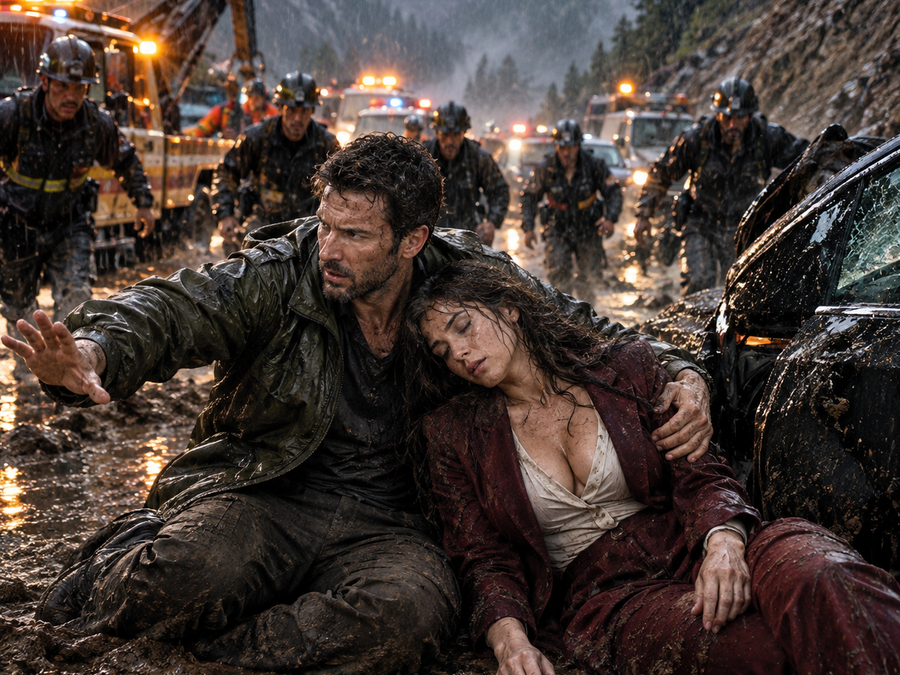
“Stay Behind Me!” Single Dad Saved the CEO— Then She Discovered His Secret Delta Force Past (Part 2)
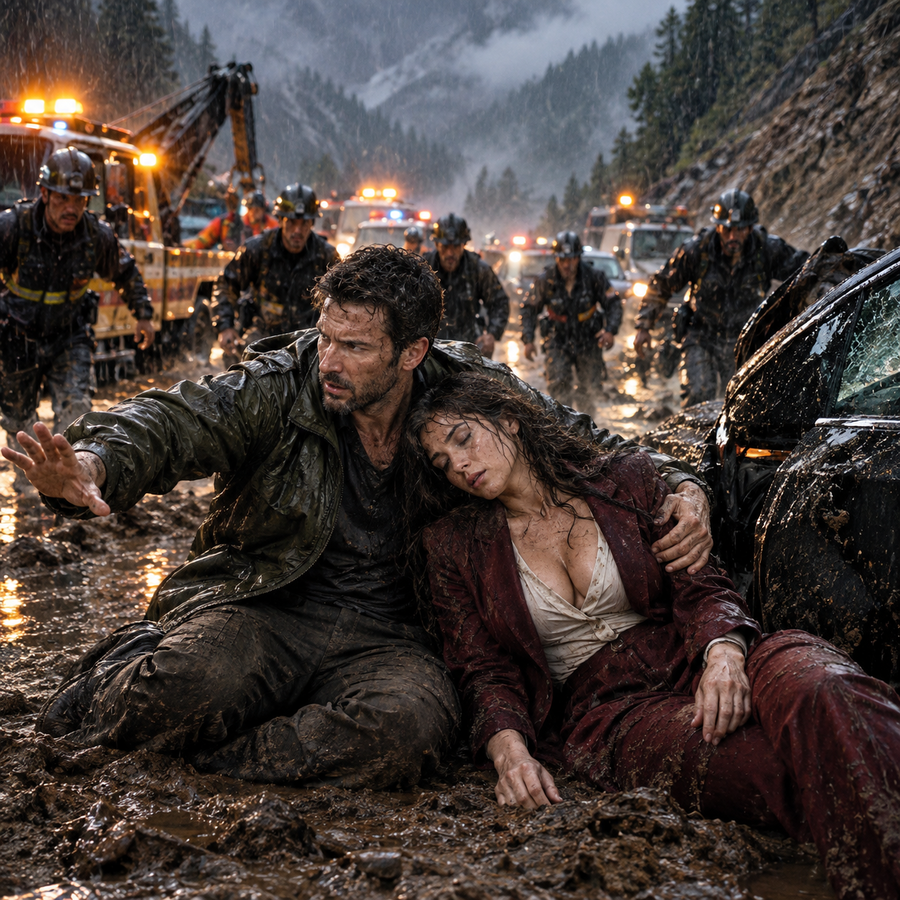
PART 2
Daniel’s hand was tight on the phone. “And last night,” Whitmer continued, “what you did on that highway mattered in ways you’re only beginning to understand.” The call ended. Daniel stood in the garage for a long moment.
Then he walked back to the office doorway. Victoria was standing at his desk, phone in hand, facing him. She’d heard him come back. Her expression was stripped of the composed authority she’d been wearing since she walked up his driveway. Not destroyed. Just honest. The face underneath the face.
“I just got off a call with our legal team,” she said. “Someone filed a request this morning to seal the technical records from last night’s crash. Emergency basis. Citing proprietary system information.” “Who filed it?” She looked at him. “It came from inside my legal department,” she said. “From an attorney whose billing account is tied to a consulting agreement with Gerald Callow’s office.”
The two of them looked at each other across the small office. “It’s already moving,” Daniel said. “Yes,” she said. “Fast.” “Then we need to move faster,” he said. And he told her about Whitmer.
He watched her expression as he talked. The rapid, precise processing of someone running assessments in real time, updating a map that was showing new terrain every 30 seconds. When he finished, she sat down in the chair again and pressed both hands flat on the desk.
“A federal investigator had your report for four years,” she said. “Yes.” “And said nothing.” He said he was waiting for a triggering event. Daniel sat on the edge of the desk. “He has one now.” “We could get ahead of this,” she said. “Announce a voluntary investigation. Control the narrative before—” “Before what?” Daniel said. Not harshly. Just directly.
“Before the federal investigation goes public. Before the next person drives their car into a creek in the rain and can’t get the door open.” He paused. “Ms. Ashford, with respect, you’re thinking like a CEO.” She looked at him sharply. “I am a CEO,” she said.
“You’re also the person who almost drowned in her own vehicle last night. Because someone in your company deliberately disabled a safety system that another person in your company tried to flag 12 years ago.” He held her gaze. “I think this morning you might be better served by thinking like the person who almost drowned.”
Silence. Long enough that he wondered if he’d gone too far. Then Victoria Ashford put both hands over her face. Not crying. Pressing. The physical gesture of someone compressing something that would otherwise take up too much space.
“400,000 vehicles,” she said into her hands. “Roughly.” She dropped her hands. Her eyes were dry and clear and absolutely resolved. “I want to call Whitmer,” she said directly. “No legal intermediaries. Just me.” “I’ll give you his number.” “And the report,” she said. “The original. The emails. I want them in three separate secure locations before noon.” “Done.”
She stood up, and in the standing she became again the woman who had walked up his driveway that morning—composed, directed, moving toward something with her full weight behind it. But different now. Carrying more. Not weighed down by it. Carrying it.
“Daniel,” she said. It was the first time she’d used his first name. He looked at her. “When this is over—” She stopped. Started again. “When this is done, however it ends, I want you to know that what you did last night was not small.”
“I know,” he said. “Not just the rescue,” she said. “Everything. 12 years ago. The reports. Not letting it go, even when it cost you everything.” A pause. “A lot of people would have let it go.” “A lot of people did let it go,” Daniel said. “I’m not special. I just couldn’t figure out how to stop caring about a thing I knew was wrong.”
She looked at him for a moment with something that was not quite admiration and not quite something else. Something in between that didn’t have a clean name. Then her phone rang. She looked at the screen. Her jaw tightened. “It’s my board chairman,” she said. “You should take it.” “I know.” She looked at him. “Don’t leave the shop.”
He spread his hands. “Where am I going to go?” She walked out into the garage, her voice already shifting into a register he recognized from the porch earlier—controlled, precise, carrying the particular tone of someone who has decided exactly how much of the truth they’re going to give and has preloaded every response.
He heard her say, “Yes, I’m aware.” “No, I want to hear it from you directly. How long have you known about the request to seal the records?” The silence that followed that last question lasted long enough that Daniel could hear it from ten feet away.
He picked up his wrench and went back to Mrs. Garland’s fuel pump. He worked steadily, hands moving through familiar motions, his mind doing the thing it always did when his hands were busy—turning the problem over, testing it from different angles, looking for the load-bearing pieces.
Twelve years of being called a failed engineer. Twelve years of a gray metal box sitting on a shelf. A woman who had nearly died because someone made sure she couldn’t get out. A federal investigator who had been watching for four years. A COO who had signed a dismissal letter that was now a piece of evidence in a federal case.
And somewhere inside all of it, a question Daniel was just beginning to ask himself. The access event on Victoria’s vehicle. The 15-minute window. The fact that the drive was unplanned. The fact that her habit—the old highway, when she needed to think—was known only by people close to her.
Someone had known she’d take that road. Which meant someone was close enough to know her habits. Which meant the investigation would eventually have to turn toward the people Victoria trusted most.
He set down the wrench and wiped his hands on a shop cloth. Victoria came back in from the garage, phone down at her side. Something in her face that he hadn’t seen there yet. Not fear, not exactly. Something rarer than fear.
“My board chairman,” she said, “told me the request to seal the records was filed at 4:40 this morning.” Daniel looked at her. “The accident happened at 2:13,” he said. “Yes. And the remote access on your vehicle—” “The preliminary report put it between 1:58 and 2:05,” she said. “Before the crash.”
“So the crash happened at 2:13,” Daniel said slowly. “And someone was already trying to seal the records at 4:40 in the morning. Less than two and a half hours later.” “She said, ‘They knew the crash was going to happen,'” Daniel said. “Or they knew the moment it did.”
He looked at her. “Ms. Ashford, how many people had access to that preliminary technical report by four in the morning?” She counted. He could see her counting. Actually counting. Moving through a list in her head. Her face changed when she got to the number.
“Three,” she said. “Three people. Three people with access to that report before four this morning. And one of them filed a motion—” “That’s some coincidence.” “Yes,” she said. A pause. “Who are the other two?”
She looked at him. “Harlon Reeves,” she said. “And my executive assistant. A woman who has been with me for 11 years.” And here was the thing Daniel had been turning over. The thing he’d been approaching from the side, not directly, because he didn’t want to be the one to say it. Not yet. Not while she was already carrying so much.
But she was a smart woman. He watched her get there on her own. He watched her arrive at the specific quiet devastation of someone who has just understood that the attack came from somewhere close. Not from an enemy at the gates. From inside the house.
From someone who knew about the old highway and the habit of driving it when the decisions got heavy. Someone who had access to her calendar and her vehicle and the preliminary report. Someone who had been next to her. Close enough to know her. Close enough to be trusted for a very long time.
She sat down heavily. “I don’t know yet,” she said. It was barely above a whisper. Not to him, really. To herself. “I don’t know which one.” Daniel sat down across from her. He didn’t say anything. Sometimes the most useful thing you can do for a person is not fill the silence.
Outside, the last of the black SUVs was gone. The street in front of his garage was quiet and ordinary. A dog walked past with an old man. A school bus went by in the distance—the one Emma might be on. The town of 4,000 moved through its morning as if nothing had shifted, as if the ordinary mechanics of a regular day were still in full operation.
Inside the small office of Carter’s Auto Repair, a CEO and a mechanic sat across from each other with a 12-year-old safety report between them and the specific, certain knowledge that the next 48 hours were going to change things for a great many people. Some of whom did not yet know their lives were about to change. And some of whom knew exactly and were already making calls of their own.
The call from Paul Whitmer came again at 11:47 that morning. Daniel was still in the shop. Victoria was still in his office. She had been on and off her phone for three hours straight, and the quality of her voice had changed with each call—starting controlled, moving through something harder, arriving somewhere that was no longer managing the situation but responding to it.
There is a difference, and Daniel had learned to hear it. He picked up on the second ring. “We have a problem,” Whitmer said. Daniel put down the timing belt he was holding. “What kind?” “The kind that moves fast.” A pause. The kind a man takes when he’s choosing between two versions of the same truth. “Someone inside the company filed a secondary legal motion 40 minutes ago. Not to seal records this time. To have the original investigation into the remote access event reclassified as an internal proprietary matter under federal trade protection.”
Daniel was quiet for a moment. “Which would put it outside NHTSA jurisdiction.” “It would create enough jurisdictional ambiguity to slow us down by weeks. Maybe months.” Whitmer’s voice was flat. “Someone knows how to use the legal system as a speed bump.” “Can you stop it?”
“We can contest it. But we need the original safety documentation formally entered into federal record before the motion is approved. That means I need your report, Mr. Carter. Not a copy. The original. Signed, dated, authenticated.” A beat. “And I need it today.”
Daniel looked toward the office. Through the small window in the wall, he could see Victoria standing with her back to him, phone pressed to her ear, her free hand moving in the sharp, precise gestures of someone pushing back hard against something.
“How soon?” Daniel said. “Three hours. Maybe less.” He hung up and walked to the office door. Victoria turned the moment she heard him. She had the look of someone running two conversations simultaneously and managing both badly, which was not an expression he’d seen on her face before that morning.
She held up one finger—one minute—and said into the phone, “Hold.” Then looked at Daniel. He told her about Whitmer’s call in 40 seconds. He didn’t editorialize. Just facts. Sequence. Timeline.
She absorbed it without expression. Then she said into the phone, “I’m going to need to call you back.” And ended the call before whoever was on the other end finished their sentence. “Gerald,” she said. “Or someone in his orbit,” Daniel said. “Same thing.”
She was already thinking ahead. He could see the calculation running. The fast and ruthless kind of strategic thinking that comes from years of operating in rooms where the stakes were always somebody’s livelihood or somebody’s reputation.
“If the motion goes through, even temporarily, the federal window closes,” Daniel said. “And whatever they need to do with the records, they’ll have time to do it.” “How long do you need to get the documents to Whitmer?” Daniel checked his watch. 11:52. “If I leave now, drive to the federal building in Lubbock—two hours minimum. Closer to two and a half.” “That won’t work.” “No.”
She was already dialing. She turned away. Said three sentences to someone. Listened for 15 seconds. Said two more sentences. And hung up. “There’s an NHTSA field office in Amarillo,” she said. “48 minutes from here. I have Whitmer’s direct supervisor’s cell. He can have someone there to receive and authenticate the documents.”
“You got that in 60 seconds,” Daniel said. “I’ve been running a company in a regulated industry for seven years,” she said. “I know where the offices are.” She looked at him steadily. “Can you be ready in 10 minutes?” “I’ve been ready for 12 years,” he said.
He pulled the documents from the fireproof box, put them in a clean manila envelope, wrote the date on the outside, and sealed it. He locked the shop, called his part-time employee, Ray, to open up for the afternoon, and sent Mrs. Garland a text apologizing for the delay on her fuel pump. He did all of this in eight minutes.
He found Victoria outside, already in a car. Not one of the black SUVs—all of which were gone—but a dark gray sedan that had materialized quietly while he was inside. Driven by a single man in civilian clothes who was not Harlon Reeves. “Who’s driving?” Daniel said. “Marcus. He’s been with me 12 years. He’s the only person from my team I trust completely right now.” She said it without apology, without drama. Just information.
Daniel got in. They drove. The 48 minutes to Amarillo was not quiet. Victoria was on the phone for the first 20 minutes, and Daniel listened to the shape of the conversations without the content. The tonal architecture of someone managing a crisis from multiple angles simultaneously. Keeping each conversation in its own lane. Careful not to let anything bleed between them.
He had known people who could do that in his previous life. They were rare. She was very good at it. At the 20-minute mark, she ended a call and sat back and didn’t pick up the phone again. He waited.
“My executive assistant,” she said. “Sandra.” He looked at her. “She’s been with me 11 years.” A pause. “She knows every habit I have. Every route I take. She books my car service. She has access to my vehicle’s connected systems because she helps manage my calendar integration.” Another pause. Longer. “And three months ago, she started a new personal relationship.”
“I didn’t think anything of it,” Daniel said. “Someone from outside the company.” Victoria’s voice was careful, precise. The way people talk when the precision is doing emotional work for them. “But I had a notification this morning from our IT security team. A deep audit triggered by the remote access investigation. They found that Sandra’s credentials were used to access the vehicle management portal at 1:58 a.m. last night.”
The time landed like something physical. 1:58. Fifteen minutes before the crash. The window Whitmer had identified. “Ms. Ashford,” Daniel said, “she didn’t do it herself.” “Victoria said quickly. I don’t think she did it herself. I think her credentials were taken. Used.” She stopped. “Or I don’t know. I don’t know.”
And here was something Daniel had not expected. The specific vulnerability of a person who is simultaneously running a crisis and grieving inside it. Because Sandra was not just an executive assistant. Eleven years is not a professional relationship. It’s something closer to architecture. You build your days around a person like that. You forget sometimes where the structure ends and the trust begins.
He didn’t say anything. He let her have the silence. After a minute, she said, “I keep thinking about the last thing she said to me yesterday morning.” She said, “Be careful on the drive back.” “I drive that road in the rain sometimes.” She knew that. A pause. “I thought she meant the weather.”
Daniel looked out the window at the flat Texas afternoon moving past. “Maybe she did,” he said. Victoria didn’t answer.
The NHTSA field office was a low building on the east side of Amarillo that looked like it had been designed by someone whose mandate was functionality and whose budget was government modest. A man named Castellano met them at the door. Fifties. Gray at the temples. The unhurried manner of a federal official who has seen enough to know that urgency and panic are different things.
He took the envelope from Daniel, examined the documents for 12 minutes at a table in a small conference room, made three phone calls, and then looked up. “These are authenticated,” he said. “We’re entering them into federal record as of this moment.” He looked at Daniel. “Mr. Carter, were you the sole author of this report?”
“Prime author. A colleague named Kevin Marsh contributed to the crash modeling in section four. He’s no longer with the company.” “We’ll need a statement from you. Formal. Signed.” “I’ll give you whatever you need today if possible.” “Today’s fine.”
Castellano looked at Victoria. His expression was the particular professional neutrality of a federal official who understands exactly who he’s looking at and has decided that recognition and authority are separate things. “Ms. Ashford,” he said, “given the motion filed this morning, which we are aware of and are contesting, we’d strongly advise that any internal communications related to the remote access investigation be preserved and made available to this office.”
“I’ve already instructed our IT team to freeze all relevant files,” she said. “You’ll have formal cooperation within the hour.” He nodded. “There’s one more thing.” He looked at both of them. “We received a secondary report this morning from a different source. Corroborating Mr. Carter’s original findings.”
He paused. “An independent automotive safety researcher submitted a technical analysis 14 months ago, flagging the same platform flaw. That analysis was rejected by your company’s compliance office.” Victoria went still. “14 months ago.” “Yes. That was—” “I wasn’t informed of any independent safety challenge 14 months ago.”
“No,” Castellano said. “According to our records, the response was handled entirely at the compliance level and the submission was formally rejected on methodology grounds.” He set a folder on the table. “The compliance director at the time was a Gerald Callow, who has since been promoted to chief operating officer.”
Victoria picked up the folder. She opened it. Read the first page. Daniel watched her read. There is a specific moment in a crisis when the full shape of it becomes clear. When all the individual pieces that have been arriving separately suddenly align into a single image. Like a photograph developing in a dark room.
He had seen it before. In himself. 12 years ago. When the third response letter arrived and he finally understood that this was not a mistake and not an oversight. It was a choice. Repeated. Deliberate. Documented.
He saw it happen in Victoria now. She closed the folder, set it on the table with a steadiness that was either exceptional composure or the particular stillness that arrives on the other side of a very large realization.
She said, “Gerald Callow has been actively suppressing safety documentation for at least 14 months.” “At minimum,” Castellano said. “Possibly longer.” “And the remote access event on my vehicle—” “Our digital forensics team is working with your IT security. Preliminary evidence suggests the access originated from a device registered to a consulting firm that has a billing relationship with Callow’s office.”
He paused. “We’re not prepared to make a formal accusation at this stage, but we are treating this as a criminal matter.” Victoria stood up. She was very still for a long moment, standing at the end of the table with the folder in her hands. And Daniel could see the weight of it. The specific compressive weight of understanding that someone you promoted, someone who sat in your meetings and attended your company’s events and operated at the highest level of your organization, had been running a parallel operation inside the house you’d built.
Then she turned to Daniel. “400,000 vehicles,” she said again. “Yes,” he said. She looked at Castellano. “I want to know the fastest path to a voluntary safety recall.”
Castellano raised an eyebrow. Not surprised exactly, but recalibrating. “That’s an unusual position for a company to take before a formal investigation is complete.” “I’m not interested in what’s usual,” she said. “I’m interested in what’s right.” A beat. “How do we start?”
They were in the federal office for two hours and 17 minutes. When they came out into the afternoon, Daniel stood on the sidewalk and felt the particular odd lightness of a thing that has been carried for a very long time. Finally down in the right place. Not gone. Not resolved. But in the right hands. Moving.
Victoria stood beside him. She had been on her phone again for the last 20 minutes of the meeting, texts arriving in rapid sequence, each one shifting her expression in small but readable ways. “Callow resigned this morning,” she said. Daniel looked at her. “Resigned or was asked to?” “Both.” She looked at her phone. “He submitted a letter at 10:18. I received a call from my board at 10:22. They were ahead of me.” She paused. “Which means they’ve known something was wrong for longer than they told me.”
“Or they moved the moment they realized the federal investigation was real,” Daniel said. “That’s a generous interpretation.” “I’m a generous person,” he said. She looked at him. Something shifted in her face. Not quite a smile, but the shape that precedes one. “You’re really not,” she said. “But you’re fair.”
He accepted that. “What happens now?” he said. “Formally? Whitmer’s team coordinates with Castellano’s office. They build the case. The motion Callow’s attorney filed gets contested and probably denied within 48 hours, given what we just entered into record.” She looked at her phone again, then put it in her pocket. A deliberate movement. Choosing to stop looking at it for the moment.
“Personally? I go back to Dallas tonight. I address my board. I accept that the next six months of my life are going to be the hardest six months I’ve had since I took this job.” “And the recall?” “It starts Monday,” she said. “Whatever the legal team says. Whatever the board says. Monday.” She said it with the finality of a decision that was no longer up for discussion with anyone.
He nodded. They walked back to the car. Marcus had the engine running. The afternoon was bright and flat and indifferent the way Texas afternoons are. The sky enormous and offering no opinion on anything that had just happened inside that building.
Daniel got in. Victoria got in. Marcus pulled out of the lot. They were 10 minutes outside of Amarillo when Daniel’s phone rang. Unknown number again. He answered it. The voice on the other end was not Whitmer this time. It was younger. Female. Slightly unsteady in the way of someone who has made a decision they are afraid of and is moving through it before the fear wins.
“Mr. Carter,” she said. “Speaking.” “My name is Sandra Keller.” A pause. “I’m Victoria Ashford’s executive assistant.” Daniel looked at Victoria—a reflex—and Victoria caught it because she was watching him.
“Miss Keller,” Daniel said carefully. “I know. I know who you are. I know what’s been happening today.” Her voice was doing the thing voices do when a person is holding themselves together through sheer effort of will. “I need to speak to Miss Ashford directly. Not through legal. Not through anyone else.” Another pause. “I know that what I’m asking is—I understand if she won’t.”
Daniel held the phone out to Victoria without a word. Victoria looked at it. She looked at Daniel. He said nothing. She took the phone. She held it to her ear and said, “Sandra.” Just the name. Just one word. But in the way she said it, Daniel could hear 11 years of shared mornings and late nights and the specific intimacy of a working relationship that is so close it becomes something else. Something that doesn’t have a clean professional name.
He looked out the window and gave her what privacy the inside of a moving car could offer. He couldn’t hear Sandra’s voice. He could hear Victoria’s in fragments. In the pauses between sentences. In the particular sounds of a conversation that is moving fast through difficult terrain.
When Victoria said, “A pause. How long has he had access to your credentials?” A longer pause. “Sandra. Sandra, listen to me. I need you to go somewhere safe right now. Not home. Not the office.” Her voice dropped. “Is there someone you trust? Outside of work?” A pause. “All right. Go there. Go now. Don’t contact anyone from the company until I call you back.”
Another pause. “I know.” Her voice changed on those two words. Became something quieter and more private. “We’ll talk about everything else later. Right now, I need you to be somewhere safe.”
She ended the call. Held the phone in her lap. Said nothing for 40 seconds. Then she handed Daniel’s phone back to him. “Her computer,” she said. “Three months ago, she started seeing a man named—it doesn’t matter. Someone who turned out to be working for Callow. She didn’t know. She thought it was—” Victoria stopped. Started again. “He asked her once to log into the vehicle management portal to show him how it worked. She thought it was small talk. He was interested in how her job worked. She showed him.”
A beat. “He took her credentials without her knowing.” Daniel said. “She called to tell you that.” “Yes.” “She could have stayed quiet. Protected herself.” “Yes,” Victoria said again. “Why didn’t she?” Victoria looked out the window. “Because she’s been with me 11 years,” she said. “And because she knew whatever I thought of her right now, I’d want to know the truth.”
She pressed her hand flat against the car door. A steadying gesture. The kind people make when the ground is moving. “Callow used her,” Victoria said. “She was never the source. She was the door. And the door was unlocked from the outside.” “Daniel said, ‘Yes.'”
They drove in silence for a while. Marcus was smooth and quiet behind the wheel. The professional invisibility of someone who has learned that his job sometimes requires him to not exist in a conversation. It was Daniel who spoke first.
“There’s something I’ve been thinking about,” he said. She turned to look at him. “Callow buried my report 12 years ago,” he said. “Then he buried the independent analysis 14 months ago. Then he had Sandra’s credentials used to access your vehicle.” He paused. “That’s not a man covering up a mistake. That’s a man actively managing a secret.”
“Yes.” “Which means there’s more we don’t know yet.” He held her gaze. “The accident wasn’t just about shutting down the safety investigation. It was about shutting down you.” A long pause. “You know something,” she said. “Something you haven’t said.”
He did. He had been sitting on it since the conversation with Whitmer that morning. The detail that didn’t fit cleanly. The one he’d been turning over in his hands. The way he turned over an engine component he couldn’t immediately place.
“Whitmer told me he got a copy of my report four years ago,” Daniel said. “From a source inside Meridian. Someone who worked in my department.” “Yes. You told me that.” “What I didn’t tell you,” he said, “is that I know exactly who it was.”
Victoria was very still. “There were only three people in my department who had access to the full report,” he said. “One of them was the department head who co-signed the dismissal letter. One of them left the company six months after I did and moved overseas. And one of them—” he paused. “One of them transferred to Ashford Technologies when Meridian was acquired 14 years ago.”
The silence in the car was absolute. “Who?” Victoria said. “A man named Roy Chambers,” Daniel said. “Senior systems analyst. Quiet. Careful. The kind of person who never raised his voice in a meeting and always stayed late.” He looked at her. “Is he still with the company?”
Victoria was reaching for her phone before he finished the sentence. She typed a name, waited, looked at the screen. She read something on it, read it again. When she looked up, her expression had the quality of someone who has just found the last piece of a puzzle they’ve been working for years and is experiencing simultaneously the satisfaction of completion and the full weight of what the completed picture shows.
“Roy Chambers,” she said slowly. “Retired from Ashford Technologies eight months ago. After 32 years in the industry.” A pause. “And two weeks before he retired, he filed an internal safety complaint with our compliance office.”
Daniel said, “Let me guess. Flagging the same platform flaw.” “In the same ASES system,” she said. She set the phone down. “Which went to the compliance office, which was run by Callow, and was rejected.” “And was rejected,” she confirmed.
And here it was. The full shape. Roy Chambers. Quiet. Careful. The man who stayed late. Had carried Daniel’s report for four years before finding the right hand to put it in. Had watched Callow bury the independent analysis 14 months ago. Had spent 32 years inside an industry that was better at protecting itself than protecting the people who drove its products. And in the final weeks before his retirement, had tried one more time to make it matter.
Two months later, someone had driven Victoria Ashford’s vehicle into Wheeler Creek. “He tried to fix it from the inside,” Daniel said. “Twice. Once through Whitmer, once through compliance. Both times it got buried. And then he retired.”
“Victoria said, ‘Because sometimes—'” Daniel said, “you run out of inside.” She picked up her phone, looked at it for a moment. Then she dialed a number from memory. Not from contacts. From memory. Which told him something about whose number it was.
It rang twice. A man’s voice answered. “Roy,” Victoria said. “This is Victoria Ashford. I know you weren’t expecting this call.” A pause. Listening. “I know. I know you tried.” Another pause. “I’m calling because I want you to know that it’s moving now. The right people have the report. All of it.”
She listened for a moment, and her face did the thing it had done when Sandra called. That particular opening. The controlled surface giving way to something underneath. “No, listen to me. You spent 32 years doing this the right way. That mattered.” She paused. Listened. “I know it didn’t feel like it. But it does now.”
She was quiet for a long time, listening. Then she said, “Thank you, Roy. For all of it.” She ended the call. Marcus turned onto the highway heading back south, the road opening up wide and flat in front of them. The afternoon light long and gold across the prairie.
“He cried,” she said quietly. Almost to herself. “He said he thought it would never—he thought he’d spent his whole career and it wasn’t going to matter.” Daniel said nothing. “32 years,” she said.
“Some things take a long time to land,” Daniel said. She was quiet for a long time. Long enough that the highway signs changed twice. Long enough for the quality of the light to shift. Then she said, “Daniel, I want to ask you something. And I want you to answer honestly.”
“All right.” “When you pulled me out of that creek last night. When you went into that water. You didn’t know who I was. You didn’t know about the investigation. You didn’t know any of it.” She paused. “What were you thinking about?”
He thought about it. Not long. He knew the answer. Had known it since he sat on his heels in the rain beside the bank with his hands on his knees. “Emma,” he said. “I was thinking if the situation were reversed and someone drove past, I’d want them to go in.”
She looked at him. “That’s it,” she said. “That’s it.” She turned back to the window. The prairie moved past, enormous and indifferent and full of the particular beauty of things that don’t know they’re being watched.
“The simplest things,” she said softly, “are always the hardest to hold on to.” They were 30 miles from Wheeler Creek when Daniel’s phone buzzed. A text from Whitmer. Four words. Motion denied. We’re moving.
He showed it to Victoria. She read it. Closed her eyes for two seconds. Opened them. “Monday,” she said. “Monday,” he confirmed. And the car moved south through the Texas afternoon, carrying between them the weight of a thing that had taken 12 years to break open and the specific quiet relief of people who are finally, after a very long time, on the right side of the truth.
But somewhere behind them in Dallas, in an office building that was already beginning to hear what was coming, there were people who were not done yet. People who had more to protect than a safety system. People for whom the next 48 hours were not the end of the fight but the beginning of a different kind of one.
And the man at the center of it, Gerald Callow, who had signed three dismissal letters and buried two independent analyses and spent 14 years constructing an architecture of silence, was not, it turned out, the kind of person who resigned quietly. Daniel didn’t know that yet. But he was about to find out.
Gerald Callow’s resignation letter was four sentences long. Daniel read it on his phone at 4:47 that afternoon, forwarded by Victoria from the board communication that had gone out companywide. Four sentences. Fourteen years of decisions compressed into four sentences that said nothing, admitted nothing, and pointed at nothing except a vague reference to pursuing other opportunities.
The language of a man who had spent a career learning how to say everything and mean nothing. He lawyered up within the hour. Victoria said she was on the passenger side, phone in one hand, the other pressed flat on her knee the way it did when she was thinking hard and fast simultaneously.
His attorney filed a statement saying the resignation was voluntary and unrelated to any ongoing investigation. “Of course he did,” Daniel said. “He’s good at this.” “This is what he does,” she said. “He manages the language around a situation until the situation becomes the language.” She looked at her phone. “14 years. He’s had 14 years to get good at it inside my company.”
Marcus took the exit back toward Wheeler Creek. The afternoon was moving toward evening, the light shifting from gold to something thinner, and Daniel was aware of a tiredness that had been accumulating since 2:13 in the morning and was now making its presence known in his shoulders and the backs of his eyes.
He thought about Emma. She’d be home from school by now. Probably texting him. Probably trying to be patient about it and not quite managing. He texted her: Home by 7:00. You okay? Her response came back in 40 seconds. I’m fine. Mrs. Peterson brought cookies. The news is talking about a car crash on 87. Was that your thing?
He stared at that for a moment. I’ll explain tonight. I know you will. A pause. Then: Dad, you okay? He typed: Yeah, baby. I’m okay. He put the phone in his pocket, looked out the window, felt the particular weight of being a parent in a moment that is larger than your ordinary life. The impossible math of trying to do something that matters in the world while also carrying the smaller, more essential thing of being someone’s father.
“Your daughter,” Victoria said. She’d seen it on the news. “What did you tell her?” “That I’d explain tonight.” He paused. “She asked if I was okay.” Victoria was quiet for a moment. “She’s going to be all right, you know. Whatever happens next. She has good instincts and a father who tells the truth.” She said it simply, without sentiment, which made it land harder than sentiment would have. He didn’t answer. There wasn’t a response that wouldn’t have been too much.
His phone rang at 5:02. Whitmer. “We have a development,” Whitmer said, and Daniel could hear in those four words the particular register of a federal investigator who has learned to deliver bad news without inflection because inflection slows down. “Tell me.”
“Callow’s attorney contacted our office 20 minutes ago. His client is prepared to cooperate with the investigation.” A beat. “In exchange for consideration.” “Consideration,” Daniel repeated. “He wants immunity from federal prosecution on the remote access charge. In exchange, he’ll provide documentation on the original decision to suppress your safety report.”
“Who ordered it? Who knew? What was the financial rationale?” Another beat. “He’s claiming he wasn’t the architect. He’s claiming he was following instructions from above.” The car was very quiet. “Above Callow,” Daniel said. “That’s board level. That’s what he’s implying.”
Daniel looked at Victoria. She was already watching him. She’d heard enough. He put the phone on speaker. “Mr. Whitmer,” she said. “This is Victoria Ashford.” “Miss Ashford.” Professional. Careful. “You’re telling me that my former COO is claiming the decision to suppress a safety report 12 years ago came from board-level instruction?”
“I’m telling you that’s his attorney’s opening position,” Whitmer said. “Whether it’s true, partially true, or a negotiating tactic, that’s what the next phase of the investigation is going to determine. And if it’s true—” a pause. “Then your company’s liability exposure increases significantly and the investigation expands.”
Victoria said, “Expand it.” No hesitation. “Miss Ashford, I’d strongly recommend consulting with your legal—” “I have a legal team,” she said. “I’m consulting with my conscience right now. Expand it.” A pause on Whitmer’s end. The sound of a man who has spent years watching companies do the opposite of what this woman just said, adjusting to the rarity of the moment.
“Yes, ma’am,” he said. She ended the call. The car moved through the early evening. Nobody spoke for a full minute. Then Daniel said, “You know what you just did.” “Yes. If it goes to board level, this becomes a much bigger story. Much longer investigation. Your company takes a hit that won’t be—”
“Daniel,” she said his name the way she had that afternoon. “Quiet. Decided. My company has been carrying a safety flaw that has put 400,000 vehicles at risk for over a decade. Someone tried to kill me to keep that quiet. And an engineer who was right about all of it spent 12 years repairing other people’s cars in a town of 4,000 people because nobody would listen to him.”
She paused. “What exactly is the alternative? That I protect the board’s comfort and call it a difficult year?” He had nothing to say to that. She looked out the window. “I stopped being afraid of the right answer about four miles outside Amarillo,” she said. “I’m not going back to being afraid of it now.”
They were five minutes from Wheeler Creek when his phone rang again. This time the number was local. Texas area code. He almost didn’t answer. Local numbers during a day like this one could be anything. But something made him pick up.
“Mr. Carter,” a man’s voice, older, cautious in the way of someone who has rehearsed what they’re about to say. “Speaking.” “My name is Robert Hines. I’m a reporter with the Amarillo Globe-News.” A pause. “We’ve had reports that you were involved in a rescue on Highway 87 early this morning and that the person you rescued was Victoria Ashford, CEO of Ashford Technologies. We also have reports of a federal investigation into the vehicle involved.” Another pause. “I was wondering if you’d be willing to comment.”
Daniel looked at Victoria. She looked back at him. No instruction in her face. She was leaving it to him. “No comment,” Daniel said, and hung up. He looked at Victoria. “How long before this is everywhere?”
“Given Callow’s attorney filed a statement publicly—” She checked her watch. “Hours. Maybe less.” She picked up her phone. “I need to get ahead of it before someone else writes the story.” “What does that mean?” “It means I need to make a statement tonight before every journalist in Texas is on your doorstep tomorrow morning.” She looked at him. “With your permission, I want to include your name. Not your address. Not your garage. Just your name. And what you did last night. And what you found 12 years ago.”
He thought about Emma. About the school bus and the cookies at Mrs. Peterson’s and the normality of a 12-year-old’s afternoon that was about to become considerably less normal. “I need to talk to Emma first,” he said. “Of course. Give me an hour.” “You have it.”
Marcus pulled into the driveway of Daniel’s house at 5:31. Victoria stayed in the car. Daniel went inside. Emma was at the kitchen table with homework spread across it—the organized chaos of a seventh grader who takes school seriously enough to make a mess of it. She looked up when he came in, assessed his face in the two seconds it took him to reach the table, and said, “Sit down.”
He sat. “Tell me,” she said. So he did. He told her all of it. Not every detail. Not the legal specifics and the jurisdictional complexity. But the shape of it. The woman in the creek. The report from 12 years ago. The company that buried it. The fact that things were moving now in the right direction. And that his name was likely going to be in the news. And that their life was probably going to be different for a while.
Emma listened the way she always listened. Completely. Without interrupting. Her eyes steady on his face, making her assessments in real time and storing them. When he finished, she was quiet for a moment.
“So you knew about the problem with the cars?” she said. “12 years ago.” “Yes.” “And they fired you for it.” “They pushed me out. Close enough.” She looked at the table. At her homework. At the geometry problem half finished on the page in front of her.
“And then you went into the river last night,” she said, “not knowing she was the person who ran the same company.” “I didn’t know who she was.” “But if you had known,” Emma said carefully. “You still would have gone in.” It was not a question. But he answered it anyway.
“Yes,” he said. “Of course.” She nodded slowly, processing. Then she looked up. “Can I meet her?” she said. He blinked. Of all the responses, he had prepared himself for concern, anxiety, the understandable resistance of a 12-year-old whose quiet life was about to get loud. He had not prepared for that one. “She’s in the car,” he said.
“I know. I saw through the window.” Emma stood up and straightened her shirt with the matter-of-fact composure of someone who has decided how they’re going to walk into a room and is ready to do it. “Come on.”
He followed his daughter outside. Victoria got out of the car when she saw them coming. She stood on the driveway and looked at Emma with the same attention she’d given her that morning. Real attention. The kind that doesn’t perform itself. Emma walked straight up to her.
“My dad said you might put his name in the news,” Emma said. “With his permission,” Victoria said. “And yours, if you’re willing.” Emma considered that. “Why mine?” “Because you live here, too. And because what your father did—not just last night, but 12 years ago—deserves to be part of the record. People should know that someone told the truth about this and paid a price for it.”
Victoria paused. “I think that matters. Especially right now.” Emma looked at her steadily. “Are you going to fix the cars?” “We start Monday. All 400,000 of them. Everyone.” Emma looked at her father, then back at Victoria. “Okay,” she said. And then, with the perfect instinct of someone who knows when the important part of a conversation is finished, “I’m going back inside. I have homework.”
She went back in. Victoria watched her go. “She negotiates better than half my executive team,” she said. “Don’t tell her that,” Daniel said. “She’ll start charging for it.” For the first time all day—through the federal office and the phone calls and the motion denied and Callow’s resignation and all the weight of it—Victoria Ashford laughed.
A real laugh. Short and unguarded. That disappeared quickly but left something lighter behind it. “Come back inside,” Daniel said. “I’ll make coffee. You should eat something before you drive back.” She started to object. He could see it forming. The reflexive response of a person who doesn’t accept hospitality easily because accepting it requires admitting that she’s tired and human and running on a hospital discharge and a day that would have destroyed a lesser person.
He didn’t give her the chance to object. “You’ve been up since before I pulled you out of the water,” he said. “Come inside.” She came inside.
He made coffee. Emma, apparently satisfied that the adult conversation had reached an appropriate resolution, produced a plate of Mrs. Peterson’s cookies without being asked, set it on the table, and went back to her geometry. Victoria sat at the kitchen table for the second time that day and wrapped both hands around a mug and said nothing for a while. And Daniel let her say nothing because silence is sometimes the most useful thing you can offer a person.
At 6:45, her phone buzzed. She read the text. Set the phone down. “The board called an emergency session,” she said. “Tonight. 9:00. In Dallas.” “Yes.” “Are you ready for it?” She looked at her coffee. “No,” she said. “But I know what I’m going to say.” “Which is?” “Close enough.”
“What are you going to say?” She looked up. “That the company is going to do the right thing regardless of the cost. That we’re cooperating fully with the federal investigation. That the recall starts Monday. And that any board member who knew about the suppression of safety data and said nothing has until midnight to disclose it voluntarily or face the consequences of not doing so.”
She paused. “And that I’m prepared to stake my position on all of it.” “You might lose the position,” Daniel said. “I know.” “And that’s acceptable to you?” She was quiet for a moment. Not because she didn’t have an answer. He could see she had the answer. Had had it since Amarillo. But because some answers deserve a moment of full weight before they’re spoken.
