“Because if you’re going to audit me, I’d rather you see everything.”
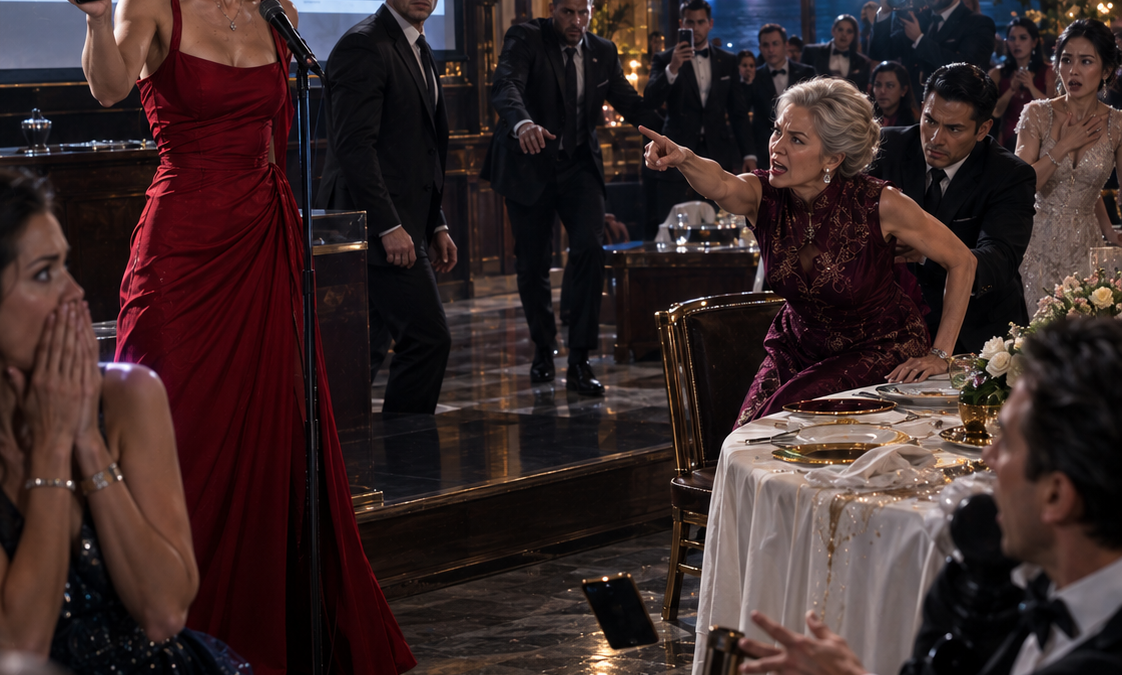
“Because if you’re going to audit me, I’d rather you see everything.”
She thought she was investigating a fraud. She never expected to fall in love with the man who was helping her expose it.
The folder hit the conference table with a sound like a slap.
Elena Vasquez didn’t flinch. She had been in rooms like this before — glass walls, harbor views, men who spent more on their watches than she’d earned in her first three years of work. The watch on the wrist of the man across from her was a Patek Philippe. She knew because her father had owned one, once, before the bankruptcy took everything.
“The numbers don’t match,” she said.
Adrian Tang didn’t look up from his phone. He was thirty-four, the kind of man who had been photographed for magazine covers the way other people were photographed for passports — regularly, flatteringly, and without apparent effort. The Tang family had controlled half the shipping lanes into southern China for three generations. The man sitting across from her had inherited the entire apparatus eighteen months ago, when his father’s heart gave out in a board meeting.
It was a very touching story. Elena had read it in a prospectus.
“Which numbers?” Adrian asked, still scrolling.
“All of them.” She pulled a second folder from her bag, then a third. “Your Q3 earnings report shows a nine percent increase in logistics revenue. Your internal audit trail shows a fourteen percent decrease in shipping volume over the same period. Your customs declarations show a twenty-two percent increase in container traffic through the Kwai Tsing terminal.”
Adrian set down his phone.
“Those are three different measurement systems,” he said. “They don’t correlate directly.”
“I know.” Elena slid a fourth document across the table. “That’s why I pulled the raw shipping manifests. The ones your subsidiary files with the Marine Department. They show a twenty-two percent increase in volume, but the revenue attributed to that volume is — ” she tapped a column of figures — “impossibly low. Unless you’re running your ships at a loss, which your filings to the SFC say you’re not.”
For the first time, Adrian looked at her directly.
His eyes were dark, almost black, and there was something behind them that Elena couldn’t quite name. Not anger. Not guilt. Something closer to recognition. As if he’d been expecting her — or someone like her — for a very long time.
“You’re the auditor,” he said.
“Consultant. The SFC contracted my firm independently.”
“I know who contracted you.” He leaned back in his chair, and the leather creaked. “What I don’t know is why they think a cybersecurity specialist can read a balance sheet.”
“I can read a lot of things.” Elena didn’t smile. “Your firewall has three unpatched vulnerabilities, your CFO’s email was compromised six weeks ago by a phishing attack that originated from a server in Belarus, and someone in your organization has been systematically altering financial records before they reach your external auditors. I found the alterations. I traced the access logs. Now I’m asking you why.”
The silence that followed was not empty. It was full of things unsaid.
Adrian’s office occupied the top three floors of the Tang Tower, a brutalist monument to family money that had been softened over the decades with imported marble and an art collection that included two Rothkos and a Basquiat. The view stretched from the Peak to the harbor, the water glittering like something expensive. Elena had grown up in a flat in Sham Shui Po, four hundred square feet, six people, one bathroom. She had learned early that the view from the top was always paid for by someone standing below.
“My father built this company,” Adrian said finally. “He built it with partners I wouldn’t have chosen and methods I wouldn’t have used. When he died, I inherited his partners. I inherited his methods. And I inherited the consequences.”
“That’s a very elegant way of saying you found fraud in your own house.”
“I’m saying I’m aware of irregularities.” His jaw tightened — not a tick, she noted, but a deliberate movement, as if he was physically holding back words. “I’m saying some of those irregularities predate my tenure. And I’m saying the SFC already knows more than they’re telling you.”
Elena kept her expression neutral. Inside, something cold settled in her chest.
“What do you mean?”
“I mean you’re not the first auditor they’ve sent.” Adrian stood, walking to the window. His reflection in the glass was distorted by the city beyond it — a man made of skyline and shadow. “Three years ago, a forensic accountant named David Chen was contracted to review the same records you’re reviewing now. He found the same discrepancies. He filed a preliminary report.”
“What happened to him?”
“He was reassigned. The report was sealed. And six months later, he was dead.” Adrian turned. “Car accident on the Tolo Highway. Single vehicle. No witnesses.”
Elena’s hands were steady on the folder. She had learned to keep them steady through worse things than this.
“Are you threatening me, Mr. Tang?”
“I’m warning you.” He crossed the room, stopping close enough that she could smell his cologne — something woody and expensive, cut with citrus. “There are people in this company who don’t want those numbers to match. There are people on the regulatory side who don’t want them to match either. You’re walking into something that’s been running for decades, and you’re doing it alone.”
“I’m not alone.” She held his gaze. “I have the full backing of the Securities and Futures Commission.”
“Do you?” His voice dropped. “Then why did they send you without telling you about David Chen?”
She had no answer for that.
Adrian watched her for a long moment, and something shifted in his expression — a crack in the marble, quickly sealed.
“I’ll have my assistant send you the access credentials for the secondary servers,” he said. “The ones your current permissions don’t cover.”
“Why would you do that?”
“Because if you’re going to audit me, I’d rather you see everything.” He turned away. “Some of it will make you want to leave. Some of it will make you want to stay. I’d prefer you make that choice with all the facts.”
Elena gathered her folders. At the door, she paused.
“The first time we met,” she said, “you knew who I was. You knew why I was there. You’d been expecting me.”
“Yes.”
“How?”
Adrian didn’t turn around. His reflection in the window was perfectly still.
“Because I’m the one who requested the audit.”
CHAPTER TWO: The Woman From the SFC
The elevator took forty-three seconds to descend from the executive floor to the lobby. Elena counted them, because counting was how she stayed calm when her mind was racing.
Adrian Tang had requested the audit.
The implications stacked themselves like code errors in her head. If he’d requested it, he wasn’t protecting the fraud. He was exposing it. But if he was exposing it, why hadn’t he just handed over the records? Why the elaborate dance? Why let her find the discrepancies on her own?
And why warn her about David Chen?
She stepped out into the marble lobby, where the security guards wore suits and the reception desk was manned by two women who looked like they’d been hired for their ability to smile through anything. Elena’s phone buzzed before she reached the revolving doors.
Unknown number: Dinner tonight. 8pm. The Peninsula. Come alone.
She typed back: Who is this?
Unknown number: You’ll want to hear what I have to say. Ask about the Kowloon project.
Elena stared at the screen. The Kowloon project was a twenty-billion-dollar development deal that Tang Holdings had announced six months ago — a new financial district on reclaimed land, backed by a consortium of investors that included three sovereign wealth funds and the Bank of China. It was the crown jewel of Adrian’s tenure. It was also, according to the discrepancies she’d just found, funded by money that didn’t exist.
She saved the number. She didn’t respond.
Her office was in a serviced building in Quarry Bay, twelve floors of consulting firms and insurance adjusters and one very good dim sum place on the ground floor. Elena’s workspace was a converted storage room with a single window that faced an airshaft. She’d been offered a bigger office twice. She’d turned it down both times.
Small spaces were easier to secure.
She spent the afternoon cross-referencing the files Adrian’s assistant had sent over. The secondary servers contained records that should have been in the primary system — shipping manifests, customs declarations, wire transfer receipts. The kind of documents that auditors killed for. The kind of documents that got auditors killed.
The more she looked, the less anything made sense.
The discrepancies weren’t random. They followed a pattern — a specific, deliberate pattern that mimicked legitimate transactions so closely that a casual review would have passed them. Someone with deep knowledge of the company’s systems had created a parallel accounting structure, designed to divert funds into accounts that didn’t appear on any balance sheet.
But the funds weren’t going to offshore shells or personal accounts. They were going somewhere else entirely — a network of holding companies registered in the Cayman Islands, all ultimately controlled by a single entity: something called Lantau Holdings .
Elena searched the name. It appeared in three separate regulatory filings, each time as a minor shareholder in a Tang subsidiary. The address was a PO box in George Town. The directors were listed as two names she didn’t recognize — and one she did.
Margaret Tang.
Adrian’s mother.
She arrived at The Peninsula at 7:58, wearing a black dress that was professional enough for a meeting and formal enough for a hotel bar. The lobby was all gold leaf and string quartets, old money preening for new cameras. She was directed to a private dining room on the eighth floor, where a table for two had been set by the window.
The man waiting for her was not Adrian.
He was older — sixties, maybe — with silver hair cut short and a suit that had been tailored for a body that had once been athletic. His face was familiar in the way that faces from the news were familiar. Elena placed him after a beat: Victor Cheng, former deputy commissioner of the SFC, retired two years ago under a cloud of unexplained circumstances.
“Ms. Vasquez.” He stood, offering a hand. His grip was dry and firm. “Thank you for coming.”
“You said you had information about the Kowloon project.”
“I said I had information. I didn’t specify what.” He gestured to the chair across from him. “Please. Sit.”
She didn’t sit.
“David Chen,” she said. “You knew him.”
Victor’s expression didn’t change, but something behind his eyes flickered. “David was my protégé. He was a good auditor and a better man. His death was a tragedy.”
“His death was a murder.”
“That’s a strong word.”
“It’s the accurate one.” Elena stayed standing. “You sent him into Tang Holdings. You knew what he would find. And when he found it, you let him die rather than expose what was really happening.”
Victor was quiet for a long moment. Then he poured himself a glass of water from the carafe on the table, taking his time.
“David was not killed because of what he found,” he said. “He was killed because of who he told.”
“Who did he tell?”
“His handler at the SFC. A man named Thomas Yuen.” Victor took a sip of water. “Thomas is currently the deputy director of enforcement. He’s also the person who assigned you to this audit.”
Elena’s pulse didn’t change. She had trained herself out of that years ago, when she’d learned that panic was a luxury she couldn’t afford.
“Why are you telling me this?”
“Because I made a mistake with David.” Victor set down the glass. “I thought the system would protect him. I thought if we built a strong enough case, with enough documentation, the truth would win. I was wrong. The truth doesn’t win. Power wins. The only thing that matters is who gets to the evidence first.”
“And Adrian Tang?”
Victor’s mouth curved — not quite a smile. “Adrian is an interesting case. He inherited a company that was built on compromises, and he’s spent his entire tenure trying to untangle himself from them. He thinks he can fix the system from inside. He thinks he can be the one honest man in a rigged game.”
“You don’t agree.”
“I think he’s naive. I think he’s dangerous — not because he’s corrupt, but because he’s idealistic. Idealists break things. Sometimes that’s good. Sometimes people die.”
He reached into his jacket and pulled out a slim envelope, sliding it across the table.
“What’s this?”
“Documentation. Proof that the Kowloon project is being funded through a shell network that connects back to Tang Holdings. Proof that Margaret Tang signed off on the transfers personally. And proof that Thomas Yuen has been receiving payments from the same network for the past four years.”
Elena didn’t touch the envelope.
“Why not just give this to the authorities?”
“Because the authorities are compromised. Because the evidence would disappear before it reached anyone who mattered. Because — ” Victor’s voice dropped — “I’m dying. Pancreatic cancer. I have maybe six months. And I’d rather spend them doing one right thing than dying quietly with everything I know.”
She looked at him for a long moment. In the dim light of the private room, he looked old and tired and entirely sincere.
“I’ll need to verify everything in this envelope,” she said.
“Of course. You’re an auditor.” He stood, buttoning his jacket. “One more thing, Ms. Vasquez. You should know that Adrian Tang has been cooperating with the SFC for the past eight months. He’s been feeding them information about his own company — including his mother’s involvement in the fraud.”
“He’s a source.”
“He’s a very valuable source. But he’s also a liability. The information he’s provided doesn’t always match what we’ve found independently. Sometimes it’s close. Sometimes it’s not close at all.” Victor paused at the door. “Either he’s lying to protect someone, or someone is lying to him. Either way, there’s a leak somewhere in the chain. And if you’re not careful, you’ll be the next name on the list of people who knew too much.”
He left.
Elena stood alone in the private dining room, the envelope on the table, the city glittering beyond the window like a promise no one intended to keep.
CHAPTER THREE: Dinner at the Tang Estate
She didn’t sleep that night.
Instead, she opened the envelope and read every document inside. Victor hadn’t lied — the evidence was real, and it was damning. Wire transfers. Board minutes. A memo from Margaret Tang authorizing the creation of Lantau Holdings, dated three years before Adrian took over as CEO. The paper trail was clear, and it led straight to the matriarch of the Tang family.
But there was something else.
A single page, separate from the rest — a printout of an email exchange between Thomas Yuen and an unnamed correspondent. The subject line was empty. The body contained a single line: The son is cooperating. We need to neutralize the auditor before she gets too close.
The date was four days before David Chen’s accident.
Elena read it three times. Then she photographed it with her phone, encrypted the images, and stored them in three separate locations. She was not going to be another David Chen.
The invitation arrived at her office at 9 a.m. It was printed on heavy card stock, embossed with the Tang family seal — a stylized dragon coiled around a pearl. The text was formal, handwritten in a calligrapher’s precise strokes:
Ms. Vasquez,
You are cordially invited to dinner at the Tang Estate this Saturday at 7 p.m. Dress is formal. Attendance is mandatory.
— Margaret Tang
The word “mandatory” had been underlined twice.
The Tang Estate occupied a walled compound on the Peak, behind gates that required both a code and a thumbprint scan. Elena passed through them in a black car that had been sent for her, driven by a silent man who never once looked in the rearview mirror. The road wound upward, past iron fences and security cameras, until the house appeared through the trees — a colonial-era mansion that had been modernized with glass additions and discreet lighting, so that it seemed to float between the old world and the new.
She was met at the door by a housekeeper who took her coat without expression and led her to the drawing room. It was a long, high-ceilinged space filled with antiques and modern art, the kind of careful arrangement that took generations to accumulate and seconds to recognize. There were eight other guests, all of them dressed in the particular manner of people who had never bought clothes off a rack. Elena recognized two faces from newspaper society pages and a third from a regulatory filing.
Margaret Tang stood at the center of it all, holding court.
She was seventy-two, silver-haired and sharp-eyed, dressed in a qipao of deep burgundy that matched her lipstick. She had the kind of presence that made people turn when she entered a room — not because she was loud or imposing, but because she was clearly, unmistakably the person in control. Elena had read about her, in preparation for the audit. The daughter of a shipping magnate, she had married into the Tang family at twenty-two and proceeded to outmaneuver every man who thought her title of “wife” meant “decoration.” She had been the power behind her husband’s throne for forty years. Now she was the power behind her son’s.
Adrian stood near the fireplace, holding a glass of whiskey he hadn’t touched. He was wearing a dark suit and an expression of polite boredom, the way other people wore jewelry. When he saw Elena, something moved in his face — surprise, quickly masked.
“Ms. Vasquez.” Margaret’s voice cut across the room. “How good of you to come.”
Elena accepted the hand extended to her. Margaret’s grip was firm, and her smile didn’t reach her eyes.
“I wasn’t aware I had a choice.”
“There’s always a choice.” Margaret released her hand. “Most people simply make the wrong one.”
Dinner was served in a dining room that could have seated thirty, though there were only eleven at the table. Elena was placed to Margaret’s right — the position of honor, or of scrutiny, depending on how you looked at it. Adrian was across from her, flanked by a woman Elena hadn’t met: delicate, beautiful, dressed in a white lace dress that made her look like she’d stepped out of a different century.
“Ms. Vasquez is the auditor the SFC sent,” Margaret announced to the table, as if introducing a rare specimen. “She’s been reviewing our financials.”
“Fascinating,” said the woman in white. Her voice was soft and precise, with the careful enunciation of someone who had learned English as a second language and then perfected it. “I’ve always wondered what auditors actually do. Do you just read numbers all day?”
“I read patterns,” Elena said. “Numbers are just how the patterns express themselves.”
“How poetic.” The woman smiled. “I’m Vivienne Leung. Adrian’s fiancée.”
The word hit the table like a dropped glass.
Elena kept her expression neutral, but inside, something tightened. She had done her research on Adrian Tang. She had read the profiles, the press releases, the analyst reports. No one had mentioned a fiancée.
“Vivienne and Adrian have been engaged for six months,” Margaret said smoothly. “The wedding is set for next spring. We’re keeping it quiet for now — business reasons.”
“Congratulations,” Elena said. Her voice was perfectly level.
Adrian hadn’t looked at her since she’d entered the room. Now he looked at her, and his expression was unreadable.
“Thank you,” he said. “We’re very happy.”
The rest of dinner passed in a blur of small talk and careful observation. Elena catalogued every detail: the way Margaret’s eyes followed her son, the way Vivienne leaned into him with a possessiveness that seemed almost rehearsed, the way the other guests deferred to Margaret on every topic. This was a family that operated like a corporation — hierarchy, protocol, alliances, enemies. And Elena had just been seated at the center of it.
After dinner, the guests moved to the drawing room for cognac and conversation. Elena slipped away to the terrace, needing air, needing space, needing a moment to think.
She found Adrian there already.
He was standing at the railing, looking out over the city. The harbor lights spread below like a fallen constellation, and for a moment, she saw him not as the heir to a conglomerate but as a man standing on the edge of something vast and uncontrollable.
“You didn’t tell me you were engaged,” she said.
He didn’t turn around.
“You didn’t ask.”
“I read your file. There was no mention of a fiancée.”
“Because the engagement isn’t real.” He turned now, and in the dim light of the terrace, his face looked tired. “Vivienne is my mother’s choice. A merger of families — her father owns half the shipping terminals in Singapore. It’s a business arrangement, nothing more.”
“That’s a very cold way to describe marrying someone.”
“It’s the truth.” He stepped closer. “My mother controls the board. She controls the shares my father left in trust. She controls everything, including who I marry. If I refuse, she’ll take the company apart piece by piece until there’s nothing left to inherit.”
Elena absorbed this. It explained a lot — the tension in his jaw, the way he’d barely touched his food, the way Vivienne had watched him like a cat watching a bird.
“Why are you telling me this?”
“Because you’re going to be around.” His voice dropped. “Because my mother invited you here for a reason — she wants to assess you. She wants to know if you’re a threat. And if she decides you are, she’ll destroy you the same way she’s destroyed everyone else who’s tried to expose what’s happening in this company.”
“Then why did you request the audit?”
He was silent for a long moment. When he spoke, his voice was barely above a whisper.
“Because I’m tired.”
CHAPTER FOUR: The Arrangement
Elena didn’t leave the Tang Estate that night until 2 a.m., when Adrian quietly arranged for a car to take her back to her flat. She spent the drive staring out the window, her mind churning through everything she had learned.
Adrian was a cooperating source. He had been feeding information to the SFC for months — trying to expose his mother’s fraud from the inside. But his reports didn’t match the evidence Elena was finding. Either he was lying, or someone was lying to him. And Margaret Tang was watching both of them, waiting for one of them to make a mistake.
By the time she reached her apartment, she had made a decision.
She called the SFC at 8 a.m. and requested a meeting with Thomas Yuen, the deputy director of enforcement who had assigned her to the audit. She didn’t mention Victor Cheng. She didn’t mention the envelope. She wanted to see Yuen’s face when she asked about David Chen.
Thomas Yuen was a small man with a large office and the kind of careful smile that made Elena want to count her exits. He was fifty-something, with thinning hair and frameless glasses, and he greeted her with the enthusiasm of a man who had something to hide.
“Ms. Vasquez! How’s the audit going?”
“Complicated.” She sat without being invited. “I’ve found significant discrepancies in the Tang Holdings financials. The records show a pattern of diversion through a holding company called Lantau Holdings.”
Yuen’s smile didn’t flicker. “Lantau. Yes, I’m familiar with the name. Minor shareholder in several Tang subsidiaries. Nothing unusual.”
“The transfers into Lantau don’t appear in the parent company’s consolidated statements. They’ve been concealed through a parallel accounting structure that mimics legitimate transactions. Someone with internal access created it.”
“That’s a serious allegation.”
“It’s a serious finding.” Elena leaned forward. “I’ve also found evidence that your office received a report on similar discrepancies three years ago. From a forensic accountant named David Chen. That report was sealed. And Chen died six months later in a car accident.”
Yuen’s expression finally changed — not much, just a tightening around the eyes.
“David Chen’s death was a tragedy. But it had nothing to do with his work here.”
“You’re sure about that?”
“I’m sure.” Yuen folded his hands on his desk. “Ms. Vasquez, I understand you’re taking this audit seriously. That’s commendable. But I’d advise you to focus on the evidence in front of you, not on conspiracy theories. Tang Holdings is a major employer and a pillar of this city’s economy. The last thing anyone wants is a scandal that undermines public confidence.”
“Is that a threat?”
“It’s advice.” His smile returned. “Take it or leave it.”
Elena stood.
“I’ll leave it,” she said. “And I’ll keep digging.”
She was halfway to the door when Yuen spoke again.
“Ms. Vasquez.” His voice was soft, almost gentle. “You’re very good at your job. Everyone says so. But this investigation has been running for a long time, through many hands. You’re not the first person to look into these records, and you won’t be the last. The question isn’t whether you’ll find something. It’s whether you’ll survive finding it.”
She didn’t turn around.
“I’ve survived worse,” she said, and walked out.
That afternoon, her phone buzzed with a text from an unknown number.
Unknown: You asked about the Kowloon project. Meet me at the site. Midnight. Come alone.
She recognized the phrasing. Same as the first message.
She replied: Who is this?
Unknown: Someone who wants the truth out. Unlike your friends at the SFC.
Elena stared at the screen. Every instinct told her this was a trap. But every instinct also told her that the truth was somewhere in the dark, and if she didn’t go looking for it, someone else would bury it.
She texted back: I’ll be there.
The Kowloon project site was a stretch of reclaimed land on the eastern edge of the harbor, surrounded by construction fencing and floodlights that threw harsh shadows across the empty ground. Elena arrived at 11:52 p.m., parked her car a block away, and walked the rest of the distance on foot. The air smelled of salt and diesel, and the only sound was the distant clang of metal on metal.
She was fifty meters from the site entrance when a figure stepped out of the shadows.
Adrian.
He was dressed in dark clothes, no tie, and there was a tension in his shoulders that she hadn’t seen before. He looked like a man who had been waiting for something for a very long time.
“You,” she said.
“Me.” He didn’t smile. “I needed to see you without my mother’s people watching.”
“You could have called.”
“Phones are monitored. Emails are monitored. The only way to speak freely is in person, in a place no one would expect us to meet.” He gestured to the empty construction site. “This seemed appropriate.”
“Why?”
“Because this is where it all started.” He turned, walking toward the fence. “The Kowloon project. The land reclamation. The money that disappeared. My father started this deal twenty years ago, with partners who promised him the world. He didn’t realize until too late that he was building his own prison.”
Elena followed him through a gap in the fence. The ground was uneven, scattered with construction materials and puddles that reflected the floodlights like broken mirrors.
“What are you saying?”
“I’m saying my father wasn’t a victim. He was a participant. He knew what he was doing, and he did it anyway, because the alternative was losing everything.” Adrian stopped at the edge of an excavated foundation, staring down into the darkness. “My mother was the architect. She designed the scheme. She found the partners, set up the shell companies, created the system. My father just signed the papers.”
“And you?”
“I was twenty-two when I found out. I wanted to go to the authorities. My mother told me I would destroy the family.” He laughed, short and bitter. “She told me I would destroy her. And I believed her, because I was young and stupid and I loved her.”
“What changed?”
“David Chen.” Adrian turned to face her. “He came to me three years ago, when he was investigating the company. He told me he had enough evidence to bring down the entire operation. He told me he was going to expose it, no matter the cost. And I — ” He stopped. Swallowed. “I told him to be careful. I told him there were people who would kill to keep this quiet. And he said he knew.”
“And then he died.”
“And then he died.” Adrian’s voice was barely audible. “And I realized that my mother wasn’t just protecting the family. She was protecting herself. And she would do anything — anything — to keep the truth from coming out.”
Elena was quiet for a long moment. The wind picked up, carrying the smell of the harbor, the sound of the city, the weight of everything unsaid.
“Why are you telling me this?”
“Because you’re the first person in three years who’s gotten close enough to matter.” He stepped closer. “Because I’ve been feeding information to the SFC for months, trying to build a case from the inside, and it’s not working. Because every time I give them something, it gets buried. Every time I try to expose the truth, it gets twisted. And I think — ” He stopped, shaking his head. “I think someone on the inside is working against me.”
“You think there’s a mole.”
“I think there’s more than one.” He met her eyes. “I think my mother has people everywhere. I think she’s been watching me for years, waiting for me to make a mistake. And I think — if you keep going the way you’re going — she’s going to kill you.”
Elena held his gaze. The floodlights cast his face in sharp relief, all shadows and angles, and for a moment, she saw something in him that she recognized. Not fear. Not desperation. Something closer to exhaustion — the exhaustion of a man who had been fighting a war he couldn’t win, for a cause he wasn’t sure he believed in anymore.
“I’m not going to stop,” she said.
“I know.” His mouth curved — not a smile, but something close. “That’s why I need you to understand what you’re walking into. My mother controls the board, the shares, the family trust. She has allies in the government, the police, the media. She’s been building this empire for fifty years, and she’s not going to let it fall without a fight.”
“Then I’ll fight harder.”
“That’s not enough.” He reached out, his fingers brushing her wrist — a light touch, almost accidental. “You need leverage. Real leverage. Something she can’t bury or buy or destroy. And I think I know what that is.”
“What?”
“The original transfer documents.” His voice dropped. “The ones my father signed, twenty years ago, when the scheme was first set up. My mother doesn’t know they exist. She thinks my father destroyed them before he died. But he didn’t. He gave them to me.”
Elena’s breath caught.
“Where are they?”
“In a safety deposit box in Zurich.” He released her wrist. “I’ve never accessed them. I’ve never told anyone. Because the moment I do, my mother will know I’ve betrayed her. And she’ll come after me with everything she has.”
“But you’re telling me.”
“I’m telling you.” He met her eyes. “Because you’re the only person I trust to use them right.”
The silence stretched between them, heavy with everything that had been said and everything that hadn’t.
“I need to think about this,” Elena said finally. “I need to verify what you’re telling me. I need to be sure.”
“I know.” He stepped back. “Take whatever time you need. But be careful. My mother has eyes everywhere. If she finds out we’ve spoken — if she finds out what I’ve told you — she’ll move fast.”
“Then I’ll move faster.”
Adrian looked at her for a long moment, and something in his expression shifted — a crack in the marble, a glimpse of something underneath.
“I believe you,” he said. “That’s what scares me.”
CHAPTER FIVE: The Rules of the House
Three days later, Elena received a second invitation to the Tang Estate.
This one was different. It wasn’t printed on card stock or embossed with the family seal. It was a text message, sent from Margaret Tang’s personal number, and it contained only four words:
Come for tea. Alone.
Margaret received her in the garden, under a pergola covered in white wisteria. It was late afternoon, the light golden and soft, and the old woman was seated at a wrought-iron table with a full tea service arranged before her. She looked like a painting — composed, elegant, entirely in control.
“Sit,” she said, gesturing to the chair across from her.
Elena sat.
“Tea?”
“No, thank you.”
Margaret poured herself a cup — oolong, fragrant and pale — and took a slow sip. She didn’t speak for a long moment, and Elena didn’t fill the silence. She had learned early that silence was a tool, and the person who used it best usually won.
“You’ve been investigating my family’s finances,” Margaret said finally. “I assume you’ve found some interesting things.”
“I’ve found discrepancies.”
“Discrepancies.” Margaret smiled. “Such a polite word. What you mean is fraud. Embezzlement. Money laundering. The kind of crimes that ruin careers and end lives.”
Elena didn’t blink. “You’re very direct.”
“I’m old. Directness is one of the few luxuries left to me.” Margaret set down her cup. “I invited you here because I wanted to meet you — the woman who’s been poking around in my accounts. And I wanted to give you a warning.”
“I’ve had warnings.”
“Not like this one.” Margaret leaned forward, and her eyes — dark brown, sharp, entirely unreadable — locked onto Elena’s. “You’re very good at your job. Your record is impeccable. You’ve exposed fraud in three major corporations, and you’ve done it without ever crossing a line. That’s impressive. It’s also why I’m going to offer you a choice.”
“A choice.”
“A deal.” Margaret’s voice was soft, almost gentle. “You can continue your investigation. You can dig through the records, chase the paper trail, try to build a case. And you will fail. Not because you’re not smart enough, but because I’ve been playing this game for fifty years, and I’ve never lost. Your career will be destroyed. Your reputation will be ruined. And you will spend the rest of your life wondering what might have happened if you’d made a different decision.”
“Or?”
“Or you can walk away.” Margaret sat back. “You can file a report stating that you found no evidence of wrongdoing. You can return to your life, your career, your future. And you can forget that any of this ever happened.”
Elena was quiet for a moment.
“And if I refuse both options?”
Margaret’s smile widened.
“There is no third option,” she said. “There never is. The world is built on choices — yes or no, in or out, with me or against me. You cannot stand in the middle. You cannot be neutral. You cannot observe without participating. You must choose.”
“Or what?”
“Or I will destroy you.” Margaret’s voice didn’t change, but the air around her seemed to grow colder. “Not quickly. Not loudly. Slowly, quietly, completely. I will take everything you have and everything you are, and I will leave you with nothing. Not because I hate you. Not because you’ve done anything to me. But because you are a threat, and I do not tolerate threats.”
Elena met her gaze. The old woman’s eyes were flat, empty, like a shark’s.
“I’m not afraid of you,” Elena said.
“Then you’re a fool.” Margaret picked up her tea again. “But fools can be useful. Sometimes they’re the only ones brave enough to do what needs to be done.”
She took a sip, and the conversation was over.
Elena walked out of the garden and through the house, her footsteps echoing on the marble floors. She was halfway to the front door when Adrian appeared at the end of the hallway.
He looked like he hadn’t slept in days.
“What did she say to you?” he asked.
“Nothing I didn’t expect.” Elena stopped. “She offered me a deal. Walk away, or be destroyed.”
“And what did you say?”
“I told her I’m not afraid of her.”
Adrian’s expression flickered — something between admiration and despair.
“You shouldn’t have done that.”
“Why not?”
“Because now she’s going to come after you. Not because you’re a threat, but because you defied her.” He stepped closer, lowering his voice. “My mother doesn’t tolerate defiance. She doesn’t tolerate anything that challenges her control. The only way to survive her is to stay small, stay quiet, stay invisible.”
“That’s not living. That’s hiding.”
“It’s surviving.” He reached for her hand, then stopped, as if remembering where they were. “Elena — please. Be careful. I can’t — I can’t lose another person to her.”
She looked at him, at the exhaustion in his eyes, at the tension in his jaw, at the way his hands were clenched at his sides like he was physically holding himself back.
“You won’t,” she said. “Because I’m not going to lose.”
She walked out of the house and into the fading light, and she didn’t look back.
The call came at 11 p.m.
Elena was in her office, cross-referencing the documents Victor had given her with the files from Adrian’s secondary servers. She had found three more discrepancies — three more transfers that didn’t match the official records — and she was beginning to see the full shape of the scheme.
Her phone buzzed. Unknown number.
She answered.
“Ms. Vasquez.” The voice was male, distorted — filtered through some kind of electronic masking. “You’ve been very busy.”
“Who is this?”
“Someone who’s been watching you. Someone who knows what you’re looking for.” A pause. “You think Adrian Tang is helping you. You think he’s on your side. He’s not.”
“What are you talking about?”
“He’s been lying to you. The information he’s given you, the documents, the access — it’s all been filtered. Edited. Designed to lead you in the wrong direction. He’s not trying to expose his mother. He’s trying to protect her.”
“That’s not true.”
“Isn’t it?” The voice was almost amused. “Check the transfer records from the secondary servers. The ones he gave you access to. Compare them to the originals from the Marine Department. You’ll find they don’t match. Someone’s been altering the numbers — and the only person with access is Adrian Tang.”
The line went dead.
Elena sat frozen, her heart pounding. She opened the files. She ran the comparison.
The voice was right. The numbers didn’t match.
Someone had altered the records. Someone had made the evidence inconsistent — made it look like Adrian was lying, when he might be telling the truth. Or made it look like he was telling the truth, when he might be lying.
She didn’t know which was worse.
CHAPTER SIX: The Mole
The next morning, Elena received a summons from the SFC.
She arrived at 9 a.m. to find Thomas Yuen waiting for her in a conference room, along with two other men she didn’t recognize. One was tall and grey-haired, with the bearing of a retired military officer. The other was younger, sharp-eyed, with a laptop open in front of him.
“Ms. Vasquez.” Yuen’s smile was gone. “We need to talk about your audit.”
“What about it?”
“We’ve received information that suggests you’ve been compromised.” Yuen slid a document across the table. “This is a transcript of a conversation between you and Adrian Tang, recorded at the Kowloon project site two weeks ago. In it, Mr. Tang admits to feeding you false information and asks you to help him conceal evidence.”
Elena picked up the document. It was a transcript — accurate in some places, fabricated in others. Someone had spliced together snippets of their actual conversation with manufactured dialogue, creating a narrative that made her look like a co-conspirator.
“This is a forgery,” she said.
“Is it?” Yuen leaned back. “We have audio. We have witnesses. We have evidence that you’ve been meeting with Tang privately, outside the scope of your audit, and receiving documents from him that you haven’t disclosed.”
“I disclosed everything.”
“You disclosed what you chose to disclose.” Yuen’s voice hardened. “The question is what you’re hiding. And why.”
Elena’s mind raced. Someone had been watching her. Someone had recorded her conversations, manipulated the evidence, and fed it to the SFC. Someone who wanted to discredit her — and Adrian.
“I need to see the audio,” she said.
“That’s not possible.”
“Why not?”
“Because it’s classified.” Yuen stood. “Your audit has been suspended, Ms. Vasquez. Your credentials are revoked. And you are to have no further contact with Adrian Tang or any member of the Tang family until this investigation is complete.”
“You can’t do this.”
“I can, and I have.” Yuen gestured to the door. “You’ll be escorted out. Your access to all SFC systems has been terminated. If you attempt to contact Mr. Tang or continue your investigation, you will be arrested.”
Elena didn’t move.
“You’re making a mistake,” she said.
“I don’t think so.” Yuen’s smile returned. “You see, Ms. Vasquez, I’ve been doing this job for a very long time. And in that time, I’ve learned that the people who claim to be fighting for the truth are usually hiding something themselves. The question isn’t whether you’re compromised. It’s who compromised you.”
She was escorted out of the building by two security guards who didn’t speak. Her phone was confiscated. Her access badge was deactivated. She stood on the sidewalk in the cold morning light, watching the glass doors close behind her, and felt the full weight of what had just happened.
She had been neutralized. Cut off. Made powerless.
And she had no idea who to trust.
She went to the only person she could think of.
Victor Cheng lived in a small flat in Happy Valley, in a building that had seen better decades. He opened the door in a bathrobe, looking frailer than he had at The Peninsula. The cancer was visible now — in the hollows of his cheeks, in the tremor of his hands.
“They suspended me,” Elena said.
“I know.” He stepped aside. “Come in.”
His flat was cluttered with books and papers, the apartment of a man who had spent his life accumulating knowledge and never learned to let go. He led her to a chair by the window and made tea, moving slowly, carefully.
“Thomas Yuen is working for Margaret Tang,” he said. “I’ve suspected it for years. The payments, the sealed reports, the convenient accidents. He’s been her man inside the SFC since before David Chen died.”
“Then why didn’t you stop him?”
“Because I couldn’t prove it. And because — ” Victor sat down heavily. “Because I was afraid. I told myself I was being strategic. I told myself I was waiting for the right moment. But the truth is, I was a coward. And David died because of it.”
Elena stared at him. The old man’s eyes were wet.
“I’m not going to be a coward,” she said.
“I know.” Victor reached into his pocket and pulled out a key. “That’s why I’m giving you this.”
“What is it?”
“A safety deposit box. At a bank in Central. The box is in David’s name — he set it up before he died, and he gave me the key. He said if anything happened to him, I should give it to the person who came looking for the truth.”
Elena took the key. It was cold in her palm.
“What’s inside?”
“I don’t know. I never opened it.” Victor smiled — a sad, tired smile. “I was too afraid. But you’re not.”
The bank was a small institution on Des Voeux Road, the kind of place that had been serving the same families for generations. Elena presented the key and David Chen’s death certificate — Victor had kept a copy — and was led to a private room where the box was waiting.
It contained a single item: a USB drive.
She took it back to her flat, plugged it into a laptop that wasn’t connected to any network, and opened the files.
What she found changed everything.
The drive contained the original transfer documents. The ones Adrian had told her about — the ones signed by his father, twenty years ago, setting up the scheme that would eventually funnel billions of dollars through shell companies and into offshore accounts.
But it also contained something else. Something Adrian hadn’t mentioned.
A series of emails between Margaret Tang and a man named Zhao Wei — a senior official in the Ministry of Finance. The emails detailed a plan to use the Kowloon project as a vehicle for laundering money from state-owned enterprises, with Margaret providing the infrastructure and Zhao providing the political cover.
And there was one more file. A single document, dated three days before David Chen’s death.
It was a police report.
The report described a car accident on the Tolo Highway. Single vehicle. No witnesses. The driver was listed as David Chen. The cause of death was listed as “internal injuries consistent with high-speed collision.”
But there was a note at the bottom, added in handwriting that didn’t match the rest of the report:
Brake lines cut. Not an accident. Investigate Margaret Tang.
The note was signed by a police officer named Sergeant Li Wei — a name Elena recognized. He had been the officer who responded to the scene. He had died six months later, of an apparent suicide.
Elena sat back in her chair, her heart pounding. She had the evidence. She had the proof. She had everything she needed to bring down Margaret Tang and everyone who had helped her.
But she also had a problem.
The evidence was tainted. It had been gathered by David Chen, who was dead. It had been stored in a box that no one knew about. And if she tried to use it, she would be arrested — because her credentials were revoked, her reputation was in question, and Thomas Yuen was waiting for her to make a move.
She needed help. She needed someone on the inside. She needed someone who could verify the documents and present them to the right people.
She needed Adrian.
But Adrian was the one person she couldn’t contact.
 [Tap here for the Next Part ]


