“Even if it’s in a support role.”
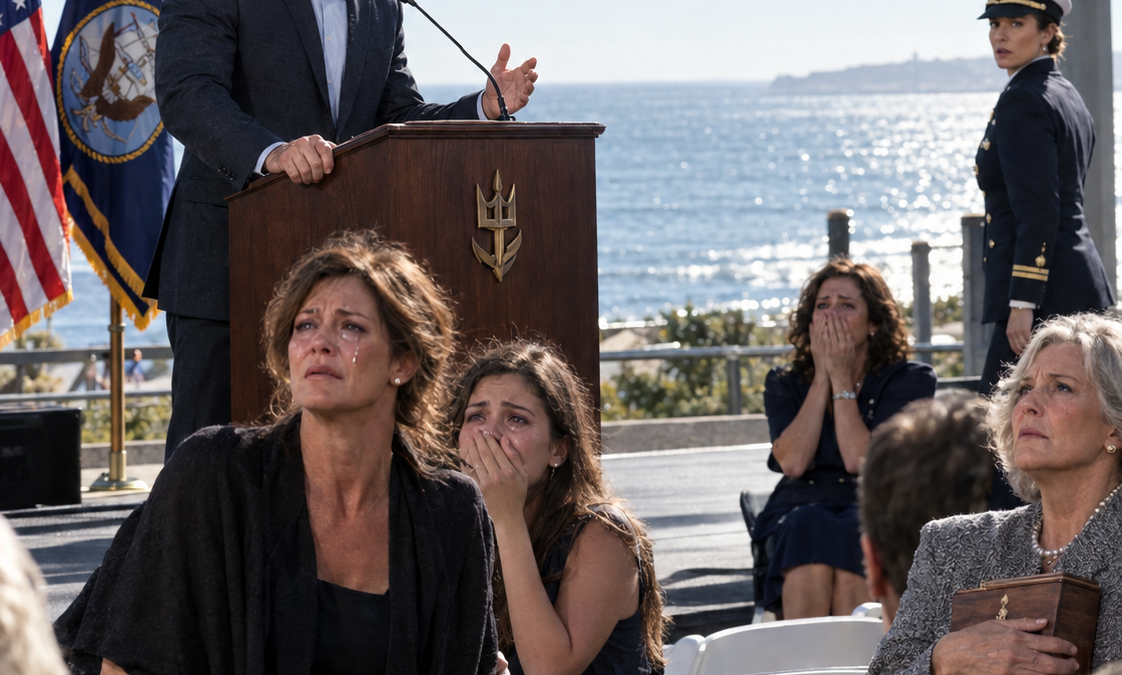
“The process server found me in my driveway at seven in the morning. I was loading a bag of rock salt into the bed of my truck. February in Virginia. The kind of cold that gets into the concrete.”
They thought subpoenaing a quiet veteran’s records would win a divorce settlement — instead, it exposed a twenty-year cover-up, put a congressman in federal prison, and gave five fallen SEALs back their names.
I was loading a bag of rock salt into the bed of my truck. February in Virginia. The kind of cold that gets into the concrete.
“Thomas Vance?”
“That’s me.”
She handed me the envelope. I signed for it because that’s what you do. She left.
I opened it standing there in the cold. My breath fogged the paper.
Subpoena Duces Tecum.
I read it twice. Then I read it a third time, because the words didn’t make sense the first two times.
To: Thomas A. Vance, 52, of Fairfax County, Virginia.
You are hereby commanded to appear and to bring all records, documents, and personnel files related to your military service, including but not limited to any and all records from your service with U.S. Naval Special Warfare Development Group.
I stood there.
The subpoena was issued by the law offices of Pemberton & Grable, LLP. Attorneys for the petitioner in the matter of Whitmore v. Whitmore.
My sister-in-law’s divorce.
What they didn’t know was that the file they were asking me to bring to court was sealed at a level most federal judges never see.
My name is Thomas Vance. I was forty-two years old when I retired from the Navy, and forty-five when I stopped being who I was and started being who my wife’s family wanted me to be.
I spent sixteen years as a Navy SEAL. Eight of those with the Naval Special Warfare Development Group. The unit that doesn’t have a name in most conversations, and when it does, people get uncomfortable.
I did things I don’t talk about. I lost people I don’t talk about. I carried things out of places I will never describe to anyone, including the woman I married.
When I retired, I had a Bronze Star with Valor. Two Purple Hearts. A stack of citations for things that are redacted in the official record. And a letter from a Vice Admiral that I keep in a fireproof safe because it’s the only piece of paper I have that says, in plain English, that the things I did mattered.
I don’t show it to people. I never did.
My wife, Helen, came from a family that measured worth in different ways.
Her father, Gerald Whitmore, built a commercial real estate portfolio in Northern Virginia over four decades. Office parks. Shopping centers. The kind of wealth that’s quiet but deep. He never served. Neither did his sons. They went to Georgetown, then law school, then into the family business.
When I met Helen at a barbecue in 2003, she was thirty-one and working as a paralegal at a firm in Arlington. She was funny and sharp and didn’t ask about my job. That was the first thing I noticed. She just didn’t ask.
I told her I was in the Navy. She said that was nice. She asked what I did. I said I was in logistics.
That was the closest I ever came to explaining myself in the first year.
The Whitmore family was polite to me for about six months.
Then Helen’s brother, Daniel, got married. Big wedding at a country club in McLean. I wore a suit. I stood where I was told to stand. I smiled.
At the reception, Gerald made a toast. He talked about the family. About legacy. About the kind of people who built things that lasted.
Then he looked at me.
“And we’re glad Helen found someone who keeps our country safe,” he said. “Even if it’s in a support role.”
There was laughter. Not mean laughter. The kind that happens when people don’t know they’re being cruel.
I raised my glass with everyone else.
Helen squeezed my hand under the table. She knew. She always knew.
But she didn’t say anything. And I didn’t ask her to.
That was the beginning of the way things would be.
Daniel Whitmore was the golden child. Still is, in a lot of ways.
He took over the family business when Gerald’s health started failing. He was twenty-nine then. He doubled the portfolio in a decade. He married a woman named Katherine, who came from old Richmond money and had opinions about everything.
Katherine never liked me.
I don’t know exactly why. Maybe it was because I didn’t come from her world. Maybe it was because I didn’t care about hers. Maybe it was the way I stayed quiet at dinners, listening, not performing.
She called me “the veteran” like it was a diagnosis.
“How’s the veteran doing?” she’d ask Helen at Christmas. “Still doing his government work?”
I was doing security consulting by then. Risk assessment for defense contractors. The kind of work that requires clearances I can’t talk about.
“Still doing it,” I’d say.
She’d smile. Move on.
That went on for fifteen years.
The divorce wasn’t a surprise.
Daniel had been having an affair for two years. Katherine found out through a private investigator. She filed in Fairfax County circuit court.
What was a surprise was the subpoena.
I called Helen from the driveway that morning. She was at work. She picked up on the second ring.
“Tom?”
“Did you know anything about this?”
“About what?”
“Your brother’s lawyer subpoenaed me. My service records. The classified ones.”
There was a pause.
“That doesn’t make sense,” she said. “Why would they want those?”
“I don’t know. But someone thinks they can use them.”
“Use them how?”
I didn’t answer for a second. I was looking at the papers in my hand. Reading the specific line again.
Including but not limited to any and all records from your service with U.S. Naval Special Warfare Development Group.
“Tom?”
“This isn’t about Daniel and Katherine,” I said. “This is about making your family look good and me look broken.”
“Why would you say that?”
“Because that’s what happens,” I said. “They pull my records, they find something classified, they push for release, and suddenly I’m the unstable one. The dangerous one. The one nobody knew about.”
“Tom, that’s—”
“I’ve seen this before,” I said. “Not to me. But I’ve seen it.”
She was quiet.
“Call your lawyer,” she said finally. “Get ahead of it.”
“I don’t need a lawyer,” I said. “I need the court to understand what they’re asking for.”
“And if they don’t?”
I looked at the envelope again.
“Then I’ll have to make them understand.”
The first hearing was scheduled for the following Tuesday.
I called a man I hadn’t spoken to in six years. His name was Victor Reyes. He’d been my commander at the unit. He was retired now, living in San Diego, running a consulting firm and pretending not to miss the job.
He picked up on the third ring.
“Vance.”
“Commander.”
“Don’t call me that. I’m not your commander anymore.”
“You’ll always be my commander.”
He laughed. Short. Dry. “What do you need?”
I told him.
When I finished, there was silence on the line. Long silence.
“Say that again,” he said. “Slowly.”
“Pemberton & Grable. Fairfax County circuit court. They’re subpoenaing my service records. Including DevGru.”
“Who are these people?”
“Family. In-laws. It’s a divorce case.”
“They’re using your service as leverage in a divorce case?”
“Yes.”
“This is a joke.”
“No.”
Another pause.
“Who’s the judge?”
“Ellerman. Judge Patricia Ellerman.”
“I don’t know her. But I know someone who does. Let me make some calls.”
“Victor, I don’t want—”
“I know what you want. You always want to handle it yourself. But this isn’t yours to handle. This is bigger than you. You know that.”
I did know.
“Make the calls,” I said.
The hearing was in a courtroom on the second floor of the Fairfax County courthouse.
I got there early. Sat in the back.
Katherine was already there. She was in her early forties, blonde, dressed in a navy suit that probably cost more than my first car. She looked at me once. Looked away.
Her lawyer was a man named Andrew Grable. Mid-fifties, silver hair, a reputation for winning by any means. He was the kind of lawyer who made people nervous just by standing in the same room.
He was smiling when he walked in.
Daniel wasn’t there. Daniel’s lawyer was there, a woman named Simmons, who looked like she’d rather be anywhere else.
Judge Ellerman came in at ten past nine. She was in her late sixties, with gray hair pulled back and glasses perched low on her nose. She looked like she’d seen everything and wasn’t impressed by any of it.
“Call the matter of Whitmore v. Whitmore.”
Andrew Grable stood up first.
“Your Honor, before we proceed with the day’s agenda, I’d like to address a discovery matter.”
“Go ahead.”
“We have issued a subpoena to a witness in this case. The witness has failed to produce the requested documents. We’re asking for a contempt citation.”
Judge Ellerman looked at her papers. Then at him.
“Who is the witness?”
“Thomas Vance. The petitioner’s brother-in-law.”
She looked at me. I was still in the back. I didn’t stand.
“And what documents are you requesting from Mr. Vance?”
“His complete military service records, Your Honor. We believe they’re relevant to establishing a pattern of behavior.”
“Pattern of behavior for what?”
“For the respondent’s family environment. The petitioner has concerns about stability.”
I listened. Katherine had been married to Daniel for fourteen years. They had two kids. She wasn’t worried about stability. She was worried about money.
But that’s not what she’d told her lawyer.
The judge turned to the other counsel.
“Ms. Simmons, what’s your position?”
Daniel’s lawyer looked like she wanted to disappear.
“Your Honor, we don’t oppose the subpoena in principle. But we have concerns about the scope.”
Judge Ellerman nodded. Then she looked at me.
“Mr. Vance. You’re here. Do you have counsel?”
I stood up.
“No, Your Honor.”
“You’re representing yourself?”
“I am.”
“Do you understand the subpoena you’ve received?”
“I do.”
“And do you intend to comply?”
I looked at Andrew Grable. He was still smiling.
“Your Honor,” I said. “I’d like to request a brief recess. There’s something the court should know about the documents being requested.”
“Can’t you tell me now?”
“No, Your Honor. It needs to be said properly. And I need a moment to make a call.”
Judge Ellerman looked at me for a long moment. Then she looked at Grable.
“Mr. Grable, do you object to a brief recess?”
“Not at all, Your Honor. I’m curious to hear what Mr. Vance has to say.”
He wasn’t curious. He was confident. That was the problem.
Judge Ellerman nodded.
“Ten minutes. Then we continue.”
I walked out of the courtroom and into the hallway. I called a number I hadn’t called in years.
It was answered on the first ring.
“Special Operations Command, Office of General Counsel.”
“This is Thomas Vance. I need to speak to Admiral Hargrove.”
“One moment, sir.”
I waited.
The door behind me opened. Andrew Grable stepped into the hallway. He looked at me with that same smile.
“Calling a friend, Mr. Vance?”
I didn’t answer.
“Whatever you think is going to happen,” he said, “it won’t. I’ve done this before. Military records are public. You can’t hide behind a uniform forever.”
I still didn’t answer.
A voice came through the phone.
“Tom.”
“Admiral.”
“I heard. Victor called me last night. I’m on my way.”
“You don’t have to—”
“I do have to. You know why.”
I did know.
“Sir, the file they’re asking for—”
“Contains operational details from a mission that has never been acknowledged. I know. I’ve been on the phone with JAG for three hours.”
“Will they let it into the courtroom?”
“Not if I get there first.”
He hung up.
I looked at Grable. He was still smiling.
“See you inside,” he said.
I watched him walk back through the door. My hands were steady. They always were.
But my phone was buzzing again. A text this time. From a number I didn’t recognize.
Thomas. This is Elizabeth Whitmore. Katherine’s mother. I’m on my way to the courthouse. We need to talk before the hearing resumes.
I stared at the message.
I hadn’t spoken to Elizabeth Whitmore in four years. Not since the last Christmas dinner, when she’d asked me to pass the potatoes and called me “Helen’s husband” instead of my name.
What they didn’t know — what none of them knew — was that the file they were asking for wasn’t just mine. It was the file of an operation that had never officially happened, on a night I don’t talk about, and it belonged to seven men, four of whom were still alive.
If Andrew Grable succeeded, he wouldn’t just expose me.
He’d expose them.
I walked back into the courtroom and sat down.
Judge Ellerman looked at me.
“Mr. Vance. You said you had something to tell the court.”
I stood.
“Your Honor,” I said. “The records being requested are classified at a level that this court does not have jurisdiction to review. I’ve notified the Department of Defense. A representative is on their way.”
Grable’s smile flickered.
“Your Honor, this is a delay tactic—”
“Mr. Grable,” Judge Ellerman said. “Sit down.”
He sat.
The door behind me opened.
A woman in a gray suit stepped in. She was in her early sixties, with short silver hair and a face that didn’t give anything away. She walked to the bench and handed a folder to the bailiff.
“Your Honor. Elizabeth Whitmore.”
Judge Ellerman took the folder.
“I’m not an attorney,” Elizabeth said. “But I’m here to tell the court that I’ve spoken to the Attorney General’s office. And I’ve requested that these records be immediately sealed by federal order.”
The room went silent.
Andrew Grable’s smile was gone.
PART 2 — THE SEALED FILE
Elizabeth Whitmore stood at the front of the courtroom like she owned it.
She probably did, in a way. The Whitmore name carried weight in Fairfax County. Generations of it. Buildings named after her family at the university. A wing at the hospital.
But she wasn’t there for the family name.
“Your Honor,” she said. “I apologize for the interruption. I’ve been in contact with the Department of Justice. They’re preparing an emergency motion to seal all records related to Mr. Vance’s service.”
Judge Ellerman looked at her over the glasses.
“Mrs. Whitmore. You’re not counsel in this case.”
“No, Your Honor.”
“Then on what grounds are you addressing this court?”
Elizabeth didn’t flinch.
“On the grounds that I’m the one who asked Mr. Grable to subpoena those records.”
The room went very quiet.
Andrew Grable turned in his chair. His face was pale.
“Elizabeth—”
“I told him to do it,” she said. “I thought it would help Katherine. I thought it would show that the Whitmore family had nothing to hide.”
She paused.
“I was wrong.”
Judge Ellerman set her pen down.
“Mrs. Whitmore, I need you to be very precise about what you’re telling this court.”
“I’m telling you that I instructed Mr. Grable to request Mr. Vance’s military records because I believed they would show a pattern of instability. I’d heard things. Rumors. About what he did before he married Helen.”
“What rumors?”
“That he was discharged. That he had a breakdown. That there was an incident.”
I listened. I didn’t move.
“There was no discharge,” I said. “And there was no breakdown. Not the kind she means.”
Elizabeth looked at me. For the first time in fifteen years, she looked at me like I was a person.
“I know,” she said. “I know now.”
Judge Ellerman called a recess.
She asked both counsel into her chambers. Elizabeth went with them. I stayed in the courtroom.
I sat in the back row and waited.
Katherine was still there. She hadn’t moved. She was staring at the door her mother had walked through.
She turned to me.
“What is she doing?”
“Telling the truth,” I said.
“About what?”
“About why you filed for divorce.”
Her jaw tightened.
“You don’t know anything about my marriage.”
“I know you filed three weeks after Daniel’s affair went public. I know your lawyer requested my records two days later. I know that’s not a coincidence.”
She looked away.
“You think I’m using you,” she said.
“I think someone is. I don’t know if it’s you.”
She didn’t answer.
The door opened. A man in a dark suit stepped in. He was tall, in his late sixties, with close-cropped gray hair and a posture that hadn’t softened with age.
Admiral James Hargrove.
He walked down the aisle and stopped at my row.
“Tom.”
“Admiral.”
“You look good.”
“You look retired.”
He almost smiled.
“Come on. We need to talk before the judge comes back.”
We stood in the hallway outside the courtroom. Hargrove had a folder in his hand.
“Here’s where we are,” he said. “The DOJ is filing an emergency motion. The records you were subpoenaed for are classified under a special access program. They cannot be released to a state court without a federal waiver signed by the Secretary of Defense.”
“Will they sign one?”
“No. I spoke to the Secretary this morning. He’s not signing anything. The operation in question is still under a nondisclosure order.”
“Then why is Elizabeth cooperating?”
Hargrove looked at me.
“Because I told her what would happen if she didn’t.”
I didn’t ask him what he said. I could guess.
The operation was called Nightingale. October 2004. A compound in the mountains outside Kandahar. Seven operators. One target. One extraction.
We got the target. We lost two men getting out.
The details were classified. The names of the men we lost were classified. The fact that the operation happened at all was classified.
If Grable got my service record into a public court filing, it would be reviewed by clerks. By paralegals. By anyone with access to the docket.
And someone would notice.
Someone would see the citation for the Bronze Star with Valor. Someone would see the redacted line item for “Operation Nightingale.” Someone would ask the wrong question and the wrong person would answer.
The men I served with — the four still living — had families. Kids. They’d built lives on the other side of the silence. And a divorce lawyer in Fairfax County was about to blow it all open because Katherine Whitmore wanted a bigger settlement.
“He’s not going to let this go,” I said.
“Grable?”
“Yes.”
“He doesn’t have a choice.”
“He thinks he does.”
Hargrove looked at me.
“Then we’ll make him understand.”
The hearing resumed at two o’clock.
Judge Ellerman took the bench. She looked tired.
“Counsel. I’ve reviewed the motion filed by the Department of Justice. I’ve spoken with the U.S. Attorney’s office. I’ve also spoken with Mr. Grable privately.”
Grable was sitting at his table. He didn’t look confident anymore. He looked like a man who’d been told something he didn’t want to hear.
“The subpoena issued to Mr. Vance is quashed,” Judge Ellerman said. “The records are sealed. Any attempt to obtain them through this court will be denied.”
Katherine’s face went white.
“Your Honor—”
“Ms. Whitmore, you’ll have your day in court. But not like this.”
Grable stood up.
“Your Honor, with respect, I’d like to place on the record that this ruling is highly unusual. The court is effectively allowing a federal agency to override a state court’s discovery process.”
“The court is doing no such thing. The court is complying with federal law. Sit down, Mr. Grable.”
He sat.
Judge Ellerman looked at me.
“Mr. Vance. I want to apologize to you on behalf of this court. The subpoena should never have been issued. I’m going to enter an order that requires Mr. Grable to show cause why he shouldn’t be sanctioned for filing a discovery request that any competent attorney would have known was improper.”
Grable’s face twitched.
“Your Honor—”
“Sit down.”
He sat.
I stood up.
“Your Honor, I don’t want sanctions. I want something else.”
“What’s that?”
“I want the record to reflect the truth. Not just that the records are sealed. But why.”
Judge Ellerman looked at me.
“Go ahead.”
I turned to face the courtroom. Katherine. Grable. The few people in the gallery.
“Sixteen years ago, I was part of a team that conducted a mission in Afghanistan. Seven men went in. Five came out. The two we lost were named Michael Aronson and David Reyes. They were my friends.”
I paused.
“The records being requested by Mr. Grable would have exposed details of that mission that are still classified for a reason. Not to protect me. To protect the families of the men who died. And to protect the four men who are still alive, who have spent twenty years trying to live normal lives without anyone knowing what they did.”
I looked at Katherine.
“I’m sorry your marriage didn’t work. I’m sorry you’re hurting. But you can’t use me to hurt someone else. Not like this.”
She didn’t say anything.
Grable didn’t say anything.
Elizabeth Whitmore was sitting in the back row. She was crying.
The hearing ended ten minutes later.
Judge Ellerman issued the quashing order. She set a sanctions hearing for the following month. She told Grable she expected a written explanation for why he’d issued the subpoena.
He left without looking at anyone.
Katherine left with her lawyer. She didn’t look at me either.
Elizabeth stayed.
She walked up to me in the hallway outside the courtroom. Her eyes were red.
“I’m sorry,” she said.
“I know.”
“I didn’t understand what I was doing. I thought—”
“I know what you thought.”
She looked at me.
“Katherine told me you were a nobody. That you’d never done anything. That you were just Helen’s husband who did something vague in the Navy and never talked about it.”
“I am Helen’s husband.”
“But you’re not a nobody.”
I didn’t answer.
“You’re a hero,” she said.
“I’m a man who did his job.”
“That’s not the same thing.”
“It’s exactly the same thing.”
She looked at me for a long moment.
“I’d like to make this right,” she said.
“You can’t.”
“I know. But I’d like to try.”
I thought about it.
“Then tell your daughter the truth. Not about me. About Daniel. About why she really filed for divorce.”
Her face changed.
“How do you know about that?”
“I know Daniel’s been hiding money in a shell company for three years. I know Katherine found out. I know she filed for divorce because she wanted leverage, not because she wanted out.”
Elizabeth stared at me.
“How do you know that?”
“I have friends,” I said. “And I pay attention.”
I drove home that night.
Helen was waiting in the kitchen. She’d made dinner. She looked tired.
“How did it go?”
“It went.”
“That’s all?”
I sat down at the table.
“I told the truth,” I said. “In front of everyone.”
She sat across from me.
“About the mission?”
“Some of it.”
“Tom.”
“I didn’t tell them what happened. I told them what it cost.”
She reached across the table and took my hand.
“I’m sorry I never asked,” she said.
“You didn’t have to ask. I would have told you.”
“Would you?”
I thought about it.
“No,” I said. “I wouldn’t have.”
She laughed. It was a tired laugh.
“You’re impossible.”
“I know.”
We ate dinner. It was quiet. The good kind.
But my phone buzzed at nine o’clock. A text from Victor Reyes.
Check your email. I sent you something from the old unit. You’re going to want to see it.
I opened my laptop.
The email had one attachment. A scanned document.
It was a letter from the Secretary of the Navy. Dated three months ago.
Dear Mr. Vance,
You are hereby notified that the Department of the Navy has approved the declassification of certain operational records related to your service. In recognition of your contributions, and in accordance with the recommendations of the review board, you are invited to attend a ceremony at the Naval Special Warfare Command on March 15th, where you will be recognized for your service and the service of the men under your command.
Please note that this ceremony will be public. Family and friends are welcome.
I stared at the screen.
“What is it?” Helen asked.
I turned the laptop toward her.
She read it twice.
“Tom,” she said. “This is—”
“I know.”
“Are you going to go?”
I looked at the letter again.
“Someone told me once that silence is a weapon,” I said. “That you use it when you need to protect people. But you can’t use it forever.”
“Who told you that?”
“Victor.”
She nodded.
“Then I think you should go.”
I closed the laptop.
“Then I’ll go.”
The next morning, I got a call from a number I didn’t recognize.
“Mr. Vance?”
“Yes.”
“This is Rachel Aronson. Michael’s wife.”
I sat down.
“Rachel.”
“I heard what happened in court yesterday. A friend of mine works at the courthouse. She told me you stood up for Michael and David.”
“I didn’t do anything special.”
“You did. You said their names out loud. In a room full of people who didn’t know them.”
I didn’t know what to say.
“Mr. Vance, I’d like to come to the ceremony. If that’s okay.”
“You don’t need my permission.”
“I know. But I wanted to ask anyway.”
“You’re welcome there,” I said. “Always.”
She was quiet for a moment.
“Thank you,” she said. “For not forgetting them.”
“I never forgot them.”
“I know.”
She hung up.
I sat in my kitchen for a long time.
The letter was still on my laptop screen. The ceremony was in three weeks.
What they didn’t know — what none of them knew — was that the Navy wasn’t just recognizing me. They were recognizing the men who didn’t come home. And that meant the ceremony wasn’t going to be about me at all.
It was going to be about Michael Aronson and David Reyes.
And the four men who were still alive, who’d been waiting twenty years for someone to say their names out loud.
I sent a text to Victor.
Did you know about this?
His reply came fast.
I recommended it. The board asked me if there was anyone from the unit who deserved recognition. I gave them your name.
Why?
Because you never asked for anything. Not once. Not after the Bronze Star. Not after the Purple Hearts. Not after you carried Aronson out of that compound on your back for two miles. You never asked for a thing.
I didn’t do it for recognition.
I know. That’s why you deserve it.
I put the phone down.
I walked out to the garage. The bag of rock salt was still in the bed of my truck. I hadn’t moved it since the process server handed me the envelope.
I picked it up and carried it to the shed.
The cold was still there. February in Virginia. But it felt different now.
It felt like the beginning of something.
PART 3 — THE SANCTIONS HEARING
The sanctions hearing was March 4th.
Grable showed up with new counsel.
That was the first sign something was wrong. He wasn’t alone anymore. He had a woman next to him, mid-forties, dark suit, the kind of face that had never had to apologize for anything. Her name was Diane Kessler. She worked for a firm out of D.C.
I’d heard of the firm. Everyone had.
They handled defense contracts. Government work. The kind of clients who couldn’t afford to lose a classified document.
I sat in the back row and watched them.
Judge Ellerman took the bench at nine sharp.
“Mr. Grable. You were ordered to show cause why this court shouldn’t sanction you for the subpoena issued to Mr. Vance. You’ve submitted a written response. I’ve read it.”
“Thank you, Your Honor.”
“It doesn’t explain why you asked for classified records in a state divorce proceeding.”
“Your Honor, with respect, my client had a good-faith belief that the records were relevant to—”
“To what? Her brother-in-law’s mental stability?”
“To the family environment, Your Honor.”
Judge Ellerman looked at him for a long moment.
“Mr. Grable. I’ve been on this bench for eighteen years. I’ve seen attorneys try a lot of things. But this is the first time I’ve seen a lawyer subpoena a decorated combat veteran’s classified personnel file to win a property settlement.”
Grable’s face didn’t move.
“Your Honor, I object to the characterization.”
“Your objection is noted. Now I’d like to hear from Ms. Kessler.”
The woman stood. She was calm. Practiced.
“Your Honor, my firm has been retained to advise Mr. Grable on matters related to this case. We believe the court’s order to quash the subpoena was premature.”
“Premature.”
“Yes, Your Honor. The DOJ filed an emergency motion without giving Mr. Grable an opportunity to be heard on the underlying merits. We’d like to request that the court reconsider.”
Judge Ellerman set her pen down.
“Ms. Kessler, let me explain something to you. The Department of Defense controls the classification of those documents. Not this court. Not your firm. Not your client. If the Department says they’re sealed, they’re sealed.”
“We understand that, Your Honor. But we’d like to inquire as to whether the classification is valid.”
The judge stared at her.
“Excuse me?”
“We’re requesting a review of the classification decision itself. Under Executive Order 13526, an interested party can petition for review of classification decisions. My client’s interest in the records qualifies.”
“That’s not how this works.”
“With respect, Your Honor, we believe it is.”
I watched. I’d seen this move before. Not in a courtroom. In a briefing room. The same calm, procedural push. The same attempt to make the other side explain themselves so many times that something slips.
Kessler wasn’t trying to win. She was trying to force a response.
Judge Ellerman looked at her for a long moment.
“Ms. Kessler, I’d like to speak to you and Mr. Grable in my chambers. Now.”
They were in chambers for forty minutes.
I sat in the hallway. Hargrove had flown back to San Diego, but he’d left someone behind. A young lawyer from the Office of General Counsel. Her name was Lieutenant Commander Renee Foster. She was in her mid-thirties, with short dark hair and an expression that never changed.
“You saw what Kessler did,” she said.
“I saw it.”
“She’s fishing.”
“For what?”
“For a response. Any response. If the Navy files a detailed brief explaining why the records are classified, she can subpoena the brief. If the Navy doesn’t file, she can argue the classification is arbitrary.”
“Can she win?”
“No. But she can make it cost something.”
“Cost what?”
“Time. Money. Attention.”
I understood.
Someone wanted this in the news. Not a conviction. Just noise.
The door opened. Grable walked out first. He looked past me.
Kessler came out second. She looked at me.
“Mr. Vance.”
“Ms. Kessler.”
“You should know that my firm represents clients who have a legitimate interest in the records you’re trying to keep sealed.”
“What clients?”
She smiled.
“That’s confidential.”
She walked past me. Grable followed her.
Foster was behind me.
“Did you hear that?” she asked.
“I heard it.”
“Do you know what it means?”
“It means someone with money is paying her. And that someone doesn’t care about a divorce.”
I went home that afternoon.
Helen was in the living room. She’d taken the day off.
“How did it go?”
“Someone hired a bigger lawyer.”
“What does that mean?”
“It means the divorce isn’t the point anymore.”
She sat down on the couch.
“Tom. What aren’t you telling me?”
I looked at her.
“You remember the operation I told you about. Nightingale.”
“Only that it happened. You never told me what it was.”
“I’m not going to. But I can tell you there are people who would prefer it stay classified. Not because it was a secret. Because of what it would reveal.”
“To who?”
“To anyone who knew what we were doing in that region. There were deals made. With people who were supposed to be enemies. The mission wasn’t just an extraction. It was a cover.”
“For what?”
“For something bigger. Something that never showed up in the official record.”
Helen was quiet.
“Is that why you never talk about it?”
“That’s part of it.”
“And the other part?”
I looked at the window.
“The other part is that Michael Aronson died on my orders. I called the breach. I made the call. And he didn’t come out.”
She came over and sat next to me.
“Tom.”
“I’ve lived with that for twenty years. I don’t need anyone to tell me it wasn’t my fault. I know it wasn’t. But I still made the call.”
She put her hand on my shoulder.
“That’s why you don’t talk about it.”
“Yes.”
“Then why are you going to the ceremony?”
I thought about it.
“Because Michael’s wife asked me to.”
The next morning, I got a call from a reporter.
Her name was Julia Pace. She worked for a national outlet. She’d gotten my number from somewhere. She didn’t say where.
“Mr. Vance, I’m working on a story about a subpoena that was issued in a Virginia divorce case. The subpoena involved classified military records. Do you have any comment?”
“No comment.”
“Can you confirm that you’re the subject of the subpoena?”
“No comment.”
“Mr. Vance, I want to make sure the story is accurate. If you don’t talk to me, I’ll have to rely on other sources.”
“Then rely on them.”
I hung up.
I called Foster.
“There’s a reporter.”
“I know. She called us too.”
“What did you tell her?”
“The same thing we tell everyone. No comment on ongoing legal matters.”
“She’s going to run the story.”
“She probably will.”
“Can you stop her?”
“No. But we can make sure she gets the facts right.”
“How?”
“By giving her a better story.”
I didn’t understand.
“What does that mean?”
“You’ll see,” Foster said. “The ceremony is in ten days.”
I spent the next week doing what I always did when things got complicated.
I worked.
I had a contract with a defense contractor out of Reston. Risk assessment for a new facility. Mostly paperwork. Some site visits. The kind of work that keeps my mind occupied.
On Wednesday, I got a visitor.
Daniel Whitmore.
He was standing in my driveway when I got home. In a coat that cost more than my truck payment. He looked like he hadn’t slept in a week.
“Tom.”
“Daniel.”
“Can I come in?”
“No.”
He nodded. Like he expected that.
“I wanted to talk to you about the sanctions hearing.”
“What about it?”
“Katherine’s lawyer is going to keep pushing. Kessler’s firm is expensive. Katherine can’t afford it.”
“Then she should drop it.”
“She can’t. Her mother is paying for it.”
I looked at him.
“Elizabeth?”
“Yeah. She hired Kessler.”
I stood there.
“Why?”
“I don’t know. Something changed after the first hearing. She won’t talk to me. She won’t talk to Katherine. She just… hired a lawyer.”
I thought about the conversation in the hallway. Elizabeth saying she wanted to make it right.
“Daniel. What did you do?”
He looked away.
“That’s not your business.”
“Your sister is my wife. Your family is my family. That makes it my business.”
“Tom, I don’t need a lecture.”
“Then why are you here?”
He looked at me. For a second, he looked like a kid.
“Because I’m scared,” he said. “Something’s happening. Something I don’t understand. And I think you’re the only one who does.”
I let him in.
We sat in the kitchen. Helen came home while we were talking. She stopped in the doorway.
“Daniel?”
“Hey, Helen.”
She looked at me. I nodded.
She sat down.
Daniel told us. He talked for an hour.
The shell company. The hidden money. The fact that he’d been moving assets out of the family business for three years to fund a side project. A real estate development in South Carolina that was supposed to make him rich.
It hadn’t worked. He’d lost most of it. And the money he’d taken was from the family trust. Gerald’s trust. The one that was supposed to be split between the siblings.
“Does Katherine know?” Helen asked.
“She found out last year. That’s why she filed.”
“Not because of the affair?”
“The affair was a cover. She wanted leverage. She wanted me to give her more in the settlement so she wouldn’t tell Dad.”
“She was blackmailing you.”
“She called it negotiating.”
Helen sat back.
“Daniel. This is—”
“I know.”
“Dad will disinherit you.”
“I know.”
“So what do you want from me?”
He looked at me. Not at Helen.
“I want Tom to talk to Elizabeth. She’ll listen to him.”
“Why would she listen to me?”
“Because you’re the only person in this family who’s ever told the truth.”
I didn’t answer right away.
Daniel sat across from me. Scared. Small. The golden child, finally out of gold.
“Daniel. I’ll do one thing. I’ll call your mother. But I’m not going to ask her to protect you.”
“Then what?”
“I’m going to tell her the truth. About the trust. About the shell company. About everything.”
He looked at me.
“She’ll destroy me.”
“Maybe. Or maybe she’ll do what she should have done years ago.”
“Which is what?”
“Hold you accountable.”
He sat there for a long moment.
Then he nodded.
“Okay.”
I picked up the phone.
Elizabeth answered on the second ring.
“Thomas.”
“Mrs. Whitmore.”
“You can call me Elizabeth.”
“Elizabeth. I’m calling about Daniel.”
There was a pause.
“I know about the money,” she said.
“You do?”
“I’ve known for six months. I hired an accountant to review the trust. He found the transfers.”
“Then why did you hire Kessler?”
“Because I needed to know who else was involved.”
I didn’t say anything.
“Thomas, there are people connected to my son’s business dealings who are not honest people. I don’t mean the development. I mean the people who invested in it.”
“What kind of people?”
“The kind who want their money back. The kind who don’t ask nicely.”
I understood.
“You hired Kessler to find out who they were.”
“I hired her to protect my family. But I made a mistake. She’s not working for me anymore.”
“She’s not?”
“She was approached last week by someone else. A client of her firm’s. Someone with an interest in your military records.”
I stood up.
“Who?”
“I don’t know. But I know they’re not a lawyer. They’re a contractor. A defense contractor.”
The name came to me before she said it.
“Atticus Group.”
“How did you know?”
“Because they were the ones who ran the cover,” I said. “The operation. They were the ones we were protecting.”
 [Tap here for the Next Part ]


