My mother called me forty-eight hours before my wedding to tell me she wasn’t coming. ‘I’m sorry, sweetheart. The timing is just impossible.'”
My mother called me forty-eight hours before my wedding to tell me she wasn’t coming. ‘I’m sorry, sweetheart. The timing is just impossible.'”
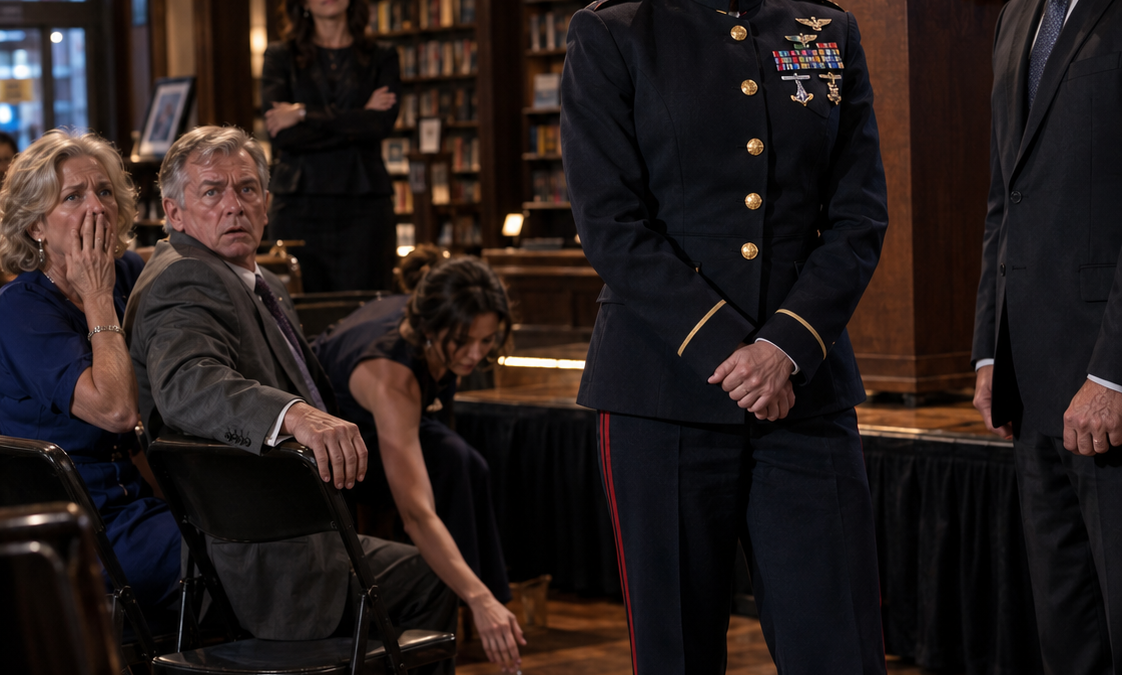
They thought she would stay silent and invisible forever → She stood up in front of the world and made them see the truth.
“I’m sorry, sweetheart. The timing is just impossible.”
I was standing in my kitchen when she said it. Holding a cup of coffee. Looking out the window at the oak tree in my backyard. A blue jay landed on the fence. I remember that detail because my mind grabbed onto it. Something small and ordinary while the rest of me went very still.
“Impossible,” I repeated.
“The launch is Saturday. Your father and I talked about it. We just can’t be in two places at once, and Bradley needs us.”
Bradley. My brother. The writer. The one who was going to be famous.
“Bradley needs you,” I said again. Not a question. I was buying time.
“You know how hard he’s worked on this book. Three years. And the publisher is flying in people from New York. From New York, Katherine. This is his moment.”
I set the coffee cup down. My hand was steady. It always is, even when it shouldn’t be.
“You’ve known about my wedding for eight months.”
“We tried to move the launch. We did. But the publisher set the date. It’s out of our hands.”
What they didn’t know was that I had already met the woman they were so desperate to impress. I had met her three years ago, in a conference room in Arlington, when she was still just a name on a manuscript. But that comes later.
My name is Katherine Marsh. I’m forty-four years old. I spent twelve years in the United States Marine Corps, eight of them in Force Reconnaissance. I did three deployments to Afghanistan and two to Iraq. I have a Silver Star I don’t talk about and a limp I mostly hide. I own a construction company now that does government contract work, and I am very good at my job.
I was getting married on Saturday to a man named Daniel Okonkwo, a high school history teacher who makes me laugh and doesn’t ask too many questions about the parts of my life I don’t discuss. We had been together for six years. He had proposed at a diner in Virginia Beach, and I had said yes before he finished the sentence.
And my parents were going to skip it for a book launch.
“I understand,” I said.
“Thank you, sweetheart. I knew you would.”
She didn’t sound relieved. She sounded satisfied. Like I had passed a test I didn’t know I was taking.
“Give Bradley my best,” I said.
“I will. And Katherine?”
“Yes?”
“Congratulations. Really. We’re so happy for you.”
She hung up before I could respond.
I stood in the kitchen for a long time. The blue jay flew away. The coffee got cold. I didn’t cry. I hadn’t cried in years. Not since Fallujah. Not since I held Ramirez’s hand while he bled out in a courtyard and told him it was going to be okay even though we both knew it wasn’t.
This was different. This was smaller. But it hurt in a way that felt familiar.
Daniel found me in the garage that night.
I was working on a cabinet for the guest bathroom. Sanding. The rhythm of it. The grain of the wood under my palm. I do that when I need to think.
“Your mom called,” he said.
“Yeah.”
“She’s not coming.”
“No.”
He didn’t say anything for a minute. He just stood there, leaning against the doorframe, arms crossed. He’s tall. Six-three. A former college basketball player with knees that ache in cold weather. He wears glasses and cardigans and looks like the kind of man who would never hurt anyone.
“Your dad?”
“Also not coming.”
“Their choice or—”
“His book launch. Bradley’s. The one they’ve been planning for months.”
Daniel was quiet again. Then he said, “That’s bullshit.”
I laughed. It surprised both of us.
“Yeah,” I said. “It is.”
“You want me to call them?”
“No.”
“You want me to—”
“No.”
He came into the garage and sat on the stool next to my workbench. He picked up a scrap of sandpaper and turned it over in his hands.
“So what do we do?”
I set down the sander. I looked at him. Daniel Okonkwo. The best thing that ever happened to me. The first person who ever looked at me and didn’t see a soldier or a daughter or a disappointment. Just me.
“We get married,” I said. “And we have a good time. And we don’t let them ruin this.”
“And after?”
I thought about it. I thought about all the things I had never told my family. All the things they had never asked. The Silver Star in a box in my closet. The letters from generals. The men I had served with who were still alive because of decisions I had made under fire.
“I don’t know,” I said. “Let’s just get through Saturday.”
He nodded. He didn’t push. That’s one of the reasons I love him.
Saturday was going to be complicated enough.
The wedding was at a venue called the Pines. A converted barn outside Richmond, Virginia. Exposed beams. String lights. Long tables with white linens. Daniel and I had picked it because it felt warm. Real. Not like the country club my mother had suggested.
Two hundred guests. Daniel’s family. My friends from the service. A handful of work colleagues. My friend Maya, my first sergeant from my second deployment, was my maid of honor. She had flown in from Germany, where she was training NATO troops.
“You look nervous,” she said, adjusting the shoulder of my dress.
“I’m fine.”
“You’re doing that thing.”
“What thing?”
“The thing where you stand at parade rest without realizing it.”
I looked down. My hands were behind my back. I dropped them.
“Old habits,” I said.
“Old habits,” she repeated. “Katherine. This is your wedding. You’re allowed to relax.”
“I’ll relax when it’s over.”
She laughed. Maya knew me. She knew I didn’t relax. Not really. Not ever.
The ceremony was at four. At three-thirty, I was in the bridal suite, staring at my phone.
No missed calls. No text messages. My parents had promised to call before the ceremony. Just to wish me luck. A small thing.
They didn’t.
I put the phone in my purse. I didn’t check it again until after the vows.
The ceremony was beautiful.
Daniel cried when he saw me. I didn’t. I wanted to. I wanted to feel the flood of emotion that everyone talks about. But I felt calm. Steady. The way I feel in the field. The way I feel when I’m about to make a decision that matters.
The officiant was a retired judge who had been Daniel’s mentor. He spoke about patience and partnership. About choosing each other every day.
We said our vows. We exchanged rings. We kissed.
The room applauded.
I looked out at the faces. Daniel’s mother, beaming. His sister, crying. Maya, grinning. Friends from my unit, scattered at different tables, all of them sitting straight-backed and alert even in civilian clothes. Old habits.
And two empty chairs at the family table.
I had reserved them anyway. Hope is a stubborn thing.
The reception started at five-thirty.
I was working the room, doing the rounds, when a man approached me near the bar. Tall. Gray-haired. A suit that fit too well for Richmond. I didn’t recognize him at first, and then I did.
“Ms. Marsh,” he said. “Or is it Mrs. Okonkwo now?”
“Katherine,” I said. “You’re—”
“Colonel Marcus Webb. I don’t know if you remember me. I was the liaison officer for your unit’s last deployment. We met once. Briefly.”
I remembered. A conference room in Kabul. A briefing I wasn’t supposed to attend. He had asked me a question about terrain analysis. I had answered. He had nodded and moved on.
“That was a long time ago,” I said.
“Fourteen years,” he said. “I’ve been following your career.”
I didn’t ask how. I didn’t need to.
“I didn’t know you were invited,” I said.
“I wasn’t. I called your office last week. Your assistant told me you were getting married. She gave me the details. I hope you don’t mind me crashing.”
“I don’t mind.”
“Good. Because I have something for you.”
He reached into his pocket and pulled out a small velvet box. Navy blue. Gold lettering on the lid.
“I was asked to present this to you at a ceremony last year,” he said. “You declined the invitation.”
“I was busy.”
“You were working. I know. But this has been sitting in my office for twelve months, and I decided that today was as good a day as any.”
He handed me the box.
I opened it.
Inside was a medal. A small silver star. I had one already. The one I didn’t talk about. But this one was different. This one had a date on the back. A date I recognized. A mission I remembered.
“This is—”
“Private First Class Antonio Ramirez,” he said. “You wrote his family a letter after he died. You told them he saved your life. You told them he was a hero.”
“He was.”
“The Marine Corps reviewed the action. They agreed. He was awarded the Medal of Honor posthumously. But this—” he tapped the box, “—is something different. His mother asked me to give it to you. She said you were the reason he had the chance to be brave. She said he talked about you every time he called home. She said you were the first person in his life who ever believed in him.”
I didn’t say anything. I couldn’t.
“His mother died last year,” the colonel said. “Before she passed, she wrote you a letter. I have it in my car.”
I looked at the box. I looked at the medal. I looked at the empty chairs at the family table.
“Thank you,” I said.
“No,” he said. “Thank you.”
He nodded once and walked away.
I stood there for a long time. Daniel found me eventually.
“What’s that?” he asked.
I showed him.
He didn’t ask questions. He just put his arm around me and held on.
At nine o’clock, my phone rang.
I was on the dance floor. Daniel’s hands on my waist. My head on his shoulder. The music was slow and old-fashioned. I had been laughing at something he said. Something stupid. Something perfect.
I almost didn’t hear the phone.
But I felt it vibrate in my pocket. I pulled it out.
My mother’s number.
I stepped off the dance floor. Found a quiet corner near the bathrooms. Answered.
“Mom?”
“Oh, Katherine. Hello. I hope I’m not interrupting.”
I looked at the clock. Nine-fifteen. The reception would go until midnight. She knew that.
“You’re not interrupting,” I said. “What’s wrong?”
“Wrong? Nothing’s wrong. Why would something be wrong?”
“Because you didn’t call before the ceremony.”
There was a pause. A small, quiet pause that told me everything.
“Oh, sweetheart. Things got so busy. The launch was today. It went wonderfully, by the way. The bookstore sold out. Bradley signed over three hundred copies.”
“That’s great. Congratulations to him.”
“Thank you. I’ll tell him you said that.”
“Did you need something, Mom?”
“I just wanted to hear your voice. See how it went.”
“It went well. We’re at the reception now.”
“Good. Good. I’m glad.”
Silence.
“Mom?”
“Yes?”
“Why are you really calling?”
She sighed. It was a small sound. A carefully calibrated sound. I recognized it because I had used it myself. When I needed to say something difficult. When I needed to soften the blow.
“Your father and I have been talking,” she said. “About the future. About the family.”
“Okay.”
“With Bradley’s book, there’s going to be a lot of attention. Interviews. Speaking engagements. The publisher wants him to tour.”
“Okay.”
“We think it’s important that we present a united front. As a family. For his sake.”
“What does that mean?”
“It means we need you to be supportive. To be involved. To not—” she paused again, “—to not distract from his moment.”
I leaned against the wall. The music from the reception drifted down the hallway. Someone was laughing. Someone was toasting. Daniel was probably looking for me.
“I don’t understand what you’re asking,” I said.
“I’m asking you to be patient. To let Bradley have his time. To not—” another pause, “—to not make things difficult.”
“Difficult how?”
“You know how you can be, Katherine. So serious. So—” she searched for the word, “—intense. Bradley’s audience is different. They’re creative people. Sensitive. You can’t just talk about—” she waved her hand, I could hear it in her voice, “—your wars and your missions and all of that.”
I didn’t say anything.
“Please don’t take that the wrong way. We’re proud of you. We are. But this is Bradley’s moment. And we need you to let him have it.”
I closed my eyes. I saw the empty chairs. I saw the medal in my purse. I saw Daniel’s face when he asked me if I was okay.
“I have to go, Mom.”
“Of course. Give Daniel my best.”
“I will.”
“Katherine?”
“Yes?”
“Congratulations. Really. I’m sure it was beautiful.”
“Goodnight, Mom.”
I hung up.
I stood in the hallway for a minute. Two. I heard Daniel’s voice in the distance. He was calling my name.
I wiped my eyes. I hadn’t realized I was crying.
I walked back into the reception. Daniel was at the edge of the dance floor, scanning the crowd. He saw me and his face changed. He knew.
“What happened?”
“Nothing. Family stuff.”
He pulled me into a hug. “I’m sorry.”
“Don’t be. It’s not your fault.”
“What did she say?”
“She wants me to let Bradley have his moment.”
“His moment.”
“Yeah.”
He pulled back and looked at me. His eyes were kind. His hands were warm on my shoulders.
“Katherine. You have a Silver Star. You have men and women who would die for you. You have a mother-in-law who already loves you more than your own parents do. You have me. You don’t need their permission to exist.”
I laughed. It came out wet and broken.
“I know.”
“Do you?”
I looked at him. At this man who had chosen me. Who had never once asked me to be smaller than I was.
“Not yet,” I said. “But I’m working on it.”
The reception ended at midnight.
I said goodbye to Daniel’s family. To Maya. To the friends who had flown in from all over the world. I hugged them and thanked them and promised to visit.
And then I went home.
I sat on the couch in my wedding dress. The medal in my lap. The box with the star. The letter from Ramirez’s mother that Colonel Webb had left in my car.
Daniel sat next to me. He didn’t say anything. He just waited.
“What they didn’t know,” I said finally, “is that I’ve met Bradley’s editor.”
He looked at me.
“Her name is Susan Chen. She’s a senior editor at Hartwell Press. She was assigned to his book three years ago.”
“Okay.”
“She called me last year. Out of the blue. She wanted to know if I knew a man named Marcus Webb.”
“Colonel Webb?”
“Yeah.”
“Why did she want to know that?”
I looked at the medal in my lap. The star. The weight of it.
“Because she was writing a book about him. About his career. And she found something in his file. A mission report from 2009. It mentioned a Marine captain who led a rescue operation in Afghanistan. A woman. She wanted to know if I knew who it was.”
Daniel’s face was very still.
“It was me,” I said. “I was that captain.”
“But your brother’s editor—”
“She’s the one who wrote his book.”
“His book.”
“I read it. All of it. I read every page. Because I wanted to know what he said about the war. He didn’t say anything. He wrote about a hero. A man. An invented soldier who did all the things I did. The rescue. The firefight. The decisions under fire. All of it. He made it fiction. He made it male. And he never once mentioned that his sister had been there.”
I stopped. My voice was shaking.
“Susan found out. She asked me if I wanted to do something. I said no. I said it didn’t matter. I said let him have his book.”
“But—”
“Next month, his publisher is announcing the paperback release. They’re doing a big event. A reading. A signing. All the important people are going to be there.”
I looked at Daniel.
“And Susan wants me to come.”
He was quiet for a long time.
“What are you going to do?” he asked.
I looked at the medal. At the star. At the letter from a dead man’s mother.
“I don’t know yet,” I said.
The phone rang again.
I looked at the screen. Bradley.
I didn’t answer.
PART 2 — THE BROTHER’S CALL
I let it ring.
It kept ringing. Bradley doesn’t give up easily. That’s one thing we have in common.
Daniel watched me. He didn’t tell me to answer. He didn’t tell me not to. He just sat there with his hand on my knee, steady as a rock.
The ringing stopped. The voicemail icon appeared.
I didn’t listen to it.
“Tomorrow,” I said. “I’ll deal with it tomorrow.”
We went to bed. I didn’t sleep. I lay there listening to Daniel breathe, staring at the ceiling, running the numbers in my head.
Bradley’s book was called The Long Walk Home. It was published by Hartwell Press. It was about a soldier named Corporal Ethan Cole, a fictional character who served in Afghanistan and did all the things I had done, in all the places I had done them, except he was a man, and he was brave in a way that was clean and simple and easy to sell.
I had read it in one sitting. The night it came out. I had ordered a copy online and sat in my office and read it cover to cover, and by the end I was shaking.
Not with anger. With something worse. Something that felt like grief.
Because I recognized every detail. The terrain. The weather. The way the dust tasted. The radio call signs. The exact sequence of events in the climactic rescue scene, where Corporal Cole leads a team into a village to extract a wounded translator and comes out with three dead enemies and one living friend.
I knew that mission. I had lived that mission.
I had been the one who went into that village. I had been the one who carried the translator out on my back. I had been the one who killed three men in a courtyard and then sat with Ramirez while he died and told him it was going to be okay.
Bradley had never been to Afghanistan. He had never served. He had never even been in a fight, as far as I knew.
But he had my letters.
I wrote home every week during my deployments. Long letters. Detailed letters. I wrote about the terrain and the weather and the missions, because I wanted my parents to understand what I was doing. I wanted them to be proud of me.
Bradley must have read them. He must have kept them. He must have used them.
And he had never said a word.
The next morning, I made coffee and sat on the porch.
Daniel brought me the paper. He didn’t mention the phone. He didn’t mention the wedding. He just handed me the paper and sat down next to me with his own cup.
“I’m going to call him back,” I said.
“I figured.”
“I don’t know what I’m going to say.”
“You’ll figure it out.”
I looked at the phone. Three missed calls. Two voicemails. A text message that said, Katherine, call me. It’s important.
“It’s always important,” I said.
“What?”
“With Bradley. Everything is always important. Every project. Every deadline. Every idea. He’s always in crisis. He’s always on the verge of something huge.”
“And you?”
“I’m just the sister. The one who went away. The one who came back different.”
Daniel didn’t say anything. He just waited.
I called Bradley at nine o’clock.
He answered on the first ring.
“Katherine. Finally.”
“I was busy. I got married yesterday.”
“I know. Mom told me. Congratulations.”
“Thanks.”
There was a pause. I could hear him breathing. He was probably in his apartment in Brooklyn, the one with the exposed brick and the expensive furniture that Mom and Dad had helped him pay for.
“So,” he said. “I need to ask you a favor.”
Of course.
“What kind of favor?”
“The publisher is doing a big event next month. For the paperback. They want me to do a reading. A signing. Some press. It’s a big deal.”
“Okay.”
“They want me to talk about the inspiration for the book. The real story behind it. They think it’ll help with sales.”
I didn’t say anything.
“I was thinking—” he paused, “—I was thinking I could mention you. In the speech. The fact that you served. That you inspired some of the details.”
“Some of the details.”
“Yeah. You know. The military stuff. The terrain. The—” he searched for the word, “—the authenticity.”
“Bradley.”
“Yeah?”
“Where did you get the terrain details?”
Another pause. Longer this time.
“What do you mean?”
“The mountains. The valley. The village. The way the dust tasted. The radio call signs. The exact sequence of the mission. Where did you get all of that?”
“I—” he stopped. “I did research.”
“You did research.”
“Yeah. I read books. I watched documentaries. I talked to people.”
“Which people?”
“Katherine, why are you—”
“Which people, Bradley?”
Silence.
“I read your letters,” he said finally. “Some of them. The ones Mom kept.”
“The ones Mom kept.”
“Yeah.”
“She kept my letters.”
“Yeah. In a box. In the attic. I found them a few years ago. When I was looking for something else.”
“You found them.”
“Yeah.”
“And you used them.”
“I used them as inspiration. That’s all. I changed everything. Names. Places. Details. It’s not the same story. It’s fiction.”
“It’s my story.”
“It’s fiction, Katherine. It’s a novel. Nobody thinks it’s real.”
“I know it’s real. I was there.”
He was quiet.
“I was there, Bradley. I lived it. I carried Ramirez out of that courtyard. I watched him die. You wrote about it like it was an adventure. Like it was something you could put on a page and sell to people.”
“I’m sorry. I didn’t think—”
“No. You didn’t.”
“I’ll mention you. In the speech. I’ll say you served. I’ll say you inspired me. It’ll be good for both of us.”
I closed my eyes.
“Bradley. Do you know what I did over there?”
“What do you mean?”
“Do you know what I actually did? Do you know what I was?”
“You were in the Marines. You were a captain or something.”
“I was a captain. I was also Force Recon. Do you know what that means?”
“Not really.”
“No. You don’t. Because you never asked.”
Silence.
“Next month,” I said. “What’s the date?”
“The fifteenth. At the Strand. In Manhattan. Seven o’clock.”
“I’ll be there.”
“Really?”
“Yeah. I’ll be there.”
“Great. That’s great. I’ll put you on the list.”
“Do that.”
“Katherine?”
“Yeah?”
“Thanks. I mean it. This is going to be a big deal.”
“I know.”
I hung up.
Daniel was watching me from the doorway.
“You’re going,” he said.
“I’m going.”
“To the reading.”
“To the reading.”
“Are you going to say something?”
I looked at him. I thought about Susan Chen. About the phone call she had made. About the question she had asked.
“I don’t know yet,” I said. “But I’m going to be ready.”
The next few weeks were busy.
I had work. Government contracts. A bridge inspection in Norfolk. A renovation project at a Coast Guard station in Cape May. I threw myself into it. Kept my hands busy. Kept my mind off the fifteenth.
Daniel didn’t push. He knew I needed time.
Maya called from Germany. She had heard something in my voice at the wedding. She wanted to know if I was okay.
“I’m fine,” I said.
“You’re lying.”
“Maybe.”
“You want to talk about it?”
“Not yet.”
“Okay. When you’re ready.”
“Thanks, Maya.”
“Katherine?”
“Yeah?”
“Whatever it is. Whatever they did. You don’t owe them anything.”
“I know.”
“Do you?”
I laughed. “You sound like Daniel.”
“Good. He’s a smart man.”
I hung up and went back to work.
Susan Chen called me two weeks before the event.
“Katherine. It’s Susan.”
“I know.”
“Are you coming?”
“I’m coming.”
“Good. I’ve been thinking about what you said. About not wanting to do anything.”
“And?”
“And I think you should reconsider.”
I was sitting in my office. The door was closed. The lights were off. Just the glow of the computer screen and the sound of the rain on the roof.
“Why?”
“Because he’s going to tell your story. In front of hundreds of people. He’s going to take credit for something he didn’t do. Something he doesn’t understand. And nobody is going to know the truth.”
“The truth doesn’t always matter.”
“It should.”
“That’s not how the world works.”
“Maybe not. But you spent twelve years serving your country. You did things most people can’t imagine. You lost people. You lost pieces of yourself. And your brother is going to stand on a stage and pretend it was all his idea.”
I didn’t say anything.
“I’m not asking you to ruin his career,” she said. “I’m not asking you to make a scene. I’m just asking you to be there. To be visible. To let people see who you really are.”
“And then what?”
“Then we’ll see.”
I thought about it. I thought about the medal in my closet. The Silver Star I didn’t talk about. The letter from Ramirez’s mother that I still hadn’t read.
“Susan.”
“Yeah?”
“What did you find in Colonel Webb’s file? About the rescue?”
She was quiet for a moment.
“I found a report that mentioned a Marine captain. A woman. She led the extraction. She carried a wounded translator out of a hostile village. She killed three enemy combatants in close quarters. She stayed with a dying Marine until he passed.”
“That’s classified.”
“I know. I had clearance. I was writing a book about Webb’s career. I was looking for examples of leadership. I found the report, and I found your name, and I did some digging. I found out you were Bradley’s sister.”
“You didn’t tell him.”
“No. I didn’t think it was my place.”
“Thank you.”
“You’re welcome.”
I looked out the window. The rain was coming down harder. The oak tree was swaying in the wind.
“I’ll be there,” I said. “I’ll be there, and I’ll be visible, and I won’t make a scene. That’s all I can promise.”
“That’s enough.”
The night before the event, I opened the box.
I hadn’t opened it in years. It was a small wooden box, the kind you buy at a craft store. I kept it on the top shelf of my closet, behind the winter coats, where I couldn’t see it.
Inside was the Silver Star. The citation. A photograph of Ramirez, smiling, taken before his last deployment. A letter I had written to his mother and never sent.
And the medal Colonel Webb had given me at the wedding. The one from Ramirez’s mother.
I sat on the floor of my closet and held them in my hands.
Ramirez had been twenty-two years old. He had a girlfriend back home. He wanted to be a teacher. He wanted to coach Little League. He wanted to get old.
He didn’t.
I was there when he died. I held his hand. I told him he was going to be okay. I lied.
I had never talked about it. Not with anyone. Not with Daniel. Not with Maya. Not with the therapists the Marine Corps had offered.
I had carried it. Alone. For fifteen years.
And Bradley had turned it into a novel.
I put the medals back in the box. I closed the lid. I put the box back on the shelf.
And then I went downstairs and packed my dress blues.
I hadn’t worn them in years. They still fit. I laid them out on the bed and looked at them for a long time.
The uniform of a Marine Corps captain. The ribbons on the chest. The medals.
I would wear them to the reading.
I would be visible.
And I would let them see who I really was.
The event was at the Strand Bookstore in Manhattan. A famous place. Tall shelves. Wooden floors. A room in the back with a stage and rows of folding chairs.
I got there early. Daniel came with me. He wore a suit and tie and held my hand in the cab.
“You sure about this?” he asked.
“No.”
“You want to turn around?”
“No.”
“Okay.”
He squeezed my hand. I squeezed back.
The room was already filling up when we arrived. Publishers. Editors. Friends of Bradley. People from the literary world who had read the book and loved it.
I saw my parents in the front row. My mother in a blue dress. My father in a gray suit. They were talking to a woman I didn’t recognize. Laughing at something.
They didn’t see me.
I found a seat in the back. Daniel sat next to me.
“You okay?” he whispered.
“Yeah.”
“Your parents are here.”
“I know.”
“You want to say hello?”
“No.”
He nodded.
Bradley came out at seven o’clock. He looked good. Better than I remembered. He had lost weight. He was wearing a black turtleneck and glasses. He looked like a writer.
The crowd applauded.
He stepped up to the podium. He smiled. He adjusted the microphone.
“Thank you all for coming,” he said. “This book means everything to me. It’s the story I was meant to tell.”
I sat very still.
He talked about his process. About the research. About the years he had spent trying to get it right. He talked about the characters. About the themes. About what he hoped readers would take away.
He talked about me.
“My sister served in Afghanistan,” he said. “She was a Marine. She gave me a lot of the details. The terrain. The weather. The way soldiers talk to each other. I owe her a lot.”
The crowd turned to look. I felt their eyes on me. I didn’t move.
“But the story is mine,” he said. “The characters are mine. The hero is mine. I created him. I gave him life. I made him real.”
The crowd applauded.
I sat very still.
And then I stood up.
I didn’t plan it. I didn’t think about it. I just stood up.
The room went quiet.
Bradley looked at me. His face changed.
“Katherine?”
I walked to the front of the room. I didn’t hurry. I didn’t stumble. I walked the way I had been taught to walk. Calm. Steady. In control.
I stopped in front of the stage.
“Bradley,” I said. “You said the hero is yours.”
He didn’t say anything.
“The hero is mine.”
The room was silent. I could hear my mother gasp. I could hear my father shift in his seat.
“The hero is me,” I said. “You took my letters. You took my story. You took the worst thing that ever happened to me and you turned it into a book. And you didn’t even have the courage to make him a woman.”
Bradley’s face was white.
“Katherine, I—”
“I was there, Bradley. In the valley. In the village. I carried Ramirez out. I held his hand while he died. You wrote about it like it was a story. It wasn’t a story. It was my life.”
The room was silent.
And then a man stood up in the back.
He was tall. Gray-haired. He was wearing a dark suit with a small pin on the lapel.
Colonel Marcus Webb.
He walked to the front of the room. He stood next to me. He looked out at the crowd.
“My name is Marcus Webb,” he said. “I’m a retired colonel in the United States Marine Corps. I served with Captain Marsh in Afghanistan. I’m here to tell you that everything she just said is true.”
The room erupted.
PART 3 — THE ROOM
The room erupted.
Voices. Movement. Chairs scraping back. A woman near the front dropped her wine glass and it shattered on the floor. Nobody moved to clean it up.
Bradley stood frozen at the podium. His mouth was open. His hands were gripping the edges of the lectern like he was afraid he might fall.
Colonel Webb stood next to me. He didn’t move. He didn’t flinch. He just stood there, straight-backed, calm, the way men like him always stand.
My mother was on her feet. Her face was red. Her hands were shaking.
“Katherine,” she said. “What are you doing?”
I looked at her. I didn’t answer.
“Katherine. Answer me. What are you doing?”
“I’m telling the truth, Mom.”
“The truth? This isn’t the truth. This is—” she sputtered, “—this is a scene. This is you making a scene.”
“I didn’t make a scene. I stood up. I said one thing. Colonel Webb did the rest.”
She looked at Webb. Her eyes narrowed.
“Who are you?”
“Colonel Marcus Webb. United States Marine Corps, retired. I served with your daughter in Afghanistan. I can verify every detail of her account.”
“You don’t know anything about our family.”
“I know your daughter saved lives. I know she was awarded the Silver Star. I know she carried a dying Marine out of a hostile village while under fire. I know she never asked for recognition. I know all of that.”
My mother’s face went white.
“You—”
“Ma’am.” Webb’s voice was calm. “I’m not here to attack your family. I’m here because I was invited by Susan Chen. She asked me to come. She asked me to be ready.”
My mother turned to look at Susan. Susan was standing near the back of the room, arms crossed, watching.
“You,” my mother said. “You did this.”
“I didn’t do anything,” Susan said. “I just told the truth. Your son wrote a book about a hero he invented. The hero was real. She’s standing right there.”
The room was still noisy. People were talking. Phones were out. Someone was already typing.
Bradley finally spoke.
“Katherine.” His voice was thin. “Please. Let’s talk about this. Privately.”
“There’s nothing to talk about.”
“I’ll give you credit. In the book. I’ll add an acknowledgment. I’ll—”
“You’ll add an acknowledgment.”
“Yes. A full page. I’ll say you inspired the character. I’ll say you served. I’ll say—”
“Bradley.” I stepped closer to the stage. “Do you know what an acknowledgment is worth?”
He didn’t answer.
“Nothing. It’s worth nothing. Because the book is already out. Because people have already read it. Because they already believe you. And an acknowledgment won’t change that.”
“I’ll do a new edition. I’ll—”
“No.”
“Katherine—”
“No, Bradley.”
He looked at my father. My father was still sitting. His hands were folded in his lap. His face was unreadable.
“Dad,” Bradley said. “Say something.”
My father looked at me. He looked at Bradley. He looked at the crowd.
“Let’s go home,” he said.
He stood up. He walked toward the exit. My mother followed him. They didn’t look at me. They didn’t look at Bradley. They just left.
Bradley watched them go. Then he looked at me.
“You did this,” he said. His voice cracked. “You ruined this.”
“I didn’t ruin anything. You did.”
“I worked for three years—”
“You worked for three years on my story. Without asking. Without telling me. Without giving me a single word of credit.”
“You would have said no.”
“Yes. I would have said no. Because it wasn’t yours to take.”
He stared at me. His eyes were wet. I felt nothing.
I turned and walked away.
Daniel was waiting at the back of the room. He put his arm around me and led me out. The crowd parted. People stared. Someone tried to ask me a question. Daniel shook his head and kept moving.
We got into a cab. I gave the driver the address of our hotel.
We didn’t talk. Not for the first ten blocks. Then Daniel said, “You okay?”
“No.”
“You want to talk about it?”
“No.”
“Okay.”
He held my hand. The cab moved through the city. Lights. People. Noise. All of it blurred together.
I didn’t cry. I wanted to. But I didn’t.
The hotel room was quiet.
I sat on the bed in my dress blues. Daniel sat in the chair by the window.
“You want to take those off?” he asked.
“No.”
“You want to keep them on?”
“Yeah.”
“Okay.”
He didn’t ask why. He didn’t need to. He knew I needed to feel it. The weight of it. The uniform. The medals. The person I had been.
My phone buzzed. Then again. Then again.
I looked at the screen. My mother. My father. Bradley. A number I didn’t recognize.
I turned the phone off.
“Tomorrow,” I said.
“Tomorrow,” Daniel agreed.
We slept. Or tried to. I lay awake for hours, staring at the ceiling, thinking about Ramirez. About the letter I still hadn’t read. About the words I had said in that room.
I had told the truth. But I didn’t feel better.
I felt empty.
The next morning, my phone had forty-seven messages.
I scrolled through them while Daniel ordered breakfast.
My mother: How could you do this to your brother?
My father: We need to talk. Call me.
Bradley: You’ve destroyed my career. I hope you’re happy.
Bradley: The publisher is threatening to cancel the paperback. They’re talking about legal action.
Bradley: Call me. Please.
A friend from my unit: Saw the video. You okay?
Maya: I’m booking a flight. I’ll be there tomorrow.
Susan Chen: The story is going viral. Are you okay?
A reporter from the New York Times: Would you be willing to comment?
I put the phone down.
Daniel came over with a cup of coffee. He looked at the screen. He looked at me.
“Viral,” he said.
“Viral.”
“You want to talk to the reporter?”
“No.”
“You want to talk to your family?”
“No.”
“You want to talk to Maya?”
I paused.
“Yeah. Maya.”
I called her. She answered on the first ring.
“Katherine.”
“Maya.”
“I saw the video. I saw the whole thing. I’m so proud of you.”
“I don’t feel proud.”
“What do you feel?”
“Tired.”
“Of course you’re tired. You just told the truth in front of two hundred people. That’s exhausting.”
“It’s not just that.”
“Then what?”
I looked at Daniel. He was sitting on the end of the bed, watching me.
“I don’t know if it was worth it,” I said. “I don’t know if I made anything better. I just made everything worse.”
“Worse for who?”
“For everyone. My parents are furious. Bradley is threatening legal action. The publisher is freaking out. And I’m sitting in a hotel room in Manhattan feeling like I just burned my whole family to the ground.”
“Katherine.” Maya’s voice was firm. “Listen to me. You didn’t burn anything. You held a mirror up to people who have been lying to themselves for years. That’s not the same thing.”
“It feels the same.”
“I know. But it’s not. And you know it’s not.”
I didn’t answer.
“Look,” she said. “I’m flying in tomorrow. I’m going to come see you. We’re going to talk. And then we’re going to figure out what happens next.”
“What happens next?”
“I don’t know. But we’ll figure it out together.”
I closed my eyes.
“Okay.”
“Okay. I love you.”
“I love you too.”
I hung up.
Daniel was still watching me.
“Maya’s coming,” I said.
“Good.”
“She’s going to want to fix this.”
“She’s going to want to help. That’s different.”
I looked at him.
“You’re very calm about all of this,” I said.
“I’m not calm. I’m just not going to add to the noise. You’ve got enough noise.”
I laughed. It came out broken.
“I love you,” I said.
“I love you too.”
The next afternoon, there was a knock on the hotel room door.
Daniel opened it. Maya stood in the hallway. She was wearing jeans and a leather jacket. Her hair was shorter than I remembered.
“Hey,” she said.
“Hey,” I said.
She crossed the room and hugged me. Tight. The way she used to hug me after a mission. The way we used to hug each other when we were the only two people who understood what we had just seen.
“You look good,” she said.
“I look tired.”
“That too.”
She sat down on the bed. Daniel excused himself to go get coffee. Maya watched him go.
“He’s good,” she said.
“Yeah.”
“He’s steady.”
“Yeah.”
“You need steady.”
“I know.”
She looked at me. Her eyes were dark and serious.
“So. What’s the plan?”
“I don’t have a plan.”
“Bullshit. You always have a plan.”
I looked at her.
“I had a plan to tell the truth. I did that. I don’t know what comes next.”
Maya nodded slowly.
“Okay,” she said. “Then let’s figure it out.”
She pulled out her phone. She opened it to a video. It was me. Standing in the Strand. Telling the truth.
“You’ve been seen three million times,” she said. “People are sharing it. People are commenting. People are asking questions.”
“Questions about what?”
“About your brother. About the book. About whether or not it’s true.”
“It is true.”
“I know it’s true. But that’s not the point. The point is that people are starting to ask. They’re starting to wonder. And your brother’s publisher is panicking.”
“How do you know?”
“Susan Chen called me. She said the publisher is trying to figure out how to spin this. They’re talking about issuing a statement. They’re talking about distancing themselves from Bradley.”
“They’re going to drop him?”
“Maybe. If the story keeps growing.”
I sat down next to her.
“I don’t want him to lose his career,” I said.
“Why not?”
“Because he’s still my brother.”
Maya looked at me.
“Katherine. He stole your story. He used your trauma to make money. He lied to everyone. He let your parents skip your wedding for him. He didn’t even ask you.”
“I know.”
“And you still don’t want him to lose his career?”
“No.”
She shook her head.
“You’re a better person than me.”
“I’m not better. I’m just tired of fighting.”
Maya was quiet for a moment.
“Okay,” she said. “Then let’s make sure the truth comes out without destroying anyone. That’s the mission. That’s the objective.”
“The mission.”
“Yeah.”
I looked at her. At this woman who had stood next to me in firefights. Who had saved my life. Who had flown across an ocean to be here.
“Okay,” I said. “Let’s do it.”
The first call was to Susan Chen.
She answered on the first ring.
“Katherine.”
“Susan. I need your help.”
“I’m listening.”
“I don’t want to destroy Bradley. I don’t want to ruin his life. I just want the truth to be known.”
“The truth is already out.”
“I know. But I want it to be official. I want people to know that the story was mine. I want people to know what I did. I want people to know about Ramirez.”
Susan was quiet.
“That’s a lot,” she said.
“I know.”
“You want a correction. A public statement. Something from the publisher.”
“I want the record to be accurate. That’s all.”
She was quiet for another moment.
“I can make some calls,” she said. “But I need to tell you something first.”
“What?”
“Bradley’s publisher is already talking to lawyers. They’re worried about liability. They’re worried about fraud. If the story gets out that the book was based on your letters without your permission, they could be in real trouble.”
“Good.”
“It’s not good. It’s complicated. They might try to settle. They might try to pay you off. They might try to silence you.”
“I’m not interested in being silenced.”
“I know. But I need you to understand what you’re getting into.”
I looked at Maya. She was watching me. She nodded.
“I understand,” I said. “I’ve been in worse fights.”
Susan laughed. It was a dry, tired laugh.
“Okay,” she said. “Let me make some calls.”
The next few days were a blur.
Susan made calls. The publisher made statements. Bradley issued a statement of his own, saying he was “deeply sorry” and that he “had no idea” the story would cause so much pain.
My mother left me a voicemail. Her voice was tight and controlled.
“Katherine. This has gone too far. You need to fix this. You need to tell people the truth.”
I listened to it three times. Then I deleted it.
My father called. I didn’t answer. He didn’t leave a message.
Bradley texted. He asked me to meet him. He said he wanted to talk. He said he was sorry.
I didn’t respond.
Maya stayed with us for a week. She helped me navigate the calls. The emails. The interview requests. She screened the messages. She ran interference.
“You need a lawyer,” she said one night.
“I have a lawyer. He handles my contracts.”
“You need a different lawyer. A media lawyer. A litigator.”
“Why?”
“Because this is going to get ugly. And you need to be protected.”
I thought about it. I thought about the letters. About the book. About the money Bradley had made. About the millions of people who had read his story and believed it was his.
“Okay,” I said. “Find me a lawyer.”
Maya nodded.
“I already have a name,” she said. “She’s a former JAG. She handles cases like this. She’s good.”
“Call her.”
“Already did. She’s expecting you tomorrow at ten.”
The lawyer’s name was Patricia Okafor.
She was a tall woman in her sixties with gray hair pulled back in a bun and a voice that was calm and precise. She had served in the Navy JAG Corps for twenty years before going into private practice.
She listened to my story without interrupting. She took notes. She asked questions.
When I was done, she set down her pen and looked at me.
“You have a case,” she said.
“I don’t want a case. I want the truth.”
“The truth is your case. Your brother used your letters—your intellectual property—without your permission. He profited from them. He may have committed fraud. The publisher may share liability. You have options.”
“What kind of options?”
“A public correction. A financial settlement. A formal statement from the publisher. Any combination of the three.”
“I don’t want his money.”
“Then what do you want?”
I thought about it. I thought about the empty chairs at my wedding. The voicemail from my mother. The medal from Ramirez’s mother. The letter I still hadn’t read.
“I want people to know what I did,” I said. “I want people to know about Ramirez. I want his story to be told. The real story. Not the fiction.”
Patricia nodded.
“Then that’s what we’ll ask for. A public acknowledgment. A correction. A statement from the publisher that the book was based on your experiences without your consent.”
“And Bradley?”
“That’s up to you. You can pursue damages. You can ask for a public apology. You can do nothing.”
“I don’t want to hurt him.”
“I understand. But you need to understand something. If you don’t ask for something, the publisher will spin this. They’ll make you look like a jealous sister. They’ll make him look like a victim. They’ll bury the truth.”
I looked at Maya. She was sitting in the corner, arms crossed.
“She’s right,” Maya said. “You have to ask for something. Otherwise they’ll walk all over you.”
I looked back at Patricia.
“Okay,” I said. “Let’s make a list.”
The list took three hours.
When we were done, Patricia had a document that outlined exactly what I wanted. A public statement from the publisher acknowledging that the book was based on my experiences. A correction in the next printing. A full acknowledgment page. A financial settlement that I would donate to a veterans’ charity. And a public apology from Bradley.
“That’s a lot,” Patricia said. “They might not agree to all of it.”
“Then we go to court.”
“You’re willing to do that?”
“I’m willing to do whatever it takes.”
Patricia nodded.
“Okay,” she said. “I’ll send this to their lawyers today.”
The response came two days later.
Bradley’s publisher agreed to most of the terms. They would issue a public statement. They would correct the next printing. They would add an acknowledgment page. They would make a donation to a veterans’ charity in my name.
Bradley agreed to apologize. Publicly. At a press conference. In front of cameras.
I didn’t watch it.
Maya watched it. She told me later that he looked small. That he read from a prepared statement. That his hands were shaking. That he said he was sorry and that he hoped I could forgive him.
I didn’t feel anything when she told me.
“Are you okay?” she asked.
“I don’t know.”
“Do you want to talk to him?”
“No.”
“Do you want to see the video?”
“No.”
“Okay.”
She turned off the TV. She sat down next to me.
“You did it,” she said. “You won.”
“I don’t feel like I won.”
“I know. But you did.”
The next day, I got a letter.
It was from Ramirez’s mother. The one Colonel Webb had told me about. The one she had written before she died.
I had been carrying it around for weeks. I hadn’t opened it.
I sat on the porch with Daniel. The oak tree was still there. The blue jay was back.
I opened the envelope.
The letter was two pages long. Written in careful, shaky handwriting.
Dear Captain Marsh,
I want to thank you for what you did for my son. He wrote to me about you. He said you were the best leader he ever had. He said you took care of your people. He said you never asked them to do anything you wouldn’t do yourself.
He said you were there when he died. He said you held his hand. He said you told him he was going to be okay.
I know he wasn’t okay. I know he died. But I also know he wasn’t alone. And that means everything to me.
You gave my son a family when he was far from home. You gave him a reason to be brave. You gave him a hero to look up to.
I will never be able to repay you for that. But I want you to know that I am grateful. Every day. For the rest of my life.
Thank you for being there for my boy.
Sincerely,
Maria Ramirez
I read it three times. Then I folded it and put it back in the envelope.
Daniel was watching me.
“You okay?” he asked.
“No.”
“You want to talk about it?”
“No.”
He nodded. He put his arm around me. We sat there for a long time.
The sun went down. The blue jay flew away. The oak tree swayed in the wind.
And for the first time in weeks, I felt something other than empty.
I felt like I could breathe.
 [Tap here for the Next Part ]


