My Oldest Son Called at Midnight — He Works for the FBI — “Hide in the Attic. Right Now.”
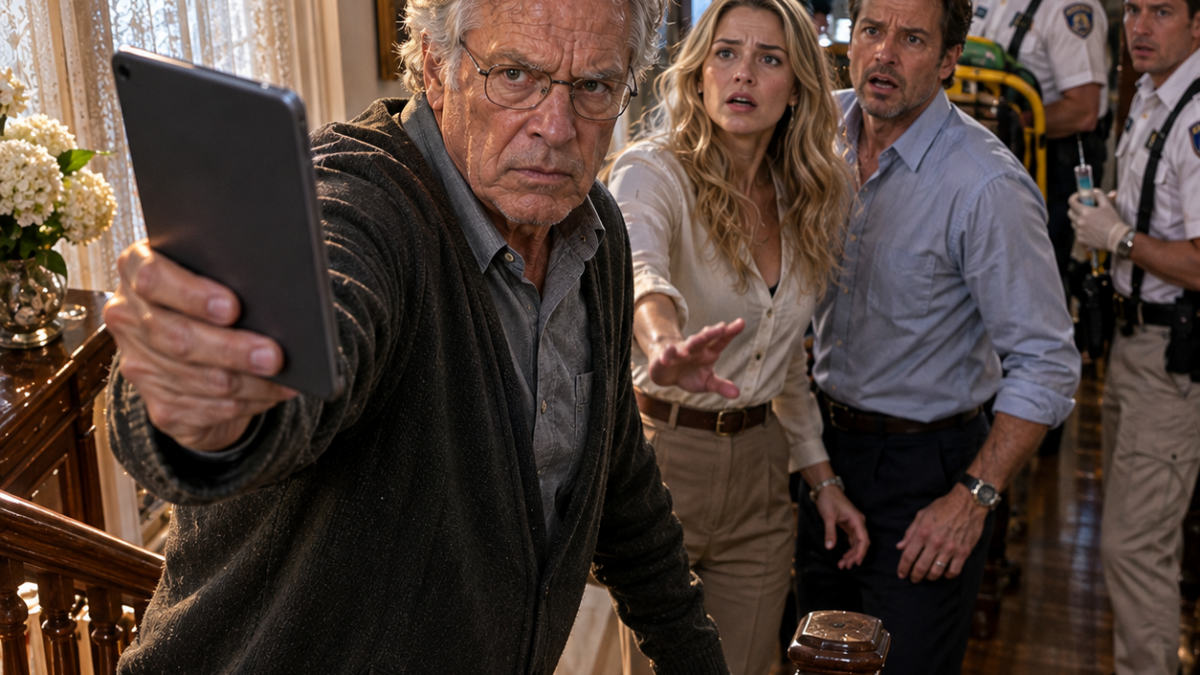
My Oldest Son Called at Midnight — He Works for the FBI — “Hide in the Attic. Right Now.”
At 12:13 a.m., my phone vibrated in the dark. My son, an FBI agent, was whispering, but his voice shook.
Turn off every light, go to the attic, lock the door.
Dont let them know youre awake.
The call ended. No explanation.
I moved without thinking.
Lights out, door locked, breath held.
Through a narrow crack in the attic floor, I watched my own living room below. What unfolded in that quiet house didnt just frighten me.
It shattered the last illusion I had about the people I called family. Thank you for being here with me.
Before we step into this story, Id truly love to know where youre watching from.
Drop your city or country in the comments so we can connect across the miles. Your presence and support mean more than you realize.
And just a quick note before we begin this story includes fictionalized elements crafted for awareness, education, and storytelling impact.
Any resemblance to actual people or places is purely coincidental, but the message behind it carries meaning worth reflecting on. Now, lets begin.
My name is Henry Shaw. I am 67 years old, and for 42 of those years, I have restored damaged paintings in the Hillcrest neighborhood of Willowdale.
People bring me what time has bruised, torn canvases, smoke-darkened portraits, landscapes cracked by heat and neglect, and they trust me to return them to life piece by piece, brushstroke by brushstroke. I study every fracture, every subtle shift in pigment until I understand where the damage began.
It is slow work, patient work, the kind of work that trains your eye to notice what others overlook, the faint inconsistency in color, the hairline crack that doesnt belong.
I never imagined those same skills would one day be the only thing standing between me and ruin.
I live in a Victorian house on Maple Street, tall ceilings trimmed in crown molding, polished banisters worn smooth by decades of hands. My wife Helen loved this house.
She used to say the morning light through the east-facing windows was perfect for painting, soft and forgiving, like a blessing. We bought the place 30 years ago, back when the neighborhood was still finding its footing.
We raised our two children here, watched the oak trees in the yard stretch higher each year until their branches cast wide shade across the porch. Eight months ago, Helen lost her battle with cancer.
It happened faster than either of us were prepared for.
After the funeral, the house felt cavernous, too quiet.
Every room echoed with her absence. I avoided the bedroom for weeks.
Even the studio felt different without her footsteps in the hallway. Our daughter Claire noticed the change in me.
She had always been perceptive, even as a child.
I remember her standing in the doorway of my studio when she was small, watching me restore a cracked oil painting, her big eyes absorbing every detail. She had that gift, seeing what others missed.
Six months ago, she came to the house with her husband Cameron and an offer that sounded like kindness. We sat at the kitchen table, the autumn sun slanting through Helens beloved east windows.
Claire reached across and took my hand, her grip warm and steady. Dad, you shouldnt be alone in this big house, she said softly.
Cameron and I have been talking. Our lease is ending anyway.
What if we moved in with you for a while? We could help out, keep you company.
Youre not getting any younger.
I should have paid more attention to that last sentence. Youre not getting any younger, but loneliness makes a man ignore warning signs.
She was my daughter. The idea of laughter in the hallways again felt like oxygen.
Cameron offered a reassuring smile. Well handle everything, Henry.
Yard work, maintenance, bills. Youve worked hard your whole life.
Its time to take it easy. So, I agreed.
They moved in the following week.
At first, it felt like relief.
Claire cooked dinner most nights. Cameron sorted through stacks of unpaid bills I had neglected during Helens illness.
They were attentive, almost excessively so. If I paused too long in a room, one of them appeared at my shoulder.
Need anything?
Dad, feeling okay?
Did you take your vitamins?
The vitamins.
That was the first brushstroke in a picture I didnt yet recognize.
On their first night in the house, Claire brought a small white pill cupped in her palm.
The doctor prescribed these, she said gently.
Theyll help with your memory, keep you sharp. I did not recall visiting any doctor.
I did not remember any prescription, but grief had left my thoughts muddled.
Claire seemed certain, concerned, loving. I swallowed the pill with a glass of water.
The next evening, she brought another.
Sometimes Cameron delivered it instead, his tone light.
Doctors orders, he would say.
These will help.
But I did not feel helped. I felt dulled, as if a veil had settled over my mind.
Thoughts that once moved cleanly now dragged thick and slow. I would walk into my studio and stand there unable to remember why.
I would begin a sentence and lose it halfway through.
Paintings I had studied for years seemed unfamiliar, as though another man had restored them.
The confusion frightened me more than I allowed myself to admit.
Perhaps they were right. Perhaps age had finally caught up with me.
Perhaps I was slipping. Then the visions began.
One night I woke to use the bathroom.
The house was dark and still. As I stepped into the hallway, I saw her.
Helen. She stood in the corner of our bedroom wearing the blue dress we had buried her in.
Her expression was not angry, not joyful, only unbearably sad.
My heart lurched in my chest.
I blinked hard, rubbed my eyes.
She remained. The hem of her dress seemed to move, though there was no breeze.
Helen, I whispered.
She did not speak. She only watched me.
A hand gripped my arm.
I turned and found Claire beside me.
Dad, are you okay? When I looked back, the corner was empty.
I saw the words would not form.
How do you confess to your daughter that you have seen her dead mother standing in the shadows? Claire guided me to bed, her face arranged in the patient concern.
You were dreaming, Dad. The mind plays tricks at night.
Thats why rest is important.
And your vitamins.
She tucked the blanket around me as if I were a child.
The following morning, everything felt distant.
Sounds seemed muffled, light too bright. I moved through the kitchen as though underwater.
Claire and Cameron had already left for work. I reached for the coffee filters and accidentally knocked a stack of papers from the counter.
They scattered across the tile.
I crouched down to collect them, my knees stiff, and one page caught my attention. It bore the letterhead of a facility I had never heard of, Evergreen Behavioral Center.
At the top was my name, Henry Shaw, age 67. Below it was a list of boxes, delusions, hallucinations, paranoia, memory loss, inability to care for self, danger to self or others.
None were checked yet. The form waited blank, expectant, but every personal detail had already been filled in, my address, my birth date, even my social security number.
Someone had prepared this. Someone intended to have me evaluated, declared incompetent.
I remained kneeling on the kitchen floor, the morning light pouring through Helens east windows. The coffee machine gurgled behind me, ordinary and indifferent, while the world I trusted tilted dangerously off balance.
The next morning, I found something even worse, a psychiatric evaluation form with my name on it. I was not always this wary of my own daughter.
There was a time when Claire was the center of my world, when her laughter moved through this house like sunlight through stained glass.
I can still see her at 8 years old, perched on the tall wooden stool in my studio, her legs swinging as she watched me work on a damaged oil painting.
It had been donated to a school fundraiser, a 19th-century portrait slashed clean through the subjects face.
Most people would have called it ruined beyond repair, but Claire studied it with solemn focus, as if she could already see what it might become. She handed me brushes and palette knives with the seriousness of a surgical assistant.
When I finally blended the final stroke and erased the evidence of that violent tear, she clapped her small hands together in delight.
Daddy, why do you fix broken paintings? she asked, her eyes wide with that pure curiosity.
Only children possess the kind that sees wonder everywhere. I set my brush aside and lifted her onto my lap.
Because everything deserves a second chance, sweetheart, I told her.
Even broken things can become beautiful again if someone cares enough to try.
She wrapped her arms around my neck and whispered, Youre the best daddy in the whole world. I believed her.
God forgive me, I believed every word.
But childhood does not stay still. Claire grew up.
She left for college, built her own life. She came home for holidays, called most Sundays, sent photos from trips with friends smiling in front of beaches, city skylines, mountain trails.
Helen and I would sit together at the kitchen table scrolling through those pictures, and pride swelling in our chests.
Our little girl had become capable, independent, accomplished.
Two years ago, Claire called with excitement in her voice.
I met someone, she said.
His name is Cameron Drake. From the way she described him, you would have thought he had personally rearranged the stars in her sky.
He was charming, she said, successful, a consultant in real estate investment, confident without arrogance, ambitious but grounded.
He had easy answers for everything and a smile so polished it could sell ice in winter.
We met him a month later. He arrived with a firm handshake and perfect posture, dressed in a tailored jacket that probably cost more than my first car.
He complimented Helens cooking, admired my studio, asked thoughtful questions about my restoration work. They married the following summer in a small ceremony at the botanical gardens.
Claire looked radiant beneath an arch of white roses.
Cameron stood beside her in an expensive suit, his expression composed and confident. After the ceremony, he clasped my hand.
Ill take good care of her, Henry.
He said, his grip steady.
Shes everything to me.
I wanted to believe him, and at the time, I did. He was attentive to Clara, polite to Helen, and me, always ready with a compliment.
But looking back now, I can see what I missed.
The way he gently redirected conversations toward finances, the way he asked about property values in Hillcrest, the subtle inquiries about my retirement accounts, my investment portfolio, the worth of my art collection.
He spoke often about rising health care costs for people our age.
He suggested that Helen and I should begin planning for the future sooner rather than later.
At the time, it seemed practical, responsible. Now I see it as reconnaissance.
But grief clouds judgment. Eight months before they moved into my house, cancer took Helen from me.
It happened with brutal speed. One week, she was complaining about fatigue.
Six weeks later, I stood in a quiet funeral home selecting a casket.
After she was gone, the house changed. It no longer felt like shelter.
It felt like a museum of memory.
Every room carried her voice. Every hallway echoed her absence.
I moved through those months like a man underwater, muted, distant, half aware.
I stopped accepting restoration projects, let unopened mail accumulate on the kitchen counter, forgot to return phone calls. Ryan, my son, called every few days from wherever the FBI had stationed him.
His voice always carried tension.
Dad, are you okay? Im fine.
I would say. But I wasnt.
He was too far away to help, and I was too numb to ask for it.
That was when Clara began visiting more frequently. She brought groceries, cooked meals I barely touched, sat beside me in the living room while we watched television, neither of us truly followed.
She told me I looked thinner, tired, that the house was too much for one person.
You shouldnt be alone here. She would say gently.
Then came the afternoon six months ago now when she arrived with Cameron and an idea I should have questioned more carefully.
We sat in the living room, sunlight filtered through the curtains.
Clara reached for my hand. Dad, Cameron and I have been talking.
You need family around you. This house is big and youre here alone.
What if something happened?
Cameron leaned forward, concern arranged neatly across his face. Wed love to move in temporarily, Henry.
Just until you feel steady again.
Well handle the yard, the bills, everything.
Make sure youre eating right, taking your medications. Medications.
I wasnt on any medications, but I was tired.
Tired of empty rooms, tired of silence.
Are you sure? I asked.
I dont want to be a burden.
You could never be a burden. Clara replied quickly.
You took care of me my whole life. Let me take care of you now.
Loneliness is persuasive. So, I said yes.
I handed them keys to my home, my sanctuary, my last connection to Helen.
They moved in on a cool Saturday morning in March.
The house filled with motion again.
Suitcases rolling across hardwood, cabinets opening and closing, laughter drifting down hallways.
The first week felt almost comforting.
I was no longer eating alone. Morning coffee came with conversation.
For a brief time, I felt grateful. Then the subtle shifts began.
Cameron offered to organize my bills. Just to make things easier.
he said. Within days, he was writing checks from my account, logging into my online banking, explaining that he was taking stress off my plate.
Clara began sorting through my medicine cabinet.
These are outdated.
she would say, discarding bottles I didnt even remember using. Soon, she was bringing me pills in the morning and pills at night, each delivered with that same soft, reassuring smile.
And I began to feel different. Fog settled over my thoughts.
Conversations felt distant.
Words slipped away mid-sentence.
It was as if my own mind were wrapped in gauze. Within weeks, Cameron started installing security cameras.
He did it methodically.
The front door first for package theft, then the living room in case you fall, then the hallway to monitor if you wander at night. For your safety.
he would say, drilling another small black lens into the wall.
At your age, we cant be too careful. I stood there watching him bore holes into the walls Helen had carefully painted, and I told myself it was thoughtful, protective, loving.
I told myself they cared.
I did not yet understand that those small black lenses were not there to protect me. They were there to watch me in my own home.
It took me several days to grasp just how many cameras Cameron had installed. He hadnt done it all at once.
He had worked slowly, carefully, adding one small black lens at a time, as if weaving threads of a net around me.
The first one I noticed was in the living room mounted high in the corner near the crown molding. Cameron had pointed it out casually, almost proudly.
Just a precaution, Dad. he said.
You know, in case anything happens. At the time, I nodded.
It seemed reasonable enough. I was 67.
Helen was gone. The house was large and filled with stairs.
Perhaps a little extra security wasnt a bad idea.
But then I found another.
This one was in the hallway positioned to capture the entire length from the bedrooms to the stairs.
A few days later, I spotted one in the kitchen angled carefully toward the stove and the sink. And then one evening, I discovered a fourth in the upstairs bathroom.
It was tucked near the edge of the mirror frame, almost invisible unless you were looking for it. That one made my stomach twist.
I stood in the bathroom doorway for a long time staring at the tiny black lens.
Something cold and heavy settled in my chest.
Cameras in the living room might be understandable.
Cameras at the front door, even the hallway, those could be rationalized. But here, in the bathroom?
When I finally confronted Cameron about it, he didnt hesitate.
Dad, at your age, what if you fall?
he asked, his voice calm and measured.
What if you have a dizzy spell in the shower? We need to be able to help you.
His tone was patient, almost indulgent, the tone one uses with a child who doesnt quite understand.
I wanted to protest.
I wanted to tell him that I was still capable of standing upright without supervision.
But the words felt tangled somewhere behind the haze that had been clouding my mind for weeks. My thoughts were sluggish.
My reactions delayed. So, I said nothing.
It wasnt until later that evening that another realization struck me. There were no cameras in Cameron and Claras bedroom.
None in Claras private bathroom, either.
I had passed their doorway on my way to the attic studio and glanced inside.
No lenses in the corners. No faint blinking lights.
No silent watchers.
I stood at the bottom of the attic stairs and let that sink in. They were watching me everywhere except in the spaces they controlled.
The next morning, I asked Cameron about the attic. He didnt miss a beat.
The attic, Dad?
Youve got all those chemicals up there, turpentine, varnish, solvents.
The fumes would destroy the equipment in a week. He clapped a hand on my shoulder, his grip firm, almost possessive.
Besides, youre safe up there.
Youre doing what you love. We dont need to monitor you when youre painting.
I nodded again. I had been nodding a lot lately, but something about his explanation felt wrong.
I had been restoring art for 42 years. Helen and I had installed a proper ventilation system when we converted the attic into a studio.
It met every safety requirement.
There were industrial-grade cameras designed to withstand far harsher than my workspace.
I knew that. But I didnt argue.
I smiled, returned to my coffee, and let the unease sit quietly in the back of my mind. That same afternoon, I decided to call an old friend, George Mercer, a fellow restorer I had known since the early 80s.
We used to meet for coffee once a month and argue about pigment formulas and conservation ethics. I picked up my phone and began dialing.
Cameron appeared almost instantly.
Who are you calling, Dad?
George.
I said.
Just checking in. Camerons smile was quick, but it didnt reach his eyes.
You know George hasnt called in a while, has he? Maybe hes busy.
Why dont you rest instead?
Before I could respond, he gently but firmly removed the phone from my hand. He set it on the counter face down.
Ill remind you to call him later.
he said.
But later never came. Two days after that, it happened again.
This time, it was Ryan. I saw his name illuminate the screen, Ryan Shaw, FBI, and my heart lifted.
I hadnt spoken to him in over a week.
That was unusual.
Ryan called every Sunday without fail.
I reached for the phone.
Cameron was faster. He picked it up, declined the call, and slipped it into his pocket in one smooth motion.
Dad, youre supposed to be resting. he said lightly.
Ryans probably just checking in.
Ill text him and let him know youre fine.
I want to talk to him. I said.
I hated how weak my voice sounded. Camerons expression softened into something resembling sympathy.
Dad, Ryans busy. Hes out there dealing with criminals and terrorists.
The last thing he needs is to worry about you.
Let him focus on his job. Weve got you covered here.
I wanted to snatch the phone back.
I wanted to shout that Ryan was my son, that I had every right to speak to him.
But the fog pressed down on me again.
My thoughts felt heavy.
My limbs sluggish.
So, I sat there, silent. And Cameron walked away with my phone.
That night, sleep refused to come. I lay on my back staring at the ceiling, replaying everything in my mind.
The cameras, the intercepted calls, the documents Cameron had been asking me to sign, insurance updates, he said.
Estate revisions, routine paperwork.
But I hadnt read them carefully.
I hadnt trusted my mind enough to question them.
Now, I couldnt remember what I had signed.
The next morning, I found one of those documents on Camerons desk.
I hadnt gone in there to snoop.
I had simply been searching for a pen.
The paper lay half covered beneath a folder.
I picked it up and adjusted my glasses squinting at the fine print. My signature sat at the bottom, clear, undeniable, but I didnt recognize the document.
It referenced account access, financial authority, power of attorney.
My hands began to tremble. I carefully placed the paper back exactly where I had found it and stepped out of the room.
My heart was pounding so violently I could feel it in my throat. I didnt fully understand what the document meant, but I knew it wasnt harmless.
That evening Claire brought me my nightly vitamin. She always delivered it herself, never Cameron.
She would smile gently, hand me the small white pill along with a glass of water, and wait.
She always waited. This time, I decided not to swallow.
I placed the pill on my tongue and raised the glass.
I let the water wash into my mouth tilting my head as if to gulp it down.
But I kept the pill tucked beneath my tongue.
Hidden.
Claire watched me closely, her expression calm and patient.
Good.
She said softly brushing a strand of hair from my forehead.
Sleep well, Dad.
When she left the room, I sat up slowly. I spat the pill into my palm.
It was small, round, chalky white. No imprint, no markings.
I held it beneath the lamplight and turned it over between my fingers.
And for the first time, I allowed myself to ask the question I had been avoiding.
What are they really giving me?
The pill dissolved into the water and turned it a cloudy murky gray. Vitamins dont do that.
I stood at the small utility sink in my attic studio watching the chalky residue swirl in slow circles before settling at the bottom of the glass like ash.
My hands were steady, but my heartbeat was not.
I reached into the cabinet above the sink and pulled down the old multivitamin bottle Helen and I used to keep beside the coffee maker. There were still a few tablets left inside.
For comparison, I filled a second glass with water and dropped one of those in.
That tablet fizzed immediately tiny bubbles rising to the surface. Within moments it dissolved cleanly leaving the water almost clear except for the faint orange tint from its coating.
The pill Claire had given me the night before left something else entirely. Gray sludge.
It clung to the sides of the glass in streaks heavier than the water itself, like sediment stirred from a riverbed.
I poured both glasses down the drain and stood there gripping the edge of the sink. The attic was quiet except for the distant hum of the ventilation system Helen and I had installed years ago.
Sunlight filtered through the dormer windows casting long stripes across half-finished canvases.
I thought about the night I had seen Helen standing in the corner of our bedroom, pale, silent, watching me.
I had believed I was losing my mind. I had believed grief had finally cracked something inside me beyond repair.
But grief does not turn water gray.
The pills did.
I crossed the studio and pulled my old laptop from beneath a stack of drop cloths. It was slow to boot, older than most of my clients paintings, but it still worked.
I opened a private browser window.
My fingers felt clumsy, but I forced them to move.
Symptoms of hallucinations, drug-induced confusion, elderly.
The results appeared almost instantly.
Article after article, clinical descriptions, warning signs, lists of medications known to cause disorientation. Memory loss, vivid hallucinations.
Benzodiazepines, sedative-hypnotics, antipsychotics misused, case studies about elder abuse, caretakers who administer drugs to control behavior, to fabricate symptoms, to build a paper trail of incompetence. My chest tightened as I read.
Confusion, delayed speech, memory gaps, visual hallucinations, paranoia.
Every symptom aligned with what I had been experiencing.
Every single one. I closed the laptop and sat back in my wooden chair.
The studio smelled faintly of linseed oil and old canvas.
Around me were paintings, mid-restoration portraits waiting for hands steady enough to mend them. And now, someone, my own daughter, was trying to erase me.
I needed proof, not suspicion, not instinct, proof. That afternoon, Claire and Cameron announced they were running errands.
I heard Camerons voice drifting in from the driveway.
Well be back in about an hour, Henry. Dont go anywhere.
As though I were a toddler who might wander into traffic. I waited until the car engine faded down Maple Street.
Then I moved. Cameron had converted Helens old sewing room into his home office.
The door was usually locked. Today it wasnt.
I stepped inside and closed it quietly behind me.
The room smelled faintly of cologne and printer ink. Camerons desk was immaculate, every pen aligned, every folder squared.
In the center sat a neat stack labeled in his precise handwriting, insurance, estate, medical. I opened the folder marked medical.
On top lay a glossy brochure, Evergreen Behavioral Center.
The cover displayed a serene image of a modern facility nestled among trees.
The words beneath it read, Specialized care for cognitive and behavioral health. Private accommodations.
24-hour monitoring.
Compassionate supervision for those unable to care for themselves.
My throat tightened.
Beneath the brochure lay a draft intake form. Henry Shaw, age 67.
My name was printed at the top.
Below it a checklist. Hallucinations, delusions, paranoia, memory impairment.
Several boxes were already checked in blue ink.
Camerons handwriting. I stared at the page feeling something cold and sharp settle behind my ribs.
This was not precaution.
This was preparation.
They intended to have me declared incompetent, institutionalized, locked away in a place designed to strip autonomy under the guise of care.
Once inside, I would be powerless. And everything I owned, the house Helen and I built a life in, the savings from decades of restoration work, the paintings would pass neatly into their control.
My hands did not shake this time.
I pulled the old studio phone from my pocket and took a photograph of the form. Then I replaced every sheet precisely as I had found it, aligning the edges carefully.
Anger has a way of sharpening the mind. By the time I returned to the living room and unfolded the newspaper, my breathing had steadied.
The knock at the door startled me. It was softer than Claires key in the lock, hesitant.
I opened it to find Katherine Hayes standing on the porch. She held a ceramic casserole dish wrapped in foil.
Katherine had lived two houses down for as long as we had.
65, silver hair cut neatly at her chin, sharp eyes that missed little.
She and Helen had shared coffee on Tuesdays for years. Henry.
She said gently.
I brought you some casserole. Her gaze lingered on my face.
Her expression shifted. Are you all right?
She asked.
I opened my mouth to deliver the usual reassurance.
Im fine.
But something about the way she looked at me stopped the words.
Not pity.
Assessment.
Clinical, practiced observation.
Katherine stepped inside without waiting to be invited.
She set the dish on the hall table and lowered her voice.
I was a nurse for 30 years. She said quietly.
I know what medication side effects look like. You dont look well.
My eyes flicked toward the corner of the living room. The camera.
Katherine followed my gaze. She saw it instantly.
Her mouth tightened.
Before I could respond, the front door opened.
Claires voice floated in, bright and rehearsed.
Dad, were back. She stopped when she saw Katherine.
Mrs.Hayes.
Claire said smile snapping into place.
How thoughtful of you to visit. But Dad really needs to rest.
Dont you, Dad?
Katherine didnt move. I was just checking.
We have everything under control.
Claire interrupted smoothly stepping between us.
Cameron and I are taking excellent care of him.
Katherine held Claires gaze for a long moment.
Then she picked up her empty dish.
As she passed me, she leaned in her voice barely audible. If you need me.
She whispered. Im two houses down.
Then she left. The door clicked shut.
Claire turned to me.
The softness vanished from her face. Dad, please dont bother the neighbors with your episodes.
People might misunderstand. I nodded.
I always seemed to be nodding, but something inside me had shifted. Katherine had noticed.
She had seen through the fog. And she had offered help.
That night when Claire brought the small white pill to my bedside, I repeated the same performance.
Pill on tongue, water raised, swallow mimed.
She waited watching. Good.
She murmured smoothing my hair.
Sleep well.
After she left, I spat the pill into my hand.
I lay back against the pillow and stared at the ceiling.
And I thought about Ryan.
Six months earlier at Thanksgiving, he had pulled me aside in the kitchen. While Claire and Cameron were in the dining room, he pressed something small into my palm.
Its a backup phone, Dad.
He had said quietly. Prepaid, no contract, no tracking.
Keep it charged and hidden somewhere safe.
Just in case. I had laughed at the time.
You watch too many crime shows. Id told him.
But I kept it.
Tucked inside an old paint supply box in the attic. Forgotten until now.
I needed help.
I needed evidence. And I needed to move carefully.
Because if they realized I was no longer swallowing their pills, the net around me would tighten. And next time, it might not leave room to breathe.
The alarm clock beside my bed read 12:13 a.m.when the backup phone began to vibrate. The sound was faint, almost apologetic.
But in the stillness of the house, it felt like a detonation.
I jerked upright, my heart hammering so violently I was certain it would echo down the hallway.
For one disoriented second, I thought a camera had activated outside my door, that Cameron was standing there listening.
The vibration came again, not a camera, the phone. I swung my legs over the side of the bed and crossed the room without turning on a light.
The oak wardrobe loomed against the far wall, its shadow stretching long and distorted across the floor.
I reached to the top shelf, fingers brushing dust and cardboard until they found the paint supply box Ryan had helped me pack the previous Thanksgiving. I lowered it, carefully kneeling on the rug.
Inside, beneath unused brushes and hardened tubes of pigment wrapped in a rag stained with ultramarine and ochre, lay the phone.
Its screen glowed softly in the darkness. Ryan Shaw.
I answered on the second ring, pressing it to my ear.
Ryan, I whispered.
Dad?
His voice was low and urgent, clipped in the way it became when he was deep inside a case. Listen carefully.
Youre in danger. My throat tightened instantly.
Ryan, somethings wrong. Theyve been giving me pills.
Ive been seeing things, hallucinations. I know he cut in, voice hardening.
Ive been investigating Cameron for 3 months. Hes not who he says he is.
The room seemed to tilt.
What are you talking about? Hes a career con artist, Ryan said, professional.
His real name is Kevin Drake, or at least that was the last one he was arrested under.
Before that, he went by Marcus Sullivan. Three prior arrests.
Every case involved elderly victims with significant assets. He marries into families, isolates the target, manufactures a medical narrative, and drains them.
I sat down heavily on the edge of the bed, gripping the phone until my knuckles hurt. Cameron isnt even his real name, no?
Ryan exhaled sharply. Ann Claire?
I dont know yet. I dont know if shes fully involved or if hes manipulated her, but something is accelerating.
Soon.
Theres a facility, I whispered. Evergreen Behavioral Center.
I found an intake form. My name was already printed on it.
Hallucinations checked.
Ryan swore under his breath. Thats the move, he said.
They get you committed, declared incompetent. Once youre legally deemed unfit, they take control of everything, assets, property, medical authority.
And once youre inside a place like that, extracting you becomes almost impossible. Why havent you arrested him?
Silence stretched between us. Conflict of interest, Ryan said finally.
Youre my father.
I cant be agent of record.
If I push improperly, the defense tears it apart and he walks.
I handed everything to agent Sarah Mitchell. Shes building it clean, but she needs time.
Two weeks minimum for probable cause and a warrant.
Two weeks.
The word felt enormous. Dad, Ryan continued, his tone sharpening into command, I need you to follow instructions precisely.
Is there any part of the house without cameras? The attic, I said immediately.
My studio. He claimed fumes would damage electronics.
Good. Thats your safe zone.
Stay there as much as you can without raising suspicion.
Observe. Document.
If you can record anything, do it, but do not let them know youre aware. He paused.
And Dad, whatever happens, do not let them take you to Evergreen.
Once youre inside, I cant reach you.
Do you understand? I understand.
I need you steady for 2 weeks. Can you do that?
I thought of the pill dissolving into gray sludge, of the checklist with my name on it, of Helens jewelry in the safe. Yes, I said.
I can. I have to go, Ryan said quickly.
Keep that phone hidden and charged.
Ill contact you when I can.
A brief pause. And Dad?
Yes. Im going to fix this, I promise.
The line went dead. I sat there in the dark, the phone warm in my palm like a small living thing.
Then I stood.
I moved through the house without turning on lights, checking each door and window.
I switched off the porch lamp Helen used to leave glowing through the night. If anyone was watching, I wanted the picture of an old man settling in for sleep.
Then I climbed the narrow staircase to the attic.
The steps creaked softly under my weight. The studio greeted me with the familiar scent of turpentine and linseed oil.
I pulled a chair to the dormer window overlooking the driveway and sat. For a moment, I wondered if Ryan was overreacting.
Then I reminded myself Cameron believed I was medicated, disoriented, halfway to institutionalization.
He did not know I had stopped swallowing the pills. At 1:30 a.m., headlights flickered at the far end of Maple Street.
They moved slowly, deliberately.
Two vehicles approached without headlights, a black SUV and a gray sedan. They rolled into my driveway and idled in darkness.
Three men stepped out, tall, broad-shouldered, dressed in dark clothing that swallowed the night. Their movements were efficient, economical.
The front door opened from inside.
Cameron stepped out, scanning the street once before gesturing them in.
No conversation, just a nod. They disappeared into my home.
I pressed closer to the window frame, barely breathing. From my angle, I could see a sliver of the first-floor study through a narrow gap in the curtains.
Flashlight beams sliced across the room. They moved directly to the filing cabinet.
One of the men knelt and pulled out the small safe bolted to the lower shelf, the one that held Helens jewelry, property deeds, original wills.
He worked quickly.
Within seconds, the safe was open. Documents were removed, thick envelopes, stacks of paper.
I could not see specifics, but I knew exactly what they were.
Deeds, bank statements, insurance policies, everything necessary to control a life on paper.
30 minutes later, the men emerged. They left as silently as they had arrived.
The vehicles rolled away, headlights still off.
I counted slowly to 600 before moving.
When I descended to the study, the safe door hung open. Papers were scattered.
The large Manila envelope and half its contents were gone. The front door was locked again.
 [Tap here for the Next Part ]