“Nobody’s blaming you, Mark. Combat does that to people. But you can’t be around the kids if you’re not stable.”
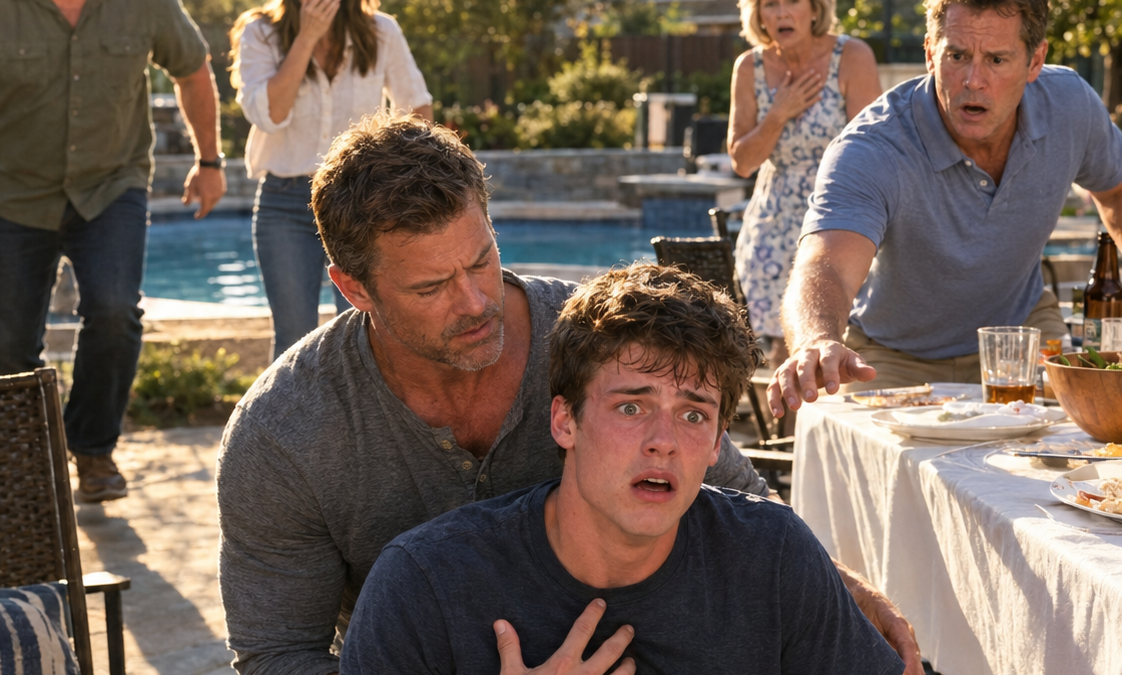
“The brisket was barely off the grill when my brother-in-law called me unstable in front of twenty-three people. He said it loud enough that the kids heard it. He said it with a smile, like it was a joke, like he was doing me a favor by saying it out loud instead of whispering it in the kitchen the way he usually did.”
They thought the quiet veteran at the end of the table was broken → they found out he was the only one who knew how to save a life when it mattered most.
He said it loud enough that the kids heard it. He said it with a smile, like it was a joke, like he was doing me a favor by saying it out loud instead of whispering it in the kitchen the way he usually did.
“Nobody’s blaming you, Mark. Combat does that to people. But you can’t be around the kids if you’re not stable. You get that, right?”
I was holding a paper plate with two ribs and a scoop of potato salad. I remember that detail because I had to set it down very carefully on the picnic table so I didn’t crush it in my hand.
What he didn’t know was that I had spent the last fourteen years of my life being exactly the kind of stable that keeps other people alive.
My name is Mark Halloran. I was forty-three years old when my brother-in-law Daniel decided I was too broken to be trusted around his children. I am a former Air Force Pararescueman. PJ. The kind of operator who jumps out of perfectly good aircraft into bad water and worse mountains to pull people out of situations they didn’t survive on their own.
I did that for fourteen years. Eleven deployments. Two Bronze Stars with Valor. A Silver Star I don’t talk about.
But to Daniel, I was just his wife’s brother who came back from the war a little off.
The BBQ was at their house. The big house. The one with the pool and the outdoor kitchen and the string lights that made everything look like a catalog shoot. Daniel made partner at his firm two years ago. He liked to remind people.
Sarah, my sister, had married him eleven years ago. She was the one who used to call me every week when I was deployed. The one who sent care packages with beef jerky and terrible crossword puzzles. The one who cried at my retirement ceremony and told me she was proud of me.
Somewhere along the way, she stopped calling.
I don’t know exactly when. Maybe when Daniel started making real money. Maybe when his family—the Kellermans, old money, country club, the kind of people who have a “summer place” instead of a cabin—started treating me like a stray dog that Sarah had unfortunately adopted.
Maybe when I stopped being able to talk about what I did over there without getting quiet.
The thing about PJs is we don’t talk much. We’re trained to shut up and work. The motto is “That Others May Live,” and it’s not a slogan. It’s a job description. You go in when everyone else is coming out. You put your hands on people who are dying and you keep them alive long enough to get them to someone who can do more.
You learn to be calm. Not because you’re not scared. Because scared doesn’t help.
Daniel never understood that. To him, calm meant cold. Quiet meant broken. The fact that I didn’t want to relive my worst days over his craft beers meant I was hiding something.
The fact that I flinched at loud noises—not much, just a blink, just a moment—meant I was dangerous.
The fact that I lived alone in a small house on the edge of town, worked a quiet job as a paramedic, and kept to myself meant I was a ticking clock.
He’d been building this case for years. I just didn’t know he was ready to deliver the verdict at a family barbecue.
The afternoon started normal. I got there early to help set up. Daniel’s kids—Mason, seven, and Lily, four—ran up to me the way they always did.
“Uncle Mark! Uncle Mark! Did you bring the thing?”
Mason meant the paper airplane book I’d brought last time. I’d shown him how to fold a dart that could fly across the whole yard.
“Brought two,” I said. “One for you. One for Lily.”
Lily just wanted to be picked up. I picked her up. She grabbed my nose. It was a good moment.
Daniel watched from the grill. I saw him watching. I didn’t think anything of it.
His parents were there—Richard and Carol Kellerman. Richard shook my hand the way you shake hands with someone you’re not sure you want to touch. Carol gave me a smile that didn’t reach her eyes and asked, “Are you still doing that… ambulance thing?”
“Yes, ma’am. Paramedic.”
“Mm. That’s nice. Daniel’s firm just made him senior partner, you know.”
“I heard. That’s great.”
She drifted away like I’d stopped being interesting. Which I had.
Sarah was in the kitchen, finishing the sides. She gave me a hug when I walked in, but it was quick. Perfunctory. Like she was checking a box.
“You look good,” she said.
“You too.”
“How’s the house?”
“Fine.”
“You should come by more. The kids miss you.”
“I’m here now.”
She nodded and turned back to the stove. That was the whole conversation.
I told myself it was fine. She was busy. She had a family now. I was the brother who lived alone and worked weird hours and didn’t have much to say. That was my role. I accepted it.
What I didn’t know was that Daniel had been talking about me to the other guests before I arrived.
I found out later. Much later. From someone who was there.
He’d told his brother-in-law—Sarah’s other brother, my older brother Paul—that he was worried about me. That I seemed “off.” That he’d noticed I was “twitchy” around the kids. That he didn’t think it was safe.
Paul told him he was full of shit.
Paul’s a contractor. Works with his hands. Doesn’t have much patience for Daniel’s brand of concern.
But Daniel didn’t listen to Paul. He never did.
By the time the food was ready, Daniel had worked himself into a state. I could see it in the way he moved. Tight. Jerky. The way he kept glancing at me like he was psyching himself up for something.
I should have known. In my old line of work, you learn to read people. You learn to see the moment before someone does something stupid.
But I was off-duty. I was just a guy at a barbecue with his sister’s family. I wasn’t looking for threats.
Maybe that was the problem.
The tables were set up on the patio. Long tables with white tablecloths. String lights overhead. The pool glowing blue in the fading afternoon.
I sat at the end, near the kids. Mason was on my left. Lily was across from me, next to her grandmother.
Daniel stood at the head of the table. He liked to stand. He liked to be seen.
He was talking about work. A case he’d won. A client he’d landed. The usual.
Then he looked at me.
“So, Mark. How’s the head?”
The table went quiet. Not all at once. In pieces. First the people nearest him, then the ripple outward.
I put down my fork.
“Excuse me?”
“Your head. The PTSD thing. Sarah mentioned you were having a hard time.”
I looked at Sarah. She looked at her plate.
“I’m fine, Daniel.”
“See, that’s the thing. People who are fine don’t usually say they’re fine. Not that way.”
“What way?”
“That way. Like you’re swallowing something.”
Paul cleared his throat. “Dan, maybe—”
“No, no, I’m serious. This is important. We’ve got kids here.”
He gestured at the table. At Mason and Lily. At the other kids, Daniel’s nieces and nephews from his side.
“I’m not trying to be a dick, Mark. I’m trying to be honest. You came back from a war zone. You saw things. Did things. That changes people.”
I said nothing.
“And I’ve been watching you. You flinch at loud noises. You go quiet. You don’t talk about what happened over there. That’s not normal.”
The word normal landed on the table like a stone.
“I’m not saying you’re dangerous. I’m saying I don’t know. And I can’t have people around my kids if I don’t know.”
The silence stretched.
I could feel everyone looking at me. Sarah. Paul. The Kellermans. The kids, who didn’t understand what was happening but knew something was.
I thought about a lot of things.
I thought about the mountain in Afghanistan where I spent fourteen hours keeping a Ranger alive after his Humvee hit an IED. I thought about the way his blood felt on my hands. I thought about the sound he made when he finally stopped screaming.
I thought about the drowning kid in the Pacific, the one I pulled out of a rip current during a training exercise gone wrong. I thought about the way he looked at me after, like I was something holy.
I thought about the day I decided to retire. Not because I couldn’t do the job anymore. Because I’d done it enough.
I didn’t say any of that.
What I said was: “I understand.”
Daniel blinked. “You understand?”
“You’re worried about your kids. That’s your job. I respect it.”
“That’s it?”
“What else do you want me to say?”
He didn’t have an answer for that.
The table started to relax. People went back to their food. The moment passed.
But it didn’t pass. Not for me. Not for Sarah. Not for Daniel.
I ate my ribs. They were good. Daniel could cook, I’d give him that.
I made small talk with Paul about his latest project. I helped Lily cut her chicken. I showed Mason how to fold a paper airplane out of his napkin.
And I watched Daniel. Not obviously. Just… watched.
He was nervous. More nervous than he should have been. He kept looking at me like he expected something.
I wondered what he thought I was going to do. Flip the table? Scream? Break down?
I wondered what version of me lived in his head. It clearly wasn’t the real one.
After dinner, people drifted into groups. The men stood around the grill, talking about sports. The women sat at the table, talking about schools. The kids ran around the yard, chasing each other with sparklers.
I helped clear plates. Sarah was in the kitchen. I brought a stack in.
“You okay?” she asked.
“I’m fine.”
“Daniel didn’t mean—”
“He meant it.”
She didn’t argue.
“I’m sorry,” she said.
“For what?”
She didn’t answer.
I went back outside.
The sun was setting. The string lights were coming on. It was the kind of scene that looked like a commercial for something you couldn’t afford.
Mason was sitting at the table, alone. He had a plate in front of him. Hot dog. Chips. A pile of grapes.
He was eating fast. Too fast. The way kids do when they’re trying to get back to playing.
I was walking toward him. I don’t know why. Just a feeling.
He grabbed a hot dog. Took a bite. Took another. Then another.
And then he stopped.
His hands went to his throat.
His eyes went wide.
He tried to breathe.
He couldn’t.
I saw it happen.
The whole thing. The bite. The swallow. The way his airway closed.
I saw it, and I moved.
“Hey.”
That was Daniel. Behind me. Still talking to someone. Still not seeing.
“Mason.”
I said his name loud enough to cut through the noise. Loud enough that the people nearest us turned.
Mason was panicking. His face was turning red. His mouth was open, but no sound was coming out.
His mother—Daniel’s wife Sarah—was across the yard. She hadn’t seen yet.
Daniel was ten feet away. He hadn’t seen yet.
Nobody had seen yet.
Except me.
What they didn’t know—what Daniel didn’t know—was that I had spent fourteen years training for this exact moment. Not this exact moment. Not a seven-year-old choking on a hot dog at a family barbecue. But the moment when everything goes wrong and everyone else freezes, and someone has to move.
I moved.
I was at Mason’s side before anyone else registered what was happening.
“Hey, buddy. I’m right here. Look at me.”
He looked at me. His eyes were wet. Scared.
I got behind him. Put my hands on his stomach. Made a fist. Started thrusts.
Daniel’s voice, behind me: “What are you—”
I didn’t answer.
Thrust. Thrust. Thrust.
The table was watching now. Sarah. Paul. The Kellermans. The kids.
Someone screamed. A woman. Carol, maybe.
I kept going.
Thrust. Thrust. Thrust.
Mason’s body was jerking with each compression. His face was purple now.
Daniel: “What are you doing to my son?”
I didn’t answer.
Thrust.
The hot dog came out.
It landed on the grass. A chunk of meat, maybe an inch long.
Mason gasped. A huge, ragged, beautiful gasp. Air going in.
Then he started crying.
I turned him around. Knelt down. Held his shoulders.
“You’re okay. You’re okay. Breathe. Slow. You’re okay.”
He grabbed onto me. His little hands clutching my shirt. Crying into my chest.
I held him.
The yard was silent.
Daniel was standing three feet away. His face was white. His hands were shaking.
“What… what did you…”
I looked up at him.
“He was choking. I cleared his airway.”
“But you… how did you…”
“I’m a PJ, Daniel. This is what I do.”
His mouth opened. Closed. Opened again.
Sarah was running across the yard now. She scooped Mason up. Held him. Cried into his hair.
I stood up. My knees cracked. I was getting old.
The other guests were staring at me. The way you stare at someone who just did something you didn’t know they could do.
Carol Kellerman was gripping her husband’s arm. Richard was looking at me like he was seeing me for the first time.
Paul was grinning. Just a little.
Daniel was still standing there. Still white. Still shaking.
“You said…” He swallowed. “You said I was unstable.”
I didn’t say anything.
“You said I shouldn’t be around your kids.”
He didn’t answer.
“I just saved your son’s life.”
He still didn’t answer.
“I’m going to go wash my hands.”
I walked inside.
The kitchen was empty. I turned on the faucet. Watched the water run over my hands.
They were steady. They always were.
That was the thing Daniel never understood. The thing none of them understood.
I wasn’t unstable. I was the opposite of unstable. I was the guy you wanted in the room when everything went to hell.
But they’d never seen that. They’d only seen the quiet guy at the end of the table. The one who didn’t talk about the war. The one who flinched at loud noises and lived alone.
They’d never seen me work.
Now they had.
I dried my hands. Looked at myself in the window.
I wasn’t angry. That was the strange part. I wasn’t even satisfied.
I was just tired.
Tired of being underestimated. Tired of being the family’s broken thing. Tired of Daniel’s smug little comments and Sarah’s quiet apologies and the way everyone looked at me like I was a puzzle they didn’t want to solve.
I’d saved Mason’s life. That was what mattered. That was the only thing that mattered.
But I knew something else, too.
This wasn’t over.
Daniel wasn’t the kind of man who let things go. He wasn’t the kind of man who admitted he was wrong.
He was the kind of man who doubled down.
I’d humiliated him in front of his family, his parents, his guests. Not on purpose. But I’d done it.
And he would make me pay for it.
I just didn’t know how yet.
I walked back outside.
Mason was sitting on Sarah’s lap. He was drinking water. He looked okay. Tired, but okay.
Daniel was standing by the grill. Alone. His back to me.
Carol was talking to Sarah in a low voice. Richard was on his phone.
Paul caught my eye. Raised his eyebrows. A question.
I shook my head. Not now.
The party wound down after that. People left early. The sparklers were abandoned on the grass.
I helped clean up. Nobody talked to me. Nobody knew what to say.
Daniel didn’t look at me.
Sarah hugged me goodbye. Longer than usual. Tighter.
“Thank you,” she whispered.
“You don’t have to thank me.”
“I do.”
I nodded. Didn’t say anything else.
I got in my truck. Started the engine.
My phone buzzed.
A text from Paul: “You okay?”
I typed back: “Yeah.”
“You want to talk about it?”
“No.”
“Okay. I’m around.”
“Thanks.”
I drove home.
The house was quiet. It always was. I liked it that way.
I made tea. Sat on the porch. Watched the stars.
I thought about Mason. The way his face looked when he couldn’t breathe. The way he grabbed onto me after.
I thought about Daniel. The way he looked at me. The way he’d always looked at me.
I thought about the Silver Star in my safe. The one I never talked about. The one I never would.
I thought about the phone call that was probably coming. The one I didn’t want to take.
I went to bed.
In the morning, my phone rang.
It was Sarah.
“Mark. Daniel wants to talk to you.”
I was quiet for a moment.
“About what?”
“About last night. He wants to… he wants to apologize.”
I didn’t believe her.
“Okay.”
“Can you come over? Around noon?”
“I’ll be there.”
I hung up.
I knew it wasn’t an apology.
I knew it was a setup.
I just didn’t know what kind.
I got dressed. Made coffee. Went outside.
The sky was clear. It was going to be hot.
I got in my truck.
PART 2 — THE APOLOGY
Daniel didn’t apologize.
He sat across from me at his kitchen island, a cup of coffee in front of him that he didn’t drink, and he talked for eleven minutes without saying sorry once.
“I want to clear the air,” he said. “About last night.”
Sarah was standing by the sink. Her arms were crossed. She wasn’t looking at either of us.
“Okay,” I said.
“What you did for Mason—that was… that was something. I’ll give you that.”
“Thank you.”
“But.”
There it was.
“But I need you to understand something. I didn’t know you could do that. None of us did. You never told us.”
I didn’t say anything.
“You come to family things. You sit at the end of the table. You don’t talk about your life. You don’t explain anything. And then last night, out of nowhere, you’re—what? A medic? A doctor?”
“Pararescueman,” I said. “Combat rescue. We’re trained in emergency medicine.”
“See? That. That right there. I didn’t know that. Sarah didn’t know that. Nobody knew that.”
Sarah shifted her weight. She knew. She’d been to my retirement ceremony. She’d seen the citations. But she didn’t correct him.
“So from my perspective,” Daniel continued, “you’re a guy who shows up, doesn’t say anything, flinches at loud noises, and then suddenly knows how to do CPR on my son. What am I supposed to think?”
“You’re supposed to think I helped him.”
“I’m supposed to think a lot of things. And one of them is: why didn’t you tell us?”
I set my coffee down.
“Would you have believed me?”
He didn’t answer.
“Daniel. Three years ago, at Thanksgiving, I mentioned I’d been deployed. You made a joke about ‘playing soldier.’ Two years ago, Paul asked me about my service, and you changed the subject to your golf game. Last summer, I told Sarah I’d been a paramedic for six years, and you said, ‘So you’re an ambulance driver now.'”
Daniel’s jaw tightened.
“I stopped telling you things because you didn’t want to hear them. You wanted me to be the broken guy. The one who came back wrong. That’s the version of me that makes you feel better about yourself.”
“That’s not—”
“It’s true.”
Sarah turned around. “Mark.”
I looked at her.
“Don’t.”
“Don’t what?”
“Don’t make this into a fight.”
“I’m not fighting. I’m answering his question.”
Daniel stood up. “You know what? This was a mistake. I was trying to be the bigger person. I was trying to move past this.”
“Move past what?”
“Move past what happened. What you did.”
“What I did was save your son’s life.”
“You did it in front of everyone. In front of my parents. In front of my clients. You made me look like an idiot.”
I stared at him.
“No,” I said. “You did that.”
“Excuse me?”
“Before the choking. When you called me unstable in front of twenty-three people. You did that.”
Daniel’s face went red. “That was different.”
“How?”
“That was a private conversation—”
“It was at your dinner table.”
“—that I was trying to have with you. To express concern. And you turned it into a spectacle.”
“I didn’t turn anything into anything. Your son choked. I helped him. You’re the one who decided that was about you.”
Daniel slammed his hand on the counter. The coffee mug jumped.
“This is exactly what I’m talking about. This. You can’t even have a normal conversation without making it about combat and trauma and—”
“Daniel.”
That was Sarah. Quiet. Sharp.
He stopped.
She walked over to the island. Stood between us.
“Mason is alive because of Mark. That’s the fact. That’s the only fact that matters.”
Daniel looked at her. “So I’m the bad guy now?”
“I didn’t say that.”
“You didn’t have to.”
She sighed. Rubbed her face. She looked tired. She’d looked tired for years.
“I think you should go,” she said to me.
I stood up.
“Mark—”
“I’m going.”
I walked to the door. Daniel didn’t say anything. Sarah followed me.
At the door, she grabbed my arm.
“He’s not… he’s not wrong about everything. You don’t tell us things. You don’t let us in.”
“I’ve tried.”
“Not hard enough.”
I looked at her. My little sister. The one who used to call me every week. The one who sent care packages. The one who cried at my retirement.
“I spent fourteen years putting my life on the line for strangers. I came home and tried to be normal. I tried to fit into your life. Daniel made it clear from day one that I didn’t belong.”
“That’s not true.”
“It is true. And you let him. You chose him. That’s fine. That’s your right. But don’t stand there and tell me I didn’t try.”
She let go of my arm.
“I love you,” she said.
“I know.”
I walked out.
I sat in my truck for a while. Didn’t start it. Just sat.
I thought about the first time I met Daniel. Sarah brought him to my house for dinner. I grilled steaks. He asked me about my job, and I told him I was in the Air Force. He asked what I did, and I said “rescue.” He laughed and said, “Like Baywatch?”
I should have known then.
I thought about my last deployment. The one I didn’t talk about. The one that ended with a Silver Star and a flag-draped coffin and a letter I still hadn’t opened.
I thought about the day I decided to retire. I was in a hospital in Germany. I’d just finished a mission that went bad. Three of my teammates were dead. I’d pulled two others out. I was sitting on the floor of the hallway, still in my gear, still covered in blood that wasn’t mine.
A nurse walked by. She looked at me and said, “Are you okay?”
And I said yes.
I always said yes.
I started the truck. Drove home.
The rest of the week was quiet. I went to work. Answered calls. Ran codes. Saved the people I could. Lost the ones I couldn’t.
That was the job. You saved who you could. You didn’t dwell.
But I dwelled.
Not on Mason. Mason was fine. Sarah texted me a photo of him at the doctor’s office, giving a thumbs up. I saved that photo.
I dwelled on Daniel.
Something about the way he’d looked at me. The way he’d talked. It wasn’t just anger. It was fear.
I knew fear. I’d seen it a thousand times. The look in someone’s eyes when they realized they weren’t in control.
Daniel was afraid. Not of me. Of what I represented.
I was the proof that his life—the big house, the fancy job, the perfect family—wasn’t the only way to be successful. I was the proof that you could have a life of meaning without a single thing to show for it.
He hated that. He’d always hated that.
I let it go.
Or I tried to.
Then Paul called.
“Hey.”
“Hey.”
“You okay?”
“Yeah. Why?”
“Because I heard about the thing with Daniel. The apology that wasn’t.”
“Who told you?”
“Sarah. She’s worried about you.”
“She should be worried about her husband.”
“Yeah. I said that. She didn’t like it.”
I laughed. Just a little.
“Paul. What’s going on?”
“Nothing. Just… checking in. You want to get a beer?”
“Sure.”
We met at a bar near my house. Small place. Wood paneling. Old jukebox. My kind of place.
Paul was already there. He had two beers waiting.
“You look like shit,” he said.
“Thanks.”
“No, I mean it. You look tired.”
“I am tired.”
He nodded. Drank his beer.
“You want to talk about it?”
“Not really.”
“Okay. We don’t have to.”
We sat there for a while. Watching the game. Not talking.
Paul was good at that. Being present without demanding anything. It was one of the reasons I liked him.
“Can I ask you something?” he said.
“Sure.”
“What did you do over there? I mean really did. You never talk about it. I know it was serious. Sarah said there were medals. But you never…”
He trailed off.
I looked at my beer.
“You want the short version or the long version?”
“Whatever you want to give me.”
I took a breath.
“I was a Pararescueman. PJ. We’re the ones who go in when everyone else is coming out. We jump out of planes. We dive into water. We climb mountains. We do whatever it takes to get to someone who’s hurt. And then we keep them alive.”
Paul was quiet.
“We operate with SEAL teams, Rangers, Green Berets. We’re attached to them. But we’re the ones who get the call when somebody goes down. We’re the ones who go in.”
“How many?”
“How many what?”
“How many did you save?”
I thought about it.
“I don’t know. I never counted.”
“You don’t count?”
“No.”
“Because there are too many?”
“No.” I took a drink. “Because there are too many I didn’t.”
Paul was quiet for a long time.
Then he said, “Daniel’s an idiot.”
“Paul—”
“No. I mean it. He’s an idiot. He’s always been an idiot. He doesn’t understand anything that doesn’t fit in a spreadsheet. You could tell him you walked on the moon and he’d ask you how much it cost.”
“He’s not an idiot. He’s scared.”
“Of what?”
“Of people like me. People who do things he can’t understand. It makes him feel small.”
Paul shook his head.
“That’s his problem. Not yours.”
“It’s my problem when he uses it to keep me away from the kids. From Sarah.”
“She’s your sister. She should have your back.”
“She’s his wife. She should have his.”
Paul looked at me. “You’re too forgiving.”
“I’m not forgiving. I’m just tired of fighting.”
We finished our beers. Paul paid. We walked out together.
“You know I’m here, right?” he said.
“I know.”
“Not just for the beers. For the real stuff.”
“I know.”
He nodded. Got in his truck. Drove away.
I stood in the parking lot for a while. The sky was dark. The air was cold.
I thought about Paul’s question. How many did you save?
I did know. I just didn’t like to say it.
The number was forty-seven.
Forty-seven people who walked away from something that should have killed them. Forty-seven families who got someone back.
And eleven who didn’t.
I remembered all eleven. Every face. Every name. Every moment I couldn’t change.
That was what Daniel never understood. That was what none of them understood.
I wasn’t unstable because of what I’d seen. I was stable because of what I’d done. Because I’d learned to carry the weight.
The weight was heavy. But I could carry it.
I got in my truck. Drove home.
The next day, I got a call from an old teammate.
His name was Derek. Derek “Doc” Kowalski. We’d served together for eight years. He was a PJ too. One of the best.
“Halloran,” he said. “You busy?”
“Not really. What’s up?”
“You hear about the ceremony?”
“What ceremony?”
“The one in D.C. They’re inducting a bunch of us into the Pararescue Hall of Fame. You’re on the list.”
I was quiet.
“You still there?”
“I’m here.”
“You’re on the list, man. They want to honor you. For the Silver Star thing. The mission you don’t talk about.”
“I don’t want it.”
“I know. But they don’t care what you want. They want to put you on a stage and shake your hand.”
“When?”
“Three weeks. I’ll send you the details.”
“I’ll think about it.”
“You’ll do more than think about it. You’ll show up. Because I’ll drag you there myself if I have to.”
I laughed. “Okay.”
“Good. See you then.”
I hung up.
I didn’t know it yet, but that ceremony was going to change everything.
I went to work. Finished my shift. Came home.
I sat on the porch. Watched the stars.
The phone rang.
Unknown number. I almost didn’t answer.
But I did.
“Hello?”
“Mark Halloran?”
“Speaking.”
“This is Colonel James Whitfield. United States Air Force Pararescue. I’m calling about the ceremony in D.C.”
“I heard.”
“Good. I wanted to call personally. Because there’s something you should know.”
“What’s that?”
“Your brother-in-law. Daniel Kellerman. He’s been making some calls. Trying to get the ceremony cancelled.”
I sat up.
“What?”
“He’s been contacting the committee. Claiming you’re mentally unfit. Claiming you have PTSD and shouldn’t be honored. He sent them a letter.”
I didn’t say anything.
“We don’t care, obviously. The committee reviewed his claims and dismissed them. But I wanted you to know.”
“Why?”
“Because someone who tries to sabotage a decorated veteran’s honor ceremony should be on your radar. And because I wanted to make sure you were still coming.”
“I’ll be there.”
“Good. There’s something else.”
“What?”
“The ceremony is public. Press will be there. I heard your brother-in-law might try to show up.”
“Let him.”
“Are you sure?”
“I’m sure.”
“Okay. See you in three weeks.”
He hung up.
I sat there for a long time.
Daniel had tried to stop the ceremony.
He’d tried to sabotage me.
The man who called me unstable was trying to prove it. To make sure no one ever found out what I really was.
I thought about the Silver Star in my safe. The one I never talked about.
I thought about the mission. The one that earned it. The one I’d been trying to forget for twelve years.
I thought about the men I lost.
And then I thought about Mason. The way he grabbed onto me. The way he trusted me.
Daniel had made a mistake.
He’d made this personal.
And now he was going to find out what happened when you pushed a PJ too far.
PART 3 — THE LETTER
The letter Daniel sent to the ceremony committee was four pages long.
Colonel Whitfield forwarded me a copy. I read it twice. Then I read it a third time.
It was the most thorough character assassination I’d ever seen. And I’d been on the receiving end of actual enemy fire.
Daniel had done his homework. He cited specific incidents. The Thanksgiving where I “drank too much and got quiet.” The Christmas where I “left early without explanation.” The time I “snapped at Lily for touching my bag.”
That last one never happened. Lily had never touched my bag. But Daniel wrote it like it was fact.
He also cited my “documented PTSD diagnosis.” I didn’t have a PTSD diagnosis. I’d never been diagnosed with anything. The VA had cleared me for retirement with no mental health flags.
But Daniel wrote it like it was on paper. Like he had proof.
He didn’t.
What he had was a narrative. And he was good at narratives. He’d spent his whole career building them for juries.
I read the letter one more time. Then I folded it and put it in my desk drawer.
I wasn’t angry. That was the strange part. I was the opposite of angry.
I was calm.
Calm was what I was trained for. Calm was what had kept me alive for fourteen years. Calm was what Daniel had mistaken for instability.
But calm could also be a weapon. If you used it right.
I called Derek.
“Hey. You read the letter?”
“I read it.”
“What do you want to do?”
“Nothing yet. But I need a favor.”
“Name it.”
“I need someone who can look into Daniel’s firm. Quietly. Financial records. Client lists. Anything that doesn’t add up.”
There was a pause.
“You think he’s dirty?”
“I think he’s scared. And scared people do stupid things. I want to know what his stupid thing is.”
“I know a guy. Former FBI. Does consulting now. He owes me.”
“Can you set it up?”
“Give me a day.”
“Thanks.”
I hung up.
The next day, I got a call from a man named Frank DiSalvo. Former FBI forensic accountant. Now private sector. Retired, but not really.
“Mr. Halloran. Derek tells me you need some digging.”
“I need to know if my brother-in-law is involved in anything illegal. Or unethical. Or just interesting.”
“Interesting how?”
“Interesting enough that he’d be worried about someone finding out.”
“Okay. I’ll need some information. Name. Firm. Any details you have.”
I gave him what I had. Daniel Kellerman. Kellerman & Associates. Estate law. Big clients. Country club connections.
“I’ll poke around. No promises.”
“Understood.”
I hung up.
I didn’t feel bad about it. Not even a little.
Daniel had tried to take something from me. Something I’d earned. Something I’d bled for.
I wasn’t going to let him.
But I also wasn’t going to confront him. Not yet. Not until I knew what I was dealing with.
In the meantime, I had a ceremony to prepare for.
Three weeks passed. I went to work. I came home. I sat on the porch.
Sarah called twice. I didn’t answer.
She left a voicemail the second time. “Mark. I heard about the ceremony. I want to talk. Please call me.”
I didn’t call.
I wasn’t ready. Not yet.
But I did call Paul.
“You hear about the ceremony?” he asked.
“I heard.”
“You going?”
“Yeah.”
“Good. I’ll be there. Front row.”
“You don’t have to.”
“I know. I want to.”
I smiled. Just a little.
“Paul. Did you know Daniel tried to get it cancelled?”
Silence.
“What?”
“He sent a letter to the committee. Claiming I’m mentally unfit. Claiming I have PTSD. Claiming I’m dangerous around kids.”
“Are you serious?”
“Dead serious.”
“That son of a bitch.”
“Yeah.”
“Does Sarah know?”
“I don’t know. I haven’t told her.”
“You should.”
“I will. When I’m ready.”
“Mark. This is… this is not okay. This is beyond not okay.”
“I know.”
“You want me to talk to him?”
“No. I want you to stay out of it. For now.”
“Fine. But if he shows up at that ceremony, I’m not responsible for what I do.”
“Paul.”
“I mean it.”
“I know you do. Just… let it play out.”
He sighed. “Okay. But I don’t like it.”
“Neither do I.”
I hung up.
The night before the ceremony, I got a call from Frank DiSalvo.
“Mr. Halloran. I found something.”
“What kind of something?”
“The kind that could get your brother-in-law disbarred. If someone wanted to push it.”
I sat down.
“Tell me.”
“It’s a trust fund. Set up for his kids. Mason and Lily. But the money isn’t coming from Daniel. It’s coming from a client account. A client who’s been dead for six years.”
I didn’t say anything.
“The client’s name was Harold Pemberton. He died of a heart attack. Left his estate to his daughter. But somehow, a chunk of that estate ended up in a trust for Daniel’s kids. And Daniel’s name is on the trust documents as the executor.”
“How much?”
“Two point four million.”
“That’s a lot of money.”
“It is. And it gets better. The daughter—Pemberton’s daughter—she contested the will. Claimed her father was coerced. The case was settled out of court. But the settlement didn’t mention the trust. Nobody caught it.”
“So Daniel stole two point four million dollars from a dead man’s daughter.”
“Allegedly. I’m still digging. But it looks that way.”
I took a breath.
“Can you prove it?”
“I can prove the money moved. I can prove Daniel was the executor. I can prove the daughter never got that portion of the estate. Whether that’s enough for a court… that depends on the court.”
“Thank you, Frank.”
“You going to do something with this?”
“I don’t know yet.”
“Fair enough. Let me know if you need more.”
“I will.”
I hung up.
I sat there for a long time.
Daniel had stolen from a dead man’s daughter. He’d hidden the money in a trust for his kids. He’d been living on it for six years.
That was the real Daniel. Not the successful partner. Not the devoted father.
The thief.
The next morning, I put on my dress uniform.
It still fit. Barely. I hadn’t worn it since retirement.
The medals were heavy. The Silver Star. The Bronze Stars. The Purple Heart I never talked about.
I looked at myself in the mirror.
I didn’t look unstable. I looked like a man who’d been through things most people couldn’t imagine. A man who’d done things most people couldn’t understand.
A man who was about to be honored for it.
I got in my truck. Drove to the airport.
The flight to D.C. was quiet. I sat by the window. Watched the clouds.
I thought about the mission. The one I didn’t talk about. The one that earned the Silver Star.
I thought about the men who didn’t come home.
I thought about Daniel. About the letter. About the trust.
I thought about Mason. About the way he grabbed onto me. About the way he trusted me.
I thought about what would happen when the truth came out.
I didn’t have an answer.
The plane landed. I got a cab. Checked into the hotel.
I had one day before the ceremony.
I spent it alone.
The ceremony was at the Air Force Memorial. Arlington. The tall spires reaching into the sky. The flags. The rows of chairs.
I got there early. Derek was waiting.
“Halloran.”
“Kowalski.”
We shook hands. Then he hugged me. The way you hug someone you’ve bled with.
“You clean up nice,” he said.
“Thanks. You too.”
We sat in the front row. Derek on one side. An empty chair on the other.
I didn’t know who it was for.
The ceremony started. Speeches. Music. The Air Force Band.
I didn’t hear most of it. I was somewhere else.
Then they called my name.
“Technical Sergeant Mark Halloran. United States Air Force Pararescue. Retired.”
I stood up. Walked to the stage.
A general was waiting. Four stars. He shook my hand.
“Tech Sergeant. On behalf of a grateful nation…”
He read the citation. The one for the Silver Star. The one I’d never let anyone read before.
“…for conspicuous gallantry and intrepidity at the risk of life above and beyond the call of duty…”
I stood there. Eyes forward. Hands at my sides.
“…while under heavy enemy fire, Technical Sergeant Halloran descended into the crash site of a downed helicopter, carrying two wounded soldiers to safety before returning for a third…”
The crowd was silent.
“…after being wounded himself, he refused evacuation, continuing to treat the wounded until all survivors were extracted…”
I could feel the eyes on me. The weight of it.
“…Technical Sergeant Halloran’s heroism and selflessness above and beyond the call of duty are in keeping with the highest traditions of military service and reflect great credit upon himself, his unit, and the United States Air Force.”
The general pinned the medal on my chest.
The crowd applauded.
I turned. Looked out at the rows of faces.
And there, in the back row, standing alone, was Sarah.
She was crying.
I didn’t see Daniel. Not yet.
But I knew he was there. I could feel him.
I walked off the stage. Sat back down.
Derek clapped me on the shoulder. “You okay?”
“Yeah.”
“The citation doesn’t mention the part where you carried that guy for three miles through a minefield.”
“No. It doesn’t.”
“Maybe they’ll put it in the book.”
“Maybe.”
The ceremony continued. Other honorees. Other citations.
I didn’t hear any of it.
I was watching Sarah.
She was still standing in the back. Still crying. She hadn’t moved.
When the ceremony ended, I walked toward her.
She met me halfway.
“Mark.”
“Sarah.”
She hugged me. Hard. The way she used to.
“I’m so sorry,” she whispered. “I’m so sorry.”
“For what?”
“For everything. For letting him… for not stopping him… for not…”
She couldn’t finish.
I held her.
“It’s okay.”
“It’s not okay. He sent that letter. He tried to stop this. He told people you were dangerous. And I… I let him.”
I pulled back. Looked at her.
“You knew?”
She nodded. Tears running down her face.
“He told me. After the barbecue. He said he was doing it to protect the kids. He said you were a threat. And I… I believed him.”
“You believed him?”
“I didn’t know what to believe. You never told us anything. You never explained what you did. I didn’t know…”
“Sarah. I saved your son’s life.”
“I know. I know. And I’m sorry. I’m so sorry.”
I didn’t say anything.
“For the ceremony,” she said. “He’s here. Daniel. He’s outside. He wanted to… he wanted to confront you. To expose you. He told me he had proof you were faking the medal. That you’d stolen valor.”
I stared at her.
“He said he had documents. He said he was going to show them to the press.”
“Did he?”
“No. He didn’t. I stopped him. I told him if he did that, I’d leave him.”
“You’d leave him?”
“I didn’t know if I meant it. But I said it.”
She wiped her eyes.
“He’s outside. Waiting. He wants to talk to you.”
I looked toward the door.
“Okay.”
“Mark. Don’t… don’t let him…”
“I won’t.”
I walked outside.
Daniel was standing by the memorial wall. His hands in his pockets. His face was red.
“Mark.”
“Daniel.”
“You think this changes anything? You think a medal makes you a hero?”
I didn’t answer.
“I know about the letter. Sarah told me. And I know you’ve been digging into my firm.”
He stepped closer.
“You think you’re the only one who can play this game? You think I don’t have people?”
I stayed calm.
“What people?”
“People who know things. People who can make your life very difficult.”
“Is that a threat?”
“It’s a fact.”
I looked at him. Really looked at him.
“You stole two point four million dollars from a dead man’s daughter. You hid it in a trust for your kids. You’ve been living on it for six years. And you think you can threaten me?”
His face went pale.
“How… how do you know about that?”
“I’m a PJ, Daniel. I don’t talk about what I do. But I do it.”
He took a step back.
“You can’t prove anything.”
“I can prove the money moved. I can prove you were the executor. I can prove the daughter never got her inheritance.”
“That’s not… that’s not what happened.”
“Then tell me what happened.”
He was quiet.
“That’s what I thought.”
I stepped closer.
“You called me unstable. You tried to get my ceremony cancelled. You told people I was dangerous. You tried to take the one thing I had left.”
He didn’t move.
“I’m going to give you a chance. One chance. You’re going to tell Sarah the truth about the money. You’re going to make it right with Pemberton’s daughter. And you’re going to stop trying to destroy me.”
“Or what?”
“Or I go to the press. And the bar association. And everyone who ever shook your hand.”
He stared at me.
“You wouldn’t.”
“Try me.”
He was quiet for a long time.
Then he nodded.
“Okay.”
“Okay what?”
“Okay. I’ll do it. I’ll tell her. I’ll fix it.”
“Good.”
I turned to walk away.
“Mark.”
I stopped.
“I’m sorry.”
I didn’t turn around.
“I know.”
I walked back inside.
Sarah was waiting.
“What happened?”
“He’s going to tell you the truth. About everything.”
“What truth?”
“Ask him.”
She looked toward the door. Then back at me.
“Mark. I’m scared.”
“Of what?”
“Of what happens next.”
I put my hand on her shoulder.
“You’ll be okay. You’re stronger than you think.”
She nodded. Tried to smile.
I walked outside. Found my cab.
The sun was setting. The memorial was quiet.
I got in the cab. Told the driver the name of my hotel.
I looked out the window as we drove away.
The ceremony was over.
But something told me this wasn’t the end.
It was just the beginning.
 [Tap here for the Next Part ]


