Part 2: “It felt like being shot. But worse. Because the bullet came from someone I trusted.”
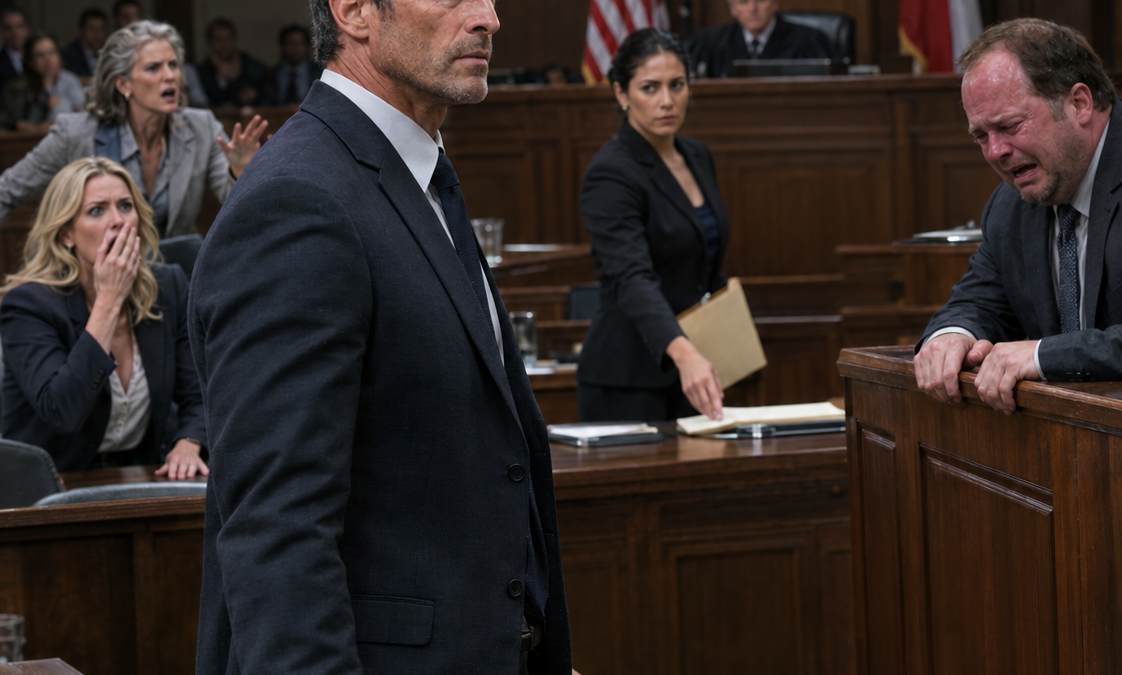
PART 6 — THE REUNION
Fort Hood was the same as I remembered it. The same brown buildings. The same dusty parade grounds. The same feeling of purpose and tension.
I arrived on a Friday afternoon. The reunion was being held in a large hall near the main gate. Cars were parked in neat rows. Men were standing in small groups, talking and laughing.
I parked my truck and sat in the driver’s seat for a moment. I could feel my heart beating faster. I could feel the old anxiety creeping in.
I hadn’t seen these men in ten years. I had changed. They had changed. What if we didn’t recognize each other? What if we didn’t have anything to say?
I took a deep breath. I opened the door. I stepped out.
The air was hot and dry. The sun was bright. I could hear someone calling my name.
“Cross! Ethan Cross!”
I turned. A man was walking toward me. He was tall, broad-shouldered, with a shaved head and a thick beard. He was grinning.
“Ramirez?” I said.
“Damn right it’s Ramirez. Get over here, you son of a bitch.”
He grabbed me in a bear hug. I hugged him back. I could feel the tears in my eyes.
“Ten years,” he said. “Ten years, and you don’t even call.”
“I know. I’m sorry.”
“Don’t be sorry. You’re here now. That’s what matters.”
He pulled back and looked at me. His eyes were wet.
“You look good, man. Older. But good.”
“You too.”
“Liar. I look like hell. But I’m alive. That’s more than some of us can say.”
I nodded. I thought about the ones who weren’t alive. The ones who had died in Iraq and Afghanistan. The ones who had come home and couldn’t cope. The ones who had taken their own lives.
“So,” Ramirez said, “what have you been up to? You still with that woman? Danielle?”
“We got divorced. Two years ago.”
“Sorry to hear that.”
“Don’t be. It was for the best.”
He nodded. He didn’t ask for details. He didn’t need to.
“Well, come on,” he said. “There’s a lot of people who want to see you.”
He led me into the hall. The room was filled with men in civilian clothes, some with hats, some with beards, some with prosthetic limbs. The walls were covered with banners and flags. A table in the corner held a display of old photographs.
I saw Captain Chen. She was standing near the bar, talking to a group of men. She looked up when I walked in. Her eyes widened.
“Ethan?”
“Ma’am.”
She walked over. She was smaller than I remembered, but her presence was just as commanding.
“You look good, Sergeant.”
“I look older.”
“We all do. But you look good.”
She hugged me. It was brief, professional, but warm.
“I heard about what happened,” she said. “The trial.”
I froze. “You heard about that?”
“Word gets around. Your brother testified against you. Said you were violent.”
I didn’t say anything.
“I didn’t believe it for a second.”
“You didn’t?”
“Of course not. I know you, Ethan. I know what kind of man you are. I know what you did over there.”
She looked at me. Her eyes were steady.
“You saved lives. You led men. You did things that most people can’t even imagine.”
I looked down. I didn’t know what to say.
“Don’t let them define you,” she said. “Don’t let them tell you who you are. You know who you are.”
She patted my arm and walked away.
I stood there for a moment. The room was loud. Men were laughing. Glasses were clinking. The band was playing an old country song.
I thought about what Captain Chen had said. I thought about what Ramirez had said. I thought about the kid from Ohio.
I thought about who I was. Not who Danielle said I was. Not who Caleb said I was.
Who I actually was.
The reunion lasted three days. We ate together. We drank together. We told stories. We remembered the ones who weren’t there.
I saw men I hadn’t seen in a decade. I heard stories I had never heard before. I learned that some of my old buddies had become police officers, teachers, construction workers. I learned that some had struggled. Some had fallen apart. Some had found their way back.
I learned that I wasn’t alone.
On the second night, a man approached me. He was younger than me, maybe late thirties, with a prosthetic leg and a quiet voice.
“Sergeant Cross?”
I looked at him. “Yeah?”
“I don’t know if you remember me. I’m Tommy Keane. I was in your squad in Afghanistan. 2010.”
I looked at him. I remembered. The kid from Ohio. The one who had been pinned down. The one I had carried out.
“Tommy.”
“Yeah. You saved my life.”
I didn’t say anything.
“I never got to thank you. Not properly. I was in the hospital for months. And then I went home. And I just—I didn’t know what to say.”
“You don’t have to say anything.”
“Yes, I do. You went back for me. You ran into enemy fire. You carried me out.”
“I was just doing my job.”
“No. You were doing more than your job. You were being a leader. A hero.”
I looked at him. His eyes were wet. His voice was shaking.
“I named my son after you. Did you know that?”
I shook my head.
“I named him Ethan. Because of you. Because you gave me a chance to have a son. To have a family. To have a life.”
I felt the tears in my eyes. I didn’t try to stop them.
“I didn’t know,” I said.
“Now you do.”
He hugged me. I hugged him back.
I held him for a long time.
On the last night of the reunion, I sat at a table with Ramirez and Chen and a few others. We were talking about old times. We were laughing about things that hadn’t been funny at the time but were funny now.
Then someone said my name.
“Ethan Cross.”
I turned. A man was standing behind me. He was older, gray-haired, with a patch on his jacket that read “75th Ranger Regiment.”
“Colonel Harris?”
He nodded. “I thought I recognized you.”
Colonel Harris had been my battalion commander during my second deployment. He had been a hard man, but a fair one. He had retired a few years ago, but he was still involved with the regiment.
“I heard about what happened,” he said. “The trial. Your brother.”
I didn’t say anything.
“I want you to know something. I’ve been following your case. I know what your brother said. I know what your ex-wife said.”
He sat down across from me. He looked at me with steady eyes.
“I also know what you did over there. I read your service record. I saw the citation for your Bronze Star.”
I looked down.
“You went back for a wounded man. You ran into enemy fire. You carried him out. You saved his life.”
“I was just doing my job.”
“You were doing more than your job. You were doing something that most people can’t even comprehend. You were being a hero.”
I didn’t say anything.
“I’m going to say something to you, and I want you to hear it. You are not the man your brother described. You are not the man your ex-wife described. You are a Ranger. You are a leader. You are a hero.”
I looked at him.
“Don’t let them take that from you. Don’t let them tell you who you are. You know who you are.”
I nodded. I didn’t trust myself to speak.
Colonel Harris stood up. He put his hand on my shoulder.
“I’m proud of you, Sergeant. I always was.”
He walked away.
I sat at the table and stared at the wall.
I thought about my father. He would have been proud of me. He would have understood.
I thought about my mother. She had always loved Caleb more. But maybe she loved me too. Maybe she just didn’t know how to show it.
I thought about Caleb. He was weak. He was jealous. He had betrayed me.
But he was also my brother.
I thought about Danielle. She had tried to take my house. She had tried to destroy my reputation. She had lied and cheated and manipulated.
But she was gone now. And I was still here.
I thought about the men at the reunion. The ones who had served with me. The ones who knew who I really was.
They had reminded me. They had shown me. They had given me back something I had lost.
They had given me back my pride.
PART 7 — THE LETTER
After the reunion, I went home.
The Lakeway house was quiet. The hill country was peaceful. The days were long and warm.
I started running again. Every morning, I would run the roads, past the cedar trees and the limestone outcroppings. I would run until my lungs burned and my legs ached.
I started going to the VA more regularly. I started talking to Dr. Foster about the things I had seen. The things I had done. The things I had lost.
I started sleeping better. The nightmares came less often. The flashbacks faded.
I started to feel like myself again.
And then I got the letter.
It came in a plain white envelope with no return address. I opened it on the porch, sipping coffee, watching the sun rise.
Inside was a single sheet of paper. Typed. Official.
It was from the Department of the Army.
“Dear Mr. Cross,” it said. “We are writing to inform you that your application for the Silver Star has been approved. The award is in recognition of your actions during Operation Sledgehammer in Afghanistan, 2010.”
I stared at the letter. I read it again.
I had applied for the Silver Star two years ago. I had been recommended by my company commander, Captain Chen. But the application had been lost in the shuffle. I had forgotten about it.
And now it had been approved.
I sat on the porch and looked at the letter. The sun was warm on my face. The breeze was cool.
I thought about the kid from Ohio. Tommy Keane. The one I had saved.
I thought about his son. Ethan. Named after me.
I thought about what it meant to be a hero. Not the kind of hero that Danielle and Caleb thought I wasn’t. The kind of hero that Captain Chen and Colonel Harris knew I was.
I thought about my father. He would have been proud.
I folded the letter and put it back in the envelope. I went inside and made another cup of coffee.
I had a ceremony to plan.
The ceremony was held at Fort Hood in November. It was a small affair. Just a few dozen people. Captain Chen was there. Colonel Harris was there. Ramirez was there. Tommy Keane was there.
And my mother was there.
She sat in the front row. She wore a dark blue dress and a string of pearls. She looked nervous.
I walked up to the podium. I stood in front of the crowd. I looked at their faces.
“I want to thank you all for coming,” I said. “This is an honor I never expected. I never thought I would receive it.”
I paused. I looked at my mother.
“When I was a kid, my father told me that serving your country was the highest honor. He told me that being a soldier meant putting others before yourself. He told me that a hero isn’t someone who isn’t afraid. A hero is someone who is afraid but does what needs to be done anyway.”
I paused again.
“I didn’t understand that when I was young. I thought being a hero meant being brave. Being strong. Being invincible. But I learned, in the Army, that being a hero means being human. It means making mistakes. It means being scared. It means doing what’s right even when it’s hard.”
I looked at Tommy Keane.
“I saved a man’s life. He’s here today. He has a son named after me. He has a family. He has a future.”
I looked at my mother.
“I also lost friends. Men who didn’t come home. Men who I will carry with me for the rest of my life.”
I paused.
“I received this award because of them. Because of the men I served with. Because of the men who didn’t come home. Because of the men who did.”
I looked at Colonel Harris.
“I’m proud to have served. I’m proud to be a Ranger. And I’m proud to receive this award.”
Colonel Harris stepped forward. He held a small box in his hands. He opened it.
Inside was the Silver Star. A small, simple medal. A star with a ribbon.
He pinned it to my chest.
“Sergeant Ethan Cross,” he said. “You are a hero. You always were.”
The crowd applauded. I looked at my mother. She was crying.
I stepped down from the podium. I walked to her.
She stood up. She hugged me.
“I’m sorry,” she said. “I’m sorry I didn’t—I’m sorry I didn’t know.”
“You know now.”
“I’m proud of you. I’ve always been proud of you.”
I hugged her back.
“I know, Mom. I know.”
PART 8 — THE RECKONING
The story didn’t end there.
A few weeks after the ceremony, I got a call from Diana Reyes.
“Ethan,” she said. “I have news.”
“What kind of news?”
“Danielle has been indicted.”
I paused. “Indicted for what?”
“Subornation of perjury. And bribery. And conspiracy to commit fraud.”
I sat down on the edge of the bed. “The district attorney’s office?”
“They’ve been investigating since the trial. They found more evidence. Bank records. Phone records. Emails.”
“What kind of emails?”
“Emails between Danielle and her mother. Emails between Danielle and your brother. They were planning the whole thing. The lies. The money. The trial.”
I closed my eyes. “Why didn’t they delete them?”
“People are stupid. Especially when they think they’re going to get away with something.”
I shook my head. “What happens now?”
“Danielle has been arrested. Her mother too. They’re facing felony charges. If they’re convicted, they could go to prison.”
“And Caleb?”
“Caleb has been cooperating with the investigation. He’s been given immunity in exchange for his testimony.”
I was quiet for a moment.
“He’s going to testify against her?”
“Yes. He’s the key witness. His testimony is what made the indictment possible.”
I thought about Caleb. He had betrayed me. He had lied about me. He had taken money to destroy me.
But now he was trying to make it right. He was trying to fix what he had broken.
“Okay,” I said. “Thank you for telling me.”
“You should know something else. The district attorney wants to talk to you. They want you to testify at the trial.”
“About what?”
“About what happened. About the lies. About the impact it had on you.”
I paused.
“You don’t have to,” Diana said. “But it would help. It would show the jury what was at stake.”
I thought about it. I thought about Danielle. I thought about the lies. I thought about the trial.
“I’ll do it,” I said.
The trial was held in January. The courthouse was the same one where my civil trial had taken place. The same marble floors. The same heavy doors.
I sat in the gallery and watched Danielle walk in. She was wearing an orange jumpsuit. Her hair was pulled back. Her face was pale.
She looked at me. Her eyes were cold.
I didn’t look away.
The prosecutor was a woman named Rachel Kim. She was young and sharp and relentless. She laid out the case piece by piece.
The bank records. The wire transfer. The emails.
The evidence was overwhelming. Danielle had orchestrated the whole thing. She had paid my brother to lie. She had conspired with her mother to defraud me.
And now she was going to pay the price.
I testified on the second day. I told the court about my service. About my deployments. About my medals.
I told them about the lies. The way Danielle had called my PTSD “weird habits.” The way she had dismissed my service as “just a job.”
I told them about the trial. The way Caleb had stood up and lied. The way the jury had looked at me.
I told them about the impact. The nightmares. The anxiety. The feeling of being betrayed by the people who were supposed to love me.
When I was done, Rachel Kim asked me one final question.
“How did it feel to be called a violent man by your own brother?”
I paused. I looked at Danielle. I looked at the jury.
“It felt like being shot,” I said. “But worse. Because the bullet came from someone I trusted.”
The jury deliberated for two days. They came back with a verdict.
Guilty. On all counts.
Danielle was sentenced to five years in prison. Her mother got three.
I sat in the gallery and watched them being led away. Danielle looked at me as she passed. Her eyes were wet.
“I’m sorry,” she whispered.
I looked at her.
I didn’t say anything.
After the trial, I went home. The Lakeway house was quiet. The hill country was peaceful.
I sat on the porch and watched the sun set. The sky was orange and purple and red.
I thought about Danielle. She was in prison now. She had lost everything. Her freedom. Her reputation. Her future.
I thought about Caleb. He had testified against her. He had tried to make things right. He was still in therapy. He was still trying.
I thought about my mother. She had been at the trial every day. She had watched her ex-daughter-in-law be led away in handcuffs. She had watched her younger son testify against her.
She had called me afterward. She had been crying.
“I’m sorry,” she said. “I’m sorry for everything.”
“I know, Mom.”
“I should have—I should have seen it. I should have known.”
“You didn’t know. You couldn’t have known.”
“I should have believed you. When you said you didn’t do it. I should have believed you.”
I paused.
“You believe me now,” I said. “That’s what matters.”
She was quiet for a moment.
“I love you, Ethan.”
“I love you too, Mom.”
We hung up.
I sat on the porch and watched the stars come out.
I thought about my father. He would have been proud of me. He would have understood.
I thought about the men I had served with. The ones who had died. The ones who had survived. The ones who had reminded me who I was.
I thought about myself. The man I had become. The man I had always been.
I was a Ranger. I was a soldier. I was a hero.
And no one could take that from me.
PART 9 — THE CABIN
Spring came to the hill country. The wildflowers bloomed. The cedar trees turned green. The river ran high and clear.
I spent most of my time at the cabin. I fixed things. I painted. I planted a garden.
I also started writing.
I wrote about my childhood. About my father. About the Army. About the things I had seen and done.
I wrote about Danielle. About the marriage. About the divorce. About the trial.
I wrote about Caleb. About the betrayal. About the forgiveness I was still trying to find.
I didn’t write for anyone else. I wrote for myself. I wrote to process. I wrote to heal.
Dr. Foster had suggested it. She said that writing could help me make sense of things. She said it could help me move on.
She was right.
I wrote every day. I filled notebooks. I filled pages. I filled my mind with words.
And slowly, the pain started to fade. The anger started to cool. The hurt started to heal.
I wasn’t the same man I had been before the trial. I was different. I was stronger. I was more whole.
I was finally becoming who I was meant to be.
One afternoon, I was sitting on the porch when a car pulled up.
It was Caleb.
He got out slowly. He looked older than I remembered. Thinner. Grayer. He was wearing jeans and a flannel shirt. He looked like he hadn’t slept in days.
“Ethan,” he said.
“Caleb.”
We stood there for a moment. The wind blew through the cedar trees. The sun was warm on our faces.
“I wanted to see you,” he said. “I wanted to talk.”
“Okay.”
He walked up the steps. He sat down in the chair next to me. He looked out at the valley.
“It’s beautiful here,” he said.
“It is.”
“I’m sorry. For everything.”
“I know.”
“I’ve been in therapy. Like you said. It’s helping. I’m starting to understand why I did what I did.”
“Why did you do it?”
He was quiet for a moment.
“I was jealous. I’ve always been jealous. You were the one who got to leave. You were the one who got to be a hero. I stayed home. I failed. I lost everything.”
“You didn’t lose everything. You still have Beth. You still have your kids.”
“I know. But I didn’t see it that way. I saw myself as a failure. And I blamed you.”
“Why?”
“Because you were successful. Because you were strong. Because you were everything I wasn’t.”
He looked at me. His eyes were wet.
“I know that’s not fair. I know that’s not right. But that’s how I felt.”
I nodded. I didn’t say anything.
“I’m not asking for forgiveness. I’m not asking for anything. I just wanted you to know.”
“I know.”
We sat in silence for a while. The sun moved across the sky. The shadows lengthened.
“I’m proud of you,” Caleb said. “I know I never said that. But I am. I’m proud of what you did. I’m proud of who you are.”
I looked at him. I saw the boy I had grown up with. The boy I had protected. The boy I had loved.
“I’m proud of you too,” I said. “For trying to make things right.”
He nodded. He wiped his eyes.
“I should go,” he said. “Beth is waiting.”
“Okay.”
He stood up. He walked to his car. He looked back at me.
“Thank you,” he said.
“For what?”
“For not giving up on me.”
I didn’t say anything.
He got in his car and drove away.
I sat on the porch and watched the sun set. The sky was orange and purple and red.
I thought about my brother. He was weak. He had betrayed me. He had lied about me.
But he was also trying. He was also healing.
Maybe that was enough. Maybe that was all anyone could do.
PART 10 — THE MEDAL
A year passed.
I stayed at the cabin. I ran every morning. I went to therapy every week. I wrote in my notebooks.
I also started volunteering at the VA. I would go to the hospital and talk to the young veterans. The ones who had just come back. The ones who were struggling. The ones who felt alone.
I told them my story. I told them about the trial. About the betrayal. About the healing.
I told them that they weren’t alone. I told them that there was hope. I told them that they could get through it.
I didn’t know if it helped. But I hoped it did.
I also kept in touch with the men from the reunion. Ramirez. Chen. Keane. We would talk on the phone. We would meet for coffee. We would check in on each other.
They had become my family. The family I had chosen. The family that understood.
I was finally at peace.
One afternoon, I was sitting on the porch when a car pulled up.
It was my mother.
She got out slowly. She looked older than I remembered. Her hair was grayer. Her face was lined.
“Ethan,” she said.
“Mom.”
I stood up and hugged her. She held me tight.
“I wanted to see you,” she said. “I wanted to talk.”
“Okay.”
We sat down on the porch. I made coffee. We watched the sun set over the valley.
“I’ve been thinking,” she said. “About everything. About your father. About you. About Caleb.”
“What about us?”
“I wasn’t fair. I know that now. I always favored Caleb. I always thought he needed me more. But I was wrong.”
I didn’t say anything.
“You needed me too. You just didn’t show it. You were always so strong. So independent. I thought you didn’t need me.”
“I did need you, Mom. I just didn’t know how to say it.”
She nodded. She wiped her eyes.
“I’m sorry. I’m sorry for everything.”
“I know, Mom. I know.”
We sat in silence for a while. The stars came out. The night got colder.
“I’m proud of you,” she said. “I’ve always been proud of you.”
“I know.”
“I love you, Ethan.”
“I love you too, Mom.”
She stayed the night. We talked for hours. About my father. About the Army. About the things I had seen and done.
She listened. She didn’t judge. She just listened.
And for the first time in a long time, I felt like I had a mother.
The next morning, I drove her to the airport.
We hugged goodbye. She held me tight.
“Come visit,” she said. “Soon.”
“I will.”
“I mean it.”
“I know.”
She got on the plane. I watched it take off.
Then I drove home.
The cabin was quiet. The hill country was peaceful. The sun was warm on my face.
I sat on the porch and looked at the Silver Star. It was hanging on the wall, next to a photograph of my father.
I thought about the journey. The trial. The betrayal. The healing.
I thought about who I was. Not who Danielle said I was. Not who Caleb said I was.
Who I actually was.
I was a Ranger. I was a soldier. I was a hero.
And I was finally at peace.
PART 11 — THE LEGACY
Two years passed.
I stayed at the cabin. I ran every morning. I went to therapy every week. I wrote in my notebooks.
I also started speaking at events. Veteran events. PTSD awareness events. Military ceremonies.
I told my story. I told it to crowds of hundreds. I told it to small groups of a dozen. I told it to anyone who would listen.
I told them about the trial. About the lies. About the betrayal.
I told them about the healing. About the therapy. About the support.
I told them about the men who had saved me. The men who had reminded me who I was.
I told them that they weren’t alone.
I didn’t know if it helped. But I hoped it did.
One day, I got a letter.
It was from Tommy Keane. The kid from Ohio. The one I had saved.
“Sergeant Cross,” it said. “I wanted to tell you something. My son Ethan is eight years old now. He plays soccer. He plays the guitar. He wants to be a soldier when he grows up.”
I smiled.
“He knows about you. He knows what you did. He knows that you saved my life. He knows that you’re a hero.”
I felt the tears in my eyes.
“I wanted you to know that. I wanted you to know that your legacy is alive. It’s not just a medal. It’s not just a story. It’s a life. It’s my life. It’s my son’s life.”
I put the letter down. I looked at the Silver Star on the wall.
I thought about my father. He had been a hero too. He had served his country. He had raised his family. He had done his duty.
I thought about the men I had served with. The ones who had died. The ones who had survived. The ones who had reminded me who I was.
I thought about myself. The man I had become. The man I had always been.
I was a Ranger. I was a soldier. I was a hero.
And I was finally at peace.
I sat on the porch and watched the sun rise. The sky was pink and gold. The air was cool.
I thought about the future. I didn’t know what it held. I didn’t know if I would find love again. I didn’t know if I would have a family.
But I knew one thing.
I knew who I was. I knew what I had done. I knew what I was capable of.
And no one could take that from me.
I picked up my coffee. I took a sip. I watched the sun climb higher in the sky.
The hill country was peaceful. The cabin was quiet.
I was home.
PART 12 — THE LETTERS
I kept writing.
Every day, I would sit on the porch with my notebook and my pen. I would write about the past. I would write about the present. I would write about the future.
I wrote letters to my father. Letters I would never send. Letters that would stay in my notebook.
“Dad,” I wrote. “I miss you. I miss your quiet strength. I miss the way you would put your hand on my shoulder and tell me everything was going to be okay.”
I wrote about the trial. I wrote about the lies. I wrote about the betrayal.
“Dad,” I wrote. “Caleb lied about me. He told a courtroom I was violent. He told them I hurt Danielle. He took money to destroy me.”
I wrote about the healing. I wrote about the therapy. I wrote about the men who had saved me.
“Dad,” I wrote. “I’m okay. I’m better than okay. I’m at peace.”
I wrote every day. The words poured out of me. The pain poured out of me. The healing poured out of me.
I wrote for myself. I wrote for my father. I wrote for the men who had died.
I wrote because I had to. I wrote because it was the only way I knew how to survive.
One day, I got a letter.
It was from Captain Chen. She had retired from the State Department. She was living in Virginia. She had heard about the trial. She had heard about the verdict.
“Ethan,” she wrote. “I’m proud of you. I’ve always been proud of you. You are one of the finest soldiers I have ever served with. You are a leader. You are a hero.”
I felt the tears in my eyes.
“I know you’ve been through hell. I know you’ve been betrayed by the people who were supposed to love you. But I want you to know that you are not alone. You have a family. You have your brothers. You have me.”
I put the letter down. I looked at the Silver Star on the wall.
I thought about the men I had served with. The ones who had died. The ones who had survived. The ones who had reminded me who I was.
I thought about Captain Chen. She had been my commander. She had been my mentor. She had been my friend.
She had always believed in me. She had always known who I was.
I picked up my pen and wrote back.
“Captain,” I wrote. “Thank you. Thank you for everything. Thank you for believing in me.”
I wrote for hours. I wrote about the trial. I wrote about the healing. I wrote about the men who had saved me.
I wrote about who I was. Not who Danielle said I was. Not who Caleb said I was.
Who I actually was.
I was a Ranger. I was a soldier. I was a hero.
And I was finally at peace.
PART 13 — THE VISITOR
Three years passed.
I stayed at the cabin. I ran every morning. I went to therapy every week. I wrote in my notebooks.
I also started a foundation. A small nonprofit that helped veterans with PTSD. We provided counseling. We provided support. We provided community.
I named it after my father. The James Cross Veterans Fund.
It was my way of honoring him. My way of giving back. My way of making sure that no veteran felt alone.
One afternoon, I was sitting on the porch when a car pulled up.
It was a young woman. She was maybe twenty-five, with dark hair and a quiet smile.
“Mr. Cross?” she said.
“Yes?”
“My name is Emily. Emily Keane. Tommy’s sister.”
I stood up. “Tommy’s sister?”
“Yes. He told me about you. He told me what you did. He told me you saved his life.”
I didn’t say anything.
“I wanted to meet you. I wanted to thank you.”
“You don’t have to thank me.”
“Yes, I do. Tommy is my brother. He’s my best friend. He has a wife. He has a son. He has a life.”
She looked at me. Her eyes were wet.
“If you hadn’t gone back for him, he wouldn’t be here. I wouldn’t have a brother. His son wouldn’t have a father.”
I felt the tears in my eyes.
“I was just doing my job.”
“No. You were doing more than your job. You were being a hero.”
I looked at her. I saw the gratitude in her eyes. I saw the love.
“Thank you,” I said. “For coming. For telling me.”
“I wanted you to know. I wanted you to know that what you did mattered.”
I nodded. I didn’t trust myself to speak.
She hugged me. It was a brief hug, but it was warm.
“Thank you,” she said. “Thank you for my brother.”
She got in her car and drove away.
I sat on the porch and watched the sun set. The sky was orange and purple and red.
I thought about Tommy. The kid from Ohio. The one I had saved.
I thought about his son. Ethan. Named after me.
I thought about the legacy. The life that had been saved. The life that had been created.
I thought about what it meant to be a hero. Not the kind of hero that Danielle and Caleb thought I wasn’t. The kind of hero that Captain Chen and Colonel Harris knew I was.
I thought about my father. He would have been proud.
I sat on the porch and watched the stars come out.
I was home.
I was at peace.
I was finally who I was meant to be.
PART 14 — THE WEDDING
A year later, I got an invitation.
It was from Tommy Keane. He was getting remarried. He wanted me to be there.
I hadn’t been to a wedding since my own. That had been a disaster. I wasn’t sure I wanted to go to another one.
But Tommy was my friend. He was my brother. He was the man I had saved.
I went.
The wedding was in Ohio. A small ceremony in a church in Tommy’s hometown. The same church where he had married his first wife. The same church where his son had been baptized.
I sat in the back row. I watched Tommy walk down the aisle. He was wearing a dark suit and a prosthetic leg. He was smiling.
His son Ethan was the ring bearer. He was nine years old. He had dark hair and a gap-toothed grin.
He walked down the aisle with the rings. He looked at his father. He looked at the bride. He was beaming.
I watched the ceremony. The vows. The tears. The laughter.
I thought about my own wedding. The vineyard. The small ceremony. The promises I had made.
They had been broken. Not by me. By Danielle.
But that was the past. This was the present.
This was hope.
After the ceremony, I walked up to Tommy. He hugged me.
“You came,” he said.
“I wouldn’t miss it.”
“I’m glad you’re here.”
“I’m glad I’m here too.”
He looked at me. His eyes were wet.
“I named my son after you. Did I ever tell you that?”
“You did.”
“I wanted him to be like you. I wanted him to be strong. To be brave. To be a hero.”
I looked at Ethan. He was running around with the other kids, laughing, playing.
“He already is,” I said.
Tommy nodded. He wiped his eyes.
“Thank you,” he said. “Thank you for everything.”
“You don’t have to thank me.”
“Yes, I do. You saved my life. You gave me a second chance.”
I looked at him. I saw the gratitude in his eyes. I saw the love.
“You would have done the same for me,” I said.
“Yes. I would have.”
He hugged me again. I hugged him back.
I stayed for the reception. I ate cake. I danced. I laughed.
I watched Tommy dance with his new wife. I watched Ethan play with the other kids.
I thought about the future. I thought about the life that had been saved. The life that had been created.
I thought about what it meant to be a hero.
It wasn’t about the medals. It wasn’t about the citations. It wasn’t about the glory.
It was about the people. The people you saved. The people you protected. The people you loved.
I looked at Tommy. I looked at Ethan. I looked at the new wife.
I was a hero. Not because of what I had done. But because of what I had given.
I had given them a chance. A chance to live. A chance to love. A chance to be happy.
That was enough. That was more than enough.
I sat at the table and watched the sun set. The sky was orange and purple and red.
I was at peace.
PART 15 — THE HOMECOMING
Five years passed.
I stayed at the cabin. I ran every morning. I went to therapy every week. I wrote in my notebooks.
I also expanded my foundation. The James Cross Veterans Fund grew. We opened offices in three states. We helped thousands of veterans.
I spoke at more events. I told my story more often. I shared my journey.
I became a voice for veterans. A voice for the betrayed. A voice for the underestimated.
I became the man I was meant to be.
One afternoon, I was sitting on the porch when a car pulled up.
It was Caleb.
He got out slowly. He looked older. Grayer. Thinner. But he also looked healthier. Stronger. More at peace.
“Ethan,” he said.
“Caleb.”
He walked up the steps. He sat down in the chair next to me. He looked out at the valley.
“It’s beautiful here,” he said.
“It is.”
“I’ve been in therapy. For five years now. It’s helped.”
“I know.”
“I’ve been trying to be better. To be the man you thought I was.”
“I know.”
He looked at me. His eyes were wet.
“I’m sorry. For everything. For the lies. For the trial. For the money.”
“I know.”
“I don’t expect you to forgive me. I don’t expect anything. I just wanted you to know.”
I looked at him. I saw the boy I had grown up with. The boy I had protected. The boy I had loved.
“I forgive you,” I said.
He looked at me. His eyes widened.
“You do?”
“Yes.”
“Why?”
“Because you’re my brother. Because you’re trying. Because I don’t want to carry the anger anymore.”
He nodded. He wiped his eyes.
“Thank you,” he said.
“You don’t have to thank me.”
“Yes, I do. You gave me a second chance.”
I looked at him. I saw the gratitude in his eyes. I saw the love.
“You would have done the same for me,” I said.
He nodded. He smiled.
“I would have. I will.”
We sat on the porch and watched the sun set. The sky was orange and purple and red.
We talked for hours. About our childhood. About our father. About the Army.
We talked about the future. About forgiveness. About healing.
We talked about who we were. Not who we had been. Who we were now.
We were brothers. Not by blood alone. By choice. By forgiveness. By love.
We sat on the porch and watched the stars come out.
We were home.
We were at peace.
We were finally who we were meant to be.
I walked Caleb to his car.
“I’ll see you soon,” he said.
“I know.”
“Thank you, Ethan. For everything.”
“You’re welcome.”
He got in his car and drove away.
I stood in the driveway and watched the taillights disappear.
I thought about the journey. The trial. The betrayal. The healing.
I thought about who I was. Not who Danielle said I was. Not who Caleb said I was.
Who I actually was.
I was a Ranger. I was a soldier. I was a hero.
I was also a brother. A son. A friend.
I was also a man who had been broken. A man who had been betrayed. A man who had fought his way back.
I was all of those things. And I was at peace with all of them.
I walked back to the porch. I sat down in my chair. I looked at the Silver Star on the wall.
I thought about my father. He would have been proud. He would have understood.
I thought about the men I had served with. The ones who had died. The ones who had survived. The ones who had reminded me who I was.
I thought about Tommy Keane. The kid from Ohio. The one I had saved.
I thought about his son. Ethan. Named after me.
I thought about the legacy. The life that had been saved. The life that had been created.
I thought about the future. The lives I would touch. The veterans I would help. The people I would inspire.
I was a hero. Not because of what I had done. But because of what I had given.
I had given them hope. I had given them a chance. I had given them a future.
That was enough. That was more than enough.
I sat on the porch and watched the sun rise. The sky was pink and gold. The air was cool.
The hill country was peaceful. The cabin was quiet.
I was home.
I was at peace.
I was finally who I was meant to be.

