Part 2: One Punch to Her Face — What She Did Next Proved She Was a Navy SEAL
Something she hadnt realized had been clenched tight since that night in the bar. Because maybe this was the part nobody had told her about.
That surviving something ugly sometimes handed you without asking, the chance to build something good on top of it.
The phone rang at 11:47 at night. Which is never a good hour for a phone to ring.
Corrine knew that the way anyone who has lost people young knows it. Late calls carry weight before you even answer them.
Whitfield.
Corrine. Her aunts voice.
Tight.
Careful in the way people get careful right before they deliver bad news, like softening their tone can soften the news itself. Its Grandma.
She had a fall this afternoon. They think it might be her heart.
The room went very quiet around her. Not the room.
The room hadnt changed. It was her hearing that had changed, narrowed down to just the phone, just the voice, just the four words sitting in her chest like stones.
Might be her heart. Which hospital?
Mercy General.
Sacramento. Ill be there by morning.
Corinne, you dont have to.
Ill be there by morning.
She hung up before her aunt could finish the sentence, because finishing sentences right now felt like a luxury she didnt have room for.
She sat on the edge of her bed for exactly 90 seconds before she moved.
90 seconds to let herself feel it. That was the rule shed made for herself years ago, somewhere in a tunnel 3 years back, in a hospital hallway 2 years before that, and every hard moment since.
90 seconds.
Then move. Because if you dont give yourself the 90 seconds, the feeling finds you later, at worst times, in worst places.
And if you give yourself more than 90 seconds, you risk drowning in it.
So, 90 seconds.
She thought about her grandmothers kitchen table. The smell of coffee that never seemed to fully leave the wood.
The particular way Peggy Doyle said her name, not Corinne, exactly.
More like Corinne, stretched slightly, the way you say a name youve said 10,000 times and never once gotten tired of saying.
She thought about being 8 years old, sitting at that table, asking her grandmother why the quiet kids in her class never got picked for anything.
Because loud people go first, baby. Doesnt mean they go far.
She thought about being 21, sitting at that same table 3 weeks after her mothers funeral, unable to eat, unable to talk.
And her grandmother just sitting across from her, not saying anything at all. Just being there.
Just staying. 90 seconds.
She stood up, packed a bag, called Commander Sorensons emergency line, and left a message requesting 48 hours of leave. Family emergency, details to follow.
Then she got in her car and drove north through the dark. Hands steady on the wheel, even though nothing else in her felt steady at all.
Mercy General smelled the way every hospital smells. Antiseptic trying to cover something it can never quite cover.
Her aunt met her in the hallway outside the cardiac unit.
Eyes red-rimmed.
Coffee cup shaking slightly in her hand.
Shes stable.
For now.
Theyre running more tests in the morning.
Can I see her? Shes sleeping, but Corrine, her aunt caught her arm before she could move past.
She kept saying your name before they sedated her.
Kept asking if you knew, if you were coming. Something cracked open in Corrines chest.
Small, quiet, the kind of crack that doesnt show on the outside.
Im here now. Peggy Doyle looked smaller in the hospital bed than she had any right to look.
82 years old, tubes and wires threaded around her like something trying to hold her in place against her will.
Gray hair fanned out against a pillow that was too white, too stiff, too much like every other pillow in every other hospital room in America. Corrine sat beside the bed, took her grandmothers hand, waited.
It was almost dawn when Peggys eyes finally opened.
Well, her voice came out cracked dry, but unmistakably hers.
You didnt have to drive all night for an old womans bad ticker. Yes, I did.
Peggys eyes moved slowly over her granddaughters face, taking inventory the way she always did. Nothing missed her.
Youve got a bruise fading on that cheek.
Its mostly gone. Mhm.
Peggys grip tightened slightly around her hand.
Somebody hit you. It wasnt a question.
Corrine considered lying, considered the whole practice deflection shed been using on everyone else for 2 weeks now. Then looked at her grandmothers face, tired, fragile, hooked to machines that beeped out her heartbeat in numbers on a screen, and found she didnt have it in her.
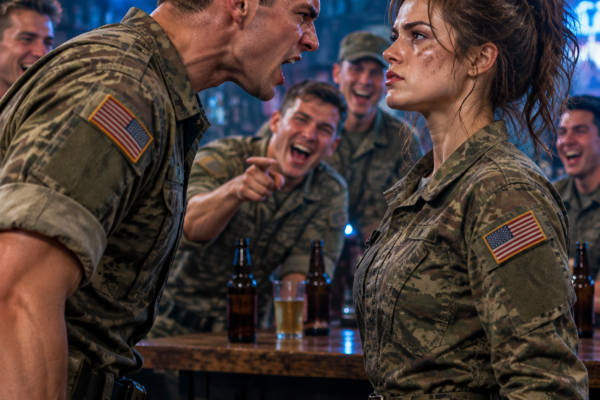
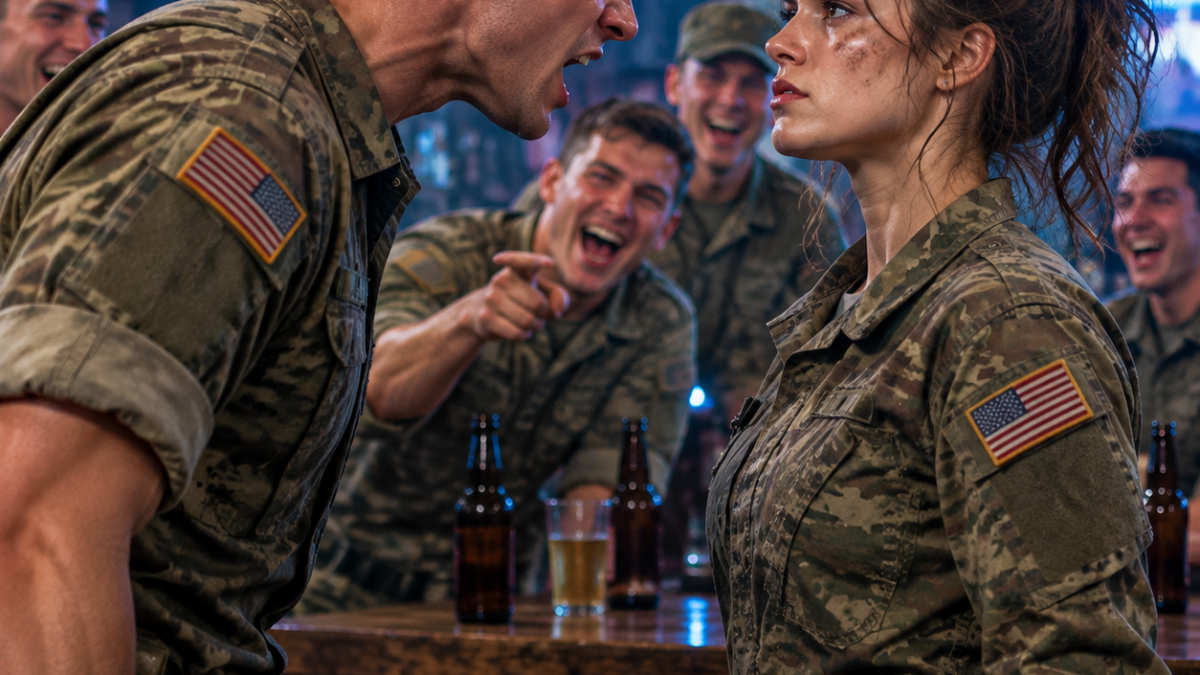
A soldier at a bar near base.
He didnt like that I didnt back down when his friend started talking.
Peggy was quiet for a long moment. Did you hit him back?
No.
Why not? Corrine looked down at their joined hands.
Her grandmothers skin, thin as paper, warm despite everything. Because if I had, it would have just been a story about two people fighting in a bar.
I wanted it to be a story about what he did, not what I did in response.
Peggys eyes softened.
Something like pride moved across her face, slow, unhurried, the way everything about Peggy Doyle moved.
There she is, Peggy murmured. There who is?
The girl I always knew youd become.
Peggy squeezed her hand, weak but deliberate. Some fights you win with your fists, baby, and some fights, the important ones, you win by making sure everybody in the room saw exactly who threw the first punch.
Corrine felt her eyes sting. Blinked it back.
You told me that when I was a kid, I didnt understand it then. You werent supposed to understand it then.
Peggys voice had gone soft, tired edges blurring slightly around the words. You were supposed to grow into it.
Looks like you did.
The machine beside the bed beeped, steady, patient. Im scared, Corrine admitted, quietly.
The kind of admission she almost never let herself make out loud to anyone about anything of the hearing, the soldier, of losing you. Peggys hand tightened around hers, surprisingly strong for a woman half tethered to machines.
Not yet, she said. Ive got a few more fights left in me, too.
Corrine stayed 2 days.
2 days of hospital coffee and hallway conversations with doctors who spoke in careful, measured phrases. 2 days of watching her grandmothers color slowly return, watching the machines settle into steadier rhythms, watching the fear in her aunts eyes ease by degrees.
By the third morning, the cardiologist used the word stable without qualifying it. Peggy would need monitoring, medication adjustments, rest, but she would live to complain about hospital food for a while longer.
Corrine sat beside the bed one last time before driving back to Camp Ashford. Go, Peggy said before she could even bring it up.
Youve got a war to finish.
Its not a war, Grandma.
Everythings a war, baby. Just depends on the weapons.
Peggys eyes were sharper now, clearer.
Some of the old fire had come back into them. You go finish what you started, and when its over, you come back here and tell me every single detail.
I want to hear how it ends. Its not over yet.
No.
Peggys mouth curved, faint but real. But it will be, and when it is, I intend to still be here to hear about it.
Corrine kissed her grandmothers forehead, held the moment a second longer than necessary because you never really know, do you, which moments are the ones youll replay later, which goodbyes are just goodbyes, and which ones are something else wearing a goodbyes clothes. She drove south with the sun rising behind her, and for the first time in 2 weeks, felt something steady settle into her chest.
Not peace, exactly. Resolve, which she was starting to understand might be the closest thing to peace that people like her ever really got.
She returned to base on a Thursday afternoon, walked straight into a version of Camp Ashford that had shifted slightly in her absence.
The whispers had gotten louder, not about the bar incident, about her. Because thats what happens in tight, closed environments when someone stands up for something.
The story stops being about the wrongdoing and starts being about the person who refused to let it disappear. Shes making an example out of him.
Shes trying to prove a point. Shes got an agenda.
Corrine had heard versions of this before, in other places, under other circumstances.
It never stopped being tiring. It just stopped being surprising.
She was crossing the equipment yard toward the gear room, arms full of dive equipment that needed inspection, when Sturgis stepped out from between two supply containers. Kovac and Voss flanked him, which told her immediately that this hadnt been a coincidence.
Lieutenant. Sturgiss voice had lost the swagger from three weeks ago.
What replaced it was worse, something flatter, colder. Sergeant.
Corrine kept walking, kept her pace even, not slowing, not speeding up. Youve been busy, he said.
Heard your grandmothers sick. That true?
Corrine stopped, turned. Something in her chest went very still.
The particular stillness that comes right before a decision, not after it.
You dont get to say her name.
Just making conversation.
You dont get to say her name, she repeated. And this time the words came out lower, sharper, a blade instead of a warning.
Kovac shifted his weight, uneasy suddenly, like hed only now realized the shape of the thing hed walked into, but Sturgis stepped closer, too close, the way hed done in the bar. The exact same distance.
Calculated.
Deliberate. Like he was trying to recreate a moment he could actually win this time.
You think youre untouchable.
he said.
Think you can humiliate me in front of my whole unit and just walk away clean. I think you humiliated yourself, sergeant.
I just happened to be standing there when it happened. His jaw tightened.
His hand moved. Except this time, she wasnt sitting in a booth with a book in her lap.
Choosing to absorb a hit for the sake of evidence.
This time when his hand came up, she caught his wrist before it finished its arc.
Twisted. Not hard enough to break anything.
Just hard enough to drop him to one knee.
Breath punched out of him in a single startled bull gasp. Voss lunged forward on instinct.
She pivoted, used his own momentum against him, and had him face down against the supply container wall in under 2 seconds. Arm pinned behind his back.
Kovac froze where he stood. Hands raised.
Not moving.
Clearly recalculating every decision that had led him to this particular yard on this particular afternoon.
The whole thing took maybe 6 seconds. She released them both.
Stepped back. Breathing even.
Not a hair out of place.
That. she said quietly, was self-defense.
Which means its going in the same report as everything else. Sturgis pushed himself up off the ground.
Face red with humiliation and something raw underneath it.
Fear, maybe. Or the first real understanding that he had badly, badly miscalculated who exactly he was dealing with.
He didnt say anything. There wasnt anything left to say.
Above them, mounted discreetly on the corner of the supply building, a security camera had captured every second of it.
Which should have been the end of it. Should have been clean.
Simple. Undeniable evidence.
Stacking neatly on top of undeniable evidence. Except two days later when Corrine requested a copy of the footage for the file Diane Faulkner was building for the hearing, the response came back strange.
Theres a gap, the base security technician told her, not quite meeting her eyes. In the recording, about 4 minutes missing.
Right around the timestamp youre asking about.
Corrine felt something cold settle in her stomach. A gap.
Technical issue, theyre saying. Storage drive had some kind of failure.
The exact 4 minutes. I know how it sounds, maam.
She stood very still in the security office, feeling the particular kind of anger that doesnt show up on your face at all. The kind that just sinks down deep and sits there, patient, waiting.
Who has access to that? The technician hesitated, which told her everything the hesitation was trying not to say.
A handful of senior NCOs, command staff. A pause.
Master Sergeant Callahan runs maintenance on that drive personally. Corrine knew that name.
Everyone did. Master Sergeant Ray Callahan had been at Camp Ashford longer than most of the buildings had.
Old friend of half the officers on base. Old mentor to half the Rangers, including, as it happened, Bradley Sturgis, whose father had served under Callahan two decades back in another posting entirely.
She didnt say anything else in that office because accusing a senior NCO of tampering with evidence without proof would blow up in her face faster than anything Sturgis himself could ever manage.
She needed proof and she had absolutely no idea, standing in that fluorescent-lit security office with the taste of something bitter rising in the back of her throat, where she was going to find it. Which is when she thought of Walt.
Because if there was one thing shed learned about Walt Higgins in the weeks since that night in his bar, it was that he did not trust technology, did not trust convenient explanations, and did not, under any circumstances whatsoever, trust anyone who told him a recording had simply disappeared.
She found him behind the counter of the Harbor Light that evening, polishing glasses that were already clean, the way he always did when his hands needed something to do.
You look like youre carrying something heavy, he said without looking up.
Someones trying to make evidence disappear.
Walts hand stilled. The equipment room footage?
4 minutes missing, right where it matters.
He set the glass down slowly, looked at her with an expression she hadnt seen on him before. Something older than sympathy.
Something closer to recognition. I had a feeling something like this might happen, he said.
What do you mean? He reached under the bar, pulled out an old external hard drive, the kind that had gone out of fashion a decade ago, scuffed and dusty, but clearly functional.
Bars got its own security system, independent of base. I keep every recording backed up manually.
Old habit.
He set the drive on the counter between them. Learned that lesson a long time ago.
Systems fail. People dont always fail by accident.
Corrine stared at the drive. You kept the bar footage from that night?
Every second of it. His eyes met hers, steady.
Figured someday somebody might need it who wasnt going to get a fair shake otherwise.
Walt. Her voice came out thinner than she meant it to.
Thats not the footage I need right now. I need the equipment room.
I know what you need.
He cut her off, gentle but firm.
And I dont have that, but Ive got something else that might matter more.
He reached under the bar again, pulled out a small notebook, worn at the edges, filled with careful, deliberate handwriting. I write down who comes in, who leaves, what I see, every night, for years.
He flipped it open to a page near the back, including two nights ago, including a man matching Callahans description having a very long, very quiet conversation with Sergeant Sturgiss father, right there in that corner booth. Corrines breath caught.
Sturgiss father was here.
Retired officer himself, from what I gather.
Older gentleman, angry gentleman.
Walt tapped the page. I dont know what they talked about.
Im not in the business of eavesdropping. But I know what worry looks like on a mans face when he thinks nobodys paying attention.
And I know what it looks like when two men agree, without saying it out loud, that a problem needs to disappear. Corrine sat down slowly on the bar stool across from him.
The weight of it settling over her.
Because this had just stopped being about one mans temper in one bar on one Friday night.
This had become something larger. Something with roots stretching further back than shed realized.
A father protecting a sons career. A retired officers reputation tangled up with an active ones future.
A senior NCO with old loyalties choosing which side of a line to stand on. I need that page.
She said quietly.
Walt slid the notebook across the counter without hesitation.
Copy it. Keep the original safe.
And Corrine.
She looked up. Whoevers trying to make this disappear.
Walt said, Theyre not doing it because they think youre wrong.
Theyre doing it because they know youre right. People dont bury the truth because its weak.
They bury it because its dangerous. The following Tuesday, a woman Corrine had never met was waiting outside the base gate when her shift ended.
Mid-30s, notebook in hand, the old-fashioned paper kind, not a phone. Press badge clipped to her jacket, the local Sacramento Valley Papers logo printed small in the corner.
Lieutenant Whitfield? The woman fell into step beside her, easy, practiced.
Rachel Kessler. I write for the Valley Ledger.
Corrine kept walking.
I dont give interviews.
Im not asking for one. Not yet.
Kesslers voice was calm, unhurried. Im asking if youd be willing to talk, off the record, about whats happening on this base.
Ive heard three different versions of the same story from three different sources. Id like to hear the fourth.
Whered you hear about it? Small town outside a big base, Lieutenant.
Word travels.
Corrine stopped walking, studied the reporters face for a long moment, looking for the angle, the agenda, the thing every uniform learned to look for in every civilian who came asking questions with a notebook in hand.
She didnt find one.
Not obviously, anyway.
Which didnt mean it wasnt there. If I talk to you, Corrine said slowly, it goes public before the hearing does, before due process even has a chance to run its course.
That doesnt help me. It just turns this into a spectacle.
It might also protect you, Kessler said. If someones trying to make evidence disappear, and from what Im hearing, someone is, a public record is a lot harder to erase than a security drive.
Corrine felt that land somewhere true and uncomfortable.
I need to think about it.
Thats fair.
Kessler handed her a card, plain, simple, just a name and a number.
Im not going anywhere, Lieutenant. And for what its worth, Im not interested in a story about a woman who got hit in a bar.
Im interested in a story about what happens after, about whether the truth actually gets to win, even when powerful people would rather it didnt. Corrine took the card, didnt say anything else, watched the reporter walk back toward a modest sedan parked just outside the gate unhurried, patient, the way people walk when they already suspect theyll be back.
That night, alone in her quarters, Corrine laid everything out across her small desk.
Walts backup drive, the photocopied page from his notebook, Diane Faulkners preliminary case file, Rachel Kesslers business card, sitting slightly apart from everything else like it belonged to a different category of decision entirely. She thought about her grandmothers voice in that hospital bed.
Some fights you win with your fists.
Some you win by making sure everybody in the room saw who threw the first punch.
She thought about her mother, 22 years a Navy nurse, who used to say that the truth doesnt need volume.
It just needs time in the right room to land in.
And she thought about Nora Pemberton, 25 years old, showing up at 500 every single morning without fail, watching Corrines every move like she was memorizing a language she intended to speak fluently someday. Because that was the part that mattered most, wasnt it?
Not winning against Sturgis, not proving a point to Callahan or his old loyalties, or a retired officer having quiet conversations in dark corner booths.
It was what happened after. Who was watching.
What they learned from how she handled the next 30 days.
She picked up her phone, called Diane Faulkner. I have something you need to see, she said when the line connected.
And I think we need to move faster than we originally planned. Diane Faulkner arrived at the Harbor Light the next evening, reviewing Walts notebook page and the backup footage with the focused, unhurried intensity of a lawyer who had built a career on exactly this kind of overlooked, unglamorous evidence.
This is good, Faulkner said finally, closing the notebook.
This is very good. A documented meeting between Sturgis father and the NCO responsible for the missing footage right around the time that footage went missing.
Thats not proof of tampering on its own, but combined with the gap in the timestamp, its a pattern, Corrine finished. Its a pattern, Faulkner agreed.
And patterns are exactly what wins hearings like this. She looked up from the notebook, studying Corrine carefully.
Theres something else you should know, Faulkner said. I got word this afternoon.
Sturgis father has been making calls to people above Commander Ashbys level trying to get the whole thing quietly reassigned to a different command before the hearing date.
Corrines jaw tightened.
Can he do that? Hes retired.
Hes not supposed to have that kind of pull anymore.
Faulkners mouth twisted something between frustration and grim amusement.
Doesnt mean people dont still return his calls.
So what do we do?
Faulkner closed her folder, met Corrines eyes directly. We make sure this case is too well documented, too public, and too clean to quietly disappear anywhere.
A pause. Which means I think its time you talk to that reporter.
The interview ran two days later. Not sensational, not dramatic.
Kessler had kept her word.
No lurid headlines, no speculation, just a careful, measured piece about an ongoing investigation into an incident on base. Quotes attributed carefully, facts checked twice.
But it ran. And once it ran, certain phone calls stopped happening.
Certain pressure quietly, invisibly, eased. Because it is far harder to bury a story once the public already knows it exists.
Commander Ashby called Corrine into his office that same afternoon, expression unreadable.
You went to the press. I went to the press after someone tried to erase evidence and pressure command into burying this before it ever reached a hearing room, sir.
Her voice stayed level, careful. Id have preferred not to.
I didnt see another option that didnt end with this quietly disappearing.
Ashby studied her for a long moment, then unexpectedly something that might have been the beginning of a smile crossed his face.
You know, he said, in 30 years Ive seen a lot of people try to fight the system by going around it.
Most of them burn out.
Most of them make enemies they cant survive.
And me, sir? You didnt go around the system.
He leaned back.
You made the system too visible to corrupt. Thats different.
He slid a folder across the desk toward her.
Hearings moved up.
Two weeks from Monday. Master Sergeant Callahans been placed on administrative leave.
Pending a separate investigation into the missing footage.
A pause. Your case just got a great deal stronger, Lieutenant.
Id suggest you use the time wisely.
The mess hall was loud that Thursday evening, the particular controlled chaos of several hundred people trying to eat dinner at the same time. Trays clattering.
Voices overlapping in a wash of sound that made it easy to disappear into if you wanted to. Karin sat with Nora at a corner table, working through a plate of food she wasnt really tasting.
Half her mind still running through Faulkners list of questions for the hearing. Youve barely eaten, Nora observed.
Been a long few weeks. I heard about your grandmother.
Is she stable, getting better.
Karin allowed herself the smallest smile.
Shes tougher than most people Ive served with. Nora smiled back.
Something warm passing between them. And for a moment, just a moment, the weight of everything else eased until it didnt.
Because across the mess hall, a commotion started. Raised voices.
Chairs scraping back. The particular sound of tension finally boiling past the point it had been simmering at for weeks.
Karin turned. Sturgis stood in the middle of the room, phone raised, voice pitched loud enough to carry across every table.
You want to see what a real operator looks like? Here.
He was showing the video. The old one, the bar.
This is who theyve got training half this base. Laughter from a few tables near him.
Uncomfortable silence from most of the rest of the room.
Noras hand found Karins wrist.
Dont.
Thats exactly what he wants.
I know.
But Karin was already standing. The room quieted as she crossed it.
Every eye tracking her movement.
Phones lifting out of pockets on instinct, ready to document whatever came next, whether anyone had planned for it or not.
She stopped 3 ft from Sturgis.
He grinned, though it didnt quite reach his eyes. Lieutenant, come to watch your highlight reel?
I came to give you a choice. A choice?
You can stop this now. Her voice carried without needing to rise.
Own what happened. Accept the process thats already moving forward with or without your cooperation.
Or you can keep doing this. Keep performing for an audience thats already starting to see through you.
And every single thing you do from this point forward becomes one more piece of evidence in a case thats already stronger than you understand. The laughter around them had died completely.
You think youre untouchable? Sturgis said low.
No.
Karin held his gaze, steady, unblinking. I think Ive survived things you cant imagine, Sergeant.
I think Ive been documenting patient, methodical patience since the night you hit me.
While youve spent the same weeks proving every single thing I needed you to prove. A pause.
Thats not untouchable.
Thats just prepared.
His jaw worked. Something raw flickered behind his eyes, not quite fear, not quite regret, but something in the neighborhood of both.
This isnt over, he said finally.
No, Corrine agreed quietly.
But it will be soon.
And when it is, there wont be any question left about who did what or why. She turned and walked back to her table, leaving him standing alone in the middle of a mess hall gone almost completely silent.
Phone still raised, footage of his own humiliation being recorded in real time by exactly the kind of witnesses he could no longer control. That night, back in her quarters, Corrine sat by the window for a long time before she finally picked up her phone and called her grandmother.
Youre supposed to be resting, she said when Peggy answered.
Im 82, not dead.
I can rest and talk on the phone at the same time. A pause, warm despite the gravel in her voice.
Hows the war going?
Corrine almost laughed. Getting close to the end, I think.
Tell me.
So she did.
Told her about the missing footage.
About Walts notebook.
About Rachel Kesslers careful, unsensational article. About Nora showing up every morning at 500 without fail.
About the hearing moved up 2 weeks from Monday. Peggy listened without interrupting, the way she always had, all the way back to childhood kitchen tables and coffee-scented afternoons.
When Corrine finished, there was a long, comfortable silence on the line. You know what I think, Peggy said finally.
What?
I think you already won this the night you decided not to hit him back. Her voice had gone soft, certain.
Everything since then has just been the world catching up to what you already understood. Corinne closed her eyes, let the words settle over her like something warm.
I love you, Grandma. I love you, too, baby.
A pause, and then lighter, the ghost of a smile audible even through the phone. Now, go get some sleep.
Youve got a hearing to win, and an old woman waiting to hear every single detail of exactly how you do it.
Corinne hung up and sat by the window a while longer, watching the lights of the base flicker in the distance, feeling something settle into place inside her that had been unsteady for weeks. Because the fight wasnt over, not yet.
But for the first time since that Friday night in the Harbor Light Tavern, she could finally see the shape of how it would end. And whatever else happened in that hearing room 2 weeks from now, she understood, with the same quiet certainty her mother had once tried to teach her and her grandmother had spent a lifetime living, the truth, given enough patience and the right room to land in, always found its way home eventually.
She just had to make sure she was still standing when it did.
The morning of the hearing arrived the way most important mornings do, quietly, without any of the weight it was about to carry announcing itself in advance.
Corinne woke at 4:30, same as always, because routine was armor, and armor was the only thing standing between her and a day shed been building toward for 6 weeks without ever quite letting herself imagine what the finish line actually looked like. She ran her 5 miles, showered, stood in front of the mirror in her dress uniform, checking every line, every crease, every ribbon pinned exactly where regulation demanded it sit.
Not out of vanity, out of respect for the uniform, for everyone whod worn it before her, and everyone who would wear it after.
For her mother, who never got the chance to see her daughter stand in a room like the one Corinne was about to walk into. She touched the small scar just beneath her collarbone.
Habit.
Grounding.
A reminder that she had survived worse rooms than this one. Then she picked up the folder Diane Faulkner had prepared and walked out the door.
The base felt different that morning.
Quieter than usual in the particular way a place goes quiet when everyone already knows something is about to happen and nobody wants to be the one who says it out loud first. She passed a cluster of SEAL candidates near the training yard.
Conversation died the moment they saw her.
One of them, a young woman, maybe 20, barely out of her first month of training, straightened and gave a small subtle nod. Corrine nodded back, kept walking.
Because that was the whole language now, wasnt it? Not words, just small gestures between women who understood without needing it explained exactly what today was actually about.
Commander Grant Ashby was waiting outside the JAG building when she arrived.
Older than shed ever really noticed before, standing there in the early light, tired around the eyes, but steady. You ready for this?
Ive been ready since the night he hit me, sir.
Ashby studied her for a long moment. This isnt just about Sturgis anymore, he said.
You understand that? I understand it, sir.
Whatever happens in that room today sets precedent for this command, maybe further than that.
A pause. No pressure.
Something in Corrine almost smiled. Theres always pressure, sir.
The question is whether you let it crush you or whether you use it. Ashby opened the door.
After you, Lieutenant.
The hearing room was exactly what shed expected.
Long table.
Bare walls.
Three panel members already seated at the front, faces arranged into the particular neutrality that senior officers practice like a second uniform.
Captain Harold Whitmore sat in the center chair, reading glasses low on his nose, a stack of files arranged with military precision in front of him. Sturgis was already there.
Full dress uniform, every medal displayed, sitting rigid beside his JAG representative, a younger officer who kept glancing sideways at his client, like a man watching a slow leak in a boat he had no way to patch.
Sturgis didnt look at Corrine when she entered.
She hadnt expected him to.
Behind him, in the observation row, Kovac and Voss sat with their hands folded, faces pale. The particular look of men who were beginning to understand that they had backed the wrong horse a long time before theyd realized it was already running the wrong direction.
Owen Marsh sat one row back, alone, not with them.
That detail didnt escape her notice.
Corrine took her seat.
Diane Faulkner leaned close.
How are you feeling?
Focused. Good.
Let me carry the weight of this.
When they address you directly, keep it short, clear.
Dont give them anything to twist. Understood.
Whitmore checked his watch, called the room to order. This hearing is convened to review allegations of assault and conduct unbecoming against Sergeant First Class Bradley Sturgis.
Lieutenant Corrine Whitfield is the complainant.
All parties have been advised of their rights.
He looked across both sides of the table. Lets begin.
Faulkner laid out the timeline with the precision of someone who had spent 6 weeks building toward exactly this moment. The bar.
The video.
The security report filed that same night.
The equipment yard confrontation. The missing footage.
Walts backup drive. His notebook entry documenting a meeting between Sturgiss father and Master Sergeant Callahan.
Each piece displayed on the screen at the front of the room each timestamp noted each witness statement referenced by name Whitmore listened without expression the other two panel members took notes pen scratching in a silence that felt somehow louder than any shouting could have been when Faulkner finished she turned to Corinne Lieutenant Whitfield please describe in your own words what occurred at the Harbor Light Tavern on the night in question Corinne stood her voice came out level measured the same voice shed used in front of 40 witnesses on a training field 6 weeks ago I was reading alone in a corner booth when Sergeant Sturgis and three other Rangers entered the bar they made several derogatory comments about my gender and my service when I chose not to engage Sergeant Sturgis approached my table he struck me across the face with an open palm I fell to the floor what did you do after being struck I stood I informed those present that the confrontation was over I left the bar and reported the incident to base security within the hour why didnt you defend yourself physically in that moment a brief considered pause because this was the question shed known was coming the one Faulkner had prepared her for the one she still somehow hadnt found an entirely comfortable way to answer because self-defense in that moment would have created a dispute of accounts his word against mine no clear resolution her eyes moved briefly to Sturgis then back to the panel by allowing the incident to be documented by witnesses by phones already recording I removed the ambiguity there was no argument left to have about what actually happened Sturgiss Jagy representative rose objection the complainant is speculating about strategy rather than describing facts Whitmore shook his head The complainant is explaining her reasoning.
Overruled. Continue, Lieutenant.
Karin nodded once. Three weeks later, I was assigned lead instructor for joint training exercises that included Sergeant Sturgiss unit.
During a subsequent equipment yard encounter, Sergeant Sturgis attempted to strike me a second time. I used minimal necessary force to subdue him and two other Rangers present.
Base security was called and the incident was recorded on a security camera.
And that footage went missing.
4 minutes, specifically covering the timestamp of the confrontation, were erased from the base security system approximately 48 hours after the incident.
Whitmores eyes lifted from his notes.
Do you have evidence connecting that deletion to a specific individual?
Faulkner stepped in smoothly.
We do, Captain. If I may direct the panels attention to exhibit C.
The screen shifted. Walts photocopied notebook page appeared, his careful handwriting filling the frame.
This is a contemporaneous log kept by the owner of the Harbor Light Tavern, documenting patrons and conversations on the premises.
Entry dated two nights prior to the footage deletion.
It records a lengthy private conversation between a man matching the description of Sergeant Sturgiss father, a retired officer, and Master Sergeant Raymond Callahan, the NCO with administrative access to the equipment yards security drive. A murmur rippled through the observation row.
Sturgiss face had gone very still. Whitmore leaned forward slightly.
Master Sergeant Callahan is not present at this hearing. Hes currently under separate administrative investigation, Captain, Faulkner said, regarding the missing footage specifically.
And Sergeant Sturgiss father? Retired Colonel Walter Sturgis.
Faulkner let the name sit in the room for a beat before continuing.
 [Tap here for the Next Part ]