Part 3: Alone on a Freezing Farm With Nothing Left. Then She Opened the Grain Bin Floor
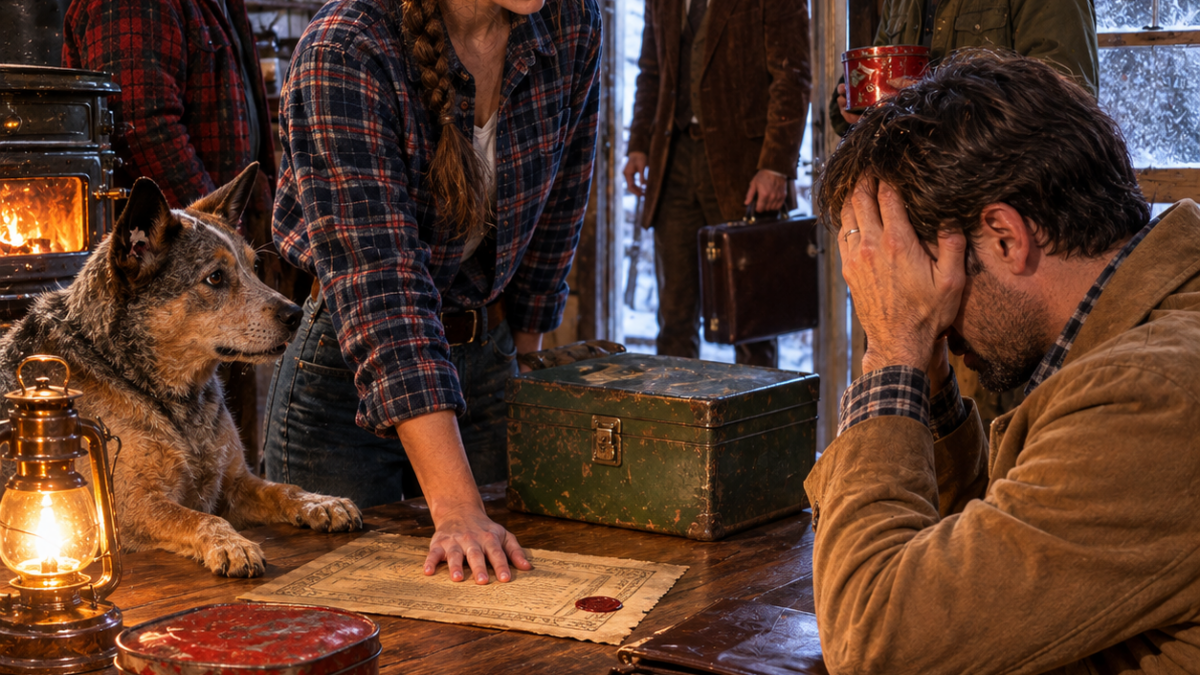
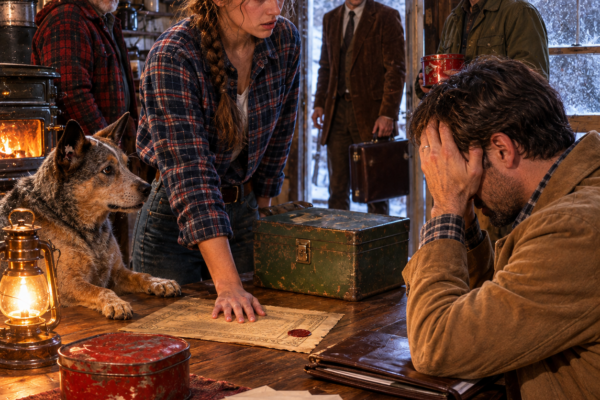
But he came back. He came back carrying the red cookie tin dented at one corner and he set it on the table in front of her very gently as if it might break.
Dale told me to put moms things in the estate auction lot, he said. His voice was rough from not being used.
The tin was supposed to go with the kitchen boxes.
I took it out.
Its been under my seat for nine days.
He looked at the floor and then he made himself look up. I should have said something in this kitchen.
I didnt. Im sorry, Joe.
Im saying it now.
She put her hands on the tin.
The dent at the corner fit her thumb the way it always had.
She did not open it. She did not need to.
She looked at her brother Travis, who had said nothing when it mattered and something when it was almost too late.
And she found that she did not know yet what to do with him. But she did not want to close the door.
She nodded once and he nodded back. And for now that was enough.
Dale reached into his coat without a word and set her phone and the brown envelope on the table beside the tin. Its all there, he said.
Every dollar.
Josie looked at him a long time.
Then she took the sealed envelope out of her jacket, the one with Dale written on it in square capitals, and she laid it in front of him.
Grandpa left you this, she said. He said to give it to you if youd earned the reading.
I think telling the truth in this kitchen counts for something. I dont know if it counts for enough.
Thats not mine to decide. Dale stared at his own name.
He opened it with fingers that were not steady. It was a single sheet.
He read it once and then again and then he put his hand over his eyes. When he finally spoke, he read only one line aloud and his voice broke in the middle of it.
I said no because I love you. Someday youll know those were the same thing.
He folded the letter and put it inside his coat over his heart and he did not say anything else.
He did not have to. Nobody noticed the light change until Loretta did.
She was standing at the window and she said, Oh no, very quietly, and they all looked.
The slate colored bank in the northwest had come the whole way across the sky while they sat at the table. The windmill had begun to spin hard and ragged.
The first snow went past the glass sideways and then there was no more yard and no more lane, only white. That road will close inside the hour, Nolan said.
Nobodys driving in this.
By three oclock, the wind was screaming across the plains, and the old house groaned on its foundation, and the cold came through the north wall as if the clapboards were paper. Josie fed the cookstove until the iron glowed.
It was not enough.
By dark, the thermometer by the door read nine degrees, and Nolans hands had gone white at the knuckles, and Loretta had stopped pretending not to shiver.
Get your coats, Josie said.
All of you.
I know somewhere warmer. She took them out into it on a clothesline from the porch, tied around her waist, each of them holding on behind her, Loretta and Nolan and Travis and Dale last, with Scout out ahead in the white, finding the way.
40 steps to the bin. She had counted them the week before.
She found the door by feel.
She lit the lamp and lifted the hatch, and one by one they went down the nine rungs into the still, dry cold under the ground, and she lit the heater and cracked the hatch its inch.
Nobody spoke for a while. They sat on the wool blankets and the cedar chest, five people and a dog in a room made for exactly this, while the storm beat the steel walls over their heads like a drum.
Dale was the last to sit down.
He stood in the middle of the room with the lamplight on his face and looked at the shelves and the red cans and the ledger on its square of oilcloth.
Then he looked up.
Josie watched him read the beam. She watched his lips move.
Save back seed for the hard year. I sat at his table 50 times, Dale said.
He never told me this was here.
You never asked him what the ground was for, Josie said.
It was not unkind. It was only true.
Loretta told the story of the winter of 1985 that night, the whole of it, with the ledger open on her knees and the lamp turned low, and nobody interrupted her.
When she got to her father crying at the kitchen table, Dale put his face in his hands again and this time he stayed that way a long while. Toward morning the wind dropped.
Josie woke to find Travis filling the heater from the red can to the line and not past the way she had shown him and Dale sitting against the shelves with the ledger open, turning the pages slowly, reading every name.
They dug out together in the gray light, all five of them with the scoop shovel and a spade and their hands. Dale dug his own car out of the drift in the yard.
He did not ask anyone to help. When it was done, he stood beside it with the snow to his knees and looked at his sister for a long moment and he did not say anything.
Then he and Travis drove down the lane slowly and turned east. This time at the county road, Travis turned in his seat and looked back.
The rest took the spring. Nolan drew up the lease with Redline Planes energy on Josies terms and the company took them.
No well within half a mile of the house or the bins, no road across the south pasture where the meadowlarks nested.
3/16 of whatever came up and the bonus paid in full. When the check came, $288,000, she sat at the oak table and looked at it for most of an hour and then she drove to town in the old farm truck Lorettas nephew had gotten running and put it in the bank in her own name.
The surface she bought from the estate.
The county appraiser walked the land in April and set it at a fair price and Josie paid her brothers their two-thirds, a little over $234,000, every cent of it by the book.
It did not save Dale.
The house still went in March and the company closed in May, but it gave him a clean place to start from and it was his honestly come by, and he knew it.
He sent her a letter in June. It said only that he had found work with a road crew and that the girls were well and that he had put Grandpas letter in the family Bible.
wrote back.
It was short. It was a start.
Travis came up in May to help her with the roof.
He stayed a week.
He did not talk much, but he worked.
And on the last evening he sat on the porch step beside her and said he was sorry again, and she said she knew.
And they watched the light go down over the wheat. In May she planted a single row of the seed from the jar.
41 years old, she did not expect much. A little more than half of it came up, green and stubborn along the edge of the garden.
And in September she picked the ears and dried them in the kitchen and shelled them by hand. And she put the new seed in a clean jar and labeled it in pencil.
Seed from the hard year. Saved back again.
She put it on the bottom shelf of the room under the old bin.
She restocked the shelves that fall jar by jar and filled the red cans and bought batteries and put them in the glass jar, just in case.
And on the first empty page of the ledger, under the old names, she wrote a new heading in her own hand.
Loretta was the first line. Josie wrote it the week before Christmas when Loretta came up the lane with a ham and would not hear a word about it.
Pike, December, one ham, one bag dog food, paid forward.
A year after the little gray car had left her at the end of the lane, the snow came down again.
It was the second week of January and it had been snowing since noon and the light was going early, the way it does on the plains in winter.
Josie was on the porch knocking the snow off an armload of split ash when Scout lifted his head.
He was a big dog now, thick in the chest, his copper coat gone glossy, the torn ear still torn.
He stood at the top of the porch steps and looked down the long white lane, and he did not bark. He only watched with his ears forward.
Josie set the wood down and looked where he was looking.
Somebody was coming up the lane, not a car, a man on foot, walking slowly in the falling snow, bent against it. She watched him come the way she had once watched two red tail lights go the whole mile and a half.
And as he came closer, she could see that he was old, stooped and thin, in a brown canvas coat much too light for the weather, with a duffel bag over one shoulder.
In his other hand, held against his chest the way a person holds the last thing they own, was a dented coffee can.
He stopped at the bottom of the porch steps and looked up at her. His face was gray with cold and stubble, and his eyes were watery and blue and very tired.
Maam, he said, Im sorry to come up on you like this. The lady at the post office said I ought to try this place.
Im Harlan Oaks. I had a farm two counties over till the bank took it in November.
He lifted the coffee can a little as if to explain it. Thats seed, saved back.
Its about all I kept.
Josie looked at the coffee can for a long moment. Then she looked at the old man and she saw the whole of it at once, the way you see a field from a high place.
Her grandfather at a kitchen table in 1985, her mother at 11 with a thermos in the dark, Ed Pike crying over 30 bushels of seed corn, a girl with 18 matches and a dog who would not leave.
All of it running down through the years to this porch, this snow, this old man with his seed held against his chest.
She came down the steps and took the duffel bag off his shoulder. Come in out of the cold, Mr.Oaks, she said.
Theres a fire and theres supper and theres room. You dont have to explain anything tonight.
He started to say something and stopped, and his mouth worked, and he did not manage it.
My grandfather painted something on a beam once, Josie said. Save back seed for the hard year.
She shifted the duffle on her shoulder and nodded at the can in his hands.
This is somebodys hard year.
Thats what the seed was for.
She turned him toward the kitchen door where the lamplight was spilling out gold onto the snow, and Scout went ahead of them, checking the ground the way he always did.
On the shelf above the stove sat a square red cookie tin, dented at one corner, back in its place. On the table, the blue plate with the chipped rim was already set.
Behind them, the snow came down and filled their tracks, and the windmill turned, and the long lane ran out white and empty to the county road.
A year ago, she had watched a car go down it and not look back. This time, someone had come up it, and this time, she had gone down to meet him.