Part 3: “Congratulations, man. Seriously. Still playing soldier at your age? That’s dedication.”
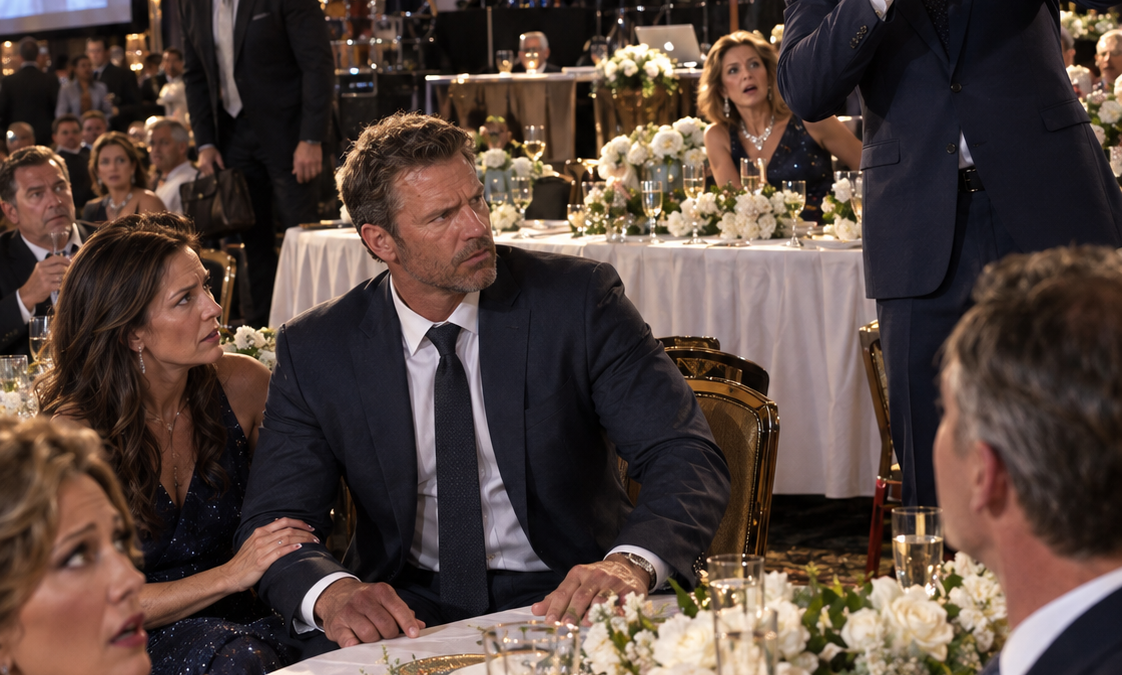
PART 8 — THE TRIAL
Derek’s trial started on September 12th.
I wasn’t there for the first day. I wasn’t there for the second day either. I was in Seattle, working on the boat, waiting for the phone to ring.
Rachel handled the updates. She’d taken a leave of absence from her firm. She spent hours on the phone with prosecutors, with Elizabeth Harrow, with the families. She was the one who kept everything moving while I stayed in the garage, sanding wood, replacing wiring, doing anything that didn’t require me to think about what was happening in a federal courtroom three thousand miles away.
“You should be there,” Tommy said. He’d stayed in Seattle. He’d rented an apartment near the waterfront. He said he liked the rain.
“I don’t need to be there.”
“The families need you.”
“The families have each other.”
“That’s not the same thing.”
I set down the sandpaper. Looked at him.
“I can’t sit in that room and watch him. I can’t listen to lawyers argue about whether his father was a monster or just a businessman. I can’t do it.”
“You’ve done harder things.”
“This isn’t about hard. This is about what I can carry.”
Tommy nodded slowly. He understood.
“Then I’ll go. I’ll represent the platoon.”
“You don’t have to.”
“I know. But someone should.”
He flew out that night.
Rachel gave me updates every evening.
Derek’s lawyers argued that he hadn’t known about his father’s actions. They argued that he was a victim of circumstance. They argued that the evidence was circumstantial at best.
The prosecutors argued that Derek had inherited more than money. He’d inherited knowledge. He’d inherited complicity. He’d inherited a system that treated human lives as line items on a spreadsheet.
Witnesses were called. Former employees. Business partners. Accountants who’d seen the books.
Patricia testified on the third day.
I didn’t know she’d been called. Rachel told me afterward. She said Patricia had walked into the courtroom alone. No lawyers. No handlers. Just a gray cardigan and a face that had aged ten years in three months.
She told the court about the dinners. The meetings. The conversations she wasn’t supposed to hear. She told them about the money that moved through accounts that didn’t exist. She told them about the names that were never spoken aloud.
She told them about Derek.
“He knew,” she said. “Maybe not everything. But he knew his father was involved in something. He knew the firm wasn’t clean. He chose not to ask questions. He chose to look away.”
The defense tried to discredit her. They called her bitter. They called her vindictive. They suggested she was lying to protect herself.
She didn’t flinch.
“I’m not protecting myself,” she said. “I’m telling the truth. For the first time in thirty years, I’m telling the truth.”
The verdict came on a Thursday.
Rachel called me at 11 a.m. Her voice was steady. Controlled. The way it got when she was holding something back.
“Guilty,” she said.
I set down the wrench I was holding.
“On all counts?”
“Wire fraud. Conspiracy. Accessory to manslaughter. All of it.”
I sat on the workbench. The garage was quiet. The neighborhood was quiet. Everything was quiet.
“Sentencing is in six weeks. The judge is talking about significant prison time.”
“How much?”
“Ten to fifteen years.”
I looked at my hands. The same hands that had held Reyes when he died. The same hands that had written letters to his mother every year. The same hands that had pinned a medal to my chest three months ago.
“Does Vanessa know?”
“She was in the courtroom. She didn’t say anything. Just sat there. When they read the verdict, she closed her eyes. Then she got up and walked out.”
“Is she okay?”
“She will be. She’s stronger than she looks.”
I thought about Vanessa. The bride. The golden child. The woman who’d married a man she didn’t really know.
“Does she blame me?”
“No. She told Rachel she doesn’t blame you. She said she should have seen it. She said she should have asked more questions.”
“She was in love.”
“That’s what Rachel told her. ‘You were in love. That’s not a crime.'”
I stood up. Walked to the garage door. Opened it.
The sun was out. The street was lined with maple trees. A neighbor was walking his dog. Another was watering her garden. Ordinary people living ordinary lives.
“I should feel something,” I said.
“What do you mean?”
“I should feel happy. Or relieved. Or vindicated. Something.”
“And you don’t?”
“I don’t know. I feel… quiet.”
Rachel was silent for a moment.
“Maybe that’s enough,” she said. “Maybe quiet is what you’ve been looking for all along.”
The sentencing was on October 24th.
I didn’t go. Neither did Rachel. But Tommy was there. And Marcus. And McCallister, who’d driven eighteen hours again, because he said he wasn’t going to miss this.
Derek spoke before the judge. He apologized to his family. To Vanessa. To the court. He said he was sorry for the choices he’d made. He said he was sorry for the people he’d hurt.
He didn’t apologize to me. He didn’t apologize to the families. But I hadn’t expected him to.
The judge gave him fourteen years.
The news was everywhere for a week. Then it faded. Then it was gone.
That’s the thing about the news cycle. It moves on. It always moves on.
But the families didn’t move on. They couldn’t. Their lives had changed forever. Not because of the verdict, but because of the truth.
Anne Peterson called me three days after the sentencing.
“My son wants to enlist,” she said. “He says he wants to serve the way his father did.”
I didn’t know what to say.
“He’s twenty-eight. He has a degree. He could do anything. But he wants to join the Army.”
“How do you feel about that?”
“I don’t know. I’m scared. But I’m also proud. Does that make sense?”
It made perfect sense.
“Does he want to be a Ranger?”
“He says he wants to try. He says his father would expect nothing less.”
I thought about Peterson. About the way he’d joke about John Wayne movies. About the way he’d volunteered for the mission because he wanted to prove himself.
“Tell him to call me. Before he signs anything.”
“Thank you.”
“Don’t thank me yet. The recruiting process is a pain in the ass.”
She laughed. It was the first time I’d heard her laugh.
Vanessa came to Seattle in November.
She’d filed for divorce. She’d moved out of the house in Bellevue. She was living in a small apartment in Capitol Hill, working at a nonprofit that helped veterans find jobs.
Rachel told me she wanted to see me.
“She wants to apologize,” Rachel said.
“She doesn’t have to.”
“I know. But she wants to.”
We met at a coffee shop near Pike Place. Vanessa was thinner than she’d been at the wedding. Dark circles under her eyes. But there was something different about her. Something steadier.
“Daniel,” she said.
“Vanessa.”
She sat across from me. Wrapped her hands around a mug of tea.
“I’m sorry,” she said. “For everything. For the wedding. For Derek. For the way I treated you.”
“You didn’t treat me badly.”
“I didn’t treat you at all. I ignored you. I let Derek make jokes at your expense. I laughed at things I shouldn’t have laughed at.”
“You were in love.”
“That’s not an excuse.”
I looked at her. She was thirty-one years old. She’d spent her whole life being told what to want. What to wear. Who to marry. How to behave.
“You’re not responsible for Derek,” I said.
“I know.”
“You’re not responsible for what his father did.”
“I know.”
“So why are you apologizing?”
She looked at me. Her eyes were wet.
“Because I want to be different. I want to be the kind of person who sees people. Who asks questions. Who doesn’t just accept what she’s told.”
“That’s a good thing to want.”
“Can you help me?”
I didn’t expect that.
“Help you how?”
She pulled a folder out of her bag. Opened it.
“I’ve been working with a veterans’ organization. We help people transition out of the military. Find jobs. Find housing. Find purpose. I don’t know anything about the military. I don’t know what it’s like. But I want to learn.”
I looked at the folder. At the brochures. At the list of names and numbers.
“Are you asking me to volunteer?”
“I’m asking you to teach me. What you know. What you’ve seen. What people like my ex-husband never understood.”
I closed the folder. Pushed it back across the table.
“I’ll think about it.”
She nodded. “That’s all I ask.”
I called Tommy that night.
“You’ll never guess who asked me to volunteer at a veterans’ nonprofit.”
“Vanessa.”
“How’d you know?”
“She called me too. Asked if I’d help. Said she wanted to understand.”
“What did you tell her?”
“I said yes. I said I’d teach her everything I know.”
I laughed. Actually laughed.
“You’ve never taught anyone anything.”
“I taught you.”
“You pointed me in the right direction and let me figure it out.”
“Same thing.”
I sat on the porch. The rain had started again. Soft, steady, the way Seattle rain always was.
“I’m going to do it,” I said.
“Do what?”
“Volunteer. Help her.”
“Why?”
I thought about it.
“Because she’s trying. Because she wants to be different. Because someone gave me a chance once. When I got home from the Valley. When I was a mess. Someone gave me a chance.”
“Who?”
“You.”
Tommy was quiet.
“I didn’t do anything.”
“You didn’t give up on me. That’s more than most people do.”
Another silence.
“Alright,” he said. “I’ll do it too. But I’m not wearing a suit.”
“Nobody’s asking you to wear a suit.”
“Good. Because I don’t own one.”
Thanksgiving came.
Rachel and I hosted. It was the first time we’d had a big gathering since the wedding. Tommy came. Marcus came. Maria flew in from D.C. Rosa drove up from Phoenix with Elena. Anne and David came from Kansas. McCallister drove in from Montana with his wife and three kids.
Patricia came too.
She showed up early. Helped Rachel in the kitchen. Set the table. Played with McCallister’s youngest daughter. She didn’t say much. She didn’t have to.
When we sat down to dinner, there were twenty-two people around the table. Not all of them were related by blood. But they were family.
I stood up. Raised my glass.
“To the men who aren’t here,” I said. “To Peterson and Cruz and Reyes. To everyone who served. To everyone who waited. To everyone who believed.”
Twenty-two glasses rose.
“To the ones who came home,” Tommy added.
“And to the ones who didn’t,” Anne said.
We drank.
Then we ate. Then we laughed. Then we told stories.
McCallister told the one about Peterson doing his John Wayne impressions under fire. Rosa told the one about Cruz calling his grandmother from a satellite phone in the middle of the desert. Miguel told the one about Reyes singing Spanish lullabies when he thought no one was listening.
The stories went on for hours. The wine went around the table. The fire burned low.
And somewhere in the middle of it, I looked around the room and realized something.
I was happy.
Not the loud kind of happy. Not the kind that gets photographed and posted online. Just the quiet kind. The kind that comes from being surrounded by people who see you. Who know you. Who love you anyway.
Rachel caught my eye from across the table. She smiled.
I smiled back.
PART 9 — THE QUIET
Winter came and went.
The boat was finished in January. I’d spent four months on it. New wiring. New paint. New seats. Rachel said it looked better than new. I said it looked like a boat.
We took it out on Lake Washington in February. Cold, gray, the kind of day that made you wonder why anyone lived in Seattle. But the engine ran clean. The hull held. The boat did what boats do.
Rachel sat in the passenger seat, wrapped in a blanket, holding a thermos of coffee. She looked at the water. At the mountains. At the city skyline in the distance.
“You happy?” she asked.
“Yeah.”
“Really?”
I thought about it. The way I always tried to think about things now. Not just react. Not just survive. Actually think.
“I’m getting there.”
“That’s good enough.”
The veterans’ nonprofit became a bigger part of my life than I expected.
Vanessa had rented a small office in Pioneer Square. Two rooms. A desk. A coffee maker that didn’t work. She’d hired a part-time counselor, a former Marine named Jamal who’d done two tours in Iraq and was working on his master’s in social work.
I came in twice a week. Tuesdays and Thursdays. I talked to veterans who were struggling. I helped them navigate the VA. I told them things I wished someone had told me when I got out.
Tommy came too. He didn’t wear a suit. He wore jeans and a Rangers hoodie and told anyone who’d listen that the Army was the best thing that ever happened to him and the worst thing that ever happened to him, and both were true.
The veterans who came through the door were different. Some were young. Some were old. Some were still in uniform. Some had been out for years.
They all had the same look. The look of people who’d seen things they couldn’t talk about. Who’d done things they couldn’t explain. Who’d come home to a world that didn’t understand them.
I understood them.
Vanessa and I had a conversation in March.
We were sitting in the office after hours. Jamal had gone home. Tommy had gone home. It was just the two of us and the broken coffee maker.
“Why do you do this?” she asked.
“Do what?”
“Help people. You don’t get paid. You don’t get recognition. You just show up.”
I looked at the wall. At the photos of veterans we’d helped. At the thank-you notes. At the flag that Jamal had hung.
“Because someone did it for me,” I said.
“Who?”
“A man named Sergeant First Class Robert Callahan. He was my first team leader. He died in 2004. IED. I never got to thank him.”
Vanessa was quiet.
“What did he do?”
“He taught me how to be a soldier. But more than that. He taught me how to be a man. How to take care of people. How to lead. How to admit when I was wrong.”
“He sounds like a good man.”
“He was the best man I ever knew. And I’ve spent twenty years trying to live up to what he taught me.”
She nodded slowly. Looked at the floor.
“I never had anyone like that,” she said. “My mother taught me how to be successful. How to look good. How to marry well. But she never taught me how to be good.”
“Maybe she didn’t know how.”
“Maybe not.”
She looked up.
“Can I ask you something?”
“Sure.”
“Do you think I can change? Really change? Or am I just… playing a role? Pretending to be someone different?”
I thought about Patricia. About the way she’d stood in my garage. About the way she’d testified in court. About the way she’d shown up to Thanksgiving and helped Rachel in the kitchen.
“I think people can change,” I said. “But it’s not about pretending. It’s about choosing. Every day. You choose to be different. You choose to do the hard thing. You choose to look at yourself honestly.”
“And if I fail?”
“Then you try again the next day.”
She nodded. Wiped her eyes.
“Thank you.”
“Don’t thank me. Just keep showing up.”
The anniversary came in April.
Fifteen years since the Valley. Sixteen since I’d first deployed. Seventeen since I’d joined the Army.
I drove to the cemetery alone.
Peterson was buried in a small town in eastern Washington. His parents had moved there after he died. His mother was still alive. His father had passed three years ago.
I stood at the grave. The headstone was simple. His name. His rank. His dates. A cross.
“I’m sorry,” I said.
I didn’t know what else to say. I never did.
“I’m sorry I couldn’t bring you home. I’m sorry I couldn’t save you. I’m sorry it took fifteen years for anyone to care.”
The wind blew through the trees. The sun was out. The grass was green.
“Your son is enlisting. Anne told me. He wants to be a Ranger. Like you.”
I paused.
“He’ll be good at it. He has your eyes. Your stubbornness.”
I knelt down. Put my hand on the headstone.
“I’ll look out for him. I promise. I’ll do for him what I couldn’t do for you.”
I stayed there for an hour. Then I stood up. Walked back to the car.
On the way home, I called Anne.
“David’s recruiter called me,” I said. “He ships out in August.”
“I know. He’s excited. Nervous. Both.”
“He’ll be fine. He’s got good instincts.”
“Daniel?”
“Yeah?”
“Thank you. For everything. For the letters. For the ceremony. For being there.”
“You don’t have to thank me.”
“I know. But I want to.”
I smiled. “Okay.”
Cruz’s grave was in Brownsville.
I flew down in May. Rosa picked me up at the airport. Elena came too.
The cemetery was small. Family plots. Cruz’s grandmother was buried next to him. She’d died two years after he did. Rosa said she’d never been the same after the news.
We stood at the grave. Rosa held flowers. Elena held a photo.
“He would’ve been so proud of you,” I said.
Elena looked at me. She was seventeen. She’d grown up without a father. She’d grown up with stories about a man she’d never met.
“I wish I’d known him,” she said.
“You do know him. You know him through the stories. Through the letters. Through the way your mother talks about him.”
“It’s not the same.”
“No. It’s not.”
I looked at the headstone. At the name. At the dates.
“But you’re his daughter. You carry him with you. Every day. In everything you do.”
She nodded. Wiped her eyes.
“I’m going to make him proud,” she said.
“You already have.”
Reyes’s grave was in San Antonio.
Miguel took me there in June. Their mother came too. She was eighty-three now. Frail. But she insisted on walking to the grave herself.
We stood in the heat. The Texas sun was brutal. The cemetery was quiet.
Miguel said a prayer in Spanish. His mother held his arm. I stood behind them.
After the prayer, Miguel turned to me.
“She wants to say something.”
I nodded.
Miguel’s mother stepped forward. She looked at me. Her eyes were the same as Reyes’s. Dark. Warm.
“You gave me back my son,” she said. “Not his body. But his story. His truth. I did not know what happened to him. For fifteen years, I did not know. I thought he died for nothing.”
She paused.
“Now I know he died for something. For his brothers. For his country. For the men who served beside him.”
“He died a hero,” I said.
“He died a son. A brother. A father. That is enough.”
She reached out. Took my hand.
“You are my son now too,” she said. “You and all the others. You are my family.”
I didn’t know what to say. I just held her hand.
Miguel put his arm around her.
“Come,” he said. “Let’s go home.”
Summer passed.
The boat went in the water. Rachel and I took it out every weekend. Sometimes alone. Sometimes with Tommy and his wife, who’d flown in from El Paso. Sometimes with Marcus and his girlfriend, a kindergarten teacher who made him laugh in a way I’d never seen before.
The veterans’ nonprofit grew. Vanessa got a grant from the state. Jamal got his master’s. Tommy started a weekly support group for combat vets. I kept showing up twice a week.
In August, David Peterson shipped out for basic training. He called me from Fort Benning. Said it was harder than he expected. Said he missed his mom. Said he was thinking about his father.
“He’d be proud of you,” I said.
“You think so?”
“I know so.”
He was quiet for a moment.
“Hey, Daniel?”
“Yeah?”
“Thanks. For everything.”
“Don’t thank me yet. You haven’t been to RASP.”
“What’s RASP?”
“Ranger Assessment and Selection Program. It’s where they decide if you’re good enough.”
“What if I’m not?”
“Then you try again. And if you still don’t make it, you find another way to serve. The Army needs good soldiers everywhere.”
“Did you ever fail at anything?”
I thought about the Valley. About the three men I couldn’t save. About the fifteen years I spent hiding from the truth.
“Yeah,” I said. “I failed plenty.”
“How’d you get past it?”
“You don’t get past it. You carry it. And you keep moving.”
He was quiet again.
“Okay,” he said. “I’ll keep moving.”
The family gathered again for Thanksgiving.
Same house. Same table. Same twenty-two people. But different. Patricia was different. Vanessa was different. Even Rachel seemed different. Lighter. Happier.
I stood up to give the toast.
“To the men who aren’t here,” I said. “To Peterson and Cruz and Reyes. To everyone who served. To everyone who waited. To everyone who believed.”
Twenty-two glasses rose.
“To the ones who came home,” Tommy said.
“And to the ones who didn’t,” Anne said.
We drank.
Then we ate. Then we laughed. Then we told stories.
McCallister told the one about Peterson doing his John Wayne impressions under fire. Rosa told the one about Cruz calling his grandmother from a satellite phone in the middle of the desert. Miguel told the one about Reyes singing Spanish lullabies when he thought no one was listening.
The stories went on for hours. The wine went around the table. The fire burned low.
And somewhere in the middle of it, I looked around the room and realized something.
This was it. This was the life I’d been trying to build for fifteen years. Not the big moments. Not the medals. Not the ceremonies. Just this. Just the quiet. Just the people.
Rachel caught my eye from across the table. She smiled.
I smiled back.
After dinner, I went out to the porch.
The rain had stopped. The sky was clear. The stars were out.
Tommy joined me. He had a whiskey in his hand. He handed me one.
“You did good,” he said.
“Did what?”
“All of it. The wedding. The trial. The ceremony. The families. All of it.”
“I just did what needed to be done.”
“That’s what good men say.”
I looked at him. My old team sergeant. My friend. The man who’d taught me everything.
“You know what I realized?” I said.
“What?”
“All those years I spent thinking I was carrying this alone. I wasn’t. You were carrying it too. Marcus was carrying it. McCallister was carrying it. The families were carrying it.”
“That’s what family does.”
“I didn’t know that. I thought family was something you were born into. Something you had no control over.”
“And now?”
I looked at the house. At the lights in the windows. At the people inside.
“Now I know family is something you choose. Every day. By showing up. By telling the truth. By being there.”
Tommy nodded. Raised his glass.
“To the ones who show up.”
I raised mine.
“To the ones who show up.”
We drank.
PART 10 — THE QUIET LIFE
Spring came again.
The cherry blossoms bloomed on the quad at the University of Washington. The tourists crowded Pike Place. The ferries ran back and forth across the Sound, filled with people going nowhere in particular.
I turned fifty in April.
Rachel threw a party. Not a big one. Just the family. The chosen family. Tommy and his wife. Marcus and his girlfriend. McCallister and his kids. Rosa and Elena. Anne and David, who was home on leave. Miguel and his mother. Vanessa. Patricia.
Twenty-four people in our backyard. Burgers on the grill. A cake from the bakery down the street. A banner that said “HALF A CENTURY” in letters that were slightly crooked.
David Peterson gave me a challenge coin. He’d gotten it at Fort Benning. He said he wanted me to have it.
“Rangers lead the way,” he said.
“Always.”
He grinned. He looked like his father.
The nonprofit had grown.
We’d moved to a bigger office. Hired two more counselors. Started a housing program for homeless veterans. Vanessa had become the executive director. Jamal was the clinical director. Tommy ran the support groups. I did whatever needed doing.
We’d helped four hundred veterans in the first year. Found housing for sixty. Jobs for a hundred and twenty. Counseling for everyone who needed it.
It wasn’t glamorous work. It was just showing up. Every day. Doing the thing that needed to be done.
That was the lesson, I’d realized. The lesson I’d spent twenty-three years in uniform learning and fifteen years out of uniform forgetting.
You don’t change the world by doing big things. You change it by doing small things. Consistently. Relentlessly. For as long as it takes.
Derek was in prison in California.
He’d been transferred from Washington after the trial. Protective custody. White-collar offenders didn’t do well in general population.
I didn’t think about him much. When I did, it wasn’t with anger. It was with something closer to pity. He’d spent his whole life chasing something that didn’t matter. And now he had nothing.
Vanessa had moved on. She was dating a man named Eric. A high school teacher. He volunteered at the nonprofit on weekends. He was kind. Quiet. The opposite of Derek in every way.
“I’m happy,” she told me once. “For the first time in my life, I’m actually happy.”
“Good.”
“Do you think I deserve it?”
I looked at her. The woman who’d been the golden child. The bride. The one who’d married a man she didn’t really know.
“I think you’ve earned it.”
Patricia changed more than anyone.
She sold her house in Bellevue. Moved into a smaller place in Ballard. Started volunteering at the nonprofit. She answered phones. Filed paperwork. Made coffee.
At first, people didn’t know what to make of her. The society matron in the designer clothes. The woman who’d spent thirty years looking down on everyone.
But she kept showing up. Week after week. Month after month. She didn’t ask for credit. She didn’t ask for recognition. She just did the work.
One day, a young veteran came in. He was twenty-three. He’d been home for six months. He was sleeping in his car. He hadn’t talked to his family in a year.
Patricia sat with him for two hours. She listened to his story. She didn’t interrupt. She didn’t judge. She just listened.
When he left, she came into my office. Her eyes were red.
“I didn’t know,” she said. “I didn’t know what it was like.”
“Now you do.”
“How do you carry it? All these stories. All this pain.”
I thought about the Valley. About the men I’d lost. About the fifteen years I’d spent carrying it alone.
“You don’t carry it alone,” I said. “That’s the secret. You share it. You let other people help.”
She nodded. Wiped her eyes.
“Thank you.”
“For what?”
“For letting me be here. For giving me a chance.”
“You gave yourself the chance. I just didn’t stop you.”
Summer came.
The boat went in the water. Rachel and I took it out every weekend. We’d found a quiet cove on the south end of Lake Washington. We’d anchor there and read. Or fish. Or just sit.
One afternoon, Rachel asked me a question.
“Do you ever think about the wedding?”
“Sometimes.”
“What do you think about?”
I looked at the water. At the mountains. At the city in the distance.
“I think about how different everything would be if Derek hadn’t made that toast. If Marcus hadn’t been there. If I’d kept my mouth shut and gone home.”
“Would you have?”
“Maybe. I was good at keeping quiet. I’d been doing it for fifteen years.”
“What changed?”
I thought about it.
“The families,” I said. “I kept thinking about them. Anne and David. Rosa and Elena. Miguel and his mother. They’d been told a lie for fifteen years. I couldn’t let that stand.”
“You could have.”
“No. I couldn’t. That’s the thing. I could have stayed quiet. But I couldn’t have lived with myself.”
She took my hand.
“That’s why I married you.”
“Because I have a conscience?”
“Because you do the right thing. Even when it’s hard. Even when it costs you something.”
I looked at her. My wife. My partner. The person who’d seen me at my worst and stayed anyway.
“I love you,” I said.
“I know.”
The anniversary came around again.
Two years since the wedding. Two years since my life had split into before and after.
I drove to the cemetery alone. Not Peterson’s grave this time. Not Cruz’s. Not Reyes’s. A different cemetery. A different grave.
Sergeant First Class Robert Callahan. My first team leader. The man who’d taught me how to be a soldier. The man who’d died in 2004.
I stood at his grave. The sun was setting. The shadows were long.
“I did it,” I said. “I finished the mission.”
The wind blew through the trees. The grass was green.
“I found the truth. I told the families. I made sure people knew what happened.”
I paused.
“I don’t know if you’d be proud of me. I don’t know if I did everything right. But I tried. I tried to be the man you taught me to be.”
I knelt down. Put my hand on the headstone.
“Thank you,” I said. “For everything.”
I stayed there until the sun went down. Then I stood up. Walked back to the car.
The drive home was quiet.
I thought about Callahan. About the Valley. About all the men I’d served with. The ones who’d come home. The ones who hadn’t.
I thought about the wedding. About Derek’s toast. About the way four hundred people had laughed at me.
I thought about Marcus. About the folder. About the moment he’d stood up and said my name.
I thought about the families. About Anne and David. About Rosa and Elena. About Miguel and his mother.
I thought about Patricia. About the way she’d changed. About the way she’d stood in my garage and asked for a chance.
I thought about Vanessa. About the way she’d rebuilt her life. About the way she’d found happiness.
I thought about Rachel. About the way she’d stood beside me for twenty-two years. About the way she’d never given up on me.
And I thought about myself. The man I’d been. The man I’d become.
I wasn’t the same person who’d walked into that wedding reception two years ago. I wasn’t the same person who’d spent fifteen years hiding from the truth. I wasn’t the same person who’d thought silence was the same thing as strength.
I was different now. Better. Not perfect. But better.
Rachel was waiting on the porch when I got home.
She had a glass of wine. She handed me one.
“How was it?”
“Good.”
“You okay?”
“Yeah.”
She sat beside me. We looked out at the street. At the trees. At the neighbors walking their dogs.
“You know what I realized?” she said.
“What?”
“All those years. All those family gatherings. All those dinners and weddings and Christmases. Patricia and Derek and everyone else—they thought they were better than you. They thought their money made them important.”
“And?”
“And they were wrong. They were always wrong. You were the important one. You were the one who mattered.”
I looked at her.
“You’ve said that before.”
“I know. But it’s still true.”
I took her hand. We sat there in the quiet. The sun was gone. The stars were out.
“Are you happy?” she asked.
“Yeah.”
“Really?”
I thought about it. The way I always tried to think about things now.
“I’m content,” I said. “I think that’s better.”
She leaned into me.
“Me too.”
The final part of the story isn’t dramatic.
There’s no big reveal. No shocking twist. No moment where everything changes.
There’s just life. Quiet. Ordinary. Good.
I get up in the morning. I make coffee. I read the news. I go to the office. I talk to veterans. I help them navigate the VA. I listen to their stories.
I come home. I have dinner with Rachel. We watch a movie. We go for a walk. We sit on the porch and watch the stars.
On weekends, we take the boat out. Or we visit friends. Or we just stay home and do nothing.
It’s not exciting. It’s not glamorous. It’s not the kind of life that gets written about in magazines or posted on social media.
But it’s mine. It’s the life I chose. The life I earned.
And that’s enough.
The last time I saw Derek was on a television screen.
He was in a courtroom. Another hearing. Another legal proceeding. He looked older. Thinner. Tired.
The camera caught his face for a moment. Then it moved on.
I turned off the TV.
Rachel looked at me.
“You okay?”
“Yeah.”
“Do you feel anything?”
I thought about it.
“No,” I said. “Not really.”
“Is that strange?”
“Maybe. But it’s the truth.”
She nodded. Went back to her book.
I looked out the window. The sun was setting. The sky was orange and pink.
I thought about the Valley. About Peterson and Cruz and Reyes. About the letter I’d written to each of their families. About the promise I’d made to myself. To them.
I’d kept that promise. I’d told the truth. I’d honored their memory.
That was all I’d ever wanted. That was all I’d ever needed.
The story ends here.
Not with a bang. Not with a dramatic revelation. Just with a man sitting on his porch, watching the sun go down, thinking about the people he loved and the life he’d built.
My name is Daniel Kessler. I was forty-nine years old when my cousin’s husband called my job “playing soldier” at his wedding.
I’m fifty-one now. I’m a retired Staff Sergeant. A former Army Ranger. A husband. A friend. A volunteer.
I’m not a hero. I’m not a symbol. I’m just a man who tried to do the right thing.
And that’s enough.

