Part 3: Effective immediately, Marcus’s shares and interest in Corbin Precision will transfer to Daniel
PART 8 — THE COOPERATION
Daniel showed up at Bill Hankins’ office at 8:52 on Monday morning. He looked like he hadn’t slept. His shirt was wrinkled. He’d shaved badly.
I was already there. Bill had coffee made. We sat in the conference room — the big one, with the long table and the window that overlooked the bakery’s back alley.
Daniel put a banker’s box on the table. It was full of papers.
“This is everything,” he said.
“We’ll see.”
He sat down across from me. He wouldn’t look at me. He looked at Bill instead.
“Am I going to jail?”
“That depends on a lot of things,” Bill said. “Right now, the best thing you can do is tell the truth.”
Daniel nodded. He took a breath.
“I started gambling four years ago. Online. Sports books. It was small at first. A hundred here, two hundred there. Then it got bigger.”
“How much bigger?” Bill asked.
“I was betting ten, twenty thousand a game. Sometimes more.”
“Where did the money come from?”
“At first? Credit cards. Then I maxed those out. Then I took out a home equity line. Then I started borrowing from people.”
“What people?”
“Cardoza. Through a guy named Marco. He introduced me to Victor.”
“Who is Victor Cardoza?”
“He runs Meridian Fabrication. But it’s not a fabrication company. It’s a front for loans and laundering. He lends money at high interest. If you can’t pay, he finds other ways to collect.”
“What other ways?”
Daniel’s face flickered.
“Threats. Intimidation. He doesn’t touch you personally. He goes after your family. Your reputation. Your job.”
“And you couldn’t pay.”
“I couldn’t pay. I owed him $400,000. Then $500,000. Then more. The interest kept piling up. He said if I could get product from the shop, he’d deduct it from what I owed. So I started shipping parts to Meridian. Marcus found out and confronted me in November.”
“I have the recording,” I said.
Daniel looked at me.
“You have the recording?”
“Marcus recorded it. He kept it in his safe. I have it.”
Daniel’s face went pale.
“He said he’d give me until the end of the year. He said if I fixed it, he wouldn’t tell anyone. I tried. I tried to get the money. But I couldn’t. And then he died.”
“And then you took the loan against the equipment,” Bill said.
“Cardoza told me to. He said if I didn’t, he’d hurt Bethany. He said he’d hurt the kids. I didn’t know what else to do.”
“You forged Marcus’s signature.”
“Yes.”
Bill wrote something down.
“Here’s the situation, Daniel. The FBI is going to want to talk to you about Cardoza. He’s been on their radar for years. They’ve been building a case. Your cooperation could be valuable.”
“What do you mean?”
“I mean if you give them what they need, they might recommend leniency. You’ll still have to answer for what you did to the company. But you might avoid the worst of it.”
“What’s the worst of it?”
“Racketeering charges. Money laundering. Fraud. You could be looking at ten years.”
Daniel’s hands were shaking.
“Ten years?”
“That’s if you don’t cooperate. If you do, it could be much less. Maybe probation. Maybe a few months. Depends on the U.S. Attorney.”
Daniel looked at me.
“Lydia.”
“Don’t,” I said. “Don’t ask me for anything.”
“I’m not asking. I’m just—I’m sorry. I know it doesn’t mean anything. But I’m sorry.”
I looked at him. He was a forty-one-year-old man with a wrinkled shirt and shaking hands and a life that had been built on lies for years. He had taken everything he could take and he had done it while smiling at me across the dinner table.
“I don’t forgive you,” I said.
He nodded.
“I know.”
“But I’m not going to let you get killed by Cardoza. That’s not forgiveness. That’s just basic decency.”
He nodded again.
The FBI came on Tuesday.
Two agents. A man named Hollis and a woman named Trent. They were professional and polite and they took Daniel into a conference room for three hours.
I sat in Bill’s office and waited.
When they came out, Hollis sat down across from me.
“Ms. Corbin. Your brother has been very cooperative. He’s given us names, dates, account numbers. More than we expected.”
“Okay.”
“We’re going to pursue Victor Cardoza. We’ve been building a case against him for two years. This gives us what we need.”
“What happens to Daniel?”
“He’ll be charged with fraud and money laundering. But given his cooperation, we’ll recommend a reduced sentence. He’ll have to testify.”
“Will he be safe?”
“We’ll take precautions. Cardoza will be in custody by the end of the week.”
I nodded.
“Thank you.”
Hollis stood up.
“One more thing.”
“Yes?”
“Your husband. Marcus Corbin. He contacted us in November.”
I looked up.
“He what?”
“He called our tip line. He said he had information about a money laundering operation in Indiana. He said he was still gathering evidence but he wanted to give us a heads up.”
“Did he give you anything?”
“Not enough to act on. But he called back twice. He was trying to do the right thing.”
I sat there.
Marcus had called the FBI. He had been trying to build a case. He had been trying to protect everyone — me, Daniel, the shop, the employees.
He just hadn’t finished.
“Thank you,” I said. “For telling me.”
Hollis nodded. He and Trent left.
Bill looked at me.
“You okay?”
“No.”
“You want to talk about it?”
“Not yet.”
I stood up. I picked up my bag.
“I need to go to the shop.”
The shop was running when I got there. The machines were humming. Ray was on the floor. Curtis was in the office. Paula and Terry were at their stations.
I stood in the doorway and watched them work for a while.
Twenty-eight people. Twenty-eight families. Twenty-eight reasons to keep going.
I walked out to the floor and found Ray.
“Everything okay?” he asked.
“Everything’s okay.”
“Daniel?”
“He’s cooperating. The FBI is going after Cardoza.”
Ray nodded.
“Good.”
“I’m going to start the ESOP process. Bill is drawing up the paperwork. It’ll take a few months, but we’re going to do it.”
Ray looked at me for a long moment.
“Marcus would have wanted that.”
“I know.”
“He talked about it sometimes. When we were working late. He said he wanted to make sure the shop outlasted him. He said he wanted the people who built it to own it.”
“He wrote it down. I found it in his desk.”
Ray’s eyes got a little wet.
“He was a good man.”
“He was.”
“I’m sorry he didn’t get to see it.”
“Me too.”
I stood there for a minute. Then I went back to the office.
I sat in Marcus’s chair. I looked at the picture of us on our wedding day. I looked at the ESOP draft in the bottom drawer.
Then I picked up the phone and called Karen Wexler.
“Karen. It’s Lydia. I want to start the ESOP process.”
“Are you sure?”
“I’m sure.”
“Okay. I’ll need to do a valuation.”
“Do it.”
“And you’ll need to talk to the employees. Make sure they understand what they’re getting.”
“I’ll schedule a meeting.”
“And Lydia?”
“Yes?”
“I’m proud of you.”
I paused.
“Thank you.”
I hung up.
The next two weeks were quiet.
Daniel was charged. He was released on bond pending trial. He was staying with a friend in Kentucky because Bethany had asked him not to come home until he’d figured things out.
The FBI arrested Victor Cardoza on Friday. He was charged with money laundering, extortion, and racketeering. His operation was shut down. The truck driver, Dale, was arrested too. The man in the cab turned out to be a bookkeeper who kept records of everything.
My father called me three times. I didn’t answer.
My mother called twice. I didn’t answer.
Bethany called once. She said she was going to stay with her sister for a while. She said the kids were okay. She said she was sorry for everything.
I told her I appreciated the call.
Ray and Curtis and I met with Bill and Karen and started the paperwork for the ESOP. It was complicated. It would take months. But it was happening.
I went home every night and sat in the kitchen with a cup of tea and the folder. I read Marcus’s letter again. I listened to the recording again.
One night I fell asleep at the table. When I woke up, it was three in the morning and the tea was cold.
I went to bed. I slept better than I had in weeks.
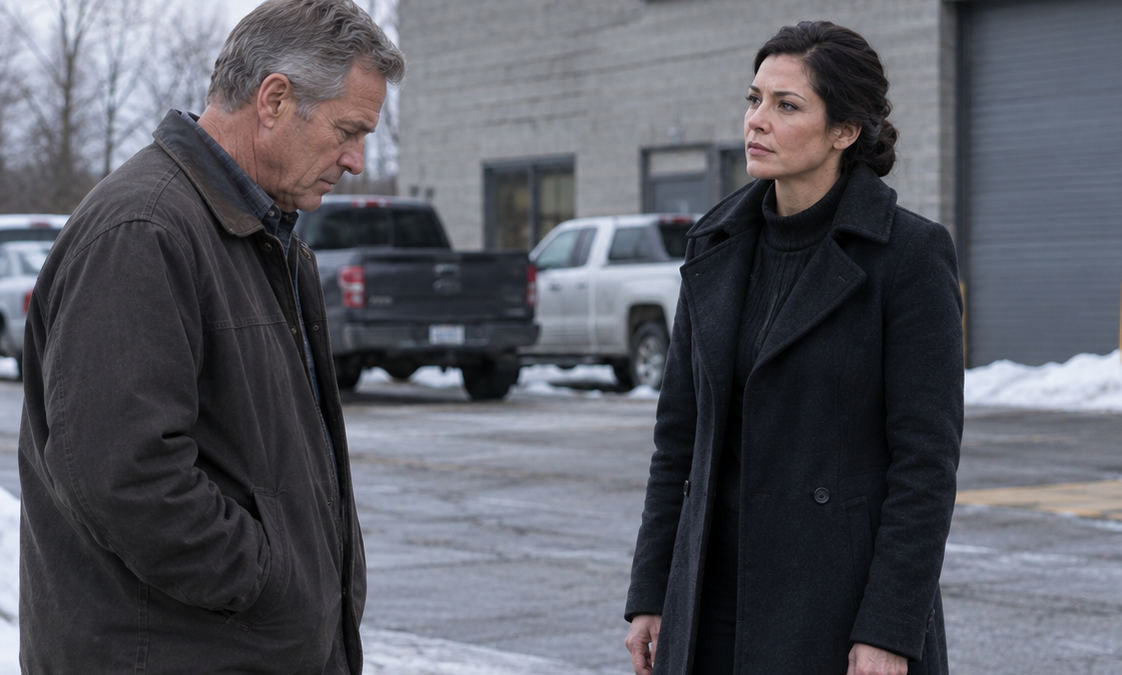
On the last Friday in February, my father showed up at the shop.
He stood in the parking lot with his hands in his pockets. He was wearing a coat that looked too thin for the weather. He didn’t come inside.
Ray saw him first. He came into the office.
“Your dad’s here.”
I looked out the window. My father was standing there, looking at the building.
“I’ll be out in a minute.”
I put on my coat and walked outside.
“Lydia,” he said.
“Dad.”
“I wanted to talk to you.”
“I’m listening.”
He looked at the shop. He looked at the sign. He looked at the truck that was being loaded at the dock.
“I’ve been thinking about what you said. About the money. About Daniel. About all of it.”
“Okay.”
“I didn’t know. I mean—I knew Daniel had problems. But I didn’t know he was stealing from you. I didn’t know he was in trouble with those people.”
“Would it have mattered?”
He looked at me.
“What?”
“If you’d known. Would it have mattered? Or would you have found a way to excuse it? Like you always did.”
He didn’t answer for a long time.
“I don’t know,” he said finally. “I’d like to think I would have done the right thing. But I don’t know.”
“That’s the most honest thing you’ve ever said to me.”
“I’m sorry, Lydia. For everything.”
“I know.”
“I want to make it right.”
“I don’t know if you can. Not yet.”
He nodded.
“I understand.”
“Do you?”
“No. But I’m trying to.”
I looked at him. He was seventy-two years old. He had spent his whole life believing that Daniel was the one who needed protecting and that I was the one who would always be fine.
He had been wrong about both of us.
“I’m not going to shut you out,” I said. “But I’m not going to pretend everything’s okay either. You can come to the shop. You can call. But the first time you defend Daniel or ask me to go easy on him or tell me I’m being unfair, we’re done.”
He nodded.
“I understand.”
“Do you?”
“I’m trying to.”
“Good.”
I turned to go back inside.
“Lydia.”
I stopped.
“What?”
“Your husband. Marcus. He came to see me in November.”
I turned around.
“What?”
“He came to the house. He said he needed to talk to me about Daniel. He said he had proof that Daniel was stealing. He wanted me to help him figure out what to do.”
“And what did you say?”
He looked at the ground.
“I told him he was overreacting. I told him Daniel was going through a rough time. I told him to give him a chance.”
I stared at him.
“You knew.”
“No. I didn’t know. Not like this. I just thought—”
“You thought Daniel needed another chance.”
“Yes.”
“And Marcus needed to be patient.”
“Yes.”
I took a breath.
“You had a chance to stop this,” I said. “You could have helped Marcus. You could have protected me. Instead you told him to be patient and then he died and you stood up at his funeral and gave away his company to the person who was robbing him.”
My father’s face was gray.
“I’m sorry.”
“I know you are. But sorry doesn’t fix it.”
He nodded. He didn’t say anything else.
I walked back inside.
I sat in Marcus’s chair for a long time that afternoon.
Ray came in and asked if I was okay. I told him I was. Curtis came in and asked if I needed anything. I told him I didn’t.
I looked at the picture of Marcus and me on our wedding day.
I thought about him going to see my father in November. I thought about him sitting in that living room and telling my father the truth and being told to be patient.
I thought about him calling the FBI and trying to build a case and never getting the chance to finish.
I thought about him writing the letter and sealing the envelope and putting it in Bill’s safe.
He had known. He had known and he had tried to fix it and he had run out of time.
But he had left everything where I could find it. The memorandum. The recording. The ESOP. The letter.
He had trusted me to figure it out.
I put the picture back on the desk.
“Okay,” I said out loud. “I’m figuring it out.”
The phone rang.
It was Bill Hankins.
“Lydia. The FBI just called. They need you to come in and give a statement about Cardoza. They want to know what happened at the shop when the truck showed up.”
“I’ll be there tomorrow.”
“And one more thing.”
“What?”
“Cardoza’s lawyer called. He wants to talk about a settlement.”
“A settlement?”
“He’s offering to return $400,000 if you agree not to cooperate with the prosecution.”
I sat there for a moment.
“What did you tell him?”
“I told him I’d pass it along.”
“Tell him no.”
“Are you sure?”
“I’m sure.”
“Lydia, that’s a lot of money.”
“It’s not my money. It’s the money he stole from my husband. And I’m not going to let him buy his way out of it.”
“All right. I’ll tell him.”
“Bill?”
“Yes?”
“I’m going to finish what Marcus started. Every piece of it.”
“I know you will.”
I hung up. I looked out the window at the shop floor. Ray was running the lathe. Curtis was checking a part. Paula was logging data. Terry was loading a truck.
I smiled for the first time in a month.
PART 9 — THE SETTLEMENT
Victor Cardoza went to trial in the fall.
I testified for two days. I sat in a federal courtroom in downtown Cincinnati and answered questions about the truck that came to my shop, the phone call with Cardoza, and the $84,000 in deposits that Karen had traced to Meridian Fabrication.
Daniel testified too. He was on the stand for four hours. He named names. He gave dates. He walked the jury through every step of the operation — how Cardoza had recruited him, how the loans had started small and grown, how the interest had compounded until he owed more than he could ever repay.
Cardoza’s lawyer tried to discredit him. He brought up the gambling. He brought up the forgery. He brought up the fact that Daniel had stolen from his own sister and lied about it for years.
The jury didn’t care. They convicted Cardoza on all counts. Money laundering. Extortion. Racketeering. He was sentenced to twelve years in federal prison.
Daniel was sentenced three weeks later. Fraud. Money laundering. Forgery. The judge gave him eighteen months, suspended to three years of probation, with a condition that he pay restitution of $217,000 over the next ten years.
It was less than he deserved. But he’d cooperated. And he’d testified. And the U.S. Attorney had recommended leniency.
I didn’t go to the sentencing. I didn’t need to.
The ESOP launched in January.
We had a meeting in the break room. All twenty-eight employees, plus Bill and Karen and a consultant from a firm in Columbus that specialized in employee ownership.
I stood in front of them and explained the plan.
“Twenty percent of the company is being transferred to an employee stock ownership trust this year,” I said. “That means every person who works here will receive shares based on your years of service and your role. Over the next five years, that will increase to fifty percent.”
Paula Reyes raised her hand.
“Does that mean we get a vote?”
“Yes. Once the trust is fully funded, the employees will have representation on the board. You’ll have a say in how the company is run.”
Terry Okafor spoke up.
“What about you? What do you keep?”
“I keep 50%. I keep the majority. But I don’t want to run this place forever. I want to train the next generation. I want people who work here to be able to retire with something.”
Ray was sitting in the back. He didn’t say anything. He just nodded.
After the meeting, Curtis came up to me.
“Marcus would have loved this,” he said.
“I know.”
“He used to talk about it. When we were working late. He said he wanted to make sure the shop didn’t die with him.”
“It won’t.”
“No. It won’t.”
My father came to the shop in March.
He didn’t stay long. He just walked through the floor and looked at the machines and talked to Ray for a few minutes. Then he came into the office and sat down across from me.
“I wanted to see it,” he said. “One more time.”
“It’s still here.”
“I know.” He looked around the office. “I spent a lot of years not understanding what you had here. I thought it was just a shop. I thought Daniel could run it because it didn’t seem complicated.”
“It’s not complicated. It’s just work.”
“I know that now.”
He sat there for a minute.
“I’m proud of you,” he said.
I looked at him.
“What?”
“I’m proud of you. I should have said it a long time ago. I should have said it every day. But I didn’t. And I’m sorry.”
I didn’t say anything. I just looked at him.
“I know it doesn’t fix anything,” he said. “I know you don’t owe me forgiveness. But I wanted you to hear it.”
“Thank you.”
He nodded. He stood up.
“I’ll go now.”
“Dad.”
He stopped.
“Do you want to stay for lunch?”
He looked at me.
“Are you sure?”
“I’m sure.”
He sat back down. I ordered sandwiches from the deli down the street. We ate in the office and talked about the shop and the weather and the Reds.
It wasn’t forgiveness. Not yet. But it was a start.
My mother called me in April.
“Lydia. I want to apologize.”
“You don’t have to apologize, Mom.”
“I do. I’ve been thinking about what you said. About being a banker or a daughter. And I realized I’ve been treating you like a banker for years.”
“Okay.”
“I didn’t mean to. I just—I didn’t know how to ask for help without making it about money. And you always seemed so capable. So I kept asking. And you kept giving. And I never stopped to think about what it was costing you.”
“It cost me a lot.”
“I know. And I’m sorry.”
I stood in the kitchen with the phone against my ear and looked out at the backyard.
“I don’t know if I can just go back to the way things were,” I said.
“I don’t want to go back. I want to go forward. I want to be your mother. Not your dependent.”
“Okay.”
“Can I come see you? Not for money. Just to see you.”
“Sure.”
She came the next Saturday. She brought banana bread. We sat in the kitchen and talked for two hours. She told me about her knee and her garden and the book club she’d joined. I told her about the ESOP and the shop and the plans for the expansion.
She didn’t ask for anything. She just listened.
When she left, she hugged me.
“I love you,” she said.
“I love you too.”
Daniel moved to Kentucky. He got a job at a warehouse in Florence. He sent me a check for $500 the first month. Then another the next month. Then another.
I didn’t cash them at first. I put them in a drawer.
Then one day I took them out and looked at them. Twelve checks. Six thousand dollars. It wasn’t restitution. It wasn’t even close. But it was something.
I opened a separate account and started depositing them. I labeled the account “Restitution.” I didn’t know what I’d do with it. Maybe I’d give it to the employees. Maybe I’d put it toward the ESOP. Maybe I’d just let it sit.
But I cashed the checks.
The anniversary of Marcus’s death came in January.
I didn’t go to the cemetery. Marcus wasn’t there. He was in the shop and in the letter and in the ESOP and in everything I did.
I went to work. I sat in his chair. I talked to Ray and Curtis and Paula. I looked at the picture of us on our wedding day.
Then I went home and read the letter one more time.
You’re not small. You never were. I just don’t think anyone ever told you.
I put the letter back in the envelope. I put the envelope in the safe.
Then I sat down at the kitchen table and wrote a letter of my own.
It was to Marcus. It didn’t make sense. I knew he’d never read it. But I wrote it anyway.
Dear Marcus,
You were right. About everything. About Daniel. About my father. About me.
I spent twelve years trying to be invisible. I spent twelve years paying for things nobody asked me to pay for and getting credit for none of it. I spent twelve years letting people walk all over me because I thought that’s what you did for family.
You never did that. You never let anyone walk over you. And you never let anyone walk over me either.
You left me everything I needed. The memorandum. The recording. The ESOP. The letter. You knew what was coming and you prepared for it. And you trusted me to finish it.
I finished it.
Daniel is paying restitution. Cardoza is in prison. The ESOP is up and running. The shop is doing better than it ever has. Twenty-eight people own a piece of what they built.
Your father’s shop. Your machines. Your people. Your plan.
I kept it. I kept all of it.
I miss you. I miss you every day. But I’m not small anymore. I’m not invisible. I’m not the one nobody notices.
I’m the one who finished what you started.
I love you. I’ll always love you.
Lydia
I folded the letter and put it in the envelope with Marcus’s letter.
Then I went to bed.
The shop is still there.
It’s on the same side street off Reading Road, in the same cinderblock building with the same sign that’s been repainted three times. Ray still runs the floor. Curtis still runs the back office. Paula and Terry still work their stations.
The ESOP is fully funded. Fifty percent of the company is owned by the employees. I still hold 50%. I go to work every day and I sit in Marcus’s chair and I look at his picture and I run the company he built.
My father comes by sometimes. He doesn’t talk much. He just walks the floor and looks at the machines and talks to Ray. He’s trying.
My mother calls every Sunday. We talk about her garden and her book club and the weather. She doesn’t ask for money anymore. She just wants to know how I am.
Daniel sends checks every month. I deposit them. I don’t know what else to do with them.
I’m still mad at him. I don’t know if I’ll ever stop being mad at him. But I’m not the one who has to carry it anymore. He is.
And me?
I’m not invisible.
I’m the majority shareholder of Corbin Precision. I’m the one who finished what Marcus started. I’m the one who made sure the shop didn’t die.
I’m the one who kept the family business in the family that actually built it.
I walk into the shop every morning and I look at the twenty-eight people who work there and I know that every one of them owns a piece of what they built.
And I think about Marcus. And I think about the letter. And I think about the line that changed everything.
You’re not small. I just don’t think anyone ever told you.
Somebody told me.
I heard it.
And I believed it.
PART 10 — THE SIGN
Two years after the funeral, I had a new sign made.
The old one had been repainted three times but never replaced. It was cracked in two places and the letters were fading. Marcus had talked about replacing it for years and never got around to it.
I called a sign company in Blue Ash and ordered a new one. Same colors. Same font. Same name.
But I added two words at the bottom. Small ones. Barely noticeable unless you looked.
“CORBIN PRECISION. ESTABLISHED 1978. EMPLOYEE OWNED.”
The sign guy asked me if I was sure. He said most companies didn’t put that on the sign. I told him most companies weren’t employee-owned.
He installed it on a Tuesday. Ray and Curtis watched from the loading dock. Paula took a picture and sent it to her husband. Terry said it looked good.
I stood in the parking lot and looked at it for a long time.
Marcus would have liked it. He would have said something dry and understated, like “That’s not bad, Lydia.” And then he would have smiled.
I went inside and sat in his chair and got back to work.
The shop is doing well. Better than well.
We’ve hired six new machinists. We’ve expanded the floor twice. We’ve added a second shift. The ESOP has grown to 50% employee ownership, and the trust is fully funded.
I still own the other half. I still come in every day. I still sit in Marcus’s chair.
But I’m training Curtis to take over operations. I’m training Paula to handle quality. I’m training Ray to lead the floor. I’m teaching them everything I know.
Because that’s what Marcus wanted. He wanted the shop to outlast him. He wanted the people who built it to own it. He wanted it to be a place where people could build a life, not just a paycheck.
I’m making sure that happens.
My father died last spring.
It was sudden. A heart attack, in the middle of the night. My mother called me at 4 a.m. and I drove to the hospital and sat in the waiting room with her until they came out and told us.
He was seventy-four.
The funeral was at the same funeral home where we’d held Marcus’s. Same building. Same steeple. Same parking lot.
I sat in the front row this time. My mother sat next to me. Daniel sat on the other side of her.
Nobody gave a speech about the company.
After the service, I stood in the parking lot and looked at the sky. It was gray and cold. February again.
My mother came up beside me.
“Are you okay?” she asked.
“I’m okay.”
“He loved you,” she said. “He didn’t know how to show it. But he did.”
“I know.”
“I’m sorry it took so long.”
“It’s okay.”
She took my hand. We stood there for a while.
Then we went home.
Daniel came to the shop last month.
He stood in the parking lot and looked at the sign. He didn’t come inside. He just stood there with his hands in his pockets and looked at the words “EMPLOYEE OWNED” at the bottom.
I watched him from the window.
After a while, he got back in his car and drove away.
He sends checks every month. He still hasn’t missed one. I still deposit them.
I don’t know if we’ll ever be okay. I don’t know if I’ll ever forgive him. But I don’t have to decide that today.
Today I have a shop to run. Twenty-eight employees who own a piece of what they built. A plan that Marcus started and I finished.
Today I have a life that I built.
I still read Marcus’s letter sometimes.
Not every day. Not even every month. But sometimes, late at night, when the house is quiet and I can’t sleep, I go to the safe and I take out the envelope and I read the words.
You’re not small. You never were. I just don’t think anyone ever told you.
I read it and I put it back and I go to bed.
And in the morning I get up and I go to work and I sit in his chair and I run the company he built.
I’m not invisible anymore.
I’m not the one nobody notices.
I’m the one who kept the family business in the family that actually built it.
I’m Lydia Corbin.
I was forty-three years old when my father gave away my husband’s company at his funeral.
I was forty-five when I finally understood that I had been the one holding it together all along.
And I’m still here.
Still working.
Still building.
Still keeping the shop in the family.
Because that’s what Marcus wanted.
And I finished what he started.
PART 11 — THE FAMILY BUSINESS
The shop turns forty-eight next year.
I’ve been thinking about that a lot lately. Forty-eight years since Warren Corbin rented a bay on Reading Road and started making machined parts for farm equipment. Forty-eight years of machines running and chips flying and parts coming off the line.
Warren died in 2002. Marcus took over. I married Marcus in 2011. I took over the books in 2012. I took the majority shares in 2016. Marcus died in January, and I took over everything else.
That’s a lot of history in one building.
Last week I sat down with Curtis and Ray and Paula and Terry and we talked about what comes next. Not this year. Not next year. The next ten years.
“We need a succession plan,” I said.
They looked at each other.
“You’re not going anywhere,” Ray said.
“No. But I’m not going to run this place forever either. And I want to make sure it’s set up right.”
We spent three hours in the conference room. We talked about expanding the ESOP to 70%. We talked about bringing in a general manager from outside. We talked about buying the building next door and doubling the floor space.
We talked about what Marcus would have wanted.
“Marcus wanted the shop to outlast him,” Curtis said. “It’s going to outlast all of us. That’s the point.”
“That’s the point,” I agreed.
I went to the cemetery last month.
I don’t go often. Marcus isn’t there. But sometimes I go anyway, just to stand in the grass and look at the stone.
It says: MARCUS JAMES CORBIN. BELOVED HUSBAND. 1965–2021.
That’s all. He didn’t want anything fancy. He said he wanted something simple.
I stood there for a while and looked at the stone.
“I finished it,” I said out loud. “The ESOP. The plan. All of it.”
The wind moved through the trees. The sky was blue and clear.
“I kept the shop. I kept the people. I kept everything.”
I paused.
“I’m still mad at you for leaving. I know it wasn’t your fault. But I’m still mad.”
I laughed a little.
“I’m doing okay. I’m doing better than okay. I’m doing what you wanted.”
I stood there for a few more minutes. Then I walked back to my car.
My mother is doing better.
She moved into a smaller house last year. She sold the colonial in Finneytown and bought a condo in Blue Ash. She doesn’t need the space anymore. She doesn’t need the yard.
She comes to the shop sometimes. She sits in the break room and talks to Paula and Terry. She brings banana bread.
She doesn’t ask for money. She doesn’t ask for anything. She just wants to be part of things.
I let her.
Daniel is still in Kentucky.
He’s still working at the warehouse. He’s still sending checks. He’s still paying restitution.
He called me on my birthday last month. I almost didn’t answer. But I did.
“Happy birthday, Lydia.”
“Thank you.”
“I know you don’t want to hear from me. I know you don’t want to talk. But I wanted to say it.”
“Okay.”
“I’m doing better. I’m going to meetings. I’m seeing a counselor. I’m trying to figure out how I got to where I was.”
“That’s good.”
“I’m not asking for anything. I’m not asking you to forgive me. I just wanted you to know.”
“I know.”
There was a long pause.
“Okay,” he said. “I’ll let you go.”
“Daniel.”
“Yeah?”
“Thank you for calling.”
Another pause.
“You’re welcome.”
He hung up.
I sat there for a while and looked at the phone.
It wasn’t forgiveness. Not yet. But it was something.
The shop is busy today.
Ray’s on the floor. Curtis is in the back office. Paula’s running quality. Terry’s loading a truck. The machines are humming. The chips are flying. The parts are coming off the line.
I’m sitting in Marcus’s chair. I’m looking at the picture of us on our wedding day. I’m thinking about everything that’s happened.
Two years ago I was invisible. Two years ago I was the one nobody noticed. Two years ago I was the one who paid for everything and got credit for nothing.
Now I’m the majority shareholder of a company that’s owned half by its employees. Now I’m the one who finished what Marcus started. Now I’m the one who kept the family business in the family that actually built it.
I’m not invisible anymore.
I’m not small.
I’m Lydia Corbin.
And I’m still here.
Still working.
Still building.
Still keeping the shop in the family.
Because that’s what Marcus wanted.
And I finished what he started.

