Part 3: “Even if it’s in a support role.”
PART 7 — THE ADVISOR
Tuesday came faster than I expected.
I drove into D.C. The Pentagon was a building I’d been inside a hundred times. Never through the front door.
A young lieutenant met me at the entrance. He was in his twenties. Nervous. He kept calling me “sir.”
“Lieutenant Vance, the Secretary will see you now.”
“Thank you.”
We walked through the corridors. People stopped and looked. Not because they knew me. Because I was a civilian in a suit walking with a lieutenant through the command wing of the Pentagon.
The Secretary’s office was on the fourth floor. A large room with windows that looked out over the Potomac. He was standing when I walked in.
“Mr. Vance.”
“Mr. Secretary.”
He was in his late fifties. Gray hair. A handshake that was firm but not showy.
“Please. Sit.”
I sat.
“Can I get you anything? Coffee? Water?”
“I’m fine.”
He sat across from me.
“I asked you here because I want to apologize. The delay. The postponement. You should never have had to go through that.”
“Thank you, Mr. Secretary.”
“I also asked you here because I want to offer you a position. If you’re interested.”
“What kind of position?”
“Special advisor. Operational security. You’d work directly with my office on matters involving classified operations and their intersection with the public record. Essentially, you’d help us prevent what happened to you from happening to someone else.”
I looked at him.
“Mr. Secretary, I’ve been retired for ten years.”
“I know.”
“I’m not a lawyer. I’m not a politician.”
“I know that too.”
“Then why me?”
He leaned back.
“Because you understand the cost. You’ve lived it. You know what it means to keep a secret for twenty years. And you know what it means when that secret gets exposed at the wrong time.”
I thought about it.
“What would the job involve?”
“Reviewing files. Advising on disclosure decisions. Occasionally testifying before Congress. Working with families when something goes wrong.”
“Working with families.”
“Yes.”
I thought about Rachel Aronson. About Emily. About Elizabeth.
“How many hours a week?”
“Part-time. You can stay in Virginia. You’d travel when necessary.”
“Can I think about it?”
“Take your time.”
I stood up.
“Mr. Secretary, can I ask you something?”
“Of course.”
“Did you know? Before all of this. Did you know about Atticus?”
He looked at me.
“No. But I should have.”
I called Helen from the parking lot.
“I got the job offer.”
“What did you say?”
“I said I’d think about it.”
“What are you thinking?”
“I’m thinking I might take it.”
She was quiet.
“Tom, you don’t have to do this for me.”
“I’m not doing it for you.”
“Then for who?”
I looked at the Pentagon behind me.
“For David. For Michael. For the families who don’t have anyone.”
She was quiet for a long moment.
“Then take it.”
The first day of work was May 1st.
I was given a desk in a small office on the fourth floor. A computer. A phone. A filing cabinet.
It was the same office they gave to contractors. I’d been a contractor for years. Now I was a contractor with a title.
Foster stopped by on the first morning.
“Welcome aboard.”
“Thanks.”
“The Secretary told me you accepted. I’m glad.”
I looked at the stack of papers on the desk.
“What is all this?”
“Case files. Operations that are currently under review. You’ll be asked to evaluate each one and make a recommendation about disclosure.”
“How many?”
“Forty-seven.”
I looked at the stack.
“That’s a lot.”
“You’ve got time. And you’ve got help.”
“Help?”
She sat down across from me.
“I’ve been assigned to assist you. Full-time.”
“Since when?”
“Since this morning.”
I smiled.
“Good. I don’t like working alone.”
The first week was quiet.
I read files. I took notes. I made recommendations. Most of them were simple. An operation from 1998 that could be declassified without any risk. A mission from 2001 that involved informants who were still alive and couldn’t be identified.
But one file caught my eye.
It was an operation from 2003. Before Nightingale. A mission in Iraq that involved the capture of a high-value target. Seven operators. A SEAL team.
I recognized the team leader’s name.
David Whitmore.
He’d been on that mission too. He’d been everywhere. He’d served in Iraq, Afghanistan, Yemen. He’d been deployed four times in three years.
I read the file twice.
Then I called Foster.
“Commander. Do you know about Operation Redline?”
A pause.
“I know it’s in your stack.”
“Did you know David Whitmore was on it?”
“I knew his service record was extensive. I didn’t know the specifics.”
“Did you know he was recommended for the Silver Star after that operation?”
Silence.
“No.”
“It’s in the file. He was recommended. But the recommendation was withdrawn.”
“Why?”
“Because the operation was classified. And the citation would have exposed it.”
I looked at the file.
“He never got the medal. Because of the cover-up.”
“It happens.”
“It shouldn’t.”
“No. It shouldn’t.”
I spent the next two weeks working on the Redline file.
I read every document. I cross-referenced every name. I made phone calls to people who’d served alongside David. I talked to the one living member of his team who was still alive.
His name was Marcus Webb. He was living in Oregon. Running a hardware store.
“Marcus. Tom Vance.”
“Tom. Jesus. I haven’t heard from you in—”
“Fifteen years.”
“At least.”
“I need to ask you about Redline.”
Silence.
“Marcus?”
“I haven’t thought about that in years.”
“I know. But I need to know what happened.”
He was quiet for a long moment.
“The recommendation. David’s Silver Star. It was withdrawn.”
“I know. I need to know why.”
“Because the operations officer at the time didn’t want to draw attention to the mission. He said the citation would raise questions. Questions about what we were doing there. Questions about who authorized it.”
“Who was the operations officer?”
“His name was Alan Voss.”
I stopped.
“Congressman Alan Voss?”
“Back then he was Lieutenant Commander Voss. He was the liaison to Atticus. He wrote the cover story.”
I sat down.
“Marcus, are you sure?”
“I’m sure. He was the one who told me to keep my mouth shut. He told all of us. He said if we talked, we’d be court-martialed.”
“Did he threaten you?”
“He didn’t have to. We knew the game.”
I closed my eyes.
“Marcus, can I ask you something else?”
“Sure.”
“Would you testify? If there was a hearing?”
Another pause.
“To what?”
“To what you just told me. About Voss. About the cover-up. About David’s medal.”
He was quiet.
“Tom, I’m sixty years old. I’ve got a wife. Kids. A business. I can’t—”
“Marcus. David died a hero. He deserved that medal. And Voss took it from him. He took it from all of us.”
Silence.
“Alright,” he said. “I’ll testify.”
I told Foster about Marcus.
She listened without interrupting.
“We can use this,” she said.
“How?”
“A congressional hearing. Voss is already under investigation for his connection to Atticus. If we can tie him directly to the withdrawal of a citation for a decorated operator, it strengthens the case.”
“Will it get David his medal?”
“It might. It might also get Voss indicted.”
I thought about it.
“I don’t care about Voss. I care about David.”
“I know. But the two are connected.”
I looked at the file.
“Can we make it happen?”
“We can try.”
I called Elizabeth.
“Thomas.”
“Elizabeth. I need to tell you something about David.”
“What is it?”
I told her about Redline. About the Silver Star. About Voss.
She was quiet for a long time.
“He was supposed to get a medal?”
“Yes.”
“And they took it away?”
“Yes.”
“Why?”
“Because it would have exposed the operation. And the operation was being covered up by Atticus.”
She took a breath.
“Thomas, I want you to know something. When David died, I was told it was an accident. I was told it was nobody’s fault. I was told there was nothing anyone could have done.”
“I know.”
“But that wasn’t true.”
“No.”
“So what do we do?”
“We fight.”
“How?”
“We go to Congress. We tell them what happened. We make them listen.”
“When?”
“May 22nd. There’s a hearing scheduled. The House Armed Services Committee. Voss sits on it.”
“Thomas, I want to be there.”
“You will be.”
The hearing was in the Rayburn House Office Building.
I arrived early. The room was already full. Staffers. Reporters. A row of congressmen on the dais.
I sat in the front row. Elizabeth was next to me. Marcus was behind me.
The chairman called the hearing to order.
“This hearing will come to order. Today we are examining allegations of misconduct within the Department of Defense related to the misappropriation of funds and the suppression of records. Our first witness is Mr. Robert Keene, former CEO of Atticus Group.”
Keene walked to the table.
He was sworn in.
He testified for two hours.
He told them everything. The cover-ups. The payments. The falsified records. The letter to the Navy. The congressman who helped him.
He named Voss.
The room went silent.
Then the chairman called the next witness.
“Lieutenant Thomas Vance, United States Navy, retired.”
I stood up.
I walked to the table.
I was sworn in.
“Lieutenant Vance, can you tell this committee what you know about Operation Redline?”
I looked at the congressmen.
“Yes.”
I told them about David. About the mission. About the citation that was withdrawn. About the man who withdrew it.
I told them about Voss.
When I finished, the room was silent.
Then one of the congressmen spoke.
“Lieutenant Vance, thank you for your testimony.”
I nodded.
“One more thing,” I said.
“Yes?”
“David Whitmore was a hero. He served his country. He gave his life. And for twenty years, his family was lied to. Not just about his death. About his service.”
I looked at Elizabeth.
“Today, I’m asking this committee to correct that. To restore his medal. To tell the truth.”
The chairman nodded.
“We’ll take that under advisement.”
The hearing ended at four o’clock.
Elizabeth and I walked out together.
“Thank you,” she said.
“You don’t have to thank me.”
“I do. You didn’t have to do any of this.”
“Yes, I did.”
“Why?”
I looked at her.
“Because David would have done it for me.”
PART 8 — THE MEDAL
The hearing made national news.
Not because of me. Because of Voss.
Two days after the testimony, the House Ethics Committee opened an investigation. Three days after that, the FBI raided his district office. Five days after that, he resigned.
He didn’t admit anything. He cited “personal reasons.” The reporters didn’t buy it. Neither did anyone else.
The DOJ indicted him two weeks later. Obstruction. Bribery. Conspiracy to defraud the United States.
He was looking at twenty years.
I watched it on the news with Helen.
“He’s done,” she said.
“He’s not done yet. He still has to be convicted.”
“He will be.”
“Probably.”
She looked at me.
“Does it feel good?”
I thought about it.
“No. It feels necessary.”
“That’s different.”
“Yes. It is.”
The Navy announced the restoration of David’s medal in June.
A small ceremony at the Pentagon. Elizabeth was there. Helen was there. Marcus flew in from Oregon. Foster was there.
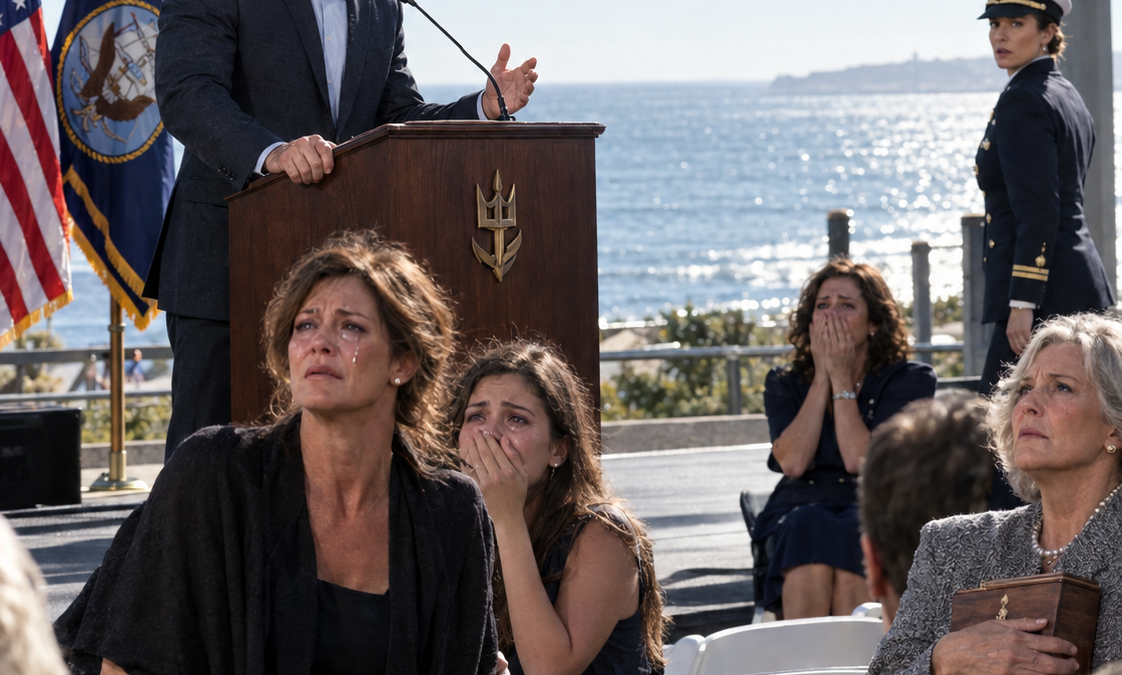
The Secretary presented the Silver Star to Elizabeth.
“For your brother,” he said. “For his service. For his sacrifice.”
Elizabeth accepted the medal. She held it in her hands for a long moment.
Then she walked over to me.
“Thomas.”
“Elizabeth.”
“I want you to have this.”
She held out the medal.
“I can’t.”
“You can. He would have wanted you to have it.”
“Elizabeth, this is for your family.”
“You are my family.”
She pressed it into my hand.
I looked at the medal. Silver. A star. A ribbon.
Twenty years too late.
I put it in my pocket.
“Thank you.”
She nodded.
“He would have been proud of you,” she said.
“I hope so.”
The ceremony was covered by the press.
The story ran everywhere. The Post. The Times. The networks. The piece was mostly about Voss. About Atticus. About the cover-up.
But there was one paragraph about me. And one about David.
That was enough.
The summer passed quietly.
I worked at the Pentagon three days a week. I reviewed files. I made recommendations. I learned the system.
Foster was good at her job. Patient. Precise. She’d been in the Navy for fifteen years. She’d seen the worst of it. She’d stayed anyway.
“You could have left,” I said one afternoon.
“I know.”
“Why didn’t you?”
She looked at me.
“Because someone has to fix it.”
I nodded.
“That’s why I stayed too.”
The divorce went through in August.
Katherine got the house in McLean and a large settlement. Daniel got the shell company and the debt. The judge split the trust evenly between the siblings after reviewing Elizabeth’s accounting.
It wasn’t clean. It wasn’t pretty. But it was fair.
Katherine moved to California. Daniel stayed in Virginia.
I saw him once, at a family dinner in September. He was quieter than I remembered. Older. He didn’t drink.
“How are you, Daniel?”
“Better.”
“Good.”
“Tom, I wanted to thank you.”
“For what?”
“For what you did at the hearing. For the family. For my mother.”
“I didn’t do it for you.”
“I know. That’s why it matters.”
He shook my hand.
Then he walked away.
Elizabeth changed.
She stopped hosting the family dinners. She stopped worrying about appearances. She sold the McLean house and moved to a smaller place in Arlington.
She started volunteering at the local VA hospital. Two days a week. She sat with veterans. She listened to their stories. She wrote letters for them to their families.
“You don’t have to do this,” I said.
“I know.”
“Why do you?”
She looked at me.
“Because I spent twenty years not knowing my brother. Now I’m trying to know him.”
I understood.
Rachel Aronson came back to Virginia in October.
She wanted to see the Pentagon. She wanted to meet the Secretary. She wanted to say thank you.
I met her at the visitor entrance.
“Tom.”
“Rachel.”
She hugged me.
“You look good.”
“So do you.”
We walked through the corridors. People stared. I was used to it.
The Secretary met us in his office. He was gracious. He thanked Rachel for her husband’s service. He told her about the restitution. He told her about the investigation.
She listened. She nodded. She didn’t cry.
When we left, she was quiet.
“Rachel?”
“Tom, I want to ask you something.”
“Anything.”
“Do you think Michael would have wanted this? The investigation. The media. All of it.”
I thought about it.
“Rachel, I read his letters.”
Her face changed.
“You did?”
“Yes. The one he wrote to you before the mission.”
She looked at me.
“He told you to trust me.”
“Yes.”
She was quiet.
“He was a good man.”
“He was the best man I ever knew.”
She took my hand.
“Then he would have wanted this. He would have wanted the truth.”
I nodded.
“I think so.”
The anniversary was November 3rd.
I went to the Wall.
I hadn’t been there since 2005. I couldn’t.
I stood in front of the panels for a long time. Names. Thousands of names.
I found Michael’s name. And David’s.
I stood there.
The wind was cold. The sun was out. Tourists walked past. A school group. A veteran in a wheelchair.
I didn’t say anything.
I didn’t have to.
That night, I got a text from Emily Aronson.
Tom, I wanted to tell you something. I’m majoring in political science now. I want to work on veteran policy. I want to help families like mine.
I read the message twice.
I’m proud of you, I wrote back.
My dad would be too.
I put the phone down.
Helen was in the kitchen.
“How was the Wall?”
“Hard.”
“Was it good?”
“I don’t know. It was necessary.”
She nodded.
“That’s the same thing.”
“Maybe.”
She sat next to me.
“Tom, can I ask you something?”
“Sure.”
“Do you think you’ll ever stop?”
“Stop what?”
“Carrying all of it.”
I thought about it.
“No. But I can carry it differently.”
She took my hand.
“That’s enough.”
The year turned.
I kept working. I kept reviewing files. I kept making recommendations.
One day in January, Foster came into my office with a folder.
“New case.”
“What is it?”
“A retired Marine. He’s been trying to get his records declassified for eight years. His wife has cancer. He wants to make sure she’s taken care of.”
I opened the folder.
“Where is he?”
“San Diego.”
“Can we help him?”
“We can try.”
I closed the folder.
“Let’s go.”
PART 9 — THE QUIET
I flew to San Diego on a Tuesday.
The Marine’s name was Frank Delgado. Sixty-eight years old. Vietnam veteran. He’d served in Force Recon. He’d done things that hadn’t been acknowledged.
I met him at his house in Oceanside. Small place. A flag on the porch.
“You’re Vance?”
“Yes, sir.”
“Don’t call me sir. I was a sergeant.”
“Understood.”
He led me inside.
His wife, Maria, was in the living room. She was in a recliner. A blanket on her lap. She smiled when she saw me.
“You’re the one who’s going to help Frank?”
“I’m going to try.”
She nodded.
“Good. He’s been waiting a long time.”
Frank and I sat in the kitchen.
“Tell me what you need,” I said.
“I need my records declassified. I need the truth about what we did in ’68. The operation. The men we lost.”
“Why now?”
He looked at me.
“Because Maria’s dying. And I want her to know. Before she goes.”
I nodded.
“I’ll see what I can do.”
“It won’t be easy.”
“Nothing ever is.”
It took four months.
I reviewed the file. I made calls. I talked to the one other living member of his team. I pushed the paperwork through the system.
In May, the Navy agreed to declassify the record.
I flew back to San Diego to tell him.
He was in the living room when I arrived. Maria was in the recliner. She looked weaker.
“Frank.”
“Vance.”
“It’s done.”
He stared at me.
“What?”
“Your records. They’re declassified. You can tell your story. You can tell the families.”
He stood up.
“You’re serious?”
“I’m serious.”
He sat back down.
He cried.
Maria reached over and took his hand.
“I told you,” she said. “I told you someone would help.”
He looked at me.
“Thank you.”
“You don’t have to thank me.”
“Yes, I do.”
I flew home the next day.
Helen met me at the airport.
“How did it go?”
“It went.”
“Did you help him?”
“I think so.”
She took my hand.
“That’s what you do.”
“What?”
“Help people.”
I looked at her.
“It’s all I’ve ever done.”
The summer was quiet.
I worked. I read files. I helped veterans. I wrote letters. I made calls.
In July, I got a letter from Emily Aronson.
Dear Tom,
I wanted you to know that I got into law school. Georgetown. I’m going to study veterans’ law. I want to help families like mine.
I think about my dad every day. But I think about him differently now. Not just as someone I lost. As someone who mattered.
Thank you for that.
Love,
Emily
I read the letter twice.
Then I put it in my desk drawer.
Next to David’s medal.
In August, I took Helen to Coronado.
We walked on the beach. The same beach where the ceremony had been. The same ocean.
“Tom, can I ask you something?”
“Anything.”
“Are you happy?”
I thought about it.
“I’m at peace.”
“That’s different.”
“Yes.”
She looked at me.
“Which one is better?”
“Peace.”
She took my hand.
“Then I’m glad.”
We walked along the water.
The sun was setting. The sky was orange and pink.
I thought about Michael. About David. About all the men I’d served with.
I thought about the ones who were still alive. The ones who were still carrying it.
I thought about Frank Delgado. About Maria. About Emily.
I thought about the work I still had to do.
“Tom?”
“Yeah?”
“What are you thinking about?”
I looked at the ocean.
“Tomorrow.”
PART 10 — THE LAST WORD
Voss went to trial in October.
I testified on the second day. The prosecution called me as a fact witness. I sat in the witness box for three hours.
The defense attorney was a man named Hobart. He was in his sixties. He’d been doing this a long time.
“Mr. Vance, you’re a retired Navy SEAL, is that correct?”
“Yes.”
“You served under classified orders for sixteen years.”
“Yes.”
“You’ve been trained to keep secrets.”
“Yes.”
“You’ve been trained to lie, if necessary, to protect classified information.”
“I’ve been trained to protect classified information. I don’t lie.”
“But you would, if ordered to.”
“I would follow lawful orders.”
Hobart smiled.
“So your testimony today might not be entirely truthful.”
“Objection,” the prosecutor said.
“Sustained.”
Hobart tried again.
“Mr. Vance, is it possible you’re misremembering the details of Operation Redline?”
“No.”
“You were in combat. Combat is stressful. Memory can be unreliable.”
“My memory is reliable.”
“How can you be sure?”
I looked at him.
“Because I’ve relived that day every night for twenty years. I don’t need a file to remember it.”
The courtroom was quiet.
Hobart sat down.
The prosecutor stood up.
“No further questions.”
Voss was convicted on all counts.
The judge sentenced him to twelve years. He’d be eligible for parole in eight.
I watched the sentencing from the gallery. Voss didn’t look at me.
Elizabeth was sitting next to me. She didn’t react.
Afterward, we walked out together.
“Is it over?” she asked.
“For him, yes.”
“For us?”
I thought about it.
“No. But it’s a start.”
Daniel came to see me in November.
He showed up at my office at the Pentagon. The lieutenant at the front desk called me.
“Sir, there’s a man here to see you. Daniel Whitmore.”
“Send him up.”
Daniel walked in looking different. Thinner. Calmer.
“Tom.”
“Daniel.”
“I wanted to talk to you.”
“About what?”
He sat down.
“About the trust. About the money. About everything.”
“What about it?”
“I’ve been working with the DA on the Atticus investigation. I’ve been giving them information about the shell company. About the investors. About what I knew.”
“Good.”
“I’m not doing it to get a deal. I’m doing it because it’s the right thing.”
“I know.”
He looked at me.
“How do you know?”
“Because you’re here.”
He almost smiled.
“I’m going to plead guilty. To fraud. To the trust violations. I’m going to serve whatever time they give me.”
“Does your mother know?”
“She’s the one who told me to do it.”
I nodded.
“You’re doing the right thing.”
“I know. But it doesn’t feel good.”
“It’s not supposed to.”
Daniel served eighteen months.
A minimum-security facility in West Virginia. He worked in the library. He read a lot. He wrote letters to his kids.
When he got out, he didn’t come back to McLean. He moved to a small town in the Shenandoah Valley. He got a job at a hardware store.
He didn’t ask for anything.
I respected that.
The holidays came.
Helen and I spent Christmas at home. Just the two of us. Quiet.
We watched old movies. We ate too much. We didn’t talk about the past.
On Christmas Eve, my phone buzzed.
A text from Marcus Webb.
Merry Christmas, Tom. Thanks for what you did. For David. For all of us.
I wrote back.
Merry Christmas, Marcus. You did the hard part.
He wrote back.
No. You did.
In January, the Navy announced that David’s Silver Star would be formally restored on the record. His name would appear in the official citations. His service would be documented.
Elizabeth called me when she heard.
“Thomas.”
“I saw.”
“They’re going to put his name in the books.”
“I know.”
“He’s not forgotten anymore.”
“No.”
She was quiet.
“Thomas, I’ve been thinking. About everything. About you.”
“What about me?”
“You spent twenty years carrying my brother. Carrying his death. Carrying his memory. And you never asked for anything.”
“I didn’t do it for recognition.”
“I know. That’s why I want to do something.”
“What?”
“I’m setting up a fund. In David’s name. For families of fallen special operators. Education. Housing. Counseling. Anything they need.”
“That’s a good thing.”
“I want you to run it.”
I stopped.
“Elizabeth—”
“Not full-time. But you’d advise. You’d help decide where the money goes. You’d make sure it goes to the right people.”
“Elizabeth, I already have a job.”
“I know. But this is different. This is personal.”
I thought about it.
“Can Helen be involved?”
“Of course.”
“Then yes.”
The fund launched in March.
We called it the Whitmore-Aronson Foundation. Elizabeth put in the initial capital. Rachel Aronson agreed to serve on the board. Emily joined as a student advisor.
Our first grant went to a family in North Carolina. A widow with three kids. Her husband had been a Ranger. He’d died in a training accident the year before.
She wrote us a letter after she got the check.
I don’t know how to thank you. I didn’t know what I was going to do. I didn’t know how I was going to feed my kids. And then you called.
Thank you.
Thank you.
Thank you.
I read the letter to Helen.
She was crying.
“You did that,” she said.
“We did that.”
Spring came.
I kept working. The Pentagon. The foundation. The files. The calls.
Some days were hard. Some days I woke up and didn’t want to do any of it.
But I did it anyway.
Because that’s what you do.
In May, Emily Aronson graduated from James Madison.
I flew up for the ceremony. Rachel was there. Helen came with me.
We sat in the front row. Emily walked across the stage. She got her diploma. She waved at us.
Afterward, we took pictures.
“Tom, can I ask you something?”
“Sure.”
“When I go to Georgetown. For law school. Can I intern with you? At the foundation?”
“Of course.”
She hugged me.
“Thank you.”
“You don’t have to thank me.”
“Yes, I do.”
I drove home that night.
The sky was clear. The stars were out.
Helen was in the passenger seat.
“You’re quiet,” she said.
“I’m thinking.”
“About what?”
“About David. About Michael. About Emily. About everything.”
“And?”
I looked at the road.
“I think they’d be proud.”
“Of you?”
“Of all of us.”
She took my hand.
“Then I’m glad.”
I stopped at a rest stop on the way home.
I walked to the edge of the parking lot. Looked at the trees. The dark.
I took out David’s medal.
It was in my pocket. It had been there since the ceremony.
I held it for a long time.
“You did good,” I said.
I don’t know who I was talking to. David. Michael. Myself.
Maybe all three.
I put the medal back in my pocket.
I walked back to the car.
Helen was waiting.
“Ready?”
“Yeah.”
I started the engine.
We drove home.
EPILOGUE
The foundation is still running.
We’ve helped 340 families since we started. We’ve paid for funerals. We’ve paid for college. We’ve paid for rent.
Rachel Aronson runs the day-to-day operations now. She’s good at it. She understands what people need.
Elizabeth passed away two years ago. Peacefully. In her sleep.
I spoke at her funeral.
I told the story about the dinner. The one where she told the truth about David. The one where she stood up in front of her family and said the words no one else would say.
“She wasn’t perfect,” I said. “But she was brave. And that’s better.”
Emily graduated from Georgetown last spring.
She works for a veterans’ advocacy group in D.C. She testifies before Congress. She writes policy papers. She’s twenty-six years old and already better at this than I ever was.
She called me last week.
“Tom, I wanted you to know. They’re naming a building after my dad. At the base in Coronado.”
“That’s good.”
“I want you to come.”
“I’ll be there.”
“Good.”
She paused.
“Tom?”
“Yeah?”
“Thank you. For everything.”
“You don’t have to thank me.”
“Yes, I do.”
I hung up.
I sat in my office at the Pentagon.
I looked at the picture on my desk. Seven men. Desert gear. A transport plane.
David in the middle. Smiling.
I was next to him.
I hadn’t seen the picture in twenty years.
Now I looked at it every day.
Some days I still wake up at 3 a.m.
Some days I still hear the gunfire. The shouting. The silence after.
Some days I still wonder if I made the right call.
But then I remember.
I remember the letter from Emily. The medal on my desk. The families we’ve helped.
I remember David. Michael. Brian. Allan. James.
Five names. Five men.
I remember all of them.
And that’s enough.
That’s all I ever wanted.
AUTHOR’S NOTE
This is a work of fiction.
The characters are invented. The units are real. The operations are not.
If you served — if you’re serving now — thank you.
If you lost someone — if you’re still carrying them — this is for you.
You are not forgotten.

