Part 3: “I did what I had to do. Denise didn’t understand.
PART 6 — THE DRAWER
Mateo found the drawer when he was thirteen.
I was at work. He was home with Mrs. Alvarez. He was looking for a charger for his tablet. He opened the kitchen drawer where I kept batteries and old cords.
The letters were underneath. A stack of them. Forty-two envelopes, all addressed to him, all unopened.
He didn’t tell me he found them. Not that night. Not the next day.
He waited a week.
Then, on a Saturday morning, he came into the kitchen while I was making pancakes.
“Mommy,” he said. “I found the letters.”
I set down the spatula.
“I know.”
“You knew I found them?”
“I check the drawer sometimes. To make sure they’re still there. Last week, they were in a different order.”
He looked at me. He had David’s eyes. But he had my patience.
“Why didn’t you tell me?”
“I was waiting for you to tell me.”
He sat down at the table.
“I read one,” he said.
“Which one?”
“The first one. From three years ago.”
“What did it say?”
“She said she was sorry. She said she missed me. She said she wanted to see me.”
“How did it make you feel?”
He thought about it.
“Confused,” he said. “I don’t know if I believe her.”
“You don’t have to believe her.”
“But she’s my grandma.”
“She is.”
“And she’s in jail because of what she did.”
“Yes.”
“And you put her there.”
I sat down across from him.
“I didn’t put her there. She put herself there. I just told the truth.”
He nodded slowly.
“Can I read the rest?”
“You can read whatever you want. They’re your letters.”
“Will you be mad?”
“No.”
“Will you be sad?”
“Maybe. But that’s okay.”
He got up and hugged me. He was almost as tall as me now. His arms were strong.
“I love you, Mommy.”
“I love you too.”
He read the letters over the next month.
He didn’t tell me what they said. I didn’t ask. He kept them in his room now, in a shoebox under his bed. Sometimes I saw him reading one at the kitchen table. Sometimes he just stared at the envelope.
One night, he came to me.
“Mommy, can I ask you something?”
“Anything.”
“Did Grandma kill my dad?”
The question hit me like a physical blow.
“Why do you ask that?”
“She wrote about him. In one of the letters. She said she was sorry she couldn’t save him. She said it was her fault.”
“What else did she say?”
“She said she should have been there. She said she should have protected him. She said she wished she had died instead.”
I took a breath.
“Mateo, the police investigated the accident. They found the truck driver was on drugs. He was awake for thirty-six hours. He drifted into your dad’s lane. It was an accident.”
“But what if it wasn’t?”
“Then the police would have found out. They’re good at their jobs.”
He looked at me.
“Do you think she did it?”
I thought about Thomas. I thought about the letter. I thought about Carol’s rage and grief and guilt.
“I think she believes she did it,” I said. “In some way. She believes she drove him to it. But I don’t think she was there. I don’t think she made it happen.”
“Then why does she write like she did?”
“Because she’s a person who needs to be the center of everything. Even tragedy. Even death. She can’t stand not being the reason.”
Mateo nodded.
“I think I understand,” he said.
“Do you?”
“She wanted to be important. She wanted to be needed. She wanted to be the one who mattered.”
“Yes.”
“She still does.”
“Yes.”
He was quiet for a moment.
“I don’t want to be like her,” he said.
“You’re not like her.”
“How do you know?”
“Because you ask questions. Because you think about other people. Because you have a father who loved you and a mother who loves you and a whole neighborhood that would do anything for you.”
He smiled. Just a little.
“Okay,” he said.
“Okay.”
The next week, he wrote her back.
He didn’t tell me until after he sent it. He showed me the letter.
“Grandma,” it said. “I got your letters. I read them. I don’t know what to say. I don’t hate you. But I don’t trust you either. You hurt my mom. You lied to me. You tried to take me away from her. I don’t know if I can forgive that. But I’m willing to try. Not now. Maybe when I’m older. Maybe when I understand more. I hope you’re okay. I hope you’re getting help. I hope you know that I’m okay. My mom takes good care of me. I play baseball. I get good grades. I have friends. I’m happy. I don’t know if that makes you happy or sad. But that’s the truth. Your grandson, Mateo.”
I read it twice.
“That’s a good letter,” I said.
“You think so?”
“I think it’s honest. And honest is the best thing you can be.”
He nodded.
“Can I ask you something else?”
“Of course.”
“Will you ever forgive her?”
I thought about it.
“I don’t know,” I said. “I’ve tried. I’ve thought about it a lot. But forgiveness isn’t something you can force. It’s something that happens. Or it doesn’t.”
“Does that make you sad?”
“Sometimes. But I’ve made peace with it. I don’t need to forgive her to be happy. I just need to keep her from hurting us.”
“You did that.”
“I did.”
He hugged me.
“I’m proud of you,” he said.
That was the first time he ever said that. I almost cried.
“I’m proud of you too,” I said.
Carol wrote back a month later.
Mateo read it alone in his room. When he came out, his eyes were red.
“She said she’s proud of me,” he said. “She said she’s glad I’m happy. She said she loves me.”
“That’s good.”
“She said she’s sorry for what she did. Not just to you. To everyone.”
“That’s good too.”
“She said she’s been talking to a therapist. She said she’s trying to understand why she did the things she did.”
“Does she understand?”
“She said she’s still figuring it out.”
I nodded.
“Do you want to write her again?”
“Maybe later. I need to think about it.”
“Take your time.”
He went to his room. I sat in the kitchen.
I thought about Carol. Not the Carol who tried to take my son. Not the Carol who forged her mother’s signature. Not the Carol who lied under oath.
The Carol who was talking to a therapist. The Carol who was trying to understand herself. The Carol who told her grandson she was proud of him.
I didn’t know if that Carol was real. Or if it was another performance.
But for Mateo’s sake, I hoped she was.
Mateo is fourteen now.
He’s in high school. He plays varsity baseball. He gets straight A’s. He wants to be a doctor like me. Or a lawyer. He hasn’t decided yet.
Carol is in a women’s prison three hours away. She writes to him once a month. He writes back now. Once every few months. Their letters are careful. Polite. Distant.
But they’re letters.
I don’t read them. I don’t ask what they say. That’s his business.
I still work at Mercy General. I still save children. I still come home to yellow cabinets and a porch light.
Thomas Morrow and I still meet for coffee. He’s become a friend. He tells me stories about David. The ones Carol never told me. The ones from before she cut him off from the family.
I’m learning who David really was.
I’m learning who I really am.
Some nights, I sit on the porch and think about everything that has happened.
The custody battle. The trial. The verdict. The appeal. The letters.
I think about the people who helped me. Susan. Rachel. Margaret. Mrs. Alvarez. Thomas.
I think about the people who didn’t. Carol. Reed. The people who believed her lies.
I think about the people who are gone. David. Denise. Ruth.
And I think about Mateo.
He’s the reason I kept fighting. He’s the reason I never gave up.
He’s the reason I’m still here.
The porch light is on. The yellow cabinets are still yellow. The house is quiet.
I’m at peace.
PART 7 — THE PAROLE HEARING
Carol became eligible for parole when Mateo was fifteen.
I found out from a letter. Not from her. From the state.
“Notice of Parole Hearing,” it said. “Inmate: Morrow, Carol Anne. Sentence: 18 years. Time served: 7 years. Eligibility date: June 15.”
I read it three times.
Seven years. She had served seven years of an eighteen-year sentence. With good behavior, with overcrowding, with whatever else the system used to calculate these things, she was eligible for release in less than half the time.
I called Susan.
“They’re considering parole,” I said.
“I know. I got the notice too.”
“What do I do?”
“You can write a letter to the parole board. You can testify at the hearing. You can do nothing.”
“What do you recommend?”
“It depends on what you want. Do you want her to stay in prison?”
I thought about it.
“I want her to get help,” I said. “I want her to understand what she did. I want her to never hurt anyone again.”
“Then write a letter. Testify. Tell them what you know.”
The parole hearing was set for August.
I wrote my letter first.
“To the Parole Board,” it said. “My name is Dr. Elena Vasquez-Morrow. I am the daughter-in-law of Carol Morrow. I am also the mother of her grandson, Mateo.”
I wrote about the custody battle. About the forged note. About the lies.
I wrote about Ruth. About Denise. About the consent form.
I wrote about David. About how he knew something was wrong and didn’t know how to stop it.
“Carol Morrow is not a monster,” I wrote. “She is a woman who lost her son and couldn’t accept it. She is a woman who wanted to control everything and everyone around her. She is a woman who believed her love justified her actions. It didn’t. It never does.”
I wrote about the letters. About how Mateo read them. About how he wrote back.
“I don’t know if Carol is capable of change,” I wrote. “I don’t know if she’s genuinely remorseful or if she’s just learned to perform remorse. But I know this: my son deserves to grow up without fear. He deserves to know that the people who love him won’t hurt him. He deserves to feel safe.”
I signed it.
The hearing was in the capital. Four hours away.
I drove alone. Mateo was fifteen. He wanted to come. I told him no.
“This is my fight,” I said. “You don’t need to be there.”
“She’s my grandmother.”
“She is. And you get to decide what kind of relationship you want with her. But this hearing isn’t about you. It’s about whether she’s safe to be in the world.”
He nodded.
“Will you tell me what happens?”
“I’ll tell you everything.”
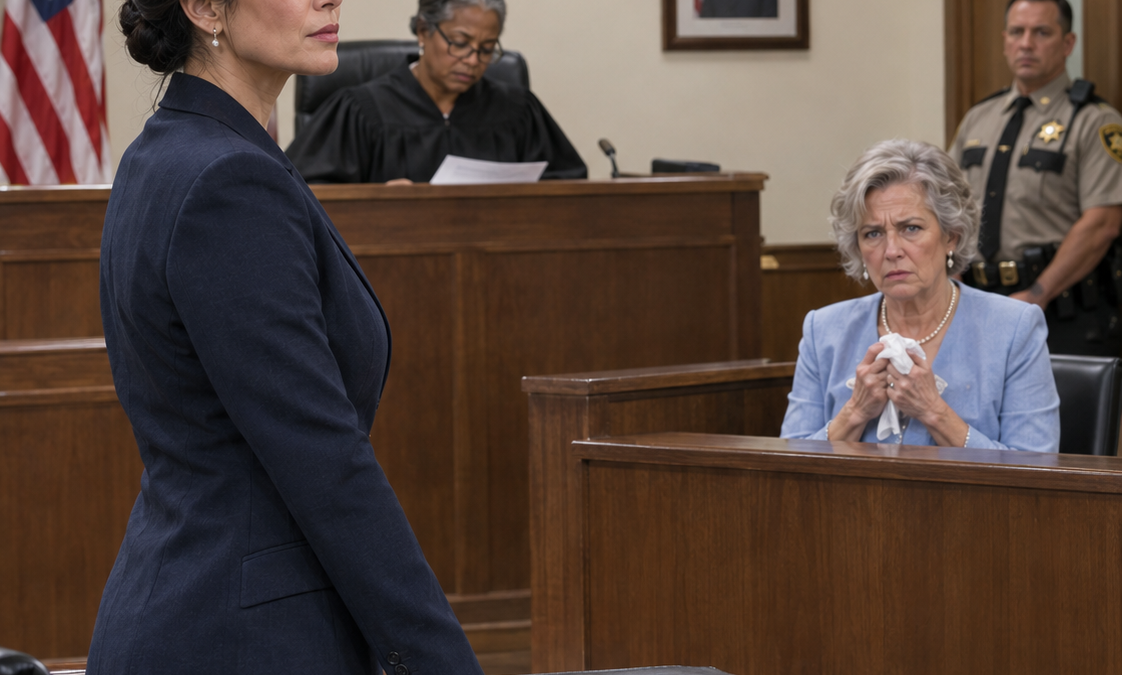
The parole board met in a small room in the state capitol building. Three members. A man in his sixties, a woman in her fifties, a woman in her forties. They sat behind a long table. A court reporter sat to the side.
Carol was already there. She wore a gray dress. Her hands were cuffed. Her hair was gray. She looked old.
She looked at me when I walked in. Just for a moment. Then she looked away.
Her attorney was a public defender named Lisa Chen. She was young. She looked tired.
The chairman of the board, the man in his sixties, opened the hearing.
“We are here to consider the parole application of Carol Anne Morrow. Mrs. Morrow, you have served seven years of an eighteen-year sentence. You have been a model prisoner. You have completed anger management, grief counseling, and cognitive behavioral therapy. You have no disciplinary infractions. You have a job in the prison library.”
Carol nodded.
“Your attorney has submitted letters of support from family members. Your grandson has written to you regularly. You have expressed remorse for your actions.”
Carol nodded again.
“We have also received letters in opposition to your release. From the family of the victim. From Dr. Vasquez-Morrow. From others who knew your sister and mother.”
Carol didn’t react.
“We will hear from both sides. Then we will make our decision.”
Lisa Chen spoke first.
“Your Honors, Mrs. Morrow has spent seven years in prison. She has used that time to reflect on her actions and to work on herself. She has completed every program available to her. She has maintained a clean disciplinary record. She has the support of her family. She is sixty-eight years old. She is not a threat to society.”
The chairman looked at Carol.
“Mrs. Morrow, do you have anything to say?”
Carol stood up. She was shaking. Just a little.
“I do,” she said.
She looked at me.
“I know you don’t believe me,” she said. “I know you think I’m a liar. I know you think I’m a monster. But I’m not. I was a mother who lost her son. I was a woman who couldn’t let go. I did terrible things. I know that. I hurt people I loved. I hurt people I didn’t even know.”
She paused.
“I’m sorry,” she said. “I’m sorry for what I did to Ruth. I’m sorry for what I did to Denise. I’m sorry for what I did to David. I’m sorry for what I did to Elena. I’m sorry for what I did to Mateo.”
She looked at me.
“I know sorry isn’t enough. I know it doesn’t undo anything. But it’s all I have.”
The board asked me to speak.
I stood up.
“Your Honors,” I said. “I’m not here to ask you to keep Carol in prison forever. I’m not here to punish her. I’m here to tell you the truth.”
I told them about the custody battle. About the forged note. About the lies.
I told them about Ruth. About Denise. About the consent form.
I told them about David. About how he knew something was wrong. About how he died before he could stop it.
I told them about Mateo. About how he grew up without a father. About how he learned that his grandmother tried to take him away from his mother.
I told them about the letters. About how Mateo read them. About how he wrote back.
“He’s fifteen now,” I said. “He’s a good kid. He plays baseball. He gets good grades. He wants to be a doctor. Or a lawyer. He hasn’t decided yet.”
I paused.
“He’s the reason I’m here. Not to punish Carol. But to protect him. He deserves to grow up without fear. He deserves to know that the people who love him won’t hurt him.”
I looked at Carol.
“I don’t know if Carol is capable of change. I don’t know if she’s genuinely remorseful or if she’s just learned to perform remorse. But I know this: my son deserves to be safe.”
The board deliberated for an hour.
We waited in the hallway. Carol sat in a chair. Her hands were cuffed. She stared at the floor.
Lisa Chen sat next to her. She didn’t speak.
I sat on the other side of the hallway. I didn’t speak either.
The door opened. The chairman stepped out.
“Mrs. Morrow,” he said. “The board has reached a decision.”
Carol stood up.
“We are denying your parole.”
Carol closed her eyes.
“Your crimes were serious. You forged a medical document that led to your mother’s death. You defrauded your sister of her inheritance. You attempted to take a child from his mother through deception and manipulation. These are not minor offenses. They are not mistakes. They are calculated acts of harm.”
Carol opened her eyes.
“You have served seven years. You have completed your programs. You have expressed remorse. But the board does not believe you have fully accepted responsibility for your actions. Your testimony today focused on your own pain, not on the pain you caused others. You spoke of your grief, not your guilt.”
Carol’s lip trembled.
“You will be eligible for parole again in three years. If you continue to demonstrate progress, the board may reconsider. But for now, you will remain in custody.”
The chairman stepped back inside.
Lisa Chen put her hand on Carol’s arm.
Carol didn’t move.
I drove home in silence.
The sky was gray. The road was long. I thought about Carol. I thought about the look on her face when the board denied her parole.
She had looked small. She had looked old. She had looked broken.
I didn’t feel sorry for her.
I felt sorry for the woman she could have been. The woman who raised David. The woman who might have been a good grandmother if she had let herself.
But that woman didn’t exist. She never had.
Mateo was waiting for me when I got home.
“What happened?”
“Her parole was denied.”
He looked at me.
“Is she okay?”
“She’s disappointed.”
“Are you okay?”
“I’m fine.”
He hugged me.
“I’m glad she’s staying,” he said.
“Why?”
“Because I’m not ready to see her yet.”
“You don’t have to see her ever. That’s your choice.”
“I know. But I might want to. Someday.”
“Then you will.”
He nodded.
“Can I ask you something?”
“Anything.”
“Do you think she’ll ever change?”
I thought about it.
“I don’t know,” I said. “I hope so. But hope isn’t the same as trust.”
“Then what is?”
“Trust is what you build. Slowly. Over time. With actions, not words.”
He nodded.
“I think I understand.”
Mateo is sixteen now.
He’s in his junior year. He plays varsity baseball. He gets straight A’s. He wants to be a doctor. He’s decided.
Carol is in a women’s prison three hours away. She writes to him once a month. He writes back now. Once every few months. Their letters are careful. Polite. Distant.
But they’re letters.
I don’t read them. I don’t ask what they say. That’s his business.
I still work at Mercy General. I still save children. I still come home to yellow cabinets and a porch light.
Thomas Morrow and I still meet for coffee. He’s become a friend. He tells me stories about David. The ones Carol never told me. The ones from before she cut him off from the family.
I’m learning who David really was.
I’m learning who I really am.
Some nights, I sit on the porch and think about everything that has happened.
The custody battle. The trial. The verdict. The appeal. The parole hearing.
I think about the people who helped me. Susan. Rachel. Margaret. Mrs. Alvarez. Thomas.
I think about the people who didn’t. Carol. Reed. The people who believed her lies.
I think about the people who are gone. David. Denise. Ruth.
And I think about Mateo.
He’s the reason I kept fighting. He’s the reason I never gave up.
He’s the reason I’m still here.
The porch light is on. The yellow cabinets are still yellow. The house is quiet.
I’m at peace.
PART 8 — THE GRADUATION
Mateo graduated from high school on a Saturday in June.
He was eighteen. He was six feet tall. He wore a navy blue cap and gown. He walked across the stage and shook the principal’s hand and smiled for the camera.
I cried. Mrs. Alvarez cried. Thomas Morrow cried.
Carol was not there. She was still in prison. She had sent a card. Mateo had read it. He had put it in his pocket.
After the ceremony, we went to dinner. Mrs. Alvarez. Thomas. Susan. Rachel. Margaret Liu. Mateo’s friend Eli and his parents.
We ate at a restaurant called The Garden. White tablecloths. Fresh flowers. A menu that was too expensive.
Mateo sat at the head of the table.
“I want to say something,” he said.
Everyone went quiet.
“I want to thank my mom,” he said. “She’s the reason I’m here. She’s the reason I’m going to college. She’s the reason I’m alive.”
I tried not to cry. I failed.
“She never gave up on me. Even when things were hard. Even when people tried to take me away from her. She fought for me. She protected me. She loved me.”
He looked at me.
“I love you, Mom.”
“I love you too,” I said.
He raised his glass.
“To my mom.”
Everyone raised their glasses.
“To Elena.”
Mateo went to college in the fall.
He chose a school three hours away. It had a good pre-med program. It had a good baseball team. It had a campus that felt like home.
We drove up together. We unpacked his things. We met his roommate. We walked around the campus.
“Are you scared?” I asked.
“A little.”
“Me too.”
He looked at me.
“You’re scared?”
“I’m always scared. That’s what being a parent is. You’re scared all the time. But you do it anyway.”
He hugged me.
“I’ll call you every week.”
“You better.”
“I will.”
He pulled back. He looked at me.
“Mom, can I ask you something?”
“Anything.”
“Are you happy?”
I thought about it.
“Yes,” I said. “I’m happy.”
“Really?”
“Really.”
“Why?”
“Because you’re here. Because you’re healthy. Because you’re going to do great things. Because I survived. Because we survived.”
He nodded.
“I’m happy too,” he said.
The first year of college was hard.
Mateo called every week. Sometimes more. He was homesick. He was overwhelmed. He was struggling with organic chemistry.
“I don’t know if I can do this,” he said.
“You can.”
“How do you know?”
“Because you’re my son. And I’ve seen you do hard things.”
“That’s not evidence.”
“It’s the only evidence that matters.”
He laughed.
“Okay,” he said. “I’ll keep trying.”
“Good.”
The second year was easier.
He joined a study group. He got a tutor. He started playing intramural baseball. He made friends.
He came home for Thanksgiving. He was taller. He was happier. He was different.
“I think I want to be a pediatrician,” he said.
“Like me?”
“Like you. But different.”
“How different?”
“I want to work with kids who are in foster care. Kids who don’t have anyone. Kids who need someone to fight for them.”
I felt tears in my eyes.
“That’s a good thing to want,” I said.
“I learned it from you.”
The third year was the best.
He was a junior. He was on the dean’s list. He was volunteering at a free clinic. He was dating a girl named Sofia.
He brought her home for spring break.
She was smart. She was kind. She was funny.
She looked at him like he was the only person in the room.
I liked her immediately.
“Your son talks about you all the time,” she said.
“Good things, I hope.”
“Amazing things. He says you’re the strongest person he knows.”
I didn’t know what to say.
“He’s the strongest person I know,” I said.
The fourth year was graduation.
He walked across the stage again. He shook hands again. He smiled for the camera again.
This time, he was holding a diploma from a university. This time, he was going to medical school.
I cried. Mrs. Alvarez cried. Thomas Morrow cried. Susan and Rachel and Margaret cried.
Carol was not there. She was still in prison. She had sent a letter. Mateo had read it. He had put it in his pocket.
After the ceremony, we went to dinner. The same restaurant. The same people. The same white tablecloths.
Mateo sat at the head of the table.
“I want to say something,” he said.
Everyone went quiet.
“I want to thank my mom,” he said. “She’s the reason I’m here. She’s the reason I’m going to medical school. She’s the reason I’m alive.”
I tried not to cry. I failed.
“She never gave up on me. Even when things were hard. Even when people tried to take me away from her. She fought for me. She protected me. She loved me.”
He looked at me.
“I love you, Mom.”
“I love you too,” I said.
He raised his glass.
“To my mom.”
Everyone raised their glasses.
“To Elena.”
Mateo went to medical school in the fall.
He chose a school in the same city as my hospital. He moved into an apartment ten minutes from my house. He came over for dinner every Sunday.
He was busy. He was tired. He was learning.
But he was home.
The first year was anatomy.
He called me at midnight.
“Mom, I’m looking at a cadaver.”
“I know.”
“It’s weird.”
“It gets easier.”
“Does it?”
“No. But you get used to it.”
He laughed.
“Okay.”
“Get some sleep.”
“I will.”
He didn’t.
The second year was rotations.
He called me from the pediatric ward.
“Mom, I saw a kid today. He was six. He had leukemia.”
“I’m sorry.”
“He’s doing okay. He’s in remission.”
“That’s good.”
“I held his hand while they drew blood. He didn’t cry.”
“Did you?”
“A little.”
“That’s okay.”
“I know.”
“You’re going to be a good doctor.”
“You think so?”
“I know so.”
The third year was clinicals.
He called me from the emergency room.
“Mom, I saved a life today.”
“What happened?”
“A kid came in. He was choking. I did the Heimlich. It worked.”
“Good job.”
“I was scared.”
“Everyone is scared. You did it anyway.”
“I learned that from you.”
The fourth year was graduation.
He walked across the stage again. He shook hands again. He smiled for the camera again.
This time, he was holding a medical degree. This time, he was going to be a pediatrician.
I cried. Mrs. Alvarez cried. Thomas Morrow cried. Susan and Rachel and Margaret cried.
Carol was not there. She was still in prison. She had sent a letter. Mateo had read it. He had put it in his pocket.
After the ceremony, we went to dinner. The same restaurant. The same people. The same white tablecloths.
Mateo sat at the head of the table.
“I want to say something,” he said.
Everyone went quiet.
“I want to thank my mom,” he said. “She’s the reason I’m here. She’s the reason I’m a doctor. She’s the reason I’m alive.”
I tried not to cry. I failed.
“She never gave up on me. Even when things were hard. Even when people tried to take me away from her. She fought for me. She protected me. She loved me.”
He looked at me.
“I love you, Mom.”
“I love you too,” I said.
He raised his glass.
“To my mom.”
Everyone raised their glasses.
“To Elena.”
Mateo started his residency at Mercy General.
He worked in the same hospital as me. He walked the same halls. He treated the same patients.
Sometimes we passed each other in the hallway. He would smile and wave. I would smile and wave back.
Sometimes we had lunch together in the cafeteria. He would tell me about his patients. I would tell him about mine.
Sometimes we just sat in silence. Two doctors. Two survivors. Two people who had been through hell and come out the other side.
Carol was released from prison when Mateo was twenty-eight.
She had served fourteen years. She had been denied parole twice. The third time, the board approved it.
Mateo told me.
“She’s getting out next month.”
“How do you feel?”
“I don’t know. Weird.”
“Do you want to see her?”
“I don’t know.”
“You don’t have to decide right now.”
“I know.”
He paused.
“Mom, will you come with me if I do?”
“Of course.”
“Even after everything?”
“Even after everything.”
He hugged me.
“Thank you.”
Carol moved into a small apartment in a town three hours away.
She had a job at a library. She had a therapist. She had a parole officer.
Mateo waited three months before he saw her.
He drove up alone. He didn’t tell me what he was going to say. He didn’t tell me what he was going to do.
He came back the next day.
“How did it go?”
“She’s old,” he said.
“I know.”
“She’s small. She’s fragile. She’s not the woman I remembered.”
“What did she say?”
“She said she was sorry. She said she was proud of me. She said she loved me.”
“Do you believe her?”
He thought about it.
“I don’t know. But I’m willing to try.”
Mateo is thirty now.
He’s a pediatrician at Mercy General. He works with kids in foster care. He fights for the ones no one else will fight for.
He married Sofia. They have a daughter named Ruth. After Carol’s mother. Because Mateo believes in redemption.
Carol lives three hours away. She writes to him once a month. He writes back once a month. Sometimes he visits. Sometimes he doesn’t.
I retired from the hospital two years ago. I volunteer at a free clinic. I sit on the porch. I read. I garden.
The yellow cabinets are still yellow. The porch light is still on. The house is quiet.
I’m at peace.
Some nights, I sit on the porch and think about everything that has happened.
The custody battle. The trial. The verdict. The appeal. The parole hearings. The letters. The graduation.
I think about the people who helped me. Susan. Rachel. Margaret. Mrs. Alvarez. Thomas.
I think about the people who didn’t. Carol. Reed. The people who believed her lies.
I think about the people who are gone. David. Denise. Ruth.
And I think about Mateo.
He’s the reason I kept fighting. He’s the reason I never gave up.
He’s the reason I’m still here.
The porch light is on. The yellow cabinets are still yellow. The house is quiet.
I’m at peace.
PART 9 — THE PORCH
Carol died on a Tuesday in October.
She was seventy-nine. She had been out of prison for eleven years. She had lived alone in a small apartment. She had worked at the library until she was seventy-five. She had gone to therapy every week until the end.
Mateo called me.
“Mom, she’s gone.”
“I know. I’m sorry.”
“I’m okay. I think. I don’t know.”
“Do you want me to come over?”
“Please.”
I drove to his house. He was sitting on the couch. Sofia was next to him. Their daughter Ruth was playing on the floor.
“I got a call from the hospital,” Mateo said. “She had a heart attack. She was alone. A neighbor found her.”
“I’m sorry.”
“She was old. She was sick. It wasn’t unexpected.”
“That doesn’t make it easier.”
He nodded.
“She left me something,” he said.
“What?”
“A box. Her lawyer called. She left a box for me. It’s at her apartment.”
“Do you want to go get it?”
“I don’t know.”
“You don’t have to decide right now.”
“I know.”
He paused.
“Will you come with me?”
“Of course.”
We drove to Carol’s apartment the next day.
It was small. One bedroom. A kitchen with white cabinets. A living room with a single window. A bookshelf filled with paperbacks.
The box was on the kitchen table. It was a shoebox. Old. Worn. Taped shut.
Mateo opened it.
Inside were letters. Dozens of them. All addressed to him. All unopened.
“I wrote these,” he said.
“What?”
“When I was a kid. After she went to prison. I wrote her letters. I never sent them. I didn’t know what to say.”
He picked one up.
“She kept them.”
“She kept everything.”
He sat down at the table. He read them one by one.
Some made him laugh. Some made him cry. Some made him quiet.
At the bottom of the box was a single envelope. It was addressed to me.
Mateo handed it to me.
“It’s for you,” he said.
I opened it in the car.
“Elena,” it said. “I know you don’t want to hear from me. I know you don’t want to read this. But I need to say something. Not to ask for forgiveness. Not to make excuses. Just to tell the truth.”
I kept reading.
“I was jealous of you. From the moment I met you. You were smart. You were strong. You were everything I wasn’t. You had a career. You had respect. You had my son’s heart. I couldn’t stand it.”
I kept reading.
“I tried to destroy you. I tried to take your son. I tried to make everyone believe you were unfit. I almost succeeded. But you were smarter than me. You were braver than me. You were better than me.”
I kept reading.
“I know you don’t believe me. I know you think I’m performing. But I’m not. I’ve had eleven years to think about what I did. Eleven years to look at myself. Eleven years to understand that I was the problem. Not you. Not David. Not anyone else. Me.”
I kept reading.
“I’m sorry. I’m sorry for what I did to you. I’m sorry for what I did to David. I’m sorry for what I did to Mateo. I’m sorry for what I did to Ruth. I’m sorry for what I did to Denise. I’m sorry for everything.”
I kept reading.
“I don’t expect you to forgive me. I don’t deserve it. But I want you to know that I tried. At the end, I tried. I tried to be better. I tried to understand. I tried to change.”
I kept reading.
“I hope you’re happy. I hope Mateo is happy. I hope Ruth is happy. I hope you all have the life you deserve.”
The letter ended.
“Carol.”
I sat in the car for a long time.
I thought about Carol. The woman who tried to take my son. The woman who forged her mother’s signature. The woman who lied under oath.
I thought about Carol. The woman who wrote me a letter. The woman who admitted she was wrong. The woman who tried to change.
I didn’t know if I believed her.
But I knew she had tried.
And that was something.
Mateo and I drove home in silence.
He looked out the window. I looked at the road.
“She wrote me a letter too,” he said.
“What did it say?”
“She said she was proud of me. She said she was glad I became a doctor. She said she was glad I married Sofia. She said she was glad I had Ruth.”
“That’s good.”
“She said she wished she could have been there. For the graduations. For the wedding. For Ruth’s birth.”
“She was there. In her own way.”
“I know.”
He paused.
“Mom, do you forgive her?”
I thought about it.
“I don’t know,” I said. “I’ve tried. I’ve thought about it a lot. But forgiveness isn’t something you can force. It’s something that happens. Or it doesn’t.”
“Does that make you sad?”
“Sometimes. But I’ve made peace with it. I don’t need to forgive her to be happy. I just need to keep her from hurting us.”
“She can’t hurt us anymore.”
“I know.”
He nodded.
“I think I forgive her,” he said.
“You do?”
“I think so. She was my grandmother. She was broken. She did terrible things. But she was still my grandmother. And she tried to change.”
“That’s a good thing to feel.”
“I learned it from you.”
Carol’s funeral was small.
Mateo arranged it. Sofia helped. Ruth sat in the front row. She was four years old. She didn’t understand what was happening.
I sat in the back. Mrs. Alvarez came with me. Thomas Morrow came too. Susan and Rachel sent flowers. Margaret Liu sent a card.
The minister said a few words. He talked about Carol’s life. He talked about her struggles. He talked about her family.
He didn’t talk about the forgery. He didn’t talk about the trial. He didn’t talk about the prison.
He talked about a woman who had made mistakes. A woman who had tried to change. A woman who had loved her family.
Mateo spoke.
“She was my grandmother,” he said. “She was complicated. She was difficult. She hurt people I love. But she also loved me. And I loved her.”
He paused.
“I don’t know if she’s in heaven. I don’t know if there is a heaven. But I hope she’s at peace. I hope she’s with my dad. I hope she’s with Ruth and Denise. I hope they’ve forgiven her.”
He sat down.
I didn’t speak.
After the funeral, we went back to Mateo’s house.
Ruth was playing in the living room. Sofia was making dinner. Mateo was sitting on the couch.
I sat next to him.
“Are you okay?” I asked.
“I’m okay.”
“Really?”
“I think so. It’s weird. She’s gone. I won’t get any more letters. I won’t have to decide whether to visit her or not.”
“You didn’t have to decide anyway.”
“I know. But I did. Every month. I made a choice. And now there’s no choice to make.”
“That’s hard.”
“It is.”
He looked at me.
“Mom, can I ask you something?”
“Anything.”
“Are you at peace?”
I thought about it.
“Yes,” I said. “I am.”
“Really?”
“Really.”
“Even after everything?”
“Even after everything.”
“How?”
“Because I have you. Because I have Ruth. Because I have Sofia. Because I have friends who love me and a house with yellow cabinets and a porch light that always works.”
He laughed.
“That’s a weird thing to be grateful for.”
“It’s the little things.”
He nodded.
“I think I understand.”
Mateo is thirty-five now.
He’s a pediatrician at Mercy General. He works with kids in foster care. He fights for the ones no one else will fight for.
He’s married to Sofia. They have two children. Ruth is eight. David is five. Named after his father.
Carol is gone. She’s been dead for five years. Mateo visits her grave once a year. He brings flowers. He tells her about his life.
I retired from the hospital ten years ago. I volunteer at a free clinic. I sit on the porch. I read. I garden. I watch my grandchildren grow up.
The yellow cabinets are still yellow. The porch light is still on. The house is quiet.
I’m at peace.
Some nights, I sit on the porch and think about everything that has happened.
The custody battle. The trial. The verdict. The appeal. The parole hearings. The letters. The graduations. The funeral.
I think about the people who helped me. Susan. Rachel. Margaret. Mrs. Alvarez. Thomas.
I think about the people who didn’t. Carol. Reed. The people who believed her lies.
I think about the people who are gone. David. Denise. Ruth. Carol.
And I think about Mateo.
He’s the reason I kept fighting. He’s the reason I never gave up.
He’s the reason I’m still here.
The porch light is on. The yellow cabinets are still yellow. The house is quiet.

