Part 3: “Military families. Poor as dirt and twice as proud. Can’t even afford a jersey for their kid.”
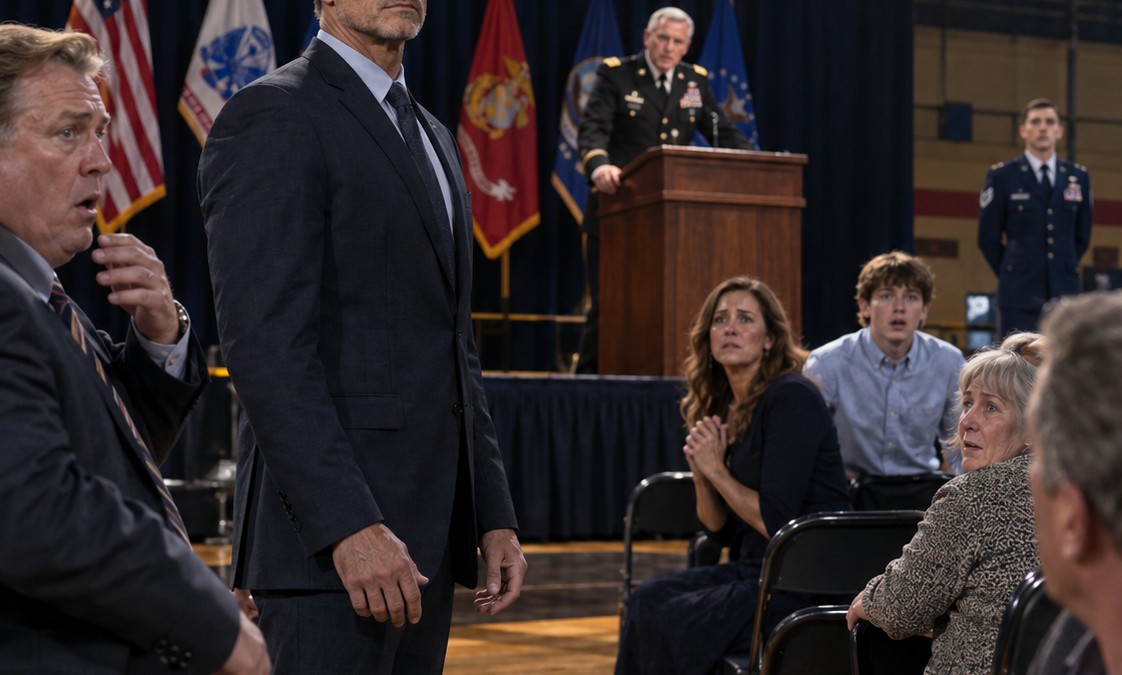
PART 6 — THE FALLOUT
The arrest happened on a Tuesday morning.
I didn’t see it. I read about it in the local paper. Mark Morrison was taken into custody at his home in the Westbrook Hills. Charges: felony theft, fraud, and misuse of public funds. Bail was set at fifty thousand dollars.
Doug Harrington was arrested the same day. Same charges. Same bail.
The paper ran a photo of Harrington being led out of his house in handcuffs. He was wearing a sweatshirt. No shoes. His face was gray.
I looked at the photo for a long time. I didn’t feel anything.
That afternoon, Rachel called me.
“Dan. Did you see?”
“I saw.”
“They arrested Harrington. They arrested Morrison.”
“I know.”
“Dan — the paper said the investigation started with an anonymous audit request. Was that you?”
“Yes.”
“And the foundation? The scholarship money? That was you?”
“Yes.”
She was quiet for a long time.
“Dan. Why didn’t you tell me?”
“I did tell you. A few weeks ago. Before the board meeting.”
“I mean before that. Before any of this. Why didn’t you tell me three years ago?”
I thought about it.
“Because I didn’t want you to feel like a charity case.”
“Dan.”
“Because I didn’t want you to think I was doing it for credit.”
“Dan.”
“Because you’re my sister. And I love you. And I didn’t want you to feel like you owed me anything.”
She was crying now.
“You’re an idiot.”
“I know.”
“A complete idiot.”
“I know.”
“Thank you.”
“You’re welcome.”
She laughed. Cried. Laughed again.
“Marcus wants to know if you’re coming to dinner tonight.”
“Tell him yes.”
“Good. I’m making pot roast.”
“I’ll be there.”
I hung up.
The school board held an emergency meeting on Wednesday. Patricia Vance called me beforehand.
“Dan. I want you to know what’s happening.”
“Tell me.”
“The board is voting to terminate Morrison and Harrington effective immediately. They’re also voting to open a full forensic audit of the athletic department going back five years.”
“Good.”
“The district attorney is building a criminal case. They’re going to subpoena the school’s records. They’re going to talk to vendors. They’re going to trace every dollar.”
“How long will that take?”
“Months. Maybe a year. But it’s happening.”
“Good.”
“Dan. I also want to say something else.”
“What?”
“Thank you. For what you did. For the money. For the kids.”
“You’re welcome.”
“I’ve been on this board for fifteen years. I’ve been fighting this fight alone. I never thought I’d see the day.”
“Well. You’re not alone anymore.”
“No. I’m not.”
She hung up.
The weeks passed.
The story stayed in the local paper for a while. Then it faded. It moved from the front page to the metro section. From the metro section to the archives.
But the consequences kept coming.
Mark Morrison’s wife filed for divorce. She’d had no idea about the shell company. About the boat. About the rental property. She’d thought they were living on his salary and her trust fund. She’d been wrong.
Doug Harrington’s wife left him. Moved to her sister’s house in another state. Took the kids.
The school district hired a new athletic director. A woman named Karen Boyd. She’d been a coach in Denver. She had a reputation for honesty.
She called me the first week on the job.
“Mr. Kessler?”
“Chief. But Dan is fine.”
“Chief. I’ve been reviewing the department’s finances. I’ve also been reviewing the scholarship fund.”
“Okay.”
“I want to thank you. On behalf of the district. For what you’ve been doing.”
“You’re welcome.”
“I also want to ask you something.”
“Go ahead.”
“Would you be willing to continue? The donations, I mean. Not anonymously. Or anonymously, if you prefer. But I want to make sure the money goes where it’s supposed to.”
I thought about it.
“I’ll think about it.”
“Thank you.”
She hung up.
I did think about it. I thought about it for a week.
Then I called her back.
“I’ll continue. But I want two things.”
“Name them.”
“First, I want an independent audit every year. Every dollar. Every line item. I want to know exactly where the money goes.”
“Done. And the second?”
“I want the scholarships to be needs-based. No names. No lists. No one knows who’s getting help. Not the parents. Not the kids. Not the coaches.”
“You don’t want anyone to know?”
“I don’t want anyone to feel like a charity case.”
She was quiet.
“That’s very thoughtful.”
“That’s the point.”
“Okay. We can do that.”
“Then I’m in.”
“Thank you, Chief.”
“Dan.”
“Thank you, Dan.”
I hung up.
Marcus’s team made the playoffs.
They lost in the second round. A close game. A last-second field goal. Marcus threw for two hundred yards and two touchdowns. He played the best game of his life.
After the game, I found him on the field. Sitting on the bench. Head down.
“Hey.”
He looked up.
“We lost.”
“I know.”
“I played good, though.”
“You played great.”
He nodded. Tried not to cry.
“I wanted to win. For the team. For Coach Boyd. For Mom.”
“You did everything you could.”
“I know.”
I sat down next to him.
“Marcus. I want to tell you something.”
“What?”
“When I was your age, I wasn’t good at anything. I was small. I was slow. I got picked on. My father told me I’d never amount to anything.”
He looked at me.
“Really?”
“Really. He wanted me to go into business. Take over his company. But I wanted to serve. I wanted to do something that mattered. He never understood.”
“What happened?”
“I joined the Air Force. I became a PJ. I spent twenty-two years doing things I can’t talk about. And when I retired, I came home and my father was already gone. I never got to prove him wrong.”
Marcus was quiet.
“But you proved it anyway. To everyone else.”
“Maybe. But that’s not the point.”
“What’s the point?”
I looked at him.
“The point is that you don’t play for your father. Or for your coach. Or for the scouts. You play for yourself. Because you love it. Because it makes you happy. Because it’s who you are.”
He nodded.
“I love it.”
“I know. That’s why you’re good.”
He smiled. Just a little.
“Thanks, Uncle Dan.”
“Anytime.”
We sat there for a while. Just the two of us. The stadium lights were still on. The field was empty.
Then we walked to the car. Drove home.
The weeks turned into months.
Morrison pleaded guilty. He got three years in prison. Restitution of two hundred thousand dollars. His boat was seized. His rental property was sold. His wife moved away.
Harrington took a plea deal. Eighteen months. Probation after. He lost his teaching license. He lost his coaching career. He lost everything.
I didn’t go to the sentencing. I didn’t need to see it. I’d already seen what I needed to see.
The day of the ceremony. The look on his face. The moment he realized who he’d been insulting.
That was enough.
The school district recovered most of the money. The forensic audit found another fifty thousand dollars in unexplained transfers. Some of it was returned. Some of it was gone.
The scholarship fund was reorganized. Karen Boyd set up a new system. Independent oversight. Anonymous allocations. No names, no lists, no one knew who was getting help.
I kept donating. Quietly. Anonymously. The same way I’d always done it.
The only difference was that now Rachel knew.
And Marcus knew.
And somewhere in the back of my mind, I knew my father would have hated it. He would have said I was wasting my money. He would have said those kids didn’t deserve it.
But he was wrong. He’d always been wrong.
And I was done trying to prove anything to a dead man.
PART 7 — THE QUIET
Spring came early that year.
The snow melted. The fields turned green. The high school baseball team started practicing. Marcus tried out for the team and made JV.
He was still playing football. Offseason workouts. Weight room. Film study. He’d decided he wanted to play in college.
I helped him with his recruiting videos. Shot them on my phone. Edited them on my laptop. Sent them to a dozen small colleges.
One of them called back. A Division III school in Kansas. They wanted him to come for a visit.
I drove him there. Eight hours each way. We talked about football. About life. About his dad.
“He never calls,” Marcus said.
“I know.”
“Mom says he’s busy.”
“Mom’s being nice.”
“Yeah.”
“Does it bother you?”
He shrugged.
“Sometimes. But I have you.”
I didn’t know what to say.
So I just drove.
The visit went well. The coaches liked him. They offered him a spot on the roster. No scholarship. Division III didn’t have them. But a spot.
He accepted.
Rachel cried when he told her.
“I’m so proud of you.”
“Thanks, Mom.”
“You’re going to college.”
“I know.”
“My baby’s going to college.”
“Mom.”
She hugged him.
I stood in the doorway. Watched.
Rachel looked at me.
“Dan. Thank you.”
“For what?”
“For everything.”
I nodded.
“Anytime.”
The summer passed. Marcus graduated in June. Rachel threw a party in her backyard. A small one. Family. A few friends. A cake from the grocery store.
General Halstead sent a letter. A handwritten one. Congratulating Marcus on his graduation and thanking him for his family’s service.
Marcus read it three times.
“This is so cool.”
“He’s a good man.”
“You saved his life.”
“I did my job.”
“You saved his life, Uncle Dan.”
I smiled.
“Okay. I saved his life.”
He laughed.
I went back to work. Security consulting. Remote. Boring. Exactly what I wanted.
I ran in the mornings. Ate dinner alone. Sat in my garage in the evenings. The same chair. The same workbench. The same nail in the wall.
I thought about my life. The men I’d served with. The places I’d been. The things I’d done.
I thought about my father. About the way he’d looked at me when I told him I was joining the Air Force. Disappointed. Angry. Ashamed.
I thought about Rachel. About Marcus. About the way they looked at me now. Proud. Grateful. Loved.
I thought about Doug Harrington. About the way he’d looked at me at the ceremony. Scared. Broken. Defeated.
I didn’t feel sorry for him. He’d done it to himself.
But I didn’t feel triumphant either. I just felt quiet.
The way I always felt after a mission.
One evening in August, I got a call from Tom Bracken.
“Chief. It’s Tom.”
“Tom. What’s up?”
“They’re doing another thing. The PJ association. They want to induct you into the Hall of Fame.”
I was quiet.
“Dan?”
“I’m here.”
“You going to say yes?”
“I don’t know.”
“Dan. You saved lives. You deserve it.”
“I didn’t do anything special.”
“You jumped out of a helicopter into enemy fire and carried a man three miles on your shoulders. That’s special.”
“That’s the job.”
“That’s more than the job. That’s who you are.”
I was quiet again.
“Dan?”
“I’ll think about it.”
“Don’t think too long. They need an answer by September.”
“I’ll call you.”
I hung up.
I sat in my garage for a long time.
The Hall of Fame. The ceremony. The recognition.
I didn’t want any of it. I never had.
But I thought about Marcus. About the look on his face when he’d read General Halstead’s letter. About the way he talked about me to his friends. About the way he said “my uncle saved a general.”
Maybe it wasn’t about me. Maybe it was about him. About Rachel. About the family.
Maybe it was about showing them that service matters. That sacrifice matters. That the quiet people — the ones who don’t ask for credit, the ones who just do the job — are the ones who matter most.
I picked up my phone. Called Tom back.
“Tell them yes.”
“Really?”
“Really.”
“Dan. That’s great.”
“Yeah.”
“You okay?”
“I’m fine.”
“You don’t sound fine.”
“I’m fine.”
“You’re still a terrible liar.”
I almost smiled.
“I’ll be there.”
I hung up.
The induction ceremony was in October. Colorado Springs. The PJ association’s annual reunion.
I flew out. Alone. Rachel offered to come. I told her not to. This was something I needed to do by myself.
The hotel was full of old PJs. Men I hadn’t seen in years. Men I’d served with. Men I’d trained. Men I’d saved.
They greeted me with handshakes. Hugs. Old stories.
“Kessler. You old bastard.”
“Still alive.”
“Still quiet.”
“Still here.”
We drank beer. Told stories. Laughed. Cried.
The ceremony was on Saturday night. A banquet hall. Two hundred people. Flags on the walls. A stage at the front.
I sat at a table with Tom and a few other guys from the old team.
The president of the association gave a speech. Talked about service. About sacrifice. About the men who didn’t come home.
Then he called my name.
“Chief Master Sergeant Daniel Kessler.”
I stood up. Walked to the stage.
The room applauded.
I stood at the podium. Looked out at the crowd. Two hundred faces. Men I knew. Men I didn’t. Wives. Children. Families.
I didn’t have a speech prepared. I never did.
“I don’t know what to say.”
The room laughed.
“I’m not good at this. I never was.”
More laughter.
“I just did my job. That’s all. I did what I was trained to do. I did what I was asked to do. I did what I thought was right.”
I paused.
“But I want to say something. To the families. To the wives. To the kids. To the parents.”
I looked out at the crowd.
“You’re the ones who served. Not just us. You. You waited. You worried. You prayed. You held things together while we were gone. You did the hard part.”
I paused.
“So this isn’t just for me. It’s for you. All of you.”
I stepped back from the podium.
The room stood up. Applause. Cheers.
I nodded. Walked back to my table.
Tom clapped me on the back.
“Good speech.”
“Thanks.”
“You okay?”
“I’m fine.”
“You keep saying that.”
“Because it’s true.”
He laughed.
“Sure, Chief.”
I sat down. Drank my beer. Watched the rest of the ceremony.
And for the first time in a long time, I felt like I was home.
PART 8 — THE LETTER
The letter came in November.
I was sitting in my kitchen, drinking coffee, reading the paper. The mail was on the table. Bills. Junk. A catalog from a company that sold tactical gear.
Then I saw the envelope.
Handwritten. No return address. Postmarked from a town I didn’t recognize.
I opened it.
“Chief Kessler,
I don’t know if you remember me. My name is Angela Morrison. Mark’s wife. Or ex-wife, I guess. The divorce was finalized last month.
I’m writing because I owe you an apology.
I didn’t know what Mark was doing. I didn’t know about the shell company. About the boat. About the rental property. I didn’t know he was stealing from the scholarship fund.
But I should have. I should have asked questions. I should have paid attention. I should have seen what was right in front of me.
I didn’t. And I’m sorry.
I’m also sorry for what my brother did. Doug. He was always cruel. Even when we were kids. He thought being loud made him strong. He thought being mean made him important.
He was wrong.
I don’t expect you to forgive me. I don’t expect you to forgive either of them. But I wanted you to know that I’m sorry. And that I’m going to spend the rest of my life trying to make it right.
I’m moving to Oregon. My sister lives there. I’m going to start over. I’m going to be better.
Thank you for exposing the truth. Even though it hurt. Even though it cost me everything.
I’m grateful.
Angela Morrison”
I read the letter twice.
Then I folded it. Put it back in the envelope. Put the envelope in a drawer.
I didn’t respond. I didn’t know what to say.
But I kept the letter.
The winter passed. Marcus came home for Christmas break. He was taller. Stronger. Happier.
“How’s college?”
“Good. Hard. But good.”
“You playing?”
“Redshirting this year. But I’m practicing. Getting better.”
“Good.”
“Uncle Dan. I want to ask you something.”
“What?”
“Why did you do it? The scholarships. The ceremony. All of it. Why?”
I looked at him.
“Because it was the right thing to do.”
“That’s it?”
“That’s it.”
“There’s no other reason?”
I thought about it.
“Because someone once told me my family was trash. And I wanted to prove them wrong.”
“Harrington?”
“Yeah.”
“But you proved him wrong a long time ago. You saved a general. You won medals. You did all this stuff.”
“I know.”
“So why did it matter what he said?”
I looked at him.
“Because he said it about you. About your mom. About your family. And that’s different.”
He was quiet.
“You’re a good man, Uncle Dan.”
“I try.”
“Mom says you’re the best man she’s ever known.”
“She’s biased.”
“Maybe. But she’s right.”
I didn’t know what to say.
So I just nodded.
Christmas was quiet. Just the three of us. Rachel made a ham. Marcus ate too much. We watched a movie. Fell asleep on the couch.
It was enough.
Spring came again. The second anniversary of the ceremony.
I didn’t do anything special. I went for a long run. Came home. Showered. Ate dinner alone.
I sat in my garage. The same chair. The same workbench. The same nail in the wall.
I thought about the last two years. About everything that had happened.
The booster meeting. The insult. The investigation. The ceremony. The arrests. The fall of Morrison and Harrington. The rise of Marcus. The peace of Rachel.
I thought about my father. About his disappointment. About his death.
I thought about my men. The ones I’d served with. The ones who didn’t come home.
I thought about the kids. The ones who’d gotten scholarships. The ones who’d played football because of me. The ones who’d never know my name.
I thought about Angela Morrison. Her letter. Her apology. Her new life in Oregon.
I thought about Doug Harrington. In prison. Broken. Alone.
I didn’t feel sorry for him. But I didn’t hate him either.
I just felt quiet.
The way I always felt after a mission.
I got up. Walked to the door. Turned off the light.
Tomorrow was another day. Another run. Another cup of coffee. Another quiet life.
And that was enough.
EPILOGUE — TWO YEARS LATER
Marcus graduated from college in the spring. A degree in sports management. A job offer from a small college in Kansas. Assistant coach.
I flew out for the ceremony. Sat in the back. Watched him walk across the stage. Cheered louder than anyone.
Rachel cried. I didn’t.
Afterward, we went to dinner. Just the three of us.
“Uncle Dan. I want to thank you.”
“For what?”
“For everything. For the money. For the support. For being there.”
“You’re welcome.”
“I mean it. I wouldn’t be here without you.”
“You would. You’re your mother’s son.”
He laughed.
“She’s pretty great.”
“She is.”
Rachel smiled.
“What about you, Dan? What are you going to do now?”
“I don’t know. Keep working. Keep running. Keep living.”
“You’re not going to do anything exciting?”
“I’ve had enough excitement for one lifetime.”
She laughed.
“Fair enough.”
We ate. Talked. Laughed.
Then I drove to the airport. Flew home.
I sat in my garage that night. The same chair. The same workbench. The same nail in the wall.
I thought about the life I’d lived. The things I’d done. The people I’d saved. The people I’d lost.
I thought about the future. The quiet years ahead. The runs. The coffee. The solitude.
I thought about Marcus. About Rachel. About the family I’d protected.
I smiled.
Just a little.
Then I turned off the light.
And went to bed.
PART 9 — THE LAST WORD
Six months later, I got a letter from the state prison.
Doug Harrington.
I almost threw it away. I didn’t owe him anything. I didn’t want to hear his excuses. I didn’t want his apology.
But I opened it.
“Kessler,
I’m writing because I have nothing else to do. I’m in here for eighteen months. I have a lot of time to think.
I’ve been thinking about what I said at that booster meeting. About your family. About military families.
I meant it when I said it. You were right about that.
But I’ve been thinking about why I meant it. And I think I know.
My father was a Marine. Vietnam. He came home with a Purple Heart and a drinking problem. He never talked about the war. He never talked about anything. He just drank and yelled and hit.
I hated him. I hated everything about him. I hated the uniform. I hated the medals. I hated the way people looked at him like he was a hero when I knew what he was really like.
So when I saw your family — when I saw your nephew — I saw my father. I saw everything I hated. And I took it out on you.
That’s not an excuse. I know that. I’m not asking you to forgive me.
But I wanted you to know. I wanted you to know why.
I don’t expect you to write back. I don’t expect you to care.
But I wanted to say I’m sorry. For what I said. For what I did.
I’m sorry.
Doug Harrington”
I read the letter twice.
Then I folded it. Put it back in the envelope. Put the envelope in the drawer. Next to Angela’s letter.
I didn’t respond.
But I kept it.
The years passed.
Marcus got married. A girl named Elena. She was a teacher. Kind. Smart. Rachel loved her.
I went to the wedding. Sat in the back. Watched Marcus dance with his mother. Watched him laugh. Watched him live.
Rachel moved to Kansas to be closer to them. She sold the house. Quit her jobs. Started over.
She called me every week. Told me about Marcus. About Elena. About the baby they were expecting.
“You’re going to be a great-uncle.”
“I’m already a great-uncle.”
“You know what I mean.”
“I know.”
“You’re going to come visit, right?”
“I’ll try.”
“You’d better.”
I visited. A few times a year. Drove the eight hours. Stayed for a few days. Played with the baby. Ate Rachel’s cooking. Slept on the couch.
It was enough.
I kept running. Kept working. Kept living.
I never remarried. Never had kids of my own. Never wanted to.
I had Rachel. I had Marcus. I had the men I’d served with. I had the kids who’d gotten scholarships. I had the lives I’d saved.
That was enough.
One night, I sat in my garage. The same chair. The same workbench. The same nail in the wall.
I thought about my life. The whole thing. The good and the bad.
I thought about my father. About the way he’d looked at me. About the way he’d died.
I thought about the ceremony. The general. The crowd. The look on Doug Harrington’s face.
I thought about the letter in the drawer. The apology. The explanation.
I thought about Marcus. About his son. About the life he’d have.
I smiled.
Just a little.
Then I turned off the light.
And went to bed.
PART 10 — THE QUIET LIFE
The baby was born in the spring. A boy. They named him Daniel.
Rachel called me from the hospital.
“Dan. He’s here. Seven pounds, three ounces.”
“Is he healthy?”
“He’s perfect.”
“Good.”
“Dan. They named him after you.”
I was quiet.
“Dan?”
“I’m here.”
“Did you hear me?”
“I heard you.”
“Are you okay?”
“I’m fine.”
“Dan.”
“I’m fine.”
She laughed.
“You’re crying, aren’t you?”
“I don’t cry.”
“You’re crying.”
“I’m not.”
“You’re a terrible liar.”
I almost smiled.
“I’ll be there next week.”
“Good. Marcus wants to see you.”
“I want to see him too.”
I hung up.
I flew out the following week. Met the baby. Held him. He was small. Warm. Perfect.
“He looks like Marcus.”
“He looks like a potato.”
Rachel laughed.
“All babies look like potatoes.”
“This one looks like a potato with a Kessler nose.”
“He does have your nose.”
“Poor kid.”
She laughed again.
Marcus came in. Took the baby. Held him.
“Uncle Dan. What do you think?”
“He’s perfect.”
“You think so?”
“I know so.”
He smiled.
“I’m going to tell him about you. When he’s older. About what you did. About who you are.”
“He doesn’t need to know all that.”
“He does. He needs to know what service means. What sacrifice means. What it means to be a good man.”
I didn’t know what to say.
So I just nodded.
I stayed for a week. Played with the baby. Ate Rachel’s cooking. Talked with Marcus about football. About life. About the future.
On the last night, I sat on the porch. Rachel came out. Sat next to me.
“Dan. Can I ask you something?”
“Sure.”
“Are you happy?”
I thought about it.
“I’m content.”
“That’s not the same thing.”
“I know.”
“Are you happy?”
I looked at her.
“I’m happy that you’re happy. I’m happy that Marcus is happy. I’m happy that the baby is healthy. I’m happy that Harrington and Morrison are gone.”
“But what about you? What about your own happiness?”
I thought about it.
“I don’t know. I never really thought about it.”
“Dan.”
“I spent twenty-two years thinking about other people. Keeping them alive. Keeping them safe. That’s what I was trained to do. That’s who I am.”
“But you’re retired now. You can think about yourself.”
“I don’t know how.”
She was quiet.
“I know. That’s what worries me.”
I didn’t answer.
We sat there for a while. Just the two of us. The stars were out. The air was warm.
Then I went to bed.
I flew home the next day.
I sat in my garage that night. The same chair. The same workbench. The same nail in the wall.
I thought about what Rachel had said. About happiness. About thinking about myself.
I didn’t have an answer.
But I had a life. A quiet one. A simple one.
I had my runs. My coffee. My work. My garage.
I had Rachel. Marcus. The baby. Daniel.
I had my memories. The good and the bad.
I had my service. My medals. My men.
That was enough.
I turned off the light.
And went to bed.

