Part 3: “The thing is, Dad, it’s just hard to spin it.
PART 6 — THE QUIET
The first week after the hearing was the quietest week I’d had in months.
No phone calls. No texts. No private investigators. No dark sedans. No family members calling to ask if I was okay.
Just quiet.
I went to work. I stocked shelves. I helped customers find the right screws. I came home. Carol and I ate dinner. We watched TV. We went to bed.
It was the most normal week I’d had in years.
I didn’t trust it.
Danny moved into an apartment near the hardware store.
It was small. Two bedrooms. A kitchen with appliances from the 1980s. A living room window that looked out at a parking lot.
But it was his. He picked it out. He paid for it with his own money. He furnished it with things he bought himself.
He called me the day he moved in.
“Dad.”
“Hey.”
“I’ve got a place.”
“Where?”
“Over on Maple. The building with the red awning.”
“I know it.”
“It’s not much. But it’s mine.”
“Good.”
“You want to come see it?”
“Sure.”
I went over that afternoon.
He showed me around. The apartment was clean. It was sparse. But it was his.
“It’s good,” I said.
“You think so?”
“I think it’s a start.”
He nodded.
“I want to do this right,” he said. “I want to be a good father. I want to be a good man.”
“You’re already a good man. You just forgot for a while.”
He looked at me.
“Did you ever forget?”
I thought about it.
“Yeah,” I said. “I did. After I came home. I forgot who I was. I forgot why I did what I did. I forgot that I mattered.”
“How did you remember?”
“Your mother. She reminded me.”
He was quiet.
“I don’t have a mother to remind me,” he said.
“You’ve got me.”
He nodded.
“Yeah,” he said. “I’ve got you.”
The advisory board meeting was on a Wednesday.
I’d said I’d think about it. I’d thought about it.
I called Alan Vance.
“Alan.”
“Tom. How are you?”
“Good. I wanted to tell you something.”
“What’s that?”
“I’ll take the position.”
He was quiet for a moment.
“Are you sure?”
“I’m sure.”
“What changed your mind?”
I thought about it.
“My son,” I said. “He’s learning how to stand up for himself. I figure I should do the same.”
“Good answer.”
“Thanks.”
“First meeting is next Wednesday. Ten o’clock. I’ll send you the details.”
“I’ll be there.”
“Tom?”
“Yeah.”
“I’m glad you’re doing this.”
“Me too.”
The first meeting was in the same boardroom where they’d offered me the position.
There were eight people around the table. Most of them were veterans. One was a woman who’d served in the Navy. Two were older men who’d been in Vietnam. One was a younger guy who’d lost a leg in Afghanistan.
They all looked at me the same way. Like they knew who I was. Like they’d heard the story.
“You’re the Ranger,” the younger guy said. “The one who saved Vance.”
“I’m the guy who did his job,” I said.
He smiled.
“Same thing.”
We talked for two hours. About veterans. About what they needed. About how to help them.
I didn’t say much. I just listened.
But when I did speak, people listened.
That was new.
The next month was quiet.
I went to work. I went to meetings. I spent time with Carol. I spent time with Danny.
I saw Sophie twice.
The first time was at a park. Danny had custody for the weekend. We took her to the playground. She ran around. She laughed. She asked me questions about everything.
“Grandpa, why do you have a keychain with a coin on it?”
“It’s a special coin. From when I was in the Army.”
“What’s the star mean?”
“It means I was part of a team.”
“What kind of team?”
“The kind that helps people.”
She nodded.
“That’s good,” she said.
“Yeah. That’s good.”
The second time was at Danny’s apartment. We watched a movie. She fell asleep on the couch. Danny carried her to bed.
I watched him do it.
He was gentle. He was careful. He was a good father.
I was proud of him.
Meredith started her psychological evaluation.
Danny told me about it. He said she’d been ordered to attend twelve sessions with a court-appointed therapist.
“She’s not happy about it,” he said.
“I wouldn’t imagine she would be.”
“She said it’s a waste of time. She said there’s nothing wrong with her.”
“There might be.”
“She doesn’t think so.”
“She wouldn’t.”
He was quiet.
“Do you think she’ll change?”
I thought about it.
“I don’t know,” I said. “People can change. But they have to want to. And she’s never wanted to.”
“That’s sad.”
“Yeah. It is.”
The veterans outreach program started small.
We had a website. We had a phone number. We had a small office in the Vantage Point building.
I was there three days a week. I answered calls. I talked to veterans. I listened to their stories.
Most of them were like me. Quiet. Cautious. Unsure of what to say.
I didn’t push them. I just let them talk. I let them tell me as much or as little as they wanted.
One guy — a Marine named Eddie — came in three times before he said a single word about his service.
The fourth time, he told me everything.
He’d been in Fallujah. He’d lost three friends in a single day. He’d come home and tried to drink himself to death.
“I don’t know why I’m telling you this,” he said.
“Because you need to tell someone.”
He looked at me.
“You get it,” he said.
“Yeah. I get it.”
He came back the next week. And the week after that. He stopped drinking. He got a job. He started talking to his wife again.
I didn’t do anything special. I just listened.
That was enough.
The holidays came.
Thanksgiving was at our house. Danny came. Sophie came. Carol cooked a turkey and made a pumpkin pie.
Meredith didn’t come. She wasn’t invited.
We sat around the table and ate. We talked about nothing important. We watched football. We played checkers with Sophie.
It was the first Thanksgiving in years that felt like Thanksgiving.
After dinner, Danny and I sat on the porch.
“Dad.”
“Yeah.”
“I want to tell you something.”
“Okay.”
“I’m proud of you.”
I looked at him.
“You don’t have to say that.”
“I know. I want to.”
I didn’t say anything.
“I spent a lot of years being ashamed of you,” he said. “Not because of anything you did. Because of what Meredith told me. She said you were a failure. She said you were embarrassing. She said you were nothing.”
He paused.
“I believed her. I believed her because it was easier than believing in you.”
I looked at the street.
“I’m sorry,” he said.
“I know.”
“I’m sorry for all of it.”
“I know that too.”
He looked at me.
“Can you forgive me?”
I thought about it.
“I forgave you a long time ago,” I said. “You just didn’t know it.”
He nodded.
“Okay.”
“Okay.”
We sat there for a while.
Then Sophie came out.
“Grandpa, will you push me on the swing?”
I stood up.
“Of course I will.”
She took my hand. We walked to the swing set. I pushed her for a long time.
She laughed. She sang. She told me about her friends at school.
I listened.
That was enough.
Christmas came.
I got a present from Alan Vance. A framed copy of the citation for my Silver Star. He’d gotten it from the Army. I don’t know how.
I opened it and looked at it for a long time.
“You should hang it up,” Carol said.
“I don’t know.”
“Why not?”
I looked at the citation.
“Because it’s not about the medal,” I said. “It’s about what I did. And what I did isn’t something to celebrate. It’s something to carry.”
She took my hand.
“You can carry it and still be proud of it.”
“Can you?”
“Yes.”
I hung it in my office. The small room in the back of the house where I kept my tools and my books and my memories.
I looked at it every day.
New Year’s Eve was quiet.
Danny had Sophie. Carol and I stayed home. We watched the ball drop on TV. We drank sparkling cider. We kissed at midnight.
“New year,” Carol said.
“New year.”
“What do you want to happen this year?”
I thought about it.
“I want to keep doing what I’m doing,” I said. “I want to help veterans. I want to be there for Danny. I want to watch Sophie grow up.”
“That’s a good list.”
“What about you?”
She smiled.
“I want the same thing,” she said. “I just want to be here. With you.”
I put my arm around her.
“We’re still here,” I said.
“Yeah.”
“We’re still here.”
The new year brought new things.
The veterans program grew. We hired a counselor. We started a support group. We partnered with other companies to create job training programs for veterans.
I spoke at a few events. Not about myself. About the program. About what we were trying to do.
I got better at it. I got more comfortable with being in front of people.
I still didn’t like it. But I did it anyway.
Meredith finished her psychological evaluation.
Danny told me about it.
“She has to keep going,” he said. “The therapist recommended more sessions. She’s not happy about it.”
“What did the therapist say?”
“I don’t know. It’s confidential. But she’s been… different.”
“Different how?”
“Calmer. Quieter. She doesn’t call me as much. She doesn’t fight me on everything.”
“That’s good.”
“I don’t know if it’s good. It might just be a phase.”
“Maybe.”
“She asked about you.”
I looked at him.
“What did she ask?”
“She asked how you were doing. She asked if you were okay.”
“What did you say?”
“I said you were fine. I said you were doing good work.”
“What did she say?”
“She said that was good. She said she was glad.”
I didn’t say anything.
“Dad?”
“Yeah.”
“I think she’s trying.”
“Maybe.”
“You don’t believe it?”
I thought about it.
“I believe people can change,” I said. “But I also believe that change takes time. And I’m not going to hold my breath waiting for her.”
“That’s fair.”
“It’s not fair. It’s just true.”
Spring came.
Sophie turned eight. We had a party at Danny’s apartment. A small one. Just family.
Meredith came.
It was the first time I’d seen her since the hearing. She looked different. Thinner. Tired. She didn’t smile much.
She sat in the corner and watched Sophie open presents.
I stayed on the other side of the room.
At one point, she got up and walked over to me.
“Tom.”
“Meredith.”
“I want to talk to you.”
“Okay.”
She took a breath.
“I’m sorry,” she said.
I looked at her.
“For what?”
“For everything. For the way I treated you. For the things I said. For the campaign. For the PI. For all of it.”
I didn’t say anything.
“I was wrong about you,” she said. “I was wrong about everything. I spent years thinking you were nothing. And I was wrong.”
She paused.
“I don’t expect you to forgive me. I don’t expect you to like me. I just wanted you to know.”
I looked at her.
“I appreciate that,” I said.
She nodded.
“Okay.”
She started to walk away.
“Meredith.”
She turned.
“I don’t hate you,” I said. “I never did.”
She stared at me.
“You should,” she said.
“Maybe. But I don’t.”
She didn’t say anything.
“I just want Sophie to be okay,” I said. “That’s all I’ve ever wanted.”
She nodded.
“Me too.”
She walked away.
I watched her go.
That night, Carol asked me what Meredith had said.
“She apologized.”
“She did?”
“Yeah.”
“How did it feel?”
I thought about it.
“Strange,” I said. “I spent so long being angry at her. And then she apologized, and I didn’t feel anything.”
“Nothing?”
“Not nothing. Just… quiet.”
“That’s good.”
“Is it?”
“Yes. It means you’re not carrying it anymore.”
I thought about it.
“Maybe,” I said.
“Maybe is enough.”
I smiled.
“Yeah,” I said. “Maybe is enough.”
Summer came.
The veterans program was doing well. We’d helped over a hundred veterans find jobs. We’d connected dozens of them with mental health resources. We’d created a community.
I was proud of it.
One day, Alan Vance called me into his office.
“Tom.”
“Alan.”
“I’ve got something for you.”
“What is it?”
He handed me a folder.
I opened it.
Inside was a letter. From the Secretary of the Army. It said that I’d been selected for induction into the Ranger Hall of Fame.
I stared at it.
“What is this?”
“It’s what it looks like.”
“I didn’t ask for this.”
“I know. I nominated you.”
I looked at him.
“Why?”
“Because you deserve it. Because you’ve spent your whole life being quiet about what you did. Because it’s time for people to know.”
I set the letter down.
“I don’t want to be in a hall of fame.”
“I know. But it’s not about you. It’s about the men you served with. It’s about the men who didn’t come home. It’s about showing the world what Rangers are.”
I was quiet.
“Tom,” he said. “I know you don’t like attention. I know you don’t like being the center of things. But this isn’t just about you. It’s about all of them. The ones who can’t be here. The ones who never got recognized.”
I looked at the letter.
“When is it?”
“September. Fort Benning. There’s a ceremony.”
I thought about it.
“Okay,” I said.
“Okay?”
“Okay. I’ll do it.”
He smiled.
“Good.”
I told Carol that night.
She was quiet for a long time.
“You’re going to be in a hall of fame,” she said.
“Yeah.”
“How do you feel about that?”
“I don’t know. Strange.”
“Strange how?”
“I spent twenty years trying to forget,” I said. “And now everyone wants me to remember.”
She took my hand.
“Maybe it’s time.”
“Time for what?”
“Time to stop forgetting. Time to stop hiding. Time to let people see who you really are.”
I looked at her.
“I don’t know if I can.”
“You can. You’ve been doing it for months.”
I thought about it.
“Maybe,” I said.
“Maybe is enough.”
The ceremony was in September.
Fort Benning. A big auditorium. Hundreds of people. Rangers from every era. Families. Friends.
I wore a suit. Carol wore a dress. Danny came. Sophie came. Alan Vance came. Vic came.
Meredith didn’t come. But she sent a card.
Congratulations. You deserve this.
I read it and put it in my pocket.
The ceremony was long. There were speeches. There was a video. There was a moment of silence for the fallen.
Then they called my name.
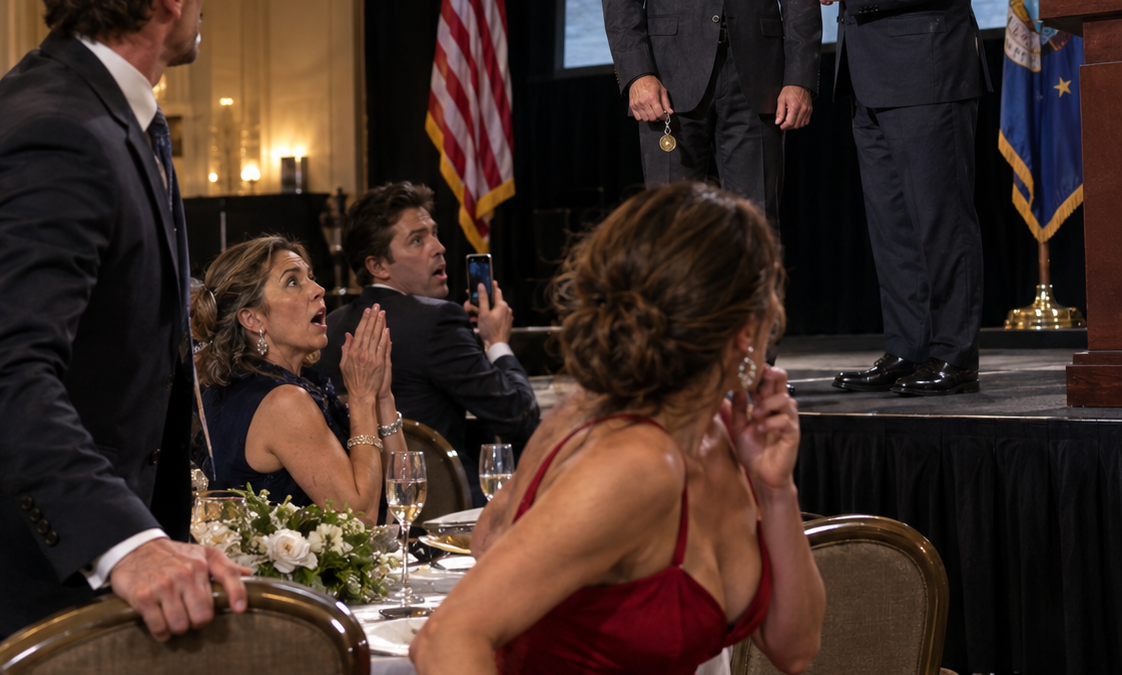
I walked up to the stage. A general handed me a plaque. I shook his hand.
I looked out at the crowd.
Hundreds of faces. All watching.
I didn’t say anything. I just stood there.
Then I said, “Thank you.”
That was all.
The crowd applauded.
I walked back to my seat.
Carol was crying. Danny was crying. Sophie was confused.
“Grandpa,” she said. “Why is everyone clapping?”
“Because they’re saying thank you.”
“For what?”
“For doing my job.”
She nodded.
“That’s good,” she said.
“Yeah. That’s good.”
After the ceremony, we went out to dinner.
The whole group. Carol. Danny. Sophie. Alan. Vic. A few Rangers I hadn’t seen in years.
We sat at a big table and ate and talked and laughed.
At one point, Vic leaned over to me.
“You know,” he said, “I never thought I’d see you in a suit.”
“I never thought I’d wear one.”
“You clean up good.”
“Thanks.”
He looked at me.
“You did good, Tom.”
“I just did my job.”
“That’s what I mean.”
I looked at him.
“You did your job. And you came home. And you built a life. And you helped people. That’s all any of us can do.”
I nodded.
“Yeah,” I said. “That’s all any of us can do.”
The drive home was quiet.
Sophie fell asleep in the back seat. Danny drove. Carol sat next to me.
“How do you feel?” she said.
“I don’t know,” I said. “Tired. Good. Strange.”
“Strange how?”
“I spent so long being invisible,” I said. “And now I’m not. It’s going to take some getting used to.”
“You’ll get used to it.”
“Maybe.”
She took my hand.
“I’m proud of you,” she said.
“I know.”
“I mean it.”
“I know.”
She leaned her head on my shoulder.
We drove home.
The next morning, I woke up early.
The sun was coming through the window. Carol was still asleep. The house was quiet.
I got up and walked to the kitchen. I made coffee. I sat at the table.
I thought about everything that had happened. The gala. The campaign. The hearing. The ceremony.
I thought about Meredith. About her apology. About the card she’d sent.
I thought about Danny. About how far he’d come. About how proud I was of him.
I thought about Sophie. About her questions. About her smile. About the way she looked at me like I was just her grandpa.
I thought about Carol. About how she’d held everything together. About how she’d never stopped believing in me.
I thought about the men I’d served with. The ones who came home. The ones who didn’t.
I thought about what it meant to serve. To sacrifice. To come home and try to live a quiet life.
I didn’t have all the answers.
But I had enough.
PART 7 — THE SWING SET
A year passed.
I’m not going to tell you it was easy. It wasn’t. There were days I woke up angry. There were nights I lay in bed and replayed the hearing in my head, word for word, like a debrief I couldn’t stop running. There were moments when I caught myself checking the street for a dark sedan that hadn’t been there in months.
That’s what people don’t understand about the work I did. It doesn’t leave you. It just goes quiet. And when it goes quiet, you wait for it to come back.
But the year passed.
And things got better.
Danny got promoted.
He’d been working at the same healthcare company for eight years. He’d never pushed for anything. He’d never asked for more. He’d just done his job and gone home.
That changed after the divorce.
He started speaking up in meetings. He started taking on projects nobody else wanted. He started acting like a man who knew what he was worth.
His boss noticed.
In March, he was made a director. He called me from the parking lot.
“Dad.”
“Hey.”
“I got it.”
“Got what?”
“The job. The director job. I got it.”
I was quiet for a second.
“Good,” I said. “That’s good.”
“I start next month. More money. Better hours. I’ll be able to get a bigger place. Maybe a house.”
“That’s good, Danny.”
“I wanted to tell you first.”
I looked out the window.
“Why me?”
“Because you’re the reason I got it.”
“No, I’m not. You got it because you worked for it.”
“No. I got it because I stopped being afraid. And I stopped being afraid because of you.”
I didn’t say anything.
“Dad?”
“Yeah.”
“Thank you.”
“Don’t thank me. Just do good work.”
“I will.”
“Good.”
I hung up.
Carol was watching me from the kitchen.
“Good news?”
“He got the job.”
She smiled.
“About time.”
“Yeah.”
Meredith finished her therapy in April.
Danny told me about it over coffee. We met at a diner near his office every couple of weeks. It was a small place. Bad coffee. Good pancakes.
“She completed all twelve sessions,” he said. “The therapist signed off.”
“Good.”
“She wants to talk to you.”
I set my cup down.
“About what?”
“She didn’t say. She just said she wanted to talk. I told her I’d pass it along.”
I thought about it.
“Okay,” I said.
“Okay?”
“Okay. Tell her I’ll meet her. Somewhere public.”
“You don’t have to.”
“I know. But I will.”
He nodded.
“Okay. I’ll set it up.”
We met at a coffee shop downtown.
It was a Tuesday afternoon. The place was mostly empty. A couple of students in the corner. A man on a laptop near the window.
Meredith was already there when I arrived. She was sitting at a table near the back. She had a cup of tea in front of her. She looked better than the last time I’d seen her. Less thin. Less tired.
“Tom.”
“Meredith.”
I sat down.
She didn’t say anything for a minute. Neither did I.
Then she said, “I wanted to apologize. Again. In person. Without anyone else around.”
“You already apologized.”
“I know. But I wanted to do it right this time. Not in a crowd. Not at a party. Just you and me.”
I looked at her.
“Okay,” I said. “I’m listening.”
She took a breath.
“I spent years thinking you were a failure,” she said. “I told myself that because it made me feel better about my own life. I told myself that because I needed someone to look down on. And you were easy. You were quiet. You never fought back. You never defended yourself.”
She paused.
“That was my mistake. I thought your silence meant you had nothing to say. I didn’t understand that silence was the whole point.”
I didn’t say anything.
“When I met Alan Vance, and he told me what you did, I felt like the floor had opened up under me. Everything I believed about you was wrong. Everything I believed about myself was wrong too.”
“How so?”
“Because I realized I’d been measuring people my whole life by the wrong things. By money. By status. By how they looked at parties.” She shook her head. “And I missed everything that mattered.”
I took a sip of my coffee.
“You’re not the first person to make that mistake,” I said.
“That doesn’t make it okay.”
“No. It doesn’t.”
She looked at me.
“You don’t have to forgive me,” she said. “I know that. But I want you to know that I’m trying. Not for you. For Sophie. For myself.”
I set the cup down.
“I forgave you a while ago,” I said.
She stared at me.
“You did?”
“I did. Not because you deserved it. Because I got tired of carrying it.”
She didn’t say anything.
“I spent a lot of years being angry at people who didn’t understand me,” I said. “And then I realized something. Being angry doesn’t change anything. It just makes you tired.”
She nodded.
“I’m tired too,” she said.
“Yeah. I know.”
We sat there for a while.
Then she said, “Can I ask you something?”
“Okay.”
“What was it like? Over there?”
I looked at her.
“You really want to know?”
“I do.”
I thought about it.
“It was loud,” I said. “And it was quiet. Sometimes both at once. You’d be in a firefight and everything would slow down, and you’d notice the smallest things. The color of the dirt. The way the wind moved. The sound of your own breathing.”
I paused.
“And then it would end, and you’d be back in the world, and nothing would make sense anymore.”
She was quiet.
“I’m sorry,” she said.
“For what?”
“For not asking sooner.”
I looked at her.
“Better late than never,” I said.
Sophie’s school had a spring concert.
She was in the second grade. She’d been practicing for weeks. She was going to sing in the choir.
Danny called me the week before.
“You’re coming, right?”
“Of course I’m coming.”
“Meredith’s going to be there.”
“I know.”
“Is that okay?”
I thought about it.
“It’s fine,” I said. “We’re both there for Sophie. That’s all that matters.”
“Okay.”
“Okay.”
The concert was in the school gymnasium.
Folding chairs. A stage made of risers. A piano that was slightly out of tune. The whole thing smelled like floor wax and cafeteria food.
Carol and I sat in the middle. Danny sat in front of us. Meredith was two rows over.
Sophie was on the risers with the rest of the choir. She saw us and waved. I waved back.
The choir sang four songs. Sophie sang every word. She didn’t hit every note. But she sang loud. That was the important part.
After the concert, we all stood around in the hallway.
Sophie ran up to me.
“Grandpa! Did you hear me?”
“I heard you.”
“Did I do good?”
“You did great.”
She hugged me.
Then she ran to Meredith.
“Mommy! Did you hear me?”
“I heard you, baby.”
“Did I do good?”
“You did amazing.”
She hugged her too.
I watched them.
Danny came over.
“You okay?” he said.
“Yeah.”
“Really?”
I looked at him.
“I’m okay,” I said. “I’m better than I’ve been in a long time.”
He nodded.
“Me too.”
That summer, I took Sophie to the park.
She was eight and a half. She’d grown three inches since the year before. She could pump her legs on the swing by herself now, but she still liked me to push her.
We went to the same park we’d gone to when she was little. The one with the wooden playground and the big oak tree. The one where I’d first taught her to swing.
“Push me, Grandpa.”
I pushed her.
“Higher.”
I pushed her higher.
“Grandpa?”
“Yeah.”
“Are you a hero?”
I stopped pushing.
“What?”
“Mommy said you’re a hero. She said you saved someone’s life.”
I started pushing again.
“I did my job,” I said.
“But that’s a hero, right?”
I thought about it.
“A hero is someone who does something brave when they’re scared,” I said. “I was scared. But I did it anyway.”
“So you’re a hero.”
“I don’t know. I’m just your grandpa.”
She laughed.
“You’re silly.”
“Yeah. I’m silly.”
She swung for a while. Then she said, “I’m proud of you.”
I stopped pushing.
“Why?”
“Because you’re my grandpa. And you’re a hero. And you’re nice.”
I didn’t say anything for a second.
Then I said, “I’m proud of you too.”
“Me? Why?”
“Because you’re kind. And you’re smart. And you ask good questions.”
She laughed again.
“I love you, Grandpa.”
“I love you too, sweetheart.”
I pushed her on the swing until the sun went down.
Fall came.
The veterans program had its first anniversary. We held a small event at the office. Speeches. Coffee. Donuts.
I didn’t speak. I just stood in the back and watched.
There were about forty veterans there. Men and women. Young and old. All of them had come through the program at some point. All of them had found something they needed.
Eddie was there. The Marine. He was working at a construction company now. He’d been sober for ten months. His wife had come back.
He walked up to me.
“Tom.”
“Eddie.”
“I wanted to thank you.”
“For what?”
“For listening. For not giving up on me.”
“I didn’t do anything.”
“You did. You sat there and let me talk. That’s more than anyone else did.”
I looked at him.
“You did the work,” I said. “I just held the door open.”
He smiled.
“That’s all anyone needs sometimes.”
“Yeah.”
He shook my hand.
“See you next month?”
“See you next month.”
November came.
The anniversary of the gala.
I didn’t think about it much. I was busy. The program was busy. Life was busy.
But one night, I found myself sitting on the porch, thinking about that night. The ballroom. The lights. The applause. The look on Meredith’s face.
I thought about how different things were now.
A year ago, I was a man who didn’t speak. A man who let people say things about him that weren’t true. A man who thought silence was strength.
Now I knew better.
Silence isn’t strength. Silence is just silence. Sometimes it’s the right thing. Sometimes it isn’t.
The trick is knowing the difference.
Carol came out with two cups of tea.
“Penny for your thoughts.”
I took the cup.
“I was thinking about last year.”
“The gala?”
“Yeah.”
“What about it?”
I took a sip.
“I was thinking about how much I’ve changed.”
She sat down next to me.
“You haven’t changed,” she said. “You just stopped hiding.”
I looked at her.
“Same thing?”
“Different thing. Changing means becoming someone else. Stopping hiding means letting people see who you already were.”
I thought about it.
“Maybe,” I said.
“Maybe is enough.”
I smiled.
“Yeah. Maybe is enough.”
Thanksgiving came.
We had it at Danny’s new house. He’d bought a three-bedroom ranch on the west side of town. It had a big kitchen and a fenced yard and a garage that was bigger than my whole apartment when I was in the Army.
Meredith came.
It was the first time she’d been in the same room with all of us since the concert. She was nervous. I could tell. She kept folding and unfolding her napkin.
But she was polite. She was quiet. She helped Carol in the kitchen. She played with Sophie. She didn’t say anything cruel to anyone.
After dinner, she found me on the back porch.
“Tom.”
“Meredith.”
“I wanted to say something.”
“Okay.”
“I know I’ve said a lot of things over the last year. Apologies. Explanations. Excuses.”
“You have.”
“But I wanted to say one more thing.”
“What’s that?”
She took a breath.
“Thank you.”
I looked at her.
“For what?”
“For not giving up on Sophie. For not giving up on Danny. For not giving up on… me.”
I didn’t say anything.
“I know I don’t deserve it. I know I made everything harder. But you never tried to turn them against me. You never told Sophie I was a bad person. You never made Danny choose.”
“No,” I said. “I didn’t.”
“Why not?”
I looked out at the yard. The leaves had fallen. The trees were bare.
“Because you’re Sophie’s mother,” I said. “And no matter what happens between us, that’s not going to change. She needs you. She needs both of us.”
She was quiet.
“That’s all I ever wanted,” I said. “For her to be okay.”
She nodded.
“Me too.”
She went back inside.
I stayed on the porch for a while.
Christmas came again.
We had it at our house. Small. Just family. Danny and Sophie. Carol and me.
Meredith wasn’t there. She’d gone to see her parents.
Sophie opened presents. She got a new bike. She got a doll. She got a set of paints.
She got me a present too. A small box wrapped in paper with hand-drawn stars on it.
I opened it.
Inside was a photo frame. In the frame was a picture of the two of us at the park, on the swings, from that summer.
I looked at it for a long time.
“Do you like it, Grandpa?”
“I love it.”
“I made the frame myself. Daddy helped.”
“It’s perfect.”
She smiled.
“Good.”
I set the frame on the mantel next to the citation for my Silver Star.
They looked good together.
New Year’s Eve was quiet.
Danny had Sophie. Carol and I stayed home.
We watched the ball drop on TV. We drank sparkling cider. We kissed at midnight.
“New year,” Carol said.
“New year.”
“What do you want this year?”
I thought about it.
“Same thing as last year,” I said.
“What’s that?”
“To keep doing what I’m doing. To keep helping people. To keep being here.”
She smiled.
“That’s a good list.”
“What about you?”
She took my hand.
“I want the same thing,” she said.
I put my arm around her.
“We’re still here,” I said.
“Yeah.”
“We’re still here.”
I don’t know how to end this story.
I could tell you about the men I served with. The ones who made it home and the ones who didn’t. I could tell you about the night I earned the Silver Star and the three men I lost that same night. I could tell you about the fourteen months I spent in therapy after I retired, learning how to sleep without a weapon under my pillow.
I could tell you about Meredith. About how she’s still in therapy. About how she’s still trying. About how she’s not the same person she was two years ago, and about how she’s never going to be the person I would have chosen for my son, but about how she’s Sophie’s mother and that’s enough.
I could tell you about Danny. About how he’s a better father than I ever was. About how he calls me every Sunday. About how he’s dating a woman now who’s kind and funny and doesn’t care what anyone thinks of her.
I could tell you about Sophie. About how she’s nine now. About how she still asks me to push her on the swings. About how she still calls me her hero, no matter how many times I tell her I’m just her grandpa.
I could tell you about Carol. About how she still teaches piano. About how she still makes me dry the dishes while she washes. About how she still holds my hand when we sit on the porch.
I could tell you about the hallway at the Vantage Point building. About how they hung a photo of me there. About how I asked them to take it down and they refused.
I could tell you a lot of things.
But I think the only thing that matters is this.
Two years ago, my daughter-in-law called my retirement an embarrassment.
She was wrong.
Not because I’m a hero. Not because I saved a man’s life. Not because I have a medal in a frame on my mantel.
She was wrong because I was never an embarrassment.
I was a soldier. I was a Ranger. I was a husband and a father and a grandfather.
I was a man who did his job and came home and tried to live a quiet life.
That’s not an embarrassment.
That’s a life.
My name is Thomas Cole. I was a Staff Sergeant in the United States Army, 75th Ranger Regiment, 2nd Battalion. I served sixteen years. I retired at forty-two.
And I’m not ashamed of a single day of it.
