Part 3: “Twenty years of service, and what did it get him? Nothing.”
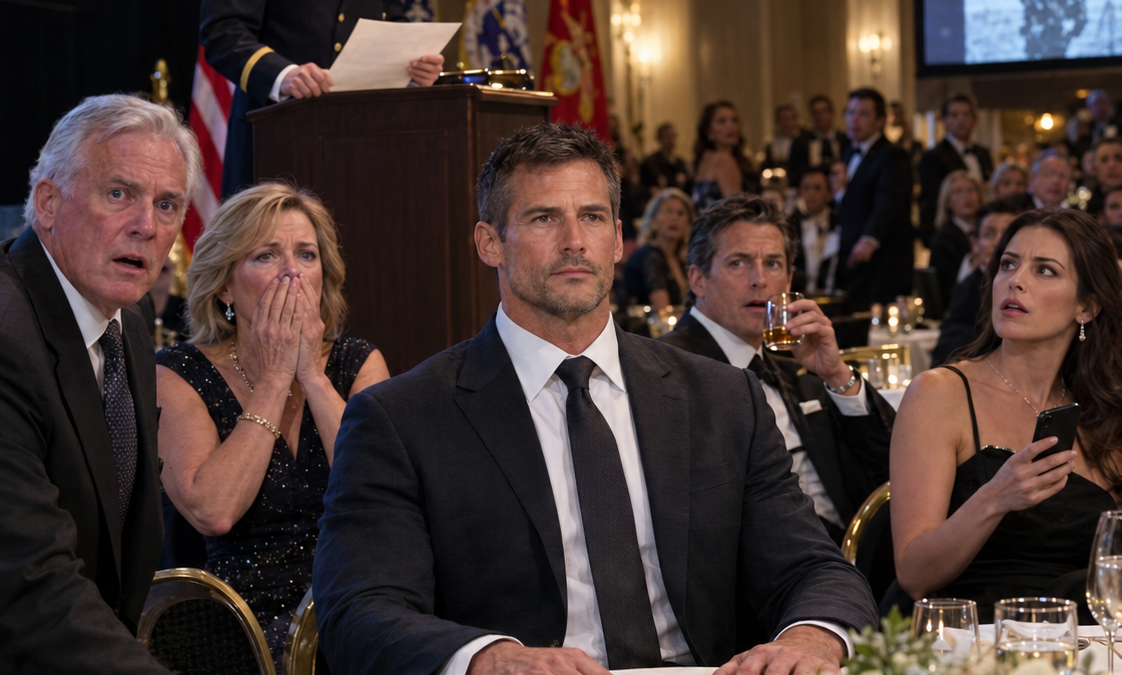
PART 6 — THE BROTHER
Michael showed up at my apartment on a Wednesday night.
I was in the kitchen, making dinner. Rice and vegetables. Simple. The doorbell rang and I opened it and there he was. Dark suit. No tie. His hair was messy. He smelled like whiskey.
“Michael.”
“Daniel.”
He walked past me into the apartment. He looked around. The small kitchen. The pull-out couch. The single window.
“This is where you live?”
“It’s where I live.”
“It’s a shoebox.”
“It’s enough.”
He sat down at the table. He didn’t ask permission. He just sat.
“You want something to drink?”
“No.”
He was quiet for a moment. Then he said, “Dad’s not getting better.”
“What do you mean?”
“He’s not eating. He’s not sleeping. He sits in the study all day and reads old letters. He won’t leave the house.”
“He’s grieving. He lost the firm.”
“It’s not just the firm. It’s everything. He’s falling apart.”
I sat down across from him.
“Why are you here, Michael?”
He looked at me. His eyes were red.
“Because it’s your fault.”
I didn’t say anything.
“You could have stopped it. At the party. You could have said something. You could have told the admiral to sit down. You could have—”
“I didn’t know he was coming.”
“You could have lied. You could have said you didn’t want the attention. You could have protected Dad.”
“I protected myself for twenty years. I sat there and took every insult and every joke and every backhanded comment. That was protecting him.”
“That’s not—”
“That’s exactly what I did. For twenty years. And the one time I let someone else speak for me, you blame me.”
Michael stood up.
“You don’t get it.”
“Then explain it.”
He paced around the kitchen. The way he always did.
“I was the one who stayed. I was the one who went to work with him. I was the one who took over the business. I gave up my life to be the son he wanted. And you—” He stopped. “You left. You went off to war. You did whatever you wanted. And you still ended up the hero.”
“I didn’t do it to be the hero.”
“I know.”
“Then why does it matter?”
“Because I’m the one who’s been here the whole time. And he never looked at me the way he looked at you. Not once.”
I stared at him.
“What are you talking about?”
“At the party. When the admiral was talking. Dad looked at you. I saw it. It was the first time I’d ever seen him look at someone with respect.”
“Michael—”
“He never looked at me that way. Not when I graduated from Wharton. Not when I made partner. Not when I brought him grandkids. Never.”
He sat back down. He put his head in his hands.
“I know he’s a jerk. I know he said horrible things. But he was my jerk. He was my dad. And I was the one who was there.”
I didn’t say anything.
“I’m not mad at you for what happened. I’m mad at you because it took you ten years to show up and you still won.”
I let him sit there for a while. I made him a cup of coffee. He didn’t drink it.
“You knew,” I said.
“Knew what?”
“About my service. About what I did. You knew.”
He was quiet.
“Some of it. I knew you were a PJ. I knew you deployed. I didn’t know about the Silver Star.”
“But you knew I was doing something serious.”
“Yeah.”
“And you never told Dad.”
“No.”
“Why not?”
He looked up.
“Because I didn’t want him to know.”
The room was quiet. The rain had started again. Soft, steady.
“You didn’t want him to know?”
“I wanted him to keep thinking you were wasting your life. I wanted him to keep thinking I was the successful one.”
“That’s—”
“I know.”
“That’s insane.”
“Is it?” He looked at me. “You have a Silver Star. You saved forty-seven lives. You’re a hero. And I’m a guy who makes money for rich people in New York. What was I supposed to do?”
“Be my brother.”
He flinched.
“That’s all you had to do. Just be my brother. Ask me what I did. Listen when I talked. Stand up for me when Dad made jokes.”
“I didn’t know how.”
“Nobody knows how. You just do it.”
He started crying. It was the first time I’d seen him cry since we were kids. He put his hands over his face and his shoulders shook.
I didn’t get up. I didn’t comfort him. I just sat there and watched him cry.
After a while, he stopped.
“I’m sorry,” he said.
“I know.”
“I should have—”
“You should have. But you didn’t.”
“That’s it? That’s all you’re going to say?”
I looked at him.
“Michael. I’ve been through things you can’t imagine. I’ve watched people die. I’ve held my friends while they bled out. I’ve been shot at more times than I can count. And through all of it, I knew my family didn’t care. I knew my father thought I was a failure. I knew my brother was too busy being the golden one to notice.”
He didn’t answer.
“So no. I’m not going to tell you it’s okay. It’s not okay. But I’m not going to yell at you either. I don’t have the energy.”
He sat there for a long time. Then he stood up.
“I should go.”
“You should.”
He walked to the door. He stopped.
“Dad’s in the hospital again.”
I turned.
“What?”
“Two days ago. Chest pains. They kept him overnight.”
“Why didn’t you tell me?”
“Mom didn’t want to worry you.”
“Is he okay?”
“He’s home now. But he’s not good.”
I didn’t say anything.
“He’s asking for you.”
“He’s always asking for me.”
“You could go.”
“I could.”
He left. I stood in the kitchen for a while. Then I called my mother.
She answered on the second ring.
“Daniel.”
“Is Dad okay?”
“He’s fine. He’s home.”
“Why didn’t you call me?”
“I didn’t want to bother you.”
“Mom.”
She was quiet.
“I didn’t want to bother you. You’re busy. You have your life.”
“He’s my father.”
“I know.”
“So why didn’t you call me?”
She paused.
“Because I was scared you wouldn’t come.”
I hung up and sat in the dark.
I thought about my father. I thought about the letters. I thought about the party.
I thought about Michael. About what he’d said. About how he’d known and said nothing. About how he’d let me be the failure because he couldn’t stand being the one who wasn’t.
I thought about the fact that my family had been lying to each other for twenty years. Not just Dad. All of them. Every single one.
I thought about how much time we’d wasted.
The next morning, I called my father.
He answered on the first ring.
“Daniel.”
“Dad.”
“I’m okay. Your mother said you’d call.”
“I’m calling.”
“Good.”
I could hear him breathing.
“Michael came by last night.”
“He did?”
“He told me some things.”
“What kind of things?”
“That he knew. About my service. He knew and he didn’t tell you.”
Silence.
“He knew?”
“He knew.”
Another silence.
“For how long?”
“He said he knew some of it. He didn’t know about the Silver Star. But he knew I was doing something serious.”
My father didn’t say anything.
“Dad.”
“I’m here.”
“You should have known. You should have asked. You should have—”
“I know.”
I sat down on the couch.
“I’m not calling to yell at you. I’m calling because I need to tell you something.”
“Okay.”
“I’m not ready to forgive you. Not yet. Maybe not ever. But I’m ready to stop running from you.”
“What does that mean?”
“It means I’ll come to the house. I’ll sit in your study. I’ll drink your coffee. But I’m not going to pretend the last twenty years didn’t happen.”
“I don’t want you to pretend.”
“Good.”
He was quiet.
“When?”
“Sunday.”
“Sunday is good.”
“Sunday.”
I hung up and looked at the wall.
I didn’t know what would happen on Sunday. I didn’t know if I’d walk in and forgive him or walk in and walk right back out. But I knew I had to try.
For Elena. For myself. For the kid I used to be who just wanted his father to look at him.
I didn’t know if it would work.
But I was going to find out.
PART 7 — THE STUDY
I drove to my parents’ house on Sunday morning.
It was a two-hour drive from my apartment. I left early. The roads were empty. The sky was gray. I played no music. I just drove.
I hadn’t been to that house in four years. Not since Christmas 2022. I’d stayed for two days and left without saying goodbye. Nobody had noticed.
The house was the same. Large. White. A wraparound porch. A manicured lawn. A three-car garage. My father had bought it in 1998, when the contracts were good and the money was easy. He’d always said it was his proof. Proof that he’d made it. Proof that he mattered.
I parked in the driveway and sat in the truck for a minute.
Then I got out and walked to the door.
My mother opened it before I could knock.
“Daniel.”
“Mom.”
She hugged me. It was tighter than usual. She held on for a long time.
“He’s in the study.”
“Okay.”
“He’s been waiting all morning.”
“I’m here.”
She stepped back and let me in.
The house smelled like coffee and old books. The same smell I remembered from childhood. The living room was spotless. The furniture was the same. The paintings were the same. Nothing had changed in twenty years.
I walked down the hall to the study.
The door was closed.
I knocked.
“Come in.”
I opened the door.
My father was sitting in his chair by the window. The same chair he’d sat in every night after work when I was a kid. A leather armchair, worn at the arms. A small table beside it with a lamp and a coffee cup.
He looked smaller than I remembered. Thinner. His face was gray. His hands were folded in his lap.
“Daniel.”
“Dad.”
“Come in. Sit.”
I sat in the chair across from him. The same chair I’d sat in when I was sixteen and told him I was joining the Air Force.
He’d said nothing then. Just nodded. Just looked away.
That had been the moment. The moment I’d known he’d never be proud of me.
We sat in silence for a while.
“You look good,” he said.
“I look the same.”
“You look older.”
“So do you.”
He almost smiled.
He picked up a folder from the table. It was thick and worn.
“What’s that?”
“Your file.”
I looked at it.
“My file?”
“Admiral Cole sent it to me. After the hospital. He said I should read it.”
“He sent you my service record?”
“He sent me everything. The citations. The reports. The letters from your commanders.”
He opened the folder. He pulled out a piece of paper.
“This is the citation for your Silver Star.”
He started reading out loud.
“For conspicuous gallantry and intrepidity in action at the risk of his life above and beyond the call of duty…”
I listened. I didn’t say anything.
“…Technical Sergeant Daniel Kessler, United States Air Force, distinguished himself by extraordinary heroism in connection with military operations against an armed enemy…”
He read the whole thing. It took three minutes.
When he was done, he set the paper down.
“I never read this before.”
“I know.”
“I never asked for it.”
“I know.”
He looked at me.
“I didn’t want to know.”
I leaned back in my chair.
“Why?”
“Because if I knew, I’d have to admit I was wrong.”
“About what?”
“About everything. About you. About what you did. About what matters.”
He looked down at his hands.
“I spent my whole life chasing the wrong thing. Money. Status. The house. The firm. The respect of men I didn’t even like.”
“And you got it.”
“I got it. And it was empty.”
He looked up at me.
“You had nothing. No house. No money. No status. But you had something I never had.”
“What?”
“Purpose.”
I didn’t say anything for a while.
“Why didn’t you ever ask me?”
“Because I was scared.”
“Of what?”
“Of the answer.”
He closed the folder.
“I want to tell you something. And I want you to listen.”
“Okay.”
“When you were eighteen, I was disappointed. I wanted you to go to college. I wanted you to take over the business. I wanted you to be like Michael.”
“I know.”
“But that’s not why I said what I said at the party.”
“Then why?”
He was quiet for a moment.
“Because you were brave. And I wasn’t.”
I didn’t say anything.
“I never served. I never deployed. I never did anything. I pushed paper and signed contracts and made money. And I told myself that was important. That it mattered.”
“But it didn’t.”
“It did. In its way. But it wasn’t what you did.”
He looked at me.
“You ran into a burning vehicle. You carried a man on your shoulders. You saved forty-seven lives. And I stood in front of two hundred people and called it a waste.”
“Why?”
“Because I couldn’t stand it.”
“Couldn’t stand what?”
“That you were the man I always wanted to be.”
The room was quiet. The clock on the desk ticked. The rain had started outside.
I looked at my father. He was crying. Quietly. The way old men cry. Without sound.
“I’m sorry, Daniel. I’m sorry for everything. I’m sorry for the party. I’m sorry for the letters I never opened. I’m sorry for every dinner I didn’t ask. I’m sorry for every phone call I didn’t make.”
I didn’t answer.
“I’m not asking you to forgive me. I don’t deserve it. But I’m asking you to let me try.”
I sat there for a long time.
I thought about the desert. I thought about the burning vehicle. I thought about the boy I’d pulled out. I thought about his father. I thought about Admiral Cole.
I thought about the party. The laughter. The silence.
I thought about the letters in my drawer. All seven of them.
I thought about Elena. About what she’d said. He’s trying.
He was. I could see it. This wasn’t performance. This was a man who had finally run out of lies.
But it didn’t undo anything. It didn’t undo the twenty years. It didn’t undo the party. It didn’t undo the years I’d spent alone, deployed, wondering if anyone at home even remembered I existed.
“I’m not ready to forgive you,” I said.
“I know.”
“But I’m not going to stop talking to you either.”
He looked at me.
“What does that mean?”
“It means I’ll call. I’ll visit. I’ll sit in this room and drink your coffee. But I’m not going to pretend.”
“I don’t want you to pretend.”
“Good.”
We sat there for another hour. He asked me about my work. I told him about the helicopter and the missions. He asked about Elena. I told him about her visit. He asked about the museum. I told him about the wall of names.
He listened. He didn’t interrupt. He didn’t judge.
At the end, he stood up. Slowly. He walked to the bookshelf and pulled out a box.
“What’s that?”
“Your stuff.”
He set it on the table. I opened it.
Inside were photographs. My boot camp graduation. My first deployment. A picture of me in flight gear. A picture of me with my team. A picture of me in dress blues at my retirement ceremony.
“I kept everything,” he said. “I just never looked at it.”
I picked up the picture of me with my team. I didn’t remember who had taken it. It was in Afghanistan, 2011. We were young. We were tired. We were smiling.
“That’s Marcus,” I said. “He died in 2013. I was there.”
“I know. I read it in the file.”
I set the picture down.
“I’m going to take this,” I said.
“Take all of it.”
I closed the box.
I left the house at noon. My mother hugged me at the door. She didn’t say anything. She didn’t have to.
I drove home with the box on the passenger seat. I didn’t play music. I just drove.
When I got home, I put the box on the kitchen table. I took out the pictures one by one. I lined them up on the counter.
I looked at them for a long time.
Then I put them back in the box and put the box on the shelf.
That was two months ago.
I call my father every Sunday now. We talk for thirty minutes. Sometimes an hour. It’s still awkward. It’s still hard. But we do it.
He’s still going to the veteran’s center. He’s still reading. He’s still trying.
Michael and I talk less. That’s harder. He’s still angry. He’s still grieving. He’s still figuring out who he is without Dad’s approval.
I get it. I’ve been figuring that out my whole life.
Last week, my father called me. Not on Sunday. On a Wednesday.
“Daniel.”
“Dad. You okay?”
“I’m fine. I wanted to tell you something.”
“What?”
“I went to the museum. The one with the exhibit.”
“You did?”
“I saw the wall. The wall of names.”
He paused.
“I saw Marcus. Your friend.”
I didn’t say anything.
“I stood there for a long time. I didn’t know what to say. So I just stood there.”
“It’s okay.”
“I know it’s not enough. But I wanted you to know.”
“Thanks, Dad.”
I hung up and sat in my kitchen.
The medal was on the counter. The Silver Star. I’d taken it out of the box a few weeks ago. I hadn’t put it back.
I picked it up and held it in my hand.
It was heavier than I remembered.
PART 8 — THE SECOND TOAST
Six months after the party, my father asked to see me.
Not at the house. Not at the hospital. At the veteran’s center downtown.
He’d been volunteering there since March. Three days a week. He made coffee and stacked chairs and talked to the men who came in looking for help. He didn’t tell them who he was. He didn’t tell them about the firm. He just listened.
I drove down on a Tuesday afternoon. The center was in an old brick building near the waterfront. A sign above the door said, “Veterans Resource Center — All Are Welcome.”
I walked in. A young man at the front desk looked up.
“Can I help you?”
“I’m looking for Harold Kessler.”
“Down the hall. Last door on the left.”
I found him in a small room with a coffee machine and a folding table. He was stacking cups. He looked up when I walked in.
“Daniel.”
“Dad.”
He set down the cups.
“Thanks for coming.”
“You said it was important.”
“It is.”
We sat at the folding table. He poured me a cup of coffee. It was bad. I drank it anyway.
“I’ve been thinking,” he said.
“About what?”
“About what I said. At the party.”
“You’ve apologized.”
“I know. But I’ve been thinking about the other part.”
“What other part?”
“The part where I said you got nothing. No wife. No kids. No house.”
I didn’t say anything.
“I was wrong about that too.”
He looked at the table.
“You have a daughter. She’s smart and funny and she loves you. You have friends. You have people who care about you. You have a job that matters.”
“I know.”
“I didn’t see it. Because I was looking at the wrong things.”
He looked up.
“I want to make it right.”
“How?”
“I don’t know. But I want to try.”
We sat there for a while.
Then he said, “There’s a ceremony next month.”
“What kind of ceremony?”
“The center is giving out awards. To veterans who’ve served the community. They want to honor me.”
“For what?”
“For the volunteering. For the work I’ve done here.”
“That’s good.”
“I don’t want to accept it.”
“Why not?”
He looked at me.
“Because I don’t deserve it. Not after what I said. Not after what I did.”
I set down my coffee.
“Dad.”
“What?”
“You’ve spent six months at this center. You’ve talked to men who came home broken. You’ve listened to their stories. You’ve helped them find housing and jobs and medical care.”
“I know.”
“That’s not nothing.”
“It’s not what you did.”
“No. It’s not. But it’s something.”
He was quiet for a moment.
“I want you to be there,” he said. “At the ceremony.”
“Why?”
“Because I want to say something. In front of everyone. And I want you to hear it.”
“What are you going to say?”
“You’ll see.”
The ceremony was on a Saturday in September.
It was at the center. A small room with folding chairs and a podium. Maybe fifty people. Veterans and volunteers and family members. I sat in the back.
My mother was there. Michael was there. Patricia was there. Aunt Carol was there, in a wheelchair, with a blanket over her legs.
Admiral Cole was not there. I hadn’t told him about it. He didn’t need to be.
The director of the center spoke first. A former Marine named Bill. He talked about the work they did. The men they helped. The difference they made.
Then he introduced my father.
“Harold Kessler has been volunteering here for six months. He makes coffee. He stacks chairs. He listens. He doesn’t talk much about himself. But he’s here every week. And that matters.”
He handed my father a plaque.
My father took it. He looked at it for a moment. Then he set it down.
“Thank you,” he said. “But I don’t want to accept this.”
The room went quiet.
“I’ve been coming here for six months. And I’ve learned something.”
He looked at the crowd.
“I spent my whole career behind a desk. I never served. I never deployed. I never did anything that required me to be brave.”
He paused.
“But my son did.”
He looked at me.
“My son, Daniel, spent twelve years in the Air Force. He was a Pararescueman. He saved forty-seven lives in combat. He was awarded the Silver Star and the Purple Heart and more medals than I can name.”
The room was silent.
“And six months ago, at my retirement party, I stood in front of two hundred people and called his service a waste.”
He looked at the plaque on the table.
“I said he had nothing. No wife. No kids. No house. I said he’d wasted his best years.”
He looked up.
“I was wrong. About all of it. He has a daughter who loves him. He has friends who respect him. He has a job that saves lives every single day. He has more honor in his left hand than I have in my whole body.”
I didn’t move. I didn’t blink. I sat there with my back straight and my face still.
“I don’t deserve this plaque. Not yet. Maybe not ever. But I’m going to keep volunteering. I’m going to keep listening. I’m going to keep trying.”
He picked up the plaque.
“And I’m going to accept it. Not for me. For my son. Because he taught me what service means.”
He looked at me.
“I love you, Daniel.”
The room was quiet.
Then Aunt Carol started clapping. Loud. The rest of the room joined in.
I didn’t stand up. I didn’t walk to the front. I just sat there and nodded.
That was enough.
After the ceremony, people came up to me. Old veterans. Young volunteers. Men and women I’d never met. They shook my hand and thanked me. Some of them cried.
My father stood in the corner and watched.
At the end, he walked over to me.
“Thank you for coming.”
“I said I would.”
“I know.”
He paused.
“I meant what I said.”
“I know.”
We walked outside together. The sun was setting over the water. The sky was orange and pink.
“I’m not going to ask you to forgive me,” he said.
“I know.”
“But I’m going to keep trying. Every day. For the rest of my life.”
“That’s all I can ask.”
He nodded.
We stood there for a while. Watching the sunset. Not talking.
Then I said, “I’m going to go pick up Elena next weekend. She’s coming to visit.”
“She is?”
“Yeah. She wants to see the museum.”
“The one with the exhibit?”
“Yeah.”
He was quiet for a moment.
“Can I come?”
I looked at him.
“You want to come?”
“I want to see it. The wall. The names.”
I thought about it.
“Yeah,” I said. “You can come.”
That was three weeks ago.
Elena came. My father came. We went to the museum together. The three of us.
My father stood in front of the wall of names for a long time. He read every name. He didn’t say anything.
Elena held my hand.
At the end, he turned to me.
“I’m sorry,” he said.
“I know.”
“Not just for the party. For everything.”
“I know.”
We drove home in silence. Elena fell asleep in the back seat. My father stared out the window.
When we got to my apartment, he got out and walked me to the door.
“Thank you,” he said.
“For what?”
“For letting me come.”
“You’re welcome.”
He hugged me. It was the first time he’d hugged me since I was a kid.
“I love you, Daniel.”
“I love you too, Dad.”
He got back in his car and drove away. I stood on the sidewalk and watched him go.
Then I went inside and sat on the couch. Elena was asleep in the other room. The apartment was quiet.
I thought about the last twenty years. The deployments. The missions. The men I’d lost. The lives I’d saved.
I thought about the party. The toast. The laughter.
I thought about my father.
I didn’t know if I’d ever fully forgive him. I didn’t know if the wounds would ever completely heal. But I knew he was trying. And I knew I was trying.
That was something.
I got a letter last week. From Admiral Cole.
“Daniel,
I heard about the ceremony. I heard what your father said.
I want you to know that I’m proud of you. Not just for what you did in uniform. For who you are now.
You’re a good man. You always were.
If you ever need anything, call me.
Tom”
I read it twice.
Then I put it in the drawer with my father’s letters.
I don’t know what the future holds. I don’t know if my father and I will ever be close. I don’t know if Michael and I will ever be brothers again.
But I know this.
I served my country. I saved lives. I did something that mattered.
And I’m not going to let anyone tell me it was a waste.
Not ever again.

