Part 3: “You stopped being my brother when you forged Dad’s signature.”
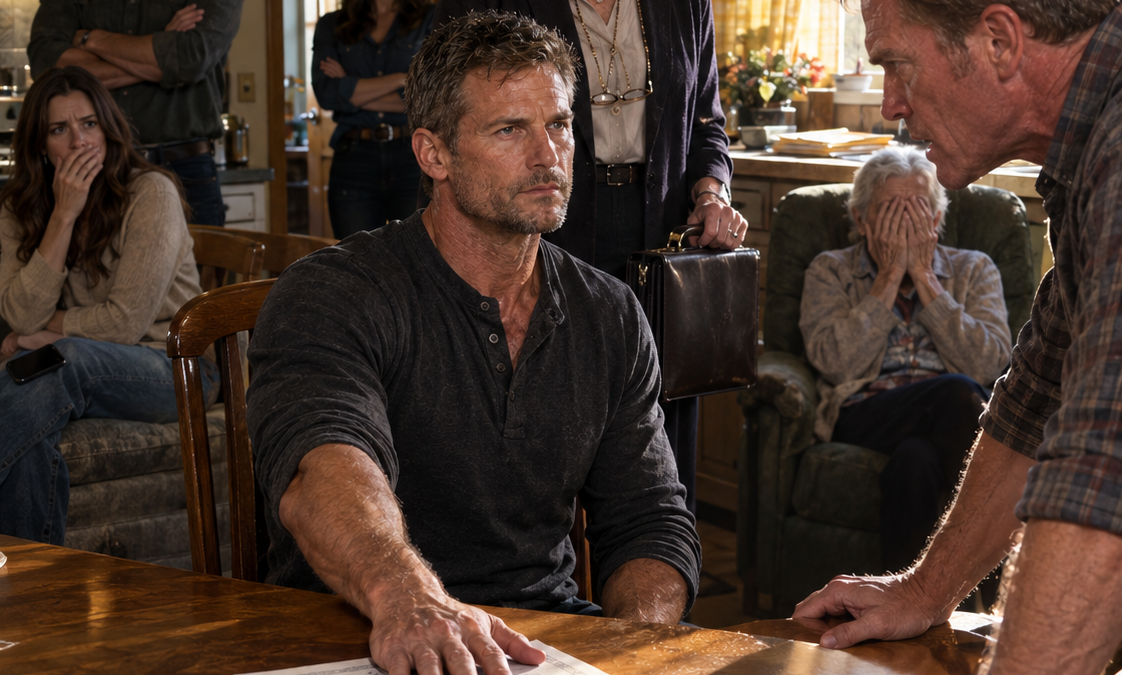
PART 8 — THE STAND
Clay walked to the witness stand.
He didn’t look at me. He didn’t look at Mom. He looked straight ahead at the judge.
The bailiff swore him in.
Clay sat down.
Margaret stood.
“Mr. Wheeler,” she said. “You’re the respondent in this case. You’re also the petitioner’s brother.”
“That’s right.”
“You’re the one who read the will to the family. The one you claimed was your father’s final word.”
“Yes.”
“Where did you get that will?”
“From Dad’s desk.”
“When?”
“A few weeks after he died.”
“Did you read it before you read it to the family?”
“Yes.”
“Did you know it was forged?”
Clay was quiet.
“Mr. Wheeler.”
“I didn’t forge it.”
“That’s not what I asked. Did you know it was forged?”
He looked at her.
“I knew it wasn’t right.”
“What does that mean?”
“It means I knew Dad didn’t sign it.”
“How did you know?”
“Because I was there when he made the first one. Years ago. He told me he was leaving the ranch to me. He told me it was mine.”
“When was that?”
“Ten years ago. After Jack left. He said Jack didn’t want it. He said I was the one who stayed.”
“Did you see him sign a will?”
“No.”
“So how do you know what it said?”
“He told me.”
“Did he ever tell you he made a second will?”
Clay didn’t answer.
“Mr. Wheeler.”
“No.”
“Did he ever tell you he changed his mind?”
“No.”
“So you assumed the ranch was yours. And when you found a will that said it was, you didn’t question it.”
“I didn’t forge it.”
“But you knew it wasn’t real.”
“I didn’t know.”
“You just said you knew Dad didn’t sign it.”
“I meant—” Clay stopped.
“You meant what?”
“I meant I didn’t think he signed it. But I didn’t know for sure.”
“But you presented it to the family as his final word.”
“Yes.”
“You told your brother he had no claim.”
“Yes.”
“You told your mother it was what Dad wanted.”
“Yes.”
“You told everyone.”
“Yes.”
“And you knew it wasn’t real.”
Clay looked at the table.
“I knew.”
The room was silent.
Margaret didn’t move.
“Did you forge the will, Mr. Wheeler?”
“I didn’t.”
“Then who did?”
“I don’t know.”
“You don’t know?”
“No.”
“Someone forged your father’s signature. Someone traced it. Someone put it in his desk. And you have no idea who?”
“I found it there.”
“Did you file the deed transfer?”
“Yes.”
“Did you sign your father’s name on the transfer?”
“No.”
“Who did?”
“I did the transfer. But I didn’t sign his name.”
“You just said you filed a deed transfer on a document you knew was fraudulent.”
“I didn’t know it was fraudulent. I thought Dad signed it before he got sick.”
“But you just said you knew he didn’t.”
“I—” Clay stopped.
He looked at his lawyer. David Chen didn’t move.
“I didn’t think it through,” Clay said. “I just wanted the ranch. I thought it was mine. I thought I deserved it.”
“Did you threaten Carol Ann Sturgis?”
“No.”
“She testified that you told her you’d take Donna’s kids if she didn’t help you.”
“That’s not what I said.”
“What did you say?”
“I told her it was important. I told her Dad wanted it this way.”
“Did you mention her niece’s children?”
“I might have. I don’t remember.”
“You don’t remember threatening to take someone’s children?”
“I don’t remember.”
“Did you ask your sister to sign a false statement?”
“No.”
“She has a photograph of the statement. In your handwriting.”
“I was trying to protect the family.”
“You were trying to protect yourself.”
“I was trying to protect what was mine.”
“What was yours?”
“The ranch.”
“The ranch your father left to your brother.”
“He didn’t leave it to him.”
“He did. We have the will.”
“That will is a lie.”
“The examiner testified that the will you presented was a forgery. She testified that the original will is authentic. She testified that your father’s signature on your version was traced.”
“She’s wrong.”
“She’s a former FBI examiner.”
“She’s wrong.”
“Mr. Wheeler—”
“I don’t care what she said. I know what my father wanted.”
Margaret looked at him.
“How do you know?”
“Because he told me.”
“When?”
“Years ago.”
“Did he tell you in writing?”
“No.”
“Did he tell anyone else?”
“He told my mother.”
“She testified that he told her about the second will.”
“She’s lying.”
“She’s your mother.”
“She’s lying. She’s taking his side. She always took his side.”
Margaret was quiet for a moment.
“Mr. Wheeler,” she said. “Your father kept a journal.”
“So?”
“He wrote in it every night. For forty years. And in the last entry, three days before he died, he wrote something.”
Clay didn’t say anything.
“Would you like to hear what he wrote?”
“I don’t care what he wrote.”
“Your Honor,” Margaret said, “I’d like to read from the journal.”
David Chen stood. “Objection. Hearsay.”
“It’s a business record. It’s a diary kept in the regular course of life. It falls under the exception.”
“It’s a personal diary. It’s not a business record.”
“Your Honor,” Margaret said, “the journal is already in evidence. The examiner used it to verify the signature. The entry is relevant to the testator’s intent.”
Judge Alvarez looked at the journal. Then at Clay.
“Overruled,” she said. “Read it.”
Margaret opened the journal. She found the page.
She read.
“‘October twelfth. Tired today. The cows are in the south pasture. Clay came by and we fixed the fence. He’s a good worker. But he doesn’t listen. He thinks he knows what I want. He doesn’t. I made my will clear. I hope Jack understands.'”
She stopped.
Clay was staring at her.
“‘October thirteenth. Called Jack today. He sounded tired. He always sounds tired. I want to tell him I’m sorry. I want to tell him I’m proud. I don’t know how. I never knew how. I should have told him years ago. I’m going to tell him the next time he comes home. I’m going to tell him what I did.'”
She stopped again.
“‘October fourteenth. I don’t have much time. I know it. I need to make sure Jack knows. The will is with Margaret. He needs to find it. I need to tell him. I need to tell him I love him.'”
Margaret closed the journal.
“That’s the last entry,” she said. “Three days before he died.”
The room was quiet.
Clay sat in the witness box. His hands were on the armrests. His face was white.
“That’s not real,” he said.
“It’s your father’s handwriting.”
“It’s not real.”
“The examiner confirmed it. The journal matches the original will. It doesn’t match the will you presented.”
“It’s not real.”
Margaret looked at him.
“Mr. Wheeler, did your father ever tell you he loved you?”
Clay didn’t answer.
“Did he?”
“He didn’t have to.”
“Did he ever say it?”
Clay looked at the floor.
“I don’t know.”
“Did he ever say he was proud of you?”
“I don’t know.”
“Did he ever tell you he wanted you to have the ranch?”
“He told me I was a good worker.”
“That’s not what I asked.”
“He said I was a good worker.”
“But he never told you he loved you.”
Clay was quiet.
“No.”
“He never told you he was proud of you.”
“No.”
“He never told you he wanted you to have the ranch.”
“He said I was a good worker.”
Margaret looked at him.
“Mr. Wheeler,” she said. “Do you think your father left the ranch to you?”
Clay looked up.
“Yes.”
“Even though the will says otherwise?”
“Yes.”
“Even though the journal says otherwise?”
“Yes.”
“Even though your mother says otherwise?”
“My mother—”
“Even though your sister says otherwise?”
“Beth doesn’t know anything.”
“Even though the examiner says otherwise?”
“She’s wrong.”
“So everyone is wrong. Except you.”
Clay didn’t answer.
“That’s all,” Margaret said.
She sat down.
David Chen stood.
He looked at his client. Then at the judge.
“Your Honor,” he said, “I have no further questions.”
He sat down.
Judge Alvarez looked at Clay.
“Mr. Wheeler,” she said. “You may step down.”
Clay stood up.
He walked back to the defense table.
He didn’t look at me.
He didn’t look at anyone.
He sat down and stared at the table.
Judge Alvarez looked at Margaret.
“Any further witnesses?”
“No, Your Honor.”
“Any further evidence?”
“No, Your Honor.”
Judge Alvarez looked at David Chen.
“Any witnesses?”
“No, Your Honor.”
“Closing arguments.”
Margaret stood.
“Your Honor,” she said, “the evidence is clear. Harold Wheeler signed a will three years after the one the respondent presented. That will is authentic. The examiner confirmed it. The journal confirmed it. The respondent’s version is a forgery. The deed transfer is fraudulent. The notary was threatened. The respondent tried to get his sister to lie under oath. He tried to steal the ranch from his brother. And he did all of it while his father was dying.”
She looked at Clay.
“The law is clear. The will must be enforced. The deed transfer must be invalidated. And the respondent should be held accountable for what he did.”
She sat down.
David Chen stood.
“Your Honor,” he said, “this is a family dispute. My client believed the ranch was his. He worked it for twenty years. He cared for his parents. He was there when no one else was. The petitioner left. He chose a different life. He didn’t come back. He didn’t help. He didn’t care. And now he wants the ranch. My client made mistakes. But he didn’t act with malice. He acted out of a belief that he was doing the right thing.”
He sat down.
Judge Alvarez looked at the room.
“I’ve heard enough,” she said. “I’ll issue my ruling in one week. Court is adjourned.”
She stood up and walked out.
The bailiff called the court to order.
The room started to move.
I sat at the table.
Margaret put her hand on my arm.
“One week,” she said.
“I know.”
I looked at Clay.
He was still sitting at the defense table. His lawyer was talking to him. He wasn’t listening.
He looked up.
He looked at me.
For a second, I thought he might say something.
Then he looked away.
I stood up and walked out of the courtroom.
The hallway was empty.
I leaned against the wall and closed my eyes.
I heard footsteps.
I opened my eyes.
Mom was standing in front of me.
“Jack.”
“Mom.”
She looked at me.
“You did good,” she said.
“I don’t feel good.”
“I know.”
She stood there.
“I’m sorry,” she said. “For all of it.”
“I know.”
“I should have told you. I should have called. I should have done something.”
“You did. Today.”
“I should have done it sooner.”
I looked at her.
“It’s not too late.”
She nodded.
“I know.”
She walked away.
I stood in the hallway.
The door opened.
Mike walked out.
“Hey.”
“Hey.”
“That was something.”
“It was.”
He looked at me.
“You okay?”
“I don’t know.”
“You will be.”
“How do you know?”
“Because you’re a Ranger. You’ve been through worse.”
I almost smiled.
“Yeah.”
“You want to get a drink?”
“No.”
“What do you want to do?”
I looked at the door. At the courtroom. At the place where my brother had sat.
“I want to go home,” I said.
“Then go home.”
I walked out of the courthouse.
The sun was out.
I got in my truck.
I drove.
I didn’t go to Portland.
I went to the ranch.
PART 9 — THE WEEK BETWEEN
I drove to the ranch after the hearing.
I didn’t know why. I just did. It was the only place that felt right.
The gate was open. I pulled up the gravel drive and parked in front of the barn. The sun was going down. The cattle were moving slow in the south pasture. The same pasture Clay had fixed the fence in with Dad, three days before he died.
I got out of the truck and walked.
I walked the fence line. I walked the pasture. I walked down to the creek where Clay and I used to catch crawdads when we were kids. I stood on the bank and listened to the water.
I thought about my father.
I thought about the journal. The last entry. Three days before he died.
I need to tell him I love him.
He never got the chance.
I stood on that creek bank for a long time.
Then I walked back to the house.
Mom was in the kitchen. She’d driven home before me. She was sitting at the table with a cup of tea.
“You came back,” she said.
“I came back.”
She looked at me.
“Are you staying?”
“For tonight.”
“Good.”
I sat down across from her.
“Mom.”
“What?”
“Why didn’t you tell me?”
She looked at me.
“About the will. About Clay. About all of it. Why didn’t you call me?”
She set her tea down.
“Because I was ashamed,” she said.
“Of what?”
“Of everything. Of the way we treated you. Of the way I let Clay treat you. Of the way I let him run this family like it was his.”
“You could have called.”
“I know.”
“Why didn’t you?”
She looked at me.
“Because I thought you’d hang up.”
I sat there.
“I wouldn’t have.”
“I know that now.”
I looked at the table.
“I was gone a long time,” I said.
“You were.”
“I should have come back more.”
“You had a life.”
“That’s not an excuse.”
She looked at me.
“No,” she said. “It’s not. But it’s the truth.”
I nodded.
“Mom.”
“What?”
“I forgive you.”
She looked at me.
“Jack.”
“I forgive you. For all of it. For not calling. For not telling me. For being scared. I forgive you.”
She started to cry.
“I don’t deserve that.”
“Nobody deserves anything. But I’m giving it to you anyway.”
She reached across the table and took my hand.
“Thank you.”
I squeezed her hand.
“I’m going to fix this,” I said. “I’m going to fix what Clay broke.”
“How?”
“I don’t know yet. But I will.”
She nodded.
“I know you will.”
The week passed slow.
I stayed at the ranch. I slept in my old room. I walked the land every morning. I fixed a fence that didn’t need fixing. I cleaned out the barn.
I didn’t hear from Clay.
I didn’t hear from Donna either.
Beth called me twice. She wanted to know if I was okay. I told her I was. She didn’t believe me. That was fine. She wasn’t supposed to.
Mike called me on Tuesday.
“How you doing?”
“Fine.”
“You’re not fine.”
“I’m fine.”
“Jack.”
I stopped.
“I don’t know what I feel,” I said.
“That’s honest.”
“I’ve been angry for weeks. And now I’m not. I’m just tired.”
“That’s what happens. You fight for something for so long, and when it’s over, you just want to sleep.”
“Yeah.”
“You want to talk about it?”
“No.”
“Okay.”
“Mike.”
“Yeah.”
“Thanks.”
“Anytime.”
Thursday came.
Margaret called me at eight in the morning.
“The ruling is in.”
“Tell me.”
“Judge Alvarez ruled in your favor. The deed transfer is invalid. The original will is enforced. The ranch is yours.”
I stood there.
“What about Clay?”
“She referred the matter to the district attorney. Forgery. Fraud. Witness tampering. She said the evidence was clear.”
“What does that mean?”
“It means he could be charged. It’s up to the DA now.”
I sat down.
“Jack?”
“I’m here.”
“Are you okay?”
“I don’t know.”
“That’s fair.”
“Margaret.”
“Yes?”
“Thank you.”
“You’re welcome.”
She hung up.
I sat in the kitchen for a long time.
Then I called Beth.
“Jack?”
“It’s over.”
“What happened?”
“We won. The ranch is mine.”
She was quiet.
“Beth?”
“I’m happy for you.”
“You don’t sound happy.”
“I am. I just—” She stopped.
“What?”
“It’s my brother.”
“I know.”
“Both of you are my brothers.”
“I know.”
“What do I do?”
“You live your life. You love who you love. You don’t pick sides.”
“You make it sound easy.”
“It’s not.”
She was quiet.
“Jack.”
“Yeah.”
“I’m glad you won.”
“Thanks.”
“I’m not glad he lost.”
“I know.”
She hung up.
I called Mom.
“Jack?”
“It’s over.”
“I know. Margaret called.”
“Are you okay?”
“I’m okay.”
“You don’t sound okay.”
“I’m just tired.”
“I know the feeling.”
She was quiet.
“Jack.”
“Yeah.”
“Are you going to press charges?”
I didn’t answer.
“Jack?”
“I don’t know.”
“He’s your brother.”
“I know.”
“He did a terrible thing.”
“I know.”
“But he’s still my son.”
“I know, Mom.”
She was quiet.
“I’m not going to tell you what to do,” she said. “I’m just telling you how I feel.”
“I know.”
“Okay.”
“Mom.”
“Yeah.”
“I’m not going to make a decision today. I’m going to wait. And see what happens.”
“That’s fair.”
“Okay.”
“Jack.”
“Yeah.”
“I love you.”
I stood there.
“I love you too, Mom.”
I hung up.
The next morning, I got a call from the district attorney’s office.
“Mr. Wheeler?”
“Yes.”
“This is Anna Reyes. I’m with the DA’s office. I’m calling about the referral from Judge Alvarez.”
“Okay.”
“I’ve reviewed the file. The evidence is strong. I’m going to pursue charges against your brother.”
I sat down.
“What charges?”
“Forgery. Fraudulent conveyance. Witness tampering. Possibly more.”
“What does that mean?”
“It means he could face prison time. Up to five years.”
I sat there.
“Mr. Wheeler?”
“I’m here.”
“Do you want to proceed?”
“That’s not my decision.”
“It is, in a way. If you ask for leniency, the court will consider it.”
“I’m not going to ask for leniency.”
“Then we’ll proceed.”
“Can I ask you something?”
“Sure.”
“Is he going to be arrested?”
“Yes. We’ll issue a warrant. He’ll be picked up and booked.”
“When?”
“Probably within the week.”
I sat there.
“Mr. Wheeler?”
“I’m here.”
“Are you okay?”
“No.”
“That’s understandable.”
“Thank you.”
I hung up.
The warrant came on Friday.
I didn’t hear about it from the news. I heard about it from Beth.
“Jack.”
“Beth.”
“They arrested him.”
“When?”
“This morning. At his house. In front of Donna and the kids.”
I closed my eyes.
“Are they okay?”
“Donna’s a mess. The kids are scared. They don’t know what’s happening.”
“Where is he?”
“County jail. They’re holding him on bail. Donna’s trying to figure out how to post it.”
“How much?”
“Fifty thousand.”
“Do they have it?”
“No.”
I sat there.
“Jack?”
“I’m here.”
“Are you going to help?”
“I don’t know.”
“He’s your brother.”
“I know.”
“He’s the father of my niece and nephew.”
“I know.”
“So what are you going to do?”
I stood there.
“I don’t know.”
I hung up.
I sat in the kitchen for a long time.
Then I got up.
I got in my truck.
I drove to the jail.
I didn’t know why.
I just did.
The county jail was a low brick building on the edge of town. Fluorescent lights. A waiting room with plastic chairs. A glass window with a deputy behind it.
I walked up to the window.
“I’m here to see Clayton Wheeler.”
The deputy looked at me.
“Are you on his visitor list?”
“No.”
“Then I can’t let you in.”
“I’m his brother.”
“Doesn’t matter. He has to approve you.”
I stood there.
“Can you tell him I’m here?”
“I can.”
“Do it.”
The deputy picked up a phone. He spoke into it. He listened. Then he looked at me.
“He says he doesn’t want to see you.”
I stood there.
“You’re sure?”
“That’s what he said.”
I nodded.
“Thanks.”
I walked out.
I sat in my truck.
I thought about Clay. Sitting in a cell. Refusing to see me.
He’d rather rot than face me.
That was Clay.
I drove to the ranch.
I walked out to the creek.
I sat on the bank and listened to the water.
The sun was going down.
The cattle were moving slow in the south pasture.
I thought about my father.
I thought about the last time I saw him. The hospital room. The thin voice. The hand in mine.
Check the safe.
I found the safe. I found everything.
But I didn’t find a way to save my brother.
I sat on the creek bank until dark.
Then I walked back to the house.
Mom was in the kitchen.
“How is he?”
“I don’t know. He wouldn’t see me.”
She nodded.
“That’s Clay.”
“Yeah.”
She looked at me.
“What are you going to do?”
I sat down at the table.
“I’m going to pay his bail.”
She stared at me.
“What?”
“I’m going to pay his bail. Fifty thousand. I have it.”
“Jack—”
“He’s still my brother.”
“You don’t have to do this.”
“I know.”
“He tried to steal everything from you.”
“I know.”
“He threatened his own wife’s aunt. He tried to make his sister lie under oath.”
“I know.”
“So why?”
I looked at her.
“Because Dad wouldn’t want him to rot in a cell. Dad would want him to have a chance.”
She looked at me.
“You’re a better man than I raised you to be.”
I almost laughed.
“No. I’m just a man who’s been through enough to know that hate doesn’t fix anything.”
She reached across the table and took my hand.
“I’m proud of you.”
I looked at her.
“Thanks, Mom.”
I called the bail bondsman the next morning.
I paid the fifty thousand.
Clay was released that afternoon.
I didn’t go to the jail. I didn’t want to see him walk out. I didn’t want him to see me watching.
I just made the call and hung up.
He was free.
For now.
PART 10 — THE PLEA
Clay called me three days after he got out.
I was in the barn when my phone rang. I didn’t recognize the number. I almost didn’t answer.
“Jack.”
His voice was flat. Tired. Not angry. Just tired.
“Clay.”
“I need to talk to you.”
“Okay.”
“Not on the phone.”
“Where?”
“The ranch. Tomorrow. Noon.”
“I’ll be here.”
He hung up.
I stood in the barn for a minute. Then I went back to work.
He came at noon. He parked his truck where he always parked it, by the side of the house. He got out slow. He looked older than he had two weeks ago. Grayer. Thinner.
He walked up to the porch. I was sitting on the step.
He stood there.
“You paid my bail.”
“Yeah.”
“Why?”
“I don’t know. Because Dad would have wanted me to.”
He looked at the ground.
“I don’t deserve it.”
“No. You don’t.”
He almost smiled. Almost.
“Can I sit?”
I gestured at the step.
He sat down next to me. Not too close. A couple of feet between us.
We sat there for a while. The cattle were in the south pasture. A hawk was circling.
“The DA offered me a deal,” Clay said.
“What kind of deal?”
“Plead guilty. All charges. Restitution. Five years probation. No prison.”
“That’s a good deal.”
“It’s a hell of a deal. My lawyer said I should take it.”
“Are you going to?”
He didn’t answer.
“Clay.”
“I don’t know.”
“Why not?”
“Because if I plead guilty, I have to stand up in court and say what I did. Out loud. In front of everyone.”
“That’s the point.”
“I know.”
He looked at me.
“You wanted that. Back at the meeting. You said you wanted me to admit it.”
“I did.”
“Why?”
“Because Dad never got to hear it. Because Mom never got to hear it. Because Beth never got to hear it. Because I never got to hear it. You lied to all of us. For years. And we deserved the truth.”
He looked at the pasture.
“I lied because I was scared.”
“Scared of what?”
“Of being nothing.”
I didn’t say anything.
“You were the one who left,” he said. “You were the one who went off and did something. You were the one with the medals and the stories and the look. And I was just the guy who stayed. The guy who fixed fences. The guy who milked cows. The guy nobody ever asked about.”
“People asked about you.”
“Not the way they asked about you.”
“There’s no way they asked about me. Nobody asked about me. That’s the whole point. Nobody ever asked me anything.”
He looked at me.
“That’s not true.”
“It is true. I came home from Afghanistan once, and Mom asked me if I wanted more potatoes. That was the whole conversation. Nobody asked what it was like. Nobody asked what I did. Nobody asked if I was okay.”
Clay was quiet.
“I would have asked,” he said.
“No, you wouldn’t have.”
“You don’t know that.”
“Yes, I do. Because you never did.”
He looked at the ground.
“You’re right,” he said.
We sat there.
“I was jealous,” he said. “My whole life. I was jealous of you.”
“I know.”
“You knew?”
“I figured it out.”
“How?”
“Because you never looked at me like a brother. You looked at me like a competitor.”
He nodded slow.
“Yeah.”
“Why?”
He was quiet for a long time.
“Because Dad loved you more.”
I looked at him.
“That’s not true.”
“It is true.”
“Clay—”
“He never said it. But I knew. He looked at you different. He talked about you different. He kept your letters in his desk. Did you know that?”
I didn’t.
“He kept every letter you ever sent. Every one. He read them over and over. I found them once. When I was looking for something else.”
I sat there.
“I didn’t know.”
“He never kept mine. I lived twenty minutes away and he never kept anything I gave him. But your letters? He kept every single one.”
“Clay—”
“That’s why I did it. That’s why I forged the will. That’s why I filed the deed. I wanted to be the one. Just once. I wanted to be the son he chose.”
I looked at my brother.
“He did choose you,” I said. “He chose you to stay. He chose you to work the land. He chose you to be here when I couldn’t be. That was his choice. That was his trust.”
“Then why did he leave me the first will?”
“Because he didn’t know how to say it. He didn’t know how to tell you he loved you. He didn’t know how to tell me either. He was our father. He didn’t know how to say anything.”
Clay put his head in his hands.
“I wasted my whole life,” he said. “I spent thirty years trying to beat you. And I never once just lived.”
I looked at the pasture.
“You can still live.”
He looked up.
“How?”
“Take the deal. Plead guilty. Do your probation. Pay your restitution. And then live.”
“And then what?”
“And then you come back here and you work this land with me.”
He stared at me.
“What?”
“You heard me.”
“You’d let me back here?”
“I’d let you work here. Not own it. Not run it. But work it. With me.”
“Why?”
“Because you know this land better than I do. Because you’ve been here for twenty years. Because Dad would want it.”
He looked at me.
“You’re serious.”
“I’m serious.”
He sat there.
“I don’t know what to say.”
“Say yes.”
He was quiet.
“Okay,” he said. “Yes.”
I nodded.
“Good.”
He stood up.
“Jack.”
“What?”
“I’m sorry.”
I looked at him.
“I know.”
“I’m sorry for all of it. For the will. For the deed. For what I said to you. For everything.”
“I know.”
“Can you forgive me?”
I stood up.
“I don’t know,” I said. “Not yet. But I’m willing to try.”
He nodded.
“That’s more than I deserve.”
“Yeah.”
He walked to his truck.
“Clay.”
He stopped.
“The deal. Take it.”
He nodded.
“I will.”
He got in his truck and drove away.
I stood on the porch and watched him go.
The trial was scheduled for the following month. Clay pled guilty.
He stood up in court and said it out loud. Everything. The forgery. The deed. The threats. The lies. He said it plain, the way Dad would have wanted.
Judge Alvarez accepted the plea. Five years probation. Restitution. Community service. No prison.
When it was over, Clay walked out of the courtroom and stood in the hallway. He didn’t look at me. He just stood there like a man who’d been through something.
I walked past him.
“Clay.”
He looked up.
“Come to the ranch on Monday. We’ve got fence to fix.”
He nodded.
“Okay.”
I walked out.
The next Monday, he showed up at seven in the morning.
He was wearing work clothes. He had his gloves in his back pocket. He looked like the brother I remembered.
We worked the south fence all day. We didn’t talk much. That was fine. We didn’t need to.
At noon, we sat on the tailgate and ate sandwiches.
“Mom’s doing better,” he said.
“Yeah.”
“She’s been coming over. Helping with the kids.”
“Good.”
“Donna’s still at her sister’s.”
“I know.”
“She says she needs time.”
“That’s fair.”
He looked at the pasture.
“I’m going to try to get her back.”
“Good.”
“You think I can?”
“I don’t know. But you can try.”
He nodded.
We finished the fence at five. He got in his truck and drove home.
I stood on the porch and watched him go.
Then I walked out to the creek.
I sat on the bank and listened to the water.
The sun was going down. The cattle were moving slow. The same cattle that had been here when I was a kid.
I thought about my father.
I thought about the journal. The last entry. Three days before he died.
I need to tell him I love him.
I sat there for a long time.
Then I said it out loud.
“I love you too, Dad.”
The water kept moving. The sun kept going down. And I sat there on the bank of the creek, in the place where I’d learned to be a boy, and I let myself be still.
I stayed at the ranch that fall.
I didn’t sell it. I didn’t rent it. I moved back into my old room and put my duffel bag in the closet and went to work.
I didn’t know if it was forever. I didn’t know if I’d stay past the winter. But I stayed for the fall.
Clay came every day. We fixed fences. We moved cattle. We repaired the barn roof. We didn’t talk about the will or the trial or anything that had happened. We just worked.
Some days we didn’t say more than ten words to each other. That was fine.
Some days we didn’t say anything at all. That was fine too.
By November, Donna came back. She brought the kids. Tyler and Grace ran around the yard like they’d never been gone.
Clay stood on the porch and watched them. He had tears in his eyes.
I stood next to him.
“You okay?”
“Yeah.”
“Good.”
We watched the kids run.
“Jack.”
“Yeah.”
“Thanks.”
“For what?”
“For not giving up on me.”
I looked at him.
“I almost did.”
“I know.”
“But I didn’t.”
“No.”
We stood there.
“Dad would be proud,” Clay said.
I looked at the pasture. At the cattle. At the land that had been in our family for four generations.
“Yeah,” I said. “He would.”
Mom came out on the porch.
“Boys,” she said. “Dinner’s ready.”
We walked inside.
The kitchen was warm. The table was set. Beth was there with Rick. Donna was there with the kids. Margaret had come up from Burns for the weekend.
We sat down together.
Clay said grace.
It was short. Just a few words.
“Thank you for this land. Thank you for this family. Thank you for second chances.”
Everyone said amen.
We ate.
The rooster clock ticked above the stove. The yellow curtains hung in the window. The house smelled like my childhood.
I looked around the table.
My mother. My brother. My sister. Their families. The lawyer who’d kept my father’s word safe for ten years.
And me.
The one who left.
The one who came back.
I didn’t know what the rest of my life was going to look like. I didn’t know if I’d stay in Oregon or go back to Portland or do something else entirely. I didn’t know if Clay and I would ever be close. I didn’t know if the family would ever fully heal.
But I knew one thing.
I knew I was home.
That was enough.
For now.

