Part 3: “You’re a broken-down soldier with a bad back and a dead wife. You don’t have anything.”
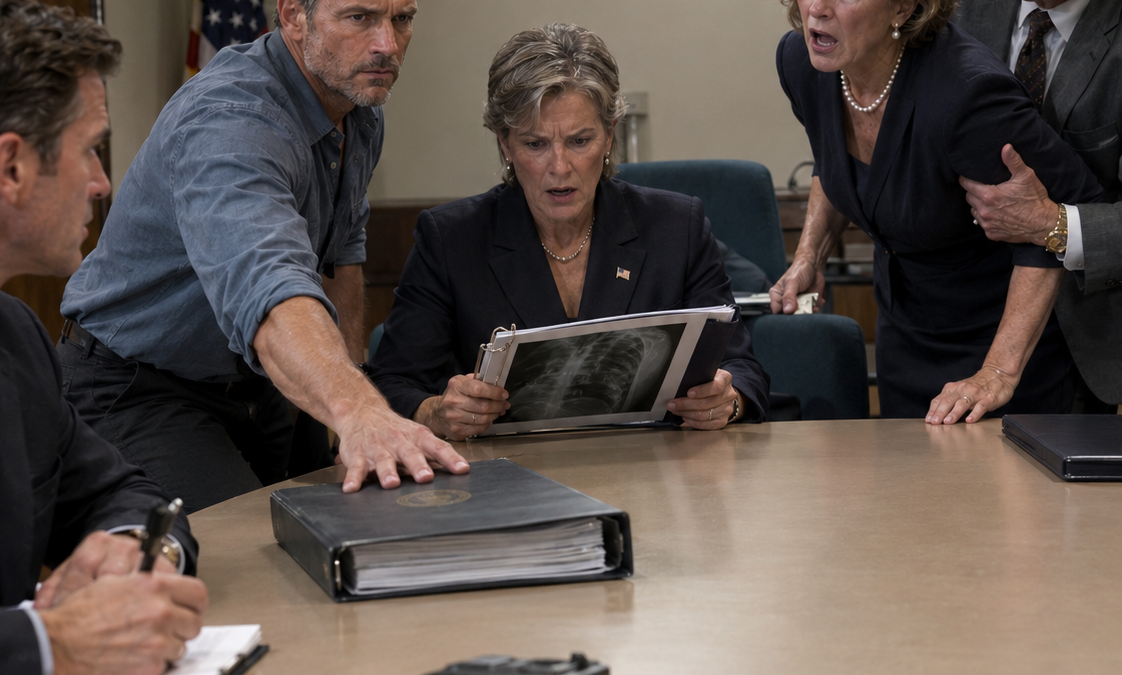
PART 9 — THE RECKONING
The letter came in November.
From the Ohio Attorney General’s office. Official. Stamped. The kind of letter that made your stomach drop before you even opened it.
I sat at my kitchen table. Black coffee going cold beside me. The morning light coming through the window.
I opened the letter.
It said that the investigation into my parents’ insurance fraud had been completed. That my father, before his death, had been found guilty of multiple counts. That my mother, before her death, had been found guilty as well.
It said that the state was pursuing restitution. That assets from my parents’ estate were being liquidated. That I was entitled to a portion of the proceeds as the victim of their fraud.
It said that the total amount was significant. Six figures. More money than I had ever seen in my life.
I read the letter three times.
Then I sat there, staring at the wall, trying to figure out how I felt.
I called Carter.
“Did you get the letter?”
“I got it.”
“What do you think?”
“I don’t know. It feels strange. Taking money from Mom and Dad.”
“They tried to take money from you. They tried to take everything.”
“I know. But still.”
He was quiet for a moment.
“What are you going to do?”
“I don’t know yet. I need to think.”
I spent the next week thinking.
I walked the property. I fished the river. I sat on the porch and watched the clouds move across the mountains.
I thought about the money. About what it represented. About what it meant.
It was blood money. Money that had come from my parents’ crimes. Money that they had tried to steal from me. Money that was now being returned.
But it was also something else. It was justice. It was vindication. It was proof that the truth had won.
I made a decision.
I would take the money. Not for myself. For something bigger.
I called Marcus.
“I need your help with something.”
“What kind of help?”
“I want to start a foundation. For veterans. For people like me who came home broken and didn’t know where to turn.”
“That’s a big idea.”
“I know. But I have the money now. And I have the time. And I have the experience.”
“You want to help people.”
“I want to help people who don’t have anyone else. People whose families turned against them. People who are fighting alone.”
The foundation took a year to set up.
We called it the Vance Foundation. After Thomas. After the soldier who had carried me with him for twenty years without ever finding the words to say thank you.
The mission was simple. To provide support for veterans who had been abandoned by their families. To provide counseling, legal aid, financial assistance. To provide a place where people could find the help they needed.
We started small. A few clients. A few volunteers. A small office in Asheville.
But we grew.
The first client was a woman named Maria.
She had served two tours in Iraq. Had come home with PTSD and a back injury. Had been living with her parents while she recovered.
But her parents didn’t understand. They thought she was exaggerating. They thought she was lazy. They thought she was faking her symptoms to avoid getting a job.
They told her to get over it. To move on. To stop being a burden.
She came to us because she didn’t know where else to go.
I met her in the office.
She was young. Twenty-eight. Dark hair. Tired eyes. The kind of tired that came from years of fighting.
“I don’t know what to do,” she said. “My parents won’t listen. They think I’m making it up.”
“I believe you.”
She looked at me.
“You do?”
“I do. Because I’ve been where you are. I’ve had people tell me I was faking. I’ve had people try to take away everything I had. I know what it feels like.”
She started to cry.
“I thought I was alone.”
“You’re not. Not anymore.”
We helped Maria get the treatment she needed. We helped her find a place to live. We helped her apply for benefits she didn’t know she was entitled to.
We also helped her file a lawsuit against her parents.
Not because we wanted revenge. Not because we wanted to punish them. Because we wanted to send a message.
That veterans deserve to be believed. That their sacrifices matter. That their service means something.
That the truth always wins in the end.
The lawsuit was settled out of court.
Maria’s parents agreed to pay for her treatment. To give her space. To stop pressuring her to be someone she wasn’t.
They also agreed to attend therapy. To learn about PTSD. To understand what their daughter had been through.
It wasn’t a perfect ending. But it was a start.
The foundation grew.
We helped more veterans. More families. More people who had been told they didn’t matter.
We worked with legislators. We worked with the VA. We worked with anyone who would listen.
We told stories. We shared experiences. We fought for the truth.
And slowly, things began to change.
I went to Washington in the fall.
There was a hearing. A committee. A group of people who wanted to understand what veterans faced when they came home.
I was asked to testify.
I sat at a table. Microphone in front of me. A dozen faces staring down at me from the raised seats.
I told them about my service. About my injuries. About my parents’ betrayal.
I told them about the hearing. About the records. About the moment when everything changed.
I told them about the foundation. About Maria. About the hundreds of veterans who had come to us for help.
And I told them the truth.
“Veterans are not burdens,” I said. “We are not liabilities. We are not problems to be solved. We are people who did what was asked of us. We are people who sacrificed more than most will ever know.”
“The least we deserve is to be believed. The least we deserve is to be treated with dignity. The least we deserve is to have our service honored, not questioned.”
The room was silent.
Then someone started clapping.
Then someone else. Then someone else.
I stood there. Medal on my chest. Heart in my throat.
And for the first time in a long time, I felt like I mattered.
I went back to the cabin.
The dog was happy to see me. The garden had grown. The mountains were green.
I sat on the porch and watched the sunset.
The sun dipped below the horizon.
The stars came out.
I took a deep breath.
And for a moment, everything was quiet.
PART 10 — THE RETURN
The call came on a Tuesday.
Not the same kind of call. Not an emergency. Not a crisis.
A voice from the past.
“Sergeant Mercer?”
The voice was older now. Rougher. The voice of a man who had lived a hard life.
But I recognized it.
“Tommy?”
“It’s me, Sarge. Tommy Vasquez.”
I sat down. The dog lifted his head, sensing something.
“I can’t believe it’s you.”
“I know. It’s been a long time.”
“Too long.”
Tommy Vasquez had been one of the youngest soldiers in my squad.
A kid from California. A surfer. A jokester. Always making everyone laugh.
But he had been there for the worst missions. The ones that kept me up at night. The ones that lived in my nightmares.
He had been one of the men who had carried Thomas Vance out of that firefight. One of the men who had held a dying friend in his arms and told him it was going to be okay.
“I saw you on TV,” he said. “The hearing. I couldn’t believe it was you.”
“Probably shouldn’t have done that. Not my style.”
“Are you kidding? You were amazing. You said everything we’ve been thinking for years.”
We talked for an hour.
He told me about his life. About the years since the Army. About the jobs he had lost. The marriages that had failed. The struggles he had faced.
He told me about the VA. About the doctors who didn’t listen. About the disability claims that took years to process.
He told me about his wife. About the woman who had stood by him through everything. About the daughter who had just graduated from college.
And he told me about the darkness. The depression. The thoughts that sometimes crept in when he was alone at night.
“I almost called you a hundred times,” he said. “I almost reached out. But I didn’t know what to say.”
“You don’t need to say anything. I’m here now.”
Tommy came to the cabin the next week.
He drove from California. Three days on the road. Said he wanted to see the mountains. Said he wanted to see me.
He was gray now. Old. His face lined with the years. But his eyes were the same — bright, sharp, full of life.
We hugged on the porch.
“It’s good to see you, Sarge.”
“It’s good to see you too, Tommy.”
We spent the weekend together.
We hiked. We fished. We sat on the porch and told stories.
Stories about the old days. The missions. The close calls. The men we had served with.
Stories about the after. The struggles. The losses. The small victories.
We laughed. We cried. We remembered.
We talked about Thomas. About the letter. About the foundation.
We talked about the future. About what came next. About how we could help other veterans who were struggling.
And we talked about the truth. About what it meant. About how it could set you free.
On the last night, we sat by the fire.
The dog was asleep at our feet. The stars were out. The mountains were dark against the sky.
“Tommy?”
“Yeah?”
“I’m glad you called. I’m glad you’re here.”
“Me too, Sarge. Me too.”
We sat in silence for a while.
“You know what I remember most about you?” he said.
“What?”
“The way you always knew what to do. In the middle of chaos. In the middle of hell. You always knew what to do.”
“It wasn’t always that simple.”
“It seemed that way to us. We would have followed you anywhere.”
I looked at him.
“The men you saved. The lives you changed. It matters. It all matters.”
I didn’t sleep that night.
I lay in bed, staring at the ceiling. The house was quiet. Tommy was asleep in the guest room.
I thought about the years that had passed. The men I had served with. The lives we had lived.
I thought about the boy I had been. The soldier I had become. The man I was now.
I thought about everything I had lost. Everything I had found. Everything I had been through.
And I thought about what came next.
The morning came.
Tommy left after breakfast. He had a long drive ahead of him. A wife waiting. A daughter to see.
We hugged on the porch.
“Stay in touch,” I said. “Don’t be a stranger.”
“I won’t, Sarge. I promise.”
He drove away. The car got smaller and smaller until it disappeared around the bend.
I stood there for a long time.
Then I went inside. Made coffee. Sat at the kitchen table.
The house was quiet. It was always quiet now.
But it wasn’t the same quiet it used to be.
It was a different quiet. A peaceful quiet. The quiet of a man who had finally found his place in the world.
The sun was setting.
I walked out to the porch. Sat in the old chair. Watched the light fade over the mountains.
The dog lay at my feet. The crickets started singing. The first stars appeared.
I thought about my life. About the journey. About everything I had been through.
I thought about the boy who had enlisted at eighteen. The soldier who had served for twelve years. The man who had come home broken and alone.
I thought about the parents who had betrayed him. The brother who had blamed him. The family that had turned against him.
I thought about the people who had stood by him. Marcus. Sarah. Tommy. The men he had served with. The strangers who had seen him for who he really was.
I thought about the truth. About how it always came out. About how it always won in the end.
And I thought about the future. About the years ahead. About the life I was building.
The sun dipped below the horizon.
The stars came out.
The dog put his head on my knee.
“Good boy,” I said.
And for a moment, everything was quiet.
The letter came the next morning.
A plain white envelope. Handwritten address. No return address.
I opened it at my kitchen table.
Inside was a single sheet of paper.
“Mr. Mercer, I’m a veteran. I served in Afghanistan. I came home with injuries that nobody could see. My family told me I was faking. My friends told me to get over it. I was starting to believe them.”
“Then I saw you on TV. I heard what you said. I heard your story. And I realized something.”
“I’m not alone.”
“I’m not crazy. I’m not weak. I’m not a burden.”
“I’m a veteran. And I deserve to be believed.”
“Thank you for telling the truth. Thank you for fighting. Thank you for showing me that it’s possible to survive.”
“I don’t know if you’ll ever read this. I don’t know if it will ever reach you. But I needed to say it.”
“Thank you.”
I read the letter three times.
Then I folded it carefully and put it in the drawer with Sarah’s things.
And I smiled.
PART 11 — THE LEGACY
The foundation grew faster than I expected.
By the end of the second year, we had helped over three hundred veterans. We had offices in four states. We had a staff of twenty. We had volunteers who came from all over the country, drawn by the mission, by the story, by the idea that no veteran should have to fight alone.
The Vance Foundation became something bigger than I had ever imagined. Something bigger than me.
And I was proud of it.
The call came in June.
A reporter from a national news outlet. She wanted to do a story about the foundation. About me. About the journey that had led me here.
“Mr. Mercer, your story is remarkable. The betrayal by your parents. The hearing. The records that proved everything. The foundation you built from the ashes.”
“None of it was remarkable. It was just what I had to do.”
“That’s what makes it remarkable.”
The story ran in August.
A full-page feature. Pictures of the cabin. Pictures of the foundation office. Pictures of me, standing on the porch, looking out at the mountains.
The headline said: “The Soldier Who Wouldn’t Be Silenced.”
I read it three times.
Then I put it in the drawer with Sarah’s things.
The letters started coming.
Hundreds of them. From veterans. From families. From people who had been told they didn’t matter.
Letters of thanks. Letters of hope. Letters of pain.
I read every one.
And I wrote back to as many as I could.
One letter stood out.
It was from a young woman. Twenty-four. A Marine. She had served in Afghanistan. Had come home with PTSD and a traumatic brain injury.
Her parents had kicked her out. Said she was too difficult. Said she needed to figure things out on her own.
She had been living in her car for three months.
She wrote: “I saw your story. I saw what you went through. And I realized something. I don’t have to accept this. I don’t have to believe what they said about me. I can fight.”
“I’m going to fight. For myself. For my future. For everyone who ever told me I couldn’t.”
“Thank you for showing me how.”
I met her at the foundation office a month later.
Her name was Jamie. She was small. Thin. Tired. But her eyes were bright. Sharp. Full of fire.
“I want to help,” she said. “I want to work here. I want to help other veterans.”
“You’ll have to start at the bottom.”
“I don’t care. I’ll do anything.”
Jamie started as a volunteer.
She answered phones. Filed paperwork. Made coffee. Did whatever was needed.
But she was smart. Driven. She learned fast.
Within six months, she was running our outreach program. Within a year, she was a full-time staff member. Within two years, she was the director of operations.
She became the heart of the foundation. The one who understood the pain. The one who knew what it felt like to be alone.
She became the person I wish I had known when I was her age.
The years passed.
The foundation grew. The mission expanded. The story spread.
I spoke at conferences. Testified before Congress. Sat on panels with generals and senators and people who had never served but wanted to help.
I became a voice for veterans who had been silenced. A symbol of what was possible when you refused to give up.
But I never forgot where I came from.
I never forgot the boy who had enlisted at eighteen. The soldier who had served for twelve years. The man who had come home broken and alone.
I never forgot the parents who had betrayed me. The brother who had blamed me. The family that had turned against me.
And I never forgot the truth. The records. The hearing. The moment when everything changed.
The invitation came in October.
The White House. A ceremony. The Presidential Medal of Freedom.
For service to the nation. For dedication to veterans. For everything I had built.
I stared at the invitation for a long time.
I thought about my parents. About the hearing. About the moment when everything changed.
I thought about the foundation. About Jamie. About the hundreds of veterans who had come through our doors.
I thought about Sarah. About what she would have said if she were still here.
She would have told me to go. To accept. To let myself be honored.
So I did.
The ceremony was in November.
The White House. The East Room. Chandeliers. Flags. Dignitaries.
I stood in the front row. In a suit I had bought for the occasion. The medal I had earned in Afghanistan pinned to my chest.
The President spoke. About service. About sacrifice. About the men and women who had given everything for their country.
Then he called my name.
I walked to the stage. My legs felt strange. My heart was pounding.
The President shook my hand. Placed the medal around my neck.
“Thank you for your service,” he said. “Thank you for everything you’ve done.”
“Thank you, Mr. President.”
The reception was crowded.
People came up to me. Shook my hand. Told me their stories. Told me how I had inspired them.
I smiled. Said thank you. Moved through the room.
And then I saw them.
At the edge of the crowd. Two figures I hadn’t seen in years.
Carter. And Jamie.
They had come. They had flown in for the ceremony. They were standing there, watching me, smiling.
I walked over.
“What are you doing here?”
“Are you kidding?” Carter said. “You think I was going to miss this?”
Jamie hugged me.
“You did it,” she said. “You really did it.”
We stood together. Three people who had been through hell and come out the other side.
We talked. We laughed. We remembered.
And I thought about how strange life was. How the people who should have loved me the most had betrayed me.
And how the people who had no reason to love me at all had become my family.
The reception ended.
The crowd dispersed. The lights dimmed. The music stopped.
I walked outside. The night air was cold. The stars were bright.
I looked up at the sky.
I thought about Sarah. About her love. About her memory.
I thought about Thomas. About his letters. About the words he had finally said.
I thought about all the men I had served with. All the lives I had touched. All the lives I had saved.
I thought about my parents. About their choices. About their consequences.
And I thought about myself. About the long road I had traveled. About everything I had lost and everything I had found.
The car came.
I got in. The driver asked where I wanted to go.
“Home,” I said.
And I meant it.
PART 12 — THE MOUNTAINS
The cabin was quiet when I got back.
The dog was waiting on the porch. He wagged his tail when he saw me. Ran up to greet me.
“Hey, boy,” I said. “I’m home.”
I opened the door. Walked inside. The house smelled like wood smoke and old books. The way it always did.
I sat at the kitchen table. Made coffee. Watched the morning light come through the window.
The medal was in my pocket. Heavy. Cold. A piece of metal that represented so much.
I took it out. Looked at it.
I thought about all the people who had helped me get here. Marcus. Sarah. Tommy. Jamie. Carter. All the men I had served with. All the strangers who had seen me for who I really was.
I thought about my parents. About the letter. About the tears.
I thought about the truth. About how it always came out. About how it always won in the end.
And I thought about the future. About the years ahead. About the life I was building.
The sun was rising.
I walked out to the porch. Sat in the old chair. Watched the light spread over the mountains.
The dog lay at my feet. The birds started singing. The world woke up.
I thought about the journey. About everything I had been through. About everything I had become.
I thought about the boy who had enlisted at eighteen. The soldier who had served for twelve years. The man who had come home broken and alone.
I thought about the parents who had betrayed him. The brother who had blamed him. The family that had turned against him.
I thought about the people who had stood by him. The strangers who had seen him for who he really was.
I thought about the truth. About the records. About the hearing. About the moment when everything changed.
And I thought about what came next.
The day passed.
I worked in the garden. I fished the river. I hiked the trails.
I thought about the foundation. About Jamie. About the veterans who were still struggling.
I thought about the letters. The hundreds of letters. The words of thanks. The stories of hope.
I thought about the ceremony. The medal. The moment when everything changed.
I thought about Sarah. About what she would have said if she were still here.
She would have told me she was proud of me. She would have told me I had done good.
She would have been right.
The sun was setting.
I walked out to the porch. Sat in the old chair. Watched the light fade over the mountains.
The dog lay at my feet. The crickets started singing. The first stars appeared.
I took a deep breath.
And I thought about the truth.
The truth that my parents had tried to bury. The truth that the records had revealed. The truth that had set me free.
The truth was simple.
I was a soldier. I had served my country. I had sacrificed more than most would ever know.
I had come home broken. I had been betrayed by the people who should have loved me most.
But I had survived.
I had fought. I had endured. I had built something from the ashes.
And I had found peace.
The stars came out.
The mountains were dark against the sky.
The dog put his head on my knee.
“Good boy,” I said.
And for a moment, everything was quiet.
The letter came the next morning.
A plain white envelope. Handwritten address. No return address.
I opened it at my kitchen table.
Inside was a single sheet of paper.
“Mr. Mercer, I’m a veteran. I served in Iraq. I came home with injuries nobody could see. My family told me I was faking. My friends told me to get over it. I was starting to believe them.”
“Then I heard your story. I heard what you said. And I realized something.”
“I’m not alone.”
“I’m not crazy. I’m not weak. I’m not a burden.”
“I’m a veteran. And I deserve to be believed.”
“Thank you for telling the truth. Thank you for fighting. Thank you for showing me that it’s possible to survive.”
“I don’t know if you’ll ever read this. I don’t know if it will ever reach you. But I needed to say it.”
“Thank you.”
I read the letter three times.
Then I folded it carefully and put it in the drawer with Sarah’s things.
And I smiled.
The sun was rising.
I walked out to the porch. Sat in the old chair. Watched the light spread over the mountains.
The dog lay at my feet. The birds started singing. The world woke up.
I thought about the journey. About everything I had been through. About everything I had become.
I thought about the boy who had enlisted at eighteen. The soldier who had served for twelve years. The man who had come home broken and alone.
I thought about the parents who had betrayed him. The brother who had blamed him. The family that had turned against him.
I thought about the people who had stood by him. The strangers who had seen him for who he really was.
I thought about the truth. About the records. About the hearing. About the moment when everything changed.
And I thought about what came next.
The truth was simple.
I was a soldier. I had served my country. I had sacrificed more than most would ever know.
I had come home broken. I had been betrayed by the people who should have loved me most.
But I had survived.
I had fought. I had endured. I had built something from the ashes.
And I had found peace.
The sun was setting.
I walked out to the porch. Sat in the old chair. Watched the light fade over the mountains.
The dog lay at my feet. The crickets started singing. The first stars appeared.
I took a deep breath.
And for a moment, everything was quiet.
PART 13 — THE QUIET
Three years passed.
The foundation grew. The mission expanded. The story spread.
We opened offices in six more states. We hired more staff. We helped more veterans.
Jamie became the executive director. She was better at it than I had ever been. Smarter. More patient. More driven.
I stepped back. Let her lead. Watched her become the person I always knew she could be.
I stayed on the board. Stayed involved. But I let go of the day-to-day.
I spent more time at the cabin. More time in the garden. More time on the porch.
I was getting older. The pain was getting worse. The injuries I had carried for decades were finally catching up with me.
But I was at peace.
Carter came to visit every few months.
He had remarried. A woman named Lisa. A teacher. Kind. Patient. Good for him.
They had a daughter. A little girl named Sarah. After my Sarah.
I was her godfather. I held her at the christening. I watched her take her first steps. I heard her say my name for the first time.
“Uncle Daniel.”
It was the best thing I had ever heard.
Marcus came to visit once a year.
He was retired now. Living in Florida. Playing golf. Enjoying the sun.
But he always made time for me. Always drove up to the mountains. Always sat on the porch and told stories about the old days.
We talked about the missions. About the men. About everything we had been through.
We talked about the future. About what came next. About how we wanted to be remembered.
And we talked about the truth. About how it always came out. About how it always won in the end.
Tommy called every month.
He was doing better. Had gotten help. Had started therapy. Had rebuilt his relationship with his wife and daughter.
He told me about his life. About the small things. About the moments of joy.
He told me about the darkness. About the days when it still crept in. About the nights when he couldn’t sleep.
But he told me he was fighting. He told me he was surviving.
And he told me he was grateful.
The letters kept coming.
From veterans. From families. From people who had been told they didn’t matter.
I read every one.
And I wrote back to as many as I could.
I told them my story. I told them about the betrayal. About the hearing. About the truth that had set me free.
I told them they were not alone. I told them they were not crazy. I told them they were not burdens.
I told them they deserved to be believed.
The anniversary came every year.
The day the letter arrived. The day I found out what my parents had done.
I marked it quietly. Alone. With a cup of coffee and a long walk in the mountains.
I thought about the journey. About everything I had been through. About everything I had become.
I thought about my parents. About their choices. About their consequences.
I thought about the truth. About the records. About the hearing. About the moment when everything changed.
And I thought about what came next.
The sun was setting.
I walked out to the porch. Sat in the old chair. Watched the light fade over the mountains.
The dog lay at my feet. The crickets started singing. The first stars appeared.
I took a deep breath.
And I thought about the truth.
The truth was simple.
I was a soldier. I had served my country. I had sacrificed more than most would ever know.
I had come home broken. I had been betrayed by the people who should have loved me most.
But I had survived.
I had fought. I had endured. I had built something from the ashes.
And I had found peace.
The stars came out.
The mountains were dark against the sky.
The dog put his head on my knee.
“Good boy,” I said.
And for a moment, everything was quiet.
PART 14 — THE FINAL LETTER
The letter came on a Tuesday.
I knew it was important the moment I saw it. The envelope was thick. Official. The return address was a law firm in Columbus, Ohio.
I opened it at my kitchen table. Black coffee going cold beside me. The morning light coming through the window over the sink.
The letter said that the estate of Gerald and Patricia Mercer had been fully settled. That all assets had been liquidated. That all debts had been paid. That all restitution had been made.
It said that there was one final item to be distributed. A letter. Written by my mother. Before she died. Left with the estate attorney.
The letter was for me.
I read the letter from the attorney three times.
Then I opened the envelope inside.
My mother’s handwriting.
Shaky. Uneven. The handwriting of a woman who had spent years in prison and wasn’t the same person who had gone in.
“Daniel,
I don’t know if you’ll ever read this. I don’t know if you’ll ever want to. But I need to write it anyway. I need to say the things I never said. The things I was too scared to say.
I’m sorry.
I’m sorry for what we did. I’m sorry for the report. I’m sorry for the hearing. I’m sorry for every time we chose money over you. Every time we chose image over truth. Every time we chose your brother over you.
I’m sorry for the way we treated you. For the way we made you feel. For the way we failed you.
You were a good son. You were a brave soldier. You were everything we should have been proud of. And we threw it away. For money. For status. For things that didn’t matter.
I know you don’t owe me anything. I know you don’t have to forgive me. I know I don’t deserve your forgiveness.
But I want you to know something.
I’m proud of you. I’ve always been proud of you. I was just too scared to show it. Too scared of what your father would think. Too scared of what people would say.
I was a coward. I was a fool.
And I’m sorry.
I love you, Daniel. I always have. I always will.
I hope you find peace. I hope you find happiness. I hope you find everything you deserve.
Your mother,
Patricia”
I read the letter three times.
Then I folded it carefully and put it in the drawer with Sarah’s things.
I sat at the kitchen table for a long time.
The coffee went cold. The light shifted. The house was quiet.
I thought about my mother. About her life. About her choices. About her death.
I thought about the letter. About the words. About the apology I had waited for my whole life.
I thought about whether it mattered. Whether any of it mattered.
And I decided that it did.
Not because it changed anything. Not because it undid the past. But because it was the truth.
And the truth always matters.
I walked out to the porch.
The sun was setting. The sky was orange and pink. The kind of sunset Sarah used to love.
I sat in the old chair. The dog lay at my feet.
I thought about my life. About the journey. About everything I had been through.
I thought about the boy who had enlisted at eighteen. The soldier who had served for twelve years. The man who had come home broken and alone.
I thought about the parents who had betrayed him. The brother who had blamed him. The family that had turned against him.
I thought about the people who had stood by him. Marcus. Sarah. Tommy. Jamie. Carter. The men he had served with. The strangers who had seen him for who he really was.
I thought about the truth. About the records. About the hearing. About the moment when everything changed.
And I thought about the future. About the years ahead. About the life I was building.
The sun dipped below the horizon.
The stars came out.
The dog put his head on my knee.
“Good boy,” I said.
And for a moment, everything was quiet.
The letter came the next morning.
A plain white envelope. Handwritten address. No return address.
I opened it at my kitchen table.
Inside was a single sheet of paper.
“Mr. Mercer, I’m a veteran. I served in Afghanistan. I came home with injuries nobody could see. My family told me I was faking. My friends told me to get over it. I was starting to believe them.”
“Then I heard your story. I heard what you said. And I realized something.”
“I’m not alone.”
“I’m not crazy. I’m not weak. I’m not a burden.”
“I’m a veteran. And I deserve to be believed.”
“Thank you for telling the truth. Thank you for fighting. Thank you for showing me that it’s possible to survive.”
“I don’t know if you’ll ever read this. I don’t know if it will ever reach you. But I needed to say it.”
“Thank you.”
I read the letter three times.
Then I folded it carefully and put it in the drawer with Sarah’s things.
And I smiled.
The sun was rising.
I walked out to the porch. Sat in the old chair. Watched the light spread over the mountains.
The dog lay at my feet. The birds started singing. The world woke up.
I thought about the journey. About everything I had been through. About everything I had become.
I thought about the truth. About how it always came out. About how it always won in the end.
And I thought about what came next.
PART 15 — THE MOUNTAINS
The morning was clear and cold.
I woke before dawn. The way I always did. The way I had been trained to, all those years ago.
The dog was asleep at the foot of the bed. He lifted his head when I moved. Wagged his tail.
“Come on, boy,” I said. “Let’s go.”
We walked out to the porch. The sky was just starting to lighten. The mountains were dark against the horizon.
I sat in the old chair. The dog lay at my feet.
I thought about the journey. About everything I had been through. About everything I had become.
I thought about the boy who had enlisted at eighteen. The soldier who had served for twelve years. The man who had come home broken and alone.
I thought about the parents who had betrayed him. The brother who had blamed him. The family that had turned against him.
I thought about the people who had stood by him. Marcus. Sarah. Tommy. Jamie. Carter. The men he had served with. The strangers who had seen him for who he really was.
I thought about the truth. About the records. About the hearing. About the moment when everything changed.
And I thought about the future. About the years ahead. About the life I was building.
The sun rose.
The light spread across the mountains. The world woke up.
I took a deep breath. Felt the cold air fill my lungs.
I was sixty years old. My back hurt. My knee ached. My hand still didn’t work right.
But I was alive. I was at peace. I was home.
The day passed.
I worked in the garden. I fished the river. I hiked the trails.
I thought about the foundation. About Jamie. About the veterans who were still struggling.
I thought about the letters. The hundreds of letters. The words of thanks. The stories of hope.
I thought about the ceremony. The medal. The moment when everything changed.
I thought about Sarah. About what she would have said if she were still here.
She would have told me she was proud of me. She would have told me I had done good.
She would have been right.
The sun was setting.
I walked out to the porch. Sat in the old chair. Watched the light fade over the mountains.
The dog lay at my feet. The crickets started singing. The first stars appeared.
I took a deep breath.
And I thought about the truth.
The truth was simple.
I was a soldier. I had served my country. I had sacrificed more than most would ever know.
I had come home broken. I had been betrayed by the people who should have loved me most.
But I had survived.
I had fought. I had endured. I had built something from the ashes.
And I had found peace.
The stars came out.
The mountains were dark against the sky.
The dog put his head on my knee.
“Good boy,” I said.
And for a moment, everything was quiet.
The letter came the next morning.
A plain white envelope. Handwritten address. No return address.
I opened it at my kitchen table.
Inside was a single sheet of paper.
“Mr. Mercer, I’m a veteran. I served in Iraq. I came home with injuries nobody could see. My family told me I was faking. My friends told me to get over it. I was starting to believe them.”
“Then I heard your story. I heard what you said. And I realized something.”
“I’m not alone.”
“I’m not crazy. I’m not weak. I’m not a burden.”
“I’m a veteran. And I deserve to be believed.”
“Thank you for telling the truth. Thank you for fighting. Thank you for showing me that it’s possible to survive.”
“I don’t know if you’ll ever read this. I don’t know if it will ever reach you. But I needed to say it.”
“Thank you.”
I read the letter three times.
Then I folded it carefully and put it in the drawer with Sarah’s things.
And I smiled.
The sun was rising.
I walked out to the porch. Sat in the old chair. Watched the light spread over the mountains.
The dog lay at my feet. The birds started singing. The world woke up.
I thought about the journey. About everything I had been through. About everything I had become.
I thought about the truth. About how it always came out. About how it always won in the end.
And I thought about what came next.
PART 16 — THE END
The years passed.
The foundation grew. The mission expanded. The story spread.
I got older. The pain got worse. But I kept going. Kept fighting. Kept living.
Carter’s daughter grew up. Sarah. Named after my Sarah. She called me Uncle Daniel. She sat on my lap and asked me to tell her stories.
I told her about the mountains. About the river. About the garden.
I didn’t tell her about the war. Not yet. She was too young. But someday, I would. Someday, when she was old enough to understand.
I would tell her about the men I had served with. About the sacrifices we had made. About the things we had seen.
I would tell her about the truth. About how it always came out. About how it always won in the end.
Marcus died in his sleep.
Peaceful. In his own bed. In Florida. With his wife by his side.
I flew down for the funeral. Stood with the other men who had served with him. Watched as they folded the flag and handed it to his widow.
I spoke at the service. Told stories about the old days. About the missions. About the man Marcus had been.
I told them about the time he had saved my life. About the time I had saved his. About the bond that could never be broken.
I told them he was a hero. That he had served his country with honor. That he would never be forgotten.
And I meant every word.
Tommy died a year later.
A heart attack. Sudden. Unexpected.
I got the call from his wife. She was crying. Could barely speak.
I flew to California for the funeral. Stood with his family. Held his daughter while she cried.
I told them about the boy I had known. The surfer. The jokester. The soldier who had grown into a man.
I told them he was brave. That he had fought his demons and won. That he had died knowing he was loved.
And I meant every word.
Jamie took over the foundation completely.
She was ready. She had been ready for years. She had the vision. The drive. The heart.
I stayed on the board. Stayed involved. But I let her lead.
I watched her become the person I always knew she could be. Strong. Confident. Compassionate.
She helped hundreds of veterans. Thousands. She changed lives. She saved lives.
She became the legacy I had always hoped to leave.
The letter came on a Tuesday.
I was sitting on the porch. Watching the sunset. The dog was at my feet.
A plain white envelope. Handwritten address. No return address.
I opened it.
Inside was a single sheet of paper.
“Mr. Mercer, I’m a veteran. I served in Afghanistan. I came home with injuries nobody could see. My family told me I was faking. My friends told me to get over it. I was starting to believe them.”
“Then I heard your story. I heard what you said. And I realized something.”
“I’m not alone.”
“I’m not crazy. I’m not weak. I’m not a burden.”
“I’m a veteran. And I deserve to be believed.”
“Thank you for telling the truth. Thank you for fighting. Thank you for showing me that it’s possible to survive.”
“I don’t know if you’ll ever read this. I don’t know if it will ever reach you. But I needed to say it.”
“Thank you.”
I read the letter three times.
Then I folded it carefully and put it in the drawer with Sarah’s things.
And I smiled.
The sun was setting.
I walked out to the porch. Sat in the old chair. Watched the light fade over the mountains.
The dog lay at my feet. The crickets started singing. The first stars appeared.
I took a deep breath.
And I thought about the truth.
The truth was simple.
I was a soldier. I had served my country. I had sacrificed more than most would ever know.
I had come home broken. I had been betrayed by the people who should have loved me most.
But I had survived.
I had fought. I had endured. I had built something from the ashes.
And I had found peace.
The stars came out.
The mountains were dark against the sky.
The dog put his head on my knee.
“Good boy,” I said.
And for a moment, everything was quiet.

