“She claimed I was absent — working long hours, leaving Eli with sitters, unable to provide the stable home a grieving child needed.
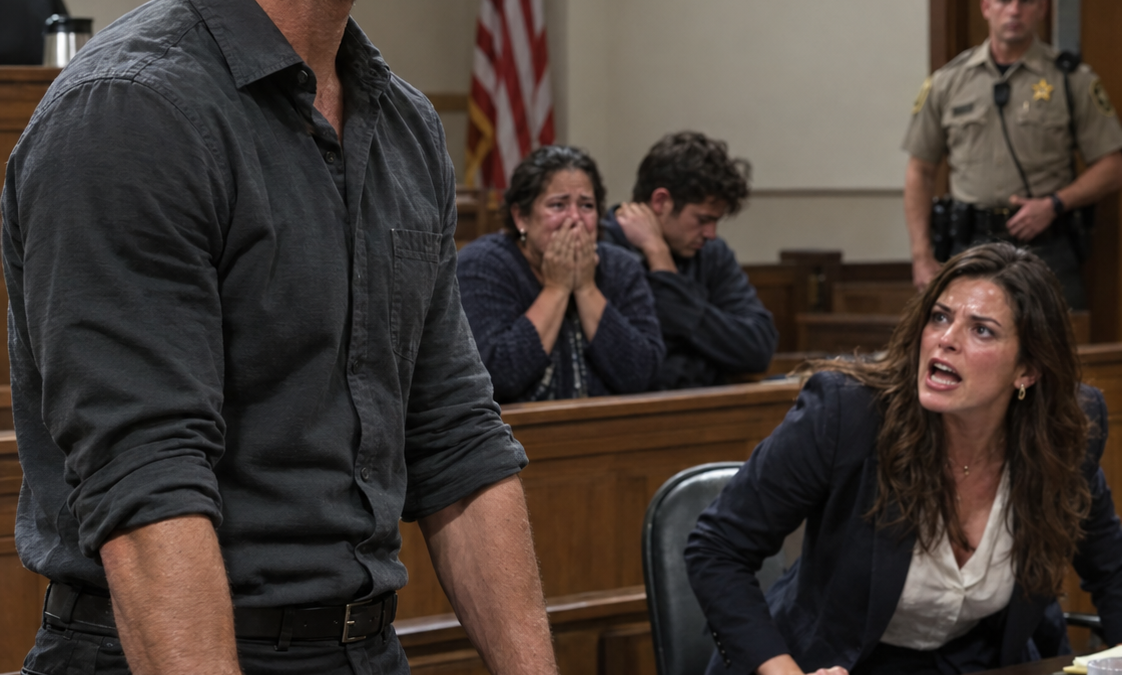
“My sister told a judge I coached my son to lie. She said it with her hand on a Bible and her voice steady as a metronome. She said I spent six weeks drilling false statements into an eight-year-old boy’s head.”
Before → The family believed Carla’s lies and Daniel was nearly stripped of custody of his son. After → The truth came out in a courtroom, and Daniel raised Eli alone — with a granddaughter named Marisol who called him her hero.
She said it with her hand on a Bible and her voice steady as a metronome. She said I spent six weeks drilling false statements into an eight-year-old boy’s head. She said I used the skills the Marine Corps taught me — psychological operations, she called them, like I’d been some kind of mind-control specialist instead of a reconnaissance Marine — to turn my own child into a weapon against her.
The courtroom was small. Fluorescent lights, beige walls, a flag in the corner that hadn’t been dusted since the last election. Twelve people in the gallery, most of them family. All of them staring at me.
I didn’t move.
That was the first thing she didn’t understand. She expected me to react. To stand up, to shout, to give the judge a reason to see me as the unstable one. My sister Carla had spent thirty years learning exactly which buttons to push. She’d never learned what happens when someone stops having buttons.
My name is Daniel Reyes. I was forty-three years old when my sister sat in that witness box and called me a liar. I spent eleven years in Marine Corps Force Reconnaissance — three combat deployments, two unit citations I never framed, and a medical retirement that came eleven months before I wanted it to. I’ve been shot twice, blown up once, and I’ve held the hand of a man who didn’t make it back to the wire. None of that mattered in that courtroom.
What mattered was that Carla had a better lawyer.
The hearing was about guardianship. My son Eli was eight. His mother — my wife, Marisol — had died fourteen months earlier. A blood clot. Sudden, stupid, the kind of death that doesn’t give you time to prepare or say goodbye or even understand what’s happening until it’s already done.
I came home from a construction job I’d taken to fill the hours and found her on the kitchen floor. Eli was at school. I performed CPR for eleven minutes until the paramedics arrived. They told me later it wouldn’t have mattered. She was already gone before I walked through the door.
I didn’t cry at the funeral. Carla told everyone I was cold. What she didn’t know was that I’d cried every night for three weeks before the funeral, in the shower, with the water running so Eli wouldn’t hear. Force Recon teaches you to compartmentalize. It doesn’t teach you to stop feeling. It just teaches you to feel later, when it’s safe.
The guardianship petition came six months after Marisol died.
Carla filed it in family court. She claimed I was unfit. She claimed I was absent — working long hours, leaving Eli with sitters, unable to provide the stable home a grieving child needed. She claimed I had untreated PTSD from my deployments, that I was a danger to myself and others. She claimed I’d been teaching Eli to lie about her, to say she’d hurt him, to say she’d threatened to take him away.
None of it was true. But in a family court, truth is a starting position, not a finish line.
The first time I heard about the petition was when a sheriff’s deputy served me papers at a job site.
I was on a roof, framing a dormer. The deputy called up to me from the driveway. I climbed down, wiped my hands on my jeans, and took the envelope. I read it standing there in the sun while the rest of the crew pretended not to watch.
Guardianship. Carla Anne Reyes-Mitchell. Petitioner.
I folded the papers and put them in my back pocket.
“Everything okay?” the foreman asked.
“Yeah,” I said. “Family stuff.”
I went back up on the roof. I finished the dormer. Then I went home and called a lawyer.
The lawyer’s name was Dominic Ferrara. He was sixty-two, built like a retired boxer, and he had a voice that sounded like gravel in a blender. He’d been a JAG officer in the Navy before going into family law. He understood military people.
“Your sister’s got a real case,” he told me in his office. “Not a winning one, but a real one. She’s got resources. She’s got time. And she’s got the one thing you don’t.”
“What’s that?”
“The ability to look sympathetic while she’s lying.”
I nodded. I’d seen that before. In the Corps, you learned to read people fast. The ones who talked the most were usually the ones you couldn’t trust. Carla had been talking her whole life.
“What do we do?” I asked.
“We gather evidence. We document everything. And we find out what she’s really after.”
What Carla was really after, it turned out, was money.
Marisol had left a life insurance policy. Two hundred thousand dollars, payable to me, with a provision that if I were deemed unfit to care for Eli, the funds would go into a trust administered by the court. Carla had already filed a motion to be appointed trustee.
She wasn’t trying to take my son. She was trying to take my son’s money.
I didn’t know that yet when the first hearing started. I only knew that my sister had stood up in front of a judge and called me a liar. I only knew that my own mother was sitting in the second row, nodding along. I only knew that my younger brother, Tomás, wouldn’t look at me.
The hearing was continued. The judge wanted a psychological evaluation. Standard procedure, the lawyer said. The court would appoint an independent expert to assess Eli’s home environment and my fitness as a parent.
I said that was fine.
Carla smiled. She thought she’d already won.
What Carla didn’t know was that I’d been documenting everything.
Every text message she’d sent me over the past year. Every voicemail. Every time she’d shown up at my house unannounced and tried to take Eli for “a fun weekend” that turned into three days. Every time she’d told Eli that his father didn’t love him, that his father was broken, that his father needed help.
Eli had told me those things. Not because I coached him. Because he was eight years old and scared and confused, and he trusted me enough to say what was happening.
I’d started recording our conversations. Not to use against him. To protect him. Force Recon taught me to gather intelligence before a mission. This was the most important mission of my life.
I had forty-seven audio files on my phone. I had screenshots of text messages going back eighteen months. I had a notebook where I’d written down every incident, every date, every word Carla had said to my son.
I didn’t show any of it to the judge. Not yet. Dom told me to wait. He said we’d only get one chance to play our hand, and we needed to know what Carla’s game was first.
So I waited.
The psychological evaluation was scheduled for a Tuesday afternoon.
The expert was a woman named Dr. Elaine Vasquez. She was fifty-something, with gray-streaked hair pulled back in a clip, and she wore glasses on a chain around her neck. She had a quiet voice and patient eyes. She’d been doing custody evaluations for twenty years.
She interviewed me first. Two hours of questions. My childhood. My marriage. My deployments. My relationship with Eli. My mental health history. My drinking habits. My temper.
I answered everything. Calmly. Precisely. The way I’d been trained to report to a commanding officer.
When she asked about my service, I gave her the short version. Enlisted at eighteen. Force Recon selection at twenty-two. Three deployments. Medical retirement at thirty-three. I didn’t tell her about the men I’d lost. I didn’t tell her about the nightmares. I didn’t tell her about the way I still checked exits when I walked into a room, or the way I couldn’t sit with my back to a door.
She wrote things down. She didn’t react.
Then she interviewed Eli.
I wasn’t allowed in the room. I sat in the waiting area, flipping through a magazine I wasn’t reading, while my son talked to a stranger about his life.
It took ninety minutes.
When Eli came out, he looked tired but okay. He walked over to me and put his hand on my arm.
“You okay, bud?” I asked.
“Yeah,” he said. “She’s nice.”
Dr. Vasquez came out a few minutes later. She shook my hand, told me she’d submit her report within two weeks, and left.
I took Eli for ice cream. He got chocolate with sprinkles. I got black coffee. We sat in the booth and didn’t talk much. Sometimes not talking is the best thing you can do for each other.
The report came back ten days later.
Dom called me at seven in the morning. I was making breakfast for Eli, who was still asleep. I answered on the second ring.
“Have you read it?” Dom asked.
“No.”
“Read it. Then call me back.”
I opened the envelope at the kitchen table. Eli’s cereal was getting soggy. I read the whole thing twice.
Dr. Vasquez had interviewed Eli for ninety minutes. She’d asked him open-ended questions about his life, his father, his aunt, his mother’s death. She’d asked him what he wanted. She’d asked him if anyone had told him what to say.
Eli had told her everything.
He’d told her about the weekend Carla took him to her house and told him his father was sick. He’d told her about the time Carla said his father didn’t want him anymore. He’d told her about the phone call where Carla said, “If you tell the judge you want to live with me, you can have all the toys you want.”
He’d told her that he didn’t want to live with Carla. He wanted to live with his dad. He’d started crying when he said it. Not because he was scared. Because he was tired of being asked to choose.
Dr. Vasquez’s conclusion was four sentences long. I memorized them before I even finished reading:
Eli Reyes presents as a bright, articulate child who is clearly bonded to his father. There is no evidence of coaching or manipulation. The child’s statements were spontaneous, consistent, and age-appropriate. The child’s expressed preference to remain with his father appears genuine and independent.
I sat at the kitchen table for a long time.
Eli came out of his room at seven-thirty, rubbing his eyes. He saw me sitting there and stopped.
“Dad?”
“Yeah, bud.”
“You okay?”
I looked at him. Eight years old. Dark hair like his mother. Her eyes, too. He was wearing his favorite pajamas, the ones with the rockets on them. He looked small and tired and brave.
“Yeah,” I said. “I’m okay.”
“What’s that?” he asked, pointing at the report.
“Just some paperwork.”
“About me?”
“Kind of.”
He walked over and climbed into my lap. I wrapped my arms around him and held on.
“I told the truth,” he said quietly.
“I know you did.”
“She said I did good.”
“You did great.”
We sat there for a while. The cereal got cold. The coffee got cold. Neither of us moved.
The second hearing was scheduled for the following month.
Carla showed up with her lawyer, a tall man in a gray suit who looked like he’d been imported from a downtown firm. She showed up with my mother, who sat in the front row and folded her hands in her lap. She showed up with a folder full of documents that I hadn’t seen before.
I showed up with Dom and a single envelope.
The judge was a woman named Patricia Okafor. She was in her fifties, with short gray hair and a no-nonsense expression. She’d been on the bench for fifteen years. She’d seen every kind of family disaster you could imagine.
“Ms. Reyes-Mitchell,” she said. “You’ve filed a guardianship petition alleging that the respondent is unfit to care for his minor child. You’ve also filed a motion to be appointed trustee of the child’s trust. Is that correct?”
“Yes, Your Honor,” Carla said.
“Please state your grounds.”
Carla stood up. She’d rehearsed this. I could tell by the way she paused before she spoke, the way she looked directly at the judge instead of at me.
“My brother is not fit to raise Eli,” she said. “He has untreated PTSD from his military service. He works long hours and leaves the child with strangers. He has been teaching Eli to lie about me — to say that I’ve hurt him, that I’ve threatened him, that I’ve tried to take him away. I have text messages and voicemails that prove it.”
The judge looked at Dom. “Counselor?”
Dom stood up. He didn’t raise his voice. He never did.
“Your Honor, we have a court-appointed psychological evaluation that directly contradicts the petitioner’s claims. Dr. Elaine Vasquez conducted a thorough assessment of both the respondent and the minor child. Her conclusion is that the child is well-cared for, bonded to his father, and not subject to any coaching or manipulation.”
He handed the report to the bailiff. The judge read it slowly.
Carla’s lawyer objected. He said the report was incomplete. He said Dr. Vasquez hadn’t interviewed Carla. He said the evaluation was biased.
The judge overruled him.
“Ms. Reyes-Mitchell,” she said. “You’ve alleged that your brother coached your nephew to lie. Do you have any evidence to support that claim beyond your own testimony?”
Carla’s jaw tightened. “I have text messages. Voicemails. Things Eli said that didn’t sound like a child.”
“Things Eli said,” the judge repeated. “Did you record these conversations?”
“No, but—”
“Did you report these concerns to Child Protective Services?”
“No, I—”
“Did you file a police report?”
Carla was silent.
“Ms. Reyes-Mitchell, you’ve made a serious allegation against your brother. You’ve accused him of manipulating a child in the middle of a custody dispute. That’s not a small thing. Do you understand that?”
“Yes, Your Honor.”
“Then I need you to understand something else. This court takes allegations of child abuse and manipulation very seriously. If you’re making these claims without evidence, you’re wasting the court’s time and causing unnecessary harm to a grieving child.”
Carla’s face went pale. My mother shifted in her seat. Tomás stared at the floor.
“I have evidence,” Carla said. “I just — I need more time to gather it.”
The judge looked at her for a long moment. Then she looked at me.
“Mr. Reyes,” she said. “Do you have anything to say?”
I stood up.
“Your Honor,” I said. “I just want to raise my son. That’s all I’ve ever wanted. I’m not trying to take anything from anyone. I’m not trying to punish my sister. I just want to be left alone with my kid.”
The judge nodded. She didn’t say anything else. She continued the hearing for sixty days to allow both parties to submit additional evidence.
I sat down. Carla stared at me with an expression I couldn’t read. It might have been anger. It might have been fear. It might have been both.
The hearing was over. For now.
That night, I couldn’t sleep.
I sat on the back porch with a cup of coffee and watched the stars. The house was quiet. Eli was asleep. The dog was curled up at my feet.
I thought about Marisol. I thought about the life we’d planned together. I thought about the way she used to laugh at my terrible jokes, the way she’d roll her eyes when I got too serious, the way she’d put her hand on my chest and say, “You don’t have to be a Marine here. You can just be Daniel.”
I thought about Carla. I thought about the way she’d always been the favorite. The golden child. The one who got the good grades and the nice clothes and the car when she turned sixteen. I’d never resented her for it. I’d just accepted it. That was the way things were.
I thought about my mother. She’d never understood me. She’d never understood why I joined the Marines instead of going to college. She’d never understood why I volunteered for the hardest units, the most dangerous deployments. She’d never understood why I didn’t want to come home and take over the family restaurant.
“You could have had a nice life,” she told me once. “A safe life.”
I didn’t want a safe life. I wanted a life that mattered.
I still did.
The next morning, I got a phone call from Dom.
“We need to talk,” he said. “I found something.”
“What?”
“Your sister’s financial records. She’s been borrowing money from your mother for years. She’s been lying about her income. And she’s got a lien on her house from a credit card company.”
I was silent for a moment.
“She’s not doing this for Eli,” I said.
“No,” Dom said. “She’s doing this because she needs the money. The trust would give her access to two hundred thousand dollars. That’s her retirement plan.”
I thought about Carla standing in that courtroom, calling me a liar. I thought about her telling the judge that I’d coached my son to say things that weren’t true.
She’d been lying the whole time. Not just about me. About everything.
“I need to make some calls,” I said.
“To who?”
“People I know.”
I called a man named Marcus Webb.
Marcus had been my team leader in Force Recon. He’d gotten out a few years before I did and gone into federal law enforcement. He was now a special agent with the Naval Criminal Investigative Service, working out of a field office in San Diego.
I hadn’t talked to him in three years. But some bonds don’t fade.
“Daniel Reyes,” he said when he picked up. “I was wondering when you’d call.”
“You heard?”
“I heard. How’s Eli?”
“He’s okay. He’s tough.”
“He gets that from his old man.”
I smiled. It was the first time I’d smiled in days.
“I need a favor,” I said.
“Name it.”
“I need someone to take a look at my sister’s financials. She’s trying to take my son. I think she’s been lying about her assets.”
Marcus was quiet for a moment.
“Send me what you’ve got,” he said. “I know some people. If there’s fraud here, we’ll find it.”
“Thank you.”
“Don’t thank me yet. Just keep your head down and take care of your kid. We’ll handle the rest.”
I hung up and sat in the quiet of the kitchen. Eli was at school. The house was empty. The dog was asleep on the couch.
I thought about Marcus. I thought about the men I’d served with. I thought about the way we’d watched each other’s backs in places no one would ever know about.
That was the thing about Force Recon. You didn’t just learn how to fight. You learned how to trust. You learned how to rely on the person next to you. You learned that the mission mattered more than your own life.
I’d been out of the Corps for ten years. But the mission had never really ended.
Two weeks later, I got another phone call.
It was Dr. Vasquez. She wanted to talk.
“I’ve been reviewing the case,” she said. “And I want to file an addendum to my report.”
“What kind of addendum?”
“I want to recommend that the court appoint a guardian ad litem for Eli. Someone who can represent his interests independently.”
I was confused. “I thought you already did that.”
“I did. But I want to strengthen my recommendation. I’ve been looking at the petitioner’s behavior, and I’m concerned.”
“Concerned about what?”
There was a pause.
“Mr. Reyes, I’ve been doing this for twenty years. I’ve seen a lot of parents and relatives fight over children. But I’ve never seen someone so determined to prove that a child is being manipulated when the evidence says otherwise. Your sister isn’t just wrong. She’s persistent. And that concerns me.”
I understood what she was saying. Carla wasn’t going to stop. She was going to keep fighting, keep lying, keep trying to take my son.
And I was going to have to stop her.
“I understand,” I said.
“I’ll submit the addendum tomorrow. And I’ll keep you informed.”
“Thank you, Dr. Vasquez.”
“Don’t thank me yet, Mr. Reyes. This is going to get worse before it gets better.”
She was right.
The next day, Carla filed a new motion.
She claimed that I had violated the court’s orders by allowing Eli to be interviewed by Dr. Vasquez without her consent. She claimed that I had manipulated the evaluation process. She claimed that I had used my military connections to influence the outcome.
None of it was true. But it didn’t matter. In family court, accusations are easy. Defending against them takes time, money, and energy.
I had some money. I had some energy. But I was running low on both.
I called Dom.
“We need to go on the offensive,” I said.
“I know. I’ve been thinking about that. We’ve got the psychological evaluation. We’ve got your documentation. But we need something more. Something that proves your sister is lying.”
“I’m working on it.”
“What does that mean?”
“It means I have friends who can help.”
Dom was quiet for a moment.
“Be careful,” he said. “Everything you do can be used against you.”
“I know. I’ve been careful my whole life.”
I hung up and went to pick up Eli from school.
Eli was waiting by the gate when I pulled up. He was wearing his backpack and holding a drawing.
“Dad! Look!”
He ran over and handed me the paper. It was a picture of two figures standing in front of a house. One tall, one short. The tall one had a big smile. The short one was holding the tall one’s hand.
“That’s us,” Eli said.
I looked at the drawing for a long time.
“It’s great, bud.”
“Can we put it on the fridge?”
“Yeah. We can put it on the fridge.”
We walked to the car together. Eli was talking about his day — something about a science project, something about a friend who’d brought a lizard to school. I listened and nodded and tried to memorize every word.
This was what mattered. Not the courtroom. Not the accusations. Not the lies. This.
“Dad?”
“Yeah?”
“Are we going to be okay?”
I looked at him. Eight years old. Dark hair like his mother. Her eyes, too.
“Yeah,” I said. “We’re going to be okay.”
I believed it. I had to.
That night, I got an email from Marcus.
He’d found something.
I read it three times, then sat back in my chair and stared at the screen.
Carla had been running a small business — a boutique clothing store — that had been operating at a loss for three years. She’d been borrowing money from my mother to keep it afloat, promising to pay it back when she “turned things around.” She’d also taken out a second mortgage on her house, which she was about to lose to foreclosure.
She needed two hundred thousand dollars. She needed it fast.
The guardianship petition wasn’t about Eli. It was about survival.
I thought about my sister. I thought about the way she’d stood in that courtroom and called me a liar. I thought about the way she’d told the judge that I’d coached my son to say things that weren’t true.
She’d been lying the whole time. And she’d been willing to destroy my family to save herself.
I closed my laptop and went to check on Eli. He was asleep, curled up under his rocket pajamas, his hand clutching the edge of the blanket.
I stood in the doorway for a long time.
Then I went back to the kitchen and poured myself a cup of coffee.
I had a plan.
PART 2 — THE QUIET ROOM
The plan wasn’t complicated.
It never is, when you strip away the noise.
Marcus had given me three things. A name, a date, and a promise. The name belonged to a forensic accountant in San Diego who owed Marcus a favor from a case they’d worked together. The date was a court hearing thirty days out. The promise was that if Carla had been hiding money, this accountant would find it.
I didn’t tell Dom about Marcus. Not yet. Dom was a good lawyer, but he was a lawyer. Everything I gave him became discoverable. Everything I told him could end up in Carla’s hands.
So I kept Marcus out of the paperwork. I kept the accountant out of the filings. I ran my own quiet operation on the side, the way I’d been taught.
Force Recon doesn’t work in the open. It works in the dark. It gathers intelligence, identifies weaknesses, and strikes when the target least expects it. I’d spent eleven years learning that. I hadn’t forgotten.
The first thing I did was map the terrain.
I sat down at the kitchen table with a legal pad and drew a diagram. Not of the courtroom. Of the family.
At the top, my mother. Rosa Reyes. Sixty-eight years old. Owned a small restaurant in the same neighborhood where she’d raised us. Widowed five years ago. She’d always favored Carla. Not because she loved me less, but because Carla needed more. That was how she saw it.
Carla was the one who’d stayed close. The one who’d gone to community college and then opened a boutique and then married a man named Paul Mitchell who sold commercial real estate. The one who’d given her grandchildren — two boys, ages twelve and nine. The one who called every Sunday and showed up for every holiday.
I’d been the one who left. Eighteen years old, signed the papers, shipped out to boot camp. I’d come home for visits, but not often. Deployments made it hard. Distance made it easier.
My mother loved me. I knew that. But she didn’t know me. She knew the version of me that called on birthdays and sent flowers on Mother’s Day. She didn’t know the version that had spent three tours in places she couldn’t find on a map.
To her, Carla was the good daughter. The one who stayed. The one who needed help.
To her, I was the one who’d left.
Below my mother, I drew two lines. One to Carla. One to me. Then I drew a line from Carla to Tomás.
Tomás was thirty-five. He still lived in the neighborhood. He worked at my mother’s restaurant, managing the books, handling the payroll. He’d never left, either. He’d never married. He’d never had kids.
Carla had always been his protector. She’d defended him when our father was alive. She’d covered for him when he made mistakes. She’d given him a job when no one else would.
He owed her.
Below Tomás, I drew a line to Eli. And then I stopped.
That was the map. That was the battlefield.
Carla had my mother. She had Tomás. She had the family narrative. She had thirty years of being the one who stayed.
I had a psychological evaluation. I had forty-seven audio files. I had Marcus.
I looked at the diagram for a long time.
Then I folded the paper and put it in a drawer.
The next Sunday, I took Eli to my mother’s restaurant.
It was a small place. Twelve tables. Red vinyl booths. A photo of my father on the wall behind the register. I’d grown up in that restaurant. I’d washed dishes there as a kid. I’d learned to make the mole sauce that my mother still served every Tuesday.
My mother was in the kitchen when we walked in. She came out wiping her hands on her apron. When she saw Eli, her face softened.
“Mijo,” she said. “You’re getting so big.”
She hugged him tight. Eli hugged her back. He didn’t know what was happening between the adults. He just knew that his grandmother loved him.
“Hi, Abuela.”
“Are you hungry? I made tamales.”
“Yes!”
She took him by the hand and led him to a booth. I stood by the door, watching.
My mother glanced at me over her shoulder.
“Sit down, Daniel.”
I sat down. She brought tamales and coffee. She sat across from me, next to Eli. She didn’t say anything for a long time.
“How are you doing?” she asked finally.
“I’m okay.”
“You look tired.”
“I’m fine.”
She nodded. She didn’t believe me. But she didn’t push.
“Have you heard from your sister?”
“No.”
“She’s worried about you.”
I took a sip of coffee. “Is she.”
“She thinks you’re making a mistake. Fighting her in court. Dragging Eli through all of this.”
I set the cup down.
“Did she tell you that?”
“She didn’t have to. I can see it.”
I looked at Eli. He was eating tamales, oblivious to the conversation. His face was smeared with sauce. He looked happy.
“Mom,” I said. “Do you think I’m unfit to raise my son?”
My mother was silent.
“Because that’s what Carla told the judge. She said I have PTSD. She said I’m unstable. She said I’ve been teaching Eli to lie about her.”
My mother’s eyes flickered.
“Did you?”
“Did I what?”
“Teach him to lie.”
I stared at her.
“No.”
She looked at her hands.
“I don’t know what to believe, Daniel. Carla says one thing. You say another. I just want what’s best for Eli.”
I wanted to argue. I wanted to tell her about the recordings, the text messages, the lies. But I knew it wouldn’t matter. She’d made up her mind. She’d chosen her side.
“I want what’s best for him too,” I said. “That’s why I’m fighting.”
My mother nodded. She didn’t say anything else.
We ate in silence. When we finished, I paid the bill. My mother tried to refuse, but I insisted. I took Eli by the hand and walked out.
“Dad?” Eli said as we got in the car.
“Yeah?”
“Abuela looked sad.”
I started the engine.
“She’s just worried.”
“About what?”
“About everything.”
Eli was quiet for a moment.
“Are you worried?”
“No,” I said. “I’m not worried.”
I lied.
The next three weeks passed slowly.
I worked. I picked Eli up from school. I made dinner. I helped him with homework. I read him stories at bedtime. I checked the locks on the doors three times every night.
I also waited for a phone call.
It came on a Thursday afternoon.
“Mr. Reyes?” The voice was crisp, professional. “This is Rachel Kim. Marcus gave me your name.”
“Yes. Thank you for calling.”
“I’ve been looking at the financial records you sent. I found some things you should know about.”
I sat down at the kitchen table.
“Tell me.”
“Your sister’s boutique has been operating at a loss for three years. She’s been using personal credit cards to cover the shortfall. She’s also been taking money from your mother — regular monthly transfers, going back eighteen months. Total of about sixty-five thousand dollars.”
“That matches what I found.”
“There’s more. Your sister took out a second mortgage on her house fourteen months ago. She used the money to pay off some of her debt, but she fell behind on the payments. The bank filed a foreclosure notice ninety days ago.”
I closed my eyes.
“She’s going to lose the house.”
“Unless she can come up with about two hundred thousand dollars in the next sixty days.”
I thought about the life insurance policy. Two hundred thousand dollars. Carla had filed a motion to be appointed trustee. She’d claimed it was for Eli’s benefit.
It had never been for Eli.
“There’s one more thing,” Rachel said.
“What?”
“Your sister filed a fraudulent loan application six months ago. She listed your mother’s restaurant as collateral without your mother’s knowledge or consent.”
I was silent.
“If the bank calls the loan,” Rachel said, “your mother could lose the restaurant.”
I sat at the kitchen table for a long time after I hung up.
Carla wasn’t just trying to take my son’s money. She was risking my mother’s business. She was risking everything. And my mother had no idea.
I thought about the way my mother had looked at me in the restaurant. The doubt in her eyes. The way she’d asked if I’d taught Eli to lie.
She’d chosen Carla. She’d chosen the daughter who stayed.
But Carla had been using her the whole time.
I picked up my phone and called Marcus.
“I need one more thing,” I said.
“Name it.”
“I need someone to talk to my mother. Someone she’ll trust. Someone who can explain what Carla’s been doing without it looking like it’s coming from me.”
Marcus was quiet for a moment.
“I know a guy. Former Marine. Runs a small law office now. Does a lot of pro bono work for veterans. He could reach out to your mother, offer to review her finances as a favor. She doesn’t need to know you sent him.”
“Would she trust him?”
“He’s a Marine. She’ll trust him.”
I hung up and stared at the wall.
I didn’t want to hurt my mother. I didn’t want to drag her into this. But Carla had already dragged her in. She just didn’t know it yet.
The hearing was set for the second Monday in March.
I woke up early that morning. I made coffee. I checked on Eli, who was still asleep. I put on my one good suit — the navy one I’d bought for Marisol’s funeral. I looked at myself in the mirror.
My hair was shorter than it had been in years. My face was older. The scar on my left forearm — a souvenir from a training accident — was still visible. I looked like a man who’d been through things.
I looked like my father.
He’d been a quiet man. Worked hard. Never complained. Died of a heart attack at sixty-three. I’d been deployed when it happened. I’d gotten the news over a satellite phone in the middle of the desert.
I’d never told anyone how much that had hurt. Not even Marisol.
I adjusted my tie and walked out the door.
The courtroom was the same as before. Same fluorescent lights. Same beige walls. Same dusty flag.
Carla was already there, sitting with her lawyer. She was wearing a dark dress and pearls. She looked composed.
My mother was in the second row. Tomás was next to her. They didn’t look at me.
Dom was waiting by the table. He nodded when he saw me.
“You ready?”
“Yeah.”
We sat down. The bailiff called the court to order. Judge Okafor walked in and took her seat.
“Ms. Reyes-Mitchell,” she said. “You’ve filed a motion for reconsideration of the guardianship petition. You’ve also filed a motion to compel the respondent to submit additional psychological testing. Please state your grounds.”
Carla’s lawyer stood up. He was tall and polished, with the kind of voice that sounded like it belonged on a commercial.
“Your Honor, we believe the initial psychological evaluation was flawed. Dr. Vasquez failed to interview key witnesses, including the petitioner herself. We also believe the respondent has a history of untreated mental health issues that were not adequately explored.”
The judge looked at Dom.
“Mr. Ferrara?”
Dom stood up.
“Your Honor, we have additional evidence we’d like to submit. The respondent has documentation regarding the petitioner’s financial situation that we believe is relevant to this case.”
Carla’s lawyer frowned. “Your Honor, this is a custody hearing, not an audit.”
“Actually,” Dom said, “it’s a guardianship hearing. And guardianship is about fitness. The petitioner has claimed she’s seeking custody for the child’s benefit. We believe her motives are financial.”
The judge leaned back in her chair.
“Mr. Ferrara, do you have evidence to support that claim?”
“I do, Your Honor.”
“Then approach the bench.”
Dom walked up and handed a folder to the bailiff. The judge opened it and started reading.
The courtroom was silent.
I watched Carla’s face. She was trying to look confident. But I could see the tension in her jaw. I could see the way her hands were gripping the edge of the table.
The judge read for a long time. Then she looked up.
“Ms. Reyes-Mitchell, is it true that you’ve taken sixty-five thousand dollars from your mother over the past eighteen months?”
Carla’s face went pale.
“I — that’s a personal matter.”
“Is it true that you filed a fraudulent loan application using your mother’s restaurant as collateral?”
“That’s not — I didn’t —”
“Is it true that your house is in foreclosure and you need approximately two hundred thousand dollars to avoid losing it?”
Carla opened her mouth. Nothing came out.
The judge set the folder down.
“I’m going to continue this hearing. I’m also going to appoint a guardian ad litem to represent the child’s interests. And I’m ordering both parties to submit full financial disclosures within thirty days.”
She looked at Carla.
“Ms. Reyes-Mitchell, I strongly advise you to reconsider your petition. If the court finds that you’ve been pursuing guardianship for financial gain, there will be consequences.”
The bailiff called the court to recess.
I stood up. My mother was staring at Carla with an expression I’d never seen before. Tomás was looking at the floor.
Carla wouldn’t look at me.
I walked out of the courtroom and stood in the hallway, waiting for Dom. He came out a few minutes later.
“That was good,” he said. “That was really good.”
“It’s not over.”
“No. But it’s a start.”
I nodded. I looked down the hallway and saw my mother standing by the door. She was alone. Tomás had already left.
She walked over to me slowly.
“Daniel.”
“Mom.”
She looked at me for a long moment.
“Is it true? What the judge said?”
I didn’t answer right away. I thought about the ways I could spin it, the ways I could make myself look better. But that wasn’t what she needed.
“Yes,” I said. “It’s true.”
My mother’s eyes filled with tears.
“She told me she was borrowing money for the business. She told me she’d pay it back.”
“I know.”
“She told me you were the one who was unstable. She told me you’d been teaching Eli to lie. She told me—” Her voice broke. “She told me you were dangerous.”
I reached out and took her hand.
“I’m not dangerous, Mom.”
She looked at me. Really looked at me. The way she hadn’t in years.
“I’m sorry,” she said. “I’m so sorry.”
I pulled her into a hug. She was smaller than I remembered. Frailer. She smelled like the restaurant — garlic and cumin and the faint trace of dish soap.
“It’s okay,” I said. “It’s okay.”
We stood there for a long time. People walked past us. Someone’s phone rang. A door opened and closed.
Finally, my mother pulled back.
“What do we do now?”
“We wait,” I said. “And we let the truth come out.”
That night, I sat in Eli’s room and watched him sleep.
He was curled up under his rocket pajamas, his hand clutching the edge of the blanket. The nightlight cast a soft glow on his face. He looked peaceful. Safe.
I thought about Marisol. I thought about the way she’d held him when he was born, the way she’d whispered his name over and over, like a prayer. I thought about the way she’d looked at me when she said, “You’re going to be a great dad.”
I’d never believed her. Not really. I’d spent too many years in places where fathers didn’t come home. I’d seen too many kids grow up without someone.
But I was still here. I was still fighting.
I leaned over and kissed Eli’s forehead.
“Goodnight, bud.”
He stirred but didn’t wake.
I walked out of the room and closed the door behind me.
Then I went to the kitchen and made a cup of coffee.
The war wasn’t over. But I’d won a battle. And that was enough for tonight.
The next morning, I got a text from Tomás.
Can we talk?
I stared at the screen for a long moment. Tomás had never texted me before. Not once. Not in years.
When and where?
Now. The park by the elementary school.
I got dressed and drove to the park. Tomás was sitting on a bench, looking at his phone. He stood up when he saw me.
“Daniel.”
“Tomás.”
We stood there for a moment, not knowing what to say. My brother had always been quiet. He’d always been in the background, helping Carla, staying close to home.
“I didn’t know,” he said finally. “About the loans. About the foreclosure. I didn’t know any of it.”
“I believe you.”
He looked at me with an expression I couldn’t read.
“She told me you were the one who was lying. She told me you’d manipulated Eli, that you’d turned him against her. I believed her.”
“I know.”
“I’m sorry.”
I nodded. I didn’t know what else to say.
Tomás sat back down on the bench. I sat next to him.
“She’s my sister,” he said. “I’ve known her my whole life. I didn’t think she could do something like this.”
“People do a lot of things when they’re desperate.”
“Doesn’t make it right.”
“No. It doesn’t.”
We sat in silence for a while. The sun was rising over the trees. Kids were starting to walk toward the school.
“I want to help,” Tomás said.
“How?”
“I don’t know. But I want to help. I want to do the right thing.”
I looked at him. He was my little brother. He’d always been the one who followed, never the one who led. But maybe that was changing.
“Talk to Mom,” I said. “She trusts you. She’ll listen to you.”
He nodded.
“I’ll do that.”
We stood up. I shook his hand. Then I walked back to my car.
I didn’t know if Tomás would come through. I didn’t know if my mother would really change her mind. I didn’t know if anything would be different.
But for the first time in months, I felt something I hadn’t felt in a long time.
Hope.
The next two weeks were quiet.
Too quiet.
Carla didn’t call. She didn’t text. She didn’t show up at my house. The legal filings stopped. The tension eased.
I didn’t trust it.
Carla was a fighter. She’d never backed down from anything in her life. If she was quiet, it was because she was planning something.
I kept my head down and focused on Eli. I took him to school. I picked him up. I made dinner. I helped with homework. I read him stories.
At night, I sat on the back porch and watched the stars. I thought about Marcus. I thought about Rachel Kim. I thought about the men I’d served with, scattered across the country, living quiet lives.
I thought about Marisol.
She’d have known what to do. She’d always known what to do. She’d been the smart one, the patient one, the one who could see the path through the trees.
I was just trying to put one foot in front of the other.
The phone call came on a Friday evening.
I was making dinner when my phone buzzed. I looked at the screen.
Unknown number.
I answered.
“Daniel Reyes?”
“Yes.”
“This is Detective Samantha Ortiz with the El Paso Police Department. I’m calling about your sister.”
I set the spatula down.
“What about her?”
“We’ve received a report of suspicious activity at her residence. We’re investigating, and we wanted to ask you a few questions.”
I leaned against the counter.
“What kind of suspicious activity?”
There was a pause.
“I’d rather discuss that in person. Can you come to the station tomorrow morning?”
I looked at Eli, who was sitting at the kitchen table, doing his homework.
“I can be there at nine.”
“Good. Ask for me at the front desk.”
She hung up.
I stood in the kitchen for a long moment. The pasta was boiling over. I turned off the stove and stared at the wall.
Carla was up to something. I didn’t know what. But I was going to find out.
PART 3 — THE STATION
The police station was a low brick building on the east side of town. I parked in the visitor lot and walked through the front doors at eight fifty-five.
The lobby was quiet. A few people sat in plastic chairs, waiting. A uniformed officer stood behind a glass partition, typing on a computer.
“Daniel Reyes,” I said. “I’m here to see Detective Ortiz.”
The officer picked up a phone. A few minutes later, a woman in a dark blazer walked out.
“Mr. Reyes?”
“Yes.”
“I’m Detective Ortiz. Come with me.”
She led me through a secured door and down a hallway. The walls were lined with framed certificates and a faded poster about bicycle safety. We stopped at a small conference room. Two chairs, a table, a recorder.
“Sit down.”
I sat.
She sat across from me and folded her hands.
“Mr. Reyes, I’m going to be direct with you. Your sister is under investigation for fraud.”
I didn’t react.
“What kind of fraud?”
“Bank fraud. Loan fraud. Possibly identity theft. We’re still sorting it out.”
I waited.
“Six months ago, your sister filed a loan application using your mother’s restaurant as collateral. The loan was approved. The money was deposited into your sister’s business account. Your mother had no knowledge of the loan.”
“I know.”
Detective Ortiz tilted her head.
“You know?”
“I found out recently. My lawyer has documentation.”
She nodded slowly.
“We’ve also received a complaint from a vendor in Phoenix. Your sister ordered approximately forty thousand dollars in inventory that she never paid for. The vendor filed a police report.”
I leaned back in the chair.
“Is that why you called me?”
“Partly. We also wanted to ask you about your sister’s relationship with a man named Victor Salazar.”
I frowned.
“I don’t know anyone named Victor Salazar.”
“He’s a business associate of your sister. We believe he’s connected to a organized crime outfit out of Juárez.”
The room felt smaller.
“Organized crime.”
“We’re not saying your sister is involved with them. But she’s been seen with Salazar multiple times over the past year. They’ve had meetings at her store. They’ve traveled together.”
I thought about Carla. My sister. The golden child. The one who stayed.
“What does this have to do with me?”
“Your sister filed a guardianship petition claiming you’re unfit to care for your son. We believe she was trying to access your late wife’s life insurance policy. The policy is worth two hundred thousand dollars.”
I nodded.
“The petition was denied. The judge ordered financial disclosures.”
“We know. We’ve been monitoring the case.”
I looked at Detective Ortiz.
“Monitoring it how?”
She was quiet for a moment.
“Mr. Reyes, I’m going to tell you something that isn’t public knowledge. Your sister is being investigated by a federal task force. The loan fraud, the unpaid vendor, the connection to Salazar — it’s all part of a larger pattern.”
“What pattern?”
“She’s been running a scheme for the past two years. She borrows money from people who trust her, promises to pay it back, and then never does. She’s done it to your mother. She’s done it to vendors. She’s done it to at least three other investors.”
I sat back.
“Why hasn’t she been arrested?”
“Because we’re building a case. And because we needed someone who could help us understand her financial records.”
“Someone like me.”
“Someone like you.”
I looked at the table. The recorder was off. The room was quiet.
“What do you want from me?”
Detective Ortiz leaned forward.
“We want your help. We want access to the documentation you’ve gathered. We want to know what your sister told you about her business dealings. And we want to know if she ever mentioned Victor Salazar.”
I thought about the audio files on my phone. The text messages. The notebook.
“I have documentation,” I said. “But I need something in return.”
“What?”
“I need protection for my son. If my sister is connected to organized crime, I need to know that Eli is safe.”
Detective Ortiz nodded.
“We can arrange that. We can also expedite the guardianship case. If your sister is facing federal charges, her petition won’t go anywhere.”
I was quiet for a long moment.
“Then I’ll help you.”
She stood up and extended her hand.
“Thank you, Mr. Reyes.”
I shook it.
“One more thing,” I said.
“What?”
“Does my mother know about any of this?”
Detective Ortiz’s expression softened.
“Not yet. We were hoping you could tell her.”
I nodded.
“I’ll do it.”
I drove to my mother’s restaurant.
It was mid-afternoon. The lunch rush was over. The dining room was empty. My mother was in the kitchen, prepping for dinner.
She looked up when I walked in.
“Daniel.”
“Mom. We need to talk.”
She wiped her hands on her apron.
“What’s wrong?”
I sat down at one of the booths. She sat across from me.
“It’s about Carla.”
Her face tightened.
“What did she do now?”
I told her everything. The loan. The vendor. The investigation. The connection to Victor Salazar.
My mother listened. She didn’t interrupt. When I finished, she was silent for a long time.
“She used my restaurant,” she said finally. “My restaurant. Your father’s restaurant.”
“Yes.”
“She used me.”
“Yes.”
My mother looked at the photo of my father on the wall.
“He built this place from nothing. He worked sixteen hours a day for thirty years. He gave us everything.”
“I know.”
“And she used it. She used him.”
I reached across the table and took her hand.
“I’m sorry, Mom.”
She looked at me. Her eyes were wet.
“Why didn’t you tell me sooner?”
“I didn’t know how. I didn’t think you’d believe me.”
She squeezed my hand.
“I believe you now.”
We sat there for a long time. The kitchen timer went off. My mother didn’t move.
“What happens now?” she asked.
“The police are building a case. They’re going to arrest her.”
“She’s my daughter.”
“I know.”
“I still love her.”
“I know.”
My mother pulled her hand back and wiped her eyes.
“What about Eli?”
“He’s safe. I’m going to keep him safe.”
She nodded.
“Good.”
I stood up.
“I need to go pick him up from school.”
“Daniel.”
I turned.
“Thank you. For telling me.”
I nodded.
Then I walked out.
The next two weeks were a blur.
Detective Ortiz called me three times with updates. The federal task force had raided Carla’s boutique. They’d seized computers, financial records, and inventory. They’d arrested Victor Salazar on unrelated charges. They were building a case against Carla for bank fraud, loan fraud, and identity theft.
Carla wasn’t arrested. Not yet. But she was under investigation. Her accounts were frozen. Her house was in foreclosure. Her business was shut down.
She called me once. I didn’t answer.
She left a voicemail. I listened to it that night.
“Daniel. It’s Carla. I need to talk to you. I know you’re angry. I know you think I’ve done terrible things. But I need your help. Please. Call me back.”
I deleted the voicemail.
The guardianship hearing was rescheduled for the first week of April.
Carla showed up without a lawyer. She looked tired. Her hair was pulled back in a messy ponytail. She was wearing a plain blouse and jeans. She looked like a woman who’d been through something.
My mother was in the gallery. Tomás was next to her. They didn’t sit with Carla.
The judge called the hearing to order.
“Ms. Reyes-Mitchell,” Judge Okafor said. “You’ve withdrawn your motion for reconsideration. You’ve also withdrawn your petition for guardianship. Is that correct?”
“Yes, Your Honor.”
“And you’ve agreed to submit to a psychological evaluation and to comply with the court’s financial disclosure requirements. Is that correct?”
“Yes, Your Honor.”
The judge looked at her for a long moment.
“Ms. Reyes-Mitchell, I want to be clear about something. The court takes false allegations very seriously. You accused your brother of manipulating his child. You accused him of being unfit. You did this, we now know, while you were under investigation for fraud.”
Carla didn’t say anything.
“I’m not going to hold you in contempt. I’m not going to sanction you. But I want you to understand that this court sees what you did. And so does your family.”
Carla’s jaw tightened. She looked at the floor.
The judge turned to me.
“Mr. Reyes, the petition against you is dismissed. You retain full custody of your son. The court wishes you the best.”
“Thank you, Your Honor.”
The hearing was over in fifteen minutes.
I stood up. My mother and Tomás stood up. We walked out of the courtroom together.
Carla stayed behind.
That night, I sat on the back porch and watched the stars.
Eli was asleep. The dog was curled up at my feet. The house was quiet.
I thought about everything that had happened. The petition. The hearing. The investigation. The truth.
I thought about Carla. My sister. The golden child. The one who stayed.
She’d tried to take my son. She’d tried to take his money. She’d tried to destroy my life.
But she’d failed.
Not because I was stronger. Not because I was smarter. Because I’d been trained to survive. Because I’d learned to stay calm under fire. Because I’d learned to gather intelligence, identify weaknesses, and strike when the target least expected it.
Force Recon had taught me how to fight. But it had also taught me how to wait.
I’d waited. And the truth had come out.
The next morning, I got a phone call from Marcus.
“How are you doing?”
“I’m okay.”
“Good. Listen, I’ve got something for you.”
“What?”
“Your sister’s case is going to federal court. The U.S. Attorney’s office is involved. They’re charging her with bank fraud, loan fraud, and identity theft. She’s looking at five to ten years.”
I was silent.
“Daniel?”
“I’m here.”
“I know this is hard. She’s your sister.”
“She tried to take my son.”
“I know.”
I took a breath.
“What happens now?”
“She’ll be arrested. She’ll go to trial. She’ll probably take a plea deal. She’ll go to prison.”
I closed my eyes.
“Okay.”
“There’s one more thing.”
“What?”
“The FBI is investigating Victor Salazar. They think he’s connected to a cartel. They think your sister was laundering money for him.”
I felt cold.
“Laundering money.”
“Yeah. Through her boutique. Through the loans. Through everything.”
I thought about Carla. My sister. The one who’d stood in a courtroom and called me a liar.
She wasn’t just a fraud. She was a criminal.
“Are you okay?” Marcus asked.
“I don’t know.”
“Take care of your kid. That’s all that matters.”
“I know.”
I hung up and sat in the kitchen for a long time.
The sun was rising. Eli would be awake soon. I needed to make breakfast. I needed to get him ready for school.
I needed to be his father.
The arrest happened three days later.
I saw it on the news. Carla Reyes-Mitchell, forty-seven, of El Paso, was taken into custody at her home. She was charged with twelve counts of fraud and one count of money laundering. Bail was set at five hundred thousand dollars.
She couldn’t make bail.
My mother called me that night. She was crying.
“Daniel. They arrested her.”
“I know.”
“She’s in jail.”
“I know.”
“What do we do?”
I was quiet for a moment.
“We pray for her, Mom. That’s all we can do.”
She cried for a long time. I stayed on the phone with her until she calmed down.
Then I went to check on Eli.
He was asleep. His hand was clutching the edge of the blanket. The nightlight cast a soft glow on his face.
I stood in the doorway and watched him breathe.
He was safe. He was home. That was all that mattered.
The trial was scheduled for September.
I didn’t attend. I didn’t need to. Dom kept me updated. The prosecution had a strong case. Carla’s lawyer was trying to negotiate a plea deal. She was looking at five years minimum.
My mother visited her in jail. She came back looking older. She didn’t talk about it much. She just said Carla was sorry.
I didn’t know if I believed that.
The guardianship case was officially closed in May.
Judge Okafor signed the final order. Full custody to me. No visitation rights for Carla. A permanent restraining order.
I framed the order and hung it on the wall.
Not because I was vindictive. Because I wanted Eli to know that he was safe. That no one could take him from me.
That summer was quiet.
I worked. I took Eli to the pool. We went to the zoo. We went to the movies. We ate ice cream on the back porch and watched the stars.
Eli didn’t ask about Carla. He didn’t ask about the courtroom. He didn’t ask about any of it.
He just wanted to be a kid.
I let him.
One night, we were sitting on the back porch. Eli was eating a popsicle. I was drinking coffee.
“Dad?”
“Yeah?”
“Are you sad?”
I looked at him.
“Why do you ask?”
“You look sad sometimes.”
I set my coffee down.
“I’m not sad, bud. I’m just tired.”
“Because of Aunt Carla?”
I was quiet for a moment.
“Yeah. Because of Aunt Carla.”
Eli took a bite of his popsicle.
“She was mean to you.”
“She was.”
“Why?”
I thought about the answer. I thought about all the reasons. The money. The desperation. The years of being the golden child.
“I don’t know,” I said. “Sometimes people do bad things when they’re scared.”
Eli nodded.
“Are you scared?”
“No.”
“Good.”
He finished his popsicle and handed me the stick.
“I love you, Dad.”
“I love you too, bud.”
He climbed into my lap. I wrapped my arms around him and held on.
The stars were bright. The night was warm. The dog was asleep at our feet.
This was what mattered.
That fall, I got a letter from Carla.
It was forwarded from the jail. I opened it at the kitchen table.
Daniel,
I know you don’t want to hear from me. I know you probably hate me. I don’t blame you.
I’m sorry. For everything. For the lies. For the petition. For what I tried to do to Eli.
I was desperate. I was in debt. I was scared. I thought if I could get the money, I could fix everything. I didn’t think about what it would do to you. I didn’t think about what it would do to Eli.
I was wrong.
I’m going to plead guilty. I’m going to serve my time. I’m not asking for your forgiveness. I’m just asking you to tell Eli that I’m sorry.
I never wanted to hurt him. I just wanted to survive.
Carla
I read the letter twice. Then I folded it and put it in a drawer.
I didn’t tell Eli. Not yet. He was too young. Maybe someday, when he was older, I’d tell him the truth.
But not now.
Now, he just needed to be a kid.
The years passed.
Eli grew. He went from a scared eight-year-old to a confident twelve-year-old. He played soccer. He joined the debate club. He got straight A’s.
He never asked about Carla. He never asked about the courtroom. He never asked about any of it.
But sometimes, late at night, I’d catch him looking at the photo of his mother on the mantel. And I’d know he was thinking about everything he’d lost.
I’d sit next to him and put my arm around him.
“Tell me about her,” he’d say.
And I would.
I’d tell him about the way she laughed. The way she danced in the kitchen. The way she sang in the car. The way she held him when he was born.
I’d tell him about the life we’d planned together. The trips we’d take. The house we’d buy. The dreams we’d share.
I’d tell him everything.
Because that was my job. Not just to protect him. To remember her.
Carla served six years.
She got out on good behavior. She moved to Arizona. She got a job at a hardware store. She kept her head down.
She never contacted me again.
My mother forgave her. That was my mother’s way. She couldn’t hold a grudge. She couldn’t stop loving her daughter.
I couldn’t forgive her. Not yet. Maybe not ever.
But I could move on.
The Marine Corps taught me a lot of things.
It taught me how to fight. How to survive. How to lead. How to follow.
But the most important thing it taught me was this: the mission doesn’t end when you come home. The mission just changes.
My mission was Eli. It had been since the day he was born. It would be until the day I died.
I’d protected him. I’d fought for him. I’d won.
That was enough.
Eli graduated high school in June.
He was eighteen. Tall. Handsome. Dark hair like his mother. Her eyes, too.
He gave a speech at the ceremony. He talked about his father. About the sacrifices I’d made. About the lessons I’d taught him.
He said I was his hero.
I cried.
Not because I was sad. Because I was proud. Because I’d done my job. Because he’d turned out okay.
After the ceremony, we went out for dinner. Just the two of us. We sat in a booth at a diner and ate burgers and talked about the future.
He was going to college. He was going to study engineering. He was going to change the world.
“I’m proud of you, bud,” I said.
“I know, Dad.”
“You’re going to do great things.”
“I know.”
I laughed.
“Confident.”
“Learned it from you.”
We ate in silence for a while. Then Eli looked at me.
“Dad?”
“Yeah?”
“Can I ask you something?”
“Sure.”
“Why didn’t you ever tell me about Aunt Carla? About what she did?”
I set my burger down.
“I didn’t think you were ready.”
“I’m ready now.”
I looked at him. He was eighteen. He was a man. He deserved the truth.
“She tried to take you from me,” I said. “She lied to a judge. She said I was unfit. She said I’d taught you to lie.”
Eli was quiet.
“But you didn’t.”
“No. I didn’t.”
“She went to prison.”
“Yes.”
“For how long?”
“Six years.”
Eli nodded slowly.
“Do you forgive her?”
I thought about the question. I thought about the letter in the drawer. I thought about the years of silence.
“I don’t know,” I said. “Maybe someday.”
Eli reached across the table and took my hand.
“I forgive her.”
I looked at him.
“You do?”
“She was sick. She was desperate. She made bad choices. But she’s still family.”
I squeezed his hand.
“You’re a better man than me, bud.”
“No,” he said. “I’m just your son.”
We sat there for a long time. The diner was quiet. The waitress refilled our coffee. The jukebox played an old song.
I thought about Marisol. I thought about the way she’d looked at me when she said, “You’re going to be a great dad.”
She’d been right.
That night, I sat on the back porch and watched the stars.
Eli was inside, packing for college. The dog was asleep at my feet. The house was quiet.
I thought about everything that had happened. The petition. The hearing. The investigation. The truth.
I thought about Carla. My sister. The golden child. The one who stayed.
She’d tried to take my son. She’d tried to take his money. She’d tried to destroy my life.
But she’d failed.
Not because I was stronger. Not because I was smarter. Because I’d been trained to survive. Because I’d learned to stay calm under fire. Because I’d learned to gather intelligence, identify weaknesses, and strike when the target least expected it.
Force Recon had taught me how to fight. But it had also taught me how to wait.
I’d waited. And the truth had come out.
The next morning, I drove Eli to the airport.
He was flying to California. He’d been accepted to a engineering program at a state school. He was excited. Nervous. Ready.
We stood at the gate. He had his backpack on his shoulder. His boarding pass in his hand.
“I’m going to miss you, Dad.”
“I’m going to miss you too, bud.”
He hugged me. I held on tight.
“Call me when you land.”
“I will.”
“Text me every day.”
“I will.”
“Don’t do anything stupid.”
He laughed.
“I won’t.”
He pulled back and looked at me.
“Thank you, Dad. For everything.”
I nodded. I couldn’t speak.
He walked through the gate. He turned and waved. Then he was gone.
I stood there for a long time.
Then I walked back to my truck and drove home.
The house was quiet.
I sat in the kitchen and drank a cup of coffee. The dog was asleep on the couch. The sun was shining through the window.
I thought about Eli. About Marisol. About the life we’d built together.
I thought about Carla. About the lies. About the courtroom.
I thought about the truth. About the way it always comes out. About the way it sets you free.
I finished my coffee and stood up.
The mission was over. My son was safe. My life was mine again.
I walked out to the back porch and watched the sun rise.
It was a good day.
 [Tap here for the Next Part ]

